
Quick takes on Obsession and other films

Exit 8 is a Japanese psychological thriller based on a video game. For a background, the game was developed in 9 months (an absurdly short time by game standards these days) as a way for the developer to “kill some time” between other, bigger projects. It went on to be extremely successful, and thus this movie. In the film, an unnamed young man gets off a subway while chatting on his phone with his recent ex-girlfriend, who has just told him that she is pregnant. The man is at a loss for words and isn’t paying attention to where is going, until he realizes that he is somehow going in circles, seeing the same signs again and again. He quickly realizes that he isn’t going in circles, but is in some kind of repeating maze. A note on the wall tells him to proceed if everything is normal, but if he see’s an “anomaly,” he is to turn around. The exit pointing the way out says “0” and every time he chooses right, it counts up until his desired exit 8, but if he misses an anomaly and continues forward, it resets to 0. Some anomalies are benign, like a different sign on the wall or an upside down letter, but others are either psychologically disturbing (often) or downright dangerous. And it gets harder and harder for the man (and others trapped down there too, as we soon learn) to know what is real and what is not. It’s a fantastically unsettling movie that will get your heart rate beating, and proof that you don’t need a big budget to make a very interesting and fun film. ★★★★

It’s already been 5 years since the Mortal Kombat film franchise rebooted, and a sequel has finally arrived. Just like the first movie, this is pretty much a direct video game adaptation, meaning lots of (bloody) fights and silly dialogue, but if you understand that going in, it’s a fun action flick. Emperor Shao Kahn and his gang of evildoers are ready to take over Earthrealm. His counterpart, Lord Raiden, has to put together 5 of Earth’s greatest champions to fight Shao Kahn’s forces in death matches (“It’s called Mortal Kombat for a reason you know?”) for the future of mankind. Their centerpiece is Johnny Cage, missing from the first film, and portrayed by the always-entertaining Karl Urban. There’s even a return for star actor Hiroyuki Sanada as Scorpion. Gore is over-the-top, just as you’d expect. More of the same from the first film, which is not a bad thing. ★★★½

Branching out from my usual fare and watched Obsession. I don’t do a lot of horror movies, but this one got such good reviews and a friend highly recommended it. Glad I gave it a go (even if I’d never watch it again!). Baron (“Bear”) has a big crush on Nikki, but the two are part of a circle of four long-time friends, and Bear doesn’t know if his feelings are reciprocated. His buddy Ian knows Bear likes Nikki, but warns him off. After a party one night, Bear drives Nikki home, and when given the opportunity to admit his feelings, he balks, and Nikki gets out of the car and walks up to her house. In an emotional fit, Bear pulls out a $5 toy he recently bought at a shop, a toy that is meant to grant a wish, and wishes that Nikki loved him more than anything in the world. As he is about to drive away, he looks up to find Nikki standing at the car door, the moonlight in her eyes. She tells him a story that her father is dying and she feels alone, so can she come over to his house for the night. Coincidence? Of course not! Before Bear knows it, Nikki is making a memorial out of his recently deceased cat to cheer Bear up, standing at the edge of the bedroom watching him sleep, and taping the door shut to try to keep him from leaving. It isn’t long before her adoration turns violent towards herself and anyone else who might stand in the way of her man. The reason I don’t often do the horror genre is they can get silly at times, and this one certainly does go overboard on the implausibly (even for such an outlandish premise), but it’s still a wild and entertaining ride. ★★★★
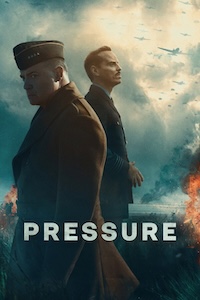
Based on a true story, Pressure tells the story of the preparation for D-Day from an angle not told before. It’s June 2, 1944, with the intent to launch for the beaches of northern France in 3 days on June 5. General Eisenhower (played fantastically by Brendan Fraser, continuing his film resurgence) brings in two highly respected meteorologists to give him the weather report that all will be good for the highly coordinated mission. One, the American Irving Krick (Chris Messina) has a sterling reputation in Hollywood for having predicted the red skies for the shooting of Atlanta burning in Gone With the Wind (and other films), and he says to launch of June 5, it will be perfect weather. The other man, British James Stagg (Andrew Scott), who’s there under the recommendation of Winston Churchill, says to wait. He sees a big storm in the Atlantic coming this way, and forecasts crashing waves, no visibility, and gusty winds, all of which would spell doom for the Allies’ invading force. Unfortunately, the next window for launch would be June 18, something that Eisenhower and the brass refuse to accept, as they know they can’t keep the cat in the bag from Germany that long. Buoyed by tremendous acting and an incredible script, director Anthony Maras keeps this film tense and fraught with an impending sense of danger throughout. Who knew a movie about the weather could be this fun?! ★★★★★

Blue Heron, a semi-autobiographical film from writer/director Sophy Romvari, follows a family of Hungarian immigrants moving to a new home in Vancouver, Canada. The kids have been in Canada long enough to have (mostly) lost their accents, but the parents still revert to their native tongue more times than not. There are 4 children, 3 younger (with the film mostly following daughter Sasha, playing the role of the director Romvari), and an older brother Jeremy, the mom’s son from a previous relationship. We immediately see that Jeremy is struggling with social issues. Sasha witnesses him stealing from a store one day, and he becomes withdrawn from the family. It isn’t long before he gets nabbed by the police for a petty crime, and the family turns to psychologists to see what is going on. The final third of the film moves forward 20 years to an adult Sasha, who is talking about her brother (in the past tense now, signaling something happened to him, with others, trying to figure out what made her brother the person he was. It shifts from a narrative film to an almost documentary-like approach. Didn’t care for this latter section, though the initial story of little Sasha living in a turbulent house was pretty good. Still, just because you set up a camera behind a child doesn’t mean the film is from her perspective, and the point-of-view moves too much to truly be a coming-of-age. Just a bit too all-over-the-place for me. ★★

  • TV series recently watched: Race Across the World (series 3), Stargate SG1 (season 5)
  • Book currently reading: Fallbacks Bound for Ruin by Jaleigh Johnson

Spider-Man continues to swing his way to the bank in Brand New Day

As I said in my last Spider-Man film review, don’t worry about spoilers here. Because there’s some doozies if you can avoid them until you see it in person.

The latest in Marvel’s Universe is Spider-Man: Brand New Day. After the events of the 2021’s No Way Home, the world has forgotten Peter Parker, and that includes his best friends. Peter is alone, so for the last 5 years, he has been fighting crime and living solo, with no ties to the world. The only person he really talks to is a connection in the New York police department. The city’s newest threat, though, may be more than Spider-Man can handle on his own. A strange new villain has been attacking the city’s Damage Control centers, places that monitor superheroes and develop tools to help (or hinder) them. Along with an unlikely friend in the Punisher (yay for Jon Bernthal!!), Spidey must discover the identity of this new really bad badguy before more people get hurt. All while dealing with his own personal emotions of losing his best friend Ned and girlfriend MJ.

Absolutely fantastic movie, full of action, heart, emotion, and a couple great twists, continuing the trend of the recent Spider-Man films. Even though Marvel’s other recent films haven’t always taken off (I loved Thunderbolts*, but it didn’t exactly rake it in at the box office), Spider-Man has been a reliable draw. For the first 3 Spider-Man-centric films in the MCU, they progressed thusly: 1) $880 million at the box office, 92% Rotten Tomatoes; 2) $1.1 billion, 91% Rotten; and 3) $1.9 billion, 93% Rotten. That last one is good for third all-time domestically ($1.1 billion in the USA alone), and seventh all-time globally. That’s a whole lot of spiderwebs. Early tracking has Brand New Day with a shot to finish in the top two all-time domestic opening in the $325+ million range, and an outside chance of claiming the # 1 all-time spot from Marvel’s Avengers: Endgame, which sits at $357 million. I can tell you that I have not seen a theater packed like it was tonight since pre-COVID days. I went to a big 20 screen multiplex, and the parking lot was full to the gills. Not like Disney needs the money, but they’ll be bringing in the accountants for overtime next week. ★★★★★

Quick takes on 1960s Japanese cinema

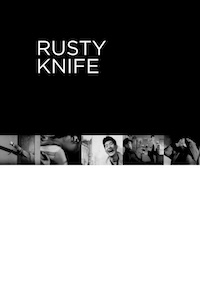
The late 50s and 60s saw some Japanese films which were obviously heavily influenced by some of what was going on in American film at the time. Starting today with a trio of action noir films that could easily have come out of the USA. First up is Rusty Knife, released in 1958 and directed by Toshio Masuda (later did Tora! Tora! Tora!). It’s about an ex-convict who’s been trying to go straight for the last 5 years. He did time for killing the man who raped and murdered his girlfriend, but is now discovering that maybe he killed the wrong guy. Meanwhile, his former employers the yakuza are trying to bring him back into the fold, all while the police are also trying to recruit him to narc. Besides the main dude having done time for killing the wrong guy, there’s also a possible new love interest, who’s father seemingly killed himself but which also may be a case of mistaken murder. For a bunch of “professionals” they sure seem to get things wrong a lot. That being side, it’s pretty engaging, once you get all the characters (and whose side they’re on) figured out. 3 stars for a good ending that you do not see coming. ★★★

Cruel Gun Story is a movie starring Joe Shishido in the lead. He played a lot of villains in the 300+ movies he did in Japan (I’ve reviewed quite a few in this blog) and while he had a small role in the above picture, by the time this film came out in 1964 he was getting pretty well established. This one’s a heist film, and Shishido plays Joji, the ringleader. He is tasked with putting together a team to rob an armored car enroute from a horse racing track to the bank in town. Joji has his second, a longtime friend, but needs at least 2 more to pull it off, and the options aren’t good; he ends up with a needle pushing disgraced ex-cop and a has-been boxer who has taken a few too many blows to the head. Initially, the job goes as planned, until the security guards driving the armored car don’t fall for getting out when ordered, and remain safe inside their bulletproof vehicle. Joji and his team steal the whole truck with the guards and money still inside, but while deciding their next plan of action, are double crossed by the those that hired them. And then the team breaks down and starts double-crossing each other. I quickly got the sense that no one was going to survive this bloodshed, and I was right, after a Butch Cassidy-like finale. Not too satisfying of a conclusion, but it’s a fun ride getting there. ★★★½

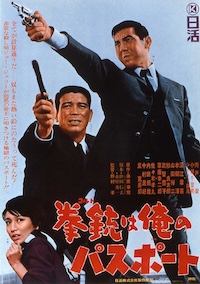
A Colt is My Passport is a spaghetti western in a yakuza Japan setting, complete with a western style soundtrack. Joe Shishido is back, as contract killer Kamimura. Kamimura is great at his job, one of the best, and his latest job involves killing a man named Shimazu. Kamimura has been hired by yakuza boss Senzaki to kill Shimazu, a former partner who has been found to be embezzling. Shimazu is always guarded and is too smart to leave himself vulnerable, rarely being seen outside his stronghold. But Kamimura is smart, and when next Shimazu and Senzaki meet, Kamimura has set up a block away on a tall building and fires with deadly precision. Senzaki isn’t pleased that the target was killed while he was near, landing him at the police station to answer questions, but there’s nothing to tie him to the killing, so he is let go. Not one to let loose ends lie, Senzaki goes after Kamimura. Kamimura expected this though, so he and his friend Shun are already trying to skip town. Unfortunately for the duo, Senzaki has powerful friends, and Shimazu’s son wants revenge too. It becomes a cat-and-mouse game, with powerful killers on both sides, and ending in a duel straight out of a Clint Eastwood flick. Outstanding action and a gripping plot all the way to its explosive (literally) conclusion. If the film sounds cool but you aren’t a fan of subtitles, be patient: it is currently being remade by Gareth Evans with a pretty strong cast. ★★★★

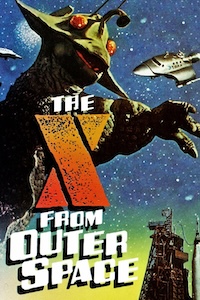
Shochiku was traditionally one of the biggest film studios in Japan, but by the late 60s, their movies (mostly dramas) were considered “old fashioned.” Facing the behemoth that was Toho studios (Godzilla), Shochiku responded with a series of horror movies. The X From Outer Space (1967) is a direct response to Toho, featuring its own gigantic monster. It takes awhile to get there though, too long in my opinion. A group of astronauts are charged with finding why spacefarers keep disappearing near Mars, and when they get there, they find huge spores that almost take out their ship. They bring one back for study, but when exposed to Earth’s atmosphere, it starts to grow, and becomes this giant chicken-looking thing that starts wrecking the place. This is a super boring movie, taking far too long to get to any action, with lots of frivolous scenes that do nothing to advance the plot. The characters are quite literally running in circles at times, bouncing from Earth to the moon base to Mars and back again (and again). And did I mention the monster looked like a giant chicken? ★

Goké, Body Snatcher from Hell followed in 1968, and is a better offering. An airplane is flying through a red hazy sky with bizarre happenings (birds flying into the windows with grisly abandon) when the pilot receives a bomb threat. While searching the fliers’ bags, one man pulls a rifle. As the shit is hitting the fan, a UFO flies past in the red sky, knocking out one of the plane’s engines and causing it to crash on a deserted island. The survivors gather, but the hijacker with the rifle runs into the jungle and encounters the alien from the UFO. It carves and entrance into his skull and takes over his body, turning him into a vampire-like being who starts to hunt the rest of the survivors, sucking their blood. As the movie progresses, we learn that this alien is just the lead in a force coming to Earth to kill everyone. Is it campy? Sure, but it also has some nice old-fashioned visual scares and is at least more engaging than the space flick above. ★★½

The Living Skeleton starts silly with some extreme over-acting, but it settles in to be a very good horror film. A group of deadly pirates have taken over a ship, and end up killing everyone on board, including the damsel-in-distress Yoriko. 3 years later, Yoriko’s twin sister Saeko is still in mourning when she starts to see visions of Yoriko. Looks like Yoriko’s ghost is out for revenge, as she starts hunting down members of the pirate gang. The movie is just vague enough that you don’t know if Yoriko’s ghost is doing the killing, or if she is inhabiting her twin’s body to do the deeds, or if something else sinister is going on. Sort of an update on the traditional Japanese ghost horror genre, or kaidan as they are called natively. The movie has it all, from identical twins to a mad scientist to a bad guy impersonating a good guy to get closer to the heroine. Not to mention a wild ending. Crazy film, and I was into it all. ★★★★

Genocide, as a film of the late 60s, plays up to the present fears of global annihilation. The gist of it is that insects, which fear their own deaths along with every other living thing on the planet because of mankind’s impending atomic wars, decide to rise up and take out humans. Some new strain of insect (which look a lot like bees) start biting people, and once bitten, the human goes insane, killing others before succumbing to the venom’s toxins. Sounds silly, and it is, but there’s some good subplots going on too that kept me interested. There’s a playboy getting it on with his girlfriend and an American woman (who turns out to be in league with the insects) and an American GI who was transporting a bomb when all this started, later gets bitten, and then goes off the deep end. The Japanese doctor trying to come up with a cure seems to be the only rational one of the lot. Zany movie, but entertaining! ★★★

  • TV series recently watched: Widow’s Bay (season 1), ST Voyager (season 7)
  • Book currently reading: Enemy of My Enemy by Alex Segura

Nolan vibrantly brings ancient Greece to life in The Odyssey

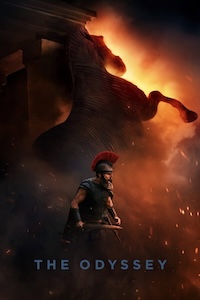
Christopher Nolan is once again doing his Christopher Nolan-thing: giving us an epic movie on a grand scale. Something he’s done time and again, with films like Interstellar, Inception, and Dunkirk. And what better story than one of the grandest: Homer’s Odyssey. So what can Nolan, a man obsessed with perfection and accuracy, do with such a subject? Gives us a movie that needs to be seen on the biggest screen available.

No spoilers here, and you either know the story of Odyssey (or, at least, bits and pieces of it) or you don’t. The movie is 3 hours long, detailing Odysseus’s years-long journey home after the Trojan War, where he was a hero for coming up with the idea for the Trojan Horse. Along the way he battles cyclops, giants, sirens, maelstroms, and even the gods themselves, but through it all, he is determined to return to his love, his wife Penelope, and their son Telemachus. Telemachus has grown up without a father, and is bitter over the suitors who come to his home daily to woo Penelope in hopes of marrying her for a shot at the throne, in Odysseus’s absence. No one really believes Odysseus will return, except for his family and one trusted servant.

Nolan spent gobs of money to develop new techniques to make this film, and did the majority of it “the old fashioned way.” You won’t find buildings-tall green screens and layers of CGI. There’s tons of natural action scenes with real (not computer-generated) armies fighting to the death. All of the actors have been very forthcoming with how hard this movie was to make, but to a person they agree that there comes satisfaction with having made something that will speak to people, because it has themes that are as meaningful today as they were 2800 years ago. This is a movie that you can watch again and again, and probably catch something you missed each time. Brilliantly done with an absolute all-star cast top to bottom (even some of the bit-part extras are recognizable faces!). I don’t know how Nolan is going to top this one. Maybe he’ll surprise us and make a small indie film next? ★★★★★

Quick takes on Amrum and other films

I’ll admit that I didn’t run out to see Project Hail Mary at the theater, despite being a sci-fi nerd, because it looked a bit too silly to me. The trailers leaned heavy on the comedy (and in my opinion, there was too much of it, especially in the first half of the movie) but it’s still an awesome science fiction flick. Based on a book by the same author who wrote The Martian (another fantastic space film), it has the same kind of “man out in space on his own” kind of idea, but with a twist. Ryland Grace (Ryan Gosling) wakes up alone in a space ship in deep space with total amnesia, no idea why he is out there; the two other spacefarers died in their induced hibernation during the long trek. Grace starts to get his memories piecemeal, which we see as flashbacks, that give us the story. Some kind of alien parasite has been sucking energy from our sun, and if humans can’t figure out how to stop it, our sun will grow too weak to keep the Earth warm, killing all the plants and animals and thus all the people too. Looking out into space, scientists have found the same problem with all stars except one: Tau Ceti, 11.9 million light years away. Using those same little parasites, which can emit tons of energy, they built a ship to get Grace (and his now-dead team) all the way out there to see why this one star is surviving, and to bring that knowledge back. Except Grace will not be bringing it back, because there’s only enough energy for a one-way trip, and he’ll have to send the cure back on tiny probes. Thankfully, Grace isn’t as alone as he thought he’d be. When he gets to Tau Ceti, he finds an alien, which he names “Rocky.” Once they learn how to communicate with each other, they learn they are there for the same reason, to save their home worlds from dying stars. The exciting parts in this movie are exhilarating, edge-of-your-seat affairs, and the movie has a surprising amount of heart as Rocky and Grace look out for each other as they face death time and again. Could have been a perfect sci-fi movie if they’d just cut back on some those silly laughs, but still a thrilling movie. ★★★★

She Dances is a great little indie flick with a strong cast. The (almost always) underrated Steve Zahn plays Jason, an absent father (been doing a lot of films like that lately) who is tasked with chaperoning his daughter Claire on her latest trip. Claire has always been into dance, and there’s a new competition for her to enter with her longtime friend and dance partner Kat. Much of the humor of the film is provided by these two Gen Z’ers and the out-of-touch Dad, but there’s some seriousness to the movie too: the hanging specter of Jack. Jack was Claire’s brother and Jason’s son, who died a few years ago (cause never mentioned; I suspected suicide), an event that ripped the family apart. It ended Jason’s marriage and sent him spiraling into alcoholism and withdrawing from Claire’s life. Jason has been sober for awhile now, but still hasn’t faced the hurt Jack’s passing has left him. Jason is uncomfortable around Claire because she reminds him of Jack, and Claire is hesitant to open up to Jason because of what it may dredge up. Jason is, after all, a recovering alcoholic and honestly doesn’t recall much of that dark time. Ethan Hawk costars as a longtime family friend and Jason’s business partner, and Claire is played by non other than Steve Zahn’s real-life daughter Audrey Zahn, in her first role. ★★★½

Jackie Chan will always be known for his martial arts films, but over the last few years, time has obviously diminished his action roles and he’s been taking more dramatic films. Such is the case for Unexpected Family, where he plays the elderly Ren. Ren is suffering from dementia, and while he lives alone, he is well-liked by his neighbors who take turns looking after him. A young tenant moves in named Zhong Bufan, and Ren mistakenly thinks it is his long-lost son returning home. Seeing Ren brighten up, the neighbors convince Bufan to play along. Initially, Bufan wants nothing to do with it, but when he thinks he may be able to manipulate Ren into giving him some money, he agrees. It isn’t long before Bufan grows to like Ren too, and gives up is nefarious plot. Ren, a former weightlifting coach, coached his son to a gold medal many years ago, so Bufan and the neighbors decide to reenact that championship meet in an attempt to bolster Ren’s memories and spirits. Things do not go as planned. Lots of Chan’s customary silly humor in the beginning of the film, but it really hits its stride in the second half, where it becomes more dramatic. Chan has acting chops, and I dare you to keep the emotions in check when he confronts his estranged “son” in the end. ★★★

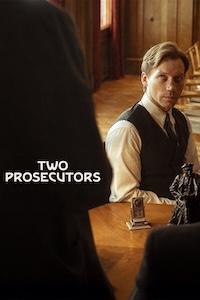
Two Prosecutors shines a light on what life was like under the Stalin regime in the Soviet Union during the Great Purge, when Stalin was removing dissenters. It begins in a prison in Bryansk, where a prisoner is tasked with burning letters written by prisoners, letters which will never see the light of day. He is stricken by one though, written in blood, and somehow smuggles it out. The letter makes its way to a young prosecutor named Kornyev, a staunch communist but also a young idealist, and he comes to Bryansk to try to interview the prisoner who wrote the letter. He receives all kinds of run-around. The powers-at-be at the prison don’t want anyone to know how they are treating their prisoners. When Kornyev finally does meet the prisoner, an old man named Stepniak, we see why: Stepniak shows plenty of evidence of physical abuse and is coughing up blood, in obvious poor health. Turns out Kornyev has been so adamant because he once saw Stepniak give a speech about Bolshevism at his law school, and Kornyev knows that Stepniak is no dissenter. He’s a proper party man, and wants to know why Stepniak ended up here. He tries to take Stepniak’s case up the food chain, but everywhere he goes he is met with red tape and blockades. The red machine is in full force, and is not ready to admit any failure; with them there is either for or against, and if Kornyev isn’t careful, he may end up “against.” Excellent slow-burn drama. One of those movies where not much happens, but all the intrigue is told “in between” the dialogue. ★★★½

From one dark period in our world history to another, with the German film Amrum. Based on childhood of the film’s writer Hark Bohm, it takes place in the eponymous village, on a tiny German island off the coast, in 1945. The war is winding down, which is great news for most but unbelievable to others, namely Hille and her son Nanning (the main character). Hille is a staunch Nazi supporter, while her husband is off fighting in the war, but the rest of the village, far removed from Berlin and its worries, is ready for the war to be over. This includes Hille’s sister Ena. Ena and Hille are from this village and are staying in their childhood home; Hille’s house in Hamburg was bombed by the allies. Nanning finds himself at the center of this weird crossroads. When he repeats what a villager said about being thankful that the Russians are only 50 miles from Berlin, Hille wants the villager reported to the local magistrate, saying she is disloyal to her country. Even most family members in the village (aunts and uncles) are not sure what the war was supposed to be about, and are happy that they will stop losing friends and loved ones to “Hitler’s war.” After Hille gives birth to a new baby, she falls into postpartum depression, and refuses to eat. She makes an offhand comment that she’ll only eat white bread with butter and honey, all items that are extremely hard to come by these days. Nanning begins an adventure to find, trade for, or work for these items, in hopes of lifting his mom’s spirits, but it will be a tough job with society crumbing around him. Extremely well-depicted coming-of-age film, and a reminder that while our leaders will always try to divide us into “them” and “us,” most people are just living normal lives like everybody else. ★★★★

  • TV series recently watched: Star City (season 1), The Vampire Lestat (season 1)
  • Book currently reading: The Winds of Dune by Herbert & Anderson

Visiting 2 Swedish Directors in the 1960s

Today, looking at some works of a couple Swedish directors who got their starts (behind the camera, at least) in the 1960s. Bo Widenberg had already been critical of the more traditional narrative films coming out of Sweden, particularly those of Ingmar Bergman (how dare he?!), so his pictures were tagged with the label of the Swedish New Wave after their French counterparts. His first film, 1963’s The Baby Carriage, isn’t completely “new wave,”, but it’s OK. Britt is a young woman without a lot of prospects, and seems uninterested with life. She sleeps with her boyfriend Robban and gets pregnant, and when she tells him about it, he flies away faster than a hawk. Her mother urges her to end the pregnancy, but Britt decides to keep the child, perhaps as the one thing in her life she has control over. As her pregnancy progresses, Britt starts hanging out with a guy named Bjõrn, who comes off as snobbish and pretentious. Britt overlooks these faults, as she so desperately wants him to be “the one” after her experience with Robban. She doesn’t see Bjõrn for what he is until nearly too late. In the end, Britt needs to discover who she is and who she wants to be. I think the film tries a little too hard to be new wave, with a jazz soundtrack that doesn’t always fit as well as it does in Elevator to the Gallows. ★★★

Widenberg went with a more traditional narrative film with his next, Raven’s End. Taking place in the 1930s against the backdrop of the rise of Hitler in Germany, Anders (same actor as Bjõrn above, Thommy Bergendahl) wants to be a writer but doesn’t know if he’ll ever get there. He’s from a very humble background; his father is an alcoholic and long unemployed, drinking or gambling away his family’s income, and his mother barely scrapes by as a laundress. When a publisher in Stockholm sends an invite to Anders to come talk about a submitted work, Anders is elated and thinks he’s finally done it, only to have his hopes dashed when his book is ultimately rejected. Anders laments that he has no experiences outside of his provincial life, nothing of interest to write about. What’s funny though is that there is history and life around him, if he were to just stop and pay more attention. In the end it may not be enough. Good story. ★★★½

A few years later, Widerberg made Elvira Madigan, based on the life of a young woman who lived in the late 19th century. At the beginning of the film, we meet Elvira and her boyfriend Sixten. The two are obviously madly in love, and the film paints this picture of an idyllic carefree life, the kind where you get lost in your love and nothing else matters. Only, some things should matter. We are told early on that Sixten has deserted from the military and faces harsh jail if caught. 20-ish minutes into the movie, we also learn that Elvira (real name Hedvig, as Elvira was her stage name) was a renowned circus tightrope performer who ran away from home and her career to be with Sixten. OK, lovers do crazy things, but when we later learn that Sixten left his wife and two young children too, things start to feel a little murky. The couple bounces from hotel to hotel while on the run, leaving whenever someone recognizes them (their story is all over the papers) or whenever the bill comes due, as their finances are dwindling. When they get so hungry that they start eating flowers and grass, they finally realize that their love alone cannot sustain them, and make a suicide pact. On the surface, you think that Widerberg has abandoned his ideals since this seems like a much more traditional film, especially since it is based on a true historical story, but it was shot on a minimalist script, mostly improvised by the actors and with no rehearsals, so the director was still sticking to his guns, more or less. The movie became the director’s first international hit. ★★★★

Three decent-to-good films and then a clunker. Ådalen 31 is based on a true story again, but gets far too political for my tastes, and comes off as preachy. It follows a moment in Sweden in 1969, an event that is still infamous to this day in that country. The primary business in the town of Ådalen is a sawmill, but the workers there have been on strike for months, and the owner is getting tired of it. He brings in new workers from out of town, which gets the townsfolk riled up, and they attack the scabs. To protect them and his industry, the owner calls in the military, and in a stroke of insanely back judgement, the military shoot at the protesting townspeople, killing 5 including a teenage girl who was just a bystander. Terrible day in Swedish history? Absolutely. Do I need to have it hammered down my throat how bad capitalism is and how good Sweden became under the socialism that followed? Naa, I’m OK. ★½

After that hack job, I moved on to a different director, Widerberg’s contemporary Mai Zetterling. She started as an actress (first role was actually Bergman’s first film as a writer, 1944’s Torment) but moved behind the camera by 1964’s Loving Couples. Kind of a misleading title, because the couples in this film are anything but traditional, and the setting is certainly not wholesome. It takes place in a maternity ward in 1914. Three women are there: Angela, Agda, and Adèle. Through flashbacks, we get the stories of these three women, whose lives are all interconnected, and what brought them to the ward. Angela comes from money though she feels her wealth as a burden at times. Her father died when she was a little girl, leaving her this fortune, and others tried to manipulate her over the years. She’s in the ward to give birth. Adèle once had money too, but when her father died, he left her and her mother destitute from gambling debts. As such, Adèle grew up bitter at the world and has become a hateful person. She’s in the ward waiting for her body to expel the stillborn child inside her. The last is Agda, who was born poor and later became a maid in Angela’s household, but she always found joy in life, though her marriage (and non-traditional pregnancy, as we learn) were more pragmatic. Very intriguing story with lots of tangents that all come together in the end for a complete picture. Relationships intertwine, to the benefit of some and detriment of others. It’s a film you have ride out to the end to see how it all fits together. ★★★½

Night Games was the director’s next film in 1966, and has a seriously messed up theme. Jan is engaged and has brought his fiancee Mariana to his childhood home, a sprawling estate. In flashbacks, we see Jan and the chaotic household he grew up in. His mother was Irene, a wealthy socialite always surrounded by sycophants, and with a revolving door for a boyfriend/sometimes husband. Irene cares only for physical pleasure and ignores her son Jan (unless he is bringing her joy at that moment in time). The only real attention Jan gets is from his grandmother, who unfortunately is losing her mind. As such, Jan grows an oedipus complex for his mother. In the current timeline, the longer he stays in that home, Jan begins to take on characteristics of his deceased mother, especially her hedonistic lifestyle. In the end, he must decide which path in life he wants to follow. Not sure I particularly liked the movie too much, but it is a fascinating story. A funny anecdote: when the film was to be shown at the San Francisco International Film Festival, an adult Shirley Temple (in her late 30s at that point in time) was to be on the jury, but resigned, calling the film “pornography for profit.” It is far from pornographic but definitely is stark in its portrayal of Jan’s and Irene’s unhealthy relationship. ★★★

The Girls was Zetterling’s first (and arguably only) hit, though it took decades to be recognized as such. It bombed when it came out in 1968, despite an all-star cast (Bibi Andersson, Harriet Andersson, Gunnel Lindblom, Gunnar Björnstrand, and Erland Josephson). A meta film before its time, it stars its trio of ladies as actors in a traveling performance of an ancient Greek play: Lysistrata by Aristophanes, about women who withhold sex from their husbands in an attempt to force them into a peace treaty during the current war. In a tale of life imitating art, we see that the actresses are continually subjected to sexism, even from other women, who think these ladies should be home “taking care of their babies and husbands.” If they have a family at home and good looks (heaven forbid when that starts to go with age), then they should have everything they need to be happy, and there’s something wrong with them if they want something more. The more times change, the more they stay the same. There’s some subtle surrealism too, like one scene where one of the girls is trying to get her point across, but the only time men start paying attention is when they are all transported to a lounge and she starts taking her clothes off in front of them. The movie does have some grandstanding (including one scene where a woman is literally grandstanding) but that all-star cast is all on top of their game, and it is as timely today as it was in the 60s. Loses a little steam in the final third of the picture, but overall still great. ★★★★

  • TV series recently watched: Dutton Ranch (season 1), The Agency (season 2), Enterprise (season 2)
  • Book currently reading: The Winds of Dune by Herbert & Anderson

Quick takes on The Plague and other films

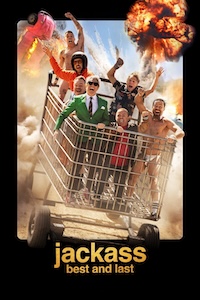
I saw Jackass: Best and Last the best way to watch it: with a couple friends, having just downed a couple beers, and in a good mood. As I said in my review of the last Jackass film, don’t go into this expecting great cinema, but if you just want to turn the brain off and laugh (often and loud), you can’t do much better. The audience in the theater was all having a good time. This is billed as the last of them (the surviving members of the original Jackass franchise are all getting a bit long in the tooth to keep putting their bodies through this), so go see it, relive your childhood, and have a good time too. ★★★½

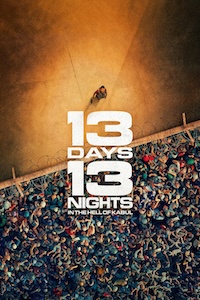
13 Days, 13 Nights is the newest from French director Martin Bourboulon, whose duology of the Three Musketeers films was quite good. This one is based-in-a-true story, during the US withdraw from Afghanistan in 2021. A soldier at the French embassy is worried about getting some of his informants out before the Taliban completely takes over Kabul, as well as other innocent women and children who fear the return of the regime and their ensuing loss of rights. There are some tense moments as the lead guy tries to get people out safely, but I couldn’t shake the feeling that I’ve seen movies like this that were done better. Whether that’s writing or just a constrictive budget is anyone’s guess, but I didn’t connect with their plight as much as the filmmaker certainly wanted me to. ★★½

Cactus Pears, out of India, is one of those leisurely paced films that will test many viewers, but for those with patience, there’s a rewarding ending. Anand works in Mumbai but has come home to his rural village after his father’s sudden passing. He’s obviously lived in the city for a long time, because he has to be reminded by his mother and many extended family members about what is expected over the next 10 days of mourning. Everything is steeped in ritual and tradition, from when, how, and where Anand can eat, to what he can wear, to when he can bathe. One looming question over it all is when Anand will get married, because, again due to tradition, after his father’s death he must marry within a year, or otherwise wait 3 more, at which point he’d be over 30 years old (on the humanity! According to his mother anyway). But it is very obvious to the viewer that Anand has no interest in marriage, and it isn’t until he reunites with an old (male) friend that we understand why. But can Anand and Bayla (whose parents are also demanding he finally find a wife) find happiness together in this society? A very slow paced film that allows the viewer to feel each passing moment with its actors, it’s a tender film that is all about the nuance. ★★★½

The Plague is a coming-of-age film with a darker undertone than you typically find in this genre. At a water polo summer camp of 12- and 13-year old boys, Ben is more socially awkward than most, but determined to make friends and fit in. Unfortunately the crowd that he wants to fit in with is not the good crowd. They are led by Jake, the worst kind of bully who bestows ignorant nicknames to his “friends.” Jake is loud and cruel, the kind of kid that others are drawn to to appear cool. The group’s favorite target is Eli, a misfit who marches to the beat of his own drum (a huge no-no in 2003 when the film takes place, and at an age when most kids are trying their hardest not to stand out). Eli is the kind of kid though that will probably grow up to be the most interesting of all of them, if he can survive adolescence. That’s a big if, because he is constantly teased and harassed by Jake and his cronies, including, eventually, Ben, who doesn’t want to go out on a limb for Eli. Eli has some kind of skin condition, which the boys call “the plague,” and they never let up. As an adult, it’s easy to scream at the screen that the kindly Ben should stick up for Eli, but if you think back to those terrible early teenage years, it’s understandable that he doesn’t. It’s also easy to hate Jake, but his story is complicated too, as we eventually learn that his mother died awhile back and we see a glimpse of a turbulent, possibly violent home life. Ultimately we have to remember these are all just kids, though their actions have very real and lasting consequences. Excellent, tense film that slowly builds until a devastating conclusion. Joel Edgerton is the sole recognizable face, as the swim instructor. ★★★★

I think I’ve said it before, but not all interesting real-life stories need to be made into movies. Tow, based on the life of a homeless woman named Amanda (played by Rose Byrne), is one such film. At the beginning of the movie, Rose is already homeless and living out of her car in Seattle. Just as she lands a new job, her car (with everything she owns in this world) is stolen, leaving her with nothing. Thankfully, the police find it just a day later, but rather than saving her, this only adds to Amanda’s problems. The tow yard that retrieved the car from the police wants $200 to give Amanda her car back, and in her position, that might as well be $20,000 (which the bill eventually becomes as fees continue to get added on). Amanda finds help in a pro-bono young idealistic lawyer, who sues the tow yard and its rich, entitled owner, but the dude’s got the money to draw this thing out in the courts, which he does for over a year. All that time, Amanda is stuck living in a shelter with other women down on their luck. With a cast filled out with familiar faces (Ariana DeBose, Simon Rex, Octavia Spencer, and Demi Lovato), I expected more, but this film is BORING. Its attempts at humor fall flat, and it expects you to feel sorry for Amanda just because she’s homeless. Well, she doesn’t try too hard to help her own situation, and is generally a pretty unlikeable person, so good luck with that? ★½

  • TV series recently watched: Lost (season 4), The Long Shadow (series), Dexter (season 2), This City is Ours (season 1)
  • Book currently reading: The Force Awakens by Alan Dean Foster

Supergirl crashes back to Earth in DC reboot

The DC Universe rebooted with last year’s Superman, where Kara (Supergirl) was given a cameo to introduce her. She gets her own flick in this year’s followup, fleshing out the character and giving her her own adventure. Unfortunately it does not reach the heights of her cousin Superman’s movie.

Enjoying her birthday week (turning 23), Kara has left Earth and is living on a planet orbiting a red sun. Red suns make Kryptonians “normal,” and without her superpowers, Kara is getting drunk and being a normal 20-something. Her party days are numbered though, when she gets drawn into a young girl’s plight. The girl, Ruthye, has just seen her entire family murdered, and is seeking revenge on the evil Krem, leader of an intergalactic gang of thugs. Kara lacks Superman’s sense of purpose to protect the weak, so initially she wants to stay out of Ruthye’s problems, but when Krem shoots Kara’s dog Krypto with a poisoned arrow, and only he carries the antidote, Kara signs up for the adventure. During the 3 day venture, we get Kara’s backstory.

Whereas Superman was sent away from Krypton as a baby, and thus has no memory of it, Kara was born amongst the destroyed planet’s few survivors, and lived with them for a decade as she saw them whither away and die, including her own parents. With no hope of survival, her dying father sent her to Earth to find her cousin Kal-El (Superman), knowing Earth’s yellow sun will make her strong. Kara’s been carrying that baggage around, which explains her cycle of self-destruction with booze. But if she’s going to help Ruthye, she’ll need to conquer her own demons.

The best part of the movie is when Kara goes all Supergirl on the bad guys, which happens 3 times. The rest of the movie is sort of a mess. It’s really hard to like Supergirl, as she’s often selfish and bratty and generally not a fun person to be around. There’s also a really poorly conceived idea of introducing the antihero Lobo into the universe, portrayed by Jason Momoa. With his gray skin and silly quips, he comes off as a superhero Beetlejuice. Even sounds like Beetlejuice at times. In the end, I didn’t care much for any of the characters. After I loved Superman so much, I hope this doesn’t mean bad things for a DC Universe that is supposed to just be getting started. ★★½

Another thrilling plastic adventure for all ages in Toy Story 5

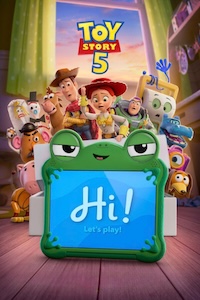
I said in my review of Toy Story 4 (7 years ago!) that the original Toy Story trilogy was perfect, but that the newest sequel was a good epilogue. I didn’t imagine a new story needed to be told, but the folks at Disney hit that money machine again with Toy Story 5. And it’s another hit, with a fantastic, timely story that stills tugs at the heartstrings as much as only this franchise can.

Bonnie is now 8 years old. Woody has moved on but the rest of the gang is still enjoying playing with Bonnie, with the centerpiece being Jessie the cowgirl (who is the focus of this new film) and Buzz Lightyear, who has grown feelings for Jessie but doesn’t know how to express them. Bonnie’s toys are thrown for a loop when her parents buy her a tablet, a Leapfrog, and she begins to play only with that. When Jessie reaches out to Woody out in the world, he confirms that he sees abandoned toys every day, left by the wayside when their boys and girls have left them to only play with tech. Jessie is devastated, convinced that just kids “playing” with their tablets in the same room but not interacting with each other isn’t really playing at all. Jessie, who’s the oldest of this particular group of toys and has seen three owners “age out” of her toys, can’t face that again and fears it is the end for her and others like her. If she is going to “save” Bonnie from a tech-dependent childhood, she must find a like-minded child who still loves to play with toys and get her to meet Bonnie.

The film touches on a lot of today’s subjects, such as screen time, online bullying, and the isolation that comes from not getting your kids out of the house to really play (and imagine) with others. And as always, lots of humor for all ages. I didn’t tear up at this one like I have for Toy Story movies in the past, but it still has lots of heart, and you can’t help but root for those plastic little beings as they love their little girl as much as she loves them. Once again, it will make Disney a boatload of money at the box office and in toys (we bought our granddaughter a Jessie when we took her to the theater to see it this weekend, and a Rex dinosaur for her little brother even though he is too young to go and stayed home with Dad). ★★★★★

Mystery and intrigue abound in Spielberg’s Disclosure Day

I’ve been excited to see this film since its very first trailer, where star Emily Blunt, on camera, moves from spoken word to clicks and ticks, and no one knows why. And they kept the secret right up to when the movie was coming out. What was it about? A.I.? Aliens? Robots? Whatever it was going to be, I was down for Steven Spielberg’s triumphant return to science fiction. The movie did not disappoint.

At the start of the movie, the world is on the cusp of World War III, with saber-rattling by the US and North Korea. With tension in the air, a top secret agency is chasing after a former employee, Daniel (played by Josh O’Connor), who has stolen some proprietary tech from them. When confronted, Daniel pulls out the item, which looks like a sliver of metal of some kind, and immediately the agency’s goons back off, obviously afraid of what it can do. Daniel is able to get away with his girlfriend Jane in tow, but it isn’t long before the agency strikes back. Its head, Noah (Colin Firth), sits in a chair and pulls out a similar-looking metal device, and uses it to “dive” into Jane’s consciousness. He’s able to control her to look around and find out where she and Daniel are, and even control her movements and interrogate her within her mind. Noah wants Daniel back (or dead) and will go to any length to make that happen.

Meanwhile, weatherwoman Margaret (Emily Blunt) is getting ready to leave her apartment for work when a cardinal flies inside an open window. Margaret stares at the bird for a couple seconds, and when she turns to her boyfriend after, starts speaking fluently in Russian, without realizing she’s doing it. The boyfriend is confused, but before he can ask what’s going on, Margaret runs off to get to work. On her way, she is pulled over by a cop for speeding, but sees into his soul before he can write a ticket. Margaret has suddenly gained some kind of psychic ability and can now “read” people and provide comfort where needed, telling them how to deal with troubled moments in their lives. She can also instinctively speak whatever language is their first, in order to effectively communicate.

Separately, Daniel’s former boss at the super-secret government agency (Hugo, played by Colman Domingo) is trying to bring Daniel and Margaret together. He has a plan to out his former employers and bring what they’ve been hiding (Daniel’s device, as well as video footage he’s carrying) to share with the world on what he is calling Disclosure Day. But is the world ready for that. Knowledge? Absolutely tremendous film, I was hooked from its very opening moments. Some great action scenes, including an incredible train scene that will have you holding your breath, and while the ending is predictable, it is compelling enough to keep you hooked. ★★★★½