

I saw Jackass: Best and Last the best way to watch it: with a couple friends, having just downed a couple beers, and in a good mood. As I said in my review of the last Jackass film, don’t go into this expecting great cinema, but if you just want to turn the brain off and laugh (often and loud), you can’t do much better. The audience in the theater was all having a good time. This is billed as the last of them (the surviving members of the original Jackass franchise are all getting a bit long in the tooth to keep putting their bodies through this), so go see it, relive your childhood, and have a good time too. ★★★½
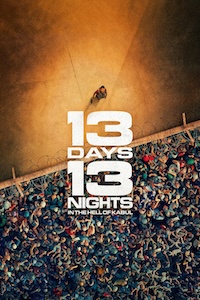
13 Days, 13 Nights is the newest from French director Martin Bourboulon, whose duology of the Three Musketeers films was quite good. This one is based-in-a-true story, during the US withdraw from Afghanistan in 2021. A soldier at the French embassy is worried about getting some of his informants out before the Taliban completely takes over Kabul, as well as other innocent women and children who fear the return of the regime and their ensuing loss of rights. There are some tense moments as the lead guy tries to get people out safely, but I couldn’t shake the feeling that I’ve seen movies like this that were done better. Whether that’s writing or just a constrictive budget is anyone’s guess, but I didn’t connect with their plight as much as the filmmaker certainly wanted me to. ★★½

Cactus Pears, out of India, is one of those leisurely paced films that will test many viewers, but for those with patience, there’s a rewarding ending. Anand works in Mumbai but has come home to his rural village after his father’s sudden passing. He’s obviously lived in the city for a long time, because he has to be reminded by his mother and many extended family members about what is expected over the next 10 days of mourning. Everything is steeped in ritual and tradition, from when, how, and where Anand can eat, to what he can wear, to when he can bathe. One looming question over it all is when Anand will get married, because, again due to tradition, after his father’s death he must marry within a year, or otherwise wait 3 more, at which point he’d be over 30 years old (on the humanity! According to his mother anyway). But it is very obvious to the viewer that Anand has no interest in marriage, and it isn’t until he reunites with an old (male) friend that we understand why. But can Anand and Bayla (whose parents are also demanding he finally find a wife) find happiness together in this society? A very slow paced film that allows the viewer to feel each passing moment with its actors, it’s a tender film that is all about the nuance. ★★★½

The Plague is a coming-of-age film with a darker undertone than you typically find in this genre. At a water polo summer camp of 12- and 13-year old boys, Ben is more socially awkward than most, but determined to make friends and fit in. Unfortunately the crowd that he wants to fit in with is not the good crowd. They are led by Jake, the worst kind of bully who bestows ignorant nicknames to his “friends.” Jake is loud and cruel, the kind of kid that others are drawn to to appear cool. The group’s favorite target is Eli, a misfit who marches to the beat of his own drum (a huge no-no in 2003 when the film takes place, and at an age when most kids are trying their hardest not to stand out). Eli is the kind of kid though that will probably grow up to be the most interesting of all of them, if he can survive adolescence. That’s a big if, because he is constantly teased and harassed by Jake and his cronies, including, eventually, Ben, who doesn’t want to go out on a limb for Eli. Eli has some kind of skin condition, which the boys call “the plague,” and they never let up. As an adult, it’s easy to scream at the screen that the kindly Ben should stick up for Eli, but if you think back to those terrible early teenage years, it’s understandable that he doesn’t. It’s also easy to hate Jake, but his story is complicated too, as we eventually learn that his mother died awhile back and we see a glimpse of a turbulent, possibly violent home life. Ultimately we have to remember these are all just kids, though their actions have very real and lasting consequences. Excellent, tense film that slowly builds until a devastating conclusion. Joel Edgerton is the sole recognizable face, as the swim instructor. ★★★★
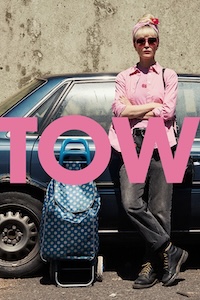
I think I’ve said it before, but not all interesting real-life stories need to be made into movies. Tow, based on the life of a homeless woman named Amanda (played by Rose Byrne), is one such film. At the beginning of the movie, Rose is already homeless and living out of her car in Seattle. Just as she lands a new job, her car (with everything she owns in this world) is stolen, leaving her with nothing. Thankfully, the police find it just a day later, but rather than saving her, this only adds to Amanda’s problems. The tow yard that retrieved the car from the police wants $200 to give Amanda her car back, and in her position, that might as well be $20,000 (which the bill eventually becomes as fees continue to get added on). Amanda finds help in a pro-bono young idealistic lawyer, who sues the tow yard and its rich, entitled owner, but the dude’s got the money to draw this thing out in the courts, which he does for over a year. All that time, Amanda is stuck living in a shelter with other women down on their luck. With a cast filled out with familiar faces (Ariana DeBose, Simon Rex, Octavia Spencer, and Demi Lovato), I expected more, but this film is BORING. Its attempts at humor fall flat, and it expects you to feel sorry for Amanda just because she’s homeless. Well, she doesn’t try too hard to help her own situation, and is generally a pretty unlikeable person, so good luck with that? ★½
- TV series recently watched: Lost (season 4), The Long Shadow (series), Dexter (season 2), This City is Ours (season 1)
- Book currently reading: The Force Awakens by Alan Dean Foster

 Jons Movie Takes