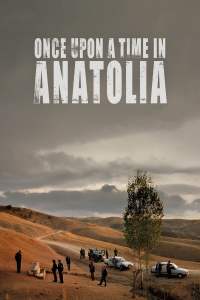
 I don’t think I’d seen a film from Turkey until I recently watched The Wild Pear Tree from director Nuri Bilge Ceylan. That was a masterpiece of a film, leaving me wanting to see more, so up today is some of his previous films. Once Upon a Time in Anatolia follows a group of men on a night out on a mission. A murderer, Kenan, has made a plea deal and is directing the cops through the countryside to where he buried the body. Along for the ride is the police commissioner, Naci, the state prosecutor, Nusret, the medical examiner, Cemal, and a few others. What the film is really about though is the conversations between the characters within the film. It is a character study about how peoples’ outlook on lives shape the way we act and the way we communicate with others. Like Pear Tree, the pacing is such that a lot of people would call this a boring (and long) film, but also like that film, I was fascinated with the individuality of the characters within it. Though there is a definite plot, the director doesn’t just lay it out, or even develop it in a way that we see it as it is happening. We get to know all the characters equally, not emphasizing who we should pay close attention to, because as in real life, all are important in their own way. In fact, a whole picture of what we are actually watching doesn’t become clear until the very end. Watch it closely, with patience in hand, but most definitely watch it. ★★★★
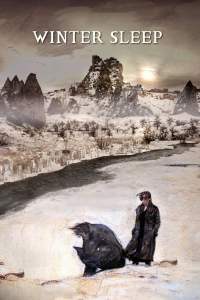 Winter Sleep centers around a sleepy, rural community in Turkey, and primarily focuses on Aydin. Aydin is the only wealthy man in an otherwise poorer village. He owns and runs the sole hotel, which does decent tourism business in the summer, but the film takes place during their slow time. Aydin also owns and leases out several properties in the town. At first the viewer thinks he is a pretty upstanding guy; he’s a former actor and an intellectual, and seems fair in his dealings. The film reveals the true picture of him only slowly as the movie progresses. In fact, it isn’t until the 2 hour mark (of this 3 ½ hour picture) that his much-younger wife Nihal tells him (and us viewers) exactly what his personality problems consist of, and when we hear them, everything falls into place. He is possessive, hoarding his wealth, his trophy wife, and his community prestige above everyone else. While Aydin’s sister realizes these things too, she’s older and is comfortable with floating through life herself. His younger wife fights back more. Seemingly small, minor subplots take center stage as the film progresses, weaving together a masterful, powerful picture. Like in Anatolia, Ceylan examines humanity and each person’s views of their world around them. ★★★★½
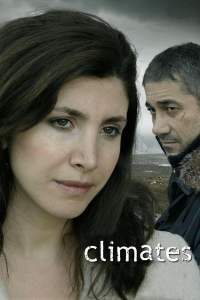 Climates is the first film of his that I wasn’t crazy about. It is pretty simple story about a married couple on the outs. Isa is a man without a goal in life (been working on his thesis for years) and he seems to despair his wife Bahar her career as an art director in television. This, and a previous affair of his, has caused strife in their marriage. She abruptly leaves him one day, and at first, Isa celebrates like a single man. After awhile he starts to miss her though (or at least, the idea of her), and follows her to her latest TV shoot, in hopes to win her back. Taking place over the course of a year, the title has less to do with the changing seasons as it does the changing views of Isa. For me, it was a rather ho-hum picture. I see glimpses of what Ceylan would build upon later on (this film came out in 2006, 5 years before those I’d seen previously), but this is not the masterpiece that those later films would be. ★★
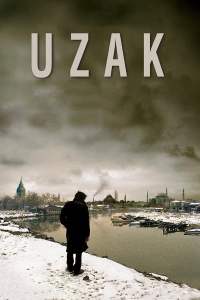 Distant follows two cousins, Yusuf and Mahmut. Yusuf comes from a tiny town whose only source of jobs is a factory, but the factory is letting people go due to an ongoing recession. He’s come to Istanbul to find a job, and is staying with his cousin during the job search. Mahmut is a semi-successful photographer, but he seems to find little joy in his work. Mahmut looks down on his cousin as an unintelligent country bumpkin, but he seems to share a whole lot of characteristics with him. Mahmut derides Yusuf as being unmotivated, but Mahmut seems to be just going through the motions of life himself. Distant becomes a movie about self-inflicted loneliness, due to a complete lack of communication with anyone around us. It was the film that first put Ceylan on the map. Released in 2002, it won a host of awards, including best actor (shared by the 2 leads) at Cannes. Though it is obviously made on a tiny budget and doesn’t have the best camerawork (and lacks the sweeping, “open” feel of Anatolia or Winter Sleep), it is no less profound. Its pace will test your patience, but it is a meaningful and sincere film. ★★★★
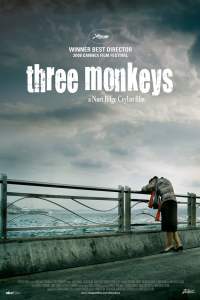 I saved Three Monkeys for last because, reading the synopsis, it seemed to be the most different of these films. I was both right (much more dialogue, faster pacing) and wrong (deeply human and emotional). In the opening scenes, an older man, Servet, a successful businessman, hits a pedestrian while driving. He gets his usual driver, Eyup, to take the fall, promising a big cash windfall when he would get out of jail. While Eyup is away, his wife and Servet begin an affair. Servet continues to provide the family with money, including buying Eyup’s son a car. When he gets out of jail nine months later and sees his wife, he immediately senses something is up, and goes to confront Servet about it. Things blow up when Servent ends up dead, and the ending left me stunned. What I took away was a simple but elegant look at class distinctions, and how dirt gets shoveled downhill to the poorer people in a constant stream. ★★★★½
After watching these movies, it’s safe to say that Nuri Bilge Ceylan is one of my top five directors right now. His films are beautiful pictures about humanity: what makes us tick, what makes us human. Often he takes a pretty simple idea and explores it wholeheartedly from multiple angles. He has an amazing eye for taking what can be a very simple, everyday occurrence and turning it into something profound and contemplative. It seems he usually only puts out a film every 4-5 years, but I’m hoping it isn’t quite that long before his next!
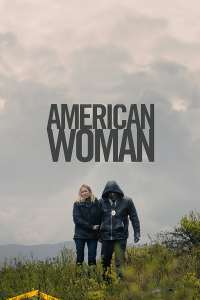 American Woman is alright, but nothing I feel I haven’t seen before. Debbie is a woman with a checkered past who always lets men do whatever they want with her. She had a kid at 16, and now that girl has had a kid at 16 too, so at 32, Debbie is a new grandma to Jesse. One night, Debbie’s girl doesn’t return home, and is never heard from again. Debbie spends time searching with the cops, and then, years later, continues to hold memorials on her birthday. Debbie still doesn’t make good choices in men though, first hooking up with a married man, and later with man who beats her. The time frame jumps ahead a few years every now and then, marked most easily by Jesse’s growth as Debbie has raised him on her own, from a toddler until, eventually, the same age as his mother when she disappeared. The mystery of the disappearance is solved by the end, but the real story happens with the growth of Debbie as a person. By the end, she has finally learned to stand up for herself, and improved her situation in life. Though Sienna Miller is good as Debbie, the film is nothing more than average. Nothing really stands out as memorable for me.
  Anna is the latest Luc Besson flick, starring a couple good actors like Helen Mirren and Luke Evans, and newcomer Sasha Luss as Anna. The eponymous woman is a beautiful Russian women who gets recruited by the KGB to become an assassin, but later, ends up also being turned by the CIA to be a double agent. Honestly, that’s about it. It’s not as deep or detailed a film as some other Besson hits, and doesn’t have any thought-provoking, lasting impressions, but does feature some stellar fight scenes, and as a straight-ahead action film, it is all right I guess. I was hoping for more though.
 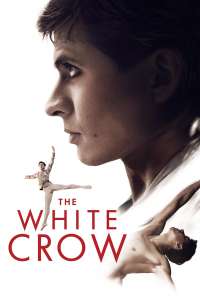 The White Crow is a biopic about Russian ballet dancer Rudolf Nureyev. It tells of his early days in ballet school through his rise in ballet circles, with flashbacks showing his humble childhood. It goes through, I presume, his defection from the Soviet Union to the west. I say presume because, unfortunately, I didn’t get that far. It’s a really tedious, boring film, and not in a good “artsy” way either. It never gets anywhere, and the lead actor, heretofore unknown Oleg Ivenko, is pretty awful. I can only assume he was given the part for his dance skills and not his acting. The film was directed by Ralph Fiennes, who has a supporting role too, and was written by David Hare, who is known for slower films like The Hours and The Reader. Those films were at least good, this one is just a chore.
 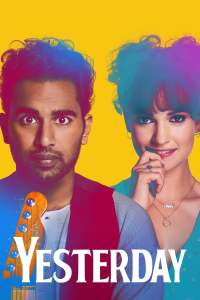 Yesterday did not get stellar reviews, but seemed like the kind of feel-good movie I tend to dig. It is about an English man who finds the stardom he had been seeking with the help of a little magic. Jack is a talented singer-songwriter but he doesn’t write good, catchy songs, and he just can’t get his big break. He is ready to finally quit when he gets hit by a bus during a global blackout. When he awakes in a hospital the next day, he comes to in a world where the Beatles (and, amusingly, Coca-Cola) never existed. He sees the opportunity he never had before, knowing he can release those big hits as his own, and knowing they will be smashes. It isn’t long before Ed Sheeran sees him on local television there in the UK, and approaches him to be an opening act on his tour, and things take off from there. Of course, he finds out all the fame isn’t what it is cracked up to be, and he is also wracked with guilt that he is profiting off songs he never wrote. Himesh Patel is the perfect lead, and Lily James as his friend is adorable as always. Ultimately, it is an average romantic comedy, not as memorable as the songs it showcases, but a fun diversion for a couple hours.
  It Chapter Two follows up after
  Saw a few of Bergman’s 60’s films recently, including the final two films of his “faith” trilogy (I had seen
  The Silence unfortunately didn’t do it for me, and honestly I didn’t get it. It is about two adult sisters: the older one who is sickly and bed-ridden, and the younger who is slutty and sleeps around with anyone who asks. The floozy also has a young son, who is traveling with the two women in some hotel in a foreign country, where no one speaks the language. While the younger sister is out doing her thing, the son wanders the halls of the hotel, mostly ignored until his aunt engages him here and there, and then the younger sister tries to vie for his attention as well. Besides the obvious conflicted women as leads, there are other Bergman-esque elements, but it also felt very different, and at times I sensed he was getting some influence from the French New Wave which was going on across the sea. I like the New Wave as much as the next guy, but it isn’t Bergman’s forte, and this film just felt aimless, especially the first 45 minutes when, quite literally, nothing happened. By the end, I picked up that much of what the sisters did, they did just to piss each other off, but it still felt lacking.
  The Devil’s Eye was released just before his aforementioned trilogy, and is a rare comedy from Bergman. With a clear story to follow, it may not be as deep or critically acclaimed as the three films that came next, but I enjoyed it a lot more than the two described above. In it, Satan himself is suffering from a sty in his eye, caused by the faithful virginity of a pure soul on earth. The daughter of a vicar, Britt-Marie is engaged to Jonas and is saving herself for their wedding night. To relieve the pain in his eye, Satan resurrects Don Juan and sends him to earth to seduce Britt-Marie. While Don Juan does so, his faithful servant Pablo puts the moves on the vicar’s wife as well, and both are aided by a demon who has come up from hell to cause some mischief. What Don Juan didn’t expect was to fall in love with Britt-Marie. Of course Bergman would choose to make a comedy of an overtly religious film, but it works all the same. It is certainly entertaining.
  All These Women is another comedy, and a downright silly film, but in a good way. Cornelius is a music critic who has come to visit a famous cellist named Felix at his estate, in order to write a biography of him. The film starts 4 days after the start of the visit, where we see Felix is dead and Cornelius is presiding over the wake. In front of the coffin parades a series of women all claiming to be Felix’s widow. The film then takes us back to Cornelius’s initial arrival, where he learns Felix has a wife and 6 different mistresses, one for each day of the week. As Cornelius tries to navigate the irrational and downright crazy household and its eccentric inhabitants, he dodges promiscuous mistresses and jealous lovers, while always hunting for more info on his host. Of Felix, we never actually get to meet him, which is part of the comedy of it all. We see his shoes sticking out the end of the casket, and sometimes get a glimpse of him from behind, but we never hear his voice, and often he is just off camera somewhere. It’s a definite lighter side of Bergman, and proof that he could make fun movies like this had he chosen to do so. And I appreciate that throughout the farce, the critic could never get close to the artist until after the artist was dead (and then tried to write a biography based on hearsay). Well played Bergman.
  Holy cow, Persona really is as good as everyone says. Despite its praise as Bergman’s masterpiece and one of the best films ever made, I held off on seeing it until I’d seen a good number of Bergman films and gotten a feel for his style. In the end, Persona surpassed all my expectations. The loose story is that of an actress, Elizabeth (Liv Ullman), who has stopped talking, and the nurse, Alma (Bibi Andersson), who has become her caretaker. The doctors think Elizabeth’s condition is neither physical nor mental, but simply due to willpower; she just doesn’t want to speak. As the two women retreat to a seaside cottage, Alma talks incessantly while Elizabeth just listens. The true story of the film only becomes clear much later, and to say anything about it would ruin the experience. Suffice to say, there’s a lot going on in this weird, almost-scary film (it even elicited a gasp from me at one point, though it isn’t a true horror film. At least I don’t think it is, but a lot can be interpreted from it.). It is a wild trip in David Lynch-ian fashion, and I wouldn’t be surprised if he cites it as a major influence. This is one of those films that begs to be watched multiple times.
  John Wick 3 continues the ass kicking that Keanu Reeves as Wick has been putting on for the last few years. It picks up exactly where the last film left off: John Wick has just killed his nemesis on neutral ground. As such, he has lost the protection of the secret organization of killers, and everyone under the sun is now out to kill him for the huge bounty on his head. There’s no deep plot here, no hidden surprises; it is just amazingly detailed gun, knife, and fist fights for 2 hours. The action is beyond over the top as John Wick and the few friends he has left go on a rampage killing what seems like hundreds of people, in gruesome, blood-splattering, video-game-like fashion. It’s a great pure action film, if that’s up your alley, you’ll enjoy it.
  15 years ago when I was heavy into sci-fi movies and shows, I was big into Stargate SG1. Despite its awful reviews, I wanted to watch Stargate Origins: Catherine just to see what the franchise has been up to. It is unsurprisingly terrible. Originally a 10 part webseries which has been edited to a full movie, it follows a young adult Catherine Langford and her father as they are first studying the stargate in the 1930s. When Nazis show up with advanced knowledge of the gate and force Mr Langford through it to another world, Catherine follows to rescue him. This film has it all: atrocious acting, worse dialogue and writing, low production values (I think I could find someone who could do better on any college campus right now), and a shoddy story. They do their best to clean up the continuity problems with the team learning how to open the gate 60 years before they supposedly did it for the first time in the original mid-90s film starring James Spader and Kurt Russell, but it is rough. I think the Stargate franchise is one of the great sci-fi premises of all time, but until the people behind it can find the funding to do it right, they need to let it lie.
  The Art of Self-Defense stars Jesse Eisenberg as Casey Davies, a shy, effeminate man, who is quite possibly on the Autistic spectrum. Though socially awkward, he throws himself into new hobbies, the latest being karate, which he enrolls in after getting mugged one night. His instructor is a bit of a nut-job and a prototypical dominant male. He urges Casey to start listening to metal music and learn German instead of French, since it is a stronger language. As Casey throws himself into karate in all aspects of his life (for instance, buying only yellow foods once he attains yellow belt), he becomes more “manly.” A woman who has been at the dojo for years, Anna (Imogen Poots), is constantly passed up, though she’s clearly better at karate than any of the men. It’s a quirky funny movie at times, but gets real serious by the end. It also gives strong social commentary on the definition of masculinity, the importance (or false importance?) of feeling strong in your daily life, and of course, male/female roles and how they are looked at in our society. A strong film.
 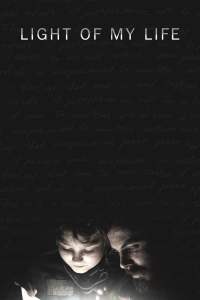 Light of My Life is written by, directed by, and stars Casey Affleck as an unnamed father to “Rag,” an 11 year old girl. This is made fantastical because they live in a time when a plague wiped out nearly all women in the planet 10 years ago. A baby Rag was one of the few who was immune, though her mother was not. Dad and Rag have spent 10 years living off the grid, because Dad knows there are plenty of dangerous men out there who would love to get their hands on a girl. When they do need to go into town for goods, Rag dresses as a boy and keeps quiet. However, she is approaching the age where that will no longer be possible. They go from camp to camp, always moving whenever Dad gets a bad feeling that they’ve been spotted or that people may suspect Rag is a girl, and always have a backup plan to abandon any camp quickly. When they finally find what looks like a safe place – an old house with a couple religious older men who seem to be protective of Rag – they are lulled into a false sense of safety. This is a quietly tense film, with edge-of-your-seat thrills. It was like watching a train barreling towards you from off in the distance, but you can’t seem to get out of its way, it has that kind of constant fear and dread. Great picture.
 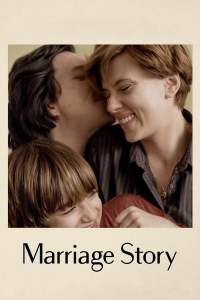 Marriage Story features two great actors in quite possibly their finest performances, and is one of the most raw, emotional, and saddest films I’ve seen in awhile. Despite what you might think about the title, it isn’t a love story about two people coming together, but it is about their love coming unglued. Nicole and Charlie (Scarlett Johansson and Adam Driver) were once deeply in love, and the film opens with each penning a letter about all the things they love about each other. The letters are heartfelt and endearing, but we learn right away that they were written as an exercise for their mediator, a first step in a conscious separation. As Nicole moves from New York back to her hometown of LA, taking their son with her, their separation heads towards contentious and hate-fueled divorce proceedings. The director, indie-film hero Noah Baumbach, does an amazing job of showing how sometimes love just isn’t enough, as Nicole and Charlie cared very much for each other, but they were just on different paths. Johansson and Driver are simply amazing in this film; I wouldn’t be surprised if they both don’t get nominations in this year’s awards’ cycle. The camera will at times stay glued to their faces, showing the intensity of their emotions as each runs the gamut from joy to hatred. A must-see film, just be prepared for the roller coast of emotion.
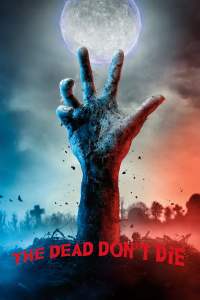 The Dead Don’t Die is proof that a lot of good moments do not always come together into a good movie. The latest from quirky indie director Jim Jarmusch, it brings his style of filmmaking to the zombie genre. The government has been doing some “polar fracking” which has spun the Earth off its axis. This has made the planet screwy, with electronics failing, days being randomly longer or shorter, and, most bizarrely, the dead start rising. Jarmusch brought in a bunch of actors he’s worked with in the past, so the film features an all-star cast including Adam Driver, Bill Murray, Tilda Swinton, Tom Waits, Danny Glover, Selena Gomez, and others. While the film has plenty of good moments and lots of funny dialogue, I couldn’t help but feel like the movie is just a bunch of fluff. Nothing that was all that memorable once it was over. I guess worthy of a single viewing, especially big Jarmusch fans, but overall, not great.
  Frozen was one of those films that didn’t need a sequel; it had a definitive ending with no more story to tell… until Disney invented more story to tell. Having said that, the sequel is good. Elsa is hearing a song from the north, and goes to investigate, aided by Anna, Olaf, Kristoff, and trusty Sven. Along the way, they unravel some of the backstory of their parents and, of course, save the kingdom again. The animation just keeps getting better, and the movie is visually stunning. The new songs certainly live up to the legacy of the first film too. For a movie that focuses heavily on magic, it lacks some of the movie magic of the first film: there are less surprises and some plot points are forced, but it is still great family fun for the cliché children of all ages.
 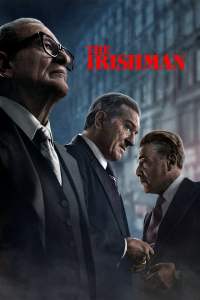 If you’ve been reading a lot of Martin Scorsese quotes in the news lately about his comments on the marvel films, it is from the context of him promoting his new film, The Irishman. This is a good old mobster film, based on a nonfiction book by Charles Brandt, which is itself based on confessions of mob hitman Frank Sheeran. Frank is portrayed by Robert DeNiro, and the film follows him from his early days as a young man in Philadelphia starting to do favors for mob boss Russell Bufalino (Joe Pesci), through his mid-life working for Jimmy Hoffa (Al Pacino), and up until old age, when he has outlived them all. It is an incredibly engaging story, full of incredible actors who haven’t lost a step, and playing in the types of roles they were born for. It’s a long one at 3 ½ hours, but it didn’t feel like it. Excellent pacing and deceptively funny dialogue too keep the wheels turning throughout. Who knows how much of it is true, but when the movie is this good, who cares.
 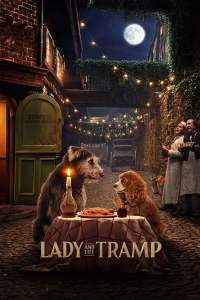 I haven’t seen the original cartoon The Lady and the Tramp since I was a little kid, but I have fond memories of it. I went into the new live action one with a bit of trepidation due to the mixed reviews, but I mostly enjoyed it. For anyone who was never a child (because that would be the only way you could have missed the original), the story is of a pretty female dog who lives a pampered life in a house, but finds herself neglected when the young couple have a child. She runs away for a short time and falls in love with a street dog who others call The Tramp. When she is reunited with her family, she misses her love, and teams up with other neighborhood dogs to save him from the pound. Like the live action Lion King, I still think the original cartoon is better, but still this is an above-average family fun movie with heart.
 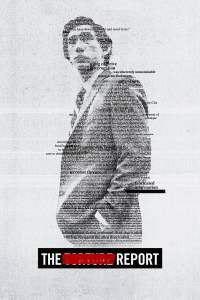 The Report is a new film detailing the hunt by a Senate-backed commission to get to the bottom of the “enhanced interrogation techniques” (torture) used by CIA operatives overseas. Adam Driver plays Daniel Jones, a staffer in Senate Feinstein’s office, who builds a report which said, despite what the CIA officially stated, tortue never lead to any reliable data to stop terrorism or to find Al Qaeda members. The first half of the film is great, as Jones does his digging and we see, through flashbacks, the way those techniques were given the green light: who knew what, when, and how. I thought the second half slowed down, as Jones fights the CIA higher-ups as they try to protect themselves, and the whole thing becomes a political fight. As a whole, it is a very interesting film. I’m sure people who bone up heavily on the constant stream of government news were aware already of much of the info portrayed in the movie, but for myself, I learned a lot about how widespread the initial plan and the following cover-up went. It does a good job of making sitting at a computer digging through miles and miles of confidential memos look exciting. And Adam Driver gets to show a lot more than he did in Jarmusch’s film.
 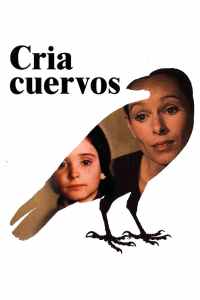 Up today is 5 Spanish language films (but not necessarily from Spain). I really enjoyed Cria Cuervos, from the great director Carlos Saura (I can’t think of a movie of his I have not enjoyed!). This one is a beautiful blend of realism and a daydream-like fantasy, from the eyes of a young girl dealing with the recent loss of her mom. It begins with Ana (played by Ana Torrent, famous as the young lead actress in Spirit of the Beehive) seeing her father die, but rather than be upset, she is pleased, and believes she is the one who killed him. As Ana’s aunt moves into the house to take care of her and her sisters, what follows is Ana going about her life in the present, but at times she has visions of her mom, or housekeeper, or dad, either memories or, at other times, events that she probably didn’t witness but can imagine how they went down. She sees her mother unhappy in her marriage to a strict military man, and Ana believes ultimately this unhappiness led to her mother’s death, for which Ana blames the father. These serious moments are interposed with moments of play when Ana and her sisters are just the children they should be, playing at dress-up. I cannot stress how much I loved his film, on its own merits, but even more so when you take into context of when it was made. Released in 1975 amid a time of extreme uncertainty in Spain (dictator Francisco Franco’s regime was crumbling, his named successor had already been assassinated, and the country was heading for its first change in leadership in nearly 40 years), this movie too has a sense of wonder, of anticipation, and of hope for a new beginning. Lots of not-too-deep metaphors, such as the death of military/dictator (the dad), the love/hate relationship with that figure (the mom), and the uncertainty of what comes next (Ana). Brilliant stuff.
  For the Luis Buñuel films I’ve seen, they’ve been hit and miss for me. I’ve really enjoyed the more linear plot-driven films, his more traditional stuff, but really hated his more esoteric stuff (I’m looking at you
 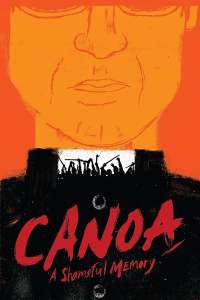 Canoa: A Shameful Memory is a Mexican film recounting the true story of a lynching of 5 young men in the tiny town of San Miguel Canoa in 1976. Parts of the film play out as a quasi-documentary, with actors relating directly to the camera the political environment at this time in Mexico, and others are acted out. Across the country, the state was wary of the rising political power of the younger generation, and spreading fear that they were communists and socialists (sound familiar?). In San Miguel Canoa in particular, a corrupt Catholic priest had stirred people to a frenzy. After the opening narration, the fateful day is acted out. 5 young employees at the university in Puebla come to visit to climb a local dormant volcano, but are stuck in the town overnight. due to heavy rains. While they find refuge in a local farmer’s house, a man who knows the priest for what he is, the priest stirs up the local population with news that the communists have finally come to their peaceful town. The whole town turns out and attacks the 5 young men, ultimately killing two as well as the owner of the house where they were staying. It is a stark, raw, emotional portrayal of what fear can do to a population.
 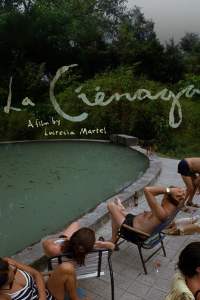 La Ciénaga is not a film I should like, but I did. It is a neo-realist picture heavy on plot elements but light on actual plot, not the type of film I like since I’m so into “stories.” But it is a fascinating picture. An Argentine film from director Lucrecia Martel and translated as “the swamp,” this film follows an extended family during one sweltering hot summer. Mecha is the matriarch; she’s an alcoholic living with her husband Gregorio in a crumbling manor in the countryside. Though the family probably once had money, it looks like it is evaporating. They still have a couple servants, but the house is falling apart around them, seen most clearly in the filthy pool the woman hang around all day. In the first scene of the movie, a drunken Mecha falls by the pool and cuts herself on a broken glass. This brings everybody over to visit: her sister with all of her kids, as well as her adult son. There’s too much going on to get it all in a short synopsis, but a lot is touched on, including some quasi-flirtatious actions between a brother and sister, extreme racism by Mecha and her family towards the American Indian servants, and the tight grip of a bourgeois past which the family can obviously no longer claim. The movie feels as real as the family next door and is mesmerizing in a voyeur-like way. We see a family in a way that is usually only kept behind closed doors.
 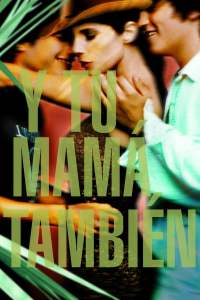 Y Tu Mamá También is an early film from director Alfonso Cuarón, who would go on to be a megastar with Gravity and, most recently,
  Booksmart is a movie that I didn’t initially care to see. I thought it was another stoner-, drunk-, orgy-kind of high school “coming of age” film that usually bores me to tears. I watched it only because there was nothing else to watch one late night on the streaming. I’m so glad I did; this film is fantastic. It is directed by Olivia Wilde (in her directorial debut) and is about two friends who spent high school playing by the rules and supremely focused on college and what comes next. On the last day of class, Molly is in the gender-neutral bathroom when she hears a couple boys and another girl talking about her. She comes out of the stall to put them in their place, telling them how she is going to Yale and they will always be losers, when her misconceptions are completely shattered. Just when you think, “yeah girl, you tell them!” they tell Molly that they too have been accepted into prestigious schools, or, in one case, has already landed a 6-figure job at Google. Molly is thunderstruck due to her low opinion of these classmates, and quips, “But you guys didn’t even care about high school.” Their reply, “No, we didn’t ONLY care about high school.” Molly and her friend Amy decide they’ve had it all wrong, that this whole time they could have had the best of both worlds, and decide to party it up on their last night of high school before they graduate the next day. It’s a coming-of-age movie for today’s kids, so the language and behavior is a lot rougher than you might expect of a John Hughes film of the 80s, but it is also just as good. Boisterous yet heartwarming, laugh-out-loud funny yet endearing, it has it all.
 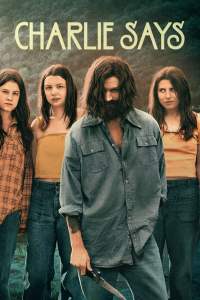 Charlie Says is the story of the Charles Manson murders from the viewpoints of the three most prominent women in the “Manson family.” Two separate timelines are shown: the first starting when “Lulu” (Leslie Van Houten) joins the group, up until the murders go down; and the second showing three years later, when the women are behind bars and a psychologist is trying to help them free themselves from Manson’s influence. From the beginning, the film shows how Manson is able to lure girls to his cult, with promises of leaving harsh lives behind and finding a new existence. But as the film goes, and Manson gets crazier, we begin to wonder how these girls fail to see what he has become. I don’t know how accurate the film is, this all went down before my time and I never read up much on these events, but even if half the film is factually accurate, it’s pretty nuts. There are some good moments and good actors, lead by Hannah Murray as Lulu (Gilly from Game of Thrones), but the movie does suffer from the usual paint-by-numbers syndrome that docudramas tend to, meaning heavy on facts and light on art. The ending also felt very disjointed for me, and there’s a definite lack of cohesion to the whole film.
 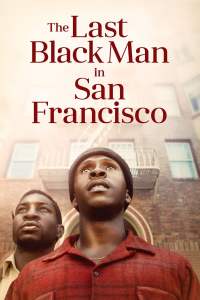 The Last Black Man in San Francisco is a very well-done film from first-time director Joe Talbot. Jimmy is a poor, homeless black man struggling to find his place in a changing city. He lives on the floor of his friend Mont’s house and works as a caregiver at an old folks’ home, but in his free time, is obsessed with a cool old Victorian home in a well-to-do area of the city. A little old white couple live there, and haven’t maintained the house in years, and Jimmy shows up to do some minor repairs here and their, work that is not welcome by the owners. After a little while though, Jimmy finds them moving out, and discovers the house is being argued over among the family after a death. A realtor tells him that in these kinds of familial disputes, some houses can stay empty for years, so Jimmy hatches a plan with Mont to move in and squat. We finally learn that it was Jimmy’s grandfather who built this house in the 40’s, but his family lost it decades ago when Jimmy was just a kid, due to his father’s drug problem. Things get murkier when the realtor backstabs them and throws them out and lists the house for sale. All of this is against the backdrop of race relations and racial injustices in the city, including a friend of Jimmy’s and Mont’s who ends up shot to death for thugging it up to the wrong person. Front and center is the friendship of Mont and Jimmy. It’s a good movie; if I can find any flaws, I think it is that they try a little too hard sometimes to force some elements, where I think it could have played better if the director had just taken a step back and let the magic happen. While I don’t think everything works, enough does to create a powerful and resonant film.
  Brittany Runs a Marathon is a film I’ve been looking forward to awhile, and even more so lately as I thought I could relate to the main character, as a person who started walking, then jogging in the last 5-6 months to try to lose a bunch of weight. But this film is a total bore. It’s supposed to be a comedy-drama I guess? It’s about an overweight young woman, Brittany of course, who is told by her doctor that she needs to lose weight. At first she can only run to the end of the street on her block, but obviously we know she builds to a marathon. She has a skinny-bitch friend who, obvious to the viewer but not to Brittany, likes to keep her around to feel better about herself; and she was just getting into a relationship when I gave up on the film. It’s just not funny, despite Brittany trying so hard to make it so. Honestly I found her character annoying and her attempts at humor were like nails on a chalkboard for me. I’ll give a star for the premise, but that’s it.
 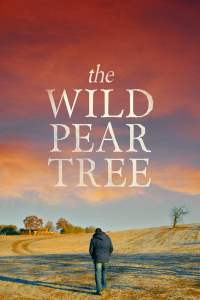 The Wild Pear Tree is a Turkish film directed by Nuri Bilge Ceylan. It is about a young man, Sinan, who has recently graduated from college with a degree in teaching. He studied teaching but actually wants to be a writer, and has already written his first book and is trying to scrape together money to get it published. Sinan has returned to his family in their small, rural town, and immediately starts clashing with them. His father is a teacher as well, and while he was once respected in the community, he has gambled away the family’s money, forcing them to move into a tiny apartment. Sinan is the young, hotshot, cocky college grad, who reminds me of myself (and probably many others) at that time of our lives, when we thought we had it all figured out. He looks down on his dad and his mom (for staying with the father through all this), can’t wait to leave the small town, etc. He even belittles the one local celebrity, a writer, because he thinks his books pander to the population rather than open new ideas. Sinan comes off as a narcissist and a bit of an asshole, but he’s just as conflicted as every flawed human being. He’ll deride his father one minute, and defend him the next. After finally getting his book published and confronting his family over their issues, Sinan, who did not score high enough on his exit exams to land a good teaching job, goes away to perform his military service (which is compulsory in Turkey). He returns a couple years later, hopefully a little wiser, but you’ll just have to watch to see. It’s a beautiful film, and the story does an amazing job of blending realism with Sinan’s poetic dreams. I rarely give five stars to modern films, because I don’t know how they’ll stand the test of time, but this one deserves it.
 Jons Movie Takes