

During the journey through these 100 books, I’ve read a lot I’d never been through before. I did however, once upon a time way back in high school, read John Steinbeck’s The Grapes of Wrath. It was so long ago that I only really remembered that it was a tragedy of epic proportions, and that nothing good happened to the family it centered on. Reading it now over 20 years later, it was fresh for me, but reaffirmed those memories.
The book focuses on the Joad family out of Oklahoma. The family consists of Ma and Pa, Pa’s brother Uncle John, the Joad adult children Al, Tom, Noah, and Rose, and the smaller children Ruthie and Winfield. Rounding out the clan is Pa’s parents, Granma and Grampa, Rose’s husband Connie, and family friend (and former preacher) Casy. The family has lost their farm due to years of declining crops as a result of the dust bowl, and are now being kicked off the land. Latching on to handbills that have been circulating promising work in California, they use a bit of saved money to buy an old jalopy of a truck, pour all their worldly possessions on it, and start the cross country drive, with less than $200 to their name.
Of course, everyone in the book has their issues, which I won’t get into here, but suffice to say, each member of the family has something they are dealing with, which they will each have to face (or choose to ignore) before the end. But don’t expect any good, happy endings here. Steinbeck wrote the novel to shine a light on the calamities faced by a good portion of our country during the great depression. The only good you see is the goodness that exists between people facing hardship together, both within the family, and from others facing the same problems. Even when they having nothing, they share what they can with others in need. But the hardships do pile up for the Joads.
On the journey west, Grampa (on the first day) and Granma (later on) both die. Noah gets fed up with the problems they are facing together and heads out on his own, with nary a goodbye to his family. Connie abandons his pregnant wife, Ruth, shortly after arriving in California. Once the Joads are there, they find, of course, life isn’t any better than what they left. The fliers promising work brought hundreds of thousands of people in situations like theirs, which has allowed the farmowners in California, mostly large corporations, to drive down workers’ pay to as little as a dollar a day in some places. People fight for even those jobs, because the only other option is watching your family starve. Most cannot find work at all.
The Joads do find a bit of luck at first, and are able to stay at a government assistance camp on their second day in California. It has running warm water, toilets, and a nice communal environment where people look out for each. But there is no work close, so 6 weeks in, they are completely broke. They use their last dollar to put some gas back in the truck, and leave to find work, and what little luck they found runs out. Casy is killed in an altercation with some local militia/hoodlums, and Tom kills the attacker, forcing Tom to go into hiding, later leaving the family to keep them safe. A huge rainstorm floods the area the family has been staying, destroying the truck and all their goods. Al leaves to marry his own girl, and Rose gives birth to a dead baby, probably from lack of proper nutrition. With nothing but the clothes on their back, Ma, Pa, Rose, Uncle John, and the little kids walk up the road and take shelter from the continuing rain in a barn. In these final pages, the most iconic image of the book takes place. They find a young man and his ill father, dying of starvation. Ma and Ruth share a knowing look, and Ma ushers everyone out while Ruth offers her milk to the man.
What can I say, it’s Steinbeck, so of course the novel is extremely well written. You get into the heads of everyone, and though the book mostly follows Tom, we see what makes each of them tick. Maybe my only gripe is Steinbeck doesn’t leave much to interpretation, he lays it all out and in some spots, drives home his point by reiterating ideas repeatedly. It’s probably what makes this point so popular in the school setting; it’s a well written book but doesn’t require deep introspective deciphering. Still, if that’s my only gripe, it’s a small one. I really enjoyed the book (again), and its eye-opening look at one of the terrible periods in our country’s history.
 Farhadi’s recent Oscar came in 2016 for The Salesman. It follows a married couple, Emad and Rana, who are actors in a new showing of Arthur Miller’s Death of a Salesman. Emad’s day job is a teacher at the local school, but the couple is struggling. Their current apartment was found to be structurally unsafe, so they are forced to move into a rough neighborhood. On their first night there, while Emad is late returning home, Rana is attacked in her home when she mistakenly lets a stranger into the building through its intercom. Emad finds out the person who rented the apartment before them was a promiscuous woman, and he believes a former “client” of hers is the attacker. Rana is obviously shaken up and doesn’t want to go to the cops, so Emad makes it is business to hunt down the attacker himself. Despite what you might think, it isn’t a thriller. It is a deep and heartfelt drama, taking the viewer through all of the emotions from both the husband and the wife. I was reminded of a great film I saw a few years ago with a similar premise, The Light of the Moon. Check out that one if you don’t like subtitles, but this one is even better.
 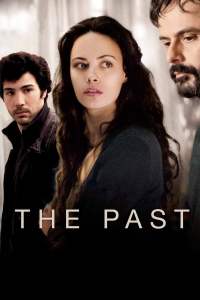 Farhadi’s preceding film was The Past, released in 2013. This one is about an Iranian man, Ahmad, returning to France to finalize his divorce to Marie, his estranged wife whom he left 4 years previously. Ahmad was husband # 2, and has a good relationship with Marie’s kids from her first marriage, especially teenage daughter Lucie. But he was not a great husband; they fought a lot and he was constantly absent. Her new guy, Samir, isn’t much better, and he and his son Fouad are dealing with their own problems, namely the suicide attempt of Samir’s wife. Samir and Marie had been having an affair, but he now feels conflicted since his wife lies in a vegetative state. All of these dynamics from this mixed family come to bear throughout the film. It is a deeply emotional, quietly contemplative movie, and while I felt it started to come off its rails for a few minutes in the latter half, it all comes together nicely in the end. Every character is this film is real: they each are flawed humans who at various times know and do not know what they want in this life. I ended up liking it even more than The Salesman.
  There’s a scene in the iconic Fiddler on the Roof where one character is right, and the opposing argument is also right, and a bystander quips, “They can’t both be right.” In A Separation, the opposite holds true: no one is right. Yielding Farhadi’s first Oscar win in 2011 (it was the first film from Iran to win), this film shows the classic example of pride and honor getting in the way of truth. Nader and Simin are getting a divorce (Simin wants to move to a country where their daughter Termeh will have more rights as a woman), but Nader doesn’t want to leave his father, who is suffering from Alzheimer’s. Simin moves in with her parents in the meantime, and Nader hires a woman, Razieh, to look after his father. Just a couple days into the new arrangement, Nader comes home to discover Razieh not there, and she has tied Nader’s father to the bed to keep him from moving about in his condition. When Razieh does show up, Nader is so upset that he shoves her out of the apartment. She falls down the steps, causing a miscarriage. Razieh’s husband sues Nader, but Nader claims he did not know she was pregnant. Everyone gets wrapped in the case, including neighbors, teachers, friends, and not the least of whom, Termeh, who sees her dad Nader in a whole new light. Don’t expect a happy ending for anyone. If you are only used to life in the USA and not familiar with other cultures, especially in the middle east, this film is eye opening. The court system in particular is frenetic, with fast-paced calls for witnesses, quick judgments, and the inclusion of religious beliefs into decisions. It’s a very emotional piece.
  The greatness continues in 2009’s About Elly, maybe the most human of these films so far. A group of young adults, life-long friends, have rented a villa by the sea for a weekend. The group consists of married couples and a few young kids, and sole single man Ahmad, but Sepideh has plans to change that. She’s invited her kids’ teacher Elly to come as well, and hopes to make a match. From the get-go however, the shy (or traditional) Elly seems uncomfortable around the partying antics in the group. After just one night, Elly talks to Sepideh about returning home early, but Sepideh begs her to stay. Elly is left to watch the kids while some of the women go into town, and the men play volleyball nearby. When one of the children runs to the men screaming that another child is drowning in the sea, everyone runs in to save him. Only afterwards do they realize Elly too is missing. Did she drown trying to save the boy, or did she return to town without telling anyone? The human need to protect yourself comes out, as these friends blame each other for faults that led to this event, and then lie to save face. It’s a raw and emotional film, as I’ve come to expect from this director by now, and another excellent picture.
 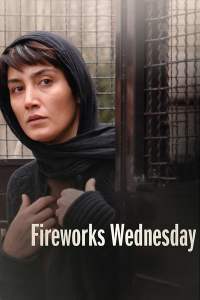 Fireworks Wednesday was the director’s third film, released in 2006. You can tell he’s still a young director learning his craft. It is a fine film, but lacks the subtlety and humanism of his later pictures. The film follows a young betrothed woman, Rouhi, who goes to work for a married couple. The picture is a single day, her first (and maybe only) day on the job. She’s been hired to help clean Mozhdeh’s and Morteza’s apartment before they go on vacation, but she enters a household in flux. Mozhdeh is convinced that Morteza is cheating on her with a neighbor, Simin, who runs a salon out of her place. Mozhdeh clandestinely sends Rouhi over to Simin’s to get her eyebrows done for her upcoming wedding, for some reconnaissance. When he finds out about Mozhdeh’s worries, Morteza vehemently denies it. This picture from a story standpoint is the weakest of the set, but Farhadi does manage to pull fine performances from his actors, and there are glimpses here and there of the greater things to come.
  1917 is right up there with the best movies I’ve seen recently. It is loosely based on various missions director Sam Mendes’ own grandfather, Alfred Mendes, undertook in World War I. The film plays out over a single day, in spectacular almost-real time, and deceptively shot to look like a single, long take. This manages to pull the viewers into the action and characters in an immeasurable way. In the film, Schofield and Blake must cross a no-man’s land, past the German front, to find a battalion of British soldiers who are planning an attack on the Germans the next day at dawn. At stake is the lives of 1600 men, including Blake’s older brother, because the attack is doomed to fail. Not only is Germany ready for it, but they’ve set a trap to lure the British soldiers into the attack on their terms. As the two young soldiers creep across dangerous lands, stumbling across multitudes of dead bodies and the signs and leavings of war all around them, they are on a race against time to get their message through. It is 2 hours of heart-pounding action and suspense. The couple times when our heroes get a rest, allowing the viewer to take a breather as well, are only short enough to calm the heart for a brief spell before the action picks up again. This is a tremendous film, I’m confident it is going to go down as one of the greatest war films of all time. ★★★★★
 Angel Has Fallen is the third film in the Gerard Butler secret service films. I really liked Olympus Has Fallen back in 2013, and in 2016, despite terrible reviews, I thought London Has Fallen was still pretty good. But the third film has fallen off the rails. Head of secret service Mike Banning is set up as the perpetrator of an assassination attempt on the president, and he goes on the run. He knows early on who is behind the attack, so Mike goes on a quest to clear his name, while he is pursued by the FBI as the lead suspect. All of this is being run by a shady, faceless bad guy who is pulling all the strings, and who also says the most eye-rolling, cliché-ridden lines ever put to film. The previous film suffered some of that, but the action saved it in my eyes. That is no longer the case, even the action is ridiculous now. ★
 Hala is a high school senior growing up in the USA. She has all the same issues most typical girls of that age do, and on top of it, she struggles with her parents and their deep Muslim faith and traditions. Her dad is the typical “cool dad” and she likes him more, but she finds her more traditional, Arabic-speaking mother overbearing and too conservative. Hala’s 18 years old, so talk is starting to circle about her finding a good Muslim man to marry, but she has a crush on a white boy, Jesse, at school. Against her parents’ and their faith’s wishes, she starts hanging out with him alone, when others aren’t around. It is on one such date at a diner when she sees her dad out with another woman. This pushes her to be more rebellious, and she has her first sexual encounter with Jesse. Her dad suspects something immediately, and all of a sudden, he’s not the nice one anymore. Hala starts to see aspects of him she never picked up on before, and comes to realize her mother is only the traditional homebody wife because her husband made her so. One night, her parents invite family friends over with their college-age son, in what is obviously an attempt to set up their children together. Hala runs from the house, pulling her hijab out in frustration. Her life is in turmoil, and she does some things that have real world consequences outside of her own life. The film is narrated throughout by Hala’s journal entries, in an introspective and poetic way. It’s a good film, a different take on the tried-and-true coming-of-age, self discovery kind of tale, though the second half is a bit choppy and not as cohesive as the first. ★★★½
 I was pretty excited to see Ms Purple. It is from director Justin Chon, and I really dug his film Gook a few years ago. Gook felt real, and raw, and unfortunately Ms Purple feels contrived. For one, it takes a long time to get going, and by long, I mean nearly half of its 90 minute length. We are introduced to Kasey and her estranged brother Carey, adult Korean Americans who are living pretty effed up lives. Kasey is a high end prostitute/escort at night, and takes care of their comatose father during the day. When her live-in caregiver quits, Casey calls Carey asking him to move in and take care of their dad while she works. Carey is jobless and aimless. It isn’t until much later than we learn their individual issues stem from their parents. Their mom abandoned them both when they were kids, and their dad was really horrible to Carey, which is what led to Carey moving out of the house at the young age of 15. Now back home, Carey has taken to wheeling his dad out of the house during the day, bed and all, but he doesn’t know how to properly care for him, leading to large bed sores on the dad’s back. The whole film has a feeling of trying to be something deep and penetrating, but really it’s just a shallow, simple story, with nothing memorable to latch on to, and (nearly) a complete waste of time. Some fine acting by Tiffany Chu in the lead is the only saving grace. ★½
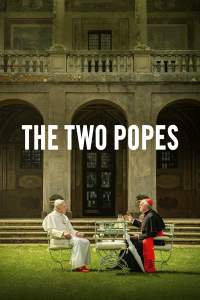 The Two Popes is a biographical drama, mostly focused on Cardinal Jorge Mario Bergoglio (who would go on to become Pope Francis), showing his relationship with Pope Benedict XVI as well as his past as a young priest in Argentina. The film, understandably, is heavily dialogue driven, and the banter between the two men was the highlight for me. Benedict is a very conservative figure, loving the pomp and pageantry of his office, whereas Bergoglio very much believes in simplifying the church, bringing it to the people, and also moving the church ahead with the times. Their opposing views create some fantastic dialogue in the film, but other parts bogged down and honestly at times, the movie’s pacing was a bit slow. The actors themselves are great though; Anthony Hopkins is always on obviously, but Jonathan Pryce as Bergoglio is the real show. Pryce has been around a long time, but received just his first Oscar nomination for this role. I’m not Catholic, I don’t know much about the inner workings of the church and its politics, but I mostly enjoyed this film as a picture in time. ★★½
 Going to look at various foreign films from around the world today, starting with The Insult from director Ziad Doueiri from Lebanon. It shows when a fairly simple argument can blow up when religion and/or cultural differences get involved. Yasser is a foreman for a construction crew. As a Palestinian refugee, he isn’t allowed to be an engineer in the country, but he runs his crew well as foreman. He’s doing renovations in an area when he gets into an argument with a resident, Tony, a Lebanese Christian. Over a couple days, the verbal back-and-forth becomes violent and Tony is injured. He ends up suing Yasser, and the lawyers ratchet up the rhetoric. Lots of old prejudices are brought up. The filmmakers examine everything, from the plight of Palestinians without a country of their own, to brutal tactics used by both sides during the endless wars the region has gone through, to (false) accusations against Tony for being a Jewish sympathizer, which of course bring threats against him. Violence erupts in the streets as tensions in the courtroom boil over into the public. I’m aware of the generations of animosity in that region, but having never lived there, there are moments in the first half of the film or so when I thought the premise was a bit ridiculous. By the end, it does a good job of showing to those like me who aren’t as well-versed in the history of these wars what it has meant to those living there. A strong film, with some powerful moments.
  Embrace of the Serpent is a Colombian film from director Ciro Guerra. I’ve seen one other film of his, Birds of Passage, which was so-so, but this one is fantastic. It follows two timelines, 30 years apart. In the early 20th century, German scientist Theo von Martius has been exploring the Amazon, but has become ill. He gets help from an indigenous warrior, Karamakate, to hunt a mythical cure-all plant called yakruna, which may heal him. 30 years later, another man, Evan, is supposedly after the same plant, and is following Theo’s notes. Evan runs into an older Karamakate and asks him to be his guide. We sense early on that there is more to Evan’s story, but what that may be remains to be seen. In both stories, we see Theo and Evan with their guides travel through the jungle, mostly by river, as they encounter mad religious zealots, rubber plantation atrocities, and the dangerous jungle itself. Shot in beautiful black and white to mimic the old photos we associate with those early explorers, the film shows a wondrous and unforgiving land, and one which seemed to be fighting a losing battle with European colonizers for a way of life they could not hold on to.
 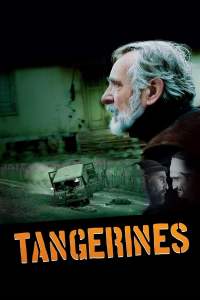 Tangerines comes from the countries of Estonia and Georgia, and is directed by Zaza Urushadze. It takes place in 1992 inside Georgia. With the USSR falling apart and its former states declaring their independence, war has broken out between the native Georgians and Russia-backed Abkhazian separatists, mostly mercenaries. In a tiny farming village, many have already fled for the more peaceful Estonia, but two older men are still tending a tangerine farm. One is hurrying to get the crops down so he can take them Estonia to sell, but the other is hinting that he will not be leaving with him, but his reason isn’t discovered until the very end. One night, a gunfight comes to their doorsteps, and there are just two survivors, one from each side of the conflict. As the farmers tend to the wounded, the enemy soldiers vow to kill each other once they are healed up. As they get better though, they get to know each other, and each discovers the meaninglessness of the war they are fighting. This is a great “intro” for people just getting into foreign films, or people wanting to watch a contemplative picture but which still has some movement and action, and isn’t “too deep” nor overly long, coming in under 90 minutes.
 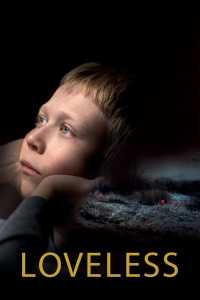 Loveless comes from director Andrey Zvyagintsev out of Russia. It is about the breakup of a marriage, but not in an endearing way like the recent Netflix film A Marriage Story. Boris and Masha hate each other. Each person has all ready moved on, she to an older more successful man, he to a younger (already pregnant) woman. The worst of it all, neither wants to take their 12-year-old son Alyosha with them to their new life. This one is hard to watch from the very opening 20 minutes, where a scene shows the mom and dad fighting about who is going to be forced with the child, and he can hear them all from the room down the hall. Watching him quietly sob is heartbreaking. The next day, each parent goes to stay the day with their own new loves and don’t return to their home apartment until a full day later, during which time Alyosha has run away. The rest of the film is a search to find the boy. The investigators realize immediately that the parents don’t really love him and are only going through the motions out of a sense of societal obligation, and to try to hurt the other parent. The film takes a really long time to get going: 20 minutes of introduction, followed by 30 minutes of watching the adults have sex with their new partners and talking about how much they hate their previous lives, and then a fruitless search. I honestly didn’t care for them as people obviously, and the one person to root for, the boy, seems to be a side story in their lives and the film itself. Powerful? Undeniably. But a good film? That’s debatable.
  Ending on a positive note. The last film comes from Turkey and director Ildiko Enyedi. On Body and Soul is one of those beautiful, quiet dramas that you just have to sit back and appreciate. Endre is one of the higher-ups at a meat processing plant, and they hire on a new girl, Maria, as quality inspector. Maria is deep on the autistic spectrum; she abhors physical contact, doesn’t understand any social cues, and isn’t in touch with her emotions. But she and Endre have something in common: every night, they have the same dream. In their dreams, he is a stag, and she a doe, and they wander the forest together doing various deer things. Endre, an older man with a crippled left arm, gave up dating years ago, and Maria has never dated before, so they are shy and apprehensive to each other, but their relationship slowly grows over time. I was really into this film for the first two thirds or so. It hit a lull for awhile there in the latter half, where Endre pulls away, which confuses Maria even more, but the ending is great. A really touching film.
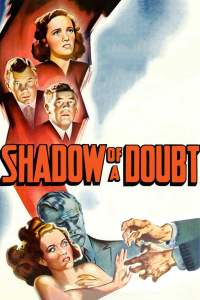 I’ve reviewed many of Hitch’s earlier films, and now I’m getting into some of his more famous pictures, but still ones I’ve never seen. Hitchcock is on record for saying 1943’s Shadow of a Doubt is his personal favorite. It features a pair of big stars of the 1940’s, Teresa Wright and Joseph Cotten. Charles Oakley is a bachelor from the east who returns to California to visit his sister and her family, including his niece Charlie, who is named for him. Charles seems a charming man, showering the family with presents, but Charlie almost immediately begins to suspect something is up. Things don’t get any better when a pair of investigators show up, under the guise of reporters doing a story about the “all-American family,” and Charles refuses to have his picture taken. When Charlie unearths the real reason the investigators are digging into her uncle Charles, that he is a suspect in murders of wealthy widows back east, she is shaken, but keeps the secret to herself, not wanting to stress her mother in particular. I liked this one quite a bit. It has a lot of heart, a strong plot, and doesn’t have as sudden an ending as many of Hitchcock’s other films; he wraps it all up nicely.
  I seem to constantly forget how great Ingrid Bergman was, until I watch a movie like Notorious. Paired with Hitchcock (and America’s) fave, Cary Grant, Bergman plays Alicia, the daughter of a Nazi German spy who’s just been convicted and sentenced for his crimes. Alicia is recruited by Grant’s Devlin, a government agent, to do a mission for the good ol’ USA in Brazil, but even he doesn’t know the details. The pair arrive in Brazil and just as they start to fall for each other, they learn about the job: Alicia is to use her family’s history to get close to Nazis who have fled to Brazil to avoid prosecution, and to seduce one of them who used to have the hots for her, in order to dig up dirt and see what the remaining Nazis have planned. What a tremendous film. Besides the spying and suspense, Devlin is obviously sending out a girl he cares for into a dangerous situation, knowing she’s with another man. He doesn’t want to love her, because he knows about her former partying days, but he can’t help himself. Grant is great as the conflicted lover, it’s hard not to like anything he’s in, and Bergman is eye-arresting in every scene she’s in. Hitchcock often toyed with the Hollywood censors with his sexual innuendo, but he is downright brazen in this film, especially for 1946. It’s a brilliant high-stakes spy thriller, called by some to be Hitchcock’s best.
 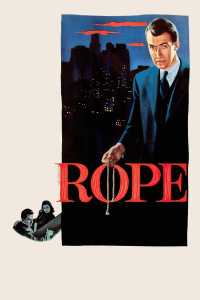 Rope followed in 1948, and was Hitchcock’s first color picture. The picture’s name is used in the opening scene of the film, as a murder weapon. A pair of men have just killed a man, just for the thrill of it, and because of a warped sense of superiority over the victim. They’ve stuffed his body into a large trunk in their living room. To add to their sense of power, they’ve planned a get-together that evening, in the very room where their now-dead friend is lying in his temporary resting place. The film has a lot of comedic wordplay, including lots of morbid humor related to the body a few feet from the unknowing visitors. John Dall and Farley Granger portray the perpetrators, with legendary James Stewart playing a former teacher and intellectual who picks up on the subtle hints that something is amiss. It is a quietly gripping film, with slow-building suspense especially in the latter third. There’s a scene after dinner where the maid is clearing the food off the trunk, in preparation to put some books back into it, all while the guests are chatting about the missing friend, that is pure Hitchcock thrills. The film is a technical masterpiece too. It is shown in real-time and has the illusion of being several long takes, though the length of film did necessitate cuts. It was later edited in such a way to make it appear to be just a couple shots.
  Rear Window is one of the director’s most famous pictures, and one I’m ashamed I’d never seen before. Many people know the gist of the story. James Stewart plays Jefferies, a successful photographer who’s been holed up in his tiny apartment for 6 weeks due to a broken leg. The only thing he can do is look out the window at his neighbors, and he’s followed their routines for these last few weeks. One particular couple, an older man with his nagging wife, becomes the central plot of the film. One night during a particularly bad storm, Jefferies hears a scream, and then watches the husband leave and return to the apartment several times over the course of the night, always with large suitcase in hand. Jefferies thinks the wife’s been killed, and the body taken out in pieces. The next morning, Jefferies tells his physical therapist his little hunch, which she laughs off, but then Jefferies sees the suspected murderer putting away a very large saw and knife, and later, Jefferies’ girlfriend thinks there may be something to it. This fuels his suspicions, and ratchets up the suspense. The final 15 or so minutes is some of the most psychologically scary moments on film that you’ll ever see.
 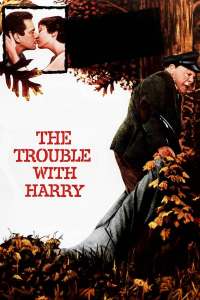 Finishing up with one of Hitchcock’s lesser known films, The Trouble with Harry, from 1955, though it is noted as Shirley MacLaine’s film debut. It is also very different from the above films, and most other Hitchcock movies, as it is a comedy, albeit a dark comedy, and even has a romantic element to it. The trouble with Harry is that he is dead, his body found in the woods, and no one who stumbles across the body (and hilariously, many people do) seems to care too much. No only that, but there is more than one person who thinks they are responsible for the murder. It seems the whole town gets involved in Harry’s business, or lack thereof, before the end. I really enjoyed the first half of this film, but the weirdness of it wore off after awhile. Many (most?) Hitchcock films have some funny dialogue here and there, but this film is the result when you write a movie full of it, and it doesn’t work as well as you’d think. I’ll give it an average rating for the good moments.
  I never watched Dora the Explorer, never had any kids into the show, but Dora and the Lost City of Gold looked cute, so I thought I’d give it a chance. The movie starts out with the little 6-year-old Dora of the TV show, being raised in the jungle by her parents, but quickly jumps ahead 10 years to a teenage Dora getting ready to move to the city for the first time in her life. Dora is completely unprepared for the city, and the city is unprepared for her. Her one-time sidekick, cousin Diego, has lived in the city all these years and is initially embarrassed by Dora’s naivety and complete lack of social skills. When Dora and some classmates are kidnapped to a South American jungle by treasure hunters, after the fabled Incan City of Gold which Dora’s parents have been hunting for years, their adventure really starts. Isabela Moner is cute as a button and portrays Dora with infectious good cheer, and her exuberance permeates through the tv, but I wasn’t buying it all. This is a family film that is definitely geared towards the youngsters, and has a few too many cliches for the older crowd to enjoy.
  Luce is a good kid, a senior in high school, on track towards a seemingly bright and successful future. Adopted as a child from war-torn Eritrea, he was raised well and never has given any reason for anyone to doubt him. Yet he is surrounded by circumstantial evidence that he has a darker side. A class assignment has him write an essay from the point of view of an historical figure, and his pick is a revolutionary who called for violence to end colonialism. He does the paper so well that it negatively grabs his teacher’s attention. Luce was in the vicinity when a classmate was sexually assaulted. He had illegal fireworks in his lockers, but claims they were someone else’s, as he and his friends all share lockers. The only person that doubts Luce is that teacher, but whether she’s right, or she has a vendetta against him, isn’t apparent to the viewer. This is one of those “thrillers” where all the suspense is created by the unknown. There is an obvious racial angle, with Luce being black and raised in a white household in an upper-middle class neighborhood, but it is so much more too. Luce is smart, smart enough to realize he is hampered by both expectations to succeed by some, and by others, expectations to fail. Tremendous, multi-layered film with a fantastic ensemble cast.
  Official Secrets reminded me of another recent historical film, The Report. Like that picture, this one focuses heavy on the facts of a moment that many people may not be terribly aware, and frankly by itself, though important, may not be all that riveting as viewing material, but which features strong actors to try make it work. The Report succeeded for the most part, Official Secrets does not. This one follows a woman in the intelligence community in the UK, Katharine Gun (Keira Knightley), who leaks a memo to the press that the USA has been gathering intel on UN diplomats, in a bid to perhaps blackmail them into voting to legitimize an invasion of Iraq, despite intel that Saddam Hussein in fact has no WMD’s. The second half of the film, where she is busted and brought to trial for being a whistleblower, is boring as hell. I almost made it to the end of the movie, but finally gave up. There’s some good, recognizable actors in this one, but the script is as dry as a desert.
  The Farewell is just one of those quiet, beautiful movies that make you feel good. Awkwafina, who burst onto the scene the last couple years in comedic roles in Oceans 8 and Crazy Rich Asians, takes on a more serious part as Billi. Raised in the USA since the age of 6, she returns with her parents to their native China, ostensibly for the wedding of Billi’s cousin, but really to visit her Nai Nai (grandmother), who has terminal lung cancer. In Chinese tradition, none of the family is giving Nai Nai the news of her impending death, forecasted just months away, and she thinks she is just fighting a bad cold. Raised “in the west,” Billi doesn’t understand this tradition and thinks Nai Nai should know the severity of her condition, but she is cowed by all the rest of her family, including her parents. As the wedding approaches, Billi has to come to terms with the differences in cultures from which she was born versus where she was raised. Despite sounding very somber (and it is at times), the film has moments of levity that prevent it from becoming a dirge, such as the time when the family has to rush to the hospital to intercept Nai Nai’s recent test results before she can read it herself. It’s a lovely film and a fantastic role for Awkwafina, nabbing her a Golden Globe.
 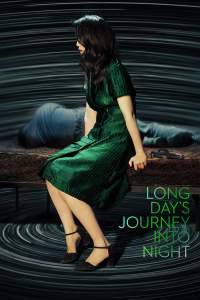 Followed up a film predominately in Chinese with one completely in it, but Long Day’s Journey Into Night is much less linear. Our main character is a man in search of a lost love, and the film starts with a trip through his memories. There’s no clear path through them either. He remembers his girl, his deceased father and surviving mother, and his friend who had been murdered. The memories are disjointed, out of order, and like our own memories, probably not exactly accurate. In fact the same actors play a couple different characters, intentionally I think, to mimic the infallibility of human memory. The director (Gan Bi) uses running water to great effect to signify the flowing of time; water drips everywhere in these memories, from faucets, from rivers, from the sky. The second half of the film is what everyone brings up when they talk about this movie. There is a single, hour-long cut in real time (and shown in 3D no less) following our main character through a dream of his. He’s fallen asleep in a movie theater, and the hour is one long continuous shot of his journey through his dream. And he’s not just sitting in a room. The camera follows him as he walks through a mine, then a nearly abandoned town. There are some truly astounding sequences, including when he takes flight over the town. How the camera pulled all this off is astonishing. It reminded me of other famous long shots where a lot was going on, like the hallway fight scene in Oldboy, the street-side pan of Godard’s Weekend, and the battle at the hospital in Children of Men. Those were all amazing, but this one will amaze you. (And it’s a good, thought-provoking movie too.)
  I’m a little torn on Judy, starring Renee Zellweger. I was wanting a true biopic about Judy Garland, but instead the film focuses on her final year of life, with a few flashbacks to her early career working for Louis B Mayer at MGM, as she prepared for The Wizard of Oz. In 1968 or 69, Garland is broke and in debt. No one in the USA wants to hire her, what with her reputation for not showing up on time and being hard to work with. With no prospects and the very real possibility of losing her kids to her ex-husband, she signs on for a series of shows in London, where she is still very popular. With most of the film looking at her as an aging, bankrupt star, struggling with addiction, it is a very good picture, just not what I expected. Zellweger gives it her all, and there are moments when the camera is in just the right spot that you forget that it isn’t Garland herself in front of you. It does a great job of showing Judy as a woman who loved to please the crowd, often to the detriment of her own health, but also a person with very real demons that, in the end, she wasn’t able to shake. ★★★
 Some books just don’t translate well on screen. By all accounts, The Goldfinch is a fantastic read, but the movie, while it has a few nice moments, never realizes its grand expectations. After a short, cryptic narration, the film becomes a flashback when Theo was a young teenager. He’s one of a few survivors after a terrorist has blown up an art museum in New York. His mother is killed, and with no other family (his deadbeat Dad has disappeared), he goes to live with a classmate’s family. He is treated kindly, and just as he starts to feel at ease, his Dad shows up and takes him off to live in Nevada, where the only saving grace is an immigrant friend he makes, Boris. Theo’s time with his alcoholic, abusive father is awful, until finally Theo runs away and makes his way to New York alone. The title comes from a piece of art, once thought destroyed in the bombing, which Theo has secretly kept it in hiding all these years. Unfortunately the end of the film is very weird, doesn’t fit at all with the rest of the picture. The movie features good acting by Ansel Elgort in the lead, supported by Nicole Kidman, Sarah Paulson, Jeffrey Wright, and Luke Wilson, but good actors can’t save the subpar script. I stuck through the film hoping all the pieces would come together in the end, but they never add up to anything grand.
  BrightBurn is a low budget sci-fi horror film with some big names behind it. It is about a husband and wife, Kyle and Tori (David Denman, Roy from The Office fame, and Elizabeth Banks), who want a baby but have been unable to conceive. Their prayers seem to be answered when an alien spacecraft crashes outside their rural farm, housing a baby, Superman-style. They raise Brandon as their own, and 11 years later, he seems to be a normal boy. However, when the buried spaceship comes alive, it brings out a sinister side of Brandon, and also seems to awaken his superpowers. Let’s just say, he’s not a good guy. Brandon gives in to his anger too easily and starts killing. It’s a decent horror flick, though it does fall into the trap of many low budget such films and really ratchets up the gore in the latter third of the flick. The film is produced by James Gunn of Guardians of the Galaxy fame, and takes place in the same world as one of his early pre-fame pictures, 2010’s Super.
  Ever wonder where the term “Stockholm syndrome” came from? The film Stockholm answers your question. As it states in the opening credits, this movie is based on an absurd but true story. Lars Nystrom is a not-very-bright crook when he walks into a bank one day, not to rob it, but to use the hostages as leverage to free his buddy from jail. The cops do just that, but soon become wise that Lars’ bark is a lot worse than his bite, and that he has no intention to hurt those with him. Ethan Hawke plays an over-the-top robber, with a fine supporting cast including Noomi Rapace as Bianca, one of the hostages. That duo make the film, because as a picture, it is just average. It is worth watching for those acting chops though. In my opinion, Hawke has really upped his game these last few years; it’s getting to the point where I will watch anything with him.
  Speaking of watching anything with him. Joaquin Phoenix is very picky about what he’s in, and they aren’t always good films, but his performances are always spot on. Joker is his latest. An origin story of how one of the greatest comic villains came to be, Phoenix plays a man, Arthur, and his descent into madness (which isn’t a long trip). We’ve seen it done before, like Jack Nicholson’s version in 1989’s Batman, but the Joker isn’t falling into a vat of acid this time. In fact, this is one of the most believable ways it could happen. Arthur is a man who the system has let down. Suffering from mental health problems due to abuse as a child, unable to get his meds or therapy due to cuts to social programs by the city, and plagued by a disorder in which he laughs uncontrollably when he’s nervous, Arthur certainly feels like the world is out to get him. When he finally snaps, it seems like that was the only outcome you could expect. I loved the film. It isn’t related to the current DC Universe films and stands by itself, but I hope a sequel gets made to see Phoenix’s Joker go up against the Bat.