A profound life explored in The Imitation Game

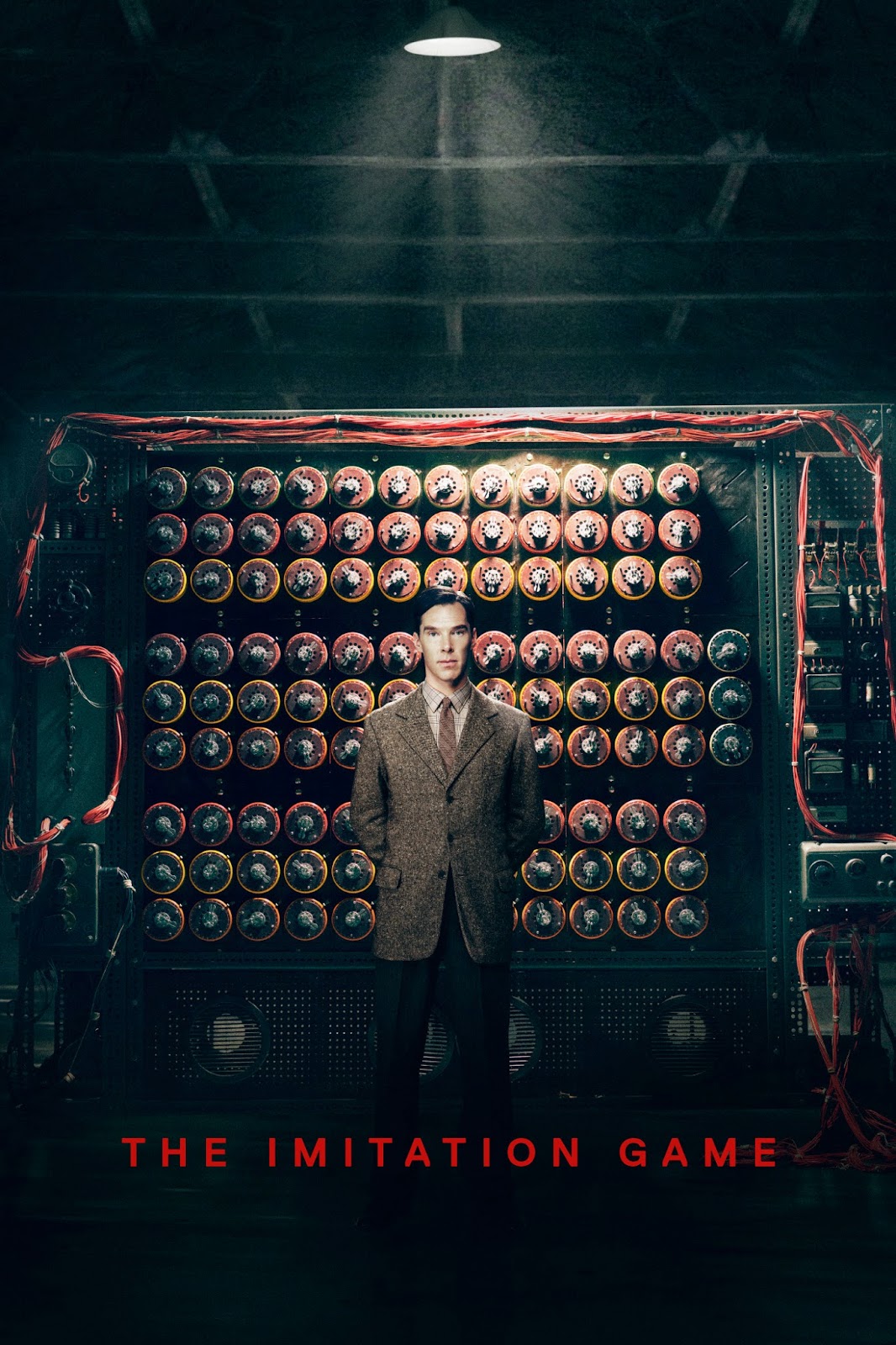
The Imitation Game is the best movie I’ve seen since Birdman, and easily a top 5 for me for the year. It is the engrossing story of Alan Turing, portrayed brilliantly by Benedict Cumberbatch. Turing is an English mathematician who, with a top secret team of geniuses, was tasked with breaking the German enigma machine during World War II. He was a man with a lot of personal and professional issues, but he went on to be one of the leading founders of computer science.

The movie takes place over three windows in time. We start with Turing in the 30’s. He is shown the German enigma, a code-making machine that no one has been able to crack, due to it being capable of 159 million million (a whole ton of zeros) configurations. And every night the Germans reset it to a new scenario. The team spends every day trying to crack just one message, but ultimately fails again and again. Turing knows it is a losing proposition, so he theorizes a machine that can calculate the algorithms faster than a human possibly could.

We also see Turing in flashbacks as a young teenager, struggling with other children due to his (undiagnosed, obviously due to the time in which he lived) Autism or Asperger’s. He doesn’t pick up on social cues and is awkward. He is having a hard time dealing with his own homosexuality, in a time with it was not only frowned upon but illegal. We also see moments after the war, in the early 50’s, when Turing has been apprehended for his lifestyle.

The film is brilliant, not only for the incredible odds Turing and his team (among them Joan Clarke, played by Keira Knightley, a woman trying to do a “man’s job”) overcame, but for the heart wrenching ordeal he had to go through in his life. And being a 2 hour movie, it could only tell so much. I’ve been reading about him the rest of the day since, and it is remarkable that his life has stayed out of the mainstream consciousness. See this movie, it will open your eyes and your heart.
The Gambler holds on a soft hand

This movie was just all right. It features Mark Wahlberg as Jim, and Jim owes a great sum of money to the kind of people you really don’t want to owe. He laments his position and life choices to his college english class, where as the author of a somewhat highly praised novel a few years ago, he is an associate professor. He continues to dig deeper holes for himself, making things worse when his mother cuts him off.

It is hard to feel sorry for Mark’s character. He comes from wealth, has had a pretty easy road for most of his life, yet doesn’t seem to care about anything and just feels sorry for himself. He talks a big game about what we as a people should do with our lives and abilities, yet seems comfortable doing nothing himself. The dialogue in this film is pretty great from start to finish, but it hides a fairly mediocre plot which takes a meandering path with weird offshoots here and there. There are great supporting parts by Michael K. Williams and John Goodman, with the banter between them and Wahlberg being the real highlights of the film. But overall it is pretty forgettable and not worth more than a single viewing on the basic cable circuit when it makes it there.

The Hobbit fails to reach the top of the mountain

It’s finally here, the last Hobbit film and (supposedly, unless they start doing stories from Silmarillion or something) the last of Peter Jackson’s Tolkien films. I’ve been disappointed in the Hobbit films almost from the beginning, and while this final one did tie it all together to a somewhat satisfying conclusion, as a series it never reached the heights that the Lord of the Rings movie trilogy did.

I should confess that these books are some of my absolute favorites of all time. They are a few of the books that I have read multiple times, pulling them out ever 5 or 7 years or so. The original movie trilogy did the books great justice. There were changes of course, but the theme and intent stayed true and it felt in character. The Hobbit movies have been different from the start. Not only were there sweeping changes to the plot and plenty of additions (taking a rather small book and expanding it to 3 long films), but the feel was far different. The Hobbit book was simply an adventure by Bilbo and the dwarves, with little real world ramifications outside of their group. The film series made it out that it had dire consequences for all of Middle Earth, in the vein of the LotR. A lot of the playfulness and light-hearted moments were missing or subdued.

The final film was also far too heavy, even for being “The Battle of Five Armies” (the final battle which went on and on and on…). Thorin’s character was reduced to a slow-motion grumbler. It almost seemed he was a caricature, his dialogue was long and low and dark, drawing out each word he said and in perpetual “sleepy eyes” mode, looking down his nose at any he spoke to. But unfortunately he was not the only one prone to long, thoughtful gazes off in to space, it seems every other scene featured someone deep in thought, even if no idea was put forward. It all felt very silly after awhile.

The film does show the final outcome, and even though again Jackson made a half a million changes to the final battle, at least it is over. The final Hobbit film will probably be popular among the average movie-goers, but for others like myself who cherished the books, you may be saddened by what was done to the series. It really should have ended after Return of the King.

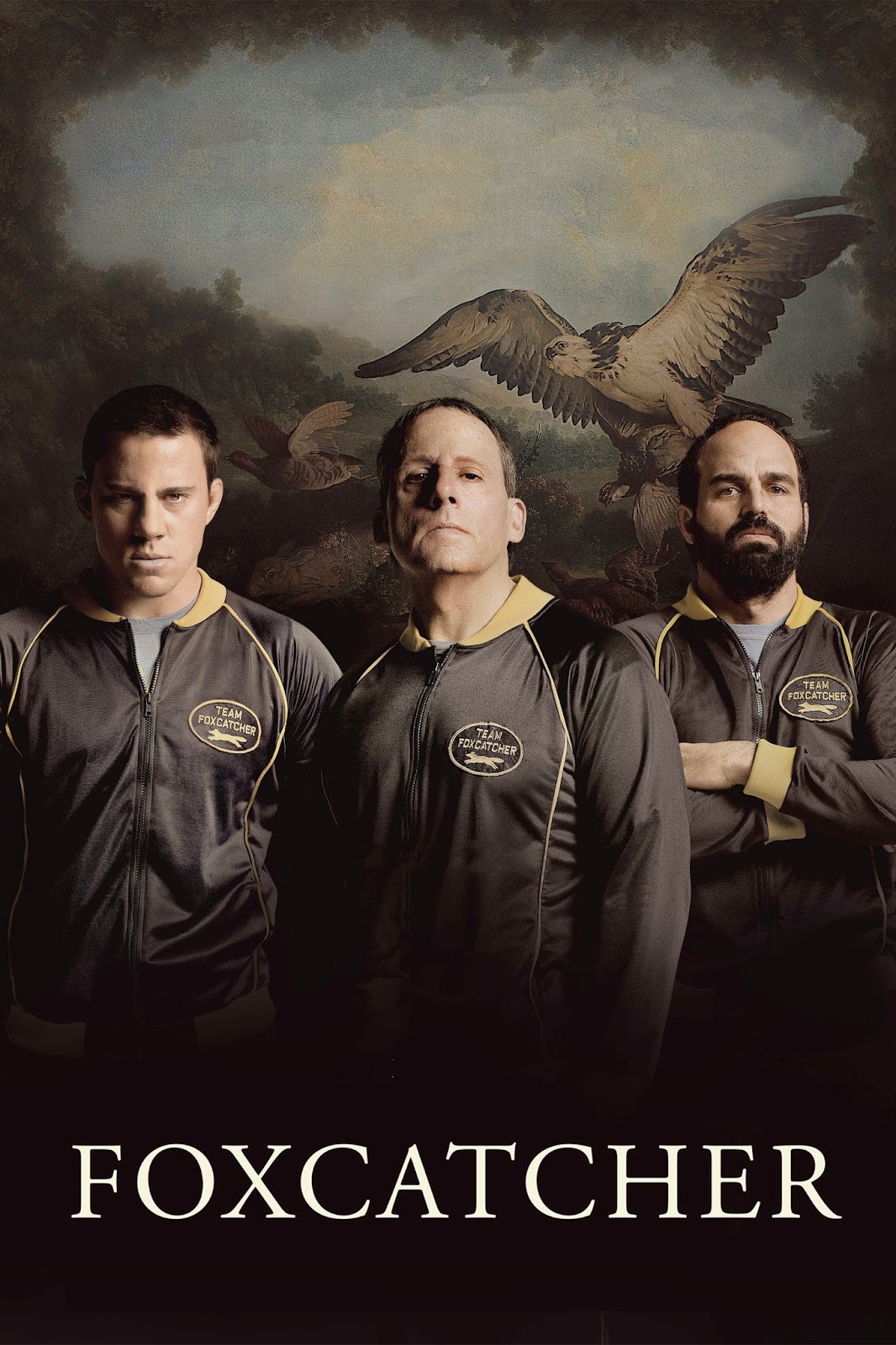
Wrestling with greatness in Foxcatcher

Today’s trip to the movies was for the highly touted Foxcatcher. It is based on the 1980’s true story of multimillionaire John du Pont and his promotion of USA wrestling, especially the training of brothers Mark and Dave Schultz. It is a disturbing true crime film, featuring outstanding acting by the three leads of Steve Carell (du Pont), Channing Tatum (Mark), and Mark Ruffalo (Dave).

The film starts in 1987, 3 years after the 1984 Los Angeles Olympic games, where Dave and Mark both won gold medals for the USA. Older brother Dave is married and settled into a steady career and family, training for future matches while also teaching at the local college. He trains daily with Mark, who has not reached any kind of personal success since the Olympics. He is strong and hopeful for future triumphs, but is sort of aimless in his everyday life outside of the gym. John du Pont swoops in and picks him up, setting up a wrestling training facility on his family’s immense estate. Mark is eager to get out from under his brother’s shadow, so he jumps at the opportunity to train on his own and make his own name.

From the beginning John gives off a creepy vibe. He too is trying to break away (in a way) from his family name, and has obvious mother issues, trying to prove his worth to his mom in his new pursuit. He wants Mark to love him as a father (or more perhaps, the movie implies but never states they had a romantic relationship). When Mark doesn’t reciprocate completely, John angrily hires Dave to come in, further distancing Mark and sending him a downward spiral.

Tremendous acting, for all three men, and all ready Carell and Ruffalo have been nominated for Golden Globes. Personally I think Ruffalo was the best in a supporting role, though obviously Carell gets nods for doing something so different than what he is known for. The movie’s plot is quietly suspenseful, though a little slow at times, certainly a subtle film. The end is shocking and worth sticking around for.

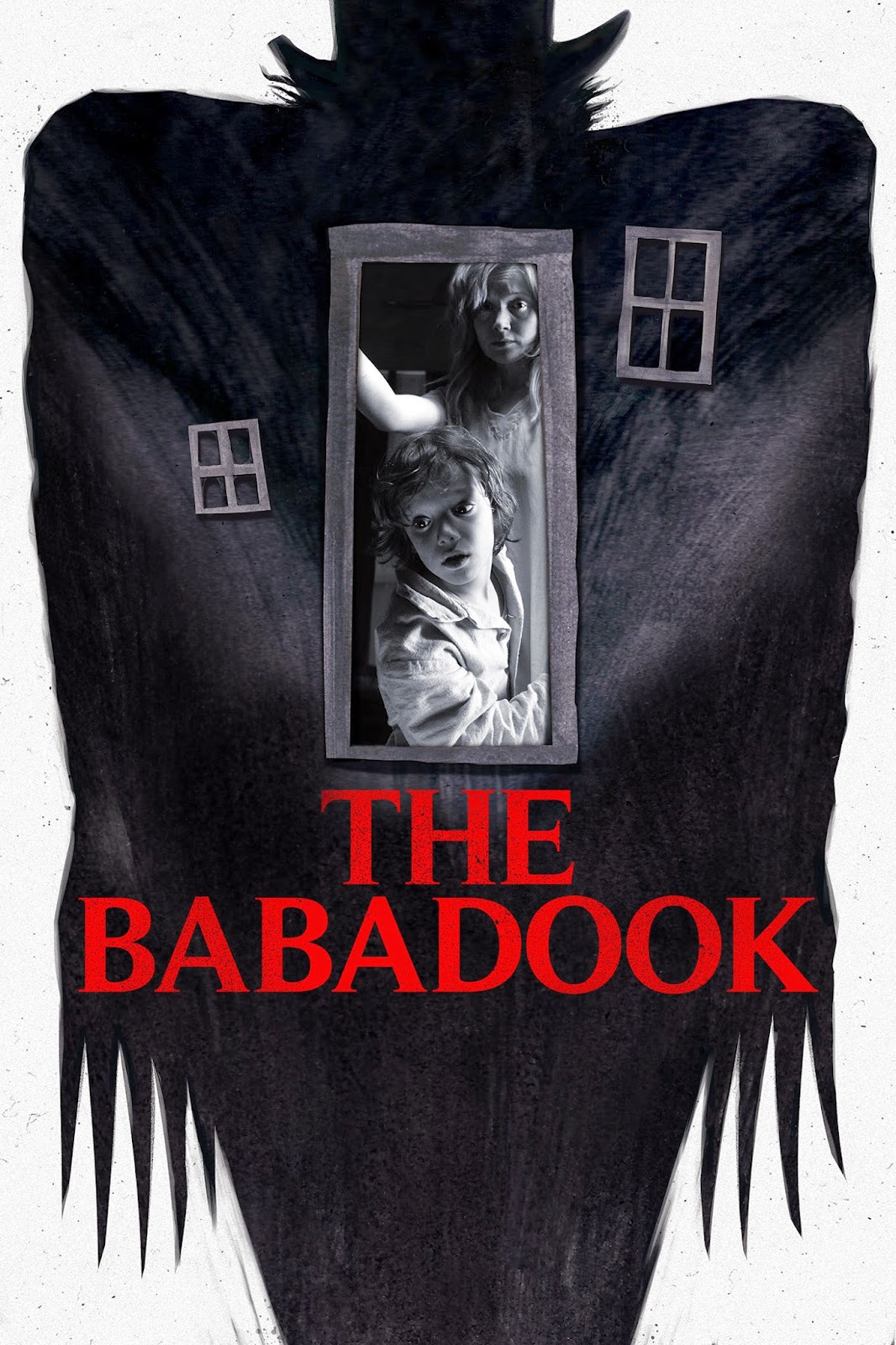
Genuine horror comes for you in The Babadook

It is very rare these days that horror films get any decent reviews. The Babadook bucks the trend, getting not only good reviews, but sterling ones, currently a stunning 98% on Rotten Tomatoes. In many ways it is a throwback to the older films of the past, when they scared you with pure horror, suspense, chills, and thrills, rather than the monotonous cheap scare tactics employed these days by a big scary demon jumping out from a shadow in the corner.

The Babadook follows Amelia and her son Samuel. Sam is turning 7 and still scared of the monster under the bed. He awakes his mother every night to check around his room for ghosts, and wants to be read a story to fall back asleep. At the same time, Amelia is suffering from severe insomnia and nightmares of her own, mostly about the death of her husband. One night Sam picks a book Amelia doesn’t remember seeing before, titled of course “The Babadook.” The children’s-looking book tells of a creature terrorizing a family, wanting to get in to the house, and will not stop until they let him in, at which time he kills them all. After reading the book, the child is scared further, and starts saying he can see the Babadook around him. This sets the family on a course where the viewer is left wondering what is real and what is in their heads, while the child gets more and more disturbed, and the mother tries to pretend nothing is happening and everything is normal.

There are no jump-scares in this movie, no cheap “behind the door” thrills, it is mostly a quiet, suspenseful psychological thriller that keeps you on the edge of your seat waiting for the other shoe to drop. But more than just a scary movie, it also has a lot of emotion and heart, with the true love of a mother and her son, facing pure evil with nothing but each other to cling to. I am not a big fan of scary movies, but this one is a good one and kept me riveted (albeit with eyes covered at times!).

A journey of self exploration in the Wild

Yet another biographical film this year, Wild is based on the book of the same name. Written by Cheryl Strayed, I read this one last year or the year before. It is her account of her trek on a portion of the Pacific Crest Trail in the ’90’s. Cheryl had spent a rough couple of years after her mother’s death, dabbling in drugs, infidelity to her husband (which resulted in the loss of her marriage), and a general aimlessness to her life. One day she decided to hike this trail, almost on a whim, to escape everything and spend time focusing on herself.

The film seemed to be a pretty accurate portrayal. Reese Witherspoon plays Cheryl, and she is all ready getting acclaim for the role. Cheryl struggles the whole way throughout the film. From physical struggles (she started the hike with too-small boots, resulting in painful sores and lost toenails) to the mental ones (being alone, facing the harsh reality of what she has done to her life), she attempts to overcome every cliff she faces, real and figurative. We see her history through a series of flashbacks, with her very real demons dogging her on her trail. In the end, the film is obviously about much more than the physical trials of a strenuous hike through desert, rain, snow, and mud.

Reese is fantastic, and is at her best since Walk the Line about 10 years ago. Like the book, the film felt a little meandering in the middle, but you want to stick around for the conclusion to see how Cheryl comes out in the end.

Chris Rock connects with his audience in Top Five

This time of year, there are a lot of oscar-worthy dramas hitting the theaters, so a good comedy is a nice change of pace. Top Five stars Chris Rock (who also wrote and directed). He plays Andre, a mega star comedic actor and former stand up, who has tried to do more serious roles, only to end up with a string of box office busts. He is days away from marrying a reality show tv star, whose wedding on Bravo is the tv event of the year, and really the only thing keeping Andre in the news these days. The movie follows a single day, as he is being interviewed by Rosario Dawson’s character Chelsea, a reporter for the New York Times.

Everyone, including Chelsea, wants to know why Andre isn’t funny anymore. He has distanced himself from comedy films and his past, and hasn’t done stand up in years. Ostensibly he says it is because he’s tired of comedy and wants to do more, but Chelsea senses early on something else is up and needles him throughout the day to get truthful answers.

The movie is funny, at times hysterically so, but there is good heart in it as well. When Andre’s past demons (and Chelsea’s secrets too) come to light, it brings a lot of depth to the story. Viewer be warned, like Rock’s style the movie can be vulgar at times, but it is one of the better comedies this year and features a great cast (small parts featuring Cedric the Entertainer, Kevin Hart, Tracy Morgan, and many others, even Jerry Seinfeld!). Not a family film, but a solid adult comedy that will entertain.

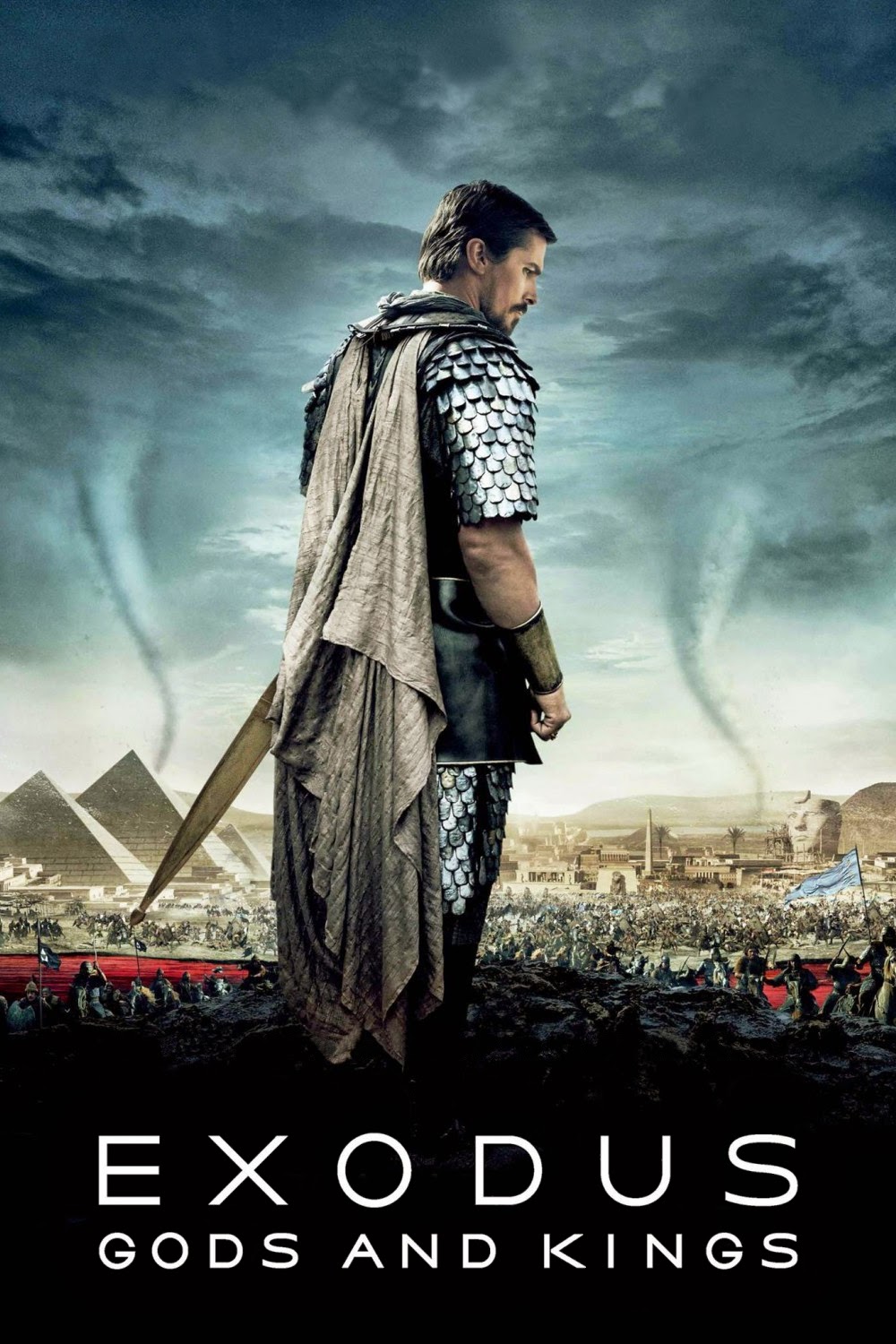
God’s message becomes muddled in Exodus

Whole lot of faith-based movies this year. Ridley Scott’s Exodus is the newest and tells Moses’ famous tale. Unfortunately it comes out closer to the fictional Noah, which I also didn’t like earlier this year. To say Scott took artistic license is a big understatement, and I just don’t get it.

Moses is played by big-time star Christian Bale. Bale is a very fine actor, but his Moses isn’t all that believable, and I have to believe some of that is the writing. Moses struggles with his faith throughout, to the point that the viewer is left wondering if he really believes in God or their mission at all, even when the plagues are hitting Egypt. He is mostly a reluctant figurehead for the Hebrew people calling for freedom. God doesn’t work through him, and even Moses is unaware what plagues are coming. It almost seems Moses is just there to spat with Ramses, his jealous adoptive brother. All of the big turning points from the Bible are shown in the film, but events come about because of different circumstances, or even mere chance at times.

I can understand when the tale of Noah was expanded for this year’s movie. In the Old Testament, there isn’t much to Noah’s story, at least not enough to fill out a 2 hour film, so events had to be constructed. I didn’t like it, but I can understand the reasoning. But Moses’s unique life was full and exciting, and didn’t need the Hollywood touch to make it more thrilling. If you aren’t a believer, you probably have little desire to see this movie anyway, so why not tell it as it was written?

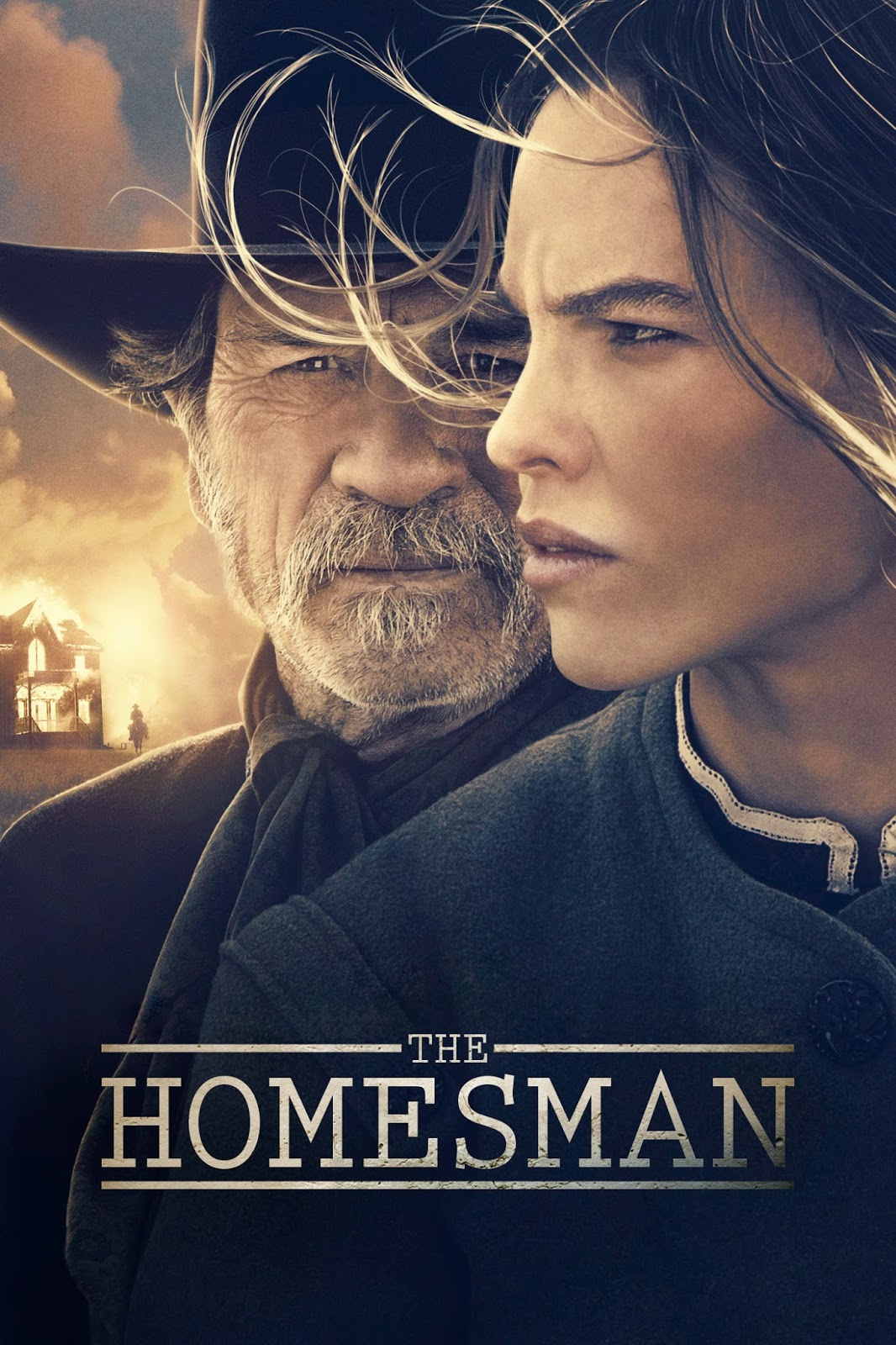
The Homesman can’t bring a great movie home

Previews have been hyping this film for quite awhile, as the next great “masterpiece” featuring Hillary Swank and Tommy Lee Jones. I thought it was just ok. There is some superb acting, but it was a little choppy and took a weird turn two-thirds of the way through.

Swank plays Mary B Cuddy, an aging single woman in the frontier trying to keep a farm by herself. She is rebuffed by men she tries to finagle in to marrying her, but plods on showing that she can do everything herself anyway. When 3 woman in the territory come down with mental illness, due to different reasons, and are no longer able to be looked after by their husbands, Cuddy volunteers to take them to a church in Iowa where they can be cared for. She enlists Jones’ character Briggs to help.

Most of the movie is spent showing the journey, and the various events that led putting these women in the position they are in. You don’t really know if they’ll come out of their predicament before the end, or if they will even make the journey due to hardships they face along the way. As I said, there is some truly brilliant acting, but I don’t feel it reached the heights it wanted to. Worth a single viewing for the portrayals alone, as besides Swank and Jones it features a strong cast of Meryl Streep, John Lithgow, and James Spader, among other familiar faces.

International journalists face danger in Rosewater

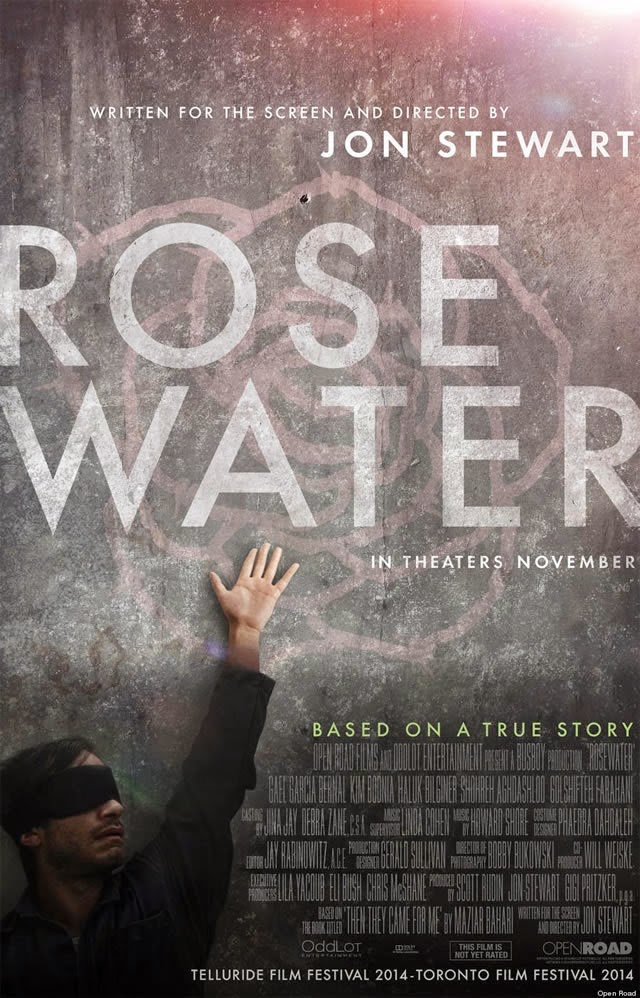
I try to keep up on current events, but I’m sad to say I didn’t know anything about the detainment of Newsweek reporter Maziar Bahari in 2009. Rosewater tells his story, in subtle but gripping ways.

Bahari, portrayed in the film by Gael Garcia Bernal, returns to his home nation of Iran in 2009 to film the presidential election. Working for Newsweek, he tries to show supporters of both sides. Despite early polling showing Mir-Hossein Mousavi leading, incumbent Mahmoud Ahmadinejad is declared a clear winner, leading to protests by the younger, disillusioned population. Bahari captures some of these protests on camera, including scenes of the protesters being fired upon by militia and/or police. When his footage is posted online, he is immediately arrested by the Iranian police and interrogated over the next few months.

Because Bahari is a high profile prisoner, he is not beaten or physically harmed, but the movie still paints a harsh picture of the psychological abuse he receives. He is robbed of sight for long stretches of the day when he is forced to be blindfolded. He is told he will never see his family again and will be killed unless he cooperates. Even when he does finally join in their propaganda, he is not set free and continues to be held. He sees visions of his father and sister, both of whom spent time in Iranian prisons.

This is a good, if somewhat soft spoken film. It makes me appreciate more the trials journalists can go through for only doing their job and trying to show the truth going on in this world. I can’t help but wonder why the population of countries like Iran don’t leave en masse, when faced with harsh dictatorship and oppression. Though Bahari was not physically tortured, others in the rebellious faction most definitely were, and through dialogue it seemed it was commonplace for every household to have had a member detained for months or years. We Americans complain an awful lot about our problems, but we really are very lucky.