The modern priest and the gamut of human emotion in Calvary

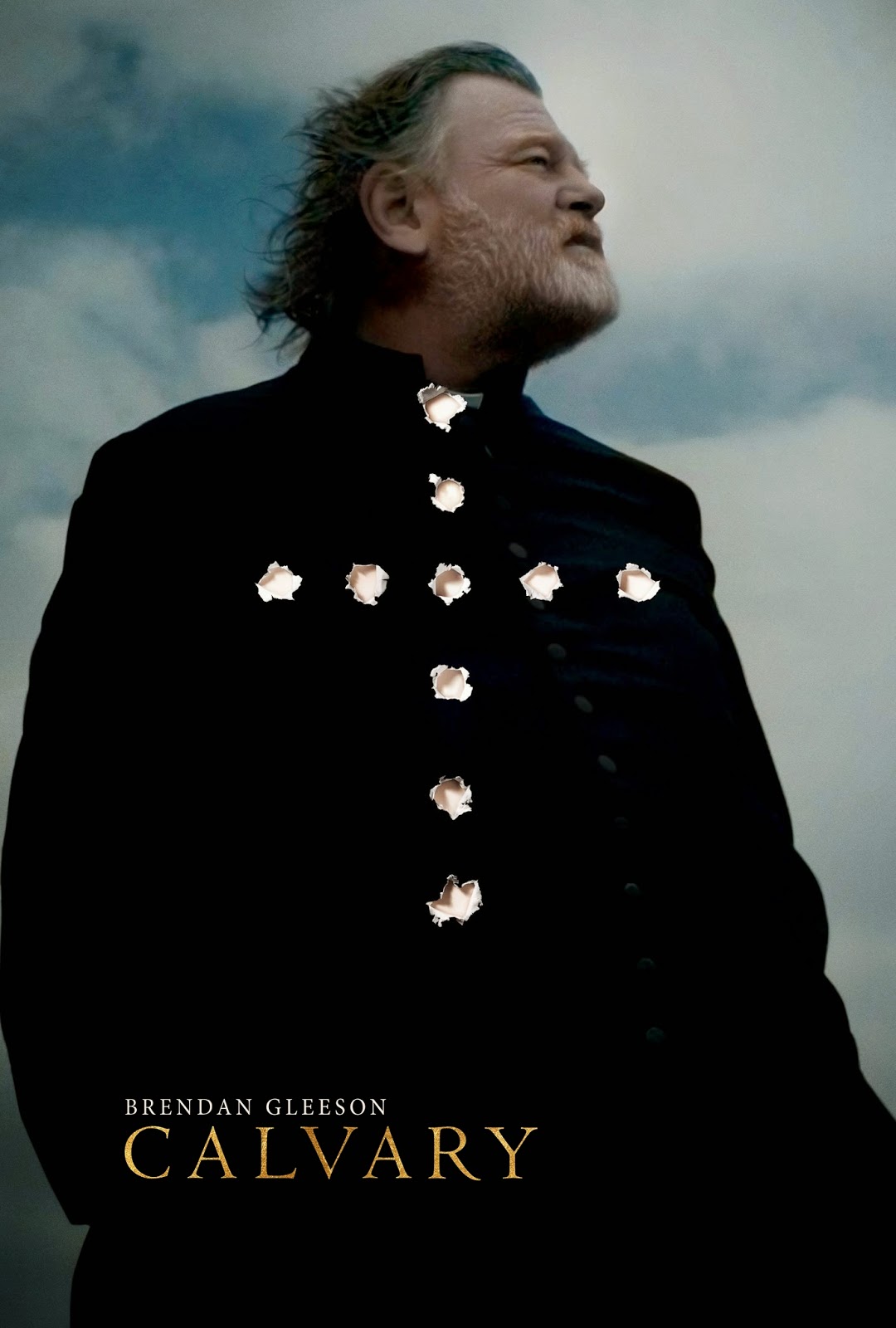
Quite simply one of the best films I have seen in some time. Calvary stars Brendan Gleeson as Father James, a Catholic priest in a small Irish town. The film starts with James in confessional, and the confessor admitting he had been molested and raped by a priest as a youth, for 5 years starting when he was 7. He says that priest is long dead and cannot face justice, but instead he will kill Father James in one week, saying the death of James, a good priest, would send a stronger message than killing a bad one. It is a small Catholic-heavy town, and so James knows everyone and thus knows who is speaking, though we as a viewer do not know his identity.

The next week finds James dealing with his parishioners. He is a good man and a good priest, genuinely caring for his people, though many of them show little respect to him in return. He listens to the unrepentant adulterer, the egotistical millionaire, the convicted murderer, the shameless brother priest, among others, most times acting as simply an open ear while trying not to judge their ways. He also must deal with his daughter who has just attempted suicide (she from his previous marriage before the death of his wife, before he joined the church). The film raises many of the questions our church today is dealing with, and James responds to each with a caring heart and forgiving attitude. At the same time, the viewer sees the days ticking off, knowing his death is approaching, and also knowing one of these people he is seeing every day is the person who will kill him, yet he treats them all equally.

The movie is at times heart-warming and heart-breaking, funny and then tragic. I laughed out loud, and cried a bit too, and the ending is sharp and poignant. The cast is full of recognizable actors, and everyone is on top of their game. A truly tremendous film.

Despicable people get their rewards in The Beautiful and Damned

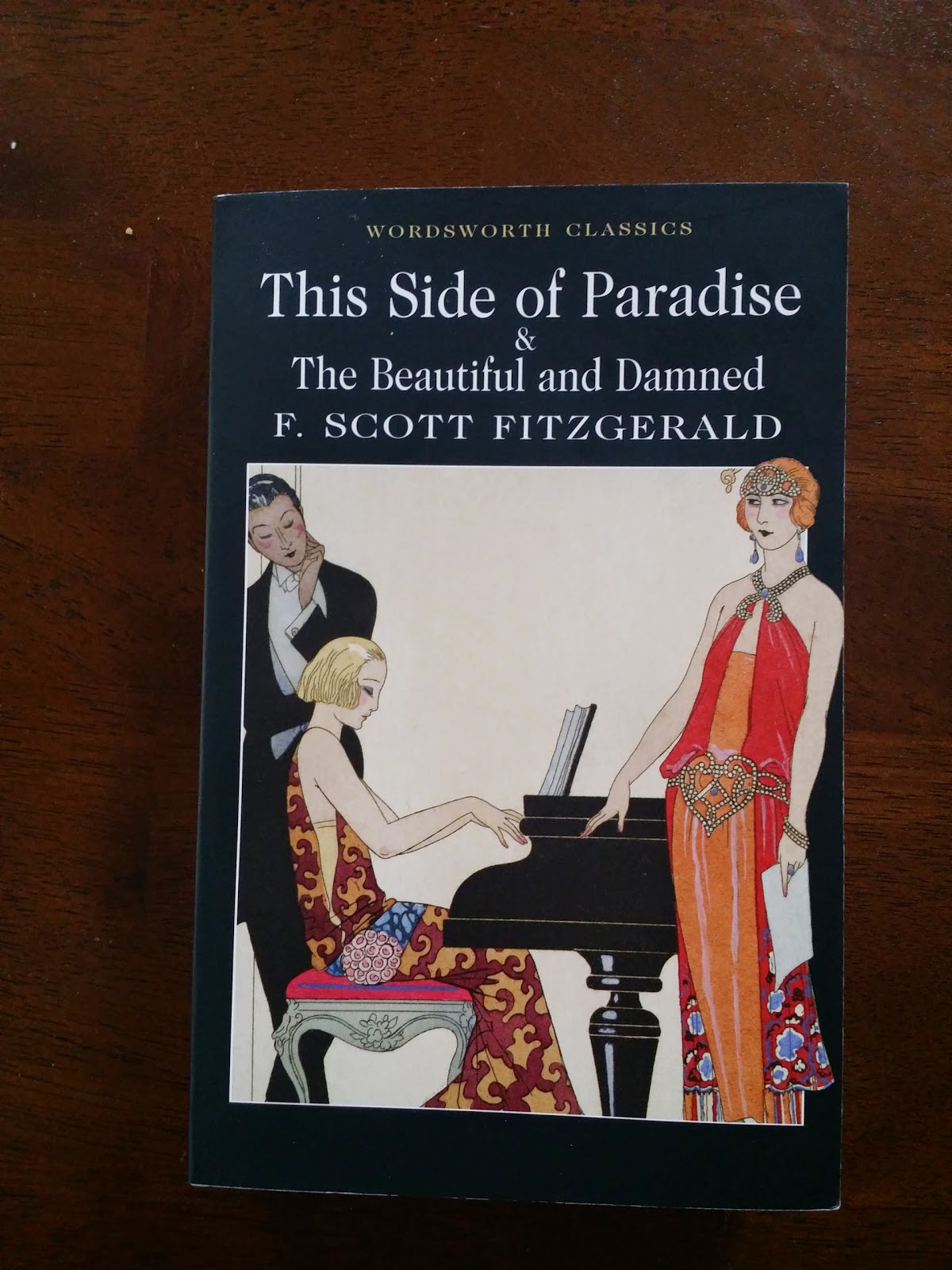
The Beautiful and Damned includes what may be the most terrible couple I’ve ever read about. Taking place in the mid 1910’s, it shows the very worst of wealthy America at the early 20th century.

Anthony Patch is a ne’er do well. Grandson of a multi-millionaire, he loafs through life waiting to collect on his inheritance, openly dreaming for the day his grandfather dies. He is well educated but has absolutely no ambition to ever work, thinking it beneath him. He falls in love (or at least in lust) for Gloria Gilbert, another socialite who is described as the most beautiful woman any have ever seen. She too has no ambition for anything in life, getting everything she ever wants from her beauty, and making sure she is always the center of attention wherever she goes.

The whole book is their miserable life together. In their early married days they have money to burn, but as the novel progresses they continue to churn through Anthony’s savings until, after just a few years together, money starts to get tight. They party and spend every weekend, not just on themselves, but on their friends and holders-on as well, always picking up the tab as the big shots they see themselves as. Anthony develops a severe drinking problem, while Gloria frets for the day when she turns 30 and loses her beauty, the only thing she really cares about (even more than her husband). When World War I comes and Anthony is shipped off to training, they hardly miss each other and spend their time apart thinking about the things that really matter (money to him, privilege and looks to her).

Finally the grandfather does indeed die, but he ends up leaving his entire fortune to servants, friends, and charity, and not a dime to Anthony. Anthony immediately sues, and while the case spends a few years in the courts, he and Gloria continue to spend, drink, and party. Finally at the end they have nothing. They have lost their high-rise apartment, have no savings, and no friends. Even then Anthony refuses to get a job and spends his days and nights drinking himself into a stupor. When the courts finally award him his fortune, Anthony has lost his mind to the point he isn’t even aware of his millions and Gloria has grown so far apart from him that she only cares to buy new clothes rather than take care of him.

In the book I read previous to this, Rabbit, Run, the author makes us like the protagonist before showing his true, selfish nature. In The Beautiful and Damned, we know from the beginning how much of a waste Anthony Patch is, so we can despise him from page one. F Scott Fitzgerald paints a pretty bleak picture of the lifestyle of the wealthy in this time period. Even the characters that do work show extreme contempt for the common man and only care about their own status. Well before the end, I was praying that Patch would not get his money and would end up dead or abandoned by all. He got the abandonment, but the ending was even more fulfilling that I could have hoped. He gets the money, but due to his insanity can not enjoy it.

A pleasant caper gone astray in Life of Crime

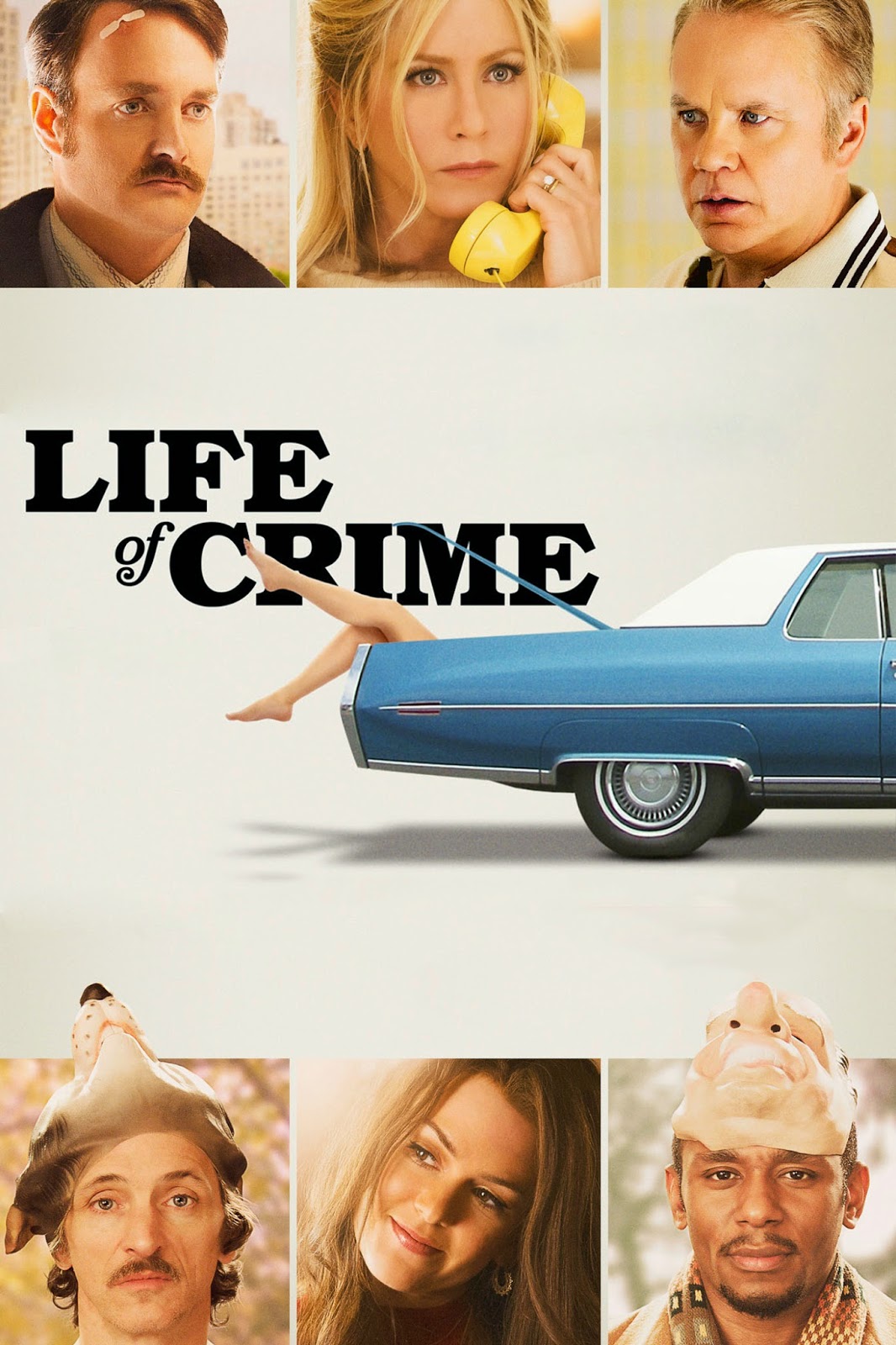
I was pleasantly surprised by the film Life of Crime. Initially one I wanted to see during my “year of movies” last year, I missed it and so had to settle for the rental. It’s a decent film about a bungled crime that doesn’t go the way it was planned.

Ordell (Mos Def) and Louis (John Hawkes) are a couple of two bit criminals, who hatch a plot to kidnap socialite Mickey Dawson (Jennifer Aniston) for ransom from her husband Frank (Tim Robbins). Unfortunately for them, Frank was in the midst of serving Mickey divorce papers, and decides he doesn’t want her back anyway, and is cozy with his new girlfriend Melanie (Isla Fisher). Ordell and Louis are stuck holding Mickey in a Nazi-memorabilia collector’s house, trying to keep him from peeping in on Mickey, while still hoping to collect some kind of money.

It’s a pretty clever film and downright funny at times. Plot twists abound, right up to the very end of the film. The acting is solid with quite a list of A-listers as mentioned, and also includes Mark Boone Junior of Sons of Anarchy fame and SNL’s Will Forte. My only knock is Aniston’s role didn’t allow her to show her spunky side, making her character pretty one dimensional and rote, but the others were all great. The film was based on a book by Elmore Leonard. Well worth a rental or a dvr.

Twists, turns, and blood running Cold in July

Here’s a good, low budget, and quietly not-seen film that came out last year. Cold in July was in and out of the theaters in a hurry, amassing just under half a million total domestically. But it is a good film with a strong cast, and the plot features a couple decent twists that keep you on your toes.

It stars Michael C Hall, of Dexter fame, as Richard, a quiet unassuming father in a small town. At the beginning of the film, he kills an intruder in his home, and is eaten up by the guilt of it. When the dead man’s father, convict Russel (Sam Shepard) shows up threatening the family, Richard runs to the cops for help. Things start to go astray though when Richard realizes the man he killed was not Russel’s son, despite what the cops are saying. Investigator Jim Bob (played by Don Johnson) arrives in town and the trio start trying to find where the clues take them.

Most of the action in the film is short and intense, and a lot of the thrills come from building suspense throughout the movie. My only knock against it is it reveals too much too soon, so by the second half to final third, you all ready know what is going on and pretty much how it is going to go down. Getting to that point though is a whole lot of fun.

Harry tries to escape all problems in Rabbit, Run

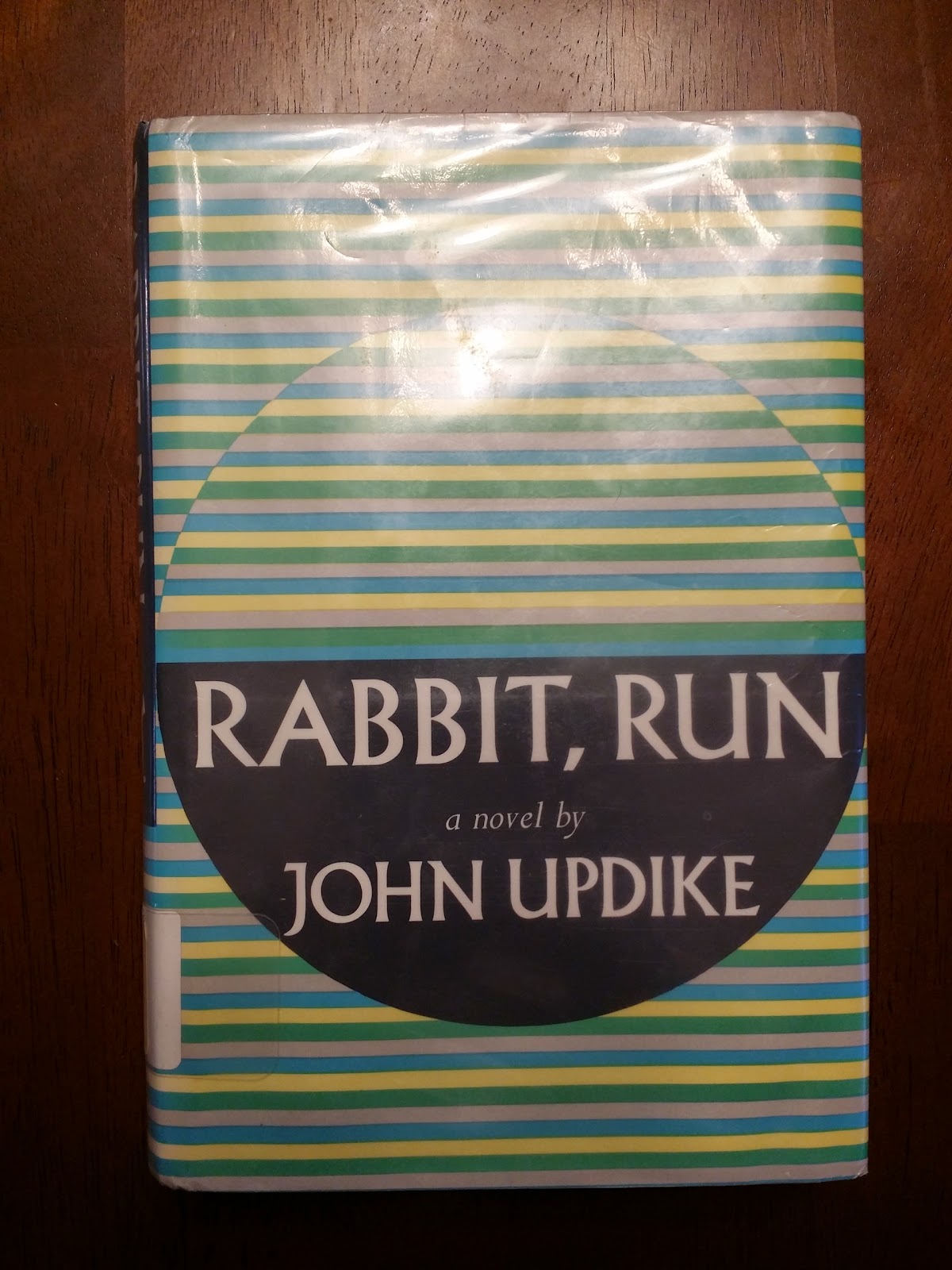
Rabbit, Run was published in 1960, the second novel and first of the popular “Rabbit” books by author John Updike. Cleverly written, Updike makes you feel one thing in the beginning, but has reversed it on you by the end.

Harry “Rabbit’ Angstrom is a 26 year old former high school star athlete, and is still living in the past. He dreams of all his high school triumphs, now nearly 10 years ago. He is married to Janice, a woman he doesn’t love; she’s an alcoholic and pregnant with his second child, and it was the first pregnancy that forced Harry into marriage in the first place. He is at a dead-end job that pays little, and one day wakes up from his stupor and decides to leave.

As a reader we root for Rabbit from the beginning. He is a likable guy, popular in high school and has a natural charm. I was a little torn at his decision to up and leave his wife suddenly, but she is made out to be such a lech that you don’t feel too sorry for her. Rabbit settles down with another girl, Ruth, one town over. He is good to her, in fact the first guy to be really good to her maybe ever in her life. She is guarded towards him but does start to open up. Once a week Rabbit plays golf with Jack Eccles, a young Episcopal priest. Ostensibly Eccles is trying to get Rabbit and his wife back together, but really he is just hanging out with the charming Rabbit as an escape from his own boring life. Rabbit’s little “vacation” is turned upside down 2 months later, when Janice finally has their baby and Rabbit comes back home, leaving Ruth suddenly on a very sour note.

By now in the book we are starting to see more and more that Rabbit is not quite the great guy we all thought and hoped he was. He has shown the reader a lot of his personal thoughts and feelings. We’ve seen him mentally undress women that he is around, including his friend Eccles’ wife. Egotistical, he believes others are always thinking about him. When he tries to get Janice to sleep with him, and she refuses due to just having gave birth, he flips out and leaves again. This time Janice, who has been clean and trying to be a good wife, slips. She goes on a binge, which ultimately ends with the tragic accidental drowning of their new baby.

Rabbit’s true nature is at last revealed. He returns for the funeral but can’t approach anyone, avoiding all confrontations and only really caring about what he will do next. He even shrugs when asked what will become of his son. He returns to Ruth, who has hidden her own pregnancy until now. Ruth is done with him, until he promises he is finally leaving his wife for good. He goes outside, but instead of going to get them lunch as he said, he takes off running again.

A very good read, and it does have 3 sequels which I’ll try to fit in to see how Rabbit’s life turns out, if he ever grows up and does anything for good. At the end, I felt sick at myself for ever having liked such a scum, but that is all due to Updike’s brilliant style. As Rabbit continued to do worse and worse things, Updike made it seem like there was some redeeming quality just coming up that would make everything ok, until you realize right at the very end no such enlightenment was coming.

Small-time criminals hatch a plot to Rob the Mob

Rob the Mob is a based-on-a-true-story movie about a couple deciding to do just as the title says. In the early 90’s, Tommy and Rosie are a couple of two-bit criminals, recently out of jail for a smash and grab type of hold up. Tommy is captivated by the ongoing John Gotti trial, and while sitting in the courtroom listening to testimony, he hears the address of one of the infamous mafia social clubs. After digging around a bit, he finds that guns are not allowed in said clubs. Realizing the mob would never contact the police about being held up, he decides to start robbing these establishments.

If it sounds like a colossally stupid idea, it is. Tommy and Rosie come off as a pretty shallow pair. But the film does a good job of making it seem like Tommy has no other ideas for taking care of his girl, as the only up and up job they have pays next to nothing and prospects for recent criminals are sparse. It actually isn’t a bad mob movie. There are light-hearted moments followed by sharp intensity, as the pair try and ultimately fail to stay one step ahead of the mob. You root for them, but know that they could never come out unscathed.

The film also stars Andy Garcia as a crime boss, and Ray Romano as a newspaper reporter following the local mafia stories. A good film, especially if you are a fan of the genre.

Modern day vampires face struggle in Only Lovers Left Alive

This was a quiet film that came out about a year ago. It stars Tilda Swinton and Tom Hiddleston (Loki from the Thor movies) as a married vampire couple just barely getting by in modern society. Adam is a loner living in a Detroit, collecting old guitars and making underground music that is getting a cult following. The more upbeat Eve is living in Tangier under the watchful eye of fellow vampire Christopher Marlowe (yes, THAT Marlowe). Due to the “contamination” we humans put in our blood every day now, they can no longer just feed on the average person on the street, for fear of getting sick or even dying, so they must each make sure they are getting pure blood in various ways. When Eve sees Adam getting depressed, she goes to visit him in Detroit. The movie takes a turn when Eve’s free willed, throw-caution-to-the-wind sister Ava visits and creates a problem for the pair.

Light on action (especially for a vampire film), the film is driven by the witty dialogue and subtle but strong acting by the two leads. They share centuries of wisdom and thus have a unique look on the world, but use their knowledge in very different ways. This isn’t a film everyone will enjoy, but it is an endearing movie with heartache and quiet passion.

Italy holds love and death in Where Angels Fear to Tread

In several ways this novel was like the last I read. It features characters romanticizing over another land, but when they are there, they see it is quite unlike what they imagined. Instead of rural Main Street though, the setting is the village of Monteriano in Italy.

E.M. Forster’s Where Angels Fear to Tread was released in 1905. It is about a widowed mother, Lilia, who leaves her aristocratic society in England and runs off to Italy, where she instantly falls in love with and marries a local nobody named Gino. It causes quite the scandal in her old neighborhood. Lilia soon realizes all is not what it seems, when it becomes evident Gino only married her for her money, and spends his days cavorting around town. Lilia ends up alone, in fear of her husband, and finally dies during childbirth. When news reaches England, her former mother-in-law Mrs. Herriton sends her son Philip, daughter Harriet, and family friend Caroline off to “rescue” the baby to raise it among civilized society.

By this time Gino has had an about face. Where previously he would have sold the baby for money to live his newfound privileged lifestyle, he now loves his child and will not let him go. The climax comes when Harriet steals the baby during their evening ride to the train station to return to England, only to get in a carriage accident along the way in which the baby is killed. Harriet loses her mind to grief, Philip returns to Gino to give the bad news, and is only saved from being murdered by him when Caroline comes to the rescue. In the end, Philip realizes he has loved Caroline this whole time, but he is rebuffed when Caroline admits she has loved Gino from the start and has kept her feelings to herself all these years.

Like Main Street written about 15 years later, this novel features people hoping for one thing, and finding when they get it, it is not what they really wanted at all. And again there is a sort of longing for another life, something different than your own. The times have dated this book, with the idea that a 33 year old widow needs to be rescued, with the thought that her younger 20-something brother-in-law would be wiser simply because he is a man. The style is more thoughtful; not much “action” happens and the story can be told in a few minutes, but the characters spend a lot of time reflecting on thoughts and events. Certainly well written, but it feels like you are reading a book that is over a hundred years old.

Living the quiet life in rural Main Street

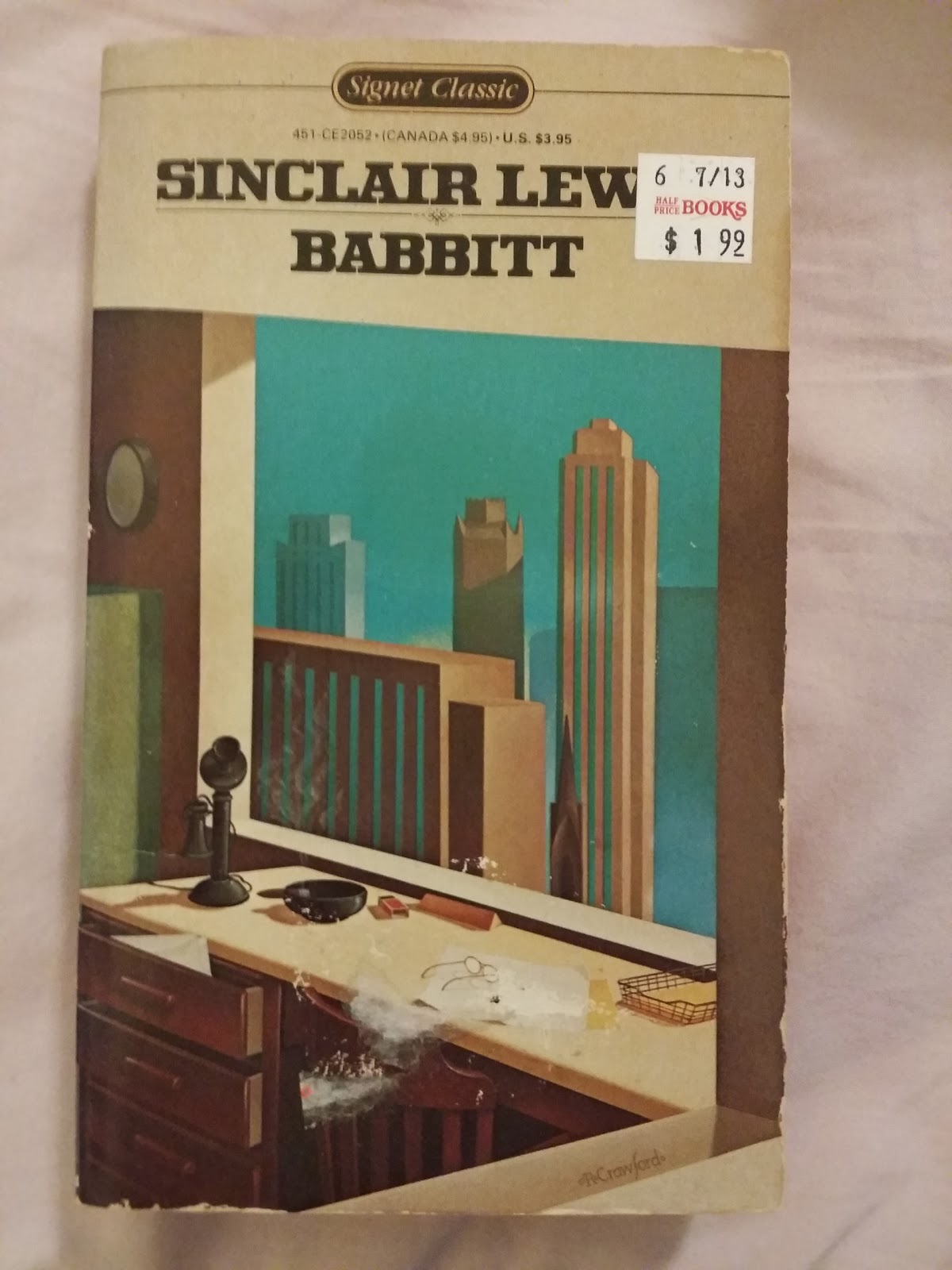
Main Street is a good old piece of Americana. Written in 1920 by Sinclair Lewis, it (with his followup Babbitt) was largely responsible for him winning the Nobel Prize in literature 1930. It is a satirical look at rural towns in America in the early 20th century. It focuses on Carol, a strong willed city-born girl with big ideas and big expectations, who marries the local doctor from Gopher Prairie, MN.

For the backdrop: in the late 19th and early 20th centuries, cities were growing at a near unsustainable pace, some doubling in size in just 10 years. In fact, the 1920 census was the first to show nearly the same number of people now living in a city as in the country, for the first time in our nation’s history. As such, there was sort of a romantic idea going around of “the simple life” away from the urban areas, the way “it used to be.” Lewis wrote Main Street to sort of shoot down those wistful ideas.

Carol is fresh out of college in 1911 or so. She falls for Will, a doctor some 10-15 years older, and marries him pretty quickly. He brings her back to Gopher Prairie, which she immediately hates. She sees the dirty small town as needing not just a facelift, but a total demolition and rebuild, and envisions a quaint Main Street where the houses are all pretty and in neat little rows, where the citizens attend plays and discuss the latest forward-thinking novelists and writers. Of course in reality, and locals just want to know who bought the latest automobile, and have you seen Sam’s new fence, and the ladies just want to gossip about who is being scandalous.

The first fully half of the book (and it is not a short book) does feel tedious at times, as Carol rams her head repeatedly against the norm, and nothing comes of it. She tries to get the ladies club to read more advanced literature and is shot down. She tries to produce a play which is an utter failure. She tries to advance her husband out of love and respect, but he stays true to his upbringing and while he wants to be the husband she desires, he can’t change who he is. Carol ends up feeling very alone and isolated. When she does find a true friend (in itself scandalous, a foreigner with a socialist-idead husband and baby), the wife and baby die suddenly of typhoid. She then latches on to person after person to liven up her dreary life, but each is taken from her in bizarre ways. Because the first half of the book was slow and dreary (like her life), when these events happen in the second half, they are all the more riveting (I actually gasped aloud while reading, when things occurred suddenly).

Finally Carol has had enough. She takes her one son and moves out from her husband to Washington DC. Here the book almost fast forwards. Before, we heard every detail of Carol’s monotonous life, and before we know it we are 2 years further down the road. Carol has become pregnant again (the book never says if she was unfaithful, or if this was due to Will’s visits to DC). Either way she is discussing her future with friends there, and decides to finally move back home. She accepts her mundane existence in Gopher Prairie, but finally has a way to change it. She latches on to her 2 children, promising herself that she will raise them to be aware of the world outside of their small town, so that when they are grown they will not be like all the others coming from Main Street.

This was the first book I’ve ever read from Sinclair Lewis, and I must say he is an extremely detailed writer. His depictions of Gopher Prairie are so precise, you can smell the oil, feel the dusty wind, hear the idle chatter. The way he wrote of Carol’s inner struggle, penning her thoughts for us to read and then following up with her actual words, keeps the reader aware constantly of the fight going on inside her. For me it was also fascinating to read a book written nearly 100 years ago. We joke about it now in society, but even then the “head of the house” was often the woman, who set forth what the family would do and the husband sort of trailed along. The local town leaders would get on their soapbox and talk about how these forward-thinking women, with their ideas about women’s suffrage, would be the downfall of our society, and then step down to see what their wife wanted them to do that evening. A very good read, though definitely not for the impatient.

American Sniper has a great war film in its sights

American Sniper features Bradley Cooper in perhaps his finest role. He plays Chris Kyle, a Navy Seal during the Iraqi war. Based on a true story, Kyle would go on to become a highly decorated war hero.

Kyle is a good ol’ boy from the south. Family means everything to him, and he sees his fellow Americans as family. This patriotism leads him to enlist, and immediately go out for the Navy Seals to become one of the best. Early on he meets his future wife, and no sooner is he married with a child on the way, he is shipped off to Iraq. There he starts to build a name for himself, to the point that when he returns for his second tour (he would go on to have four total!), he sees he has gained the nickname “Legend.”

The surface story of the film is a sort of one-on-one battle between Kyle and his counterpart on the other side, a trained Syrian sniper and former Olympian marksman named Mustafa. Kyle spends his days trying to protect the soldiers on the ground, while Mustafa is often across the city trying to take them out. But inside the movie, the focus is more on Kyle trying to internally reconcile the cold blooded person he is in Iraq with his family when he comes home. He creates a wall around himself that keeps everyone but his brothers-in-arms at a distance, even his wife and kids. Cooper portrays this struggle to an amazing degree. You feel for him, and hope that by the end he can achieve the same success at home as he has with the military.

If you look up Chris Kyle online you’ll see he was perhaps not always the nice guy shown in the film, but this is Hollywood after all, and as a stand alone film, it is easy to get caught up rooting for Kyle to find his way.