Quick takes on 5 John Cassavetes films

In my turn through some art house and independent films, I was bound to get to some John Cassavetes before too long. Through his acting workshop in New York, he began teaching an alternative to method acting, instead focusing on improvisation and going for a feeling of realness to connect to the viewer. He shows this style in his first film, Shadows, from 1959. On a basic level, it shows the interactions of others around a family of young adults living in New York. They are black, but among themselves, the eldest brother (a jazz singer) is very dark skinned, whereas the younger brother (a trumpeter) is lighter, and the youngest sister (just 19 years old) is so light-skinned that she could and does pass as a white person. When she brings her one-night stand home and the guy realizes she is actually black, he freaks out. Cassavetes hired nonprofessionals as actors, made the film on a shoestring budget, and used the natural feel of the gritty New York night scene to bring his film to life in exquisite perfection.

Cassavetes made a couple more movies after Shadows, but the next time he self-financed one was Faces in 1968. On the surface, there isn’t much to this one, but like Shadows, it is a highly personal film where the human being is really the focus. It is about a man, Richard, who is out drinking with a buddy one night when they end up at a prostitute’s house, Jeannie. The two share a kiss before Richard heads home to his wife, Maria. Richard and Maria engage is meaningless banter, the kind that unfortunately permeates most staid marriages, until Richard suddenly announces he wants a divorce, before calling Jeannie right in front of his wife to tell her that he is on his way over. With Richard gone, Maria goes out with her own friends and finds a young playboy to bring home. This film could be full of cliches, but Cassavetes avoids them by making the characters feel very real. Richard and Maria could be any middle aged couple who have grown bored with their lives. I honestly found some of the dialogue tedious, probably because Cassavetes allowed his actors to improvise much of it and it just feels like the kind of conversations that take place at any drunken party, but that realness only adds to the connection we get to the people on screen.

Arguably, Cassavetes most well regarded film was A Woman Under the Influence from 1974. It is certainly his most emotional. It stars Peter Falk and Gena Rowlands as a married couple. Mabel is suffering from severe mental problems, to the point that she is becoming a danger to herself and her kids. Nick doesn’t want to face it though, because he loves her and fights anyone that tries to say she isn’t OK. Eventually she is committed though, and when she returns, quiet and subdued, Nick misses the zany way she used to be. There are multiple layers here too, such as their interactions with their kids, and the husband’s mother, who is a dominating woman by herself, and to whom Falk’s character acquiesces as well. Falk and Rowlands are equally amazing in this film (Rowlands received an Oscar nomination, as did Cassavetes for directing). The viewer can feel the crazy coming from Rowlands and the frustration from Falk. Tremendous film.
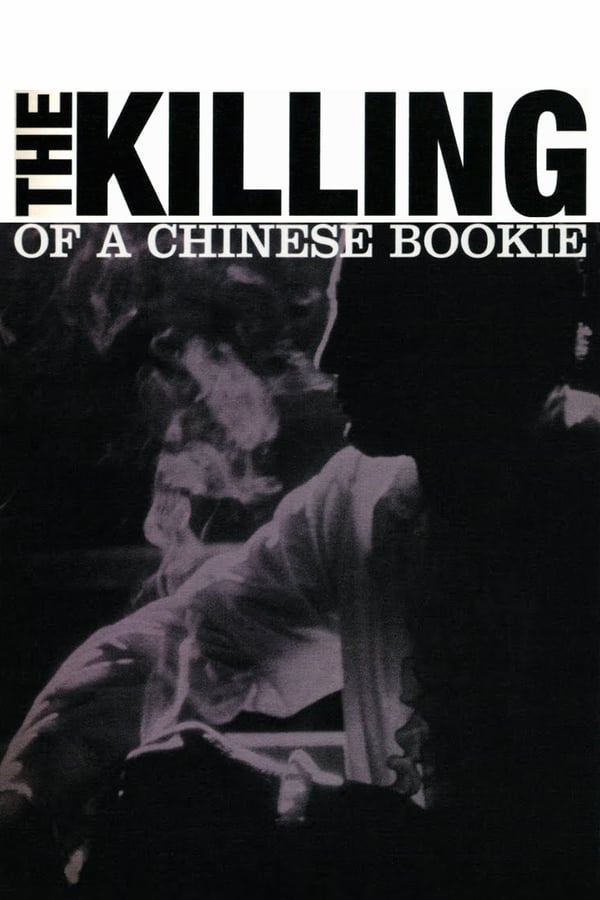
Cassavetes followed up with a noir-style gangster film, The Killing of a Chinese Bookie. This movie felt very different from the previous ones. It is about a sleazy topless bar owner, played by Ben Gazzara, who finds himself in heavy gambling debts to the local mafia. To forgive the debt, they commission him to kill a rival to their group. Not a deep film, but it is an entertaining one, and very introspective in true Cassavetes’ style. It is more accessible to the general viewer than his previous films, and probably more in feel to the films Cassavetes made as an actor than his other directorial projects. This movie was lambasted when it first came out in 1976, but it was re-edited and released again in 1978 to better reviews. Honestly I think it was ahead of its time.

Finally, we have 1977’s Opening Night. This is a great multi-layered film. On one level, Gena Rowlands plays Myrtle Gordon, a successful but aging theater actress who finds herself at a crossroads in her career. She isn’t old yet, but is too old to play the young roles. She is currently headlining a play (directed by Ben Gazzara’s character) in which the woman is also dealing with her aging self. Myrtle is afraid to do well in the play, and being typecast in the future as “the old lady.” At the same time, she is haunted by a beautiful young girl who was killed in front of her on a rainy night just after a rehearsal. The lines between the play and reality begin to blur for Myrtle, and her alcoholism gradually speeds her descent. This alcoholism is the true centerpiece of the film, and shows how far her director, writer, and fellow actors are willing to go to see that “the show must go on,” ignoring or not seeing Myrtle speeding towards self destruction. The more I see of Rowlands, the more I see why people have gushed about her all these years. Truly fantastic stuff.

Quick takes on 5 films

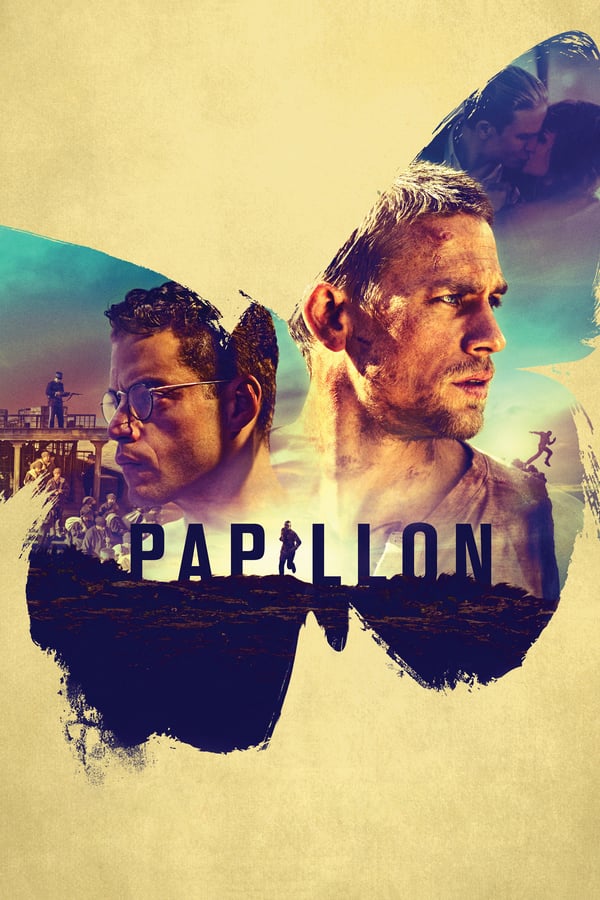
Papillon is one of those films that sounds a lot more exciting than it is. It is based on an autobiography by a man who escaped from the French penal colony Devil’s Island, off the coast of South American, in the early 1940’s. Henri is a thief who is framed for a murder and ends up in a rough prison, sentenced to life. He befriends a bookish man, Louis, who was a forger and counterfeiter. The two make several attempts to break out, which only ends up with Henri in solitary for longer and longer periods of time, until finally they are sent to Devil’s Island. The leads are played by Charlie Hunnam and Rami Malek. Malek of course is on a high right now from his awards from Bohemian Rhapsody, and I’ve always liked Hunnam from his Sons of Anarchy days, but neither has a chance to really show off their skills in this paint-by-numbers film. Neither thrilling nor dramatic, unfortunately just bland. There is a better reviewed film version from the early 70’s starring Steve McQueen and Dustin Hoffman, which I may have to check out some time.
I’m not one for dog movies, but something intrigued me about Alpha, perhaps because I’m a sucker for post-apocalyptic films and this one (though taking place 20k years ago) had that kind of feel. The previews showed a young man, not much more than a boy, on a journey with a wild wolf, implying that this was the beginning of the relationship of man and his best friend. I thought I had made a mistake after the first 20 minutes, where the film has the feel of an adaptation of a bad young adult book, but once our young hero is on his own, lost and trying to get back to his people, it starts to take off. The computer-aided visuals are absolutely stunning from the very first frames, and the lead actor is more than up to the task of making his on-screen presence feel just as big as he comes into his own.
We the Animals is the rare tender movie with edge. It follows three young brothers on the border of adolescence, in a poor family where the mom works as a bottler and the dad as an overnight security guard at a factory. It is a rough household full of violent parental fights, which leads to the dad leaving for days or weeks at a time, and the mother being too lost in herself to provide even food for the children. This leads to them having to go out to steal food. The oldest two are following in their parents footsteps, and are cussing and drinking even at a young age, but the youngest, Jonah, is definitely more introspective. He secretly writes and draws at night, but keeps his notebook hidden under his bed. While he shares everything with his brothers, he does not share this. The three stumble upon a neighbor, an older boy, who introduces them to porn, and while the eldest duo crack jokes, the younger starts to experience feelings he doesn’t understand. As the older brothers descend further towards being hoodlums, Jonah withdraws. A sharp and very personal film, though a heavy R rating and not for the faint of heart.
Juliet, Naked is a fantastic film, based on a book by Nick Hornby, who also brought us such great films as High Fidelity and About a Boy. It stars Rose Byrne and Chris O’Dowd as Annie and Duncan, a boyfriend/girlfriend in a long relationship. Annie curates a museum, while Duncan, a college professor, is obsessed with a 90’s musician named Tucker Crowe. Tucker made one hit album that still has a cult following 30 years later, but he disappeared shortly thereafter and was never seen again. Duncan is basically the head of the fan club, and peddles in conspiracy theories and rumors of sightings. When a previously unknown demo recording of Tucker’s surfaces, and Annie writes an unflattering review on Duncan’s website, Tucker finally surfaces and meets Annie. Tucker hasn’t been hiding on purpose all these years, he’s just been living an aimless, quiet life and living off his steady flow of residuals, though the reasons for his disappearance don’t immediately come out. The great actor Ethan Hawke is incredible as a tormented Tucker Crower, unable or unwilling to live with his status as a 90’s icon, and wracked with guilt for having abandoned his kids (from different mothers) when he was younger. It’s a rom-com that breaks through some of the traps this genre is often full of. Really brilliant and fun.
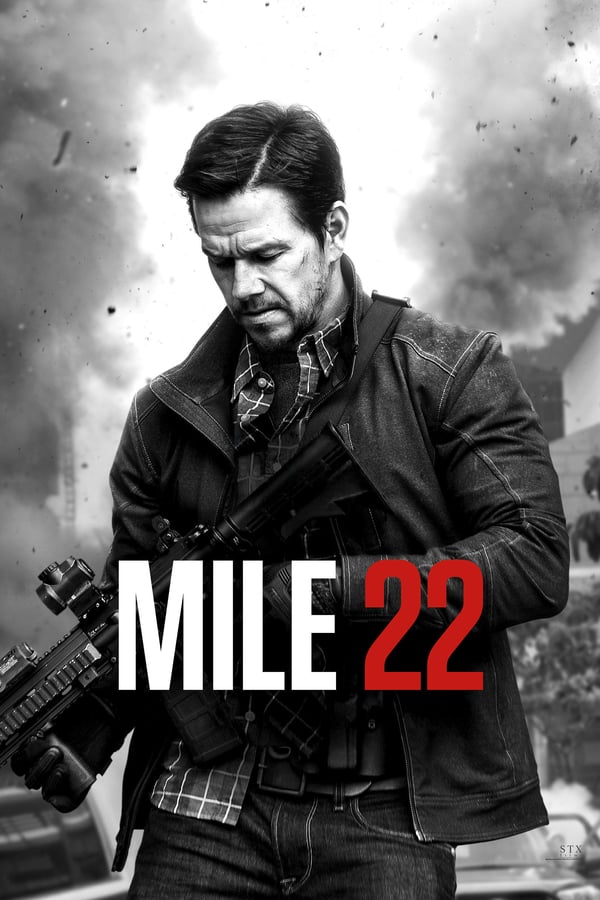
Mile 22 is a military action film starring Mark Wahlberg as head of a CIA special ops team in a mission to secure an asset and get him to safety, because he holds knowledge to prevent a chemical attack against the USA. The team’s slow move through a city in eastern Asia, fighting off hordes of the enemy, is the focal highlight of the film. All of the criticism leveled at the movie is true; it features rough editing, poorly developed characters, and shoddy dialogue that sometimes doesn’t even make sense in the situation. But by God I still enjoyed it. The filmmakers know what they have, they don’t venture from the tried and true action films of the past, and they deliver on the goods. And best yet, they don’t drop any hints of the explosive, unseen finale that rocked me. Not a deep film, nothing that will make you ponder the meaning of life, but a good action flick that shows off the behind-the-scenes military espionage that keeps us safe.

Quick takes on 5 French films

Starting off today with a trilogy, and though I usually try to avoid spoilers on films, since this is a trilogy, it is unavoidable. Based on stage plays by Marcel Pagnol, the films follow a tight-nit community in Marseille. If you like classic French films though, I recommend not reading, and going to watch them first. They are fantastic!

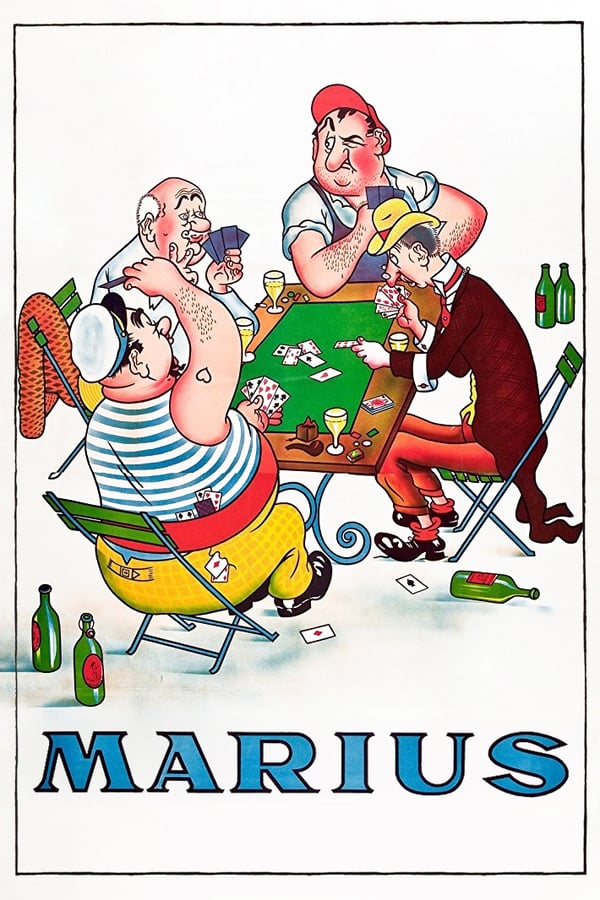
The first film is Marius, from 1931, an early French “talkie.” Pagnol got Alexander Korda to direct this one, and while he was all ready an established director, he had yet to make the big blockbusters that would make a name for himself. On the coast of Marseille, César runs a bar with help from his son Marius, though Marius longs to leave and sail on one of the ships that frequently come in to the harbor. The only thing keeping him here is his love of Fanny, a young woman who sells cockles in front of the bar. Fanny is being courted by Panisse, who as a sailmaker in a port town, is one of the wealthier of the working class in the area. Fanny’s mom doesn’t necessarily want to see her daughter with the much older Panisse, but at the same time, doesn’t want to see her struggle as she herself has all of her life. When Fanny and Marius get caught sleeping together, Fanny’s mom forces them to plan a marriage. However, Fanny knows that Marius will never be happy staying in Marseille to take over his father’s bar, so she tells him to leave and join up with the next ship heading out. In the end, Fanny distracts César just long enough for Marius to get away. This film has it all: hearty laughs, endearing love, and misguided longing. As a viewer, I just wanted to slap Marius for what he is giving up: a woman who loves him enough to let him go to pursue his dreams.
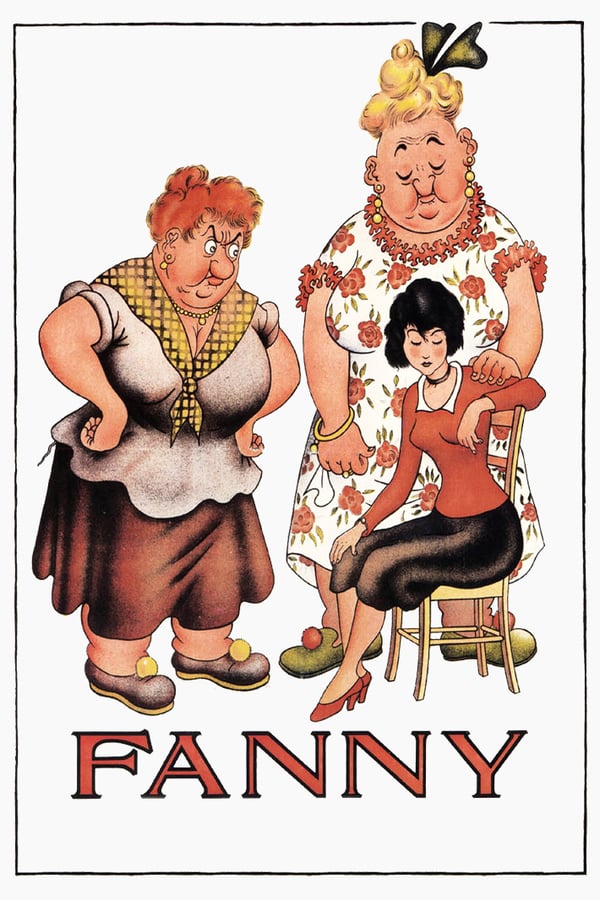
The followup came a year later. Fanny was directed by Marc Allégret, and while a good movie (with a great story), Allégret is no Korda. Even so, the writing carries the film. It starts right where Marius ended. César is looking around for Marius, only to find he has just left for a 5 year voyage. As things start to settle, Fanny realizes she is pregnant with Marius’s child. In fear of bringing shame to her family, she goes to Panisse, to beg him to marry her still to legitimize her son. To her surprise, Panisse has no problem with it. He always wanted a son to take over his business one day, and his first (now deceased) wife was unable to have children. Panisse and Fanny immediately marry, and 7 months later, their “premature” baby boy is born. Just about a year after this, Marius returns, earlier than expected. He has come back realizing what he left behind, and wants Fanny to leave Panisse to return to him. While there though, he puts two and two together to realize the baby is his, and now wants Fanny and the child. Panisse agrees to let Fanny go, but refuses to give up the child, who he will raise as his own. Fanny will not part from her baby, and tells Marius to go back to his boat, and is backed up by César, who also wants the best for Fanny and her son. Fanny confesses that she will always love Marius, but that her duty is to her baby and her husband, and what has happened cannot be undone. She tells Marius to go, and that she will think of him always.
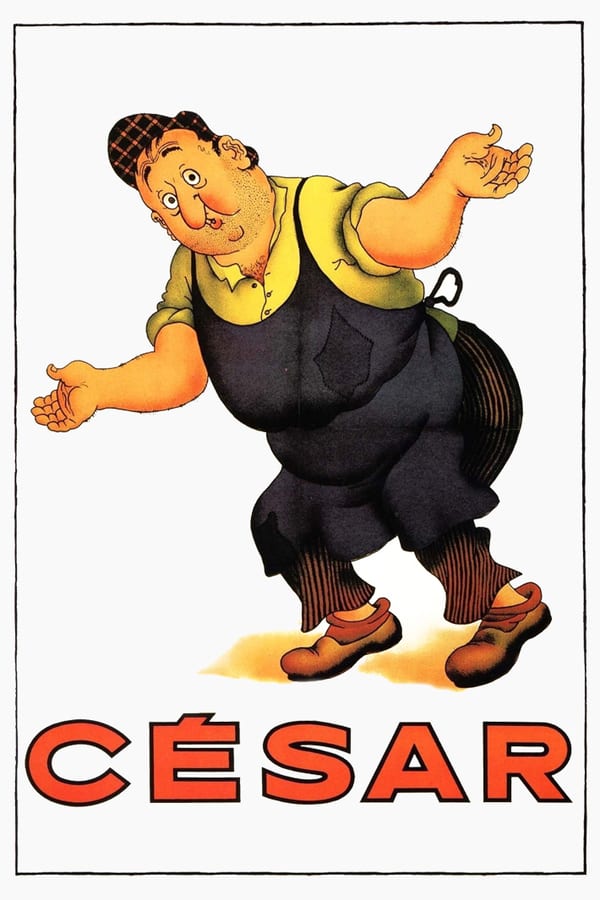
The finale came in 1936, and focuses on César, the glue behind the trilogy. Pagnol himself directed this last movie, which was not based on a previous play of his, but instead was an original script. It jumps the story ahead 20 years. Baby boy Césariot is now a young man in a fine military college, and his father Panisse is on his death bed. Upon his death, Fanny finally tells Césariot the truth about his birth, and Césariot rushes off to find Marius to see what kind of man he is. Marius and César had a falling out years before and haven’t spoken, so Césariot thinks his father is a cad, a scoundrel, or worse. By the end though, the whole family is reunited, with Césariot hoping to grow closer to Marius, and Marius and Fanny set to rekindle their relationship, and César just happy that everyone is content. The film felt like the weakest of the three, but mostly because it relies on relationships that the viewer has already seen built, rather than new storylines. The plot moves slower just like the aging characters, and while these films have always had a lot of tangents, César seems to be more tangents than substance. I felt at times that it was only written and released to bring closure, and from a pure art standpoint, the first two films really stand well on their own as a duo. Still, I enjoyed this one, and appreciate the set as a whole, a trio of movies the likes of which you rarely see these days.
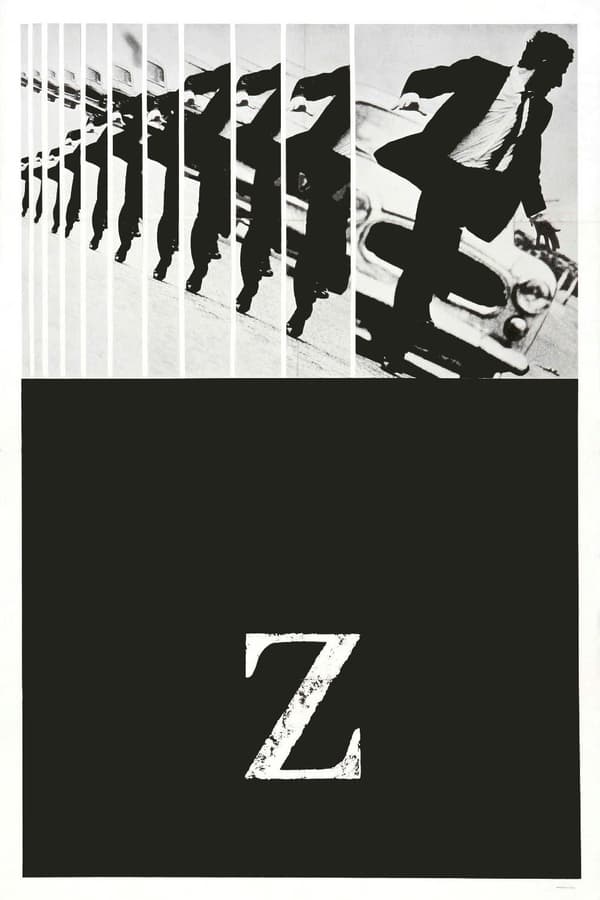
The final two French films are from esteemed director Costa-Gavras. Jumping ahead a few decades, to 1969, we have Z. This film is incredible. Based on a true story (without much deviation, it is supposedly extremely factual), it tells of the assassination of a Greek politician in the early 60’s. A pacifist deputy is due to give a speech denouncing actions of the fascist government, but the event is targeted by right-wing protesters, and the deputy is killed during the melee. While the government wants to paint it as an accident and quickly move on, an autopsy shows that he was struck by a baton and not killed by falling down, as the government would have everyone believe. An honest and impartial magistrate is brought in to conduct an investigation, which we see play out for the remainder of the film. With the help of an independent journalist who really is just looking for a good story, the viewer watches as the case unfolds, and we see that the government was more than just a bystander to the violence. Part courtroom-esque drama, part action film, and intense from the opening moments until its thrilling conclusion, this is a movie I cannot recommend enough. One of the rare films to be Oscar nominated in both Best Picture and Best Foreign Language Film (it won the latter).
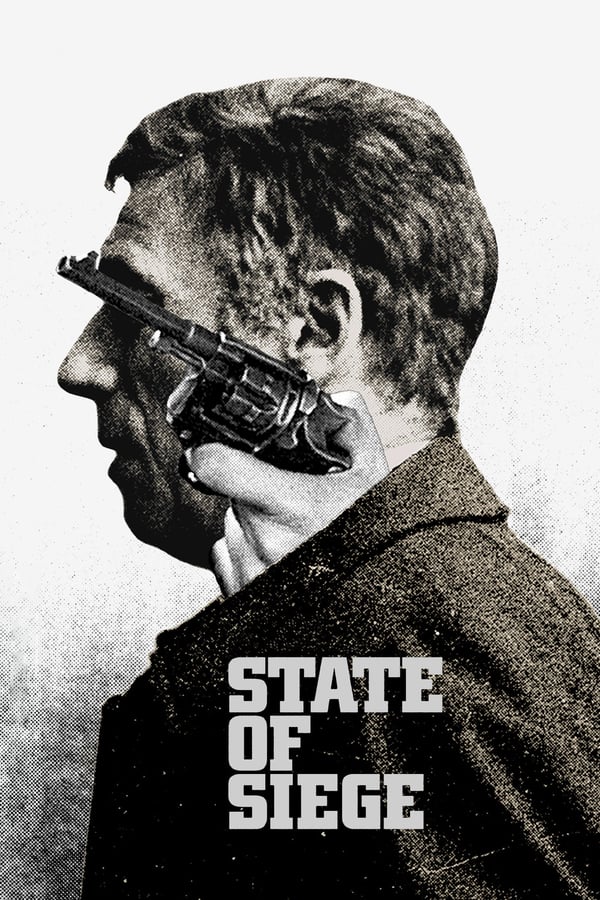
State of Siege, from 1972, is also based on a true story, though more loosely than Z. Taking place in an unnamed Latin American country, it starts with showing a military-looking police searching all cars for a missing American. He is found dead, and then the story of his death is told. A week earlier he was kidnapped by a group of terrorists and revolutionaries, who are demanding the release of political prisoners. The American, Philip Michael Santore, is in the country working for the USAID, but we learn through his interrogation that he was really there for the CIA. Having already worked to overthrow governments in Brazil and the Dominican Republic, he is now working in this country. The viewer learns how the US government secretly brings in the police of these countries, teaches them how to torture and make bombs, and then use these bombs to create panic in their own countries. With this public panic, the president is able to enact emergency methods to crack down on the press, the parliament, and enforce military control on the people, killing or silencing critics that speak out. Based on the kidnapping and murder of Dan Mitrione in 1970 in Uruguay, this film was decried by the US government as lies and propaganda. Maybe not quite as thrilling as Z (it is almost entirely made up of dialogue), I still found it fascinating, and I tend to believe the things our country is accused of. In our current environment of a president using scar tactics to get people to follow him, and threatening to use decrees to get what he wants rather than working through Congress, we should fear something similar to this film happening right here.

Quick takes on 5 films

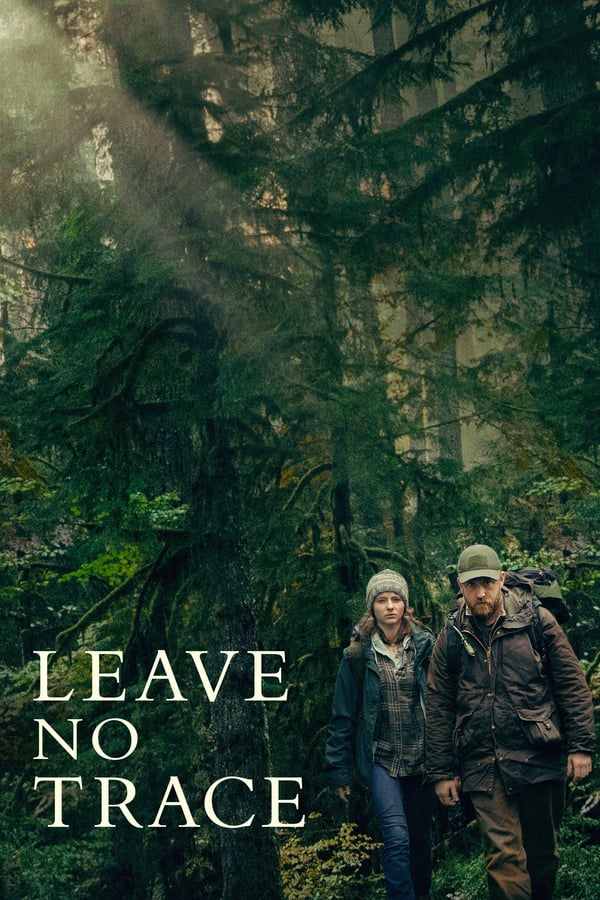
I started out with an emotional bang, with Leave No Trace. It stars Ben Foster and newcomer Thomasin McKenzie as a father and daughter living extremely off the grid. The dad suffers from PTSD from his time in the military, and is uncomfortable being around people, so he has been raising his daughter deep inside a public park in Oregon. When they are discovered, they are forced to live in a house under supervision to make sure they are playing by the rules, under threat of being separated. The girl gets used to being around people and enjoys the change, but the father cannot adapt, and it isn’t long before he forces them to leave for the woods again. It becomes apparent that the daughter wants to be a social human being, but we wonder if the father can ever be that again. A soft and poignant film, I think it portrays a very real problem facing our returning military men and women, without overemphasizing it. And while the film moves at a leisurely pace, it is gripping with tension in all the right spots. Also, a film with the rare rating of 100% on Rotten Tomatoes, and not from a small sample size (200+ reviews).
From a small indie film to a blockbuster, next I went with Crazy Rich Asians, based on the popular book. It is a tried-and-true tale of a rich young man who falls in love with a poor girl, whom his family obviously does not approve. While it does contain more than a handful of movie tropes, it isn’t a bad film. In fact I rather enjoyed it. It is beautifully shot, has just the right amount of laughs for a romantic comedy, and the usual satisfying ending. I do think that if you supplant the Asian characters with white people, it probably gets lost in the shuffle and isn’t as popular, but it works as it is set up. A fun date night movie.
At the recent Golden Globes, Roma won best foreign film and best director for Alfonso Cuarón. It is a profound and powerful film, filmed in Mexico City, and is semi-autobiographical about the director’s youth, taking place in the early 1970s. Around the main character, housekeeper/servant Cleo, the world is falling apart. In a larger sense, the country is facing violent political riots in the beginnings of the Mexican Dirty War, but even in the household, the husband has abandoned his family to have an affair. Cuarón chooses to focus though on Cleo, a woman from a poor background who cares deeply for the family who employs her, and especially the children, even as she is facing a crisis when she becomes pregnant by an uncaring rogue. Having viewed (and loved) other Cuarón films such as Gravity and Children of Men, I expected a slower pace, but the first half of Roma is practically glacial. It will test your patience, but if you can just sit back and enjoy the nuance of the family, the intricacies of the time and setting of the film, you will enjoy a masterpiece.
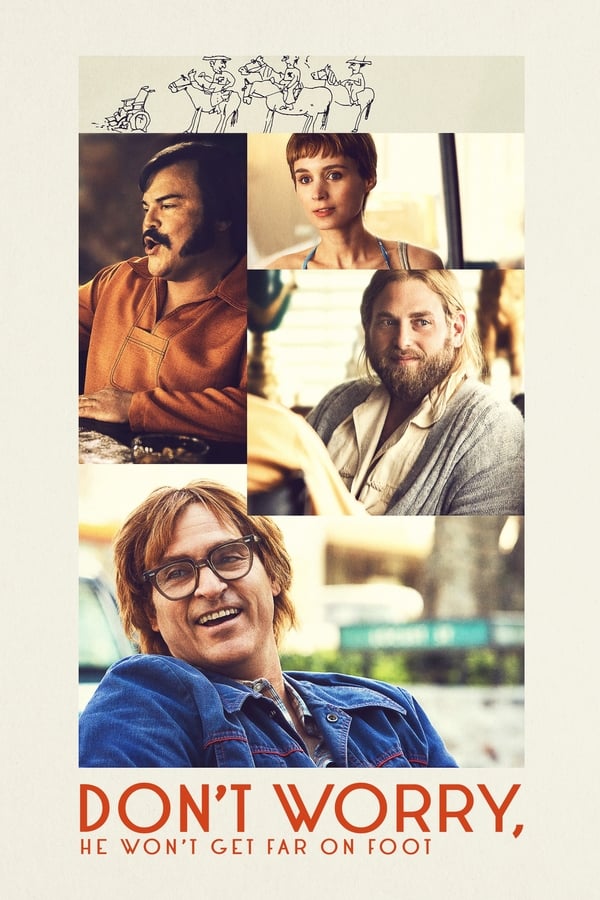
Very rarely do I not finish a movie. Books, yes, occasionally, but rarely do I quit a film. Don’t Worry He Won’t Get Far on Foot beat me. Based on the life of cartoonist John Callahan, it shows his struggle as an alcoholic, which lead to a car in accident in which he was paralyzed through much of his body. I got a little more than halfway through before calling it quits, up to a point where John was in a wheelchair, attending AA meetings, but having a hard time accepting the idea of a higher power in which to have faith that life will, if not get better, at least be OK. I only got as far as I did because of my own faith in Joaquin Phoenix, an actor I respect a lot, but this film is rough. Rarely funny for a comedy-drama, and it just felt like it was going nowhere fast. Even Phoenix couldn’t keep my attention, and when I found myself browsing my phone more than watching, I finally gave up. I do usually appreciate character-driven dramas, so perhaps I’ll give it another chance one day and hope I’m in a different mindset.
Eighth Grade is one of those tremendous movies that you may not want to watch more than once. It stars Elsie Fisher as Kayla, an extremely introverted girl who longs for friends, but due to her shyness and awkwardness around others, finds herself completely alone. Whereas some people her age long to be popular, she just wants to be normal. When around anyone except for her single dad, she clams up, and if she does start to talk, everything that comes out of her mouth is nails-on-the-chalkboard cringe-worthy. What made this so difficult for me to watch, is I think most people can relate to Kayla, maybe not to her extremes, but, I for one, was that shy, nervous, anxious teenager that saw everyone else fitting in. It wasn’t until college, where I was in a new environment where no one knew me, that I was able to start fresh and gain confidence. The director of Eighth Grade does a superb job of getting us inside Kayla’s head, and feel incredibly anxious with her, and we want to scream at the other kids that this is a great person if you just give her a chance. We keep watching, hoping, that Kayla is able to come out of her shell and be accepted. A very endearing, affecting film.

A missed meeting on Baldwin’s Mountain

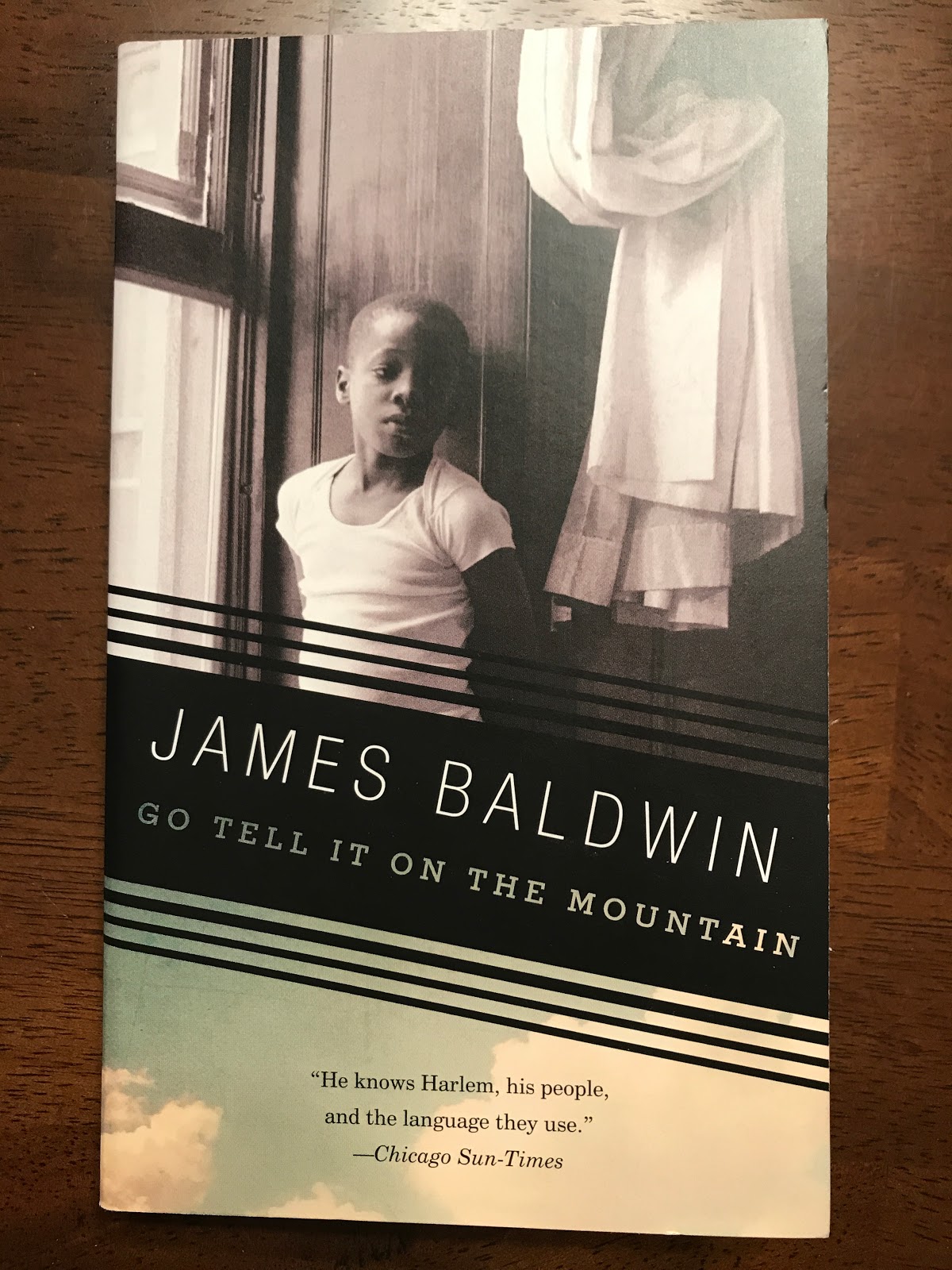
Seems I am on a run of readings books by authors whose other books became famous movies. This time it was James Baldwin’s Go Tell It on the Mountain, released in 1953, 20 years before his If Beale Street Could Talk, whose film adaptation is currently making the awards circuits. I have to say, this book was a bit of a slog for me. I totally get its historical and cultural importance, helping to give a voice to people who before then had none, but I found it tedious.
Semi-autobiographical, this books tells of a black family living in Harlem in the 30’s. Included is a strict minister, Gabriel, his adult sister Florence, and his wife Elizabeth and their children, including Elizabeth’s son from a previous relationship, John, who is the focal point of the book in the beginning and end. John seems to struggle to find his place in the family; Gabriel is openly hostile towards him, though others in the community see the well behaved John as the spiritual successor to Gabriel. Gabriel’s birth son Roy is a wild child. We learn later the reasons for Gabriel’s playing favorites. Gabriel himself was a problem child, only coming to God in his 20’s, and even after this, falling in sin and fathering a son outside his marriage to his first wife. He wasn’t there for this woman or his son, both of whom died before Gabriel came north from the south to meet Elizabeth and start over, and he wants to make up for his failure by saving Roy. Even in the end, when John experiences a religious awakening, Gabriel still rebuffs him.
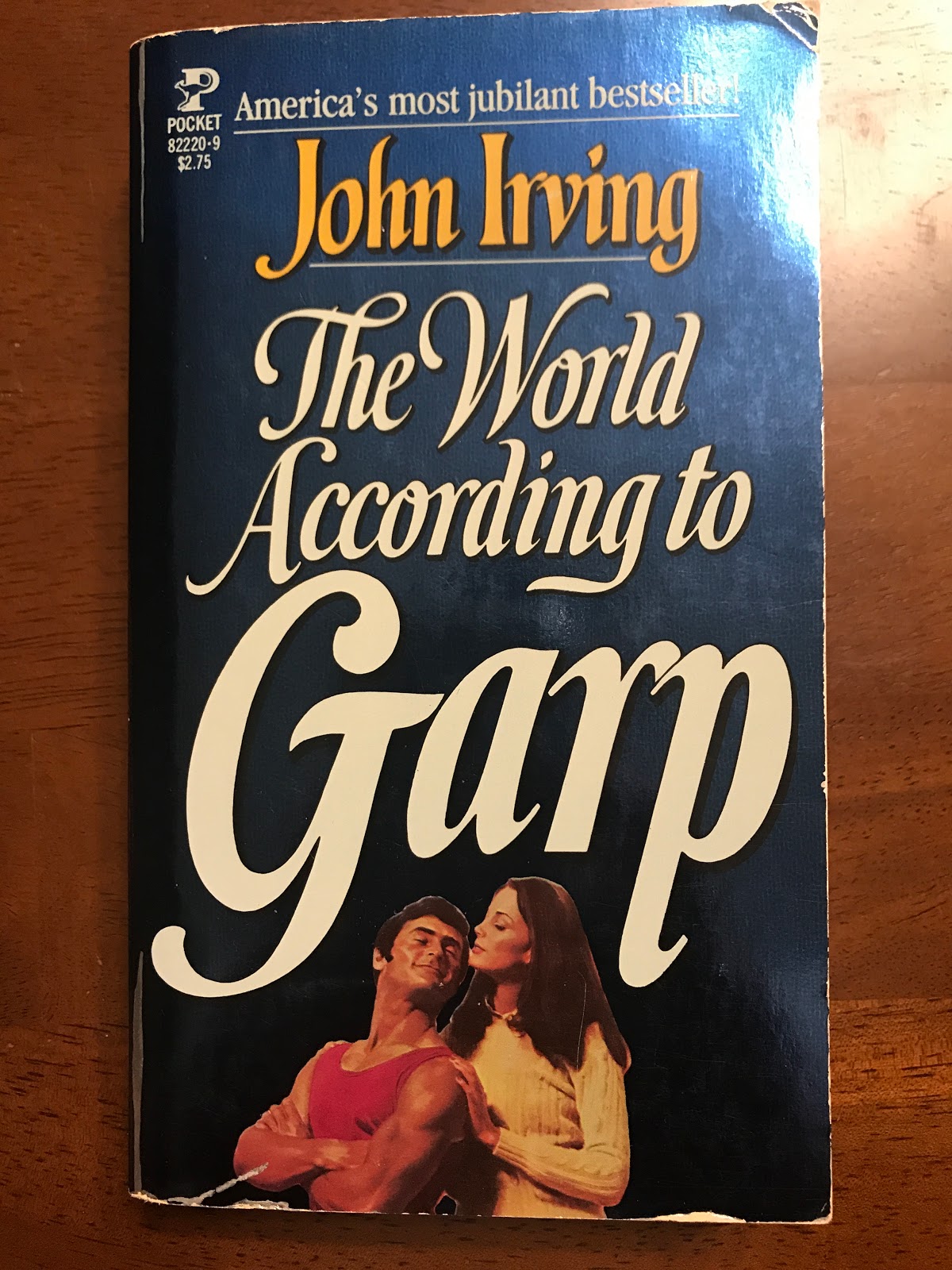
Before this book I read The World According to Garp, which was written in a very direct and in-your-face way. If that book reads like a brick, this one reads like a flower. At times it felt more like poetry than a novel, which isn’t bad, but when whole pages were devoted to a feeling or an emotion, for me, it got to be a bit much. I’ll be the first to admit as a middle class white guy who never struggled like the author or the characters in this novel, I’m probably the last person Baldwin was trying to speak to.

Irving brings love and loss to Garp’s World


John Irving is probably most famous for writing The Cider House Rules, whose movie adaptation won a few Oscars in the late ’90s. A better book though was his The World According to Garp, released in 1978 (and also later made into a movie starring Robin Williams). I’m not ashamed to say this book had me bawling in the end, even though I wasn’t sure I’d like it in the beginning.

The book starts with Jenny Fields, an independent woman who comes from money, but refused to be married off to pump out kids. In fact, she is asexual, not attracted to men or women, but she decides that she would like to have a child. So she has one in the most unusual way, basically impregnating herself from a brain damaged soldier during World War II. The soldier, Garp, is unaware of his surroundings and in fact dies shortly after Jenny used him. Not knowing his first name, she names her son T.S. Garp (T.S. being his name, standing for Technical Sergeant, though Jenny never tells anyone who the father is, much to the chagrin of her well-off family). Jenny takes a position as a nurse at an esteemed all-boys school, and raises Garp as a single mother.

*Major spoilers below, that would really ruin it for you if you think you might read this book (which I highly suggest). If you love an emotional roller coaster, stop reading this and go get it! Otherwise, continue.*

Garp is raised just as his mother wants: he is a free thinker, free doer, and completely independently minded, caring little for others. Without giving you the whole life story, he does grow to have a family, including a wife (who he cheats on sporadically early in the marriage, but eventually stays with) and kids. Along with the relationships in his life, we are privy to Garp’s longing to be a good writer. He begins writing in college in order to impress his future wife Helen, who, as a life-long reader, has said she will only marry a man who can write well enough to appease her. While living in Vienna with his mom after graduation, Garp writes a short story which is indeed very good, and soon after is able to complete his first novel. This book is published, and while not a huge seller, it does get critical acclaim. However, Garp is by now playing second fiddle to his mom, who has written an autobiography titled A Sexual Suspect, which has become a world-wide bestseller and vaulted her to the class of feminist icon. Jenny is now wealthy enough to take care of Garp and his new family, so while Helen does get a job, Garp stays at home and continues to try to write. Jenny goes on to open a women’s sanctuary which helps women of all types, including transexuals, and a fanatical sect of women who cut out their tongues in support of a young girl named Ellen James who was raped and mutilated in this way by her attacker.

Garp’s second novel is not as good as his first, but still well received (but again, not a big seller). After this, Garp finds he is unable to find new ideas. His life has gotten stale, and he seems to have lost his imagination, and can only write about things in his life. Tragedy strikes though, giving Garp something to write about, from a terrible situation. Coming home with the kids in the car one night, Garp rear-ends a parked car in his driveway. The car belonged to Helen’s lover, and the two were engaged in sex in the front seat. Everyone is severely hurt, physically and emotionally, and their youngest son dies. While spending months recovering at his mom’s sanctuary, Garp writes an explosive new novel, full of sex and violence. His friend and editor tells Garp that the book is not up to the standard of his previous books, but it will most definitely sell. And that it does, making Garp famous and rich. Trying to restore their family, Hellen and Garp decide to have another child, and soon after, Garp is approached by the real Ellen James, and they unofficially adopt her as well (as her parents recently died). The family of five finally find happiness, though it will be short lived.

In the final chapters, everyone dies, many within a couple years of each other. In quick succession, Helen’s father, a close family friend, and Garp’s mother Jenny all die (Jenny is killed by a redneck because of what she stands for). There is to be a memorial for Jenny by a pro-feminist party in New York, and no men are to attend, but Garp sneaks in, dressed in drag. He is found out and barely escapes the anger directed his way, by many of the women who think his big novel shames and objectifies women. This foreshadows Garp’s eventual death, when one of these fanatics approaches him and shoots him point blank. Afterwards, life goes on for the rest of the family (Garp was only 33, so there was much life still to live), and the rest of each of their lives are told in summaries, so by the end of the book, we know the entirety of the life and family and T.S. Garp.

This is not a short book, and Irving does not write in an overly descriptive manner, so a whole lot happens. The above synopsis is extremely abbreviated. But because so much happens, because we grow with Garp and know all of his little flaws and brilliance, it really hurts when we see him go. He is just one person, but his larger-than-life persona (and ego) fill the pages of this book, making him feel real, tangible, as does his family and friends. If you enjoy deeply emotional books, ones that build slowly but surely (giving you time to get to know everyone involved), this is one you’ll like.

Quick takes on 5 films

Venom is a Marvel movie outside of the Marvel Cinematic Universe, but (according to producer Sony) takes place alongside the same Spider-Man of those films. Really this is just because Sony owns the rights and wants to ride the coattails of that epic series. In any case, it is obvious that the film is not made by the same team. Venom isn’t really bad, but it is a far cry from really good. This is an origin story for the (in)famous Venom super-villain character. An alien life-form is brought to Earth, where it gets out and merges with Eddie Brock (Tom Hardy) in a symbiotic relationship. The two consciouses share Brock’s body but Venom provides super strength and durability. Together, they try to stop the other Symbiotes that have come to Earth to kill everyone. I really like Hardy, one of my favorite actors, and honestly I think he is the only saving grace in this film. Otherwise it is pretty rough, with shoddy direction, a thin plot, and wooden acting. Sony made enough money that I’m sure a sequel will come, but they need to get better writers involved if they want to turn this into their own shared universe.
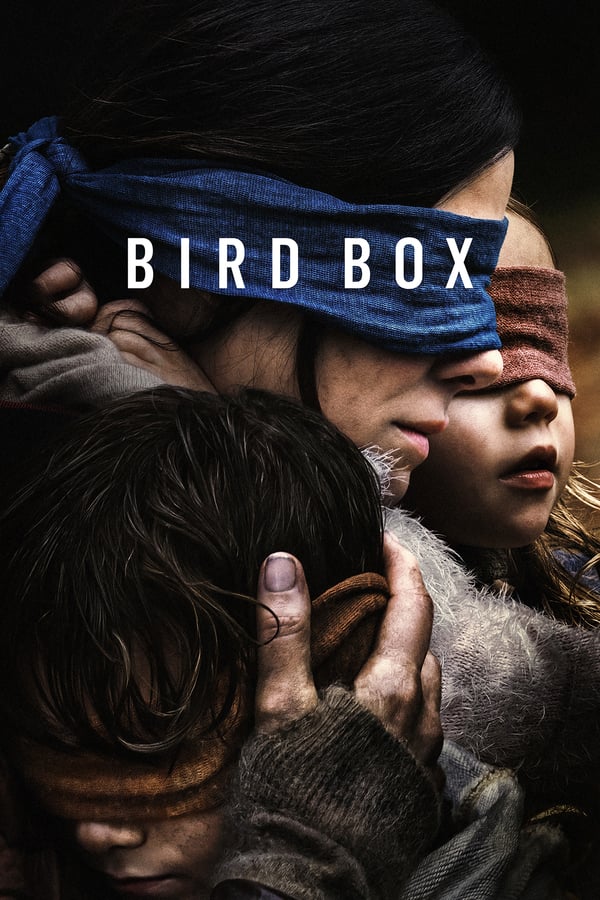
I didn’t hear about Bird Box until the memes hit, and I wasn’t in a rush to see it until I finally just had to see what all the hoopla was about. It stars Sandra Bullock as Malorie, a soon-to-be single mother who witnesses the end of the world. Some evil entity has sprung up that causes people to commit suicide. Anyone that sees it either immediately, violently kills themselves, or, if they are a certified lunatic, they live but go around forcing others to look at the entity. Malorie and two young children, all blindfolded, are making their way down a river by boat, while their backstory is told. Originally holed up in a house with a dozen or so other survivors, we see how Malorie came to be alone with the children. Not a bad movie, and there are moments of great tension and thrills, but a movie without sight isn’t nearly as edge-of-your-seat as a movie without sound, like last year’s A Quiet Place. Still, I enjoyed it, and it is better than your average thriller.
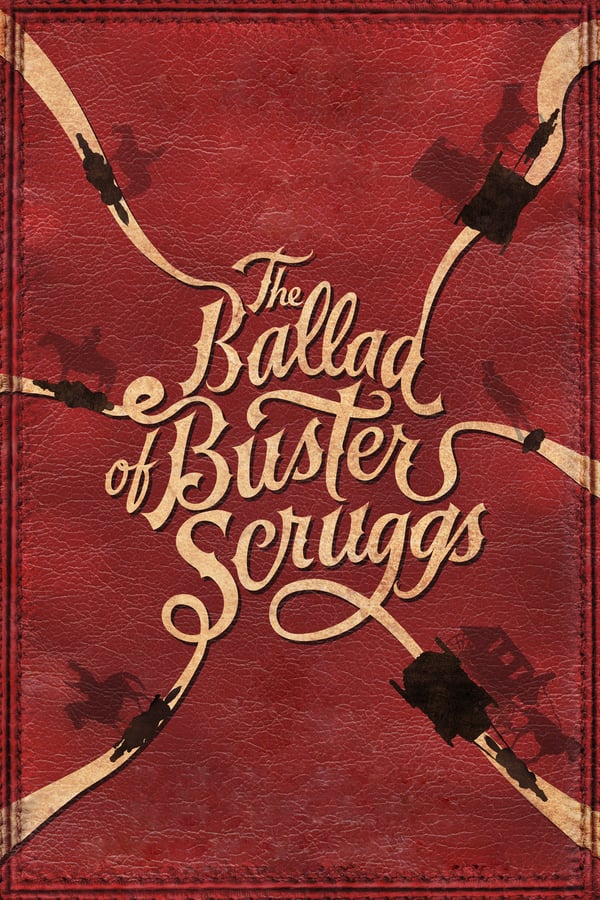
I greatly enjoyed the next film, The Ballad of Buster Scruggs, the newest by acclaimed writers/directors the Coen brothers. It is set up and displayed as a film of 6 short stories, related only in their setting of the old, wild west. In order, there is a story about a gregarious, singing gunslinger who shoots almost as much as he talks; a bank robber who is able to avoid death and hanging more times than luck should allow; a pair of traveling entertainers, one with no arms or legs, who see their oratorical performances get passed over for lesser means of fun; a grizzled old prospector seeking his riches along a peaceful meadow; a woman going west to find a husband, but who finds life alone on the frontier is more than she bargained for; and a group sharing a stagecoach to a hotel, where two of them end up being bounty hunters, scaring their companions. At turns funny (in the Coen brothers’ typical quirky, sometimes zany style) and melancholy, I found the entirety of the film a whole lot of fun. Beautifully shot and exquisitely acted by an all star cast, it is the Coen brothers at their best. Their fans will find plenty to enjoy here.
One great modern western, followed by a dud. Damsel is marketed as a western comedy, but unfortunately I don’t think I laughed a single time. It follows a man, Samuel, as he grabs a minister and goes off into the frontier to find the woman he loves, in hopes to rescue her from an abductor and then ask her to marry him (thus the minister, for a quick impromptu wedding). When the big confrontation comes, we learn that Penelope was never abducted, and the deranged Samuel is wanting to whisk her away from her happy life. I’m not giving anything away, because there was enough foreshadowing that the big “surprise” was no such thing. After it goes down, the survivors head back to town for some more misadventures, but still no laughs to be found, and it become even duller. Samuel is played by Robert Pattinson, and if you’ve read my blog for awhile, you know I absolutely love his acting; the former Twilight star has shown in The Rover and Good Time that he is much more than a one trick pony. He is still good in this film, but he alone can’t save it.

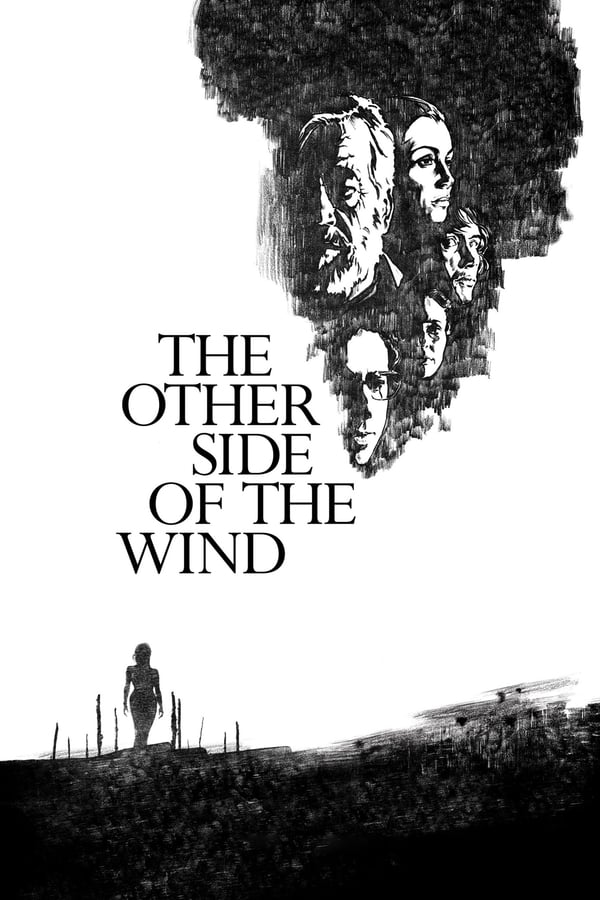
The final film today is a “new old” one. The Other Side of the Wind was the final, long unfinished movie by the great director Orson Welles. Filmed over a period of years from 1970 – 1976, Welles continued to work on it sporadically until his death in 1985. It then spent decades being fought over in the courts, as Welles had borrowed from several sources, all of whom wanted the rights. Finally completed, it was ultimately released by Netflix in 2018.

The film is a fake documentary detailing the last living day of a famous director, Jake Hannaford (played by the famous John Huston). Hannaford is known for making low budget, commercially unsuccessful films, but is adored by film critics. At age 70, he is attempting a comeback and is currently completing “The Other Side of the Wind,” which features a ton of sex scenes, in hopes of grabbing the attention of a younger audience. But his star actor has walked off the set, so the end is most definitely uncertain. Along for the ride is Brooks Otterlake (another great director, Peter Bogdanivich), Hannaford’s protege, a successful director in his own right, whose films are more commercially successful but less critically acclaimed than Hannaford’s. Parts of Hannaford’s last film is shown throughout, as a “film within a film.” The “documentary” is set to a frenetic pace. At his big 70th birthday party, Hannaford is besieged by journalists, paparazzi, and amateur filmmakers, who are constantly taking pictures and filming, and it is all of these films that are edited together to make up the story of this director’s final day on Earth. As such, the flow of the film is at breakneck speed, with most shots lasting no more than a couple seconds. The longest shots are reserved for when we are watching “The Other Side of the Wind” with everyone else. In our current high speed, internet society, it doesn’t feel disjointed, but I’m sure it was revolutionary when Welles was first working on it in 1970. This is one of those films that almost requires multiple viewings. Welles is telling us a lot about what he thinks about the future of filmmaking (which seems to be even more true now in 2019 than it was was in 1970), and admittedly I feel like I missed much the first time through. There are moments that scream for contemplation, but they come and go so fast that, unless you pause and rewind, you have to almost forget about it and move on, or you’ll miss the next moment in this frenzied, tumultuous film. Thankfully it does slow near the end. It is a definite lasting legacy of Welles, that I wish he could have enjoyed fully in his life.

Quick takes on 5 Kurosawa films

Up today is a set of films from Akira Kurosawa, Japan’s most well-known and most influential director. These are the 5 films he made from 1958 to 1963, after some his early art-house successes. First up is the so-called inspiration for Star Wars, The Hidden Fortress. George Lucas himself has said this was an influence, and there are easily-seen similarities, starting with the opening scene of 2 bumbling friends, one tall and one short, walking down a desolate stretch of land together. They are fleeing a war when they stumble upon Makabe Rokurota (long-time Kurosawa lead Toshiro Mifune), a general of the losing side of the battle. This roguish man is hiding the princess of their side, and needs to sneak her back to her people, along with a cadre of gold, in order to bring hope and money to buy supplies and mercenaries for their side of the conflict. The 2 peasants are more greedy and less wholesome than R2 and C3-PO, and Rokurota is more of a do-gooder than Han Solo, but the framework is there for sure. Lucas even lifted the side-swiping scene transitions. A decent enough film, though not on the same level as some of Kurosawa’s best.
1960’s The Bad Sleep Well is a great film, but it is two and a half hours long, and for me, it felt every minute of it. This is a slow burning film about a man on a mission for revenge. In the world of high dollar business, two companies seem to have a shady deal going on, and are under investigation by the government. Nishi, who has just married the daughter of the Vice President of the Dairyu Construction Company, is secretly working to take down his new father-in-law, though for much of the film, we do not know his reason. The company has a history of (allegedly) forcing employees to commit suicide whenever the law circles close to one of them, but Nishi saves one man before he can, and frames another to take the fall. Nishi (and the director Kurosawa) work slowly to develop the story, but when it finally hits, that Nishi is the illegitimate son of a man who committed suicide in the company 5 years previously, then the pace picks up. Excellent acting by Mifune in the lead role, but you’ve got to come with your patience in hand for this film.
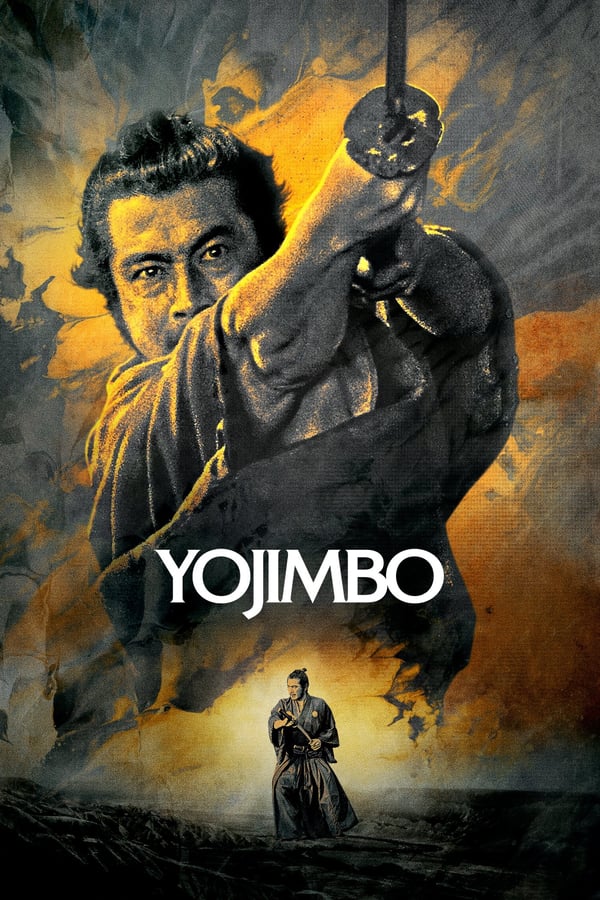
Kurosawa followed this with Yojimbo (bodyguard). Mifune plays a nameless wandering samurai who stumbles upon a town in need of help. Unlike The Seven Samurai, this town doesn’t pitch good vs evil, but instead, evil vs evil. Two warring factions have turned the town into a den of gamblers, thieves, and murderers, with each side having their own puppet mayor, and the only local business doing well is the coffin maker. Our hero comes in, establishes himself as a master swordsman for hire, and then proceeds to play the sides against each other, in hopes of getting them to take each other out and leave the town alone and in peace. This film has great action, intrigue, and while not a very deep plot, it is still very entertaining. Just like The Seven Samurai was remade as The Magnificent Seven, Yojimbo was later remade as A Fistful of Dollars, though this time without permission, leading to a lawsuit and an out-of-court settlement.
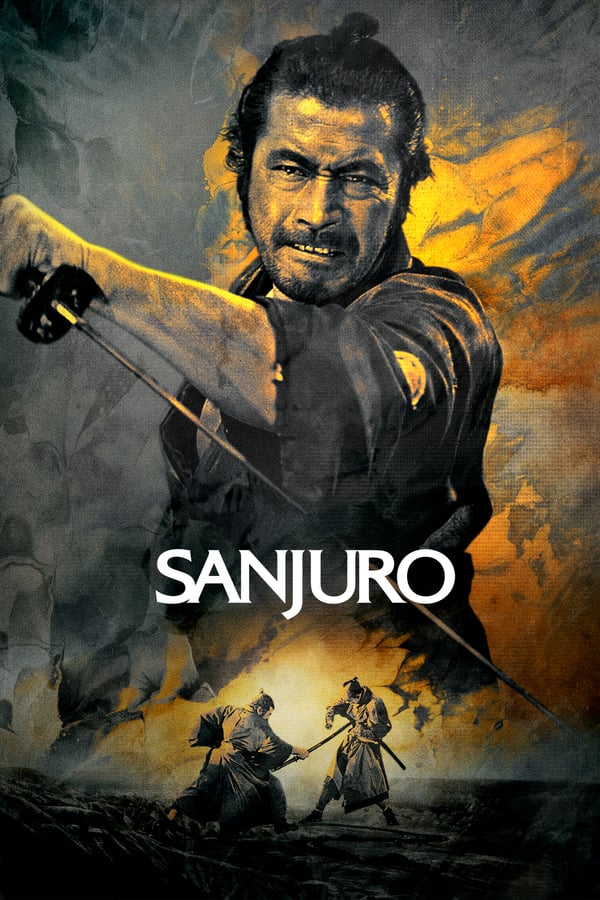
Kurosawa’s next planned film involved a bumbling samurai who helps a group of young trainees uncover a conspiracy by organized crime in their area. After the huge success of Yojimbo, the plot was rewritten as a so-called sequel, and instead of bumbling, Mifune returns as the skilled samurai who plans with his brain and leads with his sword. Sanjuro (meaning 30-year-old, though our nameless hero quips early on that he is closer to 40 now) has Mifune trying to keep his group of young samurai together and alive, while the corrupt villains circle the waters. Though the film is more straight-forward than Yojimbo and also lighter fare (we have clear good guys and bad guys this time), it is still equally engaging, and Mifune is fantastic as the gruff, deadly, and often-times comedic hero. The technical aspects of the film may even surpass Yojimbo, as the swordplay is dynamic. Yojimbo gets all the acclaim, but Sanjuro is a worthy sequel.
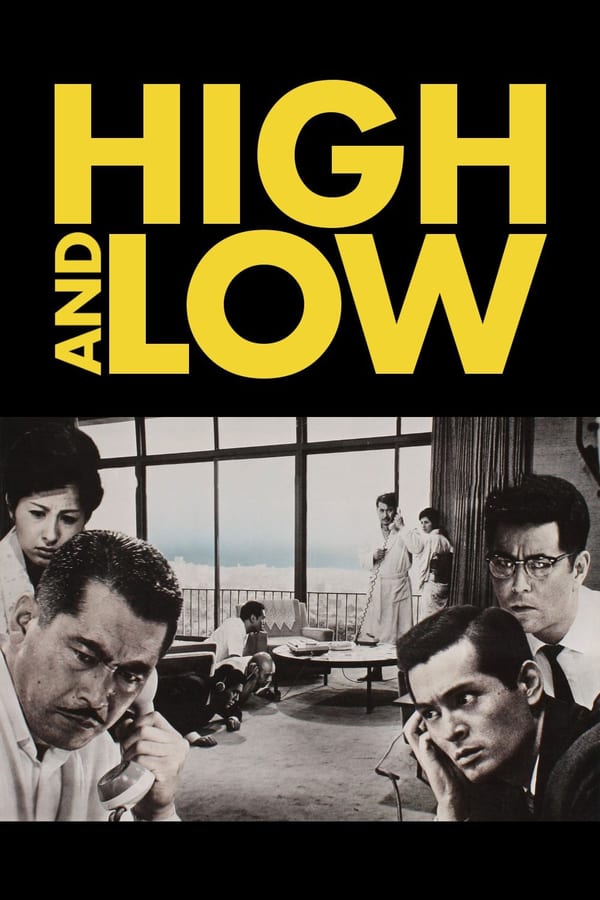
High and Low has an almost film noir kind of feel. It is about a successful shoe company executive, Gondo (Mifune starring again), who is about to take control of the company he works for in a buyout, having secured enough funds by borrowing against everything he owns. On the eve of the takeover though, his chauffeur’s son is kidnapped (the kidnapper thought he was getting Gondo’s son), and the ransom is 30 million yen. After much wrangling and consideration, Gondo uses the funds for the buyout to get the kid back, knowing it will ruin him financially and professionally. Much of the film plays in Law and Order style, following the police investigation to find the kidnapper and bring him to justice. Kurosawa does a remarkable job of drawing us into the plight of the family, and rather than let up on the tension when the son is found, the director keeps his foot on the pedal while the police tighten their circle around the villain. This is a fantastic, accessible film that anyone can enjoy, even if you aren’t typically a foreign film viewer.

Quick takes on 5 Spanish films

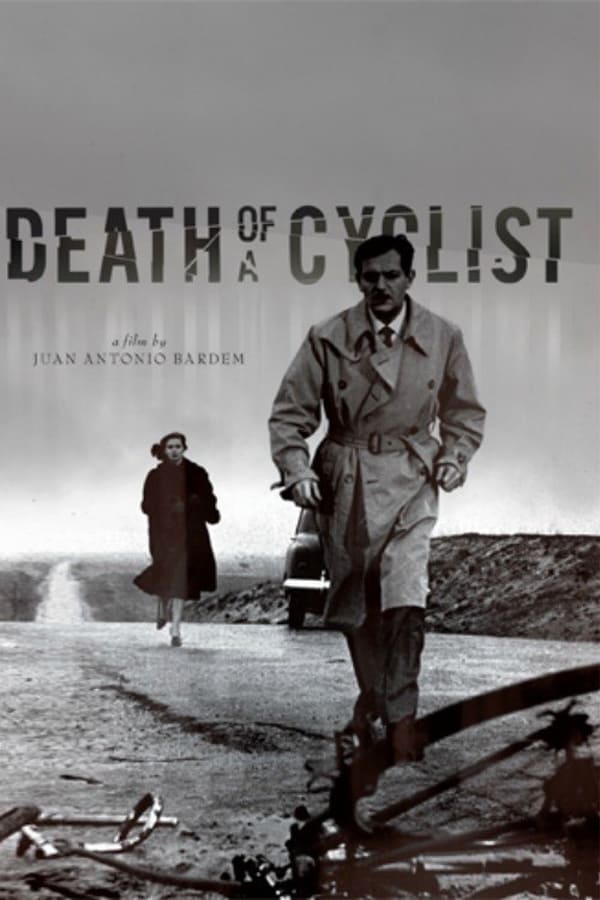
Released in 1955 and directed by Juan Antonio Bardem, Death of a Cyclist is an incredible psychological nail-biter. It starts with the death: a pair of lovers (Maria and Juan) are driving on a country raid when they hit a biker. The do not immediately go the police because they are having an affair and don’t want to be exposed. Maria is married to a wealthy and powerful man, Miguel, who keeps her in a lifestyle she enjoys. However, Maria and Juan are confronted at their next social gathering by Rafa, an entertainer who doesn’t have money (and seems to resent the privileged class he performs for) but who gets to hang out in the social circles because of his skill. Rafa hints that he knows something that will damage Maria and Juan. Fearing that Rafa knows of their tryst and the killing, the two spend the rest of the film fearing their exposure. Bardem used shadows and close-up shots to brilliant effect, ratcheting up the tension until a spellbinding conclusion.

The Executioner is a dark, black comedy from director Luis Garcia Berlanga, released in 1963. It is about a young undertaker, already an outcast in society because of his job, who is smitten by an executioner’s daughter, also an outcast because of her father’s job. What is meant to be a one night stand turns in to a marriage when the girl becomes pregnant, and in order to secure the family a place to live under Franco Spain (where he must have a government job to apply for a decent apartment), he takes up his new father-in-law’s business and becomes an executioner himself. However, the mere thought of death scares him (as an undertaker, he could disassociate with the body since he didn’t see the death occur) and he refuses to take a life, so he spends the next year living in fear that someone in the area will commit a bad-enough crime to warrant the death penalty. When it finally happens, he holds out hope for a pardon, which never comes, and he must perform his first execution. The penultimate scene where the guards are marching the quiet, acquiescent doomed man and the wailing, reluctant executioner is dark comedy at its finest. When the young executioner returns to his wife and father-in-law and states he will never do it again, the retired father-in-law, who has casually spoken of death throughout the film, can only affirm that he once thought so too. A very funny, but also at times touching, film, with subtle (and sometimes not-so-subtle) digs at the authoritarian government.
The Exterminating Angel, from 1962, is a fun surrealist film by acclaimed director Luis Buñuel. It takes the implausible scenario of what were to happen if a group of cultured men and women did not leave a dinner party when they were supposed to. What happens in this film, is they find once they’ve missed their chance to leave, they are stuck in the living room. Each of them finds they cannot find the will to cross the threshold, and what is more, the police and family outside the house find that they cannot gather the courage to pass the front gate. So we are left with a group of 12-15 guests inside, for days or weeks or months (we are never told. It seems like an eternity but so would any situation when you are cannot leave a single room.). This group of bourgeois socialites at first try to maintain decorum, but as hunger and ultimately insanity take hold, they devolve to survive. A fascinating look at humanity, with Buñuel’s typical poking fun at the bourgeois and cultural norms.
This was supposed to be all Spanish films, but I’ve been on a Buñuel kick lately, and he’s at least a Spanish director, so that’s ok? My final two today are two of his French movies. The Phantom of Liberty (1974) was, for me, unfortunately a dud. I’ve enjoyed most of his films, but like The Milky Way, this one did nothing for me. Also like The Milky Way, this film was bereft of a coherent story, and felt almost like bad sketch comedy. Imagine sitting through an entire episode of SNL and not laughing, and that’s where I was for The Phantom of Liberty. It is a stream of ridiculous scenarios, one after another. There is the family that gathers at the dinner table, but their chairs are toilets, and they each drop their drawers or hike up their dresses to sit, and then have a normal conversation, before retiring to a private bathroom-like room to eat alone. One skit involves a pedophilia-like man sharing pictures with some young girls in a park. When the parents find the pictures, they are repulsed, but when the viewer finally sees them, instead of nudie pics we see pictures of famous buildings and monuments. Other such skits pepper the film, the next more absurd than the last. I felt like Buñuel made this film for his own amusement, and he didn’t care much if viewers were in on the jokes. Extreme fans of surrealism, and especially film lovers who like to see the envelope pushed just for its sake alone, would love this film, but its not my cup of tea.
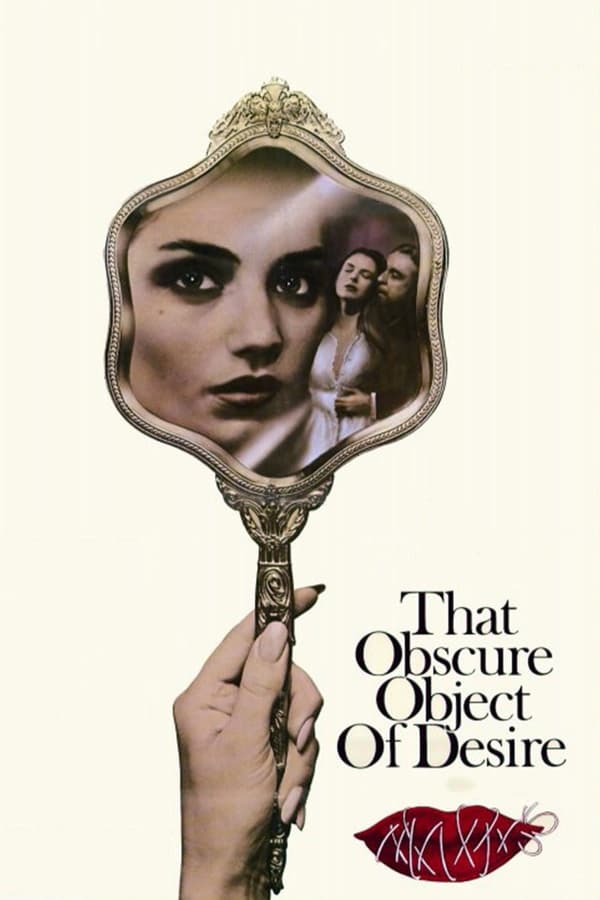
For my tastes, Buñuel got back on track with That Obscure Object of Desire in 1977, the last film he made before his death. This one has it all: an engaging story, terrific acting, and brilliant filmmaking. A rich older man, Mathieu, is smitten by a young Spanish woman, Conchita, and becomes obsessed with her. It quickly grows to him lavishing her with gifts and money, but she refuses to sleep with him, (correctly) knowing that she will be cast aside once he gets what he wants. She doesn’t do this in order to keep receiving gifts though, but only because she wants him to love her. All of this is told as a story, by Matheiu to his fellow train passengers, after they witnessed him dumping a bucket of water on Conchita’s head in the beginning. A great story, but the most fascinating aspect of this movie is Buñuel’s decision to use 2 actresses to play Conchita, one a very Spanish-looking, voluptuous, sultry woman, and the other a slimmer, more model-esque, cold French-looking woman. Did he do this to drive home the point that Mathieu only saw her as an object and it didn’t matter who the woman was, or because in doing so, it forces the viewer to see her as an object too? I couldn’t help but have different feelings towards Conchita depending on which actress was on screen. Is it my imagination, or did Buñuel give them different personalities, or did he use 2 woman to force the viewer to self-examine how we feel towards women based on appearance? We’ll never know, but fantastic work.

Corruption and salvation found in All the King’s Men


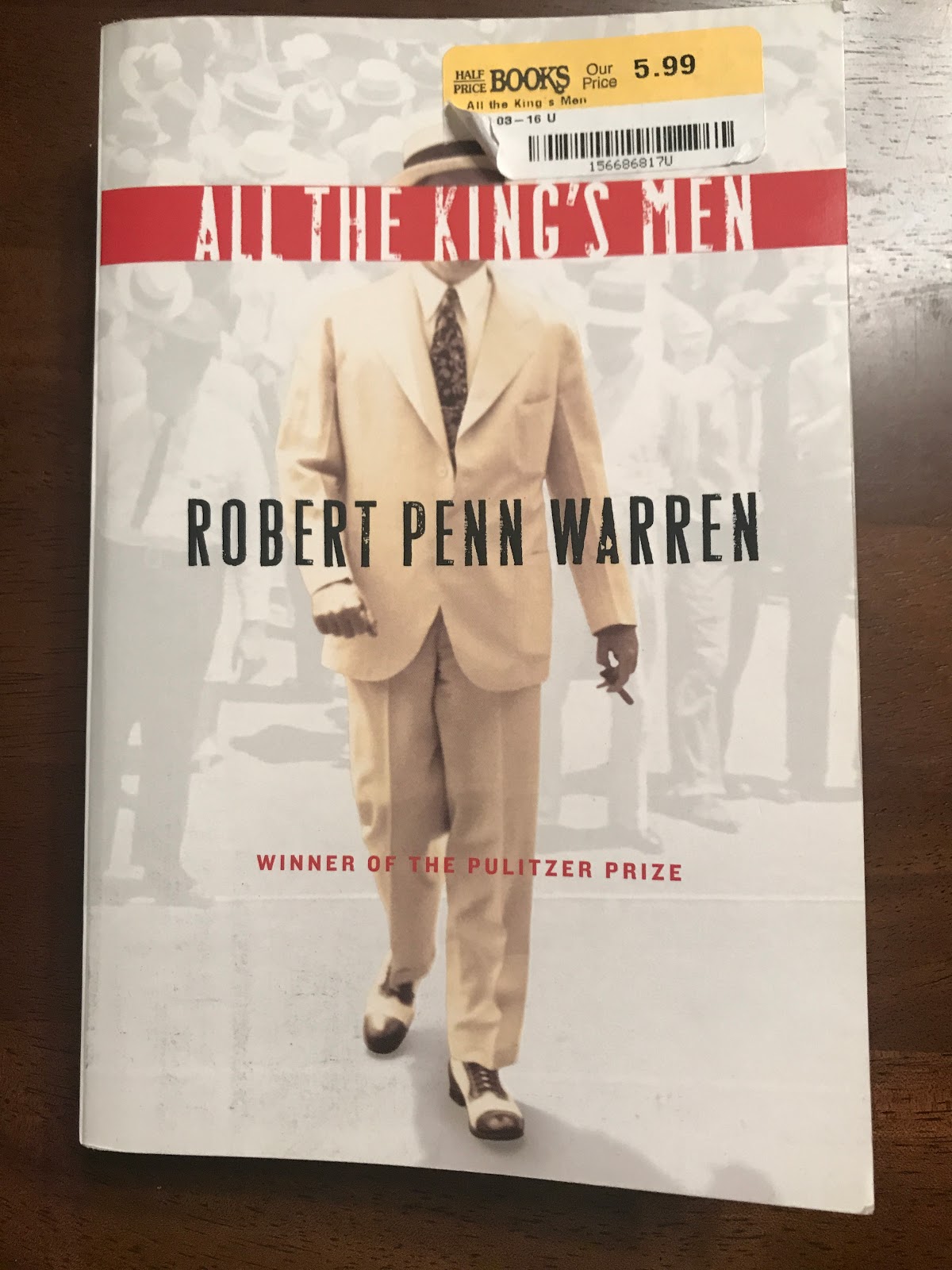
In storytelling, one of the oldest tricks in the book is to not give you much information up front, but to let details flow out slowly, over time. If done poorly, you lose interest and move on, but when done well, this gets you more invested than you might otherwise have been. This technique is done to perfection in Robert Penn Warren’s All the Kings Men. For much of the first part of this book, the reader knows very little. For awhile, we don’t even know much about the main characters, other than their names. We don’t know their motives, their backgrounds, their causes. But the little breadcrumbs that are dropped (almost miserly) are enough to keep us going, and by the time the real story gets going, nearly 200 pages in, we are hooked.

This book follows Jack Burden, a college dropout but an intelligent man, who works for the governor of the state, whom he refers to as “the boss,” Willie Stark. We learn more about Stark than Jack at first. Stark is a self-made man, coming from a humble farm. As governor, Stark excels in bullying his opponents and getting what he wants. He prefers not to bribe people, but to “bust” them, completely tearing them down. Because of his background, his cause is that of the common man, which makes him popular among the general population but doesn’t earn him any friends in the affluent and political circles. Even so, he pushes his agenda, which, for must of the book, is building a grand hospital that will cater to the poor, offering free services by top-notch doctors.

Whereas Stark is full of drive, Jack Burden seems to have none. He’s going through life fairly aimlessly, and follows Stark’s instructions to the T, no matter what they are. He is basically Stark’s go-to guy, whenever he needs to “get something done.” His devotion to Stark is driven home when Stark asks Burden to dig up dirt on Judge Irwin, a local celebrity with an impeccable record, but who happens to be opposing an upcoming vote Stark needs. Irwin practically raised Jack when his own father abandoned the family. While Burden does hope to find no “dirt,” he still does the job to the best of his ability. The betrayals don’t stop there, as Burden’s childhood friends, Adam and Anne Stanton, are also targeted by Stark in the course of the book.

This investigation by Jack is the driving force for much of the book, and tangents into his college days, his first love (Anne), and his failed marriage to another woman, provide incite as to what makes him tick. We also slowly learn more about Stark, including his marriage and constant infidelities. Everything comes to a head when Jack confronts Irwin with proof of a past bribe. Though it is ancient history and the only thing that would be hurt would be Irwin’s reputation, Irwin cannot accept even that, and kills himself. This finally shakes Jack, and even more so when he learns afterward from his mother than Irwin was really his father, and thus the reason that his mother’s husband left them when Jack was a child. The waves keep crashing down, as Burden finds out Anne has been sleeping with Stark, and Stark asks Jack to approach Adam to lead the new hospital. Even then, Jack still follows Stark.

If it sounds convoluted, it really isn’t. The book is well written, and while it does jump around quite a bit between past and present, it is easy to follow. The final, explosive conclusion is stunning, and comes completely out of left field. This book won the Pulitzer for the author in 1947 (he would win 2 more for poetry later on, the only person to have ever won Pulitzers for both fiction and poetry). The writing style is a bit different and it took me awhile to really get comfortable in the flow of words, but once in, I sped through the final half of the novel quickly. Willie Stark and Jack Burden are those kind of people that you really want to hate, for some of the despicable things they do, but I found myself continuing to root for both of them.