 The new Lion King film has received middling reviews, but I still wanted to see it, if for nothing else than to relive my childhood. The film is a straight redo of the original cartoon, in fact some scenes seem shot-for-shot the same. I’m sure you’ve all seen it before, so no re-hashing. The computer generated animals are indeed breathtakingly real, and I think that is the only detriment to the film. In this case, very real can be too real. Real lions don’t break out into huge grins or raise eyebrows in skepticism, so they don’t in this movie, and that takes away from some of the wonderment of it all. The songs are all there, the story is there, the humor is just as good (if not better in spots), but it doesn’t have the same kind of magic. Any maybe that’s just because I’m not a kid anymore. Certainly not a bad film, I enjoyed it and will watch it again sometime, but I think for my generation at least, it doesn’t match the original.
 I wasn’t going to watch the new Toy Story 4, and only did because it was a double billing with Lion King at the local drive-in. But I’m glad I did. I still think the original trilogy is perfect as it sits, but this is a decent conclusion (assuming they don’t get even greedier and make another). This one picks up with the toys living with Bonnie now, who is going in to kindergarten. Woody is no longer the favorite, as Bonnie usually goes for the female toys like Jessie, but Woody seems fine with his new role. He had a good run with Andy and he is content. Bonnie struggles at school on her first day, but finds joy when she “builds” herself a new toy from a spork and some odds and ends out of the trash can. Forkie becomes her new favorite, but he just wants to return to the trash, which leads to a lot of humor. When Forkie makes a run for it during a family vacation, Woody goes to bring him back, and in doing so, runs in to Bo Peep. Bo was Woody’s love interest in the early Toy Story films, but she was given away years ago and Woody thought her lost. She’s been doing well as a solo toy all these years, without a kid. Woody enlists her help to get Forkie back to Bonnie, and it doing so, has to face a decision on what he wants for his own life. If you cried at the end of Toy Story 3, you probably will again at this one. I still stand by my initial statement, but if the first three films are a perfect story, then the new one is a proper epilogue.
 The Upside stars Bryan Cranston and Kevin Hart and is about a rich, older man confined to a wheel chair who hires an ex-con to be his live-in caregiver. Philip was left paralyzed from the neck down after an accident, and has just survived a suicide attempt, saved by his professional assistant despite a DNR order he had in place. She insists on a new caregiver to stay with Philip night and day, and despite her protests, Philip likes Dell. The film follows their unlikely relationship. There is some heart, and a whole lot of humor, but I can’t help but feel the film felt a bit “thin.” Cranston is a phenomenal actor and he is great here again, but it isn’t enough. The movie hits on all the right spots, and some really funny moments were laugh-out-loud good, but it is chuck full of clichés. It also felt too safe, and I feel like they could have taken some risks that would have made for a better picture. A pleasant enough comedy, but only good enough for a single viewing.
 I’ve been waiting to see Ramen Shop for quite awhile; it’s been on my list since I first heard about it in 2017. I have to say the wait was worth it. A Japanese film, it is about a young man in Japan who works for his dad in a ramen shop, serving delicious food. His mother, originally from Singapore, is long dead. When his father also dies, Masato sets out to Singapore to find his mother’s estranged family. What follows is a beautiful film about healing past hurts and a family coming together after too long apart. There are still long-felt pains in Singapore from when the country was occupied by Japan, and Masato’s parents’ marriage was not accepted at the time. Masato finds his uncle first, who openly welcomes him in, but his grandmother is not so easy to win over. This is a deliberate film, moving at the pace of a slow preparation of a meal (and many meals are shown in the cooker’s themed movie!), but the end is extremely rewarding, as is the beautiful journey to the denouement.
 Captive State has received some rough reviews, but honestly it isn’t all that bad. It starts in present day, showing how an alien race came and quickly overpowered the governments across the globe, until all bowed down and relinquished power. Jumping ahead 9 years, the aliens are called “the legislators” since they make all the rules, and they control the police force as well. Insurgents or dissenters are killed or rounded up and sent off world for labor. Of course like many alien invasion films, they are here for our resources, and have set up walled-off zones in most major cities around the world, and are digging down into the earth. The film follows a resistance movement, and the police force hunting them. The story of the underground insurgents is quite good and very gripping; their unseen ways of communicating with each other paints a stark picture of a people under constant surveillance, but the movie has plenty of shortcomings. The camerawork is really quite bad, there are some gaping plot holes here and there, and the direction seems amateurish too (though director Rupert Wyatt has some good films under his belt like Rise of the Planet of the Apes and The Gambler). Not great, but definitely not as bad as the reviews would have you believe, and a solid diversion for fans of the genre.
 How about a series of films by the great Ingmar Bergman, released in the 1950’s? Secrets of Women (sometimes known as Waiting Women) isn’t about a specific person per se, but follows a group of women at a summer cottage as they tell stories to each other, while awaiting the return of their husbands. Rakel tells about her affair one day, and how her husband found out and nearly killed himself over it. Marta tells of her adventures when she was younger and free-spirited, afraid to settle down until she finally ended up pregnant, and finally Karin relates about her and her husband ending up stuck in an elevator over night one evening, and sharing secrets with each other that they never could before in their daily lives. All are fascinating looks at humanity in true Bergman style, though as a total film, I’m not sure it is all that memorable. Still, great acting by several Bergman regulars and certainly not a bad film.
 Sawdust and Tinsel is often noted as a film about the battle of the sexes, but I think there’s a lot more going on than just that. It follows a traveling circus and in particular, its leader Albert and his inner circle. The troupe is getting ready to visit a town where Albert’s estranged wife and kids live, whom he hasn’t seen in three years. He is nervous and excited, but his mistress, Anne, the horserider in the circus, is fearful that Albert will leave her to return to his wife. While Albert goes to see his wife, Anne goes to see a local good-looking actor, and both have very different outcomes than what they wanted. Depressed, Albert returns to the circus and confronts Anne, just before their show that night. At the show, Anne’s fling shows up and fights dirty to subdue Albert in front of everyone. The conclusion is gut wrenching, but leaves hope for a future together. This film does have struggle of man vs woman for power, but it also shows people hitting their limits and finding the strength to go on through their friends. The sets and camerawork are amazing (this is Bergman’s first film with renowned cinematographer Sven Nykvist, a relationship that would continue through the next couple decades) and the acting from all, and especially Harriet Andersson as Anne, is the best you’ll find.
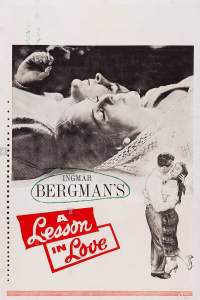 Bergman made few comedies in his prolific career, but one is A Lesson in Love, which he probably made in response to the dark Sawdust and Tinsel the previous year. The film is about a man, David (Gunnar Bjornstrand), cheating on his wife with a young woman. But when he finds that his wife is also cheating on him, by visiting a lover in Copenhagen, he boards a train to go there. On the train he shares a car with a man and woman, and bets the man that he can kiss the girl before the train arrives. Of course, the girl ends up being his wife, Marianne (Eva Dahlbeck). It turns out she is having an affair with an old flame name Carl-Adam, the man who she was engaged to before David intervened. The married couple share some memories of their life and kids during the rest of the ride, but the ending is just ambiguous enough to not know who Marianne ends up with at the finale. An average enough film, for my tastes Bergman doesn’t handle comedy as well as he does psychoanalytical dramas, but still, it mostly hits at the right moments.
 Dreams is the rare dud from Bergman. Even his films that I don’t think are that good, I can still find moments of enjoyment, but this one is a bore. It is about 2 women, a successful owner of a model agency, and one of her employees. Susanne has power and wealth, but she can’t enjoy her personal success because she is obsessed with an ex boyfriend Henrik, whom she recently dumped when she found out he is married, but whom she still misses. Doris is torn between putting her career as a model or her life with her fiance first. When Susanne takes the crew to Gothenburg, ostensibly for a day shoot but really to beg for Henrik to come back to her, each woman has a day that will set their lives on the right path. Even Bergman regulars Eva Dahlbeck, Harriet Andersson, and Gunnar Bjornstrand can’t help this tedious film. Unfortunately it is just a shallow movie, with none of the deeper elements that Bergman usually gives us.
 Brink of Life came in 1958, after Bergman had finally “hit it big” with The Seventh Seal and Wild Strawberries the previous year. This movie is tremendous. It takes place in a women’s recovery ward in a hospital, and follows three women. Cecilia has just had a miscarriage at the end of her first trimester, Stina is long overdue and waiting for labor to start any day, and the young Hjordis has been admitted for premature bleeding. Cecilia is in physical and mental anguish; she wanted a baby more than anything but is convinced she lost it because her husband did not want it. Stina can’t wait to have her first baby and is on cloud 9. Hjordis, unbeknownst to the nurses, tried to force a miscarriage, but is nearly recovered and about to be discharged. Over the course of 24 hours, we get to know these 3 as they get to know each other. They develop a bond that (hopefully) leads to healing and hope for all three. I loved this movie, and it cemented Bergman in my mind as one of my favorites.
 The Heiresses is just interesting enough to be a step above watching paint dry. To say this one moves slowly is an understatement, but it has elements that the critics eat up, thus its big rating on Rotten Tomatoes. It follows Chela, a just-past-middle-age woman who comes from money, but who is now fallen on hard times. She and her long-time girlfriend, Chiquita, are selling off household furniture and crystal to pay the bills, but Chiquita is arrested for the debts and sent to jail for a couple months. Chela has relied on Chiquita to make all the decisions for years, and now is forced to take care of herself. She starts driving her elderly friends around for cash, and in doing so, meets a young, attractive, carefree woman named Angy. Chela begins truly living her life for the first time in decades. It’s an art film all the way, which is generally my cup of tea, but perhaps I just wasn’t in the mood today.
 Fighting With My Family, on the other hand, has less art and more fun. The previews I saw for this film before it came out hyped up the laughs and I thought maybe it was a straight-forward comedy. It is undoubtedly funny, but it is much more than that too. Based on a true story, it follows the Bevis family in Norwich, England, and specifically, youngest daughter Saraya. The Bevis’ are a family of wrestlers, with the mom and dad running a small wrestling club in their hometown. Saraya and her brother Zak have dreams of making it big and becoming WWE stars in the USA, but when they get their chance in an audition, only Saraya is picked to train and move further in the audition process. Depressed, Zak goes back to England, while Saraya continues working in the high-stress world of wrestling hopefuls. The film leans hard towards sentimentality but isn’t entirely heavy handed, and the acting by all involved (including some familiar faces) is top notch. Very entertaining movie.
 Shazam! is good, I’d say much better than the average DC film, but it still didn’t blow me away like Marvel is often able to do in their film series. This one takes place in the same universe as DC’s Batman and Superman films, but features a lesser known superhero. Billy is a teenager who has drifted from foster home to foster home, but is always searching for his birth mother. He is given superpowers by a desperate wizard who knows a great evil will be unleashed soon, and all Billy needs to do to access his powers is yell out “Shazam!” In doing so, his body morphs into a big muscular man who has all kinds of powers from super speed, to flight, to the ability to shoot lightning from his fingertips. While Billy is coming to terms with his new powers, he is also facing his personal struggles in his new foster home, bullies at school, and a powerful supervillain who wants to ad Billy’s powers to his own. Lots of funny sequences involving Billy learning his new powers with his one friend in the world, but the ending really started to drag, with the final fight scenes seeming to go on way too long. Still, not a bad superhero flick.
 Transit is as much of a gut punch as you’re going to get from a quiet, independent film. It is a German film, based on a book that was written and took place during World War II, but the film has shifted its time frame to today. Instead of an occupying Nazi army, the governments are the increasingly nationalist ones currently spreading throughout the world. Georg is a German citizen living and working in France, but he needs to get out before being rounded up and deported. He has paperwork for a writer named Weidel, who is just famous enough to maybe help him leave France before the government closes all ports. Visas and travel documents are getting hard to come by, and even stop-overs in other countries are hard to get, as those countries don’t want to risk letting foreigners in who may not leave. But when Georg gets to Weidel’s apartment, he finds that he has just committed suicide, and the landowner has used connections to dump the body anonymously so as to avoid the police’s attention. Georg heads for the port city of Marseille, where the occupying police have not yet reached. Attempting to inform the Mexican consulate there that Weidel is dead, they think that Georg IS Weidel. Seeing an opportunity to get himself out of the country, Weidel plays along. A wrench pops up though when he meets a girl he is instantly smitten with, and she refuses to leave France without her estranged husband, who just so happens to be the missing Weidel. A deep and emotional story, directed by one of the best current German directors, Christian Petzold, and starring two great actors, Franz Rogowski and Paula Beer (who has been in several films I’ve seen lately, including Frantz and Never Look Away).
 Alita: Battle Angel received more attention for the big eyes of its lead actress (computer enhanced Rosa Salazar) than its plot, which is never a good thing, but we all know my love of future dystopian films. This film takes place in a future where an intergalactic war (referred to as “the Fall”) between Earth and colonies on Mars has left most of our planet as a junkyard. 300 years later, a single floating city called Zalem houses all of the elite, whereas the rest of the population fights over the scraps on the ground. Technology is still advanced, but mostly just from the leftovers of the previous generations, as these days people can only re-use and re-purpose existing tech. In the rough society, most humans have cybernetic arms and/or legs, and Dr Dyson (played by Christoph Waltz) is a man who specializes in attaching these robotic limbs to those who need them. He finds a cast-off cyborg in a pre-war junk heap and is able to resurrect her, naming her Alita. Alita has no memory of her past, but in battle, her instincts as a soldier in the war take over, and she is lethal. She falls for a local human named Hugo, who unbeknownst to her, is attacking people and night and ripping off their cybernetic limbs to sell on the black market, in hopes of raising enough money to bribe his way to Zalem. Though the movie has a little too much of a young adult flare (some cheesy dialogue, a forced romance, etc.), I still really enjoyed it. The visuals are stunning, the battle scenes are frenetic but well made, and the plot, while not all that deep, is engaging. While the film did just OK at the theater (400 million on a 170 million budget), it probably didn’t do well enough to get the sequel, that was so obviously set up, made. But even on its own, a fun film.

 Going to look at some of Hitchcock’s perhaps lesser known films today, including two from the silent era (yes, Hitchcock made several silent films). First up is The Lodger: A Story of the London Fog, from 1927. This was Hitch’s third film, and his first psychological thriller, obviously the genre he is most famous for. Daisy is a cute young blonde at a time when that is not such a good thing. A serial killer known as “the Avenger” is Jack Ripper-ing it up around London, targeting fair haired women. When a witness finally spots him and describes him as a tall young man hiding his face in a long scarf, just such a man shows up at Daisy’s house, requesting to stay in the advertised open room. The new lodger moves in, and in Hitchcock-ian humor, begins to ominously tell Daisy how beautiful her blonde hair is, and promising to “get her real soon” when they play chess, while carefully reaching for the fireplace stoker (only to move the coals around of course). When he quietly stalks out the night of the next murder, and Daisy’s mom notices, he becomes suspect number one. If you know Hitchcock at all, you know all ready if he is really the murderer or not. A little slow to get going, and a little slow in the latter third as well, but ultimately a fun, early slice of Hitchcock thrills.
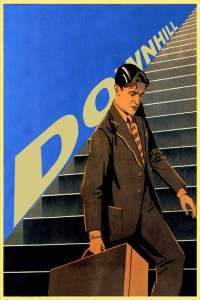 His next movie was Downhill, released the same year, and starring the same lead actor (Ivor Novello). In this dramedy, Roddy Berwick is a man with the worst luck in women. It begins at an exclusive all-boys school, where he takes the fall, protecting his best friend, and says it was he that got a local shop worker pregnant. Roddy gets expelled from school and cut out of his affluent parents’ inheritance. A little while later, he is scraping by as an actor and falls in love with the lead, but he only gets her attention once he has inherited 30 thousand pounds from his deceased godmother. They marry, but aren’t together long before she wipes out his money on lavish purchases and leaves him for another man. It doesn’t get any better any time soon for old Roddy, as he becomes a cheap gigolo in Paris. The film has funny moments, but ultimately there’s nothing to write home about. If any other director had done it, this is the kind of film that would have been lost to time, and maybe it should have been. Not terrible, but not memorable either.
 Sabotage came out in 1936, adapted from a work of renowned writer Joseph Conrad. The film opens with a deliberate blackout in London; an act of sabotage has cut power everywhere for a few minutes. Mrs Verloc and her husband Karl run the local cinema, and while Mrs Verloc holds of the perturbed crowd wanting their money back, Karl sneaks in the back, it being implied that he was behind the power outage. We soon learn that he is being paid by a group of shady men, to what purpose we don’t know yet, but what’s more, is they are under surveillance by Scotland Yard. A bigger, more dangerous event is planned by the group, with the help of a bomb maker. As the day approaches, Hitchcock ratchets up the suspension. Lot of trademark Hitchcock camera closeups and slow pans to create unease. I didn’t much of this movie for a good portion of it, but the ending is very good.
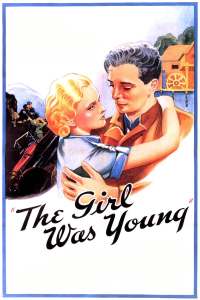 He followed the next year with Young and Innocent. It starts well enough: there’s a fight between two people during a storm, and the next morning, the woman washes up on shore, the victim of a strangling by a raincoat belt. The first man to find her is the prime suspect. Robert knows he’s innocent, but to prove it, he needs to find his stolen raincoat out of town, to show the belt used was not his. He is aided by the chief police constable’s daughter Erica, who reluctantly believes he didn’t do it. The duo dash off to the countryside and unfortunately, the film reverts to an almost-comedy romp. There are good moments, but definitely not one of Hitch’s best. The lead actress is great as the irresolute heroine, and the camera loves her, but that may turn out to be the only memorable aspect for me. Unfortunately a fairly boring movie.
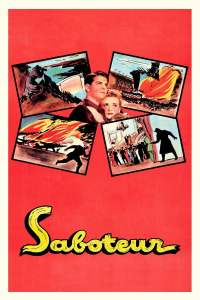 Saboteur is one of Hitch’s early Hollywood films, and was released in the early days of America’s involvement in World War II. An aircraft factory is destroyed in a fire, and a man dies in the blaze. The man’s friend, Barry, is suspect number one, but Barry knows he is innocent, and he has a single clue to follow to attempt to prove his innocence before the cops can catch him. As the mystery unravels, he finds a plot to undermine the country, with further sabotages planned. Of course there’s a girl that Barry gets tangled up with too. This is pure Hitchcock through and through, so if you are a fan, you’ll love it, and if not, you’ll think the plot is a little too much like the more popular North by Northwest that would come later.
 Cold Pursuit is a genre-defying, black comedy/action flick starring Liam Neeson as Nels Coxman, a snowplow driver outside Denver. When his son is killed, Nels goes on a rampage to kill those responsible, who turns out to be a big-time drug dealer in Denver. Nels starts with the local dealers and works his way up the food chain, but along the way, a rival drug gang of Native Americans becomes involved when there is confusion among the bad guys on who is doing the killing, and the body count continues to rise steadily. All of the characters are purposefully wild caricatures, creating many of the funny situations. Gruesome deaths accompanied by belly laughs? I’m in! Not a deep film and not really a great one, but it is entertaining enough for a single viewing.
 Peterloo is extremely well detailed, beautifully shot, and a huge bore. I wanted to like this one, by director Mike Leigh, so much so that after I first gave up (45 minutes in), I tried to pick it up again the next day, but to no avail. The film is about the lead up to the real Peterloo massacre, when the British government militia stormed into protesters, killing some and wounding a bunch more. Despite sets and costumes that are more detailed than anything I’ve ever seen before, the movie is just too dull. It really is just (wordy) speech after speech after speech, all about the same topic, which is, reform of the government and representation for the working class. I generally enjoy period dramas, but this one is tough to get through. I wasn’t able to finish it unfortunately, maybe you’ll have more patience than me.
 Just as Peterloo is a movie I should have liked but didn’t, Under the Silver Lake is one I probably should loathe, but don’t. In fact, I found it extremely entertaining. This one stars Andrew Garfield as Sam, a quirky young man without direction in life. He meets a girl he instantly likes, but when she doesn’t show up to meet him the next day, Sam enters a crazy world of drugs, mystery, and conspiracy theories. As the film proceeds, it seems the more Sam learns, the further he gets from answers. Sam’s investigations include deciphering puzzles in popular song lyrics and puzzling over the map on the back of a cereal box, all while avoiding a serial dog killer in the area and a more sinister monster known as the Owl Monster. This is one of those films where the ride to the end is just as important as the finish itself, and don’t come expecting it all to wrap up in a tidy bow, which probably explains why online reviewers give this film either 1 or 5 stars, with almost nothing in the middle. You’ll either love it or hate it, but if you just like good filmmaking, I think you’ll be in the former group with me.
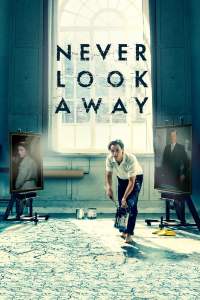 If you want to be moved, if you want to feel wonder like that of a child again, Never Look Away is a masterpiece. A German film directed by Florian Henckel von Donnersmarck, it tells the story of Kurt Barnert (inspired by real-life artist Gerhard Richter). Beginning in 1937, Kurt is a young boy, heavily influenced by his beautiful aunt Elisabeth. She talks to Kurt about art and freedom, just before she is diagnosed with schizophrenia and put in an institution. First she is sterilized so as to not spread mental illness to her children, and then, with World War II kicking into high gear, she is killed through a gas chamber so the Nazi party can free up hospital beds for wounded soldiers. The doctor that signed off on Elisabeth’s and other patients’ deaths is spared an execution after the war, when he saves the life of a Russian officer’s wife during her rough childbirth. The film picks up in the later 40’s, as East and West Germany are splitting. Kurt has survived the war and is a young man going to school to be an artist. This constitutes the first hour of so of this 3 hour long film, but to give more away would be a grave injustice. Go see this one, it will move you to tears and to cries of joy. Probably the best film I’m seen in awhile.
 In my mind, Avengers: Endgame was a proper ending to the first part of the Marvel saga, but the series does continue on now, and the first movie of the new set of films continues the adventures of Spider-Man in Far From Home. If anyone feared that the “new” films would lose something after Endgame’s conclusion need not worry. Far From Home is supremely fun and action packed. Young Peter Parker, having been brought back from the snap in the last film, which the people of Earth are calling “the blip,” is living in a world still coping with disappearance, and reappearance five years later, of half the world’s population. Peter doesn’t want the mantle of world hero and prefers to remain “your friendly neighborhood Spider-Man.” But danger still finds him. On a class trip to Europe, Spider-Man fights foes while dealing with the emotions (and crushes) that come to all teenagers, while also coming to terms with the loss of his own personal hero, Tony Stark. The series isn’t slowing down, and continues to produce at a high level. I can’t wait for the announcements for where Marvel goes from here.
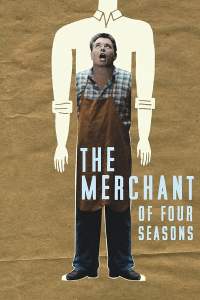 The Merchant of Four Seasons came out in 1971. It is about Hans, a man for whom life hasn’t given any breaks. He is a fruit vendor, a job for which his mother despises him (though as we see in flashbacks, she did so long before his career path was chosen). He is married to a woman, Irmgard, who is his polar opposite, a fact driven home even by their statures, with Hans being short and stocky and the slim, tall Irmgard towering over him. Though life itself doesn’t seem to like Hans, the viewer does, because he is portrayed as a likeable “everyman.” When he has a heart attack though, and the family needs to hire someone to push the fruit cart around town, even the veneer of happiness Hans tries to eke out at home is ruptured. At times throughout this film, I found myself thinking it wasn’t very entertaining as a picture, because events just sort of happened without any sort of meaning, almost like I was watching a modern day reality show following the everyday life of an average man. But as the film drew towards its conclusion, I realized the brilliance of this movie. Fassbinder does an amazing job of fleshing out Hans, and the viewer knows him through and through by the end, warts and all. By the end, I ached for the way Hans’ life turned out. Loved the movie.
 The Bitter Tears of Petra von Kant was Fassbinder’s big breakout in 1972. Petra is a wealthy clothing designer, but her money hasn’t bought her happiness. She lives alone with only a maid, Marlene, whom von Kant bosses around in a degrading manner. One evening, Petra meets Karin, a young and shallow beauty, and Petra instantly falls in love. Petra showers Karin with everything she wants, but 6 months later, Karin admits she was only using Petra for the lifestyle and does not love her. She moves out, leading to a severe depression in Petra, which is only abated by help from her family. For much of this movie, I was wondering where all the praise for this film comes from. It didn’t seem to be getting anywhere fast, and whole conversations go nowhere (Karin and Petra spend what seems like 15-20 minutes discussing trivialities like their favorite subjects in school), but then the ending came. Absolutely stunning, and from that, the whole film is painted in a new picture. A fantastic character study in both sadism and masochism, love and hurt, and ultimately, what can bring happiness. Going to have to watch this one again.
 25 years before The Matrix depicted people living out their lives unknowingly inside a computer program, Fassbinder brought us the same in World on a Wire. Fred Stiller is the technical director of a computer program called The Simulacrum. Devised as a way to predict human needs in the future, the Simulacrum is full of programs who think they are human, going about their lives in a virtual space. Stiller’s predecessor was a man named Vollmer, who died suddenly. Stiller isn’t on the job for long when he notices the head of security, Lause, has also disappeared suddenly, but more peculiarly, no one in the company remembers him. While investigating Lause’s disappearance, it isn’t long before Stiller begins to question his own existence. Part neo-noir and part science fiction, World on a Wire is a great mystery that opens up questions about the meaning of life. It’s a bit long at 3 ½ hours (it was originally a 2 part miniseries), but it is well worth the trip, and far ahead of its time in 1973, at a time when computers don’t even resemble what they’re capable of now.
 By the time I got to Ali: Fear Eats the Soul, I was really warming up to this director. This one does not start slow, but gets you right into the meat of the film. This film is about race relations, and on a larger scale, how the general public can turn on minority groups. In it, a widowed older lady, Emmi, falls in love with a young black man from Morocco, Ali. At this time in Germany, Arabs were looked down by society in much the way that black people were in America, and both Ali and Emmi are very lonely, Ali because of his race, and Emmi because of her dead husband and grown, absent children. They find love in each other, but over time, Emmi’s attitude towards Ali harshens to be more like her friends’ attitudes towards him, leading to strife in their relationship. A good film to open your eyes to problems that existed in the 60’s and 70’s and still exist today. Chuck full of tidbits that really stand out, like Emmi’s neighbors gossiping that she isn’t a “real” German because of her Polish last name from her first husband, and how she is alienated from her coworkers when her relationship with Ali starts, but gets back in their graces when the company hires an immigrant from Yugoslavia, someone new they can ostracize. The film (and much of Fassbinder’s output in this era) was inspired by the work of director Douglas Sirk, and this film in particular by All That Heaven Allows.
 Fox and His Friends isn’t as “deep” as the four previous films I watched, and is a much more direct film. Franz (nicknamed Fox and played by Fassbinder himself) is a working class gay man who wins it big through the lottery, winning 500,000 German marks. He never cared much for money and it doesn’t seem like his cash flow is going to change him, until he gets swept off his feet by a swindler, Eugen. Eugen sees an easy target, and after telling his boyfriend they need to take a break for awhile, he woos Franz and starts milking him for all of his fortune. They buy a modern apartment, furnish it extravagantly, and pump money into Eugen’s family’s failing business. Franz doesn’t realize what is going on until he is broke and dumped, going back to his sister’s apartment with nothing left. Franz’s true friends, whom he dumped when he was running in high society with Eugen, are still hanging at the local bar. I liked Fassbinder’s other films more, but this one still features a very well written story and excellent direction.
 Jons Movie Takes