 About 20 minutes into Freaks, and feeling completely confused about what I was watching, I paused it and googled the movie. I was hoping for just a snippit of what was going on, and thankfully, the first page I clicked on, an article on the Verge website, was titled, “Freaks is a thrilling science fiction film worth knowing nothing about – Avoid spoilers and embrace the mystery.” So I did, and man was it worth it. The premise (that is set up in those first 20 minutes) is a little girl named Chloe who has never left the house. Her dad keeps her in the house with stories that the outside world is full of people who would kill her. At the same time, she seems to have some kind of special powers, able to get people to do things for her (like her neighbor’s daughter bringing her an ice cream cone) and one night, even summoning the neighbor to her room. One day, she’s had enough with being cooped up, and leaves the house. Enough said. Now go watch it. ★★★★★
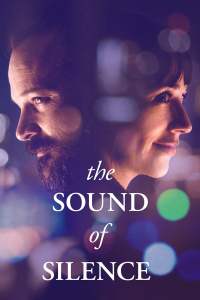 The Sound of Silence stars Peter Sarsgaard as Peter, and man obsessed with sound. For years, he’s been doing research about harmonic resonance and its affect on people. In his spare time, he goes around the city, tuning forks in hand, and maps out the natural resonances of various spots in the city. His day job involves going to people’s houses to create a more “harmonic” place, and his work is successful. People call him when they are having trouble sleeping, fighting their spouses a lot, or have any strife in the home. Peter comes in, finds the natural resonance of the space, what item (usually electrical) gives off a different or competing hum, and replaces it, and his clients are always satisfied. Until Ellen (Rashida Jones). She’s not sleeping at night, and Peter replaces a toaster in her apartment, but her sleep doesn’t get any better. Peter is nonplussed, and tries to solve her problem, against the backdrop of Peter fighting to have his research legitimized in scientific circles. As a (former) musician, I’ve long been aware of the hum that electrical and mechanical devices give off – anyone with an ear can sit in a quiet room and listen for the various sounds always around us – but I’ve never gone so far as to try to see what musical note each item is giving off. Honestly that part of the film makes a lot of sense, because in western music, what we perceive as dissonance definitely causes angst and an uneasy feeling. Songwriters use this to great affect! It’s a good intellectual idea, and the movie breaks down the ideas into terms that non-musicians can get, but as a film, it’s not all that engaging. ★★½
 Star Wars: The Rise of Skywalker is a sometimes frustrating, but ultimately satisfying conclusion to the “Skywalker saga.” If you believe Disney, this is the finale of the story arc that started with Luke, Leia, and Han back in 1977. I won’t give any spoilers on the story; suffice it to say, that if you are a die-hard Star Wars fan (which I am), and if hated The Last Jedi because you thought it “didn’t fit the Star Wars mold” (an opinion I do not agree with, I liked The Last Jedi), then you probably will like Rise of Skywalker very much. For me, it was just OK. Not great, certainly not terrible, but just OK. A whole lot happens, and the team behind it do their damnedest to wrap up all the loose plot elements in a tidy little bow. I enjoyed it, even if parts are awfully far-fetched (even for a space saga!), but I just can’t shake the feeling that, now that it is all over, if it wouldn’t have been better to just leave the Skywalker clan alone after Return of the Jedi back in 1983. Nothing will ever top those first three films, both because they are nearly perfect as they sit, and because of the whole nostalgia of them. I’ve really liked parts of every Stars Wars film that has come since (even Solo), but nothing will touch those films that I grew up with. So by all means, go and see Rise of Skywalker (I’m sure everyone else will, it will make a ton of money for Disney), but don’t hope to relive the magic that can only come to a 10 year old kid when Luke and his friends took down the evil Empire. ★★★½
 The Aeronauts has a very strong cast who, unfortunately, can’t save a very average film. Eddie Redmayne and Felicity Jones, come together again after The Theory of Everything a few years ago, play a pair of people on a mission to climb higher in the atmosphere than any human before. Amelia is the crowd-pleaser who drums up the funds, and James Glaisher is a scientist intent to get high enough to measure the atmosphere, in an attempt to find ways to predict the weather (to which his fellows in the scientific community scoff). Aboard a hot air balloon, the two take off one afternoon and face a storm, the cold, and low oxygen on their adventure. There are some thrilling moments along the way, but some parts are very boring. It is semi-based on a true story. Glaisher did indeed climb high and was one an early meteorologist, but he went up in the balloon with his male partner, which Hollywood switched to a woman for creative license. ★★½
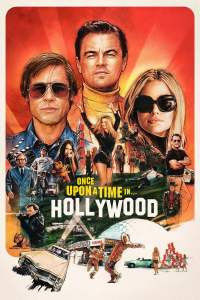 Once Upon a Time in Hollywood, the latest from Quentin Tarantino (of whom I am not a fan, sue me), is mostly just a homage to classic American films of the 50s and 60s. That’s fine I guess, but how is that a movie? There’s a plot (which takes forever to develop), but there is an awful lot of filler in the 2-and-a-half-hour running time. The movie mostly follows a has-been actor named Rick Dalton (Leonardo DiCaprio) and his long-time stunt double Cliff (Brad Pitt). Dalton was once a big TV star in the 50s, but his film career has not gone as well, and he’s depressed about it, falling to alcoholism. When not working, the two hang out at Dalton’s posh house, neighbors to up-and-coming director Roman Polanski and his girl Sharon Tate. Yes, that is where this film is finally going. Cliff just sort of hangs out when he isn’t needed, which is often since Dalton isn’t needed much either, and driving around Hollywood one day, Cliff stumbles upon the Charles Manson entourage. In normal Tarantino fashion, he changes up the actual history for his own, new version of events, and the ending of this one is far too outlandish. I’m convinced critics just give him a pass no matter what he puts out. ★★

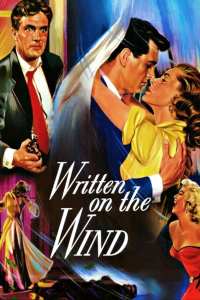 How about a set of classic films from 50’s, including a couple melodramas from the great Douglas Sirk, and some westerns? Up first is Sirk’s Written on the Wind. This one is about an oil tycoon’s family and the people that circle them. In particular focus is Kyle (Robert Stack, in an Oscar nominated role), the rich playboy son. His freewheeling lifestyle is only slightly tempered by his life-long friend Mitch (Rock Hudson). Their friendship is tested when they fall in love with the same girl, Lucy (Lauren Bacall). Lucy marries Kyle, making Mitch more embittered that Kyle always gets his way. Turning the screws is the femme fatale role, Kyle’s little sister Marylee (Dorothy Malone, who did win her Oscar), who’s always had a crush on Mitch, and she refuses to let him be anyone else’s beau, even hinting to Kyle that Mitch and Lucy are having an affair. For awhile, Kyle changes his ways and plays the straight and narrow for his love of Lucy, but when he learns from a doctor that he may not be able to father children, he goes back to drinking, and through his sickness, Marylee is able to weasel her way in between them all. I loved the movie, it features some really great acting by some of the greats of this era, and the music is fantastic too, with Marylee’s sultry little devil-music popping when she slinks into view. I read that Sirk’s films weren’t highly thought of in their time but have come to be very well regarded (and copied) since. How could this film ever not be loved?!
 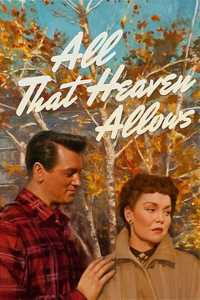 All That Heaven Allows is a beautifully done film, and the inspiration for
 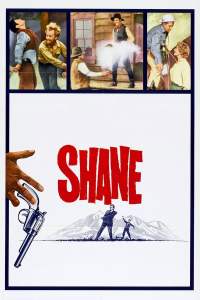 I watched Shane because of its reputation as one of the finest westerns ever made. Perhaps I watched a different version, because I just didn’t get it; it seemed rather ho-hum to me. The eponymous Shane is a drifter who finds himself in a valley in Wyoming where there is a conflict going on between the homesteaders and the cattle ranchers. The homesteaders are there legally and trying to run small farms, but the cattle ranchers, led by the nefarious Ryker, are bullying them off the land. Joe and his wife and son give Shane a place to stay for a couple days in exchange for work around the farm, and Shane likes them enough to join in their fight against the ranchers. It all comes to a head when one of the homesteaders is killed by a gunslinger hired by the cattlemen, leading to a battle between Shane and the rest of them. I don’t see the appeal of this movie at all, and honestly it was so full of tropes and stereotypes that I could not get into it. Not to mention, one of the main characters is little Joey, and we all know how I feel about child actors. And little Joey is one of the worst, showing off his dumb stares and wooden acting for all to see. Every close up of his wide-eyed glances made me cringe. Maybe it was great in 1953, but it hasn’t stood the test of time.
  I saw the 2007 remake of 3:10 to Yuma, starring Russell Crowe and Christian Bale, years ago, and liked it very much, but I’d never seen the original until now. Going up against Hollywood Code in its day, this one has a happier ending. Directed by Delmer Daves, it is about the leader of a band of outlaws, Ben Wade (Glenn Ford) who is captured in a small town in the Arizona territory. The local marshal knows that can’t keep him there, because Wade’s group of thugs will easily overwhelm the small village, so he recruits local cattle rancher Dan Evans (Van Heflin) to secret Wade to neighboring Contention City, where they can put Wade on the next train to Yuma. Dan is a simple guy but he’s great with a gun, and while he initially doesn’t want to get involved, he is lured by a substantial cash reward which can help his struggling family. Daves does an excellent job laying out this picture. The first 30 minutes lay the groundwork for what kind of men the actors are, followed by 30-40 minutes of slowly building suspense as Dan waits for the train to take his charge away, and finally the heartpounding climax as he leads Ben through the town, trying to avoid getting himself killed. More than anything this movie looks at the psyche of men. Dan has a strong moral compass, but even he is tempted to let Ben go when Ben offers more and more money to do so. Ben himself is morally ambiguous; he’ll shoot his own man without blinking an eye, but he still holds to his own code of honor.
  Forty Guns, from Samuel Fuller in 1957, is a rip-roaring good time. Made at a time when he had already established clout as a director and was independently making films with less studio influence, it is a very different kind of western. For one, it features a strong female character as one of the co-leads. Jessica Drummond (Barbara Stanwyck) runs an area in the Arizona territory with a posse of 40 men. She’s involved in some shady business but is otherwise a tough but fair ruler of her “kingdom.” However, her brother Brockie is a thug, killing and trashing the town. She has a soft spot for him because she birthed him (losing their mother at the time) and raised him, so she’s turned a blind eye to his misdeeds. Their little section of earth is shaken up when US Marshal and former gunfighter lawman Griff Bonnell (Barry Sullivan) comes to town with his two brothers, there with a warrant to arrest one of Jessica’s gang. Jessica sees in a Griff a man as tough as her, and the two immediately fall in love. A film full of gun fights and intrigue, double crosses, love, and death, this movie has it all. The word play is downright shocking for 1957; there is so much innuendo and double entendre that you wonder how Fuller got it past the sensors (Jessica reaches for Griff’s gun, saying she’s interested in “his trademark,” but he warns her that it might go off in her face). Very enjoyable film, and very different from the westerns you are used to seeing.
  Watched
 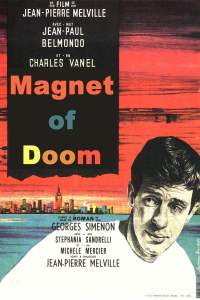 Magnet of Doom was Melville’s first picture in color, released in 1963. It follows a man named Michel who is broke, and picks up an ad to be a traveling secretary for banker Ferchaux. Ferchaux’s bank has failed and he is under investigation for shady business practices; as such, he is looking to skip town. On a time crunch, he hires Michel right away, and the two immediately board a plane for New York. Ferchaux is looking to gather as much cash from various spots as fast as he can, before settling in a non-extradition country. During their road trip from NY to New Orleans, Michel grows bolder in his dealings with Ferchaux, flexing his muscle as the crutch he knows he is, especially once Ferchaux’s brother and business partner is found dead in France. For me, I thought the movie was kind of weak. It features great storytelling but not a great story, if that makes sense. Jean-Paul Belmondo is just going through the motions on this one, and he isn’t as great as some of the other stellar films he’s been showcased in. Very average.
 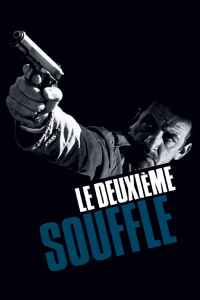 Le Deuxieme Souffle (Second Wind) came out in 1966, and Melville went back to black and white, to great affect, as it gives it a more raw feel, and the camera work is gritty too. This one features a big cast with lots of moving parts, so you’ve got to pay attention. The gist is a career criminal (Gu) escapes from prison, but before he can go into hiding, he needs a big cash score to set him and his sister up for life. Unfortunately for him, he is being tailed by one of the best investigators Melville ever concocted up. Blot is a cop who knows what people are going to say before they say it, and he is right on Gu’s footsteps, just waiting for a mistake. Gu picks up a job to rob a security van hauling valuable platinum, and all goes according to plan, until the old adage of “no honor among thieves” pops up. Double crosses and gun fights fill out the denouement of this intense flick. This picture doesn’t get as much attention as some of Melville’s other stuff, but it’s a great film.
 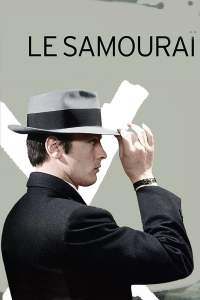 Le Samourai is another good one. Jef Costello (the great Alain Delon) is an assassin, a modern day samurai, whose life necessitates him being a loner. The film opens with him taking down his latest contract, in a busy night club no less. He knows there are going to be witnesses, but he has a lock tight alibi already in place, and the lead investigator, despite his gut instincts, is unable to pin the murder on him. The attention of the police though make Jef’s employers nervous, and they want to take him out too before they can lead the police back to them. Hunted by both the fuzz and his former employers, Jef is on his to try to kill the people who want him dead. It is a quietly tense and compelling film, and one that has some great scenes that are hard to forget. One of Delon’s best (the movie was written with him in mind), and one of the rare pictures to hold a perfect 100% on Rotten Tomatoes.
  Ending on another great one. Le Cercle Rouge (The Red Circle) is a crime heist drama starring Alain Delon again, this time as a cool and collected man just out of jail. Before getting out, Corey is told about a potential job by a corrupt guard, but it sounds like a high risk/high reward opportunity. Thankfully Corey gets some help. That very day, Vogel escapes police custody and flees on foot, finally jumping in a waiting car’s trunk to get away. The car, of course, belongs to Corey, and the two team up for a detailed and thrilling jewel heist. Aided by a corrupt cop who has been off the force due to his alcoholism, the trio rob a high end jewelry store in mesmerizing fashion. Being known criminals and not wanting to give themselves away to the multitude of cameras around the store, the robbery is done in near complete silence with no dialogue, in real time, for a solid 30 minutes. It is about as gripping an act as you will find. The ending of the film is no less explosive, with the determined police officer who’s been hunting Vogel finally catching up to them. Great picture.


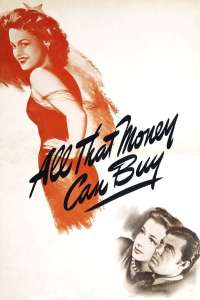 The Devil and Daniel Webster (originally released as All That Money Can Buy, but later had its name switched back) directed by William Dieterle and released in 1941, was a new take on the classic Faust tale. Jabez is a good farmer and a good man, taking care of his wife and mother as best he can, despite rotten luck. The family is inches away from losing their farm, and in anguish, Jabez mutters that he’d sell his soul for 2 cents if given the chance. In walks “Mr Scratch” with an offer. He offers Jabez 7 years of the best luck in the world, and promises to make him the richest man in New Hampshire, in return for his soul, payable on the 7th anniversary. Jabez agrees, and immediately finds a stash of gold coins buried under the floor of his barn. At first, Jabez does good for his neighbors and friends, but over the years, he loses sight of who he was. When storms ruin everyone’s crops but his own, Jabez hires his friends to work for him on the cheap. He builds a huge manor, and openly flaunts his young pretty girlfriend, even in front of his wife. Mr Scratch is happy to have Jabez in his back pocket, but secretly longs for the soul of local lawyer and politician Daniel Webster. Webster is an honest man and strong orator, who may even be president one day, and Scratch would love to bring him down. When Jabez’s seven years is up, and Scratch comes to collect, Webster agrees to defend Jabez in court against the devil himself, with Jabez’s soul on the line. I thought the acting was just so-so, and though the story is old hat, I was enraptured and thoroughly enjoyed it from start to finish. Somehow the filmmaker gets us to root for Jabez’s salvation, perhaps just for his family’s sake, though he doesn’t seem deserving in the slightest.
 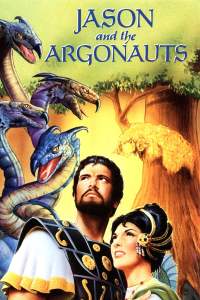 I’m going to chalk up the praise on Jason and the Argonauts as a “you had to be there” kind of thing. Some of my most revered actors and directors laud this 60’s cult classic as one of the best, but man, it just isn’t that good today. Maybe once upon a time it was better. It’s a take on the classic Greek mythology stories of Jason and in particular, his quest for the Golden Fleece. Depicted as a plaything of the Gods, Jason undertakes his quest as a way to gain an item to avenge his family, who were murdered by Pelias in a coup when Jason was a child. Along the way he gathers a group of heroes to aid him on his quest, including the great Hercules. I can forgive the over-the-top acting as a relic of the era, but the campy music and shoddy, almost low-budget feel ruined the experience for me. The saving grace is the stop-action special effects, which is really what everyone talks about when they recall this film. The scenes of a colossal Talos chasing after Jason and his group, and in the end, a force of skeletons attacking, are way ahead of their time and done extremely well for 1963, but they didn’t save the experience for me.
  The Polish film The Lure is way out there. Let’s get that out of the way first. It is an updated telling of the classic “little mermaid” tale. Silver and Golden are two mermaid sisters who leave the sea and come on land, growing legs in the process. Silver falls in love with a man, who can’t return her love because he only sees her as a fish, an animal. Sounds interesting, but there’s a twist: these mermaids grow sharp fangs and feast on flesh. While Silver is doing human things and having fun, Golden is out giving in to her base desires, which finally lands the sisters in trouble with the only people who have looked after them. Other parts of “The Little Mermaid” intertwine throughout, such as Silver will lose her voice if she has an operation to become fully human for her love. This horror film/musical/comedy mashup is strange, no two ways about it, but I was enthralled. Beautifully shot with a tinge of the surreal, and songs that are catchy even in a different language, I thought this movie was fantastic. It’s a not-so-subtle look at feminism, puberty, sexuality, and what it is to be human. And it’s also one of those movies which, at the end, you ask yourself, “What the hell did I just watch?”
  There’s the good “What the hell did I just watch?” and then there’s the bad “What the hell was that?” The latter was my reaction to Valerie and Her Week of Wonders, a film from the Czech New Wave in 1970. Valerie is a young teenager living in a surreal landscape in a medieval village. She is looked after by her grandmother. Around her amasses a circle of wicked priests, evil spirits, and vampires, while she floats through the village in a horror/fantasy, dreamlike manner. She loves Eaglet, whose uncle the constable desires Valerie’s magical earrings, which provide a bit of protection from the evil in the village. Weird stuff, and not my cup of tea. I probably would not have gotten through the film if it had been any longer than its short 1 hour 17 minute length.
 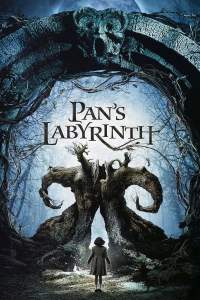 In full admittance, while watching Guillermo del Toro’s Pan’s Labyrinth, I realized I had seen it before, but it has been a long time, so I felt like I was coming at it fresh. This is a beautifully filmed, wonderfully told story about the loss of innocence. Ofelia is a young girl living at the tail end of the Spanish Civil War. Franco’s army has won, but the brutal Captain Vidal and his small troop are mopping up the guerrilla fighters in the hills. Vidal has just married Ofelia’s mom and they are awaiting the birth of their child. One night, Ofelia is approached by a magical creature known as a faun. It tells Ofelia she is the spirit of the long-dead daughter of the King of the Underworld, but to take her place as the princess, she must complete three tasks. These missions take Ofelia to dark and terrifying places, all while in the real world, Vidal is continuously needled by resistance fighters, including hidden people in his own staff. This film has the initial feel of a child’s tale, but the brutal killings and downright scary tone quickly dispel that notion, and overall it comes off as more of a horror film, but with a much more involved and thought-provoking story than what you often find in that genre.
 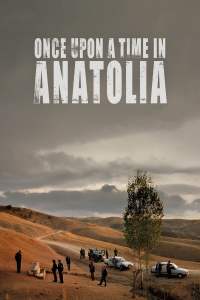 I don’t think I’d seen a film from Turkey until I recently watched
  Winter Sleep centers around a sleepy, rural community in Turkey, and primarily focuses on Aydin. Aydin is the only wealthy man in an otherwise poorer village. He owns and runs the sole hotel, which does decent tourism business in the summer, but the film takes place during their slow time. Aydin also owns and leases out several properties in the town. At first the viewer thinks he is a pretty upstanding guy; he’s a former actor and an intellectual, and seems fair in his dealings. The film reveals the true picture of him only slowly as the movie progresses. In fact, it isn’t until the 2 hour mark (of this 3 ½ hour picture) that his much-younger wife Nihal tells him (and us viewers) exactly what his personality problems consist of, and when we hear them, everything falls into place. He is possessive, hoarding his wealth, his trophy wife, and his community prestige above everyone else. While Aydin’s sister realizes these things too, she’s older and is comfortable with floating through life herself. His younger wife fights back more. Seemingly small, minor subplots take center stage as the film progresses, weaving together a masterful, powerful picture. Like in Anatolia, Ceylan examines humanity and each person’s views of their world around them.
  Climates is the first film of his that I wasn’t crazy about. It is pretty simple story about a married couple on the outs. Isa is a man without a goal in life (been working on his thesis for years) and he seems to despair his wife Bahar her career as an art director in television. This, and a previous affair of his, has caused strife in their marriage. She abruptly leaves him one day, and at first, Isa celebrates like a single man. After awhile he starts to miss her though (or at least, the idea of her), and follows her to her latest TV shoot, in hopes to win her back. Taking place over the course of a year, the title has less to do with the changing seasons as it does the changing views of Isa. For me, it was a rather ho-hum picture. I see glimpses of what Ceylan would build upon later on (this film came out in 2006, 5 years before those I’d seen previously), but this is not the masterpiece that those later films would be.
 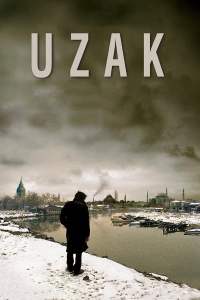 Distant follows two cousins, Yusuf and Mahmut. Yusuf comes from a tiny town whose only source of jobs is a factory, but the factory is letting people go due to an ongoing recession. He’s come to Istanbul to find a job, and is staying with his cousin during the job search. Mahmut is a semi-successful photographer, but he seems to find little joy in his work. Mahmut looks down on his cousin as an unintelligent country bumpkin, but he seems to share a whole lot of characteristics with him. Mahmut derides Yusuf as being unmotivated, but Mahmut seems to be just going through the motions of life himself. Distant becomes a movie about self-inflicted loneliness, due to a complete lack of communication with anyone around us. It was the film that first put Ceylan on the map. Released in 2002, it won a host of awards, including best actor (shared by the 2 leads) at Cannes. Though it is obviously made on a tiny budget and doesn’t have the best camerawork (and lacks the sweeping, “open” feel of Anatolia or Winter Sleep), it is no less profound. Its pace will test your patience, but it is a meaningful and sincere film.
 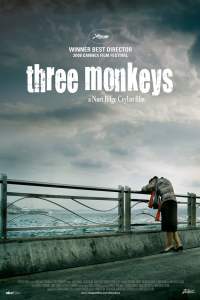 I saved Three Monkeys for last because, reading the synopsis, it seemed to be the most different of these films. I was both right (much more dialogue, faster pacing) and wrong (deeply human and emotional). In the opening scenes, an older man, Servet, a successful businessman, hits a pedestrian while driving. He gets his usual driver, Eyup, to take the fall, promising a big cash windfall when he would get out of jail. While Eyup is away, his wife and Servet begin an affair. Servet continues to provide the family with money, including buying Eyup’s son a car. When he gets out of jail nine months later and sees his wife, he immediately senses something is up, and goes to confront Servet about it. Things blow up when Servent ends up dead, and the ending left me stunned. What I took away was a simple but elegant look at class distinctions, and how dirt gets shoveled downhill to the poorer people in a constant stream.
 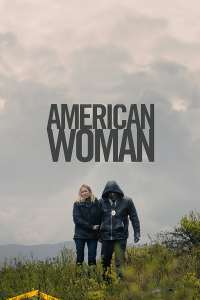 American Woman is alright, but nothing I feel I haven’t seen before. Debbie is a woman with a checkered past who always lets men do whatever they want with her. She had a kid at 16, and now that girl has had a kid at 16 too, so at 32, Debbie is a new grandma to Jesse. One night, Debbie’s girl doesn’t return home, and is never heard from again. Debbie spends time searching with the cops, and then, years later, continues to hold memorials on her birthday. Debbie still doesn’t make good choices in men though, first hooking up with a married man, and later with man who beats her. The time frame jumps ahead a few years every now and then, marked most easily by Jesse’s growth as Debbie has raised him on her own, from a toddler until, eventually, the same age as his mother when she disappeared. The mystery of the disappearance is solved by the end, but the real story happens with the growth of Debbie as a person. By the end, she has finally learned to stand up for herself, and improved her situation in life. Though Sienna Miller is good as Debbie, the film is nothing more than average. Nothing really stands out as memorable for me.
  Anna is the latest Luc Besson flick, starring a couple good actors like Helen Mirren and Luke Evans, and newcomer Sasha Luss as Anna. The eponymous woman is a beautiful Russian women who gets recruited by the KGB to become an assassin, but later, ends up also being turned by the CIA to be a double agent. Honestly, that’s about it. It’s not as deep or detailed a film as some other Besson hits, and doesn’t have any thought-provoking, lasting impressions, but does feature some stellar fight scenes, and as a straight-ahead action film, it is all right I guess. I was hoping for more though.
  The White Crow is a biopic about Russian ballet dancer Rudolf Nureyev. It tells of his early days in ballet school through his rise in ballet circles, with flashbacks showing his humble childhood. It goes through, I presume, his defection from the Soviet Union to the west. I say presume because, unfortunately, I didn’t get that far. It’s a really tedious, boring film, and not in a good “artsy” way either. It never gets anywhere, and the lead actor, heretofore unknown Oleg Ivenko, is pretty awful. I can only assume he was given the part for his dance skills and not his acting. The film was directed by Ralph Fiennes, who has a supporting role too, and was written by David Hare, who is known for slower films like The Hours and The Reader. Those films were at least good, this one is just a chore.
  Yesterday did not get stellar reviews, but seemed like the kind of feel-good movie I tend to dig. It is about an English man who finds the stardom he had been seeking with the help of a little magic. Jack is a talented singer-songwriter but he doesn’t write good, catchy songs, and he just can’t get his big break. He is ready to finally quit when he gets hit by a bus during a global blackout. When he awakes in a hospital the next day, he comes to in a world where the Beatles (and, amusingly, Coca-Cola) never existed. He sees the opportunity he never had before, knowing he can release those big hits as his own, and knowing they will be smashes. It isn’t long before Ed Sheeran sees him on local television there in the UK, and approaches him to be an opening act on his tour, and things take off from there. Of course, he finds out all the fame isn’t what it is cracked up to be, and he is also wracked with guilt that he is profiting off songs he never wrote. Himesh Patel is the perfect lead, and Lily James as his friend is adorable as always. Ultimately, it is an average romantic comedy, not as memorable as the songs it showcases, but a fun diversion for a couple hours.
  It Chapter Two follows up after
  Saw a few of Bergman’s 60’s films recently, including the final two films of his “faith” trilogy (I had seen
  The Silence unfortunately didn’t do it for me, and honestly I didn’t get it. It is about two adult sisters: the older one who is sickly and bed-ridden, and the younger who is slutty and sleeps around with anyone who asks. The floozy also has a young son, who is traveling with the two women in some hotel in a foreign country, where no one speaks the language. While the younger sister is out doing her thing, the son wanders the halls of the hotel, mostly ignored until his aunt engages him here and there, and then the younger sister tries to vie for his attention as well. Besides the obvious conflicted women as leads, there are other Bergman-esque elements, but it also felt very different, and at times I sensed he was getting some influence from the French New Wave which was going on across the sea. I like the New Wave as much as the next guy, but it isn’t Bergman’s forte, and this film just felt aimless, especially the first 45 minutes when, quite literally, nothing happened. By the end, I picked up that much of what the sisters did, they did just to piss each other off, but it still felt lacking.
 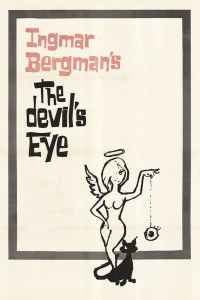 The Devil’s Eye was released just before his aforementioned trilogy, and is a rare comedy from Bergman. With a clear story to follow, it may not be as deep or critically acclaimed as the three films that came next, but I enjoyed it a lot more than the two described above. In it, Satan himself is suffering from a sty in his eye, caused by the faithful virginity of a pure soul on earth. The daughter of a vicar, Britt-Marie is engaged to Jonas and is saving herself for their wedding night. To relieve the pain in his eye, Satan resurrects Don Juan and sends him to earth to seduce Britt-Marie. While Don Juan does so, his faithful servant Pablo puts the moves on the vicar’s wife as well, and both are aided by a demon who has come up from hell to cause some mischief. What Don Juan didn’t expect was to fall in love with Britt-Marie. Of course Bergman would choose to make a comedy of an overtly religious film, but it works all the same. It is certainly entertaining.
  All These Women is another comedy, and a downright silly film, but in a good way. Cornelius is a music critic who has come to visit a famous cellist named Felix at his estate, in order to write a biography of him. The film starts 4 days after the start of the visit, where we see Felix is dead and Cornelius is presiding over the wake. In front of the coffin parades a series of women all claiming to be Felix’s widow. The film then takes us back to Cornelius’s initial arrival, where he learns Felix has a wife and 6 different mistresses, one for each day of the week. As Cornelius tries to navigate the irrational and downright crazy household and its eccentric inhabitants, he dodges promiscuous mistresses and jealous lovers, while always hunting for more info on his host. Of Felix, we never actually get to meet him, which is part of the comedy of it all. We see his shoes sticking out the end of the casket, and sometimes get a glimpse of him from behind, but we never hear his voice, and often he is just off camera somewhere. It’s a definite lighter side of Bergman, and proof that he could make fun movies like this had he chosen to do so. And I appreciate that throughout the farce, the critic could never get close to the artist until after the artist was dead (and then tried to write a biography based on hearsay). Well played Bergman.
  Holy cow, Persona really is as good as everyone says. Despite its praise as Bergman’s masterpiece and one of the best films ever made, I held off on seeing it until I’d seen a good number of Bergman films and gotten a feel for his style. In the end, Persona surpassed all my expectations. The loose story is that of an actress, Elizabeth (Liv Ullman), who has stopped talking, and the nurse, Alma (Bibi Andersson), who has become her caretaker. The doctors think Elizabeth’s condition is neither physical nor mental, but simply due to willpower; she just doesn’t want to speak. As the two women retreat to a seaside cottage, Alma talks incessantly while Elizabeth just listens. The true story of the film only becomes clear much later, and to say anything about it would ruin the experience. Suffice to say, there’s a lot going on in this weird, almost-scary film (it even elicited a gasp from me at one point, though it isn’t a true horror film. At least I don’t think it is, but a lot can be interpreted from it.). It is a wild trip in David Lynch-ian fashion, and I wouldn’t be surprised if he cites it as a major influence. This is one of those films that begs to be watched multiple times.
