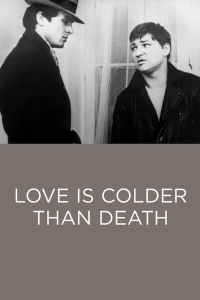
 Awhile back I watched some of Rainer Werner Fassbinder’s films, for the first time, and really liked them. Those were some of his bigger hits, so today I’m looking at his earlier, lesser-known pieces. Love is Colder Than Death was his first film, in 1969. It’s about a small-time thief, Franz (Fassbinder himself), who pimps out his girlfriend and hangs with a thug named Bruno. Franz seems to act tough but always leaves the real dirty work to Bruno, which doesn’t bode well for Bruno in the long run. I’m not sure what Fassbinder was trying to say here, unless it is maybe that you can trust no one in life. Not a great picture, and the shoestring budget is telling, but there are glimpses of the greatness that would come. Fassbinder doesn’t rush his scenes (as a director); he lets moments develop. In fact the whole film has a leisurely pace to it, which can be good or bad depending on your mood. I wasn’t feeling it, but might try it again at a later date. ★½
 Katzelmacher was his second film, based on a play he also wrote. It follows a group of young adults (some of whom would go on to be Fassbinder regulars in his films), who are frankly really boring people. All they do is have sex and talk about it with each other. Even the sex is boring, and why the women don’t leave these sad specimens of men is beyond me. But all that changes when Jorgos, a Greek immigrant, takes a room at one of their places. Rumors immediately swirl about the size of his manhood and his prowess in the sack, getting the women excited and the men jealous. However, no one seems to really get to know Jorgos, or even tries. This one I liked a lot more. You have to be patient, it is a full 40 minutes of crawling on screen before Jorgos arrives to shake things up, but there’s humor there to keep you entertained. Once our Greek gets involved, the payoff is worth it. It’s a really nice movie that doesn’t get much attention. ★★★
 And….Fassbinder crashes back to earth. I gave up on Gods of the Plague 45 minutes in. 45 minutes of literally nothing happening. It revolves around a man just out of jail. Outside of that, I can’t really tell you anything, as I’m not really sure what the plot was. There were a couple girls vying for his attention, and he seemed to still be engaged in some criminal activity here and there, but nothing much was going on. We got to watch him visit his mom, play with a record player, and take long, slow walks down the street. If there’s a story here, I completely missed it. Fassbinder’s earlier 2 films took a solid 40-45 minutes to build to something, so maybe this one would eventually too, but at least those two were interesting enough for me to hang around to get to the denouement. This one was not. ½
 The American Soldier is Fassbinder’s take on a noir, which means it is really nothing like a noir. It has the look of a noir, but the feel of something quite different. Ricky is a German-born American citizen returned to Germany after fighting in Vietnam. He is locally known as a contract killer, and he starts getting calls to continue his killing ways immediately. However, it seems the contracts are being called in by the police, who are looking to entrap him. There’s also a side plot involving Ricky’s bisexuality, which never really plays out. Some film noirs have a nice slow burn, but this one, in true Fassbinder fashion, is more of a snail burn. It moves at a crawl, and plot points are sparse, to the point that 40 minutes in, I wasn’t sure what was going on. It filled out nicely by the end, but still a lot of stuff was left unexplained. ★½
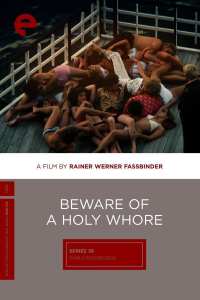 Beware of a Holy Whore is much better. It is a quasi-satirical, quasi-autobiographical film about a film production team brought together to shoot some scenes at a villa in Italy. Fassbinder used as inspiration his latest film shoot (a film called Whity, that I have not seen), and pokes plenty of fun at himself and his team of actors and film workers. Many of the people involved in the movie-within-a-movie are all ready at the villa (actors, makeup, producer, cameramen, etc) before the director and the star actor ever show up. When the director does arrive, we see him as a childish, pig-headed narcissist; all he does is yell and fire people who don’t jump when he commands. The film plays out as a train wreck of epic proportions, with revolving relationships on set, jealousies, and the producer and director constantly looking for funds to keep it going. The viewer thinks, surely this will end in failure, but when one actor is asked how the director gets away with his antics, the actor prophetically responds that the director is a genius. Sure enough, everyone is amazed by the quality of the filming when it gets underway. It’s a stark look behind the curtain of filmmaking, I can only hope that most sets show a little more professionalism. ★★½
 I really enjoyed The Nightingale, but it is a brutally uncomfortable film that I’m not sure I could watch again. It takes place in the early 19th century on a British penal colony, which is now Tasmania, off the coast of Australia. The film follows two main characters: Clare is an Irish young woman who has served her prison time and is ready for release, and Billy is a black Aborigine. The commander of the local settlement, Hawkins, refuses to release Clare, because he’s been raping her and forcing her to sing for entertainment for his troops. When she finally has had enough, she convinces her husband to leave the settlement with her, but Hawkins intercedes, killing both the husband and their baby. Hawkins then takes a few troops and heads cross country towards the only port on the island, in hopes of getting a promotion and leaving this place. Clare survives the last assault, and hires Billy to track Hawkins across the wild and dangerous jungle. The film takes place during the Black War, a time when most of the Aboriginal people of Tasmania were butchered by British soldiers (the war nearly wiped out the indigenous population of the island), and the movie doesn’t shy away from the brutality of the times. Clare and Billy are in constant danger of being caught and killed, she for being a runaway prisoner, and he for the color of his skin. The rape scenes, of which there are multiple, are tough to watch obviously, but they certainly add realism. You feel Clare’s plight and root for her, but the director (Jennifer Kent) subtly makes Billy just as big of a hero, even before the big climax. Tremendous acting from those two as well. I highly recommend it, but the squeamish may want to cover their eyes (and ears) at times.
 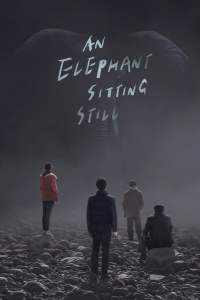 Simply wow. An Elephant Sitting Still is one of the deepest, most profound, most introspective movies I’ve seen in quite awhile. This Chinese film follows four individuals whose lives intersect, all lonely and dealing with terrible situations in their personal lives: a young man who pushed a bully down a set of stair, causing possibly fatal injury; an older neighbor of his who is getting shoved into a nursing home by his selfish children; a classmate with an alcoholic and abusive mother; and the aforementioned bully’s older brother, who watched his best friend kill himself after finding him in bed with his girlfriend. This four hour film follows these lives as they weave in and around each other over the course of a long day. For a good part of the film, our characters face tragedy after tragedy (the young man discovers his grandmother’s dead body, the old man’s dog is attacked by a bigger dog, etc.). Slowly, each individually hears of an elephant, previously part of a circus, which has sat in a neighboring town and refused to move. Whether it is pondering life or given up hope, no one knows, but our leads feel driven to get there and find out why. Each of our four main characters seems alone and apart from the busy world around them; with little music, we hear the city noise constantly, a steady drum of car beeps and construction is made all the more deafening when you don’t hear it for a moment. And the camerawork is incredible. It gets you into the character’s eyes, often sitting just behind them and watching their actions up close (purposefully uncomfortably so at times), with super-long shots that go on for minute after minute. The film is all about the main characters, everything else (scenery, other people) are off center and, often, out of focus. What was director Hu Bo, just 29 years old, trying to tell us? That we are destined to be alone, or that camaraderie can be attained? That hope can be found in the world, or that all is hopeless? Since he took his own life once the film was finished, and before its release, I think we know what his answer was. This is an astounding film. Its pace and length make it not for the faint of heart, but it is rewarding for those that appreciate art in film.
  Hobbs & Shaw brings together two of the biggest stars of the Fast and Furious film franchise in a spin-off of their own. Dwayne Johnson and Jason Stathum are the eponymous duo, brought together to hunt down a deadly virus which can wipe out mankind, and is currently in the possession of Shaw’s badass sister. On the bad-guy side, Brixton (Idris Elba) want the virus too. The F&F films are always over the top, but also (almost) always highly entertaining; this film hits on the first part but unfortunately is exceedingly average on the second. The action scenes are intense and thrilling, and the banter between our two heroes, who can’t stand each other, is great, but there is a dull period for a good 30-40 minutes in the second half of the film that just doesn’t fit. I understand you can’t keep the action going for 2 hours straight, but maybe just cut the film down and stick with what works. It’s a decent enough film as far a spin-offs go, but let’s be honest, it’s a cash grab, and on that front, it definitely succeeded, making three quarters of a billion worldwide. Good enough to make another spin-off if they wanted.
  If you like a different kind of movie, it doesn’t get any more so than Anna and the Apocalypse, a musical/zombie film mash up. On its merits as a film by itself, it is just OK, but it is entertaining and does feature some catchy tunes for fans of the musical genre (though the gratuitous gore may turn some of those people off). In high school film standard, the movie follows a group of outcast friends dealing with bullies, parents, and teachers. They tip you off early on that this isn’t your standard high school movie though, while singing that this film isn’t going to have a Hollywood ending. Sure enough, the next day, the zombie apocalypse has hit, and hit quickly, and not everyone is going to survive. The cast, mostly unknowns, are actually quite good, and Ella Hunt in the starring role is the darling of the show. I give the filmmakers props for trying something different: it doesn’t always work, but there’s enough moments that do that it is worth a watch.
  The King is a recent Netflix release, starring Timothée Chalamet as King Henry V and Joel Edgerton (who also co-wrote) as John Falstaff, and is based on the Shakespearean plays on this king and his father. “Hal,” as he is known to his friends, cares only for drinking and partying, and his father Henry IV, nearing death, is prepared to pass Hal and hand the rulership to his second son, Thomas. Henry IV has been fighting skirmishes for years with lesser English lords, anytime he sees a perceived slight, and in one such battle, Thomas is killed. Henry V becomes king and vows to put an end to those conflicts, and he does in his own country, but he is swept into renewed war with France when an assassin tries to kill him. His father Henry IV had been claiming kingship in France too, as part of the 100 Years War, and Henry V marches off to continue the conflict, with trusted captain Falstaff at his side. I usually think Chalamet’s acting is a bit wooden, even though he received a lot of acclaim for Call Me By Your Name (which I hated), and I wasn’t impressed again here, but Edgerton is good, and the cinematography and sets are amazingly detailed. It plays more like a period drama than a medieval war film, though there is plenty of sword fights, and overall is a better-than-average film in both regards.
 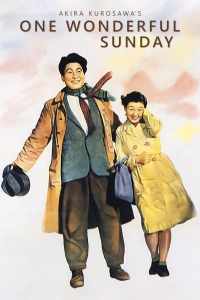 What a snoozefest, so boring I almost don’t believe it is Kurosawa. One Wonderful Sunday follows a young couple in 1947, right after World War II, when the nation is going through hyper inflation and the two cannot afford anything. They dream of a place together, but are forced to live apart (he with a roommate, her with her large family of 16 in a tiny house). Their situation makes the man completely depressed. As the two run around town this day, the girl tries to cheer him by day dreaming about their future house and business, playing with street kids, going to the zoo, but nothing lifts her boyfriend’s spirits for long. The only interesting moment comes near the end, when the girl breaks the fourth wall, passionately begging the audience to help her cheer up her man, but this excitement quickly fades, almost as fast as my memory of this bore.
 Scandal is much better, and not just because it features a bona fide star in Toshiro Mifune. He plays a painter named Aoe, who one day has a chance encounter with singer and star Saijo while out in the country. He gives her a lift back to the hotel and shares a tea with her, where the two are photo’ed by the paparazzi. This photo goes viral (in 1950 style, via newspapers). The brash Aoe decides to sue the tabloid, and hires an every-man lawyer, Hiruta, mostly because Hiruta is a family man and Aoe puts a lot of faith in his character. Unfortunately this faith is misplaced; to help his ailing daughter and poor family’s situation, Hiruta begins taking money from the tabloid and working both sides. The film starts to focus on Hiruta more and more as the film goes along, and the guilt he is wracked with, balancing the needs of his family and his personal morals. The trial is great courtroom drama, leading to a fun, satisfying film.
 The Idiot is based on the book of the same name by Dostoevsky. Kurosawa originally made a film that was nearly 4 ½ hours long, but the studio balked at the running time and chopped it up to just under 3 hours. You can tell too, the editing is rough in spots, especially in the beginning, when we get voiceovers explaining background and character traits. But once we get into it, the viewer is rewarded with a rich and beautiful film; makes me want to read the book , and wish that the original film had survived (but sadly it seems lost to time). The eponymous idiot is a man suffering PTSD from the war, whose eyes have been opened and now only sees good in people around him. This trait makes women around him fall for his purity of heart and soul, and men act either jealous or callous, to use him to their own ends. The heart of the story is a love triangle (or more appropriately, quadrangle), but only through our hero’s insight can the characters discover who and what they really want. Hopefully, they figure it out before it leads to the downfall of everyone. A heart wrenching film, and I can see inspiration for some of the great art films that would come in the 60s and later.
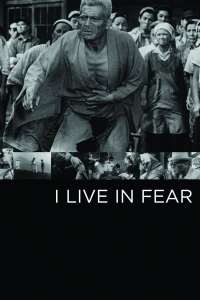 I Live in Fear is the the most direct as far as dealing with the effects of the war. It follows an old man, Kiichi Nakajima, who lives in profound fear of a new atomic attack on Japan. During thunderstorms, he even suffers from flashbacks of the day the bomb fell, seeing the sky light up and hearing the explosions. After first trying to build an underground bunker, he’s decided the only way to keep himself and his family safe is to move them all to Brazil. He wants to up and move everyone: his adult children and their spouses, his former mistresses and illegitimate kids, etc. His children have put pressure on their mom to petition for conservatorship, for fear that his actions would deplete the family savings and put them all in dire straits. While Kiichi just wants to protect his family, everyone else is purely selfish, worrying about him blowing all “their” money, or for the illegitimate children, even getting into the will at all. On the surface, the fear of the bomb is the focus, but underneath, it also becomes about the dynamic of a family with an aging patriarch, balancing his desires with what is best for him. With his hair grayed and cropped short, sporting thick glasses and a complete change of his mannerisms and movements to take on the part of the old man, Toshiro Mifune is almost completely unrecognizable as Kiichi. This is a gut wrenching film, about a man (and a society) trying to cope with the debilitating fear of losing not only life, but family and future descendants, after a horrendous tragedy nearly did just that.
 I’ve seen some of Kurosawa’s hits and loved them (Seven Samurai, High and Low, Yojimbo), and others I’ve yet to watch (Rashomon and Ran come to mind), but from what I’ve seen so far, Ikiru is the best, and a true masterpiece. It is about a man, Kanji, who’s worked in city hall for 30 years stamping approvals on public jobs, but in true bureaucratic fashion, nothing substantial ever gets done. His life is changed when he finds that he has progressive stomach cancer, with maybe 6 months to a year to live. Faced with this stunning news, he wants to live life to the fullest, but he doesn’t know how. After a first night out drinking, whoring, and contemplation, followed by a couple weeks of following after a young spunky girl who seems full of life, he finally finds a cause to which he can devote himself. The residents in a local municipality have been complaining about leaking sewage near their homes, so Kanji makes it his goal to have a park built there. At this turning point, with roughly 45 minutes left in the film, it jumps ahead 5 months, and we see Kanji has just died. The park has been built, and we see in flashbacks, from Kanji’s friends and coworkers at his memorial, how it came to happen. At first, the deputy mayor and chiefs of each department all stumble over themselves congratulating each other on the project, but they leave early, and the underlings compare notes to realize it was all Kanji that made it happen. It is only then, while sharing stories, that they realize Kanji knew his time was short; to this point, he had told no one (outside of a few strangers in the beginning) of his impending doom, not even his son. The film is about the tenacity to complete something really good and lasting before your time is up, but more than that, to simply live life to the fullest. The title Ikiru literally means “To Live.” This is a sad but beautiful film, but even with a heavy subject, Kurosawa manages to inject humor, preventing it from feeling like a dirge. I defy anyone to not be moved to tears as we see Kanji deteriorate physically, while his drive never diminishes.
 Thieves’ Highway was one of the last films made by Jules Dassin before being blacklisted during the McCarthy era, and moving to France to work overseas. It is a tremendous movie about a veteran returning home from the war, only to find that his dad has been robbed of money from a previous job , losing his legs in the process. Nico vows to get even, and takes a job moving produce from Fresno to San Francisco to confront the buyer who swindled his pop. In supreme film noir fashion, the movie is oozing with cynicism, and even has a woman paid to divert Nico in San Fran and provide the classic femme fatale role. Death, greed, sex, and high tensity suspense all combine for a mesmerizing, satisfying dark tale. Doesn’t get any better for this genre.
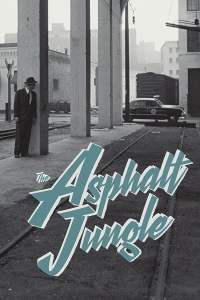 John Huston’s The Asphalt Jungle is a classic heist film, but it was the first of its kind in 1950. Many elements that were introduced in the film would become standard, such as showing the gathering of the crooks for the job (Ocean’s 11-style long before there was an Ocean’s 11), and the planning of the job and actually showing it getting carried out, to exacting detail. The film has an ensemble cast of crooks and cops, but focuses on the man hired as the muscle of the robbers, Dix Handley (Sterling Hayden). Doc, a long-time thief just released from jail, knows of a job where the payday will approach 1 million bucks, a ton of money in 1950, and he hires Dix and a couple others to help him pull it off. Their payroll is financed by a man named Emmerich (who once was rich, but is living off reputation right now, and plans on double-crossing Doc and his team once the job is done). The film plays up the whole “crime doesn’t pay” line a little too hard, but as a film it is fantastic. Nearly every character in the movie is as hard boiled as they come. There’s also a nice little part for film newcomer Marilyn Monroe, as Emmerich’s side-piece.
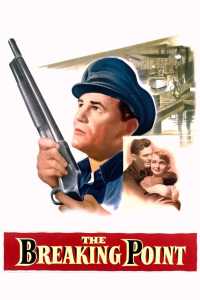 The Breaking Point, directed by Michael Curtiz (famous for Casablanca) in 1950, is based on Hemingway’s To Have and Have Not (as a side, for all those that say Hollywood just regurgitates ideas these days, that’s nothing new. The first film based on this book had just been released 6 years previously, starring Humphrey Bogart and Lauren Bacall). It follows a fisher and boater named Harry (John Garfield), who’s been down on his luck and struggling to provide money for his wife and two kids. He takes a rich business and his young, blond girlfriend Leona (Patricia Neal) down to Mexico for some gambling, but once there, the rich man dumps them, leaving Harry on the hook for the bills. To scrape some money together to get home, Harry agrees to smuggle some Chinese people across the border, but the deal goes south and Harry ends up killing his contact. Things get worse when he gets back the USA. Still broke, Harry decides to try to smuggle again, but this time it is a gang of crooks who fight back. Curtiz does a good job of creating an anti-hero that is tough not to root for, even when he takes questionable jobs and flirts with Leona behind his wife’s back. Not as tense as some other film noirs, but still a solid movie. I enjoyed the personal aspects of the film, the tender moments between Harry and his wife.
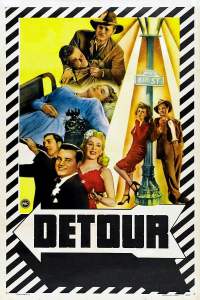 Often today, the term “B movie” brings to mind a low budget film of questionable quality, but one such vintage film that definitely exceeded its grasp is Detour. Directed on a shoe string budget by B movie auteur Edgar G Ulmer in 1945, Detour proves that you can make a movie on the cheap, without making a cheap movie. It follows and is narrated by a man named Al Roberts, who is broke but trying to thumb his way from New York to Los Angeles to meet up with his girl, with aspirations to marry her. He is picked up by Charles Haskel, driving a fancy car and carrying a wad of cash. When Charles falls asleep and is later found to be dead, Al freaks out, knowing the cops will think he killed him for the bread in his pocket. Al stashes Charles’ body in the desert, takes his ID and car to pose as him, and finishes the drive towards LA. What Al does not account for is the dame he picks up on the side of the road, who is carrying a secret of her own: she was earlier picked up by Charles, and knows that this driver is not him. A captivating film where the real star is the dialogue and narration; it is chuck full of every cynical, hard balled shred of dialect from the film noir era, spun together in a quick-flowing stream of suspense and turmoil. It’s my first Ulmer film, and I hope more that I see in the future are even half as good as this one.
 I saved Nicholas Ray’s In a Lonely Place for last because of its main actor, film noir legend Humphrey Bogart. As a film, it is much different than the previous four; it is more heartfelt, with a relationship as the central plot element. Dix is a nearly-washed up screenwriter who hasn’t written a good film in a long time. He is approached by his agent to do treatment on a trashy popular novel which Dix hasn’t read, so he asks a local hotel worker to come to his house late one night to give him the gist of it. She leaves late in the night, and early the next morning, the cops are at Dix’s door with news that she was murdered. Dix is suspect number one, but he is rescued by his aloof neighbor Laurel Gray, who provides an alibi, since she saw the girl leave, alone, the previous night. Dix and Laurel begin to fall in love, but she is disturbed by Dix’s often violent behavior. She even begins to wonder if Dix didn’t kill that girl after all. Bogart shows a very personal side in this film, a person who has spent years shutting people out and who now has a hard time letting anyone in. The look of vulnerability on Bogart’s face as he realizes how his life is going is a view I’m not sure I’ve seen from him before. And the ending is as tense as it gets.
 Auggie is a short drama with a sci-fi twist. Reminiscent of the popular Spike Jonze film Her from a few years ago, it is about a man, Felix, who begins a relationship with a digital assistant named Auggie, a person only he can see when he puts on his augmented reality glasses. The premise makes it sound like it will set up a comedy of sorts, but it is actually a sad, introspective film. Felix is recently retired and is coping with his new, undriven lifestyle. He feels depressed in an empty house, with his wife still working (and in fact, putting in more hours thanks to a big promotion) and a daughter who’s recently moved out. Along comes Auggie, who can read his subconscious and give him everything he wants. It is a person who always has the right word of encouragement to say, and knows what he desires before even he does. Even her appearance is exactly what Felix would define as beauty. At first their relationship is platonic, but it develops into something more, obviously creating strife in Felix’s family. It’s a decent, short film (80 minutes). It took me a few minutes at least to take lead actor Richard Kind seriously, since he’s most well known for being the goof in comedy roles, but he is actually quite good here. I think the film could have explored more about the meaning of a relationship; it just touches on the repercussions of Felix’s decisions and, reciprocally, his wife’s own part, but a solid movie that I’d watch again.
 Rosie is a film I’d been wanting to see for awhile, but like a lot of small indie films (especially ones made outside the USA) it took awhile to land somewhere where I finally got the chance. Filmed in Ireland, it is about a family and, particularly, its matriarch, and their struggle in a “working homeless” lifestyle. Every day John Paul goes to work, while Rosie takes/picks up the kids from school, doing laundry at various friends’ houses, and trying to phone hotels to find a place to stay that night. Their situation is made tougher because they are relying on a government assistance credit card to book the room, and not every place wants to deal with that. Rosie is literally making phone call after phone call, all day long, and so far it has worked for the last couple weeks that the family has been living out of their car. With the kids starting to get bullied at school for smelling, and teachers starting to ask questions about their well being, eventually their luck runs out, and they are unable to find a place one night. Really heartbreaking film. I can’t help but be reminded of that old Sound of Music quote, “When the Lord closes a door, somewhere He opens a window.” In Rosie, unfortunately, the windows all appear bolted shut. Outstanding acting by Sarah Greene as Rosie and Moe Dunford as John Paul (also the star of recent film The Dig, which I highly recommend). Even the kids were great, and as all my friends know, I generally despise child actors. Very heartfelt, emotional film.
 If you’ve been following my blog, you know the importance of J.R.R. Tolkien’s books to me. His Lord of the Rings are my favorite books; I’ve re-read them more than anything else. So it is tragedy that the film based on his life, Tolkien, is such a bore. The biopic follows his life from a young boy, sent to a prestigious school after the death of his mother, through adulthood and his fighting in France during World War I. It follows many subjects, including his relationship with his future wife, his friends at school who were important in shaping the man he became, and his love of crafting languages, which was vital to his creation of the entire mythology of the world he built in Lord of the Rings. But all of it is treated as matter-of-factly. There are moments, hints of stirring emotion, but nothing that comes close to the climaxes found in his books. And worse, it portrays some of his muses as nothing more than hallucinations or fanciful daydreaming that he later put down in word. A total bummer for fans like myself.
 Ash is Purest White is a Chinese film from a well-regarded director in that country and around the world, Jia Zhangke. I’ve not seen any of his previous films, but this one is highly reviewed, some calling it his masterpiece. It follows a young woman named Qiao, whose boyfriend Bin runs a small-time group of gangsters out of their gambling establishment in 2001. The whole film boils down to Qiao’s constant enabling and protecting of Bin, and his greedy nature to take everything she gives him without returning anything, even affection. She saves him when he is attacked by a younger mob of thugs, even going to jail for him when she tells the cop the gun was hers. When released 5 years later, he has moved on to a new girl and doesn’t have the guts to tell Qiao to her face, getting the new girlfriend to give the news. Years later, after a stroke has left him penniless and alone, confined to a wheelchair, Qiao once again cares for him, paying for rehab and nurturing him back to his feet. Think he will stick around this time? The “professional” reviewers are heaping the praise on this one, correlating the film with China’s rapid rise to modernization and what it has lost in culture in doing so. I’m not smart enough to see that connection, so looking at the film on its own merits, I just don’t get it. Ponderously slow, feeble acting from everyone outside of its lead (and even then, the stone-faced Zhao Tao as Qiao is passable, though far from spectacular), and really no plot to speak of all add up to a dreary film. I’d like to talk to someone who really, truly liked this movie to explain it to me.
 Trial By Fire is a drama based a true story, about a man named Cameron “Todd” Willingham, who was tried, convicted, and sentenced to death for setting a fire that killed his 3 young kids. The film starts powerfully, portraying the violent day when the kids died, with a distraught Todd trying to get back into the house, despite it going up in flames. He is arrested for murder the afternoon after the kids are buried, and his trial is shown as a farce. The state’s experts say it was arson, and all the witnesses paint Todd as a troubled man who beat his wife and even worshiped the devil. His only defender was his wife, who said Todd would never hurt their kids. After the trial, Todd gets put on death row, and we see the hell that life is in that dreadful place. He’s still there seven years later when he gets in touch with a woman who starts looking into the sham that was his trial. She doesn’t know if Todd is innocent or guilty (even we viewers are unsure, purposefully so), but she knows he didn’t get a fair shake at his own trial, and she fights to try to get him an appeal. There are a lot of good moments, some even great, but the story is uneven and the dialogue can at times be worse. The film is very heavy handed too. I don’t mind having my emotions tugged at, but not so much when they are beating me over the head with it.
 Jabberwocky was Gilliam’s first solo director credit (he co-directed Monty Python and the Holy Grail with Terry Jones). Filling out the “story” of the short poem inside Lewis Carroll’s Through the Looking Glass, a poem we had to memorize in school and of which I can still remember parts (“Beware the jubjub bird and shun the frumious bandersnatch!”), the movie stars fellow Monty actor Michael Palin as Dennis. Dennis is a bumbling idiot in the middle ages, trying to get enough money or prestige to gain the attentions of a girl he wants to marry. He travels to the big city for an opportunity, but finds nothing but misery there. Meanwhile, a monster has been killing local villagers and King Bruno the Questionable is looking for a knight to vanquish the beast. I like The Holy Grail and Life of Brian, but I’m otherwise not a huge Monty Python fan, and this film is very much like those skits, which is understandable. At this early point in his career, Gilliam made a film in a style that he was comfortable with. While there are darker elements to the story, it has the same slapstick comedy and inane style of a Python piece. If you are in for silliness, there’s plenty on display here, but that’s about all there is. I laughed plenty, but ultimately I don’t think its a movie I’d watch multiple times.
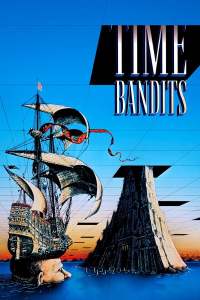 Time Bandits, from 1981, is a kid adventure/fantasy in the style of many films of this era (a la The Neverending Story). Kevin is tired of his dreary life and his unloving parents, when one night he is visited by a group of dwarfs (ahem, “little people”) who are on a quest to steal from history’s treasures. If God is the architect of the world, these these ageless dwarfs are its builders. Aided by a magical map that shows them holes in space and time, stolen from “The Supreme Being,” they go on an adventure to rob Napolean during his wars and King Agamemnon in ancient Greece, among others. All is not fun and games though, as they also end up on the wrong side of Robin Hood and the Titanic, and all while being pursued by The Supreme Being and “Evil” (the devil), who wants the map for his own dastardly purposes. It’s a fun (and funny) escapade throughout. It’s a definite PG rating, as it never gets too scary for the kids who may be watching, but there is plenty of humor thrown in that will be over their heads. It also is filled with a who’s who cast, including Sean Connery, Ian Holm, Shelley Duvall, John Cleese, Katherine Helmond, David Warner, and R2-D2 himself, Kenny Baker, as one of the troop of anti-heroes. I’m sorry I missed this one as a kid, it’s the kind of film I definitely would have enjoyed.
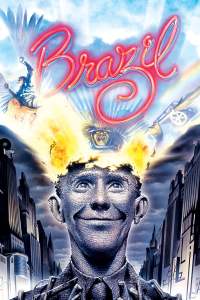 Time Bandits was Gilliam’s first commercial success, but Brazil has become a much more lasting hit. It wasn’t a success at the box office* (for reasons, see the next paragraph), but has gone on to be a huge cult hit since. A dystopian darker-than-black comedy, it is Monty Python meets 1984. In the near-future where everything is controlled by computers but nothing works, Sam Lowry (Jonathan Pryce in his breakout role) works at the Ministry of Information, watching over the population and rooting out problems. Sam really cares for people, unlike his cold, heartless, technology-obsessed coworkers and family. A terrorist person or organization has been bombing public places for 13 years now (“beginner’s luck” is the official government response), and meanwhile, Sam is trying to hunt down a girl that he noticed at work and in his dreams, but whose past is classified at his pay scale. The main target of the government is a man named Tuttle, a “rogue” repairman who ignores bureaucracy and goes around fixing AC units without the proper government licenses. When a computer glitch kills a man named Buttle instead of Tuttle, Sam’s investigation into it ultimately leads to his own downfall. The film pokes fun at big government and big technology run amok, but the satire hits a little too close to home, and some of the humor, while hilarious at face value, is a bit disturbing when you consider some of this stuff can really happen today, such as corporations trying to control everything through regulation and paperwork, creating more work in the process. The movie has an all-star cast of Pryce, Ian Holm, Bob Hoskins, Robert DeNiro, Katherine Helmond, and a slew of minor roles for before-they-were-famous actors that you’ll recognize. There are 3 versions of the film out there, including a much-edited “happy ending” version, but I watched the longer “director’s cut” and it was fantastic. Extremely funny but also equally dramatic and at times even suspenseful, this is a tremendous film that I highly recommend. Gilliam hit his stride on this one, making a movie that resonates for the ages.
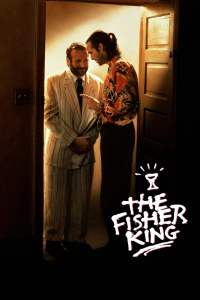 The Fisher King is one of those newer movies (1991) that I should have seen by now, but never did. Jeff Bridges stars as shock jock Jack Lucas, whose popular show and high class life are thrown away when he says the wrong thing to the wrong caller on his show. The listener ends up doing a mass shooting at a local nightclub in a murder/suicide, and three years later, Jack still hasn’t recovered. He’s blaming his run of bad luck on karma. On a wild night, he meets Perry (Robin Williams). Perry is half crazy and homeless, and it turns out he hasn’t been the same since his wife was murdered right in front of him, at that terrible nightclub tragedy. In helping Perry, Jack thinks he can finally get some good karma, but Perry seems to have unattainable goals. He wants to steal what he thinks is the Holy Grail from a businessman in uptown, and he wants to meet a woman that he has fallen in love with, but whom he hasn’t had the nerve to approach. But first, Perry must conquer his literal demons, as he sees a premonition of a fire breathing red knight on a red horse chasing him whenever he starts to feel some normalcy. Bridges is passable, but it is Robin Williams who shines. He was on a roll at this point in his career (made just after Good Morning Vietnam and Dead Poets Society), and he is great here again. Bridges on-screen girlfriend Anne (Mercedes Ruehl) gives the performance of a lifetime as well, and it won her an Oscar. Part comedy, part drama, and with some fantasy thrown in, it’s a very good film, though maybe not-quite-great, and you just hope for a happy ending as it approaches.
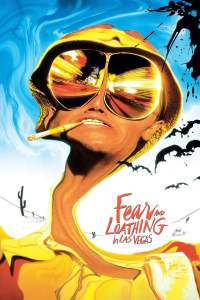 So much for saving the best for last. Fear and Loathing in Las Vegas is total shit. It is unfunny, boring, and probably only interesting for a viewer who is as high as the characters in the film. Based on the famous Hunter S Thompson book of the early 70s, it follows a journalist and his lawyer, Duke and Dr Gonzo (Johnny Depp and Benicio Del Toro) in their drug-fueled work covering first, a bike race, and later, a narcotics symposium, in the city of sin. The first solid hour is nothing but the duo’s reaction to the world around them as they trip acid, snort coke, and inhale ether. 30 minutes in, Duke dialogues to the viewer (about the bike race), “I had witnessed the start, I was sure of that much. But what now? What comes next?” I was asking myself the same thing. I totally understand the film is a bit of a metaphor on the craziness of the times in which it takes place (1971) and the film, when it is coherent, is definitely anti-war, but man it is a tough watch. How this film has gone on to become a “cult hit” is beyond me. The only bright spot is the acting chops of Depp and Del Toro, who are so good in the roles, you forget who the actors are, but they aren’t enough to save this mess.
 Skin, based on a true story, tells about Bryon Widner, a former neo-nazi with hateful tattoos all over his body and face, who gained some fame about 10 years ago when he had all those face tattoos (painfully) removed (instead of flashbacks, we get “flash-forwards where we see him getting them removed, interspersed throughout the film). Bryon was adopted by a leader in the hate group as a child and has lived within it his whole life. However, he starts to wonder what he’s doing there, and the film lets you come to that conclusion on your own. There are subtle spots you have to notice, like how he gives the new recruit a hard time, asking him why he wanted to join. Things start to change more when he meets a woman and falls in love with her and her kids. She was raised in hate groups herself (her dad was in the KKK) but swore it all off, and Bryon decides to leave his family and marry her and move to a new city. Unfortunately the family won’t let him go that easy, and follow him there. Jaime Bell is solid as Bryon Widner, and Danielle Macdonald is always good (check out Patti Cake$ if you haven’t), but the movie is a bit stale and paint-by-numbers, the same trap a lot of biopics fall into. Like many indie films with star power in the acting roles, the movie may be worthy of a watch by film lovers like myself just to see the performances, but as a movie itself, it isn’t very memorable.
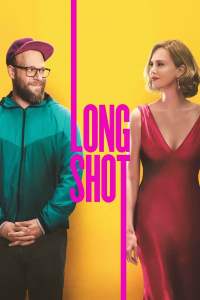 I’ve decided I’m just not a man for comedies anymore. Used to dig them when I was younger and could watch them over and over again. Now, even on good ones, I laugh during the film, but afterwards just shrug them off, and they don’t leave any lasting impression on me. Long Shot is the latest, and it is indeed a very good comedy, but still didn’t do much for me. This one is about the unlikely relationship between a popular and powerful politician, Charlize Theron as Charlotte Field, currently Secretary of State but getting ready to run for President, and a quirky, left-wing journalist, Seth Rogen as Fred Flarsky. They were childhood friends, in fact, Charlotte babysat the slightly younger Fred, and they find each other again years later. At first, Charlotte just hires Fred to write speeches for her, but they quickly find a shared attraction for each other. As romantic comedies go, it is very good. Lots of laughs, though a bit crude for maybe my parents to watch, but like many films of this genre, it is awfully predictable. I did enjoy the gender change from the usual way this kind of film is told, putting the woman in the power role and having the man run to her for a change, but otherwise it is pretty standard fair.
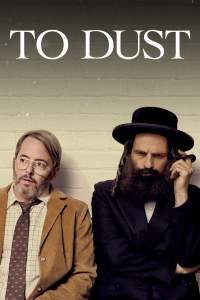 To Dust follows an orthodox Hasidic Jewish man, Shmuel (Geza Rohrig), having a hard time getting over the recent death of his wife. More than her physical loss, he is having nightmares about the decomposition of her body, buried in its pine coffin. Having been raised without science and not knowing how long the decomposing can take, he “sins” by seeking answers from a local college science professor, Albert (Matthew Broderick). Thus embarks a funny yet heartfelt journey about loss, coming to terms, and moving on. At first Shmuel goes simple, burying a pig in the ground with plans to see how long it would take to become dust, but as Albert points out, “If you brought me a pig about as large as your wife, no offense, and buried her like a Jew, no offense, then we’d be cooking, but this is a mockery of science.” They get a bigger pig and bury it in the manner that the wife was buried, and go on to exhume it every month to see how far along it is getting. Along the way, Shmuel goes through his grieving process, saying good bye in his own ways. It’s a lovely film; Broderick mostly provides the comic relief and isn’t bad, but Rohrig is great, as he was in the Hungarian film Son of Saul, released a couple years ago and winner of that year’s Oscar for best foreign film (check this and that one out for some great stuff).
 Midsommar was a hit last summer on the Indie circuit. It was billed as a great horror film. It is certainly unsettling and disturbing at times, but I’m not sure I’d call it a horror film, and honestly, I thought it fairly average. It is about a group of American college students who go with a Swedish friend to his hometown, a commune-like group off in the middle of nowhere. You get creepy vibes from the moment they arrive, with pictures on the walls showing rituals and whatnot, but our unsuspecting Americans seem completely oblivious. They don’t even freak out enough when a couple of old adults jump from a cliff in suicidal fashion, hearing the explanation that they were giving their lives to replenish the energies of the youth or some such nonsense. The film mostly follows the lone girl of the group, Dani (Florence Pugh, also known recently as the main actor in Fighting With My Family, and the one bright spot in this film). Dani recently lost her entire family when her sister killed their parents in a murder/suicide. She’s facing those demons as she faces the cult in Sweden, but the film doesn’t do enough to explore the correlations. Outside of some gross-out scenes inserted just for shock value, the film is pretty benign, and a bit long for a “scary” movie at 2 ½ hours. Not worthy of the hype.
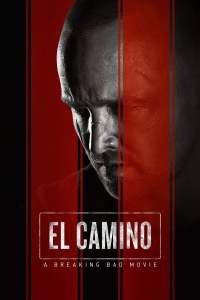 In my opinion, Breaking Bad is one of the greatest shows ever made. I was one of the hoards of fans who eagerly anticipated every episode, and so when a new movie was surprisingly announced by Netflix, I couldn’t wait to see it. El Camino resolves the mystery of what happened to Jesse Pinkman, last seen on the final episode of Bad driving off in the eponymous car, being one of the few to survive the blood thirsty show. Rotten Tomatoes describes it as “entertaining if not essential” and I think I agree. We see Jesse dealing with the aftermath of having been tortured and caged for a year, and see some of what he went through in flashbacks. The film is a wonderful walk down memory lane, with many of the original cast returning in the those flashbacks. I was a little worried that I wouldn’t remember important plot elements after all these years (I can’t believe it ended way back in 2013!) but the film reminds you of the important stuff, without holding your hand and re-hashing old tales. It isn’t “necessary viewing,” and the show still stands on its own from beginning to end as a masterpiece all by itself, but El Camino is a fantastic curtain call.
 Jons Movie Takes