Quick takes on 5 James Ivory films

Merchant Ivory Productions started in the early 60s between long-time business and domestic partners Ismail Merchant and James Ivory. Initially, their goal was to make films in India for an international audience, but that expanded later to films produced in the UK and USA as well. I have some experience with Merchant Ivory films, notably their 2 biggest hits, Howards End (after reading the book) and A Room With a View (also the book). Today, going back to look at some of their earlier pictures from the 60s and 70s. 

Released in the 1963, The Householder was their first film together, based on a novel by Ruth Prawer Jhabvala (who would go on to become an integral part of the film company as screenwriter for many of the films). I’ll share some notes about its production, which I found very interesting. Ivory and Merchant met in NY at a screening of a short documentary Ivory had done, and they immediately decided to start a film company together. For this, their first picture, they were able to get one of India’s famous cinematographers, Subrata Mitra, and while they had money problems getting the film done, they obviously did finally get it accomplished. Stepping in to help edit was none other than another famous native director, the great Satyajit Ray. If it were not for this acclaimed help, Ivory admits his career may have taken a very different turn. The movie is a simple tale, about a newly married couple, Prem and Indu. In Indian tradition, it was an arranged marriage, and they are still getting to know each other. Prem is a teacher and the couple are living on a meager salary, just scraping by, when they discover that Indu is pregnant. Prem’s mother comes to stay at their tiny apartment to help, and as in all mother-in-law visits, things don’t go well for Indu. Mom nags about the cleanliness of the house and how things aren’t run right, which makes Indu leave in a huff to go back to her parents’ house. Since we all know absence makes the heart grow fonder, Prem begins to realize how much he does care for his wife, and writes to her, begging her to return. The beautiful Leela Naidu as Indu is easy on the eyes, but Shashi Kapoor’s Prem is hard to get behind. He’s a pushover and doesn’t stand up to his bosses, coworkers, or mother, and it’s a surprise anything goes his way in life. It’s a fine enough picture from some early filmmakers, but not all that memorable. ★★

Shakespeare Wallah takes awhile to get going, but is a nice film once it all starts coming together. It centers around a family, a traveling acting troupe, who’s been performing Shakespearean plays in India for years. Under colonial India, they were very popular, but since India gained its independence some years ago, interest has dwindled as the people turn away from British culture, and the troupe has been struggling. At the center of the story is the adult daughter, Lizzie, who has a local Indian boyfriend, Sanju. Sanju has another lady on the side though, a popular Bollywood actress named Manjula. Manjula finds out about the relationship and confronts Lizzie, leading to the second half of the movie. Even the viewer doesn’t know who really holds Sanju’s heart. Lizzie’s parents are older and have made India their home, but they know Lizzie doesn’t have a future there and want her to return to England. However, they have a hard time getting her to want to move; she wants to stay for Sanju. The film was partially based on the Kendal family, who did perform in India, and in fact, to keep the budget down, the actors playing the family members are the original traveling actors, portraying fictionalized versions of themselves. In real life, the actor who played Sanju, Shashi Kapoor, ended up marrying the second daughter in the family, Jennifer Kendal (not see in the film). ★★★

Bombay Talkie (1970) takes advantage of being shot in color to finally show the bright colors of India. Lucia (Jennifer Kendal, mentioned above) is an English author researching her next project, the Bollywood film industry. She meets two men while there, a screenwriter named Hari (Zia Mohyeddin), and a famous Bollywood actor named Vikram (Shashi Kapoor), and thus starts a love triangle. Hari instantly falls for Lucia, who in turn instantly falls for Vikram. Vikram is married, but how has that ever stopped an actor? Lucia and Vikram start seeing each other on the side, evoking heartache in Hari and pain to Vikram’s wife Mala. However, Lucia is very petulant and used to getting her way, so when Vikram doesn’t do something she wants, she packs her bags and heads off to the countryside to try to find religion by following a guru. Unable to give up her worldly possessions, that doesn’t go well either, leading her to return to Bombay to try to pick up where she left off with Vikram. The story isn’t all that deep, and there are plenty of missteps from a writing perspective (Lucia is supposed to be a somewhat talented author, but her personality doesn’t mesh with that backstory, and we never see her write a word), but there was enough positive fluff to keep me involved. And the colorful landscape and costumes are beautiful to watch. ★★★

I can’t decide if Savages is either a work of complete genius, or a total train wreck. Even if it is a disaster, I enjoyed it. I say that with the caveat that I sometimes dig really out there movies (see Last Year at Marienbad). Savages is sort of a cross between The Exterminating Angel and Lord of the Flies, though opposite to both those cases. It starts in black and white, and follows a primitive tribal group as they are preparing a human sacrifice. Just as the ritual is about to go down, a croquet ball rolls into their camp. Bemused by the foreign object, the tribe sets off through the forest to find the ball’s source, and come upon a huge, abandoned mansion. As they pilfer through trunks of clothes, pieces of art, and classic books on the shelves, our primitives start to act more civilized. The next morning, the house has been cleaned up and the film is now in color; the people are all dressed in the height of 30’s fashion, and are carrying on droll conversations about art, politics, and society. As the day becomes night though, those old tendencies start to come to the front again, and by the next morning, the group is ready to return to the jungle. It’s a fascinating picture about the structure of society, because the roles each individual played in the beginning carried over to a similar stature in the cultured group. Maybe all of us are more similar than we think. It’s a weird picture, probably not for everyone, but it has a certain appeal for sure. Features a couple very young actors that are more recognizable from years later (Sam Waterston, of Law and Order fame, and Martin Kove, from The Karate Kid and Rambo films). ★★★½

Roseland features a great cast as well, including a young Christopher Walken. The film is made up of three segments, separate short stories, all revolving around the Roseland Ballroom in New York. As a narrator tells us in the beginning, old people come there to remember back when going dancing was what you did on dates. The first part focuses on one such lady in her golden years, May, who is a widower who loves to talk about her Eddie. She is a good dancer and thus a popular party on the dance floor, but she becomes hung up on one man named Stan, mostly because through some kind of magic, she sees a younger version of herself whenever she looks in the mirror with Stan as her partner. The second segment follows a trio of ladies who share feelings for the young dashing Russell. Russell is out of work and relies on the much older Pauline’s money, but he learned dancing and shares a connection with Cleo, and is himself attracted to Marilyn, a woman much closer to him in age. He needs to decide what he wants most in a partner. The final story is about a woman, Rosa, trying to win a dance contest with her partner, Arthur, but he’s not as good of a dancer as she. I thought the film started out great, but each segment after the first wasn’t as good as the preceding one, with the final segment being pretty poor. Still, it’s a cool look back in time to an era that doesn’t exist anymore. ★★½

Quick takes on 5 Mike Leigh films

My previous experiences with director Mike Leigh include only his newer films, Mr Turner (which I loved) and Peterloo (which I did not). So today I’m going back to look at a few of his earlier pieces, starting with a television film from 1983. Meantime features a great cast of early-in-their-career actors including Tim Roth, Gary Oldman, and Alfred Molina. It focuses on a family of four, mom Mavis, dad Frank, and adult sons Mark and Colin, who are living mostly on welfare in a tiny flat in London. Mavis is the only one working, while Frank and Mark have nothing but excuses for why they aren’t, and Colin, who is a touch slow mentally, just skates by. Frank loafs around the house all day, and Mark and Colin hang out with Mark’s friends, including a rude and rambunctious skinhead. The four family members spend the entirety of the film blaming each other for the family’s situation, and ganging up on Colin since he doesn’t protect himself against their verbal abuses. Mavis’s sister Barbara married a businessman, John, a few years ago, and they are living in a traditional suburban house in a definite middle class neighborhood, and you can tell their societal elevation rubs at Mavis and Frank. When visiting their home (to which John has to drive them, since the family doesn’t own a car), Barbara sees how Colin is treated, and later offers him a job to come over and help her redecorate her house. Colin accepts, but becomes withdrawn when Mark shows up too. The viewer gets a glimpse too that, as expected, Barbara’s marriage to John proves that the grass isn’t always greener. This is a very engaging film, deeply introspective, and it turns your opinions of people on a dime by the end. Tim Roth’s portrayal of Colin is incredible, and Gary Oldman as the skinhead friend steals the camera every time he’s on screen. ★★★½

Life Is Sweet is just a wonderful, feel good kind of movie (so different from what came in his next film Naked! Proof of Leigh’s diversity in filmmaking). It is about a middle/lower middle class family living in a row house in London. Dad Andy (Jim Broadbent) is a chef at a restaurant, working long hours for meager pay, and has always wanted to work for himself. He gets his chance when he buys a food truck, though it has more rust than metal on it at the time. His wife Wendy (Alison Steadman) playfully teases him about his dreams, but you can tell she loves him dearly and doesn’t mind indulging his fantasies. Two adult twin girls live with the couple, Natalie (Claire Skinner) and Nicola (Jane Horrocks). Natalie is a go-getter and has a full time job as a plumber, and her parents are rightfully proud that she’s a hard worker. Nicola hasn’t found her niche yet. She’s suffering from an eating disorder (bulimia) and depression, and hides behind a facade of biting sarcasm towards her family and others. Like a lot of families, they joke and prod at each other, but it is a loving family, and the film is all about the interactions that go on between them. Some of the daily interactions include Nicola’s secret boyfriend who visits during the day when no one is around (a young David Thewlis), and a friend of the family who opens a high end restaurant without any real idea of how to run it (the always funny Timothy Spall). Leigh knows how to get the very best out of all the actors on screen, and there are more moving and touching moments than you can count, and without feeling heavy handed; the director lets us get to know them, and then gives us glimpses at what makes them tick, and it all develops naturally. ★★★★½

Naked stars David Thewlis (in his breakout role) as Johnny, a drifter wandering the seedy underbelly of London over a couple nights in the early 90s. He’s highly intellectual but also completely terrible as a human being. In fact, the film opens with him raping a woman, stealing a car, and then fleeing to London. So a great family picture! Once there, Johnny goes to see Louise, an ex-girlfriend. She’s not home, but her roommate Sophie is. Johnny spends the day flirting and later sleeping with Sophie, and while she gets attached to him quick as a flash, ol’ Johnny isn’t looking for any attachments, and leaves after flaunting his day in front of Louise when she gets home. Johnny then roams around town, encountering various others in the night life of London. Everywhere he goes, he shows off his superior intellect in debates about the meaning of life and the future of mankind, but he makes sure to leave people feeling worse off than when he met them. He gets his just desserts when he gets jumped by a gang, and he hobbles back to Louise’s and Sophie’s. Interspersed throughout the film are scenes of a rich 20-something named Sebastion, who also treats people like shit, but he gets away with it due to his money and societal standing. When Johnny gets back to the place, Sebastian is there, having spent the day raping Sophie. Turns out he’s the landlord of the building, and he’s just getting more of want he wants. There are moments here and there when we see a glimpse of a kinder, gentler Johnny, and we want that part of him to come out, but you have to watch to the end to see if it does. It’s a stark and sometimes painful film to watch, but I’ll give it one thing, it grabs your attention and holds it until the end. Leigh definitely has a way of showing the complete human being, and Thewlis shows every angle and view of Johnny that a person can have. Not an easy movie to watch, but a good one. ★★★½

Every family has skeletons in their closet, things that happen and are later buried, not even discussed a single generation later. One such family is examined to an emotional masterpiece in 1996’s Secrets & Lies. Hortense is a mid-20’s black woman seeking her biological mother. Her adopted parents are both dead, and she’s looking more out of curiosity than anything else. What she finds surprises her, because her birth mother is white. Cynthia gave up Hortense as a teenager, and went on to have another daughter, Roxanne, a couple years later, but never had any long-term men in her life. Roxanne is turning 21 when Hortense finds the family, and at first, Cynthia and Hortense keep the secret to themselves. Also in the picture is Cynthia’s younger brother Maurice, whose wife Monica does not get along with Cynthia at all. Yes, it’s melodrama, but it is very good melodrama, with supremely good acting all around, and some soft humor that manages to make you smile once in awhile too. A film like this, it is easy to see how even very important events can be smoothed over and buried, due to shame or fear, and it’s easy for them to be forgotten (or nearly so) just a couple decades later. Makes you wonder what life events our parents and grandparents went through, of which we have no idea. Very emotional finale, where the viewer hopes for a happy ending for everyone. ★★★★

Unfortunately I found Topsy-Turvy to be almost a complete bore, and that’s coming from someone who loves musicals and even the occasional opera. It follows the famous 19th century team of Gilbert and Sullivan. In the film, they’ve already had many successes, including The Pirates of Penzance, but their latest, Princess Ida, is flopping in London. The librettist, W.S. Gilbert, loves stories full of magic, but composer Arthur Sullivan is tired of the “fluff” and wants to write more serious music again. Under pressure from the theater to release a new hit, Gilbert comes out with yet another fantastical piece involving a magical potion, but Sullivan refuses to write music for it. Fate seems to inspire Gilbert in a new direction, which will ultimately lead the duo to one of their greatest successes, The Mikado. The one thing going for the film is it is a fascinating look “behind the curtain” at the creative process involved in putting together the production as well as scenes backstage during performances, interactions between the various actors and performers and whatnot. Director Leigh let the actors sing their own parts, and there are many songs shown in their entirety in this (rather long) musical drama; you can tell that they aren’t trained singers, but that didn’t bother me too much. What bothered me more was the long attention given to rehearsals and prepping and lead-up, as there’s such a thing as too much information. I actually enjoyed the performances when they came (“Three little maids from school are we!”). The sets and costumes are top-notch for the era, and the film did win Oscars for costume design and makeup, but as a movie, it is awfully dry and rather meh. ★½

Quick takes on 5 films

Misbehaviour is about the protests surrounding the Miss World competition in London in 1970. It features an ensemble cast telling the stories of various women involved both participating in, and protesting at, the pageant. Keira Knightley plays Sally, a history student fighting for admittance into a school where she can further her degree, who later falls in with Jo (Jessie Buckley), a strong feminist and quasi-anarchist. Inside the preparations for the show, the ladies from around the world are arriving in London, each with their own stories, such as Ms Sweden (Clara Rosager), who is the favorite to win, but also has disdain for the beauty process, and Ms Grenada, Jennifer Hosten (Gugu Mbatha-Raw), who wants to win for the prize money to further her own education. Also going on in 1970 were the rumblings of the anti-apartheid movement in South Africa, so in an attempt to side step controversy, the pageant invites two women from that country, one white and one black. Other actors included are Rhys Ifans as the pageant founder Eric Morley, who can’t help but point out the measurements of all the girls, and Greg Kinnear as the legendary Bob Hope, there to host. The film does a fantastic job of providing differing points of view for all involved. It would be easy to just call it a women’s rights film, but there’s multiple angles going on. Sally and Jo want to take down the system, calling it no better than a cattle market, but some of the women genuinely like participating. Jennifer wants to win to show that a black woman can be just as pretty as a white (no woman of color had ever won previously). There are calls to make a stand against apartheid. I thought it was a fantastic film, and a great showing of a huge leaping off moment in the history of the women’s liberation movement. ★★★★

The Devil All the Time follows two generations in and around a couple tiny towns in Ohio and West Virginia, starting after World War II. It follows a half dozen or more characters whose lives intertwine in a myriad of ways; the narrator in fact hints at the connections in the opening minutes when he tells us that in one tiny town, just about everyone is related in one way or another. At first, our story focuses on Willard Russell, returning home from the war, who falls in love-at-first-sight with a waitress at a diner off the road. He marries her and buys a house. Willard is a soft spoken man but he protects his own; when some men made rude remarks about his wife, he beats them up badly, and tells his son Arvin to always do the same. Willard’s original girl before his marriage goes on to marry the new, young minister, but he’s not all straight in the head. That’s the setup for the film in the first 20-30 minutes, and it’s about all I can say without giving away some of the surprises. The film goes on to focus on the girl and minister’s daughter, and her future relationship with Arvin when he grows up, as well as others in and around their circle. There’s a whole lot going on, but it does all flow and was easy to follow, and it comes together in a neat bow in the end, maybe a little too neat. There’s some great, tense moments, but the movie is a little too clean, for what is throughout a very gritty picture. There’s great acting from heavy hitters like Bill Skarsgârd, Robert Pattinson, Sebastian Stan, and Tom Holland, but it’s one of those movies that just tries to do too much. Entertaining, but not all that memorable. ★★★

#Alive should instead be #OnLifeSupport. It’s about as formulaic and dull as a zombie apocalypse film can be. A Korean picture, it follows a teenage boy left alone in his apartment when the zombie infection hits, hard and fast. He doesn’t get good cell coverage in his apartment, and as the TV signal becomes unreliable over the first couple days, he’s left on his own with no news of what’s going on in the outside world. His only hope is a final text from his mom saying she’s safe, and to stay inside and wait for help. To make matters worse, he had put off grocery shopping, so there’s very little food as it is. As the days and weeks go by, our hero runs out of food, and just as he begins to contemplate suicide, he sees another survivor in an apartment across the courtyard from his apartment. Our guy and his new girlfriend are able to eke out a few more weeks until they make a last, desperate run for safety. There’s a few nice zombie killing sprees, but the film is overall absolutely ridiculous (even for a zombie flick), with some of the smartest zombies ever put on screen, and the acting is beyond atrocious. ★

Enola Holmes is a delightful film for all ages, starring Stranger Things’ Millie Bobby Brown in the title role. I have to admit, I am not a Stranger Things fan; I watched season one, didn’t really get into it, and never followed up on the later seasons. Having said that, I know Brown has received acclaim for her performance on that show, and she is wonderful in this movie. Enola is the little sister to the famed Sherlock Holmes (Henry Cavill) and another, older, brother, Mycroft (Sam Claflin). The brothers being so much older than Enola, they’ve been away from the home for a decade, leaving Enola to be raised by their widowed mother Eudoria (Helena Bonham Carter). Instead of being raised to be a lady, Eudoria raised her to be a free thinking self sufficient young woman, and at 16 now, she’s not what society expects of her. The setup for the film is that Eudoria has suddenly gone missing, and Enola’s older brothers come home to see what is amiss. As the oldest, Mycroft takes over guardianship of Enola, and wants to send her to boarding school. Sherlock likes her spunk and adventurous personality, but acquiesces to Mycroft’s wishes. Enola has no intention of going quietly. She finds clues to her mother’s whereabouts in London, and dresses as a boy to set off to find her. Her quest is sidetracked when she becomes embroiled in a murder attempt on the young Lord Tewkesbury’s life, so Enola now has two mysteries to solve. The film is based on a series of young adult novels, and done very well, with detailed period costumes and sets, and engaging writing and dialogue. The camera loves Millie, with her bubbly personality, and she shines throughout the picture. It’s a fun for kids through adults. ★★★★

I loved this movie. Deerskin stars Jean Dujardin as Georges, a middle aged man who, at first, seems just a bit quirky, but before too long, we see he’s bat shit crazy. The film begins with Georges riding out to the middle of nowhere to purchase a 100% deerskin jacket from an old codger. He pays an exorbitant price for it, for which the seller also gifts him a digital video recorder, and then drives to a secluded hotel in a little town to stay the night. He makes one phone call to his estranged wife, and we learn that they have recently split. Georges is obsessed with his new coat, constantly starring at himself in the mirror and wearing it to bed. He goes to a bar, where he thinks the bartender, Denise (Adèle Haenel, long lauded in France but who recently received international acclaim in Portrait of a Lady on Fire), and another women are talking about him and his coat, but of course they are not. With his newfound camera, he pretends to be a filmmaker, which grabs the attention of Denise, as her dream is to be a film editor. Since Georges’ wife has just closed their joint account, he is broke, but Denise agrees to finance his film so she can edit. By this point, Georges’ wonderful coat has begun “talking” to him, and he realizes they share a dream of he having the only jacket in the world. At first, Georges goes around paying people to put their jackets in the trunk of his car, before he drives away, but his actions become more sinister by the end. Denise loves it all, thinking it is a metaphor for how we cover ourselves in a protective outer layer. It is absurdist comedy and horror to perfection. Dujardin’s deadpan comedic style is ideal for this role, and when he goes out to become the only jacket-wearing person in town, the result is fantastic filmmaking. ★★★★★

Quick takes on 5 Mizoguchi films

Going to look at some of the films from acclaimed Japanese director Kenji Mizoguchi, starting with 1946’s Utamaro and His Five Women. Released during the USA occupation of Japan after World War II, it is a rare historical film during this era, when the US censors were not allowing many Jidaigeki (Japanese period films) to be made, considering them too nationalistic. The title is misleading, because while the story does revolve around Kitagawa Utamaro, a famous Japanese painter of the late 18th century, there are a whole lot of main characters. The film focuses on several relationships floating around Utamaro’s sphere. Koide is from a well-to-do family but leaves that life behind to study with Utamaro. His betrothed, Yukie, also leaves her upper class family to follow him later, but he’s already turned his attentions to a local courtesan. Shozaburo is a tattoo artist who traces one of Utamaro’s drawings onto the back of a beautiful courtesan named Orui, and then falls in love with her and elopes, leaving his own fiancee Okita behind. Utamaro himself falls in love with a commoner named Oran, but gets into trouble with the law for some of his practices. There’s a whole lot going on here, and honestly I was a bit lost for awhile. There’s a lot of characters, and the fact that many of the girls’ names start with “O” didn’t help; guess I should have paid more attention early on. The copy I watched was not a great restoration, so that didn’t help either. Still, it’s a decent enough picture, from a turbulent time in Japan’s history. ★★½

The Story of the Last Chrysanthemum is a beautiful picture about an actor striving to perfect his craft. Adopted by the famous actor Kikugoro, Kikunosuke is his protege and heir, but he can’t seem to find his muse. Kiku is flattered by fans and false admirers who only want to curry favor from his father, but he is spoken to plainly by his younger brother’s wet nurse, Otoku. Kiku ends up falling in love with her, but his father forbids the match to a girl beneath their station, and disavows Kiku. Kiku flees to a new city and begins studying under a different famous actor, taking the name Shoku to differentiate himself, but a year later, his skills have gotten no better and he’s getting booed off the stage. Otoku tracks him down just as he’s about to quit for good, and convinces him to not give up on his dreams. Things don’t turn around though: Kiku’s new master dies, leaving him to take the only available job with a traveling theater troupe, a lowly position for a trained actor like himself. That too falls apart after just a couple years, and Kiku and Otoku are penniless and living in public housing. Unbeknownst to Kiku, Otoku goes to Kiku’s brother, Kikugoro’s son, and begs for one more chance for Kiku. Kiku is given a starring role, on the condition that Otoku leaves him, but will he finally see his dreams come true, only to lose his love? It’s a lovely, sometimes heartbreaking film. Dating to 1939 Japan, the video quality is definitely rough around the edges, but worthy of a viewing. Mizoguchi’s camera work is a sight to see. He uses a lot of long takes, including many long tracking shots as characters walk around, that I’m sure wasn’t easy to pull off in its era. ★★★

Mizoguchi was popular in Japan long before 1952’s The Life of Oharu, but it was this tragic tale that put him on the international stage. In the beginning, a 50-year-old Oharu is a prostitute who has been unable to find work this night, due to her aging looks. Her fellow women of the night gossip how she used to live in the palace, and ask what brought her so low, so we get a flashback. Raised as the daughter of a samurai, Oharu had a life of luxury, but fell in love with a lowly retainer. When their relationship was found out, the man was executed and Oharu and her family banished from Kyoto. A couple years later, a powerful lord is looking for a concubine to deliver him an heir, as his wife has been unable to get pregnant. He is very choosy about looks and features, so a host of women are dismissed until they find Oharu. Initially she doesn’t want to go along with it, but ultimately she has no say in the matter. She is moved back to Kyoto and does indeed give the lord a son. Her father is anticipating riches to start coming in, since he is the blood father to the heir of the lordship, and has wracked up some debt, but Oharu is no longer needed at court, and is dismissed. Her father sells Oharu off to pay his debt, first as a high end courtesan, but that is but the next step in her life of misfortunes. All that takes place in just the first hour of this 2 hour film. Oharu’s life is full of heartache and tragedy, with only all-too-brief moments of happiness. By the end, her hard life has taken her looks, and we just hope that she can find some resolution before it’s over. It’s a poignant film, about a woman with very little power over her own life. ★★★★

There’s some good films listed above, but Sansho the Bailiff is the best yet, a true masterpiece, right up there with Ugetsu. Based on centuries-old folklore passed down from storyteller to storyteller, it’s a movie without a lot of happy moments, in fact, there may only be one. It opens with a governor being exiled by the higher-ups, for something he did to help the poor living in his district. He is sent far away, and a few years later, his wife and two children, Zushio and Anju, are traveling to him. They are told of a shortcut over water by a woman, but the next morning, they find that they’ve been tricked. The mother is separated from her children and sold off as a prostitute, while the kids are sold as slaves to a local bailiff, the terrible Sansho. Sansho holds government favor for running a tight ship on his land, which he does through cruel treatment of his slaves and zero tolerance for poor discipline. Zushio and Anju are given new names by a friendly slave, who knows that if their true identities as a former governor’s children is know, they’d be targeted. 10 years later, they are still toiling on Sansho’s land, and while Anju still dreams of escaping one day to find their parents, Zushio has become a trusted and cruel leader under Sansho’s regime. When a new slave sings a song heard sung by a courtesan in far away Sado, about seeking her lost children Zushio and Anju, Anju knows that her mother still lives, and finally convinces Zushio it is time to make their escape. Zushio makes it out, but Anju does not. Zushio finds a powerful friend to help raise his station, and he attempts to follow in his father’s footsteps in freeing those laboring under Sansho. The ending is bittersweet, but this isn’t meant to be a feel-good film. This is one of those transcending pictures about the course of humanity, and what makes us worthy as human beings, especially in regards to the treatment of others. Don’t expect any warm fuzzies, but do expect to be moved. ★★★★★

A Story from Chikamatsu (also called The Crucified Lovers) follows a duo destined to be intertwined. In feudal Japan, Mohei works at a successful scroll-making shop, run by a Scrooge-like man named Ishun. Ishun puts on a front that he’s better than everyone else, and his large government contracts feed that ego, but he’s hiding the fact that he’s a womanizer. His much younger wife Osan married Ishun for his wealth, which has already saved her family from destitution, but she needs more money. However, Ishun is no longer giving out loans to anyone, not even the in-laws. On the side, he’s been stealing into another young worker’s bedroom at night, Otama. When Osan hears of her husbands infidelities, she sets a trap by pretending to sleep in Otama’s room. However, it is Mohei who comes to her room that night, thinking he is going to say goodbye to Otama before he leaves. He and Osan are caught together in an innocent embrace, and the rumor is started that they are sleeping together. To avoid the strict laws of death to adulterers, Mohei and Osan flee. While on the lamb, they do begin to have feelings for each other, so by the time they are caught, their situation has gotten very complicated. There’s some beautiful scenes in this film, and some quiet and contemplative moments that tug at the heart, but the plot is simple and the dialogue drips of sappiness too often. Enough good moments to offset some of the ham, but just barely. ★★½

Quick takes on 5 films

If you are going to do a historical film based on a real life person, you should at least make it somewhat accurate. That key point of evidence fails fully in Emperor, based on the life of Shields Green. Green was an escaped slave who worked his way north, only to fall in with the famous early abolitionist John Brown during his ill-fated raid on Harpers Ferry. Unfortunately, there’s a few major discrepancies in this film from what really happened, and even setting those aside, the movie isn’t all that good either. Though the sets are top notch, there is shoddy dialogue that is straight out of a B movie, and while some of the actors are big names (including the likes James Cromwell and Bruce Dern), there is some serious overacting going on by all involved. The film is directed by Mark Amin, a longtime film producer, though this is his directorial debut (and was a writer as well). It certainly appears he was not up to the task, to what should have been an excellent tribute to an important event in our history. ★

First Cow is the latest from director Kelly Reichardt. It is a simple film, with a simple plot, but, in my opinion, made more lovely for its simplicity. A woman is walking along a river when her dog unearthed a skull. The woman digs around a bit and finds 2 skeletons laying next to each other. The film then jumps back in time 200-ish years to the bustling beaver trade days in Oregon in the early 19th century. Figowitz, nicknamed Cookie because he’s the cook, is traveling with one such group of fur trappers, but they are about to break up after their latest foray. Cookie sticks around the settlement upon the split, and befriends a Chinese immigrant who’s been living there for a couple years. At the same time, a local wealthy Englishman has just brought was is supposedly the first cow in the Oregon territory, for the sole purpose of supplying milk for his tea. Cookie and Lu hatch a plan to milk the cow and night, in order to make biscuits to sell to the trappers. The biscuits go over like gangbusters, making money quickly for our duo, but Cookie starts to fear that the Englishmen will soon suspect the secret ingredient to their foodstuffs. It isn’t an action picture (though there is some tense gunplay), and looks like an accurate portrayal of what life on the frontier very much could have looked like. The film is amazingly authentic looking and feeling, with texture and grit oozing from the screen. Its a beautiful, touching picture of friendship and hardship. ★★★½

Bad Education is a based-on-a-true-story film about the largest embezzlement from public schools in American history. It stars Hugh Jackman as superintendent Frank Tassone and Allison Janney as his assistant Pam Gluckin. The school, Roslyn School District, has been growing into one of the better public schools on Long Island, NY, with kids getting into prestigious ivy league colleges and home values in the area rising along with the recognition. The school is also getting ready to oversee a large and expensive facelift, the culmination in a decade-plus of Tassone’s guidance in bringing the school to where it is. Tassone geniunely loves the kids and is a popular person both at school and in the community. With the big project coming up, high school junior Rachel (Geraldine Viswanathan, from Blockers and Hala) has been given the job of writing a story for the high school paper. She’s prepped to just write a fluff piece, but coincedentally it is Tassone himself who tells her not to settle for a throw-away assignment, and to make the story her own. When she starts digging in, Rachel begins finding all kinds of paid invoices that don’t lead anywhere. At the same time, Gluckin’s brother is caught red handed using the school credit card to buy supplies to renovate her private home. It’s a fascinating movie about the lengths people will go to do hide their crimes, and, unsurprisingly, extremely well acted by Jackman and Janney in the leads. I was not familiar with the story going in, though it just took place in the mid-2000’s, and it was a fun film. ★★★

All Together Now is about a high schooler and her mom who are currently homeless, living in a parked school bus on the school lot (the mom is a bus driver by day). Amber Appleton is maybe the most well adjusted teenager ever shown on film, and I don’t believe anyone is that perfect. She teaches English to some Korean immigrants at nights, helps people get their GED, cooks breakfast for her friends every morning at one of their homes, spends time visiting older people at a retirement home, and heads up many groups at school. She gets an audition at the college of her dreams to study music, her love, and things are starting to look like they are going up when everything comes crashing down. Amber’s mom is fired at her job, perhaps related to her struggling alcoholism (Amber never finds out the real reason), so they lose their place to stay. The mom decides the only option is to move back in with her ex-boyfriend, who used to beat her, so Amber refuses and runs away. Things only get worse from there. The movie is predictably predictable, but it is heartwarming, if a bit cheesy at times. Amber is portrayed by Auli’i Cravalho, and while you might not recognize her face, you will probably recognize her voice, as she was Moana in the popular Disney movie. Her bubbly energy and enveloping smile is infectious, and she gets to show off her singing a couple times here again, which is also a highlight. Cast is round out with Rhenzy Feliz (from Marvel’s Runaways for my fellow nerds), Fred Armisen, Justina Machado, and, amazingly, the incomparable Carol Burnett. ★★½

I have no idea what I just watched, but holy cow was it good! I’m Thinking of Ending Things comes from director Charlie Kaufman, and while it isn’t quite to the level of Eternal Sunshine of the Spotless Mind (of which he was the writer, as well as Being John Malkovich, among others), it is an enthralling film from the opening minutes. Jesse Plemons and Jessie Buckley play Jake and his girlfriend (who goes by several names in the movie, more on that in a bit), on their way to visit Jake’s parents (Toni Collette and David Thewlis) out at their rural farm, in the middle of a snowstorm. The film’s title is the opening lines of the film, as the girl has a running dialogue in her head throughout the drive and indeed, for all of the movie. We learn that she and Jake have only been together a few weeks and she doesn’t know why she agreed to “meet the parents” so early in the relationship, but there she is. Jake seems a little off, which is explained more so when they get to the house, as his parents are REALLY weird. And here is where the movie goes sideways. Events start to get off kilter. Stories told by Jake and the girlfriend change from one telling to the next, and even names and important aspects are different. Time starts to get weird too; the father may leave the room in his 50’s, and returns looking closer to 80. To say more would spoil much of the fun ride, but suffice it to say, their stay in the house, and events afterwards, take on a distinct sinister feel, as the girl keeps repeating she needs to leave because she has to work the next day, yet Jake or the parents keep sidetracking the conversation. The ending is way weird, and I don’t know what to make of it, but I definitely want to watch it again sometime, and delve deeper! Absolutely incredible performances by the 4 leads. Just don’t expect to get all (or any) of the answers you may be seeking. ★★★★½

Quick takes on 5 Greek films

I wanted to go back and watch a trio of earlier films from director Yorgos Lanthimos. Unlike everyone else in the world, I thought his last picture, The Favourite, was just OK, but I really liked The Lobster, and absolutely loved The Killing of a Sacred Deer. The following 3 films were made in Greece before he moved on to making English language movies. Unfortunately his first film, titled The Best Friend (2001), is not easily available, and apparently he himself has disowned it (it’s a buddy cop comedy, very much different from his later works), and I haven’t been able to find a copy with subtitles.

Kinetta (2005) is not an easy film to watch. It is dry, feels long, and doesn’t have much of a plot (if any). For many, it is going to be damn near unwatchable. But I really dug the ending, and with it, I was able to reflect quite a bit on what made the film so good. It is about 3 people with nothing in common, but who come together to reenact crime scenes. There’s a power-hungry narcissist cop, a hotel cleaning lady who seems to have a penchant for getting hurt, and a photographer who has a knack for catching morbid curiosities. The director’s camera silently follows our three leads with very sparse dialogue, and I mean that: there’s maybe a couple minutes worth of spoken word throughout the course of the 97 minute picture. There’s enough delightfully weird moments that I really wanted it all to go somewhere, but after an hour I thought there would be no satisfaction at the end. I was thankfully wrong, but I don’t think it would be enough to satisfy most viewers. It’s a niche film even for diehards. ★★★½

Lanthimos found worldwide acclaim with 2009’s Dogtooth. Again, a very hard film to watch, but for a much different reason. The movie is about a father and mother who have raised their three children to adulthood in complete seclusion, cut off from the outside world. The children, and man and 2 women in their late teens/early 20s, only know what their parents have told them; the tv only shows their homemade movies, and they don’t even know what a telephone is. The games they play with each other are either the innocent games of children, or the sometimes vicious fights that adults are capable of, and they don’t always know right from wrong until a punishment comes. The father is the true “man of the house” holding power over everyone, and he is the only one to leave their compound to go to work every day, scaring the kids with talk of wild animals outside the gate that will kill them if not for his protection. The only person that comes in is a security guard name Christina, who the father has been paying to sleep with their son to let off his sexual tension. The eldest daughter is already beginning to wonder what is outside their walls, and those thoughts are made more concrete when Christina smuggles in a few VHS tapes of Hollywood movies. If that doesn’t sound dark enough for you, sit back and enjoy the ride, because this movie is black as night. There are some truly disturbing and graphic scenes (don’t watch this one with your parents in the room unless you want to squirm!), but setting that aside, it is a remarkable and eye-opening picture about the ramifications of seclusion and dictatorship. Lanthimos does an amazing job of showing simple aspects of life that you may not think of, but which affect our characters in very real ways when they have no way of being aware of them. ★★★★½

Alps, from 2011, and his last Greek film before The Lobster, is a true dud for me. It is about a four person group who call themselves The Alps, and the service they offer is to impersonate recently deceased people to widowers and surviving loved ones for a fee. They do this to “ease the mourning period.” The group consists of an ambulance driver, a nurse at the local hospital, an olympic-class gymnast, and her coach. When the film begins, a young tennis player has just been in a nasty car wreck, and they are waiting for her to die. The nurse is treating her at the hospital, and when she does die, the nurse instead tells the group that she has survived. While the group goes on to role-play for other clients, the nurse clandestinely offers her own services to the tennis player’s parents, and begins to impersonate her to them. Very strange film, and whereas Kinetta had an explosive ending which saved the rest of the film in my eyes, this one just doesn’t do anything for me. Very wooden actors and dialogue, which made sense in Dogtooth because of the setting, and makes sense in The Lobster as a dystopian future, but falls flat in Alps. ★½

For the final two films, I turned to a director with ties to Lanthimos. Athina Rachel Tsangari was a producer on the above three films, and Lanthimos was in return a producer (and actor) for her film Attenberg in 2010. I’ll say one thing about the movies above: even though I didn’t like Alps, all 3 had an interesting premise. Attenberg unfortunately is just downright boring. It follows a woman named Marina, obviously on the autistic spectrum, as she is dealing with the impending death of her ailing father. She has relationships with only 2 people in her life: her father and a single friend, Bella. She doesn’t particularly care for other human beings, and the thought of a sexual relationship with a man or woman disgusts her. The film is sort of a coming-of-age piece, with some humor provided by Marina’s quirky way of talking and interacting with others, and her father playing along as he knows exactly how to deal with her, but the film never really goes anywhere. Despite being a “growing up” kind of movie, I don’t know if Marina really made a whole lot of headway by the end. My recommendation is an easy pass. ★

Tsangari’s latest picture is 2015’s Chevalier. It is about a group of six friends who’ve chartered a yacht for fishing trip, and the film picks up when they are finishing up the trip and getting ready for the return trip home to Athens, which will take a couple days. They are playing a funny game poking fun at each other when one of them takes offense, and says they should play a new kind of game to see who is “the best person among them.” Each armed with a notebook for tallying scores, they spend the final few days judging each other on anything and everything, from how they sleep, to how they eat, their vocabulary, their relationships with each other and spouses, to (of course) the size of their penises. Of course the contest leads each of them to being very guarded and particular with how they speak or act, and everyone is immensely aware when someone misspeaks or is at fault in some way; for instance, when one of them burps at dinner, it is hilarious to see everyone else pull out their little notebooks to make a quick note, while the “burper” apologizes and tries to say he’s never done that before, must be the fault of the food. It’s a very funny movie, which only gets funnier as the progression of misdeeds and missteps adds up, especially when people start going out of their way to impress others or make an impression. ★★★½

Quick takes on 5 films

I like a whole lot of films that come out of China these days, and my latest viewing kept that streak alive. Angels Wear White, from director Vivian Qu, is an extremely uncomfortable film to watch, but it is equally as powerful as it is disturbing. The film begins with 2 very young (12 year old) girls being led to a hotel by a scummy man. The only witness to the abuse is Mia, a teenager not much older than the girls, who was working the late shift that night. As the next couple weeks unfold, the girls and their families try to get help from the police, but it turns out the man is a powerful politician, and his connections continue to keep him safe. A pro-bono lawyer tries to help, but Mia isn’t cooperating either; she’s there working illegally, and fears for her own job. To make matters worse, one of the girls, Wen, comes from an abusive family background, and is afraid to speak up for herself, after years of not having a voice in her family. It’s a fantastic picture: strongly empowering for women while also painting a stark picture of the power wielded by society’s elite. None of the violence is shown on camera (or even heard, it takes place behind closed doors), but that doesn’t make it any less painful of a movie; I wanted to scream at the TV for justice for those poor girls. ★★★★½

As much as I loved Angels Wear White, I loathed Get Duked. Couldn’t be more different of a film. This English movie follows a trio of adolescent delinquents and a goody-two-shoes who are out for a 2 day wilderness survival experience in the Scottish Highlands. Meant to be a learning experience for the bad boys, and college application fodder for the nerd, the four boys get more than they bargained for when a mysterious man with a rifle starts hunting them. Filmed in a dizzying fast-paced, short-scene way that is perfect for today’s youtube teen, there’s no thoughtful introspection here: it’s just a dumb “comedy thriller” that doesn’t go anywhere. Or at least, I assume it goes nowhere. I gave up 36 minutes into it* when the killer showed up again after a break, and the boys, yet again, starting running for the hills. Dumb, dumb, dumb. (*I did try to finish the next day with fresh eyes, but only got another 15 minutes in before stopping for good.) ½

Holy (literally!) cow, what a great film that I was not expecting! Incitement is an Israeli picture (in Hebrew) about the true story of the lead-up to the assassination of Israel’s Prime Minister Yithak Rabin in 1995. The film follows the murderer, Yigal Amir, a college student obsessed with Rabin’s participation in the Oslo Accords (championed by Bill Clinton) in dealing with Palestine’s Yasser Arafat. Yigal sees Rabin as giving away lands (the Gaza Strip, etc) that are rightfully Israel’s, making Rabin a traitor to his people. The film does an amazing job of depicting the tension in the country between the secular Jewish people and its religious followers, who are on very opposite sides of the political spectrum. I was in middle school/early high school when these events went down, and not up on my world politics at the time, so the events depicted were all new to me, and absolutely enthralling to watch. The film uses a lot of stock video footage from these events, such as speeches by Rabin, Clinton, and Benjamin Netanyahu), making it feel very real and lending to the overall suspense of the moment. It is a fantastic picture for film-lovers and history buffs alike. ★★★★½
I didn’t get Benjamin, it seems like a movie that doesn’t know what it wants to be. Based on writer/director Simon Amstell’s own experiences, it is about a young director, Ben, as he’s getting ready to put out his second film. His first was a surprise indie hit, and he’s feeling the pressure to followup with another success. At the same time, Ben is struggling to find a meaningful relationship, as he is really socially awkward, to the point of uncomfortable to watch. And here’s the crux of the problem: the awkwardness is so bad that you don’t know if you should squirm or laugh or both, and it is borderline unbelievable for a real-life experience. The comedy is forced too and doesn’t come off as natural, as normal people talk to each other, because the other characters in the film are just as ridiculous in their own ways; it seems like everyone is a caricature. When Ben does meet someone he likes, a French singer named Noah (can you get more cliche?), Noah leaves inexplicably just to further the story, with no reason for his coming in suddenly, and leaving just as quickly. Now, if you can get past the silly characters and the oftentimes inane dialogue, there is a decent plot about a man searching for some kind of human connection in this zany world, but I wish the whole of it would have been done better. ★½

The King of Staten Island is the newest comedy from director Judd Apatow. I don’t watch a lot of comedies, and tend to rate them poorly, because I’m usually let down by them (I’m more of a drama film guru). But I laughed hard and often in this film. It stars Pete Davidson as Scott, a 24-year-old man without a sense of direction in his life. He dropped out of high school, still lives at home with his mom Margie (Marisa Tomei), and just sits around smoking weed with his friends all day. He dreams of opening a tattoo parlor restaurant, which his friends and family deride as a terrible idea. Scott’s younger sister is graduating high school and going to college, making Scott feel like even more of a failure. His life goes from bad to worse when his mom meets a new man and starts dating for the first time since her first husband, the kid’s father, died as a firefighter 17 years prior. The new guy comes in wanting Scott to start growing up. The film was co-written by Apatow and Davidson, who has said the film could be a biography of his own life if he had not gotten into comedy. Pete too has suffered from depression, and lost his firefighter father at the same age as Scott in the film, 7, in the September 11 attacks. The dialogue is very funny, and Davidson is (surprisingly?) very good in the lead. I liked his previous film, Big Time Adolescence, and he shows more range in this one. ★★★½

Quick takes on 5 Wes Anderson films

Regular readers of my blog know that I reference Wes Anderson here and there for his quirky style, so it may surprise people to know I’d only previously seen 4 of his films. Time to rectify that and see the rest of them, starting with his first picture, 1996’s Bottle Rocket. Maybe because it is the first, but this is the least “Wes Anderson” Wes Anderson film I’ve seen. The style is there, in a bare-bones manner, but it is missing the quick cuts, the borderline goofy dialogue (though it is still funny), and as seen so often in his films, a narrator for the audience. Even so, I really enjoyed this film a lot. Also the first film for actors Luke and Owen Wilson (Owen co-wrote), it is about a pair of long-time friends who have grand plans of becoming career criminals. Starting small, by robbing one of their mothers (an easy crime, since they can plan ahead on what to steal), they move up to robbing the local book store and other, not-so-successful, heists. Along the way, Luke’s character falls in love with a non-English speaking immigrant housekeeper from Paraguay at their hideout, a cheap motel. It’s a charming picture, with early signs of Anderson’s trademark humor, though in a more subdued format. There are a lot of people who don’t like Anderson’s zany style, and for those, this might be a good compromise, or at the least, a good introduction into his pictures before digging deeper. ★★★½

Next up is Rushmore, released 2 years later. As the film opens to a curtain, we immediately see Anderson further developing his stylistic approach, which would lead to culmination in The Royal Tenenbaums a couple years later (which I will not review, as I’ve seen it before). The movie follows 15-year-old Max Fischer, as he attends a prestigious private school. As the son of a barber, he sticks out amongst the other well-to-do students, and his only friends are a young fellow student in their “little brother/big brother” program, and an older businessman and former student at the school, Blume. Max is involved in a multitude of extracurricular activities, but is a poor student academically, and is about to be expelled. To make matters worse, he has fallen in love with a teacher, Ms Cross, and won’t take her “no” for an answer. When he tries to impress her with a large aquarium built on school grounds without permission, he is finally kicked out of school. Things get worse when Blume and Ms Cross start seeing each other. Along with its catchy soundtrack of hits, this movie feels so incredibly 90’s, and I say that as a sincere compliment. Watching it, I was transported back to the films of my teenage years, and I loved every moment. Witty, funny, and endearing, this one is an instant classic. Jason Schwartzman as Max and Bill Murray as Blume are equally fantastic. ★★★★½

The Life Aquatic with Steve Zissou followed Tenenbaums in 2004, and it is the first dud of Anderson’s career as far as I can tell. It’s not a bad film, and while it has some funny moments, and has an interesting story, I grew bored long before the end. Zissou (Bill Murray) is a nature and animal documentarian, who’s had a string of poorly received films. His latest, an encounter with the mythical jaguar shark, saw the said monster kill one of long-time friends, and worse still in Zissou’s eyes, he wasn’t able to get it on camera,. The release of the film without footage of the beast brought derision. Zissou wants to set out to get his revenge on the monster and prove the story as true, and he is aided by a team of friends and a couple newcomers: a journalist doing a story on him (Jane, played by Cate Blanchett), and his previously unknown adult son (Ned, portrayed by Owen Wilson). The story has a whole lot of sidetracks, including an attack by pirates, and a storyline involving Zissou’s longtime rival Hennessey (Jeff Goldblum), and these twists do not build to the story; instead, they detract from it. While there are lots of funny moments, the film is all over the place, and a bit of a mess at times. Murray, who was so good in Rushmore, plays a reprehensible character who is nearly impossible to like. The film plays up his faults so much, that at the end, I didn’t know if he’d learned a single lesson or not. ★★

In The Darjeeling Limited, Anderson found the perfect setting for the bright colors he’s fond of using in his films: the colorful clothing and landscape of India. It follows three brothers, played by Adrien Brody, Owen Wilson, and Jason Schwartzman, who are on a mysterious train journey to an as-yet unknown destination. Their father has recently passed away, and each is dealing with it in his own way. Each also has baggage in their lives, info that comes out slowly over the course of the film. However, there isn’t much of a plot here, at least, not one readily apparent through much of the picture. I don’t mind style over substance as long as I feel like there’s a purpose. Also, it’s one thing if the movie has diverse and/or likable characters; this film has none of that. The three leads are three goofy people only slightly different from each other. And what makes it worse than Life Aquatic, is I didn’t laugh once. The very ending is the only bright spot, it is quite good both literally and figuratively, but it wasn’t enough to save the whole experience for me. ★

Fantastic Mr Fox is an adorable stop-motion film based on the children’s book by Roald Dahl. This film is a hoot, about a fox who is supposed to have given up his chicken stealing days when he started a family, but can’t help himself when the family moves next door to three large farms. He enlists help from a local possum friend, and while their initial heists are successful, they bring down the wrath of the farmers onto the fox’s family, endangering their lives. It also has a bit of a coming-of-age for the fox’s son, who is a misfit in school and struggles with self esteem. There are scary moments for children, but some of the best kids’ films don’t always play it safe, and this really is a movie that everyone can enjoy. Some of the same types of jokes that I didn’t like in Darjeeling come off as hilarious with the stop-motion style; Anderson’s type of humor really lends itself well to animation. Fun characters, dastardly villains, and an engaging story all come together for a wonderfully fun picture. ★★★★

Quick takes on 6 Carné films

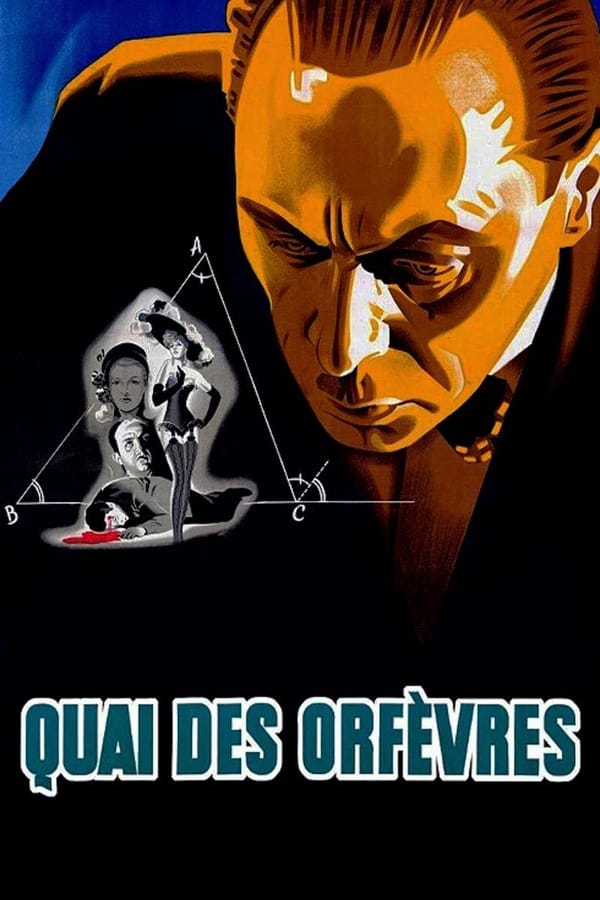
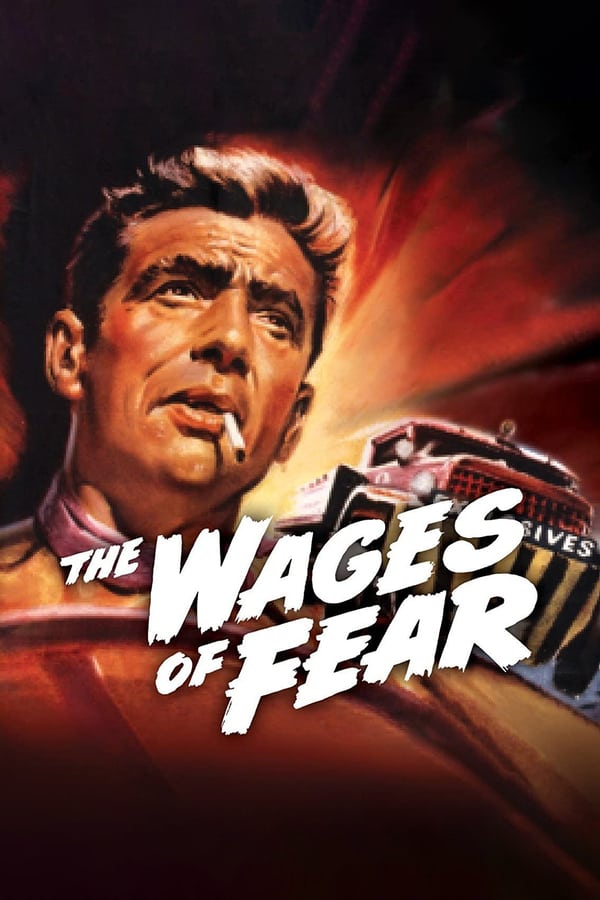
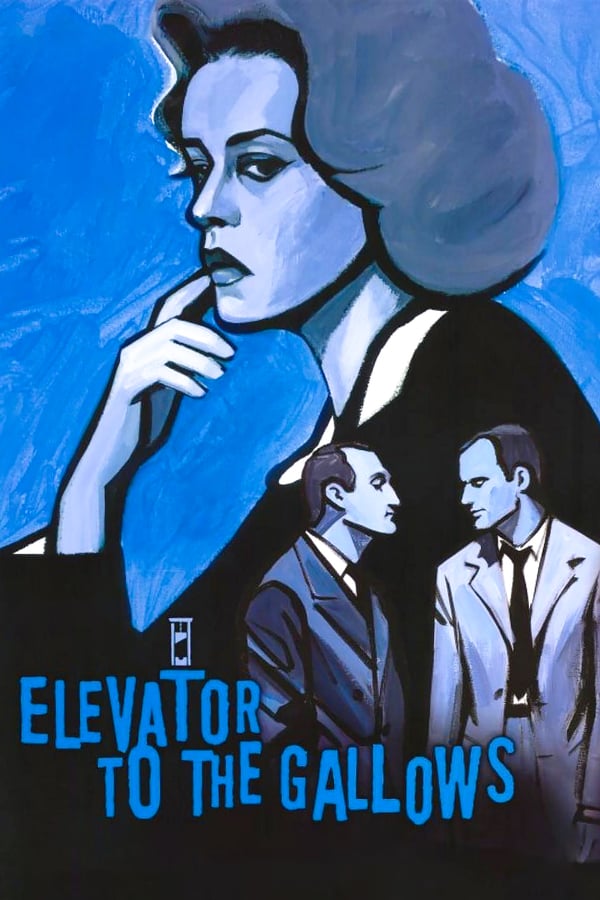
I was originally going to watch just a set of French language films, but I enjoyed this first film from director Marcel Carné so much, that I decided to check out some of his other pictures. Carne lived from 1906 until the ripe old age of 90, dying in 1996. He started during the silent era as an assistant, and learned from some of the greats in his early career, including René Clair and Alexander Korda. Coincidentally, 5 of these 6 pictures came from the same screenwriter as well (Jacques Prévert).

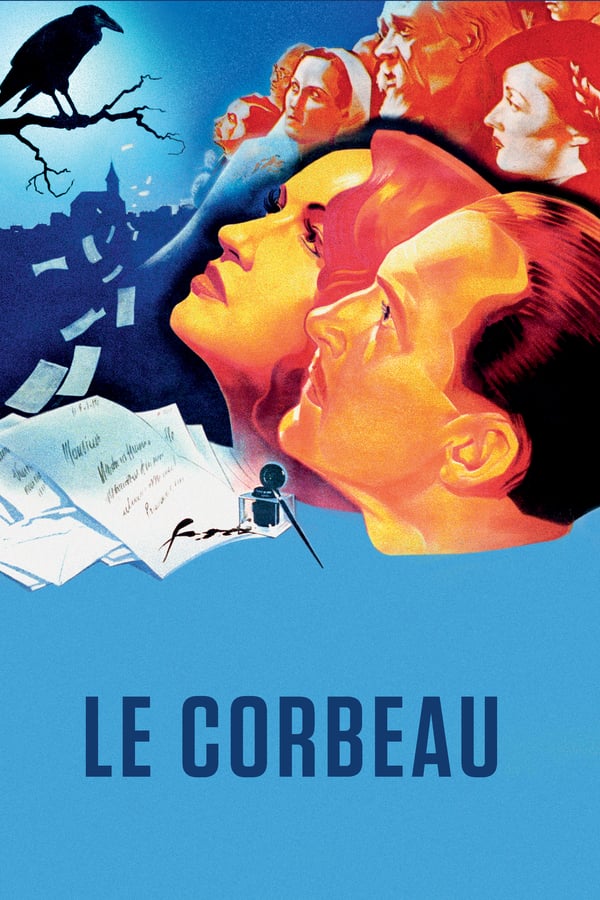
Les Portes de la nuit (Gates of the Night) was released in 1946 and takes place in early 1945, in a Paris that has just been liberated and getting used to being a free nation again, while the war in Germany is still raging. It depicts one long night on the streets of Paris, where worlds collide among many characters, and Destiny himself, in the guise of a vagabond, roams the avenues. There’s a good 8-10 players involved, whose lives intertwine in a multitude of ways, though they might not know it from the start. Included are some old war buddies, one of whom falls in love-at-first-sight with a girl, who is returning to France to see her estranged father and brother, the father who owns the building they all live in, and the brother who ratted on one of the aforementioned soldiers to the gestapo during the war, etc. Lines like these criss-cross throughout, but don’t stress; it never feels convoluted, and is easy to follow. Against the backdrop of a shelled out Paris, and with smokey haze rising from the evening and then pre-dawn streets, the film could easily stray to the very dark, but humorous dialogue and engaging characters keep it from feeling like a dirge, despite an obvious feeling of loss of hope in a dark world destroyed by war. It is a delightful film, and I’m excited to see more of Carné’s works! Incidentally, this film’s most lasting legacy is it introduced the song Autumn Leaves, which would go onto become a much-recorded jazz standard (and show up in the film La La Land decades later). ★★★★

I next went back in time to before the war, with 1938’s Hôtel du Nord. Once again, a lot of characters, this time floating around the eponymous hotel. Renée and Jean are a pair of star-crossed lovers who check in for one night, with the intent to Romeo and Juliet themselves to be together forever. Pierre shoots Renée in the chest, but chickens out when it comes to offing himself. A hooligan living down the hall, Edmond, breaks into the room upon hearing the gunshot, but lets Pierre sneak out the window before the police arrive. Renée survives, and awakens in the hospital a few days later. Upon being released, she returns to the hotel to collect her belongings, and finds out Pierre turned himself in to the police while she was out. With nowhere to go, Renée takes a job at the hotel to await Pierre’s release from jail, but her presence sends cracks through the establishment, with a smitten Edmond chasing after her and dumping his prostitute girlfriend (who also lives at the hotel), as well as other suitors who frequent the area. The story isn’t as tight as Les Portes, but the wordplay is still very good (especially from the prostitute Raymonde) and if, like me, you like a good tale, this is still a very enjoyable picture. ★★★

Also released in 1938 was Le Quai des brumes (Port of Shadows). Though it predates what we consider the classic film noir era, it very much has that kind of feel. Jean (Jean Gabin) is a deserter from the French military and is looking to get out of the country before he is discovered. Unfortunately he has a night that is anything but quiet. In the port city of Le Havre, he finds himself embroiled in a mystery involving a group of thugs looking for a newly-missing man named Maurice, Maurice’s girl Nelly (Michèle Morgan), and Nelly’s godfather Zabel (Michel Simon), who has more than paternal feelings for Nelly. There’s some sinister acts in play, and while Jean just wants to get out of dodge, he is swept off his feet by the beautiful Nelly and her plight. I can’t say more than that for fear of giving away some of the fun. The twists and turns are completely compelling, and while the ending doesn’t quite live up the greatness of the rest of the film, it’s still a satisfying and gripping murder mystery for fans of the noir genre. Near perfection, with a bit of deduction for the uneven finale. ★★★★

Le jour se lève (literally The Day Rises, but usually translated as Daybreak) also stars Jean Gabin, this time as François. The film starts with him having killed a man at his own apartment building, and then barricading himself in the room against police. We then get a series of flashbacks over the previous few months, leading up to today’s events. He had begun to date a young woman named Françoise, who shared several similarities besides the name. François finds though, that she’s been seeing an older man on the side. François starts dating the older man’s wife (no love between the two, both are doing it for revenge it seems), and this love triangle plays out in the rest of the film. Between the flashbacks, François engages in shootouts with the cops, while his neighbors are interviewed about his nice and accommodating François was before today. The film is ok I guess, though the plot isn’t as intriguing as the first trio of films I saw, and Gabin seems to ham it up at times in this picture. Characters are pretty shallow too, so there isn’t as much to grab on to as a viewer. ★★

Les visiteurs du soir (The Visitors of the Night, or more often called The Devil’s Envoys) is an absolutely charming film about the power of love. Released in 1942 when Paris was under Nazi occupation, and fearing his usual kinds of movies wouldn’t make it past their censors, Carné went back in time and did a fantasy historical picture. In 1485, a musical duo, Gilles and Dominique, have made pacts with the devil to sow jealousy and discord. For their newest assignment, they are riding up to a castle to seduce the the bride- and groom-to be’s. Dominique performs her role well, getting both the groom and bride’s father to fall in love with her, but Gilles unexpectedly falls in love with the bride himself. The devil can’t stand to let this one go, and shows up to the party to make sure things go his way. It is a wonderfully rich and enthralling story, with superb acting all around. Though it’s an old film in the 4:3 format, it is shot beautifully and grandly, evoking the wide open spaces of the castle galleries and surrounding countryside. Who doesn’t love a good love story? ★★★★½

Released in 1945, Children of Paradise is considered Marcel Carné’s masterpiece. It is a 3 hour epic historical film, about an astoundingly beautiful woman named Garance, and the four men who love her. These include Baptiste, a very talented mime actor; Frédérick, a crowd-pleasing actor; Lacenaire, a criminal; and introduced halfway through the film, Édouard, a rich Count. Garance cannot pick between her suitors, not because she is unable to decide, but because she refuses (or is unable) to give love to any one person, and refuses to be “owned” in such a way. Baptiste is a dreamer, pining away for Garance despite having another woman, Nathalie, who loves him wholeheartedly. Frédérick does bed Garance, but he is frivolous in both love and money, and treats it all as a game. Lacenaire wants to own Garance like a stolen jewel, and the jealous Édouard doesn’t care if his love is returned, as long as Garance doesn’t love anyone else. Garance is forced to choose a man when she becomes a suspect in a crime, and relies on Édouard’s power and influence to keep her safe. The second half of the film fasts forward several years, after which Garance has been traveling the world with Édouard but finally returns to Paris. Baptiste has married and started a family with Nathalie, and has become a sensational mime actor with rave reviews. Frédérick is still the ladies man, and while the critics don’t like his performances, he plays to the crowd and sells out his shows (though he admits to himself that Baptiste is the better actor). When Baptiste learns that Garance is back, it threatens his entire life, and Lacenaire shows up to muddle matters as well. This is a supremely great film, with moving performances by all of the leads. Every one of the five main characters, as well as Nathalie and the others, is perfect. It is a powerful and emotional film; if it had been in English, I think it would be right up there with some of the great classics that are household names in this country. As it is, it is considered one of the best films ever to come from France, and if you look at that long history of cinema, that is saying something. ★★★★★

Quick takes on 5 Kiarostami films

I’ve heard a lot about Iranian film director Abbas Kiarostami, but have never seen anything from him before. Time to rectify that, starting with Where Is the Friend’s Home?, released in 1987. It’s a very quiet picture, one of those films where the journey is more important than the destination. The plot is simple: Nematzadeh keeps getting in trouble at school for leaving his workbook at home, and finally the teacher threatens expulsion if it happens again. That night, his deskmate, Ahmed, realizes he’s taken Nematzedeh’s workbook home with his stuff. Wanting to save his friend from trouble, he goes to find him, but unfortunately, he only knows that he lives in the next village over. Taking place in the rural Iran countryside, where life is simple and the year could be anything from 1887 to 1987, Ahmed must deal with adults who don’t listen to his voice, to other kids who may or may not be the most willing to help, to his own parents who try to keep him busy with what they think is best. This is one of those films which is best viewed with a quiet mind, and just let it wash over you. Though Kiarostami has been around a lot longer, it reminded me a lot of Nuri Bilge Ceylan’s films. There’s nothing that grabs you and shakes you to pay attention to, but nevertheless it sticks with you long after it’s over. ★★★★½

Three years after Where is the Friend’s Home?, northern Iran was hit by an awful earthquake. In And Life Goes On (also called Life, and Nothing More), a man is traveling, with his young son, through this area. At first, we aren’t aware of his destination, but we learn after awhile that the man is a fictionalized version of director Abbas Kiarostami, and he’s trying to get to Koker to see if the young actors from the first film have survived the devastating earthquake. Having the son present adds some of the same “through the eyes of a child” aspect as the first film, but as the title suggests, it is overall more about the perseverance of the people of this region, dealing with the loss of loved ones, and in some cases, their homes and all of their worldly goods. The movie plays out as a quasi-fictional documentary, with “the director” stopping to chat with survivors on his way to Koker, asking about the boys he’s searching for, but also just getting an idea as to what the people have been through. The people he’s talking to are actors of course, but they are also legitimately from this area (as were the characters in the first film), and have recently survived the earthquake themselves, so the film hits hard in multiple ways. Another beautifully soft and touching film, showing people coming together to face tribulations as one. ★★★★

Ok, stay with me on this one, because for Through the Olive Trees, the final film in this “trilogy” of sorts, Kiarostami pulls back multiple layers for the viewer. A new actor introduces himself to us in the opening monologue, and states he will be playing the part of the director this time. He is outside Koker to film a movie, and we learn later that the film he is making is in fact And Life Goes On. Besides the (new) director, one of the main characters this time is a man, Hossein, who was interviewed by the (first) director in the previous picture. In the film, Hossein plays a man newly married to a woman named Tahereh, though outside of the film, Hossein’s advances have been rebuffed by Tahereh and her grandmother, who doesn’t condone the relationship because Hossein is just a laborer and not educated. Between film takes, Hossein tries to coax Tahereh to give him a chance, but of course, as a viewer, we know all of this is a “picture within a picture” anyway, since the (new) director told us as much in the opening sentences. It might sound confusing, but it is no less heartful of a picture, and the final scene is one of the most (joyous? heartbreaking? depends on how you decide to take it) wonderful moments I have viewed recently. Absolutely pure cinematic perfection. ★★★★★

In 1989, Abbas Kiarostami read in the paper about a man who was arrested for impersonating another Iranian film director, Mohsen Makhmalbaf. The accused, Hossain Sabzian, had tricked a family into giving him some money and said he was going to cast them in his next picture, but to the reporter he claimed to not do it for the money, but only because he loved film, idolized Makhmalbaf, and liked the attention. Kiarostami reached out to everyone involved in the case, and made a movie about it, but in a very non-traditional way. Everyone in Close-Up plays themselves, from the perpetrator, to the family he tricked, to the police, to the reporter, and even the judge in the case. They all reenacted scenes before and after the arrest, but in a wild twist, the judge gave Kiarostami access to the court trial, allowing him to ask questions to the defendant and accusers during the trial. All is shown in the movie. It’s a fascinating way to make a film, and it received critical acclaim around the world, but I found the film much more dry than the previous trio. I can appreciate the art, but the final product was left wanting in my opinion. It definitely blurs the lines between fact and fiction, so it was interesting to watch for that reason. ★★½

The director made another (in my view) masterpiece with 1997’s Taste of Cherry. Like the Koker trilogy, it is a very simple film about the interactions between people (I’ve realized this is an important tenet to Kiarostami’s films). A mostly-unnamed middle aged man has decided to commit suicide. He’s already dug the grave in the hills outside Tehran, and spends the day driving around looking for someone who will bury him after he does the deed, because in his faith, he must be buried in the ground. However, Islam forbids suicide too, so he’s having a hard time finding someone to agree to the job, even when offered a large sum of money. Throughout the film he picks up three walkers to try to get them to help in his quest: a young, shy soldier; a religious student currently attending seminary; and an older man who, coincidentally, also contemplated suicide once upon a time. The film is slow, but for those with patience who will let the film experience happen naturally, it is a profound and poignant look at the psyche of man. Though we never learn why our main character has chosen this path, we learn from him and those he talks to about the differing views of the world around us. ★★★★½