
For this set, I watched five movies directed by five of the great French directors.
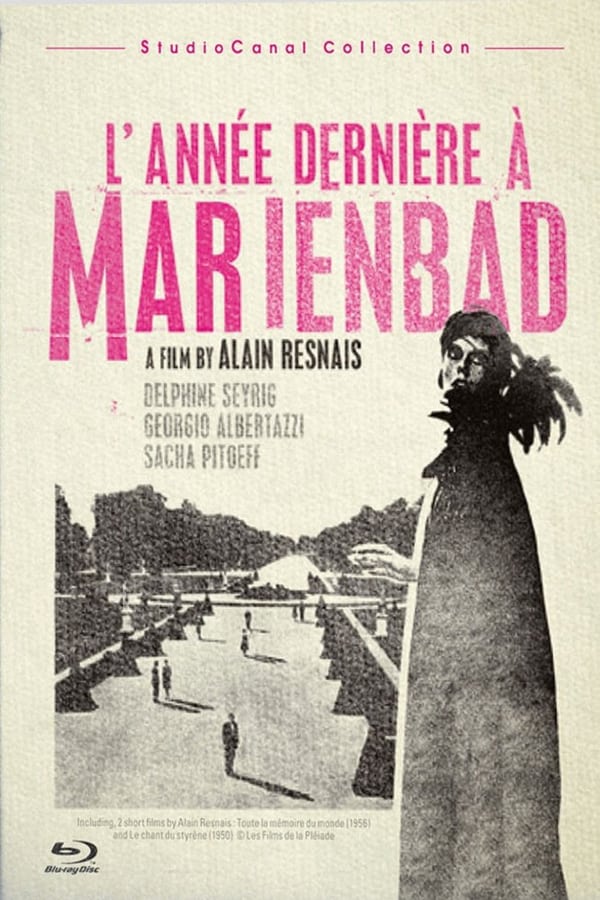
Alain Resnais’ Last Year at Marienbad is as divisive a film as there is. The main plot is about an unnamed man trying to convince an unnamed woman that they fell in love a year ago “at Karlstadt, at Marienbad, or at Baden-Salsa, or even here, in this salon.” She spends much of the film arguing that they’ve never met, despite all of the evidence he presents. However, this not a linear movie with a cut and dried story. It is told in flashbacks, in memories, with quick 5 second or 5 minute scenes, sometimes in the past, sometimes the present, and you never know which. Some scenes are told and retold several times, but like a fuzzy memory, each time is subtly different, with a different phrase here, or an object in the room out of place there, or maybe even the setting has completely changed. The near constant background organ music, like the film, leads nowhere and everywhere at the same time, and when it stops suddenly at various points, it grabs your attention more than any explosion in an action movie could (it seems the musical phrases don’t conclude until the finale of the film itself). Many people will hate this film, whereas many, myself included, will be mesmerized and awed by it. There are enigmatic movies which can be viewed several times to answer questions you might not catch the first time, this film however is one where subsequent viewings may just lead to more questions. One of my favorite films I’ve seen for quite some time, and certainly one of the most well written cinematic pieces I can recall.
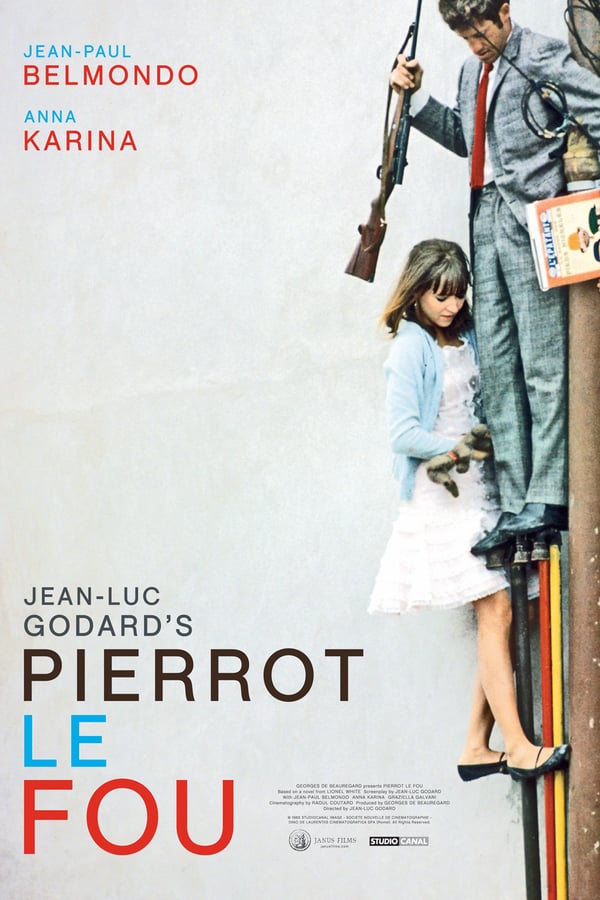
Pierrot le Fou is another esoteric film, this one by Jean-Luc Godard. Early in the film, Ferdinand Griffon leaves his wife and child for young hottie Marianne Renoir, who gives him the nickname Pierrot, meaning sad clown, which Ferdinand hates. Despite their differences (Ferdinand is a poet and thinker, Marianne is a carefree risk-taker), the two go on a Bonnie and Hyde-esque crime spree together, starting with the killing of a man for his money ($50,000). Chased by gangsters across France and the Riviera, the duo are able stay one foot ahead for most of the film, until finally Ferdinand is caught and tortured to give up Marianne’s whereabouts. Unbeknownst to Ferdinand, Marianne has abandoned him and fled to safety on her own. When they come together again, she again leads him on in another plot to steal $100,000 this time, though he wises up in the end, to the detriment of everyone involved, and Ferdinand indeed lives up to his nickname. The whole film is told as if it is a story, with voice-overs throughout filling in backstory and catching the viewer up on events that happen off camera, and Ferdinand and Marianne even break the fourth wall from time to time to talk to the audience. Part zany caper, part love story, it is ultimately a very personal and touching movie, that feels as real today as it did when it came out in 1965.
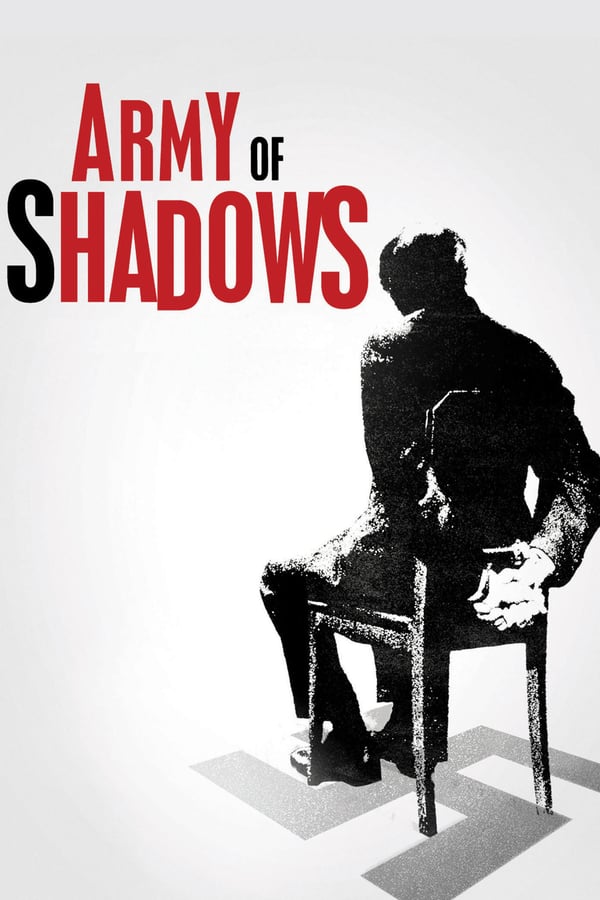
Many consider Army of Shadows to be influential director Jean-Pierre Melville’s greatest work, though it wasn’t very well regarded until years after his death. Based on the book of the same name detailing a member’s experiences in the French Resistance during World War II, this film focuses on a small group in the resistance. There are no explosions and very few action scenes, instead, the film focuses on the intrigue of evading the gestapo, and what happens when members are captured. Dealing with escape attempts, suicide pills, betrayals, and the faith in what you are doing is making a difference, even if you can’t see it, this is a tragic film that unfortunately doesn’t have a very happy ending. There are certainly tense moments and it is inarguably well written and directed, and the viewer feels the plight of these resistance fighters, who seem only a hair away from complete failure at all times, but I found it to be just too slow for me. The pace of the film goes along at a crawl, which ultimately makes the profound moments more so, but still is a challenging film to sit through.
The Last Metro also takes place during the war, though with a more personal story. Directed by Francois Truffaut, it’s not really a “classic” because it came out in 1980, but since that was the year of my birth, and I turned 38 this week and am feeling a bit old, I decided to classify it as a classic today. Marion Steiner is running a theater in occupied Paris, having taken over for her Jewish husband Lucas who has gone into hiding. She is putting on a production of a new play, and hires Bernard Granger as the lead, with herself as the main actress. No one in the production is aware that Lucas has not run off, but instead is being hidden in the basement of the theater. As they rehearse, Lucas gives instructions to Marion at night, which she relays to their director as her own ideas. Everyone in the cast and crew are staunchly patriotic, but they hide their feelings as the gestapo are increasingly looking for anti-Nazi messages or deeds. Very well acted by the leads Catherine Deneuve and Gerard Depardieu, there are nice moments for sure, but I couldn’t quite get wrapped up in their plight, whether that was the fault of the script or something on my part.
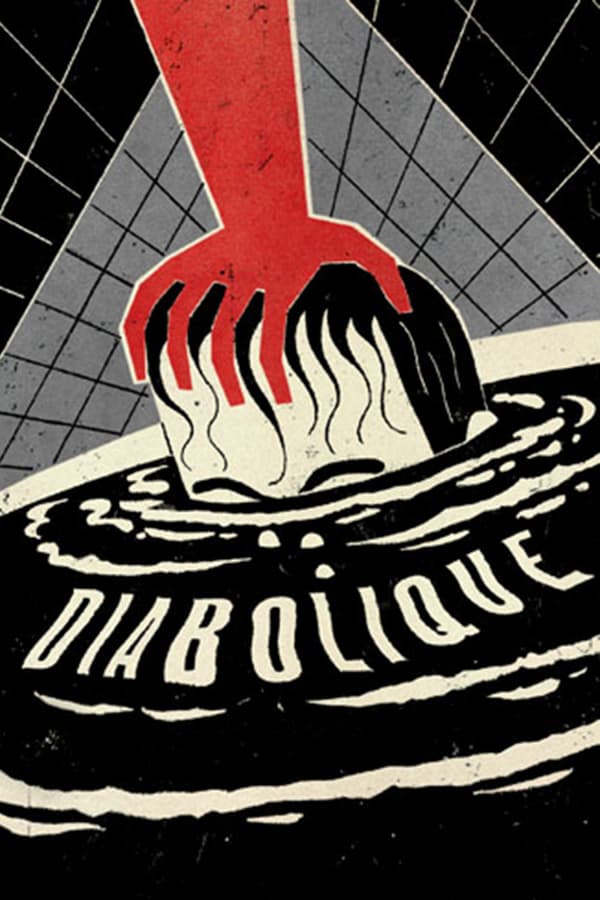
Diabolique is a 1955 psychological thriller directed by someone known for his work in this genre, Henri-Georges Clouzot. It is about two women, Christina Delassalle (Vera Clouzot) and Nicole Horner (one of France’s greatest actors, Simone Signoret). Christina owns a boarding house where Nicole is a teacher, and they are linked by Christina’s husband Michel (Paul Meurisse), who beats Christina and sleeps with Nicole on the side. Nicole hatches a plan to kill Michel, which they pull off near the halfway point of the film, and end up dumping his body in the pool at school. A few days later though when they come up with an excuse to have the pool drained, they find that his body is gone. What follows is a mind trip, where the duo don’t know if Michel is dead or alive, and if alive, what he will do. A little slow in the beginning, but the payoff in the second half is well worth the wait.


6 thoughts on “Quick takes on 5 CLASSIC FRENCH films”