Today, I’m checking out a few films from influential Italian director Vittorio De Sica. He was a leader in Italian neorealism, a film movement focusing on the poor and working class (often with nonprofessional actors). Maybe not a household name outside of film circles, De Sica was hugely popular in his day. Two of the films below were awarded special honorary Oscars before there was a foreign language category, leading to the creation of the category in 1956 (and De Sica would win two of those as well!).
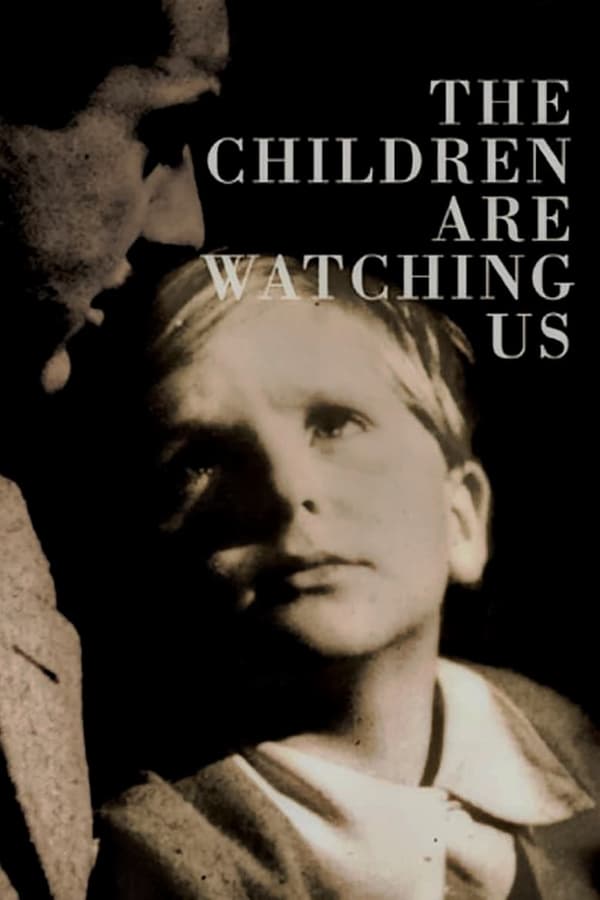
First up is 1943’s The Children Are Watching Us (Italian: I bambini ci guardano). The film revolves around a young boy, Pricò, caught up in a terrible moment in life: the falling apart of his parents’ marriage. Nina has been running around on her husband, Andrea, with a dashing young man named Roberto. Roberto has convinced Nina to finally leave her family for him, and she does, leaving Pricò devastated. He gets sick a few days later, and only then does Nina return. Andrea isn’t happy with her return, but he tries to make it work for Pricò’s sake, doing his best to forgive and move on. He proposes a beach vacation to liven everyone’s spirits, and they do seem to fall into a comfortable relationship with each other again. However, when Andrea has to leave a couple days early for work, and Roberto shows up at the beach, Nina can’t help herself but go back to her lover. When they return home, Nina sends Pricò up to their apartment from the cab, and leaves the family once again. But Pricò will get the final say in how his life will be lead before the end. It’s a very nice film, funny in the beginning and heart wrenching in the end, with better-than-expected acting from young Luciano De Ambrosis as Pricò. ★★★½
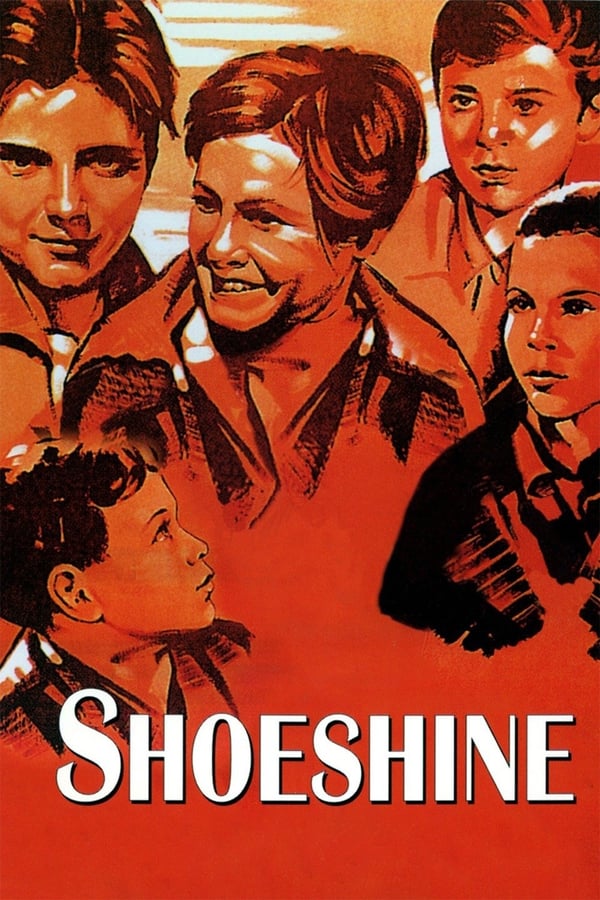
Shoeshine (Italian: Sciuscià) is a post-World War II film, again focusing on youth. Giuseppe and Pasquale are best friends working the streets as shoeshiners with a goal in mind: they want to buy a horse. Pasquale is an orphan living on the streets, and while Giuseppe has good, caring parents, they are poor. Unfortunately this duo are ripe targets for an older gang with a robbery in mind. Giuseppe’s older, no-good brother tasks them with selling blankets to a widow. When the blankets are delivered, the gang storms in pretending to be cops, and robs the widow when her attention is turned. When she goes to the real cops, they are able to round up Giuseppe and Pasquale and she ID’s them, thinking they are the thieves. The cops know how these things work, and know the boys aren’t the masterminds. But the boys aren’t squealing. They get sent to juvenile hall, and have to learn the ropes on the inside, even as the cops continue to turn the screws to find the real culprits. Don’t expect a happy ending in this one. De Sica does a fantastic job of painting the plight of the poor, who have little to stand on other than their honor and friendship. ★★★★
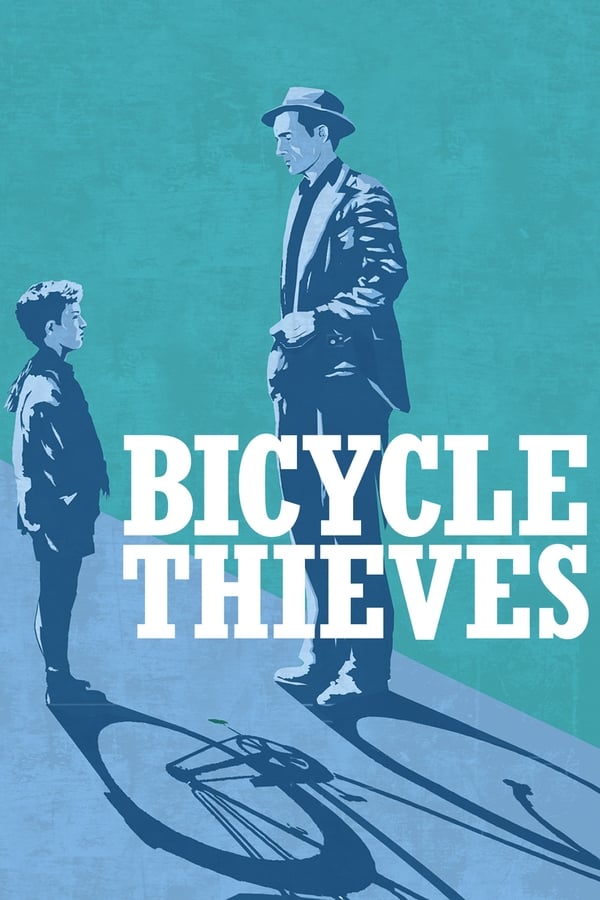
Bicycle Thieves (Italian: Ladri de biciclette) is just about the perfect film. It follows a man named Antonio Ricci who, like so many after World War II, is struggling to support his family in the poor economy. He wins the lottery, so to speak, when he is chosen for a job putting up posters around the city. It’s a menial job with not much pay, but he is thankful for it, as his wife and son, Bruno, are close to starving. Unfortunately, he is chosen for the job because he has a bicycle for transportation, and he’s just pawned it. His wife goes into action, gathering the sheets off the bed, cleaning them, and pawning the sheets to get the bike back, saying, “You don’t need sheets to sleep.” Antonio gets his bike out of hock and shows up for his first day of work. His good luck ends there. While up on a ladder, a thief steals his bike, and escapes before Antonio can chase him down. He goes to the police, but they do little more than record the serial number of the bike and tell him good luck. The next day, Antonio and his son Bruno head out to comb Rome, in vain search for the bike or the thief who stole it. This is not a feel-good story, but it is highly emotional and brutally honest in its portrayal of a down-and-out man who will do anything to keep his family alive. The views of a city on the losing side of the war, with an unhelpful police force and a multitude of citizens starving, is harsh to see. In that way, it presents also a wonderful time capsule, as Antonio wanders around Rome and all of its people. ★★★★★
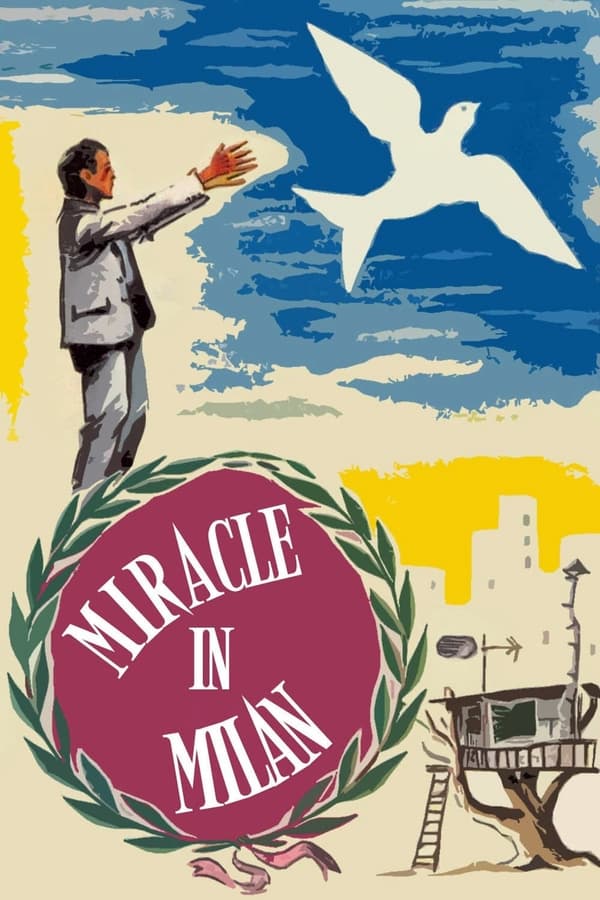
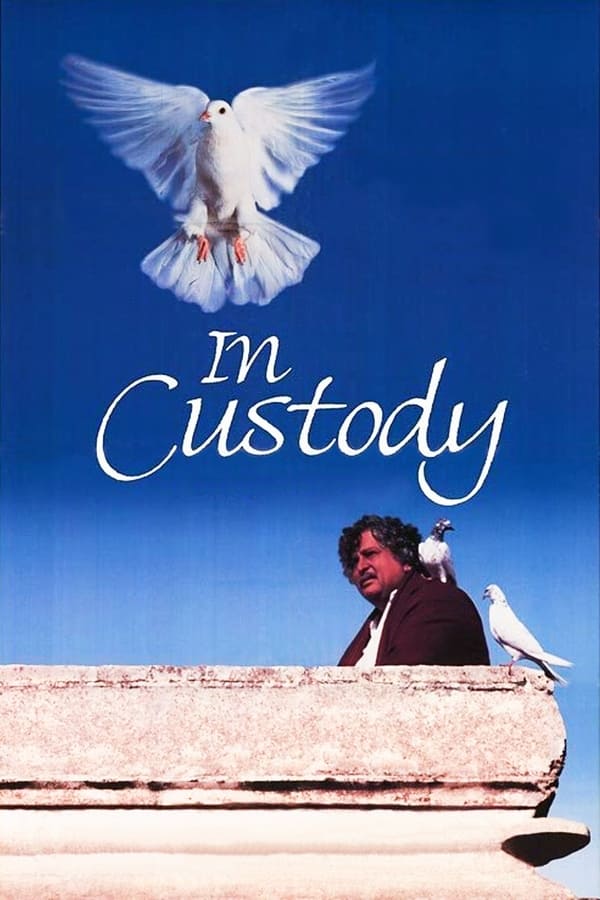
If Bicycle Thieves leaves you feeling that there is no hope in the common man, Miracle in Milan (Italian: Miracolo a Milano) does the opposite. In this film, De Sica drops the realism and goes for the fantasy. Totò is abandoned as a baby, raised by a kind old woman for a few years until she dies, and then in an orphanage until he’s an adult. With his hard life, he should be jaded, but before she died, his adopted mother taught Totò to be an eternal optimist; not only did she literally not cry over spilt milk, she made a game out of it. So when Totò is out on his own, and finds himself in a shantytown, he makes the best of it. Totò goes around organizing his fellow homeless, and changing the area from a haphazard scattering of tents and lean-tos to a small self sufficient city made up of cast-off lumber and metal. Families now feel safe and people come together to help each other. Things are good, until oil is found under the land, and a wealthy entrepreneur wants to kick the homeless off the land. Totò’s salvation comes in the form of a magic dove, bequeathed to him by the ghost of his dead mother, which allows Totò to grant wishes to his fellows in need. At first, human greed takes over, and people wish for nice clothes, riches, etc., but eventually they come to see Totò’s outlook on life, and turn back to what made their self-built city so good in the first place. Wonderful story, a bit Fellini-esque at times, with a much different feel from the other De Sica films I’ve seen to this point. ★★★★½
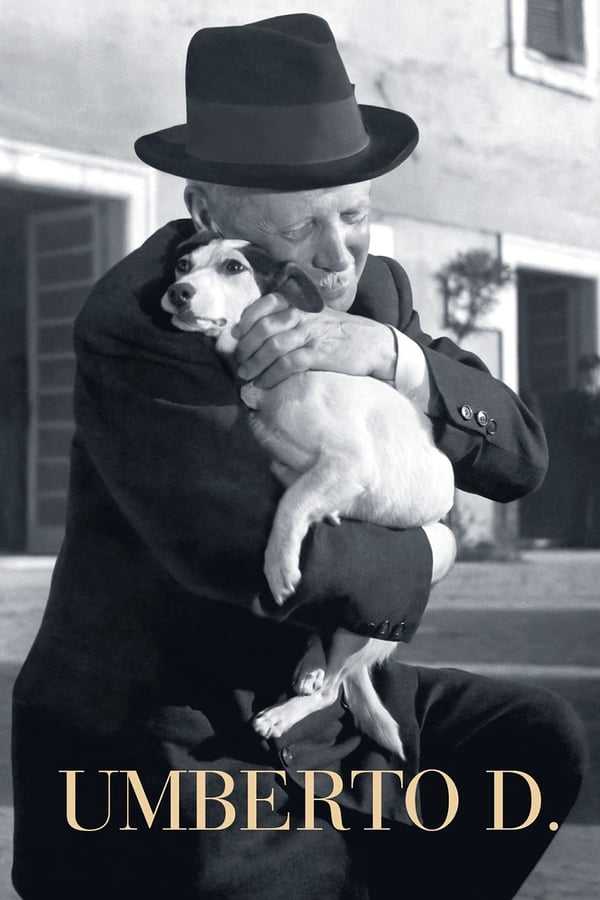
The above films focused on younger people; even in Bicycle Thieves, the perspective of Antonio’s son plays a huge part. In Umberto D, the narrative switches to the older generation, whose struggles are just as real in the current economy. Umberto Domenico Ferrari worked in public works for 30 years, but is now long retired with nothing to his name but his trusty dog Flike. On his pension, he can barely pay his rent, and his landlady is just looking for an excuse to evict him. Outside of old coworkers he bumps into on the street from time to time, his only friend is Maria, the boarding house’s maid, but she has her own problems. She’s pregnant, but doesn’t know which soldier is the father. As the movie progresses, Umberto edges closer to homelessness. Less a movie about the loss of money and options, it is more about a man’s loss of dignity. It’s an age old question, and one with fewer answers today than in 1952. With an aging population that is living longer than ever, countries are going to continue to face problems on how to treat them well and support them in their twilight years. ★★★★
- TV series currently watching: Black Lightning (season 4)
- Book currently reading: Honeysuckle & Pain by Mark Danielewski