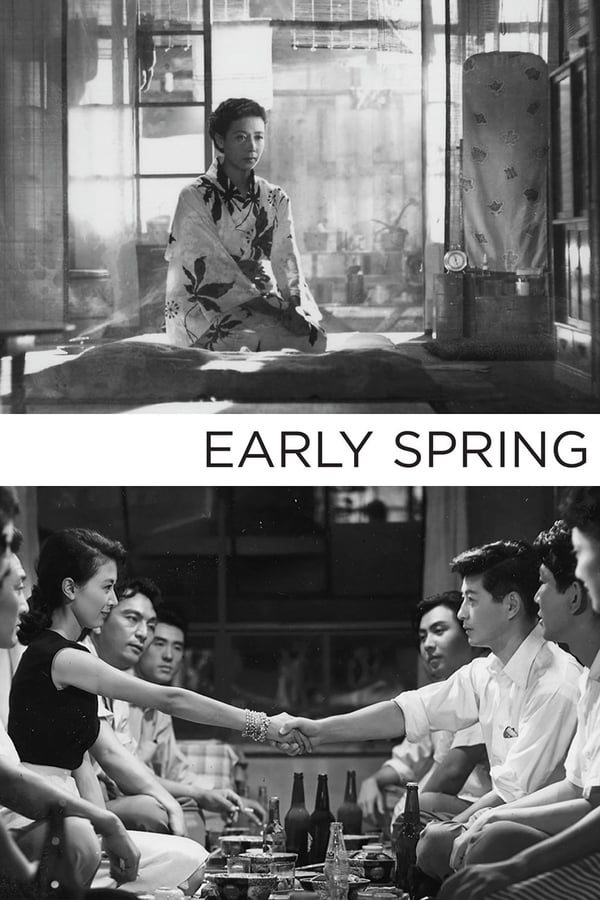
I’m still digging my way through celebrated Japanese director Yasujirō Ozu. Late last year I watched some of his earlier films, now I’m watching some of his last. (I’m still saving some of biggest hits; I always was one to save the best for last.) Early Spring came out in 1956, and is a quiet film about a white color worker named Sugiyama, or Sugi to his friends. He’s married to Masako, but they’ve been on the outs for awhile, though the viewer doesn’t know what caused the riff for quite a bit. Sugi doesn’t treat her great, taking her cooking and cleaning for granted, while he goes out at night after work to drink with his coworkers or friends from the war. In these late night haunts, he starts hanging around a girl from work, nicknamed Goldfish by the boys, because of her big eyes. Goldfish and Sugi begin an affair, and Masako, who knows her husband, suspects something immediately. There’s no big fireworks in this film, only a few little sparklers. The movie is mostly about the relationship between the married couple, and whether they can (or want to) survive the affair. Really intimate film, but honestly I couldn’t grab onto it as much as I should have. It’s a long movie at nearly 2 1/2 hours, and it felt like it. ★★
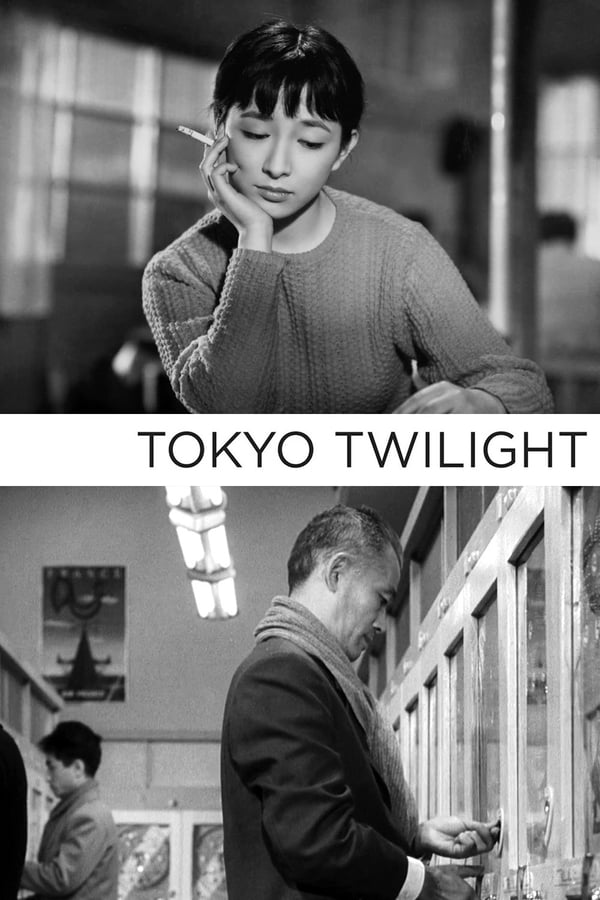
Ozu followed up with Tokyo Twilight the next year. This film mostly centers around a small family in busy Tokyo. Takako is the eldest daughter. She’s been unhappy in her marriage and has returned to her father’s, Shukichi, house with child in tow. Takako’s younger sister, Akiko, is still living at home while she attends college, and has been following a rebellious streak. Akiko has been hanging out in mahjong parlors and bars, following after her boyfriend Kenji. Shukichi’s wife, and the girls’ mother, is not in the picture, but she isn’t dead, and that is part of the mystery solved before the end. Akiko has been trying to hunt down Kenji, who has disappeared in the beginning of the film, and is avoiding her. We learn that Akiko has become pregnant, and is trying to find Kenji to see what she should do. This movie is definitely lacking the wholesome feel that often pervades Ozu’s pictures. Though still centered around the family, it is a much darker film, and I loved it. It pulls you into Akiko’s plight and all of the characters are intriguing in their own way. When the mother is revealed, and the part she plays in the finale, it is such a heart stopping moment (and not in a way you’d expect from Ozu!) that I was dumbstruck. ★★★½
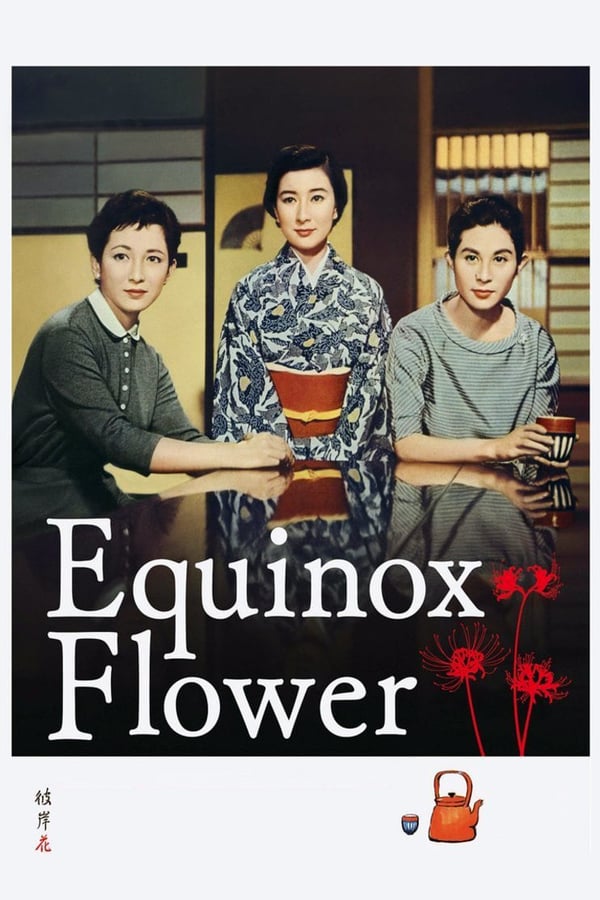
Equinox Flower was Ozu’s first color film, released in 1958, and is much lighter in tone than Tokyo Twilight. It follows the Hirayama family, and particularly its patriarch, Wataru. Wataru is a successful businessman with a wife and two daughters. While his wife is getting anxious about seeing their eldest daughter, Setsuko, married off, Wataru seems to be in no rush. Setsuko is a modern woman, dressing in western clothes and working on her career. One of Wataru’s old classmates approaches him to act as an intermediary with his own daughter, Fumiko, who has left the household and is planning on marrying a man of her own choosing, against her father’s wishes. Wataru meets with Fumiko and sees that she is happy, and sides with her against his old friend. But when the same situation comes to his own family, with Setsuko deciding she wants to marry a man from her work, Wataru isn’t as accepting. It’s a cute little movie, with lots of comedy, in stark juxtaposition to the previous film. It shines a light on the changing traditions in Japan in the 1950s, as it continued to be influenced by western ideas and the abandoning of local customs. ★★★
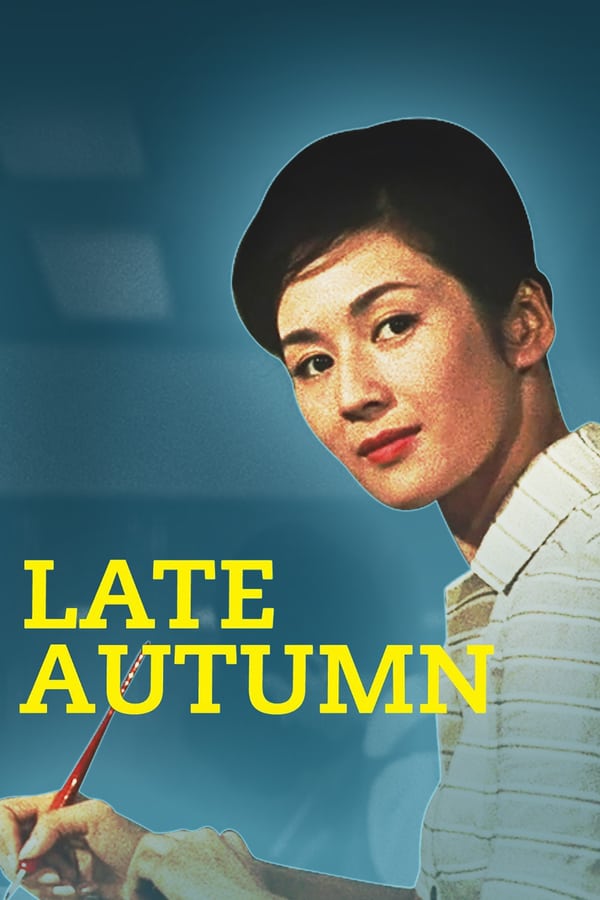
Late Autumn is about three older men, former classmates who’ve stayed friends over the years, who take it upon themselves to meddle in a woman and her daughter’s affairs. The woman, Akiko, is the widow of a fourth classmate of the men, who passed away a couple years ago. The trio want to see Akiko’s daughter Ayako, a very beautiful young woman, married to a nice man who will take care of her, but Ayako seems reluctant to leave her mother alone in the house if she were to marry and move away. So the men decide to get Akiko married first, which would open up Ayako to then marry as well. It’s a funny concept, and there are some nice moments, but this movie is awfully repetitive. Conversations go round and round about the same subject, really drawing it out and seemingly going on forever. It has a lovely, poignant ending, very Ozu, but that only makes up so much headway against an otherwise soft offering. ★★

The End of Summer is also more light-hearted fare. The aging patriarch of a large family, Manbei, has been sneaking away for awhile to see his former mistress (his wife is long dead), and the adult children do not approve when they find out. Much like Late Autumn, there’s also a plot to get the elder women in the family married off. If I had seen this film on its own, I may have enjoyed it more, but there are a few too many similarities shared with Late Autumn (including many of the same actors!) and it started to feel like a rehash. And this might be sacrilegious, but I couldn’t stand Setsuko Hara, who played the eldest widowed daughter in this film, and Akiko in Late Autumn (as well as Takako in the above Tokyo Twilight). She smiles through every scene, with no range of emotion, and delivers dialogue with that constant grin. It was off-putting and strange. She’s the star in one of Ozu’s most heralded pictures, Tokyo Story, which I have not seen yet, and I hope she’s better in that movie than in this one. ★★½
- TV series currently watching: Mare of Easttown
- Book currently reading: The Elfstones of Shannara by Terry Brooks


I can appreciate the ennui a viewer might feel watching each of these family dramas back to back; the similarity of the tone and themes, not to mention the performers, can leave a sense of sameness. It’s far better to approach them intermittently, I think.
I think I like The End Of Summer more than you; I enjoyed its comic tone, mostly. Ganjiro Nakamura is perfectly cast as the aging rascal who has to elude his snooping adult children to see his girlfriend. And yet he’s really not such a rascal, is he? Sure, they’re all scandalized by what they see as goatish behavior, but fer cryin out loud, the guy just wants to enjoy the company of a woman who genuinely likes him and treats him well. Better than his own kids do. To me, she’s the heroine of the movie. And that in the end becomes apparent to the adult children, who see, when they arrive at her place after he dies, that she really did care about him. That scene always gets me. It’s very poignant, Ozu at his strongest.
Re Hara and the endless smiling. I’ll admit – it does seem incongruous given the subject matter. She does seem one-dimensional in this movie, more so than in others, but I have to consider that everything in Ozu is as he specified. He was not one of those directors who had his actors interpret freely in front of the camera. (Apparently Polanski is the same way.) So I have to consider this is the performance he wanted, meaning that the character Hara plays is always displaying a placid and bland air. I suppose that’s in apposition to the other characters. It would be a mistake to draw the conclusion from this that Hara is a limited performer; in “Late Spring”, what I think of as Ozu’s greatest work, she”s overpowering. She and Chishu Ryu take what could be an overheated melodrama about marrying off a daughter (yes, a perennial topic in late 40s-mid 50s Japanese cinema) into a stratosphere of subtlety and emotional depth. It’s something that stays with you long after you’ve seen it. “Tokyo Story” tends to get more plaudits by comparison, and i wouldn’t say those accolades are undeserved, but “Late Spring” is no less an achievement. Both have emotional gut-punches in them, but they do so in vastly different ways, and with different subjects. I’m looking forward to reading your take on them.
LikeLike
I appreciate the thoughts. And I’ll have to return to The End of Summer at some point in the future, by itself, to come at it with fresh eyes. Thanks!
LikeLike