Quick takes on F9 and other films

Kuessipan is a French Canadian film, following a high school senior named Mikuan. Mikuan is of the indigenous Innu people, living in Quebec on a reserve, and while many of her people live and die there, she dreams of something more. Her lifelong friend Shaniss is following the same life track that many in their poorer community do: she’s dropped out of high school, had a baby young, and is just scraping by with her boyfriend. Mikuan, however, wants to go to college, a goal she doesn’t dream of sharing with her family. Mikuan starts to fall for a white (non-Innu) boy at school named Francis, and some in her family see this as already going against the traditions of her people. It would be easy to make this film wrong, and show it as a girl trying to break out from old, shackled conventions and beliefs, but the filmmakers do a great job of showing both sides of the coin. Yes, Mikuan doesn’t want to stay on the Innu land forever, but the people aren’t shown as backwards, just proud of their heritage and tradition. It is up to Mikuan to balance those two points. Very well acted and moving film, from many first-time actors, and first-time director Myriam Verreault. ★★★½

Come True also follows a high school senior, this time Sarah Dunn (Julia Sarah Stone). Sarah is a runaway (never says why she left her mom) living at a friend’s house when she can, or in a sleeping bag on a playground when she can’t. To make matters worse, she’s having terrible nightmares, causing severe insomnia during the day. The film sets the tone early. We see these nightmares through Sarah’s eyes, as she slowly traverses through dark caverns or creepy hospitals, with dead bodies hanging from the walls or suspended in air, through doors, with always the same destination: a shadowy, menacing man who we can’t quite make out. These creepy dreams definitely got my heart thumping by the third trip, as they get progressively darker. In order to try to get some relief, Sarah joins a sleep study, and while her first couple nights go well and she finally feels rested, the nightmares return soon, and this gets the workers doing the study very excited. They’ve obviously got some motives here, and the crux of the study becomes known in the second half. To add to Sarah’s nightmares, she finds that one of the workers at the sleep study has been following her. As dreams and reality start to merge, the film takes you on a wild ride. The ending was a bit out of character, but I still enjoyed the journey. It’s a low budget horror film, so don’t expect all (or even most) questions to be answered, but it is a fun experience. ★★★½

Based on a true story, The Courier takes place in the early 1960s during the Cuban missile crisis. Decorated Soviet colonel Oleg Penkovsky is afraid for the future of the world with the temperamental Khrushchev leading Russia. He decides to go against his country and reach out to the USA to help deescalate tensions between the two countries. The CIA doesn’t have a foothold in USSR after recent missteps, so they in turn reach out to the UK and its espionage arm, MI6. Together, the CIA and MIA recruit Greville Wynne. Wynne is not a spy, in fact, he’s just a British businessman with some ties to Eastern Europe. This makes him the perfect helper, because if he’s caught, he can claim he knew nothing about the messages he is smuggling back and forth. Wynne goes to Moscow to start a business and meets Penkovsky, and the two start a friendship while Wynne gets his top secret papers out of the USSR and back to London, documents that show USSR’s missile activity and locations in Cuba. For Penkovsky, he just needs to know he and his family can defect when the time comes, because he knows that, while Wynne may be able to claim innocence, Penkovsky of course will not be able to make such claims. It’s high stakes espionage at its best, covering a time period when the mankind was closest to wiping itself out. The always magnificent Benedict Cumberbatch leads as Wynne, with great support from Merab Ninidze, Rachel Brosnahan, and Jessie Buckley (one of my recent favorites). ★★★★

Regular readers of my blog know I don’t watch a lot of comedies. I like a good laugh as much as anyone, but I don’t enjoy stupidity, which is sadly what too many comedies devolve to. Barb and Star Go to Vista del Mar doesn’t just cross the line of stupidity, it cruises past and drives another couple miles. Needless to say, not my cup of tea. It stars Kristen Wiig and Annie Mumolo (who co-wrote this, as well as 2011’s Bridesmaids) as a couple of midlife women who’ve just lost their jobs and decide to take a vacation. There’s also some kind of subplot involving some evil villain (also played by Wiig) who has developed a mosquito that bites to kill. That’s all I know, because 20 or so minutes into this  foolishness, I gave up. Yes, 20 minutes doesn’t get you far, and maybe the movie turned around eventually, but I just couldn’t take anymore. It was like watching a bad episode of SNL where jokes were flying but nothing was hitting. Or maybe a bad Will Ferrell movie, where you can see the actors are enjoying themselves, even if the viewers aren’t. And you can tell that Wiig and Mumolo were just improvising their way along in nearly every scene. Would it be too hard to write some dialogue that would truly be funny and stick to it? ½

OK, I’m going to be hypocritical now. While I can’t stand outrageous over-the-top comedy, I can dig outrageous over-the-top action, especially when I know it’s coming. And that’s exactly what you know you’re going to get in the Fast and Furious franchise. The latest, F9, is even crazier than the last. There is a thin plot here, about Dom’s long-lost brother (who we’ve never heard of before) showing up to be the latest bad guy. Jacob Toretto (John Cena) is as muscle bound as his big brother, and he has a wealthy benefactor to help him take over the world, setting up a family crusade with Dom and his usual gang on one side, and Jacob and his thugs on the other. Lots of car crashes and bullets flying, as to be expected, but this time we even get to go to space! I don’t know how they can top this one with the announced 10th and 11th final movies, which are going to be filmed back to back. Maybe Dom and his team end up on Mars next? Whatever it is, I’m sure it will be mindless action again (but really good mindless action!). On a personal note, this was my first trick back the theaters since before COVID, and I can’t tell you how amazing that felt. ★★★½

  • TV series currently watching: Gotham (season 4)
  • Book currently reading: The Dark Tower by Stephen King

Quick takes on Luca and other films

I was really excited to watch Sin, a 2019 film with an Italian cast but written and directed by Russian Andrei Konchalovsky, whose long career includes co-writing films for Tarkovsky in the Soviet Union, movies in USA and Europe after leaving the USSR in 1980, and, in the last 10 years, returning to Russia to make new pictures. Sin follows celebrated artist and sculptor Michelangelo, but rather than focus on his techniques or works, it tells of the political environment in which he worked. In the film, Michelangelo has been painting the Sistine Chapel for awhile, under the orders of Pope Julius II (whom they call Pope Giulio, in Italian). At the same time, he’s been working on sculptures for Giulio’s future tomb, which is going to be extravagant beyond measure and scope. However, Giulio dies, and is replaced by Pope Leo X. Giulio had been born from the noble della Rovere family, but Leo is of the tradesmen Medici family, della Rovere’s enemies. Leo thus scales back Michelangelo’s work on the unfinished tomb, cutting his pay and putting him on other projects, which doesn’t please the surviving della Rovere group. Through all of this, we see Michelangelo’s talent for finding beauty and inspiration in humanity in the most unlikely of places, as well as some of less savory characteristics of his personality (greed, ego, etc). Everything sounds great right? Unfortunately the premise is better than the execution. The movie is really dry, not nearly exciting enough to keep your attention. I could only be put off by the enormous chip on Michelangelo’s shoulder so many times. ★★

In the Heights was actually Lin-Manuel Miranda’s first breakout, earning 13 Tony nominations in  2008, 7 years before Hamilton made Miranda a household name. A film adaption has now been released, though Miranda is now too old to play the lead, a 20-something named Usnavi. Usnavi was a boy when his parents brought him from the Dominican Republic to Washington Heights in New York. His parents scraped their pennies and bought a bodega, which Usnavi operates now that they’ve died. “The Heights” has a diverse Latin American community, with people from Cuba to Puerto Rico and beyond. They stick together and are a real family, but there is evidence of splintering. People with money have started moving in and buying up some stores, charging much higher prices for their services, and some of the younger generation is wanting to leave for bigger and better places. This includes Usnavi, who has dreams of buying his dad’s old seaside restaurant/bar in the Dominican. His friend Benny works at a local taxi company. The taxi shop is run by Ken Rosario, a first generation immigrant, whose daughter Nina worked hard (while dad saved every dime) and is home for the summer after starting school last year at Stanford. Other key players include Usnavi’s love interest Vanessa, who works at the local salon (with many more Latin employees), and “Abuela”, everyone’s Grandma (though not by blood). There’s a lot of moving parts in the movie; everyone has their own individual dreams and setbacks. A lot going on, and it is easy to get lost if you aren’t paying attention. The soundtrack is a solid 5 stars. If you are a musical fan, you’ll love the songs, which are catchy and powerful. However, as a movie, it is good but not great. I feel like I’d enjoy seeing a live production more, but some of that energy gets lost on screen. So as it is, I give the movie a 4 (but will definitely see the national tour live when it comes to my city!). ★★★★

Pixar’s newest offering is about a teenage sea monster named Luca, who lives in the sea off Italy near a small fishing village. Raised on tales of the dangers of humans, he’s always stayed to the depths, and hides from any boat that goes overhead. But when he finds a few pieces of litter on the ocean floor, he dreams of the life above, Little Mermaid style. One day Luca meets another teenaged sea monster named Alberto, and follows him up to a small island off the coast. There, Luca learns a secret his parents never told him: when sea monsters dry off, they appear human. Knowing this, Alberto and Luca decide to visit the fishing village, where they meet and befriend a young girl named Giulia. Unfortunately, Giulia’s father is a fisherman who hunts the fabled sea monsters in the area. As the trio of youngsters prepare for a local bike race and triathlon, Luca must hide from his parents (who’ve come to the village to find him) and try to stay dry, thus keeping the secret from Giulia. It’s got everything you’d expect from a Pixar film: it’s beautifully colored, funny (with hidden jokes for adults; the cat that makes untrustworthy faces at Luca and Alberto is named Machiavelli!), and has the expected heartwarming story about inclusion. I don’t know if it is as endearing of some of the true Pixar classics, but it’s a good family film. ★★★★

I watch a lot of movies (obviously) including a lot of small budget films. I get burned a lot, but I give so many of them a shot because I’m always looking for that hidden gem. Skater Girl is today’s hit. Out of India, it follows a teenage girl named Prerna who is on her way to becoming a wife and mother, and in local tradition, will be both before long. She’s not looking forward to it, but with poor parents and little opportunity for schooling, she doesn’t see a chance for anything different. That is, until Jessica comes to town. Jessica was raised in London but comes from an Indian father, and she’s come to her father’s home town looking to connect to her roots. Prerna meets and befriends Jessica, showing her around town, and through Jessica, meets her friend Eric. Eric is an American who’s been teaching in the area, but what quickly amazes Prerna is that he comes riding into town on a skateboard. Prerna takes to skateboarding like a duck to water, and feels a freedom she never has before. Jessica buys skateboards for all the kids in town, which leads to butting heads with some of the elders. When Prerna’s father learns of this, he quickens his plans to marry her off before she loses all her respectability. Though the movie walks dangerously close to the white savior narrative, it still manages to focus mostly on Prerna and her wish to be something more than just a housewife. The movie is a bit like a Disney sports film, a la Million Dollar Arm or McFarland USA, complete with sometimes-cheesy dialogue, so if you like those kinds of movies (and I do), then you’ll enjoy this one too. ★★★★

Silver Skates is a Russian film recently released on Netflix, and I have to say, I enjoyed it a lot more than I expected to. Ostensibly based on the classic novel of the same name (though I don’t see how; the only parallels that I remember are the ice skates and a sick dad), it is about a young man living in St Petersburg near Christmas, 1899. The town is full of energy over the upcoming 20th century, but Matvey is struggling. From a poor family with his single father, Matvey has just been fired from his latest job and needs to find a way to bring money into the household. A crack shot on ice skates, Matvey latches on to a gang of thieves who are making a killing in the festive atmosphere. With the rivers, lakes, and canals frozen with winter, shops and performers have set up on the ice to peddle their wares, and the robbers are having a field day skating rings around the richer patrons. At the same time, Matvey’s eye has been caught by Alice, a wealthy young lady from an aristocratic family. Matvey’s new friends do not approve; they’ve been reading Karl Marx and are ready to ignite the upcoming Russian Revolution. This romance, and a rivalry with one of Alice’s jealous suitors, becomes the central plot of the film. Despite uneven acting at times, I was mesmerized by the picture. It features high production value and a heartwarming tale, even though whole “poor man falls in love with a rich woman” story has been done a million times. Yes, it’s been told before, but it is done well here too. ★★★½

  • TV Series currently watching: Gotham (season 4)
  • Book currently reading: The Dark Tower by Stephen King

Quick takes on Violence at Noon at other Oshima films

I have two previous experiences with Japanese director Nagisa Oshima, and wasn’t blown away by either (maybe a poor choice of words, for this director). I’m trying again though, keep hoping for something to warrant his reputation. I’m starting with Pleasures of the Flesh, released in 1965. Despite the title and Oshima’s reputation, there’s no nudity here. It’s about a man, Atsushi, who’s completely infatuated with a young woman he used to tutor. She was molested as a child, and Atsushi kills her molester. Unfortunately for Atsushi, someone witnesses the crime, and blackmails him. His blackmail has a weird twist though: the blackmailer is getting ready to be arrested for embezzlement, and tasks Atsushi with holding 30 million yen for him, for a period of 5 years. In 5 years, he’ll be out of jail, and can collect his money and live his life. If Atsushi tells anyone, or spends the money, the blackmailer will go the police with Atsushi’s murder. Atsushi plays it safe for 4 years, but then his love marries another man anyway. Atsushi decides to live it up for the final year, spend all 30 million yen on women, and then kill himself before he can go to jail for his crimes. While the premise is out there, it’s a pretty good setting, but the movie doesn’t take it well from its launching point. Atsushi seems to crave a woman who needs him, even if it is just for his money, and he can never get the right match. He gets more desperate as the year draws to a close, throwing huge sums at women and their pimps, but nothing sticks. The ending is decent, but just enough to bring my rating up a hair. ★★

Violence at Noon (also called Violence at High Noon) is a lot better, but equally disturbing in measure. Shino is a young woman working as a servant when she is approached by Eisuke, a man from her past. After a brief discussion where we learn of some sordid previous experience between them, Eisuke attacks Shino and knocks her unconscious. It is implied that he rapes her while she’s out. When she comes to, she finds that he also raped and then killed Shino’s employer. From the police, Shino learns that is the same M.O. as the “high noon attacker.” She doesn’t tell the police that she knows him, but does reach out to Eisuke’s wife, Matsuko. Shino asks Matsuko if she has been aware that her husband is the serial rapist everyone’s been talking about, and this leads to flashbacks to when the three of them were all living in the same village. Another man is there, Genji, who loved Shino, making Eisuke jealous at the time. The movie jumps between past and present from here on out. Ostensibly about Eisuke as the attacker, the latter half of the film focuses more on those 2 women, and the circle of Eisuke and Genji around them. The story is better than The Pleasures of the Flesh, and much more detailed. The film chooses to examine the power that obsession can have over a person. There’s no denying that Eisuke is a monster, but he’s always very deliberate; there’s no mindless or crazed actions from him, and he definitely knows what he’s doing. The film also has an almost Godard-like approach to its camera work. ★★★½

Sing a Song of Sex follows 4 young men, just out of high school, who are following their raging hormones wherever they take them. As most adolescent boys are prone to do, their bark is worse than their bite. They act all tough and macho around each other, talking about how they’d do this and that with this or that girl, but when coming face to face with a person of the opposite sex, they freeze. One night, they go out drinking with a former high school teacher, along with 3 girls who have obvious school-girl crushes on him. The teacher gets drunk, and teaches them a bawdy song. They boys eat it up, and for the rest of the film, sing it to themselves, and grow increasingly bold in their actions with women. They fantasize about raping the prettiest girl in their class, and one of the four men later becomes ashamed of their thoughts. Through all of this, while the boys are in their own little world of sexual desire, around them (and mostly unnoticed by them) are various protests and antiwar sentiments, where fellow classmates are singing American songs like “This Land is Your Land” and “We Shall Overcome.” As the end of the film approached, I got the idea that the boys were too tied up in their emotions to see the greater picture of the world around them, but I also felt I was tantalizingly close to some deeper message that Oshima was trying to convey. Is he lamenting the state of today’s youth? Is he making a statement about human fallacies, impulses, or something else? I didn’t quite get it, but I enjoyed the movie, and wouldn’t mind giving it another go at some point in the future, to see what else I can glean from it. ★★★½

Japanese Summer: Double Suicide is a tale of two halves. The first half (or more), I was really into. It’s sort of an absurdist, quasi-surrealist film, and though strange, I was really digging it. A young woman, hair half colored, half shorn close, and one eyebrow shaved off, is walking down a street trying to get any man to sleep with her. She stumbles upon an aimless man sitting in the street. He shows no interest in her, but she latches on to him and starts following him around. They get picked up by a gang and brought to their hideout, where some more prisoners are being held. The gang is prepping for a battle with a rival group. A teenager also stumbles into the middle of it all, a young man who’s looking for a rifle because he wants to kill someone, anyone. By now, we’ve learned that the first man is looking for someone to kill him. Despite all these converging stories, no one gets their way: the first man can find no one to kill him, the second man can find no one to kill, and no one will sleep with the girl. This includes everyone else in this absurd little group. Despite being really out there, I was eating all of this up, but the final third of the film lost me. An American (whom they call “the foreigner,” maybe so as to not ruffle any feathers) starts terrorizing the streets of the Japanese city, shooting civilians while evading the police. Our ragtag group goes to where he’s holed up, and join him in his reign of terror. I was into the buildup, but didn’t care much for the payoff. Very strange film, about society’s obsession with death. ★★½

Three Resurrected Drunkards is entertaining, even if it seemed like a lot of fluff to me. Oshima’s rant against his own country’s treatment of Koreans, it is a comedic film about three young rascals who get caught up in a wild adventure. While frolicking on the beach, they come back to their clothes to find that someone has stolen them and replaced them with other attire. The three put on their “new” clothes, and soon realize that the clothes belonged to three Korean immigrants who’ve come to Japan illegally. In a case of mistaken identity, our three young men are now the targets of the police. At the same time, the aforementioned Koreans, when finding that the men have been easily evading the inept cops, decide to kill the men and leave the “Korean” bodies for the cops to find. Our three heroes evade them for awhile, but are eventually hunted down on a train. When they finally meet their untimely ends, the film restarts back at the beach, but this time, the men are prescient about what’s going to happen, and do their best to avoid it (though in a twist of fate, end up back in the same place). Very funny, but it’s one of those comedies that doesn’t stick long. I chuckled and snickered at their antics, and was reminded again of some Godard tactics, with maybe a bit of The Monkeys thrown in, but it’s not a movie I’d watch again. ★★

  • TV Series currently watching: Gotham (season 4)
  • Book currently reading: The Dark Tower by Stephen King

Quick takes on The Father and other films

Minari is a film I’ve been looking forward to for a long time, about a family of Korean immigrants following the good old American Dream in the 1980s. Jacob Yi and his wife Monica have just moved from California to rural Arkansas. They’ve had jobs sexing chicks (separating males from females) and know the work, but Jacob has higher aspirations of making money by farming. He knows the stiff competition for American produce, but thinks he can nudge into the growing Korean food market by farming Korean produce on his land. The couple buy a very poor and dilapidated mobile home, which Monica instantly hates, and bring their children Anne and David there. The couple isn’t afraid of hard work; they both work at the hatchery all day, and then David works the farm at night and on the weekends, with the help of an older (and maybe a little crazy) man named Paul. Paul fought in Korea and has taken an instant liking to the Yi’s. Monica hates it all, and to placate her, Jacob allows her to invite her mother from Korea to come live with them. It’s a very endearing film about hard work and striving for your own version of success. Jacob isn’t looking to get rich or set his kids up for life, he just doesn’t want to work all his life and die with nothing to show for it. In today’s society where people try to get rich quick and think that anything less than a couple million dollars in the bank is a failure, it is refreshing to be reminded that nothing beats hard work and that even a small step up is a step nonetheless. Paul’s (Will Patton) antics and the grandmother’s unfamiliarity with American customs provide the humor, and the underrated Steven Yeun (Glenn from The Walking Dead fame) shows his skills in the lead. ★★★★½

I’m a bit torn on The Planters. It’s a very short (78 minutes) film, written and directed by two of of the 4 or 5 on-screen actors, and probably completely self produced. I gotta respect that, because it is a lot better than a lot of films that are made thus. But to say it doesn’t do much is putting it lightly. Martha Plant is a twenty-something who lives alone, after her adopted parents died in the last year or so. Her day job is selling AC units over the phone, and she’s terrible at it. In fact, she’s threatened with termination by her boss early in the film, unless she can sell 30 units in 2 weeks. On the side, Martha plants odd nicknacks in the desert around her tiny town, and leaves a note on the town’s bulletin board about its location. This treasure hunt doesn’t reward her much: the finder usually leaves a few dollars, but doing this is the only thing that brings Martha joy these days. That is, until she makes a couple friends. Sadie is a multiple personality woman that stumbles into Martha on a planting trek one day, and shortly after, Martha meets Richard, an older man she sold an AC unit to over the phone. Her new friends team up to help Martha make her quota, even as someone has started digging up her treasures without leaving money behind in its place. Very quirky/funny film, and you can see that Alexandra Kotcheff (Martha) and Hannah Leder (Sadie), who co-wrote and co-directed, have seen maybe a little too much Wes Anderson, as the movie has his influence all over it. A couple stars for some laughs, but nothing that will stick with me for long. ★★½

Adverse is about a man, Ethan, who’s trying to watch over his teenage sister, Mia, after the death of their mother. H’s been having a rough go at it, with her wild ways. He makes his money as a ride share driver, and on one fateful night, picks up Kaden. Kaden is a seedy underworld boss, and, through an underling, Mia’s boyfriend owes him a whole bunch of money. When Ethan finds out, he tries to pay the debt, but the underling doesn’t report the payment to Kaden, and Kaden has Mia and the boyfriend killed. Ethan sets out to get his revenge, hunting down people from the ground up, with his sights on Kaden last. This is a bad movie all around, despite some eye-catching names (Mickey Rourke as Kaden, and a couple cameos from Lou Diamond Phillips, Sean Astin, and DC’s Legends of Tomorrow’s Matt Ryan). Thomas Nicholas plays Ethan, and if that name doesn’t ring a bell, he’s the former child actor that starred in The Rookie so many years ago. The story is shoddy enough, but what kills this movie in every scene is the absolute dirge of over-acting and terrible direction. I can almost hear the director telling his actors he needs more in every scene: more emotion, more shocked faces, higher arched eyebrows, more everything. The terrible acting and awful dialogue combine for as bad a movie experience as you can find. One star because I did get all the way through it without quitting. ★

The Father won a few awards in this most recent cycle, but somehow it slipped past me. It features two amazing performances, by one of the best today (Olivia Colman) and one of the best of all time (Anthony Hopkins). The eponymous father is Hopkins as Anthony, an aging man suffering through dementia. Colman is his daughter Anne, and their lives together are as confusing as Anthony’s remaining memories. The film puts us right behind Anthony, and we are often as confused as he is. Characters and dialogue change mid-scene; for instance, Anne will leave the room, and another woman claiming to be Anne will enter, leaving Anthony wondering what just happened, but it is all due to his illness. He makes references to another daughter, Anne’s sister, but such talk makes Anne sad, which gets explained later. Anne’s been trying to find a carer for Anthony so she can continue to work, but he keeps getting combative with them, so they don’t last. To add to Anthony’s confusion, sometimes Anne’s husband is around (with various actors playing him), and sometimes Anne talks about moving to Paris because she just met a new man. The performances turned in by the two leads are as good as you’ll find, and the movie, based on a play by the same writer/director Florian Zeller, is put together extremely well. We feel Anthony’s frustrations, but also get a peak at Anne’s sorrow at watching her father disappear before her eyes. ★★★★★

Today’s movie offerings have been extremely up or down, so I was hoping for a good finale with Night of the Kings (French, La Nuit des rois). A surprise international hit on the film festival circuit, it takes place in the infamous Le MACA Prison in the country of Ivory Coast. MACA is run by the inmates, with a token set of guards who mostly stick to the guard rooms, and let the incarcerated do their thing. The head of the prison is the Dangôro, or king, and for a long time, that has been Blackbeard. However, he’s sick and getting sicker, and there are rumblings that he needs to step down before war breaks out between his second, Lass, and rival, Half-Mad, to become the new king. To stall for time, and maybe quiet the masses, Blackbeard says that tonight there will be a new Roman, or storyteller, who has to tell a tale through the night. The new Roman is a newcomer to the prison, a member of the Microbe gang on the outside, who ran with a gang leader named Zama King. Zama King was just killed, and Roman begins to weave Zama’s story to the crowd. As he tells his tale, inmates spontaneously act out parts of his story, which leads to a fantasy-like story-within-a-story. When he learns that he needs to keep talking until the sun rises or he’ll be killed, Roman tries to embellish his way to dawn. As the night unfolds, the drama also ratchets up between Blackbeard and Half-Mad, and the politics of the prison threaten Roman’s account. It’s a fascinating movie, as chaotic at times as you’d expect in its prison setting full of criminals, and the chaos adds to the excitement and suspense as the night goes along. Fun stuff. ★★★★

  • TV series currently watching: Stranger Things (season 1)
  • Book currently reading: The Rainmaker by John Grisham

Quick takes on The Ballad of Narayama and other Kinoshita films

Been a hot minute since I saw some Japanese films, time to rectify that. I’ve been eyeing director Keisuke Kinoshita for awhile.  A contemporary of some big names from Japan (Kurosawa, Ozu, Mizoguchi), he didn’t get a lot of credit outside of his home country. Some of his later films from the 50’s received some attention, and I’ll watch a couple of those too, but I wanted to see some of his earlier pieces too.

Port of Flowers was his first film, from 1943. In a small port town, a businessman a generation ago attempted to build a shipyard, but failed. The town revered him and his attempt to help their prosperity, and remember him long after he moved away. He recently died in Tokyo, and two grown men show up at the village claiming to be his sons, and they want to continue his legacy. Unfortunately for the town, the men are conning them; they want to sell shares for a fake shipbuilding company and then take off with the money. Things do not go as they planned though. Only expecting to get a couple thousand yen from the small town, they are instead moved by the generosity of the villagers, many of whom donate their life savings to the project. As well, one of the conmen falls for a pretty young lady in the village. Even when the two men try to cut their losses and head out, various circumstances keep them from leaving. The movie is slightly humorous, but unfortunately feels really drawn out, even at a crisp 82 minutes. The most fascinating part for me was its treatment of the outbreak of Japan’s involvement during World War II. I’ve seen many Japanese films made before the war, and many made just after (under the American occupation and film censors), but rarely one made during. The film depicts the locals’ reactions to the bombing of Pearl Harbor and the sinking of a British ship, and their excitement to going to war for the honor of their nation. ★★

The Living Magoroku also takes place in the early days of the war, again around a small village. There’s a lot of moving parts in the one, but it mostly centers around a man, Yoshihiro Onagi, whose family own the Onagi field. On that field 370 years ago, a great battle was fought, where Onagi’s ancestors kept at bay a much larger force, saving the town but ultimately costing them all their lives. Their sacrifice has made the field sacred. A generation ago, one of Onagi’s family members tried to cultivate the field, and a supposed curse was brought down, that all the men in the family would die young. So far it has held true, and Yoshihiro is the last of them. As such, he lives his life in fear. Into this setting comes the war. New soldiers want to cultivate the Onagi field to produce food for the war effort. As well, one of them wants to marry Yoshihiro’s sister, but Yoshihiro refuses for fear that the union will bring more men into the family who will die from the curse. Another soldier wishes to purchase Onagi’s samurai sword, made from a famous swordsmith hundreds of years ago and used in that fabled battle, but Yoshihiro refuses to part with the heirloom. Others characters include the local blacksmith, the Onagi’s generational servants, and others. Lots going on, but it all ends up tying into Yoshihiro and his fear of his fate. I liked it a bit more than the first; like many Japanese films from long ago there’s some aspects that are a bit over the top, but the story is well put together and everything works well in the end. ★★½

Kinoshita moves from the rural to the city in Jubilation Street, which takes place in the suburbs of Tokyo, and follows a handful of neighbors and friends who are being told they must leave their homes. Some of them have lived there for generations, but the government needs to expand the local factory for the war effort. In particular, one family stands out. Kiyo and her adult son Shingo have stayed in the area despite Shingo’s desire to leave; Kiyo has been waiting for her husband, Shingo’s father, to return. He left the family 10 years ago and never came back. Shingo is ready to move on, but Kiyo continues to hold out hope for him. The movie lays the propaganda on thick. Like the previous movie (and probably a lot of movies made during the war), there’s a huge sense of doing what is good for the country. By this time, Japan wasn’t faring too well in the war, and I’m sure the film companies were under pressure to drum up support in any way possible. Unfortunately that was to the detriment of this picture. ★½

Army is the first of these films that I really enjoyed, and it was the one that got the director in the most trouble. It is told over three generations of a family leading up to the present. Without getting into too many details, it details the men of the family and their various experiences in Japan’s many wars over the years. The newest young man in present day is Shintaro. His father was unable to serve in battle during the Sino-Japanese war, due to constant illness, so he has set all his hopes on Shintaro to redeem the family’s honor. Growing up in a strict and stern household, Shintaro initially isn’t a “manly man,” but by the end of the film, he does become a Private First Class, and is ready for battle in the current World War. I usually try to avoid spoilers, but the ending of this film is so excellent, and it is what got Kinoshita in hot water, so SPOILER: As Shintaro is marching off with his troop in a military parade before being shipped off, his mother sits at home reciting the military code of honor, trying to assuage her worry for her son. Wracked with concern, she runs to the parade and follows after Shintaro, tears flowing. Finally, she loses him in the crowd, and brings her hands together in a silent prayer. At a time when Japan was wanting to show that it was an honor to send your children to war (earlier in the film, the director put in the line, with supposed sincerity but which was obviously filled with sarcasm, “Those killed in the war died so we could have joy.”), this display of loss and fear over Shintaro’s fate was not acceptable. Kinoshita, later an admitted antimilitarist, was accused of treason, and was prohibited from making more films until after the war. ★★★★

Released in 1946 and no longer shackled by Japanese government/military sentiments, Kinoshita finally made a movie from his own heart. Morning for the Osone Family follows one family in the final years of the world war. Fujiko Osone is a single mother (her husband somewhat recently has died) with four older children. The father was a left-leaning, liberally minded man and his kids have mostly followed suite. In fact, the film opens with the arrest of the eldest son, Ichiro, a reporter, after he wrote a not-so-subtle antiwar piece in the paper. The middle child, Taiji, is an artist, but he doesn’t escape the war for long either, and is drafted. With a lack of men in the household, Fujiko’s brother-in-law, Issei, comes to live with them. Issei, a colonel in the army, is much more conservative and nationalist that his deceased brother was, and he urges the Osone family to not be so reluctant in their support of the war. He breaks off the engagement of the Osone daughter, Yuko, after Ichiro’s arrest and supposed black mark on the family’s honor, and then urges the youngest son, Takashi, to enlist in the army. Throughout it all, Fujiko acquiesces to Issei’s rules as the now “man of the house,” until at the end, when she can no longer bite her tongue. Kinoshita doesn’t hold back; he does his damndest to shoot holes at the right wing agenda he despised. A decent enough story, though heavy handed to the opposite extreme of his earlier films. ★★★

The five films above were this director’s first five movies; now I’m jumping ahead a bit to the two I most wanted to see, two of his more celebrated pictures. Twenty Four Eyes came out years later in 1954, and starts in the late 1920s. The eyes reference the eyes of a first grade class of 12 students, who have a new teacher. The new teacher, Hisako, causes a stir on her first day in the tiny farming and fishing village, arriving in “western clothes” (skirt and suit jacket) and riding a bike. Oh the shame! But the kids love her, and are dismayed when she hurts her leg and is no longer able to make the long commute to work. Hisako is transferred to the main school closer to her home, and promises the kids she’ll see them again when they get bigger and transfer there themselves; that’s where the film jumps ahead, 5 years later. As the kids have gotten older, their poor situations at home have come to the forefront. Hisako has to help kids through tough family situations, including watching some have to drop out of school to do needed housework or help raise siblings. Unfortunately some of her advice gets her in trouble with her bosses, who warn her to not come off as a communist. Frustrated that she cannot guide students as she would wish, and butting heads with the establishment which pushes militarism on the student body, Hisako resigns, and asks her students to keep in touch. From there the film jumps ahead another 8 years, to the early 1940s, and continues through the World War, and its consequences for Hisako and the group of kids she watched grow up. The movie is overly sentimental, perhaps too much at times, trying at every turn to elicit tears from the viewer. In the end, it becomes a sob fest for the actors. It can be cheesy, but is often endearingly cheesy. ★★★

The Ballad of Narayama simply amazed me from its opening scenes. It is staged like a classic Kabuki drama (sans the over-the-top makeup), even going so far as to give the illusion of sets being rolled away between scenes. The story is light but extremely well developed. In a tiny village, the elderly are carried up the mountain of Narayama by their children once they hit the age of 70, and left up there to die. The center figure in the movie is Orin, a woman who’s lived a simple but good life. Whereas many people look towards their birthday with fear, and in fact, there’s a humorous subplot about a man who’s been fighting his kids over his own journey up Narayama for quite some time, Orin is looking forward to it, and the peace that comes with death after a long and happy life. Orin’s son is a thoughtful and kind man who loves his mother dearly, and would love to find a way out of this tradition if possible. Her grandson though is a little brat who doesn’t know how much he’ll miss Orin’s cooking until she’s gone. Superbly done, with richly detailed sets that completely immerse the viewer with vibrant colors in a glorious wide screen, this movie captivated me like few do these days. It’s a powerful, sometimes haunting film, with lasting imagery that you won’t quickly forget. ★★★★★
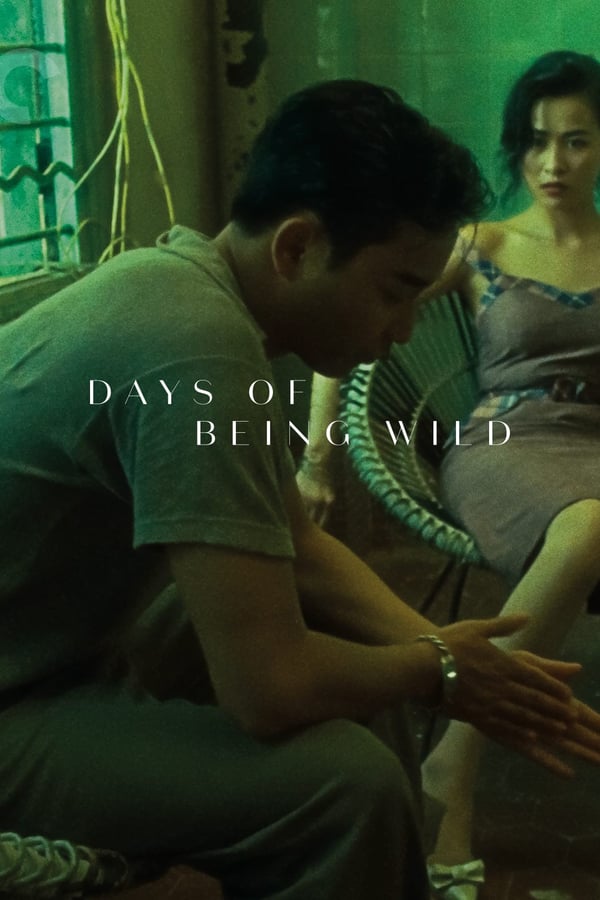
  • TV series currently watching: none
  • Book currently reading: Dune Messiah by Frank Herbert

Quick takes on The Disciple and other foreign films

Oxygen is a French film about a woman buried alive. Yes, this has been done before, but this one has a twist. In the not-too-distant future, the woman wakes up in a cryogenic chamber, with no memory of how she got there or, even, who she is. Some disturbance or accident outside brought her out of hibernation, and now awake, when she isn’t supposed to be, she is using up the oxygen in her small, airtight chamber. Banging on the walls of the chamber and yelling for help yields no results. She begins to try to piece together her existence and what is going on, with the help of the A.I. running her unit, an A.I. named MILO. He has pretty advanced perimeters and while he is programed to keep her safe, he can also be a hindrance to helping her get answers. Thankfully, MILO can help her contact people outside, and she begins to put the puzzle of her experience together. The twist comes before the halfway point, but I’m leery to give it away here, because it does make the film so much more enjoyable when you get there. Mélanie Laurent is great in this nearly one-actor film, and while there are some eye-roll moments (why does she need to inflict pain on herself to retrieve memories?), I enjoyed the ride, and the suspense is real. ★★★½

Out of China, The Soul deals with the complexities of what defines a human soul, wrapped up in a murder mystery/quasi horror film. Late one night, police are called to the opulent house of businessman Wang Shi-Cong. He’s been dying of cancer for awhile, but it seems his estranged son, Wang Tian-You, has sped up the process, and murdered him. The only witness is Shi-Cong’s younger second wife, Li Yan, who is now expected to receive all of the money and control of the corporation. As police inspector Liang Wen-Chao, himself dying of cancer, starts digging into the case, it seems more questions come than answers. Shi-Cong’s first wife cursed him, shortly before committing suicide. His wife Li Yan may have been having an affair with his long-time friend and business partner, Wan Yu-Fan. The supposed murderer, Tian-You, was into some weird occult. And to make things weirder, Shi-Cong’s company was researching ways to heal the human brain, including from cancers and tumors, through a process of reinserting its own RNA, which healed damaged areas. The strange question came from inspector Wen-Chao: what happens if you insert the RNA from someone into somebody else? This question is ultimately what leads to so many twists in the film. It would be easy for a film like this to fall off the rails, and while it does take some paying attention to get through all the bends and double-backs in the plot, it doesn’t lose me entirely. It did feel taxing after awhile though, trying to keep up with everything, and I don’t think it got as deep as it wanted to. ★★★

The Disciple, from India, follows a man named Sharad who longs to be a skilled vocalist in the Indian classical music style, but it seems he just doesn’t have the talent for it, no matter how hard he tries. In the beginning of the movie, he’s in his twenties, and is studying under Guruji, a celebrated but poor vocalist who takes his profession very seriously. Guruji tries to guide Sharad as much as he can, but Sharad can’t get any further. Sharad has also assimilated his teacher’s view that singers should devote their lives to classical music, and he looks down on others who want to sing modern music, or people who go into commercial music for a paycheck. Sharad even puts off his mom and grandma when they lecture him about getting married and “a real job” so he can start a family. Sharad only has one goal: to reach enlightenment in vocalization and to impress others with his skill. As the movie progresses, we see some flashbacks to when he was younger and just getting into music, and then later, scenes from 10 years into the future, when he is approaching 40, and still following an old Gururji around like a little lap dog, and still unable to find professional success (and still single). I work in a field where I’m around musicians every day, including some very successful ones who I get to meet and talk to, and my experiences gave me a false feeling about the movie. Though admittedly I work in western music and can’t speak to the Indian tradition, but in my experience, the vast majority of musicians aren’t going to look down on others for wanting to get paid for their work. Even if a specific musician loves one style, he’ll take any gig as long as he can get paid to do what he loves. But other than that little quibble, I really liked this movie. It’s a fantastic look at how dreams can lead to obsession and self delusion. In the latter half of the movie, when Sharad is older, he looks beaten down by life, but is still trying to reach that unattainable goal. ★★★★

The Columnist is a dark comedy with a few thrills thrown in. Out of the Netherlands, it follows a woman named Femke, who writes for a newspaper. Generally popular among woman readers, she has a lot of detractors, mostly right wing obnoxious types, who target her online. Despite advice from her boss and others in the biz, Femke reads the trolls’ comments on facebook and twitter, and it really starts to bother her. One day, while suffering from writer’s block in her (supposed-to-be) quiet townhome, she hears her neighbor banging around outside on a project. Having recently found that he has been calling her names online too, she pokes her head out the window to see that he is on the edge of the roof of their shared building. Casually edging out the window, Femke gives him a little nudge, and he falls and breaks his neck on the ground below. Heading back in the window and out the door, Femke stands over the body for a minute, before cutting off his finger as a souvenir. It is the first of many. Femke begins hunting her online harassers, finding out where they live and killing them. It’s a satirically funny film about people hiding behind their computers, and haven’t we all wished we could have it out with some online troll that gets under your skin? I’m in between the 3 and 3 1/2 star range on this one; not sure I’d watch it again, but it is very, very good, and has some unexpected suspense. ★★★

Finally, from Spain, comes The August Virgin. In the dog days of summer in Madrid, when many locals flee the city during its hottest days for cooler climes, Eva has rented an apartment to stay for the month of August. At 32, we soon learn that she isn’t just visiting, in fact, she lives in Madrid herself, but is looking to change something in her life, and thought a new environment would be the start of it. In the beginning of the film, she just wanders around and ends up wherever her feet lead her. She bounces into old friends, including her ex-boyfriend whom she’s obviously not moved on from, and meets new friends to hang out with for the summer. Some things speak to her on a deeply emotional level, like a seemingly depressed man in a similar mindset as her, and a band whose lyrics Eva can relate to. It’s sort of a coming-of-age film for the new generation. These kinds of movies used to be about high schoolers, but this generation is a bit aimless later in life. I mostly enjoyed the film, but I didn’t much care for the ending, as there isn’t much of a resolution or “ah-ha” moment for Eva or the viewer. I’m not sure she really learned anything at all, and is only in a slightly better situation than where she started. But the film is very well done. A touch (or more than a touch…) on the slow side, so not for everyone. ★★★

  • TV series currently watching: none
  • Book currently reading: Dune Messiah by Frank Herbert

Quick takes on Chaos Walking and other films

Army of the Dead is characterized as a “zombie heist” film, and if that isn’t a mashup of genres, I don’t know what is. Unfortunately, it isn’t nearly as exciting as it sounds. A deadly zombie virus is let out of a government facility and it spreads through nearby Las Vegas like wildfire. Thankfully for the rest of society, the military is able to build a wall around the city, encasing it and saving the rest of mankind. However, there’s still a lot of cash buried in those casino vaults, and a casino owner hires a team to get him back his millions, in return for a hefty payday. What they find is more than they bargained for: while there are a fair share of mindless, slow shuffling zombies of the Walking Dead variety, there are also some highly intelligent, quick moving and quick thinking “leaders” of the zombie hoard, who are not as easy to kill or avoid. This film just gets sillier as it progresses, well past the point of enjoyment. Written and directed by Zack Snyder, the violence and gore is reminiscent of his earlier pics, a la 300 and Dawn of the Dead, but lacks the constant excitement of those pictures. Just too goofy to be good, even if you love the genre. ★½

Stowaway follows a trio of Mars-bound astronauts and scientists, on a 2 year mission to perform experiments there in prep to send humans to the planet. Just a day into the trip though, a problem without an easy solution comes down: the eponymous stowaway. An engineer working on the module before it left Earth, he got himself stuck behind a panel and inadvertently made himself a member of the crew. Unfortunately his presence threatens the lives of the others: a device that circulates and cleans the air they breathe has been damaged, and with an extra unaccounted person in tow, there won’t be enough oxygen for the team to make it to Mars. The quartet needs to do some quick thinking in order to save them all and continue the mission. Just a four-person cast, with 3 heavy hitters (Tony Collette, Daniel Dae Kim, and Anna Kendrick) with one relatively unknown (stowaway Shamier Anderson), but a strong cast can’t save this mostly boring film. A good space flick should be either thought provoking or a thriller (or hopefully both!), but this one is neither. Some tense moments for sure, but it is way too predictable to be a very good film. ★★½

Idris Elba is one of those really talented actors who too often makes questionable decisions in regards to projects. Concrete Cowboy is the latest. Cole (Stranger Things’ Caleb McLaughlin) has just been kicked out of his latest school, and his frustrated mom has taken him from Detroit back to his father in Philadelphia. His father Harp (Elba) is involved in the storied horse riding culture of Philly, of which I was completely unaware. Cole runs into Smush, a friend from 10 years ago before his mother took him away, and Smush is now involved in drugs and other shady deals. Harp warns Cole to stay away from such behavior, and encourages him to get involved in the stables, taking care of the horses. It’s a coming-of-age film with a twist, and shines a light on an important cultural group that many probably have never heard of. In a Nomadland-like way, many of the actors in the film are true urban cowboys and horse riders living in the Philadelphia tradition. It’s a fascinating group of people, but the movie is rather ho-hum. Nothing stands out, and the dialogue for me rang false, sort of like hearing kids use curse words because they heard other people say them, but don’t know how to use them properly; Smush and Cole cuss like they are reading lines off a book. Pretty forgettable film. ★★

I hunted down Pixie, despite its middling reviews, due to its star, Olivia Cooke. I’ve loved just about everything she’s been in in her young career, but even the so-so reviews of this film were generous. Honestly, I thought this movie was pretty terrible. The set up is a couple of young men rob a quartet of priests, priests who are a front for a drug smuggling operation. The robbery goes bad when the priests end up dead, and then while driving home, one of the robbers finds out his partner has been dating his ex-girlfriend, and shoots and kills him. He then heads over to said girl to confront her, and is himself struck and killed. The girl and her two new rescuers decide to make some money on the newfound drugs, but the rest of the priests, and other underworld kingpins, are on their tail. It’s all supposed to be funny in a quirky kind of way, but I never laughed once. After the latest stupid misstep in the film (the trio frolicking on the beach despite the really bad guys with guns being too close for comfort), I finally gave up on this movie with less than 30 minutes to go. I just didn’t care enough to see how it ended. ½

Chaos Walking also got average reviews, but this one was more my style. It takes place a couple hundred years in the future on a new planet that has been colonized by Earth. The “first wave” arrived a generation ago, and the planned second wave never came, so the settlers have been on their own. There’s something unique about this world though: the private thoughts of men (women are unaffected) are broadcast for everyone nearby to hear, as clear as if spoken aloud. Called your “noise,” it is doesn’t allow for any secrets, unless you are strong-willed enough to control your thoughts. But let’s face it, if you try to tell yourself not to think about something, that’s the first thing you do. In the little village of Prentisstown, all of the women are gone, supposedly killed by the native people to the planet over 10 years ago. Into this setting we follow Todd (Tom Holland). The youngest in the village and most likely its last survivor since, without women, no more will be born, he always has a hard time controlling his noise. The village’s quiet life is thrown into upheaval when an exploratory ship from the long-promised second wave crashes on the planet. There is only one survivor: a woman named Violet (Daisy Ridley). The mayor of the town, Prentiss (Mads Mikkelsen), fears her, because he can’t hear her thoughts, and wants her silenced. Todd vows to protect her, and when Todd’s father tells him that Prentisstown is not the only village on the planet, the duo set out for a new place, and hopefully to find a way for Violet to contact her mother ship for help. Yes, the movie has more than a few potholes. Part of that is due to its huge setting; there’s so much information here that it is impossible to explore it all in 2 hours, but the action of the film is engaging and the acting by the top trio of characters is on point. It’s also unexpectedly funny in all of the right moments. I wouldn’t mind a sequel (or even a prequel) to see more of this unique and awesome planet. ★★★½

  • TV series currently watching: Defending Jacob (series)
  • Book currently reading: Song of Susannah by Stephen King

Quick takes on Julieta and other Almodóvar films

In the last couple years, I’ve become an increasingly big fan of Pedro Almodóvar’s films. I’ve seen several of his earlier films, but needed to catch up on his newer stuff, so that’s where I went today, starting with 2004’s Bad Education. Taking place in 1980, it follows a film director, Enrique, who is visited by a former schoolmate, Ignacio. Ignacio and Enrique once shared a sexual moment at their Catholic boarding school as young teens, and Ignacio is now looking for a job as an actor. He has brought a short story called “The Visit,” which tells the story of their time at school, including young Ignacio’s time being assaulted by the priest. In the story, Ignacio’s character grows up to be a transgender drag queen. Enrique is enraptured with the story and wants to turn it into a film, but doesn’t think Ignacio can play the part of himself, believing his muscular physique isn’t feminine enough for the role. Ignacio is sure he can lose weight and slender down to take the role. As the film plays out, we see the continuing of the story-within-a-story, as well as secrets that come to life about Ignacio, that he has kept from Enrique. It is a fairly gripping story, and has a bit of a surprise ending, but I wasn’t enthralled throughout, like I was on other, upcoming films, like the next one… ★★★

Volver kept my attention throughout, and it helps that it features a magnetic Penélope Cruz in the lead role. Raimunda lives in a tiny apartment in Madrid with her husband Paco and teenage daughter Paula. Raimunda and her sister Sole grew up in a tiny village, a village with a reputation for ill winds from the east and residents with so-so sanity. Case in point: their aunt Paula (for whom Raimunda’s daughter was named). Aunt Paula is growing senile and believes she is visited by her sister Irene, Raiumunda’s and Sole’s deceased mother, who died in a fire 4 years prior. That’s the backstory. At first, the action of the film follows Raimunda’s little circle. Paco has been making disgusting eyes at his daughter Paula, and makes a move on her one evening while Raiumunda is away. Paula kills her father, stabbing him to death, and upon returning home, Raiumunda stuffs the body in a deep freezer at a local restaurant. Around the same time, Aunt Paula dies, and Irene’s ghost makes itself known to Sole. Since Aunt Paula no longer needs her, Irene has moved in with the single Sole, so she won’t be lonely. Meanwhile, little tidbits about Irene’s life, as well as the estrangement between her and Raiumunda, begin to come to life, not to mention how the neighbor (Augustine) was involved. Lots of loops, lots of morbid laughs, and plenty of high blood pressure inducing emotion make this a fun film to watch, and one that I think has a high “rewatchability” factor. ★★★★

Broken Embraces has an interesting premise, but meanders around way too much for any sort of big payoff in the end. It follows a blind screenwriter named Harry Caine, who once was a non-visiually impaired director named Mateo Blanco. Something in his past made him change his name, and the reasoning unfolds over time. Harry is visited by a rich s.o.b. with a story to tell, but the tale he weaves sets off all kinds of alarms in Harry’s head. Turns out the rich man is Ernesto Martel Jr, whose father Harry knew very well. Told in flashback, we see that Ernesto Sr was a wealthy businessman who courted his secretary, Lena, into a love affair. Lena ends up falling for hotshot director Mateo though, and they begin an affair on the side. Nothing is going to go well for anyone in this scenario. What should be a deep engaging mystery falls off the rails well before the big climax. The whole thing felt too disjointed, and several of the characters too contrived. There’s some solid acting in most of the roles, but not enough great moments to bring up the low points. Very average. ★★½

The Skin I Live In has an interesting premise, and is Almodóvar’s version of a horror film. The set up is this: Robert (Antonio Banderas) is a renowned surgeon who is working on new techniques that may advance the medical field significantly. He claims to be testing on mice, but in reality, he’s been holding a woman, Vera (Elena Anaya), captive for years, and she’s been his test subject. The only person in on the kidnapping is the head of housekeeping in the expansive mansion, Marilia, who we later find out is Robert’s mother. Into this crazy scenario comes Zeca, a criminal that is tied up in this family and its history. He comes into the house one day and wrecks the cozy little play Robert has been running, and the intrique only gets better from there. The first 45 minutes of this film were fantastic, and then it took a (seemingly) weird turn. We flash back 6 years prior, to how Robert lost his wife and daughter, both to mental illness. Robert’s answer to this tragedy was to kidnap the man who raped his daughter and chain him up in the basement, Saw style. This little detour into Robert’s first kidnapping had me wondering where all this was going, but the payoff comes, you just have to ride it out. Ended up being a very good, sickly twisted, mental thriller, with a tremendous performance by Anaya as Vera. ★★★½

Julieta is a middle-aged woman whose life, at the beginning of the film, seems nice and calm. However, a chance encounter with a childhood friend of her daughter, Antia, throws her cushy lifestyle into turmoil. Julieta immediately cancels her move to Portugal with her boyfriend, and hastily moves from her current apartment, across town to her old building, where she used to live with her daughter. Told mostly in flashback from here on out, we learn about Antia’s birth through teenage years, and what led to her estrangement from Julieta. It’s now been over a decade since the two have even spoke, and Julieta has become obsessed with seeing her again. Afraid she’ll never get a chance if she moves away, Julieta doesn’t want to leave the one place where Antia might find her again. It’s a wonderfully emotional film, very human and nuanced, about a woman dealing with a lifetime of grief and loss, who has felt betrayed time and again in her life. ★★★★½

  • TV series currently watching: M.O.D.O.T. (series)
  • Book currently reading: Song of Susannah by Stephen King

Quick takes on Supernova and other films

Starting off today with the latest Disney soon-to-be-classic, Raya and the Last Dragon. It takes place in a fantasy world once known as Kumandra. 500 years ago, Kumandra was beset by evil entities called the Druun, which turned people to stone. The people turned to their protectors, dragons, who used the last of their power to create a magical orb which vanquished the Druun and brought the stone people back to life. Unfortunately the dragons did not return, and the last living one, Sisu, went into hiding. Rather than stay united, the people fought each other for control of the orb and is supposed mystical powers, and Kumandra was divided. Now in present day, Chief Benja of the Heart tribe wants to unite the people again, but old jealousies rear their ugly faces, and in a struggle, the orb is smashed. Its breaking unleashes the Druun again, and this time, there are no dragons to save mankind. Benja’s daughter, Raya, goes on a quest to find Sisu, and then find enough power to fight back the Druun before all is lost. The movie is getting heaps of praise, and it is deserving of all of it. As you’d expect from Disney animation, it is beautifully crafted, but the wonder of the film doesn’t end at the visual splendor. The story is fun (and funny!), with a diverse cast and a meaningful message for kids and adults both. A rare 5 star rating for me. ★★★★★

The Dark Divide is a film about a man coming to terms with the grief over losing his wife to cancer, with the help of the great outdoors. It’s a theme that’s been done before, and while it is based on a true story, those have been done before too. Still, it’s well presented and enjoyable. Robert is a rather staid man with the highly adventurous career of a lepidopterist (studies butterflies and moths). He’s out for a 30 day adventure in the Gifford Pinchot National Forest, despite having only been camping on overnights before (a fact that causes the locals to scoff in disbelief, knowing the dire reputation of Gifford Pinchot). The adventurous side in the man’s relationship was his wife, who is seen in flashbacks to her time before she got sick, and as the film progresses, as she gets worse. It was she that applied for a Guggenheim grant before she died, and now Robert wants to use that money for this trek, both for his career, but also to preserve his wife’s legacy. Some films (like Reece Witherspoon’s Wild) are more serious, whereas this one has a lot of humor in it, but it wasn’t off-putting. What can I say, I’m a sucker for these kinds of movies. ★★★

The Personal History of David Copperfield is a new take on the classic Dickens tale, and with modern cameras and computers, it brings the story to life in dazzling, colorful way. It tells the semi-autobiographical story of Dickens as Copperfield. Born to a lady but without a man in the household, little Davey is shuffled around throughout his life, living with family, servants, boarding schools, and even strangers. He is put upon in life, but never lets it get him down, amusing himself and friends with stories elaborated from his own life, to the point that the line between fantasy and reality is blurred. And that helps in a story like this, with crazy, nearly unbelievable characters and the almost dreamlike way the tale unfolds. The movie is visually gorgeous, just like a good old children’s book, and very funny (like how every person in David’s life makes up a new nickname for him). Putting it all together is an amazing cast including Dev Patel in the lead, Tilda Swinton, Peter Capaldi, Hugh Laurie, Ben Winshaw, Benedict Wong, and others. I really enjoyed this wonderful picture and the spectacular way it unfolded. ★★★½

You got me HBO, you reeled me in. I thought Those Who Wish Me Dead might be a tightly wrapped thriller hiding inside a Hollywood budget, but no, it’s not. Shame on me for not at least checking a review or two and saving myself a couple hours. Owen and his son Connor are on the run from some well trained and well funded assassins because “he knows something,” and the father and son are running towards rural Montana for help from his brother-in-law, Ethan, a sheriff. The assassins beat them there though, and ambush them on a rural highway. They are run off the road, and Owen is killed. Connor is able to escape, and finds refuge with Hannah, a firefighter who’s on lookout for fires in the forest. She’s been demoted there after a failed psych evaluation, after watching a trio of boys die in a fire, boys she was unable to rescue. As the assassins hunt down Ethan and his wife, in hopes of finding Connor and tying up loose ends, Hannah and the boy bond and try to survive. There are more plot holes than there are bullets in this movie, and that’s saying something, as the assassins never seem to run out of ammo. This Hollywood “blockbuster” can’t be saved from a strong cast, including Angelina Jolie and Jon Bernthal, and the bad guy team of Nicholas Hoult and Aiden Gillen. By the final crushing crescendo, and last forced emotional run, I was exhausted, and not in a “mind blown” kind of way. ★½

What a way to right the ship. Supernova is my kind of film: a quiet, introspective, and deeply personal story about a couple in love and facing a tragedy that hopefully I don’t have to experience. Sam and Tucker (Colin Firth and Stanley Tucci) are a gay couple, partners for decades, and Tucker is suffering from early onset dementia. He’s early enough in the illness that he still retains a lot of memory, but he does have moments of confusion, and they both know that darker days are ahead. While Tucker is still cognizant, they go on a road trip visiting places that were special to them over the years, ending at Sam’s family home for a big surprise party. It is there that Sam learns that Tucker is not planning on fading away quietly until he doesn’t remember who Sam, or even himself, is. Firth and Tucci are at their absolute best: two decorated actors in brilliant performances. The connection between the two are felt in the subtle glances, or a lingering touch, or a strain of the eye. It’s a deeply touching film about the pervasiveness of love. ★★★★½

  • TV series currently watching: Gotham (season 3)
  • Book currently reading: Anna Karenina by Leo Tolstoy

Quick takes on Dying at Grace and other Allan King documentaries

I’m not usually big on documentaries, though I have seen a couple I liked, but I’ve heard good things about some of the films from Canadian Allan King, who took a cinéma vérité style with his work, and wanted to check some out. Starting with Warrendale. It documented a facility in Toronto that housed emotionally disturbed children, from aged 10 or so up through high school age. These were kids from tough backgrounds, or were emotionally stunted, who would have a history of violently lashing out when under stress. Rather than treat with drugs, the counselors would wrap their arms and legs around the violent child (or teen, as was often the case in the film) and hold them in a vice, straight-jacket like grip, talking soothingly and trying to get the kid to vocalize why they were upset, all in an attempt to get the kids to get in tune with their emotions. Some of their techniques were uncomfortable to watch (bottle feeding the teens like they were babies, a little too touchy feely with the adult men and the younger girls), but it’s hard to argue that they were at least trying something different to help kids who may otherwise be in a harsher institution. King’s technique is not to present any narration or voice-over at all, so he doesn’t criticize the techniques being used, he just lets the camera do the talking, and the emotional peaks and valleys of some of the teenage girls in particular leave a lasting impression. ★★★½

King took his “silent observer” approach to a marriage on the rocks in A Married Couple. This doc follows a couple approaching middle age, with a young son, who fight non-stop, and it isn’t just a lover’s quarrel; they get downright mean in their spats. While they do occasionally have some fun together — going to the beach, being playful in bed — they bicker constantly otherwise. All of us have been around an arguing couple, and the feeling of awkwardness that comes with it. This is 90 minutes of that. As most petty arguments go, they argue about nothing. Neither can admit when they are wrong, so arguments will start on one subject, and go off on a tangent and become about something else entirely, until they are just flinging insults and names at each other. It’s very sad to watch, I kept hoping for the woman to get her shit and just leave him, but that’s not what this film is about. Not sure what it is about, as it wasn’t very entertaining. ★½

King gets back on track with 1973’s Come On Children. It’s sort of like Real World 20 years before MTV did it. King took 10 teens aged 13-19 (5 boys, 5 girls) and put them in a farmhouse for 10 weeks. The film starts with them driving up in a van, and they start partying it up immediately, doing drugs freely. One of the first conversations is about women’s rights and abortion, and I thought the film would be full of topical conversations of the day, but it never developed into that. By the end, it became a more personal film for these kids, and their individual feelings of isolationism, the counterculture movement, and not having a voice at home with their parents. The highlight of the film is a young Alex Lifeson, who is billed with his birth name of Aleksandar Živojinović. Just 17 during the filming of the movie, he was already involved in the band Rush, but had yet to release their first record. Obviously he would go on to a rock-and-roll hall of fame career, but here, he’s just a kid with his whole life in front of him. Really cool time capsule of the life of youths in the early 70s. ★★★

The previous films were from the 60s and early 70s, but by 2003, Allan King was getting up there in years himself, and his last couple films focused on an older population, and themes probably sitting on his own mind. Dying at Grace follows 5 patients in the palliative ward of the Salvation Army Toronto Grace Health Centre. I found it fascinating, watching some highs, but mostly lows, of 5 individuals nearing the end of their lives, and ultimately passing away. The way each goes is as individual as the person. Some don’t want to go, and fight it. Some embrace death as an end to the constant pain. The film shows all aspects of the end of life: medicines, treatments, the emotions of the patients and their loves ones, etc. It also paints a beautiful picture of the health care workers as they tirelessly try to give comfort: physical, emotional, and spiritual. The movie doesn’t make death scary, but just as the last step in life, and hopefully, as a door to what’s next. A sad film, but a very gripping one. ★★★★

Memory for Max, Claire, Ida and Company is in another facility, and this time looking at older people suffering from various kinds and levels of dementia. Though it has a similar feel to the previous film, for whatever reason, I didn’t connect with this one in the same way. I still felt for the people going through this terrible disease, as they were confused, and sometimes combative because they were confused, but it didn’t hit me with the emotional weight that Dying did. I’m sure it’s a great movie, and especially if you’ve had a loved one go through this, it will probably leave you in tears, just not for me. ★½

  • TV series currently watching: The Falcon and the Winter Soldier
  • Book currently reading: Anna Karenina by Leo Tolstoy