Quick takes on 6 German films

Been awhile since I visited Rainer Werner Fassbinder, one of Germany’s best all-time directors. First I loved him, then I didn’t (granted, these were his earlier films), and then I did again. First up today is 3 films that make up his BRD trilogy, starting with The Marriage of Maria Braun from 1978, which stars longtime Fassbinder collaborator Hanna Schygulla in the title role. The film opens with Maria’s marriage to Nazi German officer Hermann, even as bombs rain down from the approaching US military. When we see Maria again, Hermann is missing and presumed dead. Maria holds out hope for his return for a long time, but as the only breadwinner in a house with her mom and grandpa, Maria finally turns to prostitution to make ends meet. She takes up with American soldier Bill, but when Hermann arrives home alive one day, Maria kills her lover. Hermann doesn’t want to see his wife in jail, so he takes the rap for the murder and is sentenced to prison. Maria makes the decision to never be on the losing side of life again, and she spends the rest of the movie manipulating people to improve her situation. This includes seducing her boss Oswald, before he can do the same to her, so that she is in the power position. What’s worse, she brazenly tells her jailed husband about her exploits, all in the guise that she is doing it for him, in order to save up money for when he gets out. A powerful film about greed and cruelty and the lengths someone will go to for a comfortable life. ★★★½

Lola is a fantastic film and similar to Sternberg’s German film The Blue Angel (both films were based on the same book). In a town in West Germany, all of the men frequent the local brothel, whose star is Lola. The newcomer in town is von Bohm, the new building commissioner. Cultured and refined, he doesn’t drink to excess and seems to be a fine, upstanding man; everyone becomes enamored with him. He has only good thoughts for the men around town, not knowing about their activities in the evenings. Lola’s patron, brothel owner (and property developer) Schuckert, bets Lola that von Bohm wouldn’t even kiss her hand, so she sets out to prove everyone wrong. Not letting on to her real life, she goes to von Bohm disguised as a refined woman; she and he start to date. A musician at the brothel who has a thing for Lola, Esslin, wants to crush von Bohm’s lofty ideals and brings him to the club one night. When von Bohm sees his fellows carousing and, worse, Lola up on stage strutting, his romanticism is smashed. On the surface, seems like a pretty simple film, but there’s a lot going on here. Barbara Sukowa is fantastic as Lola, a woman who I first thought hated herself and her life, but later realized that all she craves is to be a member of the “boys club” which keeps people like her in their place. ★★★★

Veronika Voss is a pretty straight forward film, but for a guy like me who likes a good story, it doesn’t get any better. The eponymous Veronika was once a film star, but that was 15+ years ago, and now she is only recognized by the older crowd, who still clamor for an autograph even when most people don’t even recognize her. In her head though, Veronika is still a star, one film away from taking back her spotlight. But she’s got demons. A chance meeting with a reporter, Robert Krohn, gets him digging in to what happened to Veronika. Her house is mostly empty, her estranged husband is not to be found, and Veronika seems to live at her psychiatrist’s office, in beds the doc keeps for mental patients. The doctor, Marianne Katz, tells Krohn that Veronika is a disturbed woman who can’t let go of the past, and that seems to be the case, but Krohn suspects there is more to the story. Veronika is charming and beautiful most of the time, but is prone to neurotic episodes. Even so, Krohn falls in love with her, and his girlfriend Henriette is helpless to only watch it happen. Krohn finally learns that Veronika’s doctor has her hooked on morphine, and has been draining her wealth for years. It all leads to an explosive and emotional ending. For a director most widely labeled as part of the New German Cinema movement, this may be the most traditional, straight-ahead, story-driven Fassbinder film I’ve seen. And I loved it all. ★★★★★

Three Fassbinder films, and now three films from director G.W. Pabst, from an entirely different era. Pabst’s career straddled the silent era (I’ve seen his Pandora’s Box, one of his most famous pictures) and then talkies, but today I’ve watched 3 early sound films, starting with 1930’s Westfront 1918. At first I thought this was going to be one of those faceless (no strong character building) war films that is heavy on technical aspects but light on heart, but I was proven wrong. It takes place on the German front during World War I. It features 2 main characters, Karl and “the student,” who is never named. After a very unsettling beginning (I doubt the French farm women were so enamored with their German captors as this film depicts), the movie settles in. This particular regiment is right on the front and is constantly under fire, if not from the French then from their own artillery as friendly fire. People are dying constantly, and when reinforcements arrive, you can’t believe that these bright-eyed boys will be fighting on the front soon. Home life is not much better; when on leave, Karl goes home to find his mother waiting in long lines for basic goods and his wife in bed with another man. The movie looks and sounds great, so much so that I can’t believe it was made in 1930, and the final scenes are powerful, but the film as a whole felt pretty average. In its time, it was probably spectacular. ★★★

Kameradschaft (Comradeship) is another anti-war film, but with an entirely different setting. Taking place shortly after The Great War in a German border town, the main industry is mining, same as it is on the French town just on the other side of the gate (there’s even a barred gate inside the mine, right at the border, to keep the “2 mines” separate). The people from both towns intermingle at bars and their children play together, but there is always a tension, as the people still remember the recent war when they were at each other’s throats. When a fire breaks out in the French mine and there is a partial collapse, trapping miners underground, the Germans don’t hesitate to go help their mining brothers. As one of them calls out in a rallying cry, the Frenchman have wives and children at home too, and they are all miners first and foremost. The rest of the film plays out in the mines, on a spectacularly built set that certainly looks and feels like a real mine. As in the above film, Pabst’s use of sound is exemplary; you’d never guess he came out of the silent era. At the end of the film, the Germans are able to save most of their French fellow workers, but even as they give speeches about setting aside differences for the good of common man, their governments are rebuilding the gates down in the mine to keep them apart. Lots of tension in this movie, edge-of-your-seat thrills, and I couldn’t help but get swept up in the good feelings of helping someone you may have faced off against in war just a couple years prior. Would people be able to do that today, when even in our own country people can’t even converse with others of different political views? ★★★★

The Threepenny Opera is a decent film, but has a more exciting story behind its production (more on that at the end). Based on a German play which is itself based on an English ballad opera (“The Beggar’s Opera”), it follows a ne’er-do-well villainous kingpin named Mackie, known in the underworld as Mack the Knife (and yes, the popular song originated in the German play). Mackie clawed his way up the ranks until he now leads the underworld, so Jenny the prostitute is no longer good enough to hang on his arm. Instead, he sets his eyes on Polly Peachum, who is the daughter of the “king of beggars,” the only other person with the same amount of clout as Mackie on Berlin’s seedy streets. The two marry, infuriating Peachum, and making him set his eyes on taking Mackie down. Keeping Mackie safe from the law has been Jackie “Tiger” Brown, chief of police and Mackie’s old war buddy, so Peachum will have to target Brown as well. Mackie’s luck does run out finally though, and he is arrested, jailed, and prepared for the gallows. To his rescue comes good ol’ Jenny, who distracts the guard long enough for Mackie to make his escape. Peachum has an ace up his sleeve though, a final act to try to win the day. The film starts out great with lots of intrigue, some laughs, and great jazz-influenced tunes, but peters out in the last 20-30 minutes. Better is the story of the film’s production, which involves lawsuits, double crosses, bankruptcies, and being banned by the Nazi party shortly after its release. I’d urge you to look it up online if you are interested, because it’s great stuff, but the best tidbit comes from original playwright Bertolt Brecht. After his success with the play, he only agreed to sell the rights to the film if he could screenwrite it. A notorious procrastinator, he took so long in getting it done that Pabst went ahead without him. Brecht later sued (and lost) because the film ended up quite different from the original play (even though some of the changes were ones that Brecht himself was going to implement, due to his evolving Marxist ideals) and charged Pabst and his crew with plagiarism. Again, hilarious, because Brecht himself was often accused of the same practice! ★★½

  • TV series recently watched: Monsieur Spade (series), Batman: The Animated Series (season 2), Monarch: Legacy of Monsters (season 1)
  • Book currently reading: The Butlerian Jihad by Herbert & Anderson

Quick takes on Suncoast and other films

Ridley Scott puts out some great action films, but even his fans have to admit he delivers more duds than hits. Unfortunately Napoleon is in the former category. Despite one of the best actors around (Joaquin Phoenix) this movie feels like a hodgepodge of events rather than a coherent story. It follows Napoleon Bonaparte’s life, from early soldier to emperor (twice!) to his fall from grace and subsequent death. I won’t get into the story, as you are either a history fan and know parts of it already, or you don’t care, but I will say that, knowing the Russian view of Napoleon’s wars (from reading and watching Tolstoy’s War and Peace), I don’t think I really learned much myself, and critics are swift to point out that this movie is full of inaccuracies anyway. Phoenix was good, as expected, and the battles were pretty epic, but the film is full of lurches forward followed by grinding halts; there’s no flow, and all of the characters (Napoleon included) are paper thin. Very average, when it should have been a lot more. ★★½

Another historical film (though a fictional one), but this one done so much better! The Three Musketeers: D’Artagnan is the first in a two-part film series, a project that was one of the most expensive film productions out of France in 2023. The film begins with D’Artagnan, on his way to Paris in 1627 with dreams of joining the Musketeers, the highly skilled personal guard to King Louis XIII. Along the way he comes across a woman’s carriage being attacked and tries to save her, but he is shot at and left for dead. When D’Artagnan does get to Paris, he arrives to a city in the middle of a political storm. The King’s brother, as well as his military and religious advisors (Catholics all), are urging him to declare war on the protestants in France and, by proxy, England, but Louis is hesitant to do so after France’s long history of prior religious wars. At the same time, Louis XIII’s wife, Queen Anne, is having an affair with the English Duke of Buckingham, which will lead to an adventure by D’Artagnan at one point in the film, but I digress. In Paris, D’Artagnan falls in league with the famous Three Musketeers, Athos, Aramis, and Porthos, who live to fight for France, King, and each other. Amazing swordsmen, they are targeted by a Catholic Cardinal who hopes to weaken the King and stir up a war with the protestants. Athos ends up in jail over a crime he didn’t commit, setting off a chain of events with his comrades trying to prove his innocence, giving D’Artagnan a crash course in training along the way. The movie is gorgeously filmed and wonderfully told, with a real old-school kind of feel that hearkens back to classic swashbuckling movies of decades ago. Excellent cast too, with recognizable faces even if you don’t watch a lot of foreign films, such as Vincent Cassel, Eva Green, and Vicky Krieps. I can’t wait to hunt down part 2, which will explore the devilish Milady, D’Artagnan’s nemesis. ★★★★½

Suncoast is one of those unassuming yet highly charged films that can surprise you. A semi-autobiographical film from writer/director Laura Chinn, it recounts her life over a few months in high school. Doris (Nico Parker, who looks very much like her mother Thandiwe Newton) is living with her single mother Kristine (Laura Linney) as they prepare for the upcoming death of Doris’s brother Nate. Nate has been suffering from brain cancer and is now in a vegetative state; the end is near, so the family is moving him to a local hospice care facility. For Kristine, her life has revolved around Nate for years, and she has ignored Doris for the most part. Doris is a quiet girl in school, to the point that even her classmates don’t know her, but with her mother sleeping in Nate’s hospital room at night and Doris having the house to herself, she starts hosting parties for her classmates, making her quickly very popular. The hospice facility should be a quiet, peaceful place, but outside the place is crawling with protestors, as the facility is also housing Terry Schiavo in her final days, a story which, if you remember, made headlines back in the early 2000’s as her husband battled Terry’s parents in years-long court battles over the right to remove her from life support. One of the activists out front is Paul (Woody Harrelson), a quietly religious man who offers Doris his perspective on life and death, after losing his wife several years ago. Doris has a lot of pent-up anger at her mother and even her brother, through no fault of his own obviously, for dominating her life for so long, and Kristine needs to learn how to advance her own life once Nate is gone. It’s a complex situation, with no easy answers, and the film doesn’t try to provide them. It’s a tearjerker, but surprisingly not too heavy-handed. Lovely film. ★★★★

Will is an absolutely ridiculous film (and it’s not even a comedy!) about a Dutch policeman trying to do his job (?) during German occupation in World War II. Will is part of a new police force whose only real job is to accompany German soldiers to provide some legitimacy to their actions. Will and his fellow policemen are told to watch but do nothing. Will cannot do that, not when a German soldier is getting ready to shoot a Jewish mother and her daughter in the street. Will fights back the German, killing him. Will and his parter Lode stuff the body under a manhole cover and try to pretend it never happened, but of course the German S.S. will have their investigation. Sound good so far? It quickly deteriorates from there, with over-the-top villains and a head-spinning about of intrigue between the Jewish people and their protectors, and the Germans and German sympathizers among the Dutch citizens. After awhile I lost track of what Will was even trying to do. To make matters worse, the film never can decide what it wants to be. Is it a historical action film? An art film? I don’t know, and neither does it. ★

I was thinking Next Goal Wins might be a less PG version of a Disney family sports film (a la Million Dollar Arm, Miracle, McFarland USA, etc). Notion quickly dispelled when it started and the first actor on screen was Taika Waititi, who, as it turns out, wrote and directed. So I shifted my expectations to a zany comedy with a sports background, and that’s just about what it turned out to be. Based on a true story, it stars the great Michael Fassbender as Thomas Rongen, a down-and-out American soccer coach who takes the last job on the planet in order to keep coaching: turning around the American Samoa national soccer team. After having recently lost to Australia 31-0, the worst loss in international history, the team has practically given up hope of ever winning a match. Rongen comes in and starts working magic, getting them to learn defense and offense, and, of course, it only really starts to work when they are able to blend his ideas with traditional American Samoan values. For my tastes, the comedy distracted from what could have been a really great story. The better Waititi films are the ones that are funny, but where the laughs enhance rather than take away from the film (Jojo Rabbit, Thor Ragnarok). I had plenty of chuckles watching this film, but was left wanting more heart from it. ★★½

  • TV series recently watched: Class Act (series), For All Mankind (season 4)
  • Book currently reading: The Butlerian Jihad by Herbert & Anderson

Quick takes on some Portuguese language films

Up today is a quartet of Portuguese-language films, starting with Black Orpheus (technically a French-produced film with Marcel Camus in the director’s chair, but it was filmed in Brazil). A modern take on the classic legend Orpheus and Eurydice, it moves the setting from Greece to Rio de Janeiro, taking place during the hustle and bustle of Carnival. Eurydice is a beautiful young woman newly come to the area when she is smitten by trolly driver Orfeu. Orfeu is engaged to Mira, but does’t seem as pleased to be as he should. Eurydice and Orfeu begin to flirt, even as she keeps an eye out for a shadowy character (Death) who has followed her from her from her village, and Death says he will have her before long. When he finally catches her, by Orfeu’s unknowing hand no less, Orfeu is wracked with guilt and does not accept her demise. He follows her body to the hospital and goes through his own version of Hades, to find her soul and bring it back. People who know the legend know this will not end happily. The story is a classic for a reason and it is told well here, with gorgeous colors and the constant rhythm and dance of Carnival going on throughout. It does drag at times, where we see whole sections of the film devoted to the partiers and not the plot, but the story is worth it. ★★★

The final three films take place in Portugal, in Lisbon’s poor Fontainhas district (which has since been demolished). Directed by Pedro Costa, these films shine a line on the rundown area and the people who struggle to live there. First is Ossos, which has 4 main characters. Tina is a young mother (she looks not much more than a teenager) who has just given birth to a baby nobody wants. Tina is depressed and suicidal, and tries to kill herself and the baby in an early scene. Keeping Tina alive is her best friend Clotilde, a woman not much older herself, but who already has a toddler of her own. Tina’s baby daddy is never given a name (almost as if his poor excuse for an existence does’t deserve a name); he is a listless, uncaring, waste of a breath young man who continually tries to find someone who will buy his baby and get it off his hands. Thankfully one person he asks for money on the street is a nurse named Eduarda, who gets to know the trio of people and does her best to keep everyone going. The film does a great job of preventing Eduarda from becoming the savior role; the baby’s father will take any handout offered, but Tina and Clotilde will only accept the bare minimum needed to stay alive. This movie will test your patience, as there is little dialogue for most of its run. It seems like there’s nothing more than a few words spoken for the first hour or so, and the camera spends equal time on the characters as with the slums where they are living, but it all comes together in the end. I’m hoping there’s a little more movement in the next two films. ★★½

Hopes dashed. In Vanda’s Room is (I think) more of a documentary than a film, because there isn’t really a plot, it is just setting up a camera in the corner of the room and watching what happens. And you know what happens in the slums? People do lots of drugs, the predominant one being heroine. The eponymous Vanda is Vanda Duarte (the actress portraying Clotilde in the previous film, here as herself this time). She doesn’t do shit, other than lay around and do smack with her sister or anyone else that happens by their hovel – with no locked doors, that could be any homeless wanderer. The film also follows a trio of friends who live nearby, and whereas Vanda is still in the smoking stage, these guys have advanced to needles, and they discuss the pitfalls such a life has. While all this is going on, we also see scenes of the government coming in and evicting people and starting to tear down the neighborhood. In fact, the final scene in the film, a powerful one, shows Vanda lying nearly comatose as we hear a bulldozer, very near by, tearing down something. I’m surprised she made it that far though; with an hour left in the film, she had already wasted away to skin and bones and was coughing horribly, and I didn’t think Vanda would make it to the end. If the director is trying to get me to feel some sympathy for these “poor people,” he’s wasting his efforts on me. I can’t feel sorry for someone who can’t even do a household chore because they “need to shoot up first.” All everyone did in the movie was bitch about stuff they had to do when all they wanted to do was get high. ★½

Colossal Youth finally delivers the kind of film I’ve been hoping for. Ventura is an old man who will talk to just about anyone he comes across, calling many of them his “children” (and some return with a “Papa”). Some people engage with him, some ignore him entirely. Formerly living in the Fontainhas district, where nearly everyone has been relocated to a staid government-subsidized apartment building before they finish tearing down those slums, Ventura is having a hard time finding a new place of his own. He finds fault with every apartment he is shown, for either being too small for all his “children” or because it has an imaginary spider infestation. Vanda is still around, now married and with a toddler. She looks healthier than she did in the last movie, having put on some weight and claiming to be drug free for 2 years, but those years of drug abuse have taken their toll. She looks decades older than she did in the first film made just 9 years earlier, and she is always sick. As for Ventura, he has lucid moments where he’ll remember a long-dead son, but he often looks lost, wandering between the apartment buildings and his old stomping grounds in Fontainhas, visiting those few who still live there. But are there really any people still there? Took me awhile to figure it out, but it seems Ventura converses with ghosts more than he does with the living. Outstanding, poignant film that continually surprised me. ★★★★

  • TV series recently watched: The Terminal List (season 1), Mr Robot (season 2), The Peripheral (series)
  • Book currently reading: The Butlerian Jihad by Herbert & Anderson

Quick takes on Passages and other films

Silent Night is the latest from director John Woo, a director who hasn’t seen a hit here in the USA in quite some time. The wait will have to continue, as this film is more gimmick than substance. In a town in Texas dominated by gang violence, Brian’s young son is killed in a drive by, and when Brian chases down the shooters, one shoots him in the throat, destroying his voice. He rehabs, and vows revenge, spending the better part of a year working out, getting proficient in guns and handling a car at extreme speeds. Then it is time to carry out his vengeance. Brian sets out on a night to take down the head of one particular gang, and there will be blood (plenty of it). Unfortunately it’s one of those action films where you never really feel any of the tension they are trying to create. There’s nothing new in the car chases, nor the gun or knife fights. And Brian seemingly isn’t the only one who lost his voice. No one talks in this movie! Even the bad guys only communicate with body language or text messages. As I recall, the only voices I heard were from the radios here or there. Strange gimmick to run with, and it doesn’t work. Just makes the whole thing feel silly. ★

God’s Creatures put me back on track with great performance from Emily Watson. She plays Aileen, a woman at a small fishing village in Ireland. She and most of the women work at a seafood processing plant, while the men are out fishing every day. Aileen’s son Mark returns to the area after years away living in Australia, and she welcomes him back. Aileen is willing to do anything to help her son settle back home, including stealing oysters from her work so that he can use them to seed his oyster farming traps. A young worker at the plant, Sarah, sees Aileen doing it, but says nothing. Shortly afterwards, at a bar, Mark starts hitting on Sarah, since they once dated before he left and her marriage is currently on the rocks. The two of them stay at the bar while Aileen returns home, but in the next couple days, the police visit saying that Sarah is claiming a man attacked her that night. Aileen states that Mark came home with her, and of course the only people that know different are Aileen, Mark, and Sarah. Sarah doesn’t come to work for a few days and eventually loses her job, and when the town turns on her for “falsely” claiming Mark attacked her, Aileen is wracked with guilt. How far will she let her lie go, while it destroys Sarah’s life? The ending is glimpsed a mile away, but it is a worthy journey with some great acting and a gritty feel. Strong film about what a mother’s breaking point, when faced with the fact that her son is a monster. ★★★½

I recently loved a film (Amanda) so much that I immediately hunted down another from the filmmaker. Carolina Cavalli didn’t direct Fremont, but she did write it, and while the director (Babak Jalali) has his mark on it, it still shows a lot of Cavalli’s quirky humor. The film follows a woman named Donya, an Afghani immigrant who came to America on a special visa for helping the military during the war over there, as a translator. She is ostracized by fellow Afghanis in the area for being a “traitor,” and fears for her family left back home, who may face retaliation. Donya works at a Chinese fortune cookie manufacturer, first on the production line and, later, writing the fortunes that go in the cookies. She has a couple friends, more acquaintances than anything, but is extremely lonely. In a moment of poor judgement, she even puts a cry for help, with her phone number, in a fortune cookie. That message ends up at the owner’s party, but thankfully Donya doesn’t lose her job over it, when her boss goes to bat for her. Will she ever find something meaningful here in America? The film does a great job of getting you to hope so, and really root for her. Poignant, but also a funny film, with some quietly ridiculous moments, such as Donna’s therapist, who has a penchant for relating life to the novel White Fang. ★★★½

Passages is a great low-key international film with some recognizable faces, if you watch a lot of indie and foreign films. It revolves around a narcissist, a German man named Tomas. A young film director of some renown in the art scene, he controls his relationships like he controls his film sets. His husband is Englishman Martin, and they’ve been married for awhile and living in Paris for 6 years. However, their marriage seems to be on life support. Out celebrating the completion of Tomas’s latest film, they get in a fight and Martin leaves early. Tomas drifts towards a young woman on the dance floor, a Frenchwoman named Agathe. The two sleep together that night, and the next day, Tomas returns home extolling to Martin how he felt a connection with Agathe that he never felt with a woman before. The two men separate while Tomas pursues a relationship with Agathe, but it isn’t long before Tomas comes knocking on Martin’s door again. Tomas is extremely manipulating and worms his way back into Martin’s life, while keeping Agathe on the hook too. His balancing act can’t last forever, but hopefully Martin and Agathe wise up in time before Tomas can destroy their lives. Franz Rogowski and Ben Whishaw are terrific as the two male leads. Blue Is the Warmest Color notwithstanding, I’ve usually thought of Adèle Exarchopoulos as not much more than a pretty face, but she’s great too as Agathe. Very nuanced picture. ★★★½

I gotta admit, I ignored the reviews and watched The Royal Hotel because I liked the cast (always a fault of mine). Starring Julia Garner (Ozark), Jessica Henwick (Iron Fist and Game of Thrones), and Hugo Weaving (Elrond and Agent Smith himself), the film follows two American college girls partying up in Australia. When they run out of money, they apply for work permits, but not being citizens and it being late in season, job openings are limited. They end up taking a job at a remote outback town bar called The Royal Hotel, where the only customers are the miners (all men) who work nearby. It’s a rough and tumble locale, where the young women will face predatory men as well as a drunken boss seemingly intent on running the business into the ground. Strong acting from all, as you’d expect, but the film never really pans out. The tension isn’t as heavy as they want it to be, and it has an uneven feeling that never finds solid ground. Could have been something special, but instead is more of a B movie with better actors. ★★

  • Book currently reading: The Butlerian Jihad by Herbert & Anderson

Quick takes on Rimini and other foreign films

R.M.N. is the latest from director Cristian Mungiu, a lauded Romanian filmmaker, but this is the first of his films I’ve seen. I hope the others are better than this one, because I do not understand all the critical praise this thing has gotten. It follows a man named Matthias who leaves Germany to return to his hometown in Romania. He left Germany suddenly because he got in a fight with his boss at work after being called a gypsy, but back in his hometown with his estranged wife and neighbors, he pretends he left on his own accord and is “just in the area for a bit.” The town has seen better days. A nearby mine used to be the biggest employer, but it closed years ago, and most working men have left (like Matthias did) to work abroad for a decent wage. One local company is still active, a bakery, but they can only afford to pay minimum wages and no one is applying for its job openings, forcing them to take in immigrant workers from Sri Lanka. These new workers, who are not illegal and have the proper work permits, get the town in a tizzy, with all kinds of racial slurs being thrown around. You’d think that Matthias would side with the workers, having recently been targeted himself, but he almost refuses to take any side, only superficially aiding his lover (a manager at the bakery) but clandestinely siding with the good ol’ boys in town against the company. Against all of this backdrop, Matthias is also trying to make his young son “man up” after the boy saw something in the woods that spooked him, making him too fearful to sleep alone in bed or walk to school by himself. There’s some good moments here and there, but the town’s reaction to the workers is so over the top, in a region that is already multiethnic, that is almost seems too much (even though it is actually based on real events in the region in 2020). I try to believe that thinking like that doesn’t still exist in this world. The wild ending that you do not see coming almost makes up for the film’s shortcomings. Almost. ★★½

Amanda, on the other hand, hits it out of the park. A comedy drama with equal parts of both (will alternately make you laugh out loud and lean in towards the tv as it grips you), the film is about the 25-year-old eponymous young woman. Born into a wealthy family, she has reached her age without really doing anything with her life. To say she is a drifter may be putting it mildly; she doesn’t even drift. Very self-centered, but not in a narcissist way, she’s so wrapped up in her own problems that she doesn’t see what’s going on around her. When her family forbids the housekeeper from hanging out with her anymore, an act to try to force her to make a friend, Amanda finally decides she needs to do just that. Turns out, she may be able to find one. A neighbor’s daughter, Rebecca, is an isolationist who rarely leaves her room and never leaves the home’s compound. She and Amanda hung out as kids until Amanda’s family moved away for awhile. Now that they’ve returned to the area, Amanda is convinced that Rebecca is the longtime friend she’s always missed in her life, and sets out to make it happen. Of course, this is one thing she can’t just will into existence. A quirky comedy about people who all have a personality disorder (or 2), it’s a very funny yet also tenderly built film about finding your way without a map. Outstanding performance from lead Benedetta Porcaroli as Amanda, who gives off young Alicia Vikander vibes. ★★★★½

Fallen Leaves is the latest from Finnish director Aki Kaurismäki, with whom I have a passing familiarity. Two main characters here: Ansa and Holappa, both of whom are struggling with employment and loneliness. Anna’s problems are out of her control, as she is bouncing from job to job because of poor bosses (never a good thing when one is arrested for selling drugs on payday). Holappa’s issues are self inflicted; he is an alcoholic who can’t stop drinking, even on the job. The two briefly meet at a bar one night, and afterwards, it seems fate continues to keep them in each other’s orbit, even when Holappa loses her phone number or even (gasp!) gets hit by a train. But Ansa, who lost a father and brother to drinking, won’t accept Holappa unless he can give up the bottle. Though it has been awhile since I’ve seen a Kaurismäki film, his style is instantly recognizable, with scenes using his preferred color palettes and his telltale stationary camera angles. A sweet and endearing film with just the right amount of laughs too. It doesn’t break any new ground, but it is beautifully told and acted. ★★★½

Unrest, however, has none of those things. Taking place in the 19th century in Switzerland, it follows 2 competing watch factories, one supported by the government (municipality) and the other run by anarchists, who are trying to increase influence in the area. Much of the film is focused on the production of the timepieces, and we see whole stretches of time devoted to the making of them. If that sounds boring, honestly it’s the best part of the movie (fascinating to me, anyway). The anarchists are presented as these happy-go-lucky people who are willing to sacrifice their wages to help those in need, and all they want is to work and live without a centralized, taxing government telling them what to do. Golly gee, those wonderful anarchists! Goes out of its way to show how ridiculous managers can be in their treatment of lowly employees, and felt like propaganda. Awful, wooden acting (if you can call it that, seemed like they were just rehearsing lines) is the icing on top. Complete waste of time. ½

Rimini has been on my radar for awhile, and I’m glad it finally started streaming on Mubi. The story is of a man in his 50’s (but it’s a hard 50, if you know what I mean) named Richie Bravo. A popular pop singer decades ago, he’s relegated to lounge singing for 60+ year olds who still remember him for what he was. He prostitutes for them on the side, and rents out his house to adoring fans, sneaking into empty hotel rooms to sleep at night. An attractive young woman shows up one day and Richie starts hitting on her, but she storms off without a word. Turns out it is his 18-year-old daughter Tessa, here to collect the $30k in back child support that he never paid. Having not seen her in 12 years, Richie didn’t recognize her, and of course he doesn’t have anywhere near that kind of money, having drunk it all away years ago. He scrounges for what money he can, and eventually comes up with it through a dirty scheme, but what she does with that money may surprise you. It certainly surprises Richie! Along the way, we learn about a deeply troubled man who carries around a lot of baggage from a very early age. In a twist right out of the Bible, we also see that the downside of Richie’s life may not be his fault, when we see that his ailing father, a man who often doesn’t know where he is, shows that he has devilish secrets in his past. A very much “sins of the father visited upon his sons” kind of thing. I loved this movie; sometimes it is easy to explain a man’s downfall as the bad decisions he made along the way, but that is often only half the picture, and this movie explores it all. The director, Ulrich Seidl, made a companion film, Sparta, about Richie’s brother, but that film was broiled in controversy and has questionable (to say the least) material, so I may not visit it, but as good as Rimini is, I’ll at least have to think it over. ★★★★

Quick takes on the Twilight films

How did I make it to 2024 without ever seeing a single Twilight film? Well, they weren’t geared towards me as a viewer obviously (I was a 28-year-old guy when the first film came out in 2008), so I blew them off. I discounted the actors too, and it wasn’t until years later that I realized that both Kristen Stewart and Robert Pattinson are actually quite good actors. So, I thought I’d see what all the hype was about. Having read plenty of good and bad reviews online over the years, I sort of knew what to expect. The film follows a teen named Bella Swan who goes to live with her single father after her mother marries a minor league baseball player and goes on the road with him. In Bella’s new town in the far northwest, which never sees sun with all the rain, she finds a set of new friends fairly easily, but it is the loner Edward Cullen who draws her eye the most. His brooding demeanor oozes hotness, but he doesn’t reciprocate Bella’s attention, at least at first. As Bella gets to know him though, and he starts to open up, she realizes something is wrong about him. Turns out, you guessed, Edward (and his entire family) are immortal vampires. The family call themselves “vegetarian” vampires though, living off animals instead of human blood, but when a rival trio of vampires come through the area and one of them is intoxicated by Bella’s blood, Edward’s family decides to defend her for Edward’s sake, who has finally decided he loves her. Super cheesy teen drama (the music/soundtrack makes it even worse), the direction is subpar at best, and the editing is roughshod throughout, but putting production aside, the film is actually pretty good. I was into it anyway, for a new take on the whole star-crossed lovers theme. In this particular film, Pattinson has a way to go, but Stewart is already showing signs of what she will become. ★★★½

New Moon, unfortunately, is about what I was expecting from the series, and that’s not a good thing. Since his presence has put Bella’s life in danger, Edward decides to leave, and it is time for his family to move on anyway (since they don’t age, they can never stay in one school too long). In his absence, Bella starts growing closer to Jacob Black, a Native American who hints that his tribe have been at odds with the Cullens for generations. To make this series even better (?), Jacob and his tribe are werewolves, or at least, some are, as it is a gene that some get and some don’t. They and the Cullens, traditionally rivals, made a pact hundreds of years ago that they would keep a truce as long as the Cullens didn’t feast on humans in the area, a promise that has been kept. Now though, Bella and Edward are in love, and she is not wanting to age and die as he continues on as a young immortal. She wants to become a vampire, but in doing so, it would break the peace between the two groups. Not nearly as exciting as the first movie, the only real redeeming quality is the expansion of the lore of the families in the area. Jacob as a rival to Edward is just lame from the beginning, but we’ll see where this goes. ★½

Eclipse is… fantastic! Maybe it was lowered expectations after New Moon, but this movie blew me away. The sole living vampire of the trio in the first film, Victoria, has vowed revenge on Edward in the way that will hurt him most: killing Bella. To that end, she is building an army of vampires in nearby Seattle. By the time Edward and his family get wind of it, Victoria’s army is too large for them to handle on their own. They seek help from the most unlikely of sources: Jacob and his werewolf clan. For the good of the area, the werewolves agree to help, and they together hatch a plan to win the day. Also going on is, of course, Bella’s love life. She and Edward have agreed to be married after upcoming graduation, but Bella can’t help but admit that she has feelings for Jacob too, and Jacob isn’t willing to let her go so easy. Outstanding action and romance, with very dire consequences for the losers (of both the battle and the love!), I thought the movie was great. There’s even a good setup (which hopefully pans out in the final 2 films) where the Volturi, the head vampires who make the laws that all others are supposed to follow, show their cards that they aren’t happy with the way Edward’s clan has been carrying on. ★★★★½
Forget 1 step forward, 2 steps back. Breaking Dawn Part 1 is more like a couple steps forward, then turning around and walking a mile in the other direction. All of the build-up and tension and emotional energy from the last movie is gone. All we have left is CW-like teen drama about Bella getting married (30 minutes of longing looks and tender touching) followed by sexy vampire love on their honeymoon, where Bella gets pregnant unexpectedly, and the baby growing insider her at an exponential rate. This goes on for a solid hour. It’s the worst kind of teen who-gives-a-shit flick. And man oh man, when Jacob loses his shit when the unborn baby starts killing Bella, and he and the wolves gather and start talking in “wolf voices,” I almost turned it off. It’s beyond silly, it’s just bad. Terrible acting, atrocious dialogue… it really can’t be any worse. I followed through to the end, mainly just wanting to see how it ended and hoping (maybe vainly) that they can capture the magic of the last film and that the finale can deliver. ½
The finale is a bit better, even if doesn’t hit the heights that I would have liked. After 30 solid minutes of sappy love and Bella getting used to her new vampire body/powers, and coming to terms with her daughter Renesmee, who has a serious case of SORAS, we get into the nitty gritty. The Cullens hear wind that the Volturi will be coming for the child, thinking that she is a vampire too. It is forbidden to turn children into vampires; because they can’t be taught to control their hunger, in centuries past, child vampires would wipe out whole villages and thus cause humans to rise up against them. Edward and his family don’t think the Volturi will believe that Renesmee isn’t really a vampire, so they start bringing in friendly vampires the world around who will act as witnesses to try to talk the Volturi from their mission. Jacob gets all his werewolf pals in to help too, in case there is a battle. Of course the whole thing is leading to the fight, which is pretty good (even if the writers do cop out in the end with a bit of a “twist”). All in all, I was satisfied I guess. I can certainly see why, if I were a teenage girl when these books/movies were coming out, I could be in to them, with the romance and all that. Not my market, so as a whole the series (for me) had a couple highs, some really low lows, and overall was just about average. ★★½

  • TV series recently watched: The Wheel of Time (season 2), The Diplomat (season 1), Reacher (season 2)
  • Book currently reading: Dragons of a Fallen Sun by Weis & Hickman

Quick takes on You Resemble Me and other films

Everyone knows the first thing a police officer is supposed to tell you during arrest, “You have the right to remain silent,” etc. The story of those “Miranda Rights” traces to the 1960s, and this film tells the forgotten story of the victim in Ernesto Miranda’s crime. In 1963, 18-year-old Patricia Weir is coming home from work late one night when she is grabbed by a man in a car, driven to a remote location, and raped. Shy and innocent from a sheltered upbringing, Trish can’t even accurately describe what happened to her. Her mother wants to hush it up and pretend it didn’t happen, afraid that no future husband will want Trish if she isn’t “pure,” but Trish’s older sister urges her to go the police. The police don’t do much to help rape victims in the 60s, but luckily Trish gets a resilient detective, who uses her description of the car to track down Ernesto. At the station under an hours-long interrogation, Ernesto confesses and is sentenced to prison, but later says that he was coerced. His appeal, where he states he never was told he could have a lawyer present, goes all the way to the Supreme Court, which rules that his confession must be thrown out due to not being told of his rights. Heartbroken that her rapist is set to go free, Trish has to put herself through a second trial, with little hope that Ernesto will be found guilty without a confession. The movie really makes you think who Miranda’s legacy is protecting: the truly innocent, or the guilty looking for get-out-of-jail-free cards. Strong acting from Abigail Breslin as Trish and a moving story all around. ★★★★★

You Resemble Me is a French film following a girl named Hasna. In the beginning, Hasna and her sister Mariam are inseparable, a bond forged through their terrible home life. Their father isn’t in the picture, and their mother only looks up from her stupor when she’s interested in something, leaving the kids to fend for themselves for food and comfort. 9-year-old Hasna and 7-year-old Mariam eventually end up running away together, but when picked up by the police, they are put in separate foster homes. Hasna cannot stay in hers, as the white family makes her straighten her dark, curly Arabic hair and forces her to eat pork (non-halal) food, so Hasna takes to the streets, where she is raped right away. After that horrific scene, we pick it up years later, but adult Hasna has not led an easy life. Craving something to believe in (and someone to believe in her), Hasna reaches out to her cousin Abdelhamid, who has become an ISIS terrorist. He lures her with promises of freedom, to fight for a cause, with paradise waiting at the end, but when she joins him, she finds it is not what was promised. The film is a fairly accurate portrayal of the 2015 Saint-Denis raid, where it was initially widely reported that Hasna was a suicide bomber. Directer Dina Amer was at the time a reporter for Vice News, and when it was later reported that Hasna was not the bomber but a victim herself, Amer felt horrible that she aided in spreading the initial narrative. She dove into the real story and made this film to tell Hasna’s life, about how society can fail someone to the point that being radicalized felt like her only escape. Tremendously touching and powerful film. ★★★★½

The Road Dance, based on a book, takes place in Scotland during World War I. In a tiny village of a dozen families out near the sea, Kirsty is the young lady every man covets, but she only has eyes for Murdo. Kirsty and Murdo share a love of literature and a dream for kicking the dust off their shoes and seeing the world. Murdo is currently on leave from fighting for England, though thankfully with his booksmarts, he has spent more time behind a typewriter than on the front. Home for now, he and Kirsty renew their promises to each other, but they will have to wait. The other 4 young men in town are conscripted, and they, along with Murdo, will be going to the front this time. To send off the young men, the town throws a Road Dance party, but what should be a joyous event turns to tragedy for Kirsty. When she wanders off alone, she is attacked and raped, but after taking a blow to the head during the attack, she cannot remember the man who did it. The next day, the doctor stitches up the gash on her head, and of course notices signs of her attack, but keeps her secret, knowing that (in that era) news of her rape would “ruin” her in public. The secret won’t be kept forever though: Kirsty is pregnant. As the months go by and she and Murdo continue to exchange letters, she keeps her secret from her mother and sister, wrapping her stomach tightly in towels and wearing long heavy coats as concealment. Everything will come to a head before long though, with ramifications for all. Absolutely incredible movie for the first hour-plus, solid 5 star territory for its picturesque landscape and engrossing acting from Hermione Corfield as Kirsty, but a big twist (which is heralded far too soon) comes off as too gimmicky, and the very last scene steals some of the anguish from the film. It’s too bad too, before all that fell apart, this was shaping up to be one of the best films I’d seen in awhile. ★★★½

Butcher’s Crossing’s main character is ostensibly Will Andrews, a young man who leaves Harvard in 1874 because he “wants to see the country,” but it really is the hunter named Miller, portrayed by Nicholas Cage, whose face is plastered all over the marketing materials. And honestly, that’s the only reason I watched it. Will leaves school and comes to a tiny bordertown in Kansas called Butcher’s Crossing and falls in with Miller on a buffalo hunt. For years, Miller has been trying to find a financier to fund his expedition into Colorado, where he says he has seen a herd of bison so thick that you can walk across the valley on their backs. No one believes him, so Miller has been scraping by in Butcher’s. The young, gullible Will is his meal ticket. Will breaks out the checkbook and he and Miller, along with a cook and a “skinner,” head out for Colorado. It is an arduous journey in the wild west, but the quartet does make it, and sure enough, there’s buffalo as far as the eye can see. They hunker down and get to work, but even when they’ve killed more than they can carry, and with winter coming fast, Miller refuses to leave until every animal is dead. Winter comes before they can leave, so they are forced to shelter until spring, with madness coming for more than one of them. Sounds exciting, but it mostly isn’t. Nicolas Cage is doing his Nicolas Cage-y thing, which sometimes works, but here it doesn’t, and the plot meanders along with no payoff in the end. For a supposedly wild western, it’s awfully tame. ★½

Dumb Money is one of those movies that is highly entertaining, but which will also get you riled up (unless you are a billionaire investor). It tells the famous story of the Gamestop short squeeze in 2021. Keith Gill is a middle class financial analyst who is tired of seeing stocks manipulated by hedge funds. He fondly remembers playing video games as a kid, and believes that Gamestop’s stock is purposefully being held down during the COVID pandemic, with hedge funds shorting it, expecting it to go lower. Keith has a small following on reddit and YouTube, and starts talking about his faith in Gamestop, sharing his beliefs about its true valuation and openly showing how much he is buying in (over $50,000, half of his net worth). His followers start buying in too, soaring the price in just days. All of these single investors start making money, from thousands to hundreds of thousands to, in the case of Keith, tens of millions. Meanwhile, the hedge funds obviously go the other direction, but they aren’t losing millions, they are losing BILLIONS. But they’ve got big government on their side, so if you aren’t angry by the end of this movie, then you probably fall in a higher tax bracket than me. A great movie about how the system is stacked against average-joe investors, with a great cast too (Paul Dano, Seth Rogan, Nick Offerman, Pete Davidson, Anthony Ramos, Sebastian Stan, Shailene Woodley, and others). ★★★½

  • TV series recently watched: Fargo (season 5), The Artful Dodger (series), Mayor of Kingstown (season 2), Beef (season 1)
  • Book currently reading: Dragons of a Fallen Sun by Weis & Hickman

Quick takes on the Boetticher/Scott Westerns

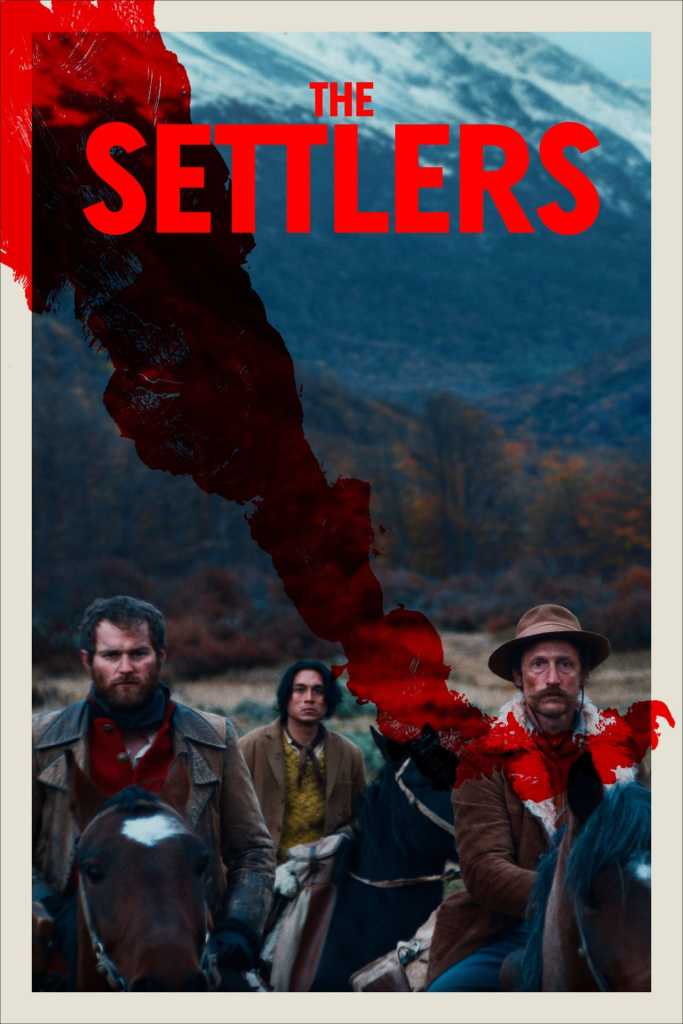
Randolph Scott was once a big name in Hollywood, a leading man and a money draw for decades, especially in westerns, but he’s become almost forgotten in the ensuing time. Up today is a series of 7 films he made at the end of his career in the 50s, all directed by Budd Boetticher. Seven Men from Now isn’t your typical old western. The supposed “good guy,” Ben Stride, opens the movie by gunning down a couple people who seemed to be minding their own business, and we learn after awhile that he is hunting five more men next. After those murders, Stride comes across a married couple, John and Annie, who are struggling to get their wagon out of the mud on a journey to California. Strides helps and agrees to ride along for security for a little while since they are going the same way. Along the way, you can see that he and Annie start to grow close, under the eyes of Annie’s (unmanly) husband John. At a way station, the trio come upon some old “friends” of Stride, Bill and Clete. Looks like Bill and Stride have history, but they set that aside for the moment; Bill says he’ll go along with Stride in his quest, for now. Turns out Stride is hunting the men who killed his wife, and Bill wants to ride-with because those men stole a bunch of money too. This movie goes against the typical western themes of the 50’s: you have good guys doing bad stuff and bad guys doing good stuff. Even Ben openly tells Stride he’s only going along for the money, and when they get it, Stride will be the only person in his way. Great film with lots of true surprises and twists, and even the stuff you see coming plays out wonderfully. ★★★★

The Tall T is a classic, pre-revisionist western, when the good guys were good and the bad were bad. Brennan is a good natured cowboy with friends at every outpost, but he is the wrong place at the right time when a coach he is riding on is robbed. The others on the coach, a newly married couple, don’t have any money on them, but the woman is the daughter of a wealthy miner, so the would-be robbers turn towards ransom. Brennan is kept alive only as a backup plan, but he is ready to avenge some friends who were killed by these robbers earlier. He also will not let the lady come to harm, even if the same cannot be said for her new husband, who really only married her for the money. Some delightfully bad villains and a hero to root for — what more could you want? Not too deep, but beautiful vistas of the old west, plenty of gunfights, and a rescue of a damsel in distress, who is given the chance to fight for herself before the end. ★★★½

Decision at Sundown returns to the cloudy motives of the first film and ramps it up a notch, but you don’t know it in the beginning. Bart Allison rides into the tiny western town of Sundown with his buddy Sam, and he is on a mission: to find and kill a man named Tate Kimbrough. After 3 years, they’ve tracked Kimbrough here, and are coming in on Kimbrough’s wedding day. The town seems divided between those who like Kimbrough (mostly his lackeys) and those who don’t (the longtime residents of Sundown). Not a man to waste time, Allison opens the church doors, interrupts the wedding, and announces that he’s there to kill Kimbrough. Kimbrough sets his henchman on Allison, which gets him and Sam holed up in stable. They are stuck, but no one can come in without getting himself killed, so they are at a standoff. Outside, Kimbrough has to explain things to his would-be wife, as well as his longtime paramour (who he might actually love more), all while the residents of the town gather their courage to make a stand against Kimbrough too. And at the end, our supposed hero Allison may not have righteousness on his side after all. I liked the writer of this film turning the genre on its head, but not everything works. In a film where there is no one to root for, who can you root against? ★★

Buchanan Rides Alone finds Scott again playing the riding-through-town lonesome sort. This time he finds himself in a quick pickle when he stands up for someone. The town of Agry is right on the border between California and Mexico, and everyone of influence happens to sport the Agry surname, including the local judge Simon, the sheriff Lew, and the hotel owner Amos. Buchanan is just hoping to grab a bite, a drink, and a night’s stay, when another Agry, drunken Roy (Simon’s son) is called out by a Mexican man from just across the border. Juan is accusing Roy of sleeping with his sister, and shoots Roy dead. When the mob attempts to rough up Juan, Buchanan steps in and gets himself arrested too. Simon, never to look a gift horse in the mouth, puts a stop to the lynching/hanging, in order to use Juan as ransom for a big payday from Juan’s wealthy family across the border. You would think the Agry family would come together and get ready for riches, but instead, they all scheme against each other, with Buchanan in the middle, just trying to do the right thing. By the end, too many double crosses, too much back and forth, until my head was spinning. ★½

Ride Lonesome brings back the simplicity and gives a much neater tale. Ben Brigade is a bounty hunter who has recently wrestled down Billy John, a no-gooder with a reputation for shooting people in the back. Brigade is to bring Billy into Santa Cruz for his bounty, and stops at a way station on the way, where they encounter former outlaws Sam and Whit, and the way station setter’s wife Carrie, whose husband is missing and presumed dead by the local natives. Sam and Brigade have a past, but Sam has gone straight; he has enough money saved up to start a ranch, but needs to get the price off his head if he is going to do so. Taking Billy in would do that, as the bounty comes with amnesty as well, but Brigade isn’t about to let his charge go. So the trio at the station join up with Brigade and Billy on the road, with Sam hoping to change Brigade’s mind along the way. It isn’t long until Sam thinks Brigade has something else in mind than a simple bounty run. Brigade is taking a circuitous route to Santa Cruz, allowing Billy’s brother Frank, an infamous gunfighter in his own right, to catch up. Maybe Billy isn’t Brigade’s ultimate goal after all? No big twists and turns on this one, just a straight forward old fashioned western. It’s a fun one too, with a big gut punch in the end when you learn Brigade’s reasoning for wanting Frank. ★★★½

Westbound, however, is almost a little too simple. Along with no big surprises, there’s almost nothing that really moves you either. It does bring a different aspect than the above films though: the Civil War. Hayes is a Union officer tasked with supervising a new stagecoach line that will run from California to the east. Along with passengers, its most valuable cargo is gold, dug in California and to be used in the war effort. The south will be eager for that gold too, making the transports a hot target. Most of the residents around Colorado where Hayes sets up his headquarters are southern sympathizers, except for one man (Rod) who lost an arm fighting for the Union, and Rod’s wife Jeannie. Hayes’ main antagonist is Clay Putnam, a wealthy man who married Hayes’ former girl and is financing a team of thugs harassing the stagecoaches. We clearly know the good guys and the bad, so it’s just a matter of killing all the bad before the end of the film. Not terrible, but it falls into the trap that gives so many of these old westerns a bad name, namely that plots and tropes are recycled ad nauseam until you can predict the outcome of every scene as it starts. ★★

I think by the time this team made their last film, Comanche Station, they were out of fresh ideas. It borrows heavily from just about all of the above films. Jefferson Cody rescues a damsel-in-distress (Mrs Lowe) after she’s been kidnapped by comanches. Turns out there’s a hefty reward from her husband for her return. On the way back, Jefferson and Mrs Lowe come upon a couple outlaws who have a history with Jefferson, and they know about the reward too. They’d love to find a way to get Jefferson out of the picture, but need his gun as they traverse the dangerous Indian territory. And this time, the bad guys are even more diabolical: Lowe’s husband’s reward is for her return dead or alive. The outlaws are planning to kill Jefferson and the lady as soon as they get through the area safely, so there are no witnesses to their own crime. A deliciously tense film, and while the ideas aren’t new, it is presented well and is gripping to the end. ★★★

Quick takes on The Passengers of the Night and other films

I didn’t rush to see Leave the World Behind at first, seemed a bit gimmicky for some reason, even though I do love myself a good apocalyptic film. Glad I finally put it on the screen, as I loved it! Written and directed by Sam Ismail (of Mr Robot fame), it gives off an M Night Shyamalan vibe, only, you know, good. In the film, husband and wife Clay and Amanda (Ethan Hawke and Julia Roberts) take their kids to a beautiful remote house for a weekend vacation. The first day goes fine, but that night, a knock on the door brings in George (Mahershala Ali) and his daughter, who claim to be the home’s owners and who rented the place to Clay and Amanda. George is saying the city had a power outage, so rather than try to make it to their New York apartment, they drove out to their country home, hoping to stay safe. Something seems off about him, and Amanda doesn’t trust him from the start. However, his story checks out once other weird stuff starts happening: they lose all phone and TV signals, and when George treks a couple miles over to a neighbor’s house, he finds it empty and ransacked. Once planes start falling from the sky and animals begin behaving weirdly, everyone knows that something serious is going down, even if we don’t know what that something is. Great film, with lots of tension in all the right spots, even if the weird camera movements/angles started to wear on me after awhile. The ending may be a bit too abrupt for some, but I had no problem with it. ★★★★

If the above film is great, Society of the Snow is perfection. Based on a true story, the movie tells the tale of the crash of an airplane in the Andes mountains in 1972, carrying 45 people. Many died in the crash and ensuing time afterwards, from injuries, avalanches, or cold, but 18 survived for over 2 months through the harsh mountain winter. There’s not much to say about the plot, it’s pretty simple, but it’s a film about the human will to survive, through unimaginable pain and suffering, with only your mental fortitude and the strength of your friends to get you through. The director’s capture of the picturesque scenery juxtaposed with the impossibility of the young people’s lives is magnificent. This event happened long before I was born and I stayed away from spoilers enough to not know if they survived or not, so maybe that made the struggle on screen even better for me. It’s a hard movie to watch, not only because the survivors had to resort to cannibalism when all other options were gone, but it’s well worth it for the power of its message. ★★★★★

The Passengers of the Night is the sort of authentic-feeling movie that you really have to be in the right mood for. Light on plot but heavy on character development and emotion, it begins in France in the year 1981, when the country has just elected a new president and there is joy in the streets at the coming change. Everyone is happy except a runaway teen named Talulah, who is at the train station picking a destination at random. After this short intro, the movie fast forwards to 1984 and we meet the other characters: recently divorced Elisabeth and her teen kids, Judith and Matthias. Newly single, Elisabeth is having to go back to work after a decade-plus of raising the kids, and her lack of skills bounces her from place to place. When she finally finds a permanent vocation, it is as a phone operator at a popular late night radio show. That’s where we catch up with Talulah, who has called in a few times and is now coming in to do a segment in person. She’s been homeless these last few years (it is hinted but never explicitly said why she left home), and Elisabeth immediately takes a shine to her. She takes Talulah home and gives her a spare room. Talulah grows close to the family and especially to impressionable 16-year-old Matthias, but when they have a sexual encounter one night, Talulah is spooked and runs away again. The film’s final act is 4 years later on, as the country prepares for another election (7 year terms at the time), and we see where the family is, as once again, Talulah’s path crosses with theirs. In the end, you don’t learn what happens to everyone; in fact, you don’t really learn what happens to anyone. It’s snapshots, moments in time, the kinds of moments that stick in our memory and can recall decades later. And while Elisabeth is the “main” character, we care equally for the kids and Talulah. We feel their joys and hurts. Very natural feeling and completely absorbing. ★★★★½

I’m not a big fan of documentaries, but Lynch/Oz combines David Lynch with The Wizard of Oz. What more could you want? The movie is interesting enough, but even for a big Lynch fan like myself, I found it very repetitive. This is mostly because it is broken up into half a dozen or so segments, each narrated by a different filmmaker, and they sometimes touch on the same subjects. It is advertised as a film about how The Wizard of Oz inspired, and continues to inspire, the films of David Lynch, but to fill out the movie, it finds a plethora of other films that were inspired by Oz as well. Really didn’t learn much, though it was interesting to see correlations between different films and whatnot. The narrators/presenters vary from dry to entertaining, but the best overall was director John Waters (who is always entertaining). People who are into docs may enjoy it more overall, but for me, ★★½

Killers of the Flower Moon is the latest Martin Scorsese epic, based on the book Killers of the Flower Moon: The Osage Murders and the Birth of the FBI. In the early 20th century, oil is found on an Oklahoma reservation owned by the Osage people. They are immediately wealthy, even though the government does everything it can to make it difficult for them to access their own funds. They need court-appointed guardians, white people only, to manage their money, because the indigenous people are considered “incompetent” no matter how intelligent they are. Enter into the scene William Hale, known as King Hale for his vast cattle lands. He is a rancher and claims to be a helper for the locals, as “it is their oil after all,” but he has hatched a plan to get his hands on that money the only way he sees how. His nephew Ernest has recently returned home from World War I and quickly marries an Osage woman named Molly, whose family owns oil headrights. No sooner is the ink dry on the marriage certificate that Molly’s family starts dying off, her sisters and mother coming to grisly ends. This has been going on for awhile, with oil headrights owners turning up dead for the last few years, and their rights passing on to their white guardians. Molly and Ernest love each other, so Molly doesn’t suspect a thing, even when we see Ernest engaged in terrible acts himself. The Osage Nation is pleading for anyone to help, but so far, the government has turned a blind eye. It isn’t until Mollly makes a trip to DC to talk to President Coolidge that they (the government) sends investigators to Oklahoma to see what is going on. This is a long movie, 3 1/2 hours, and fully the first 2+ hours are mostly exposition, dialogue, and setting up the action. Once the feds show up, stuff starts going down, but it is nearly too little too late. Readers of my blog know I like a good long movie, but I like them when they are long for a reason. This one just seems long to give the impression of an epic, when in reality, it could have been trimmed down quite a bit and felt more tidy. Brilliant acting from stars Leonardo DiCaprio, Robert De Niro, and especially Lily Gladstone, who recently won a Golden Globe portraying Mollie and should be on the short list to win more awards this season, but overall, it’s not one of Scorsese’s finest. ★★★

  • TV series recently watched: Mr Robot (season 1), Echo (series), Batman: The Animated Series (season 1)
  • Book currently reading: Lord of Chaos by Robert Jordan

Quick takes on The Holdovers and other films

Frybread Face and Me is a wonderful little indie film about a boy learning where he came from. Benny is 11 or 12, living in San Diego with his parents, when they announce that he’s going to spend the summer in Arizona with his grandmother. Grandma lives on a Navajo reservation and has refused to learn “the white man language,” so she and Benny can’t even communicate with each other, but thankfully there are a couple translators. Benny’s uncle Marvin still lives there, but he looks for ways to belittle Benny as he thinks Benny is soft. Benny’s one friend is his cousin Dawn, who everyone calls Frybread Face. She too jokes at Benny’s expense at first, since he knows no Navajo customs at all, but the two begin to bond over the ensuing weeks. Dawn is there because her dad’s in prison and her mom is uninvolved, and, as Benny eventually learns, he himself is there because his parents are getting a divorce in San Diego. It’s a sweet film about learning your roots, but also the passing of a way of life, as Grandma is the only one he still clings to the old ways. She drops subtle and not-so-subtle hints that she wishes some family would continue their way of life, but everyone has already moved on. Funny and endearing, it’s a very cute film. ★★★½

Under the Fig Trees is a quiet, unassuming film out of Tunisia, and sometimes it is films like this that come out better than they have any right to be. That is the case with this delightful film. All it is is a day in the life of the workers at a fig farm. Most are younger, and we see their relationships with each other, as well as the older (more staid) women who do the counting, and the bosses who lord over it all. There’s friendships, rivalries, love (and lost love), and all of the dynamics of a people bonded by work, but at odds with each other over other trappings of life. There’s not much of a plot other than the normal things you run into in your daily life, but it is enchanting. As the film was ending after just 90 minutes, I wanted more. Much better that than the other way! ★★★★

I’ll admit, as the The Holdovers was getting going, I didn’t think much of it. Taking place as 1970 is winding down, it follows a curmudgeonly ancient-history teacher at an all-boys boarding school outside of Boston. Everyone is getting ready to go home for the Christmas holiday, but there’s always a few boys stuck at school, and it is up to this old professor, Paul, to watch them this time. Paul is the least-liked teacher at school (what student would when he gives homework over the holiday and promises a test when they come back?), so not one of the students are exactly thrilled. Most are saved when one of the boys’ fathers picks them up (in a helicopter no less) to take to a ski resort for the rest of the break. That leaves just Paul and student Angus, whose mother is off honeymooning with her new husband and couldn’t be reached to give permission to leave. Angus is a bright kid, but he’s at risk of flunking out, and knows that his mom will send him to military school if he does, even though the country is currently fighting in Vietnam, all-but assuring Angus of ending up in battle upon graduation. Paul starts to see something of himself in Angus; a boy who goes to a well-to-do high school, with problems at home that may prevent him from reaching his full potential. Over the remaining break, the two bond, and (hopefully) come to terms with a lot of the emotions they have pent up. Seemed hokey in the beginning, but only because the film has a bit of a throwback kind of feel. It definitely grows on you, until you really care for these characters by the end. ★★★★½

Not exactly sure what to think of Maestro. A tale about the life of American conductor and composer Leonard Bernstein, it stars Bradley Cooper in the title role (who also directed), with Carey Mulligan costarring as Bernstein’s wife Felicia. The producer’s credits feature heavy hitters too, including Martin Scorsese and Steven Spielberg. I don’t know, but with a group like that, I think I was expecting to be blown away. It’s good, but certainly not earth shattering. It follows Bernstein’s career rise and covers pivotal moments in his personal life. When he’s a young nobody in New York just making his way, he’s in a gay relationship, but knows that that lifestyle won’t fly once he starts getting a name for himself (in the 1940’s). So he “settles down” and marries Felicia and has a few kids. She is pretty wise to his closeted life early on, but (at least appears to) doesn’t care, as long as Lenny is discrete. As the decades go by, discrete is something he isn’t always, leading to fights at home, but when Felicia comes down with cancer, Lenny does drop everything to be at her side. The film has some nice moments and the acting by the two stars is fantastic, but I still felt that, at the end of the movie, I didn’t know Bernstein any more than I did at the beginning. Doesn’t seem like I got into who he really was or what made him tick, or what mattered to him most. And honestly, I’m getting a little tired of moviemakers who feel like they can put a film in black and white with a 4:3 aspect ratio and all of a sudden it is “artsy.” Decent, not spectacular. ★★★

Story Ave follows a teen named Kadir (Asante Blackk) who is dealing with the recent death of his younger brother. Kadir’s mother has understandably lost her footing, leaving Kadir to fend for himself. With no guidance, he falls in with a graffiti gang calling themselves Outside the Lines. Kadir, a budding young artist, is in it for the art, but he doesn’t realize that the gang will violently defend their turf, and it isn’t long before Kadir is in over his head. As luck would have it, the first person Kadir tries to steal from, as part of his initiation, is a man named Luis (Luis Guzmán). Luis doesn’t take Kadir at face value, that of a thug who is too far past saving, but instead sees the lost boy Kadir is. Luis takes him under his wing, opening his eyes to a life that isn’t yet worth giving up on. I wasn’t moved much by Blackk’s performance, thought it was a bit wooden, but the seasoned pro Guzmán drives this film and delivers as he always does. The film does a good job of, as Luis does with Kadir, turning the viewer’s thoughts on him from a hopeless wannabe gangster to a young man worth saving. ★★★½

  • TV series recently watched: For All Mankind (season 3)
  • Book currently reading: Lord of Chaos by Robert Jordan