

I didn’t rush to see The Hunger Games: The Ballad of Songbirds & Snakes when it hit theaters last year. It was getting middling reviews, and when I read the book, I wasn’t blown away. However, I ended up enjoying this movie quite a bit. It’s a prequel to the original Hunger Games films, and tells the story of how Coriolanus Snow (Donald Sutherland’s character in the original tetralogy) came to power. Despite being terrible in those movies, in the beginning of this one, you actually kind of like Snow. His family was once powerful but has fallen on hard times, and he is counting on winning a scholarship in school in order to fund his future education and put his family back on the map. Unfortunately, it is announced that the scholarship will be given to the student who can make the most impact in turning around the flagging Hunger Games. Now in its 10th year, the people of the capital are no longer tuning in to watch the gruesome bloodbath between the tributes from the outer districts. The powers-at-be in the capital need the games to do well, so Snow sets out to do his part. His tribute is Lucy Gray, a singer from District 12, and Snow will do whatever it takes to make her a star. As the movie goes along, and especially after the conclusion of the games when Snow follows Lucy Gray back to 12, we see the determination by Snow to do whatever it takes to make sure he ends up on top, a quality that will lead him to be such a villain in the future. The movie does lull here and there, but the highs are very high and more than make up for the slower moments. Rachel Zegler as Lucy Gray lacks the nuance of Jennifer Lawrence’s Katniss, but the acting is still very good. ★★★½

Junction follows a trio of main characters over the course of 1 day, each tied to each other and the ongoing opioid crisis. Michael is a successful restauranteur but his personal life is in shambles, the result of an addition to oxycontin after a surgery awhile back. His doctor, Mary, is struggling too, because the clinic where she works has been under scrutiny for prescribing too many pain meds, so she’s being more choosy how she gives them out. This has led to her cutting Michael off, and he is in severe withdrawal from abusing them for too long. A side story involves the CEO of a major pharmaceutical company, under fire for his part in worsening the current situation. He too is tied to the other 2 characters, though we don’t learn how until the end. The movie has a good message, but it is far too heavy handed, and all of the “surprises” are foretold long before they happen. It also has the feel of a super low budget film (despite plenty of actors with a list of credits to their name); I don’t mind a low budget movie, but I also don’t like to feel like I could have shot a better film with my iPhone. There are better movies out there dealing with this subject material. ★★
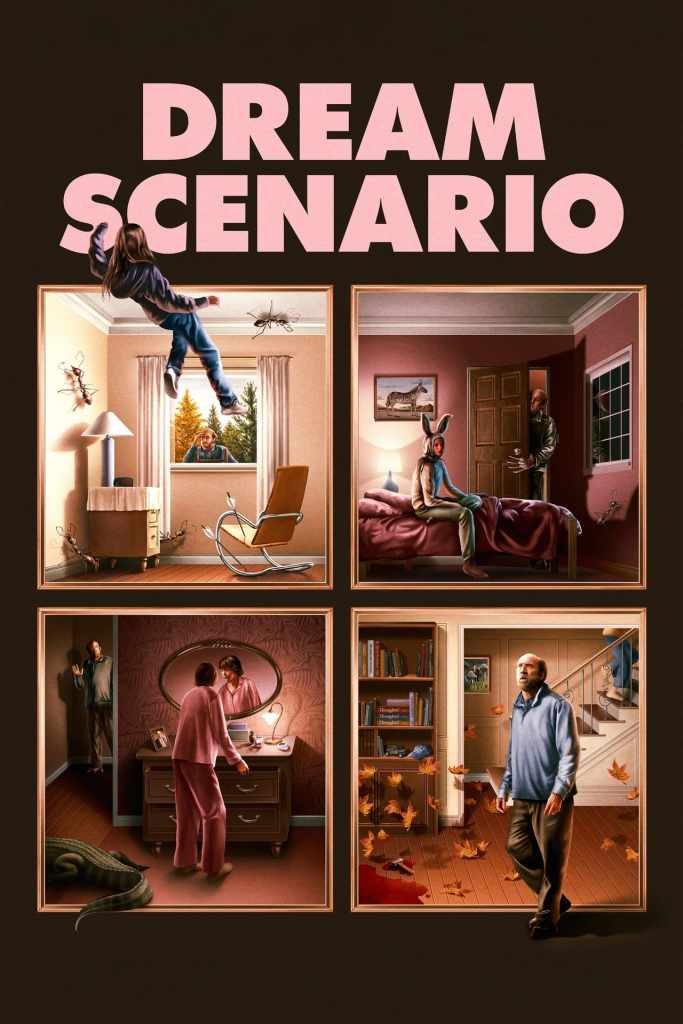
Dream Scenario is marketed as a black comedy, but it has a lot of dark elements to it too (it was produced by current horror film guru Ari Aster). Nicolas Cage plays mild mannered college professor Paul, who is one of those people is completely forgettable, even by people in his professional circle. He never takes a stand on anything, but he’ll be forced to when he becomes a viral sensation. Turns out Paul is randomly popping up in people’s dreams, many of whom he’s never met. The dreams all share a common thread, which we as the viewer notice long before the characters in the film do: they are all nightmares. The people laugh about them at the time, because here’s this strange guy who does nothing but walk through during a traumatic event, but some of the dreams are pretty horrific. The movie takes a turn halfway through. Paul’s role in the dreams was pretty benign when he was a mild mannered, soft spoken man, but when something in Paul’s real life gets him riled up, his role in people’s dreams takes a more sinister turn as well. Suddenly the dream-Paul is murdering, raping, and doing all kinds of terrible things, and in the real world, Paul becomes a pariah. He’s facing cancel culture and doesn’t know what to do about it. There’s some dark laughs early, and some uncomfortable moments later, and Cage is superb through all of it. He always seems to shine in these more intimate roles. A good movie if you don’t mind feeling a bit uneasy here and there. ★★★½
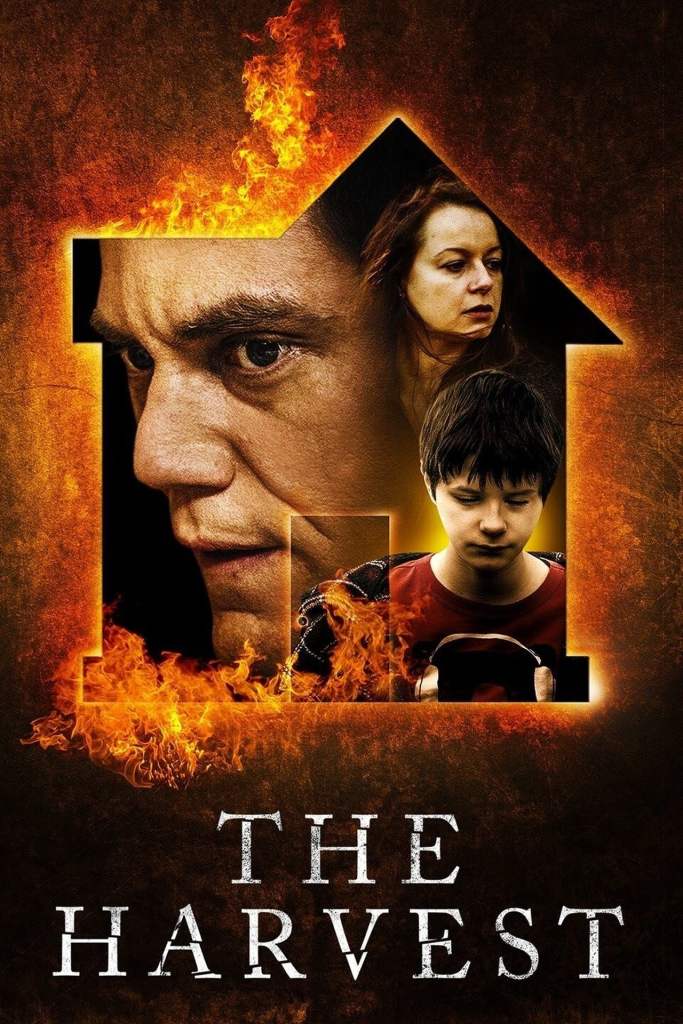
The Harvest isn’t a newer film, but it went into the rotation based on a recommendation. It has Michael Shannon, and who doesn’t say yes to a Michael Shannon flick? It revolves around a sick boy named Andy, who is being home schooled by his mother (a doctor named Katherine, played by Samantha Morton). Andy’s whole life is in his bedroom, but he makes a friend in Maryann. Maryann’s parents recently died and she is now living with her grandparents in a house in the area. She stumbled upon Andy’s house one day and befriended him, much to Katherine’s chagrin. Katherine doesn’t seem to want anyone around Andy other than herself and her husband Richard (Shannon). As the movie goes along, we find that Katherine is more than just protective of Andy, she’s possessive and mentally abusing, in a Misery sort of way. But Katherine keeps sneaking around, giving Andy a hope of a world outside of his illness. Things take a dark turn when Maryann has to hide in the basement when Katherine comes home early, and there, Maryann finds another sick child, a boy in hospital bed, in a coma, and on life support. Maryann doesn’t know what to do with this revelation, and what it means for Andy. The end is a dark and twisted affair. The movie is decent, with strong turns by Shannon and especially Morton (somehow she stayed off my radar until her appearance in The Walking Dead, and now I can’t get enough), who steals the show, even if I did see the ending coming a mile away. ★★★
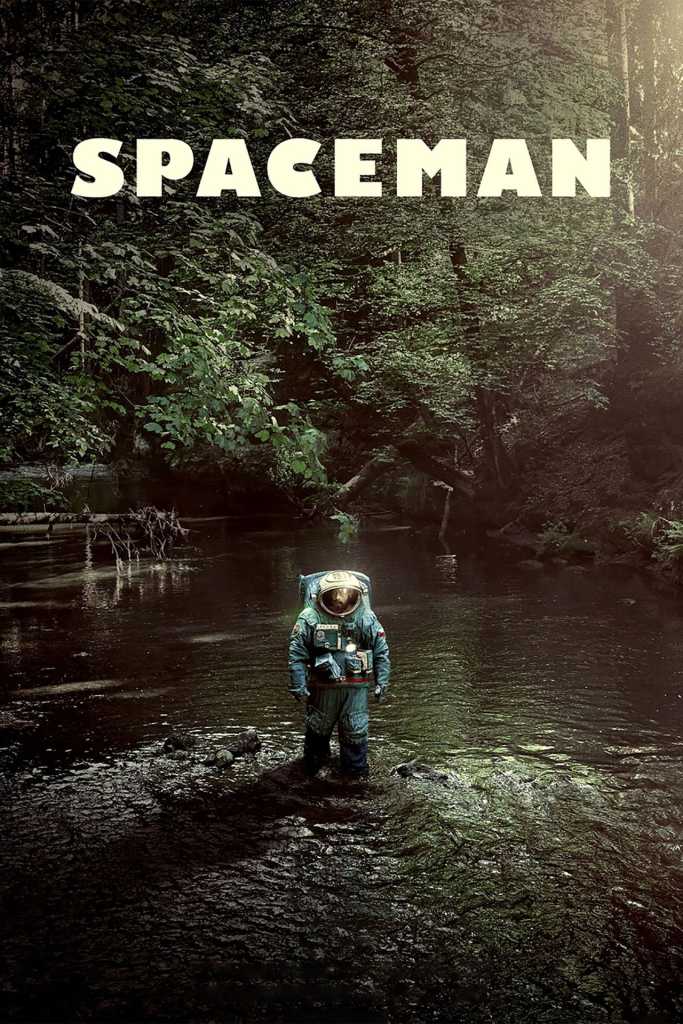
Spaceman is the latest Adam Sandler/Netflix film, and while I generally avoid these movies (pretty awful, from what I hear), this one is not a comedy. In my opinion, Sandler’s at his best when he leaves his comedic schtick behind and takes a more dramatic role (Punch-drunk Love, Reign Over Me, Uncut Gems, etc). In this film, he plays Jakub, a man on a year-long space mission to Jupiter and back. He’s been sent to explore a space cloud that appeared out there. When the film starts, he’s been alone in space for 6 months and is within days of approaching his destination. Jakub is carrying around a lot of baggage from a rough childhood, and while he has a pregnant wife at home, his past has kept him from connecting with people, even her. Thus, he’s a very lonely guy, but he finds a new friend in deep space. He is visited by an alien intelligence, who Jakub names Hanuš, who takes the form of a giant spider in Jakub’s space craft. Hanuš can explore Jakub’s mind and memories, and together, they investigate what made Jakub the man he is, and what he needs to do to overcome his deficiencies with his wife. The movie isn’t devoid of comedy (wouldn’t be a Sandler film if so), such as the awkward interactions between Jakub and a giant effing spider, and, because it is a commercial space flight (the only way to pay for such a thing), Jakub has to keep thanking his sponsors back on Earth whenever they communicate. I liked the movie just enough, but not as much as I had hoped, based on Sandler’s previous more serious films. It tries to be a whole lot deeper than it is, but I still liked it better than average. ★★★


