Quick takes on The Crime is Mine and other films

Talked to a good friend and movie buff the other day, who couldn’t believe I hadn’t seen American Fiction yet, one of his favorite movies last year. Gotta say, it is a great one. Equal parts drama and good old fashioned satire, it stars Jeffrey Wright as Thelonious “Monk” Ellison, a college professor and author, but who can’t get his latest book published. Publishers are wanting “black fiction” that sells, and the fact that Monk is black isn’t enough, as his books don’t race to the lowest racial stereotypes; case in point, the newest lauded bestseller is new author Sintara Golden’s “We’s Lives in Da Ghetto.” Frustrated with the system, and almost as a joke, Monk takes the pseudonym Stagg R Leigh and writes “My Pafology,” based on the fake Stagg’s “real life” in prison and on the streets. To Monk’s surprise but no one else’s, publishers swoon over it and want to turn it into a movie, even before it comes out, and they don’t shy away even when “Stagg” changes the name of the book to simply “Fuck.” Outstanding satire on our society’s views on racism, especially on how black men and women view themselves, but it doesn’t just stick to Monk’s views either. When he gets a chance to meet and talk with Sintara, we see that she put a lot of work into her book and does have a story to tell. It’s not all jokes though, there’s a whole side plot involving Monk’s family dealing with the deteriorating health of their mom, who has advancing Alzheimers, and the pain of hidden family secrets from decades ago. The drama enhances but doesn’t take away from the comedy though, which is hilarious throughout, but with some hard-hitting poignancy here and there too that will definitely make you think. ★★★★½

The Zone of Interest also received a lot of attention on the awards circuit this past season. A German language film, it tells a fictionalized tale of Rudolf Höss and his family as they lived in an idyllic house just outside Auschwitz during World War II. Höss, the commandant of the concentration camp, goes about his life throughout the film, and it only shows his interactions with wife, family, and friends, never taking the cameras inside the camp. Höss and his wife Hedwig fight, like all couples do, while their kids play, get into trouble, or have swim parties with friends. Of course, the elephant in the room is the camp on the other side of the wall, where you can see the glow from the incineration chambers at night, hear the pop of guns near-constantly, and the occasional wails of anguish. But of course, what we don’t see is that in the camp, they can probably hear the squeals of delight from Höss’s kids, who seem completely oblivious. It’s a stark movie, and has a powerful ending that is completely open to interpretation, but not sure the film is all that great at anything other than giving the viewer the heebie-jeebies. It almost wants you to feel sorry for Hedwig when Höss isn’t listening to her marital complaints about not spending enough time at home, and then later she makes a crack about sending their house servant to the furnaces when she messes up. Will make you feel icky for sure. ★★★

Bob Marley: One Love is a biopic about the man, covering a pivotal moment in his career for a couple years in the late 1970s. At the beginning of the film, Marley is already a big star, and he is using his influence to preach peace in his home nation of Jamaica. The right and left wing parties in the country are at each other’s throats, a conflict that has even brought about violence in the streets, but Marley is pleading for peace between the sides. Two days before a planned concert though, Marley and his friends are targeted in an assassination attempt by one of the political parties, who felt that Marley was cozying up too much to the other faction. No one is killed, and rather than deter Marley, it only strengthens his resolve. In order to bring attention to the country’s problems, Marley embarks on an international tour, first to London where he and his band finish up a new album, but with the ultimate goal of performing in Africa to inspire his ancestors’ people there. Much of the movie is heavily music based, with us hearing many of Marley’s popular tunes throughout. Big fans may find plenty to love, but for me, it started to distract after awhile, because a (long) tune or performance would break up the action of the film and grind the story to a halt. Fine performance from Kingsley Ben-Adir as Bob Marley, and I did come away from the film with a better understanding of what made Marley tick, but it’s not all that memorable of a film. ★★½

I thought I’d find a diamond in the rough with low budget film (with no recognizable faces) The Stolen Valley, but unfortunately it is about the worst kind of action drama you can find. It follows two women, Navajo descendent Lupe and a rough-and-tumble nomad named Maddy, who come together through fate to embark on an adventure. Lupe’s mother is deathly sick with cancer, and Lupe sets out to find her mother’s ex-husband, who owns land in a nearby valley. Lupe is hoping to beg for money for her mother’s treatments. Along the way, she stumbles on Maddy, who seems to know every bag guy in the state, and she agrees to help Lupe on her path in exchange for a payout. I very nearly gave up on this film just 20 minutes in, after Maddy ends up in the backroom of a business with some hoodlums whom she owes money to. Literally every line of dialogue dropped was a cliche, like, “You walked into the wrong place,” and “Get in (the car) if you want to live,” and, “They won’t stop until they kill us both.” One golden oldie after another. I pushed on to see how it all was going to end, but even the plot twists in the second half were overworked. My eyes were starting to hurt from rolling so much. The acting is as bad as you could expect, though newcomer Briza Covarrubias as Lupe wasn’t (always) bad. Can’t say the same for any other character in the film. One star because I did stick around to the end, but maybe that’s just on me. ★

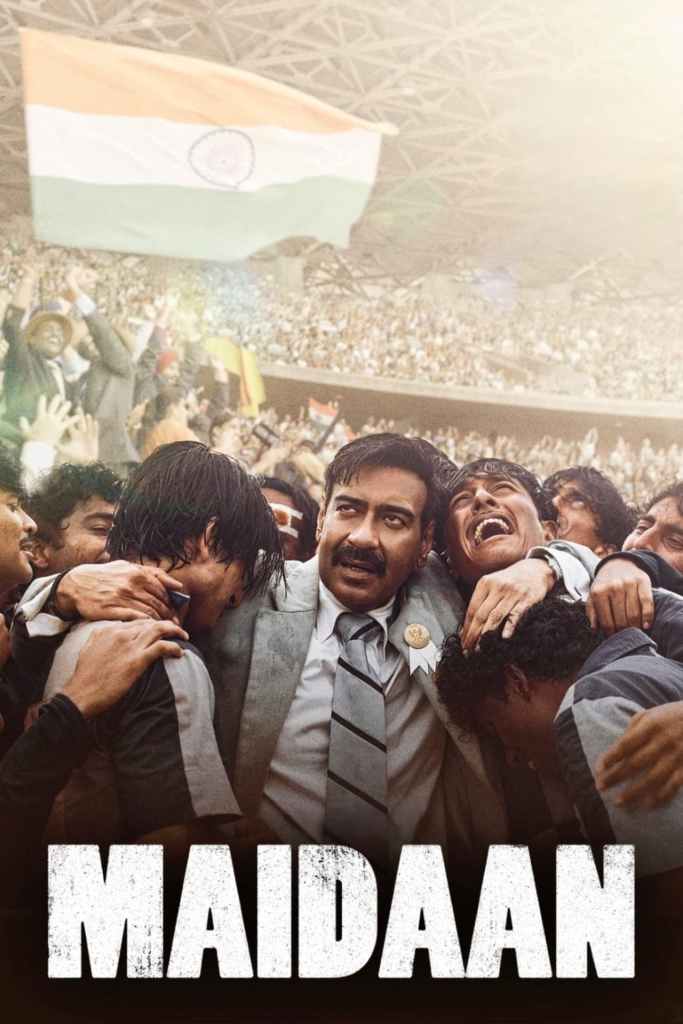
The Crime is Mine is a delightful French comedy with a throwback kind of feel, which makes a bit of sense as it is based on a 1930s play and takes place in that era. Maddy and Pauline are a pair of friends who are broke, months behind on rent and living without water and power in their apartment. Maddy is a bad actress and Pauline is a poor lawyer, so they don’t have much in the way of prospects either. Fame falls in their laps when a wealthy film producer is found dead of a gun shot, and Maddy was the last to see him. She is suspect number one by the hilariously bumbling police, but rather than refute the flimsy evidence (and the viewer definitely thinks she didn’t do it), Maddy pleads guilty, while Pauline scripts a trial worthy of a film production, à la Chicago. They are able to get Maddy set free based on self defense against the groping producer, and Maddy is famous. All could be wrecked though when the true murderer, a silent film era has-been named Odette (played by the always perfect Isabelle Huppert) shows up and wants a cut of the fame, or at least the profits. From the beginning, I got a French New Wave kind of vibe, with its fast dialogue and quick camerawork, but there’s “too much” of a narrative story for a New Wave film. Still, has a classic feel and is supremely entertaining and very, very funny. ★★★★

  • TV series recently watched: Black Knight (series), The Reluctant Traveler (season 2), Ripley (series)
  • Book currently reading: Dragons of a Lost Star by Weis & Hickman

Quick takes on Ferrari and other films

Finally got around to seeing Anatomy of a Fall after it won tons of awards this past season, and it’s a great film, well worthy of the praise. In a picturesque chalet in the French Alps, author Sandra is being interviewed by a reporter when their conversation is interrupted by super-loud music in the attic, where Sandra’s husband Samuel is doing some work on the house. Samuel is obviously doing it on purpose, and Sandra is perturbed. Her friend leaves, and shortly after, so does the couple’s son Daniel, who takes the dog for a walk. When Daniel, who is blind from an accident years ago, returns home, he literally stumbles upon the body of his father, lying dead in the snow in front of the house. Daniel screams for his mom, and Sandra comes running out. Over the next few days, she is interviewed by police, who don’t immediately believe her story that Samuel must have fallen out the window from the attic, and when it comes to light that their marriage was rocky, she becomes a prime suspect. The rest of the movie plays out as a courtroom drama, with neither Sandra nor Samuel looking completely innocent in the problems with their marriage. Ultimately, the film doesn’t give you any hard answers; I kept going back and forth on whether it was an accident or murder. The unspoken but glaring hints that are dropped in the final scenes paint a whole new picture on it all too. Great film with absolutely terrific acting. ★★★★½

Unlike the above film, Disney’s Wish was a much-maligned release last year, so I was in no rush to see it, and unfortunately, the critics were right about this one too. It tells the story of a magical kingdom known as Rosas, where the king, Magnifico, has magical powers. When people come to his kingdom, which is an idyllic place with few problems, they must give up their one wish in life. The person giving up their wish forgets it once Magnifico has it, so they don’t remember what they longed for. Once a year Magnifico chooses someone to restore their wish to. Of course, he’s the one deciding, so it is only wishes that he thinks would be for the good of the kingdom. 17-year-old Asha is interviewing to become Magnifico’s apprentice and hopes to persuade him to restore her 100-year-old grandfather’s wish. What she learns though is Magnifico isn’t as benevolent as the people think, hoarding his power and only choosing to restore wishes that don’t threaten him. With all of her heart, Asha wishes on a star, and the star comes down to her. Magical things start happening around her, and Magnifico, who feels magic being used, is threatened. It all leads to a good ol’ good vs evil battle in the end. It’s a very interesting premise, but poor execution and a paper-thin plot with no twists or surprises dooms this movie. Unremarkable and forgettable songs, and humor that my 2-year-old granddaughter may laugh at, but no one else will. The only real redeeming factor is the beauty of its animation, but that’s to be expected these days, and it doesn’t make up for all of the film’s flaws. ★½
If there was ever a true revisionist western where the “good guys” are anything but, The Settlers is it. Taking place in Chile in the late 19th century during the Selk’nam genocide (look it up, pretty dark time in that country), there is currently a land grab going on, and those with the power are the ones getting the land. The government has given a swath of country to a man named José Menéndez, who wants it reclaimed from the indigenous people as well as settlers from other countries who have moved in to the territory. Menéndez charges British expatriate MacLennan with finding a path to the ocean for his roaming sheep herds, and MacLennan picks two to accompany him: American mercenary Bill and Chilean mestizo (of mixed local and European heritage) Segundo. Segundo is quiet and unwilling to butcher the locals en route, but Bill and MacLennan have no such inhibitions, but the indigenous people will not be the only danger. The land grab has brought crazy people (literally insane, it seems) from all over the world, and lets not forget, there’s a genocide going on too. The film does an excellent job of capturing the bleakness of a land without law and order, where no thought is given to fellow man and people only care for their own personal advancement, told from the viewpoint of the resigned and powerless Segundo. Excellent film, if you can stomach it. ★★★★

Ferrari, the newest from award-winning director Michael Mann, stars Adam Driver in the title role as Enzo Ferrari. It takes plays in the late 50’s, a couple decades after he started his racing car company. As he says it, he sells cars to finance his race cars, not the other way around like his competitors, but Ferrari is in financial straits, as they just don’t sell enough vehicles. He is betting heavy on the upcoming Mille Miglia, Italy’s premier distance road race, in order to entice new investors without having to sell portions of his company to people who will want some control over it. On a personal level, Ferrari is at a crossroads too. His wife Laura (Penélope Cruz) owns half the company but they are on the outs, and she is fed up with his womanizing. His longtime mistress, Lina (Shailene Woodley) is pressuring Ferrari to publicly acknowledge their 10-year-old son Piero, a fact that all of the city knows except for Laura. As the big day approaches, Ferrari has to balance his separate family lives with his business, and keep everything afloat. The film finds the perfect balance between drama and thrills, provided by the pedal-to-the-floor thrills of the race. I was totally into it from the very beginning, rooting for Ferrari (despite him being egotistical and bombastic to everyone except Lina) and hoping he could find a way to keep it all together. ★★★★

  • TV series recently watched: Superman: The Animated Series (season 1), Turn of the Tide (season 1)
  • Book currently reading: Dragons of a Lost Star by Weis & Hickman

Quick takes on Kwaidan and other Japanese films

I’ve got a set of Japanese films up today, some older, and a couple newer, starting with 1956’s Crazed Fruit, directed by Kô Nakahira. The film follows a young straight-laced man named Haruji, who, for the summer, is hanging out with his older brother Natsu and Natsu’s friends. The crowd tends to hover around an “ultra cool guy” named Frank; he has American looks to go with this American name, though his parentage is never given, and in general, they are a bunch of teens with raging hormones out looking for love. Haruji, being a bit more staid, doesn’t care for the group much, but he is attracted to a young woman in the area named Eri, so he tags along as a way to see her. Eri and Haruji start dating and he falls head over heels, but she’s got a secret: she’s married to an older American. Natsu finds out, and uses the threat of exposing her to get Eri to sleep with him. Just wait until Haruji finds out! The movie starts slow but really gets going in the second half. It reminded me a bit of the classic 80s teen movies à la John Hughes, but was obviously very risqué for its depiction of a post-war teen society in Japan, an upcoming generation who didn’t care for the traditions that previous generations held so dear, and who saw the free-wheeling, caution-to-the-wind American culture as the wave of the future. ★★★½

After recently watching a very good (and long) film from director Masaki Kobayashi, I found a couple more. Kwaidan is an semi-horror anthology film of 4 segments, each dealing with ghosts or spirits. In The Black Hair, a samurai leaves his loving wife to marry another, in order to advance his position, but his new marriage is unloving, and he longs to return to his original wife. When he is finally able to, many years later, he finds the house dilapidated, except for his wife’s room where she is still waiting for him. But she may be as dead as the house… In The Woman of the Snow, two men are caught out in the snow, where a snow spirit kills one but spares the second. She does make him promise to never tell a soul about her, a secret he keeps for many years, while he gets married and has kids, but a slip-up one day ruins his idyllic life. Hoichi the Earless tells of a blind musician who unknowingly is brought to a ghostly hall every night to serenade the long-dead spirits of a long-ago war. When the priests try to protect him from the dead, they end up doing more harm. The last segment, In a Cup of Tea, is the purposefully-unfinished story of a tale-within-a-tale, a writer chronicling a samurai haunted by a malevolent spirit inside a tea cup, which may come to haunt the writer too. Each one of these tales is entirely gripping, with gorgeous hand-painted sets (apparently filmed inside a plane hangar, the largest space they could find to accommodate the big sets). Coming off some big hits, Kobayashi was newly signed to studio Toho and they invested in the film heavily; it was the most expensive film ever produced in Japan at the time. And it is a lovely, scary, tense journey from beginning to end, a true masterpiece. It won a prize at Cannes in 1965, and was nominated for an Oscar here in the states. ★★★★★

Kobayashi followed up in 1967 with Samurai Rebellion, its attention-grabbing English name since samurai films played well here, though in Japan its original title was more akin to Rebellion: Receive the Wife. The original title better conveys what the film is, not really an action film (though there is plenty of that before the end), and more of a family drama, and a taut one at that. In Edo Japan, Isaburo Sasahara (the incomparable Toshiro Mifune) is head-of-household and one of the Aizu clan’s premier swordsman. Isaburo follows his lord in all things, but fights back a bit when the lord commands Isaburo’s son Yogoro to marry the woman Ichi. Ichi is the former lord’s mistress and even bore him a son, but she fought back against him one day and he now wants her gone. Isaburo has long been in a loveless marriage himself, and doesn’t want to see his son follow suit, so they give some pushback but ultimately agree, in order to keep the peace. Thankfully, Ichi is nothing like what her reputation told, and is a loving wife who gives Yogoro a daughter, Tomi. Turns out Ichi only made a scene at court when the lord’s eye wandered to another, and she didn’t want to be with him anyway. All seems settled until the lord’s eldest son gets sick and dies, setting up Ichi’s son to be the new heir. It would not be proper for the heir’s mother to be married to a vassal, so she is called back to court. Yogoro will not see her go, and this time, Isaburo will not just acquiesce to the lord, setting up a standoff. Really great film, and I’d like to rate it higher, but unfortunately it does really drag at times, with characters constantly repeating themselves (over and over again) so that some 5 minute scenes turn into 15, for really no reason at all that I can tell. Still, a very enjoyable film about standing up to the abuses of power. ★★★½

After a few classics, thought I’d turn to more modern films, so finishing with a couple from director Hirokazu Kore-eda. I’ve seen a trio of his more recent films and liked them all (especially Shoplifters and Broker, but also his French film The Truth), so today I’m going back to some earlier films, starting with 1998’s After Life. If you tend to cry at movies, bring a handkerchief to this one. It opens at a school-like building, with counselors wrapping up last week’s visitors (having sent all 18 “on their way”) and discussing this week’s 22 newcomers, assigning a third of them to each of 3 caseworkers. As the new people are being interviewed, we learn that this place is a sort of way station for the newly dead. Over the course of the week, each person has to choose one memory from their life, the only memory that each will retain, to relive for all of eternity. The counselors are there to guide them to this moment in life, and by the end of the week, the crew and actors will reenact that moment on a film stage for the newly departed. After the person sees this newly created moment based on their memory, they are able to move on. The memories the people choose are as varied as humans are from one another: an old lady picks an early memory of cherry blossoms raining from trees when she was 9, a child who died at 1 recalls warm sunlight through the window while their mother was nearby, a middle-aged woman recalls a dance she did as a little girl, etc. Some have a hard time picking one out of so many good memories, while others have difficulty finding one good memory out of a lifetime of mundane moments. One young man flat out refuses to choose a memory, and hints that he didn’t lead a good life and is just thankful that there isn’t a hell waiting for him. Told almost as a documentary as the counselors interview and get to know these people waiting to move on, the viewer takes a trip through those cherished moments in lives, some of which may seem insignificant at the time, but which leave lasting impressions. And what of those counselors themselves? By the end we learn their stories and why they have not advanced to what is next. As touching a film as you will find, if you are loves movies (and don’t mind subtitles), it doesn’t get any better. ★★★★★



Finished a string of really good movies with Kore-eda’s Still Walking. This is a quiet, subtle family drama, with an almost Ozu-like feel. It takes place (mostly) over one day, on the 12-year anniversary of the death of Junpei Yokoyama. The family gets together every year on this day to remember his life cut short in a drowning while saving a friend. The father, a retired doctor named Kyohei, wanted someone to take over his family medical clinic, and while the popular Junpei was headed in that direction before his death, surviving son Ryota went in a different direction. Ryota is a disappointment in his father’s eyes in more ways that one, going into an unpredictable field (art restoration) and marrying a widow with a child (historically a no-no in Japan). Also at the house for the day is Ryoto’s sister Chinami and her unassuming husband and kids. The glue in the family, as is the case for most families, is their mother and Kyohei’s wife Toshiko, whom everyone acquiesces to. Ryota feels the weight of lost dreams, walking with a hunch around the house though straightening when he is outside, and the family constantly tells fond stories of Junpei, even when memories are wrong and it was actually Ryoto who did some of the deeds now credited to Junpei. And whereas Ryoto’s old room has become storage, Junpei’s remains much as it did all those years ago. Some family drama comes to light throughout the film, but there are no significant revelations or “gotcha” moments ever; it stays strictly a realistic film about how a sudden death can change the course of an entire family. Outstanding, understated movie that won’t necessarily move you while you are watching it, but one that will leave an impression long after it ends. ★★★★

  • TV series recently watched: Mr Robot (season 4), Mindhunter (season 2), The Completely Made-up Adventures of Dick Turpin (season 1), The Brothers Sun (series), The Walking Dead: The Ones Who Live (series)
  • Book currently reading: North and South by Elizabeth Gaskell

Quick takes on Fitting In and other films

The Color Purple is a movie based on a musical which is itself based on a book, which I read just a few years ago. If you’d like to get the gist of the story, you can read my blurb on the book here. This film is fantastic, and a fairly faithful adaptation, though events are a bit out of order here and there (at least, from the book; I have not seen the musical). But the important message is the same: Celie is born into a hopeless situation and finds nothing but adversity throughout much of her life, but is able to persevere and find happiness in the end. The movie is dark at times but not nearly as dark as the book, leaving out much of the constant beating Celie received from her husband for all those years, and only touching on other dark moments in her life; I think they would have been hit with a hard R rating if they’d kept some of those elements. It also plays a bit better in book form, where it reads as letters written instead of a narrative story, but still, this is a very good interpretation and is as moving a story as you will find. ★★★★

Eileen is a story of two halves. The first is in getting to know Eileen, a young woman in the 1960s who works at the local teenage prison/correction facility. Everyone knows who Eileen is because her father is Jim, former chief of police in the small town, who lost his edge on life when his wife died. Jim is now an alcoholic and is emotionally abusive towards Eileen, something that grants her the sympathy of the townspeople. At work, Eileen daydreams about sleeping with the handsome guards, and at home, daydreams about killing herself or her father (or both). It’s a dreary existence, but excitement comes in the person of Rebecca, a newly arrived psychologist brought in to talk to new inmate Lee Polk, a teen charged with brutally killing his police officer father. Rebecca is everything that Eileen is not: outgoing, sexy, self-assured, and the eye-catcher for every man she walks by. When the hint of a love affair sparks between Eileen and Rebecca, I thought this film was really going somewhere. And then the shoe fell off. The movie takes a very strange, out-of-character turn, and it never finds its way back to the path (Spoiler ahead). Rebecca invites Eileen over to her house, but when Eileen gets there, Rebecca is a nervous wreck, and eventually admits it isn’t her house. It is Lee’s parent’s home, and in the basement, Rebecca has tied up Lee’s mom in order to extract a confession that Lee’s dad was abusing him, to help in Lee’s defense. It’s so out of left field that I couldn’t settle in after this, even though ultimately the film tries to show more of Eileen’s character than Rebecca’s. Anne Hathaway is Rebecca, and she was OK if a bit stereotypical, but Thomas McKenzie is spectacular as Eileen. Since I saw her first as a teen in Leave No Trace, she’s continued to surprise me. ★★½

If Tilda Swinton is in it, more times than not I’m going to like the film; she just seems to have a good eye for scripts. In The Eternal Daughter, she reunites with director Joanna Hogg (I loved her film The Souvenir, its sequel… not so much). In this film, Swinton has two roles: a middle-aged woman named Julie and her mother, Rosalind. The two are checking into a large house that has been converted into a hotel, and get flack immediately from the front desk clerk. She doesn’t want to meet their requests for a certain room or accommodations, despite the hotel seeming empty with no other guests (in her defense, Julie is pretty overbearing and exacting). The movie gets into the “action” pretty quick, which is the eeriness of the hotel. Julie will take a long look at a window, like you would do if you think you see something, but we the viewers never see what she is seeing, so we don’t know if there’s something there or if Julie’s just seeing things. And there’s strange noises at night, which gives the viewer the creeps for sure, but they could easily be explained by Julie’s sleep deprivation and the fact that it is an old house (I live in a 100 year old house, and all kinds of things “go bump in the night”). The reason for Julie’s and Rosalind’s choice of this location eventually becomes clear: it was once owned by Rosalind’s family and she had some happy (and some very sad) memories of the place. Julie is a filmmaker, and she’s trying to write a story about her mom’s life while she is still alive, but severe writer’s block is keeping her from even getting started. The tension builds to a big surprise (which wasn’t really a surprise to this tired old critic who has seen it all) but the climax isn’t really what this movie is all about. It’s about Julie coming to terms with her mom and how she has put much of her life on hold to care for her. Fantastic acting by Swinton and a sure hand by Hogg, but the slow pace will test some people’s patience. Not mine. ★★★★

Fitting In is an outstanding coming-of-age indie film out of Canada. Lindy is 16 years old, new at school with just a single friend, and her life is about to come crashing down. She likes a boy at school and her friend urges her to get on birth control before Lindy starts having sex, so she goes to a doctor for an exam to get on the pill. Despite being 16, Lindy has not had her period, something that she never really thought too much of, since her mom too was nearly 17 before she started menstruating, and Lindy and her mom just figured late blooming ran in the family. However, when Lindy tells this to the doctor, he takes one look at her well developed body and knows something is up. A vaginal exam confirms it: Lindy has a rare disorder called MRKH syndrome. She was born with ovaries but no uterus and only an inch of underdeveloped vagina, something not discovered previously since she looks completely normal on the outside. Not only can she not sleep with her boyfriend, but she can never birth children. The doctor sends her home with various sized dildos in order to stretch out her vagina over the next “3 to 18 months, however long it takes” so that she can have sexual intercourse one day, but that’s not the kind of thing a 16-year-old wants to hear. If we can all remember what life was like trying to survive high school without something hanging over your head, try to imagine what Lindy starts thinking about. Maddie Ziegler’s performance as Lindy is a revelation, and while the film delves down into too many clichés, it lands on its feet by the end, and is able to visit several modern-day issues teens face (whether parents want to hear about it or not). ★★★½

I.S.S. brings together a decent cast of recognizable faces for some space adventure, but unfortunately it doesn’t all come together. Aboard the International Space Station, Americans and Russians have always been able to work together, no matter what political turmoils are going on down on Earth. However, one morning, the astronauts glance out the window and see flashes of light from the surface of the planet, which immediately seem to be the detonations of large, possibly nuclear, bombs. Communications are down for awhile, but when they come back up, the Americans receive a message that they are to take command of the I.S.S., by any means necessary. Guessing that the Russian cosmonauts have received the same message from their country, tension on the station ratchets up, with everyone playing dumb and saying they’ve received no new messages from the planet. It isn’t long before someone makes a move though, and out in the space, there’s really no where to hide. That could have been a good tagline. Anyway, the whole thing isn’t as suspenseful as the filmmakers would have hoped, and the talented cast is wasted on this gussied-up B movie with some neat effects. ★★

A bleak look at mankind in The Human Condition

I had originally intended to do a whole series of Japanese films (been awhile since I last did), but the first film on my list was Masaki Kobayashi’s The Human Condition. When I saw it clocked in at nearly 10 hours, I decided to split this one up! Originally released in 3 parts over 3 years between 1959-61, it is based on a 6 part epic novel. Because it is a 3 part, there will be spoilers obviously in the first two synopses.

The first part, subtitled No Greater Love, begins during World War II and introduces us to main character Kaji. An idealist and socialist, he is at odds with the powers-at-be during Imperial Japan. He’s in love with Michiko, but refuses to marry her and make her a widow if he gets drafted to fight in the war. He finds a way out though when he hears of a job at a in Manchuria, China, where Japan has annexed the area and is using it as POW forced labor camp. Helping the government in this way, he won’t be drafted (thus, marrying Michiko), and he hopes to make the lives better for the Chinese prisoners. Kaji quickly finds out that his ideals are at odds with how the camp is run. The overseers at the mines are brutal with the Chinese detainees, whipping them and withholding food as punishment, however, Kaji does have the backing of the camp administrator, who is open to any ideas to increase productivity. Kaji is able to win over a handful of Japanese coworkers at the camp, but most stay vehemently opposed, and the prisoners don’t help. They see Kaji as nothing more as the latest puppet of Japan’s government, a government which hates the Chinese people. To make matters worse, a few Chinese men are able to escape, and when Kaji leans of how they are doing it, he doesn’t tell his supervisors. This will come back to haunt him, when an overseer who has been skimming off the top targets Kaji to get him out of the way. When a group of prisoners are wrongfully accused of an escape attempt and the military comes down hard with a verdict of execution by beheading, Kaji attempts to stick up for the Chinese and sets himself right in the military’s crosshairs. They revoke his special status, and the first part ends as Kaji is drafted and being sent to war.

Part 2 (Road to Eternity) picks up there. Kaji is at basic training and is excelling at soldier duties, earning high marks for marksmanship and duty work, but the rumors that he is “a red” are keeping him from advancing. He also has a propensity for helping those who need it, aiding one recruit in particular, Obara, who is always targeted by superiors for his physical weakness and poor “soldier skills.” When the hazing gets too rough, Obara takes his own life. The brass are going to look the other way, blaming Obara for his own deficiencies, so Kaji takes it upon himself to right those wrongs. He keeps needling the officer who led the poor treatment of Obara, even after the two of them are transferred to the front. There, Kaji fights to be given his own platoon to train, with respect rather than brute force, and his men love him for it. But when the war finally comes to their doorstep, with Russian tanks and soldiers indiscriminately killing, Kaji will have to see if his ideals hold up to the brutality of war. I found this section wasn’t as great as the first, with some slow sections that honestly felt repetitive and even a bit like filler, but am hoping for a rebound in the upcoming final film.

The last film, A Soldier’s Prayer, starts immediately where the previous ends. Kaji and two other soldiers are in a land overrun by Russian soldiers, their unit having just been slaughtered in the previous battle. Kaji is facing an existential crisis, trying to reconcile his beliefs in the good of humanity while now considering himself a murderer. Kaji is filled with self loathing, to the point that he stops caring for anything or anyone. He and his fellow soldiers set out across the countryside, picking up a group of ragtag displaced citizens and other lost soldiers along the way, in search of food and shelter. The journey is hard, and people fall dead along the way from starvation, exhaustion, or suicide when they’ve lost hope, and that is before the group starts facing off with Chinese farmers who’ve been armed by the Soviets. When they get in a skirmish and the Chinese kill a woman who was traveling with Kaji’s group, he decides to stop running and start fighting. The very Chinese people that Kaji defended in the first film become his target. On his journey south, Kaji will see all of the ravages of war: Chinese villages plundered by Japanese, Japanese settlements living in fear as the countryside has turned against them, and women and wives who have turned to prostitution to survive. There’s also the growing fear of civil war in the area, with Russian-backed Communists forming up against the current government, backed by the Americans. Though the nation of Japan has long since surrendered, the war for Kaji is far from over. Eventually they are captured and put to work in a Soviet work camp. Until now, Kaji has praised the Soviets, even when they were enemies, for their socialist platform as being good for the common man, but he finds that working in their camps is no different than how the Chinese were treated in Japanese camps in the beginning of the film. Through all of this, Kaji’s thoughts often turn to his wife Michiko, wondering if he will see her again, and if he does, if he is still worthy of her for the things he has done. As a harsh winter sets in, you start to realize that Kaji is never making it home. All in all, a very moving film,  though definitely feels long and paced at times. It’s a bleak look at humanity at its worst, and makes you consider a lot of things. ★★★★

  • TV series recently watched: Masters of the Air (series)
  • Book currently reading: North and South by Elizabeth Gaskell

Quick takes on All of Us Strangers and other films

I’ve liked a lot of films from director Yorgos Lanthimos (links to all of his stuff here), and was intrigued by his newest, Poor Things, especially after it recently won a few awards. It follows a young woman named Bella (Emma Stone, who just won the Oscar for this role) in 19th century London. Bella is under the care of a doctor and scientist named Godwin, who has recently hired a student named Max to study Bella and record all of her deeds and doings. Bella is Godwin’s experiment, the result of taking the brain out of an unborn child and implanting it in her mother’s recently deceased body. So while Bella has the body of an adult, she is mentally no more than a child, and Godwin intends to record her progress. Finding her childlike innocence endearing, Max falls in love with Bella and proposes (once she can put more than a couple words together), but Bella is still very young mentally, and wants to see the world. When an older worldly man, Duncan (Mark Ruffalo), asks Bella to run away with him, she does, and finds a sexual awakening with him. However, of course it isn’t all peaches and rainbows, and Bella will have to do some serious growing up before the end. The acting is great, and the movie has Lanthimos’s trademark weirdness, but honestly I wasn’t enamored. For a long time, Bella is all about sex; it is the driving force in her life for a big portion of the movie. Very Freudian for sure, but it got old after awhile. And while I’m sure the main point of the film was letting Bella become an individual without a man controlling her (because everyone does, from Godwin, whom she not-so-subtlety calls God, to Max, who wants to put her in a box and keep her the same forever, to even society, which wants to make her a prostitute when she runs out of options), that moral becomes muddy when Lanthimos gives the audience a cheap laugh in the final minutes of the film. This is two of his films in a row that didn’t wow me, despite them getting more national attention than any of his older stuff. I definitely liked his older, smaller films better. ★★★ 

To do a play on the famous line from Stephen King’s The Stand: this is how a franchise ends; not with a bang, but a whimper. Aquaman and the Lost Kingdom is the finale to the DC Extended Universe, a franchise that started over a decade ago to go up against Marvel’s Cinematic Universe. There were some good moments in the franchise, but its bad movies were very bad, and DC is starting over with a reboot in 2025. Aquaman 2 picks up after the first film. Arthur Curry (Jason Momoa) is king of Atlantis and rules the sea, but he is still the target of David Kane, who survived the last film. Kane finds a magic item, a trident, which houses the spirit of an ancient evil that wants to destroy everything and everyone in the world. The spirit possesses Kane, and with its power, he builds an army to fight Curry, while also using the sea’s power to increase climate change to threaten humans on land. The film throws everything at the wall to see what sticks, and I mean everything. We’ve got a Star Wars bar scene, some Land Before Time, a little buddy cop feel (Curry and his brother Orm, who was a bad guy in the first film but now has to be good for the betterment of all), and a host of other film clichés and tropes. If the action were better, it could hide some faults, but like the first film, because it mostly takes place under water, it all looks a little fake. DC, c’est la vie. ★½

Hands That Bind is a tale of two movies. The bulk of the story is fantastic. It follows a man named Andy who is living on a farm in western Canada in the early 1980s, with his wife and kids. They don’t own the land, but have been working for owner Mac for a long time. Mac is estranged from his adult kids, so Andy has dreams of taking over the farm when Mac is ready to hang it up. But one day, one of Mac’s kids shows up. Dirk is a complete jerk, bossing his wife around in public and putting Andy down any chance he can get, making sure Andy knows his place as a hired hand. With Dirk back, Mac makes it clear that he’ll be getting the farm, and since Dirk is young and can do the farm chores (despite no real desire to), they give Andy a timeline of a month or two to find a different job and move on. The problem is there is no real work to find in the area, and Andy has been reluctant to contact his own father for help over some fight decades ago. All of that story is great, with a slow-burning tension that pervades throughout, and you watch patiently hoping Dirk gets what’s coming and Andy comes out on top. However, there’s these weird subplots that don’t make any sense. Andy dreams about his wife eating bloody meat. There are dead cows found strung up in trees, cows which have been surgically sliced up. And then there’s weird noises and strange lights in the sky. Are they being visited by aliens? If so, it is never explained, and left for interpretation by the viewer. I wasn’t buying it, and would have preferred a more straight-forward story. Still, solid acting from Paul Sparks as Andy and the always-scene-stealing Bruce Dern as a neighboring farmer. ★★½

All of Us Strangers is the latest from English director Andrew Haigh. Not super familiar with his work, but I did like his film 45 Years a few years ago. This movie follows a gay man living in London, a man who is carrying around a lot of baggage. Adam has no friends and only ventures out of his high-rise apartment for work or food. One out-of-the-norm visit happens though when he gets on a train and heads out to the suburbs, where he goes to his childhood home. His parents are there, though they look awfully young to be his parents, and admonish him for not visiting for years. They seem loving though, and they have a nice evening catching up. Back in his apartment building, Adam meets Harry, and they begin a timid relationship. In a very poignant moment, Adam tells Harry that his parents died in a car wreck when he was 12; turns out when he is visiting them at home, he is really just seeing visions of them, of how they were last he saw them (thus, why they appear so young). Because Adam lost them so young, and never got to come out to them, he’s lived his life finding it very difficult to make attachments. His visions with his parents are now a way to work through those conversations that he never had a chance to have. His parents tell him the kinds of things he would have in his own subconscious, putting words to thoughts that he himself may not be aware of, all in the process of finally healing. At the same time, Adam is starting this relationship with Harry, which brings a whole new set of feelings. Harry is a lot younger, about 10-15 years, which doesn’t sound like a whole lot, but there’s a generational difference between them. Adam grew up in a time when he was bullied for being gay, whereas Harry came out to his parents and the world without much blowback. The ending has a bit of a surprise that I did not see coming, and not sure how I felt about it, but there are some truly heartwarming and heart wrenching moments in this movie that will move you. I think everyone who loses a loved one, especially a parent, would love to have one more day with them. ★★★½

I always try to catch the handful of sci-fi films that come of Korea, because I’ve had good luck with them in the past. Not so much for The Moon. In 2029, South Korea is trying to become the first country since the USA to put a man on the moon. NASA and an international alliance have built a lunar space station, but Korea has struck out on its own, and its program is under pressure for results. 5 years ago, a deadly disaster killed 3 of their astronauts, so there’s a lot of urgency to make this mission go off without a hitch. Unfortunately it does not. The trio gets up into space OK, but a solar flare wipes out major systems on board. The 2 most experienced astronauts do a spacewalk to repair the systems, but a sudden explosion of leaking fuel kills them, leaving just one man in the hobbled ship. And that man isn’t really an astronaut, he’s a former military soldier picked for this mission because his dad (now dead) was a pioneer in Korea’s new space program. Alone up in space, the soldier-turned-astronaut has to navigate meteor showers (three of them!) and so much contrived drama that your head will spin. I lost track of how many “countdowns” I had to endure, and the numerous “Abort! Abort!” instructions when something went wrong. Horrendous acting, completely unbelievable disaster after disaster, and some graphics straight of Babylon 5, decades ago. ½

  • TV series recently watched: Percy Jackson and the Olympians (season 1), The New Batman Adventures (series), The Witcher (season 3)
  • Book currently reading: North and South by Elizabeth Gaskell

Quick takes on a trio of Aki Kaurismäki films

I’ve seen some earlier Aki Kaurismäki films, and his newest, but was missing a chunk in the middle. First up is 1992’s La Vie de Bohème, based on the original mid-19th century novel and most famously adapted into Puccini’s opera and, for me personally, the Broadway show Rent. This film follows a trio of men living the Bohemian life in Paris (Kaurismäki’s first film in French). Marcel is a writer who is evicted from his apartment for failure to pay rent, but refuses to move his goods, which a law allows for up to one year. It doesn’t stop the owner from renting the place to a new person, Schaunard, a composer, but it isn’t long before Marcel and Schaunard strike up a friendship. Joining them is another bohemian, Rodolfo, a painter and immigrant from Albania. The three support each other financially whenever one is short on dough, and form a bond, cheering each other on in their endeavors and relationships, including the women that come into their lives, like Rodolfo’s girlfriend Mimi. However, Rodolfo is picked up by the police one evening when he can’t pay for a meal, and when they check his papers, they realize he is in France illegally. They deport him, with instructions not to return for 6 months. When he comes back, Mimi has found a new man, but she obviously still has feelings for Rodolfo. This film starts off with a lot of the offbeat humor I found in Kaurismäki’s earlier films, but becomes more of a tragedy by the end (do not expect a happy ending). The whole thing is very endearing though, with a real sense of comradeship between our friends, who will do anything for each other. ★★★½

Kaurismäki returned to one of these characters 19 years later, in 2011’s Le Havre. Marcel has left his bohemian life behind in order to support his loving wife Arletty, but they struggle financially. He never made it as a writer, and works on the street as a shoe shiner, whenever he isn’t being chased off by business owners, that is. Arletty keeps the house and makes the meals, so when she ends up in the hospital with a mysterious illness, she doesn’t know how Marcel will survive on his own. To compound problems, Marcel becomes the caretaker of a runaway, a teenage illegal immigrant from Africa named Idrissa. Idrissa’s family was picked up by the police but he fled, and is now in hiding. Marcel and his neighbors, all lower-middle class workers, pitch in together to keep Idrissa hidden and fed, while Marcel seeks out the boy’s family and how to reunite them. It will take money, in order to hire a smuggler to get Idrissa back home to Africa, but Marcel is willing to do anything to help the boy, hopefully before the police inspector, who is always nearby, finds him. A heartwarming tale about the kindness of humanity, it’s just one of those movies that makes you feel good. ★★★★

The Other Side of Hope drops a lot of the comedy (though there are still funny moments) and is more of a straight-ahead drama, though still in Kaurismäki’s deadpan, quirky style. Like the previous film, it again tackles the immigration problem. Khaled fled the war in Syria and took a circuitous route to Helsinki, Finland, becoming separated from his sister somewhere in Europe. He feels in his heart that she is still alive, but has no way of finding her. His application for asylum in Finland is denied on the basis that the fighting in Aleppo “isn’t bad enough,” despite Khaled burying his parents and rest of his family after their house was struck by a missile. Before being deported, Khaled runs away and luckily finds succor with Waldemar, a man also at a crossroads. Waldemar recently left his wife (for an unknown reason) and has sunk his life savings into a restaurant, the running of which provides most of the laughs in the film. Waldemar exudes a gruff persona but has a soft spot for those at the bottom of the societal ladder, and gives Khaled a place to sleep (in his storage unit), some cash, and a cleaning job at the restaurant. As the film goes along, Khaled tries to find his sister, while navigating the immigration system, smugglers, and anti-immigrant assholes in the area. The film tries to tug at the heartstrings but I never really got caught up in it. Kaurismäki’s style is more suited to eccentric films and when tries to go too political, it doesn’t hit. Good acting though, and the funny spots were decent. ★★½

  • TV series recently watched: Mindhunter (season 1), The Fall of the House of Usher (series), All the Light We Cannot See (series)
  • Book currently reading: Dark Disciple by Christie Golden

Dune sequel is one for the ages

Like a whole lot of people last weekend ($82 million worth of people), I saw Dune: Part Two. I can’t remember the last time I was this excited to see a movie; I’ve been looking forward to this one since the first film hit 2 1/2 years ago. I’m a big fan of the franchise, having read 10 books so far, and counting. Did this one meet my expectations?

The sequel picks up right where the first left off. Paul and his mother Jessica are on the run from the Harkonnens, who had hoped to kill the entire family (with the backing of the Emperor) and take control of the planet Arrakis (Dune) and its valuable spice harvesting operations. The Bene Gesserit, a secretive society of women that Jessica herself belongs to, have spent generations spreading rumors on Arrakis of a coming messiah-like character, the Lisan al Gaib, and the locals (the Fremen) believe that Paul is that savior, meant to free them from the “interlopers” from other worlds. The problem is, the more that Paul does to fight back against the Harkonnens, the more the Fremen see as signs that Paul truly is the one to fulfill the prophecy. Jessica, who has risen in prominence herself among the Fremen to become a Reverend Mother, is doing her part to spread the legend of Paul, against Paul’s own wishes, in hopes that Paul will get enough power to fight back against the Emperor himself in vengeance for killing her husband, Paul’s father Duke Leto.

Jessica heads to the southern hemisphere, where many of the religious fanatics among the Fremen live, She urges Paul to come with her, but he hesitates. In consuming more spice in his food with the Fremen, Paul begins to have more visions of the future, and one of them fills him with fear. He knows that if he goes south and declares himself the Lisan al Gaib, he will start a holy war with the Empire that will lead to the deaths of billions of people across the galaxy. But Paul may not have a choice, with the deadly and determined Harkonnens hunting him and all of the Fremen people on the planet.

Honestly, about 2/3rds of the way through this movie, I was liking it a lot, but started to think that the first film was better. Sometimes the anticipation of what is to come (the setup from the first movie) can be greater than the ultimate payoff (the second movie). But that final third…. Wow. An epic battle that gives you everything you could have hoped for. The two movies together have done original Dune author Frank Herbert proud, with a sweeping, true-to-tale experience that awes and inspires. Honestly one of the most epic films you will ever see, even if you aren’t a big sci-fi moviegoer. There’s some talk of a third movie if this one does well (and it looks like it will), and you can sign me up for more right now. ★★★★★

Quick takes on Dream Scenario and other films

I didn’t rush to see The Hunger Games: The Ballad of Songbirds & Snakes when it hit theaters last year. It was getting middling reviews, and when I read the book, I wasn’t blown away. However, I ended up enjoying this movie quite a bit. It’s a prequel to the original Hunger Games films, and tells the story of how Coriolanus Snow (Donald Sutherland’s character in the original tetralogy) came to power. Despite being terrible in those movies, in the beginning of this one, you actually kind of like Snow. His family was once powerful but has fallen on hard times, and he is counting on winning a scholarship in school in order to fund his future education and put his family back on the map. Unfortunately, it is announced that the scholarship will be given to the student who can make the most impact in turning around the flagging Hunger Games. Now in its 10th year, the people of the capital are no longer tuning in to watch the gruesome bloodbath between the tributes from the outer districts. The powers-at-be in the capital need the games to do well, so Snow sets out to do his part. His tribute is Lucy Gray, a singer from District 12, and Snow will do whatever it takes to make her a star. As the movie goes along, and especially after the conclusion of the games when Snow follows Lucy Gray back to 12, we see the determination by Snow to do whatever it takes to make sure he ends up on top, a quality that will lead him to be such a villain in the future. The movie does lull here and there, but the highs are very high and more than make up for the slower moments. Rachel Zegler as Lucy Gray lacks the nuance of Jennifer Lawrence’s Katniss, but the acting is still very good. ★★★½

Junction follows a trio of main characters over the course of 1 day, each tied to each other and the ongoing opioid crisis. Michael is a successful restauranteur but his personal life is in shambles, the result of an addition to oxycontin after a surgery awhile back. His doctor, Mary, is struggling too, because the clinic where she works has been under scrutiny for prescribing too many pain meds, so she’s being more choosy how she gives them out. This has led to her cutting Michael off, and he is in severe withdrawal from abusing them for too long. A side story involves the CEO of a major pharmaceutical company, under fire for his part in worsening the current situation. He too is tied to the other 2 characters, though we don’t learn how until the end. The movie has a good message, but it is far too heavy handed, and all of the “surprises” are foretold long before they happen. It also has the feel of a super low budget film (despite plenty of actors with a list of credits to their name); I don’t mind a low budget movie, but I also don’t like to feel like I could have shot a better film with my iPhone. There are better movies out there dealing with this subject material. ★★

Dream Scenario is marketed as a black comedy, but it has a lot of dark elements to it too (it was produced by current horror film guru Ari Aster). Nicolas Cage plays mild mannered college professor Paul, who is one of those people is completely forgettable, even by people in his professional circle. He never takes a stand on anything, but he’ll be forced to when he becomes a viral sensation. Turns out Paul is randomly popping up in people’s dreams, many of whom he’s never met. The dreams all share a common thread, which we as the viewer notice long before the characters in the film do: they are all nightmares. The people laugh about them at the time, because here’s this strange guy who does nothing but walk through during a traumatic event, but some of the dreams are pretty horrific. The movie takes a turn halfway through. Paul’s role in the dreams was pretty benign when he was a mild mannered, soft spoken man, but when something in Paul’s real life gets him riled up, his role in people’s dreams takes a more sinister turn as well. Suddenly the dream-Paul is murdering, raping, and doing all kinds of terrible things, and in the real world, Paul becomes a pariah. He’s facing cancel culture and doesn’t know what to do about it. There’s some dark laughs early, and some uncomfortable moments later, and Cage is superb through all of it. He always seems to shine in these more intimate roles. A good movie if you don’t mind feeling a bit uneasy here and there. ★★★½

The Harvest isn’t a newer film, but it went into the rotation based on a recommendation. It has Michael Shannon, and who doesn’t say yes to a Michael Shannon flick? It revolves around a sick boy named Andy, who is being home schooled by his mother (a doctor named Katherine, played by Samantha Morton). Andy’s whole life is in his bedroom, but he makes a friend in Maryann. Maryann’s parents recently died and she is now living with her grandparents in a house in the area. She stumbled upon Andy’s house one day and befriended him, much to Katherine’s chagrin. Katherine doesn’t seem to want anyone around Andy other than herself and her husband Richard (Shannon). As the movie goes along, we find that Katherine is more than just protective of Andy, she’s possessive and mentally abusing, in a Misery sort of way. But Katherine keeps sneaking around, giving Andy a hope of a world outside of his illness. Things take a dark turn when Maryann has to hide in the basement when Katherine comes home early, and there, Maryann finds another sick child, a boy in hospital bed, in a coma, and on life support. Maryann doesn’t know what to do with this revelation, and what it means for Andy. The end is a dark and twisted affair. The movie is decent, with strong turns by Shannon and especially Morton (somehow she stayed off my radar until her appearance in The Walking Dead, and now I can’t get enough), who steals the show, even if I did see the ending coming a mile away. ★★★

Spaceman is the latest Adam Sandler/Netflix film, and while I generally avoid these movies (pretty awful, from what I hear), this one is not a comedy. In my opinion, Sandler’s at his best when he leaves his comedic schtick behind and takes a more dramatic role (Punch-drunk Love, Reign Over Me, Uncut Gems, etc). In this film, he plays Jakub, a man on a year-long space mission to Jupiter and back. He’s been sent to explore a space cloud that appeared out there. When the film starts, he’s been alone in space for 6 months and is within days of approaching his destination. Jakub is carrying around a lot of baggage from a rough childhood, and while he has a pregnant wife at home, his past has kept him from connecting with people, even her. Thus, he’s a very lonely guy, but he finds a new friend in deep space. He is visited by an alien intelligence, who Jakub names Hanuš, who takes the form of a giant spider in Jakub’s space craft. Hanuš can explore Jakub’s mind and memories, and together, they investigate what made Jakub the man he is, and what he needs to do to overcome his deficiencies with his wife. The movie isn’t devoid of comedy (wouldn’t be a Sandler film if so), such as the awkward interactions between Jakub and a giant effing spider, and, because it is a commercial space flight (the only way to pay for such a thing), Jakub has to keep thanking his sponsors back on Earth whenever they communicate. I liked the movie just enough, but not as much as I had hoped, based on Sandler’s previous more serious films. It tries to be a whole lot deeper than it is, but I still liked it better than average. ★★★

Quick takes on 4 early American films

Today I’ve got a quartet of films that are approaching 100 years old, which is mind-boggling if you think about it. Starting with 3 films from early American film director Tod Browning, who was known for his horror films (called “the Edgar Allan Poe of cinema”), including 2 silent films and then a “talkie.” The Mystic (1925) isn’t really a horror picture, at least not by today’s standards, but does have a supernatural element to it. Zara and Zazarack are swindling little towns in Hungary with a fake psychic act when they are spotted by American Michael Nash. Nash thinks they can take their act to America and, with a bit more production value, increase their take. But once they are there, a determined police investigator and a lonely socialite may take down their act. Outstanding tension throughout the film, helped by a suspenseful soundtrack which often disappears during high-leverage scenes, this is a fun, intense drama. ★★★½

The Unknown (1927) features horror film superstar Lon Chaney (Sr) teamed with then-unknown Joan Crawford (I didn’t even know she got her start in the silent film era!). Chaney plays Alonzo the Armless, a circus freak who can toss daggers with his feet, to pinpoint accuracy. Like every man in the traveling carnival, Alonzo has eyes for Nanon (Crawford), the beauty in the show, but Nanon likes strongman Malabar. However, due to trauma from a man in her past, Nanon has a phobia for mens’ hands, and she shrinks from fear whenever Malabar tries to woo her. Nanon feels safe around the armless Alonzo, but he has a secret: he does have arms, but keeps them wrapped close to his body. If exposed, people would see that his left hand sports two thumbs, which would tie him to him to previous crimes, from which is on the run. In order to gain Nanon’s love forever, Alonzo makes the horrifying decision to have his arms removed, but will her fear of Malabar’s hands keep her Nanon from him forever? I had to laugh at some spots, like Alonzo using his feet to light a match and smoke a cigarette, or play the guitar, or twiddle his “thumbs,” but the ending is pure horror and completely absorbing. As Chaney showed in his horror classics The Phantom of the Opera and The Hunchback of Notre Dame, he was a master at arresting the viewer with his eyes; I could not turn away, he just grabs you and does not let go. ★★★★

I’m not sure any one film ruined a career more thank Freaks did for Browning in 1932. It follows a traveling carnival and focuses on its sideshow performers. Hans, a little person, has eyes for trapeze artist Cleopatra, but she finds him and the other “freaks” revolting. That is, until she learns that Hans has a vast inheritance coming his way. She and carnival strongman Hercules hatch a plan to get Hans to marry her and then murder him for his money, but can she keep up the act when Hans and his fellow performers try to initiate her into their ranks? And when her scheme is unveiled, she must face the retribution from Hans’ friends, who will do anything for each other. This was a personal film for Browning, who ran away from home as a teenager to join a traveling circus, and had a soft spot for the society’s downtrodden. The sideshow performers in the movie were not “normies” under a bucket of makeup, they were real people with disabilities. There’s conjoined twins, little people, a bearded lady, a “half woman-half man,” armless people, “bird girls,” people with microcephaly, and more. During filming, MGM segregated the cast so that “people could get to eat in the commissary without throwing up.” Upon its release, the public cried that it was a gross and disgusting film, with moviegoers walking out from revulsion, or critics claiming it was exploitive. But I found it to be neither of those things, in fact, I think Browning treats his actors with compassion and understanding, trying to tell their story as human beings who stick together against tyranny. But in 1932, the damage was done, and Browning only made a handful of films again for the rest of his life. These days, the film is finally appreciated for what it is. ★★★★★

Imitation of Life is an entirely different kind of film, from director John M Stahl, and not just because, in 1934, it was now under the watchful eye of the Hays Code, so nothing too scandalous anymore. However, it does skirt the line, especially for the era it was made. Bea Pullman is a widow trying to pick up the pieces of her husband’s maple syrup business while raising her 2-year-old daughter on her own. A blessing comes in the body of Delilah Johnson, a black woman struggling to find a job where she can also watch after her young daughter Peola. Bea hires Delilah as a housekeeper, and with her help, sets out to build a life. Using Delilah’s secret pancake recipe, they open a flapjack restaurant where they can sell syrup by the bottle too, and it booms. Years later, they are living comfortably, and all seems well, except for Peola. Peola is very light skinned (in the original book the film was based on, her father was white; this was changed in the movie to satisfy Hays, and her dad was just a very light skinned black man too), and throughout her life, she’s tried to pass for white at school or in social situations, but her mom Delilah always seems to come in and ruin it for her. Now as a young woman, Peola doesn’t want to go to an all-black college, even a fine one that the now-wealthy family can afford. She ends up shunning her mother and heritage, but will only learn the error of her ways when it is too late. There’s also a subplot with Bea falling in love again, but then her daughter falls in love with the same man. There’s some great moments dealing with Peola’s passing, a stark look at racial divides that persisted from the 30s for decades after, but a lot of the rest of the movie seems like fluff. Maybe Stahl could have done more without the newly enacted Code breathing down his neck, but it felt very average on the whole. ★★½

  • TV series recently watched: Nada (series), Mr Robot (season 3)
  • Book currently reading: Dark Disciple by Christie Golden