Midnight’s Children: Book 1

I tried to keep a strict “no spoiler” attitude about my movie reviews, but seeings how the books I’ll be reading are at least 25-30 years old, and many much older, I guess I can not worry too much about that. Also, sometimes (like right now) I may be moved to break up my synopses in parts, especially when the book has clear, delineated parts. Sometimes it will feel like a book report, sometimes just my thoughts.

My foray into reading some of the great classics starts with Midnight’s Children, published in 1981 by Salman Rushdie. It (so far) tells the story of the birth of India as an independent nation, through the eyes of fictional biographer Saleem Sinai. Book 1 is the intro leading up to his birth at the exact stroke of midnight when India becomes a country. Saleem is the storyteller, with interjections from his impatient girlfriend (and audience) Padma. Padma provides the glue that tries to keep Saleem on target when his story starts to stray, but for the reader, she is the one that keeps us intrigued and excited for the story, as she herself is.

Saleem starts with his grandfather Aadam Aziz (the similarity between Aadam and Biblical Adam is not lost), a doctor trained in Germany and returned to his homeland. Much is made of Kashmir where he was born, and his bulbous nose, a feature that he will pass on to his family down the line. He falls in love with (or more, falls in love with the idea of) a local wealthy man’s daughter, Naseem. Of course they discover later it isn’t true love, but by then they have 3 daughters and a life together.

Throughout the first course of the novel, Padma interrupts Saleem’s tale, asking things like, “Which daughter is to be your mother?” or whenever a new male enters, “Is that to be your father?” As I said, these keep Saleem on target when his prose starts to go off on a tanget, but it also keeps the reader wanting more. What’s more, Saleem will often end a thought with a snippet glance into the future, some word or sentence that in context doesn’t give the reader any dawning information, but which does keep you wanting to know the whole as-yet-unrealized future.

The 3 daughters take their lives in different ways, with Saleem’s mother (and father) finally introduced in an astounding way. As excitement builds in India towards their coming independence (and among the backdrop of rising tension between the Muslim and Hindu population), Saleem’s birth finally comes. Of course even this comes with a big surprise, so here is where I must say a huge SPOILER ALERT and drop a literary bombshell :

And now we come to it: the noise brought everyone running; my father and his injury grabbed a brief moment of limelight from the two aching mothers, the two, synchronous midnight births – because Vanita had finally been delivered of a baby of remarkable size: “You wouldn’t have believed it,” Dr. Bose said, “It just kept on coming, more and more of the boy forcing its way out, it’s a real ten-chip whopper all right!” And Narlikar, washing himself: “Mine, too.” But that was a little later – just now Narlikar and Bose were tending to Ahmed Sinai’s toe; midwives had been instructed to wash and swaddle the new-born pair; and now Miss Mary Pereira made her contribution.
“Go, go,” she said to poor Flory, “see if you can help. I can do all right here.”
And when she was alone – two babies in her hands – two lives in her power – she did it for Joseph, her own private revolutionary act, thinking He will certainly love me for this, as she changed name-tags on the two huge infants, giving the poor baby a life of privilege and condemning the rich-born child to accordions and poverty… “Love me, Joseph!” was in Mary Pereria’s mind, and then it was done. On the ankle of a ten-chip whopper with eyes as blue as Kashmiri sky – which were also eyes as blue as Methwold’s – and a nose as dramatic as a Kashmiri grandfather’s – which was also the nose of grandmother from France – she placed this name: Sinai.

That is about where the first book of this 3 parter ends. Saleem comes into this world as a person he shouldn’t be to parents he doesn’t belong.

I can’t say enough for Rushdie’s style in this novel. He is extremely descriptive, and wandering in a way that a storyteller would be, and through his meandering keeps the reader riveted. I can’t wait to see how Saleem’s life unfolds.
Year end wrap-up!

In 2013, I saw 68 movies at the theater. As the year came to a close, I thought, “That’s 2/3rd’s of the way to 100. I wonder if it is possible.” And I set the goal. 100 movies in one year, for 2014.

It started off easy enough. I saw 9 in January, 10 in February, and 11 each in March and April. Then summer arrived. The thing I never realized before, is once those “Summer Blockbusters” arrive, that’s all the theaters show. Theaters devote a ton of screens to movies like Godzilla, Transformers, and Guardians of the Galaxy, muscling out the smaller indie films that I needed to keep my pace alive. Also around this time, it started to feel less like fun and more like work. There were plenty of Tuesday nights where I just wanted to stay home in my PJ’s, but found myself driving to the theater for a 10:15 showing. I knew it was a one year experiment though, and I would never do something like this again, so I kept chipping away at it.

Over the course of the year, I kept to my rough pace of about 10 a month, and so after a surge in October and December, I finished with a final tally of 122, meaning on average, I was in a theater every 3rd day, all year long. All in all, I did have a blast. I saw some great films, some terrible films, and plenty in between. I saw films I normally would have skipped, but ended up greatly enjoying; I saw films that were highly touted but I thoroughly couldn’t stand. In the end, I saw pretty much every movie I had any inkling of trying, and only skipped the ones I either knew (A) to be terrible, or (B) wouldn’t interest me at all.

And if you have any interest at all, here are some stats :

I saw nearly half of the movies (60) at Ronnie’s, the closest theater to me. It was the easiest to get to on those late night showings! In second place was Des Peres (22), mostly because their weekend morning films start about an hour earlier than Ronnie’s, so it was a good way to get in and get out and still have a big portion of the my day left. All of the rest were seen at : Regal Gravois Bluffs, AMC Creve Coeur, Chase Park Plaza, Landmark Plaza Frontenac, Arnold Wehrenberg, and a couple one-offs at the Galleria, Chesterfield Galaxy, Regal St Louis Mills, and a double feature at the great Skyview drive-in in Belleville. Even saw a film at the Barrywood theater in Kansas City while out of town one weekend.

I saw a great portion of my movies on the weekends, before noon (again, leaving me the rest of my days free). I went back-to-back days 19 times, back-to-back-to-back 4 times, and saw 4 movies in 4 consecutive days three times. Also, only five times did I see 2 movies in the same day.

As for rating the theaters, there really wasn’t one that had “everything.” The comfiest seats contest goes to the Regal in Gravois Bluffs. Nice big chairs that rock back and forth, you have to be careful not to fall asleep! I tended to like the screens best at the AMC in Creve Coeur, they are bright and colorful and just seemed sharper. Des Peres is a crapshoot, sometimes you get the big room with the comfy seats, but more often than not you get a screen in the left back hallway (stadium seating but tight rows and chairs) or the right back hallway (no stadium seating, the travesty!). Though the Chase shows great indie films, the screens and seats are about the worst you’ll find in the area, and you can usually see the same films at Frontenac for a better viewing experience. I almost always picked my showings based on time, so whichever theater was showing my latest film at the time that worked best for my schedule, that’s where I was going. I did the high-end dine-in screen experience once, to celebrate movie #100. The chairs are great, but trying to eat in the dark is too much of a challenge for me.

So what’s next? I’ll still go to the theaters some, but I’m cutting back a lot, and going back to seeing only the movies I really want to see. I’ll have a few Oscar-worthy movies in January that haven’t yet made it to my nearby screens (Selma, American Sniper, Still Alice). I’ll still write movie reviews, but sometimes you won’t read it until it has made it to Redbox, HBO, etc. But my next big goal is books, as you may tell from the change in my blog design here.

If you’ve been following for awhile, you know I read, though not as much as I’d like. So in addition to movie reviews, I’ll be writing my thoughts on some old books. I won’t review the newer stuff I read (I’ll leave out my trashy sci-fi indulgences), but I found a good “100 Classic Novels” list that I’ll be starting. Obviously it is a long term goal, not something I’ll finish in a year or maybe even ten years, but I will get through that list eventually.

Thank you to everyone who read my thoughts this year. Thank you to my wife for prompting, then urging, then forcing me to start this blog and “being creative.” Thank you to Moviepass, for saving me roughly $700 in movie tickets. Thank you to Wehrenberg for heaping free popcorn and soda on me with their loyalty program, and all the workers there that put up with me on a regular basis, especially those late nights when I was sometimes the only person in the theater. I hope everyone reading can come up with your own silly little goals, and can accomplish them, and have fun doing it.

And, of course, the final list : Her · Lone Survivor · American Hustle · Secret Life of Walter Mitty · Nebraska · Inside Llewyn Davis · August Osage County · Jack Ryan · I Frankenstein · Gimme Shelter · Labor Day · Lego Movie · Monuments Men · Robocop · Winter’s Tale · About Last Night · 3 Days to Kill · Endless Love · Pompeii · The Wind Rises · Non-Stop · 300 2 · Mr Peabody & Sherman · Veronica Mars · Need for Speed · Divergent · Enemy · Bad Words · Muppets Most Wanted · Noah · Cesar Chavez · Grand Budapest Hotel · Sabotage · Captain America 2 · Joe · Draft Day · Heaven is for Real · Transcendence · Bears · Brick Mansions · The Other Woman · Amazing Spider Man 2 · Neighbors · Million Dollar Arm · Godzilla · Blended · Belle · Chef · Maleficent · Million Ways to Die in the West · X Men Days of Future Past · Fault in Our Stars · Edge of Tomorrow · 22 Jump Street · Rover · Signal · Transformers 4 · Earth to Echo · Snowpiercer · Jersey Boys · Tammy · Dawn of Planet of the Apes · The Purge 2 · Begin Again · Lucy · Hercules · Wish I Was Here · Guardians of the Galaxy · Boyhood · Most Wanted Man · Into the Storm · Teenage Mutant Ninja Turtles · Get on Up · Magic in the Moonlight · Hundred Foot Journey · What If · When the Game Stands Tall · November Man · Giver · The Drop · This is Where I Leave You · Love is Strange · Walk Among the Tombstones · Maze Runner · Skeleton Twins · Gone Girl · Equalizer · Good Lie · Boxtrolls · Guest · Judge · Dracula Untold · Men Woman & Children · Fury · Kill the Messenger · Pride · St Vincent · Dear White People · Before I Go to Sleep · John Wick · Nightcrawler · Interstellar · Laggies · Birdman · Whiplash · Big Hero 6 · Hunger Games Mockingjay 1 · Horrible Bosses 2 · Theory of Everything · Rosewater · Homesman · Exodus · Top Five · Wild · Babadook · Foxcatcher · Hobbit 3 · Gambler · Imitation Game · Unbroken · Big Eyes · Interview

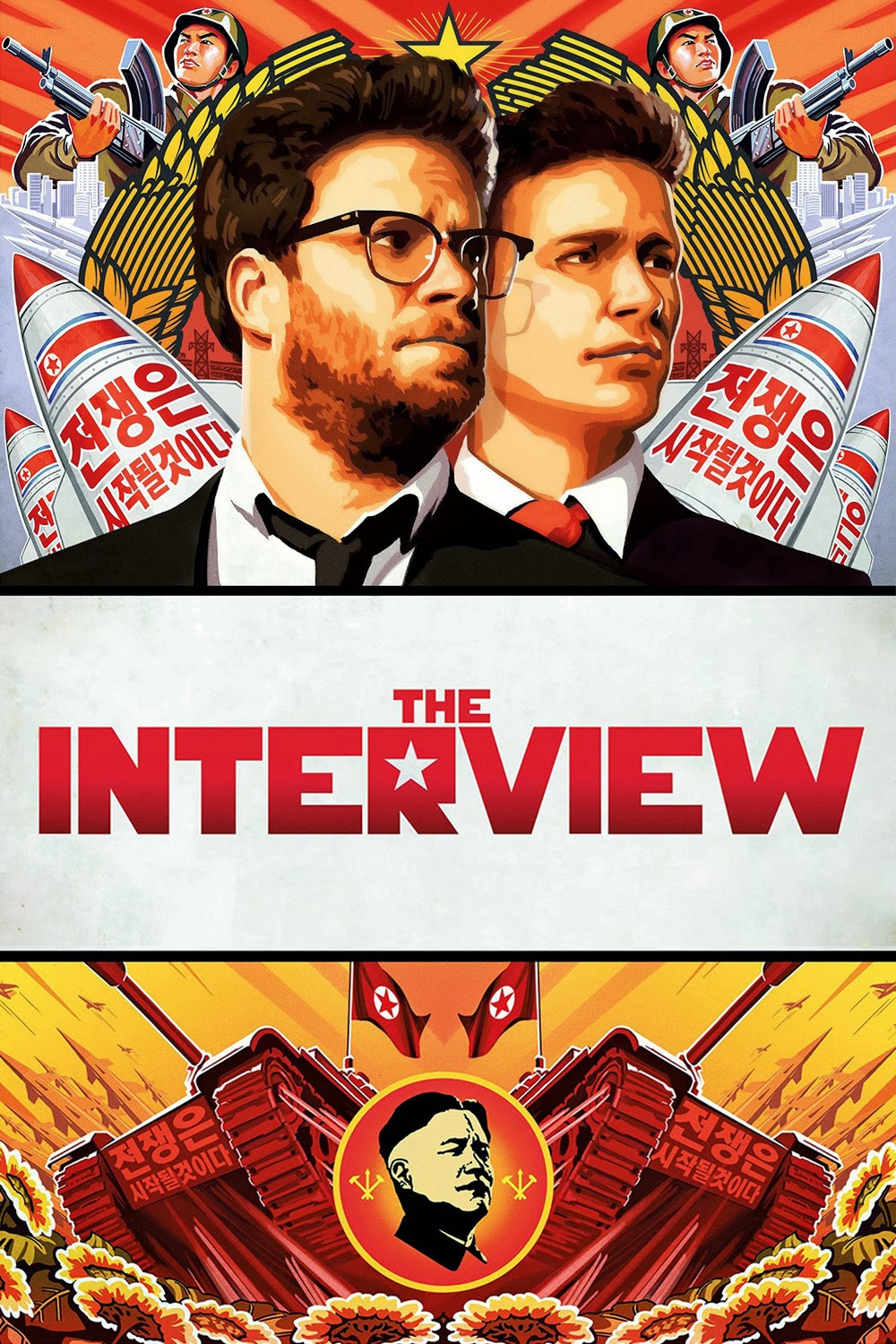
The most hyped Interview of the year

Mired in controversy, The Interview ended up with a very soft roll-out this weekend. This is the film I guess North Korea didn’t want us to see. Maybe they saw something I didn’t, because all I saw was the typical Seth Rogen/James Franco silliness.

I’m sure you’ve heard by now, this film is about Rogen & Franco being tagged by the CIA to assassinate Kim Jong Un. Franco is a tabloid-like reporter, going after silly stories like Rob Lowe is balding, Joseph Gordon Levitt loves puppies, etc, and Rogen is his show’s producer. When Franco reads on Wikipedia that Kim loves his show, he reaches out for an interview. The CIA then approaches the two and basically say, “You know, while you’re there…”

As with most movies with these two, the ridiculousness factor is cranked up a notch, and the whole film from start to finish is just goofy antics, the kind that is really hard to get riled up about. I guess North Korea is upset that their supreme leader is portrayed as a margarita loving, Katy Perry following, chubby man with father issues. The movie is funny if you are up for some mindless humor, but ultimately pretty tame. If it had not received the attention it has, it would probably have had a very quiet run in the theaters, but instead it has become something of a must-watch. The theater I went to was certainly packed for a later-Sunday night showing, and apparently the online rentals and purchases that Sony has made available are setting records. A good 2 hours of laughs if you are up for something frivolous.

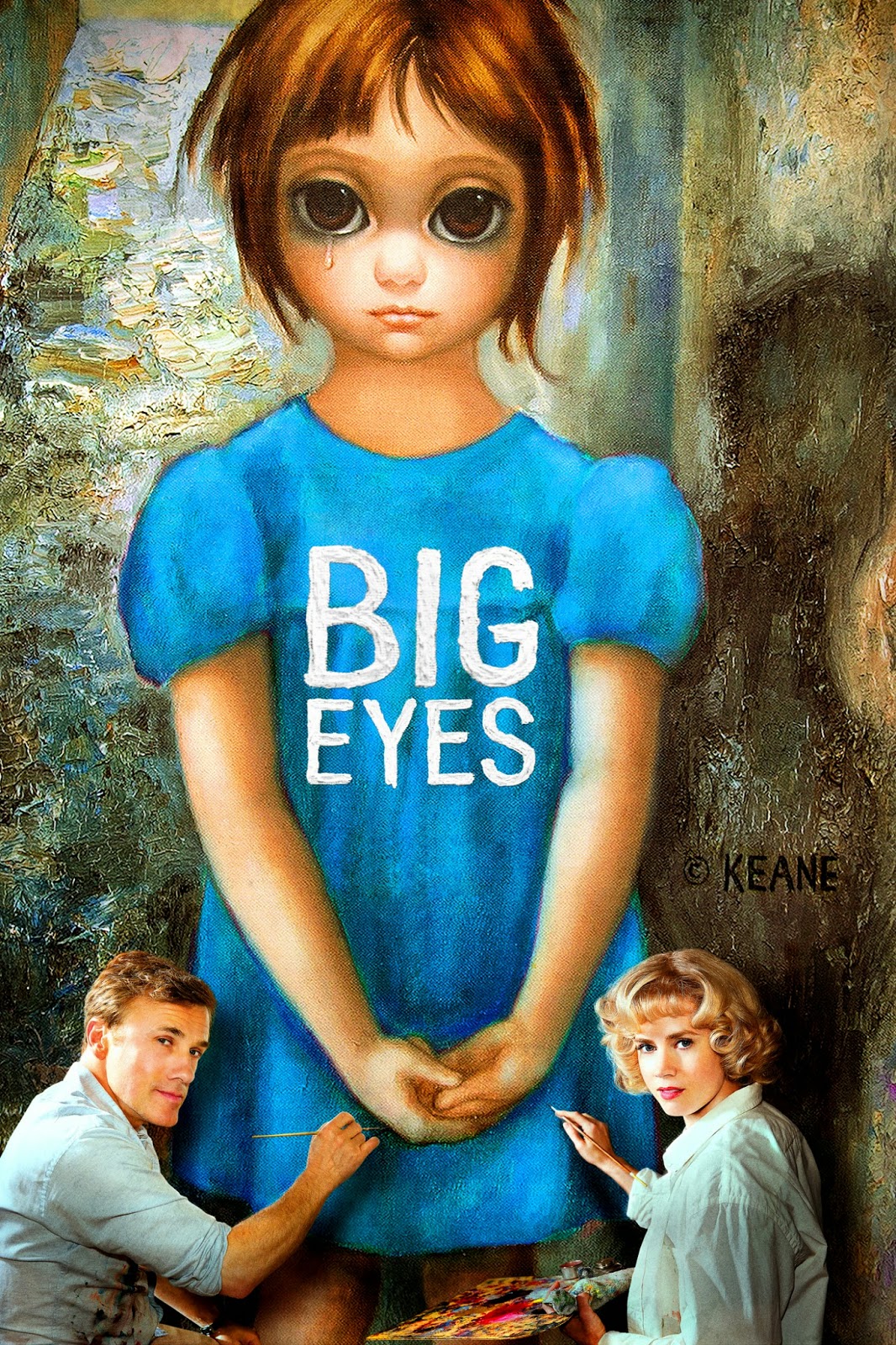
Big Eyes opens ours to Margaret Keane’s life

Tim Burton has slowed down in recent years, directing only a handful of films in the last 8 or 9 years. Big Eyes is his newest. While it does share some visual and stylistic similarities to his other works, it is in many ways a significant departure, and a well done one at that.

Big Eyes is the based-on-a-true story of Margaret Keane, portrayed here by Amy Adams. An artist who’s works became popular in the 1960’s, Keane’s paintings were credited to her husband Walter for many years. The movie begins with Margaret leaving her first husband and taking her daughter to San Francisco to make her way as an artist. She is struggling to sell portraits, and falls for the charms of Walter Keane, played here by Christoph Waltz, another artist who seems to know all the connections. When a customer one night mistakes him as the artist of Margaret’s works, he takes credit for them all. Cowing Margaret in to going along with it (what art lover would take a woman’s work seriously?), he builds an empire from her paintings.

It is a charming movie, with just enough of the trademark Burton silliness to keep it from getting too bleak during Margaret’s worst moments. It is a very endearing film, and you cheer for her to finally take a stand and claim her work as her own. Adams and Waltz are both spectacular.

Unbroken shows a great life, a boring movie

Unbroken brings the true story of Lou Zamperini, a World War II prisoner of war. The film shows his humble beginnings, his pursuit of greatness to the point of running in the 1936 Olympics, and then his time in the armed forces. During a rescue flight over the Pacific Ocean in 1943, his plane crashed and he and 2 others were left adrift in a small life raft. Scraping by on rain water to drink, and raw fish they caught, they survived for 47 days until being picked up by the Japanese and brought to a POW camp. There, Zamperini was tortured due to his status as an American Olympic icon.
If it seems like a cut and dry story, it is, and while Zamperini’s life is certainly inspirational, not all great lives make great movies. The film is slow and dull. You feel for his predicament and you certainly cry out for the injustices, but there is little to get caught up in. Whether it was poorly adapted, poorly directed, whatever the case may be, it seems like it could have been done a lot better. 
On a personal note, this is film # 120 for me on the year. I have one more that I will see tomorrow morning, and then my year-long theater hopping experiment will come to an end. I have a new plan for next, and subsequent, years!

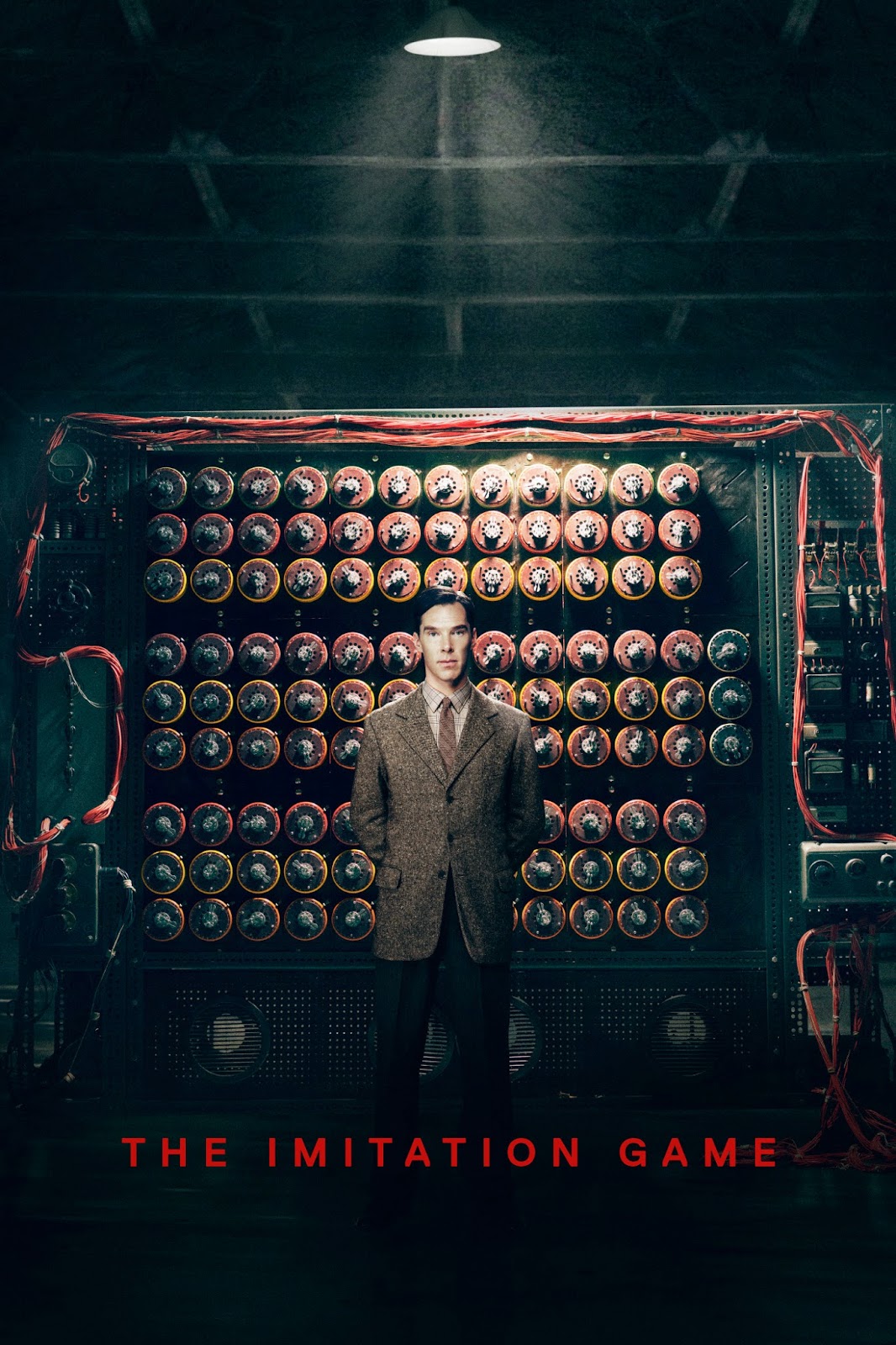
A profound life explored in The Imitation Game

The Imitation Game is the best movie I’ve seen since Birdman, and easily a top 5 for me for the year. It is the engrossing story of Alan Turing, portrayed brilliantly by Benedict Cumberbatch. Turing is an English mathematician who, with a top secret team of geniuses, was tasked with breaking the German enigma machine during World War II. He was a man with a lot of personal and professional issues, but he went on to be one of the leading founders of computer science.

The movie takes place over three windows in time. We start with Turing in the 30’s. He is shown the German enigma, a code-making machine that no one has been able to crack, due to it being capable of 159 million million (a whole ton of zeros) configurations. And every night the Germans reset it to a new scenario. The team spends every day trying to crack just one message, but ultimately fails again and again. Turing knows it is a losing proposition, so he theorizes a machine that can calculate the algorithms faster than a human possibly could.

We also see Turing in flashbacks as a young teenager, struggling with other children due to his (undiagnosed, obviously due to the time in which he lived) Autism or Asperger’s. He doesn’t pick up on social cues and is awkward. He is having a hard time dealing with his own homosexuality, in a time with it was not only frowned upon but illegal. We also see moments after the war, in the early 50’s, when Turing has been apprehended for his lifestyle.

The film is brilliant, not only for the incredible odds Turing and his team (among them Joan Clarke, played by Keira Knightley, a woman trying to do a “man’s job”) overcame, but for the heart wrenching ordeal he had to go through in his life. And being a 2 hour movie, it could only tell so much. I’ve been reading about him the rest of the day since, and it is remarkable that his life has stayed out of the mainstream consciousness. See this movie, it will open your eyes and your heart.

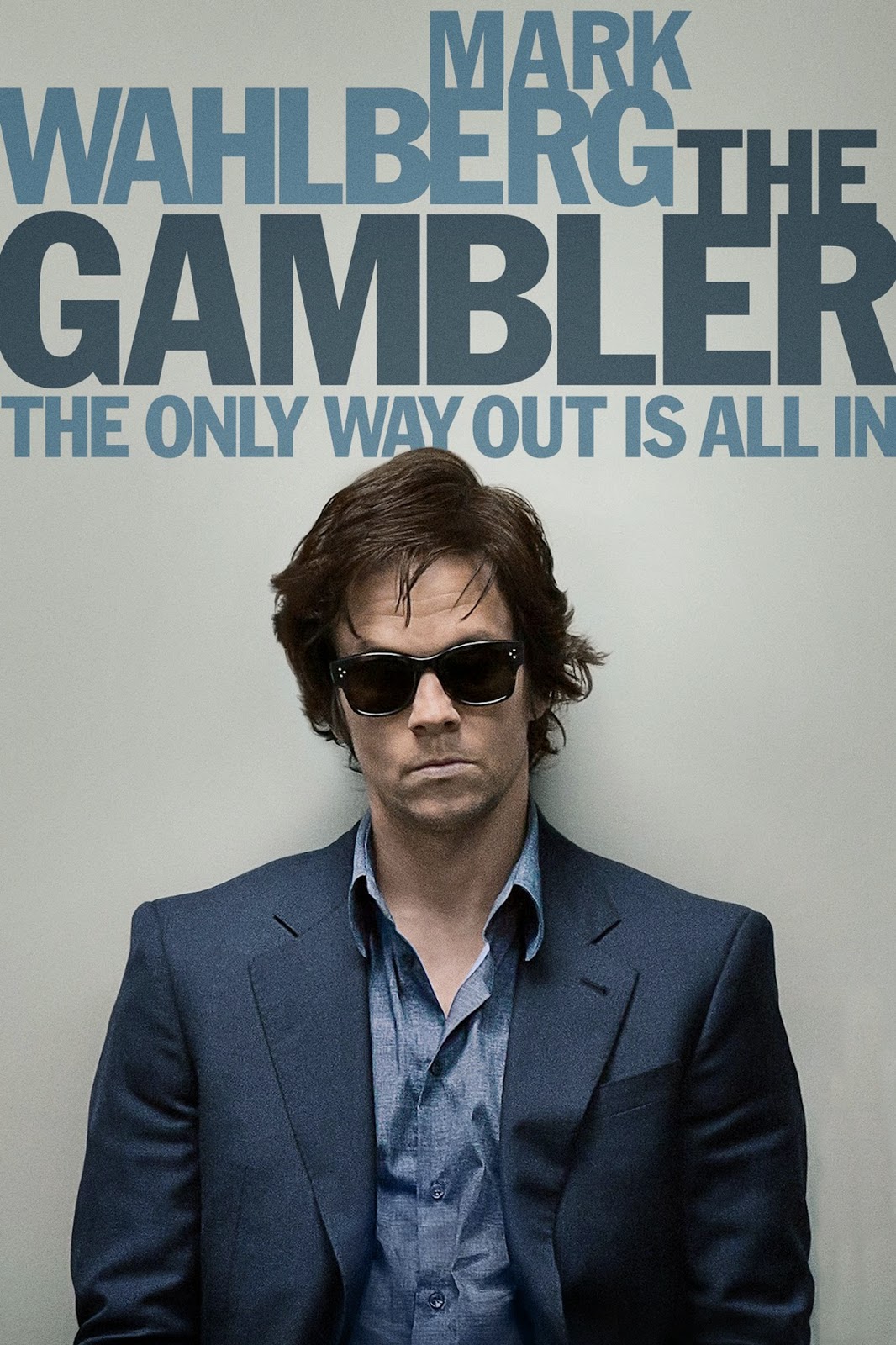
The Gambler holds on a soft hand

This movie was just all right. It features Mark Wahlberg as Jim, and Jim owes a great sum of money to the kind of people you really don’t want to owe. He laments his position and life choices to his college english class, where as the author of a somewhat highly praised novel a few years ago, he is an associate professor. He continues to dig deeper holes for himself, making things worse when his mother cuts him off.

It is hard to feel sorry for Mark’s character. He comes from wealth, has had a pretty easy road for most of his life, yet doesn’t seem to care about anything and just feels sorry for himself. He talks a big game about what we as a people should do with our lives and abilities, yet seems comfortable doing nothing himself. The dialogue in this film is pretty great from start to finish, but it hides a fairly mediocre plot which takes a meandering path with weird offshoots here and there. There are great supporting parts by Michael K. Williams and John Goodman, with the banter between them and Wahlberg being the real highlights of the film. But overall it is pretty forgettable and not worth more than a single viewing on the basic cable circuit when it makes it there.

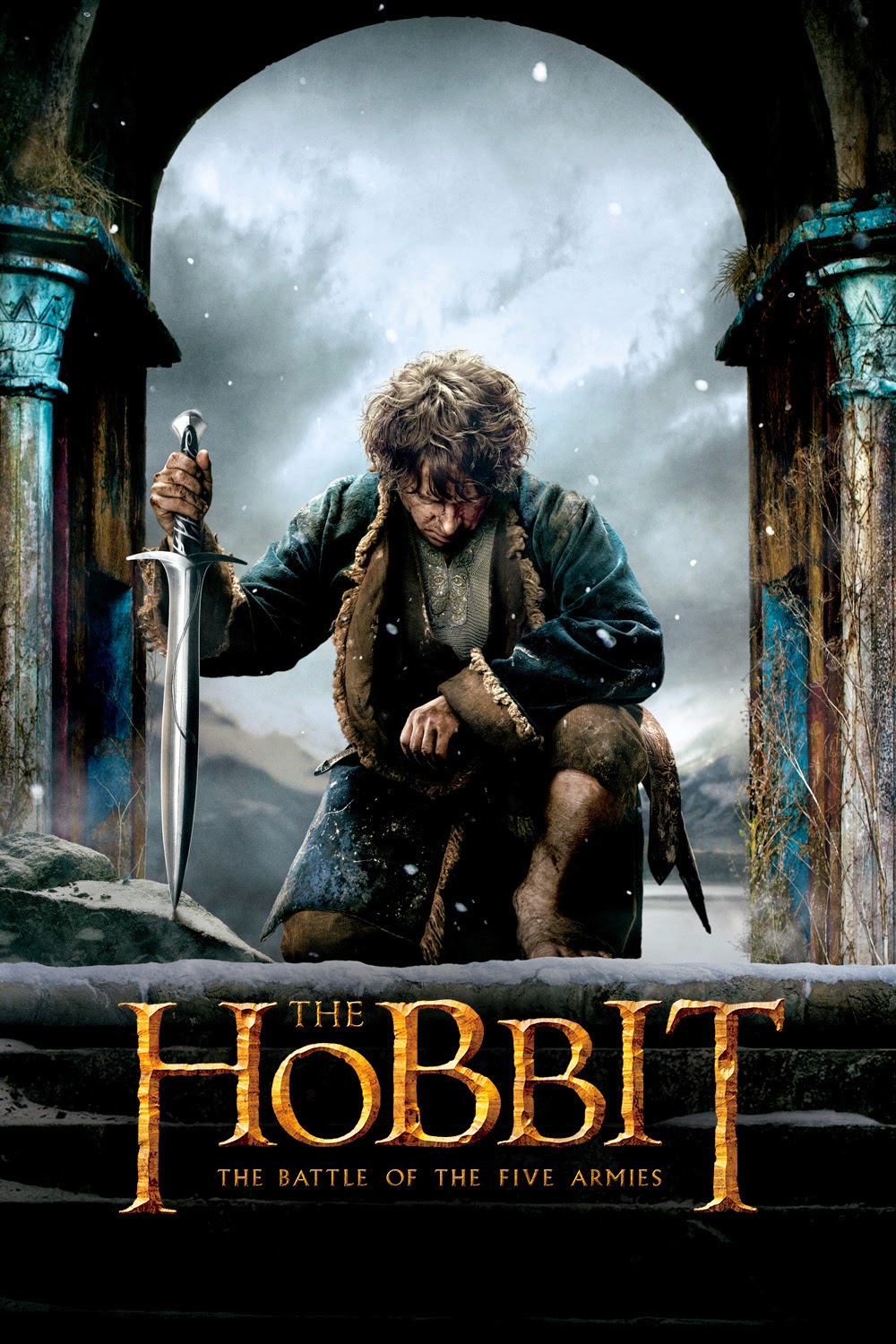
The Hobbit fails to reach the top of the mountain

It’s finally here, the last Hobbit film and (supposedly, unless they start doing stories from Silmarillion or something) the last of Peter Jackson’s Tolkien films. I’ve been disappointed in the Hobbit films almost from the beginning, and while this final one did tie it all together to a somewhat satisfying conclusion, as a series it never reached the heights that the Lord of the Rings movie trilogy did.

I should confess that these books are some of my absolute favorites of all time. They are a few of the books that I have read multiple times, pulling them out ever 5 or 7 years or so. The original movie trilogy did the books great justice. There were changes of course, but the theme and intent stayed true and it felt in character. The Hobbit movies have been different from the start. Not only were there sweeping changes to the plot and plenty of additions (taking a rather small book and expanding it to 3 long films), but the feel was far different. The Hobbit book was simply an adventure by Bilbo and the dwarves, with little real world ramifications outside of their group. The film series made it out that it had dire consequences for all of Middle Earth, in the vein of the LotR. A lot of the playfulness and light-hearted moments were missing or subdued.

The final film was also far too heavy, even for being “The Battle of Five Armies” (the final battle which went on and on and on…). Thorin’s character was reduced to a slow-motion grumbler. It almost seemed he was a caricature, his dialogue was long and low and dark, drawing out each word he said and in perpetual “sleepy eyes” mode, looking down his nose at any he spoke to. But unfortunately he was not the only one prone to long, thoughtful gazes off in to space, it seems every other scene featured someone deep in thought, even if no idea was put forward. It all felt very silly after awhile.

The film does show the final outcome, and even though again Jackson made a half a million changes to the final battle, at least it is over. The final Hobbit film will probably be popular among the average movie-goers, but for others like myself who cherished the books, you may be saddened by what was done to the series. It really should have ended after Return of the King.

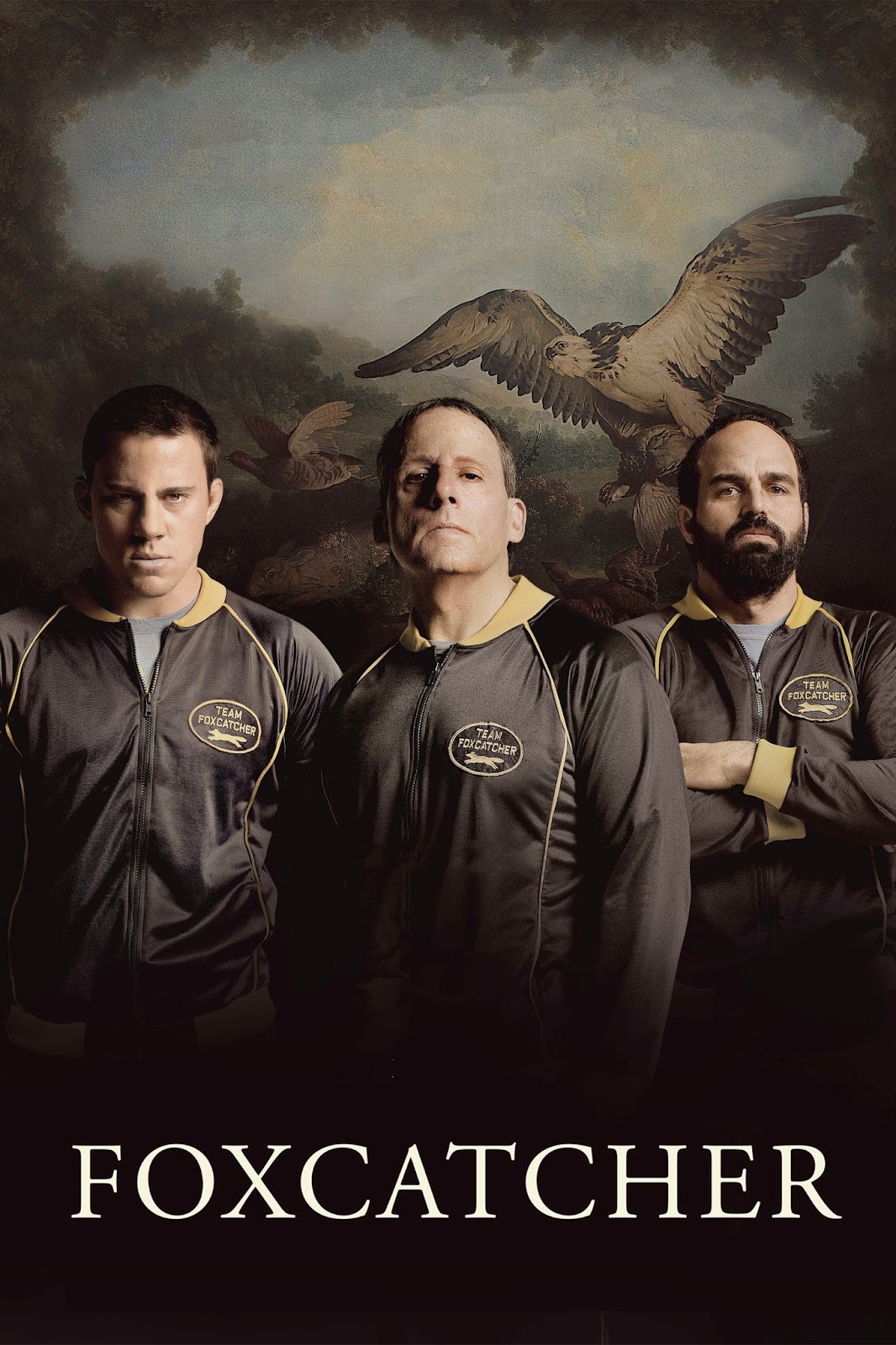
Wrestling with greatness in Foxcatcher

Today’s trip to the movies was for the highly touted Foxcatcher. It is based on the 1980’s true story of multimillionaire John du Pont and his promotion of USA wrestling, especially the training of brothers Mark and Dave Schultz. It is a disturbing true crime film, featuring outstanding acting by the three leads of Steve Carell (du Pont), Channing Tatum (Mark), and Mark Ruffalo (Dave).

The film starts in 1987, 3 years after the 1984 Los Angeles Olympic games, where Dave and Mark both won gold medals for the USA. Older brother Dave is married and settled into a steady career and family, training for future matches while also teaching at the local college. He trains daily with Mark, who has not reached any kind of personal success since the Olympics. He is strong and hopeful for future triumphs, but is sort of aimless in his everyday life outside of the gym. John du Pont swoops in and picks him up, setting up a wrestling training facility on his family’s immense estate. Mark is eager to get out from under his brother’s shadow, so he jumps at the opportunity to train on his own and make his own name.

From the beginning John gives off a creepy vibe. He too is trying to break away (in a way) from his family name, and has obvious mother issues, trying to prove his worth to his mom in his new pursuit. He wants Mark to love him as a father (or more perhaps, the movie implies but never states they had a romantic relationship). When Mark doesn’t reciprocate completely, John angrily hires Dave to come in, further distancing Mark and sending him a downward spiral.

Tremendous acting, for all three men, and all ready Carell and Ruffalo have been nominated for Golden Globes. Personally I think Ruffalo was the best in a supporting role, though obviously Carell gets nods for doing something so different than what he is known for. The movie’s plot is quietly suspenseful, though a little slow at times, certainly a subtle film. The end is shocking and worth sticking around for.

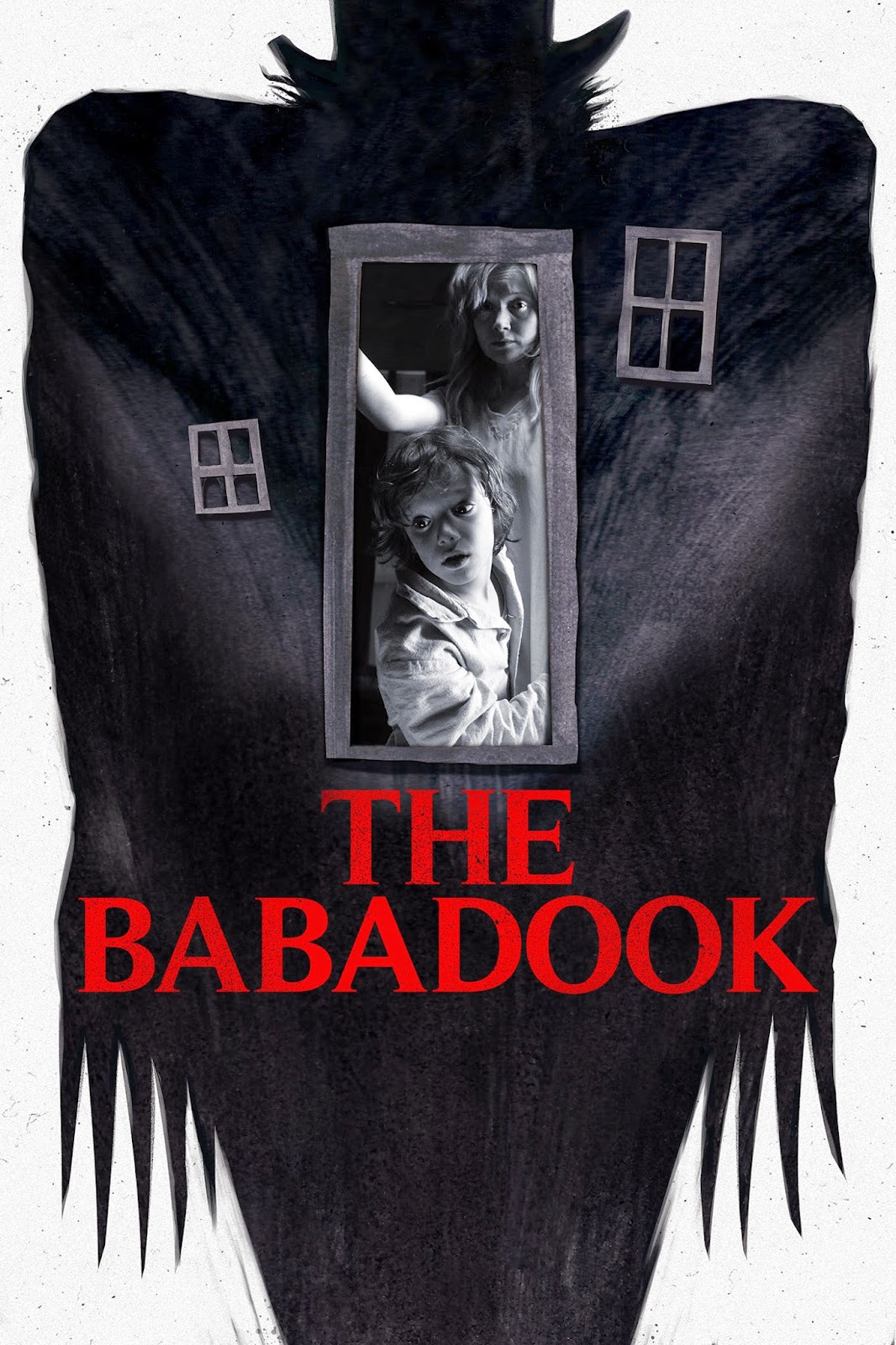
Genuine horror comes for you in The Babadook

It is very rare these days that horror films get any decent reviews. The Babadook bucks the trend, getting not only good reviews, but sterling ones, currently a stunning 98% on Rotten Tomatoes. In many ways it is a throwback to the older films of the past, when they scared you with pure horror, suspense, chills, and thrills, rather than the monotonous cheap scare tactics employed these days by a big scary demon jumping out from a shadow in the corner.

The Babadook follows Amelia and her son Samuel. Sam is turning 7 and still scared of the monster under the bed. He awakes his mother every night to check around his room for ghosts, and wants to be read a story to fall back asleep. At the same time, Amelia is suffering from severe insomnia and nightmares of her own, mostly about the death of her husband. One night Sam picks a book Amelia doesn’t remember seeing before, titled of course “The Babadook.” The children’s-looking book tells of a creature terrorizing a family, wanting to get in to the house, and will not stop until they let him in, at which time he kills them all. After reading the book, the child is scared further, and starts saying he can see the Babadook around him. This sets the family on a course where the viewer is left wondering what is real and what is in their heads, while the child gets more and more disturbed, and the mother tries to pretend nothing is happening and everything is normal.

There are no jump-scares in this movie, no cheap “behind the door” thrills, it is mostly a quiet, suspenseful psychological thriller that keeps you on the edge of your seat waiting for the other shoe to drop. But more than just a scary movie, it also has a lot of emotion and heart, with the true love of a mother and her son, facing pure evil with nothing but each other to cling to. I am not a big fan of scary movies, but this one is a good one and kept me riveted (albeit with eyes covered at times!).