Quick takes on 5 films

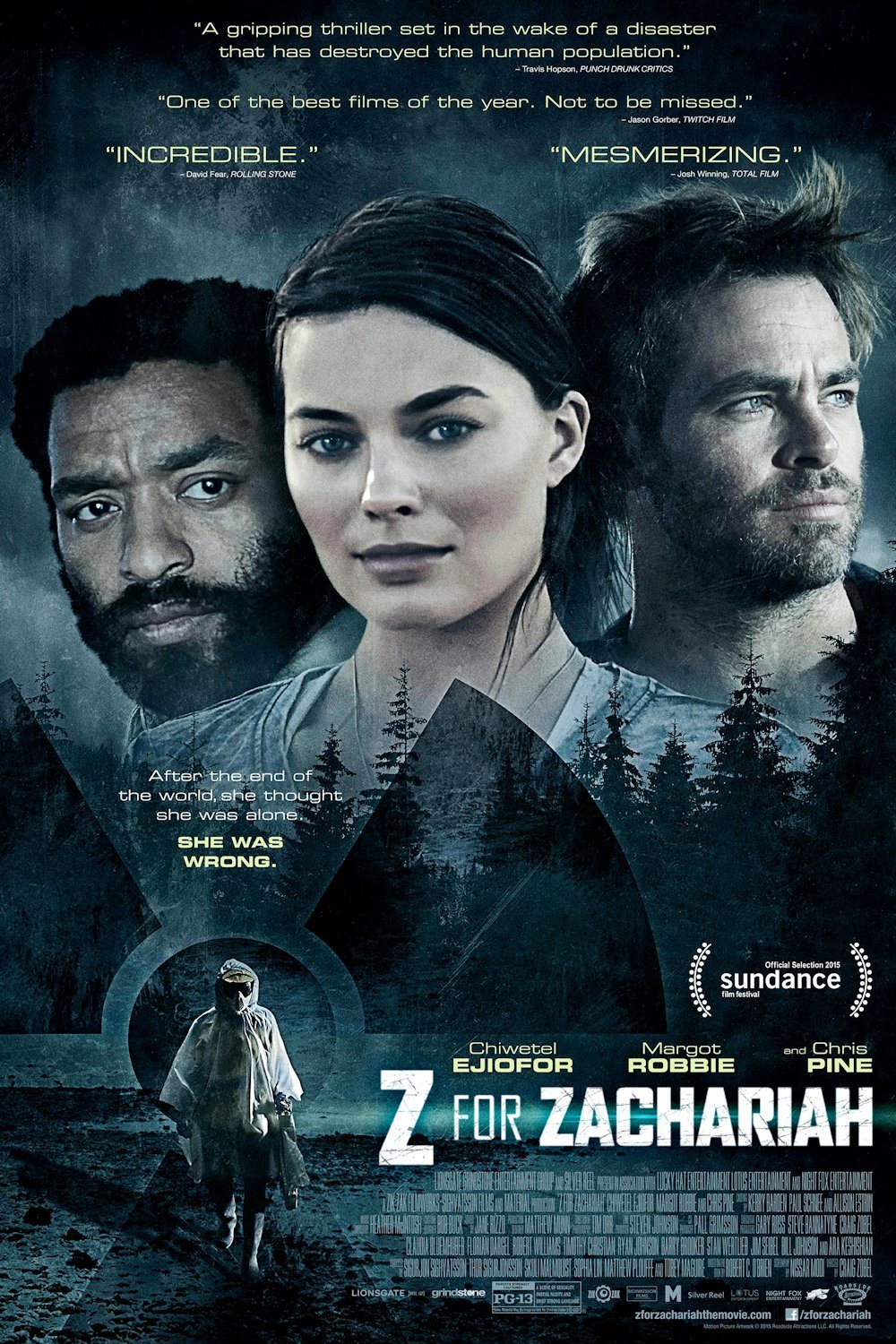
Z For Zachariah is about as slow of a movie you can find, it will test your patience. Not to say it isn’t good, because it is, but I think a lot of viewers will struggle with the pace. It features just 3 actors, all good in Margot Robbie (from Focus), Chiwetel Ejiofor, and Chris Pine. Margot’s character is living alone in a valley untouched by a vast nuclear war that has killed just about everyone. One day Chiwetel’s character arrives, he has been looking for a safe place to live and traveling around in a hasmat suite and relying on meds to keep him alive. He survived the war in a bunker but ventured out when loneliness got to be too much. He and Margot settle in together and are just starting to get comfortable with each other when Chris’s character shows up, a brash young man who seems to have secrets. Live is now a little unsettled and Chiwetel clearly does not trust the new man. I love post-apolyptic movies, so I admittedly probably like this film more than the average person, but it is very well acted and tense, if quietly so.

There is nothing quiet about Furious 7. These movies are ridiculous from the beginning, and this one rachets up the craziness to a whole new degree. When cars are driving out of planes, or crashing through windows from one high-rise building to the next one, subtle is not a word that comes to mind. The whole team is back together again, for Paul Walker’s last ride, with a new villian in Jason Stathum. It is eye-rolling worthy, but it is a glorious action packed film. Not sure how they are going to top themselves in the next one, they are going to have to go to the moon or something. The ending is well worth the ride too to say goodbye to Paul.

Testament of Youth is another movie not for everyone. It is a British period drama, so it is quiet, slow, and well acted, with beautiful cinematography. Mostly a dialogue-driven drama, it is based on the memoirs of Vera Brittain. It is a rare woman’s look at World War I, at a time when women were struggly to be heard. Vera struggles to get into Oxford, but no sooner is she there that she leaves to follow her fiance and brother to the war, to be a nurse and do her part. Nothing seems to go as planned though, and instead of saving British lives, she ends up in a unit saving wounded enemy Germans, which gives her a unique perspective on the war and humanity in general, ideas that will stay with her throughout her life. Again, you have to patient for this one, but worth it for film lovers, and especially those like myself that like biographical films.
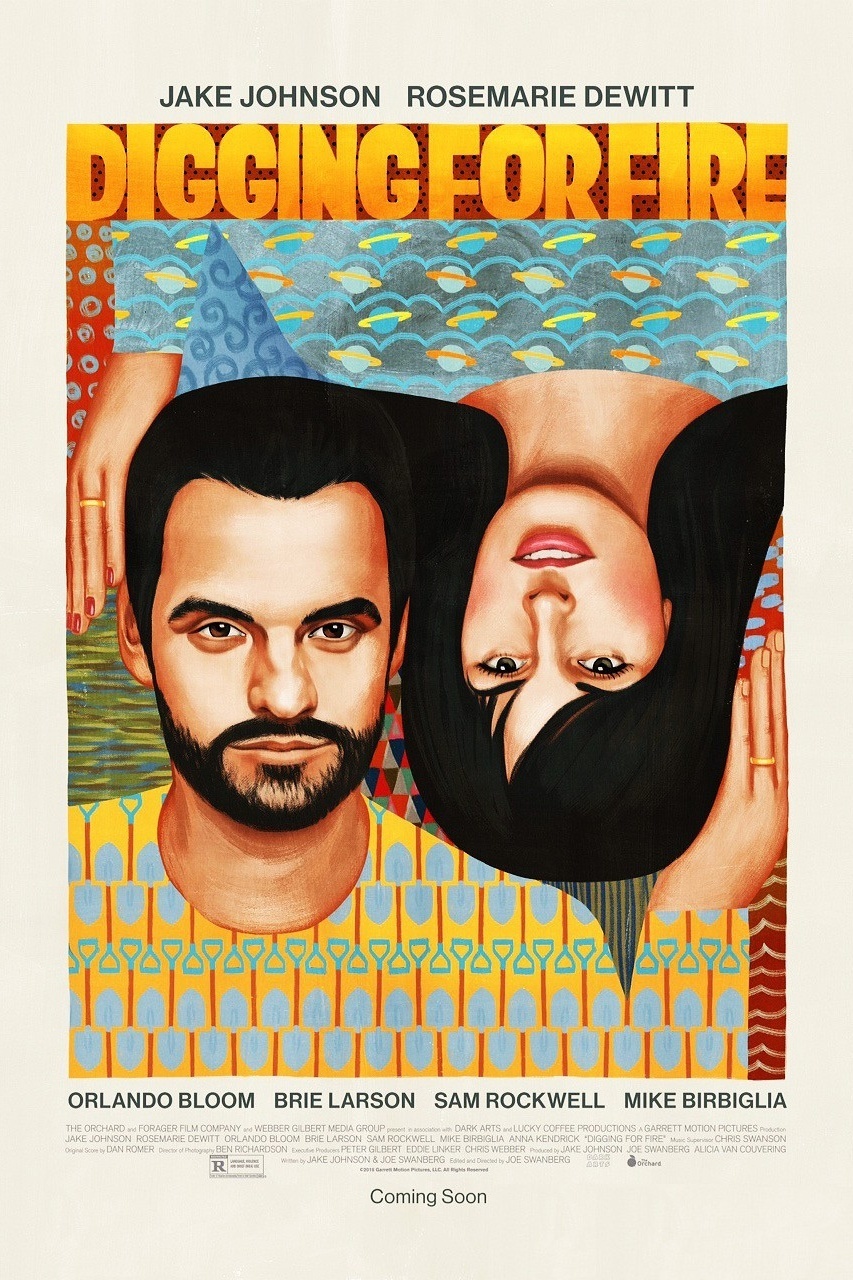
Digging for Fire includes a who’s who of actors that love doing small indie films, including Jake Johnson, Brie Larson, Anna Kendrick, and Sam Rockwell. In it, Tim and his wife Lee are house-sitting a huge mansion for a couple weeks, and on one particular weekend they split up to do different things. Lee takes their daughter and goes to her parents house, and ends up at a bar flirting with a stranger. Tim stays at the big house and invites a bunch of friends over, who bring girls along, and Tim ends up spending the day with one of the girls. The basic premise of the film is each other’s weekend-long emotional affairs, and where that leaves them in the end. A weird film, with some of the quirky strange dialogue that some indie films are known (infamous?) for. Can’t say I didn’t enjoy, but not sure I’ll remember much about it a year from now.
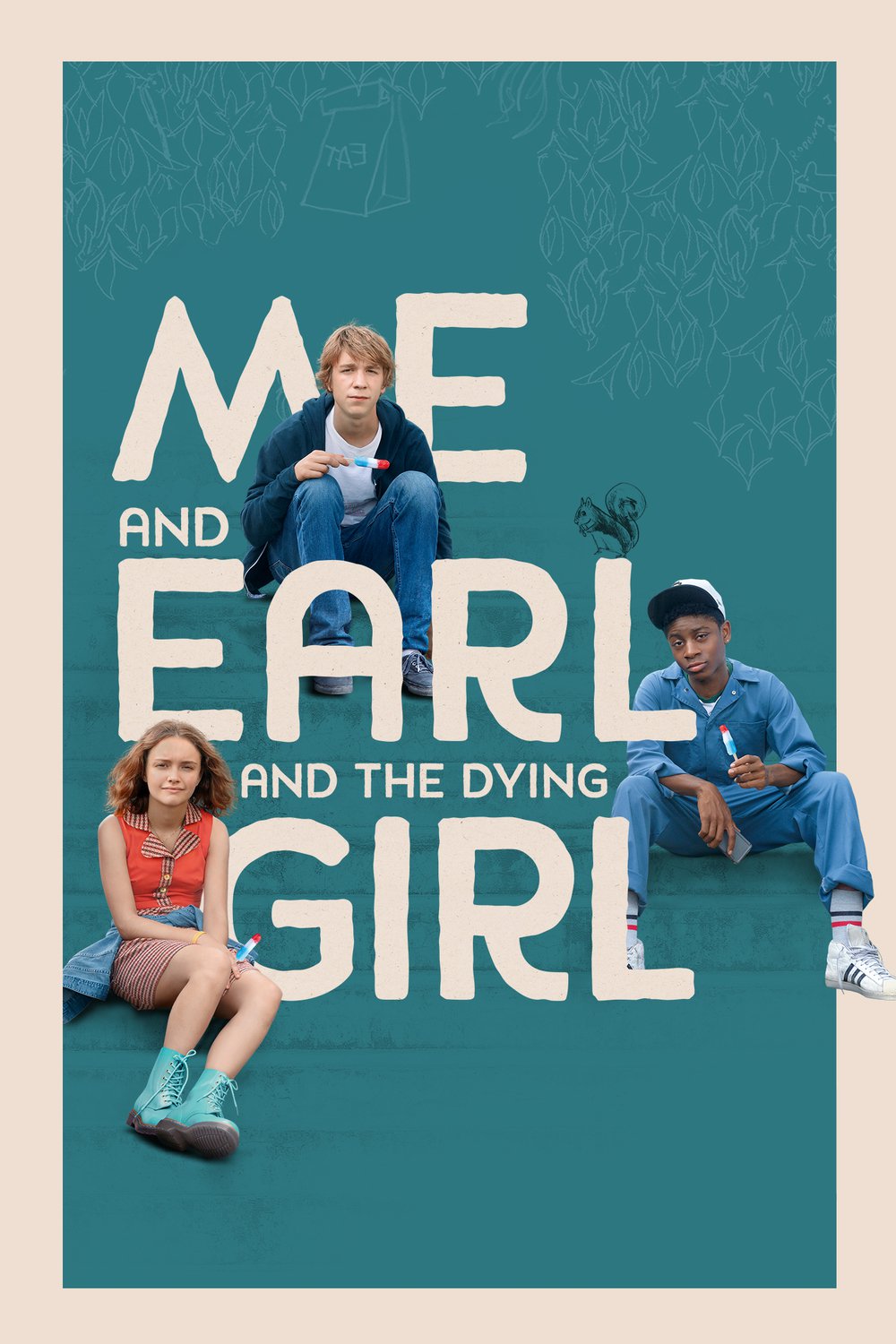
 

Me and Earl and the Dying Girl is another indie release, with a bunch of unfamiliar faces. The “me” is Greg, and the film is told from his perspective. About to graduate high school, he has spent his life hiding from real relationships. He doesn’t get close to any one “group” (drama club, nerds, dope heads, jocks), but instead offers passing greetings to everyone and doesn’t piss off anyone. He even goes so far as to each lunch alone rather than in the lunch room, so he doesn’t have to pick a table to sit at. His one friend is Earl, with who he makes silly home-made movies. When a girl at school, Rachel, is diagnosed with cancer, Greg’s mom forces him to go over to her house and spend time with her. He does it reluctantly, not because he is weirded out about the cancer, but just because he doesn’t want to get close to anyone. The movie is the rest of the trio’s story, with Greg doing a lot of growing up along the way. I really enjoyed this film, and you just have to watch it to see how it ends!

Quick takes on 5 films

Two remakes that couldn’t be more different. Annie is a true attempt at a modern redo, moving the setting up to the backdrop of a present day big city. Everyone liked the old original, but the syrupy, overly cutesiness of that film does not hold up today, and it is challenging to watch. There was so much sugar dripping from this one I had to start fast forwarding to see the highlights. If ever a film that shouldn’t have been made, this is it.

Cinderella on the other hand is supremely enjoyable. It doesn’t try to reinvent the wheel like Annie, and sticks mostly to the known script with only minor changes, but it is done extremely well. The actors are charming in their roles, the scenes and costumes are brilliant, and I’m not ashamed to admit I was fairly enthralled. Whereas I knew what was coming in Annie and couldn’t wait for it to be over, in Cinderella I knew what was coming and still enjoyed the ride along. This one is a great family film.

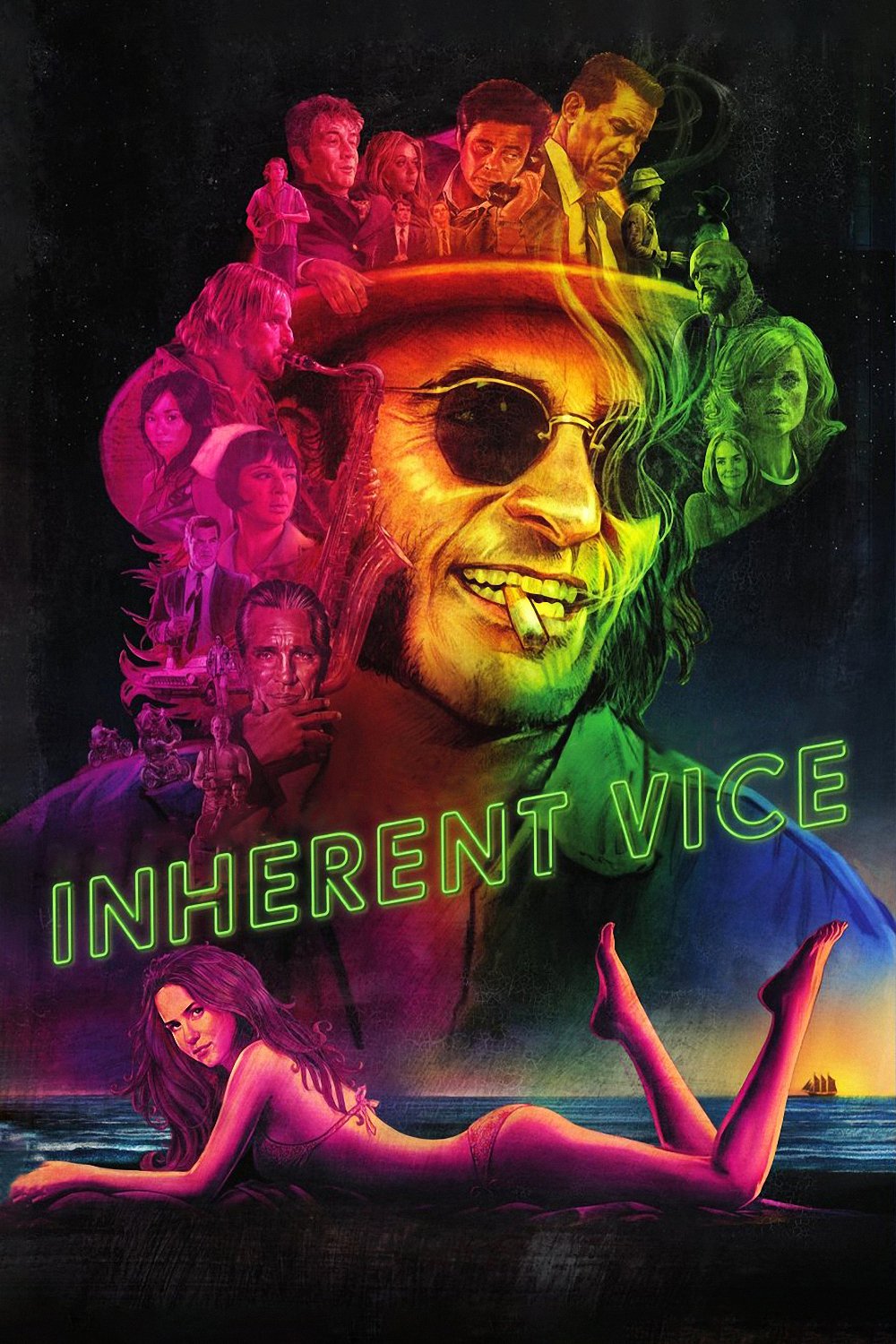
Even having just finished Inherent Vice, I’m not exactly sure what I saw. I can’t decide if this a deep, engrossing film or just a thorough mess from the opening scene. The film follows Doc, a drugged out hippy played by the talented Joaquin Phoenix. He is pulled into a convulted plot by his ex­girlfriend, to find out what happened to her missing current boyfriend, a rich real estate developer, someone who had a lot of girlfriends, whose wife had a lot of boyfriends, all while Doc is constantly harassed by a local LAPD detective, followed by a drug ring kingpin, and somehow trying to avoid entanglement with the Aryan Brotherhood, a black guerilla group, and others. If it sounds like you need a map to get through it, you sort of do, or just watch it when you are really high as the lead character is throughout. A very strange movie, with more plots and subplots that many season­long tv shows. It is chuck full of great actors in all roles from main to supporting to cameos, but I’m still not convinced it is worth the effort.

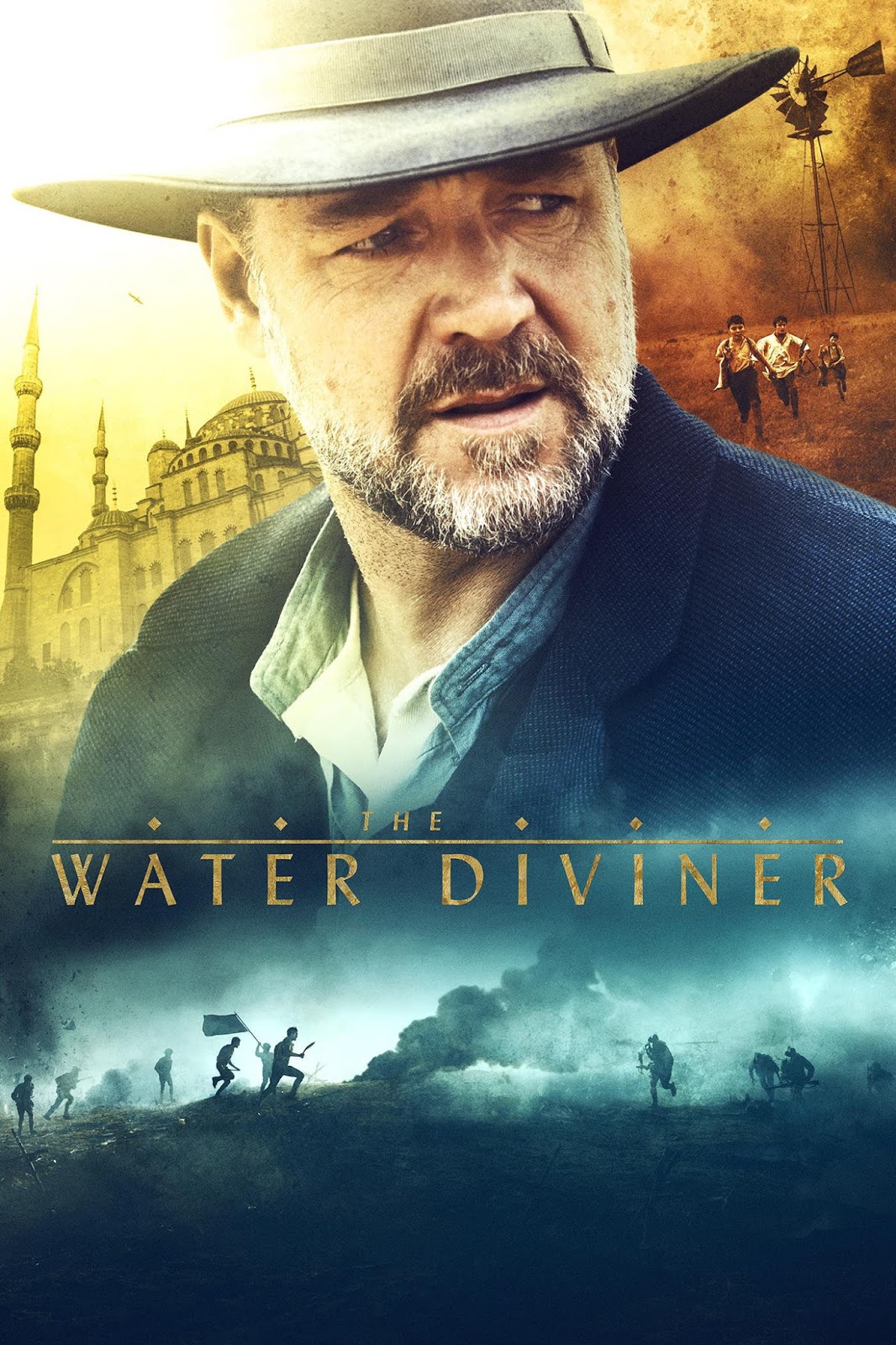
The Water Diviner stars Russell Crowe, and is also his directorial debut. He plays Connor, an Australian man who has lost his sons to World War I and his wife to her subsequent grief. He takes a trek to present­day Turkey to find his sons’ bodies. Though the war is over, there is still major conflict between the local Turkish people, the British, and the Greeks, all fighting over land as the Ottoman Empire is falling apart. Connor pleads, threatens, and begs his way onto the site of his sons’ final moments, only to find his journey doesn’t stop there. It is heartwarming if a bit (or more than a bit) predictable. Crowe is fantastic as an actor, but the movie is a little choppy. Good for a single watch for sure, maybe not the kind of movie you’d watch more than once though.

Tomorrowland had a ton of potential, but it never pans out. It takes place in modern day with flashbacks to 40ish years ago. In the movie, a city was built in an alternate dimension, a place called Tomorrowland, where the world’s best minds could come together and invent, just for the pure joy of working with other like-minded people, without interference from politics, nation rivalries, race, or religion. Now in present day, something is wrong in Tomorrowland (I can’t say what without giving away the “twist”) and they reach out for help to George Clooney’s character. He “grew up” in Tomorrowland inventing things, but was banished years before for some transgression. The idea of the film is really good, and visuals are there as well, but the directing and story are pretty awful. I *think* it is supposed to be a family film directed towards kids, who might like the quirky dialogue and action, but some of it is very violent and might be scary to young kids, and some of the plot elements would be hard to grasp for many adults! The ending is good enough, if a little abrupt.

Conrad’s Lord Jim finally finds a form of peace

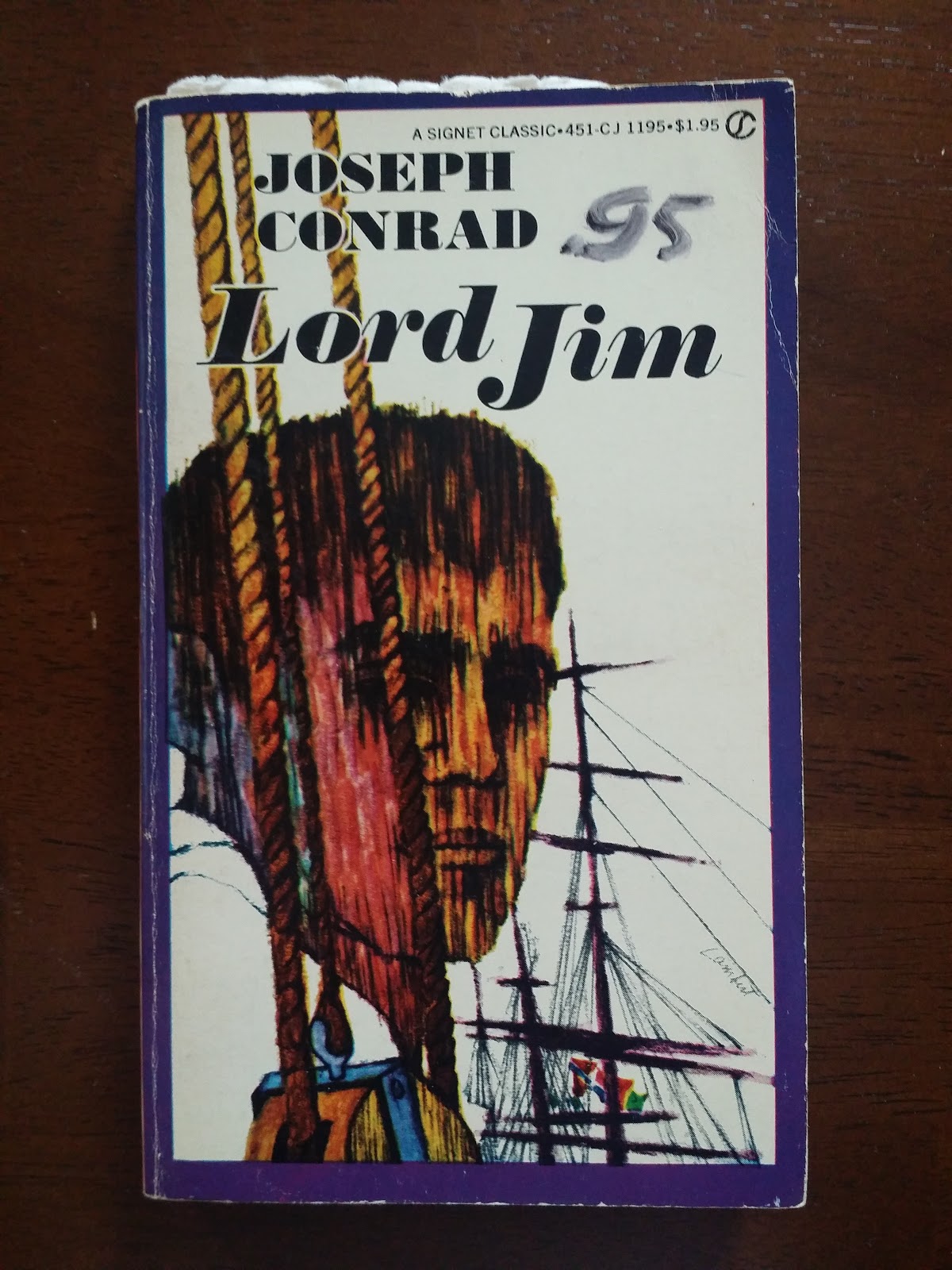
Lord Jim by Joseph Conrad started off as a challenging read, but really hit its stride in the second half and was well worth sticking through the beginning. What makes it hard to get through is it is told almost entirely as a tale in the second person narrative. The person telling the story, Marlow, tends to jump around a bit and his tangents sometimes lead nowhere. But Conrad does have a knack for hitting the reader with huge events at the end of some of these ramblings, which keeps you going through the harder sections.

The book follows Jim, a young white man who in his mind is destined for great things. He is a young seaman from England, and excels in school and on ship, but when true emergencies hit, his courage always fails him. This happens twice in his youth, but the biggest test is when he is a young man on a ship filled with pilgrims heading to Mecca. He is down in the hull when he notices a thin spot that has dented in, and he knows it is ready to rupture at any moment, and kill everyone on board. He tells the captain and other crew, and with a storm approaching, they all abandon ship and leave the passengers to their fate. Marlow’s tale mostly picks up at Jim’s trial, where we hear how the crew formulated a plot about the ship’s destruction. Jim is disgusted with the others (refusing to see himself as one of them), though in reality he is disgusted with himself above all else. We learn now that the ship did not sink, but instead was found in time and tugged to shore.

Jim is ashamed of the part he played in this, and wants nothing more than to go where no one knows of his history. Marlow takes to him right away, and sets him up with a job off in India. Jim is there for awhile, but when a passing ship starts talking about “the coward that fled the sinking ship”, Jim leaves. He continues to move further east, always moving when his past catches up to him. Finally Marlow calls in a favor to set Jim up as the head of a trading post in a remote corner of the world. None of the locals have heard of Jim, to them he is just a white man that keeps things flowing. He finally finds a home here and finds his courage, and is called by his new fellows Tuan Jim, or Lord Jim. He fortifies the town against other warring tribes, befriends the chief’s son, and marries a local girl. His only enemy is Cornelius, the former head of the trading post, who plots against Jim but is himself too cowardly to act.

Conflict comes when the pirate Gentleman Brown shows up. He comes hoping for a quick easy strike, but is surprised by the strongly fortified town and strong leadership of Jim. He tricks Jim, telling him he was only there looking for food for his starving shipmates. In a fit of compassion, Jim lets Brown go, telling him to head back down the river to the ocean, and promises him safe passage on his life. Cornelius however shares the lay of the land with Brown, allowing Brown to sneak up and kill the chief’s son, Jim’s friend, before heading out to the ocean. Jim’s servant and wife plead for Jim to flee, but they do not know about Jim’s past shame. Jim finally decides to stand for his actions, and confronts the chief. The chief looks over him, and then shoots him in the chest, killing Jim immediately.

This book takes your emotions all over the place. For a good portion, you just can’t stand Jim. He is a coward, never facing the consequences of his actions, and has an excuse for everything. By the end though, Conrad has turned you completely around, and I was actually choked up at Jim’s death, which is so sudden (the book ends almost immediately after his death) that it catches your breath. A definite phenomenal read, you just have to have patience to let it build to its ultimate conclusion.

A thrilling adventure for everyone in The Martian

The Martian is just a great movie. It has all the elements you want, including excitement, fear, joy, laughs, etc. It stars Matt Damon as Mark Watney. His team is exploring Mars in what is supposed to be a 31 day trip, but when a bad storm forces the team to abandon the base and head back to Earth early, his fellows leave him behind because they think he died during the run to the shuttle. He is now faced with finding a way to survive on an inhospitable planet for years before help can arrive. His home base is designed for 31 days, with food supply for 6 people for a couple months, and he has no way to contact anyone to even tell them he is alive.

Mark gives himself a day or two to feel sorry for himself, and then decides he will not give up. He talks to himself (and us as viewers), ostensibly through the video journals he keeps recording to show his progress. Meanwhile those on Earth finally do realize he is still alive, and try to get a mission off the ground as fast as possible to get him rescued, or food at the least, because a shuttle trip would take a year or more to get there anyway. Throughout the film we feel a sense of a race against the clock, not in minutes or hours, but definitely in weeks and years, as we know at some point Mark will have nothing left to live on, 30 million miles away from home.

This is a highly enjoyable film with a huge re-watch factor, the kind of movie that has something for everyone. You will feel the gamiut of emotions in this one. Though it has the backdrop of a sci-fi film, it is more about the perseverance of human kind, to not give up, both for Mark alone on Mars, and for those on Earth trying to bring him home.

Quick takes on 5 films

Get Hard stars Will Ferrell as James King, a Bernie Madoff-type swindling investor, headed to jail. He hires Darnell (Kevin Hart) to teach him how to survive on the inside, since he assumes Darnell will have been to jail at some point because he’s black. Sounds like a funny premise right? Unfortunately the movie is about as unfunny as a comedy can get, and even legends Ferrell and Hart can’t elicit enough laughs to save this one. You will chuckle some, but that’s the most you can hope for.
The Second Best Exotic Marigold Hotel is cute in a geriatric sort of way. I didn’t even know it was a sequel until I sat down to write this, guess the first one totally flew under the radar even for me. But it is ok, if not exactly breaking new ground. Sonny runs a popular hotel in India, whose residents are all older, rich, retired types, who live there permanently. He is now looking to open a second hotel, on the eve of his wedding, and when his investors send an inspector to see how the first hotel is run before putting money in, Sonny tries to balance it all. All of the retirees have drama surrounding their lives as well. The jokes are of the sort which my parents would laugh very hard at, but even for the “younger” under 50 crowd, there is still enough to enjoy. Has a great cast, including Dev Patel, Maggie Smith, Judi Dench, Richard Gere, and Bill Nighy.
Insurgent is the follow-up to last year’s Divergent, the movies following the popular young adult book series. As I probably said for Divergent’s review, I’m a sucker for dystopian films, but this one is a little too “young adulty” for me. There are too many “we’ll end this now, once and for all” lines for me to stomach. Shailene Woodley’s Tris is on the run and in hiding, hunted by the government for being a “divergent,” one that shows qualities in multiple emotions in a society where citizens are divided into only like-minded factions. The government wants her now to open a box left by the founders of their civilization 200 years prior, a box that only a divergent can open. Fairly straight forward if a little campy. The ending however is pretty thrilling and leaves you on a cliffhanger, waiting for the next film to see where it goes.
Good Kill is a surprisingly good “war” film while being light on the action. It stars Ethan Hawke as Tommy, a former fighter pilot who, thanks to cutbacks in the air program, is now a drone pilot. He sits in a little room in Las Vegas, shooting missiles at targets in Afghanistan, while hoping to one day get back in the cockpit. He at least soothes himself with the fact that he is taking out confirmed terrorists. However, before long the CIA starts calling the missions, and they are much more comfortable with collateral damage and firing into congested areas, a path Tommy finds increasingly harder to cope with. Hawke does an excellent job showing the conflicting emotions Tommy is dealing with, as he faces self-disgust for his actions at work, to the detriment of his life and family.


This film is about Adaline, a woman who through strange circumstances, stopped aging in her late 20’s. Her past 80 years is told in flashbacks, while in the present day she begins to fall in love, for the first time in decades. A problem arises though when her new love takes her to meet his parents, and she sees the father is her former love interest. He recognizes her immediately as “the one that got away”, but she diverts him by saying it was her mother. It’s an ok film, if entirely too predictable, and the ending is more sickeningly sweet than a pixy stix.

Antiquated style and ideas in The Bostonians

Not sure how Henry James’ The Bostonians made it on the list of “must read 20th century novels.” For one, it was published in 1886, but since James’ life bridged the century marker, that can be forgiven. James actually has several books on this list, some before and some during the 20th century. I hope the others are better than this one, because for two, this novel isn’t very good.

There is no doubt James is a literary master, but this book is a let down both from the plot and the questionable material. Taking place in the late 19th century, the main characters are Olive, Verena, and Basil. Olive is a staunch feminist, fighting for women’s rights. Basil is on the opposite side. He has come to the north from his home in Mississippi, basically penniless from family losses in the Civil War, and he scoffs at Olive and her friends. Verena is a gifted speaker who has taken up the plot of women, and is able to move people with her words to seemingly whatever cause she backs.

Olive latches on to Verena immediately. Verena moves in with Olive, who pushes her to do more for the cause. Though James never labels Olive a lesbian (much too taboo a point in that day), he does involve every stereotype in defining Olive’s demeanor. Verena gains fame in the local Boston community slowly over time, with Olive introducing her to society and making sure she makes the right connections. On the side, Verena meets with Basil from time to time, eventually falling for him, just as Basil has intended from the beginning. It is then that Basil comes forth with his true ideas, that more than just indifferent to women, he is of the idea that they should remain subservient to men. He wants Verena to leave Olive and her cause, and basically become his trophy wife, to only use her gift of speech to entertain him and his guests. Incredulously, Verena thinks this is a wonderful idea. Just as she is about to give her greatest speech for women, in front of the biggest New York crowd of important society, she leaves to run away with Basil.

James obviously thought little of women’s rights. This is more than just a novel but is very political, and his ideas are almost barbaric to read. Basil is a colorful, layered character, but all the women in the book are one dimensional, with no deep thoughts of their own. Yes, Olive is using Verena to her own ends (though she does obviously care for her too), but she is always very single minded. Basil just wants to marry Verena to keep her from the movement, and admits to the reader he doesn’t really care for her like she does for him. A hard book to stomach.

A challenging read in Dreiser’s An American Tragedy


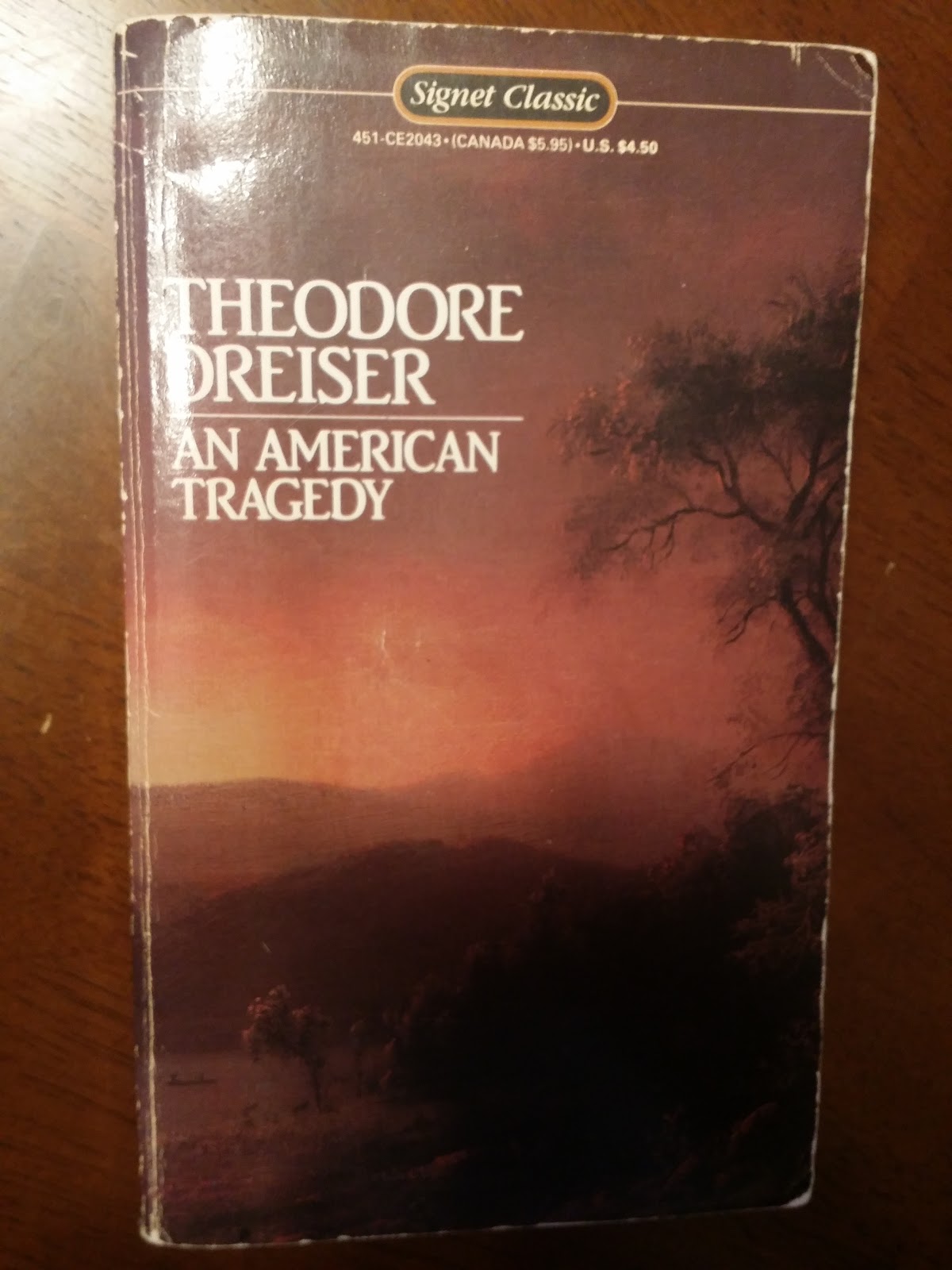
I just (finally) finished Theodore Dreiser’s An American Tragedy. I have been reading less the last couple months, but even so, this was a hard book for me to read. It is a heavy book, and not just because my copy came in at 800+ pages of small print, but Dreiser’s narrative style is as thick as it gets. The characters don’t just have thoughts and then act on them, they analyze every aspect of their decisions and only came to conclusions upon a huge amount of reflection. It wasn’t unheard of to read several pages just of a single character’s throughts on one idea. I’ve read several books written in the ’20s, but this was the first time that the book “felt” like it was written in the ’20s.
Not to say it is a bad book by any stretch. The main character is Clyde Griffiths, a poor young man raised by devoutly religious parents. His parents bounce from city to city, setting up missions along the way that never get anywhere, a lifestyle Clyde abhors until he is finally old enough to get his own job as a bellhop at a local hotel. He is immediately faced with a life very different from what he is accustomed, full of rich customers to impress, loose women, and flowing alcohol. He balances home and work precariously until a car accident, in which he was a passenger, kills a young girl. Fearing jail for his proximity to the disaster, Clyde flees to a new city, to “start over.”
In his fresh start, he runs into his uncle, Samuel Griffiths. Clyde knew his father had a rich brother who continued the family’s successful business (which Clyde’s father had absolved to pursue his religious life), but he had never known him. Samuel immediately sees the family resemblance, and offers Clyde a job at the factory, starting at the bottom but with the opportunity to work his way up. Clyde is welcomed by his uncle’s family, mostly as a curiosity, but is rejected by his cousin Gilbert. Despite the Griffiths’ implied instructions to live up to the standards of the family, Clyde almost immediately reverts to his previous life. He woos a young lady in his department, Roberta, and it isn’t long before she is pregnant. This comes just about the time Clyde was ready to leave her for the desires of a high society girl, Sondra.
Clyde is now faced with a conundrum. He wants nothing more to do with Roberta, but lacks the finances to get her an abortion (remember, this is the 1920’s), and all he wants is to live like the wealthy society to which he thinks he deservedly belongs. When Roberta gives Clyde the ultimatum of marry her or she goes public, he hatches upon the plan to lure her to a lake and drown her, so he can continue his new, fabulous lifestyle. His plan has many holes, and he is arrested shortly after and accused in her murder. A short trial finds him guilty, and despite his mother arriving to campaign for him, he receives the death penalty and is executed.

That pretty much is the whole book with all major events covered. So much of this novel is thoughts, ideas, and emotions explored. The author is definitey a scholar, but it makes for a challenging read. I do like that the book is more than just a surface read. Every time Clyde strays from his family and values to pursue a life he thinks he deserves, tragedy finds him. In the end, we still aren’t sure if he truly repents or if he continues to think that Roberta’s drowning was not entirely his fault (and neither is the final preacher who could have asked the governor for lenancy after interorgating Clyde). He skates off near-misses so many times that we think at the end he may just get away with it, and that would have been a tragedy indeed. He does finally get his just desserts, though it leaves his family in distress, thinking him truly innocent because he fails to admit his guilt to them. I knew there would be books like this in my quest to read my 100, and I’m glad I stuck through to the end, but I can’t recommend it for most readers out there.

Quick takes on 5 films

All American Bully is a crappy B movie, with the look of a film that was filmed by friends over a weekend on their home cameras. In its rawest form, it is a look at bullies in high school, but it is pretty severe, and the “twist” in the end is ugly and only there for shock value. It is a sick film with no value, take my advice and don’t waste your time.
Clouds of Sils Maria however is great. As much as a film can be pretentious, this one is (there are more fade to blacks than I can count), but that doesn’t mean it isn’t good. I just said in a review earlier this year how Juliette Binoche just does boring movies, and granted, this one isn’t for everyone, but it is thought-provoking, emotional, and stirring all the same. Binoche plays Maria Enders, a famous actress from film and stage. She grew to stardome playing a young manipulative character in both the film and stage production of Maloja Snake. 20 years later, she is now approached to play the older character, Helena, in a revival. Sigrid was young and brash, but Helena is dealing with her age and society’s changing look at her because of it, much like Maria herself. There are a million little nuances floated in this movie, such as the relationship between Sigrid and Helena mirroring Maria and her assistant (played by Kristen Stewart), as well as Maria and the “new” Sigrid (Chloe Grace-Moretz). In the movie, Maria makes a firm point of showing she is a “serious” actress and looks down on “hollywood” films as beneath her, especially at this point in her career, so perhaps it is a peek at Binoche’s views as well, who seems to do 10 small independent films for every big-budget she is involved in. Sils Maria is extremely well acted and though it forgives Maria her faults while inspecting everyone else’s, it is still a pleasant film.
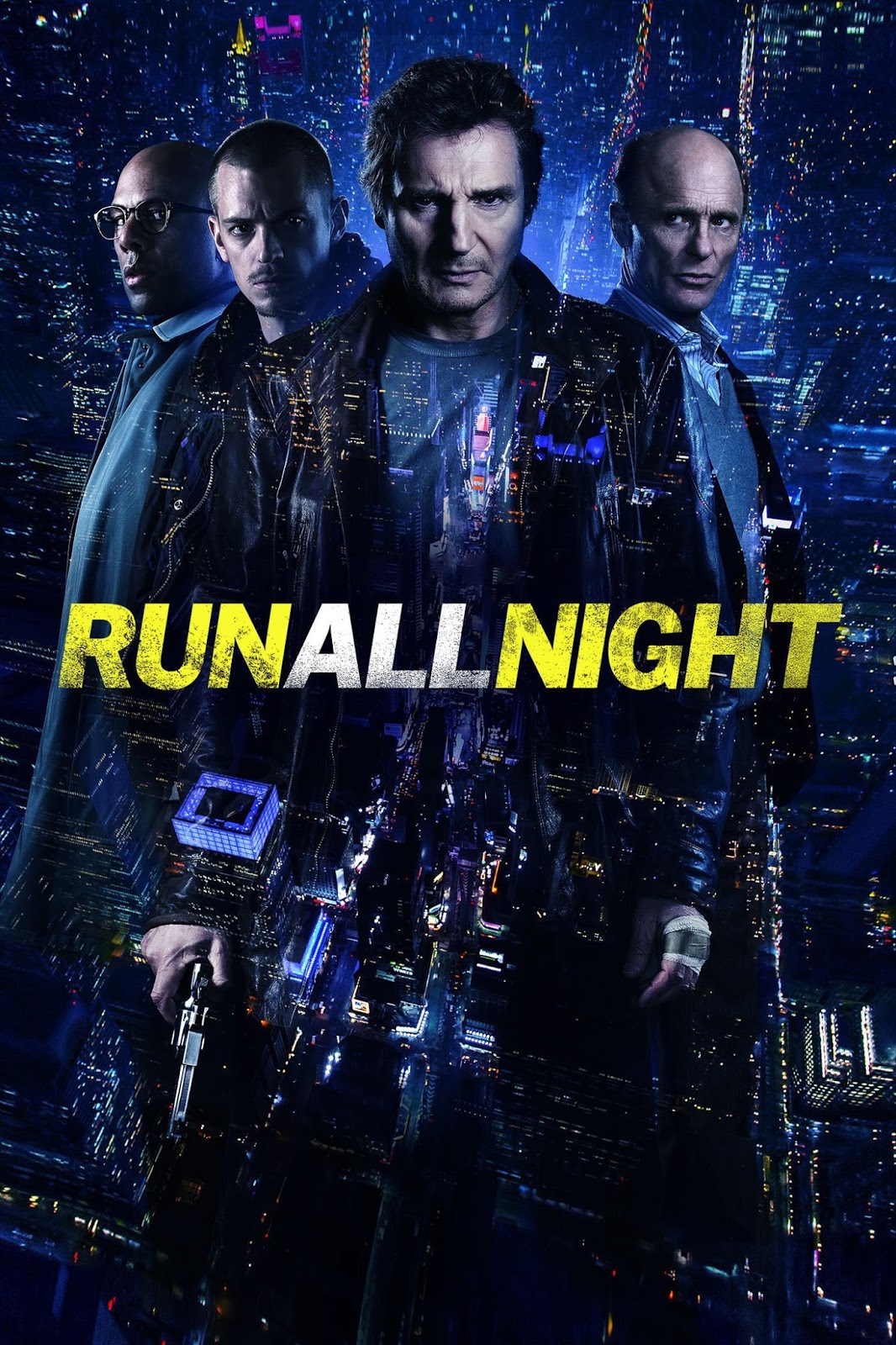
Liam Neeson’s hard-edged good guy (or bad guy with good intentions, as in this movie) is starting to get a little old. He plays some version or another of the same character in all of these movies, to the point that you wonder if you’ve seen this one before. In Run All Night, he plays a former enforcer that got out of the game long ago, but is dragged back in when his son is targeted by his former employers. Trying to protect his son, he handles all the bad guys that come their way. Heavy on the action, light on the plot, there is nothing very memorable about this one, but it can be a decent deversion for action movie diehards. Of course the ending is thoroughly predictable, but that never stopped a good action movie anyway.
While last year’s Unbroken got a lot of press (though it was not as good as the hype), ’71 is Jack O’Connell’s “other” military-esque movie that came out last year, and it is the one you should have seen instead. In it, Jack plays a young British soldier trying to keep the peace against the IRA seperatists in unstable Belfast, Ireland, in 1971. He is seperated from his troop during a gun raid, and has to spend the night on the run from multiple groups that want to either kill him outright, or capture him as leverage. He finds friends in unlikely places, and ultimately sees that the sides of the conflict are not as clearly drawn as he first thought. O’Connell is great in it; the movie is tense, a great action film, but with excellent acting as well.


I had to think twice about Danny Collins, but ultimately decided from the synopsis that I should give it a go. I’m not an Al Pacino fan, generally I think he is about as overrated as they come. Not a bad actor by any stretch, actually very good to brilliant in many films, but his fellow actors fawn over him like the second coming. Anyway, that initially kept me from this film, but I’m glad I went for it. He plays Danny Collins, a huge mega-rich rock star now advancing to his older years, stuck playing hit songs from his youth to an increasingly older audience. The movie prelude shows him as a young man just getting into the music business, and during an interview, the interviewer says he knows he will blow up and be huge, and that his writing and style reminds him of John Lennon. Little did Danny know, but Lennon heard about the interview and wrote him a letter, which Danny never got until decades later. Upon finally seeing it, he decides to take his life in a new direction. He dumps his 30 something year old girlfriend, gives up cocain, and drives to Jersey to reconnect with his son, who he has not had any interaction with for all of his life. There are many things going on with his son’s life, the least of which is his pent-up anger at the father he never knew. The film does try awfully hard to get you to the edge of emotion, with varying levels of success, but it is a great film about redemption, and the promise that it is never too late.

Quick takes on 5 films

Focus is a fairly good movie, but what makes it entertaining ends up reducing its “re-watchability” down to zero. Will Smith plays a high rolling con man, who uses everyone around him to meet his goals of conning thousands (and millions) out of targets. So the big surprises when the cons go down are certainly entertaining, but only the first time. In fact, it happens a few too many times in the movie, so that by the end, you are on your guard and waiting for the big reveal. This lowers the excitement that should be there at the end of the film, but it is still a good ride.


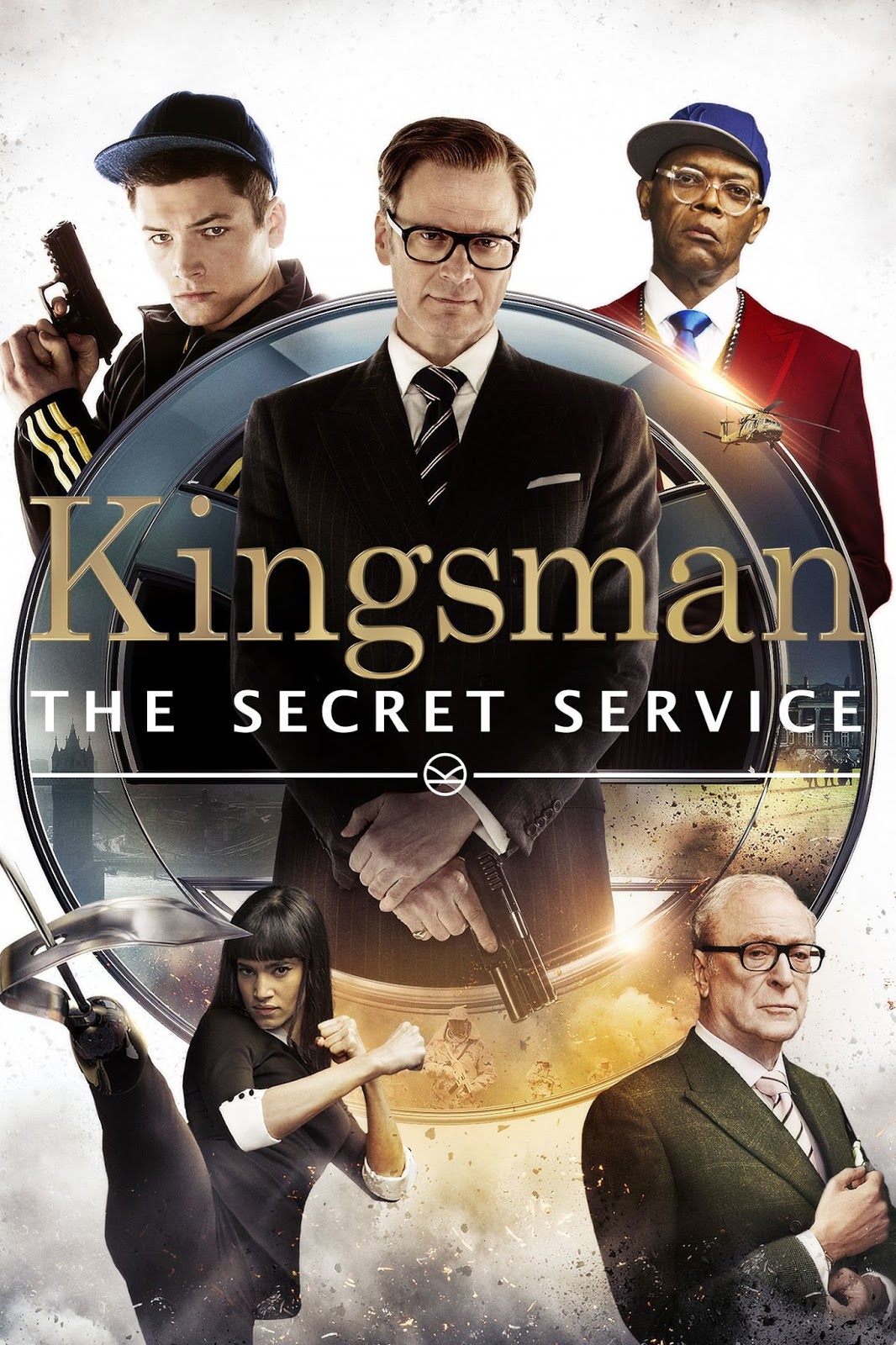
Kingsman was a much more entertaining film than I thought it was going to be. I couldn’t tell from the previews if this movie was supposed to be a serious spy movie, or more of a comedy spoof. Well it’s not a spoof, but it does have some out-of-left-field weirdness, which thankfully doesn’t detract from an otherwise good, action film. It follows the Kingsmen, a super secret spy organization in the UK, where members are given Arthurian code names (Lancelot, Gallihad, etc.). Mostly, it follows young Exie, a young man whose father was a member and who is now recruited to join the group too, by the affable Colin Firth. The ultra villain is played by Samuel L Jackson, who despite ambitions against the world, he hates and cowers from violence and bloodshed. This movie has all the secrets and double-crosses of a good Bond film, and is fun (with laughs thrown in) from the get-go.
Slow West is a pretty good “old style” western, with the feel of the oldies and goodies. The two leads are the great Michael Fassbender and the equally compelling up-and-comer Kodi Smit-McPhee. Smit-McPhee plays Jay, a young Scottish boy who has come to the western USA to find his love, who is on the run for murder, which Jay insists was not her fault. He is aided in his search by the hard-living Silas, played by Fassbender. On the way, they are hounded by a group of bounty hunters, who would love to get to the girl first, for her reward “dead or alive”, or “dead or dead” as Silas points out. Produced by A24 Films (in my opinion one of the great independent studios that keeps putting out hits), it is a fairly quiet, slow-paced movie with moments of stark, quick action. A very gripping film, it catches you early on and keeps you hanging on every moment until the surprising ending.
It is really too bad Jupiter Ascending is a sub-par movie. Made by the folks behind the Matrix movies, it features Channing Tatum and Mila Kunis in an intergalactic cat-and-mouse family conflict. Mila plays Jupiter, a girl who finds out not only are there alien species out there, but she is royalty among them. The film is visually stunning, which is saying something these days when just about every sci-fi film packs the CGI in to a ridiculous level. This movie is eye-popping in its realism and brilliance, but the story, and especially the dialogue, is sometimes downright terrible, even cringe-worthy. For true science fiction buffs, it is worth seeing for the visual spectacles alone, but you might as well watch it the volume down. You might even enjoy it more that way.


To put it bluntly, Woman in Gold is a dull film. It stars Helen Mirren as Maria Altmann, and is based on the true story of her fight to retreive her family’s artwork from a museum in Austria, which was stolen by the nazi’s when she was a girl. She is aided by lawyer Randy (Ryan Reynolds). The two are believable on camera, but if it sounds boring, that’s because it is. I’ve said before I’m a history buff, and I generally like these kinds of movies, but as much as I like to see past injustices righted, there’s not much to get excited about this film. I like a good dialogue drama as much as anyone, but I just sort of crawled to the end on this one. Maybe I learned a thing or two though.

Quick takes on 5 films

The Duff is a cute teenage film. Duff stands for Designated Ugly Fat Friend, and when Bianca learns she is the Duff for her hot friends, she sets out to make changes to her life, in order to get the attention of her crush Toby. She enlists help from her neighbor Wesley, with whom she was good friends as kids, but has grown apart from as he became Mr. Popular as they got older. I don’t think it will attain cult classic status like some of the coming-of-age films that were around in my younger years, or maybe I’m just biased, but it is funny throughout and has a heartfelt, if anticipated, ending. It does a good job of poking fun at today’s youth in the way Clueless did for my generation.
Chappie is the third film from Neill Blomkamp, and unfortunately they keep getting worse after his first, District 9, which I loved. Chappie tells the tale of a robot gaining consciousness in a Short Circuit sort of story, if you were to take Johnny 5 and put him in the hood. Chappie is raised by a couple thugs, who mistreat him horribly and take him on their crime spree. When the only saving grace of the film is the emotion you feel when Chappie is getting abused, you know it isn’t good. They also tried far too hard to grab your attention during action scenes, and the story is about as thin as it gets. Even sci-fi lovers like myself will find little to enjoy here.
Project Almanac is about the same as the above review. A very good premise, it starts when a group of teenage friends are watching old home videos and see one of themselves, as a current 17 year old, reflected in the mirror of their own 7th birthday party. Knowing they somehow build a time machine, they get to it. The movie is about the consequences of making little changes in the past and how that affects the future. Unfortunately it is very disjointed and poorly explained, and to make matters worse, it uses the “found footage” routine to try to keep it feeling fresh, which lets face it, it doesn’t feel fresh anymore. It is really wasted too, there are some original ideas, but they are never explored properly and the whole movie deevolves to teenagers yelling “oh shit!” and running around frantically.
Should have listened to all the reviews and avoided this one. Serena stars the heralded duo of Bradley Cooper and Jennifer Lawrence, so it has to be good, right? Unfortunately their talents are wasted on this one. Bradley plays George, owner of a lumber company trying to work and save to grow his business, doing underhand dealings with the local politicians to keep his struggling business afloat. He meets and falls in love with Jennifer’s Serena, a strong-willed businesswoman whose family also came from the timber business. Somewhere along the lines, a movie is supposed to take place, but I couldn’t find it. Plot elements are introduced and go nowhere, including one device that is used twice! (Friend starts to turn in George, and he is “dealt with.”) Very quickly Serena goes from a shrewd, smart woman to bat-shit crazy, with the transformation so fast you wonder if you missed something. Just stay away.


I don’t know what to make of Welcome to Me. It stars Kristen Wiig in yet another dramatic role, but this one is more Hateship Loveship (bad) than Skeleton Twins (good). She plays Alice, an adult who has been hurt much of her life, a bad situation made worse because she has decided to stop taking meds for her Borderline Personality Disorder. She wins a huge lottery of $80+ million, and decides to sink it into a talk show about her life. Most of the movie is the sort of cringe worthy, awkward humor that Wiig is known for, and she is good as always, but because of her character’s disorder you don’t know whether to laugh or just squirm uncomfortably. Wiig seems to like these roles lately and is really pumping them out the last couple years, but this one is a bit of a miss.