 Metropolis was one of renowned German director Fritz Lang’s last silent films, and was groundbreaking for being a very early feature length science fiction film. It is set in a dystopian future where a privileged upper class frolics in high rises while the working class slave away a mile below the surface of the planet, keeping the machines running that power the city above. One day, Maria, a woman from the underworld who preaches a future peace and understanding between the classes, sneaks upstairs and runs into Freder, the son of the master of the city. Freder has been oblivious to the hardships below him, and he goes down to see it with his own eyes. Meanwhile, a scientist, Rotwang, who wants to take over Metropolis, has created a robot who can take on the likeness of any human, and he uses it to make a copy of Maria. While the fake Maria sows rebellion underneath, Freder searches for the real Maria to attempt to soothe the mob. There are a lot of elements of the film that have been copied copiously down the years, but I thought by itself the movie was just all right. Plenty of good moments, but it does drag, and at over 2 ½ hours, it feels very long for a silent film.
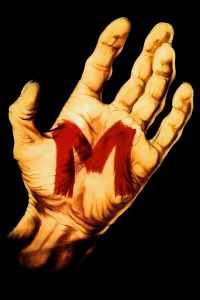 M is quite possibly one of the most influential psychological thrillers of all time, and widely regarded as one of the best. Lang’s first sound film in 1930, it is about a serial killer who has been preying on the most innocent of people, as his targets have all been young girls. The city is on lockdown, but the cops have been unable to find any clues, so they are leaning heavily on the criminal underground, performing nightly raids on gambling establishments and “houses of ill repute” in hopes of turning up something. These raids are cutting into the profits of the crime lords, so they also set out to find the killer, employing the town’s beggars to be on the lookout, just so that things can return to status quo. It’s not much of a mystery, because the viewer sees early on who the killer is (Peter Lorre in perhaps his most famous role, which is saying something since he shows up in The Maltese Falcon and Casablanca 10 years later), but knowing the killer does not lighten the suspense in any way. Watching the cops and the robbers tighten their noose around the murderer is thrilling, but when he lures another girl to his side, we hope that noose would tighten just a little faster. Amazing film, Lang himself considered it the best movie he ever made.
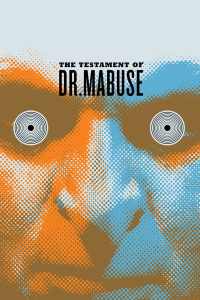 The Testament of Dr Mabuse is a sequel to a silent film Lang did in 1922 (which I have not seen). Dr Mabuse is a brilliant but insane man locked up in a sanitarium. The only thing he does is write, all day, every day. The notes he writes are fool-proof plans on how to pull off crimes, and someone is using those notes to do just that. There is a secret organization being led by an invisible “man behind the curtain,” a shadowy figure who issues orders and kills those who don’t obey. A police chief, Lohmann, is at a loss for solving the perfect crimes and murders going on his city. He does find that clues seem to be circling Dr Baum, who runs the asylum, and pulls at those threads until the exciting conclusion. This is a tremendous film, with exciting action sequences and a superb mystery that keeps the viewer guessing as much as Chief Lohmann.
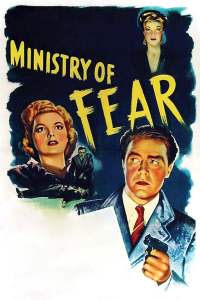 Ministry of Fear came out in 1944, after Lang fled Nazi Germany, and was now making movies in Hollywood. A film noir, it is about a man, recently let out of an asylum for an as-yet unknown reason, who becomes the mistaken target of a nefarious group of spies from Germany. As he unravels the mystery surrounding himself, various people come into his sphere, most of whom he can’t trust. It’s one of those movies where a lot happens, but at the same time, I felt like it wasn’t getting anywhere fast. Honestly I was bit bored for a good stretch of the film, but it ended well. It has a few too many tropes of 40’s Hollywood, and overall just an OK movie experience.
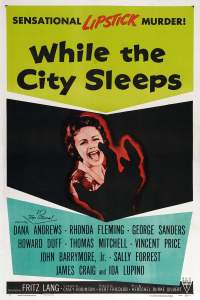 By 1956, Lang’s monstrous ego had burned a lot of bridges in Hollywood, so While the City Sleeps comes near the end of his career. It is a star studded affair, with names like Dana Andrews, Thomas Mitchell, Rhonda Fleming, Vincent Price, John Barrymore, Ida Lupino, and George Sanders. It follows a news organization owned by the Kyne family as a serial killer is terrorizing the city. Rather than focus on the murders, the movie mostly follows the head of the various news outlets (tv, wire, and paper) run out of Kyne. As the old man Kyne dies and his unprepared son takes over, the son promises to give a big promotion to whoever can break the story and identify the killer. The heads of the three above departments race each other to hunt down the bad guy. Part film noir, part drama, and even with some comedy thrown in, the film is entertaining, even if the plot is a bit thin. Dana Andrews as TV anchorman Ed Mobley is fun to watch as a man without a hat in the ring, but who cares about helping his friend reach his goals. And any movie with Thomas Mitchell (most famous to my mom as Uncle Billy in It’s a Wonderful Life) is a plus for me. The movie feels very different from Lang’s earlier work, but it’s a good one.
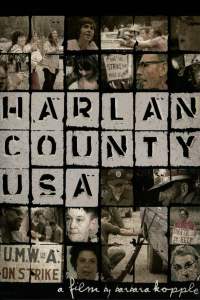 I’m not much of a documentary person, but I thought I’d give a shot to a few older ones, and I’ve really enjoyed these. Harlan County, USA won the Oscar for this category in 1976, and follows a strike by coal miners in Kentucky, a strike that went on for over a year. It follows the miners attempt to unionize, a move that was obviously fought by Duke Power Company, and much of the behind-the-scenes issues that the families faced before and during the strike. They didn’t want a huge raise, they just wanted healthier working conditions, better insurance for when they inevitability got sick or injured in their dangerous work, and pensions that allowed them to retire rather than work till they died. Their attempts to keep solidarity, fights against local authorities who often seemed to be on the side of the company, intimidation by the company’s hired goons, and their own intimidation to scabs brought in to work the mine during the strike are all shown. A great film where the filmmaker let the people involved do the talking without narration, which allowed the dire situation of their predicament come through to the viewer.
 In 1974, filmmaker Barbet Schroeder was given full access to Ugandan leader General Idi Amin Dada Oumee to make a documentary about himself. He wanted to show the might of his country to the world. Schroeder did deliver a 1 hour film to Amin that he liked, but added an additional 30 minutes for a film to be shown to the rest of the world. This second film Schroeder ended up making was very different from what General Amin wanted, and he was furious at how he was shown in it. But outside of a few very short interjections here and there to set facts straight, Schroeder lets Amin do all the talking. After a short introduction by Schroeder describing Amin’s rise to power and the current inflation-ridden status of Uganda due to his policies, the filmmaker watches Amin boast about himself non-stop (he is a world heavyweight boxing champion and could run the 100 meters in 9.8 seconds!) and about the might of his military (he trains troops for water attack and paratroopers yet has no navy and few military aircraft). Schroeder’s access to Amin’s cabinet meetings show a man who tries to sound in total control but instead appears to be a man paranoid of his detractors. If this sounds familiar, it isn’t far different from the dictators across the world today, and listening to him proclaiming the greatest of his accomplishments sounds much like our current president. Pretty eye opening. Today General Amin is called “the butcher of Uganda” and is known as one of the most brutal world leaders in history, having killed hundreds of thousands of his citizens and opposers during his reign from 1971 until his ouster in 1979.
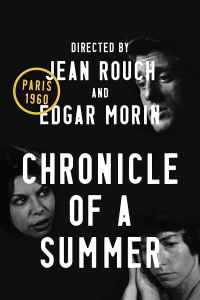 Sociologist Edgar Morin and anthropologist/filmmaker Jean Rouch teamed up to make Chronicle of a Summer in Paris in 1961. They wanted to interview average people in all walks of life and get a feel for how people were feeling in a post-industrial, post-colonial, increasingly consumer-driven society. Starting with the general question, “Are you happy?”, they veer off into other subjects from there. What the viewer comes away with is generally, no, people were not happy, and probably for the same reasons as today. Overwhelmingly people wanted more money. While some took a relaxed view of work with an “it is what it is” kind of attitude, many downright hated their jobs, and didn’t see a comfortable end to the cycle of getting up, working hard all day, going home tired, and doing it again the next day. This feeling of hopelessness and helplessness led many to anger. Life was generally (and continues to be to this day, I think) easier for us than for the previous generation, but it is hard to see that when society is telling us you need to own “this” car and live in “that” neighborhood to be considered successful. Later in the film, talk turns to the war in Algeria, race relations, a feeling of political impotence, and other serious topics. By the end of the documentary, the filmmakers realize that the film has become something very different than what they set out to do. Another film with stark comparisons to today, though if anything, I think the resentment in the working class and the push to keep up with the Joneses has only gotten worse in the last 50 years.
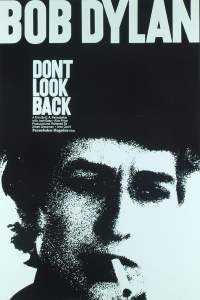 Dont Look Back is from famous documentarian DA Pennebaker, following Bob Dylan’s 1965 British tour. Pennebaker was given complete access and we see a relaxed, unfettered Dylan, someone who is now known for being so reserved, who rarely gives interviews. It starts with his arrival in London in 1965, now a star after a meteoric rise (Dylan quips that he was just here 2 years ago and no one noticed). From there we see the daily life surrounding Dylan for this short, acoustic tour, performing his early hits that he is all ready tired of playing. His first electric album has all ready been released, but the fans obviously still want to hear his acoustic hits. It’s a fantastic documentary and a superb inside look at the industry. We see Dylan’s interactions with fans (including his frank recounting of these interactions behind stage), brush-ups with hotel staff complaining about noise, run-ins with other musical acts and professional friends, an argument with a reporter from Time, and negotiations over money between Dylan’s manager and local venues. The young Dylan (only 23 or 24 years old) is sometimes fun (and funny!) and engaging, sometimes surly and combative, sometimes quiet and contemplative. Pennebaker gets it all on tape for a close, personal look at a man whose music spoke to a generation, who seems unsure that his music means as much to himself as it does to others. Truly an amazing film, even for people who aren’t necessarily Dylan fans. I myself only have a passing knowledge of his biggest hits, don’t own a single record of his, but I enjoyed this film.
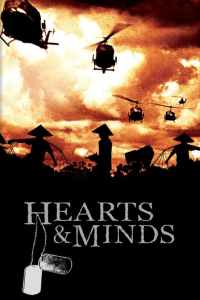 Winner of the 1974 Oscar for best documentary, Hearts and Minds is a real look at the Vietnam War, from director Peter Davis. It is about as all-encompassing as you can get, albeit all from a skeptic’s point of view. Starting with a recap of why the government took us into the war in the first place (buildup of communism in the area and the ego of the USA that they saw themselves as world policeman after World War II), we see a series of interviews with dozens of people. We get viewpoints from politicians, generals, Vietnamese citizens, front-line soldiers (with the sounds of bullets flying by just overhead), religious leaders, and many others. We see the destruction on the ground, with citizens crying for lost loved ones and destroyed homes. Very frank discussions are included, such as a Native American who says he signed up to kill “gooks” but now admitting he was brainwashed, not realizing at the time that they were derisive of the Vietnamese population while he himself was called racially insensitive names by his own commanders. Another soldier doesn’t even remember why he signed up, and says he has seen nothing good since arriving. Soldiers burning villagers’ homes while the owners can just watch in silence. And through it all, the brass and politicians continue to talk about how important the war is to the future of our way of life, while citizens (there and here) grew angrier. Probably as inclusive a documentary as you will find, with lessons that still need to be learned today. Those who do not learn history, etc. etc.
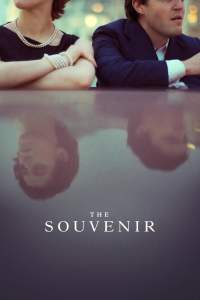 Often when a film gets sterling reviews from professional critics but is lambasted by the general audience, I side with the audience. The exception is The Souvenir. It is currently rocking a 90% critic score on Rotten Tomatoes and a 33% audience score. But it is a lovely film, the story of a girl doing all that she can to save her love from himself. Julie is a talented film school student when she meets a charming man named Anthony. They fall for each other pretty quickly, move in together, and it is a typical, loving relationship. They have the same kind of conversations we all have, things like who is taking more space on the bed. When she sees bruises on his arm, she asks if he hurt himself and he says he did, but it is healing well. She doesn’t think twice when he asks to borrow money now and again. But when they have dinner with some of Anthony’s friends, and he gets up to get more wine, the friend privately asks her if dating a heroine user has been hard. Of course Julie had never put two and two together, and is shocked, but still doesn’t confront him about it. She starts to pay his bills on top of her own, borrowing money from her mom. She even is unsuspecting when their apartment is robbed and all the valuables stolen. It only gets worse from there, as Anthony succumbs to his sickness and Julie continues to enable him. As an outside viewer, you want to scream at Julie to wake up and see what is right in front of her eyes. I can see why people say the film is boring; there are a lot of conversations that take place throughout which are just normal conversations, which don’t seem to further the plot or develop any of the characters, but I found they added rather than subtracted from the movie. It created real, breathable people that anyone could relate to. A heartbreaking look at what a person can put up with to try to hold on to love that was once there, but is sadly long destroyed.
 I usually do newer (or much older) movies on this blog, but I’ve never seen Léon, the Professional, and a coworker said I needed to remedy that. Directed by Luc Besson, it tells the story of a hitman (Jean Reno) whose carefully orchestrated life is upended when he takes in an orphan. Léon lives alone at an apartment at the end of the hall when his neighbor and the entire family is killed in a drug deal gone bad. The only survivor is 12 year old Mathilda (Natalie Portman in her debut role). She wants to learn Léon’s trade in order to take down her family’s killers, but it turns out, the killers are corrupt DEA agents, headed by a sleazy drug addict himself named Norman Stansfield (a mesmerizing Gary Oldman). There are some absolutely terrific moments in this film. The camerawork is fantastic and the gun fights are intense, but the whole creepy vibe of an adult man and a 12 year old girl (the movie hints at more of a romantic relationship than a father/daughter one) is off-putting. And from what I read online, it was even toned down a bit from the original script at Portman’s parents’ wishes. Still, a good, fun, action flick.
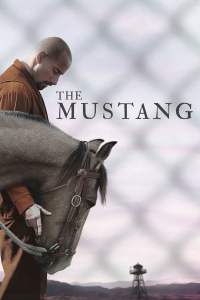 The Mustang is a beautiful film about a man finding his way back to peace. Roman is in jail, and you get the impression that it is for something really bad, and that he has been there a very long time. He’s been transferred to a prison where the inmates train wild horses as part of a program that raises money for the state (in the sale of the horses) but also as a rehabilitation for the prisoners. Roman is completely closed off emotionally; he cannot communicate with anyone, even the counselors on staff to help. When he starts working outside though, he immediately becomes attached to a wild mustang named Marquis, a horse no one has been able to tame. When he finds he cannot force the horse to listen, he has to finally open up to the animal and to himself, freeing emotions that he’s had buried for over a decade. In the process, he reaches out to his estranged daughter (a daughter he doesn’t even recognize on her first visit to the jail, it has been so long) and is finally able to move on from the crime he committed long ago. Tremendous acting by Matthias Schoenaerts in the lead; he’s been around a long time but has had several acclaimed roles in the last 5 or so years.
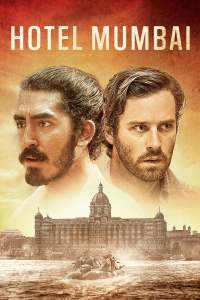 Hotel Mumbai is based on the attacks on that city in 2008, and focus specifically and the long standoff at the famous and luxurious Taj Mahal Palace Hotel. It begins with a group of radical Muslims beginning their coordinated attacks throughout the city, and then shifts to the twelve hour siege at the hotel. The young killers target everyone, but try to take any Americans or foreigners hostage. The story of the siege revolves around a few key people. There’s a family: a rich Indian wife and her American husband, with their baby; and a local worker at the hotel who bravely spends the day saving people despite numerous chances to make his own escape. The film has a great cast including Dev Patel, Armie Hammer, and Jason Isaacs, and while it has some assuredly tense and exciting moments, I couldn’t shake the feeling that the whole thing felt a little too “Hollywood” in dramatizing such a horrific day. There was even a moment when one of the guests pointed out how young the attackers were. That may be true, they were depicted as young men who had been horribly swayed to commit these crimes, but they were killers nonetheless, and things that like irk me.
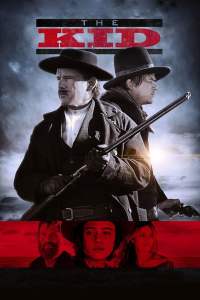 The Kid features a good cast showing off their chops, but the film falls short due to a lackluster, and frankly boring, story. It isn’t quite an action flick, and isn’t smart enough to be a good art film. Rio and his sister are chased by their uncle (Chris Pratt in a rare bad-guy role) after Rio has killed his own dad (the uncle’s brother) for beating his mom. They run into Billy the Kid (Dane DeHaan) who is on the lamb, running from Sheriff Garrett (Ethan Hawke). Garrett catches Billy and takes him in to town to be hung, and in the meantime, the uncle catches up the Rio and kidnaps the sister, warning Rio that he’ll kill her if Rio tries to follow them. Rio sets out to rescue Billy for some help in getting his sister back, but the easy-going Billy is more interested in doing whatever he wants than helping Rio. The movie tries to create tension, but it never feels like it’s going anywhere. The whole thing is a wasted opportunity for the people involved, including director Vincent D’Onofrio.
 Pandora’s Box is a late silent era film from 1929, directed by G.W. Pabst in Germany. It is about a girl, Lulu, who always seems to find trouble. Extremely good looking and flirtatious, she has the attention of an old man (who ends up dead), the man’s son (who ends up broke and on the run from the cops), and a con artist (also dead). The title hints of the Greek mythology of Pandora unleashing evil into the world, and while murder and crime does follow Lulu wherever she goes, it seems often the real culprit is an older man who seems to be a father, or at least, fatherly figure, to Lulu. This old crook is the one who hints to her boyfriend to cheat the casino, gets Lulu to go prostitute when he wants a Christmas dinner, etc. The film was a bit slow to get going, but I ended up really enjoying it. The soundtrack isn’t great in my opinion (on the version I watched) and that’s a bummer for a silent film, but still a good picture. Pabst wanted American actress Louise Brooks in the main role, and she only came on after quitting at Paramount when they hesitated to give her a raise, thinking she might not be as good in sound films as she was in her previous silent hits. She proved to be fantastic in the lead role.
 The King of Kings is arguably Cecil B DeMille’s most famous silent film. A director most known today for the Golden Globe lifetime achievement award given in his name, and for his final film (the Charlton Heston-starring The Ten Commandments), DeMille made 70 silent and sound films in his career. The King of Kings is just what it sounds like, the story of Jesus, and specifically his final days, crucification, and resurrection. Like just about every biblical film, there are a lot of liberties taken to “flesh out” Jesus, showing everyday events that were not in the Bible, but as a whole, the film tries to keep as close as possible. Even much of the “dialogue” (intertitles) is direct quotes from the Bible, with book and verse number in the bottom right. It’s a good film, though it definitely feels dated, and not just because it came out in 1927. I’ve seen a lot of those old films by now that are just as entertaining today, and while this one is well acted, well shot (for its day), and uplifting in all the right spots, it still “feels” old.
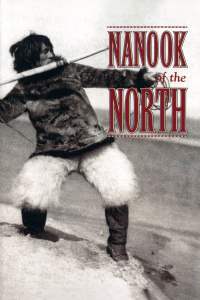 Nanook of the North is one of the oldest films I’ve ever seen, released in 1922. Ostensibly a documentary, but with its fair share of “directorial liberties,” it follows a far northern Eskimo called Nanook and his family. The film receives a lot of criticism today for having some scenes staged, but it was ground breaking at the time, for both the effort that went into its filming (with very large gear in 1922!) and for giving the documentary genre (a name that wouldn’t be coined for a few more years) some direction and story, giving it an almost romantic-like feel. Obviously pre-code, there are a lot of scenes that would never fly just a decade later, such as showing the hunting and gutting of animals, Nanook’s multiple wives (and their nakedness when they prepare for bed), etc. But it is a startling film depicting the harsh life in the far north, so long ago.
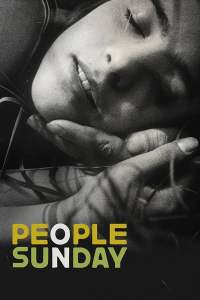 People on Sunday is a German silent film which, I’m convinced, has only stood the test of time because of the people involved in it. The quasi-documentary has a loose story about people enjoying their day off. A duo of men spend the time trying to pick up women, who both end up interested in the same man, creating jealousies. The film is interesting because it depicts Weimer Germany in 1930 before the rise of the Nazi party, and it is funny, because the clothing, hair styles, antics, and style of life could just as easily be USA at the time. Oh what the course of history can do! Honestly the film is a bore until they get to the beach, then it opens up in the second half. But as I said, this film is most notable for the pre-famous people behind the camera. It is directed by Robert Siodmak (Hollywood noirs) and Edgar G Ulmer (noirs and Hollywood B movies), with a screenplay by Billy Wilder (big name obviously, with movies like The Apartment and Some Like It Hot), and cinematography by Fred Zinneman (who would later win 4 Oscars). All four men fled Germany during Hitler’s reign and found themselves in Hollywood to launch their stardoms.
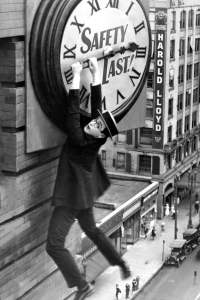 Ending today on a high note with one of the best comedic actors of the silent era, Harold Lloyd, in Safety Last! This is a romantic-comedy about a man who comes to the big city to get rich so he can marry his girlfriend, but finds himself working as a salesman in a department store. He regularly sends letters home pretending that he has made it big and will send for his girl soon, but in reality he is just barely scraping by. When she decides to go to the city and surprise him though, he needs to find a way to make money quick so as to marry her. He approaches the president of the company about a scheme to climb to the top of the skyscraper as a publicity stunt, to which the owner agrees and offers to pay $1000. Of course it doesn’t go so well, but does generate the famous scenes of Lloyd hanging from the roof. A fantastic film that is truly laugh-out-loud funny, it showcases Lloyd as the perfect everyman comedic actor of the silent film era.
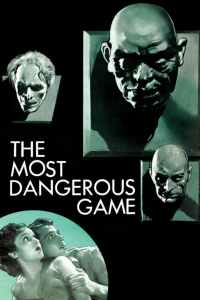 A man ends up in a mortal hunt, being chased by a madman who leads a game where he hunts humans instead of animals. This tale is pretty common today, but it got its start in The Most Dangerous Game, a short story from 1924, and then the film version of the same name in 1932. Bob is on a luxury yacht when it crashes on a tiny island off the coast of South America. He is the only survivor, but he is taken in by the owner of a mansion on the island, Count Zaroff, and finds survivors of similar wrecks already living in the house. The grisly game unfolds from there, in spectacular fashion. For a 30’s film, the movie has excellent thrills and suspense, and being pre-Hollywood code, it a bit on the gruesome side as well, complete with human heads displayed in Zaroff’s trophy room. A very entertaining, short film (just over an hour in length), it fell into public domain quite awhile ago, but do yourself a favor and make sure to look up a version that was restored properly, and forego one of the ones that has been “colorized.” This film looks best in glorious black and white.
 I’m sneaking Lonesome into this set of pictures, even though it came out in 1928. Close enough, and I wanted to see it. Like a lot of movies made in 1928 and ’29, it is mostly a silent film but had a few scenes of dialogue added to take advantage of the talkie craze. Lonesome is a film about two single people living in the hustle and bustle of New York. Jim and Mary are surrounded by a hectic, modern world constantly in a rush, but though they have people all around them, they are each lonely. All of their friends are coupled off, leaving them to be the third wheel if they go out. They each see an advertisement for a carnival day at the beach, and head there for some fun. They run into each other there and hit if off right away. They spend a memorable day together, but are separated near the end, not knowing anything about each other, other than a first name. In classic cinema fashion, they return to their individual homes, only to find their apartments are down the hall from each other. A classic love story, with all of the elements of a film of this era, but with genuinely nice, artful moments too. When they are separated, Jim and Mary are engulfed in a sea of people, all cheering and having fun, throwing streamers, involved the gaiety of the day, but the two of them are each as hopeless as a person can be, striving to find each other. Glenn Tryon as Jim is particularly good, with a more varied, nuanced acting style than what you typically see in silent movies. The film had some nice other aspects too, including some color added in various scenes to emit emotion, such as blue-tinted scenes to show moonlight and love, and in other spots, color added to the film itself to enhance the moment, like the lights and colored balloons of the carnival.
 From 1939, Stagecoach is a renowned movie for a lot of reasons. It is the first western director John Ford made in the sound era, the genre in which he would later become synonymous. It is the film that catapulted the western genre from “B” movie status back to mainstream success. And it also launched John Wayne’s career as a leading man. The film focuses on a ragtag group of strangers as they ride a stagecoach from one western town to another, under the constant threat of Apache attack. There’s a disgraced saloon girl, a woman looking for her union soldier husband who is stationed out here, a drunk doctor, a traveling salesman, a corrupt banker, a gambler, and of course, John Wayne as a rancher out for revenge on the men who murdered his father and brother. John Ford had been watching Wayne ever since using him as a prob boy on earlier pictures (under Wayne’s real name Marion Morrison), and knew he had something special. Though he was paid the least of all of the male actors in Stagecoach (which, among others, starred one of my mom’s favorite old actors, Thomas Mitchell), John Wayne steals the show and the camera eats up his charisma. Though not without its stereotypes, this movie is tremendous, and just as exciting as any film made today. The final gunfight between Wayne’s character and his enemies, drawn out in tight suspense, is pure movie magic.
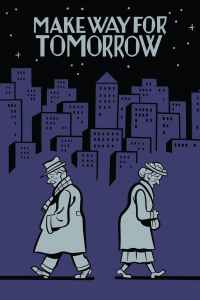 Make Way for Tomorrow is a lovely, funny, but ultimately sad film about aging and the forever-turning wheel of time. Bark and Lucy are an old married couple who have lost their house to the bank. Unfortunately their kids don’t have enough space to take both in together, so Bark goes with one daughter and Lucy goes with their son, 300 miles away. While the film has a lot of humor, good humor too and not the corny, dated kind, it plays out as a tragedy. All of the kids feel put out, and no one wants the burden of taking care of their parents. The youngsters don’t want their daily lives interrupted, and they keep trying to pawn off the old folks on other people, such as their own kids, the remaining sister (who has a big enough house to keep both together, but whose husband has forbidden it), and even strangers. From an outsider’s perspective, they are awful people, but in a terrible way, it is easy to see how it can happen. Everyone is wrapped up in their own lives, same in 1937 as it is today, and no one wants to change those routines, even to help out a parent. When Lucy finds out that her son is considering putting her in a home (something she hates the thought of), she broaches the subject to him as her own idea, so as to spare him the pain of bringing it up to her. Parents will always protect their kids, even if the reverse isn’t always true. When the first daughter decides to send dad off to California, further separating the old married couple, they spend a final day reminiscing about their life together. Thomas Mitchell shows up in this film too as the son, but the leads of Victor Moore and Beulah Bondi (Mrs Bailey in Its a Wonderful Life) are the real showcase. Even now, I think back to the final scene with Bark and Lucy saying their goodbyes at the train station, not knowing if they’ll ever see each other again, it hits me. A wonderful film.
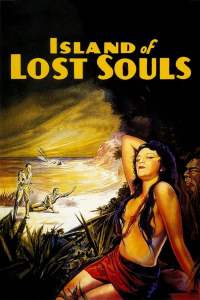 Island of Lost Souls is an old 1932 horror film, based on the HG Wells book The Island of Dr Moreau. In it, Edward Parker finds himself stranded on an island with gruesome looking inhabitants and a scientist named Dr Moreau (played by younger Charles Laughton). Parker finds out that the people aren’t people at all, but animals that Dr Moreau has “treated” with medically advancing evolution techniques, turning them into human-like beings. Dr Moreau introduces Parker into the exotic and beautiful Lota, who it turns out was also once an animal, to see if they will mate and what will come of it. In the meantime, Parker’s girlfriend Ruth finds her way to the island to rescue him, and this leads to the humanesque people rising up against Moreau. The methods pursed on screen by Moreau are very macabre and only made it out because of the pre-code time period. Though Wells himself hated the film, thinking it relied too heavily on the horror aspects rather the philosophical ideas he intended, it is a very good film with more thought-provoking ideas than your average run-of-the-mill horror flick.
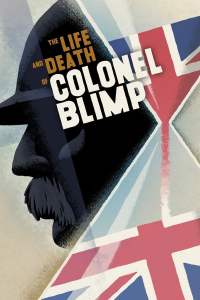 The Life and Death of Colonel Blimp may well be one of the best movies I’ve ever seen. It details the long life of Major-General Clive Wynne-Candy (Roger Livesy), but begins near the end. Clive is an old man and is training the Home Guard in London during World War II. He is to run a training exercise the next day, but a brash young lieutenant gets a jump start on him and takes him “capture” the day before “war” is to break out. Clive is incensed, saying kids these days don’t follow rules or respect their elders. We then get the story of what made Clive the man he is, going back to his days as a lieutenant himself in the English Boer War in Africa in 1902. Clive has made a name for himself for heroics in battle, but when he travels to Germany to squash some propaganda, he is challenged to a duel by a young German officer. For his sword fight, he gets a lifelong scar on his lip (covered by a mustache as an old man) and a lifelong friend in the German, whom he calls Theo. (This was a daring film to make in 1942, at the height of war, when the only German who gets a lot of screen time is shown as a good man.) Theo ends up falling in love with and marrying Clive’s friend Edith, and Clive realized only afterwards that he loved Edith too. The movie then jumps ahead to the end of World War I, and Clive (now a brigadier general) is marrying a girl half his age who looks just like a young Edith (in fact played by the same actress, Deborah Kerr). Theo is a prisoner of war with the English army, but Clive looks him up and treats him well, attempting to cheer him up. Theo isn’t having much of it though, worrying about what will happen to his home of Germany now that they’ve lost. The next scene gets us close to the beginning of the movie, in 1939. Theo is trying to immigrate to England but is held up in customs. He admits his sons are in the Nazi party, but that he wanted nothing to do with Hitler and hasn’t been a soldier since 1920. Clive arrives and vouches for him. They catch up, admitting that both wives have died, and Clive fesses up that he once loved Edith himself. Clive is about to give a speech regarding Dunkirk where he is going to argue that English soldiers fight with honor and not resort to tactics that Germany is using. The powers that be will not allow Clive to give that speech, and Theo agrees, saying that having seen what losing a war will do to your country and home, that it is better to win at any cost. Clive finds retirement in training the Home Guard, but sees that he has been passed by. He laments the lifetime of experience he has that no one seems to want, but also sees a parallel in the brash young lieutenant that captured him, and his own rush off to Germany when he himself was a brash young man. A beautiful film, full of love and longing, loss, grief, and, quite literally, a “passing of the guard.” One to watch again and again.
 The one word that came to mind upon finishing A Canterbury Tale is lovely. It’s a fairly simple movie, really not much of a plot, but it exudes a feeling of calm and serenity, making it impossible to not become swept up in it. The film follows an unlikely trio who disembark a train in a small village in Kent, on the way to Canterbury, in 1943 (the film was released in 1944). Peter is a British soldier stationed nearby, Bob is an American soldier who mistakenly got off too early, and Alison is a young woman who is to begin working at a farm nearby. On their first night there, Alison is attacked by an unknown assailant, someone locally who has been pouring glue in women’s hairs. The trio set out to solve the mystery of the attacker, but in the meantime, learn about the quiet nearby villages and the history of the Canterbury pilgrimages. Some really picturesque cinematography featured throughout, and the land really becomes as important as the actors. Nice little film.
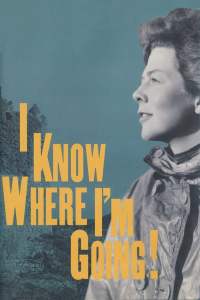 I Know Where I’m Going! is about a young woman, Joan Webster (Wendy Hiller), who seems to have had her whole life planned from an early age. She knows what she wants, and more often than not, she gets it. From a middle class background, she is on the eve of her marriage to a very wealthy factory owner, Robert Bellinger. He is bringing her out to the northern, Scottish isle of Kiloran, which can only be reached by boat from the nearby isle of Mull. On Mull, she is stranded when storms prevent the final leg of the trip, and she meets Torquil MacNeil (Roger Livesey), a Naval officer and everyman who wants to visit his childhood home on Kiloran. While Joan waits on Mull for the weather to clear, she grows closer to MacNeil and the other middle, working-class inhabitants. She is shaken when she learns MacNeil is also laird (lord) of Kiloran, and it was from him that Bellinger leased the land. Though MacNeil does own the land from inheritance, he isn’t a wealthy man. For Joan, who always thought money was everything that would give her happiness in life, she sees a people who are quite content with what little they have. A fantastic romantic drama with lots of comedy too, a film like this would play just as well today as it did in 1945.
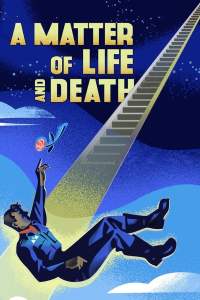 A Matter of Life and Death is just what it sounds like. Peter is an English airman returning home after a bombing mission in Germany, but his plane is crippled, he doesn’t have a parachute, and he knows his end is near. He radios down and gets an American servicewoman named June, he takes down his last words. Remarkably though, Peter awakes on a beach the next day, and realizes quickly he’s in England, not Heaven. He hunts down June immediately and they quickly develop a relationship. However, in Heaven, they realize their mistake and that Peter was to die that night, and send down a man to bring him up. Peter asks for an appeal, on the grounds that his life has changed now that he has a love in his life, and is granted a case by jury in 3 days. Peter selects his counsel, and the case plays out, both about Peter, as well as a referendum on relationships between England and America, which were strained in the aftermath of the world war. A fine film, not as spectacular as the preceding ones, but who can hate a story about love?
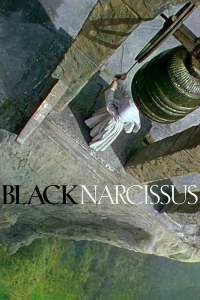 For today’s lineup, the Archers end on a high note with Black Narcissus. Incredible drama about a group of nuns sent to a remote complex in the Himalayas to set up a hospital and school for the locals. Leading them is a young but driven Sister Clodagh (Deborah Kerr). The sisters get a good start there; the school is well attended and they have the support of the local “general,” a young man who inherited the land from his wealthy uncle, now a holy man. The only real point of contention is a strapping Englishman named Mr Dean (David Farrar), who flaunts his robust sexuality to the nuns and drops sexual innuendos to make Sister Clodagh uncomfortable. It isn’t long that other problems begin to creep up. The high altitude and wide open spaces seem to affect each of the nuns differently. Sister Ruth, already a bit unstable but sent up there in hopes to find peace, becomes mentally unhinged and begins to yearn for Mr Dean, but becomes jealous when he talks to Clodagh. Sister Honey is supposed to overlook the gardens for their food, but starts planting flowers instead, remembering happier moments from her youth when she was surrounded by flowers. Even Sister Clodagh herself begins remembering a romance she had as a teenager before taking her vows, memories probably brought on by Mr Dean’s flirtations. Ultimately, the nuns’ safety is put at risk when a baby they are treating in the hospital dies, and the local population begins to think they are trading in black magic. The kids stop coming to the school, and Ruth’s mental acuity unravels, leading to a horrendous moment between her and Clodagh. I’ve only previously seen a few of Powell and Pressburger’s films before this set, and they were good, but this lineup has pushed them to one of my favorites. Time to go hunt down some more!