Quick takes on 5 Louis Malle films

My only previous experience with French director Louis Malle was one of his later English films, Black Moon, which is a very out-there film that I really enjoyed. Today I’m going back to his earlier French pictures, starting with his debut, Elevator to the Gallows, a crime movie from 1958. What a wonderful start to a career! This film is great, about a woman, Florence, who is having an affair with an employee of her husband’s company. Florence and Julien’s plan is to kill her husband but stage it to look like a suicide. The murder comes off without a hitch, and Julien exits the building to his car. Unfortunately when he looks up at the high rise before pulling away, he sees he left his grappling rope on the side of the building, which he had used to climb a floor to the husband’s office. He runs inside to take care of it, but while in there, the building security closes it up for the weekend, thinking it is empty, and shuts off the power to the building. Julien is stuck in the elevator. To make matters worse, he had left his car running outside. The car is recognized by a local hoodlum and his girl, who knows Julien, and they take off in it. They drive off to a motel where they give Julien’s name, and end up killing a German tourist during the night. So now Julien is wanted for a different murder, and he is completely unaware. Meanwhile, throughout the long night, Florence wanders the streets of Paris, thinking Julien has dashed off without her. There’s a great ensemble cast of well-known names from this era, including Jeanne Moreau, Maurice Ronet, and Lino Ventura, and the film was scored and performed by the great jazz trumpeter Miles Davis. The picture has suspense, mystery, and even some laughs to lighten the tension. Great all-around flick. ★★★★

Zazie dans le metro (“Zazie in the Metro”) is a zany comedy about when Zazie, the most precocious 10 year old on the planet, goes to stay with her uncle Gabriel in Paris for a couple days while her mom visits her boyfriend. The only thing Zazie wants to do is go on the subway, but it is currently closed while the workers are on strike, so she entertains herself in other ways over the course of 2 days. It is a wild, absurd film where nothing makes sense. Buffoonish characters pull off visual jokes aplenty throughout the 90 minute picture. I laughed quite a bit in the early going, but the relentlessness of Zazie’s escapades wore on me after awhile. The film plays out in a frenetic pace that doesn’t let up until the credits roll in the end. Released in 1960 and certainly French New Wave-esque, Malle pokes fun at himself in an early exchange between Zazie and her uncle, when Gabriel points at the taxi meter rolling and says, “Here that? It’s new wave!” Zazie quips back, “You can take your new wave and —.” Funny for sure, but don’t watch it expecting anything resembling a plot, just a bombardment of visual and verbal gags. ★★

Murmur of the Heart is called a coming-of-age film, and it is that I guess, albeit tied up with a lead character with serious mommy issues. Laurent is a 14 year old boy with two older brothers, both bad influences, and a mother who dotes on him far too much. Laurent is a good student, and at 14, he’s increasingly aware of the opposite sex, but has no idea how to go about his feelings. His interactions with girls are awkward at best, borderline sexual assault at worst, and it doesn’t help that his first sexual experience is with a prostitute, set up by his brothers. Meanwhile, he gets little affection from his father, a successful gynecologist from “old money,” and too much affection from his mother Clara. Clara had her first child when she was just 16, and is quite a bit younger than her husband, and still looks great in her mid-30’s. Originally from Italy, she’s full of sexual energy, and is in fact having an affair on her husband, which Laurent is aware of. All of Laurent’s friends are attracted to her, and unfortunately, it seems Laurent is too. The physical affection shown between these 2 even from early in the film was cringy to watch for me. After Laurent gets scarlet fever on a camping trip, and he and his mom go to a sanatorium for a little while for some rest and relaxation, their relationship takes a turn beyond normalcy. I’m not arguing it is an extremely well acted, well directed, well shot film, all aspects are top-notch, but the material was rough for me to watch. Not sure why the professional critics are OK with it. ★★½
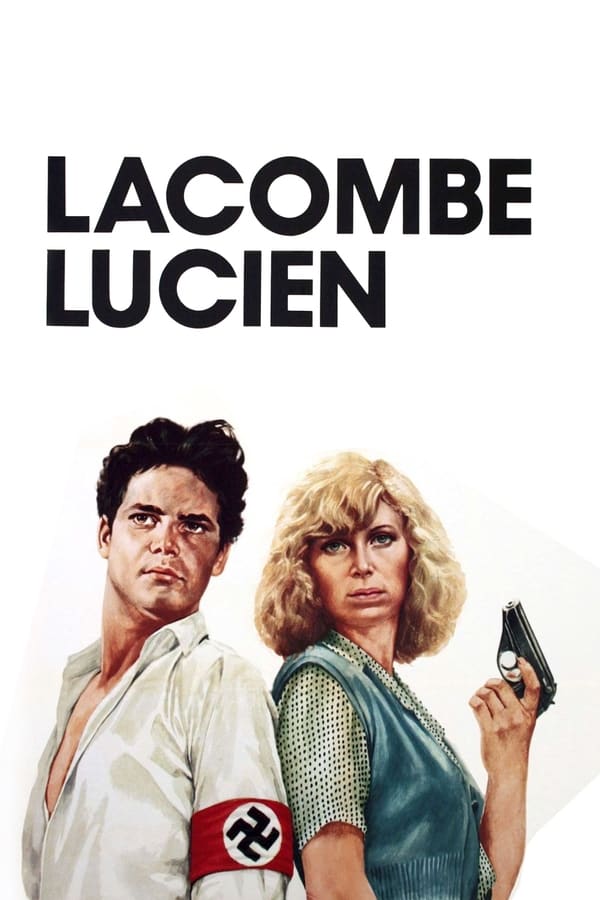
Lacombe, Lucien was another controversial film in Malle’s home country, as it tells a story of a young man who became a collaborator with the Germans during the war. Lucien is from a rural community. He’s tired of the daily grind, and approaches the schoolteacher, the local contact for the French Resistance, about joining. He is refused due to his young age. Shortly thereafter, while riding his bike near a large estate, he finds himself ushered in. Turns out it is headquarters for the French arm of the Gestapo. During a drunken evening, he lets slip that the local teacher is in the Resistance, and the next day, the teacher is brought in and tortured. For his help, Lucien is initiated into the group. While once wanting to fight the Germans, Lucien finds he loves the power that comes from his new position with them. He suddenly has fine clothes, and people rush to give him things when he mentions he’s with the German Police. He uses these new powers to get close to a girl he likes, France (the name is not a coincidence, I’m sure). However, France is a jewish girl, daughter to a tailor, who’s been allowed to stay so far because of his connections, but is seeking a path to Spain for safety. Lucien bullies the family to keep France close to him, and ultimately this connection has dire consequences for them all. As the German army is driven back from France, Lucien gets plenty of warnings that collaborators will end up shot, but he stays his course. It’s a beautifully shot picture, the grit and feel of a 1940’s France in turmoil pervades throughout, but Lucien is such a terrible bully, that I couldn’t force myself to like him. Whether he redeems himself in the end, or if he continues his selfish ways, is up to viewer opinion. Call me old fashioned, but I like a hero I can get behind. ★★½
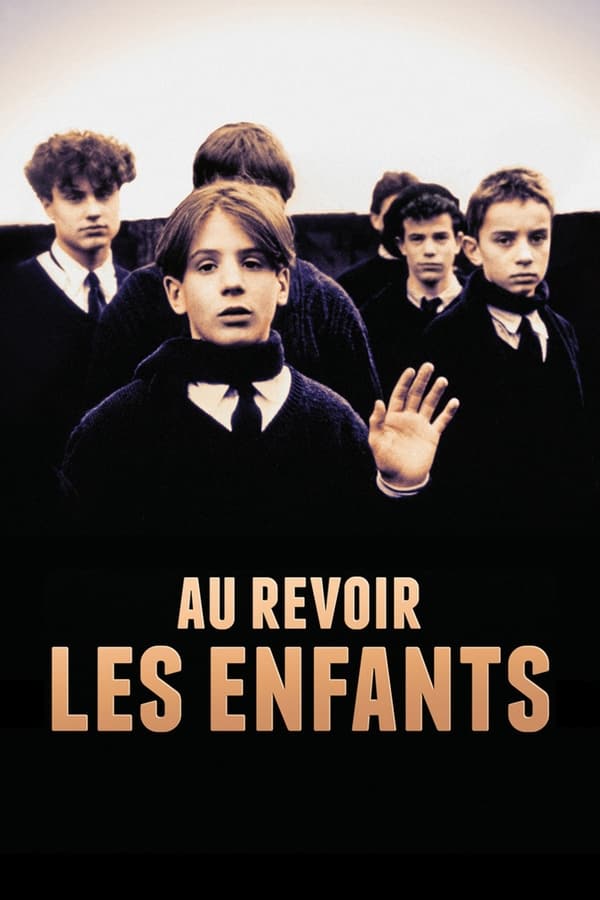
When Louis Malle was a boy attending a Catholic boarding school in France, he was witness to a raid in which German soldiers rounded up 3 jewish children, one of them a close friend of his, and taking them off to concentration camps. The boys had been hidden in the school by the headmaster, and he too was arrested. This episode affected Malle deeply, and he filmed the story for his 1987 movie, Au revoir les enfants (“Goodbye Children”). This autobiographical film is the best one yet. Starting in the fall of 1943, Julien is returning to school for a new school year. From a wealthy family, he and his classmates have been pretty secluded from the war going on in their country, other than the routine air raids, during which they take shelter in the basement. This year though brings a new classmate, Jean Bonnet. Jean is picked on as the new kid, but slowly over the course of the film, he and Julien become friends. One of the things that brings them close is when Julien learns of Jean’s secret: his real name is Jean Kippelstein, and he is a Jew. This secret strengthens the bond between the two boys, even as Germans continually become more suspicious of the goings on at the school. Readers of my blog know I am generally not a fan of child actors, but the 2 leads in this picture, aged 11-13 during filming, are equally spectacular. Heartwarming, funny, and yes, of course full of pain and terror too, this film will move you. And kids these days (myself included once upon a time!) think they have it hard. ★★★★½


Quick takes on 5 films

The Keeper is just another ho-hum biographical drama. It’s the story of Bert Trautmann, a German soldier captured by the Brits in World War II, who would go on to be a famous goalkeeper. At the end of World War II, Bert is in a POW camp in England, and he’s playing soccer in the yard one day when he is spotted by the coach of a local English team. The coach works a deal with the commander of the camp to allow Bert to work at his store and goal tend for the team, and Bert continues to stay on when the war ends and his compatriots are heading back to Germany. Over the course of the year, he does well enough to earn attention by the pro scouts, and falls in love with an English girl (the coach’s daughter). Neither move is accepted by the general population, who are still getting over the hurts caused by the Germans in the war. Bert himself is still trying to deal with his past transgressions. The film is OK, but nothing remarkable, and while I enjoyed it for the most part, it doesn’t do anything to set itself apart from the multitude of films like it. ★★

The Trial of the Chicago 7 is the latest from writer (and now director) Aaron Sorkin. I have to say, I’m a huge fan. This film is by no means perfect (despite my rating); it plays loose and fast, something that Sorkin can be guilty of at times. But damn, he knows how to build excitement and he lands emotional punches in all the right spots. It is based on the true story of the trial of the “instigators” of the riots at the 1968 Democratic national convention in Chicago. In a clear case of political motivation, 8 leaders of various anti-Vietnam groups are tried together with an obscure federal law about crossing state lines with joint plans to incite the riots. This, despite the people only passingly (or not at all) knowing each other, and no evidence of prior communication. One of the men, Bobby Seal (chairman of the Black Panthers) wasn’t even there during the riots. Despite being light on evidence against them, the men face an uphill battle, with a judge who clearly is against their political ideals, thinking they are anti-USA government, and an Attorney General, newly appointed by new president Richard Nixon, who wants to set a precedent for the new administration. If, like me, you like Sorkin’s previous works, including the fast dialogue of The Social Network or the trial setting of A Few Good Men, you’ll probably love this one too. And, obviously, there’s a lot going on there in 1968 that seems to be repeating now in 2020. And did I mention the all-star cast? Eddie Redmayne, John Carroll Lynch, Joseph Gordon-Levitt, Michael Keaton, and Frank Langella, just to name a few. And Sacha Baron Cohen! Do yourself a favor, skip his Borat sequel, and see this instead, the dude can really act! ★★★★★

I Used to Go Here is a cute little film, and depending on your tastes, that’s either a good thing or a bad. For myself, I really liked it. In the first 10 minutes, we learn that Kate’s life has taken an unexpected turn, away from being on the cusp of having everything she thought she wanted in life. The film starts with her on the phone with her publisher, having just published her first novel. Sales are not good, and they are cancelling her book tour. She opens up a package waiting for her at home and finds her wedding invitations to a now-cancelled wedding with her ex fiancé. Things are looking bleak, but out of nowhere she gets a call from her former college English teacher, who had set her on the path to writing. David invites her back to her alma mater (the fictional “Illinois University” in Carbondale, IL, which is weird because, living in St Louis, I know there really is a Southern Illinois University in Carbondale) to give a reading from her new book to his English majors. She readily accepts, and thus starts a fun, if sometimes depressing, trip down memory lane for Kate. She hangs with the college boys who now live in her old building, finds that her former idol/teacher David isn’t what he’s cracked up to be, and tries to get her life back on track in some way. From the opening of the film, I thought it might be a romantic comedy, but it is more of a “coming of age for your 30’s” kind of movie. Kate seemed to be on the right track for what society expects of you, but didn’t quite get there and now is starting from scratch again. At the same time, she’s a local celebrity to the English majors at school, because here’s an alum who is published and working in the real world. Balancing those two very different viewpoints is part of what gives some complexity to this picture. It’s not a laugh-out-loud kind of film, but there are lots of chuckles (like when Kate says to a boy that she was in this room 15 years ago, and he quips back that he was in kindergarten 15 years ago), and Gillian Jacobs (of Community fame) is absolutely charming in the lead role. So many films like this focus on younger 20-somethings, but its good to see some attention given to us older folks, many of whom may still be trying to find their way. ★★★½

Save Yourselves! is the worst kind of a movie: a comedy that’s not funny. It’s about a couple from New York who are having relationship problems, and decide to go to a cabin in the woods for a week to reconnect. They turn their phones off and promise themselves and each other that they will “disconnect” from their busy online lives and devote the week to each other. Of course, the week they happen to go, the Earth is invaded by an alien race which starts killing a bunch of people. Our couple is blissfully unaware for a few days, which is about as boring a 45 minutes as you’ll find on screen, and the final half isn’t much better. The “aliens” look like oversized tribbles of classic Star Trek TV, but low budget aside, the movie’s just not funny. Not even “chuckle” kind of funny. As in, I didn’t laugh or crack a smile once. A half a star because, hey, they made a movie? ½

On the Rocks is, unfortunately, a rather mundane, average comedy. Rashida Jones plays Laura, a married woman with 2 kids, who begins to suspect her husband Dean (Marlon Wayans) is cheating on her. He’s running a company which is really starting to take off, so he’s always away at meetings and going on mysterious trips. All of her evidence is circumstantial (he’s changed the password on his phone, he “accidentally” ended up with a female coworker’s stuff in his luggage) but she can’t stop that nagging feeling. Her suspicions are egged on by her dad Felix (Bill Murray). Felix knows a thing or two about extramarital affairs, having been the cause of his breakup with Laura’s mom, and he’s never given up the high flying lifestyle. They begin their stakeout of Dean’s whereabouts, searching for hard concrete proof. The actors give it their best, but the writing is dull and the jokes only land at times thanks to the ability of the talented cast. The ending is so cliche it could have come straight out of film 50 years ago. On the Rocks is an apt description of director Sofia Coppola’s career since Lost in Translation over 15 years ago. ★★

Quick takes on 5 Masaki Kobayashi films

Masaki Kobayashi was a Japanese director who made films based on his socialist and pacifist views, as well as the human cruelty and suffering he personally saw and experienced in World War II. His most famous piece is a trilogy called The Human Condition, but since it totals nearly 10 hours, I thought I’d save that for a rainy weekend, and instead watch 5 of his other films.

The Thick-Walled Room was one of his earliest pictures, completed in 1953, but not released until 1956 due to its controversial material. It takes place in a prisoner of war camp in Japan around 1950. The detainees are Class B and C war criminals, meaning, for the most part, soldiers who were “just following orders.” In the cell of 6 men, each is dealing with the guilt of things they did during the war, while also holding animosity towards their superiors, many of whom were able to buy or negotiate their freedom from the Americans, despite being the ones calling the shots during the war. It’s an eclectic group of young, middle aged, and even foreign born soldiers, including a Korean who laments the current state of his country, now in a new war with itself. The main character is a man named Yamashita, who was jailed for stealing food, but is most beset by guilt for killing an innocent Philippine civilian on orders. The captain was later the star witness against Yamashita on the food-stealing charge, proof of the corruption going on. All of the prisoners are waiting for a final treaty between Japan and the USA, which will finally get them out of jail, but when the treaty comes and they are still not freed, they begin to organize and petition the powers above to free them. It is a heartfelt picture of the impacts of war to all aspects of society, with many flashbacks showing how everyone is affected. As mentioned, the film was shelved for a few years, in fears that the subject matter would piss off Americans still stationed in Japan, and while it doesn’t paint the USA in a great light, the focus is more on the treatment of Japan’s citizens by itself. ★★★

I Will Buy You centers around a star college baseball player, Kurita, who is being heavily recruited by professional teams. The main characters are Kishimoto, a scout trying to sign him to the Toyo Flowers, and Kurita’s college coach, Kyuki. Kyuki paid for Kurita’s college tuition, coached him up to be the player that he is, so Kurita is indebted to him, and is letting all the scouts deal with Kyuki. Kyuki is pretending to be humble about it, but you can tell pretty early on he is taking advantage of the situation, being peppered with gifts and cash. He’s suffering from a stomach ailment, and Kishimoto is helping pay for treatments, and over time, it seems his team has the leg up on the competition as far as signing Kurita goes. However, when Kishimoto learns that Kyuki may be faking his illness, Kishimoto doesn’t know who to trust anymore. As Kurita’s college career comes to a close, and all the teams’ scouts and owners keep upping their offers, it is readily apparent that no one really cares what Kurita himself wants. Kyuki entertains all of the offers, and Kurita’s siblings and family get in on the act as well, with everyone clamoring for a slice of the pie. Coming from the socialist director Kobayashi, it is a pretty harsh criticism of free market capitalism at its worst. It’s a decent enough film, felt a bit long. There was definitely a point near the end, when the teams kept trying to outdo each other with lavish offers to various family members under their swing, when I just wanted to skip ahead to see what happened. I’m glad I let it happen naturally, because the end does flip the script on the viewer. ★★½

Kobayashi’s next film was Black River, in 1957. This is his seediest film so far, about a college student named Nishida who rents a poor room in a rundown building near a USA army base. With the rampant prostitution and gambling going on near the base, all the lowliest sorts are attracted to the area, but Nishida seems to be a good guy and studies hard. A young waitress named Shizuko catches his eye, but she also has the attentions of a piece of scum named “Killer Joe.” Joe runs a gang of hooligans in the area, and he sets them up to attack Shizuko one night, pretending to rush in and be the savior. When Joe tries to then get his “rewards,” Shizuko fights back until she falls unconscious, at which point Joe rapes her. The next day, Shizuko demands marriage to save her honor, but Joe refuses, keeping her around as his pet. In the background of all this, the landlady who owns the dilapidated apartment building Nishida rents from wants to sell it to another sleaze, Joe’s boss. This guy wants to tear it down and build a new brothel to treat the American soldiers. One of Nishida’s neighbors in the building is a communist, and he tries to get the other tenants to band together to fight the tyranny going on by the wealthy landlady, etc. I liked the film for the most part, and there’s some great villainy that plays out, but some stuff definitely could have been done better. Despite being a central character, we never really get to know Nishida or what makes him tick. Shizuko plays a great damsel in distress and her motives are clear from the beginning, but you wander why she doesn’t try to help herself out of her situation before it’s too late. When the (multiple) climaxes come in the end, nothing gives the viewer a satisfying ending. Some good moments, but I wanted more. ★★½

The Inheritance is yet another poke at unbridled greed. Kawara is the wealthy president of a company who’s just found out he is dying of stomach cancer. He doesn’t have any legitimate children to leave his wealth to, but he does have a penchant for the ladies and, as such, has 3 illegitimate children ranging in ages from 7 to 20. They are to 3 different women, and don’t know anything about Kawara or his wealth. On his death bead, Kawara tasks his employees with finding those three children, and bringing them to him to see if they are worthy of inheriting a chunk of his dough. The scheming starts immediately. Kawara’s much younger wife, formerly his secretary, wants to make sure she ends up with the lion’s share, so she goes in cahoots with Kawara’s right-hand man to steer the youngest child to her, so that she’ll be guardian of the kid and her wealth once the old man is gone. Other similar plots are set out for the other 2 older children. Meanwhile, the only person showing true kindness to Kawara is his current secretary (the wife’s replacement), but as the film goes along, she becomes a replacement in more ways than one, and is she truly looking out for Kawara or herself? It’s a very intriguing film, and as gripping as a dialogue-driven film can be. The final 20 minutes or so, when everyone’s plots are revealed, are fantastic. It’s a solid drama which should be seen more than it has. ★★★★

Harakiri is perfection, and out of these 5 films, the one I would most urge anyone to see. This is a dynamic and enrapturing film, full of suspense and intrigue. Taking place in the early 17th century, Tsugumo Hanshiro arrives at a large compound seeking the head counselor for the samurai under the local lord. Hanshiro states that for many years, he has been a ronin (masterless samurai), and he wishes to commit harakiri (often called seppuku), or ritual suicide, in their courtyard, in order to retain his honor. The counselor, Kageyu, tells Hanshiro a tale of a similar ronin who came not long ago for the same purpose. Motome had previously arrived with the exact same story as Hanshiro. At that time, Kageyu suspected that Motome was not serious about going through with the act, and was doing it because other ronin had been showing up at houses professing the same intent, and were just looking for a handout to make them go away. Kageyu forced Motome to go through with the act, and what’s worse, he made him do it with bamboo swords, since Motome had long since sold or lost his steel ones. Obviously a very painful way to die, trying to slice open your stomach with a bamboo knife. In the present day, Kageyu asks Hanshiro if he too is just seeking money, and Hanshiro relates his story. And oh boy, is it a good one. He knew Motome, and knew of how he died, and he’s there for more than just his harakiri. This is a tremendous film. The pace that Koboyashi set in previous films may not have always worked there, but in this setting, it adds tension to Hanshiro’s tale. By the end, I found myself on the edge of my seat, breathlessly awaiting the conclusion. Doesn’t get any better! ★★★★★

Quick takes on 5 foreign films

Is The Painted Bird a brilliant, powerful film? Yes. Is it entertaining? I have to say no. It is the story of a young, unnamed boy, who can’t be more than 11 or 12 tops, as he endures a year of torturous experiences at the tail end of World War II. He’s been sent to live with his aunt in a rural area in some unknown section of eastern Europe. When she dies unexpectedly one night, and in his fright the boy sets the house on fire and it burns to the ground, he is left homeless in an uncaring and unforgiving world torn apart. For nearly three hours, we see him bounce around from village to village, person to person. He is degraded, beaten, mentally and sexually abused, until he has no emotion left for this world. For the year or so covered in the film, he never has a moment of joy, only small moments of respite from the ongoing abuse that each “caregiver” gives him, before he can run away to a new person to torture him. To say it is hard to watch is an understatement, and the only impression I came away with is the filmmaker must have very little hope for humanity. It is certainly a dynamic and powerful picture, but not one for those with a weak stomach, and most definitely not one you’d want to see more than once. ★

I hated Still Life for much the same reasons that I hated another of this director’s movies, Ash is Purest White: it’s too slow, nothing really happens, etc. Set in modern China, this movie is about 2 people searching for their significant others in a disappearing town in China. A new dam has been built, and the town is slowly being deconstructed to allow the river to flow through, which will then generate the hydroelectricity needed to power China’s rapid modernization. Han Sanming has come to find his wife, who left him 16 years ago, but finds that their old neighborhood is already under water. He finds her brother though, who says she is working south, but asks him to hang around for her to return. Han begins working on the deconstruction project with the brother. The other person is a lady, Shen Hong, also looking for a spouse, who she hasn’t seen in two years. She finds, him, only to find out he’s become a successful business and has a mistress on the side. The film’s final act is the resolution of Han’s search. There’s not much I did like about this picture. Slow to the point of exhaustion, it also looks like it was filmed on Uncle’s Jim’s handheld camcorder in 1999. I don’t know if it was a low budget picture or a if that was the style on purpose, for realism, but it is not enjoyable, and there were so many amateurish panning shots across our characters that it became comic after awhile. ½

I’m breaking a rule of mine and blogging about a film I’ve seen before, but it’s because it’s been ages, and I’d never seen the two sequels. I saw L’Auberge Espagnole (The Spanish Apartment) back in the early 2000’s, before I was really into foreign films at all. Only watched it because Audrey Tautou was in it, and like a lot of people around that time, I had loved her in Amélie. So I watched it again, as a refresher, and I think I enjoyed it more as a 40 year old with some perspective than a young 20 something. It follows Xavier, a French grad student who moves to Barcelona to study for a year. He moves into a large flat with roommates from all over the continent: England, Germany, Denmark, Italy, and a local Spaniard. Following the roommates and their visiting siblings and significant others, the film has all of the energy and excitement of a group of people with their whole lives in front of them, enjoying the last time before they have real adult worries and responsibilities. The apartment is a cultural and sexual hotbed, exposing each of them to ideas they had not seen before. It’s just a fun comedy, sort of like an international version of the classic 90s coming of age pictures. I’m not giving anything away, but there’s a scene in the end when the year is up, and Xavier is getting ready to head back to France, where he’s reflecting back on the last year. As he’s walking down the street with a wistful look on his face, you know he’s looking at the conclusion of a moment in life. I think we’ve all been there, when we knew one journey was ending, and we are filled with happiness and already maybe a sense of loss, knowing you can never relive those moments again. ★★★★★

Since this is a sequel, there will be spoilers for the previous film. Russian Dolls picks up five years later, and Xavier’s career as a writer has not taken off. Despite great intentions (as we all do in such moments), he and his flatmates from Spain did not keep in touch, but they are reuniting in Russia to see Wendy’s brother William get married. Xavier admits in narration that not only is his professional life a mess, but so is his personal life, and he flashes back a year to get us caught up. Xavier is still friends with his ex, Martine, but the only one of his old roommates he’s kept up with is the one he was closest to, the lesbian Isabelle, who he lives with for a time when he loses his apartment. Xavier has been ghostwriting and writing scripts for a tv show, which leads him to reunite with Wendy. She’s a more successful writer in London, and when Xavier gets a chance to write a holiday made-for-TV film in English, he tags her to help. At the same time, he is given an assignment to ghostwrite a biography for a famous model in Paris, so he spends his days taking the train back and forth between London and Paris. Xavier and Wendy start to fall for each other, but can Xavier, who’s spent 5 years sleeping around and not committing to anyone, manage to not screw it up? The film is not as whimsical as the first, probably because everyone is a little older, but not all are wiser. While it felt a little long, it manages to be a very human story, and feels real. I’m hoping for a strong conclusion. ★★★½

More incoming spoilers obviously. Whereas the second film jumped 5 years, Chinese Puzzle leaps us forward 10. Xavier and Wendy have had 10 years of a good, loving marriage, with 2 kids, but very suddenly the marriage fell apart. The final nail in the coffin was when Xavier’s best friend Isabelle, now with a life partner and wanting children, asks him to be a sperm donor. Wendy doesn’t like it, and when she’s off working in New York for a couple weeks, she meets someone, and eventually moves there with the kids. Xavier’s life in Paris feels empty, so he decides to follow to New York to be close to his kids, and once there, finds himself once again on Isabelle’s couch. As he and Wendy approach their divorce, Xavier’s lawyer recommends that, if he wants to stay in NY to raise his children, the easiest way is to marry an American for his green card. As luck would have it, shortly thereafter, Xavier saves a taxi cab driver’s life. The driver, a Chinese immigrant, begs to let him return the favor in some way, and before you know it, Xavier is marrying the cabbie’s American-born niece. It’s a complicated story for what has been a complicated life for Xavier, but the film never finds solid footing. There are even recycled plot elements from the previous two pictures, some things are introduced but never explored, and the writing comes off as pretentious and unrealistic, which is a total letdown from the fun atmosphere of where this trilogy started. And worse yet, the end is exactly what Xavier railed against in the second film: it’s cliche. There’s some nice, humorous moments, but the movie just made me want to go back and watch the first again. ★½

Quick takes on 5 Kaurismäki films

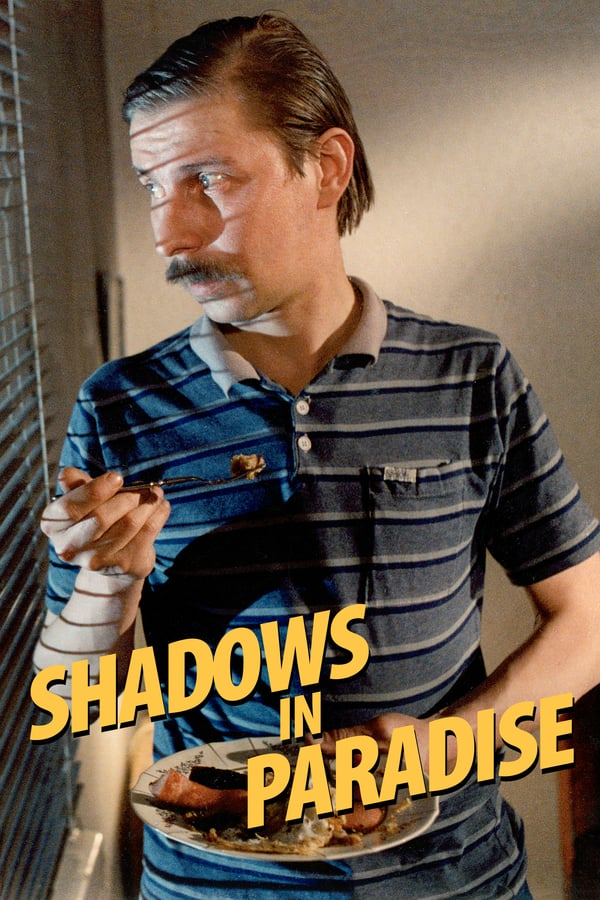
Never seen any films from Finnish director Aki Kaurismäki before, so time to rectify that. Going to look at 5 of his earlier films from the 80’s and early 90’s, starting with his “proletariat trilogy.” From my perspective, I think Shadows in Paradise has it backwards, and instead should be something like “Paradise in the Shadows.” It is about a garbage collector named Nikander, who lives alone and has seemingly a singly friend in the whole world, a coworker who dies suddenly one day of a heart attack (days after explaining he wanted to start his own business, so he’d die behind the desk and not at the truck). Nikander sees the need to have a new friend, so he latches on to a random guy, gets him a job to replace his deceased friend, and wham-o, has a new buddy. At the same time, Nikander starts dating a local grocery store worker named Ilona. Their interactions with each other are awkward, bordering on uncomfortable to watch, but their relationship seems to work for them. The film is mostly about these 2, finding moments of happiness in an otherwise dreary, hard world. I have to get a bit used to Kaurismäki’s deadpan style, the actors deliver lines with very little emotion, almost like they are reciting from a book, but I understand that is common to this director’s movies. That’s not to say there is no emotion in this film, but it lets you come to those feelings on your own, rather than having an actor lead you there. Strange first picture, will see how these others go. ★½

Ariel is so much better, and quite funny to boot! It follows a coal miner named Kasurinen, who’s on a string of back luck. The film opens with the mine closing, and all of its workers now out of work. Kasurinen sits in a diner with his father, also a miner, who laments that their way of life is now gone. He gives Kasurinen the keys to his prized Cadillac convertible, and then goes to the bathroom to shoot himself. Kasurinen takes the car out of the garage, and the house falls apart as he pulls out. At the bank, he empties his account to head to the city and start a new life, but is robbed on the way there. He shows up penniless, finds a single day’s work for some cash, and uses it to stay in a homeless shelter that night. The only bright spot is a girl he meets, Irmeli. She’s as lonely as he is, and the two hit it off. But Kasurinen continues to be unable to find solid work, and when he spots the man who initially robbed him, Kasurinen attacks him. Unfortunately the cops spot it, and Kasurinen is arrested and sentenced to a couple years for assault, attempted robbery, etc. He finally gets a buddy in jail, his cell mate Mikkonen, but the two only get in more trouble when they attempt to escape, and fall in with a rough gang afterwards. The humor is so much more apparent in this film, which makes it easier to watch and enjoy. The story is engaging, the acting, while still with a touch of wooden delivery, is more encompassing, and the film is just a whole lot of fun. ★★★

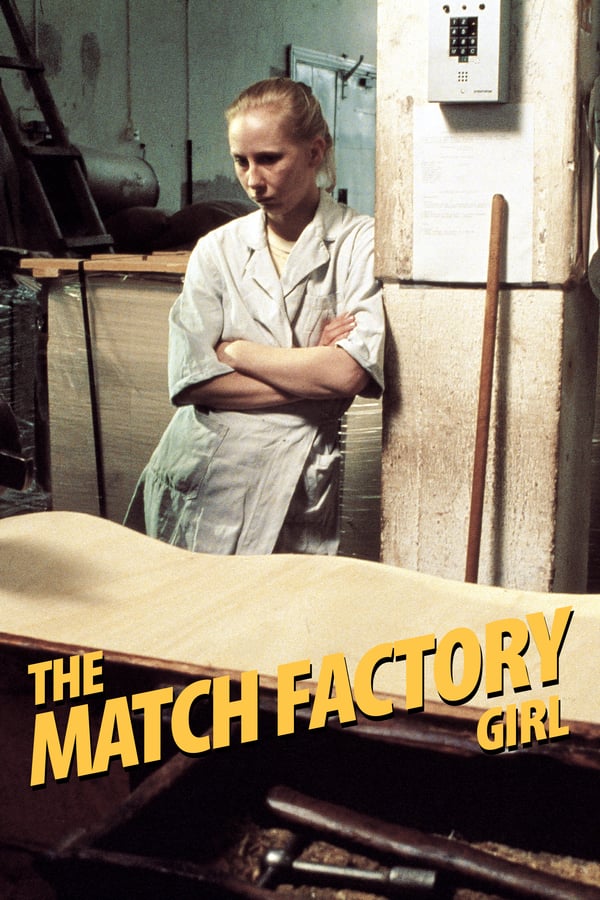
The Match Factory Girl is the first great film I’ve seen from this director. The referenced girl is Iris, who lives a mundane and joyless life. She lives with her deadbeat parents, who are freeloading off her, letting her pay the rent, cook, and clean. Her mom is the kind who pulls a book off Iris’s shelf to re-gift it to her on her birthday, and who berates her for spending her own money. Iris tries to go to a club to meet men, but has no luck until she buys a new dress. The man she goes home with is a real piece of work, but Iris latches on to him as her only hope for something different. He of course wants no part of her, even after she finds she’s pregnant. In the end, Iris has had enough with everyone, and her way of taking control of her life is fantastic. By now I’ve gotten used to Kaurismäki’s style, and maybe it is just growing on me, but the sparseness seems to fit perfectly in Iris’s dreary existence. Her life is so completely dreary, grotesquely comic even, that you can’t help but hope she finds some light somewhere. ★★★★

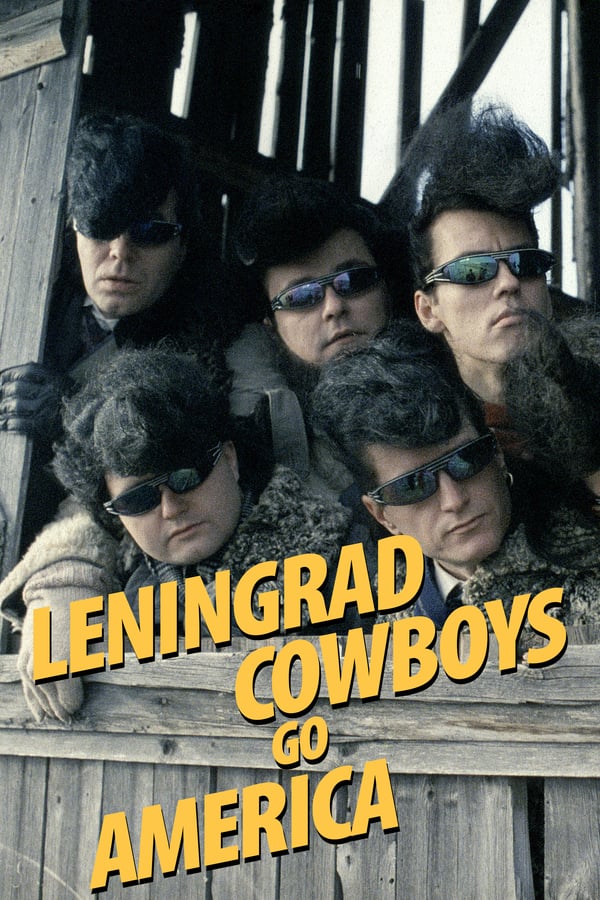
The Leningrad Cowboys were an idea from Aki Kaurismäki and members of a comedy Finish rock band called the Sleepy Sleepers. After putting together a few short films for the group, Kaurismäki made a full feature film about a fake band, Leningrad Cowboys Go America. Featuring outlandishly long pompadours and long pointy shoes to match, the band of brothers and cousins, struggling to find a following in the barren Soviet Union landscape, head off to New York, because “they’ll buy anything over there.” The one member who froze to death the night before the trip goes along too, with a cutout in his wood coffin for his hair and shoes to fit through. The band doesn’t find immediate success in New York, where they are told they need to play rock and roll music to get any attention, but an agent hires them to play at a wedding in Mexico, if they can make it there. And so begins the silly road trip movie that you knew was coming. It’s pretty darn funny, as the manager of the group fleeces them at every turn until they get wise, and they continue to try to incorporate aspects of American music to make some money. It’s a mostly English language film while the group is traveling the USA, so for those that hate subtitles, you can still enjoy this one. Fans of the early National Lampoon films can really dig the outrageous characters and events throughout this film. And was that a cameo by Jim Jarmusch as a used car salesman? Hilarious. ★★★★½

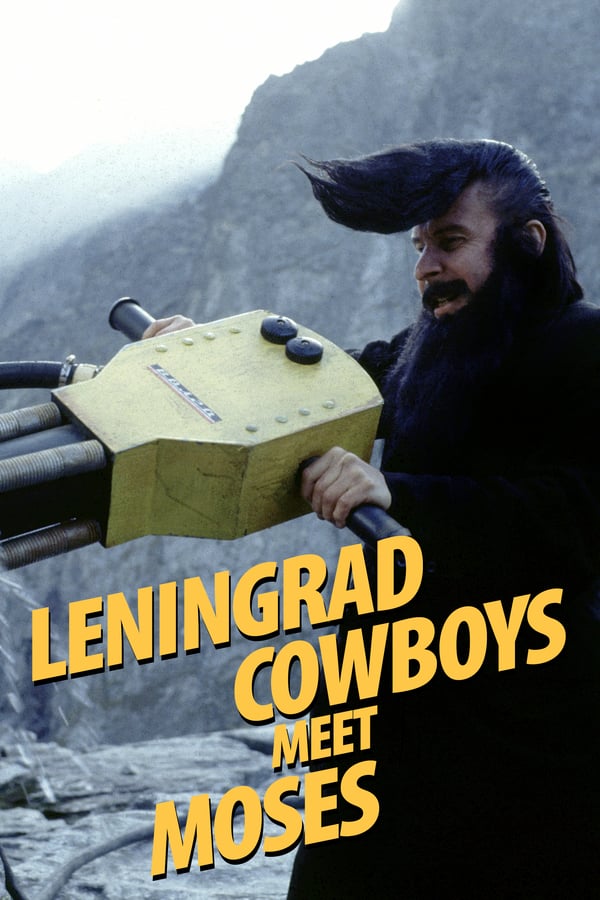
After the success of the previous film, the fake band became a real one, and the Leningrad Cowboys have sinced released multiple albums and continue to tour here and there to this day (albeit with only 1 original band member). In 1994, five years after the last film, a sequel was made, Leningrad Cowboys Meet Moses. The boys have been stuck in Mexico for 5 years, successful at first, but have fallen on hard times since discovering tequila. They get a cryptic note about a job in New York, and head there only to find their long-lost manager Vladimir. After wandering the desert of Mexico, he says he’s found the light and calls himself Moses. He wants the Cowboys to return to mother Russia, so we get another road trip film, this time through Europe. At least, that’s what I assume, because I gave up 45 minutes into this picture. It’s just not funny the second time around. Like too many comedy sequels, it’s trying too hard and the payoff is never there. If you watch it and like it, more power to you, but my hunch is the film was funnier to the people making it than the viewers watching it. To put a bow on this group, I browsed through their final film, Total Balalaika Show, which is footage of a live concert the Leningrad Cowboys did in Helsinki to a raucous crowd of 70,000. Watch the Cowboys Do America, but skip the rest. ½

Quick takes on 5 James Ivory films

Merchant Ivory Productions started in the early 60s between long-time business and domestic partners Ismail Merchant and James Ivory. Initially, their goal was to make films in India for an international audience, but that expanded later to films produced in the UK and USA as well. I have some experience with Merchant Ivory films, notably their 2 biggest hits, Howards End (after reading the book) and A Room With a View (also the book). Today, going back to look at some of their earlier pictures from the 60s and 70s. 

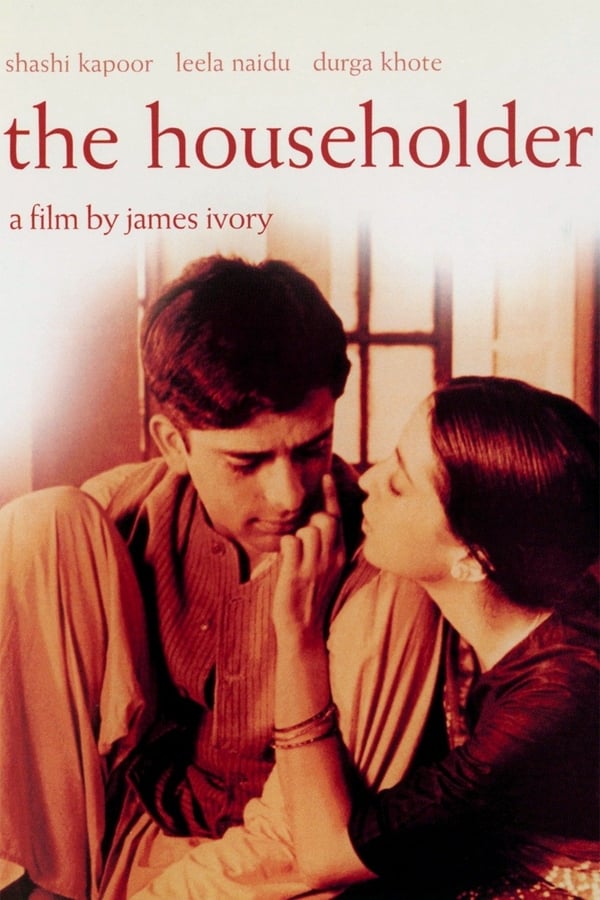
Released in the 1963, The Householder was their first film together, based on a novel by Ruth Prawer Jhabvala (who would go on to become an integral part of the film company as screenwriter for many of the films). I’ll share some notes about its production, which I found very interesting. Ivory and Merchant met in NY at a screening of a short documentary Ivory had done, and they immediately decided to start a film company together. For this, their first picture, they were able to get one of India’s famous cinematographers, Subrata Mitra, and while they had money problems getting the film done, they obviously did finally get it accomplished. Stepping in to help edit was none other than another famous native director, the great Satyajit Ray. If it were not for this acclaimed help, Ivory admits his career may have taken a very different turn. The movie is a simple tale, about a newly married couple, Prem and Indu. In Indian tradition, it was an arranged marriage, and they are still getting to know each other. Prem is a teacher and the couple are living on a meager salary, just scraping by, when they discover that Indu is pregnant. Prem’s mother comes to stay at their tiny apartment to help, and as in all mother-in-law visits, things don’t go well for Indu. Mom nags about the cleanliness of the house and how things aren’t run right, which makes Indu leave in a huff to go back to her parents’ house. Since we all know absence makes the heart grow fonder, Prem begins to realize how much he does care for his wife, and writes to her, begging her to return. The beautiful Leela Naidu as Indu is easy on the eyes, but Shashi Kapoor’s Prem is hard to get behind. He’s a pushover and doesn’t stand up to his bosses, coworkers, or mother, and it’s a surprise anything goes his way in life. It’s a fine enough picture from some early filmmakers, but not all that memorable. ★★

Shakespeare Wallah takes awhile to get going, but is a nice film once it all starts coming together. It centers around a family, a traveling acting troupe, who’s been performing Shakespearean plays in India for years. Under colonial India, they were very popular, but since India gained its independence some years ago, interest has dwindled as the people turn away from British culture, and the troupe has been struggling. At the center of the story is the adult daughter, Lizzie, who has a local Indian boyfriend, Sanju. Sanju has another lady on the side though, a popular Bollywood actress named Manjula. Manjula finds out about the relationship and confronts Lizzie, leading to the second half of the movie. Even the viewer doesn’t know who really holds Sanju’s heart. Lizzie’s parents are older and have made India their home, but they know Lizzie doesn’t have a future there and want her to return to England. However, they have a hard time getting her to want to move; she wants to stay for Sanju. The film was partially based on the Kendal family, who did perform in India, and in fact, to keep the budget down, the actors playing the family members are the original traveling actors, portraying fictionalized versions of themselves. In real life, the actor who played Sanju, Shashi Kapoor, ended up marrying the second daughter in the family, Jennifer Kendal (not see in the film). ★★★

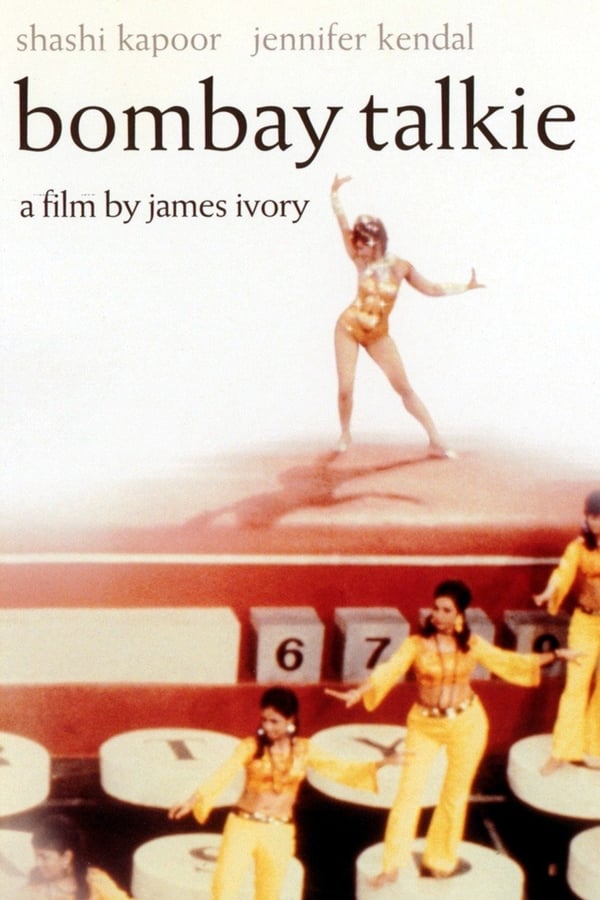
Bombay Talkie (1970) takes advantage of being shot in color to finally show the bright colors of India. Lucia (Jennifer Kendal, mentioned above) is an English author researching her next project, the Bollywood film industry. She meets two men while there, a screenwriter named Hari (Zia Mohyeddin), and a famous Bollywood actor named Vikram (Shashi Kapoor), and thus starts a love triangle. Hari instantly falls for Lucia, who in turn instantly falls for Vikram. Vikram is married, but how has that ever stopped an actor? Lucia and Vikram start seeing each other on the side, evoking heartache in Hari and pain to Vikram’s wife Mala. However, Lucia is very petulant and used to getting her way, so when Vikram doesn’t do something she wants, she packs her bags and heads off to the countryside to try to find religion by following a guru. Unable to give up her worldly possessions, that doesn’t go well either, leading her to return to Bombay to try to pick up where she left off with Vikram. The story isn’t all that deep, and there are plenty of missteps from a writing perspective (Lucia is supposed to be a somewhat talented author, but her personality doesn’t mesh with that backstory, and we never see her write a word), but there was enough positive fluff to keep me involved. And the colorful landscape and costumes are beautiful to watch. ★★★

I can’t decide if Savages is either a work of complete genius, or a total train wreck. Even if it is a disaster, I enjoyed it. I say that with the caveat that I sometimes dig really out there movies (see Last Year at Marienbad). Savages is sort of a cross between The Exterminating Angel and Lord of the Flies, though opposite to both those cases. It starts in black and white, and follows a primitive tribal group as they are preparing a human sacrifice. Just as the ritual is about to go down, a croquet ball rolls into their camp. Bemused by the foreign object, the tribe sets off through the forest to find the ball’s source, and come upon a huge, abandoned mansion. As they pilfer through trunks of clothes, pieces of art, and classic books on the shelves, our primitives start to act more civilized. The next morning, the house has been cleaned up and the film is now in color; the people are all dressed in the height of 30’s fashion, and are carrying on droll conversations about art, politics, and society. As the day becomes night though, those old tendencies start to come to the front again, and by the next morning, the group is ready to return to the jungle. It’s a fascinating picture about the structure of society, because the roles each individual played in the beginning carried over to a similar stature in the cultured group. Maybe all of us are more similar than we think. It’s a weird picture, probably not for everyone, but it has a certain appeal for sure. Features a couple very young actors that are more recognizable from years later (Sam Waterston, of Law and Order fame, and Martin Kove, from The Karate Kid and Rambo films). ★★★½

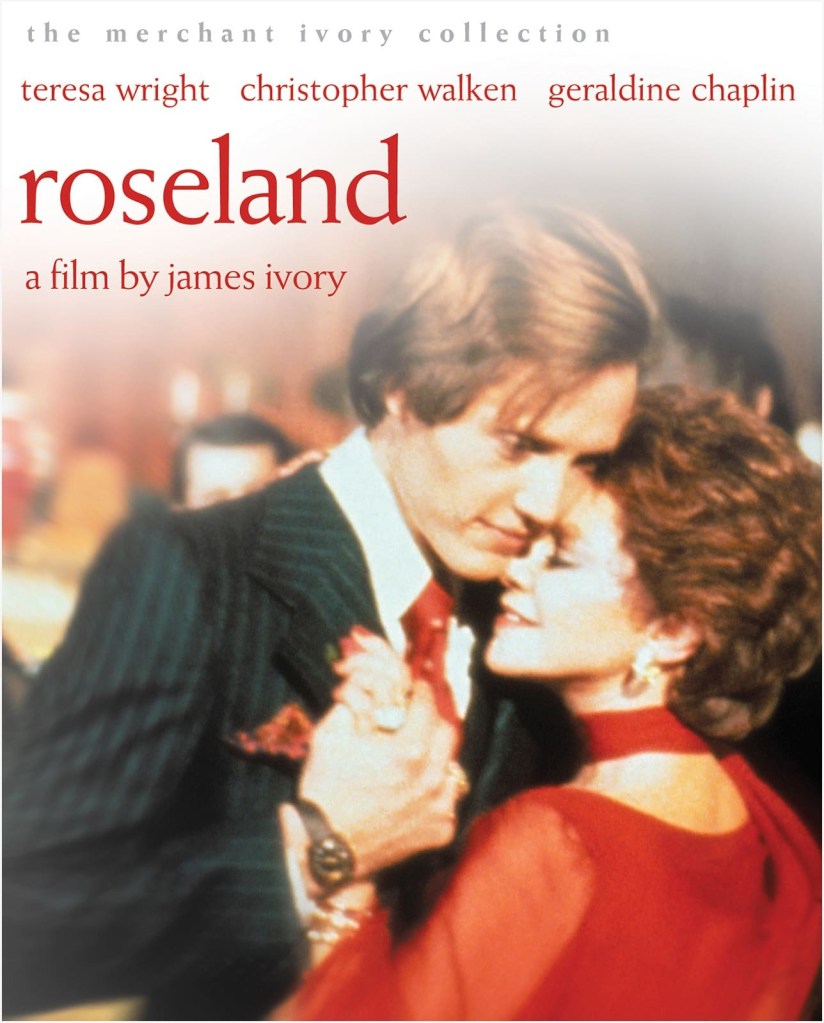
Roseland features a great cast as well, including a young Christopher Walken. The film is made up of three segments, separate short stories, all revolving around the Roseland Ballroom in New York. As a narrator tells us in the beginning, old people come there to remember back when going dancing was what you did on dates. The first part focuses on one such lady in her golden years, May, who is a widower who loves to talk about her Eddie. She is a good dancer and thus a popular party on the dance floor, but she becomes hung up on one man named Stan, mostly because through some kind of magic, she sees a younger version of herself whenever she looks in the mirror with Stan as her partner. The second segment follows a trio of ladies who share feelings for the young dashing Russell. Russell is out of work and relies on the much older Pauline’s money, but he learned dancing and shares a connection with Cleo, and is himself attracted to Marilyn, a woman much closer to him in age. He needs to decide what he wants most in a partner. The final story is about a woman, Rosa, trying to win a dance contest with her partner, Arthur, but he’s not as good of a dancer as she. I thought the film started out great, but each segment after the first wasn’t as good as the preceding one, with the final segment being pretty poor. Still, it’s a cool look back in time to an era that doesn’t exist anymore. ★★½

Quick takes on 5 Mike Leigh films

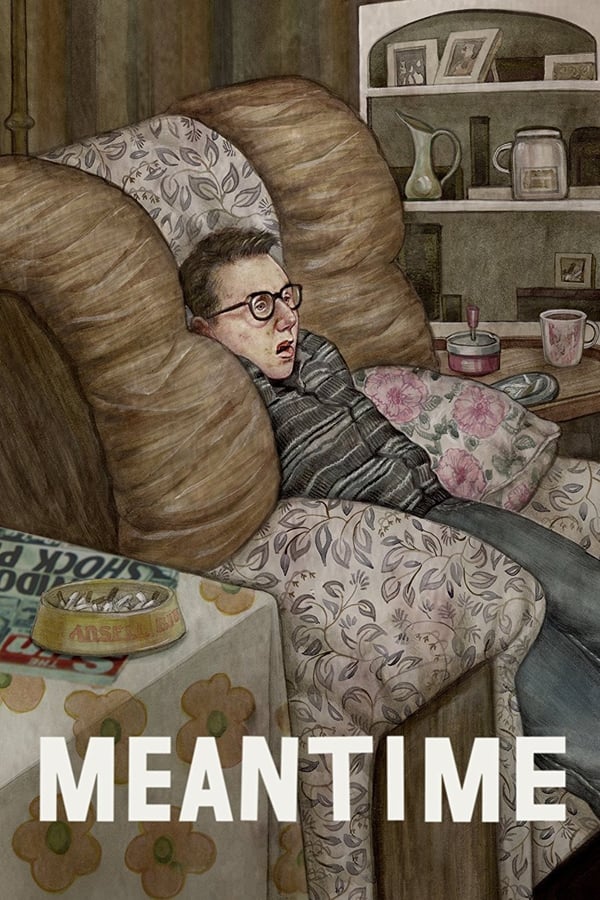
My previous experiences with director Mike Leigh include only his newer films, Mr Turner (which I loved) and Peterloo (which I did not). So today I’m going back to look at a few of his earlier pieces, starting with a television film from 1983. Meantime features a great cast of early-in-their-career actors including Tim Roth, Gary Oldman, and Alfred Molina. It focuses on a family of four, mom Mavis, dad Frank, and adult sons Mark and Colin, who are living mostly on welfare in a tiny flat in London. Mavis is the only one working, while Frank and Mark have nothing but excuses for why they aren’t, and Colin, who is a touch slow mentally, just skates by. Frank loafs around the house all day, and Mark and Colin hang out with Mark’s friends, including a rude and rambunctious skinhead. The four family members spend the entirety of the film blaming each other for the family’s situation, and ganging up on Colin since he doesn’t protect himself against their verbal abuses. Mavis’s sister Barbara married a businessman, John, a few years ago, and they are living in a traditional suburban house in a definite middle class neighborhood, and you can tell their societal elevation rubs at Mavis and Frank. When visiting their home (to which John has to drive them, since the family doesn’t own a car), Barbara sees how Colin is treated, and later offers him a job to come over and help her redecorate her house. Colin accepts, but becomes withdrawn when Mark shows up too. The viewer gets a glimpse too that, as expected, Barbara’s marriage to John proves that the grass isn’t always greener. This is a very engaging film, deeply introspective, and it turns your opinions of people on a dime by the end. Tim Roth’s portrayal of Colin is incredible, and Gary Oldman as the skinhead friend steals the camera every time he’s on screen. ★★★½

Life Is Sweet is just a wonderful, feel good kind of movie (so different from what came in his next film Naked! Proof of Leigh’s diversity in filmmaking). It is about a middle/lower middle class family living in a row house in London. Dad Andy (Jim Broadbent) is a chef at a restaurant, working long hours for meager pay, and has always wanted to work for himself. He gets his chance when he buys a food truck, though it has more rust than metal on it at the time. His wife Wendy (Alison Steadman) playfully teases him about his dreams, but you can tell she loves him dearly and doesn’t mind indulging his fantasies. Two adult twin girls live with the couple, Natalie (Claire Skinner) and Nicola (Jane Horrocks). Natalie is a go-getter and has a full time job as a plumber, and her parents are rightfully proud that she’s a hard worker. Nicola hasn’t found her niche yet. She’s suffering from an eating disorder (bulimia) and depression, and hides behind a facade of biting sarcasm towards her family and others. Like a lot of families, they joke and prod at each other, but it is a loving family, and the film is all about the interactions that go on between them. Some of the daily interactions include Nicola’s secret boyfriend who visits during the day when no one is around (a young David Thewlis), and a friend of the family who opens a high end restaurant without any real idea of how to run it (the always funny Timothy Spall). Leigh knows how to get the very best out of all the actors on screen, and there are more moving and touching moments than you can count, and without feeling heavy handed; the director lets us get to know them, and then gives us glimpses at what makes them tick, and it all develops naturally. ★★★★½

Naked stars David Thewlis (in his breakout role) as Johnny, a drifter wandering the seedy underbelly of London over a couple nights in the early 90s. He’s highly intellectual but also completely terrible as a human being. In fact, the film opens with him raping a woman, stealing a car, and then fleeing to London. So a great family picture! Once there, Johnny goes to see Louise, an ex-girlfriend. She’s not home, but her roommate Sophie is. Johnny spends the day flirting and later sleeping with Sophie, and while she gets attached to him quick as a flash, ol’ Johnny isn’t looking for any attachments, and leaves after flaunting his day in front of Louise when she gets home. Johnny then roams around town, encountering various others in the night life of London. Everywhere he goes, he shows off his superior intellect in debates about the meaning of life and the future of mankind, but he makes sure to leave people feeling worse off than when he met them. He gets his just desserts when he gets jumped by a gang, and he hobbles back to Louise’s and Sophie’s. Interspersed throughout the film are scenes of a rich 20-something named Sebastion, who also treats people like shit, but he gets away with it due to his money and societal standing. When Johnny gets back to the place, Sebastian is there, having spent the day raping Sophie. Turns out he’s the landlord of the building, and he’s just getting more of want he wants. There are moments here and there when we see a glimpse of a kinder, gentler Johnny, and we want that part of him to come out, but you have to watch to the end to see if it does. It’s a stark and sometimes painful film to watch, but I’ll give it one thing, it grabs your attention and holds it until the end. Leigh definitely has a way of showing the complete human being, and Thewlis shows every angle and view of Johnny that a person can have. Not an easy movie to watch, but a good one. ★★★½

Every family has skeletons in their closet, things that happen and are later buried, not even discussed a single generation later. One such family is examined to an emotional masterpiece in 1996’s Secrets & Lies. Hortense is a mid-20’s black woman seeking her biological mother. Her adopted parents are both dead, and she’s looking more out of curiosity than anything else. What she finds surprises her, because her birth mother is white. Cynthia gave up Hortense as a teenager, and went on to have another daughter, Roxanne, a couple years later, but never had any long-term men in her life. Roxanne is turning 21 when Hortense finds the family, and at first, Cynthia and Hortense keep the secret to themselves. Also in the picture is Cynthia’s younger brother Maurice, whose wife Monica does not get along with Cynthia at all. Yes, it’s melodrama, but it is very good melodrama, with supremely good acting all around, and some soft humor that manages to make you smile once in awhile too. A film like this, it is easy to see how even very important events can be smoothed over and buried, due to shame or fear, and it’s easy for them to be forgotten (or nearly so) just a couple decades later. Makes you wonder what life events our parents and grandparents went through, of which we have no idea. Very emotional finale, where the viewer hopes for a happy ending for everyone. ★★★★

Unfortunately I found Topsy-Turvy to be almost a complete bore, and that’s coming from someone who loves musicals and even the occasional opera. It follows the famous 19th century team of Gilbert and Sullivan. In the film, they’ve already had many successes, including The Pirates of Penzance, but their latest, Princess Ida, is flopping in London. The librettist, W.S. Gilbert, loves stories full of magic, but composer Arthur Sullivan is tired of the “fluff” and wants to write more serious music again. Under pressure from the theater to release a new hit, Gilbert comes out with yet another fantastical piece involving a magical potion, but Sullivan refuses to write music for it. Fate seems to inspire Gilbert in a new direction, which will ultimately lead the duo to one of their greatest successes, The Mikado. The one thing going for the film is it is a fascinating look “behind the curtain” at the creative process involved in putting together the production as well as scenes backstage during performances, interactions between the various actors and performers and whatnot. Director Leigh let the actors sing their own parts, and there are many songs shown in their entirety in this (rather long) musical drama; you can tell that they aren’t trained singers, but that didn’t bother me too much. What bothered me more was the long attention given to rehearsals and prepping and lead-up, as there’s such a thing as too much information. I actually enjoyed the performances when they came (“Three little maids from school are we!”). The sets and costumes are top-notch for the era, and the film did win Oscars for costume design and makeup, but as a movie, it is awfully dry and rather meh. ★½

Quick takes on 5 films

Misbehaviour is about the protests surrounding the Miss World competition in London in 1970. It features an ensemble cast telling the stories of various women involved both participating in, and protesting at, the pageant. Keira Knightley plays Sally, a history student fighting for admittance into a school where she can further her degree, who later falls in with Jo (Jessie Buckley), a strong feminist and quasi-anarchist. Inside the preparations for the show, the ladies from around the world are arriving in London, each with their own stories, such as Ms Sweden (Clara Rosager), who is the favorite to win, but also has disdain for the beauty process, and Ms Grenada, Jennifer Hosten (Gugu Mbatha-Raw), who wants to win for the prize money to further her own education. Also going on in 1970 were the rumblings of the anti-apartheid movement in South Africa, so in an attempt to side step controversy, the pageant invites two women from that country, one white and one black. Other actors included are Rhys Ifans as the pageant founder Eric Morley, who can’t help but point out the measurements of all the girls, and Greg Kinnear as the legendary Bob Hope, there to host. The film does a fantastic job of providing differing points of view for all involved. It would be easy to just call it a women’s rights film, but there’s multiple angles going on. Sally and Jo want to take down the system, calling it no better than a cattle market, but some of the women genuinely like participating. Jennifer wants to win to show that a black woman can be just as pretty as a white (no woman of color had ever won previously). There are calls to make a stand against apartheid. I thought it was a fantastic film, and a great showing of a huge leaping off moment in the history of the women’s liberation movement. ★★★★

The Devil All the Time follows two generations in and around a couple tiny towns in Ohio and West Virginia, starting after World War II. It follows a half dozen or more characters whose lives intertwine in a myriad of ways; the narrator in fact hints at the connections in the opening minutes when he tells us that in one tiny town, just about everyone is related in one way or another. At first, our story focuses on Willard Russell, returning home from the war, who falls in love-at-first-sight with a waitress at a diner off the road. He marries her and buys a house. Willard is a soft spoken man but he protects his own; when some men made rude remarks about his wife, he beats them up badly, and tells his son Arvin to always do the same. Willard’s original girl before his marriage goes on to marry the new, young minister, but he’s not all straight in the head. That’s the setup for the film in the first 20-30 minutes, and it’s about all I can say without giving away some of the surprises. The film goes on to focus on the girl and minister’s daughter, and her future relationship with Arvin when he grows up, as well as others in and around their circle. There’s a whole lot going on, but it does all flow and was easy to follow, and it comes together in a neat bow in the end, maybe a little too neat. There’s some great, tense moments, but the movie is a little too clean, for what is throughout a very gritty picture. There’s great acting from heavy hitters like Bill Skarsgârd, Robert Pattinson, Sebastian Stan, and Tom Holland, but it’s one of those movies that just tries to do too much. Entertaining, but not all that memorable. ★★★

#Alive should instead be #OnLifeSupport. It’s about as formulaic and dull as a zombie apocalypse film can be. A Korean picture, it follows a teenage boy left alone in his apartment when the zombie infection hits, hard and fast. He doesn’t get good cell coverage in his apartment, and as the TV signal becomes unreliable over the first couple days, he’s left on his own with no news of what’s going on in the outside world. His only hope is a final text from his mom saying she’s safe, and to stay inside and wait for help. To make matters worse, he had put off grocery shopping, so there’s very little food as it is. As the days and weeks go by, our hero runs out of food, and just as he begins to contemplate suicide, he sees another survivor in an apartment across the courtyard from his apartment. Our guy and his new girlfriend are able to eke out a few more weeks until they make a last, desperate run for safety. There’s a few nice zombie killing sprees, but the film is overall absolutely ridiculous (even for a zombie flick), with some of the smartest zombies ever put on screen, and the acting is beyond atrocious. ★

Enola Holmes is a delightful film for all ages, starring Stranger Things’ Millie Bobby Brown in the title role. I have to admit, I am not a Stranger Things fan; I watched season one, didn’t really get into it, and never followed up on the later seasons. Having said that, I know Brown has received acclaim for her performance on that show, and she is wonderful in this movie. Enola is the little sister to the famed Sherlock Holmes (Henry Cavill) and another, older, brother, Mycroft (Sam Claflin). The brothers being so much older than Enola, they’ve been away from the home for a decade, leaving Enola to be raised by their widowed mother Eudoria (Helena Bonham Carter). Instead of being raised to be a lady, Eudoria raised her to be a free thinking self sufficient young woman, and at 16 now, she’s not what society expects of her. The setup for the film is that Eudoria has suddenly gone missing, and Enola’s older brothers come home to see what is amiss. As the oldest, Mycroft takes over guardianship of Enola, and wants to send her to boarding school. Sherlock likes her spunk and adventurous personality, but acquiesces to Mycroft’s wishes. Enola has no intention of going quietly. She finds clues to her mother’s whereabouts in London, and dresses as a boy to set off to find her. Her quest is sidetracked when she becomes embroiled in a murder attempt on the young Lord Tewkesbury’s life, so Enola now has two mysteries to solve. The film is based on a series of young adult novels, and done very well, with detailed period costumes and sets, and engaging writing and dialogue. The camera loves Millie, with her bubbly personality, and she shines throughout the picture. It’s a fun for kids through adults. ★★★★

I loved this movie. Deerskin stars Jean Dujardin as Georges, a middle aged man who, at first, seems just a bit quirky, but before too long, we see he’s bat shit crazy. The film begins with Georges riding out to the middle of nowhere to purchase a 100% deerskin jacket from an old codger. He pays an exorbitant price for it, for which the seller also gifts him a digital video recorder, and then drives to a secluded hotel in a little town to stay the night. He makes one phone call to his estranged wife, and we learn that they have recently split. Georges is obsessed with his new coat, constantly starring at himself in the mirror and wearing it to bed. He goes to a bar, where he thinks the bartender, Denise (Adèle Haenel, long lauded in France but who recently received international acclaim in Portrait of a Lady on Fire), and another women are talking about him and his coat, but of course they are not. With his newfound camera, he pretends to be a filmmaker, which grabs the attention of Denise, as her dream is to be a film editor. Since Georges’ wife has just closed their joint account, he is broke, but Denise agrees to finance his film so she can edit. By this point, Georges’ wonderful coat has begun “talking” to him, and he realizes they share a dream of he having the only jacket in the world. At first, Georges goes around paying people to put their jackets in the trunk of his car, before he drives away, but his actions become more sinister by the end. Denise loves it all, thinking it is a metaphor for how we cover ourselves in a protective outer layer. It is absurdist comedy and horror to perfection. Dujardin’s deadpan comedic style is ideal for this role, and when he goes out to become the only jacket-wearing person in town, the result is fantastic filmmaking. ★★★★★

Quick takes on 5 Mizoguchi films

Going to look at some of the films from acclaimed Japanese director Kenji Mizoguchi, starting with 1946’s Utamaro and His Five Women. Released during the USA occupation of Japan after World War II, it is a rare historical film during this era, when the US censors were not allowing many Jidaigeki (Japanese period films) to be made, considering them too nationalistic. The title is misleading, because while the story does revolve around Kitagawa Utamaro, a famous Japanese painter of the late 18th century, there are a whole lot of main characters. The film focuses on several relationships floating around Utamaro’s sphere. Koide is from a well-to-do family but leaves that life behind to study with Utamaro. His betrothed, Yukie, also leaves her upper class family to follow him later, but he’s already turned his attentions to a local courtesan. Shozaburo is a tattoo artist who traces one of Utamaro’s drawings onto the back of a beautiful courtesan named Orui, and then falls in love with her and elopes, leaving his own fiancee Okita behind. Utamaro himself falls in love with a commoner named Oran, but gets into trouble with the law for some of his practices. There’s a whole lot going on here, and honestly I was a bit lost for awhile. There’s a lot of characters, and the fact that many of the girls’ names start with “O” didn’t help; guess I should have paid more attention early on. The copy I watched was not a great restoration, so that didn’t help either. Still, it’s a decent enough picture, from a turbulent time in Japan’s history. ★★½

The Story of the Last Chrysanthemum is a beautiful picture about an actor striving to perfect his craft. Adopted by the famous actor Kikugoro, Kikunosuke is his protege and heir, but he can’t seem to find his muse. Kiku is flattered by fans and false admirers who only want to curry favor from his father, but he is spoken to plainly by his younger brother’s wet nurse, Otoku. Kiku ends up falling in love with her, but his father forbids the match to a girl beneath their station, and disavows Kiku. Kiku flees to a new city and begins studying under a different famous actor, taking the name Shoku to differentiate himself, but a year later, his skills have gotten no better and he’s getting booed off the stage. Otoku tracks him down just as he’s about to quit for good, and convinces him to not give up on his dreams. Things don’t turn around though: Kiku’s new master dies, leaving him to take the only available job with a traveling theater troupe, a lowly position for a trained actor like himself. That too falls apart after just a couple years, and Kiku and Otoku are penniless and living in public housing. Unbeknownst to Kiku, Otoku goes to Kiku’s brother, Kikugoro’s son, and begs for one more chance for Kiku. Kiku is given a starring role, on the condition that Otoku leaves him, but will he finally see his dreams come true, only to lose his love? It’s a lovely, sometimes heartbreaking film. Dating to 1939 Japan, the video quality is definitely rough around the edges, but worthy of a viewing. Mizoguchi’s camera work is a sight to see. He uses a lot of long takes, including many long tracking shots as characters walk around, that I’m sure wasn’t easy to pull off in its era. ★★★

Mizoguchi was popular in Japan long before 1952’s The Life of Oharu, but it was this tragic tale that put him on the international stage. In the beginning, a 50-year-old Oharu is a prostitute who has been unable to find work this night, due to her aging looks. Her fellow women of the night gossip how she used to live in the palace, and ask what brought her so low, so we get a flashback. Raised as the daughter of a samurai, Oharu had a life of luxury, but fell in love with a lowly retainer. When their relationship was found out, the man was executed and Oharu and her family banished from Kyoto. A couple years later, a powerful lord is looking for a concubine to deliver him an heir, as his wife has been unable to get pregnant. He is very choosy about looks and features, so a host of women are dismissed until they find Oharu. Initially she doesn’t want to go along with it, but ultimately she has no say in the matter. She is moved back to Kyoto and does indeed give the lord a son. Her father is anticipating riches to start coming in, since he is the blood father to the heir of the lordship, and has wracked up some debt, but Oharu is no longer needed at court, and is dismissed. Her father sells Oharu off to pay his debt, first as a high end courtesan, but that is but the next step in her life of misfortunes. All that takes place in just the first hour of this 2 hour film. Oharu’s life is full of heartache and tragedy, with only all-too-brief moments of happiness. By the end, her hard life has taken her looks, and we just hope that she can find some resolution before it’s over. It’s a poignant film, about a woman with very little power over her own life. ★★★★

There’s some good films listed above, but Sansho the Bailiff is the best yet, a true masterpiece, right up there with Ugetsu. Based on centuries-old folklore passed down from storyteller to storyteller, it’s a movie without a lot of happy moments, in fact, there may only be one. It opens with a governor being exiled by the higher-ups, for something he did to help the poor living in his district. He is sent far away, and a few years later, his wife and two children, Zushio and Anju, are traveling to him. They are told of a shortcut over water by a woman, but the next morning, they find that they’ve been tricked. The mother is separated from her children and sold off as a prostitute, while the kids are sold as slaves to a local bailiff, the terrible Sansho. Sansho holds government favor for running a tight ship on his land, which he does through cruel treatment of his slaves and zero tolerance for poor discipline. Zushio and Anju are given new names by a friendly slave, who knows that if their true identities as a former governor’s children is know, they’d be targeted. 10 years later, they are still toiling on Sansho’s land, and while Anju still dreams of escaping one day to find their parents, Zushio has become a trusted and cruel leader under Sansho’s regime. When a new slave sings a song heard sung by a courtesan in far away Sado, about seeking her lost children Zushio and Anju, Anju knows that her mother still lives, and finally convinces Zushio it is time to make their escape. Zushio makes it out, but Anju does not. Zushio finds a powerful friend to help raise his station, and he attempts to follow in his father’s footsteps in freeing those laboring under Sansho. The ending is bittersweet, but this isn’t meant to be a feel-good film. This is one of those transcending pictures about the course of humanity, and what makes us worthy as human beings, especially in regards to the treatment of others. Don’t expect any warm fuzzies, but do expect to be moved. ★★★★★

A Story from Chikamatsu (also called The Crucified Lovers) follows a duo destined to be intertwined. In feudal Japan, Mohei works at a successful scroll-making shop, run by a Scrooge-like man named Ishun. Ishun puts on a front that he’s better than everyone else, and his large government contracts feed that ego, but he’s hiding the fact that he’s a womanizer. His much younger wife Osan married Ishun for his wealth, which has already saved her family from destitution, but she needs more money. However, Ishun is no longer giving out loans to anyone, not even the in-laws. On the side, he’s been stealing into another young worker’s bedroom at night, Otama. When Osan hears of her husbands infidelities, she sets a trap by pretending to sleep in Otama’s room. However, it is Mohei who comes to her room that night, thinking he is going to say goodbye to Otama before he leaves. He and Osan are caught together in an innocent embrace, and the rumor is started that they are sleeping together. To avoid the strict laws of death to adulterers, Mohei and Osan flee. While on the lamb, they do begin to have feelings for each other, so by the time they are caught, their situation has gotten very complicated. There’s some beautiful scenes in this film, and some quiet and contemplative moments that tug at the heart, but the plot is simple and the dialogue drips of sappiness too often. Enough good moments to offset some of the ham, but just barely. ★★½
Quick takes on 5 films

If you are going to do a historical film based on a real life person, you should at least make it somewhat accurate. That key point of evidence fails fully in Emperor, based on the life of Shields Green. Green was an escaped slave who worked his way north, only to fall in with the famous early abolitionist John Brown during his ill-fated raid on Harpers Ferry. Unfortunately, there’s a few major discrepancies in this film from what really happened, and even setting those aside, the movie isn’t all that good either. Though the sets are top notch, there is shoddy dialogue that is straight out of a B movie, and while some of the actors are big names (including the likes James Cromwell and Bruce Dern), there is some serious overacting going on by all involved. The film is directed by Mark Amin, a longtime film producer, though this is his directorial debut (and was a writer as well). It certainly appears he was not up to the task, to what should have been an excellent tribute to an important event in our history. ★

First Cow is the latest from director Kelly Reichardt. It is a simple film, with a simple plot, but, in my opinion, made more lovely for its simplicity. A woman is walking along a river when her dog unearthed a skull. The woman digs around a bit and finds 2 skeletons laying next to each other. The film then jumps back in time 200-ish years to the bustling beaver trade days in Oregon in the early 19th century. Figowitz, nicknamed Cookie because he’s the cook, is traveling with one such group of fur trappers, but they are about to break up after their latest foray. Cookie sticks around the settlement upon the split, and befriends a Chinese immigrant who’s been living there for a couple years. At the same time, a local wealthy Englishman has just brought was is supposedly the first cow in the Oregon territory, for the sole purpose of supplying milk for his tea. Cookie and Lu hatch a plan to milk the cow and night, in order to make biscuits to sell to the trappers. The biscuits go over like gangbusters, making money quickly for our duo, but Cookie starts to fear that the Englishmen will soon suspect the secret ingredient to their foodstuffs. It isn’t an action picture (though there is some tense gunplay), and looks like an accurate portrayal of what life on the frontier very much could have looked like. The film is amazingly authentic looking and feeling, with texture and grit oozing from the screen. Its a beautiful, touching picture of friendship and hardship. ★★★½

Bad Education is a based-on-a-true-story film about the largest embezzlement from public schools in American history. It stars Hugh Jackman as superintendent Frank Tassone and Allison Janney as his assistant Pam Gluckin. The school, Roslyn School District, has been growing into one of the better public schools on Long Island, NY, with kids getting into prestigious ivy league colleges and home values in the area rising along with the recognition. The school is also getting ready to oversee a large and expensive facelift, the culmination in a decade-plus of Tassone’s guidance in bringing the school to where it is. Tassone geniunely loves the kids and is a popular person both at school and in the community. With the big project coming up, high school junior Rachel (Geraldine Viswanathan, from Blockers and Hala) has been given the job of writing a story for the high school paper. She’s prepped to just write a fluff piece, but coincedentally it is Tassone himself who tells her not to settle for a throw-away assignment, and to make the story her own. When she starts digging in, Rachel begins finding all kinds of paid invoices that don’t lead anywhere. At the same time, Gluckin’s brother is caught red handed using the school credit card to buy supplies to renovate her private home. It’s a fascinating movie about the lengths people will go to do hide their crimes, and, unsurprisingly, extremely well acted by Jackman and Janney in the leads. I was not familiar with the story going in, though it just took place in the mid-2000’s, and it was a fun film. ★★★

All Together Now is about a high schooler and her mom who are currently homeless, living in a parked school bus on the school lot (the mom is a bus driver by day). Amber Appleton is maybe the most well adjusted teenager ever shown on film, and I don’t believe anyone is that perfect. She teaches English to some Korean immigrants at nights, helps people get their GED, cooks breakfast for her friends every morning at one of their homes, spends time visiting older people at a retirement home, and heads up many groups at school. She gets an audition at the college of her dreams to study music, her love, and things are starting to look like they are going up when everything comes crashing down. Amber’s mom is fired at her job, perhaps related to her struggling alcoholism (Amber never finds out the real reason), so they lose their place to stay. The mom decides the only option is to move back in with her ex-boyfriend, who used to beat her, so Amber refuses and runs away. Things only get worse from there. The movie is predictably predictable, but it is heartwarming, if a bit cheesy at times. Amber is portrayed by Auli’i Cravalho, and while you might not recognize her face, you will probably recognize her voice, as she was Moana in the popular Disney movie. Her bubbly energy and enveloping smile is infectious, and she gets to show off her singing a couple times here again, which is also a highlight. Cast is round out with Rhenzy Feliz (from Marvel’s Runaways for my fellow nerds), Fred Armisen, Justina Machado, and, amazingly, the incomparable Carol Burnett. ★★½

I have no idea what I just watched, but holy cow was it good! I’m Thinking of Ending Things comes from director Charlie Kaufman, and while it isn’t quite to the level of Eternal Sunshine of the Spotless Mind (of which he was the writer, as well as Being John Malkovich, among others), it is an enthralling film from the opening minutes. Jesse Plemons and Jessie Buckley play Jake and his girlfriend (who goes by several names in the movie, more on that in a bit), on their way to visit Jake’s parents (Toni Collette and David Thewlis) out at their rural farm, in the middle of a snowstorm. The film’s title is the opening lines of the film, as the girl has a running dialogue in her head throughout the drive and indeed, for all of the movie. We learn that she and Jake have only been together a few weeks and she doesn’t know why she agreed to “meet the parents” so early in the relationship, but there she is. Jake seems a little off, which is explained more so when they get to the house, as his parents are REALLY weird. And here is where the movie goes sideways. Events start to get off kilter. Stories told by Jake and the girlfriend change from one telling to the next, and even names and important aspects are different. Time starts to get weird too; the father may leave the room in his 50’s, and returns looking closer to 80. To say more would spoil much of the fun ride, but suffice it to say, their stay in the house, and events afterwards, take on a distinct sinister feel, as the girl keeps repeating she needs to leave because she has to work the next day, yet Jake or the parents keep sidetracking the conversation. The ending is way weird, and I don’t know what to make of it, but I definitely want to watch it again sometime, and delve deeper! Absolutely incredible performances by the 4 leads. Just don’t expect to get all (or any) of the answers you may be seeking. ★★★★½