Quick takes on 5 Fellini films

Il bidone (doesn’t translate well from the Italian, but often called The Swindle in English) was released in 1955 and was director Federico Fellini’s followup to La strada, which I absolutely adored. This film follows a trio of con men, who run a racket swindling money out of the poor with various setups and schemes. Augusto is the venerated leader of the group; as the oldest, he’s been “in the business” a long time and has a reputation among the thieves of the city. Roberto is a young hotshot without any scruples, he’ll steal from anyone. And Picasso is a thief with a heart; rather than blow his money on parties and girls like the other two, he gives it all to his wife, who thinks he is an honest salesman. The film is mostly about the seedy underworld around Rome, following these three in their cons, and particularly Augusto’s (maybe?) change of heart in his game after he reconnects with his daughter Patrizia. Like any Fellini film you’ve ever seen, it is beautifully shot, with playful, fun music and an easy story to follow, though it is overall more straightforward than some of his “dreamy” poetic films. Maybe for that reason, it’s probably not my favorite, but it is still an entertaining piece. ★★★

Roma (not that Roma) is a strange film. In fact, I didn’t really know what it was about until about 45 minutes in, when Fellini directly laid it out for the viewer. It’s a movie literally about Rome and its people. Narrated by Fellini, it is a film with a documentary feel, as he looks at Rome in its current day (1972) and also in flashbacks when he was a younger man, coming to the city for the first time in the 1940’s. In typical old man fashion, he bemoans the state of the younger generation (I think there was even a moment where he said something like, “Kids these days.”), and looks fondly back at his younger days in the city, though he does gloss over Mussolini’s regime a bit. In the old days, we see a younger Fellini visit a brothel, a theater, and in present day, we see a construction crew unearth old abandoned tunnels under the city. The film is interesting in a time capsule sort of way, but without any central characters to get behind (even “young” Fellini is only in maybe 5% of the film), and no story to follow, it is more like watching snapshots of Italy at different points. And as you know, I like stories! ★½
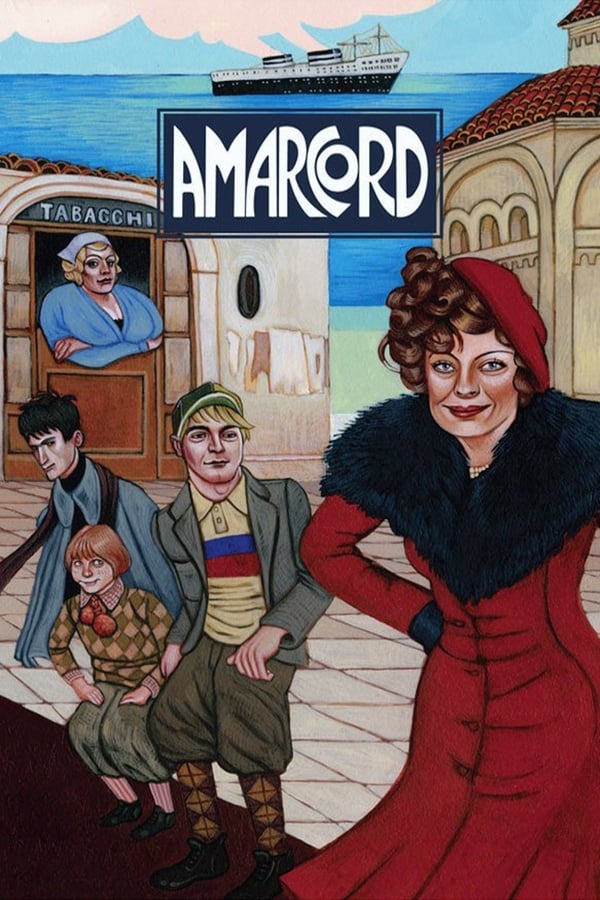
Amarcord is called a semi-autobiographical film about Fellini’s young life, and revolves around the Biondi family in a provincial Italian town in fascist Italy in the 1930s. While the “main” character is teenager Titta, his mother, father, uncle and aunt, and the other eccentric villagers, all play important roles in the film. In the little town, where everyone knows everyone, several events are shown, such as a yearly bonfire where they burn a witch in effigy; the schoolboy crushes amongst the kids; and the increasing presence of the fascist military, to whom the villagers show an almost reverence. The film is made up of a lot of events in Titta’s life over the course of a year, but equal screen time is given to other people, including Gradisca, the town’s most beautiful woman; Volpina, the town slut; and Giudizio, the town idiot, who occasionally breaks the fourth wall to give viewers some narration about the village and its people. And it wouldn’t be a Fellini film without a couple dream sequences mixed in. What this film does so well, and what sets it apart from a lot of coming-of-age pictures, is the feeling of “realness” of the townspeople. Even though they are eccentric, they feel tangible, and we get to know so many of them throughout the course of the movie. When the Biondi family visits Uncle Ted at the insane asylum, we laugh and cry with them. When Biscein starts telling a story, we know he’s talking out of his ass. When the puffballs start blowing through at the end of the movie, we know exactly what that means. I feel like I could walk down the streets and greet everybody, and be welcomed. ★★★★
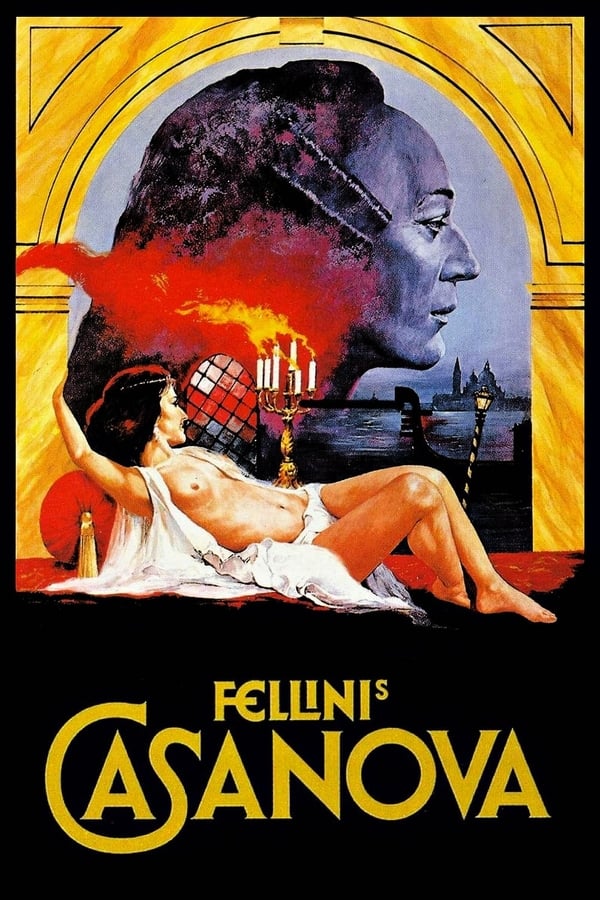
I’m not sure what to make of Fellini’s Casanova, the director’s take on the famous womanizer Giacomo Casanova. With Fellini behind the helm, it is more akin to his Satyricon than a historical drama, which isn’t a bad thing (I did enjoy his wild and bizarre Satyricon), but it is a bit out there. Casanova stars Donald Sutherland as the title character, and portrays his life bouncing around Europe in the 18th century. His dalliances and exploits are shown in outlandish fashion, and Fellini takes the debauchery to extreme levels. Throughout it all, Casanova cannot find true love for himself. Those times that he does find a woman he is intrigued by, she never reciprocates his advances. He’s also constantly trying to land himself a job at court, in either sciences or math, and fancies himself an educated man, but his lifestyle keeps him in company with the lowest of the lords, who only like to keep Casanova around for his reputation. As was Fellini’s custom, dating back to his early days in the Italian film industry, the international cast has all of the dialogue dubbed in post-production, so while Sutherland is acting, it isn’t his voice we here (as far as I know, he doesn’t speak Italian). The fact that the lips don’t match doesn’t bother me, it is common for Italian films, but I have to think that it hampered Sutherland’s acting skills, as he seems very wooden in many scenes. Also, there’s little flow, and the film as a whole is very choppy. I will say the period costumes and sets are extraordinary, and in fact it won an Oscar for costume design. Some good moments, but unfortunately it is bogged down by the bad. ★★½

I wasn’t into Orchestra Rehearsal for a good portion of the film. A made-for-TV movie from 1978, it’s sort of like Roma in that it is a fake documentary, following members of an orchestra as they come together for a rehearsal, to be filmed by a camera crew. The movie begins with the players all arriving at their rehearsal space, and various individuals being interviewed by the crew. Immediately, we see the individualistic nature of the musicians, as the orchestra represents people from all walks of life: young and old, rich and poor, outgoing and shy, etc. They get down to brass tacks once the conductor comes to the podium and the rehearsal begins. He berates the group constantly, pointing out flaws even if there are none. After the run through of a tune, he calls for a break, and goes back to his dressing room to freshen up. While he is away, the orchestra devolves into chaos. Young, brash members call for the end of a director, saying they’d be better served to have an unemotional metronome run things, while the older musicians sit uncomfortably by. Some people go to spraying graffiti on the walls, while others engage in sex acts under the piano. When the conductor comes back, things do not settle down right away, until a tragedy finally wakes everyone up. The tagline of the film was “The Decline of the West in C Major,” and understanding the film as a piece of political satire does make it much more enjoyable. I’m not saying I’d watch it again, but it is an interesting piece. ★★½


Quick takes on 5 films

I’m cheating on the first “film,” because it’s not a film at all. Followers of my blog may think all I do is watch movies, but I also read a lot of books (a couple a month, anyway) and watch a lot of tv series (no, I don’t know where I find all the time). But it’s hard to do a “quick take” on a 13 or 26 episode season. However, The Queen’s Gambit is just a 7 episode limited series. It stars Anya Taylor-Joy (of Split and The Witch fame) as a chess prodigy named Beth Harmon. An orphan in the 1950’s, she is raised in a religious orphanage when she is exposed to the game of chess by the custodian. She takes to it immediately, and is beating the local boys’ high school team (and its coach) very soon thereafter. The rest of the series shows her grow up into a young woman and one of the best players in the world; however, she cannot seem to beat Borgov, the world champion out of the USSR. Besides the Russians, she has to fight her internal demons, struggling against drugs and alcohol. Beth is a complicated person and it isn’t always easy to root for her. She’s arrogant and condescending, and it takes awhile before she “grows up” and starts treating others with respect. There’s some good acting and quite a few recognizable faces from tv and film, as is typical of Netflix dramas. Among the seven episodes, there are great moments, slow moments, but overall it is a decent enough coming-of-age story featuring a strong (and strong willed) female lead. Maybe not as envelope-pushing as it could have been, and it does get predictable a little too often, but it is entertaining. Taylor-Joy’s performance is fantastic, and she shows the real making of a star. ★★★½

I always skip movies like Happiest Season, i.e., sappy Christmas movies that come out every year that take a well-known cast and mash them together to make some money. I took a flier on this one because it substitutes a man with a woman and gives us a gay couple, and one of them is Kristen Stewart, who I love. Should have gone with my gut. From the first 10 minutes, the viewer gets plenty of the cheese you can expect. The twist in the story is that, when they go to visit one of their parents, they don’t know their daughter is gay, so they have to pretend to be straight until the right moment comes to out herself. The whole “taking my partner to my parents, who don’t know I’m in a relationship” is about the oldest retread of a holiday movie as they come, and the gay twist only slightly changes it. All the old plot elements are here: old flames that the parents love, unearthed secrets that threaten the relationship, etc. ★

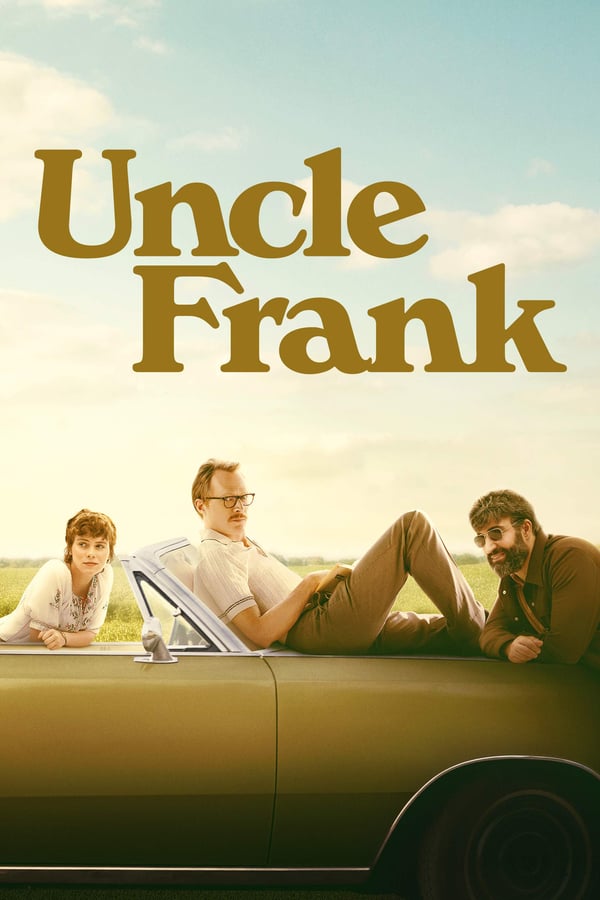
Betany Bledsoe, or Beth as she prefers to be called, is growing up in a tiny town in South Carolina, emphasis on the South. In 1969, she’s a freshman in high school and her family revolves around the larger-than-life grandfather patriarch, “Daddy Mac.” However, Beth’s favorite family member is Uncle Frank, who tells her that she doesn’t need to get married out of high school and start having kids to be a successful woman, no matter what her family and friends tell her. 4 years later, she gets accepted to NYU, where Frank teaches, and begins school there. Very soon, when hanging out with Frank at a party at his house, she finds out that he is gay, a closely guarded, hidden family secret, that even Frank’s brother Mike (Beth’s father) doesn’t know. When Frank’s and Mike’s father Daddy Mac dies, Frank and Beth make the car trip from New York, with Frank’s longtime partner Wally in tow for support. Along the way, and once they arrive to the funeral, we learn about Frank’s growing up, and the rift between him and his father, who’s word in the family was law. For a gay young man in the south in the 1940’s, it was more than just about anyone could bear, and it hadn’t gotten much better by 1973. It’s a beautiful film about growing up with heartbreak, but ultimately acceptance, especially of yourself, and Paul Bettany’s standout performance is about as good as you will find on television. He’s had some tremendous performances in his career, maybe this is the one that will finally get him some long-deserved recognition. ★★★★

Words on Bathroom Walls stars Charlie Plummer as 18-year-old Adam, who starts seeing visions and hearing voices. He keeps them to himself until he has a psychotic episode at high school, which gets him kicked out of school and a diagnosis of schizophrenia. His single mother and her boyfriend enroll him at a private school to help him finish his degree, so that he can meet his goal of going to culinary school for college. His new school is contingent on keeping his grades up, which is impossible with all the voices in his head. Despite reservations over longterm health effects, Adam starts on a new trial medication, and his parents get him a tutor, the brightest girl in school, Maya (Taylor Russell). The new drug works to a degree; the not-real people Adam sees disappear, but there are side effects, including tremors in his hands and legs and loss of taste, which obviously affects his cooking. Adam learns a big secret of Maya’s and the two grow closer, but he still cannot confide his past to her, and with the side effects of the drugs getting worse, he stops taking his medicine. The hallucinations return, and so does a sinister voice Adam has been able to ignore up to this point in his life. It all sets up to an explosive ending, as Adam’s paranoia ramps up, and his illness takes control of his life. The conclusion is just a little too perfect, as mental illness very rarely lets things be so tidy, but what a fantastic picture. It presents a very frank, honest portrayal of something with an illness which is still, to this day, very misunderstood by the general public. I first saw Plummer a few years ago in King Jack, and that is a dude with a future. ★★★★½

After a couple serious films, it was time for some brevity. After decades off, Bill and Ted are back in Face the Music. I don’t know what I hoping for, it was just as goofy and silly as you’d expect. 30 years after their first adventure, Bill and Ted still haven’t written the song that was supposed to have united humanity. After a one-hit-wonder, their musical career has tanked. In the future, the entire space and time reality is starting to collapse, and time is running out for the Wyld Stallyns to perform their world (and reality) saving tune. In proper sequel fashion, there’s a boatload of stuff going on simultaneously: Bill and Ted have their trusty time-jumping phone booth, and keep jumping ahead to future versions of themselves to learn the song to save everything, while their wives (in true Hollywood stereotypes, have been replaced with new actresses 15 years younger than the originals) are being led by their future selves to see how big of disappointments Bill and Ted have become, and also their kids are jumping to the past to make up a band of history’s all-star musicians. And don’t forget the robot from the future trying to kill Bill and Ted. Just a completely dumb movie. I liked the original, but I was also 9 or 10 at the time. Maybe my 9 year-old-self can time jump to 2020 and try to enjoy this stupid movie. ½

Quick takes on 8 Jarmusch films

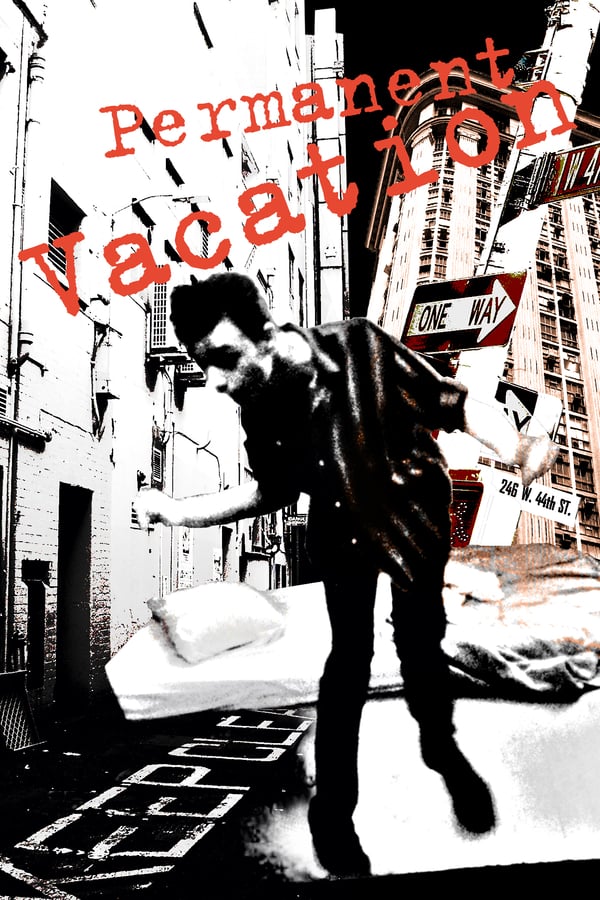
I saw Jim Jarmusch pop up as a cameo in a recent film, and it got me to thinking how I haven’t seen many of his (especially earlier) films. Time to catch up on those missing pieces, starting with his first, Permanent Vacation. It was made during Jarmusch’s final year at film school in 1980, right before he dropped out. This film is very much an inauspicious debut. It’s about a young man named Aloyisious Parker who dresses and stylizes right out of the 1950’s (and in fact, wants to name his future son Charlie Parker after the famous saxophonist). “Allie,” as he goes by, wanders a bleak and decrepit New York landscape, interacting with various eccentric personalities. He talks about growing up in a building that has since been bombed out in “the last war,” but whether he’s off his rocker (his mother is in an institution, and they discuss the bombing), or if the film takes place in some sort of dystopian world, is unknown to the viewer. We hear guns and explosions, but that could be in Allie’s head, and the people he interacts with are just as crazy as he is. There isn’t much of a plot, just Allie exploring around decaying parts of the city. Honestly it was a chore for me to get through, even though it’s short at 75 minutes long. Next up is Jarmusch’s big breakout film, so I’m obviously hoping for better films ahead! ★

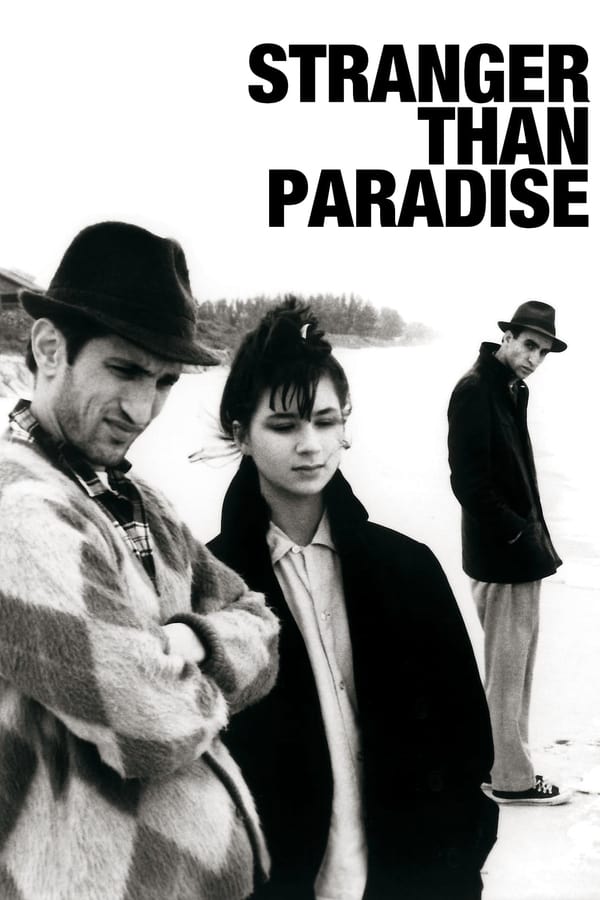
Stranger Than Paradise was Jarmusch’s first hit, and arguably his greatest achievement to this day. Musician/actor John Lurie had done the music for Permanent Vacation, and became the star of this film. He plays a Hungarian immigrant who has completely assimilated American culture, even going by the nickname Willie and forgoing his birth name. He’s living in New York when he gets a call that his cousin Eva is on the way to America, and will stop by his apartment for a night before heading on to Cleveland to live with their aunt. Willie is not welcoming to her, and derides her for her Hungarian accent, and not knowing much about America. When the aunt gets sick and has to go to the hospital, the single night stay turns into 10 days, and over that time, Willie warms up to Eva. Eventually, they are getting along quite well, to the point that he doesn’t really want her to leave. She does though, and there the film jumps ahead a year. Willie and his friend Eddie (long-time actor Richard Edson, in his first role) decide to head to Cleveland to visit Eva, but once there, they find the city boring and cold (it being winter). So all 3 pile in a car for Florida, where their adventures are just beginning. It’s a film that goes places without every going anywhere, if that makes sense, but it is all done wonderfully. For one, it is really funny, and the story is told in short segments, most no longer than a couple minutes, bookended by fade-to-blacks. You’d think that this would break up the film and it’d get old after awhile, but it doesn’t; if anything, the end of each vignette made me sit up straighter and look forward to the next. Lurie, Edson, and Eszter Balint (Eva) are fantastic and so much fun, and as for the aunt in Cleveland, pretty much everything she says is laugh-out-loud funny. Great film. You can take it at face value and just enjoy the dialogue, or look at it deeper as accepting what you have or taking the “grass is always greener” approach. ★★★★

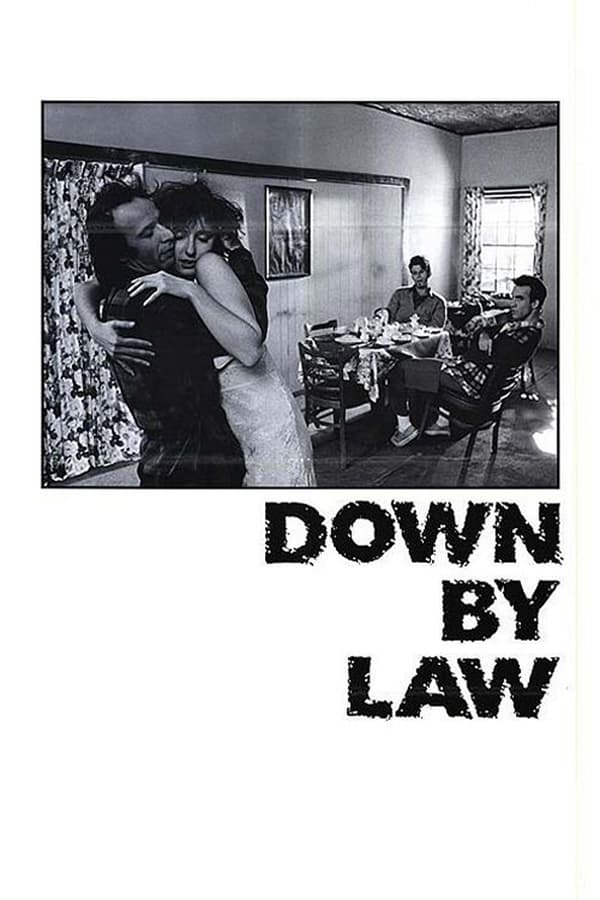
Down by Law is also very much heralded, but I couldn’t connect with this one. Everyone talks about how funny this film is too, but I didn’t get it. Lurie returns as a pimp with a heart named Jack, living in New Orleans. He is set up by an associate for propositioning a young girl, and is arrested. Simultaneously, a radio DJ, Zack (another musician and actor, Tom Waits), is set up himself, being found in a borrowed car with a dead body in the trunk. Zack and Jack meet in prison. This whole set up takes a solid 30 minutes, and we don’t really get to know our characters as much as you’d think. Enter their newest cellmate, Bob (Roberto Benigni in his first English film role). An Italian immigrant who is actually guilty of what he has been charged for (murder), Bob’s English isn’t great. After he comes into the picture 45 minutes in, Benigni steals the show for the rest of the way out. His lines and interactions are the best. Behind the camera, celebrated cinematographer Robby Müller is the other key member of the film; his long all-encompassing and gorgeous shots are stunning, but those shots and Benigni’s humor only take the movie so far. Zack and Jack are dull, one-sided characters, and I had a hard time rooting for them. ★★

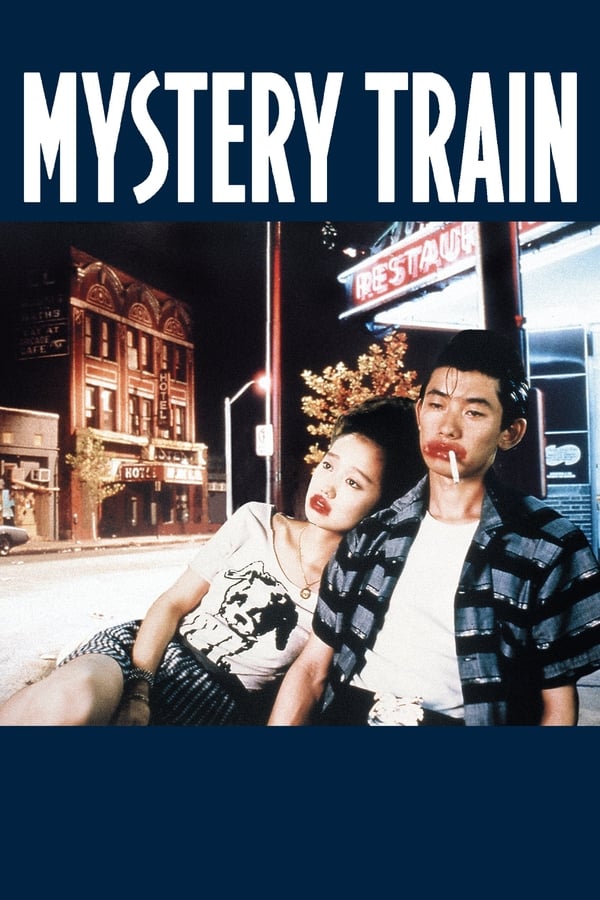
Mystery Train follows a group of people over one night in Memphis. Split into three segments with each covering a different, seemingly unconnected set of individuals, the film slowly brings connections to the fore by the end. We start with a young couple from Japan, touristing in Memphis because of their love of Carl Perkins and Elvis Presley. After getting off the train, they wander the city for a bit before settling in to a cheap hotel in a rough neighborhood. The next segment follows an Italian woman stuck in Memphis for the night, awaiting a plane the next day which will take her and her deceased husband home to Rome. She finds herself at the same hotel, roommates with a Jersey girl unable to afford a room on her own. The final clip is a trio of men, 2 of whom recently let go from their jobs, drinking the night away in their despair. Yep, you guessed it, they find their way to the hotel too. That is not the only connection between all of our characters, but to say more would ruin the fun. Fantastic film; everything comes together wonderfully in the end, while avoiding too-clean of an denouement so that the picture still has a real, un-Hollywood feel to it. Unlike Down by Law, the characters are fully developed and each is intriguing in their own way. Jarmusch does a great job of controlling the large cast and giving equal time to everyone, so that you are invested in how each of them turn out. ★★★★½

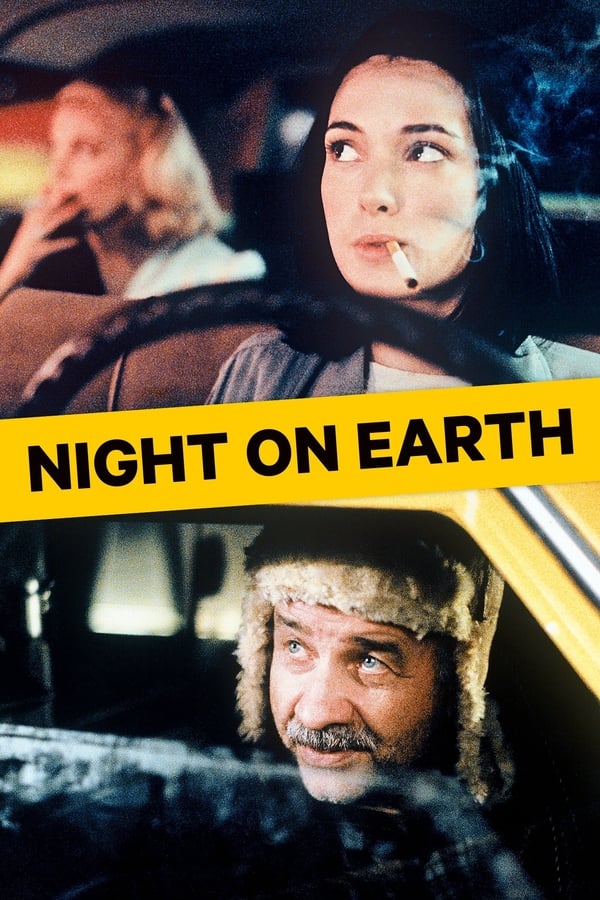
Night on Earth is a story of 5 separate, unrelated vignettes, told over the course of one night in five different cities, all involving taxi drivers around the globe. A rough-around-the-edges young woman picks up a well-to-do casting agent at the airpot in LA, and takes her to her mansion in Beverly Hills. A black man in New York has a hard time getting a taxi to take him to Brooklyn, until an immigrant who barely knows how to drive picks him up. In Paris, a cabbie has had a crummy day, but he’s intrigued by his latest fare: a blind woman, who wants neither her driver’s curiosity about her life with a disability, nor his charity. Next we bounce over to Rome, and an eccentric driver driving recklessly through an abandoned city in the middle of the night, talking to himself until he picks up a priest, and then providing subtle and not-so-subtle jabs against him. Our final stop is in Helsinki, where a taxi driver picks up 3 drunk men, 2 awake and one passed out, in the wee hours of the morning; the 2 humorously relate the ordeals of their friend on the worst day of his life, but the driver then puts their story to shame with a heartbreaking story of sadness. The film as a whole may be a bit uneven, but overall I really enjoyed it. It has an amazing cast of veteran actors and up-and-comers in 1991, including Winona Ryder, Gena Rowlands (IMO one of the best actresses of all time), Giancarlo Esposito (of Breaking Bad fame, among others), Roberto Benigni, and Matti Pellonpää (famous for his roles in Aki Kaurismäki’s films). I’ve noticed how the setting is just as important to Jarmusch’s films as the actors. Just like the apartment in Stranger than Paradise, the jail cell in Down by Law, and the Hotel in Mystery Train, each city in this film is almost a character of its own, with both its splendors and warts. ★★★½

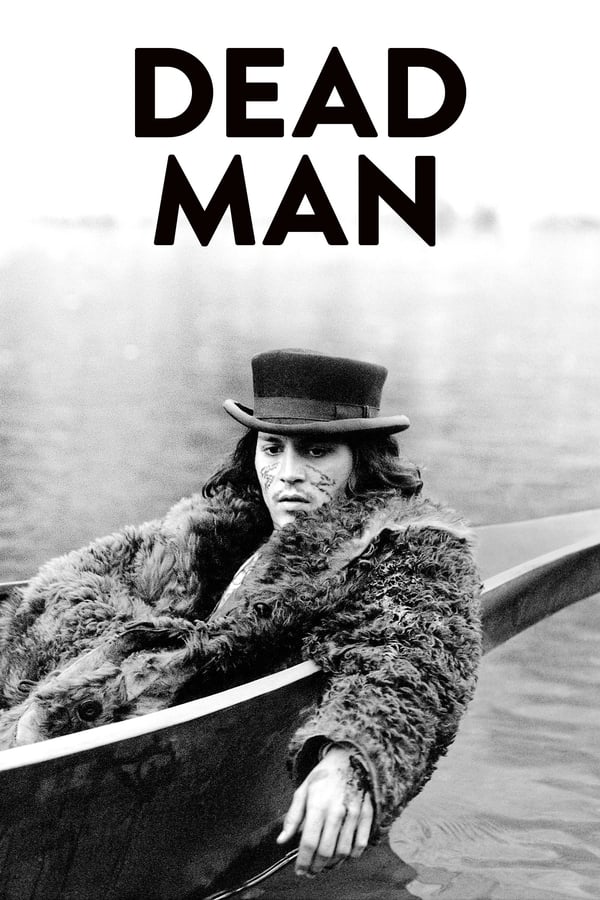
Dead Man, released in 1995, is ok I guess, but it didn’t blow me way or anything (pun intended?). It’s a post-modern western, starring Johnny Depp as William Blake, an accountant from Cleveland who goes to the far west, to a tiny frontier town called Machine, on the promise of a job at a large metal works company. When he arrives, the job has already been filled. He spends the last of his money on booze, but the day gets worse from there, as he ends up in bed with a woman when her husband comes home. The husband shoots at Blake, but the girl steps in front. The bullet kills her, goes through to lodge in Blake’s chest too, and he returns fire, killing the husband. Blake steals a horse and flees into the surrounding woods. Unfortunately for Billy, the girl was the metal company’s boss’s daughter, and the horse was his horse. The rich man sets a bounty on Billy’s head. Near death in the woods, Blake is found by a Native American, who nurses him back to health. As William learns the ways of the wood, he is better equipped with killing those who come hunting him. The film is entertaining in spots, but I generally like my westerns, especially modern westerns, a little more realistic, and this film is outlandish to the point of absurdity. Blake goes from a city boy to a cold blooded crackshot killer in a single night, and while the bad guys definitely submit to the “no honor among thieves” mantra, they take it to a whole other level. The film is shot in black and white, which doesn’t generally bother me, but there were scenes in this film that I think could have been best served by beautiful, rich colorful landscapes and its people. Would have been a cool juxtaposition with the muddy, dreary town and its folk. ★★

Ghost Dog: The Way of the Samurai is much different than, say, Night on Earth or Stranger Than Paradise. Whereas those films are very grounded and “real” feeling, this one is almost a fantasy in a far-out-there, almost Tarantino ridiculous kind of way. I say that as a person who is not a fan of Tarantino (sacrilegious, I know), but I liked Ghost Dog. It stars Forest Whitaker as a contract killer in modern New York, who lives by the code of honor of a Japanese samurai. His life was saved a few years ago by a mob man named Louie; as such, Ghost Dog has named Louie his retainer, and will do anything asked of him. When a fellow mob man, Frank, starts sleeping with the head boss’s daughter, Louie has Ghost Dog take him out. Unfortunately, there are consequences for killing a made man and leaving a witness (the daughter), so the remaining mob members decide Ghost Dog needs to die, despite Louie’s protestations. Louie knows he’s probably next, for his role in the killing, but Ghost Dog goes to work, protecting himself and Louie and mowing down the rest of the mob, which he’s able to do because of they are humorously inept at getting anything done right. Though the scenario is weird, and some of the characters are off-the-chart cuckoo, the action is great and the film is a lot of fun. There’s also some smart references to other great classics if you are paying attention (like Rashomon, which is mentioned, but you might miss the connection if you aren’t looking for it, and others). I don’t think it is meant to be taken too seriously, and as such, it’s a good diversion and just an enjoyable action flick, with some fun nods to other films that came before it. ★★★½

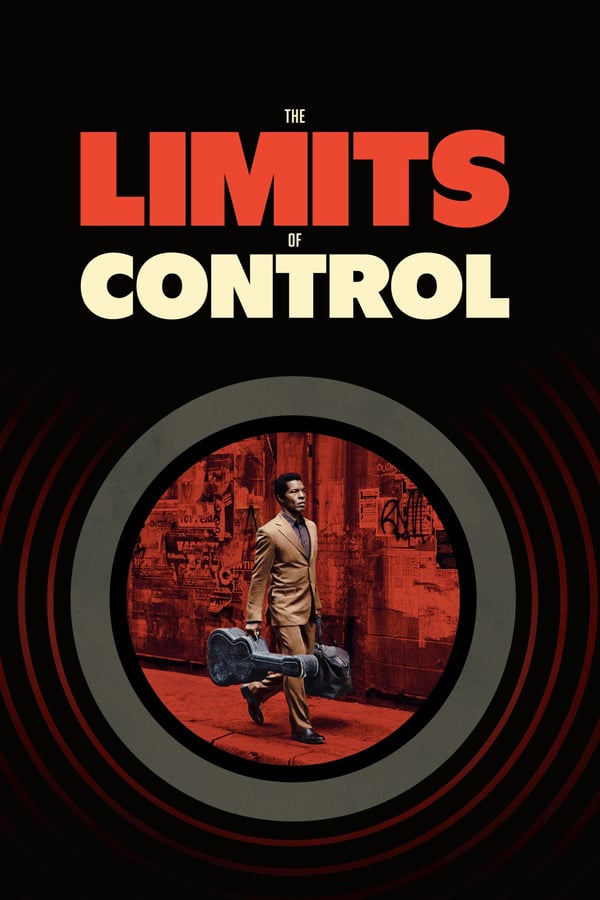
After appearing in minor roles in Jarmusch’s Night on Earth, Ghost Dog, and Coffee and Cigarettes (not reviewed here, I’d seen it before), Isaach de Bankolé gets the lead in The Limits of Control. This one is a maddeningly obtuse film, but for my tastes, an extremely fun one, right up to the very end (of course, this is coming from a person that loves Last Year at Marienbad and Finnegans Wake; I have a thing for films and books that are (close to?) impossible to decipher). A very non verbose, unnamed man is on an unknown mission, seeking a target that we don’t know or understand. To reach his goal, he travels around Spain meeting other secretive individuals, who pass him clues inside matchbooks, always after confirming his identity with the password, “You don’t speak Spanish, right?” While meeting these individuals, some phrases are repeated a couple times in the movie, like, “The universe has no center and no edges.” Other mystic messages lead him directly to the next clue, like, “Diamonds are a girl’s best friend,” or, “The guitar will find you.” The clues can come from anywhere, even someone he passes randomly in the street. They each want to chat about different things, but our loner just sits quietly and listens, until it is time to swap matchbooks. For most viewers, they may be ready to check out after the second or third such encounter, but they keep on coming. I was hooked line and sinker from the opening moments. Our (hero? antihero?) person was fascinating to watch. His body language and demeanor ooze menace, even though we have no idea what his ultimate goal is. Unfortunately the ending was a big let down for my expectations, but still, the journey is worth it if you like mysterious, slow burns. ★★★

Quick takes on 5 films

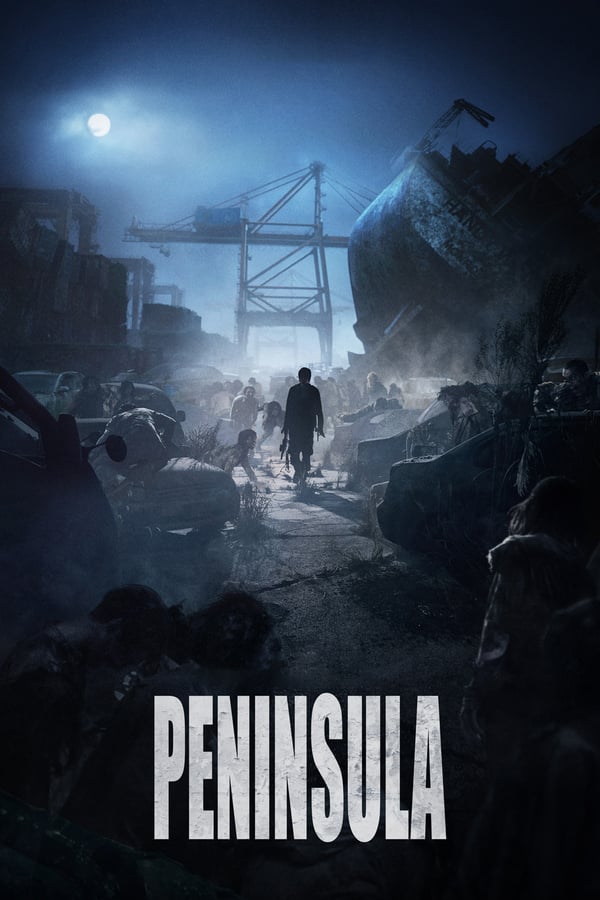
Peninsula is the followup to the critically and commercially successful zombie flick Train to Busan a couple years ago. After a quick intro to the new characters, on the day of the virus breakout, the film jumps ahead 4 years to the present. The entire South Korean peninsula has been quarantined off and the rest of the world has moved on. Scavengers have started to try to get into the former South Korea though, knowing that people died leaving gold and jewelry and US dollars just sitting around. Former Korean citizen and marine captain Jung-Seok has been eking out an existence in Hong Kong, but the public there distrusts people from Korea, obviously scared of the zombie virus. He and his brother, Chul-min, are recruited by a scavenger group to sneak into the former South Korea and get out with a truck full of money. The big reward (should they survive) will set them up for life. Does the film suffer from “sequel-itis?” Of course! The villains are off-the-walls unbelievable, the car chases are straight out of The Fast and the Furious, and cliched plot elements abound, including a deus ex machina, but damn if it still isn’t entertaining. If you love the absurdity of the Mad Max films (including the sequels), you’ll enjoy the ride here too. ★★★★

Run is a suspense thriller starring Sarah Paulson and Kiera Allen as mother Diane and daughter Chloe. Chloe was born with a multitude of physical disabilities, including heart problems, asthma, diabetes, and paralysis of the legs, leaving her tied to a wheelchair. As a teenager, she’s grown very bright and is looking forward to college, waiting every day for acceptance letters. Somehow it is this waiting that first makes her start to have suspicion that her mom Diane is hiding something from her, as none of the expected letters ever come. Chloe also finds that a medicine she’s been taking all of her life actually is prescribed to her mom, and when she sneaks into the pharmacy without her mom’s knowledge, Chloe learns some life-shaking news. When Chloe awakes the next day, she’s been locked in a room and Diane isn’t around, leading Chloe to attempt her escape. There’s some great thrills and tight suspense, even from early in the film, but unfortunately most of it’s been done before. The one great aspect of the film is that actress Kiera is herself really in a wheelchair, which is extremely uncommon to see a lead role in any film or show. Kudos to her and the filmmakers for making it happen, but the film itself is just average, and the ending is pure cheese. ★★½

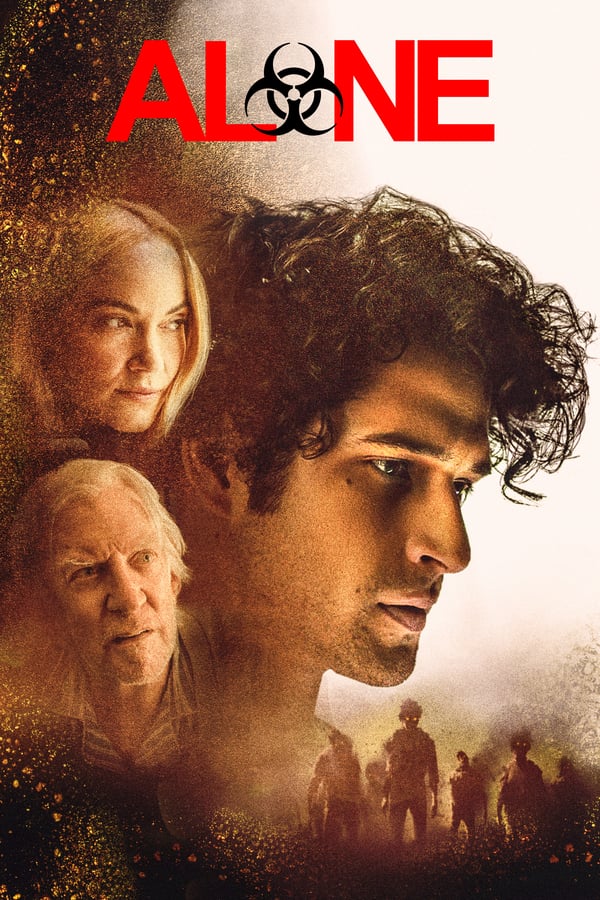
About 5 minutes into Alone, I thought, “This is very familiar.” It’s because I just watched this movie last month. Well, not exactly this movie, but the Korean version. Both movies used the same source material, and while #Alive was released first, Alone was actually made first, but its release was delayed because of COVID. Being in English doesn’t make this version any better. There are a couple differences. Our male hero is the real star and badass and the girl is just a damsel in distress, which makes sense since Tyler Posey has some name power and Summer Spiro is a relative newcomer. Also, the virus here spreads through any blood contact, not just bites, and the zombies continue to repeat phrases they were saying when they died, so that ups the freakiness factor. Other than that, I disliked this movie for all the same reasons I disliked #Alive. Nothing new for the genre, rough acting, worse dialogue, and uneven execution. Better to go back and watch the Busan zombie films. ★

It seems like ages ago when I first saw the trailer for The New Mutants (filming was done way back in 2017). But then Disney bought Fox and the X-Men series fell under Marvel Studio’s purview. And The New Mutants went into post-production hell. Now it has finally been released as the last in Fox’s X-Men film series, before they will be rebooted later under Marvel’s umbrella. When I first saw that trailer, it looked super exciting, as a dark, almost horror film. The final cut, whether due to re-writes or editing, is more like horror-light, with a fair amount of super hero action. Danielle Moonstar is the sole survivor from a catastrophe at her Native American town, and is brought to a facility with young teenage mutants who have also faced tragedy. She’s the only one there who doesn’t know what her powers are, and the others, with the exception of Rahne (who can turn into a wolf), don’t take kindly to her. The group of kids are under the watchful eye of Dr Reyes, a seemingly kindly person but with a Nurse Ratchet undertone. Upon Danielle’s arrival, bad things start happening to the others: their nightmares become very real and very dangerous. As the nightmares more real incessant and Reyes’ motives become clear, the teens need to band together to fight. This movie has a lot of detractors, and some of those bad reviews have a point. Character development is very poor, which is the most glaring problem, but honestly I enjoyed this film a lot more than I thought I would. Could it have been better? Yes, definitely, but I was entertained, and it is a much better conclusion to the X Men series than the awful Dark Phoenix. The New Mutants was originally planned as the start of a new trilogy, which will now obviously never happen, but it would have been exciting to see where it could have gone. ★★★½

Another maligned recent release is Disney’s live action Mulan, and unfortunately, this time I have to agree. The original Disney cartoon came out when I was 18, so no longer young, but still young at heart, and I enjoyed it. This remake is a pale shadow of the original. The story is relatively unchanged: there’s an uprising headed by an evil man, who wants to take down the Emperor of China. A call goes out for every family to supply one male, and in Mulan’s family, that means her ailing father must go, as they have no sons. Mulan is a tomboy and despite her parents’ repeated entreaties, she longs to be treated as an equal to the men in the village. She clandestinely takes her father’s place in the army, disguising herself and pretending to be a young man. She is able to keep the subterfuge up through training and into battle, when she unmasks herself and goes on to show everyone what women are capable of. What should be a rousing tale lands with a huge thud. All of the characters in this film are paper thin with no dimension or fleshing out, and sadly that goes for Mulan too. Also, especially with how the world is now as compared to 1998, more could have been done to show the culture and uniqueness of the Chinese people, but you can take this film and put it in any setting, and no one would know the difference. The battle scenes are OK I guess, in their heavy CGI way, but even those became boring after awhile. It’s a “pretty” film but that’s about it. ★★

Quick takes on 5 Wenders films

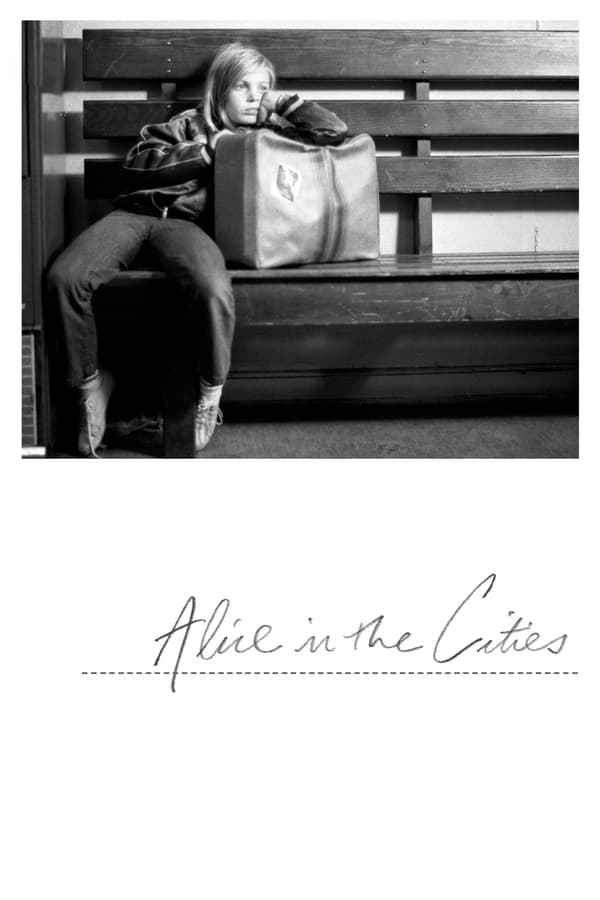
Wim Wenders is an accomplished and renowned German director, who got his start making films in West Germany during the New German Cinema movement. He’s made many narrative and documentary films (which I hope to get to one day!), but I’m starting with some of his earlier films, beginning with 1974’s Alice in the Cities. This is a “road movie” unlike any other. It follows a German writer, Philip, who’s been traveling across the USA in search of a story, but having no luck putting his finger on the story he wants to write. He’s depressed and aimless, and can’t seem to find his muse. He ends up back in New York with an irate publisher and not much money left on him, so he has to return to Germany. A strike at the airport in West Germany makes him detour to Amsterdam, and while waiting for that flight out of New York, he meets a woman and her 9-year-old daughter, Lisa and Alice. Lisa is just coming off a bad relationship and wants to return home to Germany too, but on the morning of their flight, she leaves Alice and a note for Philip asking him to take her to Amsterdam, and Lisa will meet them there after talking to her ex one more time. Philip has no choice, since Lisa is gone, and takes Alice off with him. The problem is, Lisa never shows up in Amsterdam. Alice remembers her grandmother’s home in West Germany, but can’t remember what city it is in, or even her grandmother’s name. So the unlikely duo set off in a rented car with an ever-dwindling wallet to try to find the house. Both actors are amazing in their roles: Yella Rottländer as Alice, a girl struggling with the reality that she’s not high on her mother’s priorities; and Rüdiger Vogler as Philip, a man who thinks he is seeking something special, when really he needs to find something missing within himself. It’s shot in start black and white which works so well here, and the movie is touching in the all the right moments, without being sappy or overly sentimental. It’s the rare film that is full of emotion without being emotionally charged, and it is also fun to see the picture flipped, in that you think Philip will be the star, and it ends up being Alice. ★★★★½

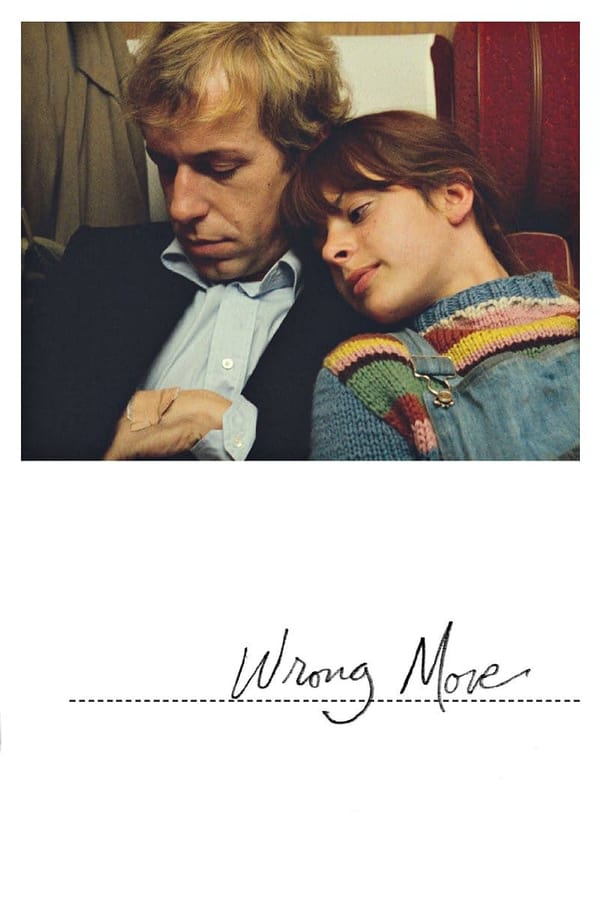
The Wrong Move takes a similar character as Philip, this time Wilhelm (portrayed by the same actor), but this time our struggling writer continues to seek isolation in all that he does. In his journey, he comes across others with secrets and idiosyncrasies: a beautiful actress, Therese (Hanna Schygulla, whom I recognized instantly from her roles in Fassbinder’s films); an old man, Laertes, with a story he doesn’t want to tell; a mute street performer, Mignon; and a socially awkward and terrible poet, Bernhard. Each person in this motley crew wants something out of someone else in the group. Therese and Mignon both love Wilhelm, but he is unwilling (or incapable) of reciprocating; Laertes wants to unburden his soul of his dark secret; Bernhard just wants someone to validate him. They hop in a car and end up at a nearly-abandoned mansion, whose owner was just about to kill himself when they pulled up. That little happy scene just about sums up the feeling of this picture. Don’t expect any happy endings. Everything and everyone is just so dreary, and ultimately, no one finds what they want. It’s all extremely depressing, and while the acting is decent, there was nothing to make me care about any of the characters. ★½

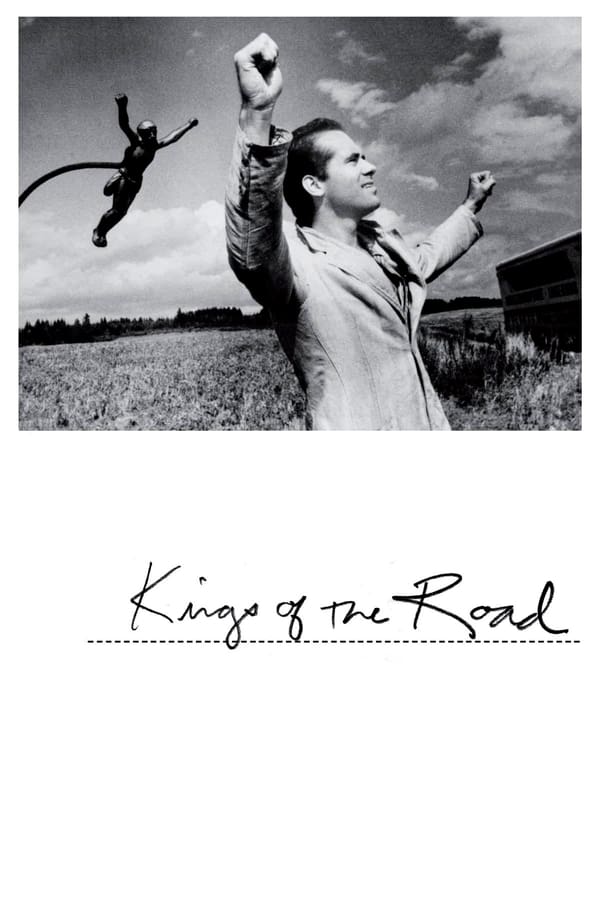
Kings of the Road is another road movie with an unlikely pair, this time a couple adult men from different backgrounds. Rüdiger Vogler returns a third time, this time playing a loner named Bruno. For a couple years, Bruno has been living out of a large truck, traveling from small town to small town, repairing and maintaining movie projectors at the local single screen cinemas, cinemas which are struggling with declining attendance as movie goers are traveling to larger cities for the experience. Bruno doesn’t seem to mind the lonely, nomadic lifestyle, but his routine is interrupted when Robert attempts suicide in front of him, by driving a car into a river. Robert walks out of the river with a wet suitcase and meets Bruno at his truck, and the two form a kinship from their solitudes. Robert tags along as Bruno visits a couple towns along the East Germany border, and the duo meet some like-minded down-and-out “lost souls” on the road. Each has a healing process to go through; for Robert it is visiting his estranged father, whom he hasn’t seen in 10 years; and for Bruno, realizing that (just maybe) there is a world of people outside of film. The movie is a bit slow to get going and honestly, felt a little pretentious in the beginning, but the visual poetry throughout is amazing. It’s a very good film depicting the alienation people can experience. ★★★½

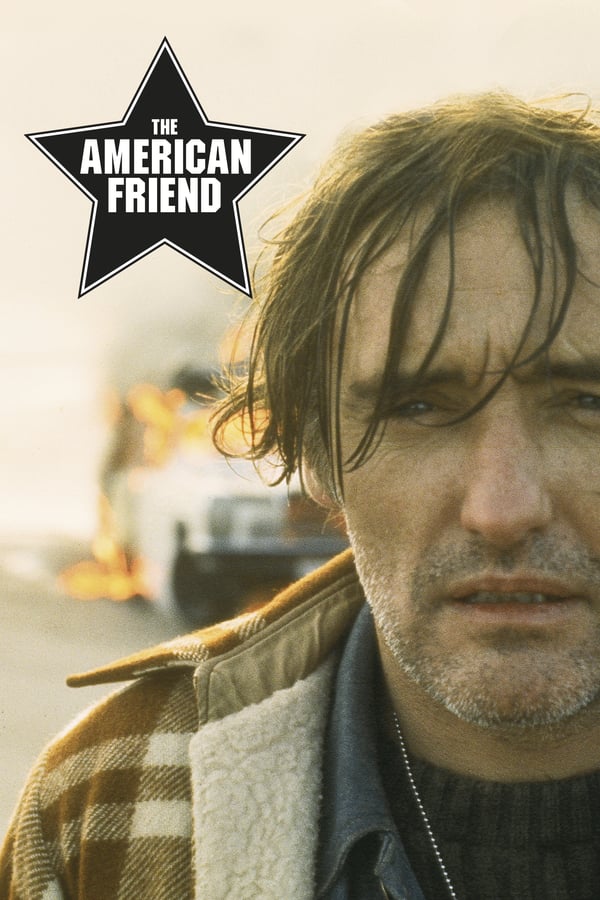
The American Friend is a tale about Tom Ripley, the same Ripley from the Purple Noon, The Talented Mr Ripley, etc. In fact, this film was the first adaptation of the novel Ripley’s Game, later redone and starring John Malkovich. In this version, Ripley is portrayed by Dennis Hopper, and he’s a rich career criminal living in Hamburg. He’s got a con going with an art forger, and is auctioning the fake pieces for big bucks. The forgery is spotted though by a local art framer, Jonathan Zimmerman. When a local French criminal, Minot, approaches Ripley about murdering a rival gangster, Ripley declines but suggests Zimmerman. Zimmerman has been fighting leukemia, and Ripley falsely tells Minot that the disease has spread and he doesn’t have long to live. Thinking Zimmerman could use a stack of case to leave his wife and son, Minot approaches him about the job. Zimmerman begrudgingly accepts, and the job goes as well as it could for an amateur killer, so Minot hires him again for a more dangerous mission. The second hit doesn’t go as swimmingly, and Ripley gets pulled into the scheme after all, to cover Zimmerman’s butt. It’s a good premise, but for my tastes, this film felt all over the place. The other film adaptations of Ripley’s escapades seem tighter and more cohesive, and Zimmerman’s leap from average man to cold killer is quite unbelievable. Honestly the whole film felt like a bit of a mess. Even though I didn’t care much for The Wrong Move, at least the wayward feel of the film worked there, and it obviously does so in the other 2 films above too. Here, in a film which relies on a tight plot and well constructed, linear paths for the characters, when that is missing, that omission is glaring. ★

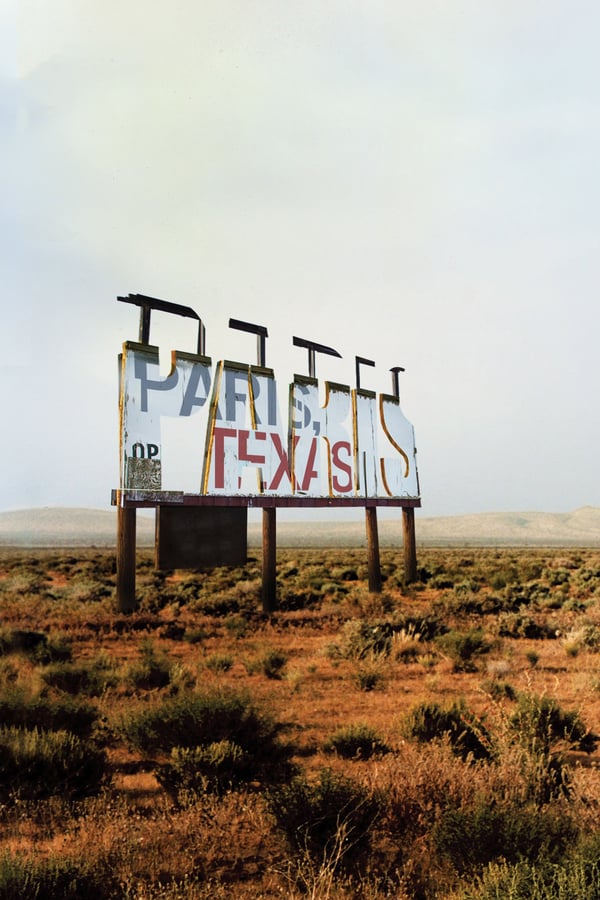
Paris, Texas is one of those amazing films that makes me reevaluate how I rate movies. I can only give this one 5 stars, so I guess I need to go back and lower my ratings on other films. It’s that good. The setting is simple on the surface, yet intricate underneath: Travis (the late great Harry Dean Stanton) is found wandering through the desert in west Texas, and he won’t speak a word to the people who find him. They call a number found in his wallet and connect with his brother Walt (Dean Stockwell), who admits that he hasn’t seen or spoken to his brother in 4 years. Walt and his wife Anne (Aurore Clément, who I just saw in Lacombe, Lucien) thought that perhaps Travis and his wife Jane were dead, as they disappeared suddenly those years ago, leaving their son behind. Walt and Anne have been raising Hunter as their own, and now Travis showing up puts a wrench in their family. But the mystery remains: where has Travis been, why is he so quiet and guarded, and whatever happened to Jane? All of the questions get answered by the end, but the plot, while great, isn’t even the best part of this film. The performances by Stanton and, later, Nastassja Kinski as Jane, are off the charts. Also, filming in the wide open spaces of rural Texas creates this feeling of a huge, enveloping world, of which we are just tiny isolated beings bumping into each other. It is a deep, emotionally taught film that slowly builds over the course of its 2.5 hours to a supremely satisfying conclusion. One of the best films I’ve seen in awhile. ★★★★★

Quick takes on the Raybert/BBS Films

Much before my time, Raybert Productions was founded to reach a new (younger) audience for Hollywood films. Founded by Rob Rafelson and Bert Schneider, their first hit was the show The Monkeys. Using money from that, they made their first film, Head, and then brought in another partner, Steve Blauner. This new company was retitled BBS Productions, and it did indeed find the goal it initially sought: acclaimed films that reached out towards the counterculture environment.

As mentioned, Head was the first film, in 1968, and it was made on familiar ground, starring the Monkeys. Directed by Rafelson (and written by Rafelson and a young Jack Nicholson; did you know, after failed attempts to get his acting career to take off in the 50’s and early 60’s, he started writing?), it is less a film and more of a 90 minute variety show. It’s been called aimless and plotless, but there is the thin frame of a plot involving the boys trying to escape “the box.” Not so subtle reminder that they were trying to break out of their carefully crafted teenage friendly image. There are a handful of skits focusing on each individual member of the Monkeys, as well as the group as a whole. Interspersed throughout are a half dozen or so songs. The film was a box office bomb when it was released. By this time, the show had already been cancelled and there were rifts in the band, as well as with Rafelson and Schneider. The fact that it wasn’t kid-friendly (there are political stances and some adult topics) and the songs less “pop-py” hurt too, though I think the songs are actually pretty good. I’m not calling it a great film by any stretch, but I was entertained. ★★½
Easy Rider was the group’s first big hit, and it is a joy to watch. It stars Peter Fonda and Dennis Hopper (who also directs) as a couple of motorcycle riding hippies traveling through the American south. After smuggling cocaine across the border from Mexico and receiving a stack of cash, they begin the cross country trip from LA to New Orleans, wanting to get there in time for Mardi Gras. The film is obviously less about the destination and more about the trek. They encounter like-minded people (hitch-hikers and a free love commune) as well as antagonist southerners who don’t care for their long hair and motorcycles. Along the way, they spend a night in jail for disrupting a parade in a small town, where they meet another man, who’s a hard drinker but unfamiliar with the hippie lifestyle of our two protagonists. He joins their voyage, smoking weed for the first time, and the trio share experiences and relate tales about the direction of the country. They face hardships along the way but stay cool (can you dig it?) and make it to New Orleans in time. This is a fantastic movie, whose success and acclaim catapulted the counterculture movement in Hollywood. The soundtrack is incredible, featuring indelible tunes from the era’s greats. Absolutely loved this picture. ★★★★½

Five Easy Pieces is another great film, with two tremendous performances. Jack Nicholson plays Bobby, an obviously intelligent man who shirks responsibilities at every turn. Instead of using his smarts and going for a well paying career, he’s been working at an oil rig in southern California, and not taking it very seriously either. His friends and girlfriend, Ray (Karen Black) are of the blue collar working class variety. Ray is a nice, caring woman, but she’s not the sharpest tool in the shed, and Bobby constantly berates her, even in public, but always makes up later. When Bobby gets news that his father, from whom he’s been alienated for a few years, has had a couple strokes, Bobby decides to go visit. Ray begs to go along too, but Bobby leaves her at a nearby motel while he continues on to the family home. All of his brothers and sisters are there, and we learn the history of the family. Bobby comes from a highly intelligent musical family, prodigies all, and Bobby’s piano playing was maybe the best of them, before getting in some sort of argument with their father years before and leaving. When Ray makes it to the house, Bobby’s nature comes to the fore, and we learn about a man who is very sharp, extremely talented, but never asked to be either. It’s a fantastic character study of a man grappling with a load of perceived responsibilities, but preferring to live an aimless, careless lifestyle. Nicholson and Black both received Oscar noms. ★★★★½

Drive, He Said was Jack Nicholson’s directorial debut (he’s only directed 2 other films in his long career). It is a raw film, and you can tell it is from a very young director, as it lacks cohesion. It doesn’t help that the actors just aren’t very good. Its main character is a college basketball player named Hector Bloom, who is very talented and being recruited for the pros, but he lacks drive and seems to be one of those who has skated through life on talent alone. He’s banging a professor’s wife, and definitely has a codependent thing going on there. While Bloom is getting ready for the basketball draft, his roommate Gabriel is trying to find a way to dodge a draft of his own (the Vietnam one). Gabriel is a true nut, and just gets crazier as the film goes along. This movie meanders along without great direction, and there really isn’t a coherent plot or goal. That worked really well in Easy Rider because the actors were so good and the environment so rich and textured; here it’s just a big mess. There are, I think, just two good actors in this picture: Bruce Dern (the coach) and Karen Black (the wife). I never understood what made Hector tick, he’s just sort of there, and it’s not a good thing to feel so disconnected from your main character. ★½

Critics be damned, I loved A Safe Place. It is an enigmatic film, occasionally frustratingly so, and it was panned by critics when it came out, but I think it was just ahead of its time. It is about a woman named Noah who is the ultimate flower child of the 60s/70s. She seems to float through life without a care in the world, but admits to the viewer, late in the film, that she does fight internal fears and a very real sense of loss. The film takes place in at least 2 time lines, maybe 3 (I’m not exactly sure), but the same actress (Tuesday Weld) plays Noah at all ages. When she was a girl, Noah met a street magician (played by the great Orson Welles), who gave her a sense of wonder to view the world. She carried that for the rest of her life, which sometimes baffled her lovers as an adult. She’s seeing two men, Mitch (Jack Nicholson) and Fred (Philip Proctor), who couldn’t more different from each other. The movie jumps continuously throughout the film, with most scenes being no longer than a few seconds to a couple minutes (tops), and sometimes narration will carry over across the timelines. It has a very Terrence Malick experimental film kind of feel, which understandably is not for everyone (for instance, I loved Tree of Life, but hated many of his other experimental pieces). This one connected with me though, and I really dug it. Whether there is a deeper meaning or not, is up to the viewer’s interpretation. ★★★★

The Last Picture Show is perfection. It follows the residents of a small town in Texas in 1952, the kind of town where everyone knows everyone else’s business and secrets. Specifically, the focus is on two best friends, seniors in high school, Sonny and Duane. Duane is dating Jacy, the prettiest girl in town, and Sonny, with his average-looking girlfriend, is a bit jealous. Jacy however is only dating Duane because he’s the star quarterback of the football team, but she’s willing to marry anyone who will give her an easy life, so she eyes the goofy looking wealthy boy Bobby Sheen as a way out of town. Sonny breaks up with his girl and starts sleeping with the coach’s wife, Ruth, who’s been depressed for years because her husband is a closeted homosexual. All these events swirl around the 3 locations in town where news spreads: the cafe, the movie theater, and the pool hall. All three establishments are owned by Sam “the lion,” a popular man in town for his kindness and likability. The little town relies on him for more than his buildings though, and when Sam dies unexpectedly, the town, already on its last legs, doesn’t seem long for this world. Director Peter Bogdanovich does an amazing job of painting the ins and outs of a little town (and a few of its inhabitants) at a crossroads. It helps that the cast is a literal who’s who of talent. Veterans included Ben Johnson, Cloris Leachman, and Clu Gulager, but the youngsters in town were all newcomers at the time: Jeff Bridges, Timothy Bottoms, Ellen Burstyn, Randy Quaid, and Cybill Shepherd (in her first role). ★★★★★

After so many great movies, they had to let me down. The King of Marvin Gardens is further proof that fine actors can’t save a subpar story. The movie is about a late-night radio DJ, David, who gets a call from his estranged brother, Jason, to come out to Atlantic City and help him in a new business. We learn quickly that Jason’s life has been full of half-assed entrepreneurial ideas, and David’s tired of it, but he’s humoring him one more time, because that’s what family’s for. When David gets to Atlantic City, of course Jason is in jail, but David is given some cockamamy story how it isn’t Jason’s fault. Upon release, Jason is accompanied by two woman, his girlfriend Sally and another, younger girl, who Jason introduces as his secretary. Jason’s latest scheme involves opening a casino in Hawaii. He says he already has the backers and is ready to break ground, but David finds that nothing is set in stone, and it is just a pipe dream. Sally is either neurotic or bipolar, but’s she’s off, and gets worse as the movie goes. Three of the four lead actors are great (Jack Nicholson as David, Bruce Dern as Jason, and, especially, Ellen Burstyn as Sally; unfortunately Julia Anne Robinson as Jessica just seems to be along for the ride), but the movie just never gets anywhere. Nicholson, Dern, and Burstyn are giving it their all, and Burstyn in particular is incredible as a woman with a deteriorating mind, but the acting skills are the only reasons to watch. ★

The production company BBS did one more film, the acclaimed documentary Hearts and Minds, which is also definitely worth checking out.

Quick takes on 6 Ozu films

Yasujirō Ozu was a famous, heralded Japanese director whose career spanned 5 decades, beginning in the silent film era of the late 20’s until his passing in the early 1960’s. Though some of his more famous pictures were “talkies,” I’m starting at the beginning with his work, with 6 of his earlier silent films of the 30’s (many of his earlier films from the 20’s have been unfortunately lost).

Walk Cheerfully follows a thief and two-bit hoodlum named Kenji, known on the streets as “Ken the Knife.” He runs a little gang who work together pulling off petty crimes. Kenji’s life takes a turn though when he spots a woman coming out of a jewelry store. When he sees Yasue, it is love at first sight. Fate brings them together again a couple days later, and while his cohorts think Kenji is just planning another robbery, he really is head over heals for the girl. Kenji tries to conceal his life from Yasue, but when she learns of the truth, she breaks up with him. Wanting to win her back, Kenji tries to go the straight and narrow, getting a real job and casting off his former gang, but they aren’t ready to let him go so easily. It is a very fine gangster-like film, heavy on the drama and light on the crime, with touching moments between not only Kenji and Yasue, but also between Kenji and Senko, his one good friend from his criminal life. Excited to see more! ★★½
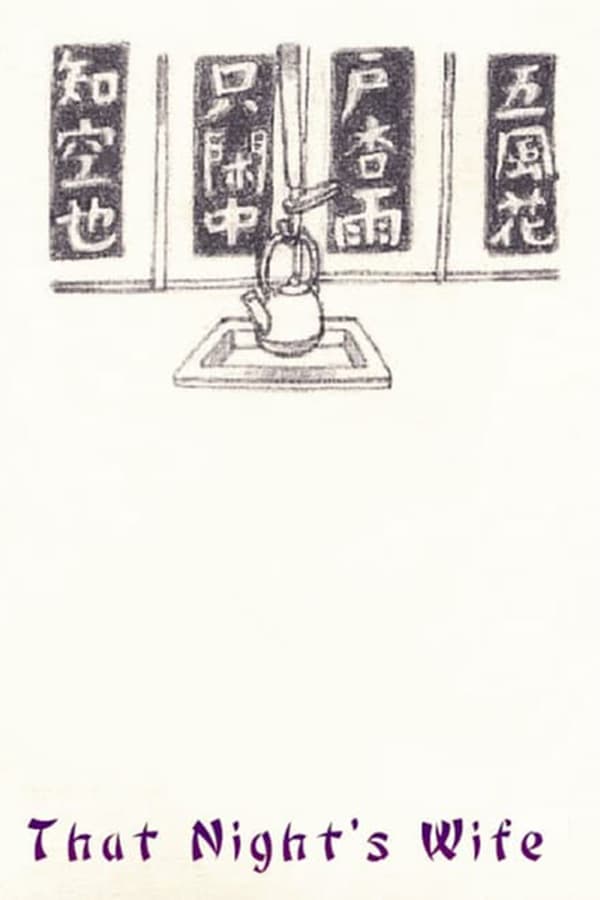
That Night’s Wife isn’t just a good silent film, it’s a good film, period. I guess you’d call it a “crime drama,” though outside of the first 15 minutes, it’s light on the former and heavy on the latter. It starts with a man named Shuji pulling off a brazen nighttime robbery. With cops hot in pursuit, he hides in a phone booth to make a call, and thus we find out the reason for his desperation. His wife is home tending their very ill little girl, and Shuji has called the doctor to ask how the girl was doing today. Shuji is afraid to return home with the cops on this tail, and tells the doctor that he might stay away tonight. In all seriousness, the doctor responds that Shuji better be there tonight. These ominous words get Shuji to relent, and he takes a car to his apartment. Unfortunately for him, the car’s driver is a detective who’s been on the lookout for the robbery suspect. Detective Kagawa drops Shuji off, and then quietly follows him upstairs and inside. Shuji begs to be allowed to wait out the night to see his daughter through, and the detective only backs off when Shuji’s wife pulls a gun on him. The rest of the night goes from a tense standoff to a touching and heartfelt morning. This movie was great from the get-go. The opening scenes and robbery are as action packed as you get, full of suspense and thick tension, which make the tender moments that follow all the more enjoyable. ★★★½
Tokyo Chorus goes for a different genre, and is a comedy. It follows one young man through his ups and (mostly) downs. It begins when he’s in school, and his antics in the yard, much to the consternation of his teacher. A few years later, he’s working for an insurance company and looking forward to his yearly bonus, on which he already has plans to buy presents for his wife and two children. The day the bonuses come out though, a coworker is fired, and our hero wants to stand up to the boss over what is perceived as an unjust dismissal. This only leads to our main guy being fired too. Unable to find work and down on his luck, his family isn’t looking too good. At about this time, I honestly had the thought that this was a pretty decent film, but what did the first 20 minutes of schooling have to do with it? Ozu heard me from 90 years ago, and our guy runs into his old teacher, who now owns a business. If he can work for him in an admittedly poor job for just a little bit, the teacher promises to reach out to old friends in the Ministry of Education to find him a better job. The movie is funny in an old-timey way, which I know isn’t for everyone, but it also has many touching moments between our lead and his family, especially his wife and son, for whom he’d promised a bike when they had money. A pleasant enough picture for fans of silent film. ★★★

I Was Born, But… is another comedy, but like the previous film, it has a lot of heart too. It follows a family who has just moved, and the two young boys are having a hard time adapting to new kids in the area. They are picked on relentlessly, to the point that they don’t even want to go to school. The parents are good people, but unaware of the problem until the school calls to check in after awhile. Through all of this, the boys rely on the strength of their father, who is a good-natured and jolly guy, always able to raise their spirits. He’s their hero, but when they are faced with the truth that their father is only the center of their house, but is himself an employee of someone else (the father of one of their friends no less), they realize their father isn’t as powerful outside the house as he is inside it. There’s a very poignant moment when the kids and adults are all in one family’s house and watching home movies of the adults at work, and they see their dad goofing off in his usual way. The other adults and children all have a laugh at his expense, and it shakes the two brothers to their core. Though the adults know it was all in good fun, the children do not see it as such. These tender moments are the best parts of the picture. Realizing your dad, who may be the strongest figure you know, isn’t the center of the universe can be a blow to any young boy. ★★★½
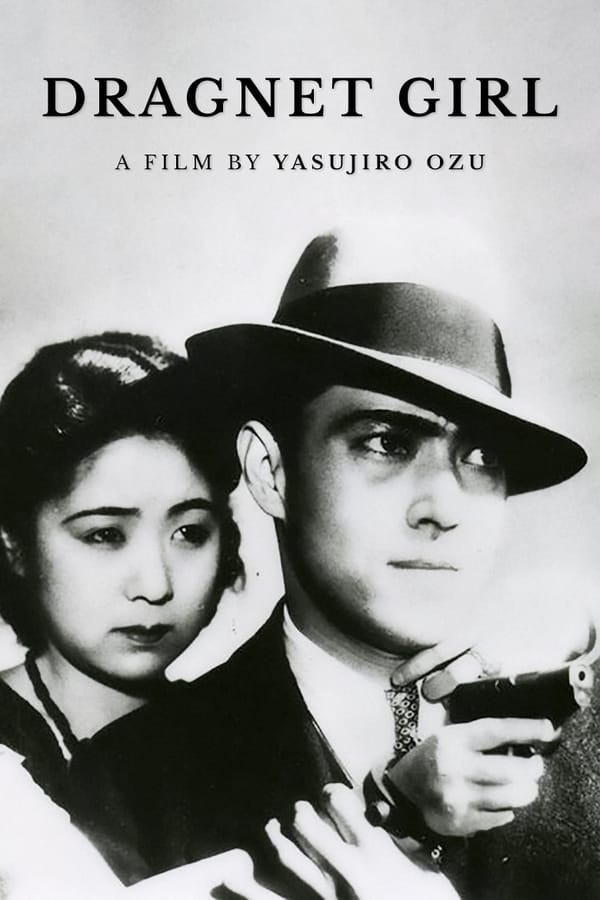
Dragnet Girl is the first of this batch of movies that I would recommend to anyone, even if you don’t generally like silent pictures. It is a great film about people wanting to be better than they are. Joji is a local hoodlum (see a running pattern in these movies?) whose girlfriend, Tokiko, works as a typist at a big firm. Joji is always looking for the next con game, and when Tokiko’s boss starts flirting with her, Joji thinks that can be their next score. Tokiko shoots the idea down, not wanting to lose her job. What does come along though is unexpected: a young high-schooler and boxing fanatic, who looks up to Joji as a community hero from his own boxing days, approaches Joji about joining his gang. What grabs Joji’s attention is this new guy’s sister, Kazuko. Suddenly Joji realizes he’d like a simpler life, with a good girl like Kazuko who isn’t always getting into trouble. Tokiko gets it in her head that she’ll confront Kazuko and warn her to stay away from her man, but she too starts to see the attraction of a quiet life. She begs Joji to give up their gangster life and go straight, but Joji decides they need to pull one more job to get some money to Kazuko’s brother, to keep them both out of trouble, and the target for their crime circles back to Tokiko’s boss. There’s a lot going on there, but it all plays out so beautifully in the film. It helps too that the version I watched had an amazing piano score, which makes all the difference on these silent films. The ending is a bit implausible, but an outstanding movie nonetheless. ★★★★★

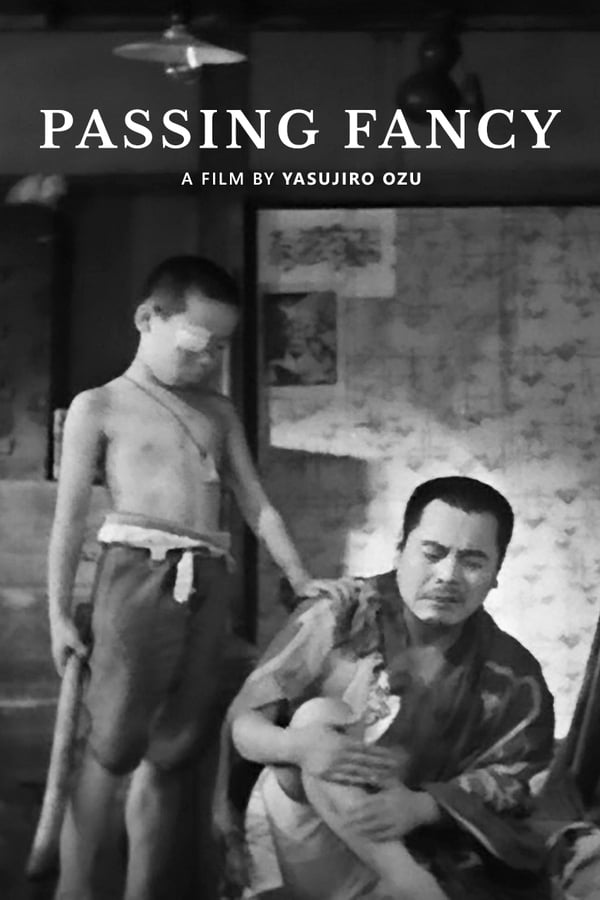
Saw some good films in this run, but unfortunately it ended on a dud. Passing Fancy is a comedy without laughs, and doesn’t reach the emotional highs of some of the previous pictures either. The “passing fancy” described is when a man, Kihachi, sees a homeless, pretty young woman, and is smitten. He gets her a job and place to stay at the local restaurant (run by a friend), and puts the moves on her. Unfortunately she has no returning feelings. Much of the film is devoted to this and to Kihachi’s friend Jiro, but all of those plot elements really never go anywhere. The crux of the film is Kihachi’s relationship with his son Tomio. Kihachi is a laborer who did not finish school, in fact cannot even read, but he has high hopes for Tomio and pushes him. Tomio is doing well in school, but is embarrassed over his poor father. I wish more time had been spent with this aspect instead of all the other silly stuff, but this narrative feels rushed and isn’t allowed to develop. It’s a letdown after the last film, but I look forward to more Ozu pictures in the future. ★

Quick takes on 5 films

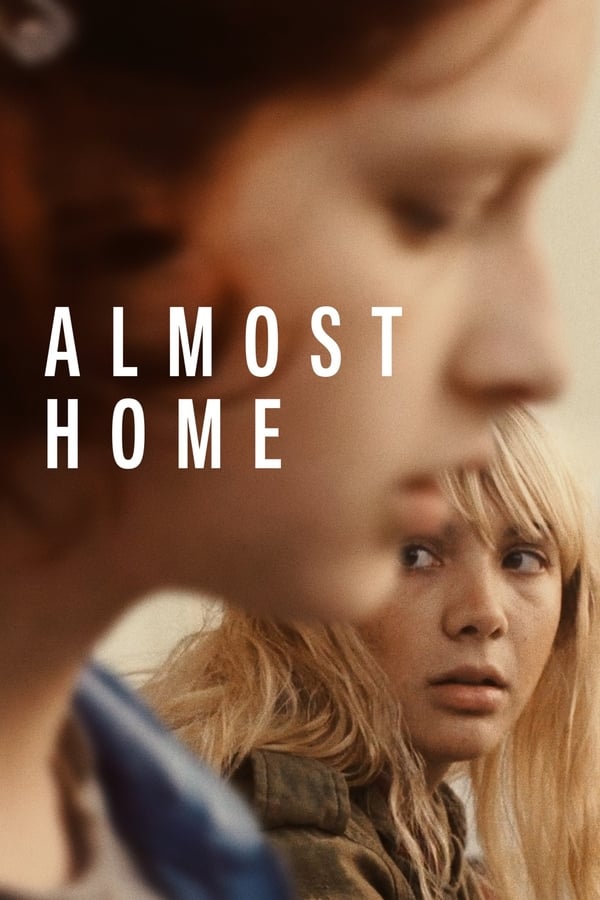
Almost Home is the best indie film that no one is talking about. Ellie is a 13 year old girl getting bullied outside of school when a homeless teenager, Tracy, intervenes and puts a stop to it. Friendless, Ellie latches on to Tracy and invites her to her house. Tracy combs the place and steals some cash and food, and in Ellie’s stepbrother’s room, sees pictures of a naked Ellie on his computer. Ellie admits the stepbrother made her do it, and Tracy allows Ellie to run away from home and buddy up with her on the streets. For awhile, things are fine, even good. Tracy teaches Ellie the ropes and how to be as safe as possible, and they hang out with other homeless teens. But life on the streets of LA can’t be good forever. More dangerous people enter their circle, and Tracy’s heroin addiction threatens Ellie’s safety as well. Yes, the film is cheesy and at times predictable, but there’s some really fine acting from the young leads, Hannah Marks and Rachel Zimmerman (though not always from the other supporting cast). It’s a wonderful, real film about the dangers faced by homeless teenagers, as well as a story about standing up for and being true to yourself. ★★★★

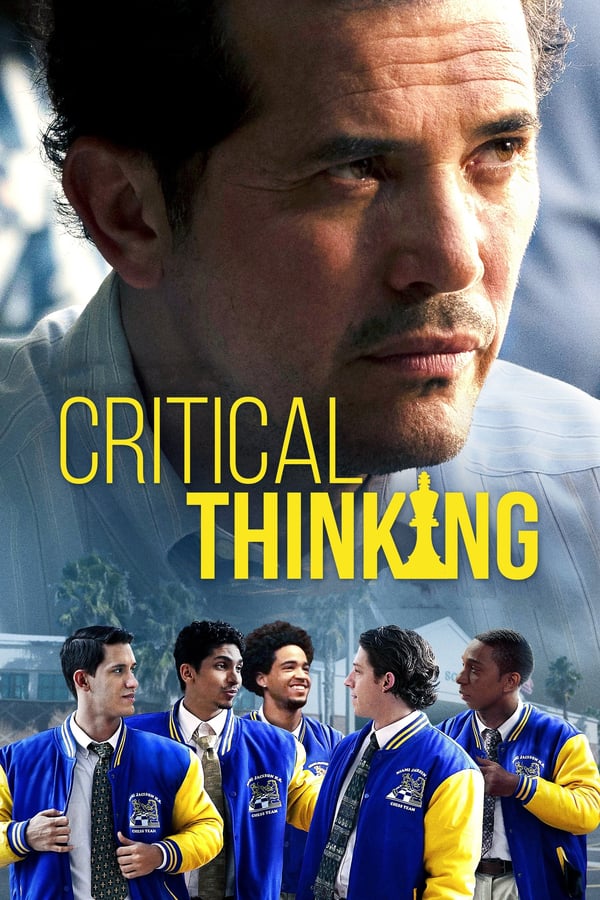
Critical Thinking is based-on-the-true-story of a high school teacher, Mario Martinez, teaching chess in the multi-cultural Miami Jackson public schools. The kids have a diverse background from white to black to latino, including some for whom English is not their first language. The chess program is actually very good thanks to Martinez’s drive to help these kids, who live in a rough neighborhood. As the school year goes along, and the chess team keeps winning and advancing to regionals, state, and finally nationals, they have to raise money along the way, as the school system is unable to provide funds for travel, food, etc. We also see some of the rough home environments that a few of the kids are dealing with outside of school. It’s about as exciting as a chess film can be (the great Searching for Bobby Fisher notwithstanding), but way too formulaic, with downright corny dialogue. If not for the constant F bombs, it would seem right out of Disney studios in the vein of Glory Road or McFarland USA. The picture stars and is  directed by John Leguizamo and, despite his long career, is his directorial debut. I’d say he still needs to polish those skills. ★★

House of Hummingbird is a Korean film about a young girl, 8th grader Eun-hee, as she finds her way in a sometimes harsh world. She goes to a good private school, but doesn’t have many friends amongst the rich kids, who look down on her and her working class parents. At home, she is constantly beat by her older brother, and the home simmers with angst over the not-so-hidden secret of her dad’s infidelity. Eun-hee has a boyfriend, who doesn’t stand up for her when his mom puts her down in public, and when she starts feeling attraction to a girl, she is rebuffed there too. Eun-hee isn’t a good student but does dream of going to school to study art, but it doesn’t look like she’s going to get the chance, as the family only has enough money to send one of their 3 children to college, and are going with the boy (an even worse student than Eun-hee). Through it all, she’s having to face medical problems, when she finds a lump in her neck and has to have surgery to get it removed. Eun-hee sees a glimmer of hope when she gets a new teacher, a woman who Eun-hee maybe has a school girl crush on too. This is the first film from director Kim Bora, and there are some really good moments, but it does suffer from one major flaw: the director thinks a slow pace equates to a profound film, but unfortunately this movie has only one of those qualities. Don’t get me wrong, it’s not a bad picture, just slow, and there’s not much of a payoff in the end. Fans of Asian art films may like it, but you should know what it is (and what it isn’t) before going in. ★★

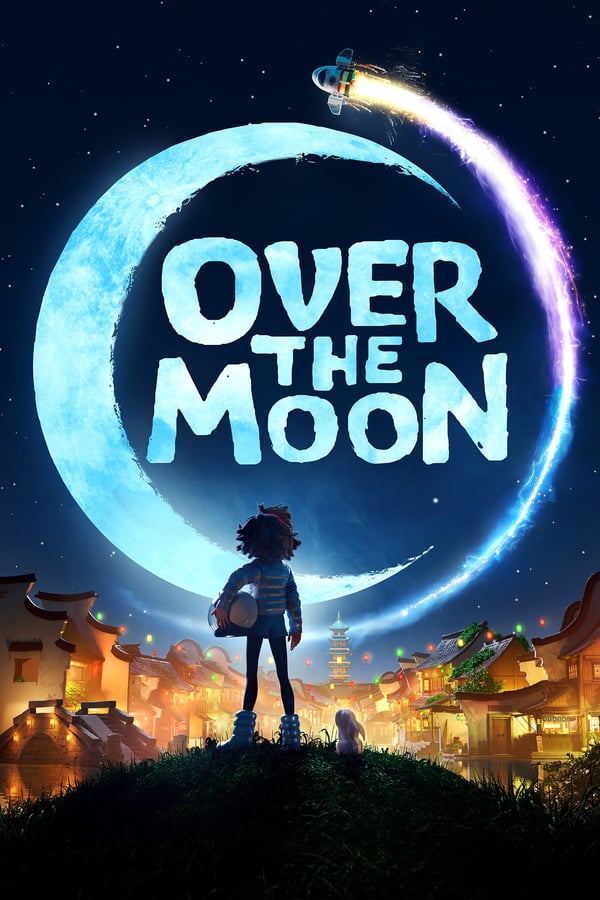
Over the Moon is a beautiful film, gorgeously animated, and a total bore. Director Glen Keane is a former animator with Disney, and it shows, as the film looks great, but that’s all it has going for it. Fei Fei is raised on stories of the moon goddess from her mother, who dies when Fei Fei is still a little girl. A few years later, when her dad has found a new love and is looking to get married, Fei Fei feels he isn’t respecting the memories of her mom, and that he has forgotten her. Fei Fei devises a plan to build a rocket ship and travel to the moon, to prove that the stories her mom used to tell of the goddess are real, in hopes of reminding her dad of what they shared. She is able to get there, along with a stowaway (her soon-to-be stepbrother), and finds the goddess is indeed real, though maybe not what she was expecting. And… that’s as far as I got. I wanted to like the film, because it is a beauty to watch, but the plot is a rehashed story we’ve all seen a million times, and the songs are no where near the catchy, hummable quality that you can expect from director Keane’s former bosses. A single star for the eye candy. ★

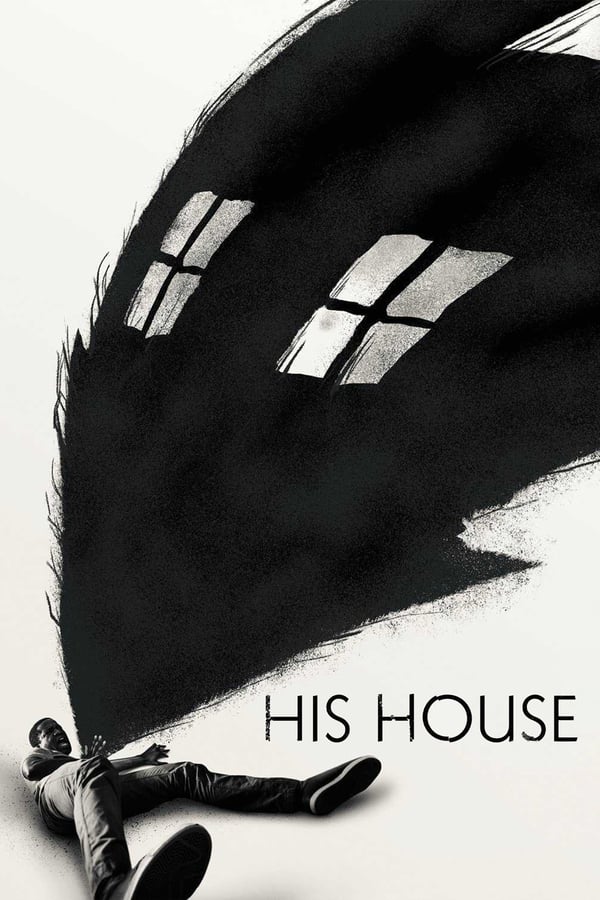
I’m not much into horror films. If you’ve followed my blog for awhile, you know I rarely write about a scary movie. Ones I do enjoy have more that just frights, but some kind of human story in the middle. One such revelation is His House, from new director Remi Weekes. This one is a good one, about 2 Sudanese refugees granted temporary asylum in the UK. After surviving the perilous boat trip to flee their country, a voyage that saw them lose their daughter, Bol and Rial now have a second chance. Until their formal plea can be heard, the government gives them a ramshackle apartment in London. Immediately upon moving in, that first night in fact, Bol starts hearing sinister sounds in the wall, and both begin to see visions of terribly maimed beings, as well as occasional visits from their dead daughter. These visions make Rial think of a story she heard as a little girl, which she relates to her husband. She thinks they are being haunted by an evil spirit called an abeth, which once haunted a neighbor of hers in Sudan. The abeth came when the neighbor had stolen, and will now continue to haunt them until they “repay their debt.” Bol vehemently denies that they owe anyone anything, and the viewer doesn’t know the debt to which Rial refers until later in the film. As the spirit and other evil entities get more aggressive, the deadly tension continues to build until the fateful climax. This is more than your typical spooky story though. While the jump scares do get a little cliche after awhile, there’s a reason this abeth has chosen this couple, and the revelation, when it comes, hits you right in the face. A very nicely done thriller, with some frightening scenes that will stick with you. ★★★½

Quick takes on 5 Kurosawa films

I’ve seen quite a few of acclaimed Japanese director Akira Kurosawa’s films, from his earliest pictures to some of his biggest hits (and more). I just can’t get enough. Five more on the docket today, starting with 1948’s Drunken Angel. This one is considered his first major work, perhaps partly because it was the first to star Toshiro Mifune, one of Japan’s greatest actors of all time, in his breakout role (he would go on to make 15 more films with Kurosawa as well). Drunken Angel was released and takes place in the years after WWII, and its setting is in a poor area of a city next to a polluted stream. Mifune plays Matsunaga, a young and good looking thug who works for the local yakuza boss. Matsunaga is locally powerful and is used to getting his way, but his celebrity status has taken a toll on his body, from both drinking and womanizing. He’s also suffering from tuberculosis, and is advised by the local doctor to take it easy if he doesn’t want to die young. The doctor is the other main character in the film. Sanada (Kurosawa legend Takashi Shimura, another one of Japan’s greats) runs a small clinic catering to the poor, and while he does greatly care for those who may not be able to get treatment elsewhere, you realize he’s also there because he has a drinking problem of his own. Sanada senses a kindness under Matsunaga’s rough exterior, and wants to help him, but Matsunaga can’t seem to get out of his own way. Also under Sanada’s watchful eye is his assistant, who is the former girlfriend of Matsunaga’s former boss, before he went to jail. Now getting out of the clink, Okada seeks his past love, and Matsunaga must decide on his definition of honor. Really good film, showing a young Mifune coming into his own, and Kurosawa really honing his craft. Interesting to read how Kurosawa snuck some stuff past the USA censors while Japan was still under occupation too. ★★★½

Stray Dog was released the next year, in 1949, and brings back the same 2 stars. This time, Mifune plays Murakami, a young cop who gets, of all things, his gun stolen during a ride on a crowded public bus. While awaiting the inevitable punishment, he goes on a quest to try to hunt down who took it. He gets a good lead, but being a bit inexperienced on the ways of the streets, he teams up with an older detective, Sato (Shimura), who knows all the street dwellers and their routines. When the gun is used in a robbery, confirmed so by forensics matching the bullet to a victim shot in the arm, Murakami is wracked with guilt. He becomes even more driven when it is used again, and this time, there’s a fatality. Knowing there are still 5 bullets in the gun, it’s a race against time to find the culprit before his stolen money runs out, and he robs and kills again. Like Drunken Angel, this film examines the seedy underworld of Japan in the post-war environment. It also asks the age old question that is so often a source of controversy in my own country: do guns kill people or do people kill people? When Murakami is devastated at the murder scene, he cries out that his gun did this. Sato tries to sooth him, telling him that the gun didn’t kill, the bad guy did. The final 20 minutes or so, when the cops are right on the villain’s heels, is some high tension theater, and the interplay between 2 of Japan’s finest actors of all time is must-see. Kurosawa has stated that he was inspired by Dassin’s The Naked City, another classic crime procedural film that I really enjoyed. ★★★★

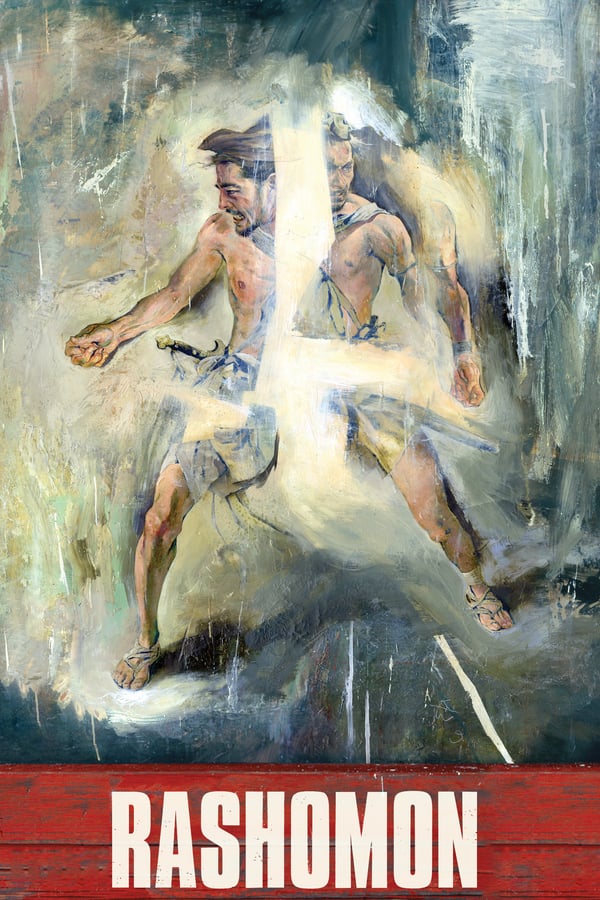
Rashomon has become one of Kurosawa’s most famous films, and it is one of his most thought-provoking. It begins with a man seeking refuge from a downpour in a broken down temple. He finds there a woodcutter and priest, who look shaken from a recent experience. They admit they’ve just been witnesses to a tragedy that neither can forget, and they begin to weave their tale. It tells what should be a straight-forward, tragic story about a woman raped and her husband murdered, as recounted by witnesses and the guilty killer, but as we learn, nothing is as straight-forward as it should be. Each person tells a different version of what happened. There’s the woodcutter, who initially found the body of the samurai husband, the bandit who committed the rape and murder, the widow/victim, and even the slaughtered man, with his side of the story told through a medium. Each version varies greatly from each other, and the viewer is shown the depths a person will go to for self preservation, or even just to save face in their own eyes. The wife wants to stress how she was a victim, the bandit wants to portray himself as a brave warrior caught up in emotion, etc. Even the priest’s faith is shaken, as he sees the darkness of humanity. All the parts of a great film are here: gripping story, amazing acting, a swelling and emotional soundtrack, and the lighting and cinematography are top notch. At its conclusion, I wanted to watch it again to see it all play out from the beginning! ★★★★½

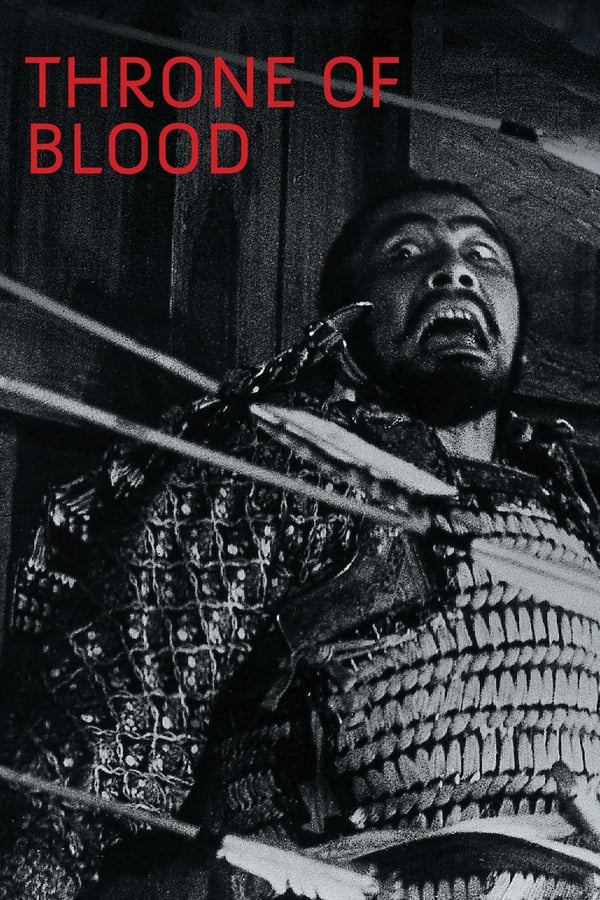
Throne of Blood is Kurosawa’s version of the classic Shakespeare play Macbeth, told inside a feudal Japan setting. Mifune plays the Macbeth role, Washizu. Washizu and his friend Miki have just squashed a rebellion and are returning to Lord Tsuzuki when they get the famous prophecy, this time from a spirit of the wood instead of 3 witches. Washizu’s eyes light up at the chances that he will become lord in Tsuzuki’s place, but it takes his wife Asaji’s (Lady Macbeth) nudging to get him to kill Tsuzuki, after she drugs the guards. Once in power, Washizu begins to become more and more paranoid of others trying to usurp him, going so far as to kill Miki, which sets off a turn of events leading to open rebellion. This film was lauded for its style and feel, and while there are some fantastic visuals (when Washizu kills the assassin who took down Miki for him is particularly startling), I was honestly a bit bored through much of the picture. I’m not a purist, so the liberties taken with the Macbeth story don’t bother me at all, but it’s been done better (I’m looking at you Polanski). And the character development is really poor, which is odd for a Kurosawa film. I don’t feel like I got to know anyone involved, even Washizu. A rare let down. ★½

Red Beard returns to form. “Red Beard” is Dr Niide (Mifune again), head doctor of a clinic which caters to the poor. Yasumoto is a young doctor who’s just graduated from med school. He’s been sent to the clinic for what he thinks is a quick session to share ideas, but once there, he finds that he’s been assigned to work at the clinic. Yasumoto wanted a stepping stone to become the shogun’s personal physician, and he sees the clinic as a dead end, so he’s incensed. At first, Yasumoto refuses to change into the doctor’s clothes or help with patients. Niide gradually brings him around, by showing him some of the tragedies the poor face, and how the clinic is the only place they can go for help. After hearing a couple patients’ touching stories, Yasumoto is assigned to help a particularly tough case. Otoyo is a 12-year-old girl who has never had a moment of joy in her life. She’s been beaten and derided, and is about to start her new life in a brothel when Niide rescues her. He brings her to the clinic and giver her over to Yasumoto. The two come to life slowly by coming to trust each other. This is a 3 hour film, but it doesn’t feel like it. It’s a touching, heartwarming (and heartbreaking) picture, a lovely film about the human connection from person to person. If the ending is a little too rosy, I can look past that for the warm fuzzies I got watching it. This was the last collaboration of Mifune with Kurosawa, as egos got in the way and the two had a falling out afterwards. ★★★★

Quick takes on 5 Clouzot films

A couple years ago I watched Diabolique, an acclaimed film from French director Henri-Georges Clouzot. I loved it, and have been wanting to go back and watch more of his stuff. Finally getting that done!

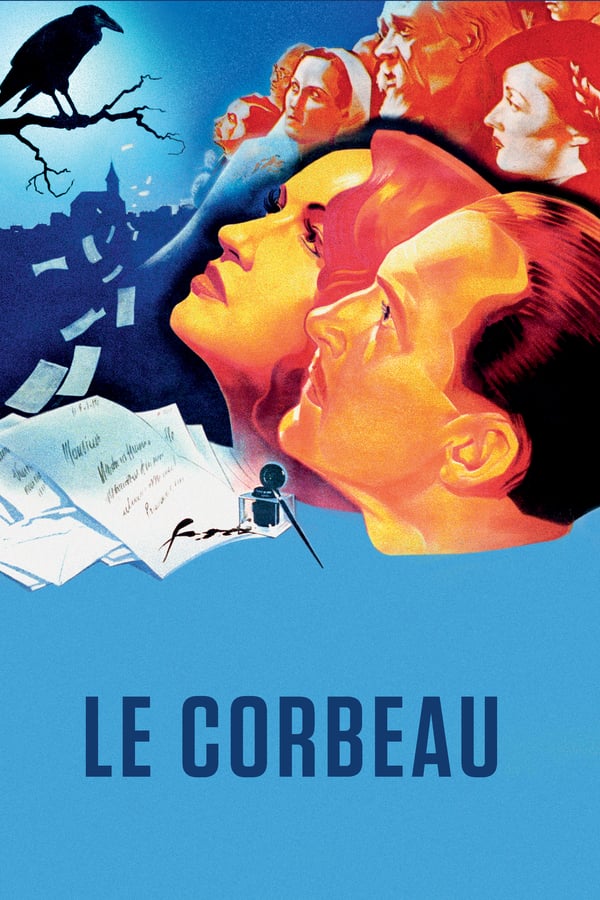
Le Corbeau (“The Raven”) was released in 1943 during the German occupation. It is about a little town being plagued by an anonymous poison pen letter writer, someone with a grudge against a doctor in town. The letters, signed “le corbeau,” begin by accusing the doctor Germain with performing illegal abortions and with having an affair with Laura, wife to an elderly psychiatrist at the same hospital where Germain works. The viewer knows the accusations seem true, and as letters start going out to more residents, pointing out sins and misdeeds for all the public to discover, they all share the same demand: cast Germain out of town, and the letters will stop. Everyone has a guilty secret, including a new love affair with Germain and the town slut, Denise. At first the prime suspect is Laura’s sister, a nurse named Marie Corbin, and the town vilifies her, to the point that she is arrested, but the letters continue, so the townsfolk realize the real Raven is still out there. It’s a mystery with a definite noir-like feel, complete with the femme fatale character of Denise. Really good, gripping story, with a surprising and shocking ending. With its not-so-subtle attack on the French townsfolk as well as informants and the “looking the other way” by the church in the film, the picture was not so popular with its own French people at the time. It was smeared by the Vichy government, the French Resistance, and the Catholic Church, and later banned after the liberation of France. The film was then suppressed and rarely seen until the 1960’s. ★★★★

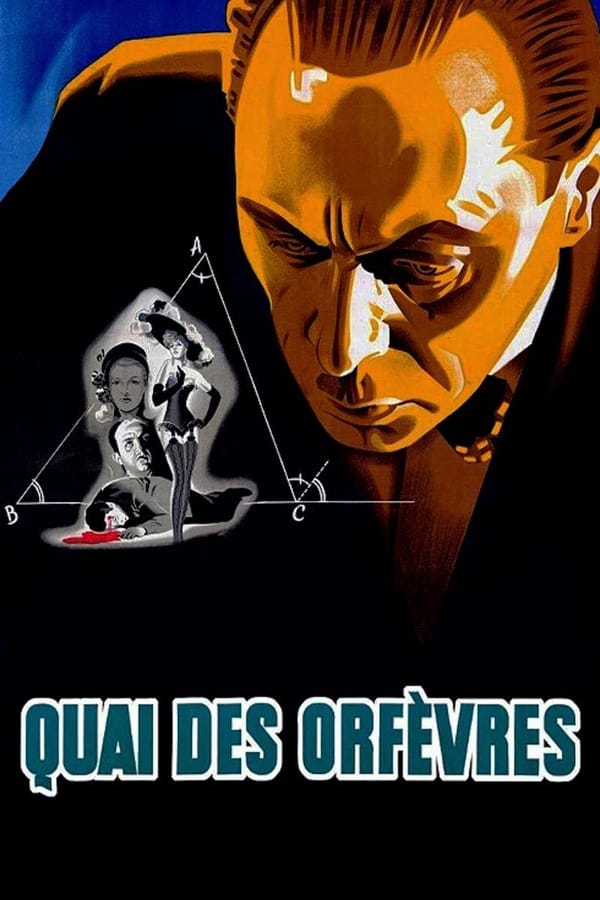
Doing films for German-owned Continental Films during the occupation got Clouzot blacklisted until 1947. His first film after coming back was Quai des Orfèvres (“The Goldsmiths’ Quay,” sort of like Paris’s Scotland Yard). It’s a crime movie but not really a mystery, more like a police procedure kind of film. Maurice is a pianist and accompanist to his wife Marguerite, aka Jenny Lamour. Jenny is a sexpot with a nicely trained voice, and while she and Maurice love each other deeply, she knows how to use her looks to get attention, and has dreams of being a star. Jenny has grabbed the eye of the wealthy Brignon, a lecher with cash to burn, and she hopes to use him to further her career. Maurice becomes aware of Brignon, and goes to confront him at a club, roughing him up a bit and loudly declaring that if he went near his wife again, he’d kill him. When Jenny meets Brignon at his home one night, things go wrong, and Brignon ends up dead. Unfortunately for Maurice, he’d decided to act on his threat that night, and went to Brignon’s house, only to find him dead already. Maurice had tried to set up an alibi by going to his place of work, a theater, that evening, but plenty of holes in his story are there for detective Antoine to poke through. The viewer knows that Maurice didn’t kill Brignon, but Antoine doesn’t, and spends the film gathering witnesses to take Maurice down. Most of the film is really great, with some dark noir moments (this is definitely a film noir through and through), and nothing controversial to get Clouzot in trouble again. Jenny drips sex in every word and movement, but you don’t fault her for trying to get ahead in life while still staying (technically) faithful to her husband. In fact, there isn’t a “bad” guy in the film. We like Jenny, we like Maurice, we even like the detective trying to take them down. The end isn’t quite as thrilling as the rest, seemed like a bit of cop out after all the great tension of the film, but still a good ride. ★★★½

Manon is so ridiculously trite and shallow, I almost don’t believe it is from the same director as the above films. The film begins with a young French couple found hiding on a transport ship. The stowaways beg to be let go free, but the captain realizes the man, Robert, is wanted for murder, so he radios ahead that he’ll be dropped off at the next port. To pass the time, Robert and his girl, Manon, share their story. They met when Robert was fighting with the French Resistance during WWII, and Manon was being attacked by her fellow French citizens. She was charged with cavorting with Germans and the town wanted to shave her head and cast her out. Robert fell for her immediately and believed her innocent, and saved her. She didn’t turn out to be the angel that he thought though, and regularly prostituted herself for money while Robert tried to work hard to earn money for them after the war. When confronted, she always begged him back, saying she couldn’t help herself, she just couldn’t live poor and needed to have the nicer things in life. Robert kept swearing her off, but somehow they always ended up together again. Some of the dialogue in this film is truly awful; the whole love-at-first-sight scene in war-torn France when they meet is absurdly cringeworthy. And the feeling of the film for the last 20 minutes changes completely from what came before. There’s some really nice camera work, and the production values are top notch, which makes me have to believe that someone just threw a blank check at Clouzot to get him to direct this mess. ★½

The Wages of Fear, from 1953, is stunning. It’s labeled a thriller, but that’s like calling Star Wars a space movie. It takes place in a tiny South American town, where people of all nationalities have found themselves unable to leave. The town is isolated and the only way in or out is by plane, but the cost of the ride is exorbitant, and the only work around is odd jobs here and there, just enough to eat off of. The sole major employer is the American owned Southern Oil Company, but outside of their own Americans brought in, they only hire locals for the dangerous jobs that no one else wants. Frenchman Mario, German Bimba, and Italian Luigi have been in the area for awhile when another Frenchman, Jo, finds himself there. Jo likes to live large, but he doesn’t have any more money than anyone else, and his uppity nature rubs Luigi the wrong way from the get-go. The two come to blows one evening, with Jo coming out on top, and calling Luigi a coward. This leads into the heart of the film. A big paying job opens up when one of the oil fields catches fire. The oil company wants to hire 4 people, 2 pairs, to drive big trucks of nitroglycerine to the field, to be used in explosions to seal the oil well and put out the fire. An extremely dangerous trip, the company is offering $2000 per person, with the full expectation that at least one of the trucks will get itself blown up before getting to the finish. Jo and Mario team up for one truck, Bimba and Luigi for the other. On the ride, we see who really has the guts among those four. This is probably the most taut film I’ve ever seen. I can’t tell you how many times I caught myself holding my breath, or gasping (loudly) aloud, or fidgeting nervously, as the trucks careen through rugged terrain and impossible obstacles. Edge-of-your-seat thrills for a solid hour plus. I was exhausted (in a good way) by the end, and am happy I escaped without a heart attack. ★★★★★

La vérité (“The Truth”) was, I think, way ahead of its time for the subject matter. It is a drama about a woman, Dominique (60s sex symbol Brigitte Bardot), on trial for murdering her former lover Gilbert (Sami Frey). The film takes place in the courtroom, but is mostly told in flashbacks, leading up to the killing. Setting the tone, we see that Dominique was always a wild child, clashing with her parents and her goody-two-shoes sister Annie, to the point that Dominique is kicked out of the house and moves in with Annie for a time, who is pursuing a college degree in music. There, Annie meets a conductor-in-training, Gilbert. Gilbert visits Annie at her apartment and meets Dominique, and like all men, is immediately lustful, which Dominique encourages. However, whereas usually she just sleeps with the guy, she teases Gilbert, initially out of spite with her sister, who shortly thereafter kicks Dominique out. When Dominique finally gives in and sleeps with Gilbert, she realizes that she does really care for him, but she can’t help her own nature. While dating him, she continues to flirt and see other guys. This drives Gilbert insane with jealousy, until he can take no more and finally quits her and reconnects with Annie. Dominique now realizes what she has lost, which leads to the fateful crime. At trial, Dominique doesn’t deny the murder, but tries to argue that it was a crime of passion, and that she is sorry for the incident, and even tried to commit suicide afterwards. The prosecution of course uses her history against her to paint her in a bad light. These days we have words like slut-shaming, and even to this day we tend to look poorly on girls who flirt around, while dismissing men who do the same. This film points out that glaring disparity. As a courtroom drama, it is a bit lacking, though it does have recognizable faces from other Clouzot masterpieces (Charles Vanel and Paul Meurisse, to name a couple). As a character study of Dominique, it is fantastic. Being a self professed nerd myself, I related more to Annie and personally thought Dominique deserved some of what she got, but the movie does an amazing job of showing you the other side of the coin. ★★★★