Quick takes on Sublet and other films

I’ve been watching the Marvel movies in this series since the beginning, a big die-hard fan, and this is the first time in awhile that I’ve felt a bit let down. Black Widow takes place before after Captain America: Civil War, when Natasha Romanov is in hiding due the Sokovia Accords. She receives a package from her long-lost “sister” (fellow spy, long story), Yelena Belova, with a serum which negates the mind controlling effects of the program that trained both Natasha and Yelena as children. Natasha thought the kingpin of the program, Dreykov, has been long dead, but learns that he survived her attack on him many years ago. With help from former Soviet spies Alexei Shostakov (Russia’s super soldier to counter the USA’s Captain America) and Melina Vostokoff, who raised Natasha and Yelena when they were a fake family in America in the 90s, the team goes after Dreykov to stop his awful experiments on girls and finally end his program. Lots of action, which doesn’t disappoint, but there are some gaping holes in the plot, and I couldn’t get away from some really terrible deus ex machina events. Still, it’s good that Scarlett Johansson finally got her movie (all the other boys did long ago), and with her character dead in the current timeline, I think the Black Widow character is in good hands should Marvel have Yelena (the fantastic Florence Pugh, from Fighting with My Family and Midsommar) carry it forward. ★★★½
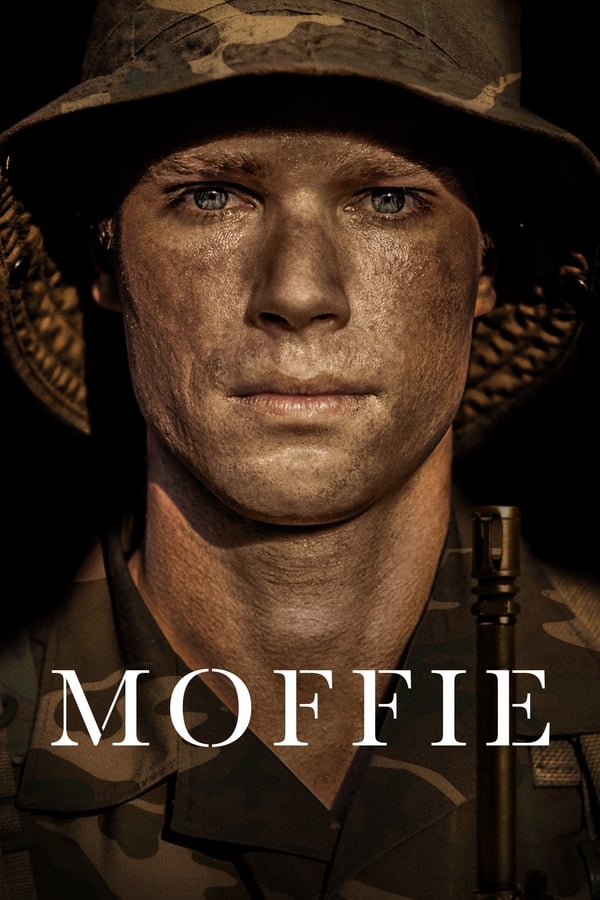
Moffie is about a young man, Nicholas, who has to join the army in compulsory service in the early 1980s in South Africa. The nation, under apartheid segregation and going into a war with the neighboring communist country of Angola, is having all men 16 and older serve 2 years in the military. Nicholas is of English descent, but that doesn’t make him exempt. As an added complication, Nicholas is gay, a fact he guards from even his family, as homosexually is illegal in South Africa. Most of the movie is about Nicholas’s experiences in boot camp, training for battle. The new recruits are demeaned and treated horribly by their superiors, in acts I consider far over the line of “toughening them up.” Hard to watch, but that’s really all this film brings to the table. Outside of a secret kiss Nicholas shares with a fellow soldier one night, and a flashback to when he was caught peaking at other boys in the showers of a public pool when he was a teen, the movie doesn’t delve at all into the inner turmoil Nicholas is going through. As such, the movie is more a war of attrition for the viewer to get through, than any kind of enjoyable experience. ★★

I used to make jokes about comedic films geared towards grandparents, but having recently become a grandpa myself, I guess I need to think of a new analogy. Whatever it will be, The Paper Tigers is one of those movies. Full of lame humor that only my grandma would laugh at, it is about 3 friends who studied kung fu as kids and teens, under the tutelage of a master who was strict yet loving with them. The trio were the shit in their neighborhood as kids, but gave up kung fu years ago and now, 30 years later, both their bodies and their minds have gotten soft. However, they come together again to investigate the murder of their former master. There’s a few chuckles to be had as they pull muscles and try to hold onto their toupees against younger, fitter opponents, but on a whole, the movie is only mildly entertaining. I watched it through just to see how it ended. ★★

When Hitler Stole Pink Rabbit is a wonderful family movie based on the book of the same name, a semi-autobiographical children’s book, by Judith Kerr. In the movie, the Kempers are a non-practicing Jewish family living in Berlin in the early 1930s. The father, Arthur, is a journalist and theater critic, and he’s been very outspoken against Hitler and his rise to power. With elections approaching where it is looking increasingly like Hitler’s party will gain control of the government, Arthur and wis wife Dorothea decide it is time to leave Germany. They take their kids, Anna and Max, and flee to Switzerland. Unfortunately once there, Arthur is unable to get work, as the country is hesitant to support a man who has been so vocal against Hitler, since they wish to remain neutral. After a short time there, the Kemper family settles in Paris. Anna and Max do not speak the language, and money continues to get more and more tight. Through all of their struggles though, Arthur and Dorothea try to keep the kids’ spirits high. They know they are poor now, but Anna tries to treat the whole thing as an adventure. The book was groundbreaking in its depiction of emigrants/refugees fleeing Germany before World War II, all from a child’s (Anna’s) viewpoint, and has been a huge success since first published in 1971. The movie is moving in its childlike view of the wide world during a harsh period, and you can’t help but root for the delightful Anna and her family. Very lovely family film (if your kids can handle reading the German subtitles). ★★★½

Sublet is about an American journalist, Michael, who is visiting Tel Aviv to write a story for the New York Times. He sublets an apartment there for his 5 day trip, and meets Tomer, a student who is renting out the apartment because he needs the money. Michael is an older gay man, in a longterm relationship back home, but you get the impression that his relationship is on the rocks (the cause of which is explained later). Tomer is also gay, but much younger, and the gap in years leads to a much different outlook on life. For example, when Tomer’s friend talks about moving to Berlin, Michael scoffs, wondering how they could live in country where so many atrocities happened to their people (Jews). Tomer laughs that off as ancient history, and says Berlin is the happening place for the young generation. Tomer also teases Michael for being in a committed relationship when there are so many other partners and experiences out there to enjoy. The movie isn’t just a big condescension on older people though; by the end Tomer can learn a two or thing from a man who’s already lived through the ups and downs of life. Nice enough movie, even if it’s been done before. This movie doesn’t break any new ground, but it’s a good reminder to enjoy life as it comes. ★★★


Quick takes on The Hero and other Satyajit Ray films

Charulata (aka The Lonely Wife) brings back Madhabi Mukherjee, who I loved in Ray’s The Big City and Coward. She plays Charu, the wife of a wealthy newspaper publisher named Bhupati. Bhupati’s biggest love is his paper, leaving Charu to languish at home, bored out of her mind. Knowing he has neglected her, Bhupati invites family to come stay with them, in hopes of cheering Charu up. His brother, with his vapid wife, do nothing to liven the intelligent and thoughtful Charu, but she does take an instant liking to Bhupati’s younger cousin Amal. Amal is much closer in age to the young and beautiful Charu than her older husband, and he’s also into the arts, wanting to become a writer, especially of poetry. Charu also enjoys writing, and a bond develops between these two. The big twist in this film, and there is one, doesn’t come from the leads, but out of left field. The ending is not what you’d expect, but in a good way. Wonderful film, with a shining Mukherjee again in the lead. ★★★★½

Nayak (The Hero) is about a famous actor, Arindam, who must take a passenger train overnight to Delhi. Instantly recognizable, the people on the train treat him with everything from reverence (his fans) to contempt (an older man, due to Arindam’s drinking and loose lifestyle). Arindam takes it all with an air of confidence, and while pleasant to others, he does come off a bit egotistic. He meets his match in a young woman named Aditi, an editor for a modern women’s magazine. Aditi isn’t star-crossed, in fact, she seems to have a very slight opinion of Arindam’s career and lifestyle, but she does see an opportunity for an interview to help boost her magazine’s readership. At first, Arindam tries to give the stock responses to her questions, but Aditi digs for more, wanting more than just the kind of fluff interview Arindam has already given a million times. Through the course of the film, told in flashbacks and even a couple dreams, we learn about Arindam’s upbringing and what makes him tick, and that Arindam’s cockiness is really just a front. He fears failure as much as the next guy, maybe even more so, knowing that 3 film flops in a row would kill his career for good. Arindam survives intense anxiety by drinking, and puts on a facade whenever he’s in the public eye, which is nearly always. Though it doesn’t start out as such, by the end, it comes together as a heartfelt film, exactly what you’d expect from Ray, who seems so good and looking at the inner workings of humanity. ★★★★

Ghare Baire (The Home and the World) takes a look at the chaotic times in India in the early 20th century. The main focus of the film is Bimala, the beautiful bride of a local maharaja, Nickilesh. There’s been a brewing animosity between Hindu and Muslim Indians, and Nickilesh has been resistant to calls for boycotting foreign imports in favor of buying goods made in India. He does this in order to look out for the poor people who live on this land, mostly Muslims and the targets of racism by the Hindu Indians; Nickilesh knows that the imports from neighboring countries are cheaper than the homegrown equivalents, and the poor cannot afford to make that change. Nickilesh is being persuaded to change his views by an old friend, Sandip. Sandip is a vocal leader of the boycotters, called the Swadeshi movement. Against this backdrop comes Bimala. Bimala is a traditional woman, and in fact, since her marriage to Nickilesh, she has not left the inner apartments of their compound. She was married to him as a girl, and except for some servants, she has never even seen another man. Nickilesh is forward thinking, and pays to have Bimala taught by an English tutor, learning piano and western singing, etc. He coaxes her out into the world, and introduces her to Sandip. Big mistake. Bimala is swept off her feet by the charismatic Sandip, to potentially devastating effect before the end. As far as I can recall, this was the first color film of Ray’s that I’d seen, and I think his black and white pictures show better. The coloring is nice, but Ray’s stark black and white films really pop in my experience. That aside, the story is nice, though not unexpected, and I did enjoy the knot Nickilesh puts himself in. He wants to keep Bimala to himself, but knows that she must come to him on her own terms for her to truly choose him over Sandip. ★★★½

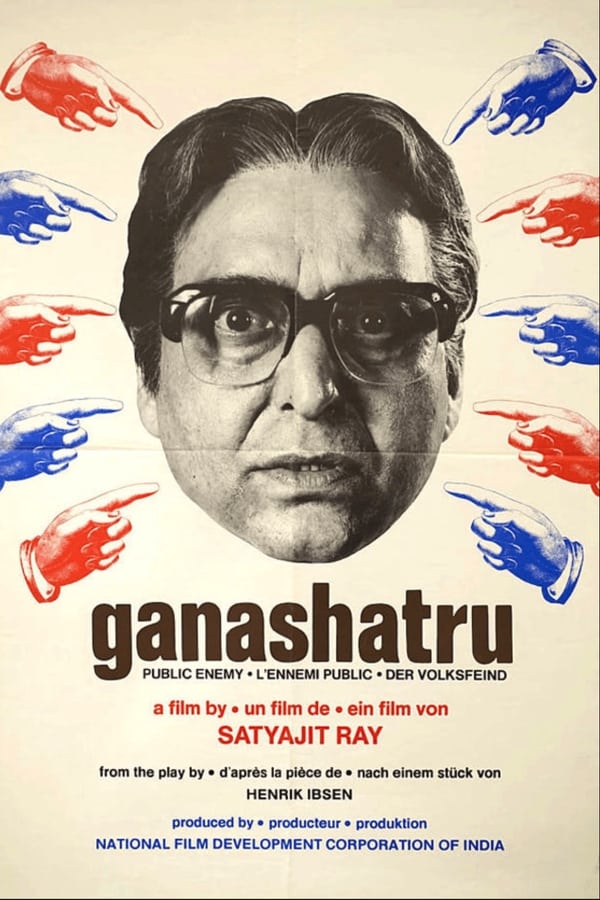
Ganashatru (An Enemy of the People) is the first real dud that I’ve seen from this director. It is about a doctor, Ashok Gupta, who finds that water being drawn in a populated area of the town of Chandipur is contaminated, leading to a rise in cases of jaundice among its inhabitants. He is able to narrow it down to water being drunk at the holy temple in town, which happens to be the town’s biggest attraction. The solution is to dig up the pipes under the temple and replace them, but the temple is not too old, and Gupta faces opposition from the local politicians, lead by none other that Gupta’s younger brother, who was a driving force in getting the temple built. The brother and others start a crusade to paint Gupta as anti-religious, and start to turn the townspeople against him. The whole thing is really nothing more than a bad tv movie. It’s a very simple plot, full of soap-opera like long takes and overly dramatic behaviors and exclamations. It’s hard to see any of Ray’s touch in this movie. Everyone has a bad day here and there. ★½

Agantuk (The Stranger) was Ray’s last film, released in 1991, a year before his death, and a more fitting final film there couldn’t be. A well-off family in Calcutta receives a letter from a man claiming to be Anila’s long-lost uncle. The uncle, Manomohan, left the family 35 years ago when Anila was just a small girl, and he never returned. The letter states that he is coming back, and Anila and her husband, Sudhindra, have to wonder why, after all this time. When Manomohan arrives, he regales the family with tales of his adventures, traveling the world and seeing sites and cultures all over. Sudhindra and Anila’s son, Satyaki, is particularly enamored with stories of the tribes of Africa and South America. Anila wants to believe that Manomohan is who he says he is, but Sudhindra is dubious. The family invites friends over to grill Manomohan over his stories, but the man is extremely intelligent and passes with flying colors. The “why” of his sudden arrival becomes clear when Anila realizes that her grandfather may have left him a large inheritance when he died 20 years ago, and perhaps Manomohan is now here to claim it. This revelation spurs Sudhindra’s suspicions. Is Manomohan really who he says he is, but more important maybe, does it really matter? A wonderful film about family love, and hidden within its conversations, the question of what makes a civilization, and are “cultured” people any better than “barbaric” tribes. As mentioned, this was Ray’s final film. He died in 1992, a month after accepting a lifetime achievement honorary Oscar award. ★★★★

  • TV series currently watching: The Night Of
  • Book currently reading: The Elfstones of Shannara by Terry Brooks

Quick takes on Shiva Baby and other films

Cruella is an origin story for the delightfully evil villain of the old 101 Dalmatians film. Even as a child, Cruella is always an outcast, and the film instantly gets the viewer to be on her side, which is much different than how she was portrayed in the old cartoon! When her mother dies, Cruella is left an orphan in London, and her only way to survive is to team up with a couple thieves. The film really picks up 10 years later, when she and the other child grifters are now young adults. Cruella has always wanted to be a fashion designer, and she finally gets a chance, only to end up working for an egotistical and demeaning fashion boss, the Baroness. When Cruella learns her family had a dark history with the Baroness, Cruella decides to give in to her darker side in order to bring the Baroness down. The movie itself is fairly average, with underwhelming direction (from normally reliable Craig Gillespie), but Emma Stone (Cruella) and Emma Thompson (the Baroness) are wonderful, and well worth the price of admission. Their performances alone bring a 2 1/2 star up to a solid 3 1/2. There are moments that may be a bit scary for younger kids (the movie deserves its PG-13 rating), but “young-at-heart” moviegoers will find plenty to like, especially if you grew up on the classic Disney cartoons. ★★★½

I’m breaking my movie-only rule, but again, only for a short miniseries. And I’ll just give you the setup from the first episode or so, and let you watch from there if you are interested (it’s only 7 episodes in length). Mare of Easttown stars the superb Kate Winslet as Mare, a detective living in a tiny town outside Philadelphia, the kind of town where everyone knows everyone. Mare has lived there all of her life, and is a bit of a local legend after sinking the winning basket to win the high school basketball state championship 25 years ago, the only thing of import that ever happened to Easttown. Though a detective and not a beat cop, the inhabitants all call Mare’s cell when something goes down, since they know her and she knows them. She’s mostly liked by everyone, even the criminals, except for one person: Dawn. Dawn was a member of that basketball team too, but the animosity comes because her daughter, Katie, has been missing for a year, and Dawn blames Mare for not finding her. Mare did (and continues to) try to find some clue, but Katie was involved in bad stuff and Mare fears her body is out rotting in some field and will never be found, obviously not what Dawn wants to hear. Into this scenario, another young girl is found murdered one morning. Erin was a teen mom and had some enemies, like her baby daddy’s new girl. Mare has to navigate this as well as personal issues, such as her ex-husband remarrying, her ex-daughter-in-law (from her son’s suicide) trying to get custody of her son (Mare’s grandson), and other things, all while trying to solve Erin’s murder. You’d be surprised at how many secrets can survive in a little town, although, if you’ve ever lived in one, maybe you won’t be. The series becomes a whole lot more than solving a single murder, and Kate Winslett is great as always. However, by the end, it had a few too many twists for my tastes. Seems like every episode brought a new suspect, and it got too gimmicky by the end. But strong acting and a solid first half of the series didn’t ruin it for me. ★★★

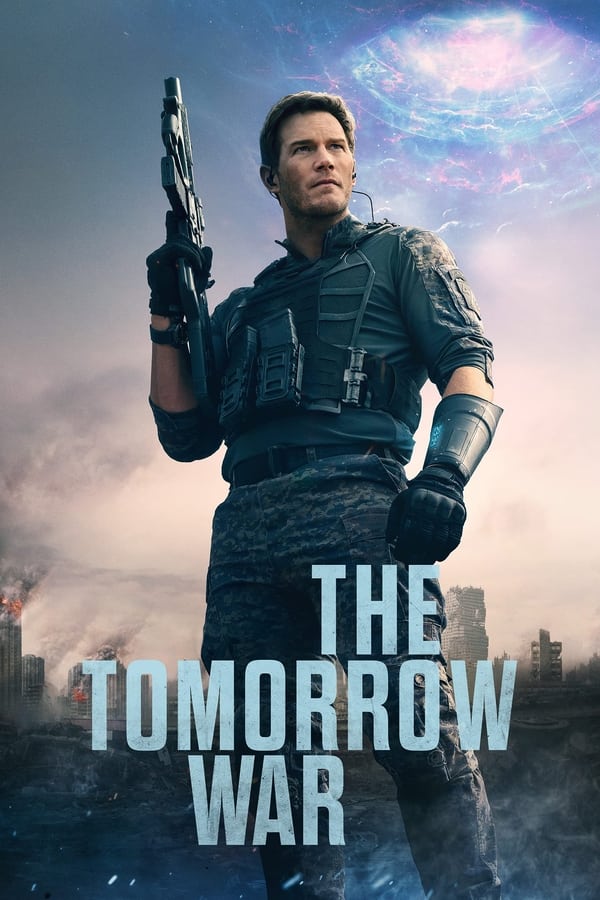
The Tomorrow War is a futuristic action film, starring Chris Pratt as a former soldier turned teacher, who’s been raising a family with a crisis hits the Earth. A military unit warps in from 30 years in the future, announcing that they are at war with an alien species, and are losing. They need soldiers from the present to zap to the future to keep the fight going. The limited time traveling technology hasn’t been perfected, so they can’t just go to a point before the invasion and stop it before it gets bad, they can only get to a certain moment in 2051, where their drafted soldiers fight for 7 days, and then, if they survive, they are sent back to the present. Pratt’s character, Dan, is drafted after a year or so, and sent off to the future to fight. Once there, he learns that they aren’t fighting to win, they are fighting to bide time until a virus can be found to kill the aliens when the invasion starts. Sounds great right?! For the most part, it’s not. It is a low budget hokey film hiding behind big budget special effects. Really bad dialogue, completely unbelievable (even for a sci fi film!), and it features every cliche in the genre. And even when they supposedly get what they needed, it drags on for another 30 minutes! 1 star for the movie itself, but another 1 1/2 for the action sequences (which are really the only reason to watch). ★★½

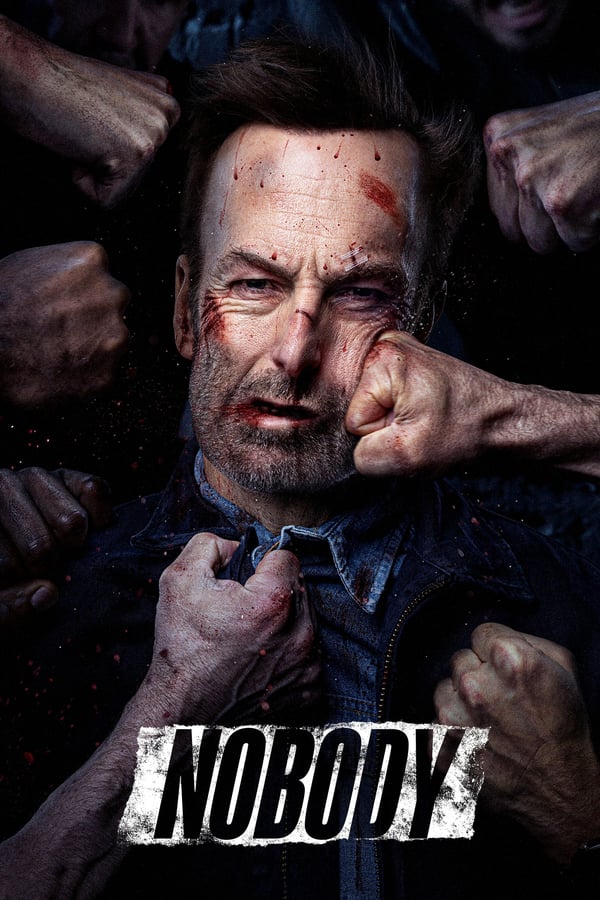
Hutch Mansell (Bob Odenkirk) is nobody: an average man with a boring job, a wife and two kids, who lives in a cookie cutter house on a cul-de-sac. That is, until his house is robbed one night by a couple amateurs. While he doesn’t stand up for his family that night, the event does awaken feelings that Hutch had buried deep down. Afterwards, on a city bus, Hutch stands in to protect a young woman being harassed by some thugs. He beats them all to within an inch of their lives. Unfortunately for Hutch, one of them was the younger brother of a Russian gangster, Yulian. Yulian sets out to get revenge, sending a whole slew of killers to Hutch’s house. Thankfully Hutch is much more than meets the eye, and he’s got some serious training in his past. As we learn more about who Hutch was before he settled down, we start to wonder if it isn’t the Russians who should be worried. If it sounds a lot like John Wick, it shouldn’t surprise you that Nobody has the same writer and producer. No offense to Keanu Reeves, because he’s got his schtick down cold and he’s good at it, but Bob Odenkirk has a lot more range as an actor, even if he doesn’t get to show it all here. It’s an outrageous over-the-top film, and like the John Wick films, the actions sequences are superb. There are a whole lot worse ways to kill 90 minutes, and any movie where Christopher Lloyd gets to be a badass on screen is worth checking out. ★★★½

Shiva Baby is a great little comedy, about a Jewish college student named Danielle, who’s life is anything but on track. The film begins with her having sex with a man named Max in his apartment. She leaves afterward (but not before getting some money out of him, which she claims she needs for school), attesting she has to meet a client. Really, she’s going to a shiva with her parents, who still pay for everything for her. At the shiva, Danielle runs into her ex-girlfriend Maya, who does have a career path lined out and is entering law school. Maya and Danielle were childhood friends before becoming romantic in high school, but have recently split, much to the relief of their parents, who believe the girls were just experimenting and now ready to find good Jewish men to marry. Guess who else shows up to the shiva? Good old Max, who is a former colleague of Danielle’s dad. The embarrassment doesn’t stop there, because it turns out Max is married to a beautiful woman (non-Jewish, oh the shame!) and has a baby in tow as well. All of this is a shock to Danielle of course, and the interplay between her and Max, and Danielle and Maya, is only half the fun. A very funny movie, which nails the modern Jewish family without resorting to stereotypes, Shiva Baby is an excellent comedy/drama, with even some suspense rolled in. ★★★★

  • TV series currently watching: Calls (season 1)
  • Book currently reading: The Elfstones of Shannara by Terry Brooks

Quick takes on Tokyo Twilight and other Ozu films

I’m still digging my way through celebrated Japanese director Yasujirō Ozu. Late last year I watched some of his earlier films, now I’m watching some of his last. (I’m still saving some of biggest hits; I always was one to save the best for last.) Early Spring came out in 1956, and is a quiet film about a white color worker named Sugiyama, or Sugi to his friends. He’s married to Masako, but they’ve been on the outs for awhile, though the viewer doesn’t know what caused the riff for quite a bit. Sugi doesn’t treat her great, taking her cooking and cleaning for granted, while he goes out at night after work to drink with his coworkers or friends from the war. In these late night haunts, he starts hanging around a girl from work, nicknamed Goldfish by the boys, because of her big eyes. Goldfish and Sugi begin an affair, and Masako, who knows her husband, suspects something immediately. There’s no big fireworks in this film, only a few little sparklers. The movie is mostly about the relationship between the married couple, and whether they can (or want to) survive the affair. Really intimate film, but honestly I couldn’t grab onto it as much as I should have. It’s a long movie at nearly 2 1/2 hours, and it felt like it. ★★

Ozu followed up with Tokyo Twilight the next year. This film mostly centers around a small family in busy Tokyo. Takako is the eldest daughter. She’s been unhappy in her marriage and has returned to her father’s, Shukichi, house with child in tow. Takako’s younger sister, Akiko, is still living at home while she attends college, and has been following a rebellious streak. Akiko has been hanging out in mahjong parlors and bars, following after her boyfriend Kenji. Shukichi’s wife, and the girls’ mother, is not in the picture, but she isn’t dead, and that is part of the mystery solved before the end. Akiko has been trying to hunt down Kenji, who has disappeared in the beginning of the film, and is avoiding her. We learn that Akiko has become pregnant, and is trying to find Kenji to see what she should do. This movie is definitely lacking the wholesome feel that often pervades Ozu’s pictures. Though still centered around the family, it is a much darker film, and I loved it. It pulls you into Akiko’s plight and all of the characters are intriguing in their own way. When the mother is revealed, and the part she plays in the finale, it is such a heart stopping moment (and not in a way you’d expect from Ozu!) that I was dumbstruck. ★★★½

Equinox Flower was Ozu’s first color film, released in 1958, and is much lighter in tone than Tokyo Twilight. It follows the Hirayama family, and particularly its patriarch, Wataru. Wataru is a successful businessman with a wife and two daughters. While his wife is getting anxious about seeing their eldest daughter, Setsuko, married off, Wataru seems to be in no rush. Setsuko is a modern woman, dressing in western clothes and working on her career. One of Wataru’s old classmates approaches him to act as an intermediary with his own daughter, Fumiko, who has left the household and is planning on marrying a man of her own choosing, against her father’s wishes. Wataru meets with Fumiko and sees that she is happy, and sides with her against his old friend. But when the same situation comes to his own family, with Setsuko deciding she wants to marry a man from her work, Wataru isn’t as accepting. It’s a cute little movie, with lots of comedy, in stark juxtaposition to the previous film. It shines a light on the changing traditions in Japan in the 1950s, as it continued to be influenced by western ideas and the abandoning of local customs. ★★★

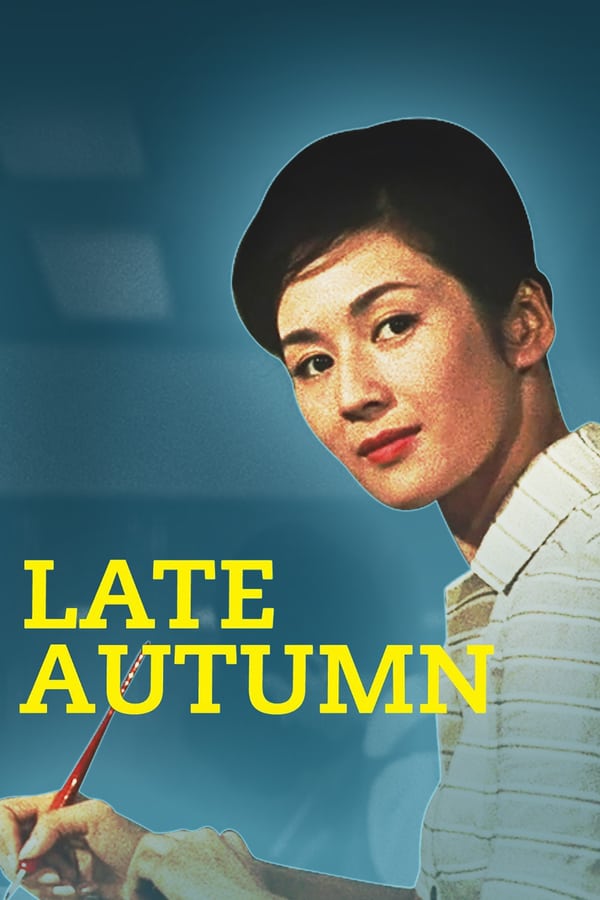
Late Autumn is about three older men, former classmates who’ve stayed friends over the years, who take it upon themselves to meddle in a woman and her daughter’s affairs. The woman, Akiko, is the widow of a fourth classmate of the men, who passed away a couple years ago. The trio want to see Akiko’s daughter Ayako, a very beautiful young woman, married to a nice man who will take care of her, but Ayako seems reluctant to leave her mother alone in the house if she were to marry and move away. So the men decide to get Akiko married first, which would open up Ayako to then marry as well. It’s a funny concept, and there are some nice moments, but this movie is awfully repetitive. Conversations go round and round about the same subject, really drawing it out and seemingly going on forever. It has a lovely, poignant ending, very Ozu, but that only makes up so much headway against an otherwise soft offering. ★★

The End of Summer is also more light-hearted fare. The aging patriarch of a large family, Manbei, has been sneaking away for awhile to see his former mistress (his wife is long dead), and the adult children do not approve when they find out. Much like Late Autumn, there’s also a plot to get the elder women in the family married off. If I had seen this film on its own, I may have enjoyed it more, but there are a few too many similarities shared with Late Autumn (including many of the same actors!) and it started to feel like a rehash. And this might be sacrilegious, but I couldn’t stand Setsuko Hara, who played the eldest widowed daughter in this film, and Akiko in Late Autumn (as well as Takako in the above Tokyo Twilight). She smiles through every scene, with no range of emotion, and delivers dialogue with that constant grin. It was off-putting and strange. She’s the star in one of Ozu’s most heralded pictures, Tokyo Story, which I have not seen yet, and I hope she’s better in that movie than in this one. ★★½

  • TV series currently watching: Mare of Easttown
  • Book currently reading: The Elfstones of Shannara by Terry Brooks

Quick takes on Come and See and other Soviet era films

For this group of films, I’m looking at movies from the Soviet Union. The Color of Pomegranates came out of the Soviet state of Armenia in 1969, directed by Sergei Parajanov. While this is a biographical film about the Armenian bard and poet Sayat-Nova, who lived in the 18th century, it’s not a movie with a story per se. Instead, it is a very lyrical art film. It takes moments of Sayat-Nova’s life and depicts them artistically, with very little dialogue, and only a few cue cards to tell the viewer where we are. It takes us from his childhood up to (through?) his death, with many scenes being nothing but shots of people doing repeated actions for a couple seconds in front of a still camera. Hard to make anything out of it, but I have to admit, it is a very emotional film. The color and scale of it wraps around the viewer, and while I often do not like experimental films, this one kept me enraptured. I really can’t put my finger on why either. The film was heavily edited by Soviet censors before release, who expected Parajanov to give them a more “standard” biographical movie. It was later restored by Martin Scorsese’s Film Foundation, to get it as close as possible to the director’s original intent. ★★★
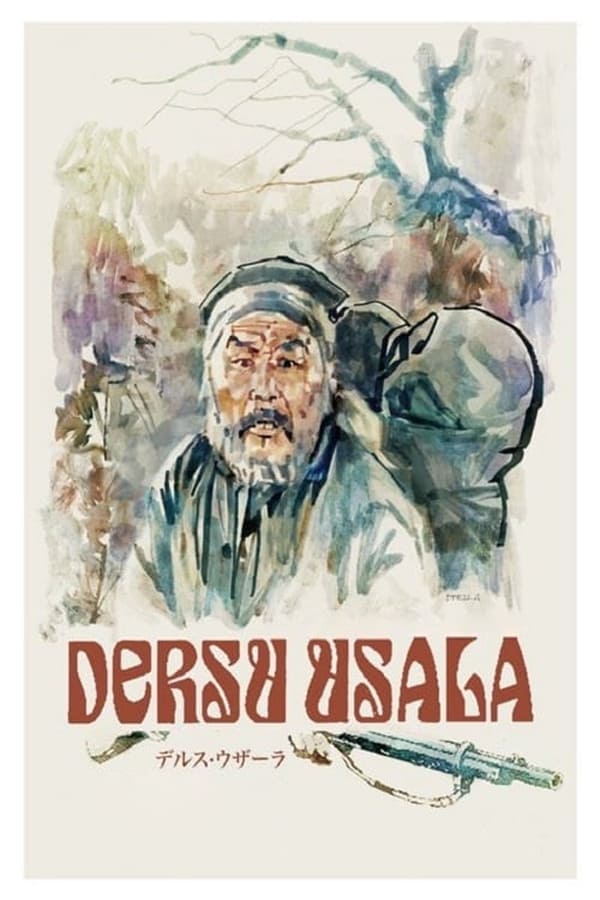
Dersu Uzala is a 1975 co-production of the Soviet Union and Japan, directed by celebrated Japanese director Akira Kurosawa (his only non-Japanese language film). Based on a memoir by Russian explorer Vladimir Arsenyev, the movie tells of the lasting friendship between Vladimir and Dersu, a nomadic hunter of the Goldi people (native to the Russian far east). In 1902, Vladimir is leading a small contingent of Russians in a survey expedition through the harsh taiga when they meet Dersu. Dersu is a hunter and a good one, and while his Russian is choppy and stilted, they are able to communicate well enough to hire him as their guide. Dersu’s knowledge of the land gets the group as a whole, and Vladimir in particular, through some rough spots, and Dersu saves Vladimir’s life on more than one occasion. When the expedition is done and Vladimir is ready to return home, he hopes Dersu will join him, but the city is no place for Dersu and he declines. Five years later, Vladimir is out in the wilderness again on a new exploration, constantly keeping his eye out for his friend. When they meet again, it is just like old times, and their bond is strengthened. As Dersu gets older though and starts to lose his edge, he has to face the facts that he cannot be the hunter that he once was. Shot on location in the Russian far east, the film encompasses the viewer in its harsh, barren reality, so while it has the look and feel of a grand epic movie, there’s still the tightness of a brotherly bond between our two characters. And it definitely has the feel of a Kurosawa picture. ★★★★

Come and See, from 1985 and directed by Elem Klimov, is regarded as one of the greatest films ever made. It is certainly an extremely powerful anti-war movie. It follows a young teenager named Flyora, and starts with him and a friend on a beach. You think they are just being boys and having fun, but it becomes apparent that they are digging up discarded weapons left behind by soldiers. We are in the midst of World War II, and Flyora is hoping that, if he finds a gun, it’ll be easier to join up with the partisan soldiers against the Germans. He does find a rifle, and soon after, leaves his family behind in their tiny village, and joins up with a contingent of fighters. He probably left for war the same way many young people did (and continue to do): hoping to fight for their friends and family, yes, but also seeking glory in battle. He finds that his views of war are not the reality. As the movie progresses, the atrocities of war get worse and worse, until a climactic ending where a neighboring village is massacred by Germans and their collaborators. Flyora and only a handful of others survive to witness the massive death and destruction. This movie hits you like a ton of bricks. As it moves from a frolicking young boy to a terror-stricken shell of a person, the viewer is hit with as many scars as Flyora. By the end, it doesn’t even look like the same actor. Over the course of the film, which can’t be more than a couple weeks, Flyora looks to have aged decades, until there’s nothing left. I felt as shaken as him. It’s a lasting, impactful movie. ★★★★½

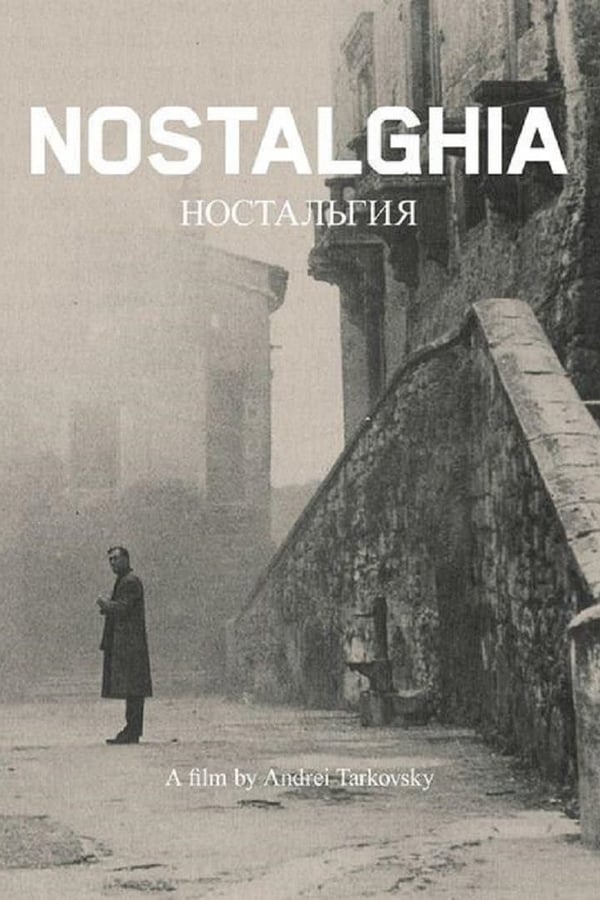
Awhile back I watched Andrei Tarkovsky’s first five films, but that left his final two. Nostalghia was a co-production between the USSR and Italy, shot in the latter, and released in 1983. It’s about a Russian writer who travels to Italy while researching the life of a famous Russian composer. The composer had lived there for a time, and then after returning to Russia, committed suicide. Andrei has been following his footsteps, trying to get in his head, and his latest location is some ancient bath houses built around a mineral pool. After butting heads with Eugenia, his beautiful traveling companion and interpreter, Andrei becomes fascinated with a man named Domenico, whom the locals shrug off as crazy. Domenico has been trying for years to cross the mineral baths from end to end without letting his candle go out. He’s never succeeded. I know Tarkovsky. I know his movies can be challenging (frustratingly so at times). I have to admit I carefully watched this whole movie, and have absolutely no idea what it is really about. Hauntingly beautiful? Without a doubt. Accessible to most viewers? Not a chance. ★★

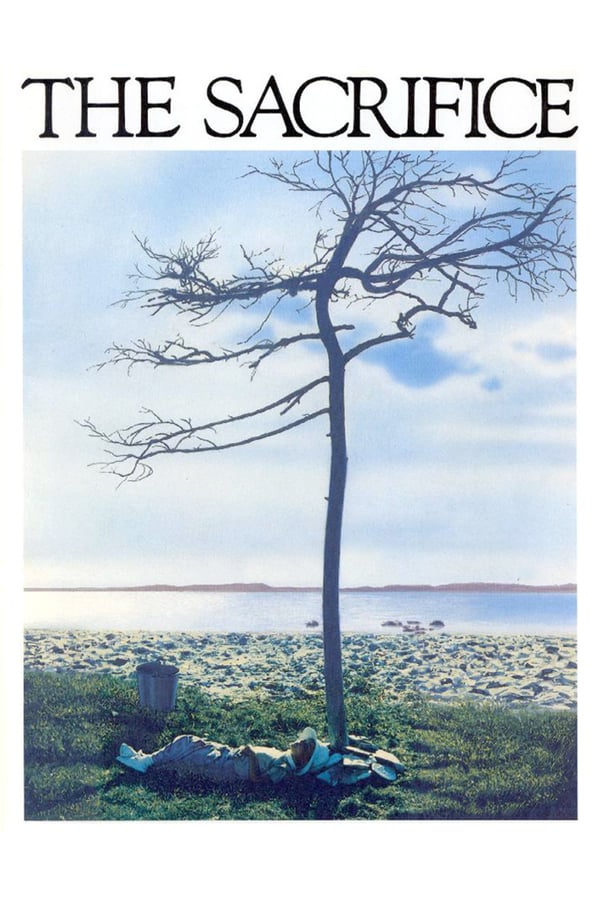
I’m cheating on the last film. It’s not a Soviet film, but it is from Tarkovsky, so, close enough? Released in 1986 after Tarkovsky had defected, The Sacrifice was filmed in Sweden. If you’re a filmmaker in Sweden in the 80s, lean on the best, and Tarkovsky did, casting Ingmar Bergman regular Erland Josephson (who also played Domenico in Nostalgia) in the lead, and hiring longtime Bergman cinematographer Sven Nykvist. The movie follows a family living in a large, beautiful house on a remote stretch of coast. Alexander dotes over his son, whom he calls his “Little Man,” but is indifferent to his wife and teenaged step-daughter. Alexander talks to his son in length on many topics, including Alexander’s lack of faith in God. One afternoon, with guests visiting, the house is rattled by jets flying overhead. They flick on the TV in time to hear that a catastrophic world war has broken out, and it is implied nukes have been launched and humanity is facing its end. Each person takes the news differently, from loss of hope, to shrugs, to nervous breakdowns. Once the initial reactions have cooled and Alexander is alone, he prays to God, awkwardly as it has obviously been a long time since he has, begging for something to save his family and everyone else. He promises that if God can save them, Alexander would be willing to give his family up, even his son, and leave everything behind. But if he magically is given that chance, and undo the tragedy, can he follow through? This film is magnificent. Deep and thought-provoking, with incredible camerawork from Nykvist’s steady hand. There are some super-long takes here: the opening sequence is like 9 minutes, and there’s a 6 minute take near the end. And they aren’t simple stay-in-one-place shots, they are moving, and characters are moving, and lots of things are going on on-screen. Incredible stuff technically, and a tremendous movie all around. ★★★★★

  • TV series currently watching: Dickinson (season 1)
  • Book currently reading: The Dark Tower by Stephen King

Quick takes on F9 and other films

Kuessipan is a French Canadian film, following a high school senior named Mikuan. Mikuan is of the indigenous Innu people, living in Quebec on a reserve, and while many of her people live and die there, she dreams of something more. Her lifelong friend Shaniss is following the same life track that many in their poorer community do: she’s dropped out of high school, had a baby young, and is just scraping by with her boyfriend. Mikuan, however, wants to go to college, a goal she doesn’t dream of sharing with her family. Mikuan starts to fall for a white (non-Innu) boy at school named Francis, and some in her family see this as already going against the traditions of her people. It would be easy to make this film wrong, and show it as a girl trying to break out from old, shackled conventions and beliefs, but the filmmakers do a great job of showing both sides of the coin. Yes, Mikuan doesn’t want to stay on the Innu land forever, but the people aren’t shown as backwards, just proud of their heritage and tradition. It is up to Mikuan to balance those two points. Very well acted and moving film, from many first-time actors, and first-time director Myriam Verreault. ★★★½

Come True also follows a high school senior, this time Sarah Dunn (Julia Sarah Stone). Sarah is a runaway (never says why she left her mom) living at a friend’s house when she can, or in a sleeping bag on a playground when she can’t. To make matters worse, she’s having terrible nightmares, causing severe insomnia during the day. The film sets the tone early. We see these nightmares through Sarah’s eyes, as she slowly traverses through dark caverns or creepy hospitals, with dead bodies hanging from the walls or suspended in air, through doors, with always the same destination: a shadowy, menacing man who we can’t quite make out. These creepy dreams definitely got my heart thumping by the third trip, as they get progressively darker. In order to try to get some relief, Sarah joins a sleep study, and while her first couple nights go well and she finally feels rested, the nightmares return soon, and this gets the workers doing the study very excited. They’ve obviously got some motives here, and the crux of the study becomes known in the second half. To add to Sarah’s nightmares, she finds that one of the workers at the sleep study has been following her. As dreams and reality start to merge, the film takes you on a wild ride. The ending was a bit out of character, but I still enjoyed the journey. It’s a low budget horror film, so don’t expect all (or even most) questions to be answered, but it is a fun experience. ★★★½

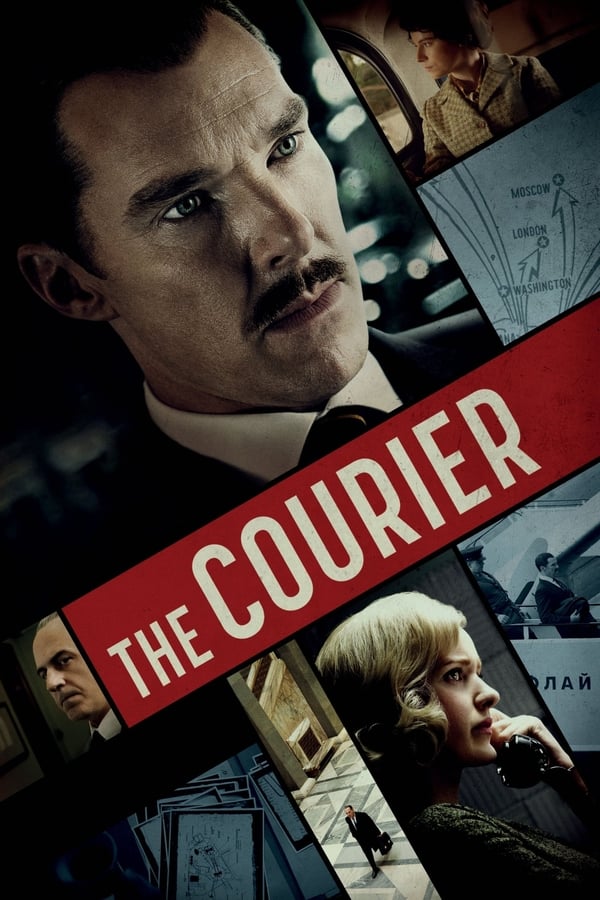
Based on a true story, The Courier takes place in the early 1960s during the Cuban missile crisis. Decorated Soviet colonel Oleg Penkovsky is afraid for the future of the world with the temperamental Khrushchev leading Russia. He decides to go against his country and reach out to the USA to help deescalate tensions between the two countries. The CIA doesn’t have a foothold in USSR after recent missteps, so they in turn reach out to the UK and its espionage arm, MI6. Together, the CIA and MIA recruit Greville Wynne. Wynne is not a spy, in fact, he’s just a British businessman with some ties to Eastern Europe. This makes him the perfect helper, because if he’s caught, he can claim he knew nothing about the messages he is smuggling back and forth. Wynne goes to Moscow to start a business and meets Penkovsky, and the two start a friendship while Wynne gets his top secret papers out of the USSR and back to London, documents that show USSR’s missile activity and locations in Cuba. For Penkovsky, he just needs to know he and his family can defect when the time comes, because he knows that, while Wynne may be able to claim innocence, Penkovsky of course will not be able to make such claims. It’s high stakes espionage at its best, covering a time period when the mankind was closest to wiping itself out. The always magnificent Benedict Cumberbatch leads as Wynne, with great support from Merab Ninidze, Rachel Brosnahan, and Jessie Buckley (one of my recent favorites). ★★★★

Regular readers of my blog know I don’t watch a lot of comedies. I like a good laugh as much as anyone, but I don’t enjoy stupidity, which is sadly what too many comedies devolve to. Barb and Star Go to Vista del Mar doesn’t just cross the line of stupidity, it cruises past and drives another couple miles. Needless to say, not my cup of tea. It stars Kristen Wiig and Annie Mumolo (who co-wrote this, as well as 2011’s Bridesmaids) as a couple of midlife women who’ve just lost their jobs and decide to take a vacation. There’s also some kind of subplot involving some evil villain (also played by Wiig) who has developed a mosquito that bites to kill. That’s all I know, because 20 or so minutes into this  foolishness, I gave up. Yes, 20 minutes doesn’t get you far, and maybe the movie turned around eventually, but I just couldn’t take anymore. It was like watching a bad episode of SNL where jokes were flying but nothing was hitting. Or maybe a bad Will Ferrell movie, where you can see the actors are enjoying themselves, even if the viewers aren’t. And you can tell that Wiig and Mumolo were just improvising their way along in nearly every scene. Would it be too hard to write some dialogue that would truly be funny and stick to it? ½

OK, I’m going to be hypocritical now. While I can’t stand outrageous over-the-top comedy, I can dig outrageous over-the-top action, especially when I know it’s coming. And that’s exactly what you know you’re going to get in the Fast and Furious franchise. The latest, F9, is even crazier than the last. There is a thin plot here, about Dom’s long-lost brother (who we’ve never heard of before) showing up to be the latest bad guy. Jacob Toretto (John Cena) is as muscle bound as his big brother, and he has a wealthy benefactor to help him take over the world, setting up a family crusade with Dom and his usual gang on one side, and Jacob and his thugs on the other. Lots of car crashes and bullets flying, as to be expected, but this time we even get to go to space! I don’t know how they can top this one with the announced 10th and 11th final movies, which are going to be filmed back to back. Maybe Dom and his team end up on Mars next? Whatever it is, I’m sure it will be mindless action again (but really good mindless action!). On a personal note, this was my first trick back the theaters since before COVID, and I can’t tell you how amazing that felt. ★★★½

  • TV series currently watching: Gotham (season 4)
  • Book currently reading: The Dark Tower by Stephen King

Quick takes on Luca and other films

I was really excited to watch Sin, a 2019 film with an Italian cast but written and directed by Russian Andrei Konchalovsky, whose long career includes co-writing films for Tarkovsky in the Soviet Union, movies in USA and Europe after leaving the USSR in 1980, and, in the last 10 years, returning to Russia to make new pictures. Sin follows celebrated artist and sculptor Michelangelo, but rather than focus on his techniques or works, it tells of the political environment in which he worked. In the film, Michelangelo has been painting the Sistine Chapel for awhile, under the orders of Pope Julius II (whom they call Pope Giulio, in Italian). At the same time, he’s been working on sculptures for Giulio’s future tomb, which is going to be extravagant beyond measure and scope. However, Giulio dies, and is replaced by Pope Leo X. Giulio had been born from the noble della Rovere family, but Leo is of the tradesmen Medici family, della Rovere’s enemies. Leo thus scales back Michelangelo’s work on the unfinished tomb, cutting his pay and putting him on other projects, which doesn’t please the surviving della Rovere group. Through all of this, we see Michelangelo’s talent for finding beauty and inspiration in humanity in the most unlikely of places, as well as some of less savory characteristics of his personality (greed, ego, etc). Everything sounds great right? Unfortunately the premise is better than the execution. The movie is really dry, not nearly exciting enough to keep your attention. I could only be put off by the enormous chip on Michelangelo’s shoulder so many times. ★★

In the Heights was actually Lin-Manuel Miranda’s first breakout, earning 13 Tony nominations in  2008, 7 years before Hamilton made Miranda a household name. A film adaption has now been released, though Miranda is now too old to play the lead, a 20-something named Usnavi. Usnavi was a boy when his parents brought him from the Dominican Republic to Washington Heights in New York. His parents scraped their pennies and bought a bodega, which Usnavi operates now that they’ve died. “The Heights” has a diverse Latin American community, with people from Cuba to Puerto Rico and beyond. They stick together and are a real family, but there is evidence of splintering. People with money have started moving in and buying up some stores, charging much higher prices for their services, and some of the younger generation is wanting to leave for bigger and better places. This includes Usnavi, who has dreams of buying his dad’s old seaside restaurant/bar in the Dominican. His friend Benny works at a local taxi company. The taxi shop is run by Ken Rosario, a first generation immigrant, whose daughter Nina worked hard (while dad saved every dime) and is home for the summer after starting school last year at Stanford. Other key players include Usnavi’s love interest Vanessa, who works at the local salon (with many more Latin employees), and “Abuela”, everyone’s Grandma (though not by blood). There’s a lot of moving parts in the movie; everyone has their own individual dreams and setbacks. A lot going on, and it is easy to get lost if you aren’t paying attention. The soundtrack is a solid 5 stars. If you are a musical fan, you’ll love the songs, which are catchy and powerful. However, as a movie, it is good but not great. I feel like I’d enjoy seeing a live production more, but some of that energy gets lost on screen. So as it is, I give the movie a 4 (but will definitely see the national tour live when it comes to my city!). ★★★★

Pixar’s newest offering is about a teenage sea monster named Luca, who lives in the sea off Italy near a small fishing village. Raised on tales of the dangers of humans, he’s always stayed to the depths, and hides from any boat that goes overhead. But when he finds a few pieces of litter on the ocean floor, he dreams of the life above, Little Mermaid style. One day Luca meets another teenaged sea monster named Alberto, and follows him up to a small island off the coast. There, Luca learns a secret his parents never told him: when sea monsters dry off, they appear human. Knowing this, Alberto and Luca decide to visit the fishing village, where they meet and befriend a young girl named Giulia. Unfortunately, Giulia’s father is a fisherman who hunts the fabled sea monsters in the area. As the trio of youngsters prepare for a local bike race and triathlon, Luca must hide from his parents (who’ve come to the village to find him) and try to stay dry, thus keeping the secret from Giulia. It’s got everything you’d expect from a Pixar film: it’s beautifully colored, funny (with hidden jokes for adults; the cat that makes untrustworthy faces at Luca and Alberto is named Machiavelli!), and has the expected heartwarming story about inclusion. I don’t know if it is as endearing of some of the true Pixar classics, but it’s a good family film. ★★★★

I watch a lot of movies (obviously) including a lot of small budget films. I get burned a lot, but I give so many of them a shot because I’m always looking for that hidden gem. Skater Girl is today’s hit. Out of India, it follows a teenage girl named Prerna who is on her way to becoming a wife and mother, and in local tradition, will be both before long. She’s not looking forward to it, but with poor parents and little opportunity for schooling, she doesn’t see a chance for anything different. That is, until Jessica comes to town. Jessica was raised in London but comes from an Indian father, and she’s come to her father’s home town looking to connect to her roots. Prerna meets and befriends Jessica, showing her around town, and through Jessica, meets her friend Eric. Eric is an American who’s been teaching in the area, but what quickly amazes Prerna is that he comes riding into town on a skateboard. Prerna takes to skateboarding like a duck to water, and feels a freedom she never has before. Jessica buys skateboards for all the kids in town, which leads to butting heads with some of the elders. When Prerna’s father learns of this, he quickens his plans to marry her off before she loses all her respectability. Though the movie walks dangerously close to the white savior narrative, it still manages to focus mostly on Prerna and her wish to be something more than just a housewife. The movie is a bit like a Disney sports film, a la Million Dollar Arm or McFarland USA, complete with sometimes-cheesy dialogue, so if you like those kinds of movies (and I do), then you’ll enjoy this one too. ★★★★

Silver Skates is a Russian film recently released on Netflix, and I have to say, I enjoyed it a lot more than I expected to. Ostensibly based on the classic novel of the same name (though I don’t see how; the only parallels that I remember are the ice skates and a sick dad), it is about a young man living in St Petersburg near Christmas, 1899. The town is full of energy over the upcoming 20th century, but Matvey is struggling. From a poor family with his single father, Matvey has just been fired from his latest job and needs to find a way to bring money into the household. A crack shot on ice skates, Matvey latches on to a gang of thieves who are making a killing in the festive atmosphere. With the rivers, lakes, and canals frozen with winter, shops and performers have set up on the ice to peddle their wares, and the robbers are having a field day skating rings around the richer patrons. At the same time, Matvey’s eye has been caught by Alice, a wealthy young lady from an aristocratic family. Matvey’s new friends do not approve; they’ve been reading Karl Marx and are ready to ignite the upcoming Russian Revolution. This romance, and a rivalry with one of Alice’s jealous suitors, becomes the central plot of the film. Despite uneven acting at times, I was mesmerized by the picture. It features high production value and a heartwarming tale, even though whole “poor man falls in love with a rich woman” story has been done a million times. Yes, it’s been told before, but it is done well here too. ★★★½

  • TV Series currently watching: Gotham (season 4)
  • Book currently reading: The Dark Tower by Stephen King

Quick takes on Violence at Noon at other Oshima films

I have two previous experiences with Japanese director Nagisa Oshima, and wasn’t blown away by either (maybe a poor choice of words, for this director). I’m trying again though, keep hoping for something to warrant his reputation. I’m starting with Pleasures of the Flesh, released in 1965. Despite the title and Oshima’s reputation, there’s no nudity here. It’s about a man, Atsushi, who’s completely infatuated with a young woman he used to tutor. She was molested as a child, and Atsushi kills her molester. Unfortunately for Atsushi, someone witnesses the crime, and blackmails him. His blackmail has a weird twist though: the blackmailer is getting ready to be arrested for embezzlement, and tasks Atsushi with holding 30 million yen for him, for a period of 5 years. In 5 years, he’ll be out of jail, and can collect his money and live his life. If Atsushi tells anyone, or spends the money, the blackmailer will go the police with Atsushi’s murder. Atsushi plays it safe for 4 years, but then his love marries another man anyway. Atsushi decides to live it up for the final year, spend all 30 million yen on women, and then kill himself before he can go to jail for his crimes. While the premise is out there, it’s a pretty good setting, but the movie doesn’t take it well from its launching point. Atsushi seems to crave a woman who needs him, even if it is just for his money, and he can never get the right match. He gets more desperate as the year draws to a close, throwing huge sums at women and their pimps, but nothing sticks. The ending is decent, but just enough to bring my rating up a hair. ★★

Violence at Noon (also called Violence at High Noon) is a lot better, but equally disturbing in measure. Shino is a young woman working as a servant when she is approached by Eisuke, a man from her past. After a brief discussion where we learn of some sordid previous experience between them, Eisuke attacks Shino and knocks her unconscious. It is implied that he rapes her while she’s out. When she comes to, she finds that he also raped and then killed Shino’s employer. From the police, Shino learns that is the same M.O. as the “high noon attacker.” She doesn’t tell the police that she knows him, but does reach out to Eisuke’s wife, Matsuko. Shino asks Matsuko if she has been aware that her husband is the serial rapist everyone’s been talking about, and this leads to flashbacks to when the three of them were all living in the same village. Another man is there, Genji, who loved Shino, making Eisuke jealous at the time. The movie jumps between past and present from here on out. Ostensibly about Eisuke as the attacker, the latter half of the film focuses more on those 2 women, and the circle of Eisuke and Genji around them. The story is better than The Pleasures of the Flesh, and much more detailed. The film chooses to examine the power that obsession can have over a person. There’s no denying that Eisuke is a monster, but he’s always very deliberate; there’s no mindless or crazed actions from him, and he definitely knows what he’s doing. The film also has an almost Godard-like approach to its camera work. ★★★½

Sing a Song of Sex follows 4 young men, just out of high school, who are following their raging hormones wherever they take them. As most adolescent boys are prone to do, their bark is worse than their bite. They act all tough and macho around each other, talking about how they’d do this and that with this or that girl, but when coming face to face with a person of the opposite sex, they freeze. One night, they go out drinking with a former high school teacher, along with 3 girls who have obvious school-girl crushes on him. The teacher gets drunk, and teaches them a bawdy song. They boys eat it up, and for the rest of the film, sing it to themselves, and grow increasingly bold in their actions with women. They fantasize about raping the prettiest girl in their class, and one of the four men later becomes ashamed of their thoughts. Through all of this, while the boys are in their own little world of sexual desire, around them (and mostly unnoticed by them) are various protests and antiwar sentiments, where fellow classmates are singing American songs like “This Land is Your Land” and “We Shall Overcome.” As the end of the film approached, I got the idea that the boys were too tied up in their emotions to see the greater picture of the world around them, but I also felt I was tantalizingly close to some deeper message that Oshima was trying to convey. Is he lamenting the state of today’s youth? Is he making a statement about human fallacies, impulses, or something else? I didn’t quite get it, but I enjoyed the movie, and wouldn’t mind giving it another go at some point in the future, to see what else I can glean from it. ★★★½

Japanese Summer: Double Suicide is a tale of two halves. The first half (or more), I was really into. It’s sort of an absurdist, quasi-surrealist film, and though strange, I was really digging it. A young woman, hair half colored, half shorn close, and one eyebrow shaved off, is walking down a street trying to get any man to sleep with her. She stumbles upon an aimless man sitting in the street. He shows no interest in her, but she latches on to him and starts following him around. They get picked up by a gang and brought to their hideout, where some more prisoners are being held. The gang is prepping for a battle with a rival group. A teenager also stumbles into the middle of it all, a young man who’s looking for a rifle because he wants to kill someone, anyone. By now, we’ve learned that the first man is looking for someone to kill him. Despite all these converging stories, no one gets their way: the first man can find no one to kill him, the second man can find no one to kill, and no one will sleep with the girl. This includes everyone else in this absurd little group. Despite being really out there, I was eating all of this up, but the final third of the film lost me. An American (whom they call “the foreigner,” maybe so as to not ruffle any feathers) starts terrorizing the streets of the Japanese city, shooting civilians while evading the police. Our ragtag group goes to where he’s holed up, and join him in his reign of terror. I was into the buildup, but didn’t care much for the payoff. Very strange film, about society’s obsession with death. ★★½

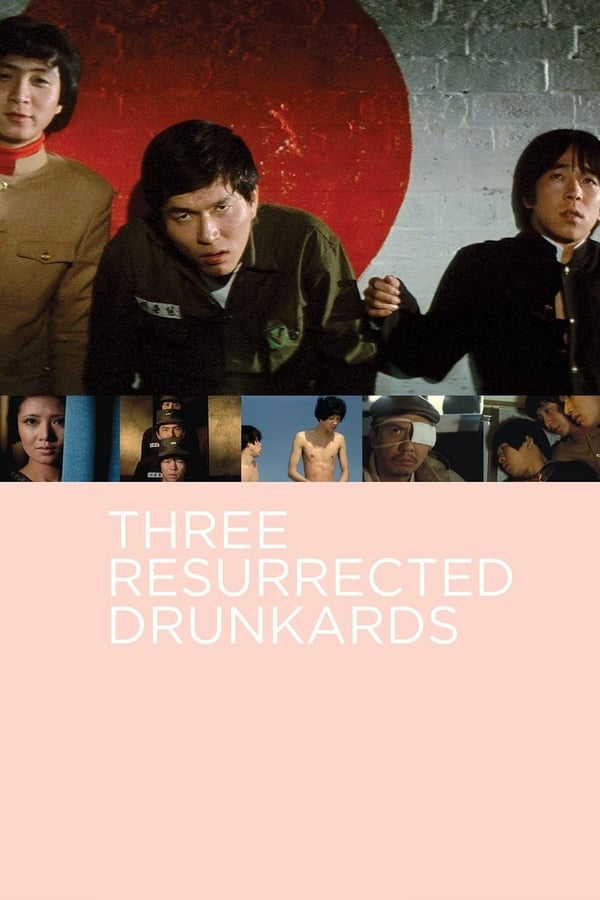
Three Resurrected Drunkards is entertaining, even if it seemed like a lot of fluff to me. Oshima’s rant against his own country’s treatment of Koreans, it is a comedic film about three young rascals who get caught up in a wild adventure. While frolicking on the beach, they come back to their clothes to find that someone has stolen them and replaced them with other attire. The three put on their “new” clothes, and soon realize that the clothes belonged to three Korean immigrants who’ve come to Japan illegally. In a case of mistaken identity, our three young men are now the targets of the police. At the same time, the aforementioned Koreans, when finding that the men have been easily evading the inept cops, decide to kill the men and leave the “Korean” bodies for the cops to find. Our three heroes evade them for awhile, but are eventually hunted down on a train. When they finally meet their untimely ends, the film restarts back at the beach, but this time, the men are prescient about what’s going to happen, and do their best to avoid it (though in a twist of fate, end up back in the same place). Very funny, but it’s one of those comedies that doesn’t stick long. I chuckled and snickered at their antics, and was reminded again of some Godard tactics, with maybe a bit of The Monkeys thrown in, but it’s not a movie I’d watch again. ★★

  • TV Series currently watching: Gotham (season 4)
  • Book currently reading: The Dark Tower by Stephen King

Quick takes on The Father and other films

Minari is a film I’ve been looking forward to for a long time, about a family of Korean immigrants following the good old American Dream in the 1980s. Jacob Yi and his wife Monica have just moved from California to rural Arkansas. They’ve had jobs sexing chicks (separating males from females) and know the work, but Jacob has higher aspirations of making money by farming. He knows the stiff competition for American produce, but thinks he can nudge into the growing Korean food market by farming Korean produce on his land. The couple buy a very poor and dilapidated mobile home, which Monica instantly hates, and bring their children Anne and David there. The couple isn’t afraid of hard work; they both work at the hatchery all day, and then David works the farm at night and on the weekends, with the help of an older (and maybe a little crazy) man named Paul. Paul fought in Korea and has taken an instant liking to the Yi’s. Monica hates it all, and to placate her, Jacob allows her to invite her mother from Korea to come live with them. It’s a very endearing film about hard work and striving for your own version of success. Jacob isn’t looking to get rich or set his kids up for life, he just doesn’t want to work all his life and die with nothing to show for it. In today’s society where people try to get rich quick and think that anything less than a couple million dollars in the bank is a failure, it is refreshing to be reminded that nothing beats hard work and that even a small step up is a step nonetheless. Paul’s (Will Patton) antics and the grandmother’s unfamiliarity with American customs provide the humor, and the underrated Steven Yeun (Glenn from The Walking Dead fame) shows his skills in the lead. ★★★★½

I’m a bit torn on The Planters. It’s a very short (78 minutes) film, written and directed by two of of the 4 or 5 on-screen actors, and probably completely self produced. I gotta respect that, because it is a lot better than a lot of films that are made thus. But to say it doesn’t do much is putting it lightly. Martha Plant is a twenty-something who lives alone, after her adopted parents died in the last year or so. Her day job is selling AC units over the phone, and she’s terrible at it. In fact, she’s threatened with termination by her boss early in the film, unless she can sell 30 units in 2 weeks. On the side, Martha plants odd nicknacks in the desert around her tiny town, and leaves a note on the town’s bulletin board about its location. This treasure hunt doesn’t reward her much: the finder usually leaves a few dollars, but doing this is the only thing that brings Martha joy these days. That is, until she makes a couple friends. Sadie is a multiple personality woman that stumbles into Martha on a planting trek one day, and shortly after, Martha meets Richard, an older man she sold an AC unit to over the phone. Her new friends team up to help Martha make her quota, even as someone has started digging up her treasures without leaving money behind in its place. Very quirky/funny film, and you can see that Alexandra Kotcheff (Martha) and Hannah Leder (Sadie), who co-wrote and co-directed, have seen maybe a little too much Wes Anderson, as the movie has his influence all over it. A couple stars for some laughs, but nothing that will stick with me for long. ★★½

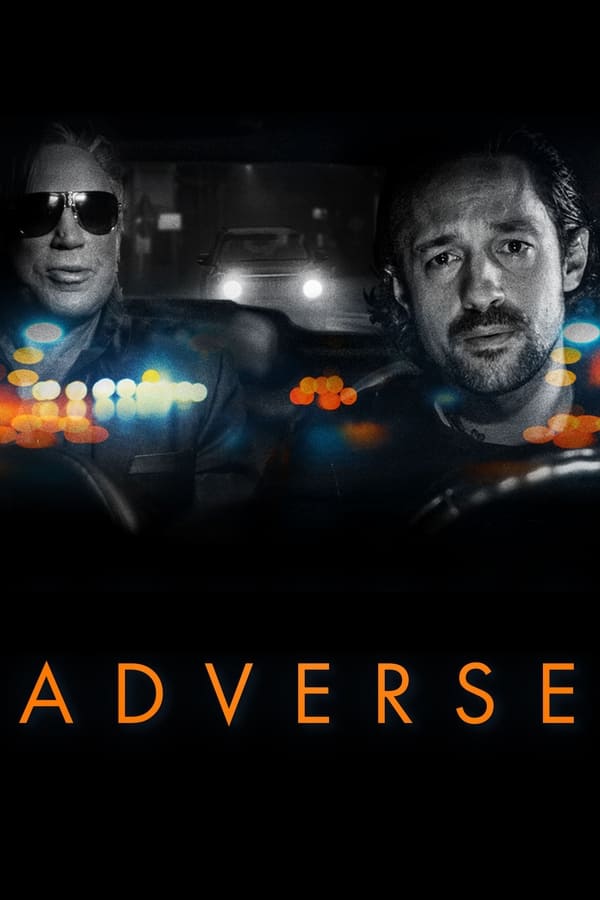
Adverse is about a man, Ethan, who’s trying to watch over his teenage sister, Mia, after the death of their mother. H’s been having a rough go at it, with her wild ways. He makes his money as a ride share driver, and on one fateful night, picks up Kaden. Kaden is a seedy underworld boss, and, through an underling, Mia’s boyfriend owes him a whole bunch of money. When Ethan finds out, he tries to pay the debt, but the underling doesn’t report the payment to Kaden, and Kaden has Mia and the boyfriend killed. Ethan sets out to get his revenge, hunting down people from the ground up, with his sights on Kaden last. This is a bad movie all around, despite some eye-catching names (Mickey Rourke as Kaden, and a couple cameos from Lou Diamond Phillips, Sean Astin, and DC’s Legends of Tomorrow’s Matt Ryan). Thomas Nicholas plays Ethan, and if that name doesn’t ring a bell, he’s the former child actor that starred in The Rookie so many years ago. The story is shoddy enough, but what kills this movie in every scene is the absolute dirge of over-acting and terrible direction. I can almost hear the director telling his actors he needs more in every scene: more emotion, more shocked faces, higher arched eyebrows, more everything. The terrible acting and awful dialogue combine for as bad a movie experience as you can find. One star because I did get all the way through it without quitting. ★

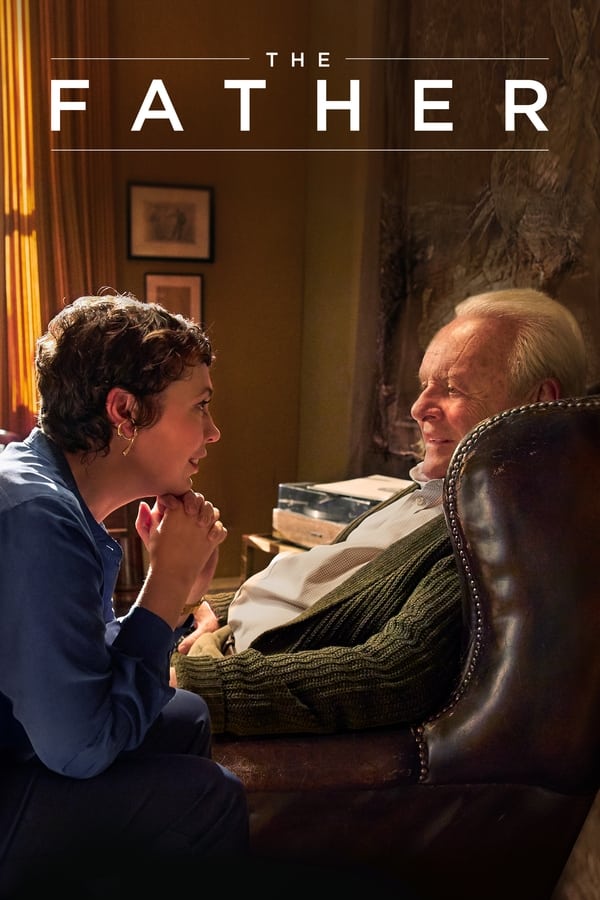
The Father won a few awards in this most recent cycle, but somehow it slipped past me. It features two amazing performances, by one of the best today (Olivia Colman) and one of the best of all time (Anthony Hopkins). The eponymous father is Hopkins as Anthony, an aging man suffering through dementia. Colman is his daughter Anne, and their lives together are as confusing as Anthony’s remaining memories. The film puts us right behind Anthony, and we are often as confused as he is. Characters and dialogue change mid-scene; for instance, Anne will leave the room, and another woman claiming to be Anne will enter, leaving Anthony wondering what just happened, but it is all due to his illness. He makes references to another daughter, Anne’s sister, but such talk makes Anne sad, which gets explained later. Anne’s been trying to find a carer for Anthony so she can continue to work, but he keeps getting combative with them, so they don’t last. To add to Anthony’s confusion, sometimes Anne’s husband is around (with various actors playing him), and sometimes Anne talks about moving to Paris because she just met a new man. The performances turned in by the two leads are as good as you’ll find, and the movie, based on a play by the same writer/director Florian Zeller, is put together extremely well. We feel Anthony’s frustrations, but also get a peak at Anne’s sorrow at watching her father disappear before her eyes. ★★★★★

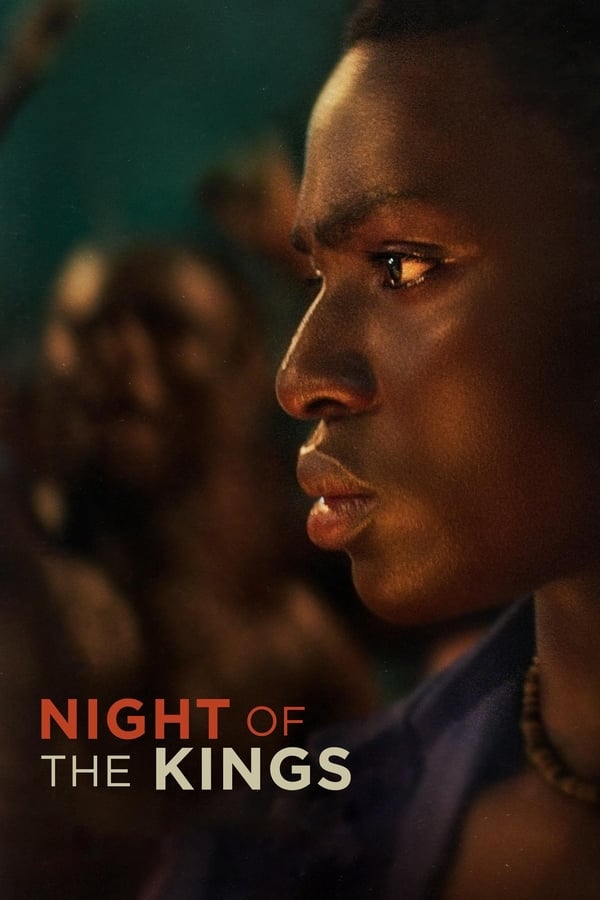
Today’s movie offerings have been extremely up or down, so I was hoping for a good finale with Night of the Kings (French, La Nuit des rois). A surprise international hit on the film festival circuit, it takes place in the infamous Le MACA Prison in the country of Ivory Coast. MACA is run by the inmates, with a token set of guards who mostly stick to the guard rooms, and let the incarcerated do their thing. The head of the prison is the Dangôro, or king, and for a long time, that has been Blackbeard. However, he’s sick and getting sicker, and there are rumblings that he needs to step down before war breaks out between his second, Lass, and rival, Half-Mad, to become the new king. To stall for time, and maybe quiet the masses, Blackbeard says that tonight there will be a new Roman, or storyteller, who has to tell a tale through the night. The new Roman is a newcomer to the prison, a member of the Microbe gang on the outside, who ran with a gang leader named Zama King. Zama King was just killed, and Roman begins to weave Zama’s story to the crowd. As he tells his tale, inmates spontaneously act out parts of his story, which leads to a fantasy-like story-within-a-story. When he learns that he needs to keep talking until the sun rises or he’ll be killed, Roman tries to embellish his way to dawn. As the night unfolds, the drama also ratchets up between Blackbeard and Half-Mad, and the politics of the prison threaten Roman’s account. It’s a fascinating movie, as chaotic at times as you’d expect in its prison setting full of criminals, and the chaos adds to the excitement and suspense as the night goes along. Fun stuff. ★★★★

  • TV series currently watching: Stranger Things (season 1)
  • Book currently reading: The Rainmaker by John Grisham

Quick takes on The Ballad of Narayama and other Kinoshita films

Been a hot minute since I saw some Japanese films, time to rectify that. I’ve been eyeing director Keisuke Kinoshita for awhile.  A contemporary of some big names from Japan (Kurosawa, Ozu, Mizoguchi), he didn’t get a lot of credit outside of his home country. Some of his later films from the 50’s received some attention, and I’ll watch a couple of those too, but I wanted to see some of his earlier pieces too.

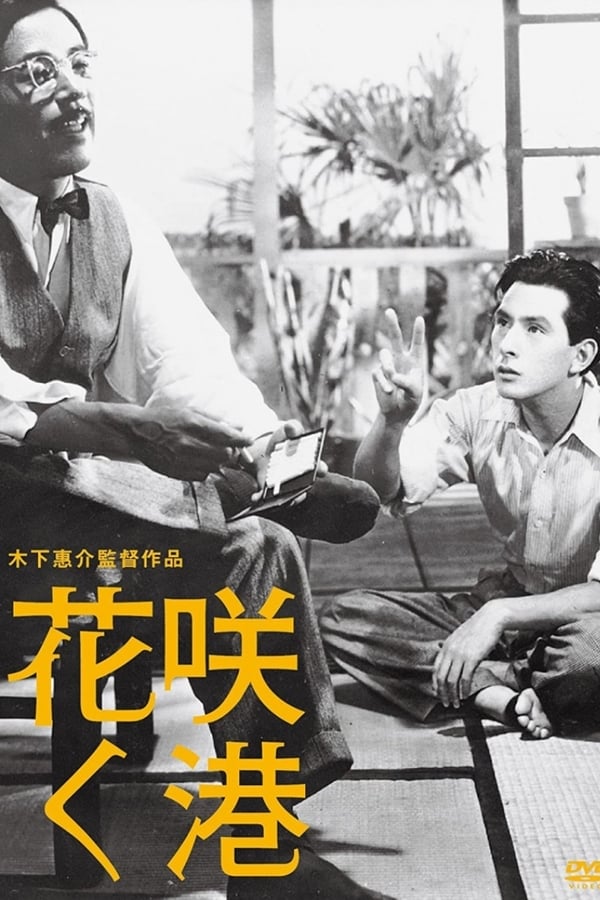
Port of Flowers was his first film, from 1943. In a small port town, a businessman a generation ago attempted to build a shipyard, but failed. The town revered him and his attempt to help their prosperity, and remember him long after he moved away. He recently died in Tokyo, and two grown men show up at the village claiming to be his sons, and they want to continue his legacy. Unfortunately for the town, the men are conning them; they want to sell shares for a fake shipbuilding company and then take off with the money. Things do not go as they planned though. Only expecting to get a couple thousand yen from the small town, they are instead moved by the generosity of the villagers, many of whom donate their life savings to the project. As well, one of the conmen falls for a pretty young lady in the village. Even when the two men try to cut their losses and head out, various circumstances keep them from leaving. The movie is slightly humorous, but unfortunately feels really drawn out, even at a crisp 82 minutes. The most fascinating part for me was its treatment of the outbreak of Japan’s involvement during World War II. I’ve seen many Japanese films made before the war, and many made just after (under the American occupation and film censors), but rarely one made during. The film depicts the locals’ reactions to the bombing of Pearl Harbor and the sinking of a British ship, and their excitement to going to war for the honor of their nation. ★★

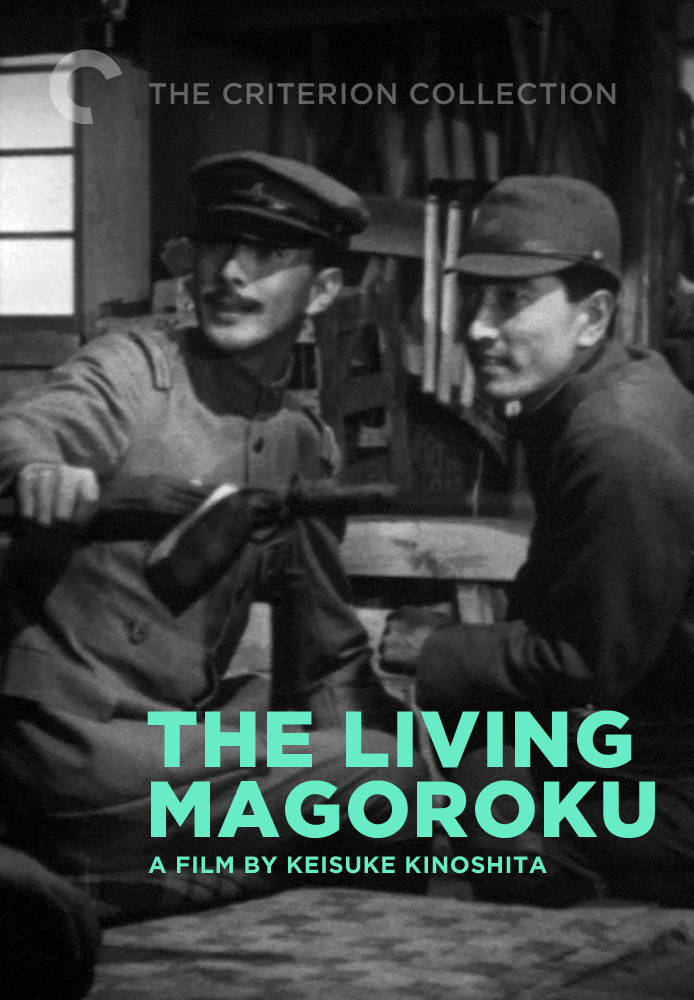
The Living Magoroku also takes place in the early days of the war, again around a small village. There’s a lot of moving parts in the one, but it mostly centers around a man, Yoshihiro Onagi, whose family own the Onagi field. On that field 370 years ago, a great battle was fought, where Onagi’s ancestors kept at bay a much larger force, saving the town but ultimately costing them all their lives. Their sacrifice has made the field sacred. A generation ago, one of Onagi’s family members tried to cultivate the field, and a supposed curse was brought down, that all the men in the family would die young. So far it has held true, and Yoshihiro is the last of them. As such, he lives his life in fear. Into this setting comes the war. New soldiers want to cultivate the Onagi field to produce food for the war effort. As well, one of them wants to marry Yoshihiro’s sister, but Yoshihiro refuses for fear that the union will bring more men into the family who will die from the curse. Another soldier wishes to purchase Onagi’s samurai sword, made from a famous swordsmith hundreds of years ago and used in that fabled battle, but Yoshihiro refuses to part with the heirloom. Others characters include the local blacksmith, the Onagi’s generational servants, and others. Lots going on, but it all ends up tying into Yoshihiro and his fear of his fate. I liked it a bit more than the first; like many Japanese films from long ago there’s some aspects that are a bit over the top, but the story is well put together and everything works well in the end. ★★½

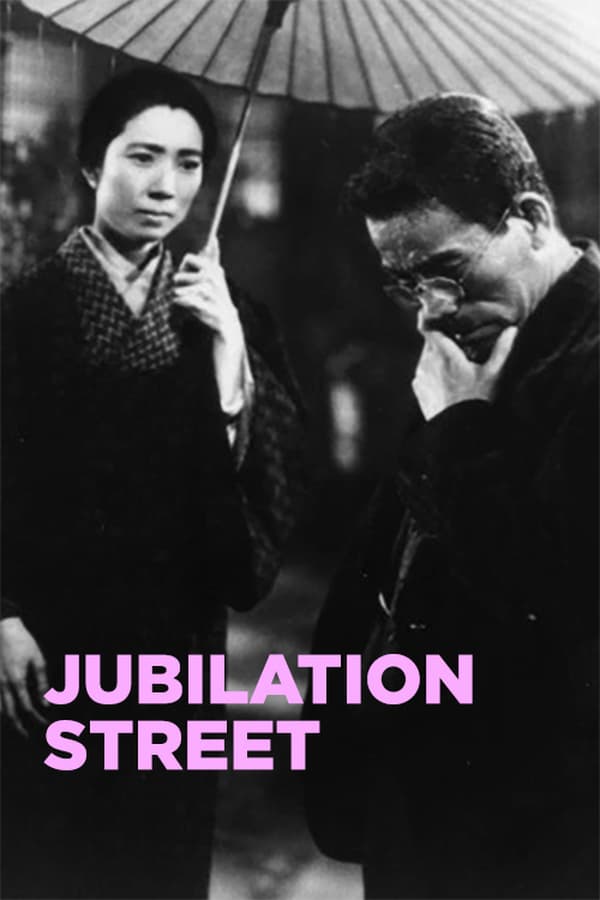
Kinoshita moves from the rural to the city in Jubilation Street, which takes place in the suburbs of Tokyo, and follows a handful of neighbors and friends who are being told they must leave their homes. Some of them have lived there for generations, but the government needs to expand the local factory for the war effort. In particular, one family stands out. Kiyo and her adult son Shingo have stayed in the area despite Shingo’s desire to leave; Kiyo has been waiting for her husband, Shingo’s father, to return. He left the family 10 years ago and never came back. Shingo is ready to move on, but Kiyo continues to hold out hope for him. The movie lays the propaganda on thick. Like the previous movie (and probably a lot of movies made during the war), there’s a huge sense of doing what is good for the country. By this time, Japan wasn’t faring too well in the war, and I’m sure the film companies were under pressure to drum up support in any way possible. Unfortunately that was to the detriment of this picture. ★½

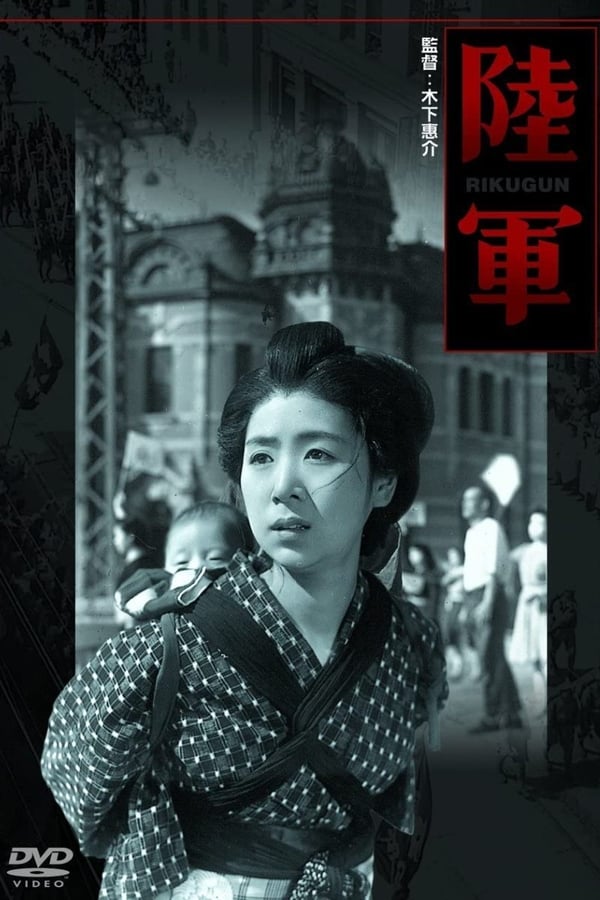
Army is the first of these films that I really enjoyed, and it was the one that got the director in the most trouble. It is told over three generations of a family leading up to the present. Without getting into too many details, it details the men of the family and their various experiences in Japan’s many wars over the years. The newest young man in present day is Shintaro. His father was unable to serve in battle during the Sino-Japanese war, due to constant illness, so he has set all his hopes on Shintaro to redeem the family’s honor. Growing up in a strict and stern household, Shintaro initially isn’t a “manly man,” but by the end of the film, he does become a Private First Class, and is ready for battle in the current World War. I usually try to avoid spoilers, but the ending of this film is so excellent, and it is what got Kinoshita in hot water, so SPOILER: As Shintaro is marching off with his troop in a military parade before being shipped off, his mother sits at home reciting the military code of honor, trying to assuage her worry for her son. Wracked with concern, she runs to the parade and follows after Shintaro, tears flowing. Finally, she loses him in the crowd, and brings her hands together in a silent prayer. At a time when Japan was wanting to show that it was an honor to send your children to war (earlier in the film, the director put in the line, with supposed sincerity but which was obviously filled with sarcasm, “Those killed in the war died so we could have joy.”), this display of loss and fear over Shintaro’s fate was not acceptable. Kinoshita, later an admitted antimilitarist, was accused of treason, and was prohibited from making more films until after the war. ★★★★

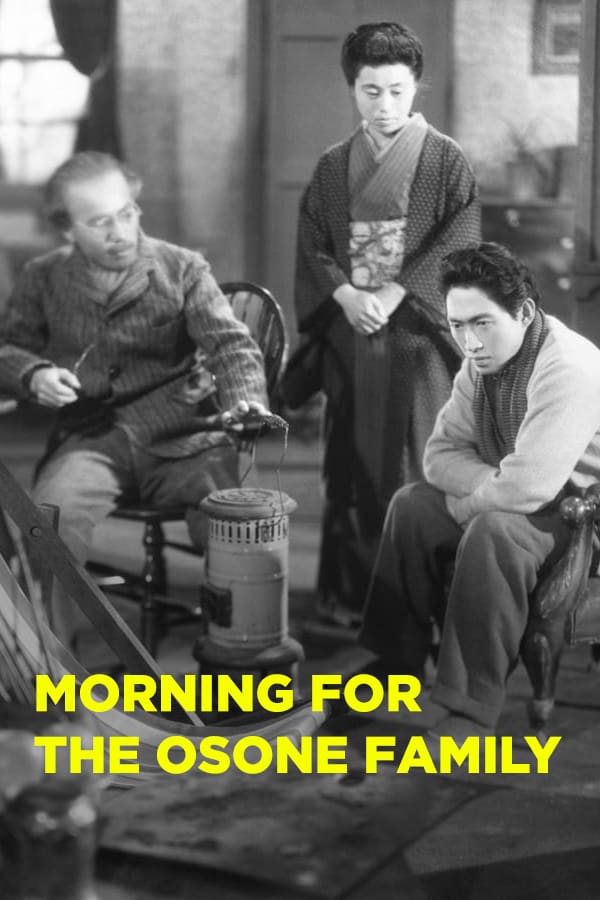
Released in 1946 and no longer shackled by Japanese government/military sentiments, Kinoshita finally made a movie from his own heart. Morning for the Osone Family follows one family in the final years of the world war. Fujiko Osone is a single mother (her husband somewhat recently has died) with four older children. The father was a left-leaning, liberally minded man and his kids have mostly followed suite. In fact, the film opens with the arrest of the eldest son, Ichiro, a reporter, after he wrote a not-so-subtle antiwar piece in the paper. The middle child, Taiji, is an artist, but he doesn’t escape the war for long either, and is drafted. With a lack of men in the household, Fujiko’s brother-in-law, Issei, comes to live with them. Issei, a colonel in the army, is much more conservative and nationalist that his deceased brother was, and he urges the Osone family to not be so reluctant in their support of the war. He breaks off the engagement of the Osone daughter, Yuko, after Ichiro’s arrest and supposed black mark on the family’s honor, and then urges the youngest son, Takashi, to enlist in the army. Throughout it all, Fujiko acquiesces to Issei’s rules as the now “man of the house,” until at the end, when she can no longer bite her tongue. Kinoshita doesn’t hold back; he does his damndest to shoot holes at the right wing agenda he despised. A decent enough story, though heavy handed to the opposite extreme of his earlier films. ★★★

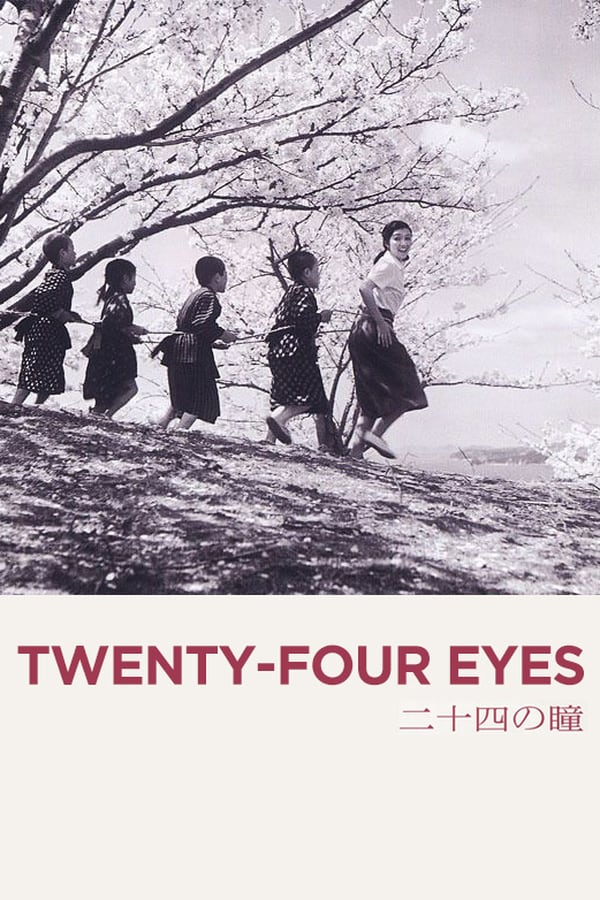
The five films above were this director’s first five movies; now I’m jumping ahead a bit to the two I most wanted to see, two of his more celebrated pictures. Twenty Four Eyes came out years later in 1954, and starts in the late 1920s. The eyes reference the eyes of a first grade class of 12 students, who have a new teacher. The new teacher, Hisako, causes a stir on her first day in the tiny farming and fishing village, arriving in “western clothes” (skirt and suit jacket) and riding a bike. Oh the shame! But the kids love her, and are dismayed when she hurts her leg and is no longer able to make the long commute to work. Hisako is transferred to the main school closer to her home, and promises the kids she’ll see them again when they get bigger and transfer there themselves; that’s where the film jumps ahead, 5 years later. As the kids have gotten older, their poor situations at home have come to the forefront. Hisako has to help kids through tough family situations, including watching some have to drop out of school to do needed housework or help raise siblings. Unfortunately some of her advice gets her in trouble with her bosses, who warn her to not come off as a communist. Frustrated that she cannot guide students as she would wish, and butting heads with the establishment which pushes militarism on the student body, Hisako resigns, and asks her students to keep in touch. From there the film jumps ahead another 8 years, to the early 1940s, and continues through the World War, and its consequences for Hisako and the group of kids she watched grow up. The movie is overly sentimental, perhaps too much at times, trying at every turn to elicit tears from the viewer. In the end, it becomes a sob fest for the actors. It can be cheesy, but is often endearingly cheesy. ★★★

The Ballad of Narayama simply amazed me from its opening scenes. It is staged like a classic Kabuki drama (sans the over-the-top makeup), even going so far as to give the illusion of sets being rolled away between scenes. The story is light but extremely well developed. In a tiny village, the elderly are carried up the mountain of Narayama by their children once they hit the age of 70, and left up there to die. The center figure in the movie is Orin, a woman who’s lived a simple but good life. Whereas many people look towards their birthday with fear, and in fact, there’s a humorous subplot about a man who’s been fighting his kids over his own journey up Narayama for quite some time, Orin is looking forward to it, and the peace that comes with death after a long and happy life. Orin’s son is a thoughtful and kind man who loves his mother dearly, and would love to find a way out of this tradition if possible. Her grandson though is a little brat who doesn’t know how much he’ll miss Orin’s cooking until she’s gone. Superbly done, with richly detailed sets that completely immerse the viewer with vibrant colors in a glorious wide screen, this movie captivated me like few do these days. It’s a powerful, sometimes haunting film, with lasting imagery that you won’t quickly forget. ★★★★★
  • TV series currently watching: none
  • Book currently reading: Dune Messiah by Frank Herbert