Quick takes of 5 CLASSIC JAPANESE films

Like every red blooded American, I’ve seen The Magnificent Seven (both of them!). But I had never seen the original film it was based from, Akira Kurosawa’s legendary Seven Samurai. The story is very similar to our American version, just taking place in 16th century Japan instead of the old west. A poor farming village is beset by bandits, and the villagers try to find help from samurai, led by Kambei Shimada. This is an epic movie, clocking in at over 3 ½ hours long, and worth every minute. It is basically made up of 3 parts. The first shows the town reach out to Shimada, and his efforts to put together a group of samurai to protect the village. The second half shows them go through the drills to prepare for the battle, and the final act is the big fight. More than just an action film, there is plenty of heartache and love to be found. Kurosawa is one of the best Japanese directors of all time, and this is arguably his most influential film. When it was made in 1954, it had the biggest production (and budget) ever seen in Japan and rivaled the Hollywood films in its day. If you are a fan of The Magnificent Seven, it is worth it to see where it came from.
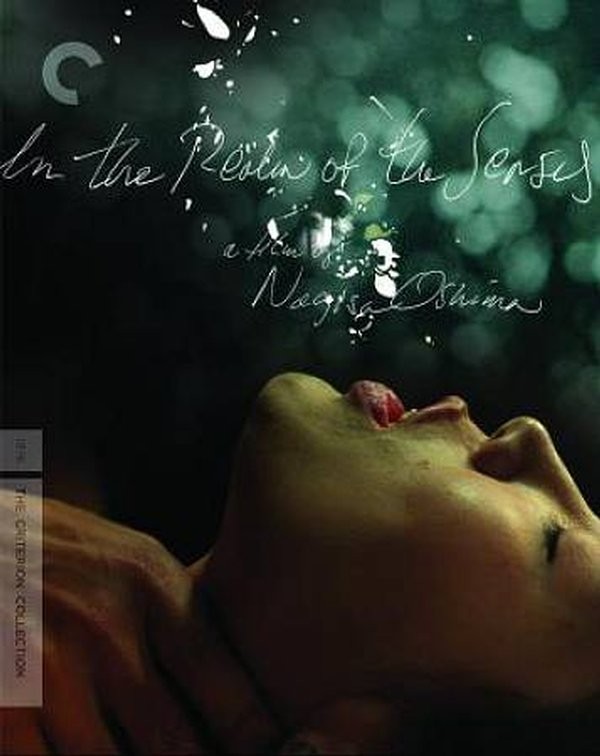
On the totally opposite side of the spectrum is In the Realms of the Senses, from 1976, by director Nagisa Oshima. I hope I didn’t disappoint my family by watching this one (I know I got some sideways glances from my wife, who rolled her eyes and left the room). This is a graphic, and often called obscene, film, showing real sex scenes. In fact the only way Oshima got it released was by having the final editing done in France, and to this day, it has never been shown uncensored in Japan. Based on an actual true story from the 1930’s, Sada is a maid who starts an affair with her married master, Kichizo. Their love affair grows more and more violent over time, until they can only reach climax by causing pain to each other. The director contends the movie is a look at dominance by males in Japan, from the government on down, and it also has a (*ending spoiler*) fatal attraction element to it. The sex is hard to watch (the director and art-film lovers content that it is not pornography, but it sure feels like it), but I get why it is included, as it shows Sada’s and Kichizo’s evolving affair in a way that dialogue never could. A disturbing and obviously controversial film, I can’t recommend it for most people.
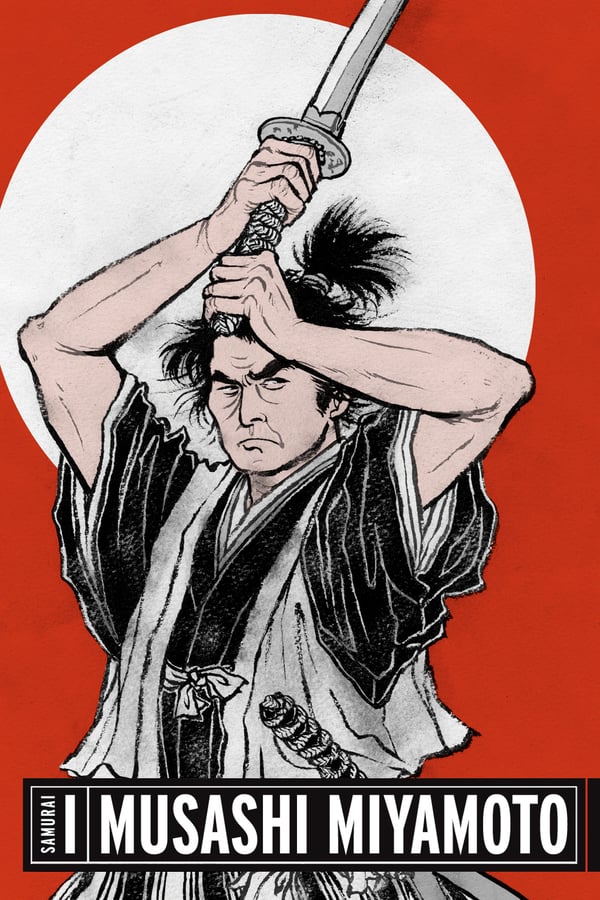
On a more conventional note, I returned to Japanese samurai films, in fact, the famous Samurai trilogy by Hiroshi Inagaki. First up is Musashi Miyamoto, winner of an Oscar for a foreign language film in 1955. At the beginning of the film, you think it will follow Matahachi, a charming young man who is engaged to the beautiful Otsu. He tags along with his friend, a roguish Takezo (famous actor Toshiro Mifune, also in the above Seven Samurai), to the battle of Sekigahara. Instead of fame and glory, the duo are on the losing side of the battle, and hole up in widow’s house, nursed to health by her and her daughter Akemi. Subtly, Takezo becomes the hero of the story, as he leaves the cowardly Matahachi at the hut with the women, and seeks to return home to tell Otsu of her man’s fate. Takezo is captured though and blamed for things he did not do, and only escapes death by a last minute rescue by Otsu. During his incarceration, the religious leader of the city, Takuan, sees something in Takezo and takes him under his wing to teach him compassion and patience. By the end, Takezo is on his way to becoming a great samurai, though he must leave Otsu and all of his past before he can take the next step. A beautifully written movie, it stands well on its own, but also makes you want to continue the story into the sequel.
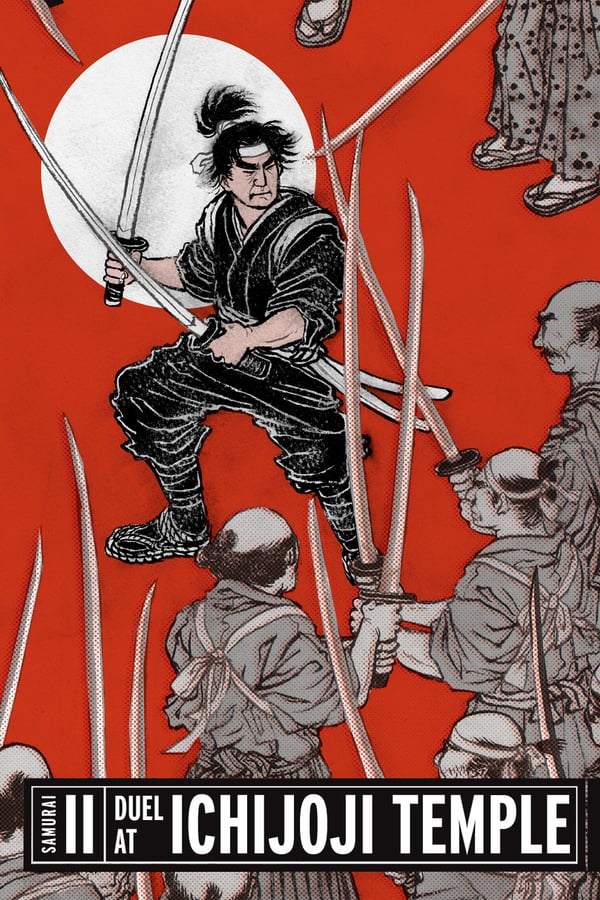
Duel at Ichijoji Temple picks up where the first movie finished. Takezo has taken a new name, Musashi, and is building a reputation as a great samurai. He climbs up the hierarchical ladder by challenging sword masters in the area. One though, Seijuro Yoshioka, refuses to fight, and instead sends his goons to fight Musashi. Unbeknownst to all except us viewers, Seijuro has been courting Akemi, who still lives with her mother and an emasculated Matahachi. Otsu too is still waiting for Takezo to come back to her. Musashi circles closer and closer to Seijuro throughout the film, gaining the attention of a fellow samurai master, Kojiro Sasaki. Kojiro cheers Musashi on, though for what reason, we do not know. In the end, Musashi finally lures Seijuro into a duel and defeats him, but in a twist, spares his life, showing just how much Musashi has changed as a person. When he tries to take Otsu, she rejects him, and he goes off alone to continue his quest to become a great samurai. As in the first film, this one stands well on its own, but leaves enough mystery for you to want to see the conclusion.
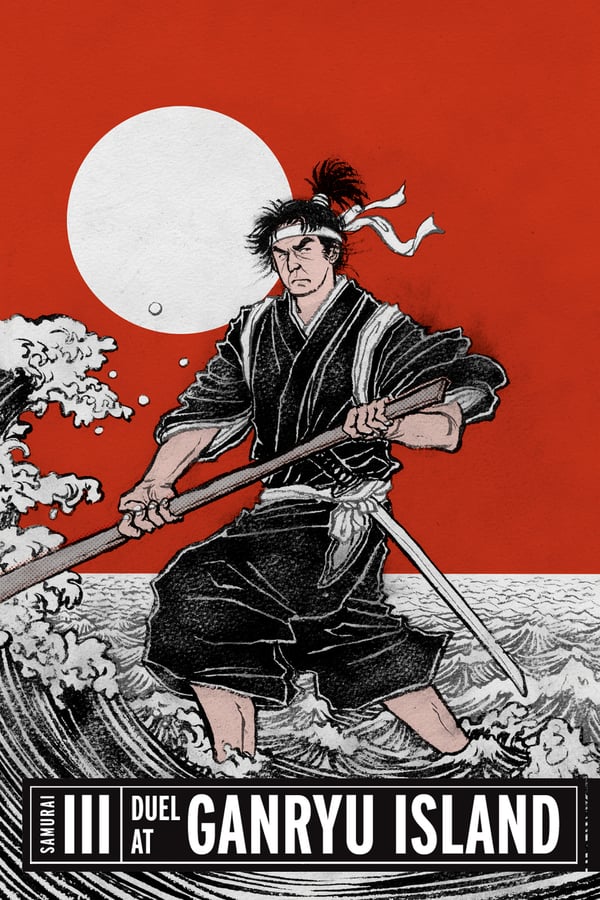
In the beginning of the finale, Duel at Ganryu Island, we finally learn Kojiro’s plan. He wants to grow the legend of Musashi, and then defeat him, for his own personal glory, though Akemi pleads with him not to do so. Unlike Musashi, Kojiro has no compassion for others, and cares only for fame. Kojiro lures Musashi in to a duel at last, but Musashi ultimately declines, leaving the region to farm the land and grow spiritually, while Kojiro takes a job as a teacher to a local lord. Otsu eventually comes to him there, though Musashi is still haunted by her earlier rejection. Akemi, having resulted to prostituting, still longs to be loved by Musashi too, and sets out to find him. She does track him down and confesses her love, only to die in a bandit raid shortly thereafter. Kojiro, now a respected sword master, finally calls for his long-awaited duel with Musashi, and Musashi accepts. As the duel approaches, Otsu begs Musashi to abandon it and the sword and go away with her, but he reluctantly stays on the path. At the fight, the two are very evenly matched, thought Musashi is the victor in the end. I found this film to be the weakest of the trilogy, just seemed like a lot of lead-up without the intrigue of the earlier films. As a whole though, they are fantastic films and worthy of a weekend of binge watching.

Quick takes on 5 films

Blade of the Immortal is a very strange film. Directed by eclectic filmmaker Takashi Miike and based on a manga series of the same name, it is about a Japanese samurai who is given eternal life. He cannot be killed, but instead heals from even the worst blows. He is enlisted by a young girl, who wants his help to hunt down and kill the man who had killed her parents. The movie is violent from the beginning, with buckets of outlandish gore splattered all over the place during the sword fights. Think Kill Bill taken up a notch. I enjoy a good samurai film from time to time, but this one was a bit much for me. The plot is fairly thin, so it relies on its fight scenes to keep you interested. These are often spectacular in the beginning, but even gore fest lovers may grow tired of the constant dripping sounds in this one.
The King’s Choice on the other hand is gripping and holds your attention until the final minute. Based on a true story, it is a war film that isn’t really a war film, about a time and place which many may be unaware. Taking place over three days in April, 1940, it is about the invasion of Norway by Germany, and the subsequent pressure on Norway’s government to make the invasion legal by installing Germany’s chosen puppet as Prime Minister. The current king of Norway has to balance his love for country and its inhabitants with his own personal morals and fears. The battle scenes are tense for sure, but the real heart in this movie is found in the will of the king. Here in the USA we understandably tend to focus on our involvement in the war, but there was obviously a whole lot going on before we ever entered in. This movie is a fantastic look at one such front. Beautifully well made.
Una has a ton of potential, but ultimately fails in the end due to an overabundance of weak plot elements, shoddy editing, and some fairly unbelievable circumstances and dialogue. Una (Rooney Mara) goes and confronts Peter (Ben Mendelsohn) at his work. The much older Peter and a thirteen year old Una had previously had a sexual relationship, and now 15 years later, Peter has served his jail time for statutory rape, changed his name, and attempted to start a new life. Of course, it hasn’t been so easy for Una, who suffers from depression and has never been able to move on. They spend the day learning about each other again, with their past relationship told in quick flashbacks. A powerful subject, and handled properly this could have been a tremendous film, but it too often goes for shock value instead of subtlety, and almost has the feel of a teenage drama, albeit with more a more serious subject.
The Killing of a Sacred Deer is one wild trip of a movie. The followup to director Yorgos Lanthimos’ The Lobster (another peculiar movie I really enjoyed), it is a strange psychological thriller, with a lot of hidden meaning that would probably take a couple viewings for my meager brain to catch. Steven is a successful surgeon, with an unknown (but definitely dark) relationship with a much younger man named Martin. Martin eventually meets Steven’s family, and it comes out that Martin’s dad had been killed in an accident, and met Steven through that tragedy. As the movie goes along, we learn some dark secrets, and while quietly suspenseful from the beginning (the music does a good job of telling us something isn’t right from the get-go), it takes a drastic turn halfway through, which is best to see for yourself. The movie is purposefully written in an odd, jerky way, with strange dialogue that makes it seem like all of the characters are suffering from some emotional disorder or detachment. It builds slowly but suredly to a fantastic conclusion. This film isn’t going to be for everyone, and even I might not have liked it on a different day, but today, I thought it was a masterpiece.
I, Daniel Blake is a very touching, and very well told story about a man in northern England struggling in life. Recently widowed and a survivor of a heart attack, Dan is just scraping by . His doctors tell him he can’t work, but the government tells him he can, and thus denies financial assistance. Dan tries to go through the proper channels for help, but everywhere he turns, he is told to fill out a new form, or wait for a phone call, or to go online, which as a life-long laborer, he has no knowledge of the internet or even basic computer functions. He meets up with a young single mother named Katie, who is also starving with her kids, but at least Dan has skills that helps her fix up her new apartment to make it safe and clean. As circumstances for both Dan and Katie grow increasingly dim, we aren’t sure if this movie will have a happy ending or not. Ultimately, it is up to the viewer to decide if it is happy or not. A very sweet movie.

Quick takes on 5 films

Wonderstruck has a ton of potential, but never meets the heights filmmaker Todd Haynes probably envisioned. It is marketed as a children’s movie, based on the kid’s book of the same name. It follows two young people, Ben and Rose. Ben lives in 1977 in rural Minnesota. He is struck deaf by a lightning blast, right around the time that his mother dies. Alone, he strikes off to try to find the dad he never knew, in New York City. In a separate story, Rose was born deaf, and is living in New Jersey in 1927. She reveres silent film actress Lillian Mayhew (Julianne Moore), and when the local theater decries silent movies in favor of the new “talkies,” Rose too runs away to find Lillian in New York. Though the 50 year gap separates our two protagonists, their stories intertwine by the end of the film. It sounds really great, and Haynes does a superb job of creating a world that feels very real for us. Rose’s 1927 is in black and white, with only a soundtrack and no vocals (very silent film-era like), while Ben’s 1977, because he was born with hearing, is loud and vibrant. But while the film builds wonderfully, the payoff just isn’t there. I don’t think younger children for whom this movie is best geared for would sit quietly through its subtle nature either. Not a bad film by any stretch, but unfortunately one where the whole is not greater than its parts.

Mudbound is a very startling look at life in rural Mississippi in the mid-1940’s. Though black men are free by law, they are far from free in society. A lot happens in this movie, and I could go into paragraphs describing all the set up, but it boils down to an unlikely friendship against racism, and standing up as the person you want to be. Henry McAllen owns a farm with his wife Laura, and sharecroppers Hap and his wife Florence tend the fields. When Henry’s brother Jaime and Hap’s son Ronsel return from World War II, they bond over experiences in the war which no one else can fathom. Yet they must keep their friendship a secret, both from Jaime’s and Henry’s father Pappy, a deeply racist old man, and from the town at large, who would see such a friendship as an affront to their beliefs. There is understandably a lot of uncomfortable language in this film, and some disturbing scenes as well, but it doesn’t shy away from an ugly past in our country. I’d like to think my current generation has come a long way since these times (though watching the news, sometimes I’m not so certain), but it is still startling in the fact that 1945 was not that long ago in the grand scheme of things. A brilliantly written (if sometimes anticipated) story, with tremendous acting from Rob Morgan, Carey Mulligan, Garrett Hedlund, and especially Jason Mitchell as Ronsel.

Rotten Tomatoes uses words like “thoughtful approach” to describe Menashe. I prefer “ponderously boring.” It follows a Hasidic Jew living in New York, as he tries to keep custody of his son after his wife’s death. The Jewish custom says the boy can only be raised in a family with a father and mother, so Menashe is under pressure to remarry so he can keep his son. It takes an hour and a half to tell this very simple story, and really, not much else. The film moves at the pace of the life of its characters, and wants to wow us with a look at this society of which very few have much knowledge, but it crawls too slow even for this art film lover. Take my advice, do not waste your time on this one.

About the creation of the Wonder Woman comic, but more about the life of the people that were her muse, Professor Marston and the Wonder Women takes a heartfelt story but is unable to flesh out the story in a heartfelt way. Dr William Marston is a professor at Harvard’s women’s school Radcliffe, and is assisted by his beautiful, domineering wife Elizabeth. They bring in a teacher’s assistant, Olive, who immediately falls in love with both Bill and Elizabeth together. Living in a time when this sort of lifestyle is not only taboo, but illegal, they hide their three-way relationship by saying Olive is a life-in housemaker, while Bill goes on to father children to both of his loves. Bill uses his ideas created in their bedroom, of his dominating and aggressive wife and somewhat submissive mistress to create the Wonder Woman comic. I only wish this film was more subtle. It too often goes for shock value in both scenes and dialogue, which may appeal to a broader audience but loses a lot in the way of art. The story feels choppy at points, like the movie could have been longer to really delve into the story, or maybe they could have trimmed some long sex scenes, which added nothing to story. In the final 20 minutes, the movie decided it wanted to be an art film and featured far too many fade-to-blacks. A bit of a letdown for me, though the strong actors do their best to save it.

In Search of Fellini is a fantastic film that unfortunately no one is going to see due to its extremely limited release. The exact opposite of the theatrics of Professor Marston, this artful film is about a girl who goes out to find her life. Taking place in 1993, before the internet and social media, Lucy is raised in a loving but sheltered house by her single mother, Claire. Claire was a free lover and thinker in the 70’s, and raised Lucy to be smart, innovative, and unique, in a house without sadness. Pets ran off rather than died, and even grandparents continued to send postcards after they “went off to Europe” long after they left this world. When Claire is diagnosed with terminal lung cancer, she hides even this from Lucy, relying on her sister Kerri to keep the lie going. Knowing she will not be around much longer, Claire urges Lucy to finally go out and get a job at age 20. In the big city alone for the first time in her life, Lucy wanders in to a viewing of Italian film director Federico Fellini. Lucy is instantly transfixed, and hatches a plan to fly off to Italy to meet this amazing man. Her journey is both magical and tragic, and lovers of the classic Fellini films will find plenty with which to associate. A lovely and spellbinding film.

Black Panther claws itself to a hit

Black Panther is the latest in a (now) long line of Marvel movies in their shared universe. Having said that, this movie stands well on its own and is a great film for newcomers. It doesn’t rely on any past knowledge of the series, and is a fantastic movie by itself.
The Black Panther, T’Challa, was first introduced in Captain America: Civil War, and this film picks up where that one left off. T’Challa’s father, the king of Wakanda, has just been killed, making T’Challa the new king. Wakanda is a technologically advanced country in Africa, who uses their tech to hide from the rest of the world, who thinks it is instead a poor country of farmers and herders. Their entire technology is based on the metal vibranium, the same metal used in Captain’s shield. When a few criminals, who know the secret of Wakanda, steal a piece of vibranium from a museum, a sequence of events set off, with dire consequences for T’Challa and his whole nation.
This movie features some truly outstanding acting by all of the leads, an impressive list including Chadwick Boseman, Michael B Jordan (scintillating as the evil Killmonger, with an ulterior motive), Lupita Nyong’o, and sci-fi film legend Andy Serkis (in human form without his usual computer-generated masks). This film has it all, from the expected big action scenes to endearing, heartfelt moments. The characters are fully fleshed out and far from one dimensional. At some point the serious awards shows are going to need to actually watch one of these films and see what they are missing.
A lot has been said of the correlation between the plot that develops in this film, and how it relates to our current political climate. I’m not touching that at all, but the film can definitely leave you thinking about a whole lot of stuff, most notably the rights and responsibilities of powerful nations, and as in real life, there are often no clear and right answers, as each side has strong points. Whether you want to delve into all that is up to you, but just taken by itself, the film is still a wild ride.

Quick takes on 5 CLASSIC films

I just read the book less than a year ago, and since the film version of In Cold Blood follows it pretty faithfully, there isn’t much else to say. The film adaptation was done well. To make it feel more real, director Richard Brooks did it in black and white, and used mostly unheralded actors, with the exception of Robert Blake in one of the leads. It has a documentary kind of feel to it, especially towards the end as the killers’ execution by hanging nears. A very dark and enthralling movie, made very real when you know it all really happened, much like it is portrayed on film.


The original 1963 Lord of the Flies film adaptation is just ok as far as I’m concerned. Based on the book that many have read in school, it tells the tale of a group of young boys stranded on an island together with no adults, and how they revert to cruel and violent natures. From the beginning, Ralph and his “second,” Piggy, attempt to enforce some kind of order, but they are usurped by Jack, who only wants to hunt and have fun. Jack’s group siphons off all of the boys and they turn violent. Directed by Peter Brook, this film was done on a shoestring budget with amateur actors, and you can tell it. Ralph is good, the rest are hit or miss, and the jarring music is more of a distraction than anything else. Better to reread the book again that sit through this one.


While not very well regarded when it first came out, Hitchock’s Vertigo is now considered one of his best, some even calling it the greatest film ever made. From 1958, it stars James Stewart as Scotty Ferguson, a former detective hired by rich man Gavin to follow his mentally ill wife, Madeleine (an enthralling Kim Novak). Madeleine seems to be haunted by a dead ancestor, and while tracking her, Scotty begins to fall in love with her. Definitely a Hitchcock-ian suspenseful thriller, it becomes more of a mystery, and even a tragic love story, by the end. This film has a lot more warmth than what you might expect from this director’s other films, with a brilliant and touching story. Definitely one of cinema’s finest of all time.


The Treasure of Sierra Madre is the 1948 classic movie starring Humphrey Bogart, Tim Holt, and Walter Huston. Dobbs and Curtain are a couple down-on-their-luck Americans struggling for work in Mexico. They stumble upon an old prospector, Howard, and the three team up to look for gold in the mountains of Mexico. They find their treasure quickly, but Dobbs’ sinister side is shown almost immediately, as his greed makes him jealous and guarded towards his former friends. When they run afoul of a local tribe of bandits, they decide to finally break camp as rich men and return to America. But Dobbs’ inner turmoil bubbles over and he turns on Curtain. A fantastic movie that is part western, part dark comedy, and wholly arresting, this one is a must-see for classic film lovers. Bogart as a menacing bad guy is worthy all by himself, and the foreshadowed and later, realized scenes are well crafted.

In Kubrick’s A Clockwork Orange, Alex is a true sociopath. Set in a dystopian near-future, he and his like-minded thugs spend their days ditching school and getting in to fights, and their nights performing even more violent acts, including rape. When one crime ends in murder, Alex is abandoned by his crew to face justice alone. After a couple years in jail, he hears of and then signs up for a new psycho-therapy in which prisoners are rehabilitated, and then let free from jail. The process doesn’t take away his aggressive tendencies, but does leave him violently ill if he begins to act on them. Now free, all of his past transgressions catch up to him. He is assaulted by a homeless man who he himself once attacked, and then he is tortured by his former gang. Alex ends up at the house of his rape victim, and again is abused. After all this, is it still hard to feel any sympathy for him, for all of his previous acts. The movie ends quite differently from the book from what I hear (not having read it myself yet). It is my son’s favorite novel, and he didn’t life the film version, but I really did like this one. It is a very violent movie with extremely graphic scenes (it is often pointed to as one of the films that started to lessen American sensors), but it is undeniably Kubrick.

Quick takes on 5 CLASSIC FRENCH films

For this set, I watched five movies directed by five of the great French directors.
Alain Resnais’ Last Year at Marienbad is as divisive a film as there is. The main plot is about an unnamed man trying to convince an unnamed woman that they fell in love a year ago “at Karlstadt, at Marienbad, or at Baden-Salsa, or even here, in this salon.” She spends much of the film arguing that they’ve never met, despite all of the evidence he presents. However, this not a linear movie with a cut and dried story. It is told in flashbacks, in memories, with quick 5 second or 5 minute scenes, sometimes in the past, sometimes the present, and you never know which. Some scenes are told and retold several times, but like a fuzzy memory, each time is subtly different, with a different phrase here, or an object in the room out of place there, or maybe even the setting has completely changed. The near constant background organ music, like the film, leads nowhere and everywhere at the same time, and when it stops suddenly at various points, it grabs your attention more than any explosion in an action movie could (it seems the musical phrases don’t conclude until the finale of the film itself). Many people will hate this film, whereas many, myself included, will be mesmerized and awed by it. There are enigmatic movies which can be viewed several times to answer questions you might not catch the first time, this film however is one where subsequent viewings may just lead to more questions. One of my favorite films I’ve seen for quite some time, and certainly one of the most well written cinematic pieces I can recall.
Pierrot le Fou is another esoteric film, this one by Jean-Luc Godard. Early in the film, Ferdinand Griffon leaves his wife and child for young hottie Marianne Renoir, who gives him the nickname Pierrot, meaning sad clown, which Ferdinand hates. Despite their differences (Ferdinand is a poet and thinker, Marianne is a carefree risk-taker), the two go on a Bonnie and Hyde-esque crime spree together, starting with the killing of a man for his money ($50,000). Chased by gangsters across France and the Riviera, the duo are able stay one foot ahead for most of the film, until finally Ferdinand is caught and tortured to give up Marianne’s whereabouts. Unbeknownst to Ferdinand, Marianne has abandoned him and fled to safety on her own. When they come together again, she again leads him on in another plot to steal $100,000 this time, though he wises up in the end, to the detriment of everyone involved, and Ferdinand indeed lives up to his nickname. The whole film is told as if it is a story, with voice-overs throughout filling in backstory and catching the viewer up on events that happen off camera, and Ferdinand and Marianne even break the fourth wall from time to time to talk to the audience. Part zany caper, part love story, it is ultimately a very personal and touching movie, that feels as real today as it did when it came out in 1965.
Many consider Army of Shadows to be influential director Jean-Pierre Melville’s greatest work, though it wasn’t very well regarded until years after his death. Based on the book of the same name detailing a member’s experiences in the French Resistance during World War II, this film focuses on a small group in the resistance. There are no explosions and very few action scenes, instead, the film focuses on the intrigue of evading the gestapo, and what happens when members are captured. Dealing with escape attempts, suicide pills, betrayals, and the faith in what you are doing is making a difference, even if you can’t see it, this is a tragic film that unfortunately doesn’t have a very happy ending. There are certainly tense moments and it is inarguably well written and directed, and the viewer feels the plight of these resistance fighters, who seem only a hair away from complete failure at all times, but I found it to be just too slow for me. The pace of the film goes along at a crawl, which ultimately makes the profound moments more so, but still is a challenging film to sit through.
The Last Metro also takes place during the war, though with a more personal story. Directed by Francois Truffaut, it’s not really a “classic” because it came out in 1980, but since that was the year of my birth, and I turned 38 this week and am feeling a bit old, I decided to classify it as a classic today. Marion Steiner is running a theater in occupied Paris, having taken over for her Jewish husband Lucas who has gone into hiding. She is putting on a production of a new play, and hires Bernard Granger as the lead, with herself as the main actress. No one in the production is aware that Lucas has not run off, but instead is being hidden in the basement of the theater. As they rehearse, Lucas gives instructions to Marion at night, which she relays to their director as her own ideas. Everyone in the cast and crew are staunchly patriotic, but they hide their feelings as the gestapo are increasingly looking for anti-Nazi messages or deeds. Very well acted by the leads Catherine Deneuve and Gerard Depardieu, there are nice moments for sure, but I couldn’t quite get wrapped up in their plight, whether that was the fault of the script or something on my part.

Diabolique is a 1955 psychological thriller directed by someone known for his work in this genre, Henri-Georges Clouzot. It is about two women, Christina Delassalle (Vera Clouzot) and Nicole Horner (one of France’s greatest actors, Simone Signoret). Christina owns a boarding house where Nicole is a teacher, and they are linked by Christina’s husband Michel (Paul Meurisse), who beats Christina and sleeps with Nicole on the side. Nicole hatches a plan to kill Michel, which they pull off near the halfway point of the film, and end up dumping his body in the pool at school. A few days later though when they come up with an excuse to have the pool drained, they find that his body is gone. What follows is a mind trip, where the duo don’t know if Michel is dead or alive, and if alive, what he will do. A little slow in the beginning, but the payoff in the second half is well worth the wait.

Quick takes on 5 films

Breathe is about a fascinating person, Robin Cavendish, who contracted polio as a young man, at a time when people with his condition were not given long to live. Instead, he lived a long and full life, advancing the cause of severely disabled people and looking for ways to enrich his and their lives. Whereas polio victims tended to spend the rest of their lives in the hospital, Cavendish first moved into a private home, and then received a measure of mobility when his friend invented a wheelchair with a built-in ventilator. Unfortunately, great people don’t always lend themselves well to great movies. This one is fairly dull, despite great acting from the leads Andrew Garfield and Claire Foy, though it is directed well by Andy Serkis in his directorial debut. The ending is a tear-jerker, as we all know this can only end one way.
Wind River is a beautiful film, cold and harsh like its setting, but beautiful still. Starring Jeremy Renner and Elizabeth Olsen, it is about a hunter and tracker, Cory, who finds a young lady beaten and frozen to death in the mountains of Wyoming. On an Indian reservation, most of the locals are of Native American descent, including the dead girl. The FBI sends Jane to investigate, and she and Cory team up to find out who killed the girl. The mystery hits Cory especially hard, as the dead girl was friends with his own daughter, who froze to death herself a couple years before. The movie explores the harsh living of the people still dwelling where our government chose to place them so many years ago. Light on action but still full of tense moments and plenty of intrigue, this film is a fantastic indie flick, written by Taylor Sheridan, who also wrote Sicario and Hell or High Water over the last couple years. Fans of mysteries, westerns, or just plain good writing will love this one.
American Assassin is a pretty ho-hum spy thriller, though lacking in mystery for what you might expect from a movie in this genre. A man, Mitch, is recruited by the CIA for an elite anti-terrorist group, led by hard nosed former SEAL Stan Hurley. Hurley drills his team relentlessly, but when the missions finally come down, things go sideways quickly. The plot is pretty paper thin and there are few surprises, but the acting by Dylan O’Brien and Michael Keaton is very good, and the action scenes do help make up for the light plotlines.
Based on a true story, Stronger is about the life of Boston Marathon bombing survivor Jeff Bauman. This movie is a wild ride of emotions from the very beginning. It is a deeply personal film, much more about the psychological demons Bauman faces than the physical ones. Bauman has to confront his mother, who revels in the attention the family receives, but also all of his neighbors, friends, and the people of the community, who see him as a hero, when all Bauman wants to be is a normal person. He is continually thrust into the spotlight, when all he wants is to disappear. As he struggles with depression and post-traumatic stress, he relies on the tenacity of his girlfriend who refuses to give up on him. Bauman eventually accepts his role as an inspiration to others, and finds hope and the will to live again. As usual, outstanding work by Jake Gyllenhaal in the lead.
I absolutely loved Personal Shopper, which stars Kristen Stewart as Maureen. Maureen is an assistant and shopper in Europe for a hollywood A-lister, Kyra. Maureen however hates her job almost as much as she hates Kyra, but doesn’t seem to be driven to do anything else. Maureen is also haunted by the recent death of her twin brother Lewis. She visits the house where he died, hoping to find some trace of his spirit, and connects with his girlfriend as well. The movie takes a decidedly sinister turn when Maureen starts getting texts from an unknown number, messages that seem very personal, which she credits to Lewis. For a movie where very little action takes place on screen, it is about as creepy as they come. Each subsequent text message ratchets up the tension, and her phone becomes almost another character in the film. Near the end, the thrills extend past the phone and into Maureen’s life. A fantastic movie, though don’t expect to have all the questions answered at the end.

Quick takes on 5 films

Blade Runner 2049 is a fantastic sequel to the 1982 science fiction film. It picks up 30 years after the original. Blade Runners (special police) still track down replicants (bio-engineered lifeforms) who have gone rogue. K (Ryan Gosling) is the best blade runner around, though he too is a replicant. He is tasked with tracking down a replicant who was born rather than made, something thought impossible before. The human police want to kill it, so as to not start a war between replicants who may finally see a future of their own without having to rely on their masters. The company that makes replicants want to capture it, in order to create more replicants through birth, just so they can create more beings faster and help their profit margin. K unravels the mystery in this slow building film, with all of the simmering tension of the original. Whereas the original left some major questions unanswered, like most films these days, this one tries to answer them all rather than leave something to the imagination, but it is still a worthy followup and a blast from beginning to end.

Super Dark Times is also a great film, this one following a group of teenagers growing up in the mid 90s. Zack and Josh are best friends, while outcast Daryl and his friend Charlie tag along with the duo. The movie does a great job of letting us get to know them all before the action starts. A stupid fight one day leads to an accident where Daryl is killed. The two friends and Charlie hide the body and agree to go on as nothing has happened. However, Josh stops going to school, and even when Zach sees him outside of class, Josh acts weird. This causes Zach to grow paranoid, especially as more and more evidence builds showing that Josh has indeed gone off the edge. The climax is a gut punch. In a day when school shootings seem like a regular occurrence, this film opens your eyes to how young psychopaths can be made.

Detroit is about the riots in this city in 1967, and specifically, the killing of three black men by a brutal all-white police force at the Algiers Motel. With racist police patrolling the streets, the anger of the mostly black urban population starts to boil over until violence finally breaks out. At the Algiers, a man fires off a few rounds from a toy gun, and police and national guard nearby hear the shots. Thinking it is a sniper, they storm the motel, rounding up all the inhabitants. Over the course of the night, they beat the black men ruthlessly, killing 3 as the night progresses. To this day, the exact events of that night are shrouded in mystery as the case was never solved to everyone’s satisfaction (the police officers were charged with murder, but found not guilty). Because of this, the film admits itself as a dramatization, but still, knowing it probably hits closer to truth than fiction, it is a sobering vision of a stark moment not too far removed from present day. As a movie, it is ok but not great, but still, many startling moments.

Logan Lucky is just great film heist fun, directed by someone who knows a thing or two about this genre, Steven Soderbergh. The Logan brothers, Jimmy and Clyde (Channing Tatum and Adam Driver) are a pair of country good ol’ boys in West Virginia, and they are known for their bad luck. Down on their luck and with no money, they decide to rob the local speedway during a big race. They recruit a ragtag group of helpers, and most of the movie is spent on the day of the robbery. Big stars pop up all over the pace throughout the film, adding to the fun. The film features some great moments and has the right blend of humor and pacing to build a fantastic movie. The big “how it went down” reveal at the end isn’t quite as good as Soderbergh’s Ocean’s Eleven, but it comes close.

In Happy Death Day, “Tree” gets to relive the last day of her life over and over again, Groundhog Day style. A college student, she is murdered on her birthday, and because she is a royal bitch to everyone she knows, the list of suspects is long. No matter what she does, she is always killed before the day is up. The movie works well despite the silly-sounding plot, both because Jessica Rothe is engaging as the lead, and because the film seems to play on just the right side of not taking itself too seriously. This movie is pretty good, and it’s not just for the teenager/young adult crowd that the trailers made it seem for. It’s funny and thrilling and in the end, endearing as well.

Quick takes on 5 CLASSIC films

Night of the Living Dead is the grandfather of the modern zombie film, the first to show zombies (called ghouls in this film) as slow, shuffling, man-eating creatures who can only be stopped by a blow to the head. It follows a rag-tag group of survivors staving off the dead in an old farmhouse. They fight among themselves as the zombies outside grow in number, and eventually start getting picked off one by one towards the end of the film, as they await word of rescue from the news broadcast on the television. Released in 1968 from a very small budget, it garnered a ton of negative press for being too gory and intense (young children were able to get in to the theater as this was before the current film rating system), but due to its success, it spawned a whole genre of copycats. It definitely is dated when seen today, and the characters do unspeakably dumb things (even by horror film standards), but where would The Walking Dead be without it?
Logan’s Run is a bit too ’70’s campy for my tastes. It takes place in a dystopian society a couple hundred years in the future, where people are not allowed to live past 29 years old. Instead, they are “renewed” (killed) in one of the regular ceremonies. Logan is a sandman, or cop, who chases those runners who don’t want to be sacrificed. Logan is recruited by the head computer, who oversees the whole society, to infiltrate the secret organization who helps runners reach Sanctuary, a supposedly safe zone for people who have run away from the city. A very good premise for a sci-fi nerd like me, but this 1976 film hasn’t stood the test of time very well. Michael York and Jenny Agutter are solid as the two leads, but most of the other actors are fairly wooden, and the dialogue and action scenes are equally rough. With today’s Hollywood in love with remakes, I’d be in favor of seeing this one updated.
Thirteen years before the cultural phenomenon that was Twin Peaks, David Lynch’s first major film was Eraserhead. Released in 1977, this is a trippy horror movie that is pure art on film. You can watch this one a dozen times and probably come away with some different each time. It follows Henry Spencer, a strange and quiet man who lives in a ramshackle, one room apartment in a rundown, post industrial neighborhood. The buildings and plants all around him are decaying, and life itself seems to be winding down in an almost post-apocalyptic way. Spencer finds that his girlfriend has just given birth, though as her mother admits, “it might not even be a child.” When we see the baby, it is a grotesque alien-like monster. Henry continues to have strange fantasies about a woman in the radiator, and there are also intermittent scenes of a man in space who seems to be controlling it all (or controlling something, anyway). It is all very obtuse, and there is a lot more going on which defies definition. This is not a movie that makes a lot of sense and it is certainly not for everyone, but it is brilliant film making.
His Girl Friday is a classic screwball comedy, released in 1940, starring Cary Grant and Rosalind Russell. Walter is a driven editor of a popular tabloid-style newspaper. He still has feelings for his ex-wife Hildy (who was also his star reporter) but she got tired of playing second fiddle to his career, and is now preparing to marry a boring insurance salesman, Bruce, to settle down. The backdrop of the story is the impending execution of a murderer, who appears to be innocent. Cary wants to trap Hildy to stay and write the story, going so far as to having Bruce arrested on trumped-up and fake charges on multiple occasions. Like a lot of movies in this genre, the dialogue is quick and funny. Grant is his usual charming self, and Russell is eye-arresting as the strong-willed woman who dominates all the men on screen.


Everyone under 40 knows the Steven Soderbergh Ocean’s 11 with George Clooney and company, but it was originally done in 1960, starring the Rat Pack. Frank Sinatra is Danny Ocean in this one, backed up by Dean Martin, Sammy Davis Jr, Peter Lawford, and Joey Bishop. A different take than the remake, but the same basic story: Ocean and his team of crooks are assembled to knock off a bunch of casinos (five in this case) on the same night. The first hour of the film generally moves pretty slow, as each of the characters are introduced and we get to know their individual motives. Once the predetermined night approaches, the action finally takes off. The film relies heavily on the banter and charisma of its leads, but as with most films involving this team, that isn’t necessarily a bad thing. There are a few unseen twists that keep the men on their toes, and while it isn’t a fantastic film as some of the others I reviewed above, it is still a fun heist movie.

Quick takes on TEN films

Dunkirk is the much hyped and praised World War II film that came out earlier this year, directed by Christopher Nolan. It tells the story of the evacuation of troops stranded on a French beach, beset by German soldiers with no way out but the sea. The movie follows a soldier trying to get off the beach, an older civilian trying to bring his small sailboat to the shore to help evacuate, and an air force pilot patrolling the air attempting to shoot down enemy craft as they target the English rescue boats. It is a harrowing and intense film, though for my taste, it has a little too much going on to really get invested in any of the individual characters. It is stirring though, and features some beautiful scenes and rousing music that builds throughout the film. War film lovers will love it, and while it isn’t the best war film out there as some have called it, it is a very good one.
mother! on the other hand, is absolutely brilliant, though admittedly, this one isn’t for everyone. It isn’t a traditional movie, though it does have a plot. Mother is the woman of the house. She has been refinishing the house while her husband, Him, has been trying (and failing) to find his muse as a writer. Their quiet life is turned upside down when Man and Woman arrive. Him accepts them quickly and enjoys their company, but Mother is apprehensive from the beginning, as they don’t seem to respect her wishes when it comes to treating the house with care. It gets crazy quickly when Man’s and Woman’s children arrive too, and Mother’s life (and the house) spiral out of control from there. If my clues haven’t left you enough to see what this movie symbolizes, then you should just go watch it (and honestly, it is far deeper than a simple allegory too). I love movies that make you think, and especially ones that force you to watch it a second time, and this one does both. Directed by Darren Aronofsky (whose movies have been hit or miss for me), and with a compelling cast of Jennifer Lawrence, Javier Barden, Michelle Pfeiffer, and Ed Harris, this may be one of my favorite recent movies.
If you’ve been reading my blog for awhile, you’ll know the turn I’ve taken on Robert Pattinson. Once hated for his silly Twilight movies, he has redeemed himself for his string of wonderful, independent films. The latest is Good Time, in which he is so good, I didn’t recognize him at first. He plays Connie, a no-good brother to Nick, an adult with special needs. Connie loves Nick and wants to take care of him, and thinks he can do a better job than “the system,” but he gets them in trouble when they go to rob a bank and the heist goes sideways. Connie spends the rest of the film trying to get Nick out of the jail, and no matter what he does, everything gets worse and worse. A fantastic look at what love is, and if love is always a good thing. The movie has the feel of a low budget B movie, but Pattinson is eye-arresting throughout.
Past Life is an Israeli film, taking place in the ’70s, where the mystery exceeds the big reveal, but that’s isn’t necessarily a bad thing for this film. Nana and Sephi are two beautiful, talented sisters. Sephi attends a top arts school where she is being trained as a singer, and Nana runs a magazine, and both have expectations of bigger and better things down the road. Their father is a successful doctor and Holocaust survivor. Their peaceful worlds are invaded when Sephi is approached by an older Polish woman who accuses their father of murder. Not knowing much about their father’s time during the war (he has kept those dark memories under wraps), Nana and Sephi start digging, trying to find out more about their father and his mysterious past. The end isn’t all that surprising, but the lead up to it is exquisite filmmaking.
Beach Rats is a dramatic masterpiece about a man facing a crisis of self. He is homosexual, but like a lot of young men, is scared to come out to his family and macho friends. He runs in a bad crowd, and the tough guys would most certainly turn on him. So instead, he finds a girl to be his girlfriend, and clandestinely meets older men at night for one-night stands. He seems to genuinely care about the girl, but he continues to grapple with his sexual desires. His poor decisions start to catch up to him by the end. This is one of those independent films that doesn’t feel low budget, as it is shot well, with good direction, and the lead actor is mesmerizing; I found myself rooting for him from almost the beginning of the movie.
Movies typically about subjects with current social ramifications tend to do well with the critics, and Ingrid Goes West is a good example. I thought it was a pretty good film, but not as thought provoking as it maybe could have been. The very talented Aubrey Plaza plays Ingrid, a young woman with cash in hand from her recently deceased mother, who stalks social network celebrities and wishes to live a life like them. Ingrid finds happiness only in “likes” and “clicks” and cannot seem to react on a personal level to anyone in her life. Her latest victim is Taylor (Elizabeth Olsen), and Ingrid is able to get into her inner circle quickly. You hope that maybe by the end of the film, Ingrid can move past her obsession with online celebrity status, but unfortunately this isn’t that kind of movie. Very well acted by the two female leads, and I do like how the movie shines a light on a real problem in today’s society.

Gook is another one showing social issues, though this one set in 1992, against the backdrop of the Rodney King beating. Rather than following the black community though, it shows another minority, a couple Korean-American brothers living in Los Angeles. They represent the bottom rung of society in their area; with news of white cops beating King, the brothers are derided by the mostly black community where they live and work, and even by an older Korean man who runs a shop across the street from their shoe store who sees them as disrespectful to their elders. When the cops are found not guilty of the King beating, the riots break out. This sets up a surprising conclusion with a lot of reveals you don’t see coming. Like many independently made films, there are some weird moments that don’t make a lot of sense in the grand scheme of the film, but this is a fantastic example of a great movie done on a small budget, and you should definitely watch for director Justin Chon in the future. This movie took a lot of awards in the film festival circuit in 2017. Definitely worth a watch.
Netflix has been making original films for awhile now, but Bright is their first big budget attempt, costing about $90 million for the Will Smith blockbuster. Unfortunately there are a lot of similarities between this film and another Smith flop from a few years ago, After Earth. Bright is a big budget sci-fi flick with a very interesting premise, ultimately doomed by wooden acting and boring action scenes, and dialogue that seems lifted off a bad Syfy cable movie. Bright takes place in a modern world where orcs and elves have lived among humans for all time. Thousands of years ago, the orcs followed an evil power named the Dark Lord, and while the bad guy was defeated with magic, elves and humans have never let the orcs forget who they threw in with. As such, orcs are deemed the inferior race and are often laborers, whereas it is the elves that hold all the money. Smith is a human cop teamed up with the first orc cop (Joel Edgerton), and the plot revolves around the duo dealing with racial tensions, but also quelling an evil sect attempting to regain powers of magic to resurrect the Dark Lord. Netflix spent a lot of money on this movie, and while it is getting hammered by the critics, it also had a ton of viewers on opening week, and Netflix has all ready greenlit a sequel. Science fiction lovers like myself may find a few things to enjoy, but overall it really is a bad a movie.
Viceroy’s House is a historic drama about the handover of rule of India from Britain in 1947, centering on the British representative’s house. Lord Mountbatten is there to try to ensure a peaceful exchange and wants a unified India, but centuries of mistrust between the Hindu and Muslim people has led to them wishing to have their land divided into India and Pakistan to prevent future clashes between themselves. The violence on the streets gets into the house too, with servants of both cultures fighting at each. Mountbatten ultimately is (mostly) able to keep the peace when India is freed, but his desire to see it as one country does not come to pass, as he is just one man against hundreds of millions of people in India (and his own country of England) who wish to see it split up. A wholly separate plot involving the love of a Hindu man and Muslim woman never reaches the heights the filmmakers probably hoped for. I love good history films, unfortunately this one gets bogged down between dull exchanges and rushed actions. Even my love of the genre couldn’t keep me interested in this one.

I went into Cars 3 with a bit of trepidation; not really liking the first sequel, I didn’t think this movie needed to be made. However, it is a good one, though not as great as the first Cars. Lightning McQueen is getting up there in years, and has been passed by a younger generation of racers, cars who are using the latest technology to make themselves faster than Lightning could hope to be. McQueen needs to go back to his roots, and find a way to make himself relevant again. The whole “aging star needs to reinvent himself” story has been done a million times, but that doesn’t make this version bad. The Toy Story franchise and Finding Dory aside, I generally haven’t liked the Pixar sequels much, but this one is a passable couple hours and is good family fun.