Quick takes on Ted K and other films

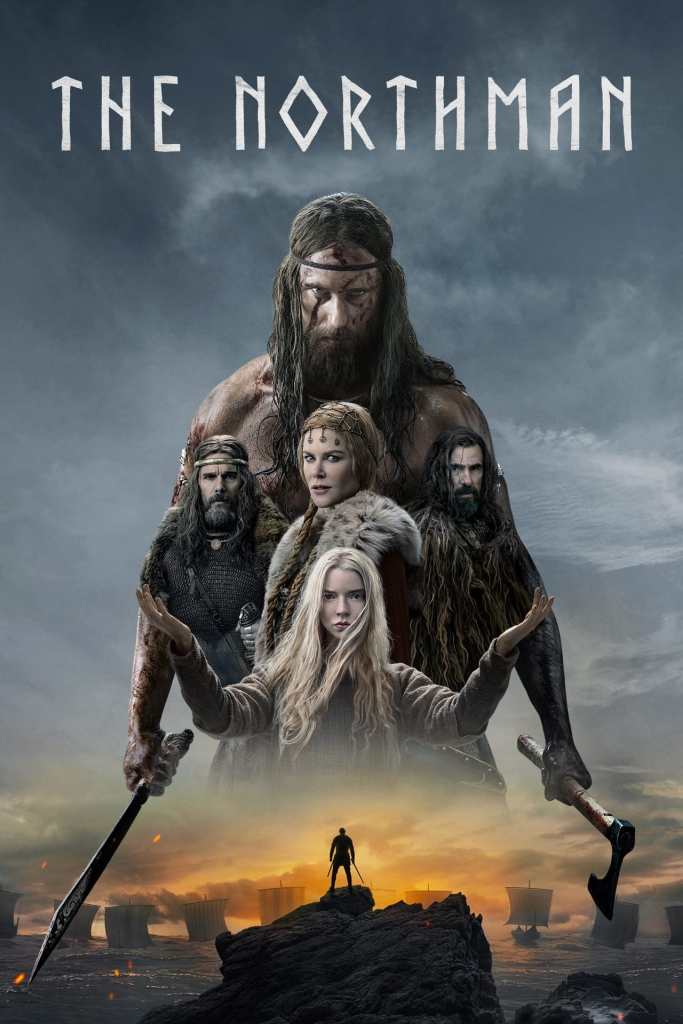
The Northman is the latest from director Robert Eggers, whose last movie, The Lighthouse, was awesome. The Northman continues that awesome-ness(?) streak. The movie follows a Viking warrior named Amleth (Alexander Skarsgård), and his quest for vengeance. As a boy in 895 AD, he witnesses his uncle, Fjölnir, murder his owner brother (Amleth’s father, and the king of their small territory) and then abscond with his brother’s wife, Gudrún. Amleth himself escapes murder and grows to be a strong fighter, harboring revenge in his heart. When he hears of a group of slaves to be sold to Fjölnir, Amleth brands himself a slave and boards the ship. In the intervening years, Fjölnir has lost the kingdom he stole, and is now a glorified sheepherder, though he still has wealth enough to pay for a group of loyal fighters and slaves to work his lands. Gudrún is now his wife, and she’s given him a son. Amleth knows she is little more than a slave herself, and he wants to rescue her while also taking down Fjölnir, so he works his ass off to gain Fjölner’s trust. Only when he is close enough to his prey does he show his intentions, though he may not like the result he gets in the end. Steeped in Viking traditions, lore, and mysticism, I loved this move through and through. Fantastically bloody, with harrowing battles and wonderful intrigue, it is a thrill ride from the opening scene until the ultimate climax. A wonderful cast helps too (Skarsgård of course, but also Anya Taylor-Joy, Nicole Kidman, Ethan Hawke, and Willem Dafoe). ★★★★½

I avoided Michael Bay’s latest, Ambulance, when it hit theaters. It looked like your typical Bay “thriller,” which means lots of explosions, lots of background lights/sun/bright spots in the camera view, and crazy fast, sweeping closeups, jumping from character to character in a frenetic pace. When it hit Peacock during my free trial, I thought, “what the hell, why not.” Should have listened to my gut. This is the most boring thriller you’ll find, and it has every bad Bay trope under the sun, including some new fast-paced arial camera work thanks to his discovery of drones. A man needs money for his wife’s operation, and, desperate, he goes to his criminal brother for a loan. Rather than give a loan, the brother recruits him for a bank heist that day. Police break it up, so an easy getaway turns into an all-day chase across town, as the robbers try to make a getaway in a stolen ambulance, housing a cop shot by one of the two during the robbery. Yes, it is as ridiculous as it sounds, but not nearly as ridiculous as everything else that happens in this flick. Cops that ram themselves into everything EXCEPT the ambulance they are chasing (and how is a bulky ambulance running circles around these guys anyway?!?). The lead cop calling off the chase, not due to the dangers to the civilians nearby, but because he finds out his dog is in the backseat of one of the cop cars. The hostage EMT in the ambulance having to use a hair clip to tie off an artery in the hurt cop. C’mon Mike, you running out of ideas here. No redeeming value that I can find. ★

Lamb was a much-talked-about film from 2021. Out of Iceland, it was directed by newcomer Valdimar Jóhansson and starred Noomi Rapace as the only recognizable face stateside. She plays Maria, a woman who, with her husband Ingvar, lives on a remote sheep farm. Birthing season is here, and after a couple normal births, an odd baby is born to an otherwise normal sheep. The baby is born with a human body, but with a sheep’s head and one sheep arm. Rather than be repulsed, Maria, who has lost one child previously, decides to take “Ada” in the house and raise her as her own. Things would probably go on normal if not for the return of Ingvar’s brother, Pétur. He sees Ada, who is by now up and walking around on two legs, and wanders if Maria and Ingvar have lost their minds. The film is marketed as a fantasy horror flick, but it isn’t your typical horror movie. No jump scares, just a lot of ominous sounds over slow camera work, building tension until you are as taut as a wire. Most fans of this genre aren’t going to like the snail’s pace, but I dug it, though there weren’t any real surprises to be found. It does make you think a bit, which is always good. ★★★

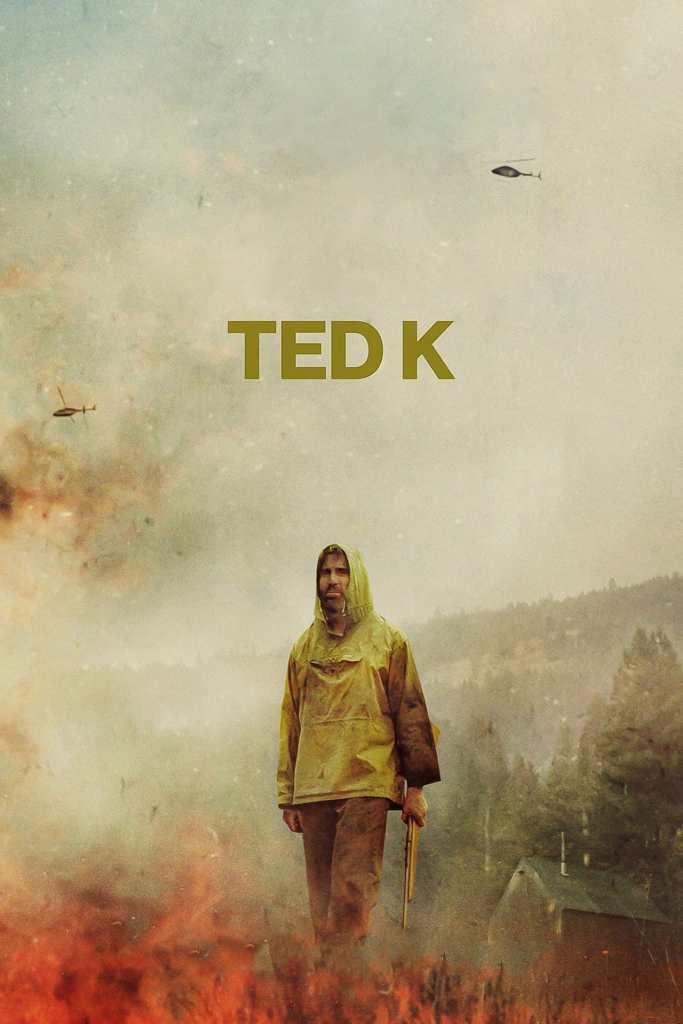
Ted K is a biopic about Ted Kaczynski, the infamous Unabomber, and his reign of terror sending bombs through the mail in the late 70s until his arrest in 1996. Ted is portrayed by Sharlto Copley, most famous as the main character in the awesome film District 9. In this film, he is front and center and damn near the only person we ever see on screen. The film is told completely from Ted’s point of view. In the beginning of the movie, he has already given up on society and is living off the grid in a tiny one room cabin in rural Montana. As he sees encroachers into his quiet space (loggers, airplanes flying overhead, or kids just joyriding motorcycles on his land), Ted decides to do something about it, and begins shipping his bombs to people involved in technology, computers, or left-leaning college professors. Throughout it all, he writes constantly, and we the viewers get a peak into his notebooks. It would be easy to dismiss his writings as the ravings of a lunatic, but the film does an excellent job of pulling you into his world. As it goes along, I started seeing where he was coming from. Even while I still detested his bombings, hearing him talk about society’s complete reliance on technology, and how we are losing our humanity, I couldn’t help but nod a couple times. Kaczynski is (not was, he is still alive in jail as of this writing) a psychopath, but he’s not an idiot; in fact, he’s a math genius and undeniably bright. Copley does an outstanding job as the unhinged serial killer (who, as Ted reminds us, did not see himself as a serial killer; killers get joy from the act of killing, whereas he claims that it was only to bring attention to his goals). ★★★½

Every now and then I’ll throw one of these not-quite-classic-, not-quite-modern-films into the rotation, usually because it’s something I should have seen by now but never did. Today’s example is The Untouchables, featuring an all-star cast and telling the story of the takedown of Al Capone in 1930s Chicago. Kevin Costner plays Eliot Ness, with a team made up of Malone (Sean Connery), Stone (Andy Garcia), and Wallace (Charles Martin Smith). In a corrupt city where everyone from the mayor on down pays secret allegiance to Capone (Robert De Niro), Ness and his team are tasked by the government to put an end to his underground rule as king of the city. Having recently watched a handful of director Brian De Palma films, I knew what style to expect. It has the look and feel of a low budget flick, with Hollywood dollars behind it, and with De Palma at the reigns, there’s nothing subtle to be found. Not to mention he plays loose with the facts. It is mildly entertaining, but the overacting is a bit much (I can practically hear De Palma in the background shouting, “Give me more!”), and I would have preferred a lighter hand at the controls, not to mention on the editing table. ★★½

  • TV series currently watching: Star Wars The Bad Batch (season 1)
  • Book currently reading: The Invisible Life of Addie LaRue by VE Schwab

Quick takes on Minamata and other films

Love in Kilnerry is a cute little romcom if you, like me, are into dad jokes. The premise is simple: a tiny town New Hampshire, whose biggest employer is a chemical plant, is thrown into turmoil when the chemical produced at the plant is changed by the higher ups, and the new chem has a purported side effect: it raises the sexual libido of those who interact with it. The community, mostly made up of middle aged and elderly folks who never moved away, are in a tizzy over what “sexual improprieties” may now arise from drinking the water. And things do start to happen. The staid sheriff arrests a couple for public fornication, the long-time mayor (and bar owner) makes moves on a local divorcee, an elderly couple of singles start dancing together (in a very risqué manor), and a young storeowner sets her eyes on the sheriff himself. And lets not forget the town priest… The wordplay is funny in an old-timey sort of way; I can see my parents laughing pretty hard. And I did too, though my wife (who did not watch the whole thing) was just rolling her eyes. To each his own. It’s definitely low budget, low production, and not great acting, but the dialogue is fun. ★★½

Minamata is the telling of photojournalist W Eugene Smith and his work in Japan, telling the story of the mercury poisoning of the village of Minamata by a local factory. In 1971, Smith is already an established photographer for Life Magazine at the start of the film, but he’s getting up there in years and has pretty much given up on the world. He doesn’t like the direction journalism has taken, and he’s decided to drink away what days he has left. However, he is visited by a Japanese woman named Aileen, who begs for help to spread the word about Minamata. After digging a bit, Smith sees that stories have popped up here and there over the last few years about the village, but no one has ever gone there and done a deep dive into what is actually happening. With the go-ahead from his editor, Smith does just that, and what he finds is alarming. A whole generation has been born crippled from the poison the company is dumping in the water. Children and adults are born disfigured or with serious developmental deficiencies. The people are angry, but at the same time, shame has kept them from letting others see their disfigured family members. Smith knows that he needs to convince the locals to allow him to share their stories with the world, if help is ever going to come. Smith is portrayed by Johnny Depp, which is probably why you’ve never heard of this film. It was definitely buried after all the allegations came out against him, and it was very quietly released in various countries over the past couple years. The film is a bit uneven, though it is certainly moving at various points. Say what you will about Depp, but he’s undoubtably a great actor, and he draws you in to the struggle onscreen, even as his character deals with his own demons. ★★★

The Secrets of Dumbledore is the latest from the Harry Potter world and the third film in the Fantastic Beasts series (and maybe the last; it did pretty poorly in theaters, so we shall see). I wanted to give this film every benefit of the doubt despite the reviews, but it’s just not very good. For one, no plot developed for a solid 30-45 minutes, and that’s too long for a film of this type. Other than “Grindelwald is bad” and “Dumbledore & Scamander are good,” the movie doesn’t advance the overall story of the series either. Grindelwald (with Mads Mikkelsen replacing Johnny Depp) has a goal to be elected Supreme Mugwump (head of the wizard world) in order to advance his goals of making war against all non-magic muggles. (Again, we don’t know of this election for a long time into the movie.) Dumbledore must overcome personal history with Grindelwald if he is battle him, and he is aided by Newt Scamander and friends. For a movie about magic, this movie is awfully light on wonder. It fails to capture the imagination as the old Harry Potter films did. Back then, you may have had the overarching plot of Voldemort gaining power and setting up his ultimate duel with Harry, but each film still had a subplot to develop and keep the film moving. This one had none of that. It is like one big prologue to a fight that is yet to come. A fight that we may never see if Warner Bros doesn’t do something to right this ship. ★½

Didn’t know what to expect from The Outfit; seems some people loved it, and others called it overhyped. After a viewing, I think I lean more towards the latter group, but there are good moments. The movie takes place over a single long night in 1950s Chicago. Leonard Burling runs a men’s tailor shop. The shop is frequented by the Chicago mob, who use it as a safe house. Leonard, called “English” by the mobsters due to his British accent, allows it, as the men are all good customers. On this particular night though, events go sideways. First, Francis and Ritchie show up, with Ritchie having been shot in the abdomen. Ritchie is mob boss Roy’s son, and Francis threatens Leonard unless Leonard sews him up. The shooting was from a rival mob, over a supposed tape recording implicating Roy’s mob family in criminal activity, a tape provided by Al Capone’s “Outfit,” a group tasked with protecting crime families from the law. The rest of the film plays out as a who-done-it search for the rat leaking info to the FBI, as the two local crime families target each other (and just as often, themselves). Solid acting, in particular by longtime stage actor and star Mark Rylance as Leonard, but there were a few too many “gotcha” moments for my liking. When a film drops a plot bomb on the viewer once, it hits hard, but whey they do it 3 or 4 times over the course of a movie, it loses luster by the end. Fun enough for a single viewing, but that’s about it. ★★½

A darling of the critics, very rarely does director Paul Thomas Anderson deliver for my tastes. The only film of his I really liked was Punch-Drunk Love, but somehow his movies always wrack up the nominations (though if you look at audience reviews instead of critics, you get a different story). His latest is Licorice Pizza, a story about a 15-year-old boy, Gary, who falls in love with a 28-year-old woman, Alana. While young, Gary is a go-getter and entrepreneur, who’s taken some money earned from a few acting gigs to start several businesses whenever he sees an opportunity to get rich quick. Alana is the opposite: at 28, she doesn’t have a goal in life and is aimless. Despite her age and the restrictions of societal norms, she can’t help but be attracted to the charismatic Gary. However, despite attraction on both sides, the film mostly takes a meandering path on their relationship, as the two continually attempt to make the other jealous, or to move on to other relationships that never pan out. The movie has one thing going for it: it is a wonderful time capsule to the early 70s period in which it takes place. Other than that, it is a huge bore with only a handful of compelling moments, and unfortunately, it is far too predictable to be enjoyable. ★★

  • TV series currently watching: Star Trek Picard (season 2)
  • Book currently reading: Before the Fall by Noah Hawley

Jacques Rivette’s 13 hour-long Out 1 not for the faint of heart

Back in January I dipped my toes into director Jacques Rivette’s films. I liked a couple very much, but others didn’t do a thing for me. Longtime readers of my blog know I love a good, long film, and Rivette has one of the longest. His Out 1: Noli Me Tangere clocks in at nearly 13 hours long, broken up into 8 feature-length episodes. This film is not for the easily distracted, but if you invest into it, it is an ultimately rewarding experience.

If a 90 minute film takes 20 minutes to introduce the characters and “set the table” so to speak, imagine how long that takes in a 13 hour film? For Out 1, it takes over 3 hours before I started to get a sense of where we were going. Even then, when real plot elements start developing, I mostly came up with more questions than answers. To begin, we are introduced to two theater/acting troupes (one led by a lady named Lili, the other by a man named Thomas), each prepping a performance of different plays by Greek playwright Aeschylus. Each play is very esoteric, full of almost-improved moments, and frankly very out-there takes. Much of the first two episodes are made up of these rehearsals, which seem to have little to do any kind of overarching plot, but, I think, very necessary to getting to know the various characters. If you are paying attention, you really get a sense of the personalities of the various characters (and there are a lot in this film).

Two other characters, not involved in the acting, are also introduced, in short scenes early on, but with bigger roles as the film progresses. Frédérique cons men out of money to get by in her bohemian lifestyle, and Colin plays deaf and dumb to beg money from diners at local cafés. One afternoon though, Colin receives a mysterious letter under his door, referencing published works by Lewis Carroll and Honoré de Balzac; specifically, Colin begins to believe there is a secret group in the city known as “the thirteen” who have some unknown goal in mind. Colin sets out to find this clandestine group. This mystery continues to build through the fourth episode, when Colin believes he has found at least one member of the thirteen, a shopowner named Pauline. As the viewer knows, but Colin does not, there are connections between Pauline and at least one of the actors in the two troupes.

As the film plays out, other connections between various characters are discovered, and subtle mystery is sometimes abandoned for real suspense. For example, a chance encounter between Frédérique and her latest target nets her a pile of old letters, stolen from his armoire. She reads them, and sees they are full of plots to do harm to the city (the man is also a member of the thirteen). When Frédérique contacts a person on the return address of several letters, in an attempt at blackmail for money, it turns out to be Lucie, a lawyer who had previously been in contact with Lili from one of the above acting troupes. Frédérique’s and Lucie’s interaction on a rooftop presents the first very real sense of danger and intrigue to the viewer; Lucie throws some not-so-subtle threats at Frédérique and tells her she is in way over her head, before walking off with the letters without paying.

In the 6th episode, this tightening of circles between the various characters becomes more transparent, and we see there are a whole lot of connecting lines between these dots. I don’t think many will sit down for a 13 hour film, but in case you do, I don’t want to say any more, to ruin some of the great surprises that come in the final 2 episodes.

Ultimately what this long film boils down to is human connection, and the lengths people go to to be “part of the group.” The Thirteen, the two acting troupes, etc., are all just just reasons to get together, to feel a part of something. I enjoyed the journey for the most part, and applaud the scope of the project, even if at times there seemed to be a lot of filler. ★★★½

  • TV series currently watching: Servant (season 3)
  • Book currently reading: Before the Fall by Noah Hawley

Quick takes on Tokyo Story and other Ozu films

Returning today to one of Japan’s greatest directors, Yasujirō Ozu, and specifically, five of his post-World War II films. First up is 1952’s The Flavor of Green Tea Over Rice. While there is a subplot involving a modern niece wanting to escape the tradition of an arranged marriage and pick her own husband, the main focus of the film revolves around longtime married couple Taeko and her husband Mokichi. Their’s was an arranged marriage, and despite being together for years, they’ve never found common ground. Taeko is a city girl, who likes to hang out with her girlfriends and go to spas, whereas Mokichi, from a country background, likes the quiet and is at peace away from the hustle and bustle. Taeko regularly lies to her husband to go out with her friends, and makes fun of him behind his back, talking about how slow and dim he is. But Mokichi is not an idiot; he may like the slow life, but that doesn’t mean he’s slow, and hopefully, before the end, the couple can talk about their differences and put their longtime simmering animosities to bed. A lovely film, looking at one of Ozu’s favorite topics: the modernizing of Japan’s society and its affect on the family unit. ★★★½

Tokyo Story is often considered one of the finest films ever made. It follows the Hirayama family and shows what can happen to the traditionally tight family unit as Japan continued down the path of western modernization. Shukichi and his wife Tomi are in their 60s and live in a rural community with their youngest daughter Kyoko, who is a school teacher. Their two eldest children, Koichi and Shige, live with their spouses in Tokyo, a day’s journey away. A fourth child died in the war, and his widow, Noriko, also lives in Tokyo and keeps in touch. It has been some years since Shukichi and Tomi saw their adult kids, so they make the trek to visit, perhaps for the last time as they are getting up there in years. They envisioned a warm welcome with kids (and grandkids) happy to see them and spend the week or more together, but their kids have busy lives of their own, and the grandkids are shy, as they don’t know their grandparents. Koichi and Shige keep trying to pass the parents off to someone else to “take care of;” only daughter-in-law Noriko takes time off work to go sight-seeing with the elder couple. When all the travel takes its toll on Tomi, her children can barely make time to see her in her final days. It’s a sad film to be sure. You want to dislike the two eldest children for being selfish, but Noriko tells her parents (and the viewer) that this is just the way things are these days, and to forgive them their lives. In typical Ozu leisurely fashion, the film plays out slowly with great import given to every exchange. Very touching movie. ★★★★

Good Morning, released in 1959, is a loose remake of Ozu’s 1932 silent film I Was Born, But… I really liked that movie, but this one didn’t connect with me as much. It’s a pretty loose remake; the two brothers are still present, but the film focuses a lot more on the antics of their parents and neighbors. A comedy (much different than the dramas Ozu is more well-known for), there are lots of funny moments, especially revolving around the rumor mill as the chatty mothers in the neighborhood gossip about each other. The main story about the boys is their temper tantrums in order to get their parents to buy them a television. They go so far as to go on a hunger strike and refuse to talk to adults until they get their way. For a director who is known for sometimes being a bit staid and serious, it was funny to see his characters engage in continuous fart jokes throughout the film. Outside of that though, the overall presentation just didn’t do much for me. I missed the heart of I Was Born, But… and the kids, while amusing, often come off as just spoiled brats. ★★

Floating Weeds is another remake, this time of A Story of Floating Weeds, and this one is a fairly faithful remake. Traveling theater troupe owner Komajuro has brought his group to a tiny seaside town, one that doesn’t seem large enough to give his troupe a good long run of performances, but Komajuro has a reason for coming here: to visit his son, who he hasn’t seen in 12 years. Many years ago Komajuro had an affair with a local girl, Oyoshi, and they had a boy, Kiyoshi. Komajuro didn’t want his son to know that his father was an itinerant actor, so Kiyoshi thinks Komajuro is his uncle, and that his “father” is dead. When Komajuro’s current girlfriend, fellow actor Sumiko, learns of this, she is chased off by Komajuro, who warns her to stay away as his son, a hard working young man with a bright future, is too good for any of them. To prove Komajuro wrong, Sumiko hires a young beauty in the troupe, Kayo, to seduce Kiyoshi. She does not plan on the young couple actually falling in love with each other. At times, a very funny film, but also with Ozu’s trademark heart, love, and loss, and all of it very well acted. ★★★

An Autumn Afternoon ended up being Ozu’s final film, released in 1962 (Ozu died a year later of throat cancer at the age of 60). He probably didn’t mean for it to be his last, but since it is, I couldn’t help but feel a sense of sadness that added to the emotional heft of the movie. Hirayama is an aging man with 3 adult children. His eldest boy, Koichi, is married, but his daughter, Michiko, and younger son, Kazuo, still live at home. Michiko is 24 and, in traditional Japanese culture, should be looking for a husband, but neither she nor Hirayama seems to be in a hurry, despite urgings by Hirayama’s friends. His drinking buddies include coworkers, former war friends, and one man who is teased relentlessly for having a new, young wife the same age as their kids. It isn’t until Hirayama hangs out with an old teacher, and sees that the teacher’s daughter never married and is still living at home as a middle-aged woman, that he decides he needs to finally see his daughter married. Though Tokyo Story often gets lauded as Ozu’s masterpiece, and it is great, I thought this film was even better. The final scenes, of Hirayama sitting alone at a table at home, juxtaposed with views around the house that feels very empty without Michiko in it, are beautifully delivered. It’s a lovely farewell to one of film’s best. ★★★★★

  • TV series currently watching: The Stand (2020 miniseries)
  • Book currently reading: Before the Fall by Noah Hawley

Maverick dominates the skies in Top Gun sequel

It is so rare that a hyped movie lives up to expectations. As you probably have heard, Top Gun: Maverick is one of those rare breeds. Who knew that a sequel released 35 years after the original would actually be good? And not only good, but I think, in many ways, it surpasses the first film.

Despite all the time that has gone by between films, Pete “Maverick” Mitchell (Tom Cruise) is still just a captain in the navy. As one superior early on in the movie quips to him, if it weren’t for his attitude and lack of respect for his commanders, Maverick should be an admiral or at least a senator by now, but instead he is barely scraping by. The only reason he hasn’t been kicked out long ago is that his old friend Iceman (Val Kilmer) did play by the rules and rose in the ranks, and continues to use his sway to keep a job open for Maverick. It is in this setting that a job suited for Maverick’s special talents opens up.

An unnamed foreign adversary is enriching uranium for future weapons, and the USA needs to put a stop to that. Unfortunately the underground base where the work is being done is heavily guarded by both ground and air. It is going to take a suicide mission by some of Top Gun’s best of all time to even have a whisper of a chance to take out the base, much less make it back alive. Maverick is brought in to teach the best of the best and make them even better. Unfortunately for Mav, his old buddy Goose’s son, Bradley “Rooster” Bradshaw, is in the class. Rooster has never forgiven Maverick for getting his dad killed, even though it is known that the event was not Maverick’s fault. It is up to Maverick to keep his personal feelings bottled up and teach this class how to complete the mission, even when his own superiors have their doubts.

This movie is the complete, total package. The action scenes are spectacular, and there are a lot of them. I think they spend more time in the cockpits than the first film, and all of it is edge-of-your-seat thrills. But there’s a lot of heart too, with Maverick needing to find personal redemption with Rooster. Lot’s of touching moments involving the two of them, a love interest for Maverick, and his longtime friendship with Iceman. It doesn’t get any better than this. And it deserves to be seen on the big screen. You will not regret it! ★★★★★

Quick takes on Varda’s final films

At this point I’ve seen a whole lot of films by Agnès Varda. She made a bunch of documentaries in addition to her feature films, which I’ve put off because, while I’m generally a fan of her work, I’m not a big fan of docs. I decided to give these a go, starting with The Gleaners and I (and its sequel, The Gleaners and I: Two Years Later). In these films, Varda looks at the age-old tradition of gleaning, people who come in and pick through the leftovers after the majority of the crops have been harvested. Specifically, Varda is interested in the poorer people who look for the scraps left behind, for personal sustenance to get by. She also broadens the definition of gleaners, turning her camera on urban dumpster divers. I didn’t get into it; just not my cup of tea. ★½

The Beaches of Agnès, made in 2008 when Agnès was turning 80, was supposed to be her last film. It is an introspective film, revisiting many of the films and friends she made over her long career. She talks about some of the great film directors she’d had a chance to meet and work with, and obviously it’s an impressive list. If I had seen this movie 10 years ago, before I’d become acquainted with the French New Wave or art house films, or classic film in general, I probably would have hated this one too. But because I’d seen so many Varda pictures, and had at least a passing acquaintance with the names she was throwing out, I was pretty fascinated throughout the film. It’s a great look behind the camera for film lovers, as she points to inspirations. There’s also a lovely tribute to her husband, the late great Jacques Demy. ★★★½

Obviously Beaches was not her last film. She followed up a couple years later with a 5 part television miniseries: Agnès de ci de lá Varda (aka Agnès Varda: From Here to There). In it, Agnès is traveling the globe, visiting numerous cities. Many times, she’s there for a screening for her film Beaches, or as a guest artist at the local museum, or for an exhibit of her photography, but in each city, she takes the time to visit other museums and interview local filmmakers and artists. There’s a lot of local photos, scenes, and interesting tidbits about the places she visits, but again, the only part of this (rather long) documentary that I really enjoyed were those moments when she was talking film. I’m not a big art fan, and when I am in for some museum walking, I like classical art. Varda focuses much of her attention on modern art, and I can only take so much of a man combing paint with a metal brush to get “interesting swirls,” or sculptures made of glass, etc. Call me old school. There were enough interesting points to keep my attention, but also enough points that I was itching to press the fast forward button. Like the man who collects buttons he finds on the street, and writes notes about where he found each one. He has boxes full. Fascinating…. ★★½

Faces Places, Agnès Varda’s penultimate film, starred her and street artist/photographer JR, who also shared directorial duties. This is my kind of documentary, because it doesn’t feel like a documentary. Agnès and JR go on the road taking photos of normal, every-day people, and plastering the images onto the sides of houses, water silos, shipping containers, train cars, or anything else of significant size to warrant attention. Along the way, we get a deeply personal story, and a peak into the souls of two profound artists. In particular, we see Varda contemplating death (she was 88 by now), and JR, who oozes cool with every step (he refuses to take off his trademark hat and sunglasses, despite Agnès’ constant needling) showing great care and fondness for his subjects, and particularly for Varda herself. Ostensibly a doc about photography and art, it comes off more as a buddy road film, and that kind of movie is indeed right up my alley. A poignant scene at the end of the film is as touching as you will find. ★★★★½

Her last film was completed just before her death in March 2019 at the age of 90. Varda by Agnès is part review of her works, part an explanation of her techniques and inspirations. It is shown as if Varda is guest speaking at a college course. Filmed on stage of an elaborate, old school movie theater, with students filling the seats, Agnès takes us on a stroll through her oeuvre. I really enjoyed the first hour, hour+fifteen or so, when she talks about her old fictional films. She revisits all the greats: Cléo, Vagabond, Jacquot de Nantes, her films with Jane Birkin, and (one of my faves, though not especially popular otherwise), One Hundred and One Nights. She discusses tracking shots, why she filmed certain scenes certain ways, and why in some places, she went against conventional filming technique. Really interesting stuff, and since I’d seen all of these movies, I loved it. The last 45 minutes or so delves into her documentaries, so I was less enthralled, especially since I’d just seen the above ones. But still, it’s a fair sendoff for one of cinema’s most influential directors. The mother of the French New Wave had quite a story to tell. ★★★

  • TV series currently watching: Star Trek Discovery (season 4)
  • Book currently reading: Heretics of Dune by Frank Herbert

Quick takes on some Basil Dearden films

To be honest, I’d never heard of British director Basil Dearden until stumbling upon these films. I’m glad I did, as they are great, story-driven films, and I’m a sucker for a good story. First up is 1959’s Sapphire. Sapphire is a beautiful 20-something white woman who is found murdered in a London park, and police are quick to look for the killer. Her boyfriend/fiancé David is an obvious suspect, as Sapphire just found out that she was pregnant, which would put the brakes on David’s career goals. But the suspect field grows larger when Sapphire’s brother, Dr Robbins, comes to town, because he is black, and he says that so was Sapphire. Both are biracial, she just came out with skin light enough to pass as white. As the police dig deeper, they find that Sapphire used to hang out in black clubs, but stopped suddenly one day when she was mistaken for a white woman, as she saw a way to quickly climb the social ladder. There are whisperings that David’s parents are very racist, as was common in the 50’s, so could that be the motive? Who knew what, and when? The movie keeps the viewer guessing, even as the police continue their investigation. It’s a fun police procedural drama, with obvious racial implications that sadly still hold true to today in many parts of our country. ★★★★

The League of Gentlemen followed the next year, and is a more light hearted affair. Former military man Norman Hyde recruits a team of ex-military officers for a daring bank heist. Every one of his recruits is a crook in one way or another, but Hyde himself always played by the rules. Being a good soldier got him nothing in the end, as one day he was told he was redundant and kicked to the curb. Now he’s done playing by the book and wants what he thinks he deserves. First they need gear, so they put their military expertise to use and steal weapons and other needed items from a local military base. With everything in hand, they go after the bank. It’s not the best bank robbery movie around (Oceans 11 or Le cercle rouge come to mind), but it is entertaining and surprisingly funny at times, with a fantastic cast of who’s who from that era of British film. ★★★½

Victim is the one film in this set that let me down, I think mostly because it dealt with a very touchy subject for 1961 (even more so than Sapphire). In fact, I didn’t even know what it was about for 30 minutes. It starts with a man, Jack Barrett, who is on the run from the police. He tries to get help from friends to get out of dodge, most notably from an up-and-coming lawyer, Melville Farr, but isn’t able to get away clean before he is arrested. Tragically, he hangs himself in his cell. Why was Jack running, and what was he afraid of? We (finally) learn that Jack was gay. Not only was this illegal in Britain at the time, but it was obviously frowned upon by the public at large. Jack was being blackmailed by someone who knew he was gay, who had incriminating photos of he and Melville Farr. Farr, who has yet to receive a blackmail letter, starts going around to other gay men in his circle, to see if he can find out who the blackmailer is, before Farr himself gets into his sights. Farr has a lot to lose, as a public trial would obviously end his career. The story isn’t bad, but the film spends too much time tip-toeing around the men and their “urges,” probably in an attempt to skirt the censors. It comes at the detriment of the film. ★½

All Night Long righted the ship. Based on Shakespeare’s Othello, it takes that classic tale and transplants it to a modern setting. Rex is a musician, married to a celebrated singer named Delia. A friend of their’s, jazz promoter Rod Hamilton, is throwing a party in their honor. A lot of musicians and friends show up, and the film takes place over that one night. Drummer Johnny Cousin, who wants to start his own band, wants to get Delia out of retirement and use her name to draw a crowd, but soon sees that she has no desire to go on the road again without Rex, who is happily living the retired and newly-married life. Thus, Johnny decides to do his best this night to break up the couple. As the evening plays out, Johnny whispers to one guest, tapes (and edits) another, until he has enough “evidence” to get Rex to turn on his wife, thinking that she is having an affair with saxophonist, and longtime family friend, Cass. If you know the Othelllo story, you know how this one (mostly) plays out, though it does have a different, happier ending. Good acting, an engaging story, and a tremendous soundtrack, provided by some great musicians of the era, including Charles Mingus and Dave Brubeck, who play themselves at the party. ★★★½

  • TV series currently watching: Star Wars Resistance (season 2)
  • Book currently reading: Heretics of Dune by Frank Herbert

Dr Strange fights evil in the Multiverse

Since Robert Downey Jr bowed out of the Marvel Universe in Endgame, Marvel hasn’t had a central fan-favorite character to build around (Spider-Man notwithstanding, as he is still owned by Sony, and who knows his future inside the shared playground). (By the way, it could be argued that Marvel doesn’t need or want a centerpiece; it’s hard to argue against the dollars these films are pulling in without one.) Benedict Cumberbatch is obviously a big movie star, so could Dr Strange be the next central figure in Marvel’s plans?

Despite showing up in the last Spider-Man film, Dr Strange in the Multiverse of Madness is less a sequel to that film, and more a followup to Disney+’s series WandaVision, though it is not required viewing to know exactly what is going on. With the loss of her magic-produced family at the end of that show, Wanda Maximoff, now going by the Scarlett Witch, is determined to bring her kids back to life. To that end, she is hunting a teen girl named America Chavez, who is the only person in all of the multiverse who has the power to jump between universes. With this power, Wanda can go to a universe where her kids are real, and try to live happily ever after.

Dr Strange is there to stop her. Wanda has lost all reason and is willing to kill anyone who gets in her way. When Strange tries to protect Chavez at the sorcerer’s retreat of Kamar-Taj, Wanda attacks that place and kills many of its inhabitants. With nowhere else on Earth to run, Strange and Chavez jump to a new universe, in search of a powerful spell book, the Book of Visconti, which hopefully will give them the edge they need to defeat the nearly-all-powerful Scarlet Witch.

There are some great fan moments in this film, not the least of which is some fantastic cameos in the second universe Strange and Chavez find themselves in. Though the movie does bog down a bit with a lot of explanation, the action scenes are top notch, and the finale is supremely satisfying. Maybe not the best Marvel movie, but it’s a whole lot of fun. With the multiverse now firmly ensconced in the the MCU, it opens up lots of doors for future standalone films too. ★★★★½

Quick takes on the Die Hard films

Awhile back I revisited the Rambo films, today I opted for another set of action flicks. The first Die Hard is truly a classic, and it has been maybe a decade (maybe more) since I’d seen it. I’m happy to say that it has still held up. NY cop John McClane is in Los Angeles to visit his estranged wife Holly at her ritzy new job, during a Christmas Eve party on the 30th floor of her employer’s high rise. As luck would have it, terrorists have circled this night to attack the building too, in an attempt to steal a few hundred million out of the owner’s industrial safe. The building goes on lockdown and John is the only good guy inside, trying to keep the 30 hostages alive while slowly whittling down the bad guys, led by the late great Alan Rickman as Hans Gruber. If you can look past the obvious 80s problems (the supposed German Hans has Rickman’s distinct English accent), this is about as awesome an action flick as there is. Just the right amount of over-the-top explosions, gun fights, hand-to-hand combat, and even an exploding helicopter. It is a wild ride that turned Bruce Willis from comedic actor to action star. ★★★★½

It was about five minutes into Die Hard 2 that I realized I had never seen this one (I’m pretty sure I haven’t seen the 3rd one, coming up). John has made up with Holly and moved to LA to be with her, but in this film, they are spending Christmas in DC. At the airport where John is awaiting Holly’s arrival, police are expecting drug lord and deposed military leader Esperanza, who is being extradited to the USA. Esperanza isn’t going quietly though. He has a team on the ground, led by sinister ex-military Colonel Stuart (William Sadler), on hand to sabotage the airport’s systems in order to demand safe transport of Esperanza to a new flight off US soil. And these terrorists aren’t willing to negotiate, taking down a commercial plane to show they mean business. McClane has to step in, just as he did in the first film, and talk down the local cops who (once again) don’t believe him, and make sure things get done all by himself. It’s an OK movie, but it suffers from many of the problems that plague action movie sequels: higher body counts, more explosions, and (unnecessary) minor roles for returning characters from the first film. Not really one I’d watch again, but it has its moments. ★★★

The franchise takes a misstep with the third film, Die Hard with a Vengeance. McClane is tied up against the Gruber family again, this time against Hans’ brother, a terrorist/bomber going by the name of Simon. Simon has set off a few bombs around New York, and is leading McClane on a wild goose chase around the city to try to defuse more bombs before they go off. McClane is aided by a good samaritan, Zeus (Samuel L Jackson), who is in the wrong place at the wrong time. All of the bomb threats are a coverup though, Simon is really after the New York Federal Reserve and the billions of dollars in gold bullion in its basement. The action levels are still high in this movie, as you’d expect, but they ratchet up the comedy too, and it takes on an almost buddy-cop kind of feel. Sometimes it works, sometimes it doesn’t. The film also suffers from having way too many coincidences (when Zeus and McClane get separated, they reunite, constantly, at the most opportune of times). Some really great tense moments can’t cover up all the inconsistencies. ★★½

I guess it’s a good thing I decided to watch these films: I hadn’t seen this one either! Live Free or Die Hard is the fourth in the set, released in 2007. In this one, they tone down the comedy (outside of McClane’s one-liners, those aren’t going anywhere), and return to its pure action roots. McClane’s devotion to his job has finally ended his marriage, and he’s become an alcoholic over it. He is pulled into service again when cyber-terrorists hack Washington DC’s systems. Traffic lights are staying green in all directions, causing accidents and log jams, effectively shutting down the city. McClane is teamed up with a hacker of his own, Matt Farrell, who tells the cop that the hackers are not going to stop with traffic lights: they are attempting to cripple all computer-controlled infrastructure, including utilities like power, phones, and television. The bad hackers, led by a wonderfully diabolical Timothy Olyphant, are in it for more than just greed, they want to prove a point about the weakness of the system after 9-11, and will stop at nothing to get it done, including kidnapping McClane’s adult daughter as ransom. The ending chase scene turns the ridiculous factor up to level 10, but outside of that miscue, this is a very entertaining film. ★★★½

A Good Day to Die Hard is one that I had seen, back in 2013 at the theaters, just before I started my blog. Unfortunately it hasn’t gotten better with time. Undoubtably the weakest of these films, it is about McClane trying to rescue his adult, estranged son Jack when Jack is arrested for attempted murder in Russia. It turns out Jack has been a spy for the CIA, undercover in Russia for three years, to get close to and rescue the dissident Yuri Komarov. But who’s side is Yuri really on? It’s the shortest film in the series, but even at 97 minutes, it feels longer, and the plot becomes too convoluted for its own good. It’s a bummer to end such a great series on a dud, but you can’t always go out on top. ★½

  • TV series currently watching: Raised by Wolves (season 2)
  • Book currently reading: Heretics of Dune by Frank Herbert

Quick takes on 5 Jean Cocteau films

Jean Cocteau was an eclectic and prolific artist. According to his wiki page, “poet, playwright, novelist, designer, filmmaker, visual artist, and critic.” He didn’t make a lot of movies, but today I’ll be looking at 5 of them, including his so-called “Orphic Trilogy.” The first of these was The Blood of a Poet (French Le sang d’un poète), released in 1930. An avant-garde and visual art film, it follows an artist as he sees the lines blur between reality and his art. It begins when our unnamed artist is looking at a painting he is working on, that of a face, and the lips start moving. The artist wipes the lips off the canvas, but they are then moved from the page to his palm, and they continue to speak. When he is finally able to get them off of him, by putting them on a sculpture, the statue comes to life, and urges the artist to look deeply into the mirror in his room. When he does, the artist falls through the mirror to the other side. Here, he sees a hallway of doors, and he peers through the keyholes of each to see fantastic images and scenes. Now, normally, this is not my kind of movie. I prefer a more concrete story and am not one for experimental film (not a fan of Brakhage nor Frampton), but this movie had me, hook line and sinker. Perhaps partly because of how much Cocteau was able to do with what he was working with. Here’s a film from 1930, at a time when they barely had advanced to the sound movie era, and he is doing visual things that left me entranced. Walking through mirrors, watching people “fall” up the walls to crawl around on the ceiling, statues coming to life, etc. Just unbelievable for the era. I was spellbound, and left wanting more. ★★★★½

It would be 16 years until Cocteau made another film, 1946’s La Belle et la Bête (Beauty and the Beast), based on the classic French story. These days we all know the tale from the 90s Disney cartoon (or, if you are younger, maybe the film remake). I believe Cocteau’s film may be the first film adaptation, and he pours all of his magic into it. I won’t rehash the story because you probably know it, but some things I found worthy of note. Apparently the original book had no “Gaston” part; the main villain was an evil aunt of Belle’s. Disney’s Gaston is based on Cocteau’s Avenant, a part he created to give the movie a more defined bad guy to root against. Like in the above film, Cocteau uses all of his imagination and the special effects available to him in the day to create a castle full of magic. Doors open and close on their own, pieces of furniture whisper to Belle, there’s a magic mirror that will show her what she wants to see, and candelabras are held by human arms extending from the walls, which sway and point the way for guests. If there had never been a Disney cartoon, I probably would have enjoyed this one more, but I was a pre-teen in 1991 when the cartoon came out, and that one will always hold more magic for me. Still, this is a very well done film with more characters and, sometimes, a greater sense of both wonder and peril. ★★★

The Terrible Parents (French Les Parents terribles, also known as The Storm Within, its English title) was the first crash and burn Cocteau film for my tastes. Based on a play he had previously written, and staring the same cast as his 1946 stage production in Paris (including Jean Marais and Josette Day, Beast and Belle, respectively, from the above film), this movie has a fantastic idea for a story, but I’m afraid it is probably better as a play than a movie. Michele is a young 20-something man ready to leave the nest and have his own life, but it is hard for him to escape his overbearing mother Yvonne, and to be honest, he has too friendly a relationship with her. Also in the household is Michele’s father Georges and his “aunt” Léo, who once loved Georges, but he picked Yvonne over her. Unable to have his love, she opted to keep his company, and it’s been this odd trio in the house Michele grew up in. After Michele was born, Yvonne threw all of her attention at him and ignored Georges; Léo predicts that Georges has found love elsewhere by now. Into this setting, Michele has found a love of his own, the beautiful Madeleine. But first, Madeleine must dump her current boyfriend, a sugar daddy who has been pampering her for some time. You guessed it, her older boyfriend is Michele’s father Georges. As Léo quips, this is either going to be a comedy or a masterpiece. Well, it’s light on the former, and definitely not the latter. Maybe this played better in 1948, but there’s nothing scandalous about having an older man or multiple boyfriends now, and the dialogue doesn’t hold up with some of the other classics from the era. I spent much of the movie bored. ★½

Cocteau righted the ship with 1950’s Orpheus, based on the classic Greek story. After a brief narration about the original myth of Orpheus and Eurydice (which is good, because I am not a Greek legends kind of guy), we get into the story. Set in modern day Paris, Orpheus is a famous poet. He’s having lunch at a cafe when a younger, brash poet, Cégeste, comes up and starts a drunken fight with some people. Police arrive to break it up, and Cégeste is struck by a motorist while trying to run. He is ushered into the posh car of the lady who came to the cafe with him, a mysterious woman known only as the Princess. The Princess asks Orpheus to ride along with her and Cégeste. Orpheus is confused though when they don’t go to a hospital, and instead to a large estate where the Princess is waited on. It is then that Orpheus sees that Cégeste isn’t hurt; Cégeste is dead. Now we get into the fantastical, and the movie really gets going. The Princess is actually Death, and she “raises” Cégeste to be a new servant of hers. The next day, Orpheus is returned to his wife, Eurydice, and accompanied by Death’s “chauffeur,” Heurtebise. Heurtebise, already himself deceased and beholden to Death, falls in love with Eurydice, even while Death has set her sights on Orpheus. Wonderful film, completely engaging from opening scenes to closing credits, and full of the dreamlike state that made The Blood of a Poet so engrossing, while also adding a deeply rich plot. Outstanding movie. ★★★★★

Nearly a decade later, Cocteau made his last film, Testament of Orpheus. A quasi-sequel to Orpheus and a sendoff for himself, it follows a fictional version of himself (Cocteau) as he travels through time and visits actors and moments from the film. He answers questions about the life of a poet and artist, and basically shows off how brilliant his is for 80 minutes, culminating in his becoming a god-like figure in the end. The whole thing comes off as extremely pretentious. For my tastes, there wasn’t much to like. Cocteau again puts together some film editing tricks, relying heavily on recorded film shown in reverse (people falling “up” out of water), but by now, we’ve seen all his tricks, and what amazed in the 30’s and 40’s didn’t seem so slick by 1960. I have to hope that the film was done sort of tongue-in-cheek, otherwise Cocteau may have been one of the most egotistical people to have ever lived. ★

  • TV series currently watching: Sherlock (series 1-2)
  • Book currently reading: Dragons of the Highlord Skies by Weis & Hickman