Quick takes on Olga and other foreign films

First up is a film from the storied Taiwan film industry. Reclaim follows 60-something Ms Yeh, a woman who gave up her young-life goals of being a world traveler to stay in the city and raise a family. Her children are grown and moved out, but Ms Yeh has become surrogate mother to her husband, who is retired and just loafs around the house, letting his wife pick up after him and do all of the chores. Things are quiet, but about to get hectic. Ms Yeh’s mother is 85 and her memory is going, so Yeh cleans up the extra bedroom in their apartment to allow her mom to move in. Before that happens though, the couple’s daughter takes the bedroom back; recently quitting her job to pursue a solo career, she’s broke until she can complete her first solo project as an architect. Then, the couple’s son (and his wife) may move in as well. There’s simply no room in their tiny apartment, so Ms Yeh starts looking for a bigger place, willing to put off retiring from her teaching job in order to make it happen. As with all things in her life, Ms Yeh has always put her family’s happiness before her own, but it isn’t always in a healthy way. In fact, it rarely is. Ms Yeh doesn’t just help her kids and husband solve their problems, she tries to solve them herself. But when those problems continue to mount, far exceeding what one person can do, Yeh starts to feel like she’s drowning. There’s no deep plot or illumination in this film, it’s just a simple family drama about a woman who tries to keep juggling no matter how many balls others are tossing in the air in front of her, until it all comes crashing down. You can tell the director is new, as while there are some very nice moments, others feel clunky, especially some of the dream sequences that Ms Yeh has from time to time. But definitely not a bad film for viewers like me, who enjoy a slow-paced personal drama. ★★★½

Costa Brava, Lebanon takes place in the countryside of that nation, in a time in the “near future.” The city of Beirut has succumbed to a massive trash/pollution problem, and Walid Badri left the city with his family nearly a decade ago, to live a healthier life. His daughter Tala had gotten sick from the poor conditions in the city, which was the catalyst for the move, and she now only vaguely remembers that time in her life. The youngest daughter, Rimi, only knows the city from stories from her parents. Walid’s wife, Souraya, gave up a successful singing career to follow her husband; as becomes increasingly known as the movie goes along, the move was definitely his call. Their tranquil time has come to an end though, as the city has started a new landfill just down the hill from their home. Walid declares war, and tries repeatedly to sabotage their efforts, and contacts lawyers in the city to try to curb their efforts. Meanwhile, Tala is smitten by one of the young workers, her first exposure to someone outside of the family in who knows how long, and Walid’s ailing mother, who has always rolled her eyes at her son’s vendetta against the city, relishes the idea of contact with the outside world, even trading for a smartphone with one of the workers. That’s the entire film in a nutshell. The plot is thin, and it’s mostly just a diatribe against human’s terrible influence on the environment. I was hoping for more of an emotional punch. ★★½

If you want that emotion, look no further than All Quiet on the Western Front, the newest film version of the classic anti-war book of the same name. Taking place during World War I, the film starts in 1917, which sounds like it is near the end of the war, but so much can still happen in a year. The main character is Paul Bäumer, a young man newly enlisted in the German army. At a time before TV, the only thing Paul and his friends know of war is the stories of heroes and courage they are fed by the higher-ups, so they head to the front against France with songs on their lips. The reality of war hits them on Day 1. What follows is 2 hours of brutality and cruelty, with each successive battle seemingly worse than the previous. There are moments here and there where Paul can relax with his friends, but they are few and far between, even as his circle of friends shrinks as each dies along the way. Even when November 1918 arrives, when Germany finally sees that they cannot win this war and approaches France for an end to the fighting, the generals in charge, with their massive egos, insist of having the final say on the battlefield, no matter how many more young men die. The film reminded me a lot of Come and See, another savage war film that should be required viewing (if you have the stomach for it). This film will leave you with an ache in the pit of your stomach, wondering how we as a people can do this to each other. ★★★★

Olga is one of those powerhouse kind of films that you can’t help but get swept up in. Leading up to and take place during the Maidan Revolution in Ukraine in 2013/14, the film follows 15-year-old Olga, a promising gymnast whose mom has landed them in trouble. Mom is a journalist and has been very vocal against Ukraine’s government and its corrupt president, Yanukovich. As such, she’s put herself and Olga in danger. She’s willing to risk herself for what she sees is an important story to tell to the world, but wanting Olga to be safe, she sends her daughter to Switzerland. Olga’s absent father is Swiss, so Olga at least has the chance to compete for that country in the upcoming European competitions. But it will not be easy for Olga. The other girls are accepting enough, but Olga has to balance her competitive drive and lifelong goals with her very real fears for the friends and family back in Ukraine, even as that country starts to tear itself apart. Olga faces the real world when the competition arrives, and she sees her best friend has cut her hair short, so as to blend in better during protests, and their former Ukrainian coach has left and is now coaching for Russia, a country that backs Yanukovich and obviously an enemy to a free Ukraine (they would annex Crimea and welcome Yanukovich in exile when he was removed from office in 2014). This film will sweep you up in the emotions of a young woman with a whole lot on her shoulders. The movie uses real footage from the protests, and has actual gymnasts cast in the roles of those athletes, with Ukranian national team member Anastasia Budiashkina as Olga. ★★★★½
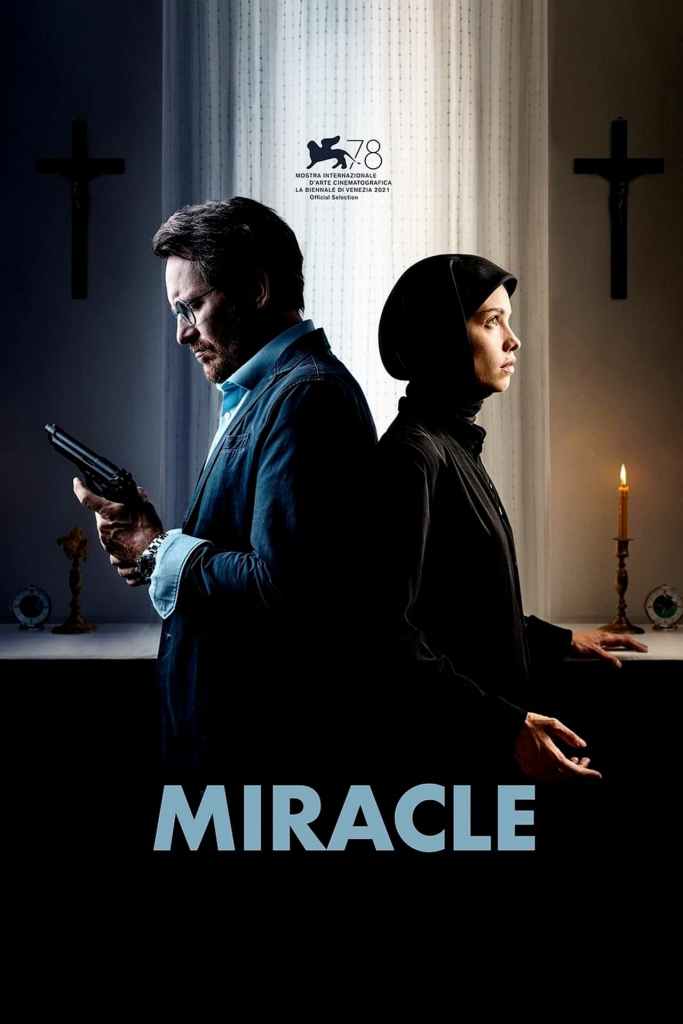
Miracle, out of Romania, is another film that will stick with you long after the credits roll, but for entirely different reasons. It starts simple enough, but you have no idea what you are getting yourself into. At a convent, a visibly upset young nun, Cristina, has been trying to reach someone by phone, but isn’t getting an answer. She has a fellow nun arrange for a taxi ride into the city. Along the way, Cristina lies to the driver as well as another passenger about her goal that day, telling them she is going to the hospital for headaches. When they get there, she instead goes to the OB/GYN floor, so the viewer can see this nun is in a whole lot more trouble than expected. She is supposed to meet the same taxi driver later in the day, but since he was giving off creepy vibes earlier, Cristina instead decides to get a new driver to take her back to the convent. The new guy, much more affable, seems great, until he, and the movie, take a stark left turn. The guy rapes Cristina, and though the camera thankfully pans off the brutal scene, we can still hear the violence, and it goes on and on. When the film resumes, some time has passed, and a brash investigator, Marius, is trying to solve the crime. We don’t even know if Cristina survived the brutal attack, but the cop starts at the convent, interviewing and digging, and proceeds from there. We learn they already have the prime suspect in custody, but we don’t even get to know if it is the right person until near the end. Marius will stop at nothing on pinning this crime on their suspect though, and again, the viewer is left in the dark as to why Marius is so invested in this case. All will become clear by the end, if you have the stomach to make it that far. It’s a harsh film to watch, but again, one of those that will keep you up at night, thinking about it for a long time. ★★★½

  • TV series currently watching: Superman & Lois (season 2)
  • Book currently reading: War of the Twins by Weis & Hickman

Quick takes on Enola Holmes 2 and other films

Nope is the latest from director Jordan Peele, and if there’s one thing I can say for this and his other films, at least he thinks outside the box. At various times during Nope, I was either really into it, or really turned off because it just got a little too silly. But it is original, and that’s never a bad thing. The film takes place on a horse ranch in an unnamed rural area. OJ and his sister Em run the ranch, which has been in financial straits since their dad died mysteriously 6 months ago. The man died when a bunch of objects fell out of the sky, coins and keys and whatnot, and he was struck and killed. The authorities say it came from a plane flying above, but OJ was there and didn’t see anything overhead. Weird stuff is happening again, 6 months later, with horses going crazy in the field. Finally, OJ sees something that sets the rest of the movie up: a flying saucer zipping through the clouds. To rescue their ailing business, OJ and Em decide to get some good photos/videos of the object, knowing they can sell the footage for big money. But when the unknown craft continues sucking up horses and, eventually, people too, their attempt to get a video grows dangerous. The movie has some great moments that do grip your attention, but Peele’s penchant for silly off-kilter antics disrupt would could be a genuinely good scary movie. I found the acting to be a bit uneven too, which is surprising for such a good cast. Overall good, but could have been great. ★★★½


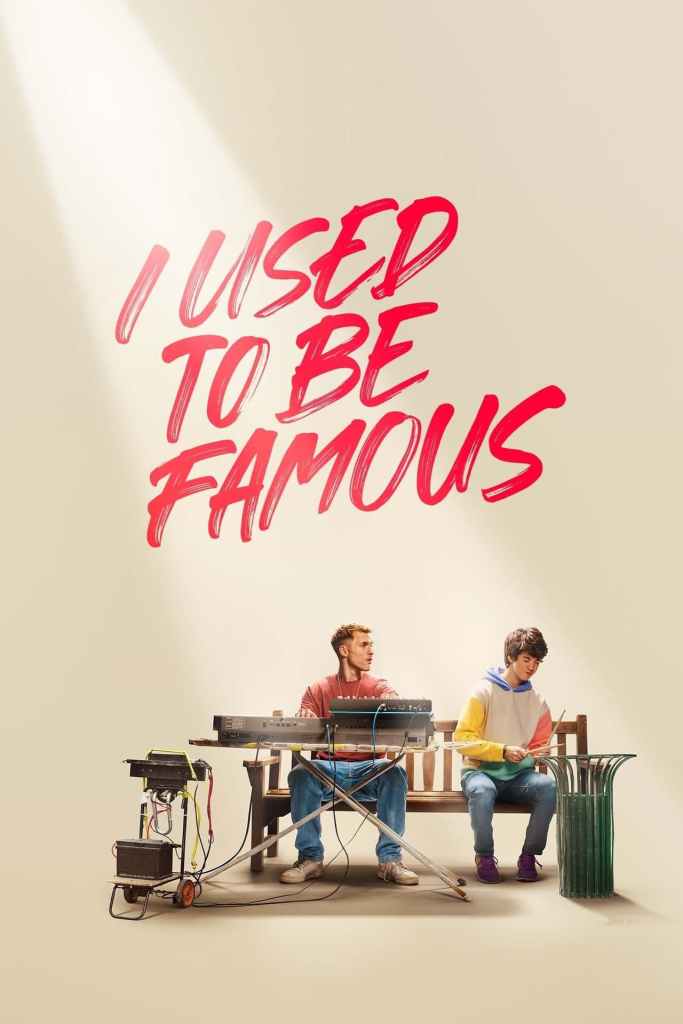
I Used to Be Famous unfortunately misses the mark. It follows a man name Vince who, 20 years ago, was in a successful boy band playing in stadiums, but his partner left him and continued on in the business while Vince was left behind. Ever since, he’s been struggling to continue to play for money, resorting to the occasional bar gig (and even having a hard time landing those). His luck turns when he is practicing in a market one day and a young man walks up with a pair of drum sticks and starts playing along. The result blends well and sounds great, but the man, Stevie, is autistic and has a hard time with crowds and loud sounds. Still, Vince isn’t going to let this opportunity slip by, and he encourages Stevie to practice and join him on a gig, despite the reservations of Stevie’s mom. Through it all, Vince is haunted by not being there when his brother died 20 years prior because, at the time, he chose his career over family. Will he make the same mistake again? A completely predictable movie and a bit hokey, it has just 2 saving graces: the actor playing Stevie really does have autism, so I applaud the filmmaker’s inclusion. The other, and maybe more surprising, is the acting on the whole is quite good. Ed Skrein as very subtle and nuanced Vince, as is Eleanor Matsuura as Stevie’s mom Amber. ★★

After a busy life in her 20s pumping out 3 movies a year every year from 2011 through 2016, followed by a couple big budget duds that ended her string of critical successes, Jennifer Lawrence stepped away and took a break, acting in just 4 movies in the last 5 years. Now in her 30s, she’s going smaller than ever, in the tiny indie film Causeway, and she shows that, if anything, she’s honed her craft while away. She plays Lindsey, a woman returning to her hometown of New Orleans after a military tour in Afghanistan, where her vehicle was blown up by an IED. She’s suffering from a brain injury that is effecting her memory and some motor skills as well, not to mention the PTSD, but she is on the slow road to recovery. Unfortunately, the stresses of home life aren’t making it any better, and Lindsay is willing to re-up for a new deployment to get away, even though no one from her mom to the doctors thinks that that is a good idea. In a chance encounter, Lindsay meets James, a man who also is battling demons from a car accident many years ago. The two bond, starting a friendship which hopefully brings each of them back to the light. There’s no action, no harrowing drama, not even a flashback to show what caused Lindsay’s pain; this is just a quiet, personal drama, with Lawrence showing a very natural acting style that is absolutely arresting from the opening minutes of the film, and her costar Brian Tyree Henry matches step for step. Its pace will turn people off, but I was glued to the screen. ★★★★

The Sea Beast is a new computer-animated film on Netflix from director Chris Williams, whose work at Disney includes Bolt, Big Hero 6, and Moana. In this film, a nation has been plagued by attacks by sea monsters for hundreds of years, and the king and queen have long employed monster hunters to go out into the oceans and kill the beasts. The best of them right now is Captain Crow, whose ship the Inevitable is famous in all the lands. Crow’s second and heir apparent is Jacob Holland, who was rescued at sea when a monster attacked his ship as a child. Jacob lost his parents that day, and Crow has raised him since. Crow’s longtime holy grail is a huge beast called Red Bluster; no one has been able to take the beast down. Red Bluster does attack the Inevitable one day, and almost takes the ship down. It is only the heroics of a young girl, a stowaway named Maisie, that saves the ship, but Red Bluster gets away, and Jacob and Maisie are tossed off the ship, only to be swallowed by Red Bluster, Pinocchio style. When they find their way out through Red’s nostrils, they find they are on a remote island which is home to Red and all the monsters. Maisie starts to think there is more than meets the eye here, as the monsters aren’t attacking her and Jacob. In fact, they seem very friendly, even Red. Maisie is able to convince Jacob that Red and the others beasts maybe aren’t the problem, and even gets Red to grant them a ride on “her” back to return to their own lands. But Crow is waiting, and he’s not going to led Red Bluster get away again. For my tastes, the film’s plot and flow is just OK. Very predictable, and the jokes aren’t nearly as good as your typical Disney/Pixar film. Geared more towards little kids (though I think some moments may be quite scary for the really little ones). However, the animation is superb, and it is a beautiful and greatly detailed movie from start to finish. You won’t find a “prettier” film around. ★★½

I really liked Enola Holmes when it was released a couple years ago. Its success spawned a sequel with Millie Bobby Brown returning in the title role as Sherlock’s little sister. Being a young woman in the late 19th century, her successes in the first film did not lead to a career as a private detective, and Enola has been struggling to find any prospective customers to take her seriously. Finally, she lands a case, a young girl with no money wanting help finding her missing sister, Sarah Chapman. There’s only a single clue, a love letter left by Sarah’s unknown love affair. Enola starts at Sarah’s work, a match factory which employs many young women in the area. Something fishy is definitely going on, as the higher-ups seem to be hiding something, but Enola can’t put her finger on it. When Enola deciphers a code hidden in the love letter, she goes to the address revealed and finds one of Sarah’s friends, unfortunately just attacked. With her dying breathe, she gives Enola another clue, but the police arrive immediately and Enola is caught with blood on her hands. Forced to flee, she is now a suspect in a murder case. Sherlock (the increasingly busy Henry Cavill), working a separate case but willing to help where he can, knows Enola is no murderer, and lends his advice and his superb skills of deduction when he is able. Enola’s hunt will take her to a high society ball and a rabble rousing theater, before the ultimate mystery is revealed. The whodunit aspect is very good and keeps you on your toes, but the film, while still very enjoyable, doesn’t seem as fresh or “fun” as the first film, and even felt a little long by the end, with an unnecessary coda. But still, good family entertainment with a sterling cast. ★★★½

  • TV series currently watching: 1883 (miniseries)
  • Book currently reading: Scoop by Evelyn Waugh

Quick takes on Live is Life and other foreign films

Official Competition is, for the right crowd, a very funny movie about the egos behind and in front of the camera. An older multi-millionaire wants to leave a lasting legacy, not just charity donations that will be forgotten a year after he’s dead, but something that will always point to his greatness for future generations. He settles on producing a film, “the best film ever made,” and he wants the best to make it. First, he pays out the ass for the movie rights to a highly regarded novel (one he hasn’t even read; he’s just going off reviews). Then he hires a director, Lola Cuevas (Penélope Cruz). From the get-go we see that she is batshit crazy and has extreme methods for getting actors to complete her vision, but the critics love her films. She suggests for the two leading roles Félix Rivero (Antonio Banderas) and Iván Torres (Oscar Martinez). The older Torres is a longtime art-house actor and is as pretentious as they come: he “doesn’t care” for awards, but instead is all about the art of acting, wanting to get into the mind of the character and show that to the viewer. Rivero is the opposite: he doesn’t care what a character’s motives are, he just relays what’s in the script and lets the viewer take from it what they will. He is all about awards, and has a pile of them from the big blockbusters he’s been in. The film shows these 3 big egos come together to try to make this film, and the movie is mostly the rehearsals and interaction between them. Your average moviegoer may not be in on all the jokes, but I laughed hard and often. Maybe not as “behind the scenes” as some other film-within-a-film stuff, since it isn’t really taking itself nearly as seriously as the in-film moviemakers are, but it is very funny stuff for movie lovers. ★★★½

Piggy is another Spanish film, this one in the horror genre. Sara is a very overweight girl who is being bullied by everyone she knows, even the one person, Claudia, who buys from her parents’ butcher shop and is only friendly when no one else is around. The latest round of bullying is of the cyber variety: one of the girls snaps a photo of Sara and her (also overweight) parents and splashes it on insta, calling them the three little piggies. The next day, Sara goes to the public pool, early as she always does, to avoid other people. While swimming, she is scared by a man who comes up from under the water, but he disappears shortly after. Before she can get out of the water, the mean girls come along and steal her clothes, forcing Sara to walk home in her bathing suit. On the way back home, she comes across the van the mystery man was driving, and in its back: Claudia, screaming for help, and covered in blood. Sara has a chance to help, but when the man steps out of the van, Sara just waves at him and lets him drive off. Soon after, a girl is found at the bottom of the pool, and the city starts looking for the murderer. Sara has a chance again to go the authorities, but when it becomes apparent that the man is only hurting those who’ve hurt her, Sara must decide if she helps or hinders his brutality. Decent enough gory film, and as bad as Sara was treated, even the viewer is conflicted on who we should be rooting for. ★★★

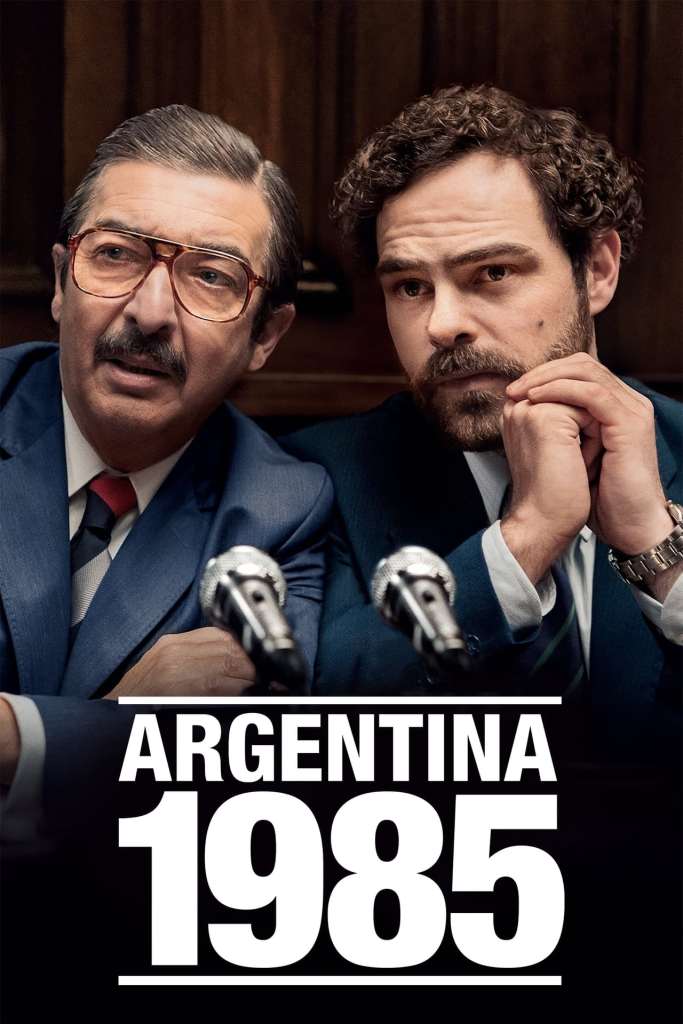
Argentina, 1985 hails from that country, and tells the true story of the trial of the juntas in 1985, following the country’s return to democracy after a decade of military dictatorship. The prosecution, led by Julio Strassera, faces an uphill battle from the very beginning. Though the country has voted-in leaders for this first time in awhile, the outgoing regime still remains popular in certain circles, and they have many powerful friends still in government and especially in the military. Immediately, threats start coming in to Strassera and his helper, Moreno Ocampo, but at least at first, the threats are unfounded. In putting together a team to build evidence, Strassera doesn’t want to give any ammunition to those who say the trial isn’t legitimate or that the prosecutors have an agenda, so they get a bunch of “kids” to help, young twenty-somethings who’ve never voted or shown any particular political leanings. This team goes out and builds their case. They know they won’t be able to tie the leaders directly to tortures/kidnappings/murders done under their command, as they can contend they weren’t aware of such doings, so they instead build prosecution around the the fact that those acts were going on all across the country in a concerted effort, and thus weren’t localized to “a few bad apples.” The film is a little too heavy on facts for my tastes, and thus gets bogged down by the end, just when it should be most exciting. Interesting? Yes, even compelling at times, but the only real drama comes from the victims’ testimonies, and when those are done, so is the best part of this film. ★★

Athena is a French action/drama film, revolving around 3 brothers. Their 4th brother, Idir, the youngest at 13, was recently killed, and the video footage of his death has gone viral, showing what looks like 3 police offers beating him to death. Each surviving brother takes this in a different way. The next youngest, Karim, a 17 or 18 year old, begins the movie by raiding a police station, with an army of like-minded, similar aged youths tired of seeing their people killed by cops. They storm the station, stealing a safe full of guns, before making their escape to Karim’s neighborhood, which Karim and his army have cordoned off, blocking all roads in and out of the city block. The oldest brother, Moktar (old enough to not really know his younger brothers, as they didn’t share a father), is a drug dealer living in the same area. His only intent is to get the drugs out before the cops storm the place; he isn’t able to, so he takes to burying them in a big hole in one of the apartments. The middle brother, Abdel, is a decorated soldier in the French army. At first Abdel is concerned with getting the parents and older citizens in the neighborhood out safely before the cops come in, but when it becomes apparent that Karim might not survive this ordeal, he finds a new purpose. All Karim wants is the names of the 3 officers who killed his brother, and he’s willing to do anything to get them. There’s some decent action shots for what is undoubtably a low budget film, but one of its biggest features actually gets old after awhile, and that’s its long takes. The film begins with one in fact, with Karim and his group storming the police station. It appears to be one long take as Karim wonders the building, with gun shots and fireworks (the boys’ only weapons in the beginning) going off all over, and the camera follows them as they escape in a van. Right away I was awed, but that’s only the first of several long takes, and after awhile it started to feel like a gimmick. The plot is a bit thin too, and by the end, you’ve stopped caring for the outcome. ★½

Live is Life is an absolutely incredible movie with the adventure of The Goonies and the heart of Stand by Me. Five young teens have been friends for a long time, but only get together as a group a couple times a year, as one of them lives in the city and only comes out to the country to visit his grandparents. No matter how long its been since they got together last, when they meet, they pick up right where they left off. A lot has changed for the friends since last time they met though. One of them, Alvaro, has cancer, and his prognosis isn’t good, though his twin Maza remains upbeat, at least on the outside. Another boy, Suso, has a father in a coma, after falling off a roof during work. The film’s “main” character is Rodri, the city boy, who is relentlessly bullied at school and looks forward to seeing his friends. Their reason for getting together this summer weekend is the midsummer’s holiday, and they come up with a plan for an adventure. A mystical plant grows at the top of the mountain which is said to have healing properties, if it is harvested before dawn on midsummer day. Setting out the day before, the boys ride their bikes up the mountain, but also stop for plenty of play along the way. Whether it is doing a “pool crawl” (jumping in various private pools along the way until kicked out), running and hiding from the older “scumbag” bullies in the area, or, for the final boy in the group, Garriga, going to a classmate’s party so he can score his first kiss, the two days of their journey will be something none of them will ever forget, and neither will I. This film is moving, full of emotion with mountain highs and valley lows, with lots of laughs but also plenty of heartache. From an outside viewer’s perspective, it is easy to see that this might be the final adventure they take as a group, and not just because they may soon lose Alvaro. These are boys turning into men, and it won’t be long before life pulls them away from each other and they can no longer play kid’’s games. I laughed and cried and enjoyed every minute. ★★★★★

  • TV series currently watching: Westworld (season 4)
  • Book currently reading: Scoop by Evelyn Waugh

Quick takes on The Gray Man and other films

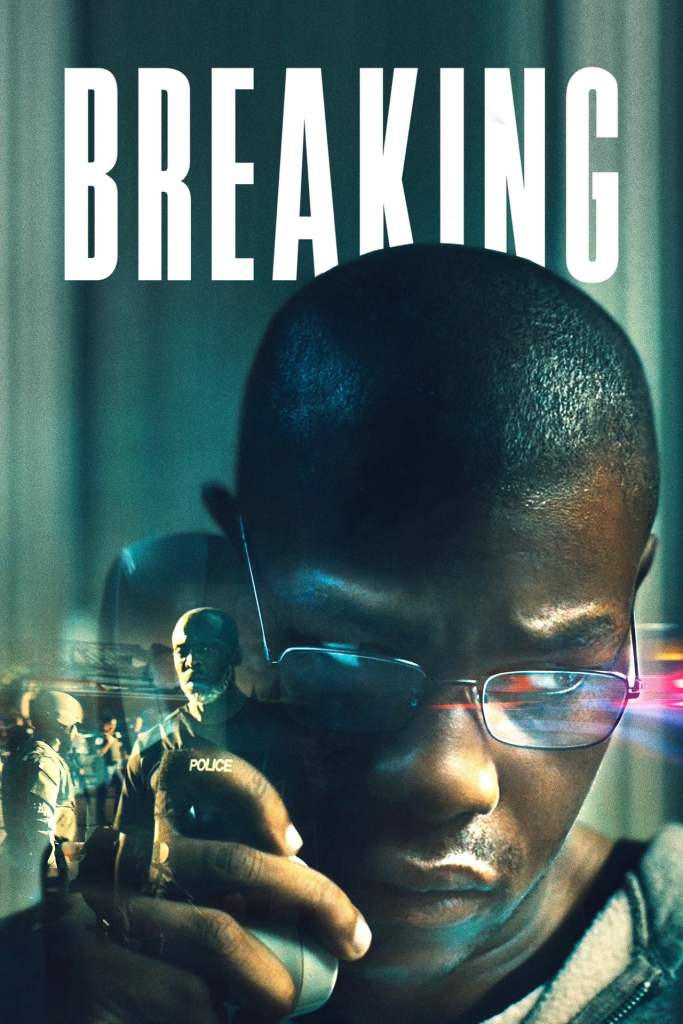
Breaking, based on a true story (and fairly accurate from what I understand, as far as Hollywood films go) is about a marine veteran who is facing homelessness after he doesn’t receive his latest VA disability check. Brian Brown-Easley is feeling like the system is failing him, ready to toss him out on the street, and so he takes matters into his own hands. Brian walks into a bank with a homemade bomb in his backpack. He lets all the workers and customers go, except for 2 people: the bank’s manager and assistant. They offer to give him money, but he says he doesn’t want the bank’s money; he wants the money that is owed him from the VA. Brian wants to get his story out. He wants news outlets to pick up the story, before the inevitable happens. Brian knows that as a black man, the odds are that he’s not getting out of this alive, and he didn’t expect to when he walked into the bank that day. He just wants people to know about the injustice of the system. John Boyega is sensational as Brian, showing that he has real acting chops and isn’t just a face in the latest Star Wars trilogy, but the movie as a whole is just alright. Some big moments, but the story (even if it is all true) is a bit light. The film does have the distinction of being of the last films with Michael K Williams before his untimely death. I think there is one more in post-production out there that is coming.  ★★½

Bodies Bodies Bodies is a horror film with a comedic twist, and unfortunately it is that twist that holds this film back. It stars a group of twenty-somethings who play a set of young adults who were childhood friends, all raised in an affluent neighborhood. They are starting to go their separate ways, but throw a big party at one of their parents’ houses on the eve of an incoming hurricane. Sophie has been out of touch with the group for a little while, but goes to the party anyway, with her new girlfriend Bee, an immigrant from Russia who comes from a working class family. The house is David’s parent’s; he was Sophie’s best friend when they were younger, but they seem estranged now. His girlfriend is Emma, who has a beef with Sophie, and also present is Alice and her much older boyfriend Greg, and single girl Jordan. Another former friend, Max, was supposed to be there, but he left before Sophie and Bee arrived, after an argument with David. Tense feelings from the very beginning lead to Sophie trying to rekindle the fun the group had as kids, so she suggests they play their old favorite game of Bodies Bodies Bodies. A “killer” is chosen at random, they shut off the lights, and the killer then has to hunt the house until he/she kills, at which point the lights come back on and the “survivors” try to identify the murderer. All is well and good until people really start dying, and the storm kills the lights for good. The film becomes a gore fest, with over-the-top humor that seems to be geared towards the gen-z crowd. It seemed a bit much to me, almost like the film couldn’t decide what it wanted to be. The scary parts were generally good for the most part, but it does devolve into the same schtick of “did you do it?” “No, you did it!” routine that these kinds of films always become. The whole “horror comedy” genre has grown in the last few years, but it is hard to blend the two aspects well. ★★½

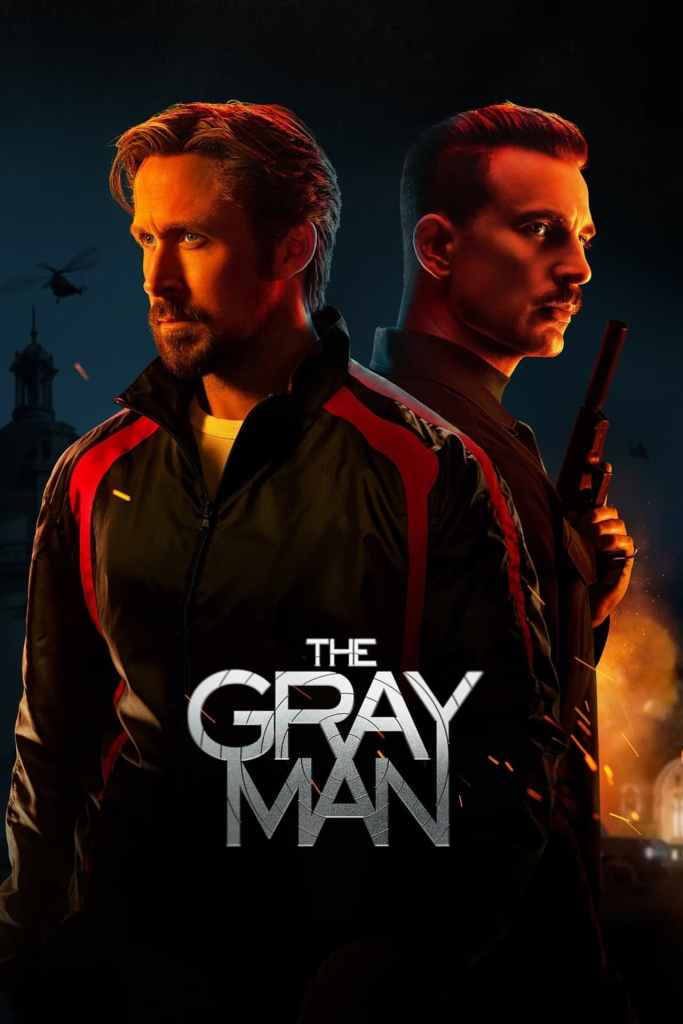
Sometimes I watch a movie that the critics hated, and have to wonder if they were watching the same film. As a whole, they didn’t like The Gray Man, but for a pure action flick, it doesn’t get much better. In the early 00’s, a man in prison (name never given, portrayed by Ryan Gosling) is visited in prison by a CIA agent named Fitzroy (Billy Bob Thornton). Fitzroy gives the prisoner a chance at a new life; he’ll be given his freedom in exchange for becoming a CIA operative, a man who will live “in the gray.” It is implied that the man, who will go by the codename Sierra 6, was jailed for murdering a bad man, and that is what Fitzroy intends to use him for in the future. Fast forward to present day, and Sierra 6 has been very good at his job in the last 20 years. His latest mission though goes sideways, and before he kills the target, the quarry states that he too is in the Sierra program, that he is # 4, and perhaps 6 doesn’t know who he’s working for anymore. Fitzroy has been retired for awhile at this point and the program is currently being run by a man named Carmichael, who perhaps didn’t have the scruples that Fitzroy had. Before he dies, 4 gives 6 a flash drive with purportedly damaging evidence against Carmichael, and just like that 6 becomes Carmichael’s number one target. Carmichael hires CIA-dropout Lloyd Hansen (Chris Evans, who was kicked out for not playing by the rules) to hunt 6 down. On the run with no one to trust, 6 has to find out what is going on. He reaches out to Fitzroy, who provides what help he can, but this only leads to Hansen and his team kidnapping Fitzroy’s niece for leverage. Hansen will stop at nothing to kill his man, including huge shootouts in cities across Europe, no matter the damage to the CIA. The action in this film, and there is a ton of it, nearly nonstop, is as good as you’ll find today, and I was swept up in 6’s plight to rescue the niece and take down the “real” bad guys. Critics complain that the movie is cliche and the plot tired, but why mess with the tried and true when it works? Writers/directors the Russo brothers showed they know action from their time with Marvel on the Captain America and Avengers films and don’t disappoint here. Though it saw only a limited theatrical release and mostly seen on Netflix, this is the kind of film that deserves to be seen on the big screen, and that’s where I’ll make sure to catch the sequel. ★★★★½

Stars at Noon is one of two films celebrated director Claire Denis released in 2022; the other, Both Sides of the Blade, is also on my to-be-seen list. I’m lukewarm to Denis so far. I haven’t seen her most renowned films yet, but I saw High Life a couple years ago, and was underwhelmed. Unfortunately Stars at Noon is only marginally better. Trish (Margaret Qualley, who has been very busy the last 4 years but who I recognized immediately from the Netflix series Maid) is an American stranded in Nicaragua with the COVID outbreak. As we learn after awhile, she likes to scream from the mountaintops that she is a journalist, but after a phone call to her editor, we find she maybe isn’t a very dedicated one. Broke, Trish has been prostituting herself for American dollars, which is the only solid currency currently accepted (most places won’t even accept Nicaraguan currency due to its super-low value), and her only hope of catching a flight home. She meets up with an English businessman named Daniel, who seems to be a bit clueless of the currently politically charged environment in the country. Trish has to basically spell it out for him that the people he is talking to are Costa Rican cops, and there is possibly a coup developing in the country, as elections keep getting pushed back and there’s a lot of animosity between the people/governments of Nicaragua and Costa Rica. Daniel does have secrets though. He’s supposed to be a businessman involved in the oil industry, yet he carries a gun and seems to be being investigated by the US state department. Trish is sort of a bad hero to root for. She comes off as an entitled American Gen-Z’er who belittles the native population and thinks that things should just happen for her because she’s an American. And, call me stupid, but I never caught why exactly Daniel was in trouble or what he was running from. So many unanswered questions. Having said all that, the film is absolutely beautifully filmed, and Denis is one of those directors who allows scenes to develop, letting the actors breathe. This slow pace will infuriate some, but I like the approach. ★★★

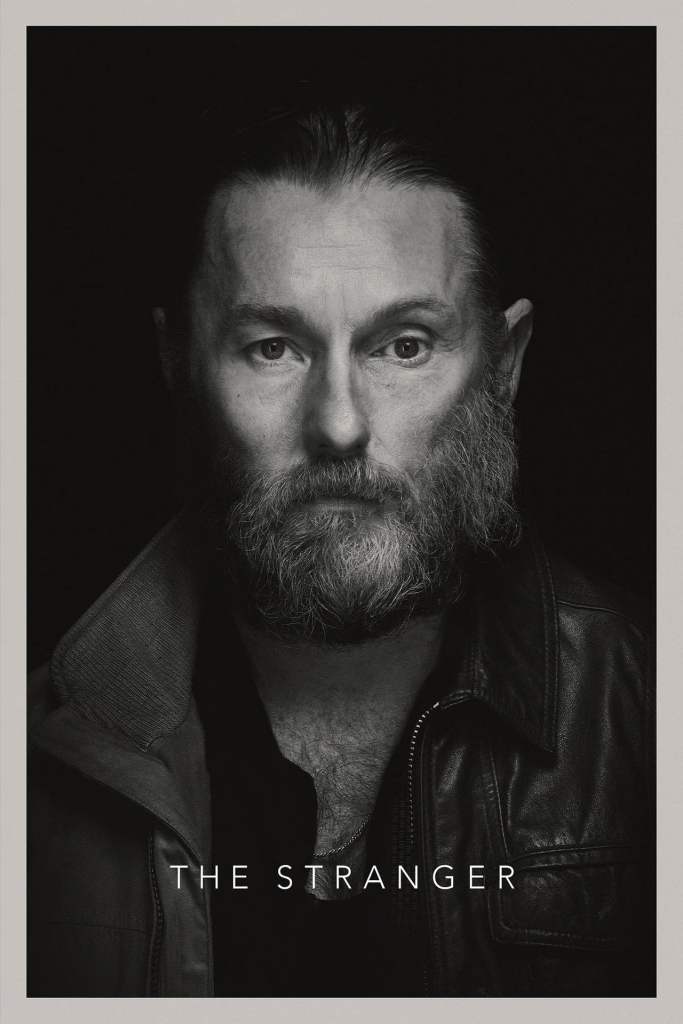
I really want to like The Stranger, which oozes menace and has a terrific feel, but I just can’t, for reasons I’ll explain. The film takes place in Australia and is a police procedural film about a sting operation to ensnare the man who killed a young boy 10 years ago, a murder that has gone unsolved. You don’t know that this is the plot in the beginning though. First we meet Paul and Henry, two strangers who meet seemingly by chance. They become friends, and Paul introduces Henry to the criminal organization in which he works, and specifically, fellow criminal Mark. When Paul messes up and needs to leave the country, the organization proves it has the clout to make that happen, giving him a new identity and everything he’ll need to survive. As is stressed to newcomer Henry, they take care of their own, as long as you are honest and forthright when called upon. What Henry doesn’t know is the entire crime family, and everyone working in it, are undercover cops. They are convinced Henry is the man who killed that kid all those years ago, and are in a long con to get him comfortable and trusting to them, so that they can eventually get him to admit to the crime. The movie is almost completely psychological, including Mark’s fraying nerves as he begins to have nightmares as the case continues on, and becomes increasingly more protective of his own son at home. Sounds great, but in practice, the film takes a really long time to get anywhere. The mood is right, the colors and camera work are right, everything in the setting is perfect, but the execution was just too slow for my tastes for a film like this. Could have been a lot better. ★★★

  • TV series currently watching: Tales of the Walking Dead (season 1)
  • Book currently reading: Star Wars A New Dawn by John Jackson Miller

Quick takes on 5 Canadian films

Up today is a set of films out of our neighbor to the north, starting with the breakout film of director Atom Egoyan, 1994’s Exotica. This is one of those films with a ton of moving parts, which all come together as the film progresses. Francis, a tax auditor, frequents the strip club Exotica. He goes every other night and always pays for a dance from the same girl, Christine, who is the club’s “dirty little schoolgirl,” starting out in a school uniform before stripping. At some point during her dance, she’ll lean in to him and whisper words, which we are not privy to. Those seemingly tender moments drive her ex-boyfriend, Eric, insane. He’s the club’s DJ, and sees Christine with Francis every single time. While Francis is at the club, he pays teenager Tracy to babysit. However, as we soon learn, Francis doesn’t have any kids; Tracy just goes into his empty house and practices flute for band while he’s away. You definitely get creepy vibes when Francis drives Tracy home at the end of the night, but nothing untoward ever happens. A separate storyline revolves around Thomas, who smuggles animal eggs across the border, and who is getting audited by none other than Francis in his day job. When Francis is coaxed with going too far with Christine by Eric, he is kicked out and barred from the club, and Francis gets Thomas to go in and continue to get news from Christine. I always like films that tie everything together in the end, and this film certainly does that, but it also leaves you wondering about the motives of some its characters. I can’t say more without giving away a lot of the surprises, but just about every character has some deep unresolved issues (don’t we all?). Very well put-together film and entertaining through the last minute. ★★★★

Crash, from director David Cronenberg, is one messed up movie, and that’s saying something coming from this director! It stars James Spader, Holly Hunter, and Elias Koteas (who I just saw in the above Exotica as Eric!). James and his wife Catherine are in an open marriage, but despite sleeping with other people, only seem to be able to get off when they describe their affairs while sleeping with each other. They’ll each find a new way for sexual pleasure after James is in a horrific car accident, a head-on collision which kills the driver in the other car. The dead man’s wife, Helen, survives, and after they heal up, she and James begin a new affair. A leftover side effect of the accident though now means that James can only get seriously aroused by car wrecks and scars from those wrecks. Helen is into it too, and introduces him to Robert. Robert is all about wrecks; he even runs a club that reenacts car crashes that killed celebrities, complete with stunt car drivers who risk their lives to make the accidents as authentic as possible for the fetish-driven audience. As James and Robert grow close (as well as romantically at a point), James pulls Catherine into his new world of sex and crashes, and before you know it, everyone on screen is having sex in cars, rubbing their scars together, and driving haphazardly, flirting with death for that ultimate release. When I finished the film, I went online and read some outlandish reviews about how it is a metaphor for this, that, or the other. Maybe it is, or maybe the director just wanted to push buttons, which seems to have always been his MO. ★★½

Cheating just a hair with Brand Upon the Brain!; it was filmed in Seattle with local actors, but was written and directed by Canadian Guy Maddin, whose next film is on this list today too. Unfortunately I should have just stuck with the next film; this one was pretty awful. Produced on a budget of $40k and filmed over 9 days, it is a silent film with narration over it. The film tells the story of a fictional version of Guy returning to his childhood home, an orphanage housed within a lighthouse. He’s been tasked by his mother to paint the lighthouse as a way of cleansing the place and closing the bad memories associated with it. Once Guy gets to painting, the rest of the film is told in flashback about his childhood on the island. And it is bizarre. From his dad who was performing experiments on the orphans (and his own children) by sucking “nectar” out of their brains, to “Savage Tom”, the oldest orphan, who engaged in pagan rituals, to Guy’s sister “Sis” killing their father, only to see their mom raise him from the dead with a pair of jumper cables. Weird film, and it shown in a chaotic, avant-garde, almost Brakhage kind of way. I will say, I laughed at some of the nonsense, but the visual style of the film was not my cup of tea, and it was, for me, hard to get past that. It really wore on me after awhile. ★½

I don’t often do documentaries, but Maddin’s My Winnipeg is not your typical documentary. He described it as a “docu-fantasia,” and it is a blast, complete opposite from Brand. Born in Winnipeg, Maddin set out to show some of the city’s quirky history, as well as tell biographical moments of his life growing up there. The film begins with a version of himself on a train, trying to flee the city which seems to never let people go. From there, the movie moves from place to place and story to story. The backdrop becomes Maddin’s childhood home, which he sublets for one month from its current owner (a little old lady, who humorously decided at the last minute not to leave, so she’s in all the shots too). Maddin filled out the house with actors portraying his brothers and sister, even the family dog, and his “real” mom (which is also an actress, but not everyone is in on the joke). His “mom” wanted dad there too, but as he died many years ago, they settled on putting a fake body under the rug in dad’s place. They reenact a few moments from Maddin’s youth, as well as talk about strange facts about the city. Like the tree that grew in the middle of the road which brought protests when the city decided to cut it down. Or the 50-year-running TV show LedgeMan, which his mother stared in, in which every episode showed a man on the ledge threatening suicide, only to be talked down by the end of the episode. Obviously some of these stories are made up, some are real, but Maddin is telling us which, so it gives the movie a surreal-like feel. Through it all, Maddin’s narration and storytelling is supremely entertaining. There are also very poignant moments, the best being when the city tears down the arena which used to house hockey’s Jets before they moved away (a new team with the same name would come back years after this movie came out). Maddin interspersed stories of his dad, so when he’s saying farewell to the stadium, he’s giving his dad a goodbye too. ★★★★½

I’ll admit I almost didn’t watch Mon Oncle Antoine due to the personal life of its director. Claude Jutra was hailed as one of Canada’s greatest directors in his lifetime, but 30 years after his death in 1986, a biography came out in 2016 which showed that he was a pedophile, apparently an open secret within the business. Immediately streets and awards that were named for him were changed, but his legacy in film lives on. And despite the evil he did in real life, this film is still a good one. A coming-of-age film in 1970s rural Quebec, the movie follows a boy named Benoit. He lives with his uncle and aunt and works in their general store. Like most small towns, uncle Antoine pulls double duty; along with the store, he is the town’s undertaker. Also in the “family” is Carmen, a girl Benoit’s age who is boarding at the store, and Fernand, the store’s clerk. Most of the film takes place over a single day, Christmas Eve. The store has decorated and is expecting their busiest day of the year, but in the afternoon, a call comes in from a remote household that a son has died. Antoine and Benoit head out to recover the body, through blizzard conditions, and it doesn’t help that Antoine is a high functioning alcoholic, until he hits the bottle hard, as he does on the journey to and from the house. Benoit, who in the beginning of film seems like your typical innocent boy (flirting with Carmen, getting into trouble with his friends) will see things that make him come face-to-face with adult situations, including the death of the boy they are picking up, one about his own age, and the infidelity of his aunt with Fernand. I generally like a little humor in my coming-of-age films; this one is as harsh and bleak as the weather, but it is beautifully filmed and exudes a very real feeling of innocence lost. Too bad the director was a douche, or I might look up more of it his stuff. ★★★½

  • TV series currently watching: The Rings of Power (season 1)
  • Book currently reading: Star Wars A New Dawn by John Jackson Miller

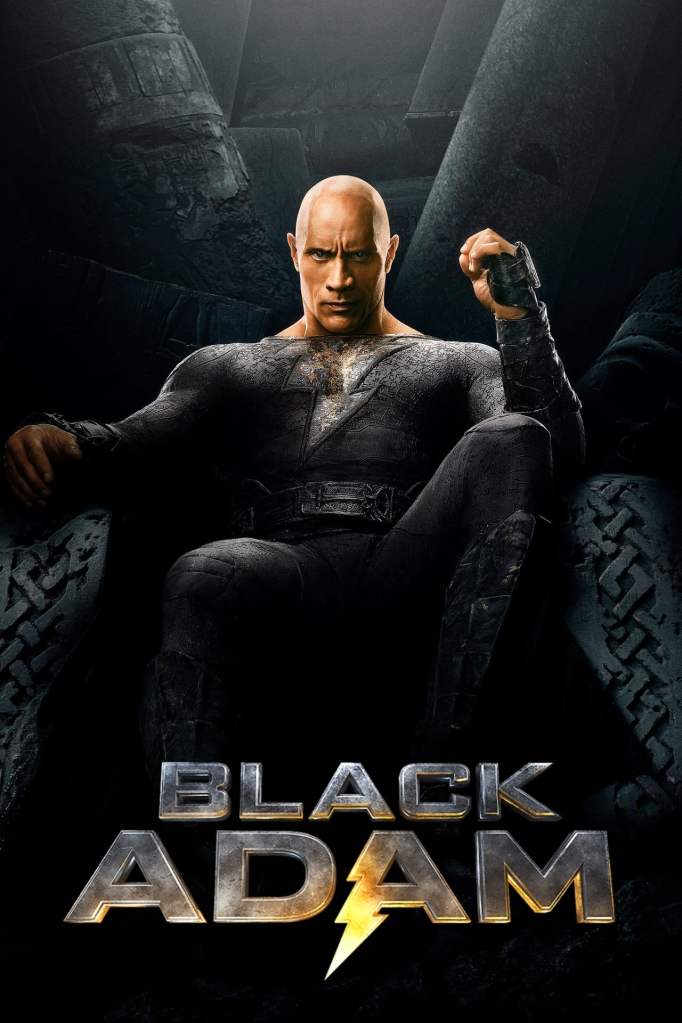
DC’s Black Adam fails to muscle up a good film

Dwayne Johnson gets to play a role his physique was made for in Black Adam: a superhero. Unfortunately he doesn’t get to use his other biggest strength (besides his muscles), and that’s his charisma. To put it bluntly, his character is a big sourpuss, and that’s not even the worst part of the movie; it lacks a cohesive plot, jumps around far too much with wild twists and turns, and none of the characters outside of Black Adam have any development.

After a (rather long) introduction in the beginning of the film, detailing the history of the Kahndaq kingdom 5000 years ago and its epic good vs evil fight, we get caught up to present day. The area has never been free, and is currently being held by an organized crime group known as the Intergang. Adrianna wants to put a stop to their rule by finding the ancient artifact the Crown of Sabbac. When they find it though, the Intergang swoops in to grab it for their own use, and in the ensuing chaos, Adrianna ends up freeing Black Adam (called Teth Adam at the time) from his long sleep. Black Adam, seemingly indestructible and with Superman-like powers, kills all the Intergang members in the area and flies away. Adrianna and her little brother Karim follow him and try to get him to agree to help modern Kahndaq against its oppressors, but Black Adam doesn’t seem interested in helping.

At the same time, the Justice League, 4 “good guy” heroes, are sent to the area to imprison Black Adam before he can use his powers to do more harm. Lots of epic battles follow, with no real conclusion, and a few wild twists where we learn Black Adam isn’t exactly what everyone thinks (and then learn later that maybe he is!). Then another crazy twist where a bad guy uses the crown artifact to open the gates of hell to take over the world. Black Adam has to save the day.

I really wanted to like this movie, and despite the rough critic reviews, audience scores were high, so I had elevated expectations. They crashed to earth by the 30 minute mark. There’s absolutely no character development, you might as well call them player # 1, player # 2, etc. And the Justice League members? Two of them are just there to give the film more superhero stunts in the fights. You can sub them out for any other superhero or leave them out entirely, because they add nothing to the story. And you know how these movies generally have some humor to break up the action? I laughed exactly twice, and both of those chuckles came in the last 30 minutes of this 2 hour film. I could continue to rag on this movie, because there’s plenty of holes to punch through, but you get the idea. The action sequences are OK for the most part, though even each hero’s moves get stale by the end. Just not a whole lot to go on here. But it is making tons of money, and The Rock has all but guaranteed more films in the future. I just hope they get a better director and story next time. ★½

Quick takes on Bullet Train and other modern films

Happening is a recent French film which shows, much like Never Rarely Sometimes Always, the difficulty of procuring an abortion when desired. At least the above film took place in 2020 New York, where a girl could get it done if she jumped through the right hoops and had the money. This film takes place in 1963 France, and there are no such hoops. Anne is a very smart young woman with aspirations of being a professor, currently studying literature in college. All she has to do is go home to see what awaits her if she doesn’t finish school; girls she grew up with who are just a couple years older look much more than that after doing hard work on a farm or at the factory that employs everyone else. She gets pregnant by a random encounter, her first time, but in 1963 in France, abortion is illegal, with legal ramifcations for her and the performing doctor. For the rest of the film, we get regular reminders that time is running out: 5 weeks… 7 weeks… 9 weeks. Doctors won’t talk to her, friends abandon her, her most trusted confidents turn away, all in fear of seeing jail themselves if they help. Much of the film is closeups of Anne (sort of Dardenne brothers Rosetta-like), giving us a window into her soul, the only part that really matters. The movie is emotionally taxing in a way that is hard to put into words. It’s a very strong film, but also hard to watch, and I’m not sure I could sit through it again. Rare for me to rate a movie so high that I wouldn’t enjoy again, but this is that kind of film for me. ★★★★

I’ll admit, the only reason I watched Catherine Called Birdy is it stars Game of Throne’s Belia Ramsey in the lead. In GoT, she was such a little badass, and the previews made her seem much the same in this period drama, based on a children’s book. Lady Catherine, or Birdy to her family and friends, is a headstrong 14-year-old living with her parents, who are the lord and lady in a castle overlooking a village. Lord Rollo has squandered the family fortune and is now awaiting Birdy to get her period so he can marry her off and get that dowry to save his estate from poverty. Sounds unscrupulous, but his actions are offset by the kindness he shows his wife, Lady Aislinn, who has tried to birth more kids (Birdy has two older brothers), but the pregnancies always end in stillbirth. When Birdy gets her first period, she thinks her life is over, but she doesn’t intend to go down without a fight. First she hides the blood every month, and when she is discovered, she pursues other ways of fighting off would-be husbands. Lots of other entertaining subplots: Birdy’s crush on her older cousin, her long-lasting friendship with a 16-year-old who is getting ready to marry too, and all of the secrets a 14 year old has. It’s a coming of age film, as Birdy is pretty innocent in the ways of life and love in the beginning, but has a lot of growing up to do over the course of the year or so in the movie. Very funny film, with delightful acting and a charming cast. The end is a little too perfect, but it is based on a kid’s book after all. ★★★½

Bullet Train was a movie that I’ve been excited to see since I saw the first trailer; it just looked like a rip-roaring good time. Middling reviews kept me from paying to see it in theaters, but I finally caught it on digital, and while it isn’t going to earn any awards, it is indeed exactly what I expected, and that’s not a bad thing. There’s a lot of moving parts in this film, more than I can get into in a short blurb. “Ladybug” (Brad Pitt) is a former assassin who has found zen in his life thanks to therapy, so while he refuses to carry a gun, he does have a mission to accomplish: retrieve a briefcase on a train in Japan. Turns out the briefcase is full of money, initially to be used as ransom from a Russian-born Japanese yakuza boss (the sinister named “White Death”) to get his kidnapped adult son back. The son is also on the train, being looked after by a couple other assassins, codenamed Lemon and Tangerine. Also present: a Japanese man named Yuichi, who has intel that the person who pushed his son off the roof of a building is on the train too, and he seeks revenge. And don’t forget yet another assassin, Hornet, who prefers poison as her method of death. Others show up too before the train gets to its destination, and with so many trained killers present, you know the body count is going to pile up. With gore a’plenty, the film features some exciting John Wick style fist/knife/gun fights, all done within the close quarters of a train. Lots of humor too, like Ladybug’s adherence to nonviolence whenever possible, Lemon’s penchant for explaining life through Thomas the Tank Engine, and some ridiculous fight scenes that awe and impress, which are so over the top that they become comedic too. There’s some awesome twists in the film, surprising cameos (the film is chuck full of movie stars), and while it isn’t necessarily a “great” movie, it is exciting and lots of fun. ★★★½

Fall, on the other hand… not sure why I’d think I’d like this one. Don’t get me wrong, it’s a decent B movie about a couple of girls who get stuck up on a 2000-foot radio tower, but for a person who’s scared of heights? Let’s just say my pulse probably stayed in the 120+ range for most of the movie. Becky and Hunter are best friends free climbing with Becky’s husband when the worst happens: he loses his grip and falls to his death. A year later, Becky hasn’t moved on and has alienated herself from friends and family. To try to pull her out of it, Hunter begs Becky to climb this old radio tower with her. The two girls set off for the day, and the old tower, rusting and losing bolts the whole way, screams menace to anyone who will listen (our two friends do not). Despite a couple close calls, the ladies make it all the way to the top, but when they start the trek down, their luck runs out. The ladder gives way and collapses to the ground, leaving the two women stranded on a tiny little platform at the very top. No water, no food, and no cell signal so high up, things aren’t looking very good. They make a few attempts to get help, but in true horror/thriller film style, nothing works. It’s a paper-thin plot and pretty shoddy acting (Hunter is played by Virginia Gardner from Marvel’s Runaways, easily my least favorite Marvel show), but the thrills are actually pretty good. If your heart can take it. ★★

Finally, a small shout out to Olivier Assayas’s new adaptation (and quasi- sequel?) to his 1996 film of the same name (fantastic film by the way). While I rarely review the series I watch, making an exception for this one. Irma Vep is now being made as a short series (director René vehemently denies it is a “TV series;” he does not do TV). In the Maggie Cheung role is Swedish actress Alicia Vikander, playing Mira Harberg, an American. Whereas the initial film lamented the current state of French film, Mira is coming off a highly successful (i.e. lucrative) superhero film, but she wants more growth as an actress and is looking forward to Irma Vep. Like the original film, it’s a film-within-a-film, and we see quite a bit of actual footage of the original 1915 silent film Les Vampires, with the new cast recreating those scenes. And again, like the original, the drama on set between the actors is a highlight. But this time, Assayas adds a new couple layers (going down another level as they might say in Inception). We learn in episode 2 or 3 that “René” did a film version of Irma Vep previously, obviously alluding to Assayas’s previous film, and that he married the lead actress, “Jade Lee,” as Assayas did with Maggie Cheung. Much of the film is René dealing with ghosts/demons, like his failed marriage, all that he gave up for his art. The characters will even occasionally step out of the film, like when Vikander, as Mira, tells someone she’s not even American, but Swedish. Level upon level upon level stuff going on, and it only builds with Mira starts to “become” Irma Vep. If you come into this show cold and expecting typical HBO fare, you’ll probably hate it, as many reviewers did (one asinine review said they only liked it when René lost his shit and acted crazy on set). If you are really into film and filmmaking, you’ll probably think it is pretty good. If you’ve seen the 1996 film, and know just a bit of Assayas’s life, and want to see a peak behind the curtain for how actors approach roles, their interactions with each other in front of and behind the camera, and how they basically have to lead a double life to separate what is real and what is not, hopefully you’ll love it as much as I did. ★★★★½

  • TV series currently watching: Irma Vep (miniseries)
  • Book currently reading: Star Wars A New Dawn by John Jackson Miller

Quick takes on 5 Billy Wilder films

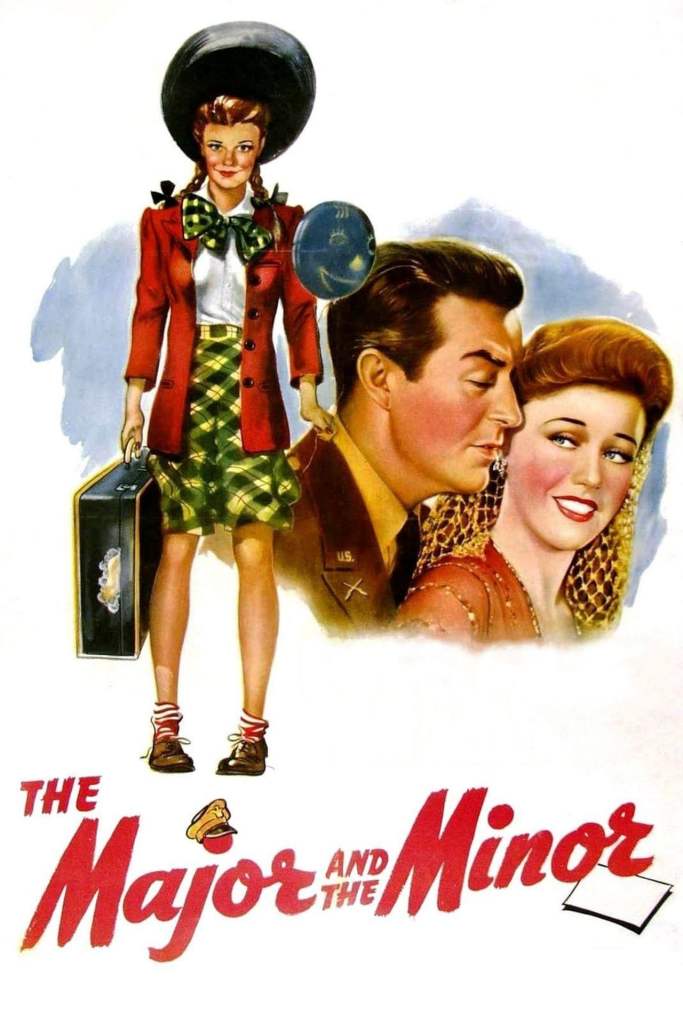
Billy Wilder was an iconic director of some massive hits, and while his career spanned decades, I’ll be looking at 5 of his most famous films from Hollywood’s Golden Age, starting with his directorial debut, 1942’s The Major and the Minor, starring Ginger Rogers and Ray Milland. Rogers plays Susan Applegate, a young woman who’s spent the last year trying to land a steady job in New York, but has finally given up and is ready to return home to Iowa, where she has a boring life with a boring homegrown man waiting for her. Unfortunately she doesn’t have enough train fare to get there, so she pretends to be 12-year-old Su-Su and purchases a half fare ticket. The train conductors smell a rat immediately, and while evading them, Su-Su jumps inside a compartment, occupied by Major Philip Kirby (Milland). Still in character, Su-Su explains she’s returning home alone, and Philip insists on watching over her until he has to exit the train in Indiana. Unfortunately, the train breaks down near there, and Philip demands that Su-Su not wait on the train by herself, but to come to his fiancee’s, Pamela’s, house, until the train is running again. Su-Su reluctantly agrees, but upon arrival, she is finally sniffed out by Pamela’s little sister Lucy. Lucy agrees to play along, but her time at the house, overlooking the military school where Philip works and constantly beset by boys who notice “something special” about Su-Su, will be a challenge. Doesn’t get less complicated as Susan falls in love with Philip. Though it loses a bit of steam in the epilogue, it’s a very funny film and endearing in the classic Hollywood mold. ★★★½

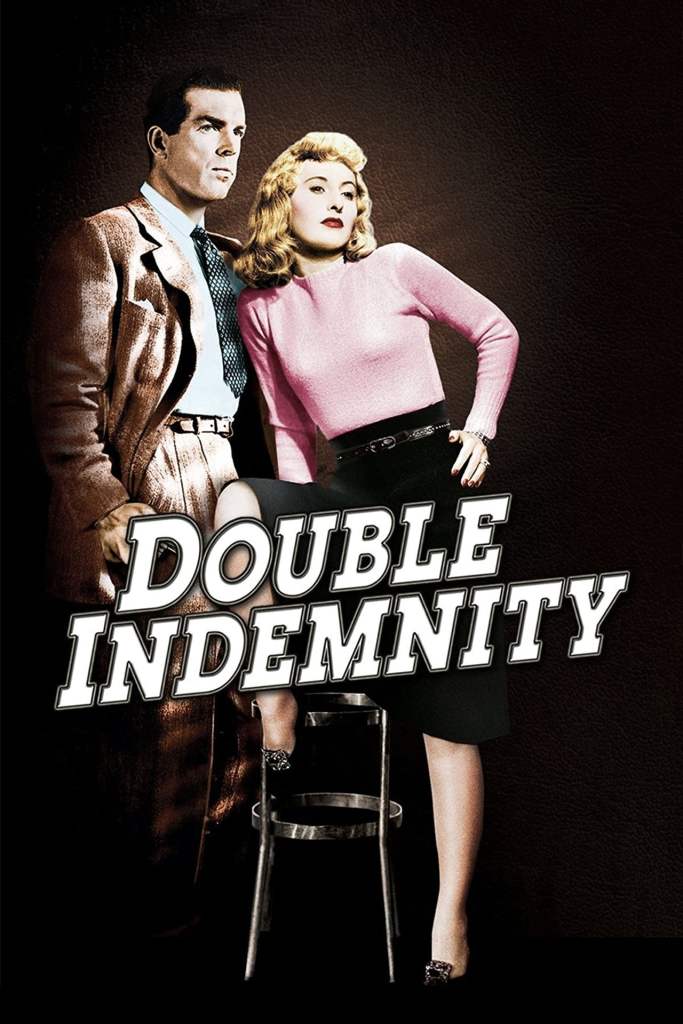
Double Indemnity, released in 1944, is cited as having “set the standard for film noir.” High praise, but as is rarely the case in my experience, the film delivers. Billy Wilder wrote the screenplay with crime fiction master Raymond Chandler, and it tells. The film stars Fred MacMurray as Walter Neff, an insurance salesman who is calling on a client when he meets the client’s wife, Phyllis. The viewer can see immediately that Phyllis is bad news, but Walter is smitten immediately. And after she tells him about how big of a brute her husband is, Walter wants to help. They devise a plan to kill the husband and make it look like an accident, so that she can cash in on a new life insurance policy. If they make it happen on a train, the insurance’s double indemnity clause kicks in, paying 100k instead of the standard 50k. But Phyllis is not all that she appears, and Walter’s bosses at the insurance firm are not easily fooled by an easy death. Fantastically dark noir with the perfect femme fatale role with Barbara Stanwyck as Phyllis. There’s some great twists in the end too that really keep you on your toes. ★★★★½

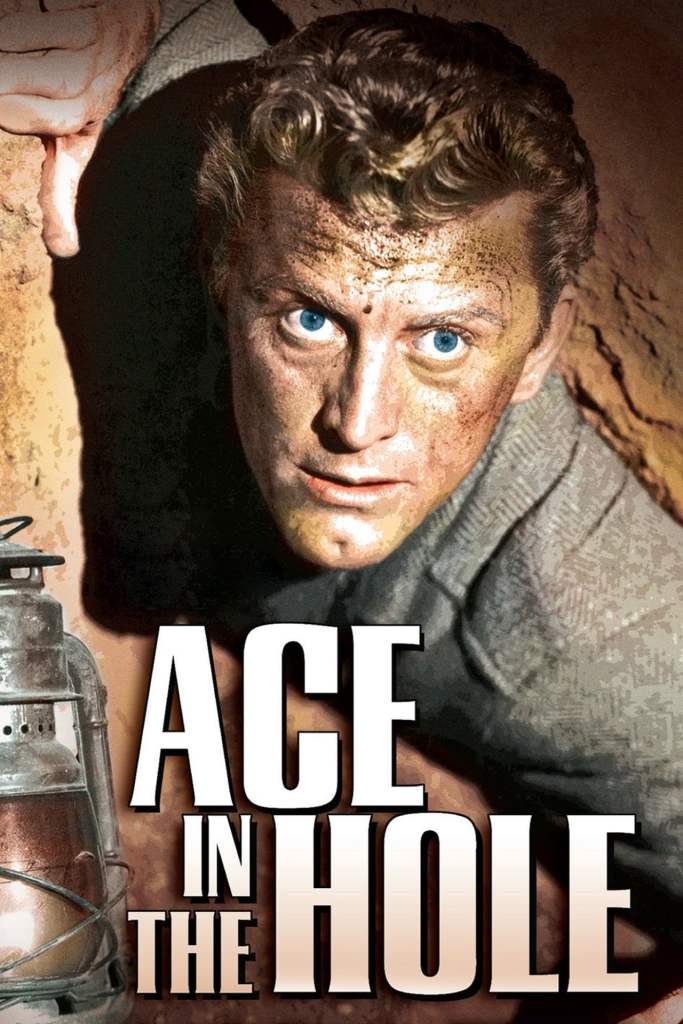
A trend I’m seeing in these movies is, despite wildly different subjects and themes, Wilder lands star after star in his films. Doesn’t get any bigger than Kirk Douglas in Ace in the Hole. He plays Chuck Tatum, a journalist with a flare for the dramatic, who can’t keep a job due to his constant drinking. He’s found himself at a small paper in Albuquerque, and his loud, cocky attitude gets him a job (and possibly his last chance). Assigned to cover a small-town event out in the boons, Tatum stumbles upon a story: a local man, Leo Minosa, has just been trapped in a cave that very day. Tatum runs straight to the cave and finds Leo, his legs trapped but otherwise healthy. Seeing a story, Tatum gathers the sheriff and engineers and concocts a tale: Leo is stuck in a cursed cave, in trouble by Indian spirits for traversing their hollowed grounds. The story spreads like wildfire, and people from all over start flocking to the cave. The engineer says they can get Leo out in 16 hours, but Tatum needs his five seconds of fame to last longer than that, so he gets the engineer to dig from the top rather than go through the side, a process that will take a week. And in that week, the people keep on coming, until a literal carnival arrives (satirically, the circus is most definitely in town). In the meantime, Leo’s estranged wife, who was about to leave him, stays behind to run their diner, which is now seeing hopping business, bringing in money which she still intends to use to leave her husband. But will Leo live to see the fruits of it all? If the movie weren’t so tragic, its over-the-top depiction of sleazy journalism gone mad would be comic, but Douglas’s cynical Tatum is full of energy and completely compelling. ★★★★

I had another epiphany about Wilder with Some Like it Hot. Some directors want to stress a point, some want to show off their ability, some want to push their own views; Billy Wilder just wanted to entertain, and have a good time doing it. You can tell he had a good time in this film, one of the greatest comedies of all time. It stars Jack Lemmon, Tony Curtis, and Marilyn Monroe at the height of her fame. (By the way, I had to choose between this film and the other Wilder/Monroe picture, Seven Year Itch, which features the iconic scene of Marilyn getting her dress blown up by the vent; I went with this one due to higher reviews and apparently more lasting appeal.) Taking place in 1929 prohibition era, musicians Joe and Jerry are playing at an underground speakeasy when it is raided by police, who are after crime boss Spats Colombo. Spats is of course surrounded by good lawyers and doesn’t do any time, but he hunts down the man who tipped off the police, and shoots him up. Unfortunately for Joe and Jerry, they witness the murder and are now on Spats’s hit list. Their way out: dressing in drag so as to join an all-female band who is heading south to Florida for a gig. What starts as a crime noir turns into a comedy for the ages. Speaking in falsetto, the “girls” fall in with the rest of the band, whose singer Sugar Kane (Monroe) says she always falls for the bad bad saxophone player. “Josephine,” now the sax player in the band, seems like he might be the next, and he’ll go to great lengths, including impersonating a millionaire once they hit Florida, in order to get and keep Sugar’s attention. The boys aren’t in the clear though; a big mobster get together in Florida brings Spats down from Chicago. Absolutely hilarious film, and looks to have stood the test of time. Despite the boys dressing up as girls, they don’t belittle women and in fact, Lemmon’s character (as a girl) loves being wooed by a wealthy older man in Florida. In the beginning, surrounded by girls in the band, he has to keep reminding himself, “I’m a girl.” When a rich man is lavishing “her” with gifts, he has to start reminding himself, “I’m a boy.” I’m pretty sure Wilder wasn’t trying to make a statement*, he was just trying to get a laugh, but in doing so, his film has been able to avoid today’s social warriors, and remains a hell of a good time.

*Or maybe he was. Joe goes by Josephine, but Jerry, instead of going by Geraldine as Joe assumed, chooses his own name, Daphne, much like transitioning people today may choose a new name. For the rest of the film afterwards, Joe is still very much a man in woman’s clothing, ditching the clothes whenever possible, but Jerry/Daphne rarely goes back, and embraces being a woman more and more as the movie progresses. Funny? Definitely. But was there more to it in Wilder’s eyes? ★★★★★

OK, now I’m in a quandary. I gave the above film 5 stars because it deserves it, but then what do I do for a masterpiece like The Apartment? I’ve painted myself in a corner! The titled New York apartment belongs to C.C. Baxter (Jack Lemmon), a lowly insurance underwriter with an eye for advancing quickly in the company, sort of in a How to Succeed in Business Without Really Trying kind of way, for you musical fans out there. His job is dreary, but the one highlight of his day is riding in the elevator with the beautiful and charming elevator operator, Fran Kubelik (Shirley MacLaine). Baxter’s been lending his apartment to higher-ups in the company to use for clandestine dates with their side-pieces, in order to keep away from their respective wives. To this end, Baxter spends more time away from his apartment than in it, but he does finally get that promotion when the personnel director, Jeff Sheldrake (Fred MacMurray) starts making use of the apartment too. Unfortunately (and unknown to) Baxter, Sheldrake’s current girlfriend is Ms Kubelik. She’s been on Sheldrake to leave his wife for some time, but of course he always has an excuse. It isn’t until Kubelik talks to Sheldrake’s secretary, herself a one-time girlfriend to the man, that she realizes that Sheldrake has been using the same old lines for years now, on multiple women. In a fit of despair, Kubelik attempts to kill herself in Baxter’s apartment one night after Sheldrake has left her there, by swallowing a whole bunch of pills. Baxter comes home in time to save her, but even then, he won’t mention a bad word about Sheldrake. In fact, Baxter’s too-good-to-be-true attitude throughout the film doesn’t have him thinking or talking bad about anyone, no matter how many times they rub his face in the dirt. You have to watch through to the end to see how it all plays out, but be ready for a film far more emotional than what you may have expected in the beginning. A taught film, with a tight plot, heavy on the laughs but equally heavy on the tears, this movie has got it all. And judging by these 5 films, Billy Wilder was one hell of a consistent deliverer. ★★★★★

  • TV series currently watching: House of the Dragon (season 1)
  • Book currently reading: Chapterhouse Dune by Frank Herbert

Quick takes on 5 Makaejev films

Everyone passably interested in film has heard of the French New Wave, but ever heard of the Black Wave? A film movement out of Communist Yugoslavia in the 60s and 70s, it too bucked traditional film approaches, and was led by a group of young directors, Dušan Makavejev being one. Today I’ll be viewing 5 of his films, starting with his first, Man is Not a Bird, released in 1965. It doesn’t have a traditional narrative plot (much like the New Wave), but that doesn’t mean it isn’t entertaining. The film takes place around a mining town and, at first, we think worker Barbulovic is the main character (I should have known better though; there is no “main character, as I quickly learned). He starts a brawl at a bar, which gets the woman singer knifed. She’s “known by the men” about town, and the police throw Barbulovic in jail for a couple days for starting the fight. When he gets out, he has to confront his wife, who is upset with him for giving her 3 best dresses to his mistress (yet another woman). Interspersed throughout, there’s another story involving a man named Rudinski, who is an engineer who has come to the town to modernize the mine, making it more profitable and more productive. Rudinski starts a relationship with the only blonde in town, whose hair color sets her apart from all the other dark-haired locals, and thus is the object of desire of many men. When Rudinski finishes his job at the mine and is ready to move on, he has to make a decision on what he’ll do with his new girlfriend, a decision we aren’t privy to. Much like the New Wave, the film doesn’t answer every question, and while this kind of film isn’t for everyone, if you generally like the New Wave (and I do), you’ll find plenty to enjoy. A great first effort from the director. ★★★½

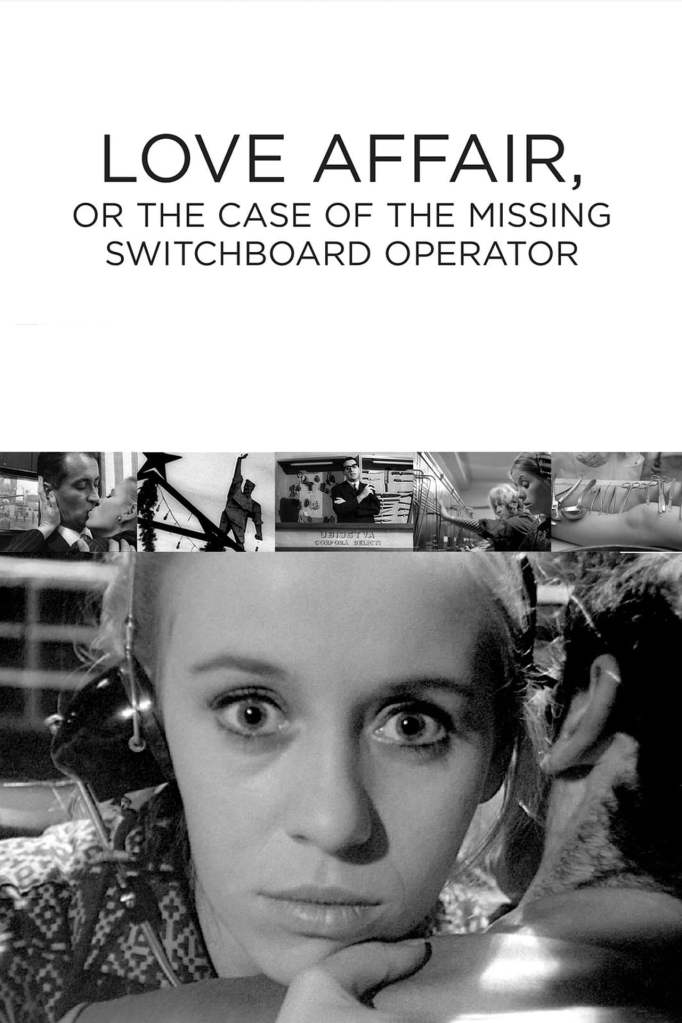
The director’s second film had the unwieldy title of Love Affair, or the Case of the Missing Switchboard Operator. After a (seemingly, though it makes sense later) introduction by a sex expert, given in a documentary-like way directed at the camera, we meet our switchboard operator, Izabela. A beautiful young woman from Hungary, she has a first date with a member of the Yugoslav communist party, Ahmed, who works in the sanitation department trying to keep the rampant rat population under control. He gives off creepster vibes at first, but you soon realize that he does genuinely care for Izabela. Just as the couple is taking their relationship up a notch and moving in together, we get another break from the story. Instead of a sex talk, we hear from a criminologist, talking about how to dispose of bodies and whatnot. Afterwards, in a flash forward, a woman’s body is found in a well, and just a bit later, an autopsy is performed where we learn she was 3 months pregnant. If the title of the film didn’t give it away, an astute viewer will recognize the woman is Izabela, so the table is set for the rest of the film, and it definitely adds a layer of suspense. Izabela and Ahmed seem very much in love and all is good, until he goes out of town for work for a whole month, and Izabela succumbs to the advances of a postal worker who won’t leave her alone. The resulting pregnancy is a surprise, but Ahmed initially thinks the child is his. We never see how he finds out the truth, that little discussion/argument is kept from the viewer, but the end result doesn’t disappoint. Very well put-together film. A little more out-there with the breaks to the storyline (there are several I didn’t bring up here), but it is good overall. ★★★

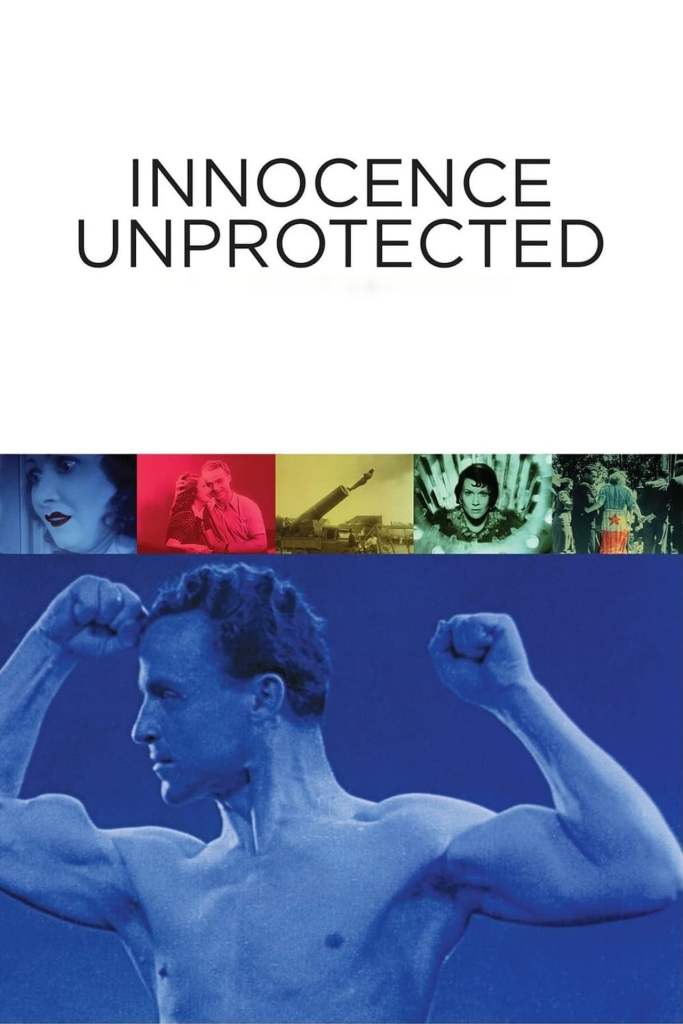
Innocence Unprotected is an interesting film, but unfortunately one that is more interesting than entertaining. It is a quasi-documentary about a Yugoslavik film of the same name which was released in 1941 during German occupation. The 1941 film has the distinguishment of being the first sound film made in Serbia in the local language. As such it received a big ovation when it was released, which the Germans didn’t like (it squeezed out the German cinema), but then the director took the reels and hid them, so it never expanded past its opening showing. Then, after the war, the Yugoslavia government banned the film and there were whispers of charging the filmmakers with collusion with the Germans in making the film. All of that is ridiculous, because the film was made without German knowledge or approval. Anyway, fascinating story, so what the new film does is look back at the original production, as well as interview the surviving cast and crew about their experiences, mostly focusing on star Dragoljub Aleksić, who was a locally famous acrobat whose death-defying acts amazed Europe after World War I. Unfortunately the film didn’t do it for me. I think Makavejev was really going for a nationalist, pro-home country feel, and it achieved that, but for outsiders, the movie’s a bit dull. ★½

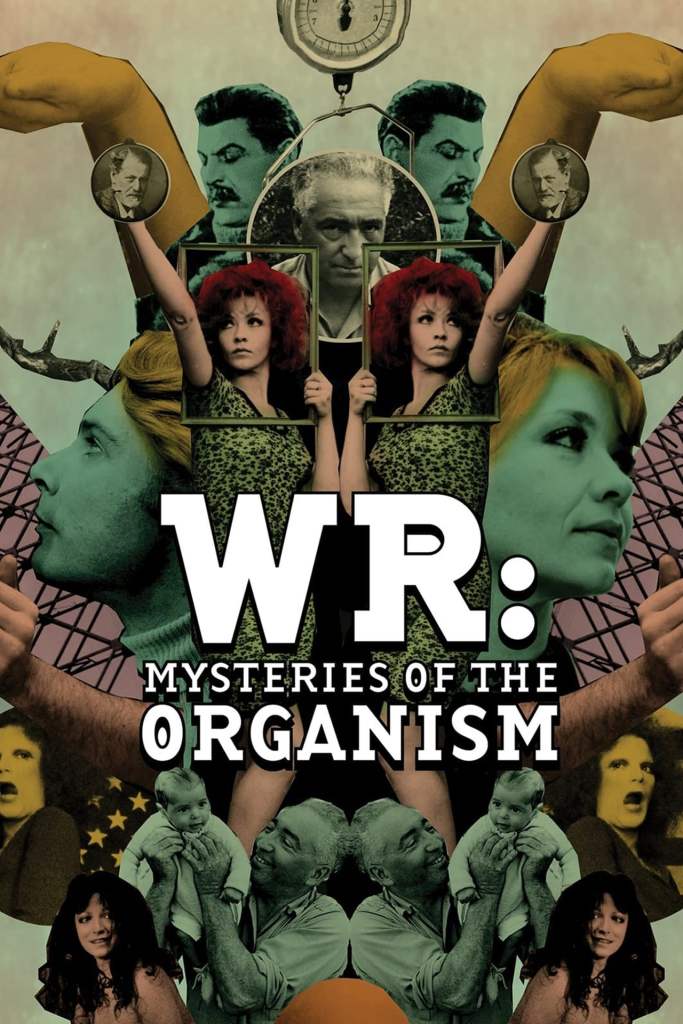
WR: Mysteries of the Organism is supposed to be Makavejev’s masterpiece, garnering acclaim at the 1971 Cannes Film Festival. I don’t get it at all though. It’s even more experimental than the above film, and opens basically as a documentary. The WR is Wilhelm Reich, an Austrian doctor who worked under Sigmund Freud until splitting off with his own ideas. Reich was a proponent of the powers of sexual energy and, specifically, the power of orgasm. He said this power could be harnessed through special machines and could do everything from calm nerves to cure cancer His radical ideas, even in the USA where he fled during World War II, led to imprisonment (he died in jail) and later, the seizing of his equipment by the FDA and a mass book burning right here in the USA. The film details much of these events, as well as a cobbled-together story in the latter half about a revolutionary woman in Yugoslavia who believes these ideas, and who tries to convert a pro-Communist young man. The woman exclaims loudly and proudly that Communism could be stronger if it didn’t suppress sexual desires in its population. Obviously the film is very graphic in spots; that part didn’t bother me so much, but it’s just so over the top weird. Its content obviously got it banned in its home country, and I’m confident that’s the only reason critics think so highly of it. They love a good pushing-the-boundaries kind of movie. ★

Sweet Movie started a lot better, maybe because this time, I actually got a story to follow. Two stories in fact. One follows a rich American tycoon who always wants the best, so he started a Star Search-like contest to find himself the perfect virgin to marry. As women are paraded on stage for a gynecologist to examine their rose buds, jokes are aplenty. The woman chosen, Miss Canada, is happy to be picked until that night, when the tycoon (played by Animal House’s John Vernon) takes down his pants and has had his penis gold plated. It scares her enough to want to leave, but rather than let her go, the tycoon has his henchman knock her out, stuff her body in a suitcase, and ship her off to Paris. There, she ends up in a wild cabal of sex and debauchery. The other story follows a woman named Ann, who is captaining a ship traversing around Amsterdam. Her boat is full of candy, with which she lures young boys onboard. Sex is never shown but definitely implied, so that’s tough to stomach. The movie as a whole started off fine enough. It’s an absurdist comedy, and while some graphic scenes are rough, they’re nothing like the above couple pictures. That is, until, the film devolves in the last act; both stories run off the rails and lose all narrative, becoming nothing more than garbage. Oh well, should have stopped after the first 2 movies today. ★½

  • TV series currently watching: She-Hulk (miniseries)
  • Book currently reading: Chapterhouse Dune by Frank Herbert 

Quick takes on EIGHT silent era films

Up today is a whole bunch of films from the silent era of American film. There’s a little bit of everything in here (except Chaplin, seen a whole lot of those already), starting with a trio of films by director Josef von Sternberg. Underworld set me off to a great start. A crime drama, it begins with a loudmouth gangster named “Bull” Weed as he’s pulling off his latest heist. Flush with money, he goes to the local bar to meet his girl, “Feathers” McCoy. There, Feathers is getting some attention from Bull’s rival gangster, “Buck” Mulligan, who also finds joy in belittling the town drunk, “Rolls Royce” Wensel. First off, let’s take a moment to enjoy all those names. Anyway, Bull comes to Rolls’ rescue and puts Buck in his place, but Buck swears revenge. Rolls and Bull become pals, and Bull is able to get Rolls sober, making him a confidant in his schemes. Clean and sober, Rolls is a different guy entirely, and Feathers appreciates his gentle touch, a much different man than the brash Bull Weed. Bull is the jealous type though, in fact, he later kills Buck at a party when Buck makes advances on Feathers. Now Feathers and Rolls have to decide if they should try to break Buck out of jail before he is hung for murder, or if they should take this chance to have a life together. This is simply a fantastic film. I don’t often look to silent films for stellar acting; there’s good stuff out there, but too often actors go overboard. Clive Brook in particular as Rolls is incredibly emotive and subtle, and George Bancroft as Bull is the perfect redeemable bad guy. One of those films that sweeps you up, and you forget that it is a silent picture. I was completely immersed. ★★★★½

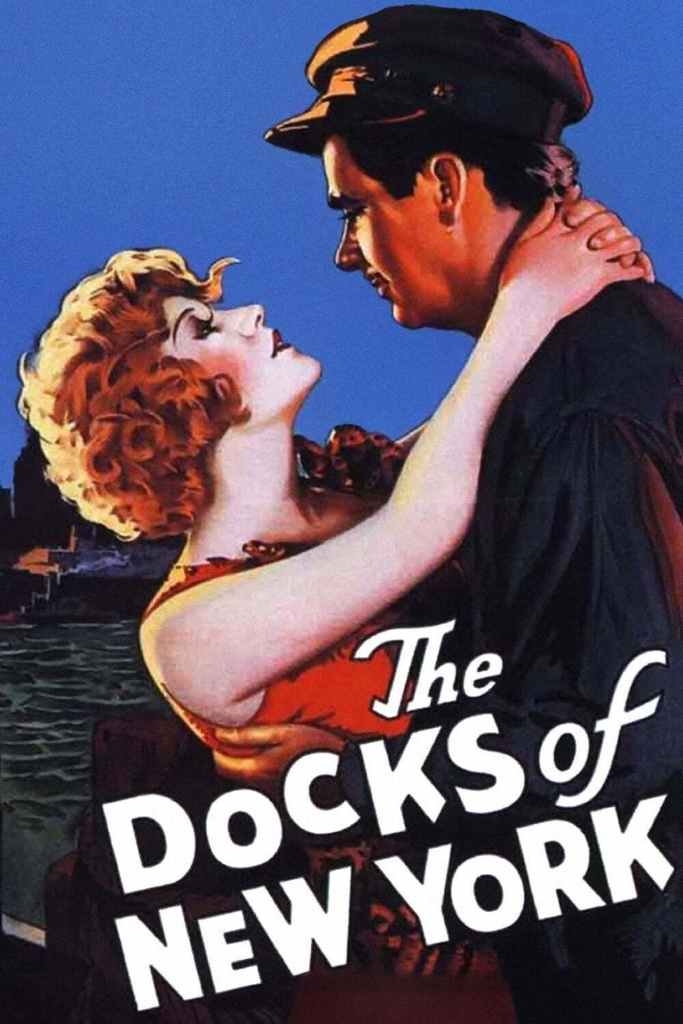
The Docks of New York brings Bancroft back, this time as an antihero. He plays Bill Roberts, a steamboat stoker who has a reputation in every port as a lady’s man. Tattooed up and down his arms with crude pictures of naked girls, he works his tail off on ship, so he’s ready to party when they dock. He’s warned by the ship’s engineer, Andy, that he’ll only have the one night and is expected back the next morning. Heading to the local bar, Bill hears a splash, and rescues Mae from drowning. Mae, a prostitute, was attempting suicide, but Bill will have none of that. He steals some new clothes for her, nurses her back to health, and takes her down to the bar to party. In a drunkenly good mood, Bill exclaims that he’ll marry Mae to make her an honest woman. Mae can’t believe it (and neither can anyone else, including Bill’s boss Andy, who’s at the same bar; Andy likes to visit the ladies in port too, but this time he unexpectedly runs into his estranged wife, who has found comfort with other men in her husband’s absence). Bill hunts down a pastor and makes good on his promise that night, using Andy’s and his wife’s rings, since they obviously aren’t doing that couple any good. Of course, Bill has no intention of filing the marriage paperwork the next morning to make it legit, and deep down, Mae knows that too, but she’s happy with the one evening of bliss. But will Bill have a change of heart in the end? I think Bancroft made a better villain in the previous film; his surly character and sneering face don’t play as well for a hero, but the story is still wonderfully told. ★★★½

After The Last Command, I think I’ve found one of my new favorite directors. Von Sternberg’s last film today begins with Leo Andreyev, a Russian film director working in Hollywood in present day (1928). He’s reviewing photos of actors, looking for extras for his next film. He finds the picture of Sergius Alexander and sees something in him immediately. In Sergius’s bio, it says he was related to the former Czar and was a decorated general. Sergius is brought in for wardrobe and makeup, and the old man has a serious tick, and is obviously not all there in the head, making him the butt of jokes by the other actors. We then get a flashback 11 years ago, to 1917 Russian, during the Bolshevik revolution. Sergius leads the Russian army against a losing cause, but they don’t know it yet. Two spies are brought in to Sergius, a man and a woman, who are actors supposedly building morale for the troops, but who are really revolutionists. Sergius is instantly attracted to the beautiful Natalia, but astute viewers recognize her companion as the director in present day, Leo. Sergius beats Leo with a riding whip and sends him away, but makes Natalia his companion. She has a chance to kill him but sees that, while they are ideologically opposed, Sergius loves Russia as much as she, and she can’t bring herself to do it. She ends up falling in love with him, but their relationship obviously can never last. After Russia’s government falls and Sergius’s and Natalia’s love ends in tragedy, we go back to present day, and see that Leo had hired Sergius in order to exact a perverse revenge. But will he get what he wants (or want what he gets)? As Sergius, Emil Jannings won a Best Actor Oscar in the first Academy Awards ceremony in 1929 (there’s a neat trivia answer for you!). A tremendous film again, moving and heartbreaking, and I’ll need to look up more movies by this director in the future! ★★★★½

The 3 best silent film era comic actors were Chaplin, Harold Lloyd, and Buster Keaton. I’ve seen films from the first two (with more Lloyd coming up today), but The Cameraman is my first Keaton film. Known as maybe the best pure comic actor of the trio, Keaton did not disappoint. In the beginning of the film, Buster is selling tintype photos for a dime on the street when he sees and instantly falls for the beautiful Sally. He follows her to work, a secretary in the MGM news company. To be near her, Buster goes out and buys a (very cheap) video camera, in hopes of getting a job at MGM. Somewhere along the way, he does get a date with Sally. Everywhere Buster goes though, hilarity ensues. Whether it’s fighting with another man in the tiny changing room of a public pool (or losing his suit in the water), or getting stuck out in the rain after his date is driven home by another man, whatever the case may be, Buster is always the butt of the joke. At the same time, you have to appreciate his go-getter attitude, both in the role and as the actor. Keaton never met a stunt he wouldn’t do for a laugh, and took a ton of risks in his career. In one memorable scene in this movie, he climbs a long ladder up 20+ feet, and as he reaches the ledge at the top, the ladder falls away, leaving him dangling. He lifts himself up, only to see the ledge teeter and fall forward to the ground way down below carrying him (standing the whole time now) and landing on his feet. No nets, no mattress to catch him. Stunts like this pervade, and while a little scary to watch, I laughed and laughed, the whole way through. ★★★★

Keaton’s Spite Marriage unfortunately isn’t as strong. The story of a dry cleaner (Keaton) who falls in love with a stage actress (Trilby Drew, played by Dorothy Sebastian), it has the laughs but none of the emotional triumph that The Cameraman exhibited. Keaton is smitten by Trilby when he first lays eyes on her, and begins to attend her every performance, sitting in the front row and dressed to the nines. The cast and crew think he’s a millionaire, but Trilby isn’t interested; she only loves her costar Lionel. Lionel though has a wandering eye, and is now taken up with a young blonde. To get back at him, Trilby rashly marries Keaton one night, but immediately regrets it. Her agent tries to come to her rescue, begging Keaton to leave the city for a time so that Trilby can file divorce papers due to abandonment. Before Keaton can agree, fate pulls him off anyway. In a strange turn of events, he witnesses a crime, then hides from the criminals on a boat, which heads off to sea. Too bad for him that Trilby and Lionel are on the boat trying to reconcile. Keaton’s antics aren’t as hilarious in this go-around, though he still defies death (like when a mast swings out over the sea, with him dangling from the end). Instead of the laugh-out-loud guffaws of the previous film, this one elicited more chuckles. You do see the effects of sound film on this 1929 piece though. Though it has no spoken dialogue, the soundtrack is synced, and elements you see on screen are incorporated (the laughing and applause of the audience in the theater, the marching of solders on stage, etc.). ★★

Harold Lloyd is sort of the forgotten member of the “big 3” of silent comic stars, though he was just as big of a draw at the time. I read a story somewhere that he didn’t allow his films on television, as he didn’t want them chopped up for commercial breaks and whatnot. Until home movies became a thing, this led to a generation-plus of viewers who regularly got to see Keaton and Chaplin, but never Lloyd, so his star diminished some. VHS/DVD/BLU and now streaming have reminded people of his genius. First up is his 1925 film The Freshman. Harold plays Harold Lamb, an incoming freshman to Tate University. He’s completely gung-ho, a little too excited, and wants to go in and immediately make an impression. Of course, others take advantage of that spunk, and it isn’t long before Harold is the butt of jokes on campus. It gets worse when he tries out for the football team, and ends up being the tackle dummy on practices, and the water boy during the games. The height of the laughs come when he throws a party at his boarding house, and wears a suit that unravels throughout the night. But in the final game of the season, Harold may get a chance to prove his mettle. Lloyd plays the lovable loser well, and his ability to keep a gag going is on view the entire film, but the film isn’t a real standout like some of the above films. ★★½

Lloyd is the underdog again in 1927’s The Kid Brother, this time playing Harold Hickory. As an early intertitle tells us, the stork probably laughed the whole time he was delivering Harold to the Hickory family; he does not fit in. His dad Jim is the sheriff of Hickoryville, and his two older brothers are just as big and burly as father Jim. Harold is the skinny kid and is always left at home when “men work” is to be done. However, when they are away one day, a traveling medicine show pulls into town, and go the Hickory home to get the sheriff’s OK to peddle their wares in town, and mistake Harold for the sheriff. Harold later tries to make it right, but of course things don’t go well. Like in The Freshman, there’s also a lady he’s trying to impress, but he doesn’t need to try as hard as he thinks he does, as he has her eye from the beginning. I had harder laughs than the above film; the comedic highlight is when the girl supposedly stays the night on the couch, and the brothers think she’s still there, feeding her food and coffee over and around a privacy blanket, when in reality she had left during the night and it is Harold on the couch. When they find they’ve been duped, the brothers go after Harold, but he hilariously evades them. When the town runs into serious trouble from a thief, Harold will need to step in to try to save the day. ★★★½

Speedy was Lloyd’s last silent film, released in 1928 (afterwards, he would be one of the rare silent actors to successfully transition to sound). It’s also my favorite of this trio of his films. He loses the underdog role, and is a popular man with a girlfriend from the beginning, though he can’t keep a job, and always lives on the edge of being broke. Especially after a funny day at Coney Island with his girl when everything wrong happens (though they have a good time). Harold’s one-day grandfather-in-law runs an old school horse-drawn streetcar, the last in New York, and he’s under pressure to sell it to a group who wants to modernize. But, at Harold’s urging, the man won’t let it go for peanuts. The group wanting to buy is ready to play hardball though, so Harold must once again save the day. The memorable gag in this film: Harold’s (again, only lasting a single day) job of taxi driver, where he gets a couple speeding tickets while driving cops after robbers (who disappear just long enough to not provide Harold his alibi), and a turn driving, of all people, Babe Ruth to Yankee Stadium. Buster Keaton may be more daring, and Charlie Chaplin may be more sentimental, but Harold Lloyd has them both beat on how to keep a joke going. In all three films, there were a couple times where he did a gag, ran it again, ran it again, and kept building on it, until you, as the viewer, went from minor chuckles to huge belly laughs by the end of it. ★★★★

  • TV series currently watching: Star Trek Strange New Worlds (season 1)
  • Book currently reading: Chapterhouse Dune by Frank Herbert