
Today we go back to one of the most famous actors of the silent film era, Charlie Chaplin. To anyone who hasn’t seen a movie or two of his, for thinking it is outdated, you are missing out. Probably the best pantomime actor of all time, but also an incredible director and writer as well. Though we shouldn’t condone his personal transgressions (he impregnated and married several woman much younger than himself, including a couple teenagers), he is without a doubt one of cinema’s greatest of all time.
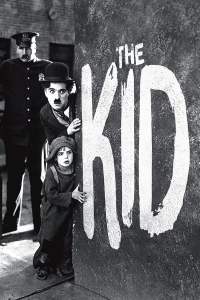 Chaplin broke down a lot of barriers with his film The Kid in 1921. To this point, he had become famous making 2 and 3 reel shorts with his Tramp character, but he wanted to make a full, feature length film. When he was told it would be impossible to keep the comedy going for that long, he replied that the film would also have a drama element. We take it for granted now, but at this time in film (and radio, and theater), comedies and dramas were kept apart, as producers thought the audience would be confused if you joined them. In The Kid, the Tramp becomes a surrogate father to an abandoned child and raises him as his own. Always poor (as Chaplin’s Tramp always was), the duo have several adventures, but always manage to rely on each other in the worst of times. Very funny but also very endearing, the film clearly shows Chaplin was ahead of his time.
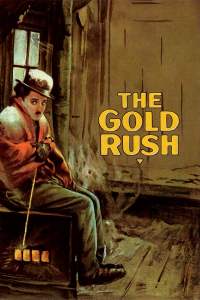 The Gold Rush, from 1925, may be Chaplin’s favorite movie, and he is on record for saying it was the one he most wanted to be remembered for. Most of Chaplin’s silent films were created spontaneously; he would have a general idea for the movie, but the film with develop during shooting (and re-shooting) until it made a cohesive whole. Not so for The Gold Rush, which was fully written before he started filming. It is also the only silent film that he later “converted” to sound, releasing (in 1942) with narration replacing the intertitle cards, and a new musical score. It even won a couple Oscars upon the re-release. I watched the original silent film though, and really enjoyed it. The Tramp finds himself in the great north, swept up in the search for gold with hordes of others. Along the way, he finds a close comrade, fights off a villainous murderer, falls in love, and ultimately becomes rich. Chaplin is at his comedic best, but the film is also chuck full of adventurous tension and unrequited love, and you are truly pulling for the little guy from the very beginning. If you are going to watch any Chaplin film, watch this one.
 As forward-thinking as Chaplin was in his writing, he resisted “talkies,” probably because he had become so famous in his silent films. City Lights came out in 1931, four years after The Jazz Singer broke “the sound wall,” but Chaplin stayed the course for the silent era. Another comedy-drama, in this one, the Tramp falls in love with a blind girl. He uses his friendship with a rich man (who only recognizes Chaplin’s character when he is rip-roaring drunk) to get money to support the girl, ultimately finding a way to pay for an operation for her to regain her sight. In doing so though, he is accused of theft and sent to jail. When he emerges months later, he tracks down the girl, who only recognizes him when she touches his hands in the final scene. Maybe even more heartwarming than The Kid, City Lights showcases Chaplin as an actor with decades of experience behind him, and coming into his own as a director.
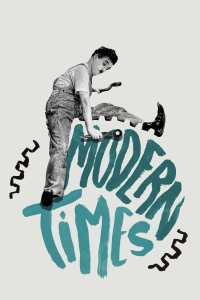 Chaplin’s last use of the Tramp character, and his last silent film, was Modern Times in 1936. Released nearly a decade after sound make its way to the cinema, it is a fitting farewell. Ostensibly about the Tramp falling in love with a poor girl and being unable to support her in a down economic time (and his own laughable inability to hold even a menial job), the film really satirizes the changing world as a whole, and the movie industry in particular. Obviously under a lot of pressure to move to sound films (though he had full creative control through his deal with United Artists), he thumbs his nose at his naysayers by making a clever, funny movie with virtually no dialogue. When the Tramp opens his mouth and sings a song in the final minutes of the film, the words are just gibberish, yet still we laugh.
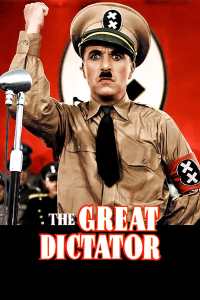 Chaplin’s first sound film came in 1940, The Great Dictator. Very controversial at the time, it satirizes Hitler (called Adenoid Hynkel here), with Chaplin playing both him and a Jewish barber concurrently. Hynkel is portrayed as a petulant child, a bumbling idiot with a temper. He makes rash decisions that his advisers need to keep talking him out of. The barber is a regular joe trying to get by in a crazy world, but he is able to avoid persecution for having saved a Tomainian (German) officer during the first World War, an officer who went on to be high up in the government. Through a crazy turn of events at the end of the film, the barber is mistaken for Hynkel and finds himself on the podium addressing a mass of military and citizens. Here, Chaplin comes out of character, faces the camera, and gives an impassioned speech for people to fight fascism and dictatorship, a speech that seems to mean as much today as it did in 1940. Look it up and read it, or better yet, watch the film.


2 thoughts on “Quick takes on 5 Chaplin films”