

The Cranes Are Flying is a 1957 Soviet era anti war film, taking place during World War II. Boris and Veronika are deeply in love and planning marriage when war breaks out. Veronika worries Boris will be drafted, but he inexplicably freely enlists out of a sense of patriotism. He pledges to return home safe, but he’s only gone a short time before Veronika loses her family during a bombing. Boris’ family takes her in, but this turns out to be more of a curse. Boris’ cousin Mark, who somehow has avoided getting drafted, has long has his eye on Veronika, and he takes advantage of the opportunity and rapes her. In the next scene, we see that the family has relocated to Siberia, away from the dangers of war in Moscow. Veronika is working at a nurse at a hospital and has married Mark, though she despises him and longs for any word from Boris from the front. Letters never come. When we finally see what Mark has been doing in the war, we get the bad news long before Veronika will. A heart-wrenching film and searing message against the atrocities of war, and its affects both abroad and at home. It received universal acclaim, and won the Palme d’Or at Cannes in 1958. ★★★★★
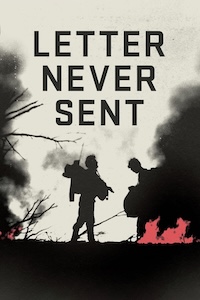
After the success of Cranes, director Mikhail Kalatozov followed up with Letter Never Sent in 1959, and oh boy, another good one, again involving the indomitable human spirit. A quartet of Russians have come to Siberia in search of diamonds. Sergei and Konstantin have been there before, this is their fourth attempt in fact, but for young couple Andrei and Tanya, both geologists, this is their first time, and thus they are the most optimistic. They initially are dropped off by plane near a river in early spring, but panning it turns up nothing. They turn inland towards the mountains and start digging, and just as the dryness of summer sets in, they finally find a diamond. The team is elated, for the wealth it can bring their country just as the space race is heating up, but tragedy soon strikes. A wildfire breaks out, killing Sergei (the guide) and torching the area. Planes fly overheard regularly, trying to rescue the remaining trio, but the smoke keeps them from being spotted. As summer turns to fall, and eventually the cold, cold Siberian winter, hope is lost. It’s a thrilling picture that really gets the viewer into the bleak feeling of the team’s struggling, dwindling survivors. ★★★★

Wings is one of those movies which I’m not really sure what it’s about. Either nothing, or over my head. It follows a middle-aged woman in the 60s who is famous and respected by anyone her age and older, but gets no respect from the students at the school where she is now headmistress. She is definitely out of touch with the younger generation, who don’t know (and don’t care) who she is. We find out much later in the film that she was a fighter pilot for the USSR during World War II, and one of some renown (which explains her dream-like states of floating through clouds, which happen sporadically throughout). That’s really the film in a nutshell. Nothing much really happens. I just don’t get what it was trying to say. ★½
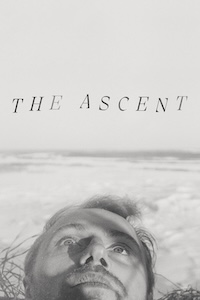
Despite not connecting with the above film, I gave the director (Larisa Shepitko) another shot with what is supposed to be her best, 1977’s The Ascent. What an about-face! This movie is spectacular, following two Soviet partisans in World War II, Sotnikov and Rybak, as they are tasked to search for food for the group with whom they’ve been traveling, which includes fighting partisans as well as women and children hiding from the Germans and their collaborating Belarusian locals. At the closest village, they end up at the house of a man named Sergei, who has been reluctantly working with the Germans in order to keep his family safe. Sotnikov is disgusted and wants to kill Sergei, but is convinced to let him live, and instead he and Rybak leave with with food. Before they can make it back to the group, they are found by Germans and shot at, wounding Sotnikov in the leg. The duo escape again, and hide out in another house, belonging to Demchikha. Demchikha is looking after her 3 young children while her husband is fighting at the front, and willingly hides her countrymen. However, they are all discovered by Germans before long, and the two partisans are arrested. Sotnikov is interrogated first, and he gives up no information despite terrible torture. Rybak goes next, and assuming Sotnikov already talked, he sings like a bird, without even the threat of torture. When he is reunited later with Sotnikov, he realizes his error, but by then his courage has already left him. It only gets worse when Sergei and Demchikha, along with a young Jewish girl found hiding in the village, are imprisoned with them, and the threat of death in the morning hangs over the group. A tremendous film about the lengths man will go to to save his own ass, and how different people face the end in very different ways. Some find courage, and some find cowardice. This triumph was to be Shepitko’s final film; she was killed in a car accident 2 years later at the age of 41. ★★★★½
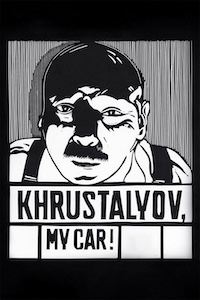
The above films are all classics, but we get a lot newer with Khrustalyov, My Car!, released in 1998 (though taking place in the 50s and shown in black and white). All I can say with this one is don’t waste your time. I very nearly did. There’s a quick blurb in the beginning about how Jews were facing state-sponsored antisemitism under Stalin’s “Doctor’s Plot” program. So I’m think, good, here we go, a great Soviet historical drama. Well, after sitting through nearly an hour of a constant bombardment of silly visual gags based around a ragtag group of residents living in a tiny apartment building, with no real plot developing, I gave up. Does it ever get to the problems the Jewish community was facing in Soviet Russia in 1953? I’ll never know. ½
- TV series recently watched: Stargate SG1 (season 4), Margo’s Got Money Troubles (season 1), Spider-Noir (series)
- Book currently reading: Knife of Dreams by Robert Jordan


