Going way back in time today to two brothers who made a lasting impact on cinema. The more prolific of the two was elder brother Alexander Korda, who started making movies in his native Hungary way back in 1914; I’ll be looking at four of his films from the 1930s when he was working in England (aside — check out That Hamilton Woman, starring the greats Vivien Leigh and Laurence Olivier), and then a trio of pictures from younger brother Zoltan Korda (be sure to watch his The Four Feathers, the best version of that movie).
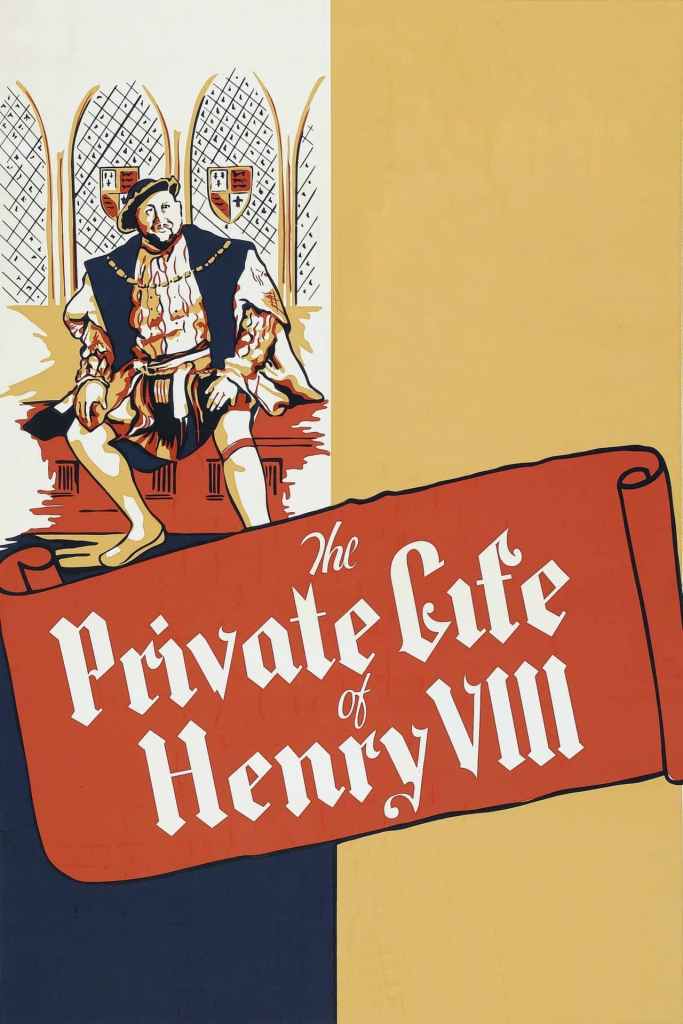
The Private Life of Henry VIII matched Korda with renowned stage star Charles Laughton, and it would be the breakout role for Laughton on the big screen. The film focuses on Henry VIII’s many wives, in a hilarious comedic take. The film picks up after wife # 1 (Catherine of Aragon) has already been divorced, and wife # 2 (Anne Boleyn) is about to hit the executioner’s block. Jane Seymour is waiting in the wings for the official news that Anne has lost her head, so that she can become wife # 3. King Henry VIII is depicted as a drinking, eating, womanizing debaucher who can’t keep his eyes or hands to himself, though he seems to genuinely like his newest bride. Unfortunately she dies in giving birth (finally a son!) and he swears off another marriage. But good ol’ Henry can’t back down from a challenge, and when his barber makes a quip implying that he’s too old to go at it again, he seeks out wife # 4. And then wife # 5, when that one doesn’t work out. You know where this is going. Call me old timey, but I laugh (a lot) at the kind of humor throughout this film. When Anne Boleyn is about to lose her top, a woman in the stands laments on how sad it is to see a queen treated as such, before prodding the person in front of her to move over so she can see. Laughton is fantastic as I knew he would be, and the whole movie is a lot of fun. ★★★½
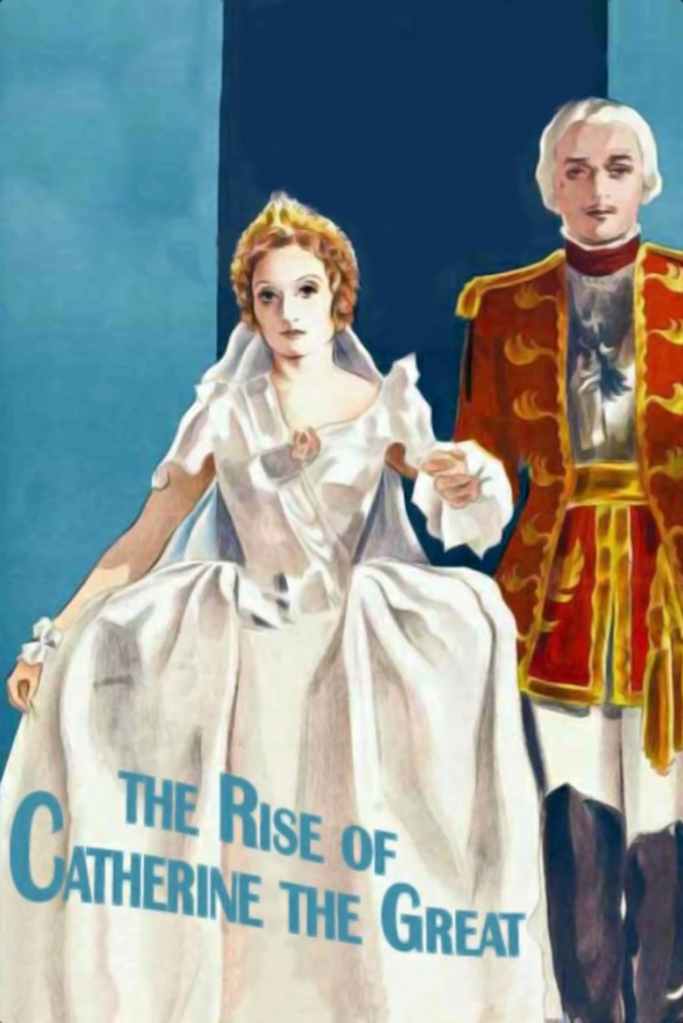
After the success of Henry VIII, Korda picked another historical figure to dissect. The Rise of Catherine the Great (Korda is an uncredited co-director; Paul Czinner gets the distinction in the credits) has less laughs and more drama, but unfortunately is less arresting too. The film follows the marriage of Princess Sophie from Germany to Peter III, and all the court intrigue that goes with it. In the film, it is Peter’s aunt, Express Elizabeth, who pushes the marriage, so that Peter can hurry up and have some kids to extend the lineage. The marriage, which leads to Sophie taking the name of Catherine, isn’t consummated for awhile, as Peter sticks to his womanizing and seems to care little for Catherine. It isn’t until she claims to have lovers of her own, which makes Peter jealous, that they finally get together, but it doesn’t last. Through it all, Catherine keeps trying to nab Peter’s attention, saying all the time that she loves him. That is, until he does something egregious that causes her to change her mind, and lead to her takeover of the kingdom and the setting up of her famous rule as Russia’s leader. The film has a few intriguing moments, but it drags, and the lack of humor was noticeable; it made Henry VIII so much more entertaining. And I couldn’t help but compare it to the highly enjoyable modern show The Great on Hulu. ★★
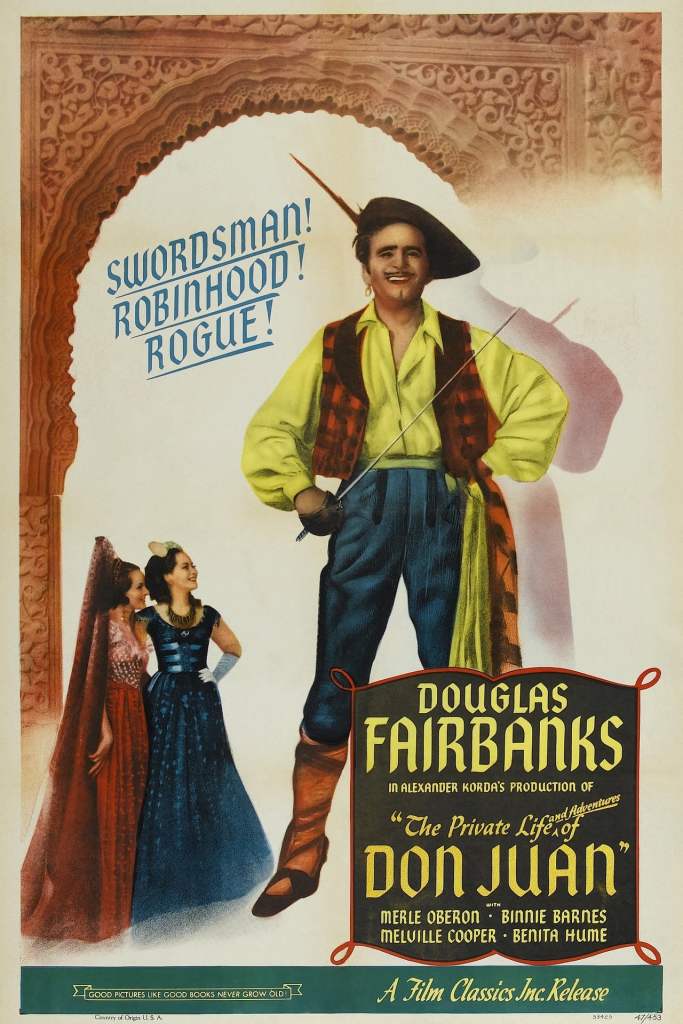
The Private Life of Don Juan takes a new spin on the life of that famous (infamous?) lady’s man of long-ago Spain, namely, the end of his run. The film begins on the night that an older Don Juan has returned to Seville after 20 years away to find that his reputation is still intact. Unfortunately for him, a sycophant is in town trying to imitate him, though this younger version lacks Don Juan’s ability both with the sword and with the ladies. The upstart gets himself killed by a jealous husband, and news quickly spreads that Don Juan is dead. The real Don Juan uses this opportunity to go into hiding again, avoiding his wife who has been threatening him with jail for past debts, mostly to get back at him for hiding from her for the last 5 years. Don Juan goes away and takes an alias, but after 6 months (and a popular chapbook circulating about Don Juan’s supposed life), he decides to make a comeback. Don Juan returns to Seville, only to find that the legend of Don Juan has exploded in his absence. Every lady in town now claims to have been his lover, and when he steps forward as the living Don Juan, no one believes that this older man could possibly be Don Juan. There are some sluggish moments in the movie, but it is very funny, with a satirical spin behind the scenes too. The aging Don Juan is played by none other than Douglas Fairbanks, legendary swashbuckler of the silent film era in such hits as Robin Hood and The Mask of Zorro. Past his prime and finding himself unable to land big roles in “talkies”, Fairbanks would call it quits and retire from acting after Don Juan. It is a fair send-off, and he shows that, even at the end, he still had it. ★★★
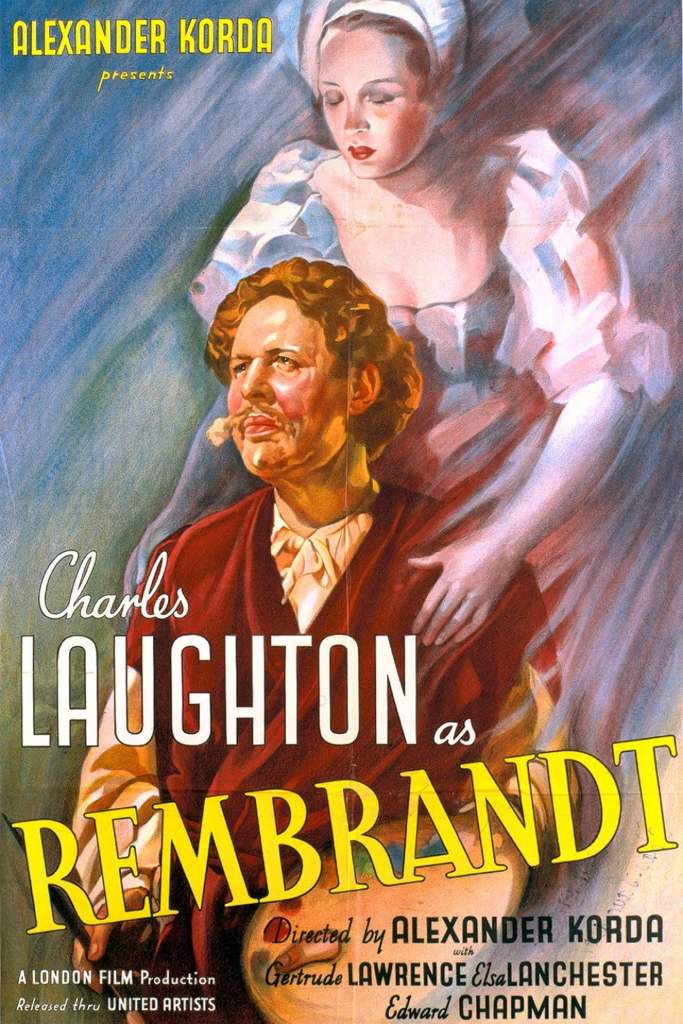
Like in The Private Life of Don Juan, Korda’s Rembrandt is a film about the latter life of a famous person, this time the famous Dutch painter. At the beginning of the movie, Rembrandt is already a famous and in-demand artist, but when his beloved wife dies, he decides to stop painting what others want, and only paint for himself. When the lords of the city commission him to paint a giant mural of them at a party, he skews the painting so that it shows a group of common-man soldiers having a good time. 10 years later, Rembrandt’s finances are depleted and debts have piled up. He gives a go at begging, but refuses to fight over coppers with people who he feels need the money more than he. Events continue to go against him, but Rembrandt continues to march to the beat of his own drummer, and never bows to anyone. Charles Laughton performs as Rembrandt, teaming up with Korda once again, but they duo can’t find the magic that came in Henry VIII. No laughs, light on drama, and awfully staid, the film falls into the same trap that many biopics do: relating facts with little flair. ★½
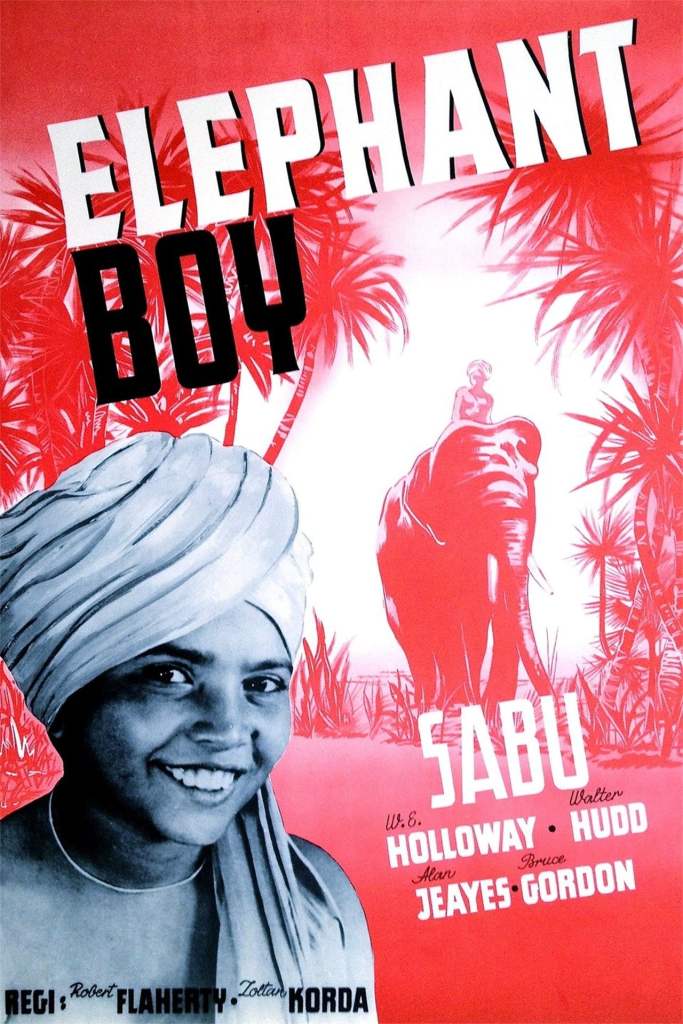
Zoltan Korda made a few films starring Indian actor Sabu (who had a strong career in both England and Hollywood). His most famous was probably The Thief of Bagdad (co-director), but since I’ve seen that one, I’ll be looking at three other films, starting with 1937’s Elephant Boy, made when Sabu was just 13 years old. Based on a story from Kipling’s The Jungle Book, this film circles around Little Toomai (Sabu), who comes from a family of elephant drivers but wants to be a hunter. The family’s elephant, Kala Nag, has been in the family for 4 generations, and is currently being driven by Big Toomai (though Little has learned just about all there is to know, and taught the old elephant a few new tricks as well). A British soldier brings a team to the area for their yearly roundup of wild elephants (to tame them and put them to work), and Little Toomai is able to convince his father to go along for the trip. The little boy’s bubbly personality ingratiates him to the Brit, but trouble is ahead. Big Toomai is killed by a tiger, and the Brit determines Little Toomai is too small to be Kala Nag’s permanent rider, so he assigns the elephant to another man, who is known for his cruelty to animals. Little Toomai won’t stand for that, and in the middle of the night, secrets away with his old animal friend. Together, they become witness to an event which will grow to legend and cement Toomai’s name among his people. Sabu is fun to watch, but too much of the film comes off as an almost documentary (it was, after all, co-directed by Robert Flaherty, who made the first commercially successful documentary in the history of film), and I’m not a big fan of docs. A whole lot of scenes just watching elephants or monkeys at play. The story by itself is good though. ★★½
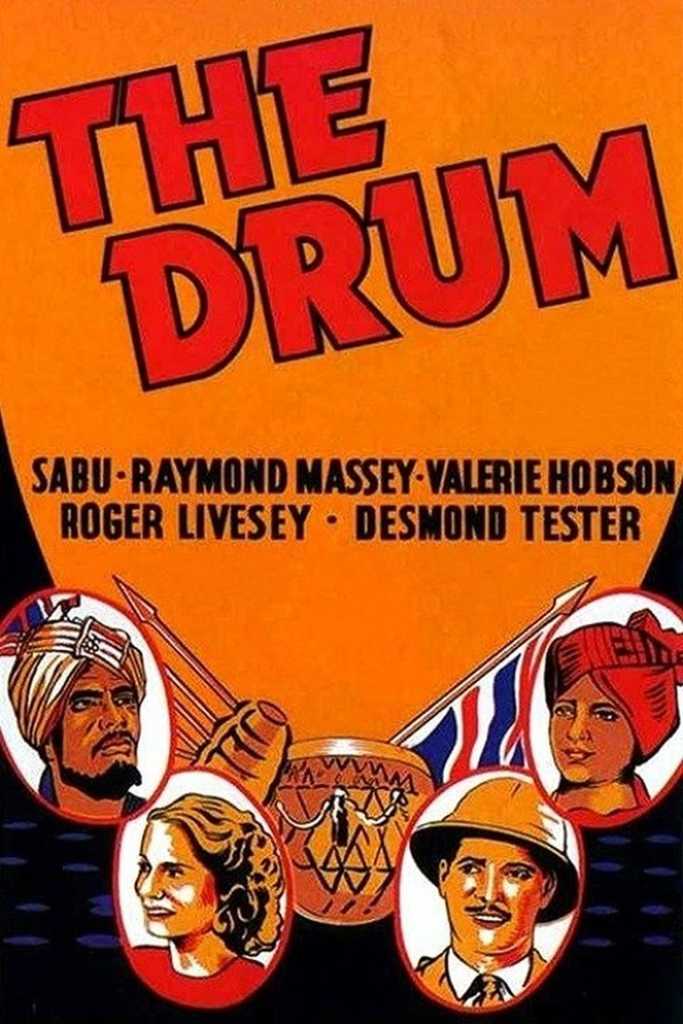
Next up is The Drum, and this one landed on me with a thud. Based on a book by AEW Mason (who also wrote The Four Feathers), it is about a turbulent time at a border town in northern India. British captain Carruthers is looking into rumors that someone is arming local rebels with machine guns, and pays a visit to the kingdom of Tokot and its king. Shortly after, the king’s brother, Prince Ghul, assassinates him to take the thrown for himself. When Ghul tries to have the former king’s son, Prince Azim (Sabu), killed, Azim escapes and finds refuge with Carruthers. The rest of the film devolves into this mess of political intrigue/plotting, but done roughshod, until a big battle at the very end of the film. There’s about 15 minutes of real excitement in the film, and otherwise I was bored to tears. Watched it and promptly forgot it. ★
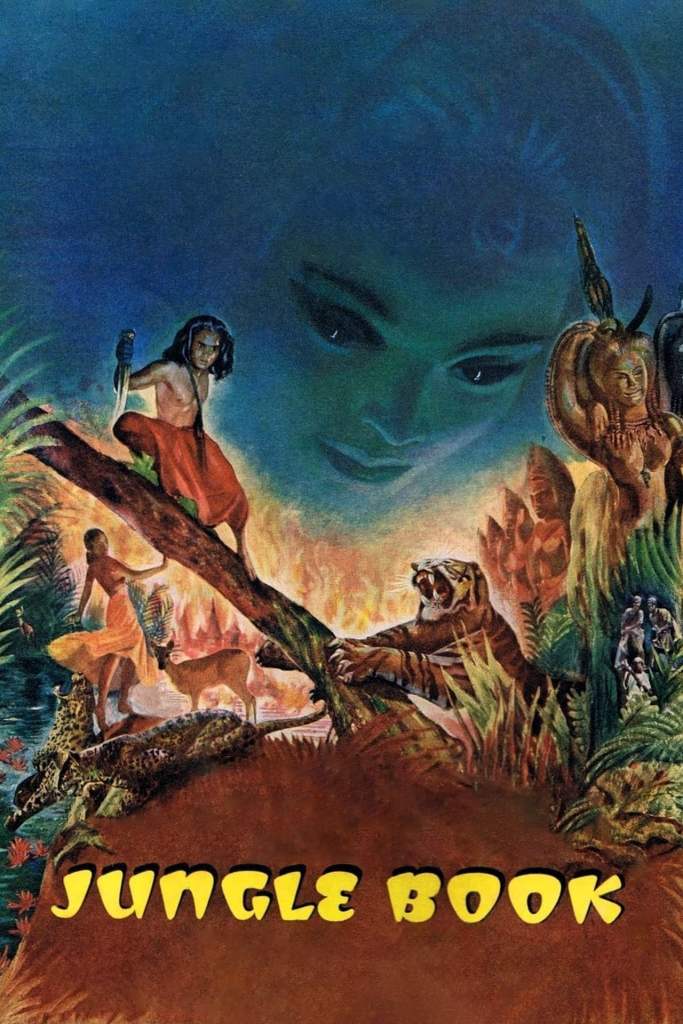
Thankfully, I get to end this set on a good note. Jungle Book is a loose adaptation of that famous Kipling book, with Sabu taking the lead as Mowgli. The film is told as a story by an old man in front of a crowd by the side of a road. He relates how a boy wandered away from his family and was found and raised by a pair of wolves with their other cubs. The various inhabitants of the jungle are introduced, including the wise python Kaa and the kindly black panther Bagheera. The villain of the jungle is Shere Khan, a tiger, who, like humans, is the only being around that kills not just to eat, but for the joy of killing. In this dangerous environment, Mowgli grows from a toddler to teenager. One day, while running from Shere Khan, Mowgli finds himself in the human village. He doesn’t know human language and they recognize that he has been raised in the wild. In a twist of fate, his old mother, who perhaps recognizes him as her lost child, takes Mowgli in and teaches him how to speak. However, when Mowgli is able to purchase a knife, which he calls his “tooth,” he knows it is time to return to the jungle and fight Shere Khan. Other stories from the original book are told as well, including parts of the lost city (full of treasure) that lures people from the village. This is a wonderful film, entertaining from the very opening scenes. It is thrilling and joyous and full of heart. A lot of the animals are real, filmed well so that it all appears very natural. Only Kaa and Jacala the crocodile are fake (and obviously so, but even these are passable). It is a gorgeous film (nominated for 4 Oscars in 1942, including Art Direction and Visual Effects) and very well put together for its era. It holds up well and looks great. ★★★½
- TV series currently watching: The Silent Sea (miniseries)
- Book currently reading: The Great Hunt by Robert Jordan

 Jons Movie Takes
Now i gotta see 13 lives and Heat … hahaha
LikeLike
Very impressive. I want to see all of these films. I don’t believe I’ve seen any of them.
LikeLike