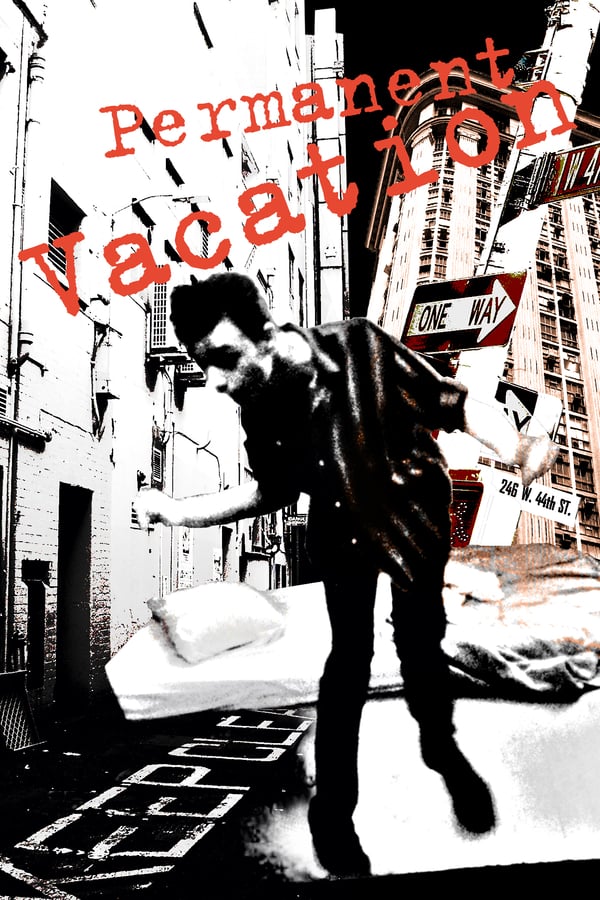
I saw Jim Jarmusch pop up as a cameo in a recent film, and it got me to thinking how I haven’t seen many of his (especially earlier) films. Time to catch up on those missing pieces, starting with his first, Permanent Vacation. It was made during Jarmusch’s final year at film school in 1980, right before he dropped out. This film is very much an inauspicious debut. It’s about a young man named Aloyisious Parker who dresses and stylizes right out of the 1950’s (and in fact, wants to name his future son Charlie Parker after the famous saxophonist). “Allie,” as he goes by, wanders a bleak and decrepit New York landscape, interacting with various eccentric personalities. He talks about growing up in a building that has since been bombed out in “the last war,” but whether he’s off his rocker (his mother is in an institution, and they discuss the bombing), or if the film takes place in some sort of dystopian world, is unknown to the viewer. We hear guns and explosions, but that could be in Allie’s head, and the people he interacts with are just as crazy as he is. There isn’t much of a plot, just Allie exploring around decaying parts of the city. Honestly it was a chore for me to get through, even though it’s short at 75 minutes long. Next up is Jarmusch’s big breakout film, so I’m obviously hoping for better films ahead! ★
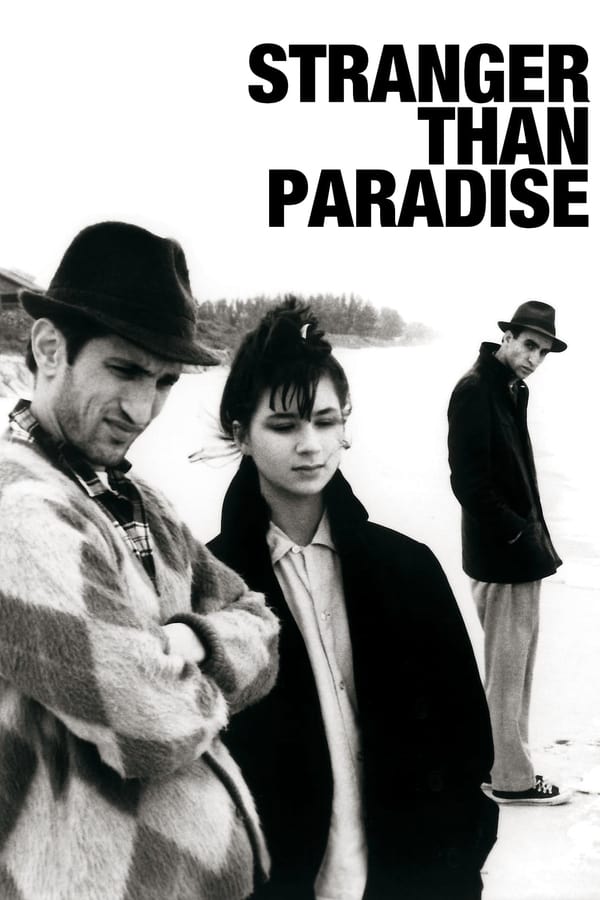
Stranger Than Paradise was Jarmusch’s first hit, and arguably his greatest achievement to this day. Musician/actor John Lurie had done the music for Permanent Vacation, and became the star of this film. He plays a Hungarian immigrant who has completely assimilated American culture, even going by the nickname Willie and forgoing his birth name. He’s living in New York when he gets a call that his cousin Eva is on the way to America, and will stop by his apartment for a night before heading on to Cleveland to live with their aunt. Willie is not welcoming to her, and derides her for her Hungarian accent, and not knowing much about America. When the aunt gets sick and has to go to the hospital, the single night stay turns into 10 days, and over that time, Willie warms up to Eva. Eventually, they are getting along quite well, to the point that he doesn’t really want her to leave. She does though, and there the film jumps ahead a year. Willie and his friend Eddie (long-time actor Richard Edson, in his first role) decide to head to Cleveland to visit Eva, but once there, they find the city boring and cold (it being winter). So all 3 pile in a car for Florida, where their adventures are just beginning. It’s a film that goes places without every going anywhere, if that makes sense, but it is all done wonderfully. For one, it is really funny, and the story is told in short segments, most no longer than a couple minutes, bookended by fade-to-blacks. You’d think that this would break up the film and it’d get old after awhile, but it doesn’t; if anything, the end of each vignette made me sit up straighter and look forward to the next. Lurie, Edson, and Eszter Balint (Eva) are fantastic and so much fun, and as for the aunt in Cleveland, pretty much everything she says is laugh-out-loud funny. Great film. You can take it at face value and just enjoy the dialogue, or look at it deeper as accepting what you have or taking the “grass is always greener” approach. ★★★★
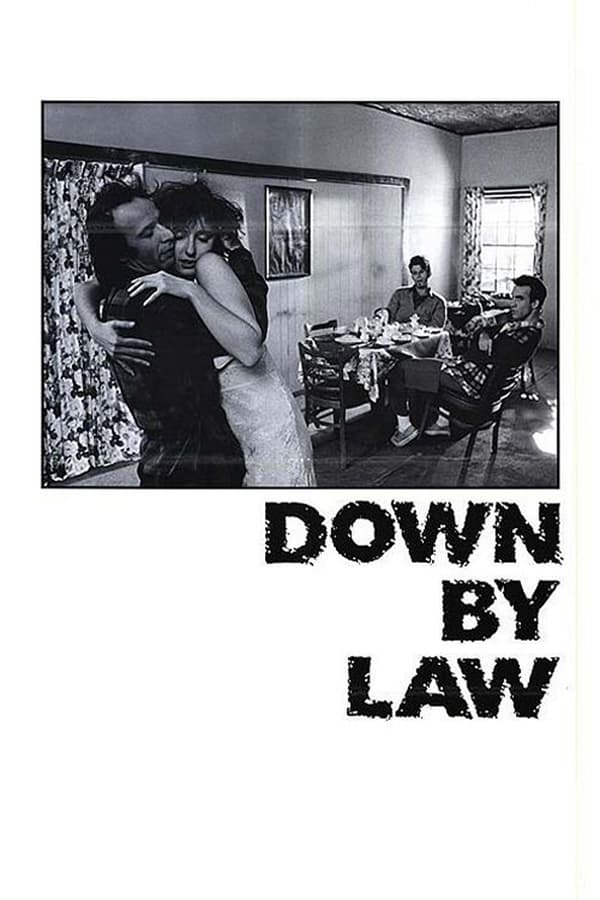
Down by Law is also very much heralded, but I couldn’t connect with this one. Everyone talks about how funny this film is too, but I didn’t get it. Lurie returns as a pimp with a heart named Jack, living in New Orleans. He is set up by an associate for propositioning a young girl, and is arrested. Simultaneously, a radio DJ, Zack (another musician and actor, Tom Waits), is set up himself, being found in a borrowed car with a dead body in the trunk. Zack and Jack meet in prison. This whole set up takes a solid 30 minutes, and we don’t really get to know our characters as much as you’d think. Enter their newest cellmate, Bob (Roberto Benigni in his first English film role). An Italian immigrant who is actually guilty of what he has been charged for (murder), Bob’s English isn’t great. After he comes into the picture 45 minutes in, Benigni steals the show for the rest of the way out. His lines and interactions are the best. Behind the camera, celebrated cinematographer Robby Müller is the other key member of the film; his long all-encompassing and gorgeous shots are stunning, but those shots and Benigni’s humor only take the movie so far. Zack and Jack are dull, one-sided characters, and I had a hard time rooting for them. ★★
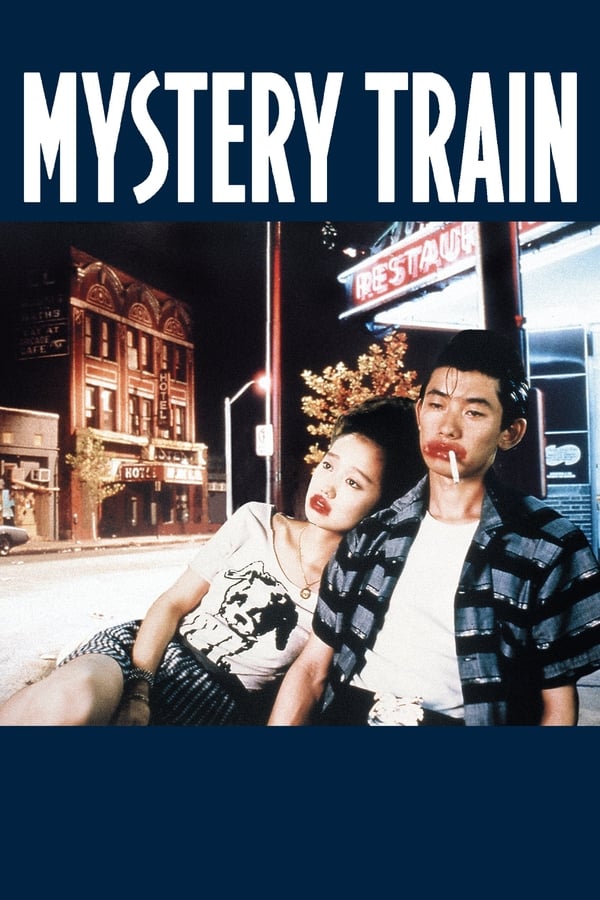
Mystery Train follows a group of people over one night in Memphis. Split into three segments with each covering a different, seemingly unconnected set of individuals, the film slowly brings connections to the fore by the end. We start with a young couple from Japan, touristing in Memphis because of their love of Carl Perkins and Elvis Presley. After getting off the train, they wander the city for a bit before settling in to a cheap hotel in a rough neighborhood. The next segment follows an Italian woman stuck in Memphis for the night, awaiting a plane the next day which will take her and her deceased husband home to Rome. She finds herself at the same hotel, roommates with a Jersey girl unable to afford a room on her own. The final clip is a trio of men, 2 of whom recently let go from their jobs, drinking the night away in their despair. Yep, you guessed it, they find their way to the hotel too. That is not the only connection between all of our characters, but to say more would ruin the fun. Fantastic film; everything comes together wonderfully in the end, while avoiding too-clean of an denouement so that the picture still has a real, un-Hollywood feel to it. Unlike Down by Law, the characters are fully developed and each is intriguing in their own way. Jarmusch does a great job of controlling the large cast and giving equal time to everyone, so that you are invested in how each of them turn out. ★★★★½
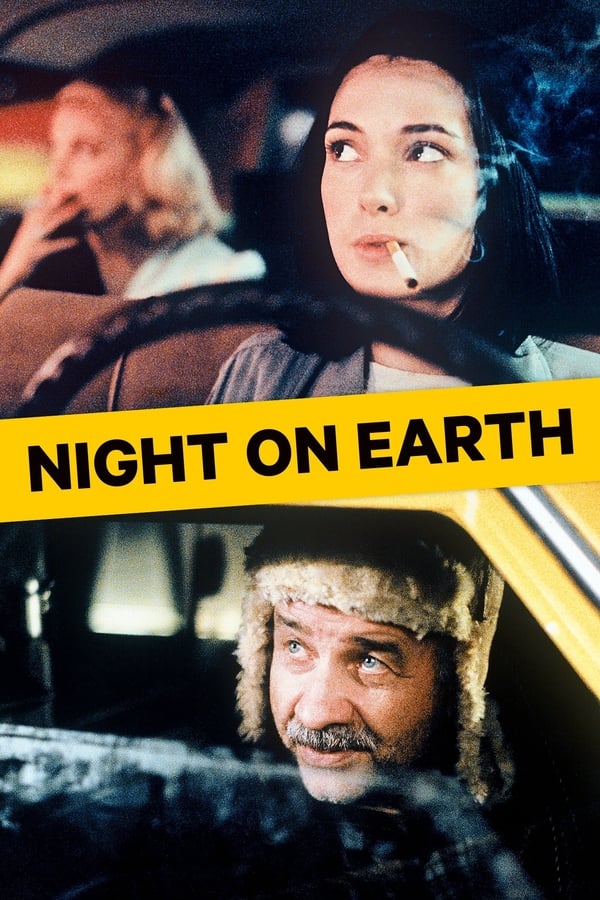
Night on Earth is a story of 5 separate, unrelated vignettes, told over the course of one night in five different cities, all involving taxi drivers around the globe. A rough-around-the-edges young woman picks up a well-to-do casting agent at the airpot in LA, and takes her to her mansion in Beverly Hills. A black man in New York has a hard time getting a taxi to take him to Brooklyn, until an immigrant who barely knows how to drive picks him up. In Paris, a cabbie has had a crummy day, but he’s intrigued by his latest fare: a blind woman, who wants neither her driver’s curiosity about her life with a disability, nor his charity. Next we bounce over to Rome, and an eccentric driver driving recklessly through an abandoned city in the middle of the night, talking to himself until he picks up a priest, and then providing subtle and not-so-subtle jabs against him. Our final stop is in Helsinki, where a taxi driver picks up 3 drunk men, 2 awake and one passed out, in the wee hours of the morning; the 2 humorously relate the ordeals of their friend on the worst day of his life, but the driver then puts their story to shame with a heartbreaking story of sadness. The film as a whole may be a bit uneven, but overall I really enjoyed it. It has an amazing cast of veteran actors and up-and-comers in 1991, including Winona Ryder, Gena Rowlands (IMO one of the best actresses of all time), Giancarlo Esposito (of Breaking Bad fame, among others), Roberto Benigni, and Matti Pellonpää (famous for his roles in Aki Kaurismäki’s films). I’ve noticed how the setting is just as important to Jarmusch’s films as the actors. Just like the apartment in Stranger than Paradise, the jail cell in Down by Law, and the Hotel in Mystery Train, each city in this film is almost a character of its own, with both its splendors and warts. ★★★½
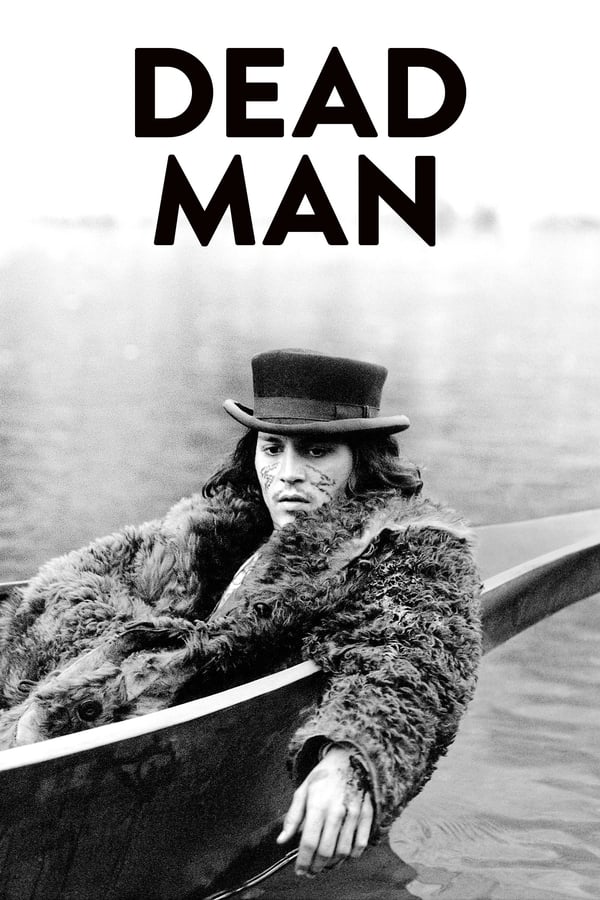
Dead Man, released in 1995, is ok I guess, but it didn’t blow me way or anything (pun intended?). It’s a post-modern western, starring Johnny Depp as William Blake, an accountant from Cleveland who goes to the far west, to a tiny frontier town called Machine, on the promise of a job at a large metal works company. When he arrives, the job has already been filled. He spends the last of his money on booze, but the day gets worse from there, as he ends up in bed with a woman when her husband comes home. The husband shoots at Blake, but the girl steps in front. The bullet kills her, goes through to lodge in Blake’s chest too, and he returns fire, killing the husband. Blake steals a horse and flees into the surrounding woods. Unfortunately for Billy, the girl was the metal company’s boss’s daughter, and the horse was his horse. The rich man sets a bounty on Billy’s head. Near death in the woods, Blake is found by a Native American, who nurses him back to health. As William learns the ways of the wood, he is better equipped with killing those who come hunting him. The film is entertaining in spots, but I generally like my westerns, especially modern westerns, a little more realistic, and this film is outlandish to the point of absurdity. Blake goes from a city boy to a cold blooded crackshot killer in a single night, and while the bad guys definitely submit to the “no honor among thieves” mantra, they take it to a whole other level. The film is shot in black and white, which doesn’t generally bother me, but there were scenes in this film that I think could have been best served by beautiful, rich colorful landscapes and its people. Would have been a cool juxtaposition with the muddy, dreary town and its folk. ★★
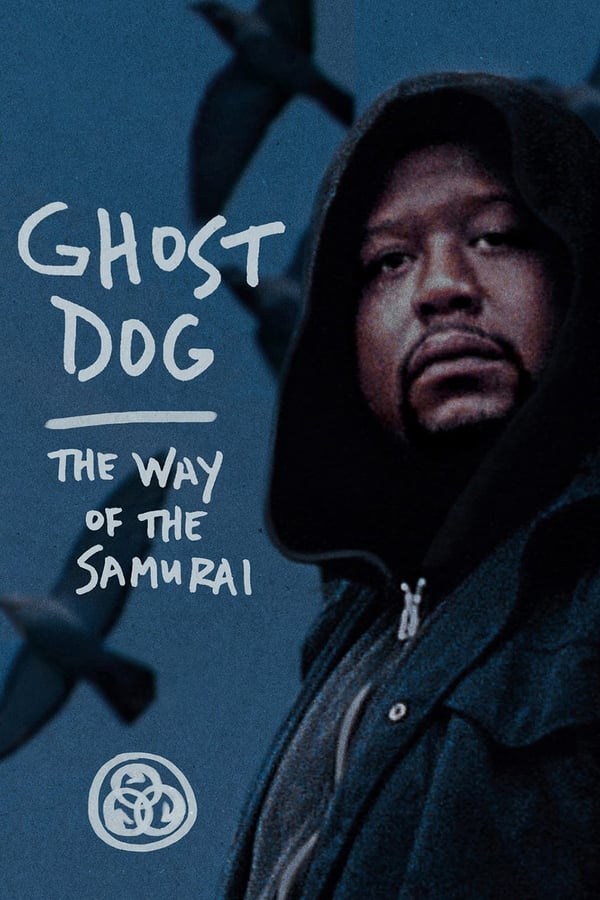
Ghost Dog: The Way of the Samurai is much different than, say, Night on Earth or Stranger Than Paradise. Whereas those films are very grounded and “real” feeling, this one is almost a fantasy in a far-out-there, almost Tarantino ridiculous kind of way. I say that as a person who is not a fan of Tarantino (sacrilegious, I know), but I liked Ghost Dog. It stars Forest Whitaker as a contract killer in modern New York, who lives by the code of honor of a Japanese samurai. His life was saved a few years ago by a mob man named Louie; as such, Ghost Dog has named Louie his retainer, and will do anything asked of him. When a fellow mob man, Frank, starts sleeping with the head boss’s daughter, Louie has Ghost Dog take him out. Unfortunately, there are consequences for killing a made man and leaving a witness (the daughter), so the remaining mob members decide Ghost Dog needs to die, despite Louie’s protestations. Louie knows he’s probably next, for his role in the killing, but Ghost Dog goes to work, protecting himself and Louie and mowing down the rest of the mob, which he’s able to do because of they are humorously inept at getting anything done right. Though the scenario is weird, and some of the characters are off-the-chart cuckoo, the action is great and the film is a lot of fun. There’s also some smart references to other great classics if you are paying attention (like Rashomon, which is mentioned, but you might miss the connection if you aren’t looking for it, and others). I don’t think it is meant to be taken too seriously, and as such, it’s a good diversion and just an enjoyable action flick, with some fun nods to other films that came before it. ★★★½
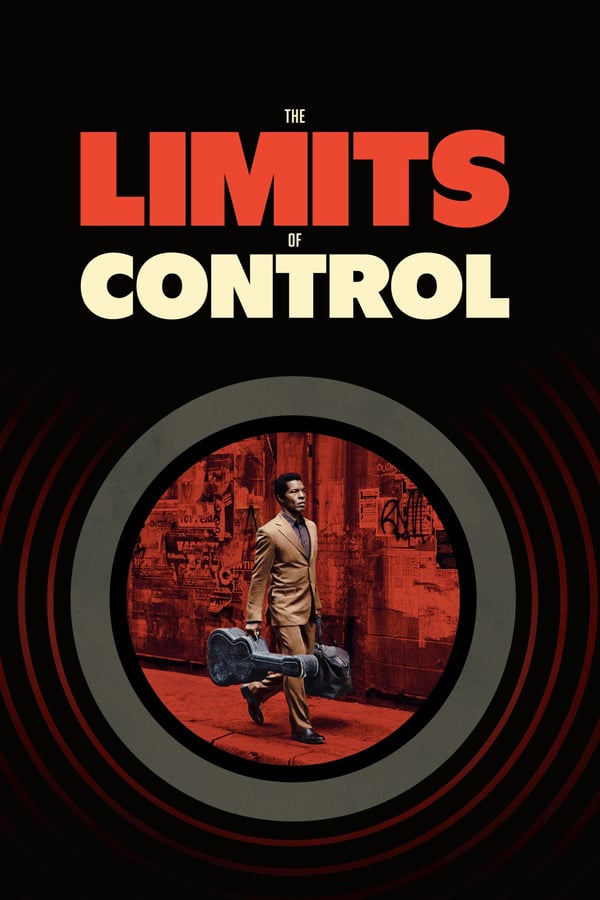
After appearing in minor roles in Jarmusch’s Night on Earth, Ghost Dog, and Coffee and Cigarettes (not reviewed here, I’d seen it before), Isaach de Bankolé gets the lead in The Limits of Control. This one is a maddeningly obtuse film, but for my tastes, an extremely fun one, right up to the very end (of course, this is coming from a person that loves Last Year at Marienbad and Finnegans Wake; I have a thing for films and books that are (close to?) impossible to decipher). A very non verbose, unnamed man is on an unknown mission, seeking a target that we don’t know or understand. To reach his goal, he travels around Spain meeting other secretive individuals, who pass him clues inside matchbooks, always after confirming his identity with the password, “You don’t speak Spanish, right?” While meeting these individuals, some phrases are repeated a couple times in the movie, like, “The universe has no center and no edges.” Other mystic messages lead him directly to the next clue, like, “Diamonds are a girl’s best friend,” or, “The guitar will find you.” The clues can come from anywhere, even someone he passes randomly in the street. They each want to chat about different things, but our loner just sits quietly and listens, until it is time to swap matchbooks. For most viewers, they may be ready to check out after the second or third such encounter, but they keep on coming. I was hooked line and sinker from the opening moments. Our (hero? antihero?) person was fascinating to watch. His body language and demeanor ooze menace, even though we have no idea what his ultimate goal is. Unfortunately the ending was a big let down for my expectations, but still, the journey is worth it if you like mysterious, slow burns. ★★★

 Jons Movie Takes
3 thoughts on “Quick takes on 8 Jarmusch films”