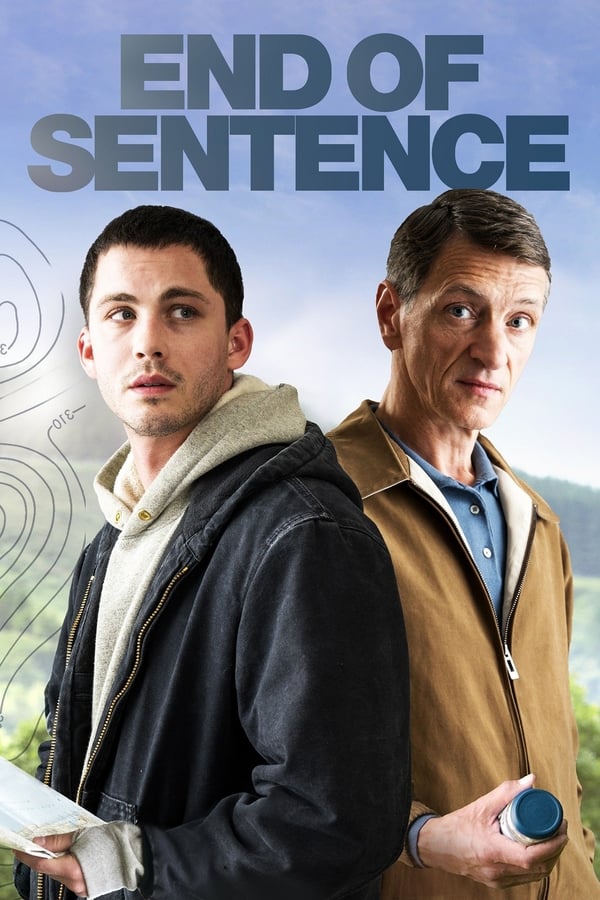
End of Sentence is a very nice film about a father and son coming together after a crisis. The two have never gotten along, and their relationship is pretty much dead, to the point that Sean (Logan Lerman) calls his dad Frank (John Hawkes) by name rather than “Dad.” However, when Frank’s wife/Sean’s mother dies of cancer, it is her dying wish that the two go together to her native country of Ireland to spread her ashes over a specific lake. Sean hates his dad so much that at first, he is unwilling to go, but when his other plans fall through and he needs money for a job prospect, Frank promises to pay for it if Sean will do the trip. During the ensuing 5 days, we learn about the distrust and hurt feelings that have gotten them to this point. Sean has been in and out of trouble for years (he is just getting out of jail when the movie begins), and he also has a lot of resentment towards Frank for not defending him against his alcoholic, abusive grandfather (Frank’s dad) when he was younger. Frank is dealing with his own demons too, and learns early in the trip that his wife may have had a secret lover in Ireland who she may have been visiting over the years when there to see “family.” It’s a road trip film, and also obviously about the strong bonds of family, and healing. Lerman and Hawkes are fantastic as the co-leads. This is a true international production too: an English language film with a first-time Icelandic director (Elfar Adalsteins), with many of his countryman serving in production, and filming on location in Ireland. ★★★★

Lucky Grandma is a very cute, very funny movie about the kind of ornery grandma many of us had as little kids. Grandma Wong has recently lost her long-time husband, and is obviously depressed. Her kids and grandkids worry about her, but she seems to want to stay independent. One night, after being told by a fortune teller that good luck is coming, she goes to a casino with all the money she has left, about $1500, and starts betting big. For awhile, she can’t lose, and amasses a fortune before losing it all on one final all-in bet. On the bus ride back home, her seat mate dies of a heart attack, and his bag full of cash literally falls in Grandma Wong’s lap. Unfortunately, the old man was an accountant for a local gang in New York’s Chinatown, and they come for their money. For protection, Grandma Wong hires a bodyguard from a rival gang, putting herself squarely in the middle. Tsai Chin has had a decades-spanning career with varied roles from The Joy Luck Club and even two James Bond films, but she gets to show off her talents her in a central role, and she is wonderful. ★★★½
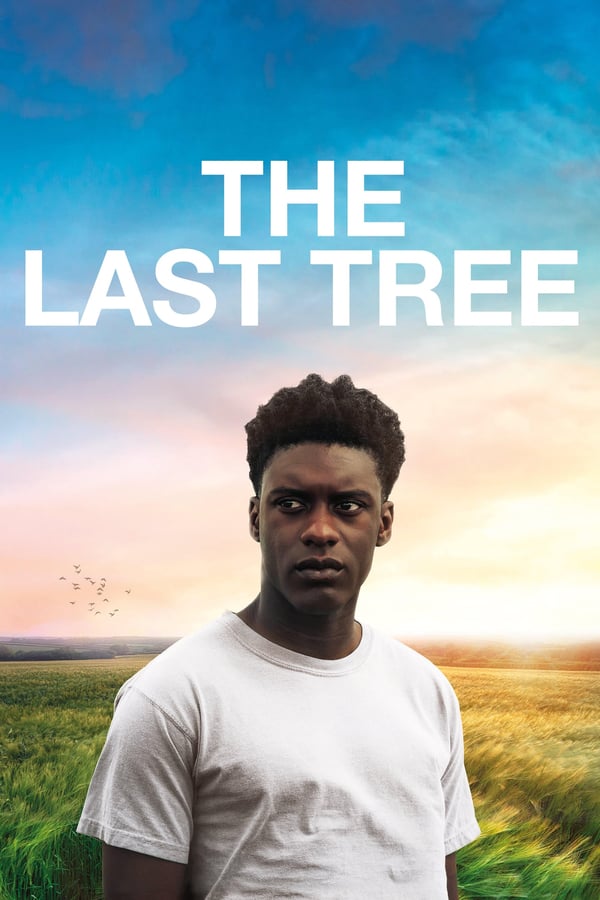
The first half of The Last Tree comes off as sort of an updated Good Will Hunting, but it ends up being its own great film by the end. Femi is a young child of African descent, being raised by white foster mother in an upper middle class suburb in England, when they get the call that his birth mother has been granted the rights to raise him again. She brings him to her urban apartment, where Femi’s life is much different. For starters, his mother is very strict, and physically abusive when he gets in trouble at school. Femi is a bright kid with a good heart, but starts to hang out with the rougher crowd, initially for self preservation so as to not be bullied himself, but when the film jumps ahead several years and he’s now nearing graduation, he’s become the bully. Femi comes to realize that his actions have meaning to others, and learns about those around him too, like his mother being so strict was just because she wanted him to do better in life than she did. The confused Femi seeks answers from his foster mom, and his birth father, but ultimately it is up to Femi to decide what kind of man he wants to be. It’s a fantastic film, with a powerful performance from newcomer Sam Adewunmi in the lead role. ★★★★

I just saw most of Terrence Malick’s films a couple years ago, and was most moved by The Tree of Life, which I consider one of the most profound films I’ve seen (I did not like his latest, A Hidden Life, nearly as much). So I thought I’d go back and watch the rest of his films I’d missed, which, like The Tree of Life, are considered “experimental” dramas, starting with 2012’s To the Wonder. It is a linear film but with a sometimes infuriating lack of narrative, revolving around the relationship of Neal (Ben Affleck) and Marina (Olga Kurylenko). The two meet and fall in love while Neil is in Paris, a whirlwind relationship that gets Marina to uproot and move herself and her 10 year old daughter to Oklahoma when Neil returns home. Once there, things aren’t as rosy, and the new couple begin to fight. At first you think it is run-of-the-mill relationship problems, but I began to realize after awhile that Marina is either bipolar or borderline personality, with manic highs and depressive, self-destructive lows. Neil’s eye starts to stray, and by the time Marina’s visa expires, they know they don’t have a future together, and she leaves to go back to Paris. Once there though, she feels like she’s missing something. When her daughter goes to live with her ex (the girl’s father), Marina returns to the US and begs Neil back. During this high, they get married, but again, things go south. It’s a frustrating film to watch. The cinematography is beautiful, as you’d expect from a Malick film, but I couldn’t get behind any of the characters, and honestly didn’t care enough about any of them by the end to really worry about what happened to them. ★★
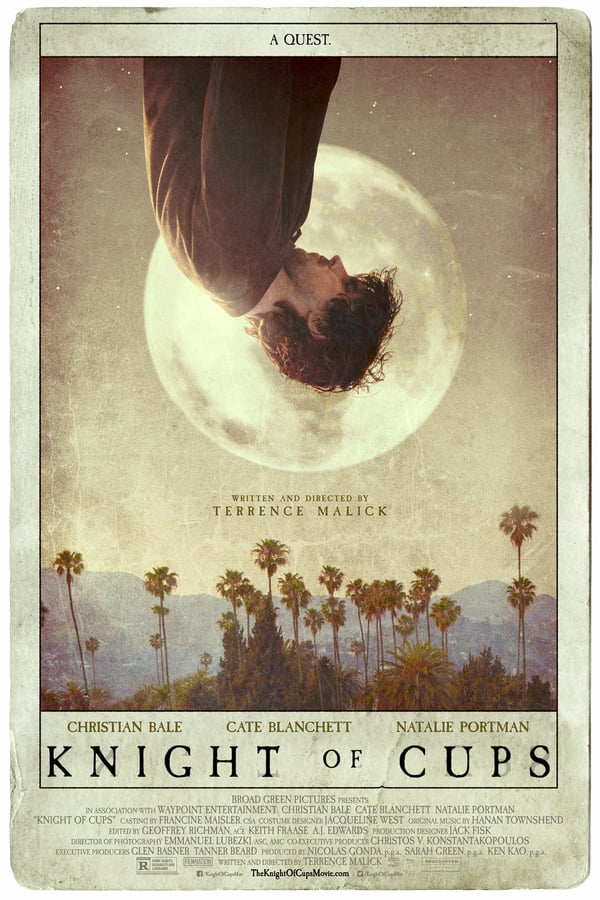
Malick’s next picture was Knight of Cups, in 2015. If the narrative is light and obtuse in To the Wonder, it completely disappears in Knight of Cups. For 2 hours, we just follow Rick (Christian Bale) around, and see various relationships with people in his life, from girlfriends to family. That’s it in a nutshell. There’s no overarching plot, no destination to which we are headed, as far as I can tell. Just glimpses of life. Though the camera strays, it never leaves Rick completely, and the focus on the life around him provides the only real clarity in this picture. And this provided a little more grounding than the previous film, so I did overall enjoy it a hair more, even if it seems though the movie is more like art than fiction. There’s a plethora of A-list talent in minor roles (Natalie Portman, Cate Blanchett, Antonio Banderas, and more), and even recognizable actors with non-speaking parts in amongst the crowds of the constant parties, so that was cool I guess. Actors just clamoring to be in a Malick picture. ★★½

Song to Song was filmed just after the previous film, but not released until 2017 (apparently Malick had 8 hours of film to edit down to its runtime of 2). This one follows a trio of characters, Faye (Rooney Mara), BV (Ryan Gosling), and Cook (Michael Fassbender). Faye is a musician looking for her big break, BV is a songwriter just starting to see some success, and Cook is a powerful record producer with a lot of clout. Faye’s been sleeping with Cook, “paying her dues” as she says, when she meets BV and starts a relationship with him, growing to really like him. However, she continues seeing the dominating Cook on the side. The three start to hang out together, with BV knowing nothing about what’s going on between the other two. Cook ends up marrying a waitress, Rhonda (Natalie Portman), but stills woos Faye on the side. Things become murkier when BV and Cook have a falling out over copyrights to songs BV has written, and Cook then offers Faye a record contract. When Faye comes clean to BV, they break up and pursue other people. It’s a never-ending sea of people floating into and out of all of their lives, and it became dizzying try to keep it all straight, especially with Malick’s short scenes, where nothing is said plainly and all too much is just hinted at. After these three films, I was just left wanting a straight forward picture with a story I could follow. Easy to see why, even with the acting talent in these three pictures, they are not spoken of in such high terms as Malick’s earlier stuff. ★½

 Jons Movie Takes
What!? 6? 6 Films! How can that be! I’m messing with you, Jon. Heh. Stay stellar!
LikeLike