I set out to watch some Jacques Tati (born Jacques Tatischeff, with some Russian origin) films, and about 30 minutes into the first picture, thought it might be an abandoned project. I didn’t know much about Tati when I started, other than he was a highly regarded French comedic actor and director. He started in some shorts, but it wasn’t long before he wrote and directed his own films (which is what I’m writing about today). He came up in the business as a mime, which explains why sight gags are such a heavy part of his comedy, and knowing this, I think I was expecting more slapstick. There was some in the first picture, but not exactly what I was expecting. He ended up directing just 6 full length pictures, so I watched them all.
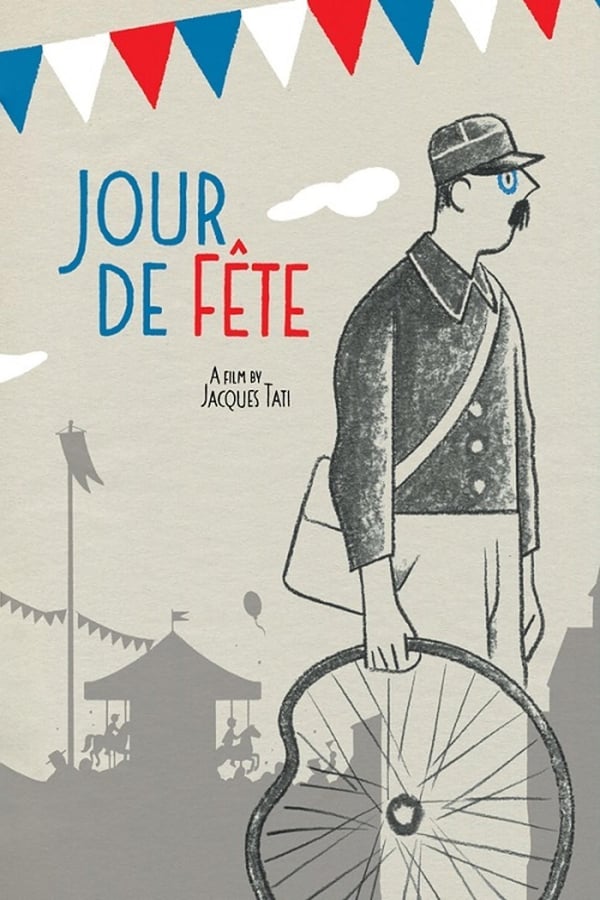
Getting back to my first viewing experience. Jour de fête (The Big Day) was his first major picture, released in 1949. It takes place in a little village in France, with a traveling carnival coming to town for the day. The troupe sets up the rides and games, and through it all, the main character is the town’s bumbling mailman, Francois (portrayed by Tati). Tati goofs around with the townspeople and carnival travelers, with the highlight of the film being a video Francois watches at the carnival showing the great prowess and gadgets used by American post office deliverymen, and consequently, Francois’ desire to improve his delivery mechanisms to equal that of the Americans. Maybe I was expecting something different, or just wasn’t in the mood, but after half an hour, I stepped away and thought about giving up on Tati. The gags seemed really dated (I didn’t laugh once), and I figured it just wasn’t for me. I’m glad I came back to finish the film the next day though; I ended up liking it a lot more with fresh eyes. Tati delivers a bit of charm in his misfortune, a la Charlie Chaplin, and the movie has other intriguing elements that set it apart from other run-of-the-mill fair, like the old lady villager who talks to herself throughout the film as she wanders (noses around) from person to person, but what she’s really doing is narrating to us viewers. I wouldn’t call this film a favorite or anything, but it offered enough to give Tati another go, and thus…. ★★
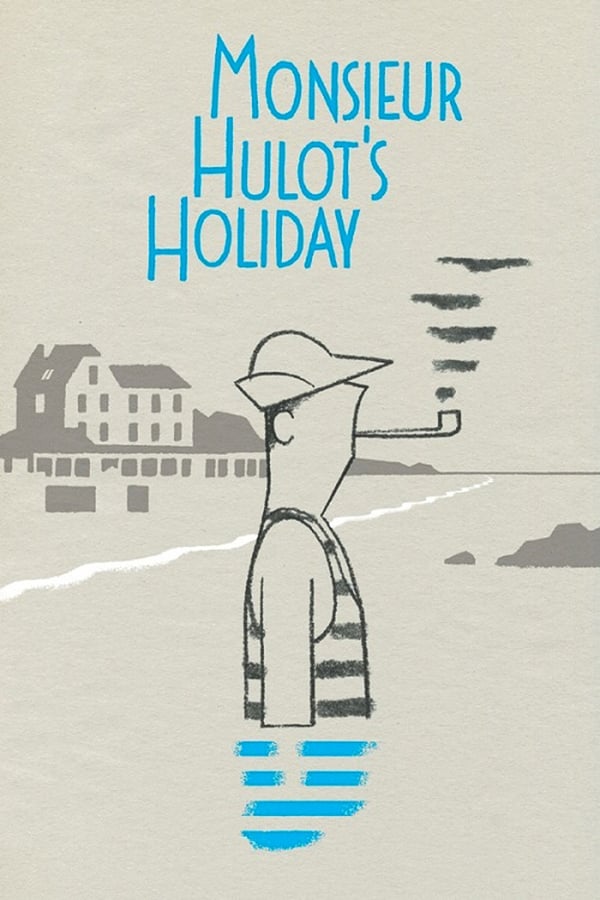
Les Vacances de Monsieur Hulot (Monsieur Hulot’s Holiday) was more of what I was expecting. A truly funny and enjoyable film, it doesn’t have much of a plot, but that isn’t its purpose. It introduces us to Tati’s famous character M. Hulot, a bumbling member of the bourgeois, who goes to a lakeside village for a weekend vacation. Hulot always finds himself in the vicinity of trouble, though not always at fault. When he leaves the door open, wild gales of wind blow stuff around the room. When he is changing a flat tire, the tire falls into some wet leaves and is mistaken as a wreath, gaining Hulot entrance into a funeral where he is welcomed as family. He can’t get on a horse without it fighting him like a stubborn mule. And his broken-down jalopy of a car provides ample entertainment throughout. There is very little dialogue in the film, in fact, we hear Hulot’s voice only a couple times, to introduce himself to others. Tons of sight gags poking fun at the various classes at the beach, and unlike Jour de fête, it feels fresh still to this day. This is the film that put Tati on the map in 1953, and was even entered for consideration at Cannes that year, a rare comedic entry (and it won him a Critic’s prize). Now I see why Tati was considered such an inspiration to comedic actors and directors who followed. ★★★★
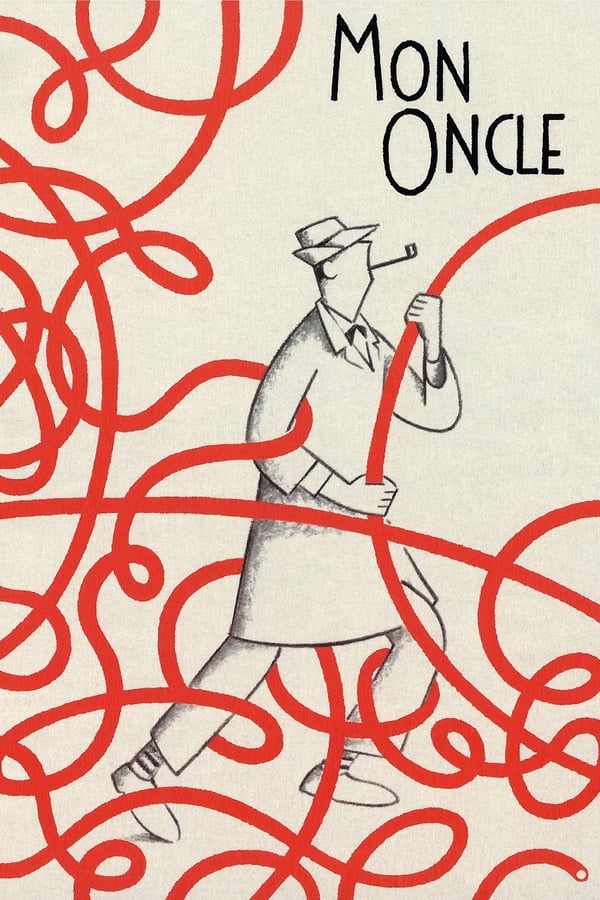
If his previous film made Tati popular in France, his next, Mon Oncle (My Uncle), in 1958, made him popular around the world. Hulot is back for more escapades, this time in an urban setting. Floating around his sister’s family, including her husband and child, Hulot is a man with whom modern gadgets don’t seem to get along, which is very funny since his sister lives in an ultra-modern home with all the bells and whistles, and his brother-in-law is trying to get him a job at his plastics factory. The film does a whole lot of poking fun at our continuing reliance on electronics and advancing technology, even when it makes life harder rather than easier. The picture again is light on plot but heavy on substance. Outstanding slapstick and visual comedy, and brilliantly done. There are some gags that are shown again and again throughout the picture, and rather than grow tired, you can’t help but laugh harder and harder when they unexpectedly show up. Much like the previous film, dialogue is overall very sparse (Hulot himself has almost nothing to say), but this style of comedy doesn’t need it. Mon Oncle was Tati’s first color picture*, and won the Oscar for best foreign language film. ★★★★½
*Tati wanted his first picture, Jour de fête, to be in color, and even used two cameras simultaneously filming side-by-side (one in color, the other in black and white, as a “backup”). The color was going to be developed by a new French rival to Technicolor called Thomson-Color, but it proved too costly and difficult to print, and the movie was only shown sans color for decades. After his death, Tati’s family later colorized the film to realize his dream.
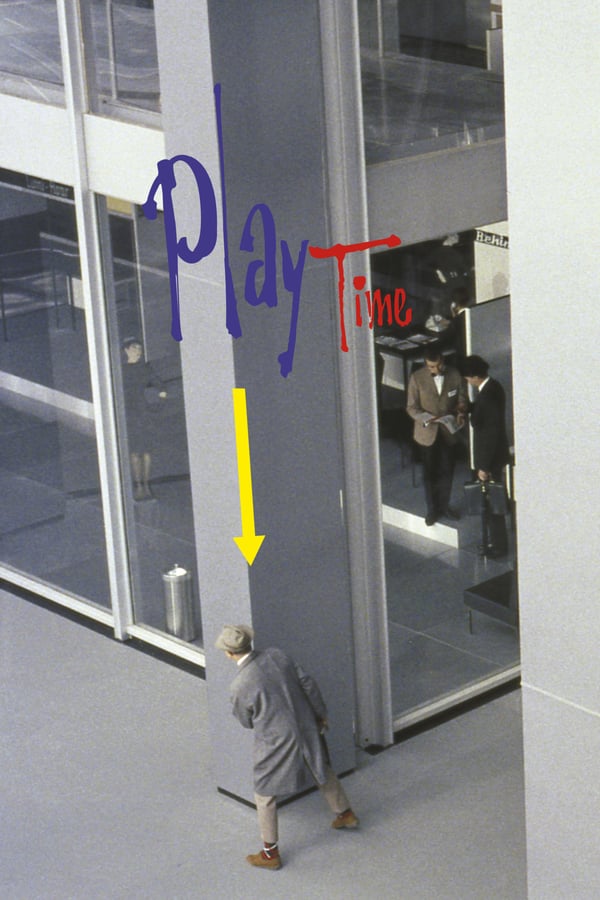
Mon Oncle may have been Tati’s most famous piece at the time, but in the decades since, PlayTime has become what many consider to be his magnum opus. It is without a doubt an impressive picture. Hulot has finally come to the big city, Paris. He’s there for an interview of unknown origin, but in case you haven’t figured it out by now, that detail means nothing to the movie. There are a few overarching plots, including American tourists around town, and the grand opening of a new nightclub, which gets out of hand. One such tourist and Hulot may be considered the two main characters, but honestly, the film only marginally follows them more than anyone else. In fact, Hulot himself disappears for huge stretches of film. Tati’s trademark light dialogue is in full force, and there isn’t much music either, but there is a part halfway through when some wistful tunes play as Hulot has just escaped his latest run-in with technology, and it definitely creates a longing for simpler days. As I mentioned, this is an impressive film, with a monumental cast of characters filling out the city, and the sets created for the movie are ginormous. It was the most expensive French film ever made at the time in 1967, took 3 years to complete, and nearly bankrupted Tati when it didn’t make back its budget (partly his on fault; he shot it in 70mm and refused to make a 35mm cut for those theaters who didn’t have the capabilities to show the larger format). Without Hulot to focus on, I honestly didn’t enjoy this one as much. Still lots of funny moments, but without a hero, the film lost focus for me. ★★★

Nearly 20 years after Tati introduced us to Hulot, his final appearance came in 1971’s Trafic (tired of the character even during PlayTime, Tati had planned to kill him off in a future film, but died before he could make it). Trafic is a fantastic road comedy, released long before National Lampoon’s Vacation. Hulot is working for a car company as a designer, and they want to take their latest model (which is tricked out with all the latest technology and gadgets) to a car show. The trip from Belgium to Amsterdam should only take a couple hours, but in Tati’s universe where everything bad that can happen will, it takes 3 days. Car accidents, blown tires, running out of gas, and of course traffic are just a few of things our hero has to deal with. The film has a smaller feel that PlayTime, more of a return to roots of the earlier Hulot pictures, and as such, I found a return to the charm of those as well. Trafic shows off beautiful, vibrant colors, gorgeous shots, and Tati’s ability to let gags develop, sometimes a little slow, but always well done. And the ending felt fitting as well for M. Hulot. ★★★★
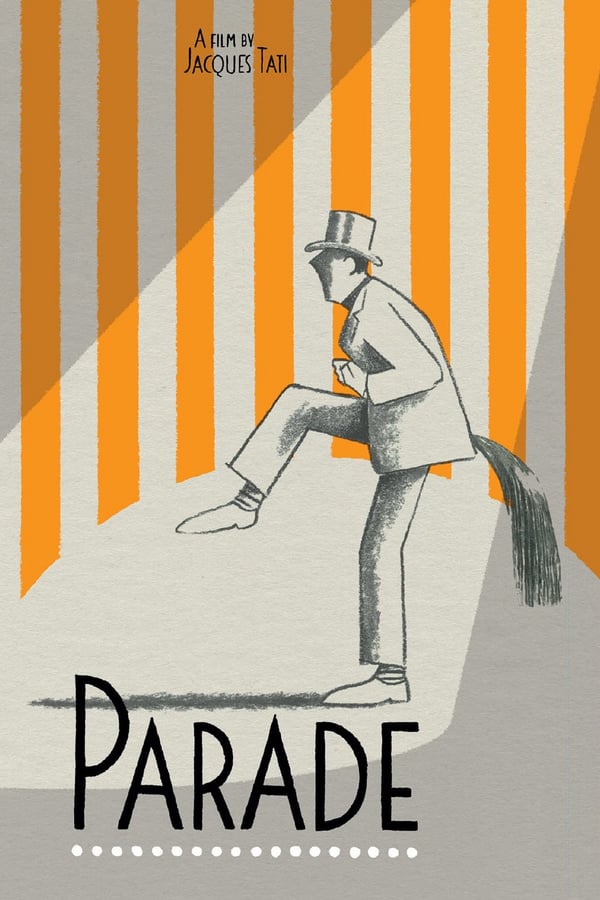
With PlayTime having wiped much of his fortune, and Trafic not performing well enough in theaters to make it back, Tati made one more picture before his death. Parade was a made-for-tv film for Swedish television (with longtime Ingmar Bergman photography expert Gunnar Fischer serving as cinematographer), released in 1974. It’s not really a film in any true definition, in that there isn’t a story or characters to follow. Tati plays the master of ceremonies during the performance of a circus, and the movie is mostly just the the various acts over the course on 90 minutes of the show. There are some of Tati’s traditional sight gags, mostly during the intermission when we see the audience interactions, but honestly this film is a real bore. It’s just not very funny and barely entertaining, which is a real downer after some of the great films that came before it. Still, doesn’t take away from the middle four movies, which are a lot of fun. ★

 Jons Movie Takes
Good assessment, Traffic is the most underrated but your praise is justified for sure!
LikeLiked by 1 person
I agree that Traffic is the most underrated work by him. My personal favorite of his though goes to Moniseour Hulot’s Holiday, without a doubt. Remains one of my top 50 films of all time.
LikeLiked by 1 person
Holiday is a great film for sure! Love the sound the swinging door makes…
LikeLiked by 1 person