
 Going to look at various foreign films from around the world today, starting with The Insult from director Ziad Doueiri from Lebanon. It shows when a fairly simple argument can blow up when religion and/or cultural differences get involved. Yasser is a foreman for a construction crew. As a Palestinian refugee, he isn’t allowed to be an engineer in the country, but he runs his crew well as foreman. He’s doing renovations in an area when he gets into an argument with a resident, Tony, a Lebanese Christian. Over a couple days, the verbal back-and-forth becomes violent and Tony is injured. He ends up suing Yasser, and the lawyers ratchet up the rhetoric. Lots of old prejudices are brought up. The filmmakers examine everything, from the plight of Palestinians without a country of their own, to brutal tactics used by both sides during the endless wars the region has gone through, to (false) accusations against Tony for being a Jewish sympathizer, which of course bring threats against him. Violence erupts in the streets as tensions in the courtroom boil over into the public. I’m aware of the generations of animosity in that region, but having never lived there, there are moments in the first half of the film or so when I thought the premise was a bit ridiculous. By the end, it does a good job of showing to those like me who aren’t as well-versed in the history of these wars what it has meant to those living there. A strong film, with some powerful moments. ★★★
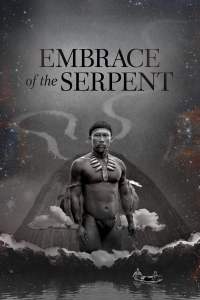 Embrace of the Serpent is a Colombian film from director Ciro Guerra. I’ve seen one other film of his, Birds of Passage, which was so-so, but this one is fantastic. It follows two timelines, 30 years apart. In the early 20th century, German scientist Theo von Martius has been exploring the Amazon, but has become ill. He gets help from an indigenous warrior, Karamakate, to hunt a mythical cure-all plant called yakruna, which may heal him. 30 years later, another man, Evan, is supposedly after the same plant, and is following Theo’s notes. Evan runs into an older Karamakate and asks him to be his guide. We sense early on that there is more to Evan’s story, but what that may be remains to be seen. In both stories, we see Theo and Evan with their guides travel through the jungle, mostly by river, as they encounter mad religious zealots, rubber plantation atrocities, and the dangerous jungle itself. Shot in beautiful black and white to mimic the old photos we associate with those early explorers, the film shows a wondrous and unforgiving land, and one which seemed to be fighting a losing battle with European colonizers for a way of life they could not hold on to. ★★★★
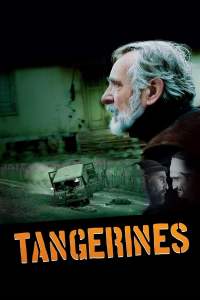 Tangerines comes from the countries of Estonia and Georgia, and is directed by Zaza Urushadze. It takes place in 1992 inside Georgia. With the USSR falling apart and its former states declaring their independence, war has broken out between the native Georgians and Russia-backed Abkhazian separatists, mostly mercenaries. In a tiny farming village, many have already fled for the more peaceful Estonia, but two older men are still tending a tangerine farm. One is hurrying to get the crops down so he can take them Estonia to sell, but the other is hinting that he will not be leaving with him, but his reason isn’t discovered until the very end. One night, a gunfight comes to their doorsteps, and there are just two survivors, one from each side of the conflict. As the farmers tend to the wounded, the enemy soldiers vow to kill each other once they are healed up. As they get better though, they get to know each other, and each discovers the meaninglessness of the war they are fighting. This is a great “intro” for people just getting into foreign films, or people wanting to watch a contemplative picture but which still has some movement and action, and isn’t “too deep” nor overly long, coming in under 90 minutes. ★★★½
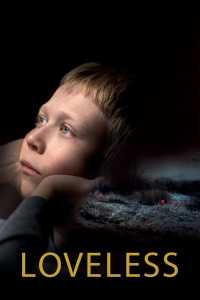 Loveless comes from director Andrey Zvyagintsev out of Russia. It is about the breakup of a marriage, but not in an endearing way like the recent Netflix film A Marriage Story. Boris and Masha hate each other. Each person has all ready moved on, she to an older more successful man, he to a younger (already pregnant) woman. The worst of it all, neither wants to take their 12-year-old son Alyosha with them to their new life. This one is hard to watch from the very opening 20 minutes, where a scene shows the mom and dad fighting about who is going to be forced with the child, and he can hear them all from the room down the hall. Watching him quietly sob is heartbreaking. The next day, each parent goes to stay the day with their own new loves and don’t return to their home apartment until a full day later, during which time Alyosha has run away. The rest of the film is a search to find the boy. The investigators realize immediately that the parents don’t really love him and are only going through the motions out of a sense of societal obligation, and to try to hurt the other parent. The film takes a really long time to get going: 20 minutes of introduction, followed by 30 minutes of watching the adults have sex with their new partners and talking about how much they hate their previous lives, and then a fruitless search. I honestly didn’t care for them as people obviously, and the one person to root for, the boy, seems to be a side story in their lives and the film itself. Powerful? Undeniably. But a good film? That’s debatable. ★★
 Ending on a positive note. The last film comes from Turkey and director Ildiko Enyedi. On Body and Soul is one of those beautiful, quiet dramas that you just have to sit back and appreciate. Endre is one of the higher-ups at a meat processing plant, and they hire on a new girl, Maria, as quality inspector. Maria is deep on the autistic spectrum; she abhors physical contact, doesn’t understand any social cues, and isn’t in touch with her emotions. But she and Endre have something in common: every night, they have the same dream. In their dreams, he is a stag, and she a doe, and they wander the forest together doing various deer things. Endre, an older man with a crippled left arm, gave up dating years ago, and Maria has never dated before, so they are shy and apprehensive to each other, but their relationship slowly grows over time. I was really into this film for the first two thirds or so. It hit a lull for awhile there in the latter half, where Endre pulls away, which confuses Maria even more, but the ending is great. A really touching film. ★★★½


