The world falls apart in Atlas Shrugged

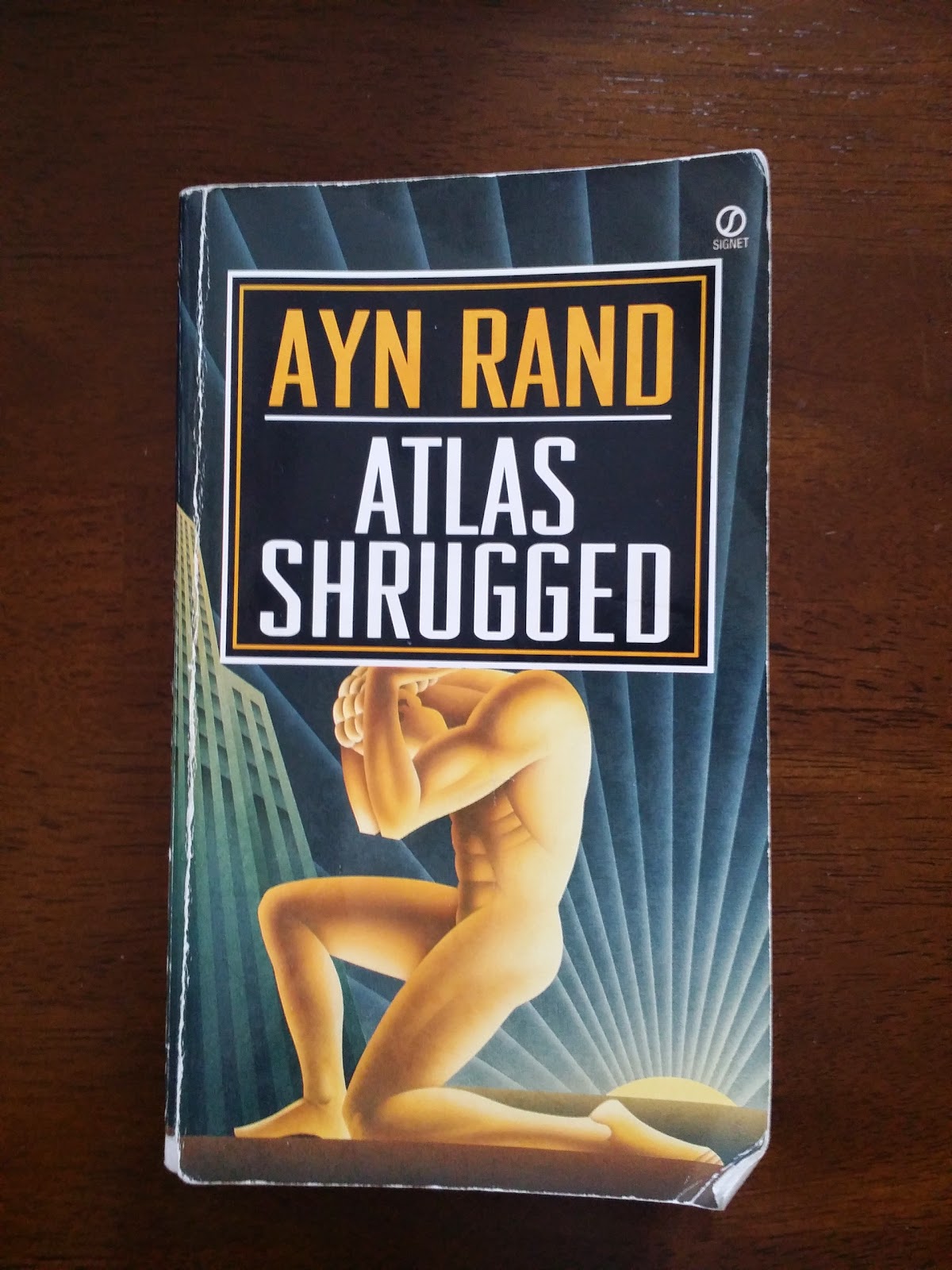
Who is John Galt? That is the opening line of Ayn Rand’s Atlas Shrugged, and the key question for most of the novel. The answer is much more than it seems.
Rand was born in Russia in the early 20th Century, and was a teenager during the revolution that overthrew the Russian Empire and set up the soviet state under Lenin. These changes had a profound impact on her, as evidenced by Atlas Shrugged. The backdrop for this novel is the advancement of “People’s States” across the world. Countries have decried wealth and knowledge. Successful businessmen are targetted as being greedy and unsocial, and told that they must share their wealth with the poor and unable (or unwilling) to work. Free thinkers and philosophers have been replaced with a new school of thought, which denounces profit-making and advanced thinking, and says that people should not think on their own, but should only do what they are told. The USA is one of the last democratic nations where people can still own their own businesses and make decisions on their own, but it too is under attack from within by these new schools of thought. People across the country are either clambering for a high paying job, yelling “I deserve it as much as the next guy!” or giving up, saying simply in a “shit happens” sort of way, “Who is John Galt?” No one seems to know what this means.
The book follows Dagny Taggart. She is the heiress of Taggart Railroads, and an old school businesswoman who only works for profits. As a woman she cannot be head of the company, so she is the operating vice president, while her brother Jim is the head. Jim is definitely of the new school of thought, wanting to give jobs to those in need, whether they are qualified or not. He sees the writing on the wall and is setting up strong political friends in Washington. Dagny’s childhood friend and one-time lover is Francisco d’Anconia, a rich playboy who seems to be only interested in frivolously squandering the millions he inherited in his family’s multi-generational copper mining business. While the railroads (and all industrial businesses) are failing due to incompetent workers replacing the more qualified, Dagny is trying to keep her company afloat. It seems she will be saved in time by Hank Reardon, a steel company owner who has invented a new type of steel that is stronger, cheaper to make, and more durable. It isn’t long before the government steps in and ruins this though, by saying it isn’t fair for Reardon Steel to corner the market on this new invention, that he must share his patent with all the other steel companies, and so he doesn’t make more profit that anyone else, all the plants must produce an equal output and sell at the same prices. At the same time, Taggart is beset by other railroad companies yelling for equal ride-time on her rails and profit sharing. In this way, all the companies across the country are failing together.
Hank and Dagny become close and eventually lovers, as they keep struggling to keep their respective companies, and their own little corners of the country, from collapsing, despite everything the politicians throw at them. Across the country, the best of the best, including successful business owners, intelligent engineers and scientists, etc, are throwing up their hands to the changing system and simply disappearing, but Hank and Dagny keep fighting. Francisco reveals his ulterior motive, that he has created the playboy image to keep the countries around the world from taking a closer look at his business management, and he has purposefully been self-sabotaging his copper business into the ground. On the morning when the Chile government is to announce they are nationalizing his copper mines in that country and taking them over, they realize the mines have all ready been emptied or exploded and buried, with workers being paid basically to look busy for years. Francisco tells Dagny he is part of a group that is speeding along the collapse of the world, so that when every country has failed, the world can be rebuilt properly from the ground up.
Dagny refuses to join Francisco’s cause, and will go down with the ship it seems. While exploring an old abandoned factory with Hank, she finds a rusting old motor, built upon technology she has never seen. It seems it can run on electricity pulled from the atmosphere around it, so it doesn’t need fuel and is completely self sustaining. Unfortunately it is incomplete, so she finds one of the world’s last remaining engineers to try to rebuild it, while at the same time going on a mission to find its creator. Going from the previous company’s owners, to managers, to employees, she is able to piece together the story of the inventor of the motor. He was a young man that completed it just before the company went “social.” When the company started paying all people equally, and awarding bonuses not to those that worked harder or achieved more, but to those who were in greater need (new baby, broken leg, whatever it is), the young man walked out and was never heard from again. His name, of course, was John Galt.
Turns out John, Francisco, and Ragnar Danneskjold (a pirate who has been harassing government ships off the coast for a decade, stealing all the gold and sinking anything that could help each country), were all college friends. They saw the way the world was headed and developed a plan to help it along its way, so that one day again value would be put on real intelligence and the advancement of technology, not just the giving out of alms to “looters.” The three have been secretly approaching businessmen and scientists, and getting them to disappear to a hidden, self-reliant city in the Rocky Mountains. Hank and Dagny are also approached, but they cannot let go quite yet, so they continue to try to prevent the inevitable. When Hank’s plant is attacked and looted because he would not cooperate with the government, he finally gives in himself and disappears. John Galt sends out a radio broadcast for all to hear, with his manifesto for the coming collapse and telling people that they brought it on themselves, but the end will only be a new beginning. Shortly after, he is captured. The government tries to force him to help the situation, while he refuses, saying there is nothing he can do in the way they want help. Society is in full de-evolution by this point, with riots in some parts of the country, states declaring secession in others. The final trans-continental railroad collapses, cutting off coast-to-coast travel and setting off a panic in New York, where the population will starve without food from the midwest. After being tortured, Galt is rescued by Francisco, Ragnar, Hank, and Dagny, who finally is ready to join their group. As their escape plane is flying over New York, the lights in the city go out as the power plant fails. One of the final scenes is a train sitting idly on abandoned tracks in Arizona, as a horse-and-buggy crew offers to take the strandoned passengers to a neaby settlement. Technology and organized government has finally completely collapsed.

This has the feel of an epic, dystopian book. Coming in at over 1000 pages, it is a long read, but a good one. Rand considered it her ultimate achievement and showed most clearly her philosophical idea of objectivism. Though she continued to write non-fiction books about her ideas, I don’t believe she ever wrote another novel after Atlas Shrugged. It isn’t for casual readers and it does get a bit bogged down by long philosophical speaches by its protogonists, but it is clevely written and is much more than just a work of fiction.


Love and loss for Him and Her in Eleanor Rigby

I wanted to see this film as soon as I heard about it last year, but the “full” versions never made it to a theater near me. An ambitious project, The Disappearance of Eleanor Rigby is the same story told from two different perspectives.

Originally conceived as two films, The Disappearance of Eleanor Rigby: Him and : Her each tells the story of a hurt marriage from the husband’s and wife’s viewpoints, husband Conor, played by James McAvoy and wife Eleanor, played by Jessica Chastain. Depending on the order in which you watch the films, you are left with a very different lasting perspective.

I watched Him first, which starts with Eleanor confronting Conor and saying she needs a break. She suddenly leaves, and Conor is left wondering what happened or what he did wrong. He spends the film hunting her down and trying to reconcile. The reason for her departure is later explained. I then watched Her, which starts just after the breakup, with Eleanor attempting suicide (something you were never aware of during Him). Her demons are slowly brought to the surface throughout the film.

Since Him follows the guy, it is told in a “guy’s” sort of way. It is very linear with a straight forward plot. Her is more wandering and emotional, telling more backstory along the way as Eleanor reminisces about the past. Both together tell the complete story of a marriage on the rocks, and the viewer can feel (especially in Her) the anguish the couple is going through.

Theaters were reluctant to release 2 fully separate films at the same time, so an edited version that combined the two was released titled The Disappearance of Eleanor Rigby: Them. I did not see this one, but having seen Him and Her, I think that is definitely the way to see the full idea. I can’t see how they would edit 3+ hours down to just 2, plus Him and Her are worth watching just for the differing perspectives. Shared scenes are subtly different in each film, with the logic being Conor and Eleanor each remember events in different ways. A very heart wrenching film with brilliant acting.

Crime thriller in January and family laughs in Alexander

The Two Faces of January is a quiet, slowly tense thriller that hearkens back to crime films of the 50’s and 60’s, in that it has a very retro-like feel and even plot. Two leads, Viggo Mortensen and Kirsten Dunst, have made their share of blockbusters but have lately been seen more in small independent films, while the third, Oscar Isaac, has made a career of small films and is just getting ready to heady to mainstream with the upcoming Star Wars and X-Men films.

Chester (Mortensen) and Colette (Dunst) are touring Europe when they bump into Rydal (Isaac), an American moonlighting as a tour guide while he decides what he wants to do with his life. Unbeknownst at first, Chester is in hiding for having swindled a bunch of investors back in the states. When a PI catches up to him, Chester kills him and enlists Rydal’s help to flee. Rydal is instantly attracted to Colette, and as the film progresses, we see how far Chester is willing to go to protect his own and keep on the run.

The film has a fair number of plot twists that keep you on your toes, events that you just don’t see coming, but for me it had the feel of great actors concealing a very average movie. It tries to set Rydal up as an unwilling accomplice, but he goes too far to help Chester that it is hard to sympathize much. A short film at just 96 or so minutes, so worth a single viewing if you have an afternoon free.

I skipped on this film last year during my movie adventure (I skipped a lot of the kid-oriented films) so finally getting around to it. The book was one of my favorites as a little kid, and the movie does it justice. You’ve probably heard the premise from all the previews last year. Alexander lives his life with perpetual bad luck, until the day of his 12th birthday when inexplicably, his bad luck transfers to the others in his family. The film is their antics throughout the day as increasingly worse things continue to happen. Alexander can just sit back in wonder as his day goes well, while everyone else has the worst day of their lives. Even when they feel like they’ve turned the corner and it starts to look like it may get better, bad things just keep happening to the poor family.

It’s good family entertainment. I think kids will laugh the hardest, but there are still grins and chuckles for adults too.

Hector also finds himself in his Search for Happiness

I’m an admitted sap for these kinds of films, even when hardcore critics don’t like them. And despite its rough reviews, I enjoyed Hector and the Search for Happiness.

Hector (Simon Pegg), is a psychiatrist who has lost his sense of happiness in life. He has an adoring girlfriend Clara (Rosamund Pike, known for last year’s Gone Girl) and a successful career, but one day he realizes he has lost happiness, if he ever had it at all, and is just going through the motions of life. He decides to set out on a solo trek around the world to find the meaning of happiness. He keeps his notes in a journal, and each entry as he makes it is scribbled across the screen in a charming quirky manner. Some are funny, but most are thought provoking or poignant. He has many adventures across the globe, before coming to know true happiness is in himself, and is just waiting there for him to reach out and grab it.

I’m a sucker for these “finding yourself” kind of films. I thoroughly enjoyed this one. It is funny and Simon Pegg is his affable self, but he does manage to stretch his character and show a side we don’t often see in his other comedic roles. It’s just a good old feel good kind of movie.

Thought-provoking sci-fi jumps through time in Predestination

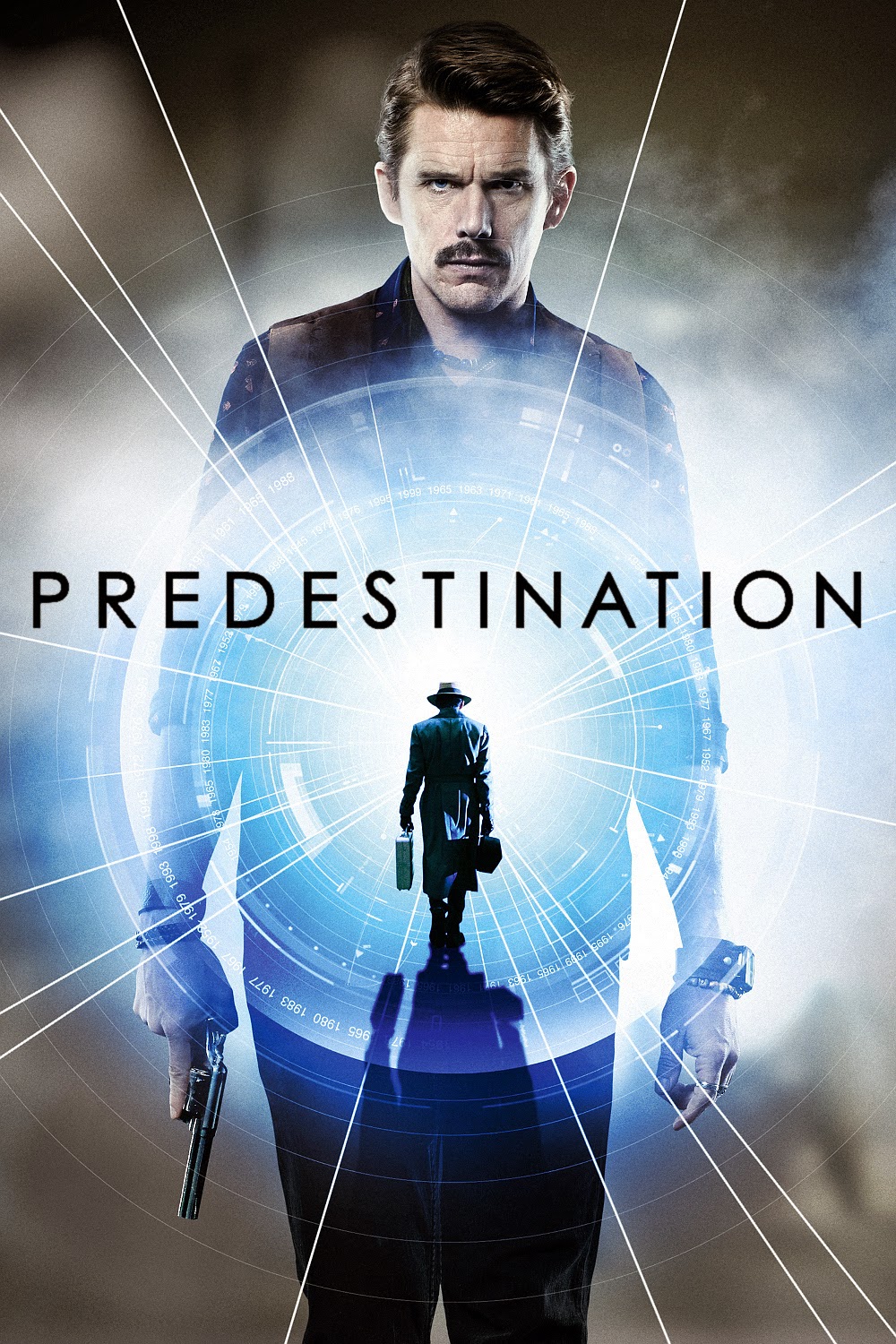
This movie will leave you thinking, and has the potential to blow your mind in a Matrix-like way. In an alternate reality where time travel was invented in the early 80’s, Predestination stars Ethan Hawke as a time-jumping cop. The film is based on a short story by Robert A Heinlein, an author I read much of when I was first getting in to sci-fi, as many did.

The protagonist’s group jumps to places in the past and future to stop major crimes from taking place. The film is mostly about his hunting of a serial bomber nicknamed the Fizzle Bomber. Unfortunately the bomber is aware of the time cops in some way, because he keeps changing the day he sets off his big blast that kills thousands, thus not giving the cops a consistent specific day or time to stop him, only knowing it will happen sometime in March 1975. Ethan goes back to play as a bartender in 1970 on a lead. One night, in walks Jane, who tells him a fantastical tale.

I really can’t give much more than that without giving away crucial story elements, and I do like to keep my movie reviews spoiler-free. This film has elements of science-fiction obviously, but also is at its heart a mystery. You don’t know who is who or who is on who’s side, and just when you think you have started to figure it out, the movie flips it on you in the latter third. Unfortunately it lets loose a big surprise a little early in my opinion, you guess the final climax before it actually happens. That being said, it is one of most thought-provoking films I’ve seen in a bit, and puts forth the question if we have control of our lives, or if everything is preordained.

Characters fail to come to life in The French Lieutenant’s Woman

On my quest to read through this list of “100 Great Novels” I knew I’d find at least a few I didn’t much care for. I finally found one at # 8, The French Lieutenant’s Woman by John Fowles. It’s not a terrible novel and is obviously well thought of, but it isn’t my cup of tea.

As a reader, I like to immerse myself in the book I’m reading. I like to think that what I’m reading can exist in another world, that I see the characters as real beings. Even the most outlandish sci-fi can come to life in my mind and be real when I turn the pages. In Woman however, we are told early on by the writer (in first person) that it is a work of fiction and he is but telling a tale. Fowles even goes so far as to change his story here and there, where he will write a chapter or two, and then in Clue-like fashion say, “It may have happened like that, or it may have happened like this.” In this way, it is hard to truly care for characters that you can’t even envision as real. Furthermore, he treats this novel almost as a conversation he is having with the reader, or a point of debate (obviously a one sided debate as you cannot discuss with him, just hear his point of view).

The plot follows Charles, a mid-19th century entitled rich man in Victorian England society. He is wealthy to a point, but is in line to inherit much more when his heir-less rich uncle will die. Charles is engaged to Ernestina, daughter of a “new money” family who’s merchant father is looking to raise her to a higher society. They are wintering in the small town of Lyme, where Charles comes across the “French Lieutenant’s Woman,” Sarah. Sarah is a depressed for having been spurned by a marooned French soldier who she says she deeply loved. Charles is immediately moved and over the course of the novel, grows to have feelings for Sarah. After a book full of hand wringing and deep introspection, during which his uncle marries (thus leaving Charles out of his inheritance), and some minor revelations about Sarah, Charles finally decides to leave his betrothed. By this time Sarah has left too. When he finally finds her a couple years later, she seems to only wish to enjoy her misery.

This book is at times esoteric, with Fowles becoming very philosophical. He will spend whole sections of chapters discussing the meaning of thoughts and ideas, some that seem to only superficially pertain to the story at hand. He is obviously well read and a deep thinker, and while I do like a book that makes me think, sometimes I just want to be engaged in a good plot.

George comes to terms with himself and society in Babbitt

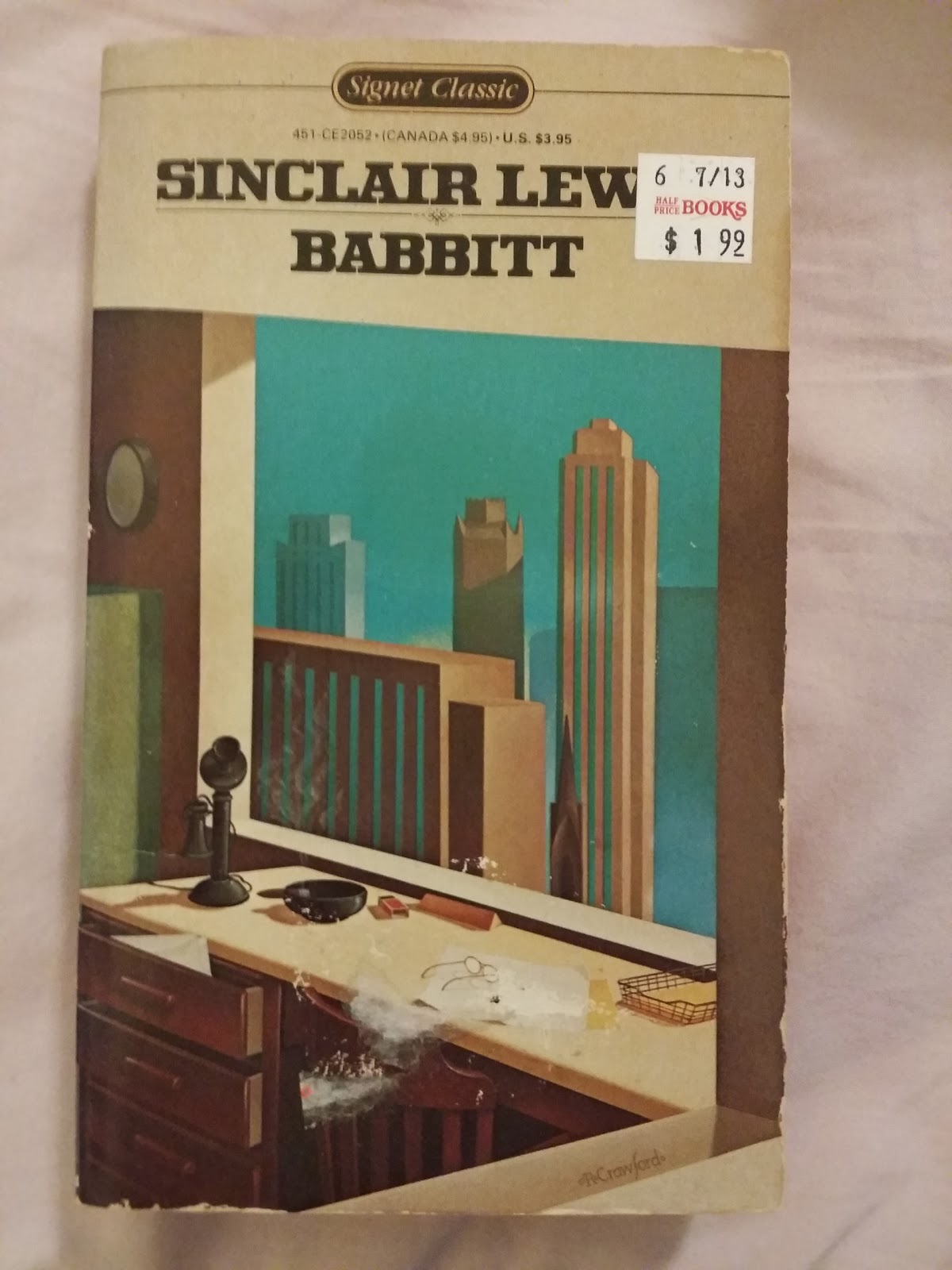
What Sinclair Lewis’s Main Street is for rural America, his Babbitt is for the industrialized city. It tells the story of George F Babbitt, a 40-something businessman. Light on plot but rich in detail, Babbitt would help win Lewis the Nobel Prize in literature in 1930.
Babbit drives a fine car, lives in a fine house, and has a picturesque fine family, but he is a bit of a coward. He is a gentleman that for most of the book has very few ideas of his own, and just conforms to whatever is popular at the moment, or more often, pushed by his friends and colleagues. Many times he’ll begin one argument, but when someone puts forth a dissenting idea, he quickly joins and changes his mind completely. He always is wanting to impress others with his dialogue skills and is constantly seeking approval. The solid first half of the novel continues along this path, with little real events happening besides the normal types of things that happen in any average life, but it all gives you a real in-depth look at the person of George Babbitt, and what drives him.
As in Main Street, most of the action happens later in the book. Babbitt’s friend Paul, disenchanted with how his life has turned out, shoots his wife and ends up in jail. This forces Babbitt to reexamine his own life, and realize it is much different than what he wanted when he was younger. He starts fooling around on his wife, and hanging out with socialists (remember, this was in 1920), and rides the line of being pro-labor unions, a scandalous idea in his professional circle of friends. It’s not until the end that he comes back to realize what his actions have done to his family. He recommits to them and to his wife, but looks hopefully to the life of his son. He knows he must put on an act to keep his family comfortable and safe, but he hopes his son Ted will lead the life he wants, and the rest of the world be damned.
When it was released it was a big blockbuster and garnered Lewis a lot of attention. Personally I think I liked Main Street more, but it is still very well written, though as I said, not much goes on for a big portion of the book.

A couple Sci-Fi romances in The One I Love and For Your Eyes

The One I Love is a cute little romantic movie with a science-fiction twist. Ethan (Mark Duplass) and Sophie (Elisabeth Moss) are a married couple trying to work through his recent infidelity. Their therapist sends them to a picturesque weekend getaway to try to renew their love. Upon arriving, they discover something fantastical about their retreat: in the adjoining guest house, they are able to see a more perfect version of their spouse. When Ethan walks in, he finds another Sophie, one who is attentive and thoughtful and dresses herself up. When Sophie enters, the new Ethan inside is spontaneous, caring, and willing to discuss his emotions rather than walling himself off. Both are obviously weirded out at first, but Sophie is quickly attracted to the new Ethan and implores her husband to enjoy this new change, to help reconnect them to each other. Ethan is analytical and since he can’t explain what is going on, he refuses to spend much time in the guest house, while Sophie spends more and more time there.

This is a pretty heart warming tale, and takes a close look at how easy it is for a couples’ relationship to become stale and monotonous when you aren’t working at it. At one point, Ethan is upset and asks Sophie if she thinks the new Ethan is a better version of him, and Sophie responds with something like “He’s not a better version of you, he is you, or the you you used to be.” The ending of the film, and identity of the “guests,” isn’t quite what I was hoping for, but it is still a poignant movie.

In Your Eyes is another odd little romance. This one is written by Joss Whedon, of former Buffy and more recent Avengers fame. It is obviously a bit of a departure for him, but a well done one. This one never hit theaters, it was distributed online last year.

Dylan (Michael Stahl-David) and Rebecca (Zoe Kazan) share a telepathic link. They’ve had it their whole lives, but never consciously knew about it until one day they can start to hear each other’s voices in their heads. Dylan is an ex-con, from running with the wrong crowd, and Rebecca is married to a caring, but sometimes cold and detached husband. The film follows them as they get to know each other. Eventually they begin to fall for each other. They can’t hear thoughts, only spoken word, so some parts are comical as others around them think they are each talking to themselves. It takes a serious turn though when Rebecca’s husband has her institutionalized, and Dylan breaks his parole by leaving the state and trying to rescue her.

Kazan is cute as a button as she has been in the last few films I’ve seen, but that doesn’t save a fairly lackluster movie. It has a neat paranormal concept, but in the end feels like a gushy romance novel turned into film.

The Great Game shown in a close view in Kipling’s Kim

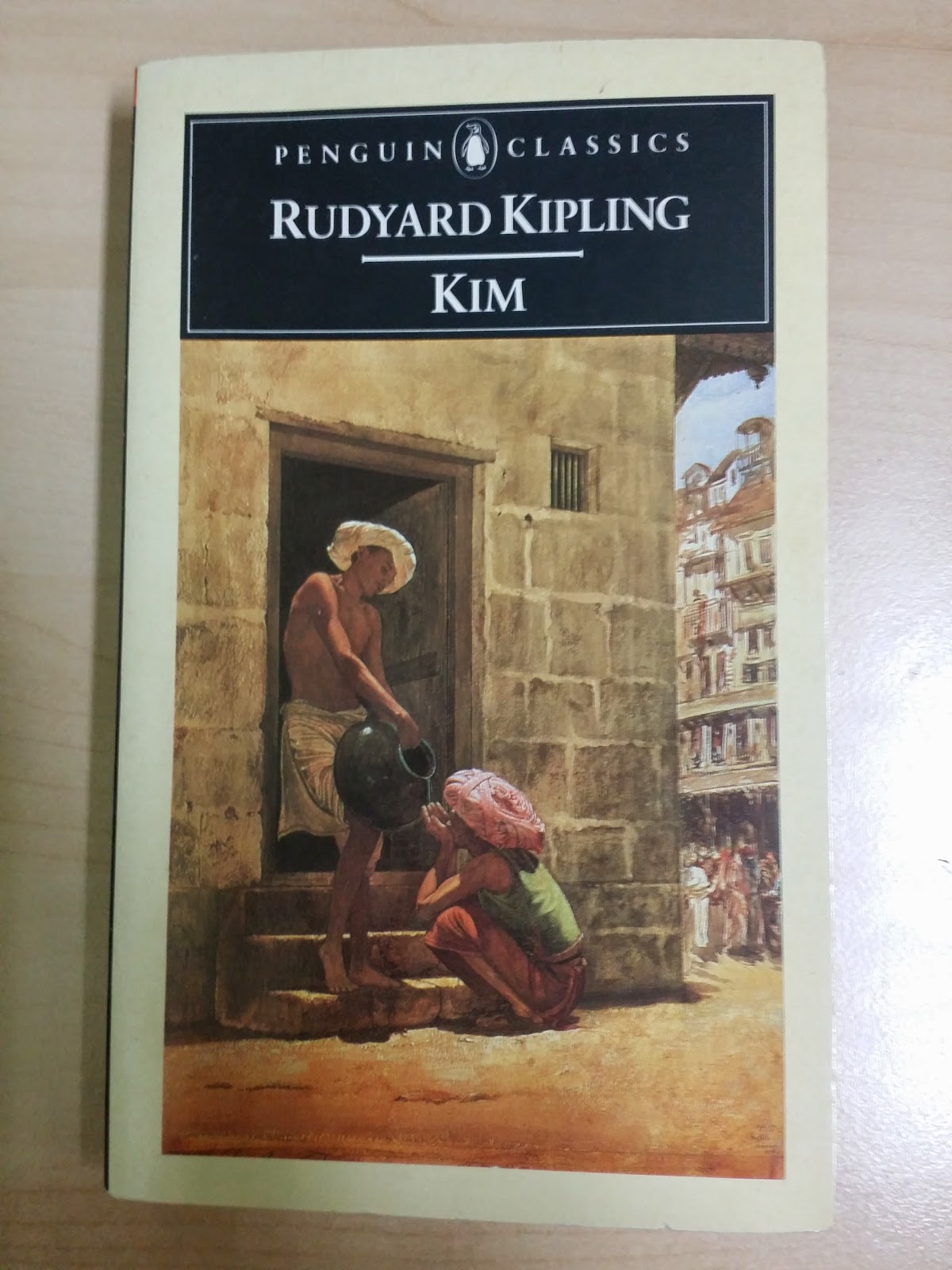
Rudyard Kipling’s Kim was published in 1901, and is titled for the main character. Kim is a young man in India, about 13 or so. His parents were Irish, but both died when he was very young, so he has raised himself on the streets and is so ingrained in the local customs that he is able to blend in seamlessly.

The book opens with him helping a Tibetan lama, or holy man. Kim begs for food for him and immediately is attracted to his cause. The lama is on a holy quest to find a sacred river with healing properties. Kim decides to join along, and is promptly given the title of chela, or disciple. On their way out of town, they are aided by Kim’s friend Mahbub Ali, a successful horse-breeder and trader. When Mahbub’s camp is raided by unknown spies, Mahbub sends Kim off with a note, a coded message, to deliver a couple towns over. Kim does so, and eavesdrops afterwards to realize the note was a warning of an impending troop deployment in the ongoing conflict between British and Russian forces, who have been opposed for decades over the land in Afghanistan and India.

Shortly after leaving the village, the duo comes upon a British regiment. Once Kim’s ancestry becomes known, they take him under their wing to raise him as a Sahib (Arabic for holder or master, but in this book really means any Euro- or Russian- caucasian). The lama is amazed Kim is actually British, but now that he knows he wants him to be educated as such, agreeing to pay the fee for a good school for Sahib children. Kim is reluctant at first, not wanting to be taught English math and writing, skills he sees as useless, but he is approached by Mahbub again, and initiated into “The Great Game.” Because Kim is fluent in the local customs across India, but has a British background, he is going to be taught how to be a spy for the British government, which Mahbub has been all along.

For the next 3 years, Kim is educated in English skills in school, but spends his holidays learning from Lurgan Sahib, a master spy. Here he trains his memory, and how to disguise his look and speech to blend in no matter what region he is in, and from fellow spy Hurree Babu, about medicines. Finally he sets off from school and rejoins the lama on his quest, who is unaware of Kim’s new career. Several rapid adventures happen in succession, culminating when the pair inadvertently come across a couple Russian spies for the other side, who Babu has been guiding while waiting for the right moment to steal their papers. A conflict sets off, which leaves the lama sick in spirit (he gave in to anger, putting him “off his path,”), and the Russians’ papers in Kim’s hands. He slowly treks the ailing lama south, growing physically weaker himself with fatigue and illness, until they finally collapse.

When he comes to a few days later, he finds Babu has caught up to him. Babu looks through the papers and finds they are very important, detailing Russian spies and movements, and future plans. He congratulates Kim on his work and agrees to meet him when he returns to town. Kim also finds the lama is restored, he has found his spiritual awakening, his “river” that he has been seeking this whole time, and promises to now impart his wisdom to Kim. The novel ends not knowing what Kim will do, if he will go to town to immerse himself as a full time spy, if he will follow the lama on a spiritual quest, or if he will continue to try to do both.

This was a fascinating book to read. It is extremely detailed, as the reader I was fully immersed in the Indian customs, lifestyles, and view of life. Kipling is so matter-of-fact about things that are so foreign to me as an American, that you really feel at ease in the culture. The caste system is on full display, showing Kim’s reactions to different people solely based on where they are from. The entire way of life is different, from how certain groups are treated, to how beggars are tolerated, to their speech, which is full of metaphors and colorful descriptions. It is a very rich and fulfilling read. While Kipling’s The Jungle Book will forever be what he is most known for, Kim is an engrossing and mesmerizing tale.

Never find yourself in front of a walrus’s Tusk

Should have just listened to the reviews and avoided this one. Tusk is the newest from Kevin Smith, and finds him making a departure from his usual teen-focused poop jokes. It is a horror film, about a juvenile radio jock going to Canada to make a podcast about a person there. He comes across an old man with stories to tell, but ends up becoming said man’s experiment. The old man starts slowly turning the radio dj into a walrus, with skin grafts and whatnot, while he is being sought by friends back home.

A terrible movie, with terrible dialogue and a thin, terrible script. The acting is just as rough. The only highlight is in the last third when inexplicably, Johnny Depp shows up. How this movie got made is beyond me. Don’t waste your time.