Quick takes on 5 films

Deadpool is one of the better non-MCU Marvel movies, but it had to go in a completely different direction to make it happen. Whereas past movies are PG-13, this one is a definite R, full of graphic violence and graphic language. Ryan Reynolds as Deadpool is funny, breaking the fourth wall to lampoon himself and others. He is on a hunt to track down the man that made him disfigured, and shuns the “superhero” title. This isn’t the Marvel movie to take your kids to, but if you are old enough to handle the constant stream of vulgarity and sex jokes, it is an entertaining adventure.
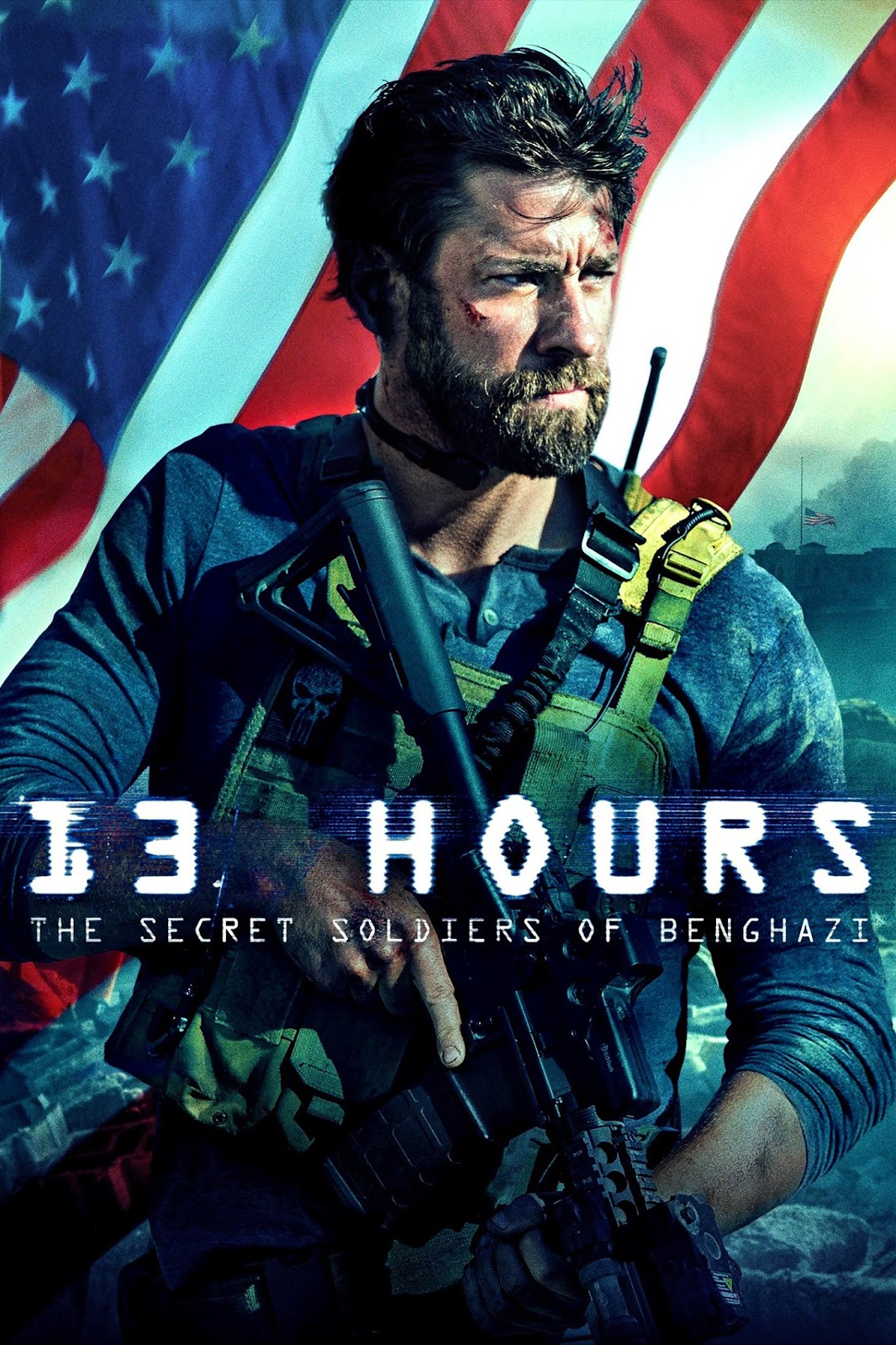
13 Hours as a military action film is good. It is intense, gripping, full of white-knuckle action. If you liked recent movies like American Sniper and Lone Survivor, you should dig this one too. The only problem is it isn’t just a movie, but based on the Benghazi attacks on Americans in 2012. It highlights many problems with many aspects about missions abroad, especially those not officially sanctioned by the USA government. Libya was a mess at the time, and while many countries decided to pull their citizens from the area, we left a group there, not only official diplomats, but a secret CIA base that really had no jurisdiction. When the CIA base is attacked by militants, they can’t get military support or backup, as they aren’t supposed to be there. It is hard for me to really enjoy a film about Americans really dying, but it is an eye-opening experience worth a viewing.
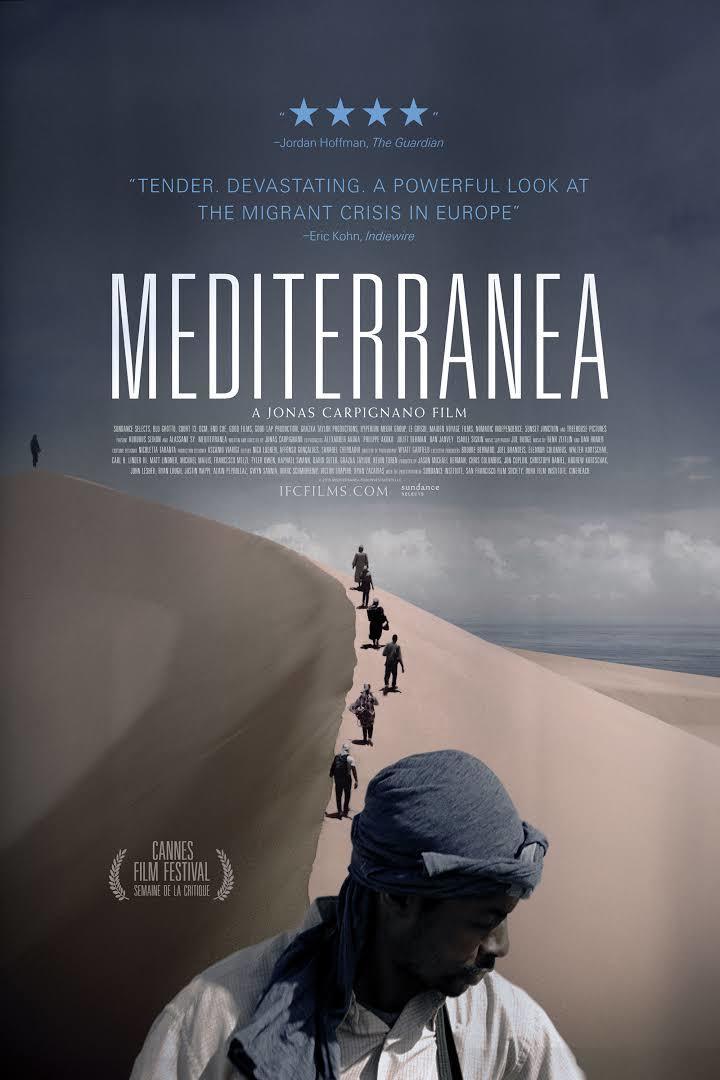
I hate to say it, but Mediterranea is really kind of a boring film. It is about a couple friends from Burkina Faso, Africa, who make the trek to Europe (Italy) for a better life. This timely film should be must-watch, but it plays out almost like a documentary. And while the one friend accepts the difficulty in the journey and is ready for the challenges for work, food, and pure survival awaiting in Italy, the other almost expects everything to just come easily. Guess what? It is actually pretty fucking hard for them. The lead’s acting didn’t help; not sure if he was going for stoicism or what, but it came off like a deer in the headlights in front of the camera.

Zootopia also was just OK for me, and I hate to say that because I went in with really high hopes. It isn’t a bad movie by any stretch, and it has a good message of inclusivity despite differences, but it is very much a “kids movie” and doesn’t have some of the reach for an adult audience that many Dreamworks or Pixar movies do (this one is straight Disney Studios). In the film, a rabbit becomes a cop, even though there has never been a rabbit cop, and she struggles to be taken seriously by her fellows and even the criminals. She befriends a fox, who is also stereotyped by society as a scam artist. Obviously a great message to teach our kids that you can be whatever you want, and everyone is important, but the jokes and antics are squarely aimed at a younger group. Watch this one with your kids, they will, I’m sure, highly appreciate it.
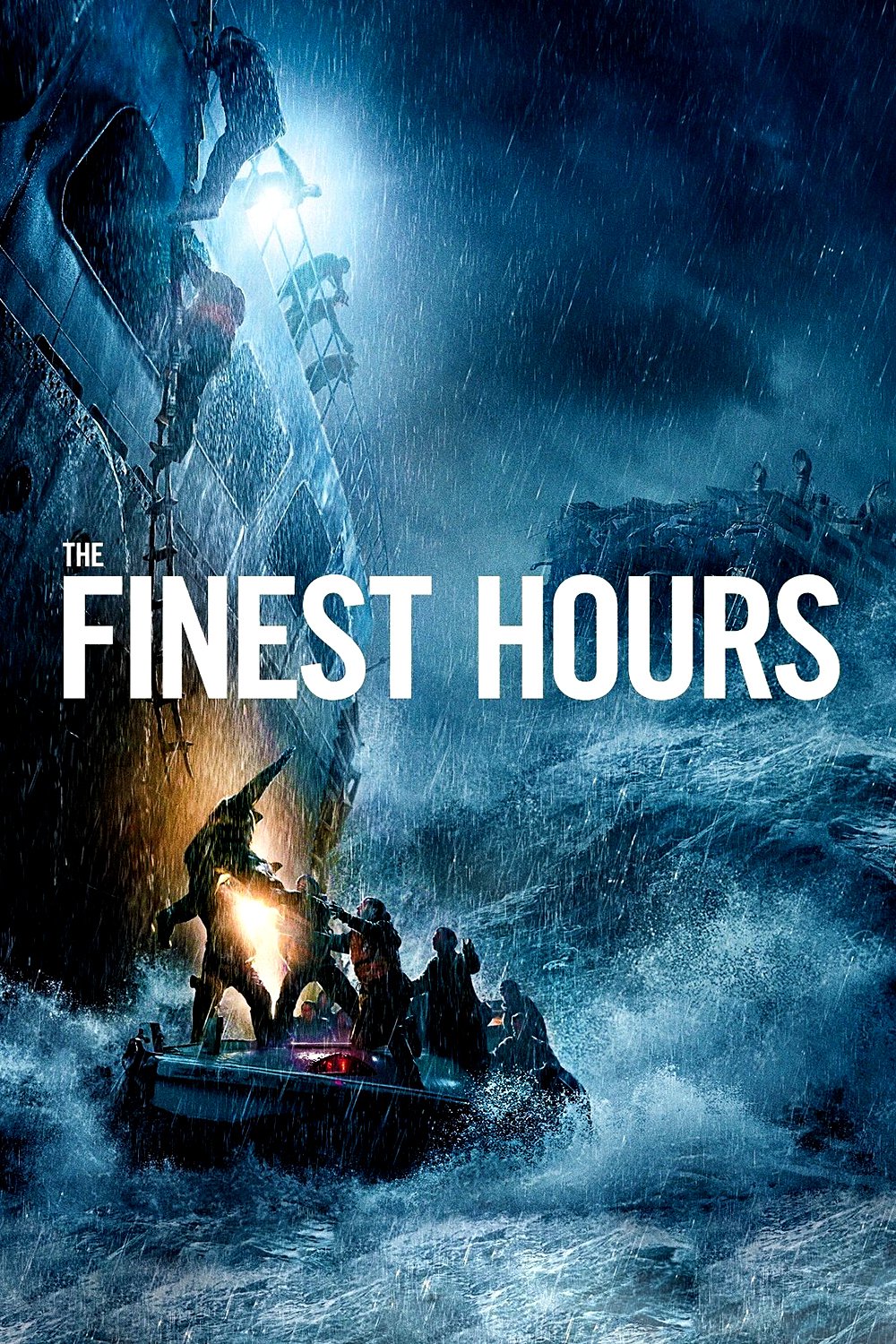
 

It is hard for a good adventure film to be boring, but The Finest Hours is pretty close. The deadpan acting of Chris Pine and Casey Affleck (who I usually like) doesn’t help. Telling the story of a 1950’s Coast Guard rescue in treacherous conditions, the film is predictable to a fault, and even the “rousing” Disney ending wasn’t enough to get me going. All of the characters are one dimensional, and nothing in this film is deeper than a wading pool.
Quick takes on 5 films

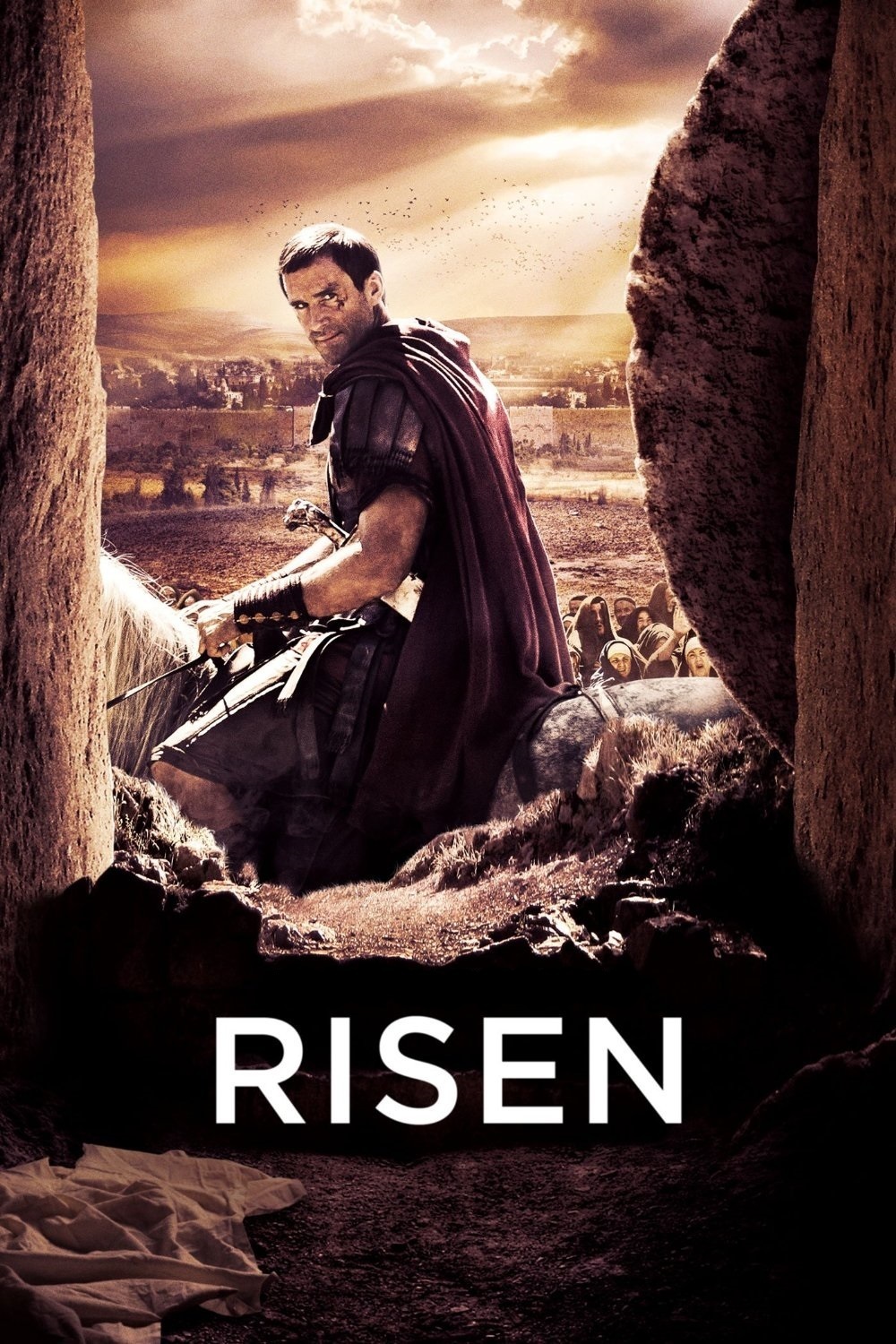
Risen tells the story of Jesus’s death and resurrection from a different perspective. Clavius (played by Joseph Fiennes) is a Roman soldier appointed by Pontius Pilate to basically make sure Jesus stays dead, to see that his body isn’t stolen away to prove the rumors of his impending resurrection as true. When Jesus’s body does indeed go missing 3 days later, Clavius sets to interviewing his followers and trying to find who took the body where. He obviously doesn’t believe the rumors of an actual resurrection, and the film plays out almost like a police detective story, with Clavius searching for clues and hints to the body’s whereabouts. When Jesus decides to show himself, and what happens after, Clavius’s whole outlook on life is shaken. A nice, different take on the classic story.
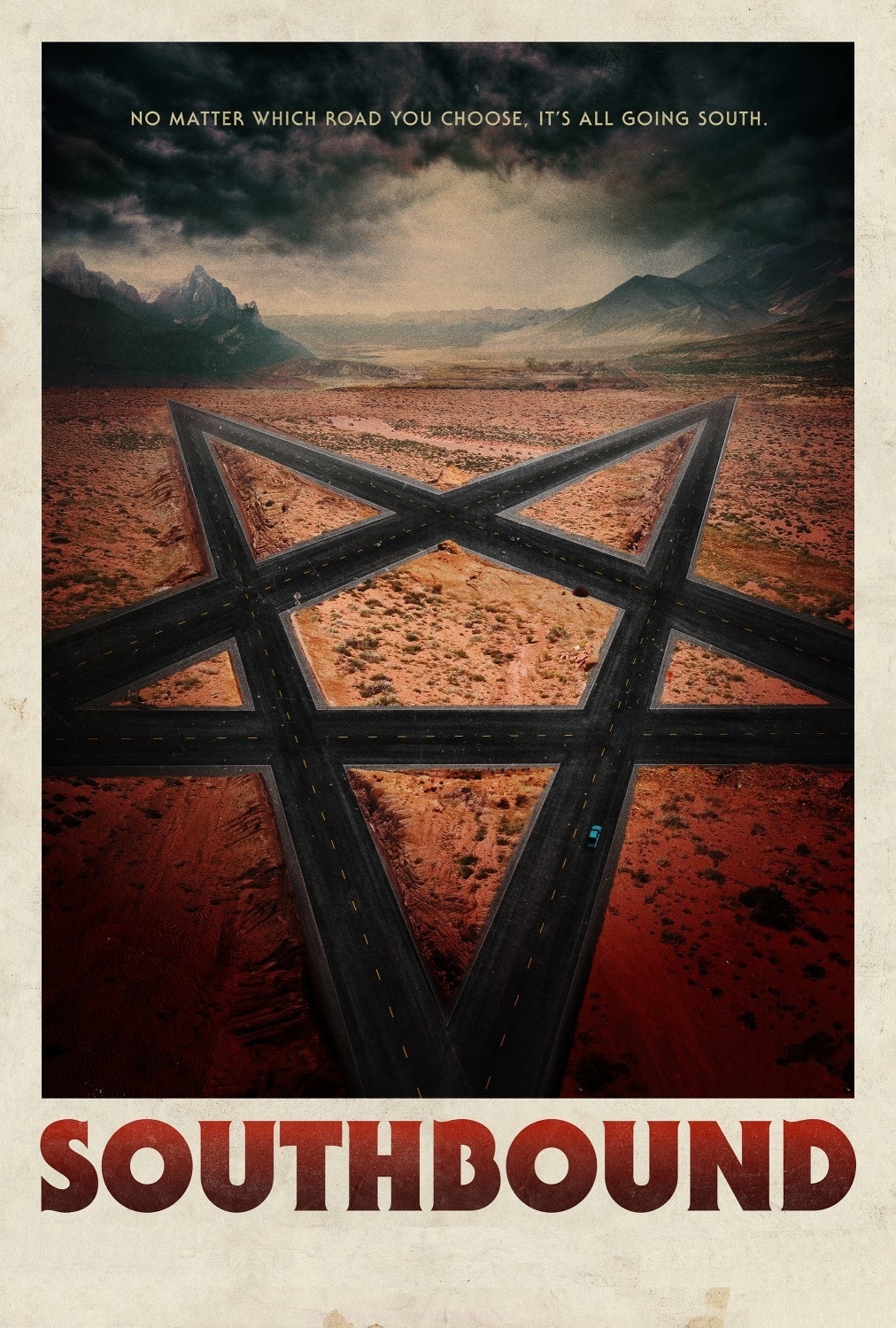
Southbound is a horror movie anthology, loosely connected with an overarching theme. There are 5 or 6 short tales, taking place along the stretch of a lonely highway out in the middle of nowhere, where floating demons look down at the comings of goings of good and bad people. Not a bad scary film, though lighter on the scares than many may like. It has an old-school Creepshow kind of feel, and the ending that connects it all together is satisfying enough.
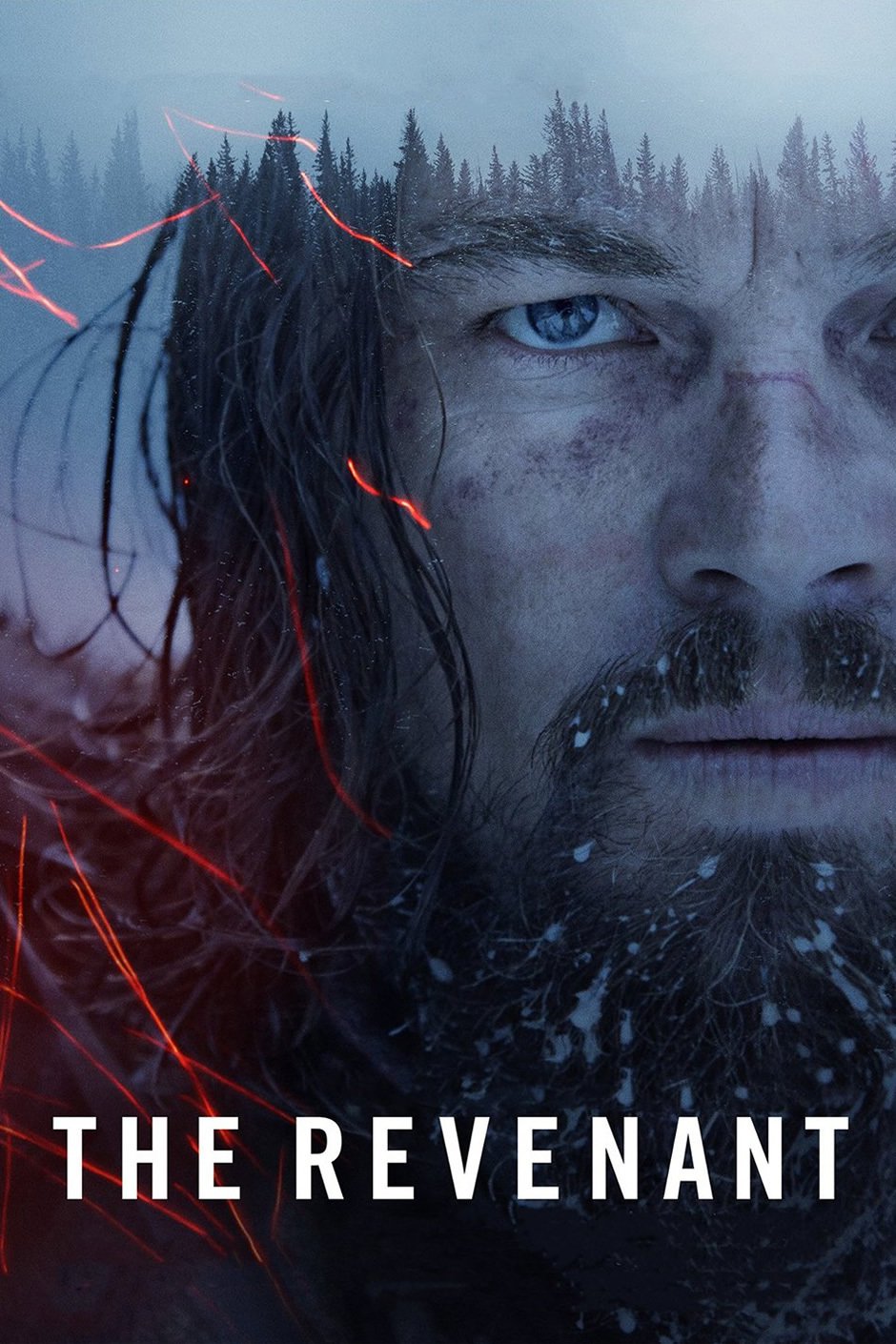
Finally saw the movie that finally got Leonardo DiCaprio his oscar. Revenant has him playing Glass, a frontiersman in the wild northwest in the early or mid 1800’s. The film starts with his fur-trapping group being attacked by Native Americans, and it only gets worse from there. On the way back to the settlement, Glass is attacked by a bear and practically left for dead by his group. He spends the rest of the film struggling to survive with Indians, the French, and the weather trying to kill him. The cinematography in this film is incredible, with some truly great long shots, but the movie itself was just OK for me. DiCaprio has had other, better roles, and honestly I thought Tom Hardy was better in this movie, but I can see why they finally awarded Leo for leading such an epic, grand-scale movie.
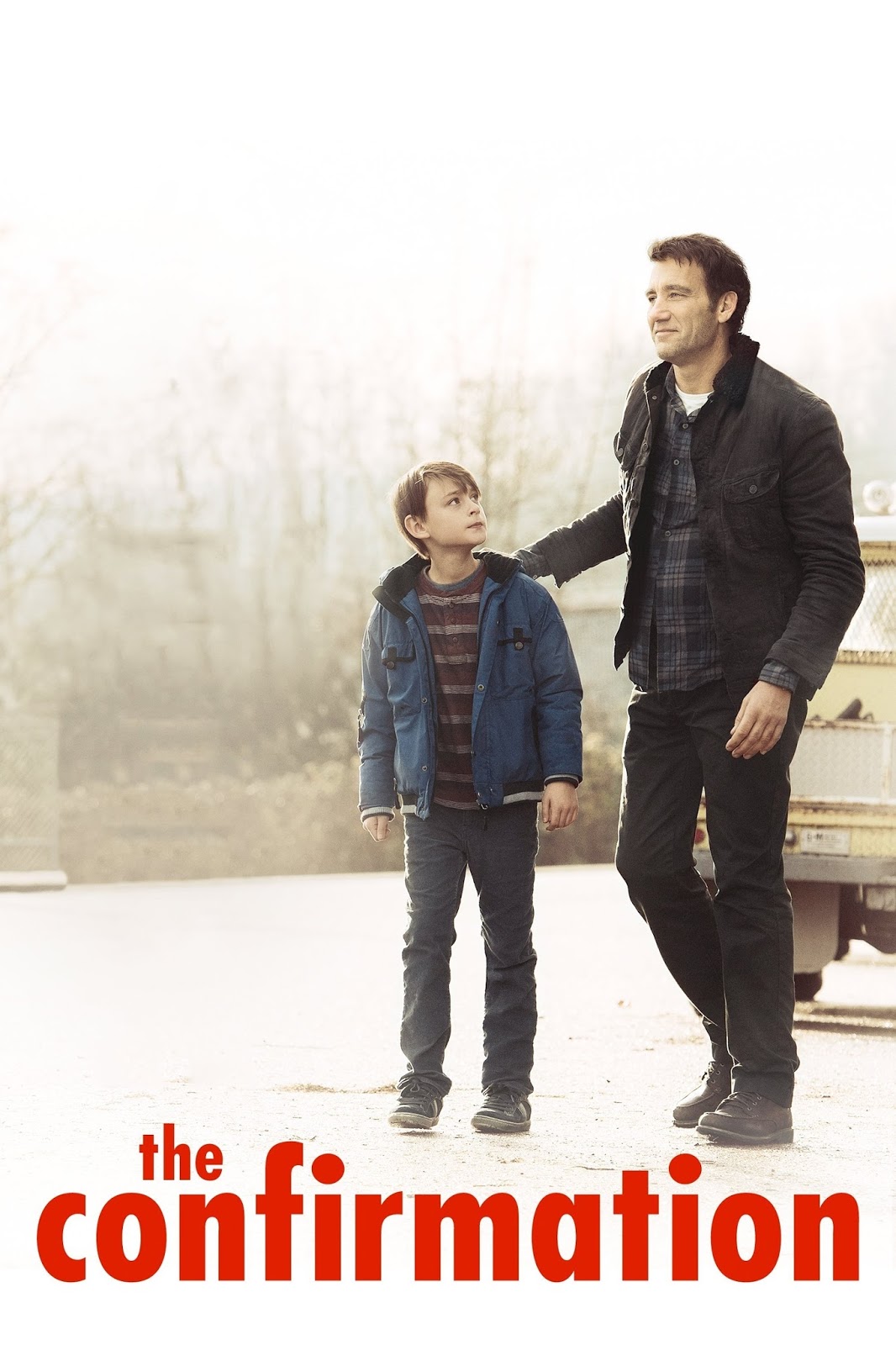
The Confirmation has the makings of a great movie, but it doesn’t quite reach the heights of which it is capable. It stars Clive Owen as a down-and-out semi-deadbeat dad who is forced to watch his son on a weekend when his ex-wife and newer husband are going on a couple’s retreat. A simple weekend turns into an adventure for the young boy when his dad’s tools are stolen and they go hunting for the man who took them. The movie is funny and at times charming, but it tries a little too hard to get you to fall for the father/son bonding moments. I usually don’t mind heavy handed scripts at times, but this one feels forced. It’s cute, but ultimately not memorable.


Joy is a rare misstep for writer/director David O Russell, who has been on a roll for awhile. Semi-biographical about inventor & television product seller Joy Mangano (played by Jennifer Lawrence), it is a little funny, a little quirky, and a little heartwarming, but ultimately fails to excel at any of these aspects. Lawrence’s skill barely holds it together, and is really the only reason to watch, and the film is more a showcase of her talent than anything else. It does however get a little old, well before the end, when the whole world, including her family, keeps pulling her down. The movie wants you to root for her, but I like to root for someone through my own feelings, and this film is instead trying to force it down your throat.

Take the wife out to see Me Before You

Not the kind of movie I would generally go see, but my wife read the book, so I was there opening weekend. Actually not a bad film. Me Before You is about a carefree man (played by the Hunger Games’ Sam Claflin) who is left paralized after an accident. He has given up on life but his parents hire a companion to try to cheer him up, played by Game of Thrones star Emilia Clarke. At first she thinks he is standoffish and maybe even snobby, but when she finds he intends to kill himself, she makes it her mission to change his mind, and of course ends up falling for him before the end. Further proof that you can enjoy movies that aren’t in your normal wheelhouse. Clarke is so serious in Thrones, this is a nice change for her, as her character is a goofy, quirky young woman who is full of life. I wouldn’t call it brilliant acting, but it is believable and the film is a good date night.

A society forever changed in Things Fall Apart

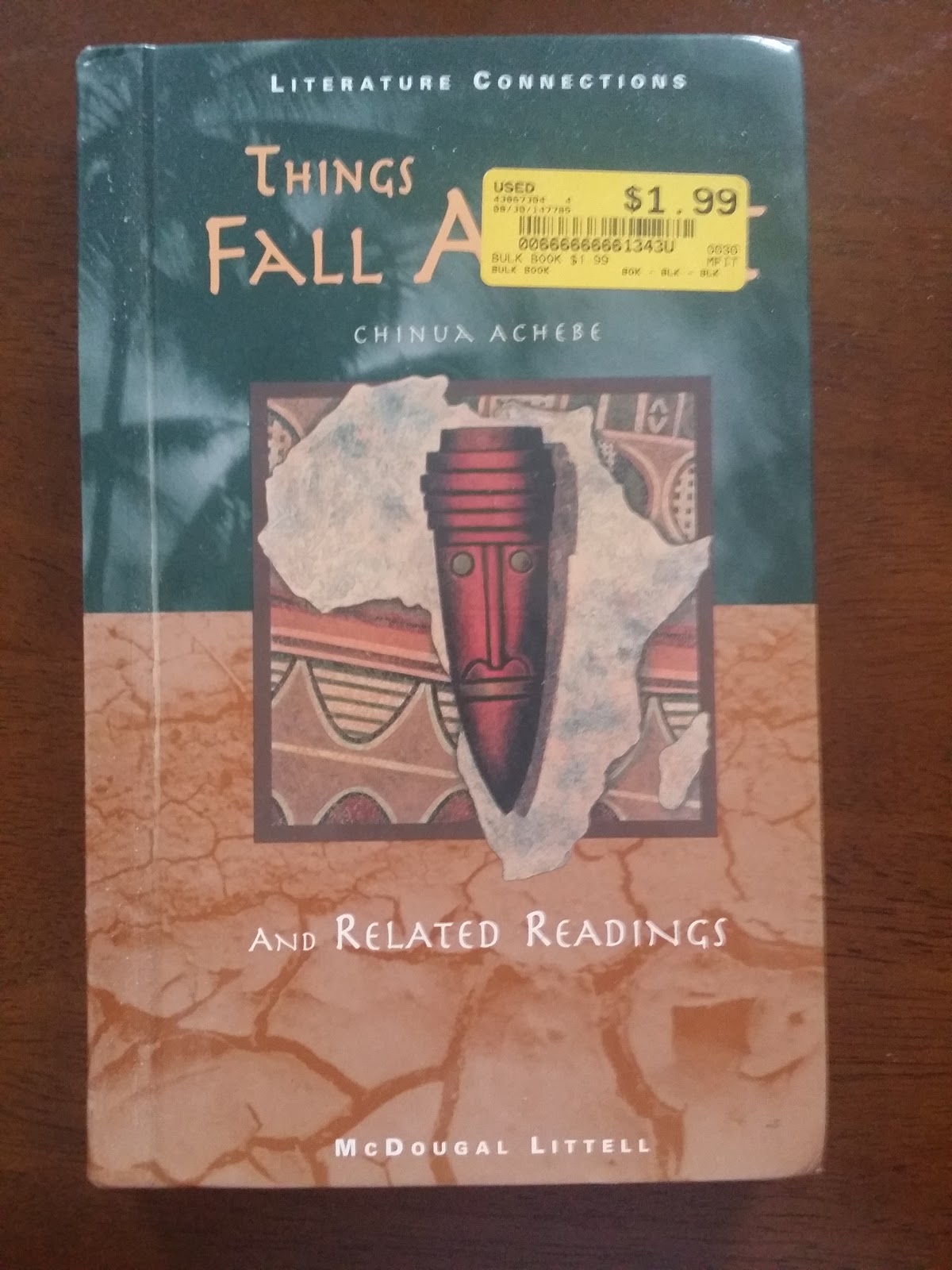
I’m not quite sure what to make of Chinua Achebe’s Things Fall Apart. According to Wikipedia it is the most widely read novel of African Literature. I appreciate that it is a wholy different book that what many western readers will pick up, but I can’t quite call it a game-changing novel.
It tells the tale of a man, Okonkwo, who lives before and just at the onset of colonial Nigeria. He is famous in his village as a very hard working man, and he is strict with his wives and children. He considers his father as a weak man, so he wants to always exude strength. A great part of the novel deals with showing the kind of man Okonkwo is, with short little tales about life in the village, most only a chapter or two long. In that way, it can almost be considered a book of short stories, as many times the tales do not connect other than the characters, until the last third of the book that is.
Once we get there, the changing point in the book is when Okonkwo accidentally kills a man during a celebration. The punishment is an automatic 7 year banishment from the village, which Okonkwo as a willful member of society accepts immediately without argument. He moves his large family to his mother’s old neighboring village and turns his crops over to a friend to care for the next 7 years. While he is in exile, something changes the landscape of all the villages and the people’s lives. White men come.
The first village they come to do not accept the newcomers, and the whole village is slaughtered by the white men’s superior weaponry. When the Europeans come to the other villages, they are begrudgingly admitted, and there the settlers start building churches to their one God, as well as setting up government and laws over the villagers. Many people start converting, but Okonkwo stands by his faith in the gods of his ancestors, and upon returning home after his 7 years away, he beheads a white man during a protest. They come after him, and find him at his house hanging, as he has killed himself. This is against all of his people’s teachings, but he accepted that their life is dead, and so he must be too.
It is a powerful book, and I did really enjoy reading a new perspective on life that I am not exposed to. Perhaps it is because the novel is written in English, obviously not Achebe’s first language, but I felt a certain disconnect. Could also just be that it is so foreign for me. It is eye-opening, and I truly felt for Okonkwo and his people as they lost the parts that made them unique. Reading what I’m writing now, maybe it is more profound than I originally gave it credit for. I’m going to put this one back on the shelf to re-read one day, and see if my thoughts have changed by then.

Quick takes on 5 films

400 Days has a great premise, is a fairly good film for the first three quarters, but peters out in the end. In it, four people enter a buried bunker for a social and mental trial, or experiment, to simulate the effects of long term confinement during the trip to another planet. The experiment is to last 400 days, and they are given warning that they will be faced with problems along the way for which they will have to come up with solutions. Along the way, each person faces their solitude in different ways, some with loneliness, others with hallucinations. Near the end of their stay, they are visited by someone from the outside, leading to all kinds of questions about what their stay is all about. For a low budget film, it is very well done until it gets weird and falls apart in the end. I don’t mind a movie that ends with questions, but this one ends with you wondering if even the writer didn’t know how it was going to go.
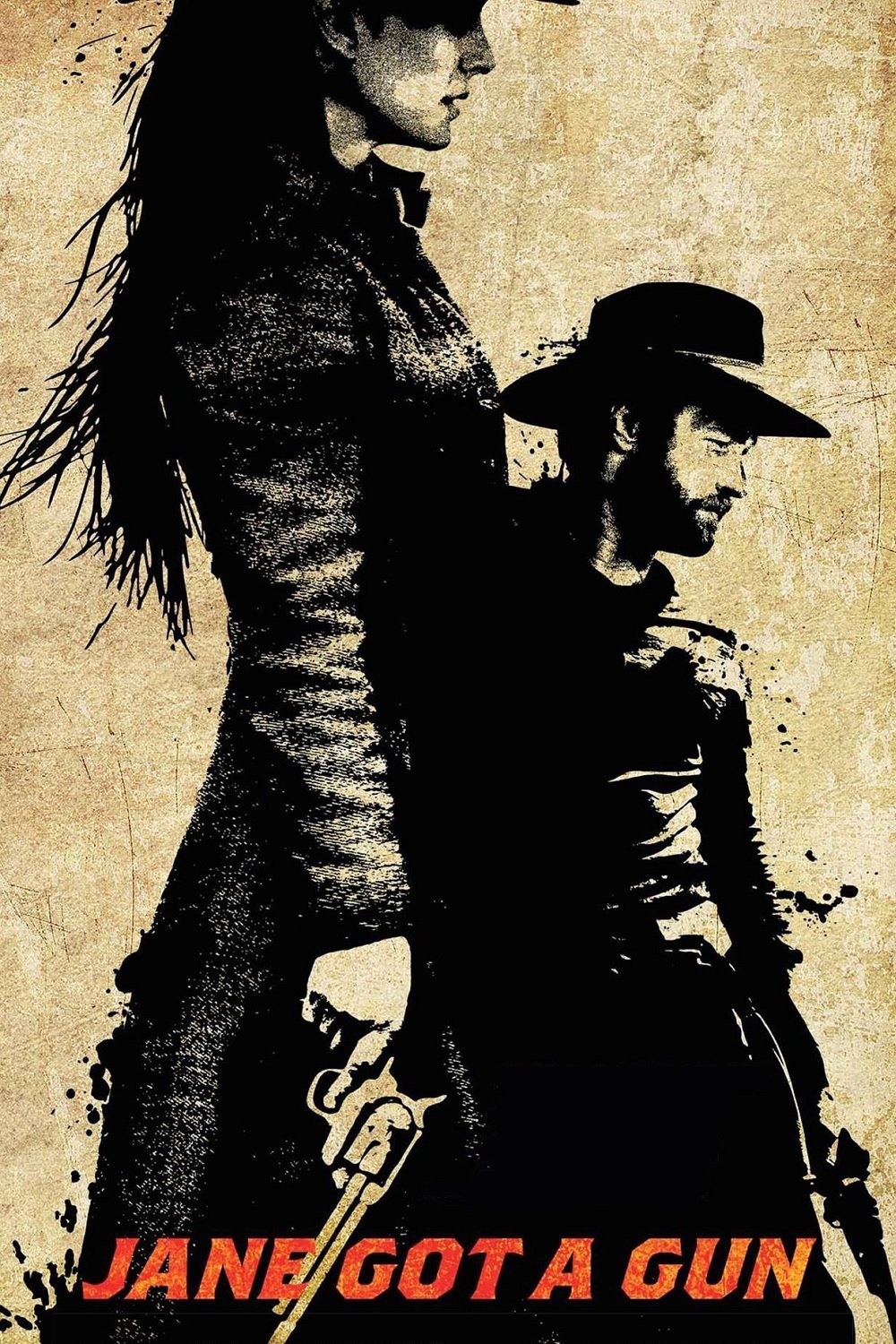
Jane Got a Gun got some fairly average reviews. I actually really enjoyed it mostly, but like the last film, the ending soured it for me a bit. Jane is played by Natalie Portman, who is hunted by a gang of criminals heading by Ewan McGregor’s character (playing a bad guy for a change). She is protected by Dan Frost, portrayed by Joel Edgerton. Edgerton is great as the steely cowboy, but I’m convinced Portman only has 2 or 3 facial expressions, and I’ve seen them all in previous movies. The title is also a bit misleading, you would think it is a woman-empowering western, but she spends most of the film relying on men for help and protection. And while there is a lot of tension and building excitement throughout the movie, the last 10 minutes is a letdown.
Lamb is a really creepy movie. It is a low budget indie film, starring Ross Partridge, who also wrote and directed. He plays David, who is putting on a front at work that all is ok, when he is actually being divorced by his wife while having an affair with a much younger coworker. He meets a young 11 or 12ish girl named Tommie, who he starts grooming, in a very predator way. He convinces her to spend a week with him at his father’s remote cabin. The viewer gets a definite creepster feel, as she adores him as a fatherly figure, and you keep waiting for him to do something truly abhorrent. He is outed when his young girlfriend shows up at the cabin to surprise him. Actually very good acting by the two leads, and it is riveting, but not in a good way.
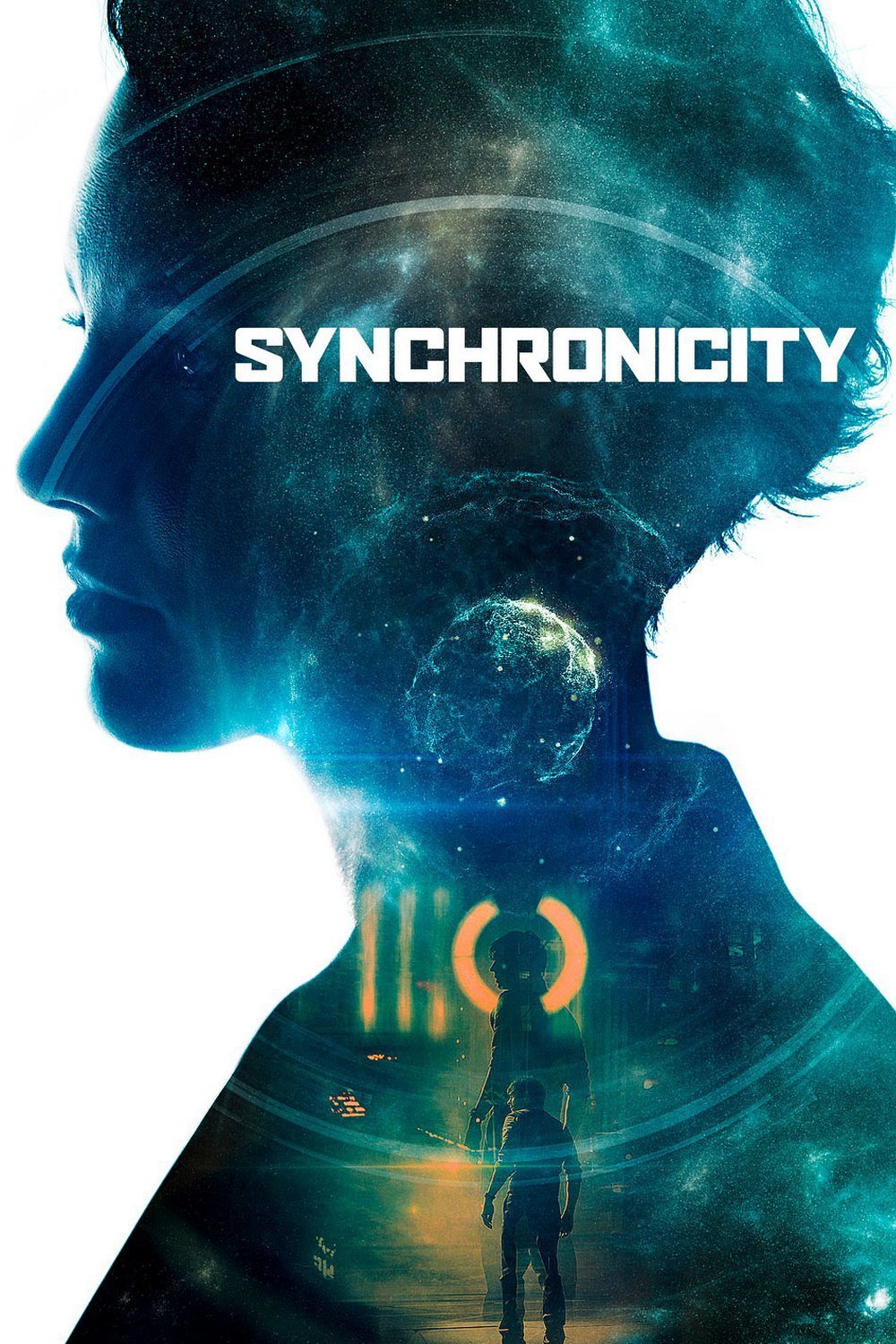
Synchonicity has a lot of potential, but is bogged down by rough, cliché dialogue. It is a low budget independent film, which I don’t mind, and it has a great premise, but some of the acting is truly cringe-worthy. Basically a small group of scientists are trying to open a wormhole as a form of time travel, with the help of a rich backer. When they succeed, things get a little murky as the main character is plagued by deception. Sci-fi nerds like myself will still probably enjoy it a bit, but it could have been a lot better.


Regression on the other hand has no real redeeming values. A better cast (Ethan Hawke, Emma Watson), but equally bad script. Hawke plays a detective in a small town, investigating the rape of a Watson’s character. She is claiming her father raped her, but he has no memory of it, so they bring in a “regressive” hypnotist to try to get the father to retreive his memories. It leads to a Satanic cult, but the ending is wholy different that what you expect. Unfortunately it is almost like they had one idea for the movie, and changed their mind before it was all over. Pretty awful.

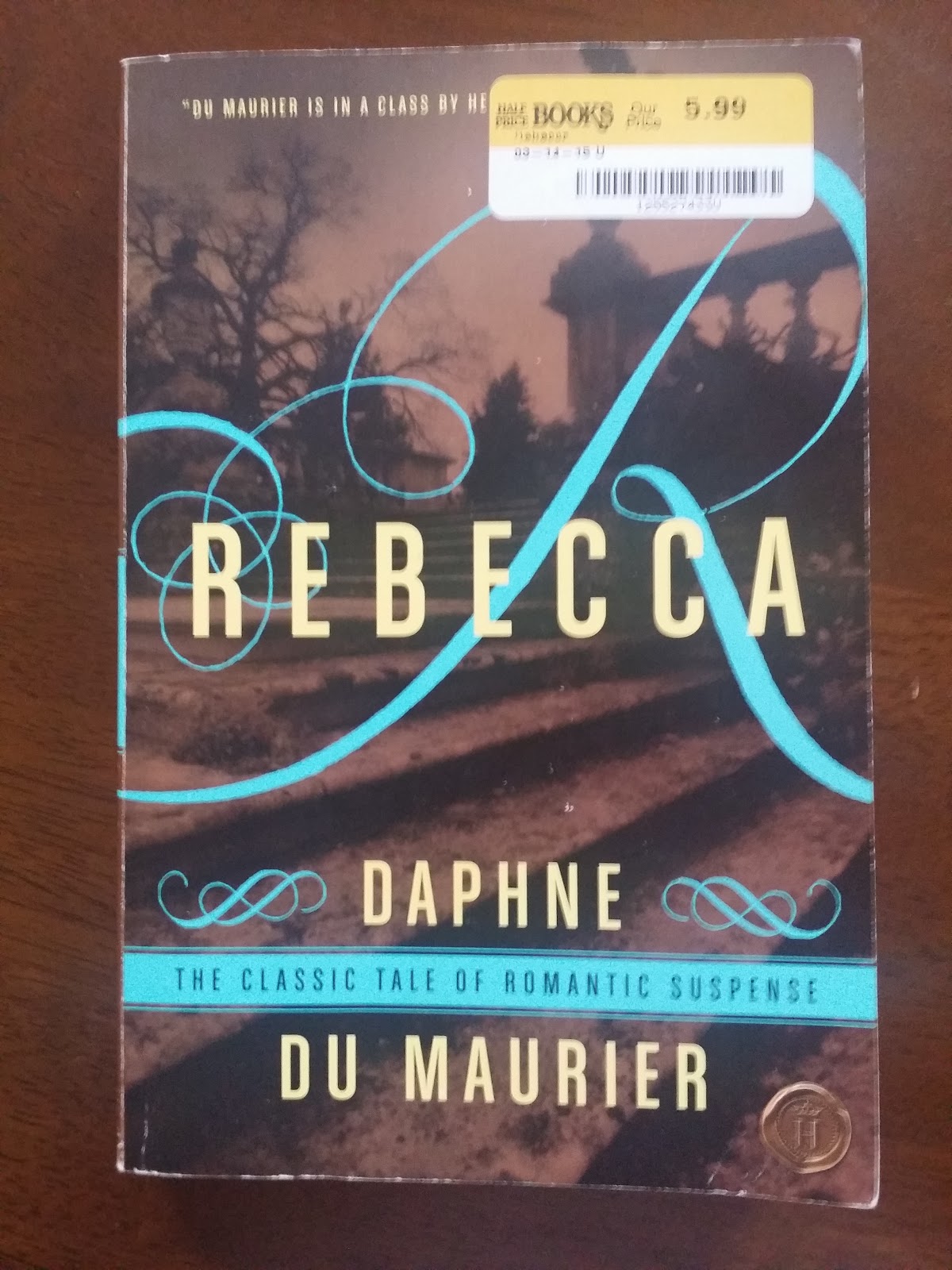
Rebecca’s secrets revealed in du Maurier’s classic thriller

Another good one! Daphne du Maurier’s Rebecca is an extremely well-written novel. Part psychological thriller, part murder mystery, du Maurier’s style captivates the reader with detailed descriptions and fully developed characters, and holds your attention to the last page. This film was later made into a film by Alfred Hitchcock (who also did du Maurier’s short story “The Birds”.)

The novel is told in the first person by a young lady, who we never hear her given name. She is from a poor background and is in the employ of a rich American socialite (or at least, wannabe socialite) when they are visiting Monte Carlo. She is very young, very shy, and very sheltered. In Monte Carlo she meets Maxim de Winter, a wealthy Englishman recently widowed by his wife Rebecca, who drowned at their estate. She quickly falls for his dashing looks and straight-forward nature, and when the American is ready to leave, Maxim asks the young girl to marry him and come with him instead.

After their honeymoon around Europe, they return to his family home, Manderley, on the coast of England. There the new Mrs de Winter realizes how popular Rebecca was. The staff still does things the way Rebecca wanted, and see the new bride as an interloper, at least to her eyes. Manderley was completed renovated by Rebecca during her time there, and there is evidence of her everywhere. Mrs de Winter realizes Maxim misses Rebecca too, especially when the two visit Rebecca’s favorite little cove where she would stay in a cottage and sail off the beach (where she was drowned). The staff, in particular the sharp-tongued Mrs Danvers, does not make life easy for Mrs de Winter. Maxim grows distant over time, adding fuel to his wife’s nervous nature.

It all comes to a head when Mrs Danvers suggests a costume ball, the kind that Rebecca used to throw. All of the county is excited, as Rebecca always threw the best parties. With Mrs Danvers help, Mrs de Winter decides to dress up as a distant relative of Maxim’s, whose portrait hangs in the hall. When she reveals herself, the family is aghast and Maxim is furious. Turns out that was Rebecca’s costume at her last ball, of which Mrs Danvers was obviously well aware. Mrs de Winter returns to her room in tears, fearful that Maxim will now leave her for good. She changes and comes down to the ball, but Maxim never speaks to her and she spends the night alone.

The next day, Mrs de Winter awakes dreading what will happen, but is interrupted with news that a boat has hit rocks in the cove and they are rescuing the crew. When a diver goes down to see what caused the grounding, they discover Rebecca’s boat, and not only that, but a body inside the cabin still. People wonder who the body could be (Maxim had identified a woman’s body as Rebecca when it was found months after her death, washed up on another shore), but Maxim takes his wife aside and admits that the body found now will be that of Rebecca’s. We find now that Rebecca is not who everyone thought she was. She was cold and uncaring, nice to people’s faces but demeaning behind their backs. She was running around on her husband, and only Maxim knew of her true nature. One night he went to her cottage to confront her, and when she said she was pregnant by another man, he shot and killed her, stuffing her body in the cabin of her boat and sinking it.

An inquest is held, where the jury decides that Rebecca’s death was suicide. Her cousin Jack refuses to believe this, and pulls the magistrate up to present evidence that Rebecca was going to leave Maxim for him, as proof that Rebecca was murdered to hide her secret lifestyle. They hunt down the doctor she saw the day she died, where everyone learns that she was not pregnant, but instead had cancer and would have died painfully within months. The police now agree with the suicide determination, while Maxim believes she only lied about the pregnancy to get him to kill her and end her pain, getting one last hand above him in the end. On the way home from London that night, Maxim and his wife see that the beloved Manderley mansion is burning.

I really enjoyed this book from cover to cover. The several big reveals (Rebecca’s costume at the ball, Maxim’s murder of her) had me gasping out loud. Du Maurier’s narrative style truly paints the picture of Mrs de Winter’s thoughts, fears, and aspirations, and also the changes in her way of thinking from young girl that knows nothing, to stong woman standing by her husband in the end. A page-turner I just didn’t want to put down!

A solid if unremarkable X-Men team fight off Apocalypse

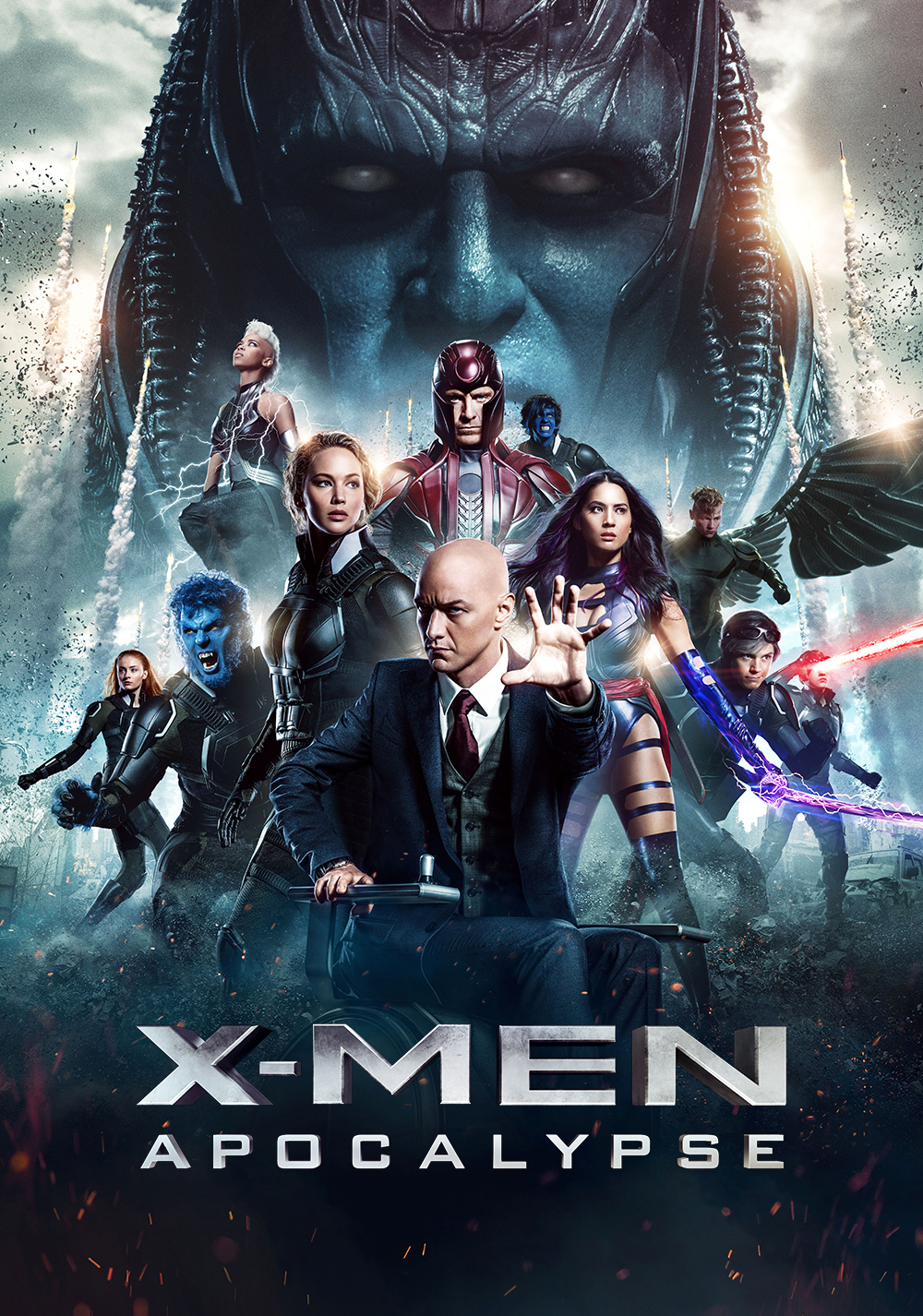
X-Men Apocalypse is the newest Fox-distributed Marvel movie. After the the last “reboot” of Days of Future Past, the X-Men team have to band together again to face off against a new world-destroying mutant.

Apocalypse is a very old, very powerful mutant. His powers are that he can enhance other mutant’s powers, and also transfer his conciousness to new bodies. If he transfers to a mutant’s body, he absorbs their powers as well. He last reigned as a god in ancient Egypt, with four followers (the four horsemen of Apocalypse, yes a bit of cheese there), but was defeated and has been in hibernation since. Brought back now, he is set to find new followers and reshape the world.

This film is full of action and has some good moments, but is also a bit hokey at times, to the point you almost have to wonder if the writers were purposefly corny or if they just want the viewer to take everything they are shoveling with a straight face. After Days of Future Past (which I thought was great), this one is a bit of a letdown, and it just doesn’t reach the heights that Disney’s Marvel movies are so consistently hitting. And the (*SLIGHT SPOILER ALERT*) obligatory Wolverine cameos, when he isn’t a character in the movie, are starting to get old. I don’t see Iron Man showing up in every Disney Marvel film…  Worth a viewing for die-hards and even casuals, but no lasting brilliance unfortunately.

A short humorous diversion in Adams’ Hitchhiker’s Guide

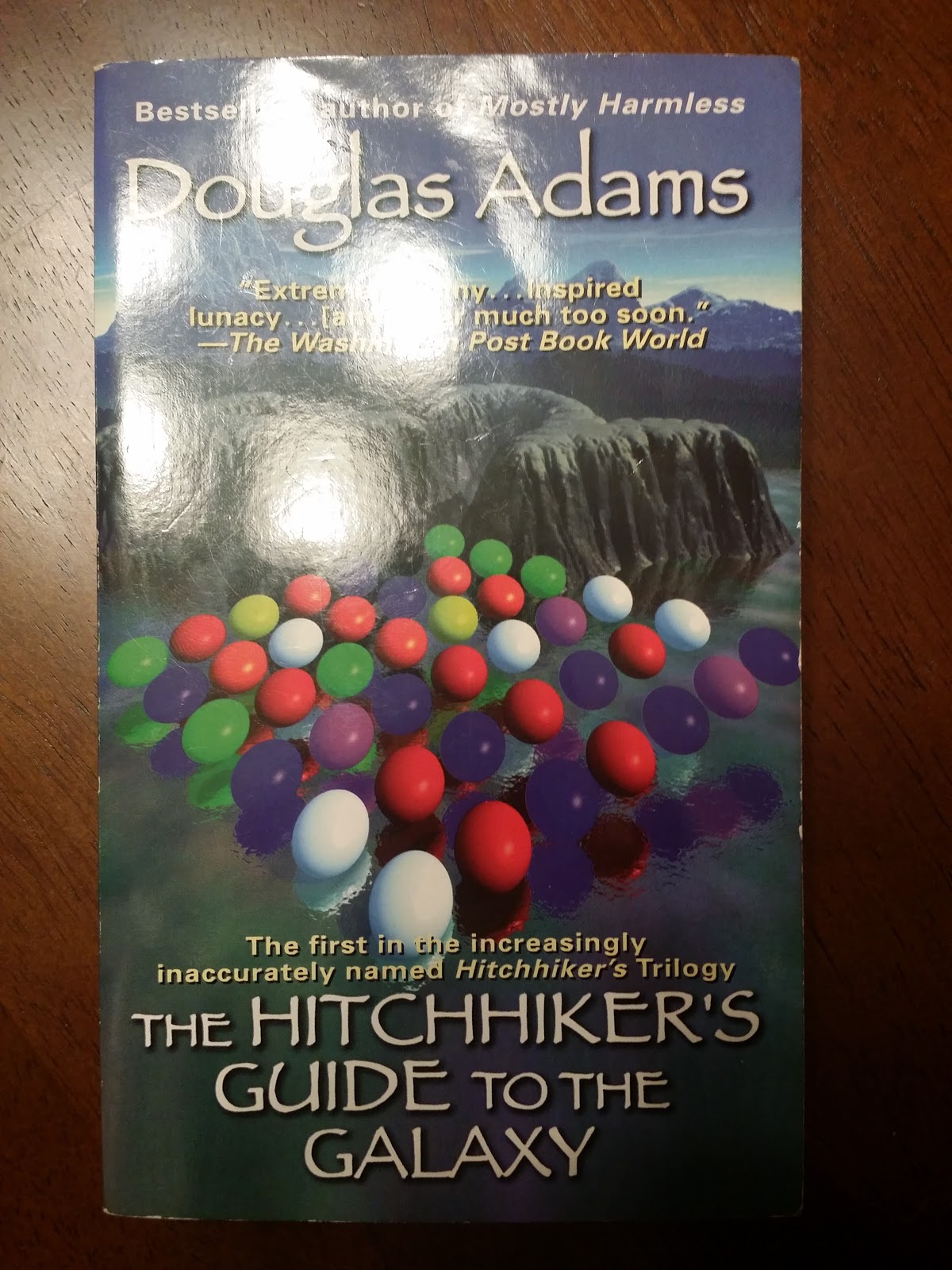
Douglas Adams’ famous work The Hitchhiker’s Guide to the Galaxy is a funny little book, and the launchpad of a very popular series of 5 or 6 novels (and a movie adaption). Not sure I would call it fine literature, but it is entertaining.
It is a short book, just a quick 200 pages in a tiny paperback, so a regular reader can get through it in a single day. It starts with an Englishman, Arthur Dent, sitting in front of a bulldozer to stop it from knocking down his house. The government wants to build a new highway through it, of which he was unaware, even when told the plans to do so were on display at the local government building for several weeks. Little does he know, at the same time aliens are getting ready to destroy the Earth to put in a new space highway, of which all humans are unaware, even though plans were on display at the local planetary office just a short 6 lights years away for several decades. Arthur is saved by a space hitchhiker, Ford Prefect (he had thought the name would be more common when he came to Earth), and they beam off the planet just before it is zapped. So starts Dent’s adventure.
The book weaves and shifts along the way, with outlandish elements but plenty of humor (if the above tidbit makes you grin, you’ll like this book). Lets just say humans were only the third most intelligent being on the Earth, and the smartest still have a say it what happens next. It ends rather abruptly, but as I said, there are sequels that pick up where this one leaves I’m sure. I’ve read a lot of “serious” novels lately, this was a nice excursion.

Naked Lunch deserves to be sent back to the kitchen

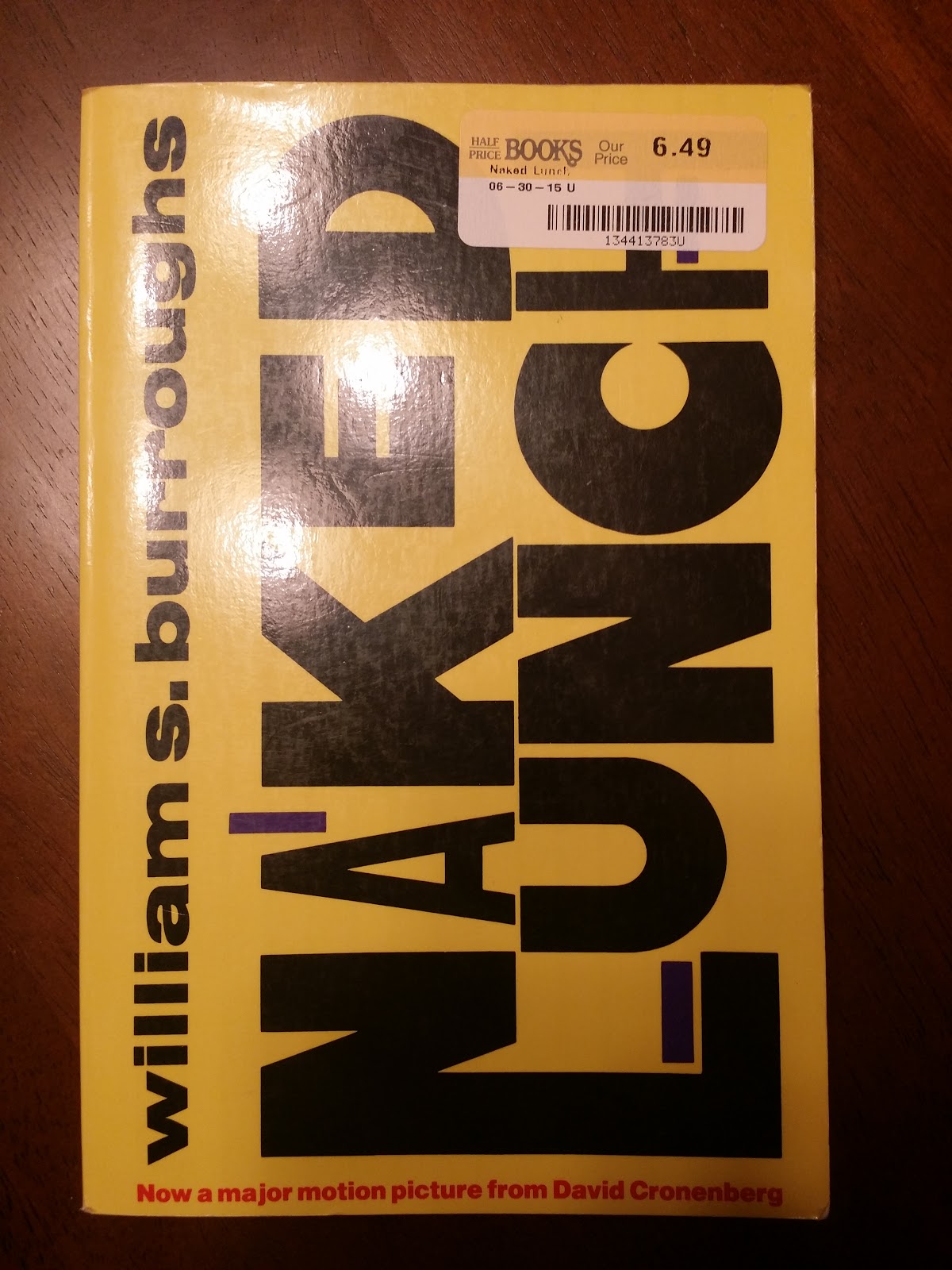
What a complete waste of time. It is bad from the get-go, I gave it 50 pages (about 1/4th of the book) to see if it was going to go anywhere, and nothing ever developed. William S Burroughs’ Naked Lunch can’t really be considered a novel, as there is no plot.
My only guess as to this book’s popularity is its subject material and when it was published (1959). It broke down barriers of obscenity and its stark portrayal of drug use, but only because the main character is a raving mad junkie. Burroughs admits he was high while writing, and the book follows no pattern. It is the extreme ramblings of a druggie. There are no coherent thoughts, no story to tell. Paragraphs are held together by the loosest of ideas, and reading it is like looking into the brain of a psychopath. There is simply nothing to follow, and nothing to be gained by reading.

If I’m a 13 year old in the 60’s, I’m probably blown away by this book, at least to open my mind to something new, and to feel like I’m hiding something from the parents. But as an adult in 2016, there’s nothing shocking about the material and I don’t feel like toughing out a book that gives me no entertainment.

A sweet, moving story in Brideshead Revisited

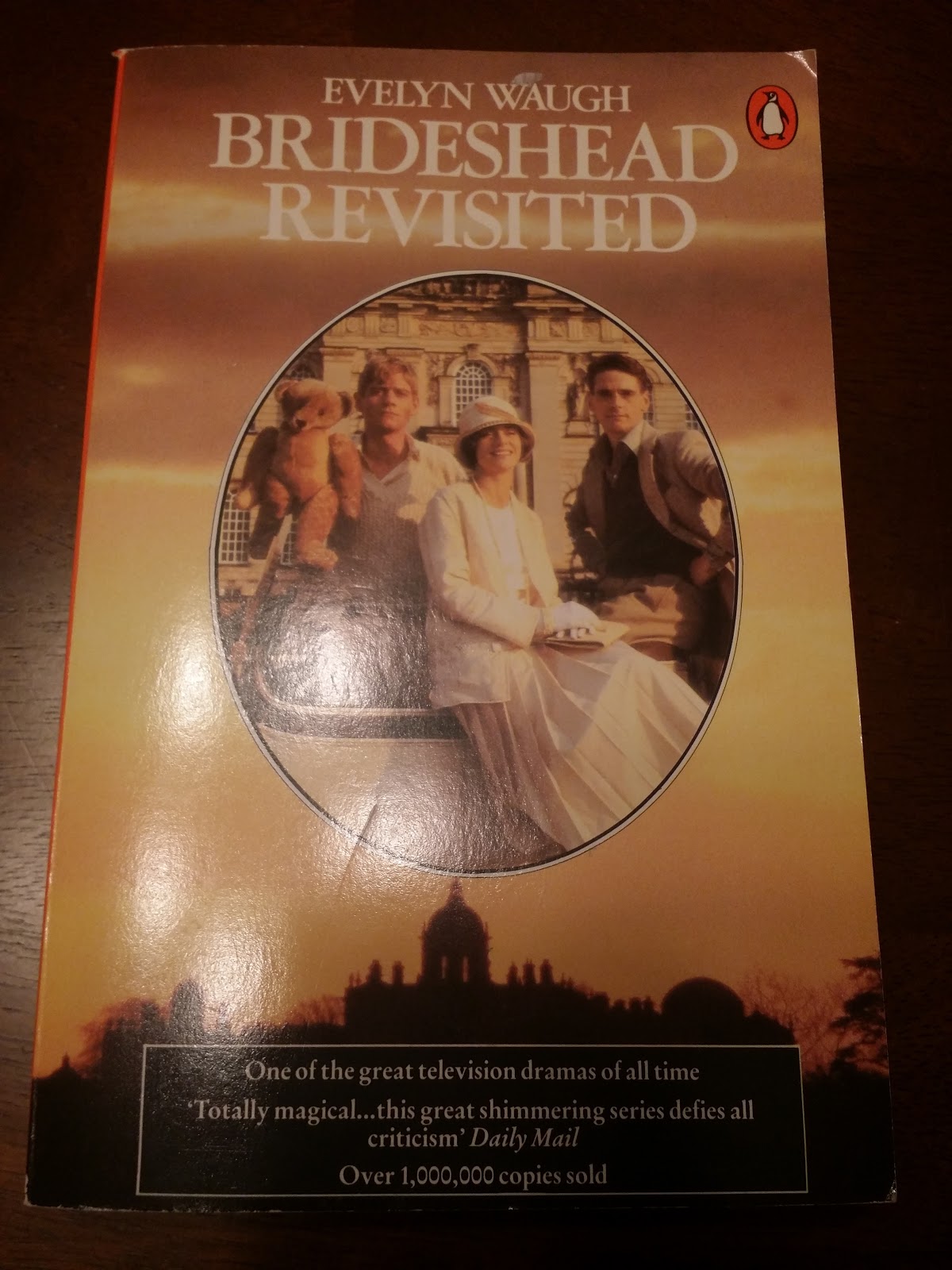
After a couple duds and a few near-good ones, I finally found a book I thoroughly enjoyed in Evelyn Waugh’s Brideshead Revisited, though it ended much different than what I expected. The story follows the life of Charles Ryder in his dealings with the Marchmain family.
Charles is a young, somewhat sheltered man new to college at Oxford when he meets Sebastian. Sebastian is the kind of guy everyone likes, he is outgoing and friendly to all, and Charles is smitten in a bro way. While visiting Sebastian’s home, Charles realizes Sebastian is at odds with his family. Sebastian’s father has left the Marchmain mansion (Brideshead Castle) and is living with his mistress in Italy. His extranged wife Lady Marchmain, a devout Catholic, remains in the home with their other children, eldest boy Brideshead and younger daughters Julia and Cordelia. Sebastian has always fought against his mom and her Catholic faith, even asking Charles if he has joined his (Sebastian’s) mother against him. Charles says he will remain in Sebastian’s corner.
At this point I thought the novel would be about their friendship, but this was not to be. Lady Marchmain definitely recruits Charles to “join her side” by lavishing him with praise and prying him with questions about Sebastian’s life at college. This needles Sebastian to the point that he begins drinking heavily. Much of the rest of the novel revolves around the family’s faith, and how each family member deals with it, having been raised one way and learning how to mesh that in with their day to day lives. Sebastian eventually quits college (is kicked out really) and flees to Africa. He settles in at a monastary where he continues to drink (again, snared by faith that he fights), and whereas he was a main character through much of the novel to this point, he is hardly seen again.
The novel skips forward a few years. Charles has married but is indifferent towards his wife and kids. He runs into Julia, who had also married in the intervening years, to a man who is far different than she had previously thought. The two enter into a relationship, and make plans to divorce their spouses, to which everyone consents. However, about this time Lady Marchmain has died, and the Lord returns home to die in his family estate. He has turned from the Catholic faith many years ago, but retuns to the faith on his deathbed. Though the divorces are now final, Julia, who sees that even her father can return to God at the end, decides she cannot enter a second marriage (against the Catholic faith). The epilogue has Charles years later, during World War II as an officer, being encamped at the Brideshead estate. Though the family is not there, as they are off doing their parts in the war, he sees the family chapel has been reopened for the soldier’s uses.

I wouldn’t be surprised to learn author Waugh was Catholic, as the struggle of life vs faith becomes a main theme in the second half of the novel. His characters feel very real and whole. He makes you feel for each of the characters, I was extremely moved by what become of Sebastian’s life, and almost heartbroken that the likeable Charles ends up alone in the end. The style of writing has an almost lyrical and sweet rhythm. It is easy to read while staying very detailed. A very enjoyable book.