 At Eternity’s Gate is a tour de force for Willem Dafoe as Vincent van Gogh. The film follows van Gogh’s middle and later life. Already an established, though poor, painter, the movie focuses on his views of the world around him, and most disturbingly, his descent into madness. He tells a few close friends early on that he feels he is losing his mind, and sure enough, we see it happen over the course of the film. Sometimes van Gogh isn’t aware of the insanity of his actions, and sometimes he is, but he is always aware of the voices in his head. Dafoe’s acting, the brilliant camera work that goes for close ups in lieu of more encompassing shots, and often moving with van Gogh so we are seeing his point of view, together create a very immersive film that the viewer feels a part of. Despite (or admittedly maybe because of according to himself) his madness, van Gogh is also a brilliant painter: he turns ordinary scenes and objects into something quite different and unique. He worries about his legacy though, and wonders if he will ever be appreciated. A wonderful character driven film showcasing Dafoe’s mastery of his craft.
 What was the last film of Tim Burton’s you really liked? For me it was Sweeney Todd, and that goes back over 10 years ago. He’s had lots of duds since then, and unfortunately the newest Disney remake, Dumbo, is one of them. It’s a story that everyone knows: a misfit elephant is born with big ears that allow him to fly, and he spends most of the movie earning for his lost mother. He keeps trying to get back to her, with help from his friends. The movie has Burton’s colorful sets but none of the charm, and even the quality actors (Colin Farrell, Michael Keaton, Evan Green, and a cameo from Alan Arkin) cannot bring life to this dull, and frankly boring, film. The few moments of joy that happen here and there don’t last long enough, and the “comedic moments” drew about 2-3 chuckles out me for the entirety of the movie. Skip this one, and go watch the original cartoon again.
 Can You Ever Forgive Me? is one of those biographical dramas that is pretty good overall, with good acting and an almost unbelievable (but true!) story, but in the end, I just thought “ok” with a shrug. Melissa McCarthy takes a turn in a serious role (but still with some humor) as Lee Israel. Lee is a failing biographical writer in the early ’90’s who finds that, with her talent for writing in the same style as her subjects, she is able to write fake letters as famous authors and pass them off to legitimate collectors as authentic. It’s one of those things that would probably never work today with the internet and quick authentication checks, but she gets away with it here, and did in real life too, for awhile. McCarthy is very good in a rare non-comedic role, as is co-star Richard E Grant, but it has the feel of a movie that, while decent, isn’t quite “fun” enough to watch more than once.
 Bumblebee is the newest film in the Transformer series, but serves as a prequel of sorts. In fact, it starts on Cybertron, as we see the Autobots abandoning the planet during their war with the Decepticons. Optimus Prime sends his trusted warrior B127 to Earth, to prepare it as their future base. Unfortunately B127 is met by a Decepticon shortly after arriving. B127 is able to emerge victorious, but is gravely wounded, losing his memory and no longer able to communicate. A couple years later, B127 is discovered in a junkyard by the teenager Charlie (played by the young great actress Hailee Steinfeld) in the guise of an old yellow volkswagon bug. Charlie learns his secret soon and names him Bumblebee. It isn’t long before two more Decepticons find that Bumblebee is on Earth, and come to capture him to find out what Optimus Prime’s plans are. Without his memories, Bumblebee doesn’t know why they want him or what is going on. The film has all the action that the Transformers movies are known for, but it has something those last few were missing, and that is heart. By the end of the film, Bumblebee is as endearing as any human actor, and we are rooting for him and Charlie to survive. Hopefully the team behind these films can use this as a launching pad to jump start this franchise.
 I love it when I go into a movie expecting one thing, and get something entirely different. I didn’t think I’d like If Beale Street Could Talk, mostly because I’d recently read another book by the author of the book from which it was based, and didn’t care for that book. I only watched this movie because a co-worker with good taste in films told me I needed to. I’ll eat crow on this one, because this movie is fantastic. It takes place in the inner city of New York in the early 70’s and centers on a young, in-love black couple. The young woman is pregnant, but her boyfriend and father of her baby is in jail, accused of raping a Puerto Rican woman. The family is doing their best to prove his innocence, but as a black male with no money, the system is stacked against him. Throughout, we get flashbacks to their upbringing and early romance. The movie paints a pretty bleak picture of the struggle of black men and women in that era (and most likely still today). It is easy to say keep your nose clean and you’ll be fine, but when the only other alternative for so many young minorities is to work a dead-end job that can’t afford to pay the bills, the only choice is to hustle on the street to support your family. Very powerful film, with amazing acting by Regina King as the pregnant girl’s mother (King would win the Oscar).
 Today I’m going back to some of the earliest films directed by the great director Ingmar Bergman. Crisis was his directorial debut in 1946 (he had written one previous film, Torment, directed by Alf Sjoberg). The opening narration tells you this is not going to be an explosive film, but is a small drama about a small town. From that intro, we meet Nelly, a beautiful young woman who wants to move to the big city. She’s been raised by a woman named Muttie, but is now about to be whisked off to a new adventure by her long-abandoned mother Jenny. However, Jenny’s young boyfriend Jack sets his eyes on Nelly. Once in the city, Jenny finds the grass was most definitely not greener. She returns to Mutti and the small town, and a man whose been waiting patiently for her love. You can tell Crisis was made by a young director. The plot is OK, but the actors are one dimensional and the direction and setting feel haphazard. There are however a few peaks at tormented characters, something obviously Bergman would go on to explore in depth later.
 A Ship Bound for India came a year later in 1947, and this one is much better. Johannes is a sailor returning home after 7 years at sea. He has come to find Sally, the love he left behind all those years before. He finds her as a defeated, sad woman, and he falls asleep that night thinking about the events that got them there. As a young man, Johannes was tormented by his father Blom, captain of a salvage ship. Blom treated his family poorly but dreamed of leaving them for the beautiful young dancer Sally. Sally however doesn’t allow herself to really get attached to anyone, for fear of being dropped herself one day. She loves Johannes but refuses to admit it to herself, because of that fear of abandonment. Blom really only cares about himself, and his fear of approaching mortality. When Johannes finally stands up to him, all of the family secrets are laid bare. Johannes tells Sally he will return for her one day when he is able, and departs for the high seas. His return seven years later is the culmination of that promise. This is a much better film, with improved camera work, more fleshed out characters, and an emotional plot. It feels more like a Bergman film.
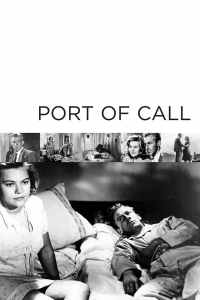 Port of Call is a rare dud from Bergman, in fact, I’d go so far as to say it probably would never be shown today if not for its famous director. It is about a former sailor who falls in love with a woman with a past, a woman who’s been in and out of reformatory, but seems to be a good girl deep down. She just comes from a bad family and keeps ending up in the wrong situation. The actors here are all wooden, and the girl playing Berit is really just a pretty face. It’s one of those movies that I’ll be hard pressed to remember a year from now. If Bergman took a step forward in A Ship Bound for India, he took a step back on Port of Call. It’s not entirely unexpected; at this time in his beginning career, he was under contract by the studio to pump out 2-3 movies a year, and not all are going to be good, or even decent films.
 This was the first of Bergman’s early films that I thought was a really, really good movie. Thirst is an engaging, well developed story about interconnected lives. It begins in a Hitchcock-like suspenseful style, with a woman, Ruth, who seems to be not exactly sane. We see a few rapid scenes, showing her interactions with others, and the viewer don’t know what is a flashback and what is current day. As the film settles into a flow, we find that Ruth is married to Bertil, but each is haunted by a past relationship. Ruth once had a fling with a married military man, but when she got pregnant, he forced her into an abortion which left her infertile. Meanwhile, Bertil remembers an older widow he was with named Viola. Viola herself suffered from a mental breakdown, and when she was approached for a female fling by a dancer (Valborg, who the viewer realizes is a friend of Ruth), Viola commits suicide. Thirst shows Bergman learning who he is as a director, and focusing on the female psyche for the first time. It came out in 1949, so he was quickly approaching the hits of the ’50’s that would make Bergman a household name in Sweden, and an art-house hit across the world.
 To Joy is about two violinists, Stig and Martha, who fall in love, get pregnant, get married, and have a bumpy life together. Stig has aspirations of becoming a renowned soloist, but doesn’t have the skill to do so. Together, the couple have a rough marriage. Stig brings his frustrations at work home with him, which leads to strife with Martha. Eventually they decide that she’d be better off living away from the city, and once she’s gone, Stig starts to stray. Unfortunately for Stig, he doesn’t realize how much he loves Martha until it is too late. A very emotional film, it shows Bergman as a young director coming into his own.
 Widows is a very entertaining heist film with a twist, putting women in the forefront instead of the traditional strong male lead. The film starts with a quartet of men making a getaway from a job, but all are killed by the cops during a standoff. The stolen money is destroyed in the process, and the people it was stolen from come after the dead thieves’ widows for repayment. These women band together and, along with notes left from their husbands’, plan their own heist to get the needed cash. The film has a lot going on, with dirty politicians to go along with the crooks, and a few good twists to keep the viewer guessing. The cast is great, chuck full of award winners, and all brought together by the talented director Steve McQueen (Hunger, 12 Years a Slave).
 I’ll set you up with the opening scene. A pilot is in a test flight to get just on the other side of the atmosphere in 1961, flying in something not much better than a plane with a rocket attached to it. It is shaking and creaking and sounds like it will fall apart at any second. Something inevitably goes wrong, and the pilot has to make quick decisions to get him back on land safely. It is one of the most gripping scenes in any movie that I can remember in quite awhile. There are a few such scenes in First Man, detailing the life of Neil Armstrong and the American space program trying to get the first person to the moon and back. Moments like the nearly ruinous Gemini 8 mission, the deadly Apollo 1 test, and the landing of Apollo 11 all make from great cinema, interspersed with the private life of Armstrong as he and his wife deal with the death of a daughter. Ryan Gosling plays an Armstrong who often is not in touch with his emotions and doesn’t know how to deal with his family; as such, he comes off as very cold and impersonal. Personally I thought the movie felt a little long, and the slower scenes, meant for dramatic affect, sometimes crawled by, but the charged and emotional action sequences more than make up for those slower moments.
 In the safety of the USA, it is easy to ignore the cost of lives of wars happening on the other side of the world. A Private War is about journalist Marie Colvin, who traveled to places where she was often not supposed to be, in order to put human faces and tell human stories of civilians and innocent casualties caught up in the wars of their nations. She traveled to Sri Lanka (where she lost an eye), to Afghanistan, to Libya, and to Syria, where ultimately she was killed. When I’ve heard of press members killed in these dangerous zones, I’ll admit I’ve previously wondered if they had a death wish, but seeing this film and hearing Colvin’s story, I see now the importance of their work. They are telling stories that governments are trying to hide and would otherwise be untold; they are risking their own lives in order to make sure the world knows the truth. This is a tremendous film, with Colvin portrayed brilliantly by Rosamund Pike as a woman who believes in what she does, yet struggles with alcoholism and PTSD from the horrors she has witnessed.
 I had the same reaction to Aquaman that I’ve had to most of the DC Universe films so far: pretty much a shrug and a “that was OK I guess.” An origin story of the Aquaman character who showed up in a couple previous DC films, and portrayed by Jason Momoa, the film is about the war that some who live underwater in the lost city of Atlantis want to wage on “surface dwellers,” and the prophesied king who will return to unite them all in peace. Momoa is all right, but I did have a problem that he seemed pretty indestructible, taking hit after hit and displaying superhuman strength. I thought the world only had one Superman? Beautifully shot with tons of computer-aided scenes (it seriously looks like the whole film was shot on green screen), there are some good moments and some funny banter, but overall the film just isn’t that great. This series continues to struggle against the juggernaut that is the Marvel Universe, though they still keep making good money, so they’ll continue making them. I keep hoping they’ll turn the corner and get better.
 I also finally got around to watching A Star is Born, the much talked about remake of the rags-to-riches story of a singer, Ally. Portrayed by Lada Gaga and co-starring Bradley Cooper as mega-star Jackson Maine (also his debut as writer/director), the movie lived up to the hype for the first 45 minutes to an hour. Jackson discovers Ally in a drag bar and instantly recognizes her talent, and also becomes smitten by her down-to-earth personality. He drags her onstage at a few of his stadium concerts and she becomes an instant hit, and that’s where the film lost me. Ally up to now seemed to know who she was and what she wanted, but here she started to let a record producer change those things to create her image, changing her hair and making her dance on stage to her music, complete with back-up dancers. I understand that’s what the industry is, but Ally’s half-ass, feeble protests amounted to nothing. Along with her meteoric rise, Jackson sees a precipitous fall, due to his continued alcoholism, drug use, and tinnitus with worsening hearing loss. There are good, tender moments, but I found the overall film fairly average. I’m not even sure why Gaga received so much acclaim. The soundtrack is good, but any scene she shared with Cooper was lost to him, even when she was supposed to be the focus. Cooper’s just too good and takes over the camera. Worth a single viewing, but I doubt I’d want to watch it again.
 The Favourite received a bunch of acclaim this past awards season, especially for its lead actresses, Olivia Colman, Emma Stone, and Rachel Weisz. Directed by the fantastic young director Yorgos Lanthimos, it follows Queen Anne’s short rule in the early 18th Century. Anne is portrayed as a bit of a simple woman who relies on her life-long friend, Sarah Churchill, to run the household and give good advice on running the government. A distance cousin of Sarah’s, Abigail, arrives to the palace to serve as a maid, but Abigail has her sights set on rising up the hierarchical ladder. Abigail needles her way into Anne’s good graces, and when Sarah pushes back, Abigail finds ways to undermine her. In this film, I think the acting supersedes the movie. I thought the film’s story was just OK (not as great as Lanthimos’ last 2, The Lobster and The Killing of a Sacred Deer), but the acting by all three leading ladies is truly special and worth watching.
 Spider-Man: Into the Spider-Verse was a surprise hit last year, which swept in to take away the best animated film Oscar from the Disney and Pixar heavyweights. Featuring a unique comic-book-like animation style inspired by its source material, it is visually stunning but also has a great story. Peter Parker dies early in the film, trying to stop Kingpin from opening a rift between worlds, and the young Miles Morales must learn how to control his new Spider-Man powers if he is going to take up the mantle. Kingpin’s experiment did open the rift wide enough to let in a bunch of Spider-Men versions, all of whom band together to stop Kingpin with Miles. This is a film for all to enjoy, with lots of humor (even a few fourth wall breaks in Deadpool style) and a much more lighthearted approach to our superhero, more in line with his comic book origins than what we typically see him as in the movies. Don’t avoid it just because it is a cartoon, it really is a fantastic film.
 The Sisters Brothers is a much deeper, more emotional film than what you might expect on the surface. The named brothers are Charlie (Joaquin Phoenix) and Eli (John C Reilly), a couple gunslingers on the hire by a powerful man known as the commodore. The commodore sends them out to hunt down a man named Warm (Riz Ahmed), whose location has been found by a scout named Morris (Jake Gyllenhaal). The younger Charlie is a violent man, drinking, whoring, and killing without remorse, but his older brother Eli, while equally deadly with a gun, is more introspective and dreams of a better life. When they catch up with Warm and Morris, it is revealed that Warm has developed a method to aid in gold prospecting, which the commodore wants. Warm doesn’t want to use his method to get rich, but wants to build a utopian society. As the climactic conclusion approaches, we learn why Charlie is the way he is. A fantastic film, I think it bombed at the theaters due to poor marketing. The ads made it seem like a zany western, and while it has a lot of humor and takes place in the wild west, that’s not what this movie is all about. While it didn’t get much attention here in the states, it received a lot of awards overseas, including at the Venice Film Festival and in France, where it won 4 Cesar awards (their version of the Oscar) among 9 nominations.
 Cold War is a gut-punching foreign film about a couple living just after World War II. A man and his partner start a school promoting local folk music in Poland in 1949, and the male teacher, Wictor, falls in love with one of his students, Zula. The school is under increasing pressure from the Communist-leaning government to sing songs promoting Stalin and other Russian ideals. Wictor decides to make a run for it, and while performing in Berlin, he and Zula plan to defect. Zula however gets cold feet and doesn’t meet Wictor, so he leaves alone. A few years later in 1954, they meet again in Paris, where Wictor has been working, while Zula is still with the troupe, now traveling around Europe. He sees her perform a few times around Europe, but is caught by Polish government officials, who give him a warning to steer clear or he’ll find himself brought home to face charges. More time passes, and Zula comes to visit Wictor in 1957. She has married an Italian man in order to leave Poland, but has left him to be with Wiktor. However, they find life together to not be as cracked up as they had always imagined it to be. By 1959, she has returned to Poland, and he is arrested when trying to go to her there. She vows to get him out before his 15 year sentence, and sure enough, she marries a higher-up in the government to make this happen by 1964. An emotional roller coaster of a film, it was nominated for best foreign film at the most recent Oscars. Shot in 4:3 and black and white, it has the feel of a classic foreign film, with fantastic acting by its two leads.
 All About Nina is one of those “really real” independent films that tries so hard to be real, that it comes off as contrived. Nina is a female comic struggling against sexism in her professional life, which bleeds then into her personal relationships. She acts like her fellow male comics, telling sex jokes and whatnot. When a guy does it, he is just “being a dude,” but when she does it, the crowd thinks she is easy and try to hook up with her after her sets. In reality, she’s coming off a bad relationship and doesn’t know what she wants in life. When she really falls for a guy, she doesn’t know how to handle it. I had a hard time connecting with the character even though the part is played very well by Mary Elizabeth Winstead. And like a lot of comic hacks, the movie goes for shock value over real substance. However, it does do a good job of showing the uphill battle women comics face in the business, including the limited opportunities for women, and the lack of support for each other due to the limited chances.
 Lola is one of those films where all of the characters’ lives intertwine, usually without their knowledge. Roland is a young, aimless man, who can’t hold a job and doesn’t know what he wants. One day he stumbles upon a childhood friend, Cecile, who has grown up to become a cabaret dancer and goes by the name Lola. She is Roland’s first and true love, but she doesn’t return his affections now as an adult. Instead, she misses her first love, Michele, who abandoned her as a pregnant young woman 7 years ago. Lola is pursued by Frankie, and American sailor, who is the focus of infatuation of a young girl named Cecile (the same name is obviously not a coincidence), whose mom is attracted to Roland, etc, etc. Obviously the film is about love, and particularly, how strong our “first love” can be. The film is much less esoteric than Godard’s stuff, and is a great date film if you want to try to dip your toes in the French New Wave without getting all wet.
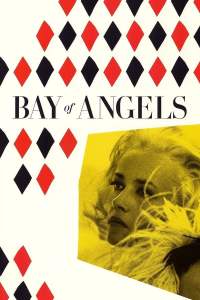 I didn’t like Bay of Angels much at all, in fact the only thing that really sticks with me is its visual style. The movie is about a young man, Jean, who is introduced to gambling by his friend. Jean earns half a year’s salary on his first day at the casino, and goes on a vacation. You think he is going to cut with his winnings and be happy, but he finds himself at a casino again in the Riviera, where he meets a slightly older woman who is definitely addicted to gambling. Together the duo spend the rest of the film winning a lot, and losing it all, a couple times. Very little plot that I could tell, and I wasn’t impressed with the acting of the lead guy; I couldn’t make up my mind if we were supposed to like him or not. The one thing that was done well was the visuals. You could tell Demy was going for the starkness of black or white, right or wrong, etc. Everything is black or white, from the walls of the hotel to the dresses worn by the woman to the furniture in the buildings. Other than the visual appeal, the film was a dud.
 Demy redeemed himself with his next film, The Umbrellas of Cherbourg, his first major hit, and the one that launched Catherine Deneuve’s career. A musical, it is completely sung-through. It was his first color film, and he made good use. The bright, bold colors are beautiful, as is the jazzy music. Guy is a local mechanic, and he is in love with Genevieve, who works at her mother’s umbrella shop. The mother does not approve, because Genevieve is just 16, but she isn’t too worried because Guy is only 20 and hasn’t served his compulsory time in the French army yet. When Guy is called up, he and Genevieve “say their proper goodbyes” and leaves, and of course, shortly afterwards, she finds she is pregnant. She decides to not to continue to wait for Guy’s return, and instead marries a man who has had his eye on her, none other than Roland, who has finally moved on from his first love, Lola. This film is often cited as an inspiration for the recent hit La La Land, and it is easy to see why. Though the stories are different, there is still that bittersweet, longing feeling, and ultimately both are about a young couple who fall in love but are separated by real life. Other similarities such as the bright and beautiful colors (remember the deep blue sky, Emma Stone’s yellow dress, etc) are shared across both films. And even the opening tune of Umbrellas is musically very thematically similar to the main song of La La Land, City of Stars.
 The Young Girls of Rochefort followed, and from the opening scene when a group gets out and stretches from what looks like a long car trip, and the stretching suddenly becomes a dance number accompanying the opening music, we know this will feel more like a traditional American musical than the previous film. Twins Delphine and Solange (real-life sisters Catherine Deneuve and Francoise Dorleac) are each seeking love, and the film plays out in as a series of missed opportunities and near-misses. Delphine wants to marry an artist, and it just so happens a young artist has painted a picture of her as his vision of the ideal woman. Solange wants to marry someone talented in music like she is, and it so happens a composer is in the area (a surprising French role by the talented American legend Gene Kelly). The twins’ mother runs a local restaurant, and she reminisces about her first true love, whom she fled years ago, and he happens to be a musician friend of Solange. These are just a few of the cosmic-level coincidences that the viewer watches play out in this colorful and beautifully shot movie. A lighthearted film, it was dismissed as fluff when it was first released, but I think it is much better than that.
 Donkey Skin is Demy’s adaptation of the famous (or infamous?) French fairy tale of the same name. A king’s wife dies, but on her deathbed, she makes him promise that he will not marry anyone less beautiful than she was. The king decides that the only person suitable in his kingdom is his own daughter. This incestuous plot is probably why the story is less well known here in the west. To flee her father, the princess has his prized donkey killed and skinned, and wears the skin as a cloak. This causes people to think she is ugly and smelly, and she moves to a new kingdom to live as a scullery maid. The prince of this new kingdom sees through her disguise though, and seeks to marry her. The movie isn’t perfect, for instance, the princess’s father disappears from most of the film once she flees, despite his supposed insistence on marriage, but it is a very enjoyable movie. Was also Demy’s most successful commercially.
 In the last month of so, I’ve seen every movie Lucas Hedges did in 2018 (though it was just a minor part as the older brother in mid90s). This one takes the cake. Boy Erased is another movie about a teen sent to gay conversion therapy, the second such film I’ve seen recently too. In the other, Chloe Grace Moretz thought there was nothing wrong with her but she played along (at first). In Boy Erased, Hedge’s character, Jared Eamons, is the son of a pastor and thinks there is something wrong with him, and he can be “fixed.” He prays, he does his therapy, and he wishes he could not be attracted to other boys. The counselors at the camp blame family members, blame lack of faith, blame anything they can to say that it is a sin, and a choice, and that he can free himself from these thoughts. Really great film, with Hedges and also a strong performance by Nicole Kidman as his mom, who goes along with her husband’s wishes while hating seeing what it does to their son. Written and directed by Joel Edgerton, who is a good enough actor, but has a supreme talent for writing, and I’ve enjoyed most that I’ve seen (especially The Rover and The Gift).
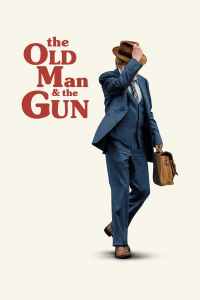 The Old Man and the Gun is loosely based on the true story of Forrest Tucker, an old robber who couldn’t seem to stop robbing banks, no matter how many times he was captured (and subsequently escaped). Played by Robert Redford, he and his cohorts, two fellow old-timers (Danny Glover and Tom Waits), have been hitting banks throughout the midwest and south. Tucker doesn’t do it for the money, but simply for the thrill of it. He is being chased by the cops and in particular a smart young detective named John Hunt (Casey Affleck). Tucker seems to want to settle down, especially when he meets a woman he likes (portrayed by Sissy Spacek), but he can’t help himself. The film is fun and funny, and since Redford has since announced his retirement from acting at age 82, it may be his last. If that’s true, it is a fitting swan song: someone who, despite his age, kept on doing what he loves.
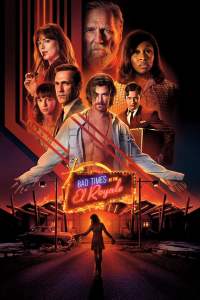 Bad Times at the El Royale is one of the most wild, fun films I’ve seen in awhile. It takes place at said hotel, a hotel with a checkered past. Four strangers check in to the desolate place in the late 60’s, each with a secret unknown to the viewer. We learn these secrets in the first half, in Clue-like fashion, and it all explodes in the second half. The film sets itself up with sinister, suspenseful intrigue from the opening moments, and doesn’t take its foot off the gas throughout the movie. It features an all-star cast with Jeff Bridges, Jon Hamm, Dakota Johnson (may be the first time I’ve enjoyed her acting, making me re-think my thoughts of her as an actress), and Chris Hemsworth, in a rare turn as a diabolical bad guy. A fantastic neo-noir thriller, and come prepared to be surprised.
 The newest Harry Potter franchise film, The Crimes of Grindelwald, has a little bit of the Peter Jackson Hobbit trilogy in it, meaning, it is beautifully shot, has glimpses of greatness, but unfortunately never really materializes. Picking up where the first Fantastic Beasts film left off, the devious Grindelwald didn’t stay locked up for long, escaping in the opening scene. His goal is to recruit Credence, who also survived the first film, to some terrible, as-yet unknown deed. The Ministry of Magic wants the powerful Credence dead, but Albus Dumbledore does not. Since he himself is under the careful watch of the Ministry, he gets Newt Scamander to do what he can to help. The film plays out as a race between the various factions, as we slowly learn everyone’s intents and what skin they have in the game. Unfortunately now two movies in, the main characters have failed to develop to fleshed out, living, breathing heroes and villains. What made the initial run of Harry Potter films so great is the realism of its characters, and too many in this new series are one-dimensional. These films can still be fun initial viewings, but they ultimately become forgettable afterwards.
 Triple Frontier is a decent thriller for lovers of the military-action genre. It is about a group of friends, former special forces, who come together to kill and rob a drug lord in Colombia. One of them has been working in the private sector down there for a few years, struggling to make a difference, and when he finally sees an opportunity to take down the head honcho, and in doing so make some money in the process, he calls up his old war buddies for the help. Fairly straight forward, paint-by-numbers film, and shoddy narrative at time, but an all-star cast elevates this one above generic “B” movie status. Oscar Isaac runs the group, along with Ben Affleck, Charlie Hunnam (Sons of Anarchy), Garrett Hedlund, and Pedro Pascal (Oberyn from GoT). Good action scenes, and the dramatic effects are just enough to keep the forward momentum going.
 Not the first of the French New Wave (Truffault and Resnais, among others, beat him to the punch), but without a doubt it was Breathless that brought the movement to the world’s consciousness. Paradoxically an uptempo film with long shots, showcasing the gritty feeling of a Paris culture infused with American cinema style, and a jazzy soundtrack that sometimes seems at odds with what is happening onscreen (but which you later realize is inherently intertwined), Breathless is a masterpiece. It is about a ne’er-do-well who, in the first few minutes of the film, steals a car, abandons a girl, and kills a cop. However, he does have one thing keeping him from getting away with it all, and that is the love of an American girl. He doesn’t even want to admit to himself that he loves her, but it is apparent when he has chances to head out of town but keeps coming back to her. The real focal point of the movie though, as a New Waver will tell you, is the movie itself, and the story is almost secondary. Jean-Luc Godard put his stamp on the world with this, his first, film.
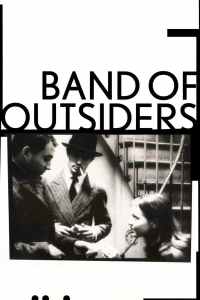 Band of Outsiders is what happens when a classic American heist film hits the French New Wave. It follows a trio of young people, Franz, Arthur, and Odile (the charming Anna Karina), as they rob Odile’s wealthy aunt. Franz and Arthur are your typical Godard men with a rebel streak, and they think Odile is a dumb girl, but really she is just young and naive. The movie is funny and engaging from its opening moments, and is often considered one of Godard’s most optimistic films, though it definitely had a dark undercurrent running through it too. There’s also a famous dance scene in the movie that you’ll recognize as having influenced several movies and shows you’ve seen. Certainly the most accessible of any of these Godard films I’m watching today.
 I have really liked most of the Godard films I have seen, but unfortunately was not able to find that joy in 2 or 3 Things I Know About Her. The Her in this case is Paris, and Godard presents the film almost as a pseudo-documentary about the middle- and lower-middle class women who have to work as prostitutes to provide food for their families. There is a loose story as we follow a single woman with other smaller tales interspersed throughout, and there are moments I enjoyed, in particular, the voice-over narrator (voiced by Godard himself), who chats with the audience, often along with his actors who break the fourth wall, either as the character or sometimes as the actor themselves. But without a traditional story to follow, I felt like I was just watching Godard’s pessimistic views on the contemporary world and the ill effects of capitalism on society. A bit of a bummer for me, who has liked most of the other French New Wave films Godard produced.
 I liked Weekend, from 1967, a whole lot more than I anticipated. I had heard it was very political, and it is that, but hell if it isn’t a marvelously made film too. Godard’s attack on the west and capitalism is ramped up here. It is about a married couple who leave Paris to visit the wife’s mother and dying father, not to see him before his death, but to make sure they get their share of the inheritance. If that not-so-subtle hint of lost humanity for the sake of the almighty dollar isn’t enough for you, Godard rams it down your throat for the next 90 minutes. As the couple make their way through the French countryside, they are confronted time and again with the breakdown of society, until they end up with cannibals and anarchists at the end. The film is famous for its long, scrolling camera shots, the most famous being an 8 minute continuous take of a traffic jam on a country road. The camera continues to move steadily past a row of stopped cars, as we see the drivers and passersby engaging in traditional western activities, oblivious and/or uncaring to the death and hurt of the people in the accident at the front of the jam. Almost all of the movie is filmed from a distance, both to show the destruction going on around our couple, but also I think to dehumanize them. This could be any two middle class people, they could even be ourselves, if we become too wrapped up in our own world to notice what is going on around us. Really great film.
 After a decade away from making traditional films, in which Godard made movies with more political themes, he returned in 1980 with Every Man for Himself. At first I didn’t know what to think about this one. Godard’s character’s frequently have a rebel, devil may care attitude, but everyone in this movie seems to be a narcissistic asshat and/or terrible person. There is a father who sexualizes his daughter, the daughter and mother (ex wife) who only care for money and presents, and a prostitute who, when her very young sister asks for money, tells her she can earn it herself on the street instead. I think that’s actually the point of the film though. The characters are all emotionally detached from any kind of humanity, most notably in a scene where the prostitute is serving a couple men and all involved are just following directions by “the boss.” Like many of his films, music is closely intertwined throughout, to the point that some scenes are slowed down in order to let the music play out. Not one of my favorite Godard films, but not bad. And it does star the incredible Isabelle Huppert.
 I enjoyed Wreck It Ralph, but liked the sequel, Ralph Breaks the Internet, even more. Taking place years after the first, Ralph enjoys the routine of his life, but little Vanellope wants more adventure in her life. When her racing arcade machine becomes broken, the duo ride the newly installed wifi router to the internet, and a whole new universe opens up. Ostensibly there to replace the broken part in Vanellope’s machine, she instead finds a new racing game with greater action, and meets new friends in the process. Ralph of course wants her to return to the arcade with him. It’s a great movie for all ages, dealing with codependent relationships and the meaning of true friendship, but has plenty of laughs for young and older alike (like visual throwbacks for my generation, such as the broken “Geocities” sign in the internet graveyard).
 Shoplifters was a smash hit in its native Japan last year, and won the highest prize at the Cannes Film Festival too. It is about an extended family riding the line between poverty and all-out homelessness. Most of the family income comes from the grandmother’s pension, but everyone has a job, including a factory worker, a launderer, and a hostess club worker. The man of the house is teaching his youngest son, Shota, how to stealthily steal from local stores to also support the family. One night they come across a young girl who has obviously been abused by her parents, and bring her home with them. The film shows their daily ins and outs for quite awhile, and we get to know each family member intimately. When the grandmother dies though, we find that everyone has been keeping secrets. Though I thought the biggest revelations were telegraphed a bit too much, that didn’t take away from the fact that it is a tremendous and emotional film, about what makes up the true definition of family.
 Monsters and Men received some accolades for shining a light on racial tensions that still prevail in the USA, and specifically, the sometimes murky truths when a black man is shot by white cops and the obvious anger by the black community when this happens. In the film, the man is killed, and all is captured by a cell phone camera, purportedly showing the man was not being belligerent and there were in fact 6 cops surrounding him when he was shot. It has good points and some strong scenes. However, some parts are hard for me personally to swallow, such as when a black adult woman says all the man was doing was resisting arrest, and she asks if that makes him deserving of getting shot. I can sympathize with a community who is always targeted, I get the anger and apprehension to police officers in that scenario, and I know I can never truly understand what a man of color goes through in his life, but if I ever find myself getting arrested, I know the last thing I would do is resist, whether I know I’m guilty or not. When a couple white cops are ambushed and killed, you think the pressure is going to ratchet up, but instead the film shifts focus to a young teenager in the area and his views on what is going on around him. This young man potentially has a bright future, but he is willing to throw it away for the groundswelling movement. It’s a decent, raw, unflinching movie, and I’m sure it will resonate more with a black person than this white boy, but I still think you can avoid a lot of problems in life by staying away from situations liable to put you in trouble. Fun fact: the main character, the black cop who tries to balance the color of his skin with his fellow officers and their collective views towards his race, is played by John David Washington, son of none other than Denzel.
 Ben is Back is a decent independent movie, but it should be a lot more based on its cast, headed by Julia Roberts. It is about a young man who comes home from Christmas, but rather than welcomed with open arms, he faces hostility because he is a long-time drug addict. Ben seems to be telling the truth, that his sponsor said it was OK to leave the sober living facility for the day, but his step-dad and younger sister in particular don’t trust him at all, whereas his mother Holly thinks only the best about him. As he does more and more secretive things, the viewer starts to wonder if he is still sober or not. The film develops into an almost thriller/drama. The plot is a bit contrived and the dialogue is honestly rough at times, almost like it is based off a bad young adult novel, but overall not a terrible film. Good acting by Lucas Hedges as Ben (his father Peter Hedges wrote and directed, and he also wrote About a Boy and What’s Eating Gilbert Grape).
 To round it up, of course I had to see Captain Marvel on opening weekend. Anyone who’s read my blog knows I’m a diehard for the Marvel films, and have generally liked them all. This one is an origin story, taking place in the mid-90s (the first to go back in time in the Marvel series since way back in 2011 with the first Captain America film). It tells how Captain Marvel came into her powers, portrayed magnificently by badass Brie Larson. I’m sure Marvel hoped for the best but feared the worst when she was cast; Larson has done a number of big blockbusters but has shined more in her small independent films (remember, she won an Oscar for Room back in 2016). As it turned out, there was nothing to fear. She commands the screen in this film. It follows her as she kicks ass and finds out about herself, and in doing so, sets up the start of the Avengers. A great backstory which seems to perfectly set up the final Avengers film (Avengers: Endgame is due in just about a month). For a series that started over 10 years ago and now stands at 21 movies and 11 television shows (with more on the way), it has grown to be quite the juggernaut, and somehow they just keep pumping out great stuff.
 Jons Movie Takes