 Just about everyone knows the films of Robert Downey Jr, most recently his big Marvel blockbusters, but I’d venture to guess not many know the films of his dad. Robert Downey Sr made some quirky, low budget films in his his career as a writer and director. Coming up in the 60’s, he made a name for himself in the independent, underground, counter-culture movement. His first feature film was Babo 73, which follows the president of the “United Status” (played by Andy Warhol film regular Taylor Mead), a man more keen on being left alone than actually running the government. He is advised by his “right hand man,” a fascist warmonger, and his “left hand man,” a pacifist communist, as their country bumbles through foreign relations with other countries and is later invaded by one of them. Goofy and downright “out there,” I still found it thoroughly entertaining. Not a minute goes by without a sight gag or word play that made me chuckle. It’s probably the silliest thing I’ve seen in a long time that I really enjoyed. Definitely not for everyone, and probably not even for me on a different day, but today it caught me at just the right time for a few stupid laughs at some hard hitting satire.
 A couple years later, Downey made his first hit, Chafed Elbows. This one follows Walter Dinsmore and his hilariously crazy adventures, starting with him leaving his lover before her husband comes home, and we immediately learn the husband is Walter’s father, because the woman is his mother. This incestuous relationship is perfectly normal in the upside-down world of Walter Dinsmore, as is pretending to be a cop and directing traffic in Times Square; dying and going to heaven, only to meet a not-so-virgin Mary and God, who appears to be a 12 year old Fidel Castro, who sends Walter back to earth; and other such zany escapades. Walter attracts the weirdest citizens, like a dirty sock sniffer and an “art collector” who makes Walter become a living piece of art for his collection, to go along with “dog on the floor” and “wife in the kitchen.” Totally irreverent, but man is it a hoot. I read online that the film was made for just $12000. It is mostly a series of 35mm camera still shots (developed at Walgreens!) and set to a narration. After 2 films now, I can see Downey’s nutty but entertaining style.
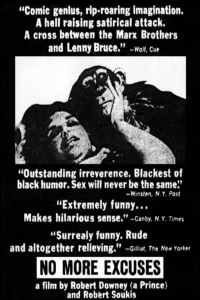 Downey continues his documentary-like approach in No More Excuses, which follows a handful of storylines. There is a Civil War union soldier who wakes up in modern New York, an infomercial where the speaker talks about the need to clothe our animals because of their indecency, the assassination of President Garfield, and regularly spaced throughout, interviews with people who go to singles bars and the growth of the sexual revolution. I still had chuckles, but the lack of a cohesive central figure to follow made it overall a tougher film for me to get into. Just not as good as the first two films.
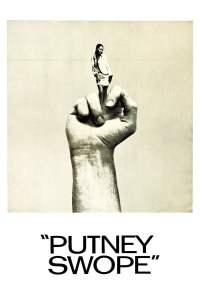 Downey’s most famous film is Putney Swope from 1969. Putney is the token black man on the board of an advertising agency. When the chairman dies and the board holds an impromptu vote for his replacement, everyone votes for Putney thinking no one else would vote for him. Swope fires all the old white guys and keeps a single token white man employed (who gets paid less than the black workers!), and the people Putney surrounds himself with all have their own agendas. At first, Putney tries to go straight with the company, refusing to work with companies who sell tobacco or alcohol, but greed turns him into a despot before the end. This satirical film holds nothing back, and no one is safe. Downey pokes fun at social norms, the government, hollywood films, religion, and, of course, race relations. It’s probably Downey’s most cohesive film and is certainly more polished than his previous efforts (thanks to a bigger budget), but it loses none of its bite.
 Two Tons of Turquoise to Taos Tonight (originally titled Moment to Moment), from 1975, isn’t so much a film as a series of sketches, what seems like 100 of them since most are just a minute or two long. Even the sketches don’t have stories to tell, it’s just a series of events and dialogue to elicit a laugh. It’s like watching SNL, with even smaller sketches, but even SNL usually has a point to their sketches. I don’t see a point in most of this film, and you would think that would kill its entertainment value, but like Downey’s other films, it is still very funny. It even has a couple familiar faces pop up, like Seymour Cassel of Cassavetes fame. This film was funded by some of Downey’s more famous admirers, including Hal Ashby, Norman Lear, and Jack Nicholson, and has a soundtrack put together by a younger David Sanborn. On another note, all female characters in the film are played by Downey’s wife Elsie (who did the same thing in Chafed Elbows).
 Arctic is an incredible survival film starring Mads Mikkelsen. An almost-unnamed man is barely surviving in the harsh arctic landscape, the seemingly only survivor of a plane which initially carried who knows how many. We don’t know how long he’s been there, but it is implied that is has been quite awhile. Finally he hears a radio signal of someone close, and spots a helicopter. When they see him, they attempt to land, only to crash themselves. The pilot dies but a woman survives, although she is comatose and only just hanging on. Our main guy hangs out for a couple days, in hopes a search crew will come looking for the helicopter, but no one does. Thankfully that helicopter was carrying some fresh supplies, including a detailed topographical map of the area, and our survivor plans a trek to a base a couple days away. He heads out across the harsh environment, carrying the helpless woman, whose condition is worsening, behind him on a sled. Along the way he faces hungry polar bears and a deteriorating winter. A harrowing film that proves you can have a gripping and tense movie with almost no dialogue to aid you.
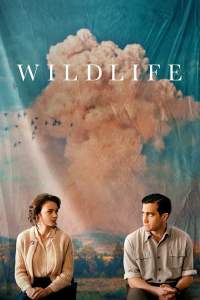 Wildlife is indie film regular Paul Dano’s directorial debut. It stars Jake Gyllenhaal, Carey Mulligan, and Ed Oxenbould as a family living in Montana in the 60’s. Seemingly the all-American family, there are problems under the surface. Jerry can’t hold a job, and Jeanette resents him for it. When Jerry abruptly announces he’s going to go off to fight the wildfires plaguing the area, Jeanette has a bit of a mid-life crisis, starting an affair with a local businessman. Jerry and Jeanette’s son, Joe, is witness to all of the craziness. Dano shows elements of his indie film acting career behind the lens, and there are bright moments, particularly with Mulligan’s and Oxenbould’s acting, but I’m not sure this is a great movie. There are several instances where it seems Dano is just trying too hard, such as several long, slow panning shots, which happen with enough frequency that it becomes a bit much by the end. Still, a solid first film.
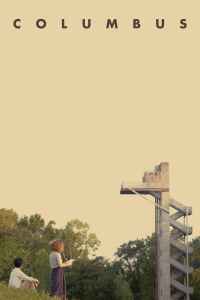 Columbus follows a young woman, Casey (Haley Lu Richardson), a recent high school grad working at the local library. She’s a bit of an architect buff and may have gone to college to study it, but instead has chosen to stay in the little town of Columbus, IN, to watch after her mom, a recovering meth addict. She was planning on seeing a well-known architect who was giving a talk at the local university, but he ends up in coma, and Casey meets his estranged son Jin (John Cho) who has come to be nearby. The two strike up a relationship, and explore their complex feelings about their parents. A fairly simple-sounding film, and it is for the most part. It has a really beautiful, quiet, slow-paced way about it, just like the small town setting it sits in. Even the camera work has this long view, “take it all in” kind of approach, with many scenes set up so we see our characters walk in and out of view, and not a lot of closeups. Sometimes whole conversations take place without any camera movement, placing emphasis on the scene in its entirety and not just the dialogue going on in front of us. Fantastic stuff for movie lovers, proving that richly detailed movies don’t have to be complex.
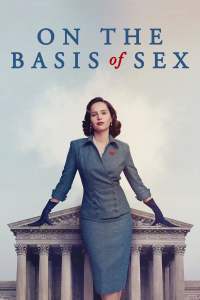 On the Basis of Sex is a biography of the early career of Ruth Bader Ginsburg, with Felicity Jones in the lead role. It follows her struggles as a young law student, one of only a handful of women in the Harvard Law program in the 1950’s, and afterwards having a hard time finding a job as a lawyer in a profession dominated by men. The film then shifts to her life in the ’70s, where she is still fighting the system. It opens up when her husband Martin (Armie Hammer), a tax lawyer, brings to her attention a case where a man has been denied a tax deduction for a caregiver for his ailing mother because he is a man, because at the time, the credit could only be claimed by women. To this point, Ruth has been unable to undo laws that upheld sex discrimination, but now she sees a chance to fight one where a man is being discriminated against, and in doing so, prove that sex discrimination is unconstitutional, thus forever changing the landscape for women in the country. The criticisms of this film are mostly that it is too formulaic, and it is that, burdensomely so at times, but if a film’s purpose is to entertain, this one does that. It is emotionally moving in all the right spots.
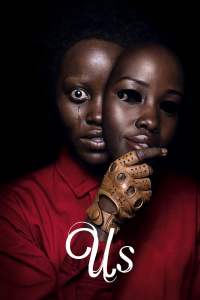 Us is the most recent thriller from Jordan Peele following Get Out from a couple years ago. In a similar fashion, he takes an outlandish, almost silly premise and makes it terrifyingly great. It begins in 1986, with a young girl going through a house of mirrors and seeing herself, a true copy of herself and not just a reflection. Years later as an adult, she and her husband bring their family to the same beach on vacation, and that night the town is attacked by twisted doppelgangers of all of its citizens. Not short on suspense and downright scary at times, it is a refreshing and delightful thriller, with a tremendous ending that doesn’t disappoint.
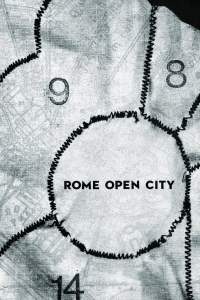 I usually do 5 films in a set, but this time it will be 6, just because I have 2 sets of 3 films joined together by common threads, all directed by the great Italian director Roberto Rossellini. First up is a trio of films taking place during World War II. The first is Rome, Open City (Italian: Roma città aperta), which came out in 1945 and takes place in Rome during Nazi occupation in 1944. It follows the underground resistance movement, and does an amazing job of portraying the group of men and their wives and children as all walk the precipice of a knife’s edge, in constant danger of being found and incarcerated. The leaders of the movement are constantly changing their names, getting new forged papers, and moving from house to house to stay one step ahead of the gestapo. When one leader is finally found, due to a spurned girlfriend giving him up to the Germans, he is tortured violently, but refuses to give information. A tremendously tense and realistic film, from a director known for the realism in his films.
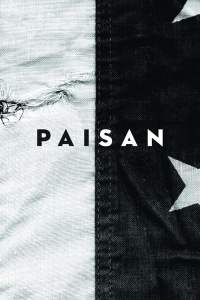 Rossellini followed with Paisan (Italian: Paisà) in 1946, which took a neorealistic “behind the curtain” view of relations between American soldiers and Italian countryman at the end of the war. It is made up of 6 small vignettes, each written by a different writer (including famous names such as Pagliero and Fellini), with many of the actors being non-professionals, as was Rossellini’s style. The episodes include an army troop liberating a village right behind the retreating Germans; a black soldier discovering how poor the young, homeless Italians are living; a drunken soldier returning to Rome to hunt a girl he met previously but not recognizing who she’s become in his absence; a girl sneaking in to occupied Florence to find a lost love, but finding he’d been killed earlier in the day; three American chaplains finding peace in an Italian monastery; and a small American group working with Italian freedom fighters against the larger German force. The first few stories were better than the latter ones, but overall still a tremendous film that I really liked. We know Italy was on Germany’s side, but the film shows that many Italians were not in same mind with their leaders, and they often had a love/hate relationship with their American “saviors.” The film feels very real and doesn’t take sides; at various times, both Americans and Italians are painted as heroes and villains.
 The weakest of the three was the last, Germany, Year Zero (Italian: Germania anno zero). It follows a German family living under the rules and rations of the allied occupation just after the war, in bombed out Berlin. Just 13 years old, Edmund is the man of the house. His father is sick and unable to work, and his older brother has refused to register for rations or work, because he is afraid of prosecution by the Americans since he fought for Germany right up to the end of the war. Edmund goes out every day to lie and cheat to scrape together money for food and necessities. Along the way he bumps up against prostitutes not much older than himself, hoodlums and ne’er-do-wells, and pedophiles, but despite everything he tries, nothing helps his family’s situation. This film is a whole lot of nothing. I think I get what Rossellini was trying to say, but it’s just not very good. Way too melodramatic for a neorealist director.
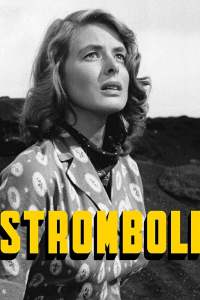 The next trio of films star acclaimed actress Ingrid Bergman. After being moved by some of Rossellini’s pictures, she wrote him a letter asking to be in his films, and so started a relationship that was a huge scandal in the USA (she gave birth to Rossellini’s son before divorcing her previous husband in 1950). (*Quick note: I watched the English language versions of these films. Stromboli and Europe ’51 were released in both English and Italian. Stromboli in particular was shot completely front to back twice, so that producer Howard Hughes could own a negative for release in the USA, and Rossellini could own a negative for release in Italy.) The first film is Stromboli, which came out in 1950. It is about a Lithuanian refugee stuck in an internment camp after the war, and her only way out is to marry an Italian and go with him to his home on the small volcanic island of Stromboli. She finds the island harsh and its inhabitants harsher. She doesn’t know the language and knows less about their customs and beliefs, and she seems unable or unwilling to acclimate. I never found attachment to Bergman’s character. As an actress, she seems out-of-sorts in this kind of film. Coming from a traditional Hollywood background where directors tell her where to stand and how to deliver lines, the neorealist Rossellini would use his scripts as only a guide, allowing his (often) non-professional actors to improvise and go-with-the-flow. You can tell by watching, this is not Bergman’s forte. Still, the camera loves her, as it always did. A fairly average film for my tastes.
 Europe ’51 is much more of a traditional film than Stromboli, and it makes for a better experience. Irene Gerard is a wealthy, bourgeois American living in Rome. Though they have every physical need met, her son seems depressed and eventually kills himself. Seeking answers to what would lead him to this, Irene is influenced by her communist friend Andrea to start volunteering to help poor families in the area. This leads to Irene working, to the consternation of her husband and wealthy friends. Full of lines like, “I’m only happy when I’m working to support my fellow man” and “It’s not fair that I have everything I could need and people out there have nothing” and “We must free the exploited worker and bring an awakening,” it starts to feel like pure propaganda. However, Irene, who has all ready rebuffed her capitalist friends, rejects communism now too, and only finds personal joy in helping people for its sake alone, in an almost religious manner (the final scene in fact casts her as a saint). A good film, even if at times I felt I was watching Rossellini’s pompous ideas being spoonfed to me.
 In Journey to Italy, Alex and his wife Katherine travel to Naples to sell a villa they’ve inherited from Katherine’s recently dead uncle Homer. Realizing early in the film that they no longer love each other but have stayed together all these years for convenience, they grow increasingly more spiteful to each other as the film progresses. Katherine is strong and independent, preferring to go by herself to see museums and the countryside. Alex seems to like to have someone depend on him, and begins an affair with a young woman who walks with a cane. As the film goes along though, the estranged couple start to miss each other, but whether their marriage can be saved is left up to the big reveal in the end. A very enjoyable film, and well acted by Ingrid Bergman and George Sanders in the leads.
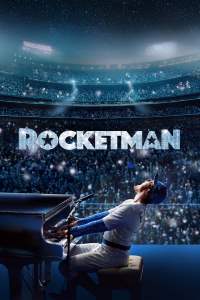 Rocketman is the recent, highly rated biopic about the life of Elton John. It follows his rise to stardom but doesn’t shy away from his shortcomings, even if it does try to place the blame for all of them on his terrible parents. Taron Egerton is fantastic as the man himself, and will probably get an Oscar nomination for the work. He portrays Elton as a boisterous public figure with a shy and unconfident private life. The film plays out as a biography/musical, with many of his big hits making appearances, even if in just short piano form here and there. Elton John’s fans will certainly find plenty to love, but even the casual moviegoer will root for John to find success in his personal life to match that of his professional career by the end. Brilliantly acted and directed, with colorful music and scenes, it’s a great flick.
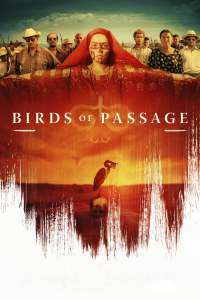 Birds of Passage is one of those deep, emotionally involved films that I’d probably really dig on another day, but for whatever reason, I couldn’t appreciate it much on this first viewing. It follows a Wayuu (Native American ethnic group) village in northern Colombia from the 60’s until the early 80’s, as they become involved in the drug trade. Rapayet initially just gets into it as a way to make money quickly to pay the dowry for a woman he wants to marry, but when Rapayet’s friends and family fall in love with the inflow of cash, greed becomes more powerful than family ties. The filmmakers used professional actors in the leads, but filled out the families with real Wayuu people and the film has a life-like, documentary kind of feel to it. This is a film I’ll probably visit again in the future, when I’m in the mood for deeper contemplation and true art as film.
 Dragged Across Concrete, from writer/director S Craig Zahler (whose other credits include films I love including Bone Tomahawk and Brawl in Cell Block 99), is a quietly intense crime thriller. Two cops (Mel Gibson and Vince Vaughn) play loosely with the rules and are suspended for roughing up a suspect. To pay the bills, they hatch a plan to rob the crooks, so to speak. Following a tip, they trail a team who are obviously planning something, but no one knows what. When that something becomes a bank robbery, and one that goes south with dead bodies, the disgraced cops end up in a shoot out with the robbers, with the winners taking home the stolen gold. Like Bone Tomahawk, this is a slow burn and some of the “action” almost seems like an afterthought to the story of the film. It takes great actors to pull off a movie like that, and Gibson, Vaughn, and the others here are up to the task. I really enjoyed this one.
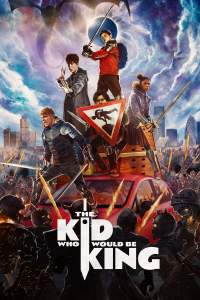 The Kid Who Would Be King is a modern re-telling of the classic sword in the stone tale. Alexander is a chubby, picked-on, 11 year old when he finds Excalibur buried in stone on a construction sight. He pulls it and, aided by a quirky teenager Merlin the wizard, makes knights of his classmates, to face a coming evil intent on taking over the world. The film is very well done and has humor and action a-plenty, however the story has been done a time too many and felt stale. It is geared towards kids, but I’m not even sure a younger generation would appreciate this one. Not a bad film, and I enjoyed putting the story in modern times, but overall just a little too ho-hum for me, even if the final, glorious battle is certainly exhilarating.
 Finishing out this set with the Disney re-imagining of Aladdin. I went it to this one expecting what I got from the live version of Beauty and the Beast, which was I thought a good movie, but not quite as good as the cartoon that was one of my childhood favorites. I was pleasantly surprised by the new Aladdin. While it doesn’t have the spectacular Robin Williams, is still a thoroughly enjoyable film. The story is much the same, though it does have a modern twist with Jasmine not seeking a man to be her sultan, but instead wishes to go against the rules and lead as a female sultan. The sets and costumes are as colorful as their cartoon origins, the songs are equally as fun, and Will Smith as the genie brings his own style of humor which is good enough. The role of Naomi Scott in particular as Jasmine is perfect. A fun family film which, while not replacing the original, acts as a worthy companion piece.
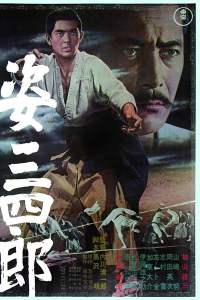 Up today is a set of films from one of Japan’s greatest directors, Akira Kurosawa. In fact, it is his first five films as director. First was Sanshiro Sugata, released in 1943. After opening with some title cards explaining that 1800 feet of film have been lost to time, the movie commences. It follows Sanshiro, a young man who has come to the city to learn jujitsu. After finding a good judo teacher, he advances quickly, eventually finding himself in a match to the death with a rival from another school, someone who shares an attraction with the girl Sanshiro has set his eyes on. I found the film to be a bit ponderous, but it does have some highlights including the ultimate matches in the final 20 minutes of the film. A decent enough film about enlightenment and self discovery.
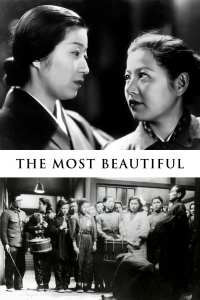 The Most Beautiful follows women factory workers who are under pressure to increase production during World War II. Made in 1944, it skirts the edge of propaganda but still creates a heart warming tale. The woman make lenses for rifles and whatnot, and when told the men will be increasing production 100%, they volunteer to go up 66% to do their part. However, they almost immediately begin to struggle to meat those lofty goals. Some get sick but continue to work, others are legitimately hurt and sent home, increasing the strain on the remaining girls. The underlying subtext throughout is love of country and the desire to do your part in the war. A nice, quiet film.
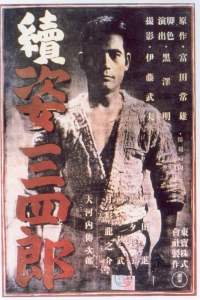 If The Most Beautiful was a step forward for Kurosawa, Sanshiro Sugata Part Two is a step back. A sequel to his first film, this one is really just over-the-top war propaganda, with the thinnest of plots, and really goes nowhere fast. Set two years after the first film and released in 1945, Sanshiro is an established judo expert and feared among his detractors. He holds on to his honor though, defending fellow Japanese citizens when they are targeted by Americans, and refusing to engage in American boxing matches for sport or money. When he is challenged to a duel by the brothers of his defeated rival from the first film, Sanshiro must decide if he will set aside his honor for personal glory or stay to the path his teacher has laid out for him. Unfortunately not a very good film, it just bounces around too much and nothing of import ever really develops.
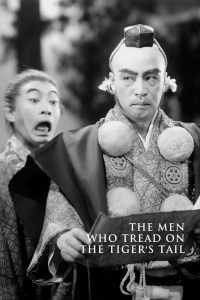 The Men Who Tread on the Tiger’s Tail is a short film, less than an hour, and nearly entirely dialogue driven. It follows the deposed leader of a powerful shogun family in 12th century Japan, who is on the run from his power-hungry brother. Backed by only 6 loyal samurai, they are heading cross country to cross the border into safer lands. They are disguised as monks and are being guided by a single porter, who at first does not know their true identities, and who also provides the comic relief for the viewer. I thought it was OK, nothing special, but not a bad way to spend an hour. It has most been ignored, even by Kurosawa fans, but it isn’t terrible. There are some tense moments when the group needs to cross a check point at the border, but there really aren’t any surprises. The film was banned by Japan’s film governing body when it was finished, who disapproved of such a comic figure as the porter in a film depicting a famous incident in Japan’s history, thinking it made light of the event. Because they failed to recognize it, the occupying American forces thought it was an illegal production and banned it, but it was ultimately released years later, in 1952.
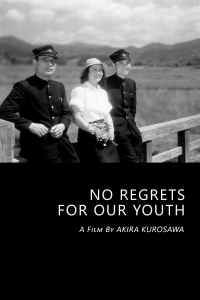 No Regrets for Our Youth was the first film Kurosawa made after the end of World War II, and in my eyes, his first great film, though it doesn’t get the attention of his later movies. A film about a trio of young people dealing with the effects of increasing fascism in Japan heading up to the war, the central figure is Yuki, the attractive daughter of a professor in Kyoto. Yuki has two suitors: Itokawa, a level headed young man and Noge, a far leftist who opposes the military buildup. Yuki seems unable to choose between the two before the government clamps down on socialist views, and when the film fast forwards five years, Itokawa has become a public prosecutor and Noge has spent four years in jail for his beliefs. Finally able to decide what she wants, Yuki goes to Tokyo to be with Noge, but it isn’t long until he is arrested again, and ultimately he dies in jail. Yuki goes to his surviving parents, who are poor rice farmers, to try to convince them that their son was a good man, putting the lessons Noge taught of hard work and eternal belief in a cause to good use. A powerful and emotional film, it clearly shows Kurosawa’s views of a country reeling from the effects of what was, in his mind, a terrible, ill-guided, and ill-fated war.
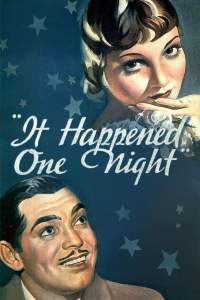 It Happened One Night, considered one of the greatest romantic comedies of all time, came out in 1934. Starring a young Clark Gable and the arresting Claudette Colbert, it is about a young rich girl, Ellie, who has recently eloped with a pilot only interested in her for her money. Ellen’s father wants the marriage annulled and is keeping her captive on his yacht, but she escapes and attempts to flee to her husband in New York. On the bus ride there, she crosses paths with a down-on-his-luck reporter named Peter. Peter sees an opportunity to write a story about Ellie’s road adventures to New York and agrees to get her there, but of course fate has the two fall in love along the way. Delightful and funny, this film has it all. One of the last pre-code films, it has some great lines that would disappear from Hollywood for a couple decades, such as, “Remember me? I’m the fellow you slept on last night,” as well as salacious scenes of Gable and Colbert undressing in the same room (albeit with a screen separating the unmarried couple). This film was the first (and one of only 3 to date) to sweep the “Big 5” Oscars: picture, director, screenplay, actress, and actor, Gable’s only best actor win despite his illustrious career.
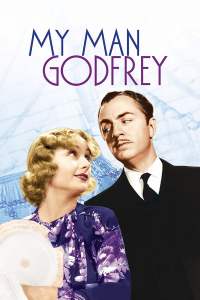 My Man Godfrey is a comedy featuring an ensemble cast including William Powell as the eponymous Godfrey. He is homeless and living in the dump by the river when he is scooped up by a rich family and brought home to be their butler. Here, we see the rich socialites are bananas, and Godfrey is submitted to a crazy household where the characters act unbelievably crazy and no one calls them out on it due to their wealth. It isn’t long before the youngest daughter falls in love with him, and we learn that Godfrey is keeping a secret about his past. The film is laugh-out-loud funny and serves as a biting criticism on the gap between the wealth classes in 1936 (and today). The acting and dialogue are better than the film as a whole, but still very enjoyable.
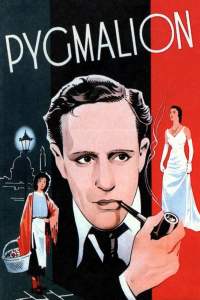 “The rain in Spain stays mainly in the plain.” Yes, that’s a famous line from the musical My Fair Lady, but it originates from the film Pygmalion, itself based on a play by George Bernard Shaw. Released in 1938, it stars Leslie Howard (a year before his famous turn as Ashley Wilkes in Gone With the Wind) as a speech instructor who takes a common girl (Wendy Hiller) under his wing, betting his friend that he can turn her into a lady in time to fool the dignitaries at an embassy ball in 6 months. Howard is perfect as the smart but uncaring gentlemen (he received his second Oscar nomination for the role) and Hiller (also nominated) is equal to him on screen; together they are fantastic. Extremely entertaining and funny movie. Howard also co-directed (along with the great Anthony Asquith) and the film was edited by future master director David Lean.
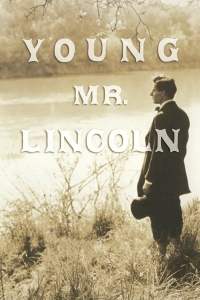 Young Mr Lincoln, directed by John Ford in 1939, stars Henry Fonda as honest Abe. Directed by one of the great directors about a great American portrayed by a great actor, I was ready for a tremendous film and was not let down. (Very) loosely based on a trial in Springfield, IL, two young men are accused of murder and Lincoln is their lawyer, arguing in their defense. Lincoln combines his “aw shucks” personality with a smart, almost manipulative guile to get what he wants through the trial and life. In the film, his political adversary, Stephen Douglas, hints that Lincoln keeps his cards close to his chest, and that most definitely seems true. Still, there is no outward showing of Abe being anything more than honest, forthcoming, and caring to his fellow man. The film is fantastic. Ford’s scenes play out powerfully with seemingly no movement or pause in speech not carefully considered, and Fonda’s portrayal of a man on a course with destiny is sublime. Fonda’s Lincoln oozes charisma and commands the room when he walks in, and it is easy to think this was much the way Lincoln moved and spoke.
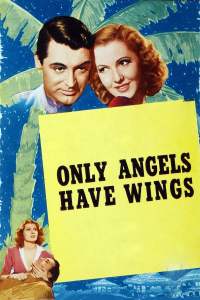 Only Angels Have Wings is a fantastic old film directed by Howard Hawks. It is about a group of pilots working for a mail service in South America and the perils they face flying through the mountains in harsh conditions. Their leader is Jeff Carter (the dashing Cary Grant), who never asks his men to make flights when the conditions are at their worst, instead taking those risks himself. Bonnie (Jean Arthur) arrives and instantly is smitten by Jeff, but he can’t get attached to women due to a bad past relationship. The other pilots on the team are Jeff’s friends, including his best friend “Kid” Dabb (Thomas Mitchell, famous as Gerald O’Hara in Gone With the Wind and Uncle Billy in It’s a Wonderful Life). Kid is a great, but aging pilot who seems to like everyone except one man, a pilot who once bailed out of plane in harsh weather leaving his copilot to due, the copilot being Kid’s little brother. When that cowardly pilot shows up in Jeff’s team, with Jeff’s former girl on his arm no less (Rita Hayworth in her breakout role), everyone has to put their animosity aside to get the job done. A very emotional film that has it all: love, heartache, and triumph. The camera work of the little 2 seater planes flying through the mountains is harrowing today, much less in 1939 when the film came out.
 It’s funny, I don’t like pets, but I do like animals. As such, I always seem to enjoy the Disneynature films, and the latest, Penguins is no exception. Narrated by Ed Helms and showing a year in the life of an Adélie penguin named Steve, it is a touching film with tremendous cinematography showing the deadly, but beautiful, Antarctica landscape. Steve is 5 years old and will be taking his first mate. Steve is always late everywhere he goes: he’s late to the mating area, late to preparing a nest, late to finding a girl, and later, late to start catching fish to feed the growing family. It is a cute and endearing film, and it always amazes me the instinct animals have to survive in such a harsh environment. Steve and his fellow penguins travel hundreds of miles to know how to be in the right place at the right time to survive, and while Steve and his “wife” split up at the end of the summer to go off to northern waters for warmth, they know to come back to the exact same spot the next season, since they mate for life. Fun little film.
 Having
 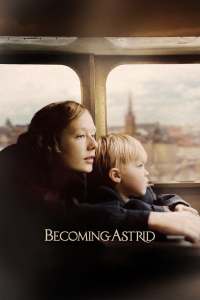 Becoming Astrid is a Swedish-Danish film about the early life of Astrid Lindgren, the famous author of many children’s books, including Pippi Longstocking. Astrid is raised on a potato farm in Sweden and excels in making up stories to amuse her siblings and friends. As a 16 year old girl, she gets a job as an intern to the editor of a local paper, and it isn’t long before she begins a love affair with the much older man. When his divorce is slow in coming and Astrid ends up pregnant, she flees to Stockholm to give birth, so as to not bring shame on her family, and later sends her baby to a foster mother in Copenhagen. What was supposed to be just a few months turns into years of waiting on her man to be free, and Astrid longs to reunite with her child. Unfortunately sort of a bland film, though Alba August is incredible as Astrid. The story just isn’t all that engaging, and her story-telling, the thing she is most famous for, is barely discussed. I will try to keep an eye out for August in future films though, very great work from her. And I learned from good old wikipedia that she is the daughter of none other than Pernilla August, a Swedish actress who worked with Ingmar Bergman in his later career (including in Fanny & Alexander), and was famously Shmi Skywalker in those Star Wars films.
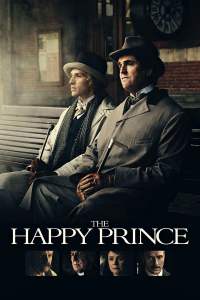 The Happy Prince is one of those films where a great story, fantastic acting, and outstanding sets and costumes all add up to a fairly average movies. I’m not sure I can put my finger on why it doesn’t all come together, but it just never hit its stride. The film is a biography about the last years of Oscar Wilde, after he’s been convicted of homosexuality and served his time in jail, and he’s now living destitute in France. Wilde spends his time remembering better times when he was the toast of London, and struggling with his current situation and failing health. He has quarrels with his lovers, longs to reunite with his estranged wife, and hides from the ridiculing young English men who only know him because of his crimes. It sounds much more interesting that it is, I only wish I could say why. Sometimes greatness just doesn’t happen even when all the elements are there.
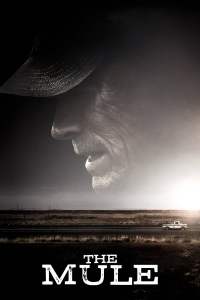 The Mule is an entertaining film, directed by and starring Clint Eastwood, about an old man who has lost his business and home and becomes a drug mule to earn it all back. He spent his life working as a florist, ignoring his family and their needs along the way, but the internet has now shut him down. Approaching 90 years old, he brags that he has never even gotten a speeding ticket, which, coupled with his old age, makes him the perfect, unsuspecting drug runner. The DEA, lead by Bradley Cooper, is on the case and trying to find this mystery driver bringing hundreds of kilos of cocaine into Chicago, but because Eastwood doesn’t follow a regular path, makes frequent stops to visit friends, helps stranded motorists, and stops to get his favorite sandwich from a roadside shack in the middle of nowhere, the cops are unable to pin him down, even with an informant inside the organization feeding them information. Very funny film, with most of the humor involving Eastwood’s age (he gets a burner cell phone on each trip with directions, but doesn’t even know how to text), but also a lesson in paying attention to the important things in life before they are gone.
 Jons Movie Takes