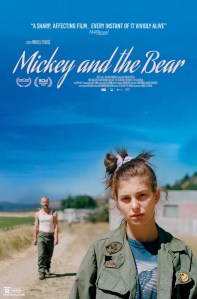
 Mickey and the Bear is, I think, falsely called a coming-of-age tale, because the girl in it was forced to grow up a long time ago. Mickey is on the cusp of graduating high school, and lives with her single father, a marine veteran who clearly suffers from PTSD. He uses oxy and alcohol to get through his day, and Mickey has been playing the roles of student, breadwinner, and caregiver for a long time. As she’s trying to navigate her own issues with a juvenile boyfriend, and tamp down dreams of leaving Montana for bigger and better places, she has to come to terms with the fact that her father may never be what she wants and needs. He’s a drunk and abusive, and he’s never going to get better. It might be an unpopular opinion, but I’m not a fan of making excuses for people, no matter what they may have gone through. Mickey’s dad’s bad life doesn’t give him a pass to be an asshole to his daughter. She loves and wants to help her dad, but he seems unwilling or incapable of helping himself, yet she continually sticks by his side. It’s a very good film. The dad is played by James Badge Dale, who you’d recognize for all his roles in military and action films, and Camila Morrone, who I’d not seen before, is fantastic as Mickey. This is the type of film that critics love, but it’s good for average moviegoers too. ★★★★
 Midway is one of those films where you better hope the action scenes make up for the rest of it, and for the most part, it is passable. Telling the historical lead-up and eventual battle of the one of the turning points in World War II in the fight for the Pacific, it features some amazing actions sequences, offset by some cringe-worthy dialogue and a serious case of over-acting by everyone on screen, even by well-known actors I like, which I can only attribute to bad directing. There’s a huge cast on both the American and Japanese side of the conflict. After a short prelude showing a meeting between the countries in 1937, the film fasts forward to the attack on Pearl Harbor, the USA’s response in the Doolittle Raid on Tokyo, and finally the epic battle around the tiny island of Midway. Director Roland Emmerich’s movies tend to make a lot of money, but these days his pieces are more about explosions than story, and he hasn’t made a really great picture in 20 years. Despite all that, the action moments, those referenced battle scenes, are so incredibly good, that they nearly make up for everything bad. I found myself cheering aloud when an enemy plane was shot down. Fans of the genre should find enough to like. ★★★
 Horse Girl stars Alison Brie as Sarah, a shy and lonely young woman whose only real contact with the world is a kind coworker (Joan, played by Molly Shannon) and a roommate (Nikki, Debby Ryan). She regularly visits a horse she used to own, Willow, but its new owners don’t appreciate her coming around. She’s also haunted by the accident of her friend Heather, who suffered a brain injury after falling from a horse years earlier, and the recent death of her mother. Sarah begins suffering from nosebleeds, and at the same time, starts zoning out while awake, coming to in odd places and not remembering how she got there. As Sarah starts to give in to some crazy paranoid delusions about alien abductions and cloning, she really starts to spiral out of control. The film begins as sort of an off-beat, quirky drama, typical for what you’d expect from an indie flick, but as Sarah starts losing time, it takes an unexpected, dark turn, and takes the viewer with it. Towards the end, I had less of an idea of what was going on than Sarah. There are parts that are really good, and Brie tries her best to sell it, but man, what a weird film. ★★
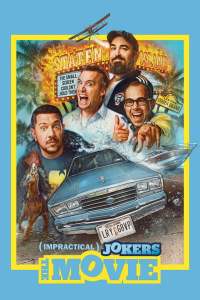 Impractical Jokers: the Movie is really just for die-hard fans of the long-running tv show, fans like me and my wife. We’ve been watching since shortly after it debuted and I don’t think we’ve ever missed an episode. Recent seasons seem to have lost the luster a bit, so I did have a little trepidation in going to see the four comedians ribbing each other on the big screen, but the film is whole lot of fun. Based around a very loose plot about the four men getting dissed by Paula Abdul in high school, and 20 years later making the cross-country drive to see her in Miami, the movie is mostly just more skits that you’d normally see on the show. But for the most part, they are really good skits. There are lots of subtle jokes and easter eggs for longtime fans, so I’m not sure that someone new to the Tenderloins will laugh as hard as I did, but I thought it was great. No spoilers here, but know that if you like the show, but didn’t know how it would translate to the big screen, my advice is to just go see it. ★★★★
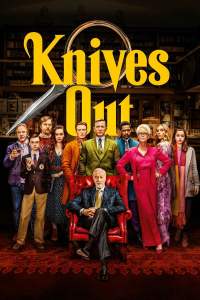 Knives Out is a terrific film from director Rian Johnson. Even if you weren’t a fan of The Last Jedi (I was!), you have to admit Brick and Looper were pretty amazing. He continues to make strides with Knives Out, a modern day murder-mystery. The film revolves around the wealthy Thrombey family, all of whom trace their money to patriarch Harlan (Christopher Plummer), an established writer. When Harlan is found dead one day though, of an apparent suicide, the family can’t wait to divy up his wealth. The kink in the works though is a private investigator, Benoit Blanc (Daniel Craig) thinks that, just perhaps, it was murder and not suicide. Each family member and caregiver is examined and interviewed, and all of the dirty laundry is aired. The cast is great, with members of the family including Chris Evans, Jamie Lee Curtis, Michael Shannon, Toni Collette, Don Johnson, Ana de Armas, and even Frank Oz showing up as a lawyer. Though the mystery isn’t as good as maybe it could have been, as I had it all figured well before the end, the reveal is no less fun for it. A tremendously exciting, well acted, and well told story. ★★★★½
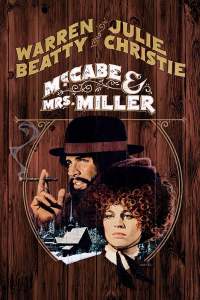 McCabe & Mrs Miller is a revisionist western film released in 1971, with an all-star cast lead by two of the biggest stars at the time, Warren Beatty (coming off Bonnie and Clyde) and Julie Christie (recently from Doctor Zhivago). Altman called it an “anti-western.” The heroes (or anti-heroes, as the case may be) are likeable, but they certainly aren’t role models. John McCabe is a gambler, newly arrived in the tiny northwest town of Presbyterian Church. He sees potential in the little town with its nearby rich mine and large male population, and opens up a whorehouse. He’s just getting started when Constance Miller comes to town and wants to become his partner. She wants to take his trashy prostitutes and classy them up a bit, charging more money for a high-class establishment. As the town continues to grow, business is good, and the duo start making a ton of money. This catches the attention of some businessmen in a nearby city, who come to Presbyterian Church to make McCabe and offer he can’t refuse. Unfortunately for him, he does refuse it, leading to some good old fashioned gun fights. I didn’t know what to think about this film for the first half or so. It took awhile to get going and the narrative is hard to follow, but by the end, I was hooked. It is one of the most “real” westerns I can remember seeing in some time. Everything from the sounds of the town, to the unfinished sets in it (purposefully done so by Altman, to give the impression of a growing town), to the flaws of its citizens, to even the grainy subdued picture (again, on purpose) really places the viewer inside the action. Great film, with lots of recognizable faces in the cast (Shelley Duvall, the late, great Rene Auberjonois, etc).
 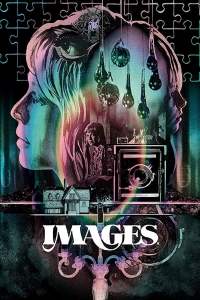 Altman followed up with Images, and at first, I couldn’t decide if this film is really good or really bad. It is a psychological thriller starring Susannah York (who won a best actress at Cannes for the role in 1972). At first Cathryn is just hearing things: an unknown woman keeps calling to tell her her husband Hugh (Star Trek’s favorite future shapechanging Odo, Rene Auberjonois again) is cheating on her. It isn’t long before she starts seeing things too though. She keeps seeing visions of a dead former lover, and when a man she once had an affair with stops in to visit Cathryn and her husband at a weekend getaway, she starts seeing all three men interchangeably. Cathryn will be kissing a man she thinks is her husband, see in a flash that it is actually the family friend, and then think it is her dead former lover, all in the span of seconds. She also intermittently sees herself in out-of-body experiences, walking across the gardens from the window, or overlooking the house from nearby cliffs. Her deteriorating condition worsens as the film goes along. Altman puts amazing camerawork to use, swapping out actors in the same take to disturbing effect for the viewer. The beginning felt a little gimmicky, but after awhile, even the viewer starts to feel Cathryn’s insanity, like something is slipping. It really pulls you in. At the end of the day, it is a solid film worthy of a single viewing, though I’m not sure I’d watch it again.
 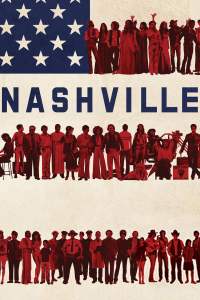 In 1975, Altman had his biggest critical success since MASH, with his film Nashville, which still holds the record for most Golden Globe nominations at 11. The backstory of the film is about a politician (who is never shown on screen), running for President on an independent ticket, who is putting together music talent for a fundraiser and rally in Nashville. While that is the overarching idea, most of the film is light on actual plot, following the lives of a multitude of eclectic characters over the course of a few days. The first 20-ish minutes go by at a frantic pace. The large cast isn’t given given true introductions in the traditional movie sense, we just see them on camera doing their normal things, and not even one at a time. It goes by so fast that we don’t know who to focus on, and the various characters aren’t fleshed out until later. Characters are always talking over each other, with multiple on-camera conversations going on at the same time, something Altman would become famous for in his pictures. It works in real life, but does make it difficult to follow in a motion picture. The film ends up playing out as satire, portraying our culture as one obsessed more with the performer as a celebrity and less about the music they are creating. As I mentioned, it has a huge cast; I think I read somewhere it has 24 main characters. Many are future all-stars before they were big. The list includes Ned Beatty, Keith Carradine, Scott Glenn, Shelly Duvall, Jeff Goldblum, and Lily Tomlin (in her first role). While the movie is critically acclaimed, it was a it too aimless for me. There are some quirky, funny moments, and it features a fantastic soundtrack (Altman once noted there was an hour of music throughout the 2 ½ hour+ film), but I think this is one of those films that was much more important in its time, especially its political aspects, than what it is today.
  If you want to see a case study in strong women actors, look no further than Altman’s masterpiece 3 Women, released in 1977. The 2 obvious women are Millie and Pinky, introduced early in the film. Millie (Shelley Duvall) is an outgoing yet lonely woman, whose forceful personality turns just about everyone off. Yet she is an instant attraction for the shy and introverted Pinky (Sissy Spacek), who is new to the area. Whereas Millie keeps people away with her attitude, Pinky does so with her awkward and clumsy speech. Pinky does latch on to Millie though and it isn’t long before they are roommates, where they come into contact with the third woman, Willie (Janice Rule). Willie is an artist, painting murals around the area, and she doesn’t say much to anyone, even her husband, the womanizing Edgar. As these three females hang around each other, their personalities blur, until an amazing final scene which makes you want to stop and rewatch the whole thing again. Altman has stated that Bergman’s Persona was a big influence for this film, and having seen it recently, I can definitely see why. The film is engaging from the start, gripping throughout, and downright chilling at times too. Truly amazing acting from Duvall and Spacek, who were still relatively early in their careers. Duvall was still 3 years away from her biggest known role in The Shining, and Spacek was a year removed from Carrie.
 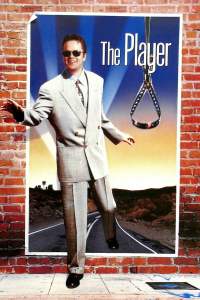 Going to skip ahead a few years, to arguably Altman’s next biggest hit, in 1992. The Player features a huge cast and an even larger list of A-list cameos of the era, a reported 65 people, many in short scenes just playing themselves around the Hollywood lots and restaurants. At the start, I thought maybe it was a comedy, because the opening scene shows Buck Henry pitching “The Graduate 2” to a film exec. While it continues to have hilarious moments throughout, the film gets dark too. The movie follows a Hollywood exec named Griffin Mill (Tim Robbins) who starts to receive anonymous death threats. Mill thinks he knows who’s been sending them, a disgruntled writer he rejected recently named David Kahane (a young Vincent D’Onofrio), and Mill goes to meet him to try to make amends. At the same time, Mill feels threatened from a new hotshot executive at the studio, Larry Levy (Peter Gallagher), who seems to have risen through the ranks quickly by rubbing the right elbows. The rest of the film plays out in thrilling fashion, much like one of the classic Hollywood pieces discussed on screen. Murder, sex, a police investigation, a run from the cops, and the supreme ego of the film execs all come together for as complete a film as you will find. It’s also a movie-lovers wet dream, full of visual and spoken references (some subtle, some not so much) to the history of film. I loved every minute of it.
 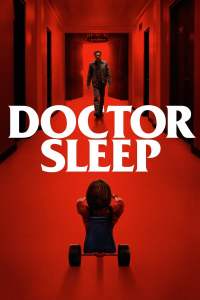 I’m a big fan of The Shining (the film, and admittedly maybe because I’m a huge Kubrick fan), but ashamedly I’ve never read the book, much to my son’s consternation (one of his favorite books, and he dogs me about it because he hates the film). I’ve been excited to see Doctor Sleep, the sequel to that long-ago book and film. Danny Torrance (portrayed wonderfully by Ewan McGregor) is all grown up. He’s kept his “shine” skill locked up inside himself all these years, which probably, unknowingly, saved his life. There’s a group of evil beings that have been hunting people with the shine for hundreds of years, feeding on them to extend their own lives. While feeding on one such young boy in Iowa, the violence grabs the attention of a teenage girl, Abra, living in New Hampshire. Abra is very powerful in the shine, and while she is feeling the death of the boy, her power is felt by the evil cult. Knowing they will come for her, Abra reaches out to Danny for help. This film is tremendous. Not overly scary but definitely creepy, it is more of a thriller in the vein of Carrie or some of those kinds of Stephen King’s stories. I’m not a big fan of the very ending of the film, the last 15-20 minutes of this 2 ½ hour picture, but the rest of the film is so great, I still highly recommend it. As a huge fan of King’s Dark Tower series, I also appreciated the whole lot of references to other works of King throughout the film, including the Dark Tower.
 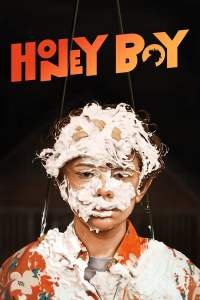 I wanted to watch Honey Boy because of its sterling reviews, but had a certain, subdued expectation going in as well. The film is a fictionalized biography written by Shia LaBeouf, about his childhood with her abusive father. It is based on a screenplay LaBeouf wrote while in rehab, as a form of therapy. LaBeouf is a fantastic actor, but let’s be honest, he can be a piece of shit sometimes. I expected this film to be a pat-on-the-back, “this is why I’m effed up” excuse for his behaviors. It isn’t. The film is a frank, open, honest, and vulnerable depiction of LaBeouf’s complicated relationship with his father. LaBeouf plays his own dad, with Lucas Hodges and Noah Jupe playing a fictionalized version of himself named Otis. Otis is a 12-year-old child actor living with his dad in a longterm motel. Dad is a former rodeo clown, a Vietnam vet, and an alcoholic, who, as a convicted felon, can’t hold a job. He’s awful to Otis, but it is obvious that his behavior masks his contempt for himself and the way his life has turned out, the failure as a man and father that he sees in himself. LaBeouf’s screenplay and the direction by Alma Har’el are perfect. This is a hard film to do well. Make it too sappy, and it would come off as contrived or preachy. Make it too documentorial, and it would be what I first expected, an excuse for LaBeouf’s problems. Instead, it really is perfect as it sits. The three main actors are all great (close your eyes, and Hodges sounds just like LaBeouf).
  Ford v Ferrari details the historical period when Henry Ford’s car company’s sales were down, losing business to rival Chevy and prestige to European speedsters like Ferrari. Up-and-comer Lee Iacocca convinces Henry Ford II to go after the latter to beat the former. Lee promotes getting more heavily involved in the racing format, with the goal to win the Le Mans 24 hour race, to show the world that Ford can build cars that can compete with anyone. To meet this end, they reach out to Caroll Shelby to help design Ford’s newest racing machine, and Shelby then approaches longtime friend and fellow racer, Ken Miles, to drive it. The film showcases these people’s attempt to beat Ferrari and his racing car, both through innovation in the garage and by getting the best driver on the course. The film does an excellent job of balancing the heart-pounding action of the races with the drama (and personality clashes) behind the scenes. Though a film like this doesn’t always rely heavily on acting chops, everyone turns in a good performance, from Matt Damon as Shelby to Christian Bale as Miles, and supported by Josh Lucas, Jon Bernthal, and a host of others. Very good film. As a racing picture, I think I dug Rush from a few years ago a bit more, but this film feels more balanced.
  If you are looking for a feel-good picture, it doesn’t get any better than The Peanut Butter Falcon. It takes a classic innocent boy running away to fulfill a dream kind of story, and swaps the young boy with a man with down syndrome instead. You don’t see many films with such a person in the main, leading role, and newcomer Zack Gottsagen is up to the task. In the film, Zack is a young man forced to live at a retirement community, because he has no family to do the things he cannot do for himself. However, he feels trapped, and while he has friends there, he’s also about 50 years younger than everyone else. Eleanor (Dakota Johnson) is a kind nurse/caregiver, but she doesn’t fully understand Zack’s predicament. One night, Zack successfully breaks out, and finds himself the unlikely companion of a local roughneck, Tyler (Shia LeBeouf again!). Tyler is on the run himself, and decides to lead Zack to a wrestling school a few miles away, where Zack hopes to meet his personal hero, a wrestler named The Salt Water Redneck. With Eleanor on their tail, as well as a couple hoodlums chasing Tyler, a bond forms between our duo on their multiple adventures. It’s heartwarming, thoughtful, eye-opening, and above all else, beautiful.
  Can a man learn from his mistakes, and the mistakes of his father? That’s the big question in James Gray’s Ad Astra, a deep and contemplative film, as was Gray’s last one,
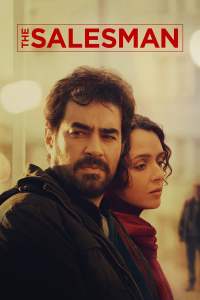 Farhadi’s recent Oscar came in 2016 for The Salesman. It follows a married couple, Emad and Rana, who are actors in a new showing of Arthur Miller’s Death of a Salesman. Emad’s day job is a teacher at the local school, but the couple is struggling. Their current apartment was found to be structurally unsafe, so they are forced to move into a rough neighborhood. On their first night there, while Emad is late returning home, Rana is attacked in her home when she mistakenly lets a stranger into the building through its intercom. Emad finds out the person who rented the apartment before them was a promiscuous woman, and he believes a former “client” of hers is the attacker. Rana is obviously shaken up and doesn’t want to go to the cops, so Emad makes it is business to hunt down the attacker himself. Despite what you might think, it isn’t a thriller. It is a deep and heartfelt drama, taking the viewer through all of the emotions from both the husband and the wife. I was reminded of a great film I saw a few years ago with a similar premise, The Light of the Moon. Check out that one if you don’t like subtitles, but this one is even better.
 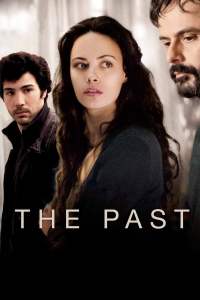 Farhadi’s preceding film was The Past, released in 2013. This one is about an Iranian man, Ahmad, returning to France to finalize his divorce to Marie, his estranged wife whom he left 4 years previously. Ahmad was husband # 2, and has a good relationship with Marie’s kids from her first marriage, especially teenage daughter Lucie. But he was not a great husband; they fought a lot and he was constantly absent. Her new guy, Samir, isn’t much better, and he and his son Fouad are dealing with their own problems, namely the suicide attempt of Samir’s wife. Samir and Marie had been having an affair, but he now feels conflicted since his wife lies in a vegetative state. All of these dynamics from this mixed family come to bear throughout the film. It is a deeply emotional, quietly contemplative movie, and while I felt it started to come off its rails for a few minutes in the latter half, it all comes together nicely in the end. Every character is this film is real: they each are flawed humans who at various times know and do not know what they want in this life. I ended up liking it even more than The Salesman.
  There’s a scene in the iconic Fiddler on the Roof where one character is right, and the opposing argument is also right, and a bystander quips, “They can’t both be right.” In A Separation, the opposite holds true: no one is right. Yielding Farhadi’s first Oscar win in 2011 (it was the first film from Iran to win), this film shows the classic example of pride and honor getting in the way of truth. Nader and Simin are getting a divorce (Simin wants to move to a country where their daughter Termeh will have more rights as a woman), but Nader doesn’t want to leave his father, who is suffering from Alzheimer’s. Simin moves in with her parents in the meantime, and Nader hires a woman, Razieh, to look after his father. Just a couple days into the new arrangement, Nader comes home to discover Razieh not there, and she has tied Nader’s father to the bed to keep him from moving about in his condition. When Razieh does show up, Nader is so upset that he shoves her out of the apartment. She falls down the steps, causing a miscarriage. Razieh’s husband sues Nader, but Nader claims he did not know she was pregnant. Everyone gets wrapped in the case, including neighbors, teachers, friends, and not the least of whom, Termeh, who sees her dad Nader in a whole new light. Don’t expect a happy ending for anyone. If you are only used to life in the USA and not familiar with other cultures, especially in the middle east, this film is eye opening. The court system in particular is frenetic, with fast-paced calls for witnesses, quick judgments, and the inclusion of religious beliefs into decisions. It’s a very emotional piece.
  The greatness continues in 2009’s About Elly, maybe the most human of these films so far. A group of young adults, life-long friends, have rented a villa by the sea for a weekend. The group consists of married couples and a few young kids, and sole single man Ahmad, but Sepideh has plans to change that. She’s invited her kids’ teacher Elly to come as well, and hopes to make a match. From the get-go however, the shy (or traditional) Elly seems uncomfortable around the partying antics in the group. After just one night, Elly talks to Sepideh about returning home early, but Sepideh begs her to stay. Elly is left to watch the kids while some of the women go into town, and the men play volleyball nearby. When one of the children runs to the men screaming that another child is drowning in the sea, everyone runs in to save him. Only afterwards do they realize Elly too is missing. Did she drown trying to save the boy, or did she return to town without telling anyone? The human need to protect yourself comes out, as these friends blame each other for faults that led to this event, and then lie to save face. It’s a raw and emotional film, as I’ve come to expect from this director by now, and another excellent picture.
 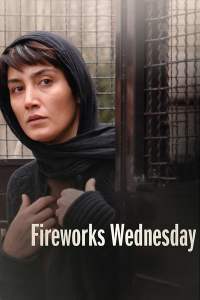 Fireworks Wednesday was the director’s third film, released in 2006. You can tell he’s still a young director learning his craft. It is a fine film, but lacks the subtlety and humanism of his later pictures. The film follows a young betrothed woman, Rouhi, who goes to work for a married couple. The picture is a single day, her first (and maybe only) day on the job. She’s been hired to help clean Mozhdeh’s and Morteza’s apartment before they go on vacation, but she enters a household in flux. Mozhdeh is convinced that Morteza is cheating on her with a neighbor, Simin, who runs a salon out of her place. Mozhdeh clandestinely sends Rouhi over to Simin’s to get her eyebrows done for her upcoming wedding, for some reconnaissance. When he finds out about Mozhdeh’s worries, Morteza vehemently denies it. This picture from a story standpoint is the weakest of the set, but Farhadi does manage to pull fine performances from his actors, and there are glimpses here and there of the greater things to come.
 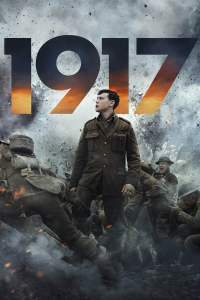 1917 is right up there with the best movies I’ve seen recently. It is loosely based on various missions director Sam Mendes’ own grandfather, Alfred Mendes, undertook in World War I. The film plays out over a single day, in spectacular almost-real time, and deceptively shot to look like a single, long take. This manages to pull the viewers into the action and characters in an immeasurable way. In the film, Schofield and Blake must cross a no-man’s land, past the German front, to find a battalion of British soldiers who are planning an attack on the Germans the next day at dawn. At stake is the lives of 1600 men, including Blake’s older brother, because the attack is doomed to fail. Not only is Germany ready for it, but they’ve set a trap to lure the British soldiers into the attack on their terms. As the two young soldiers creep across dangerous lands, stumbling across multitudes of dead bodies and the signs and leavings of war all around them, they are on a race against time to get their message through. It is 2 hours of heart-pounding action and suspense. The couple times when our heroes get a rest, allowing the viewer to take a breather as well, are only short enough to calm the heart for a brief spell before the action picks up again. This is a tremendous film, I’m confident it is going to go down as one of the greatest war films of all time. ★★★★★
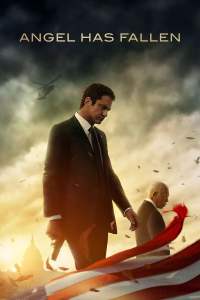 Angel Has Fallen is the third film in the Gerard Butler secret service films. I really liked Olympus Has Fallen back in 2013, and in 2016, despite terrible reviews, I thought London Has Fallen was still pretty good. But the third film has fallen off the rails. Head of secret service Mike Banning is set up as the perpetrator of an assassination attempt on the president, and he goes on the run. He knows early on who is behind the attack, so Mike goes on a quest to clear his name, while he is pursued by the FBI as the lead suspect. All of this is being run by a shady, faceless bad guy who is pulling all the strings, and who also says the most eye-rolling, cliché-ridden lines ever put to film. The previous film suffered some of that, but the action saved it in my eyes. That is no longer the case, even the action is ridiculous now. ★
 Hala is a high school senior growing up in the USA. She has all the same issues most typical girls of that age do, and on top of it, she struggles with her parents and their deep Muslim faith and traditions. Her dad is the typical “cool dad” and she likes him more, but she finds her more traditional, Arabic-speaking mother overbearing and too conservative. Hala’s 18 years old, so talk is starting to circle about her finding a good Muslim man to marry, but she has a crush on a white boy, Jesse, at school. Against her parents’ and their faith’s wishes, she starts hanging out with him alone, when others aren’t around. It is on one such date at a diner when she sees her dad out with another woman. This pushes her to be more rebellious, and she has her first sexual encounter with Jesse. Her dad suspects something immediately, and all of a sudden, he’s not the nice one anymore. Hala starts to see aspects of him she never picked up on before, and comes to realize her mother is only the traditional homebody wife because her husband made her so. One night, her parents invite family friends over with their college-age son, in what is obviously an attempt to set up their children together. Hala runs from the house, pulling her hijab out in frustration. Her life is in turmoil, and she does some things that have real world consequences outside of her own life. The film is narrated throughout by Hala’s journal entries, in an introspective and poetic way. It’s a good film, a different take on the tried-and-true coming-of-age, self discovery kind of tale, though the second half is a bit choppy and not as cohesive as the first. ★★★½
 I was pretty excited to see Ms Purple. It is from director Justin Chon, and I really dug his film Gook a few years ago. Gook felt real, and raw, and unfortunately Ms Purple feels contrived. For one, it takes a long time to get going, and by long, I mean nearly half of its 90 minute length. We are introduced to Kasey and her estranged brother Carey, adult Korean Americans who are living pretty effed up lives. Kasey is a high end prostitute/escort at night, and takes care of their comatose father during the day. When her live-in caregiver quits, Casey calls Carey asking him to move in and take care of their dad while she works. Carey is jobless and aimless. It isn’t until much later than we learn their individual issues stem from their parents. Their mom abandoned them both when they were kids, and their dad was really horrible to Carey, which is what led to Carey moving out of the house at the young age of 15. Now back home, Carey has taken to wheeling his dad out of the house during the day, bed and all, but he doesn’t know how to properly care for him, leading to large bed sores on the dad’s back. The whole film has a feeling of trying to be something deep and penetrating, but really it’s just a shallow, simple story, with nothing memorable to latch on to, and (nearly) a complete waste of time. Some fine acting by Tiffany Chu in the lead is the only saving grace. ★½
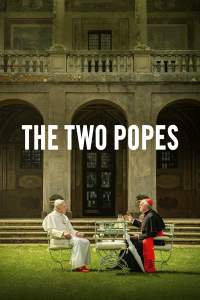 The Two Popes is a biographical drama, mostly focused on Cardinal Jorge Mario Bergoglio (who would go on to become Pope Francis), showing his relationship with Pope Benedict XVI as well as his past as a young priest in Argentina. The film, understandably, is heavily dialogue driven, and the banter between the two men was the highlight for me. Benedict is a very conservative figure, loving the pomp and pageantry of his office, whereas Bergoglio very much believes in simplifying the church, bringing it to the people, and also moving the church ahead with the times. Their opposing views create some fantastic dialogue in the film, but other parts bogged down and honestly at times, the movie’s pacing was a bit slow. The actors themselves are great though; Anthony Hopkins is always on obviously, but Jonathan Pryce as Bergoglio is the real show. Pryce has been around a long time, but received just his first Oscar nomination for this role. I’m not Catholic, I don’t know much about the inner workings of the church and its politics, but I mostly enjoyed this film as a picture in time. ★★½
 Going to look at various foreign films from around the world today, starting with The Insult from director Ziad Doueiri from Lebanon. It shows when a fairly simple argument can blow up when religion and/or cultural differences get involved. Yasser is a foreman for a construction crew. As a Palestinian refugee, he isn’t allowed to be an engineer in the country, but he runs his crew well as foreman. He’s doing renovations in an area when he gets into an argument with a resident, Tony, a Lebanese Christian. Over a couple days, the verbal back-and-forth becomes violent and Tony is injured. He ends up suing Yasser, and the lawyers ratchet up the rhetoric. Lots of old prejudices are brought up. The filmmakers examine everything, from the plight of Palestinians without a country of their own, to brutal tactics used by both sides during the endless wars the region has gone through, to (false) accusations against Tony for being a Jewish sympathizer, which of course bring threats against him. Violence erupts in the streets as tensions in the courtroom boil over into the public. I’m aware of the generations of animosity in that region, but having never lived there, there are moments in the first half of the film or so when I thought the premise was a bit ridiculous. By the end, it does a good job of showing to those like me who aren’t as well-versed in the history of these wars what it has meant to those living there. A strong film, with some powerful moments.
  Embrace of the Serpent is a Colombian film from director Ciro Guerra. I’ve seen one other film of his, Birds of Passage, which was so-so, but this one is fantastic. It follows two timelines, 30 years apart. In the early 20th century, German scientist Theo von Martius has been exploring the Amazon, but has become ill. He gets help from an indigenous warrior, Karamakate, to hunt a mythical cure-all plant called yakruna, which may heal him. 30 years later, another man, Evan, is supposedly after the same plant, and is following Theo’s notes. Evan runs into an older Karamakate and asks him to be his guide. We sense early on that there is more to Evan’s story, but what that may be remains to be seen. In both stories, we see Theo and Evan with their guides travel through the jungle, mostly by river, as they encounter mad religious zealots, rubber plantation atrocities, and the dangerous jungle itself. Shot in beautiful black and white to mimic the old photos we associate with those early explorers, the film shows a wondrous and unforgiving land, and one which seemed to be fighting a losing battle with European colonizers for a way of life they could not hold on to.
 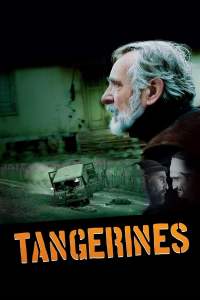 Tangerines comes from the countries of Estonia and Georgia, and is directed by Zaza Urushadze. It takes place in 1992 inside Georgia. With the USSR falling apart and its former states declaring their independence, war has broken out between the native Georgians and Russia-backed Abkhazian separatists, mostly mercenaries. In a tiny farming village, many have already fled for the more peaceful Estonia, but two older men are still tending a tangerine farm. One is hurrying to get the crops down so he can take them Estonia to sell, but the other is hinting that he will not be leaving with him, but his reason isn’t discovered until the very end. One night, a gunfight comes to their doorsteps, and there are just two survivors, one from each side of the conflict. As the farmers tend to the wounded, the enemy soldiers vow to kill each other once they are healed up. As they get better though, they get to know each other, and each discovers the meaninglessness of the war they are fighting. This is a great “intro” for people just getting into foreign films, or people wanting to watch a contemplative picture but which still has some movement and action, and isn’t “too deep” nor overly long, coming in under 90 minutes.
 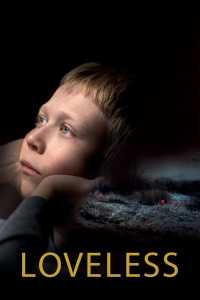 Loveless comes from director Andrey Zvyagintsev out of Russia. It is about the breakup of a marriage, but not in an endearing way like the recent Netflix film A Marriage Story. Boris and Masha hate each other. Each person has all ready moved on, she to an older more successful man, he to a younger (already pregnant) woman. The worst of it all, neither wants to take their 12-year-old son Alyosha with them to their new life. This one is hard to watch from the very opening 20 minutes, where a scene shows the mom and dad fighting about who is going to be forced with the child, and he can hear them all from the room down the hall. Watching him quietly sob is heartbreaking. The next day, each parent goes to stay the day with their own new loves and don’t return to their home apartment until a full day later, during which time Alyosha has run away. The rest of the film is a search to find the boy. The investigators realize immediately that the parents don’t really love him and are only going through the motions out of a sense of societal obligation, and to try to hurt the other parent. The film takes a really long time to get going: 20 minutes of introduction, followed by 30 minutes of watching the adults have sex with their new partners and talking about how much they hate their previous lives, and then a fruitless search. I honestly didn’t care for them as people obviously, and the one person to root for, the boy, seems to be a side story in their lives and the film itself. Powerful? Undeniably. But a good film? That’s debatable.
  Ending on a positive note. The last film comes from Turkey and director Ildiko Enyedi. On Body and Soul is one of those beautiful, quiet dramas that you just have to sit back and appreciate. Endre is one of the higher-ups at a meat processing plant, and they hire on a new girl, Maria, as quality inspector. Maria is deep on the autistic spectrum; she abhors physical contact, doesn’t understand any social cues, and isn’t in touch with her emotions. But she and Endre have something in common: every night, they have the same dream. In their dreams, he is a stag, and she a doe, and they wander the forest together doing various deer things. Endre, an older man with a crippled left arm, gave up dating years ago, and Maria has never dated before, so they are shy and apprehensive to each other, but their relationship slowly grows over time. I was really into this film for the first two thirds or so. It hit a lull for awhile there in the latter half, where Endre pulls away, which confuses Maria even more, but the ending is great. A really touching film.
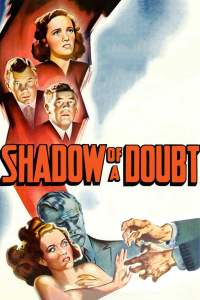 I’ve reviewed many of Hitch’s earlier films, and now I’m getting into some of his more famous pictures, but still ones I’ve never seen. Hitchcock is on record for saying 1943’s Shadow of a Doubt is his personal favorite. It features a pair of big stars of the 1940’s, Teresa Wright and Joseph Cotten. Charles Oakley is a bachelor from the east who returns to California to visit his sister and her family, including his niece Charlie, who is named for him. Charles seems a charming man, showering the family with presents, but Charlie almost immediately begins to suspect something is up. Things don’t get any better when a pair of investigators show up, under the guise of reporters doing a story about the “all-American family,” and Charles refuses to have his picture taken. When Charlie unearths the real reason the investigators are digging into her uncle Charles, that he is a suspect in murders of wealthy widows back east, she is shaken, but keeps the secret to herself, not wanting to stress her mother in particular. I liked this one quite a bit. It has a lot of heart, a strong plot, and doesn’t have as sudden an ending as many of Hitchcock’s other films; he wraps it all up nicely.
  I seem to constantly forget how great Ingrid Bergman was, until I watch a movie like Notorious. Paired with Hitchcock (and America’s) fave, Cary Grant, Bergman plays Alicia, the daughter of a Nazi German spy who’s just been convicted and sentenced for his crimes. Alicia is recruited by Grant’s Devlin, a government agent, to do a mission for the good ol’ USA in Brazil, but even he doesn’t know the details. The pair arrive in Brazil and just as they start to fall for each other, they learn about the job: Alicia is to use her family’s history to get close to Nazis who have fled to Brazil to avoid prosecution, and to seduce one of them who used to have the hots for her, in order to dig up dirt and see what the remaining Nazis have planned. What a tremendous film. Besides the spying and suspense, Devlin is obviously sending out a girl he cares for into a dangerous situation, knowing she’s with another man. He doesn’t want to love her, because he knows about her former partying days, but he can’t help himself. Grant is great as the conflicted lover, it’s hard not to like anything he’s in, and Bergman is eye-arresting in every scene she’s in. Hitchcock often toyed with the Hollywood censors with his sexual innuendo, but he is downright brazen in this film, especially for 1946. It’s a brilliant high-stakes spy thriller, called by some to be Hitchcock’s best.
 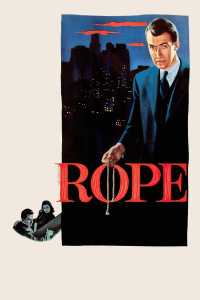 Rope followed in 1948, and was Hitchcock’s first color picture. The picture’s name is used in the opening scene of the film, as a murder weapon. A pair of men have just killed a man, just for the thrill of it, and because of a warped sense of superiority over the victim. They’ve stuffed his body into a large trunk in their living room. To add to their sense of power, they’ve planned a get-together that evening, in the very room where their now-dead friend is lying in his temporary resting place. The film has a lot of comedic wordplay, including lots of morbid humor related to the body a few feet from the unknowing visitors. John Dall and Farley Granger portray the perpetrators, with legendary James Stewart playing a former teacher and intellectual who picks up on the subtle hints that something is amiss. It is a quietly gripping film, with slow-building suspense especially in the latter third. There’s a scene after dinner where the maid is clearing the food off the trunk, in preparation to put some books back into it, all while the guests are chatting about the missing friend, that is pure Hitchcock thrills. The film is a technical masterpiece too. It is shown in real-time and has the illusion of being several long takes, though the length of film did necessitate cuts. It was later edited in such a way to make it appear to be just a couple shots.
  Rear Window is one of the director’s most famous pictures, and one I’m ashamed I’d never seen before. Many people know the gist of the story. James Stewart plays Jefferies, a successful photographer who’s been holed up in his tiny apartment for 6 weeks due to a broken leg. The only thing he can do is look out the window at his neighbors, and he’s followed their routines for these last few weeks. One particular couple, an older man with his nagging wife, becomes the central plot of the film. One night during a particularly bad storm, Jefferies hears a scream, and then watches the husband leave and return to the apartment several times over the course of the night, always with large suitcase in hand. Jefferies thinks the wife’s been killed, and the body taken out in pieces. The next morning, Jefferies tells his physical therapist his little hunch, which she laughs off, but then Jefferies sees the suspected murderer putting away a very large saw and knife, and later, Jefferies’ girlfriend thinks there may be something to it. This fuels his suspicions, and ratchets up the suspense. The final 15 or so minutes is some of the most psychologically scary moments on film that you’ll ever see.
 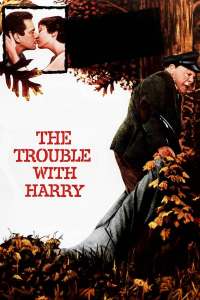 Finishing up with one of Hitchcock’s lesser known films, The Trouble with Harry, from 1955, though it is noted as Shirley MacLaine’s film debut. It is also very different from the above films, and most other Hitchcock movies, as it is a comedy, albeit a dark comedy, and even has a romantic element to it. The trouble with Harry is that he is dead, his body found in the woods, and no one who stumbles across the body (and hilariously, many people do) seems to care too much. No only that, but there is more than one person who thinks they are responsible for the murder. It seems the whole town gets involved in Harry’s business, or lack thereof, before the end. I really enjoyed the first half of this film, but the weirdness of it wore off after awhile. Many (most?) Hitchcock films have some funny dialogue here and there, but this film is the result when you write a movie full of it, and it doesn’t work as well as you’d think. I’ll give it an average rating for the good moments.
  I never watched Dora the Explorer, never had any kids into the show, but Dora and the Lost City of Gold looked cute, so I thought I’d give it a chance. The movie starts out with the little 6-year-old Dora of the TV show, being raised in the jungle by her parents, but quickly jumps ahead 10 years to a teenage Dora getting ready to move to the city for the first time in her life. Dora is completely unprepared for the city, and the city is unprepared for her. Her one-time sidekick, cousin Diego, has lived in the city all these years and is initially embarrassed by Dora’s naivety and complete lack of social skills. When Dora and some classmates are kidnapped to a South American jungle by treasure hunters, after the fabled Incan City of Gold which Dora’s parents have been hunting for years, their adventure really starts. Isabela Moner is cute as a button and portrays Dora with infectious good cheer, and her exuberance permeates through the tv, but I wasn’t buying it all. This is a family film that is definitely geared towards the youngsters, and has a few too many cliches for the older crowd to enjoy.
  Luce is a good kid, a senior in high school, on track towards a seemingly bright and successful future. Adopted as a child from war-torn Eritrea, he was raised well and never has given any reason for anyone to doubt him. Yet he is surrounded by circumstantial evidence that he has a darker side. A class assignment has him write an essay from the point of view of an historical figure, and his pick is a revolutionary who called for violence to end colonialism. He does the paper so well that it negatively grabs his teacher’s attention. Luce was in the vicinity when a classmate was sexually assaulted. He had illegal fireworks in his lockers, but claims they were someone else’s, as he and his friends all share lockers. The only person that doubts Luce is that teacher, but whether she’s right, or she has a vendetta against him, isn’t apparent to the viewer. This is one of those “thrillers” where all the suspense is created by the unknown. There is an obvious racial angle, with Luce being black and raised in a white household in an upper-middle class neighborhood, but it is so much more too. Luce is smart, smart enough to realize he is hampered by both expectations to succeed by some, and by others, expectations to fail. Tremendous, multi-layered film with a fantastic ensemble cast.
  Official Secrets reminded me of another recent historical film, The Report. Like that picture, this one focuses heavy on the facts of a moment that many people may not be terribly aware, and frankly by itself, though important, may not be all that riveting as viewing material, but which features strong actors to try make it work. The Report succeeded for the most part, Official Secrets does not. This one follows a woman in the intelligence community in the UK, Katharine Gun (Keira Knightley), who leaks a memo to the press that the USA has been gathering intel on UN diplomats, in a bid to perhaps blackmail them into voting to legitimize an invasion of Iraq, despite intel that Saddam Hussein in fact has no WMD’s. The second half of the film, where she is busted and brought to trial for being a whistleblower, is boring as hell. I almost made it to the end of the movie, but finally gave up. There’s some good, recognizable actors in this one, but the script is as dry as a desert.
 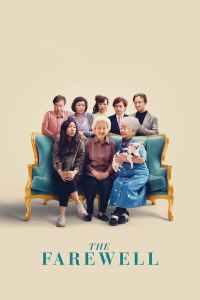 The Farewell is just one of those quiet, beautiful movies that make you feel good. Awkwafina, who burst onto the scene the last couple years in comedic roles in Oceans 8 and Crazy Rich Asians, takes on a more serious part as Billi. Raised in the USA since the age of 6, she returns with her parents to their native China, ostensibly for the wedding of Billi’s cousin, but really to visit her Nai Nai (grandmother), who has terminal lung cancer. In Chinese tradition, none of the family is giving Nai Nai the news of her impending death, forecasted just months away, and she thinks she is just fighting a bad cold. Raised “in the west,” Billi doesn’t understand this tradition and thinks Nai Nai should know the severity of her condition, but she is cowed by all the rest of her family, including her parents. As the wedding approaches, Billi has to come to terms with the differences in cultures from which she was born versus where she was raised. Despite sounding very somber (and it is at times), the film has moments of levity that prevent it from becoming a dirge, such as the time when the family has to rush to the hospital to intercept Nai Nai’s recent test results before she can read it herself. It’s a lovely film and a fantastic role for Awkwafina, nabbing her a Golden Globe.
 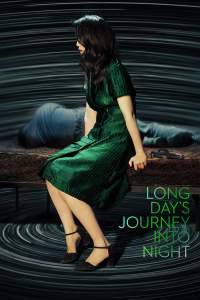 Followed up a film predominately in Chinese with one completely in it, but Long Day’s Journey Into Night is much less linear. Our main character is a man in search of a lost love, and the film starts with a trip through his memories. There’s no clear path through them either. He remembers his girl, his deceased father and surviving mother, and his friend who had been murdered. The memories are disjointed, out of order, and like our own memories, probably not exactly accurate. In fact the same actors play a couple different characters, intentionally I think, to mimic the infallibility of human memory. The director (Gan Bi) uses running water to great effect to signify the flowing of time; water drips everywhere in these memories, from faucets, from rivers, from the sky. The second half of the film is what everyone brings up when they talk about this movie. There is a single, hour-long cut in real time (and shown in 3D no less) following our main character through a dream of his. He’s fallen asleep in a movie theater, and the hour is one long continuous shot of his journey through his dream. And he’s not just sitting in a room. The camera follows him as he walks through a mine, then a nearly abandoned town. There are some truly astounding sequences, including when he takes flight over the town. How the camera pulled all this off is astonishing. It reminded me of other famous long shots where a lot was going on, like the hallway fight scene in Oldboy, the street-side pan of Godard’s Weekend, and the battle at the hospital in Children of Men. Those were all amazing, but this one will amaze you. (And it’s a good, thought-provoking movie too.)
  Jons Movie Takes