Da 5 Bloods is about a quartet of men who return to Vietnam after having fought there together during the war. They and their leader, who died in the war, had previously buried a bunch of CIA gold found in the course of a mission, but after a napalm strike buried their landmarks, it has lain hidden all these years. A recent landslide has revealed one such marker, so they are back for their money, and also to find the remains of their buddy. The film follows this hunt, as well as flashbacks about their younger days (though mysteriously, no make-up to make them appear younger…), and also explores each of their’s relationships with others in their lives. There are also historical facts and dates interspersed throughout, in a documentary-like way, to educated us on important people and moments in black American culture. The only thing that comes to mind is, holy crap is this film pretentious. It is director Spike Lee saying, “Look how deep my movies are! Look how political it is!” in every take. Extreme over-acting, nonsensical dialogue that doesn’t fit the feel of the scene, and “rousing” music that is supposed to make certain moments feel profound but instead makes it feel cheap and like a bad “B” movie. The enemies have Stormtrooper syndrome in that they can’t hit the broad side of a barn. And What Is With Every Word Of The Subtitles Being Capitalized? Add in some really poor sound editing where actors off camera have their lines delivered in a loud voice-over way that makes it sound like an out-of-scene narrator, and the whole thing feels shoddy. I don’t get this film, and I don’t get the praise it is getting. I like several Spike Lee films (I liked his last quite a bit), but let’s not praise everything he makes because of his reputation alone. ★½

Shirley is a biopic about author Shirley Jackson, portrayed here by Elizabeth Moss. Shirley and her husband Stanley, a well respected local college professor, have taken in a young couple, Rose and Fred, while Fred is working for Stanley at the school. Shirley and Stanley have a very unhealthy relationship. He is domineering and mentally abusive, belittling Shirley to her face and calling her crazy to others, and openly running around on her (and flirting with Rose when Fred isn’t around). She treats him like shit (which is how Shirley treats everyone), yet in a codependent way, she craves his praise. Partly because of this treatment and partly from her own mental instability, Shirley suffers from depression, paranoid anxiety, and nearly debilitating agoraphobia. Shirley doesn’t get along with anyone, and resents Rose in the beginning too, as she puts off her own schooling to help around the house, since Shirley is unable or unwilling to do so herself. However, as Shirley starts dreaming up her latest horror novel, based on a local girl who went missing after a miscarried pregnancy, she enlists Rose to help her research. In Shirley’s head, she begins envisioning Rose as the missing girl (Rose is also pregnant) and over several months, Rose begins to act more and more like Shirley, taking on her mannerisms. This is one of those films where style takes precedent of substance. Not much happens, but it is fantastic nonetheless. The four lead actors (Moss, joined by Odessa Young, Michael Stuhlbarg, and Logan Lerman) are all great, with Moss and Young particularly arresting. ★★★½
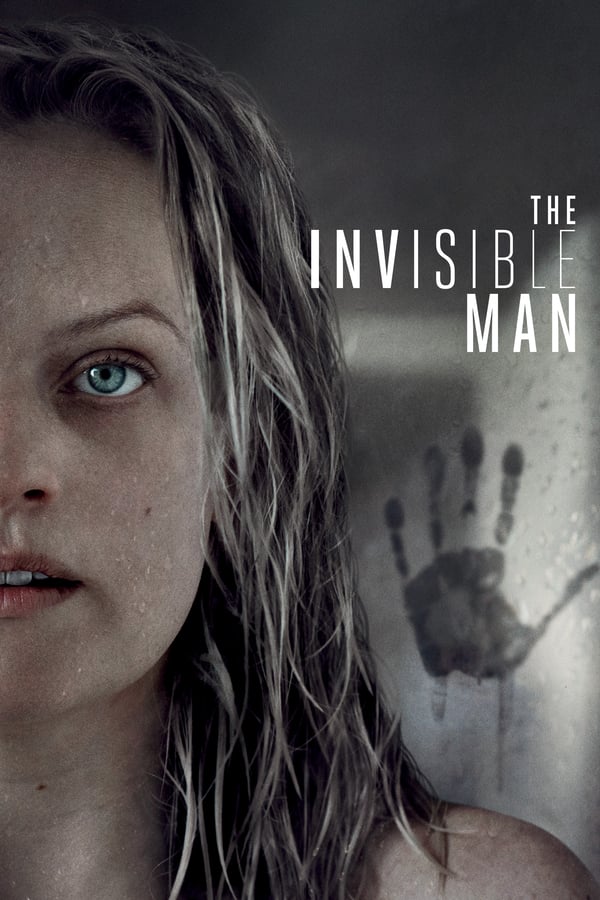
I can maybe chalk this one up to low expectations, but I enjoyed The Call of the Wild a lot more than I would have guessed. A new version based on the classic Jack London book, and starring (and narrated by) Harrison Ford as the old man, the movie follows Buck, a large city dog who is dog-napped off to the Yukon to become a sled dog. There are obvious changes from the book, but overall, it is fairly faithful to the major themes. Buck has good masters, bad masters, but ultimately answers “the call” to go into the wild with wolves and become a leader among them. The film bombed at the theaters, with many calling out the distracting CGI. It actually didn’t bother me that much once I got into the flow of the picture, and enjoyed Ford’s narration and the feel-good story was nice. It’s not great cinema maybe, but I think it’s a good family picture that can be enjoyed by all ages. This is evidenced by a much higher audience score on Rotten Tomatoes than what the critics gave it. ★★★

Corpus Christi is a Polish film about Daniel, a young man serving time for murder in prison. While in jail, he’s found God and would like to be a priest when he gets out, but his criminal background is shoehorning him into a life of manual labor at a sawmill near a tiny town when his parole starts. Unwilling to go straight to the sawmill, he wanders into the local church, where a girl, Marta, correctly guesses he’s straight from juvie and headed to the sawmill. Daniel resents the assumption and says he’s in fact a priest. This little lie quickly grows out of control, when he is introduced to the parish’s vicar. That night, the vicar passes out drunk. The vicar admits he needs to go to rehab to get himself straightened out, and leaves the church in Daniel’s hands for the time being. With no training and a hard life in his past, Daniel has a way of talking to the people without pretense, and quickly becomes very popular. The town’s people are struggling with faith, hurting from a recent tragedy, a car accident that left 7 people dead; six were young adults in one car, and the other was a lone driver. Unable or unwilling to move on from this pain, the town has developed a mob mentality towards the lone driver’s widow, and Daniel takes it upon himself to bring the people together. The film is awfully blasphemous, so part of me had a hard time with the content, but the message of healing is a good one, and the acting by Bartosz Bielenia in the lead is very good. ★★★½

I was a bit disappointed by the Korean film Time to Hunt. It is marketed as a dystopian action thriller. Technically that’s correct, but the only dystopian element is that the market has completely collapsed, leaving the seedy underworld to be in charge. The film follows a group of three friends, one of whom is just out of jail for their last heist, as they plan a new one. Last time they robbed a jewelry store, but since the economic collapse, they decide instead to rob an illegal gambling house, which trades in the more valuable US dollar. They pull in a fourth friend who happens to work at the establishment, and the robbery goes off according to plan. Part of their getaway plan involved stealing the hard drives of the camera recordings, to help hide their identities, but unbeknownst to them, that data also has accounts numbers and identities to some of the gambling house’s high rollers, and that obviously cannot be allowed out there in the world. A hunt begins for our young quartet of robbers ensues, and this is the crux of the film. I was already a bit let down because I expected something else when I read “dystopian,” and the film didn’t help me out by getting a bit ridiculous in the final hour. Han, who is hunting the lead boys, is an almost comic book character, capturing them at times only to let them go for the joy of the hunt. And he has the superpowers of shutting off lights and making whole hospitals become deserted! It’s all a bit too much for me. ★½


Going to look at some of the most popular films of Ernst Lubitsch. He was extremely popular (and bankable) in his day, but you don’t hear much about these movies anymore. The Shop Around the Corner stars Jimmy Stewart (a few years before It’s a Wonderful Life) and Margaret Sullavan as coworkers in a small goods shop. They can’t stand each other, but unbeknownst to them, they’ve been writing anonymous letters to each other through a post office box and falling in love with that ideal person. The banter between them and the other workers in the store is fantastic, and there’s a whole plot involving the owner of the store (Frank Morgan, more popular known as the Wizard himself in The Wizard of Oz), and the owner’s wife having an affair with one of the other employees. But the developing love story between our two leads is the real draw. A very popular film, it was remade a couple times, into In the Good Old Summertime (starring Judy Garland) and, most recently, You’ve Got Mail with Meg Ryan and Tom Hanks. Though Mail credits the original play as its inspiration, it obviously draws heavily from this film (and if you remember, the bookstore that Meg Ryan’s character owns is named “Shop Around the Corner”). ★★★
The above film is from 1940, but a lot changed between it and 1933’s Design for Living, specifically, 1933 is pre-Hollywood Code. As such, more than just innuendo about sex, we get straight up talk about sex and straight up (off camera) sex. And it’s funny too! This film is about a girl, Gilda (Miriam Hopkins), who ends up on a train to Paris with a couple of men, roommates named Thomas (Fredric March) and George (Gary Cooper). Gilda is a successful corporate artist in advertising but the two men are struggling in their artistic endeavors, Thomas as a playwright and George as an artist. Each of the men instantly fall head over heels for the beautiful and vivacious Gilda, and in wonderful pre-code fashion, she’s not timid or shy about her own needs: she wants them both! The two men try to put bros before hoes and shake on not pursuing the girl, but neither can keep up his end of the bargain. When Thomas goes away to London to open a play, Gilda starts sleeping with George, but romps with Thomas when he comes back to visit. The film is delightfully funny, and though I haven’t seen a lot of pre-code films, I think they are so far ahead of their time in depicting strong women who stand up for themselves and what they want, physically and otherwise. It’s a fantastically fun film, based on a play by Noël Coward (loved
Imagine the deftness of writing and direction it takes to combine nail biting suspense with laugh-out-loud comedy. That’s what is found in To Be or Not to Be. The film follows the actors of a small theater in Warsaw, Poland, in the days leading up to and just after the Nazi invasion. Josef Tura (Jack Benny) is the leading man, supported by his wife Maria (Carole Lombard). Maria meets with a young Polish airman in her dressing room each night during the performances, and once the invasion begins, the young man goes to England where he can fight the Germans. There, he meets a Polish resistance leader, Professor Siletsky, and gives him a message to give Maria. However, Siletsky is actually a spy for Germany, and has been gathering intel on those Polish citizens who have gone over to fight against the invaders. Back in Poland, Josef and Maria have been doing what they can to support the resistance, and now take it upon themselves to kill Siletsky before he can pass on his intel to the gestapo. Sounds dire, and it is, but this black comedy is also incredibly funny. The comedic lines are delivered perfectly, at unforeseen moments, so that even when you are leaning forward during a tense exchange, when the actors are in very real fear of death, something will be said that will ease the tension and produce a laugh. Done poorly, and either the drama or the comedy suffers, but nothing is done incorrectly in this film. It all goes together so wonderfully. If the writing isn’t perfect, or if the direction isn’t spot on, or if the lines aren’t delivered just so, a movie like this could be a mess. Instead, it all comes together to brilliance. The film was not well received when it was released in 1942, it was after all satirizing the Nazi party when they were doing some very terrible things. But seen today, it is a whole other story. On a side note, Lubitsch (a German-born Jew who was a successful director in Germany before the war, and in Hollywood during it) was particularly despised by Hitler, who used Lubitsch’s face in propaganda pictures. ★★★★★
Heaven Can Wait is the first clunker from this director that I’ve seen. It still has some of the witty dialogue, but wasn’t all that intriguing for me. An old man has just died and rather than arrive at the pearly gates, he gets to the one place where everyone in his life has told him to go. At hell’s vestibule, Henry is greeted by a suave and welcoming Satan, who admits he isn’t familiar with Henry’s credentials to get him into hell. Henry begins to recount what he believes is a bad life, starting with being a naughty child, and then into adulthood, where he ran away with his cousin’s betrothed, only to continue his dalliances (off-camera of course). Henry always had a way with words, which kept him out of serious trouble throughout his life, and he uses them to save his marriage. Henry is portrayed by a young Don Ameche, who I recognized immediately from films of my childhood (Cocoon and Trading Places – one of my favorites as a kid). But nothing is memorable about this film unfortunately. ★★
Cluny Brown is a young woman, niece to a plumber, who isn’t afraid to do things for herself (and in fact, loves crawling under a sink and fixing a leak herself). When she responds to a service call in place of her uncle and does just this, she meets a foreigner named Mr Belinski, who is in London in hiding from Hitler’s Nazis. Mr Belinski is smitten with the modern Cluny, and fate brings them together again when they meet in the country, after Cluny is there to become a maid and Belinski is again in hiding. Cluny tries to do what she thinks is proper and has a date with the local pharmacist, but Belinski tries to convince her that the man is not for her, with his staid and unadventurous lifestyle. It’s a very nice romantic comedy, with Lubitsch’s trademark risqué interchanges. And holy cow, how did some of this dialogue get past 1940’s censors?! There’s a delightful scene where Cluny is thanking Mr Belinski for meeting him in the city and rolling down her stockings and banging it out (meaning the plumbing) within earshot of the housekeepers, who are obviously flabbergasted. The dialogue is the best part of the film, as the story is a little too expected. Nuts to the squirrels! ★★★½

Brute Force may be one of the best prison films I’ve ever seen. Released in 1947 and directed by the great Jules Dassin before he was blacklisted during McCarthy’s communist witch hunt, it features a couple young stars in Burt Lancaster and Hume Cronyn. The “action” of the film takes place entirely in a prison, where the inmates all dream of getting out and returning to their girls waiting on the outside. No one wants out more than rabble-rouser Joe Collins. The other prisoners follow his example, and the guards are understandably weary around him because of this. Joe is particularly opposed by the sadistic captain of the guard, Munsey. Munsey plays the prisoners off of each other, fermenting paranoia and angst among them. Joe is onto the game though, and is able to gather a few close friends to plan a real escape. The attempt is fantastic; even though the viewer knows it can’t possibly succeed, we hold out hope that a miracle can happen. Interspersed throughout the film are flashbacks, some heartbreaking, for each of our main troupe, showing the reason they want to get out and the life they want to return to. This is the third Dassin film I’ve seen, and loved
Ride the Pink Horse is a seldom-seen film noir from director Robert Montgomery, who also starred in the lead role as Lucky Gagin. Gagin comes to a tiny town in New Mexico, San Pablo, in order to blackmail a crime boss, Frank Hugo, over the murder of Gagin’s friend. In classic film noir fashion, there are some side tracks, double crosses, a ne’er-do-well girl, and some innocents who try to give a helping hand to Gagin along the way. I resisted liking Gagin through much of the film, because frankly, he’s not a very likable guy. He is rough with people, condescending, and downright cruel in his talk to the local Mexican immigrants in town, calling them derogatory names even when they are helping. I know a lot of that can be written off as part of the times in 1947, but it doesn’t make it any easier to watch. Still, Gagin gets his comeuppance in the end, and his language and character issues aside, the film itself is absolutely enthralling. Not sure how this one hasn’t gotten more attention over the years, but anyone who likes film noir should check it out. ★★★★
Hold Back the Dawn is a lovely romance from director Mitchell Leisen, based on a screenplay by Billy Wilder. Georges is from Romania and is trying to immigrate to America for a new start. He can afford to get to Mexico first, but it is there that he learns about quota limits on who can cross into the USA, and is told it will be 5-8 years before he can enter. A few months in, and broke from living at the local hotel, Georges is reunited with a former dance partner from Romania, Anita, who tells him how she was able to get US citizenship by “marrying in” and then quickly divorcing. Georges plans to do the same thing, and targets a visiting schoolteacher, Emmy, who is in Mexico with a bunch of field-tripping kids. Georges woos her and marries her all in a day, but is at least gallant enough to put off their wedding night. Over time, as Georges tries to avoid the USA immigrant agent who frequents the Mexican town with eyes out for people just like him trying to get into the country any way they can, Georges starts to have feelings for Emmy after all. But will he realize it himself before she catches on to his plot? It’s a very nice film; perhaps not all that memorable in the long run, but entertaining. Emmy is played by none other Olivia de Havilland, Melanie Hamilton of Gone With the Wind fame. She received an Oscar nomination for this role, and the picture received 6 nominations overall. ★★★½
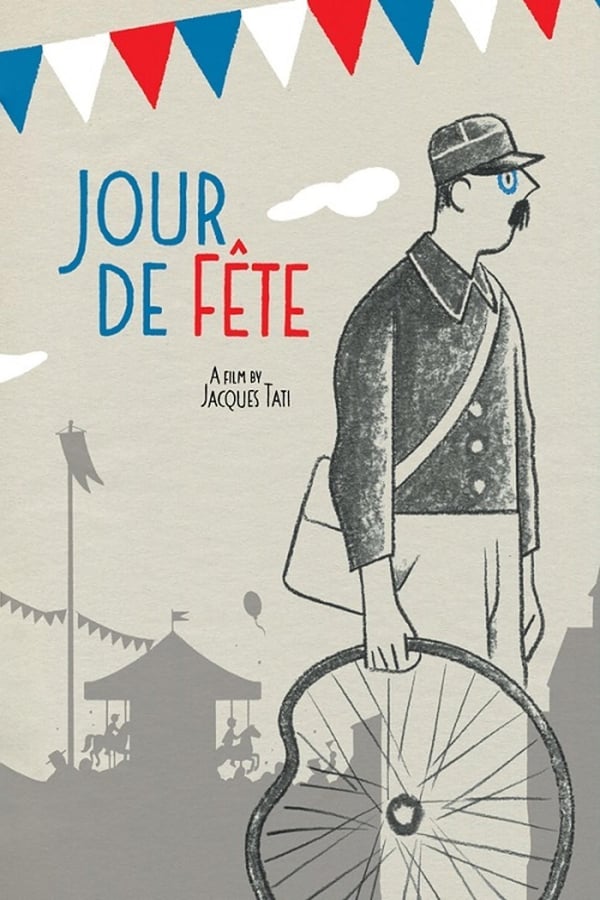
My Name is Julia Rose is sort of a tense, quasi-psychological drama, from director Joseph H Lewis. It’s a simple picture, just a hair over an hour long, and not all that deep either. American immigrant Julia is desperate for work in the UK, and visits an employment agency where she hears about a job as a secretary for a wealthy woman. All seems ok until we see the family she is to work for, and they start whispering about nefarious doings. As soon as Julia gets there that night, she is drugged, and wakes up 2 days later in a seaside mansion, and is being called a different name. She doesn’t know what their intent is, and no one knows she’s there. The rest of the film is about her boyfriend trying to hunt her down, and her repeated attempts to escape the crazy family. Strange picture, and a few too many cheesy moments, even for a 40s flick. The constant (and I mean CONSTANT) violin runs and tremolos, to build suspense I guess, grew tiresome even during the short length of this film. ★½
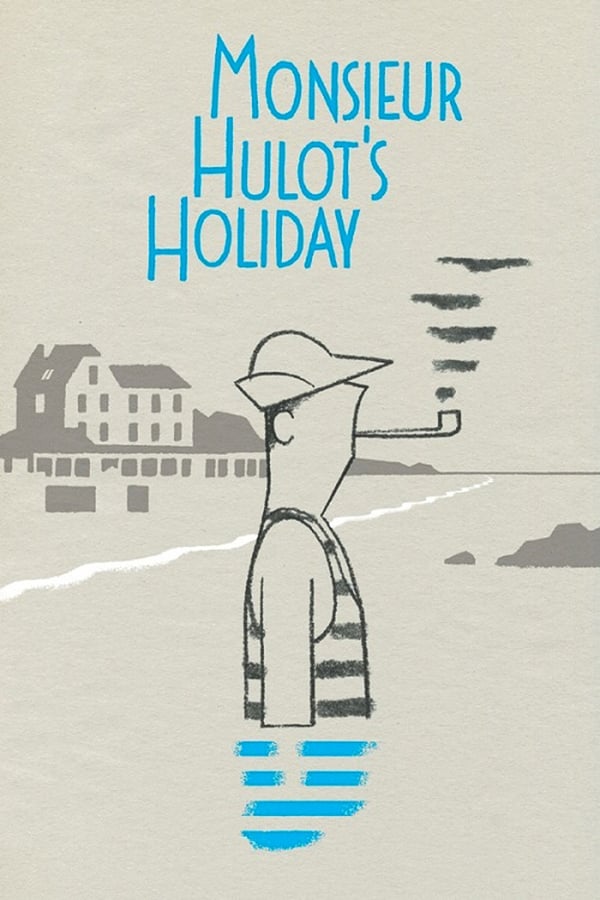
So Dark the Night is from the same director, and it is a bit better. It’s a classic who-done-it in the film noir tradition. Henri is a famous detective from Paris on vacation in a small village in the French countryside. A local girl, Nanette, sets her eyes on him as a way to get out of the tiny town. Nanette’s mother encourages her to pursue Henri, but Nanette’s father and her longtime beau Leon have obvious objections. When Nanette ends up dead of strangulation, Henri suspects Leon immediately, until Leon is found dead too. Those are just the first two, and the killer starts leaving notes of warning to Henri as well. The ending gets a little weird, with some wild leaps in typical 40s fashion, but it was still ok. And I do like a short film I can watch in about an hour! ★★½