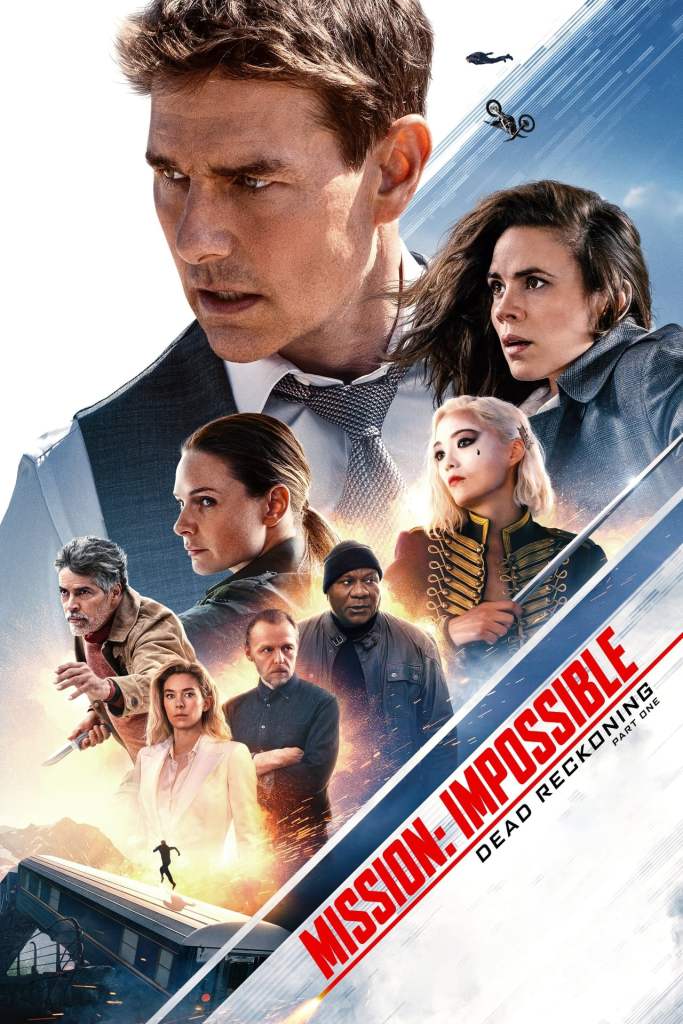
Between the Top Gun sequel last year and, now, Mission Impossible: Dead Reckoning Part One (I know, it’s a mouthful), Tom Cruise is certainly doing everything he can to save the theater industry. He didn’t disappoint last year, and he doesn’t again, proving that he may still be the most bankable action star around, even at the ripe (young) age of 61.
In this film, Ethan Hunt and his team may be up against an enemy that cannot be defeated. The premise, set up in the first 15 or so minutes is thus: Russia has built an artificial intelligence program for its military, and was in the middle of testing it in their latest high-tech submarine, when the program becomes self aware and kills everyone on board. Called the Entity, it has now gone online and has the potential to hack into any system in the world. There may be only one way to stop it: locating the two halves of a key that plugs into its original mainframe in the sub (now resting at the bottom of the sea), where the Entity’s source code still rests. The problem is, very few people know what the keys do, or where the sub’s location rests, only that those keys have the potential for great power. As such, governments around the world and power individuals (mostly of the bad-guy variety) would all love to get their hands on that key. Hunt knows that cannot be allowed to happen, and destroying the Entity is the only option.
Hunted by his own government, bad characters the globe over, and a villain from his past who has been promised riches untold by the Entity, Ethan sets out to get those key halves and discover what they unlock. He has his duo of friends (Ving Rhames and Simon Pegg), and comes across old allies and enemies along the way. We also get a new member of the team: Grace (Hayley Atwell), a thief who originally wanted the key to sell to the highest bidder, but who gets drawn in to Ethan’s quest to do what is right.
This movie is fantastic. It is an old school action flick; in a time when stunts are slathered up by CGI (often to mixed results), much of this film is done the old fashioned way, with Cruise doing the bulk of his own stunts. And it tells. There is a feeling of “realness” even in the most insane car chases and fight scenes that is often lacking in most movies these days. If I have any quibbles, it’s that the movie feels a little long (expected, as it runs at 2 hours 43 minutes), and that some of the dialogue/explanation takes awhile to get through, to make sure the audience is getting everything that is going on. But even so, the action of the movie more than makes up for it, and it is a movie that must be seen on the big screen. Can’t wait to see the finale next year! ★★★★★
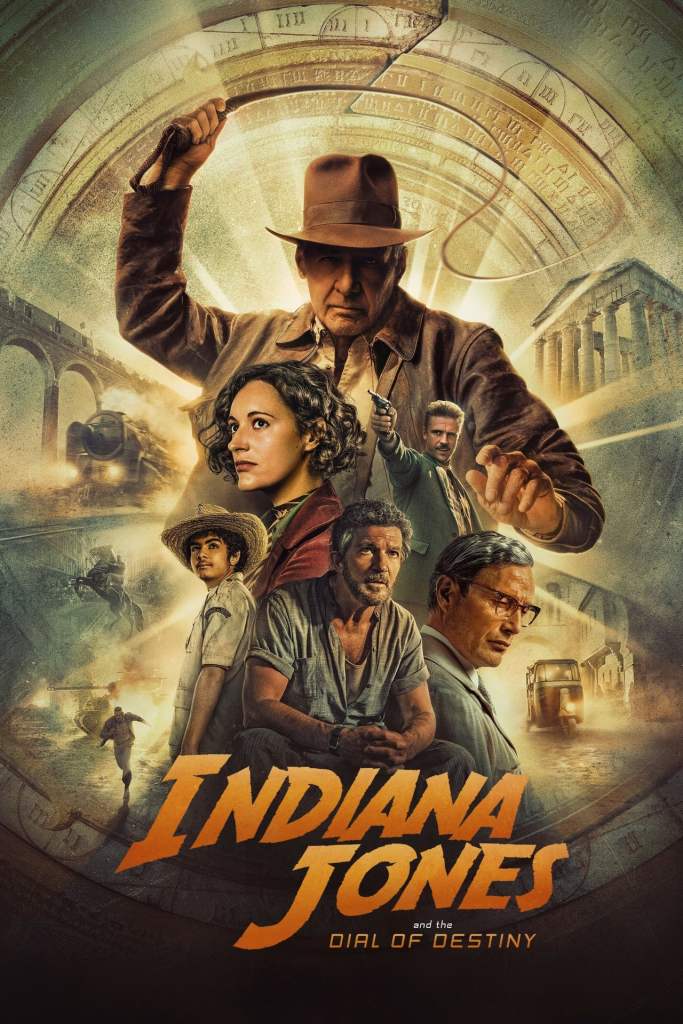
Went into the new Indy film with excitement and trepidation. Excitement because I loved these movies growing up in the 80s, and trepidation because old Indy is now, well, old, with Harrison Ford turning 81 next week. Unlike many, I didn’t hate 2008’s The Crystal Skull; it was no Raiders or Last Crusade, but it was alright. Unfortunately that’s all I can say for The Dial of Destiny too.
The film begins with a (rather long) introduction in 1944, when Indiana Jones is battling his longtime nemesis, those pesky nazis. A German scientist named Voller (the always great Mads Mikkelsen) has found half of famous Greek Archimedes’ mythical Dial, but Indiana and his friend Shaw are able to wrest it away and make their escape. In present day (which is 1969 in the film), Voller has changed his identity and has recently helped the USA put a man on the moon, but he has not given up hope of finding the dial again. His ultimate goal is to use its power, supposedly to go through time, and go back and change the outcome of World War II.
Indiana is now a crotchety old man, struggling to make his students or archaeology excited about the past, when all they care about is the future. He is visited by Shaw’s daughter Helena, who wants to get her hands on the dial too, but only to sell it. She has not followed in her deceased father’s footsteps, and is basically a trumped up thief. She knows her father gave the dial to Indy before he died, so she wants it, and shows up just as Voller and his fellow nazi sympathizers zone in on Indiana Jones too. What follows is an adventure across the world, taking Indy and Helena to Tangier, Greece, and Sicily, combing through caves, ruins, and even to the bottom of the sea.
The film is ok, and by that, I mean just ok. For a film series that features the Ark of the Covenant and the Holy Grail, this movie makes you check your credibility at the door. There are far too many wild chances that come to take place, too many scenes are a little too perfect, even for Hollywood. And Helena, God bless her, is not only one-sided, but annoying too. They try to paint her as a powerful woman who doesn’t need to be rescued like the women in past Indiana Jones movies, but it doesn’t work. The best scenes in the movie are when Indiana is putting together clues while on his hunt, which is still just as good as it’s ever been, but otherwise the movie feels long and, what’s worse, even boring at times. I think it is finally time to let this version of Indiana Jones rest. If they want to reboot it in the future with fresh ideas and a new young character (may be sacrilege to even think that, but maybe in a TV series?), that may yield better results. ★★½
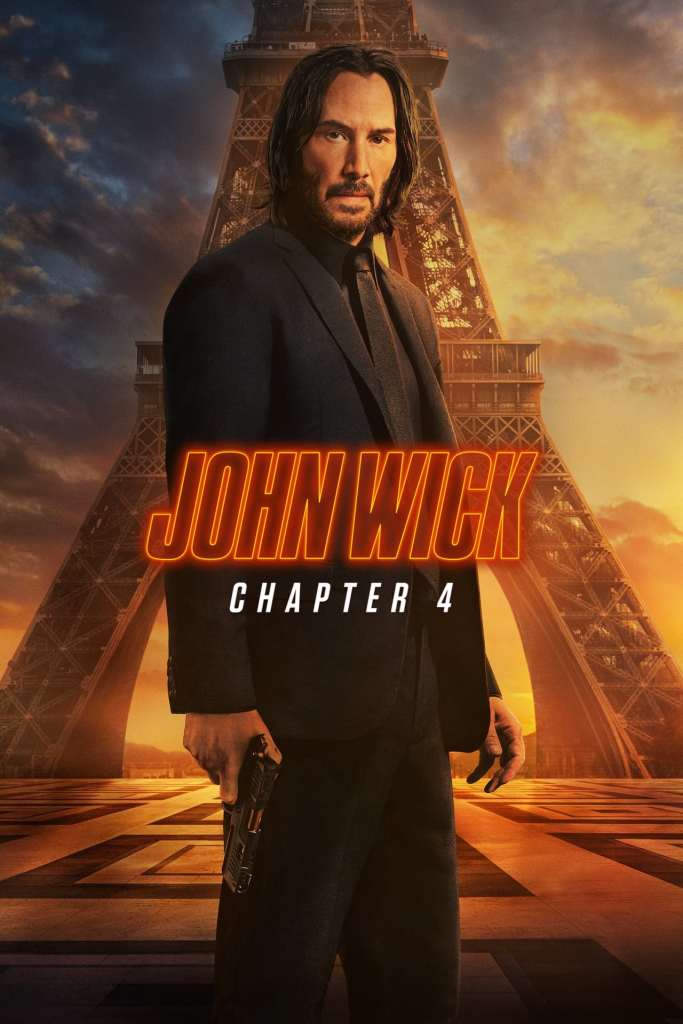
John Wick: Chapter 4 continues the over-the-top action of the first three movies, and Keanu Reeves shows no signs of slowing down in his carnage (a quick google search will tell you that John Wick has killed 439 people so far in this film franchise). This film begins much like the last couple have: we meet a new villain (Bill Skarsgård as the Marquis, a High Table member and, thus, leader of the criminal underworld) who wants to finally take John Wick down. Using leverage, he hires one of Wick’s old friends, retired assassin Caine, to hunt Wick, and also sets out a high bounty on Wick’s head, drawing interested parties from all over the place, including skilled newcomer “Mr Nobody.” The first half of the film plays out in familiar territory, despite the non-stop action, but this film franchise always finds a way to one-up itself, so the second half finds John Wick fighting on an open street in Paris, as cars are zipping by left and right, and after that, having to fight his way up a long flight of stairs as bad guys keeping coming down. What are they going to do in the next movie, fight on the moon? And next one there will be: a fifth film is in development, as well as a spinoff movie (Ballerina, in which Keanu Reeves will appear), and a spinoff series (The Continental, a prequel about how character Winston Scott came to run the eponymous hotel in the film series). Somehow, the filmmakers have found a way to keep this train going while still feeling fresh and exciting. ★★★★
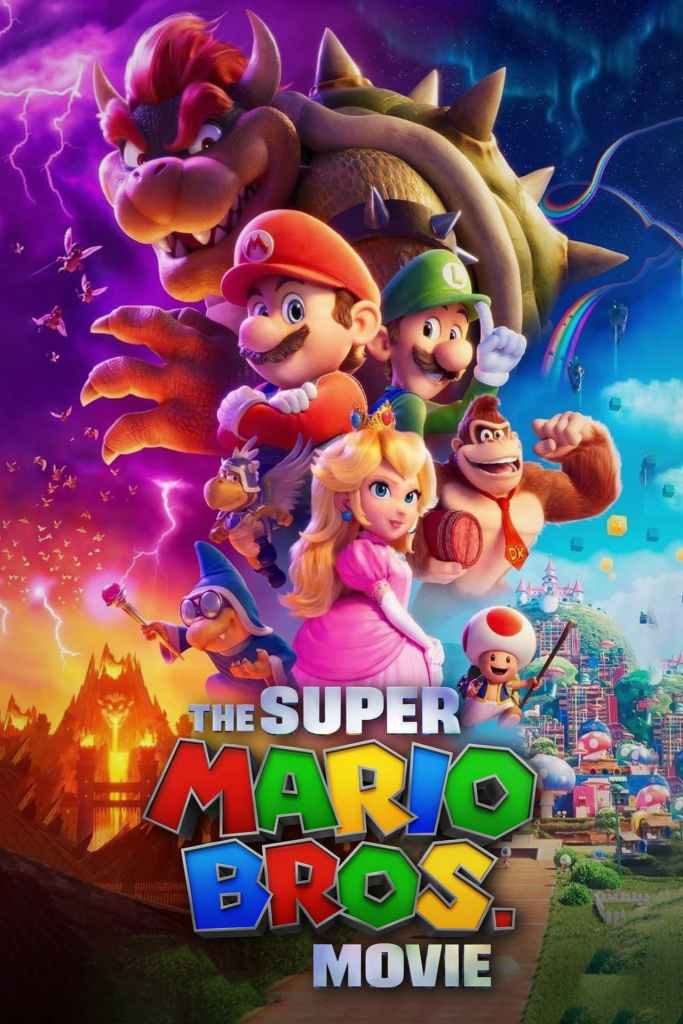
Was really looking forward to The Super Mario Bros Movie, as I am a child of the 80s and cut my teeth on the original Nintendo and Super Nintendo. The trailer showed this to be a big throwback, with all kinds of easter eggs and memorabilia for people who’ve played all those games growing up, and the movie does deliver on those counts, but outside of a lot of nostalgia, the movie was pretty ho-hum. Mario and Luigi are plumbers in Brooklyn when they are sucked into a pipe and find themselves in Mushroom Kingdom. Separated, Luigi is held captive in the Dark Lands, ruled by Bowser, while Mario meets Toad, gets introduced to Princess Peach, and joins her cause to beat Bowser and save the world (and rescue his brother in the process). Along the journey, they’ll tangle with Donkey King, kart it up on the Rainbow Road, and stomp plenty of koopas. The music was of my childhood, the power-ups and enemies of the games are all on display, so it was fun in that aspect, but nothing else really stood out. I think kids would enjoy it for sure, as it is plenty bright and colorful, but otherwise it is just a trip down memory lane for adults. As such, your mileage may vary. ★★½
Infinite Sea took me by surprise, was not expecting to like this one as much as I did. A sparse, low budget (though you would never tell based on how beautiful is its cinematography) Portuguese movie from a first time director, the film takes place in the near-future where life on Earth is coming to an end. Miguel spends his days roaming an empty city where the lights are on, but no one is home. The air heavy with smog and meat no longer available for consumption, anyone with money or connections has signed up to be shipped to a new world orbiting Proxima Centauri, the nearest star system to ours. Miguel was denied the trip due to a water phobia, which is problematic as people spend the trip in deep sleep hibernating in a water chamber. While asleep, the people are sharing a dream, which seems like a minor detail until you realize that maybe Miguel is already on the ship and is dreaming now. A little ways through the movie, we see Miguel on a desolate planet barely scraping by, working for the space agency. Is this the future on Proxima B (as the rumors say, that there is no hope in the stars?) or is it his real existence on a very terrible future Earth? Which is the dream and which is reality? Accompanying Miguel through both storylines is Eva, a woman he meets at the pool where is trying to become more comfortable in water, and the two develop a bond. This film isn’t for everyone: there’s more empty space than there is dialogue, and there’s a lot of foreboding music playing over tons of imagery. But for those with patience and a joy of movies that let the viewer write the story in a way, this one’s for you. ★★★★½
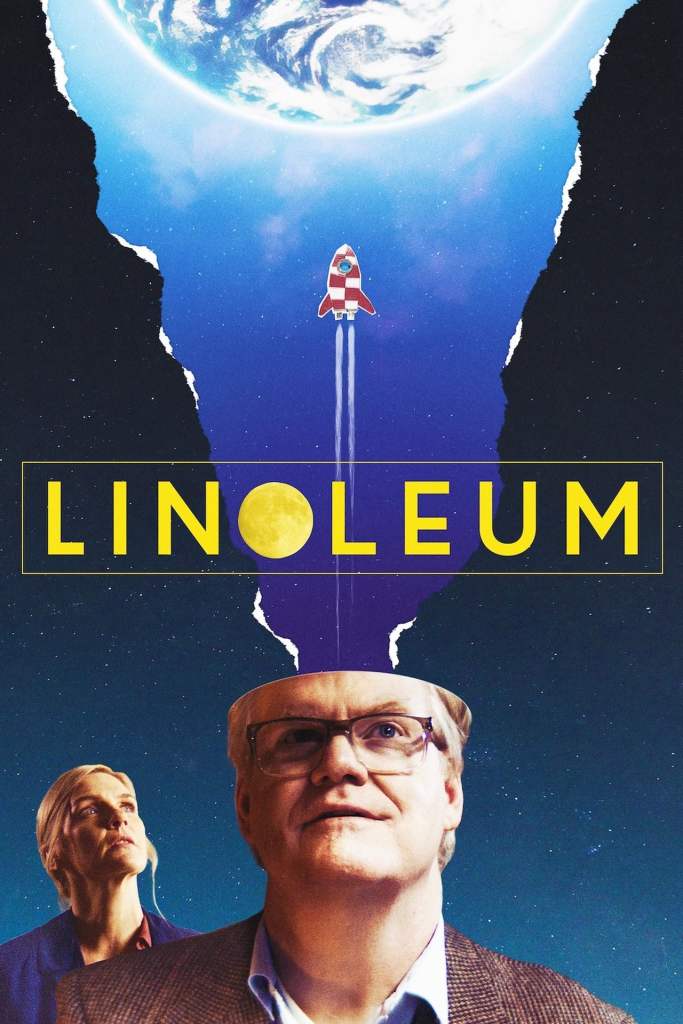
Linoleum is another film that, while maybe it didn’t surprise me like Infinite Sea (though the ending is definitely out of left field), it did end up being something entirely different than what I expected from the beginning. It starts by following its main protagonist, Cameron, who always wanted to be an astronaut but instead is a Bill Nye-like TV host of a kid’s science show, with no ratings as it airs at midnight when all the kids are asleep. His wife Erin is divorcing him, unbeknownst to their kids, and his work is threatened when the execs hire a new host, funnily enough Cameron’s new neighbor and doppelgänger, Kent Armstrong (Jim Gaffigan plays both parts). Cameron’s daughter Nora starts to hang out with Kent’s son Marc, and to make matters weirder, some kind of satellite has just crashed in their yard, forcing the family to move in with a friend while the government investigates. However, Cameron comes up with a cockamamy plan to rebuild the crashed satellite/rocket and make his triumphant trip to space. His wife Erin, who once shared and encouraged his dreams but gave them up for reality long ago, doesn’t know what to make of it. For a long time the film borders on the outrageous, but I couldn’t help but get caught up in Cameron’s real drive of trying to find success for once in his life. And just when I thought the movie was going to be a quirky indie comedy, in the end, it becomes something else entirely: a very heartfelt drama, with a twist as I mentioned. Gaffigan is known for his comedy obviously, but he is anchored here and supported by Better Call Saul’s Rhea Seehorn and The Walking Dead’s Katelyn Nacon, who really shines as daughter Nora. ★★★★½
A couple of the above movies surprised me, but I was expecting brilliance in Aftersun, which received huge praise from critics and won a boatload of awards on the film festival circuit this past season. It delivers, but only for those, again, who have the patience to allow it to unfold. The movie takes place in the 90s and follows a father, Calum, taking his 11-year-old daughter Sophie on vacation to Turkey. Calum and Sophie’s mother are recently separated, so this trip is just a father/daughter affair. Calum is encouraging, nurturing, and loving, everything that a budding teenager could hope for, and the movie plays (for a long time) as a seemingly plotless, meandering story. The two sight-see, lounge at the resort, and Sophie from time to time listens in on older teens as they talk sex, and she flirts harmlessly with a boy her age. For a solid hour, the movie tricks you into thinking nothing has really happened, when in reality, everything is happening right in front of you, and you don’t even know it. With forty minutes to go, I started seeing cracks in Calum’s veneer, and realized that he’s been hiding a lot of inner turmoil, doing what any good parent would do, so that Sophie can just be a child, completely unaware of the struggles her dad is going through. I will say no more than that, because the ending deserves to be experienced with as few clues as possible. Watch with patience, but definitely watch. You will not be disappointed. ★★★★★
TV series recently watched: Justified (season 1), Evil (season 2), Poker Face (season 1)
Book currently reading: Dune House Harkonnen by Herbert & Anderson
Honestly, was going to wait for Transformers: Rise of the Beasts to hit streaming, but a coworker urged me to see it in theaters, and glad I did. I liked Bumblebee a few years ago, but otherwise had grown stale on the whole Transformers franchise; I didn’t even bother seeing The Last Knight and only saw Bumblebee because of good word-of-mouth. But this new film continues down a good path, hopefully with a bright future for the Autobots.
The premise is thus: a planet-eating dark god named Unicron is after an item called the Transwarp Key, which will allow him to travel the galaxy devouring planets at will. Guarding the Key are the Maximals, transformers who change into beasts. They escape the planet with the Key and escape to Earth, thousands of years ago. The Key has been hidden there, until now. From here, the film takes place in 1994, so still a prequel of sorts to the rest of the movies.
In ’94, the key is found inside an ancient artifact, and once unearthed, throws out a signal that attracts Unicron’s forces, the Terrorcons. They come to Earth and start smashing things up, hunting for the key. To face off against them: good old Optimus Prime and a handful of Autobots, including the ever-popular Bumblebee, though Mirage takes a more central role in this film. Mirage becomes buddies with human Noah Diaz, a down-on-his-luck former soldier trying to scrape together money for his family. Noah gets swept up in the war trying to keep the Key out of the bad guys hands, so they can’t open a door to bring Unicron here to destroy Earth. At the same time, Optimus would love to use the Key to return to his home world of Cybertron.
There’s plenty of robot-on-robot action, but a strong human story too, with Noah’s story and his plight. Even putting the whole transformers thing aside, there’s still some pretty big leaps of faith to take here and there in the plot, but it’s still a good time, and I think the film franchise has at least found some solid footing again. ★★★½
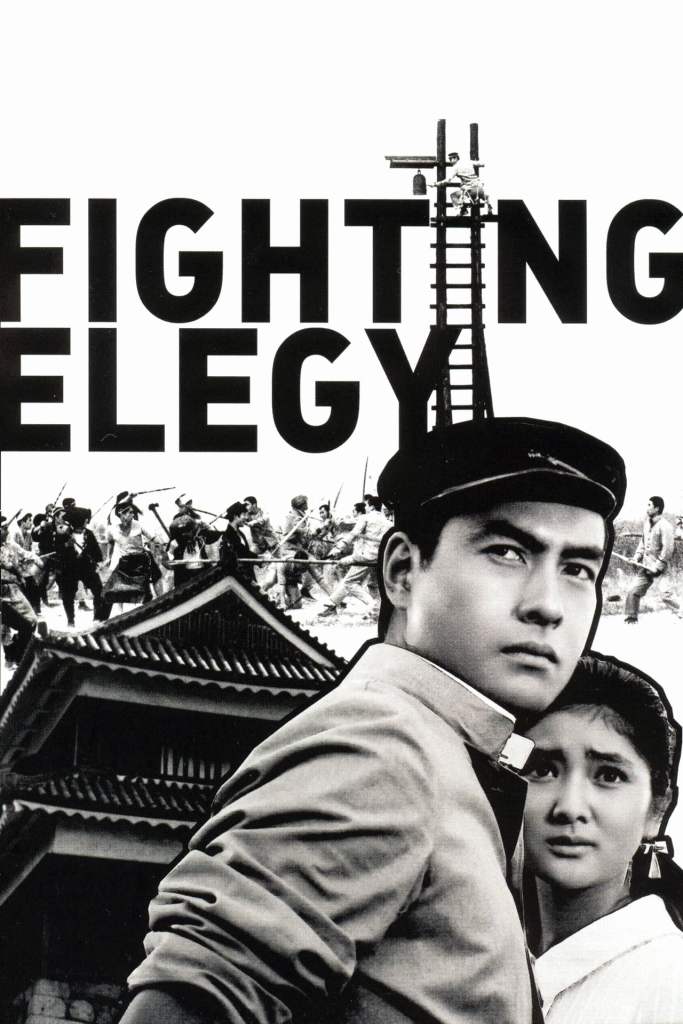
My second go-around with celebrated Japanese director Seijun Suzuki, and the first group was hit-or-miss with me. After this first movie, 1966’s Fighting Elegy, it’s still a miss. The movie follows a teenager named Kiroku who has all of the pent-up sexual tension that comes with being a teenager in an all-boys military school (sent there by his strict father for causing too much trouble). While at school, he’s living in a boardinghouse, and he’s set his eyes on his landlady’s daughter, the devoutly Catholic Michiko. Unable to get “his release,” Kiroku turns to fighting, taking combat lessons from a man named Turtle. The two young men go so far as to take control of a school gang, fighting their way to the top. Isn’t too long before their seats get hot, and they must flee to a new city, again running into the local gang. Michiko does make an appearance again before the end, but I had nearly forgotten her by then. The movie is outlandish to the point of silly, like when Turtle takes out a trio of school officials by flicking peas in their faces. The humor is over-the-top on purpose, but it was also over my head. I didn’t understand the mix of laughs and violence at all. ★
Branded to Kill, from 1967, is also over-the-top, but at least it has style, and an overarching plot that glues it all together. Hanada is an assassin, the “third ranked” killer in Japan, and he’s very good at his job. Against his better judgement, he takes a job from a woman to kill a foreigner on a busy street, but the job goes wrong when a butterfly throws off his aim, and Hanada kills an innocent bystander instead. This mistake will turn all of Japan’s underworld against him, but unfortunately for Hanada, that may have been the woman’s, or more accurately, her employer’s, intention from the beginning. Hanada holes up in an apartment, being hunted by the “number one” assassin, but maybe they become friends by the end? Better laughs in this film (including Hanada’s bizarre sexual fetish with the smell of steamed rice, or the femme fatale role, a woman with a death wish), and for me, much easier to follow than Elegy. Still, the movie pushed too many buttons with Suzuki’s bosses at the film studio, and they’d had enough. Suzuki was fired for making “movies that make no sense and no money” and didn’t make another film for 10 years. I think the execs were wrong on this one. ★★★
After a decade away from the spotlight, Suzuki returned in the late 70s. Zigeunerweisen was his second film after coming back, released in 1980. And it is a masterpiece. Gone are the jump cuts and goofiness that prevailed in his earlier films, and instead, Suzuki unfolds a longer, more mature surrealist drama. Aochi is a college professor happening through a small town when he comes across an old friend, Nakasago. Nakasago is in the midst of being charged with the murder of a girl found on a nearby beach, but Aoichi vouches for his buddy and Nakasago is let go (he later admits to Aoichi that he did kill the girl, but Aoichi refuses to believe him). Nakasago was once a teacher too, but has given up that life to be a nomad, never settling in one spot for long. What follows over the next two hours is a wonderfully bizarre head trip, leaving the viewer wondering what is real and what is dream, and even who is alive and who is a ghost. Nakasago and Aoichi share women, including each others’ wives, share experiences, share their views of life and death, and make a pact that will explode in the end. One of those movies that you can watch multiple times and still be left pealing back layers, trying to get to its core. ★★★★½
Kagero-Za ups the surrealism to level 10, and feels like one big dream sequence. A man named Matsuzaki meets a mysterious woman and is instantly drawn to her. Unfortunately for him, she may be dead (a ghost). He later learns her name is Ine, and she may be the deceased wife of Mr Tamawaki, who may have “other” wives to whom he won’t admit. Matsuzaki is drawn to one of these women, who looks an awfully lot like Ine. I use the word “may” a lot because honestly, you never know exactly what is going on in this film. The viewer is quickly lost in a maze without a map, but you get the feeling that there is a map, and it may (there’s that word again) unfold if you pay close enough attention. There are scenes scattered about where moments of clarity come together, and just when you think you have a handle on it, Suzuki turns it upside down again. Like Last Year at Marienbad, it is wonderfully confounding. Much ends up getting explained in the final act, when children put on a play which follows the paths of the 4 main characters, and the revelations threw me for a loop. ★★★★½
Suzuki’s run of hits ends with Yumeji, unfortunately, a fictional story about the painter Takehisa Yumeji. Yumeji is at a train station on the way to see his betrothed when he gets sidetracked in a little town, falling in love with a widow named Tomoyo. Tomoyo’s husband, Wakiya, recently drowned in the nearby lake, and she goes there looking for his unfound body, not for any sense of loss, but to make sure the jerk is dead. She and Yumeji hit it off right away, and things are looking fine for awhile, until Yumeji is out drinking one night and runs into a very-much-alive Wakiya. Wakiya is still on the run from a man who wants him dead (for dallying with his wife, as Wakiya is wont to do), even while he hints that he’ll kill any man who dallied with his wife Tomoyo while he was away. It’s a silly movie and incredibly slow. I swear Wakiya said he was going to go shoot Yumeji 10 times in the last 40 minutes, and, spoiler, it never happens. I think Suzuki’s late career successes with the above two films went to his head when making this one. ★½
TV series recently watched: Fear the Walking Dead (season 8.1), Under the Banner of Heaven (miniseries), See (season 2), Jury Duty (series)
Book currently reading: Dune House Harkonnen by Herbert & Anderson
Polite Society is a genre-defying film that, while it definitely has Tarantino influences, remains fresh and different from just about anything else I’ve seen lately. Ria Khan is a British-Pakistani teenager who doesn’t want to be a doctor like her parents would want, but instead has dreams of being a stuntwoman. In that way, she is following in her sister Lena’s footsteps, who also eschewed their parents hopes and went to art school, though she has recently become depressed and has dropped out. The girls’ outlook is changed when the family is invited to a high society party by another Pakistani family in the area. The matriarch, Raheela, is looking for a wife for her son Salim, and all the 20-somethings in their circle are fawning over him. Salim forgoes them all though and sets his eyes on Lena. Ria doesn’t want to see her sister give up her dream of being an artist, and smells something fishy about Raheela and Salim, looking for a way to break up the blooming romance. Her intuitions may just be right. The movie is bright and colorful, almost something out of Bollywood, but is also extremely funny, with elements of drama, a lot of action/hand-to-hand fighting, and even some horror elements thrown in for good measure. It is all over the place, but in a good way. It all blends and comes together in an outlandish but entertaining way. Very fun film. ★★★½
All the World is Sleeping is about a woman trying to break the cycle of addiction in her family, and showing how hard that can be. Chama grew up with a single mother who couldn’t beat her drug addiction, leaving Chama and her sister to fend for themselves. The sister has grown up to lead a fine life, but Chama unfortunately is following in her mother’s footsteps. Chama’s daughter Nevaeh isn’t old enough to understand exactly what is going on, but she is old enough to be disappointed when her mom breaks promises and doesn’t show up to stuff. Despite her best intentions, Chama’s life continues to spiral. Even when she finally enters a rehab facility, in hopes of somehow keeping her daughter, we’re not sure she’s ever going to be ok. A very sad film, told in a roundabout way with snippets from Chama’s past, her current life, and other dream-like sequences, which are the effects of her drug-induced loss of reality. I think the film really wants to be more profound than it comes across, but it is still a very well done picture from a first time director (Ryan Lacen) on a budget. ★★★½
Next up is a French film, François Ozon’s Everything Went Fine. Third film I’ve seen from this director, and for the previous two, Frantz was incredible, and By the Grace of God was just ok. This one is more of the latter unfortunately. Emmanuèle and her sister Pascale are having to make a hard decision regarding their father André, who has recently had a debilitating stroke. He wants to end his life, and Emmanuèle doesn’t know how to feel about that. He wasn’t exactly a great father nor a great husband to their mother; apparently mom knew he was a homosexual going into the marriage, but loved him nonetheless, and the resulting marriage was a sad one for her. Towards his kids, André was emotionally abusive and overly critical, but Emmanuèle admits that she loves him anyway. As time goes by, André’s condition improves, but he is adamant about going through with his decision. Should be an emotionally charged film, but it never pulled me in. I felt for Emmanuèle and her psychological struggles, but never got swept away in them. However, strong acting all around, including a small role for Charlotte Rampling as André’s wife. ★★★
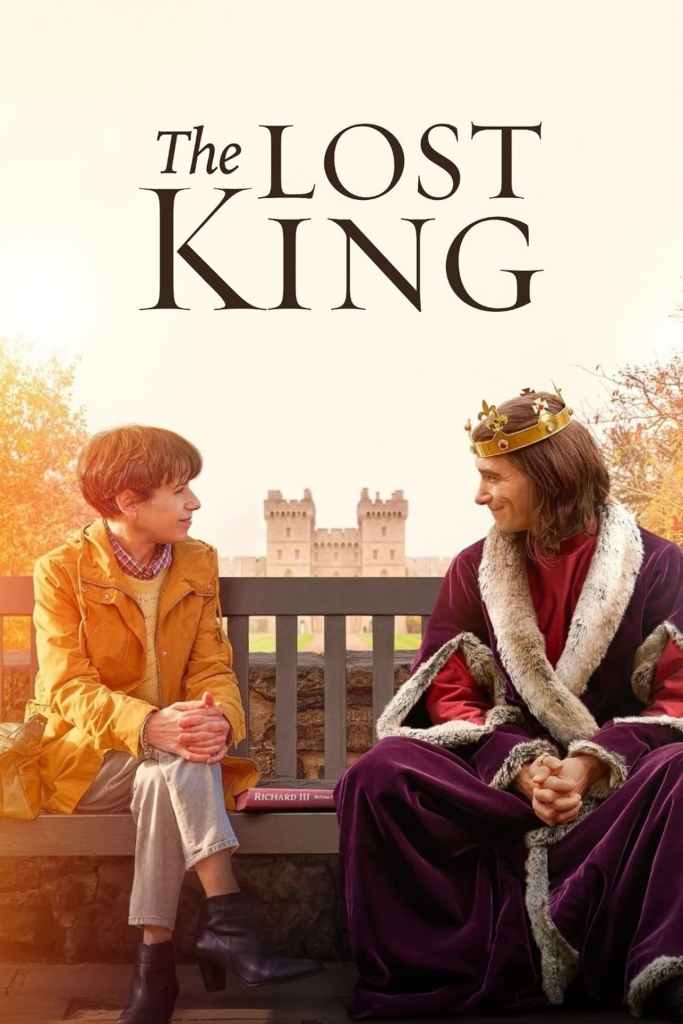
Based on a true story, The Lost King follows Philippa Langley in her quest to find the remains of King Richard III of England. Philippa sees the eponymous Shakespearean play one night, and immediately relates to Richard III, a man portrayed as evil only because he has a physical disability (hunchbacked; she herself suffers from chronic fatigue and was recently passed over for a promotion at her work). She joins the Richard III Society and starts learning as much about the man as she can, and makes it her goal to unearth the true story of what happened to his body upon his death. Legend has it that, when he died in the final battle of the War of the Roses, his body was tossed in the local river. Instead, Philippa starts putting together clues that he may actually have been buried at a friary in the area. Now she just needs to find the modern-day location of that old friary. Sounds like a very interesting story, and I remember when this all went down in 2012, as finding Richard III’s body made headlines around the world, but as a movie, it is awfully dry. Philippa is haunted by visions of Richard III, and even starts having conversations with him after awhile, and it all feels kind of hokey. Even a stellar performance by the always estimable Sally Hawkins as Philippa can’t save this boring film. ★★
Chevalier is the highlight today. It’s a biopic about a person I’ve never heard of, but who was an important figure that time almost forgot. Joseph Bologne was born in Guadeloupe, French islands in the Caribbean, in 1745. An illegitimate son of a wealthy white plantation owner and one of his slaves, Bologne would inherit nothing but a name, but he put that name to use. His father did one thing for him though: he recognized that his son was gifted musically, so at age 6, Bologne was taken to Paris and put in a fine school. Though abused at school by the white boys, he dedicated himself to his studies and excelled at fencing and violin, which attracted the attention of the queen of France, Marie Antoinette. She knights him Chevalier de Saint Georges, and roots for him when many won’t, but her favor only goes so far: when Bologne puts himself forward for the job of maestro of the Paris Opera, Antoinette is overruled by the powerful aristocrats. At a time when the French people are nearing revolution, Bologne decides to lend his powerful voice to their movement against the monarchy. The movie plays a little loose with the facts, as most biopics do, but I think the major bullet points are right, from what I can find online. He was an important figure who the powers-at-be tried to erase, but this film brings him back. Kelvin Harrison Jr is mesmerizing in the lead role, giving an absolutely brilliant performance. ★★★★½
TV series recently watched: Tehran (season 2), Waco (miniseries), The Girl From Plainville (miniseries), Tulsa King (season 1), Star Trek Picard (season 3), Freaks and Geeks (series)
Book currently reading: The Dawning of a New Age by Jean Rabe
First time in a very long time (a decade?) that I went and saw a movie on opening night. I’ve been looking forward to The Flash for a long time, even though I’m not as high on the DC films as I am on Marvel. This movie had a ton of buzz, despite James Gunn’s upcoming reset of the DC Universe. And I have to say, for me, it delivered.
I’m not a comics guy, but I have watched the CW Flash show, which was really good for the first few seasons. As such, I knew Barry Allen’s story. As a child, his mother was killed and his father was wrongly accused of the murder, sending him to prison and leaving Barry on his own. After receiving his superpower of super speed a few years ago, he is now The Flash, a member of the Justice League along with Batman and Wonder Woman (who show up in the opening fight), and others (who (mostly) don’t). The opening city-saving scenes are incredible and set the stage for a lot of action in this movie.
One day, Barry is doing his running fast thing when he goes so fast that he breaks through time and space itself, and goes back in time. This gives him the idea: he can go back in time and save his mom from dying. Despite Bruce Wayne’s objections that all could go wrong, Barry does it anyway, because he thinks he has a foolproof plan to save his mom without messing up the timelines. Of course, it doesn’t work out as planned, and Barry ends up returning 4 years earlier than expected. Though his mom is now alive, Barry runs into his younger self, and the timeline has definitely been f’ed up. Being 4 years ago, Zod is just now coming to earth, the plot of the film Man of Steel from 2013. In that movie (and in Barry’s timeline) Superman stopped Zod; unfortunately in this timeline, there is no Superman.
Barry and his younger self go to Batman for help, but here again, the timeline is different, and Barry’s Bruce Wayne (Ben Affleck) has been replaced with “an older model” (Michael Keaton). Still, Barry is able to convince him to team up and try to find others in this world who can help stop Zod. They are able to locate a super person (not giving away much when I say it is Supergirl, as she was in the promos), but things do not go well for our team. The more Barry tries to fix things, the more they go wrong, until an explosive conclusion. All because Barry cannot accept his mother’s death.
Say what you will about Ezra Miller, and he has had plenty of off-camera problems that nearly derailed this movie from ever coming out, but he (or they, as they prefer to be called) is incredible and heartfelt in this picture. Even when all the action is going down, and there is plenty of it throughout this movie, the viewer never forgets that Barry is doing everything to be with his mom again. A lot of heart in this superhero movie, and the ones that are able to pull that off tend to be the best ones. And it is super funny too; the audience with me was laughing the whole way through. I loved it from beginning to end. There’s a lot of fan service in the final act, but if you are up on your DC lore from the movies at least, you’ll be in on all of the Easter Eggs and have a great time. ★★★★★
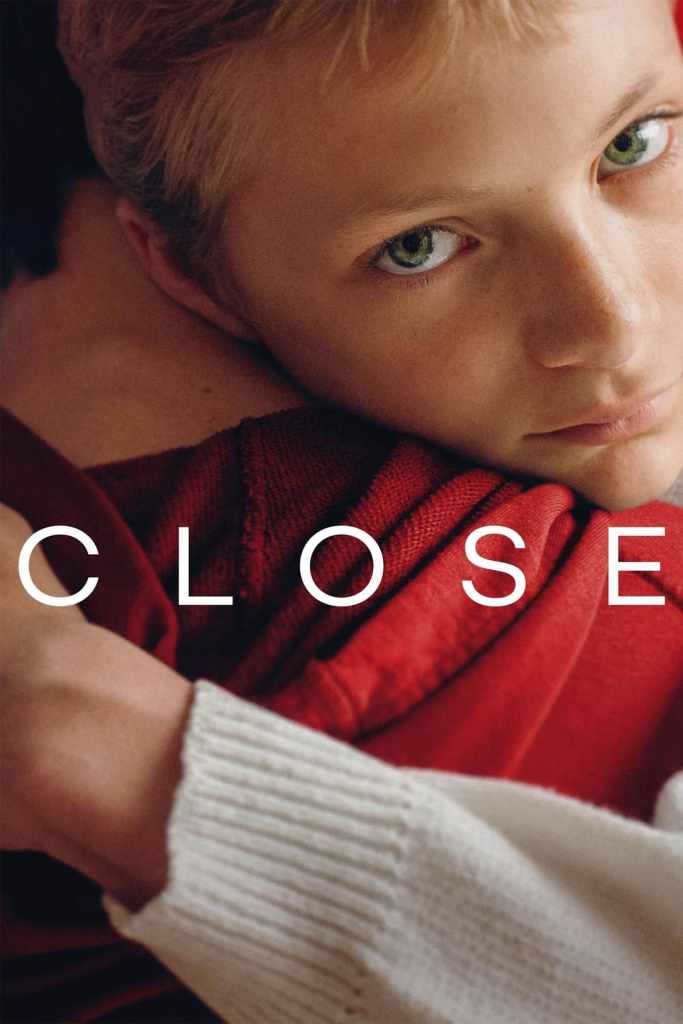
Ever watch a movie that everyone else loved, and wonder if you were seeing the same movie? That’s Close for me, which has a very good premise and was decent through the first half, but boy oh boy is it slooooooowwwww. A French film, it follows a pair of friends named Leo and Remi. They are 13 years old, at that age where they are leaving boyhood behind and starting to grow up. Their final summer before middle school, they spend every day together, sleeping over at each other’s houses at night, and often in the same bed with a childhood innocence. But when they start their new school together, others immediately notice how close they are, and point it out. The girls ask if they are a couple, and the boys make derogatory remarks. Leo immediately starts distancing himself from Remi, and participates with the other boys in whatever “manly” play they are up to. This hurts Remi hard, and the viewer is given the impression that, perhaps to him, he had deeper feelings for Leo than just friendship. This hurt leads to an explosive event halfway through the movie: Remi commits suicide. Left with a ton of guilt, Leo spends the rest of the movie trying to come to grip with his emotions. The kind of film critics are going to love, but it is hard to sit through, as not a whole lot of “action” to keep the movie flowing, and there are long scenes of silence and contemplation. ★★
Broker is the newest film from Japanese director Hirokazu Kore-eda (check out his Shoplifters if you have not). This film hails from South Korea though, and has a host of complex characters, each with a deep backstory that unfolds as the movie goes along. The main plot of the story revolves around So-young, a young woman who has just given birth to a baby, and leaves it at one of Korea’s famous “Baby Boxes” for unwanted children. This particular baby box is watched by Ha Sang-hyeon and his pal Dong-soo, who pick up the babies and sell them on the black market, to couples who, for one reason or another, cannot go the traditional adoption route. To the men’s consternation, So-young returns the next day and tracks them down, wanting to be part of the sale and a cut of the money. Whet she and the men don’t know though, is they are all being watched by the police too: detectives Soo-jin and Lee have suspected this baby black market and are right on the men’s trail. The parade of characters set off, picking up another along the way (Hae-jin, a boy from the same nursery/orphanage where Dong-soo grew up) and try to sell the baby. Sound dark? It should be, especially once we learn So-young’s tragic tale, but Kore-eda’s deft touch keeps it light, and the comedic moments (and there are lots of them) are laugh-out-loud funny. The first would-be parents rejecting the baby because his eyebrows are too thin? A sting operation by the cops that goes wrong when the actors can’t remember their lines when meeting the baby sellers? Hilarious! At the same time, as we get to know each character’s story, you get pulled in to their narratives and can’t help but root for the “bad guys” and the “good guys” equally. A heartfelt film with a ton of emotional heft. ★★★★½
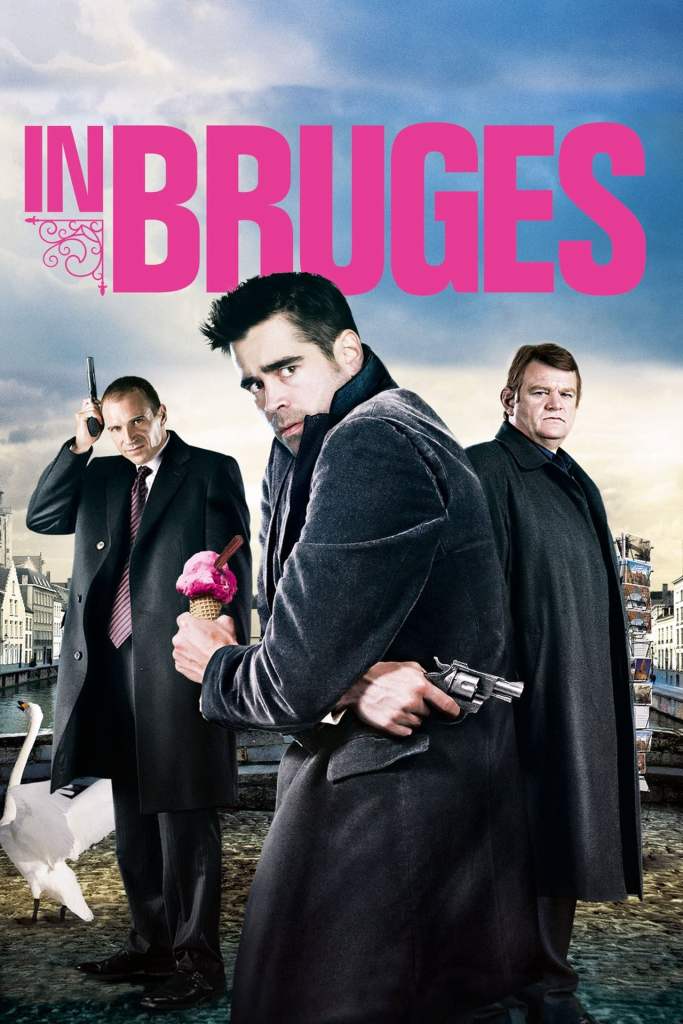
I loved director Martin McDonagh’s last two films (Banshees and Three Billboards), so when I and my friends were talking movies one day, they urged me to go back and watch his first film, In Bruges. Featuring the same two leads as Banshees (Colin Farrell and Brendan Gleeson), the film follows a couple hitman after a botched job sends them into hiding in Bruges, Belgium. For awhile, we don’t know exactly what went wrong, only that Ray messed up his first hit, and he and the more experienced Ken have been told to hide out in Bruges until their boss, Harry, contacts them with what to do next. Ray takes an instant disliking to the “shithole” city, while Ken makes the most of it and goes all touristy (much to Ray’s chagrin). While they are supposed to be laying low, Ray continues to get himself into lots of trouble. The film is full of the same kind of hilarious banter that pervaded Banshees, and while the director’s hand isn’t as sure, nor his storytelling as clean and precise, the movie is still very funny and well told. While the ending is completely predictable, it’s still a fun ride. ★★★½
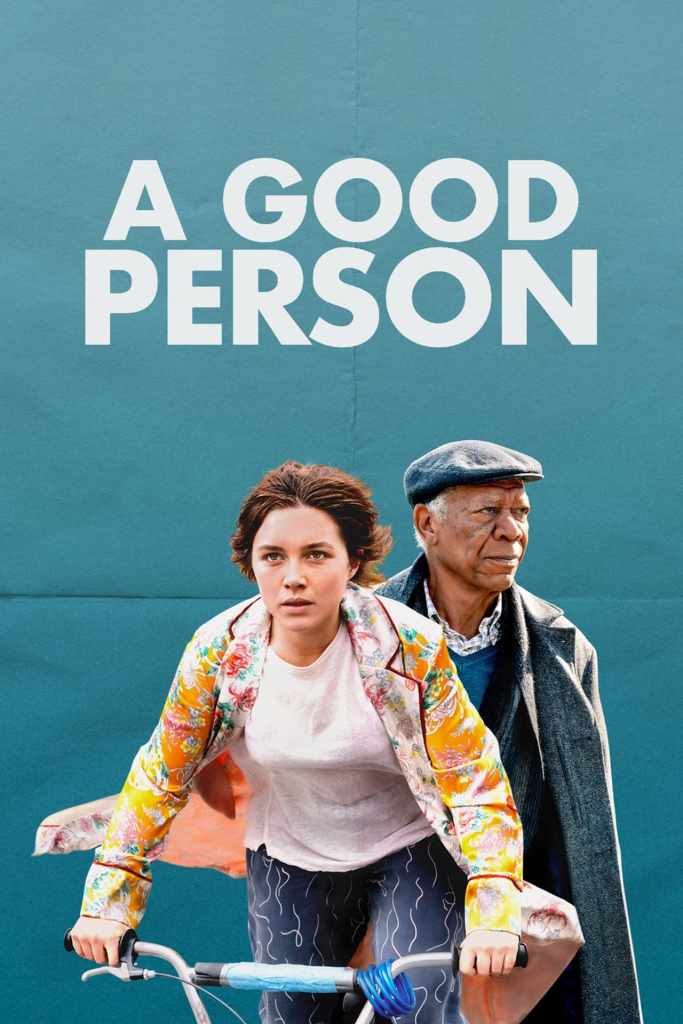
A Good Person is the newest film from Zach Braff. On the slow track, he seems to be putting one out every 10 years or so, and this is just his third. This one is much better than his last, and while it lacks the spontaneity of Garden State (and it should, as Braff would probably have a hard time relating to today’s 20-somethings), it shows that he has honed his craft and is very assured behind the camera. Helps that he has Florence Pugh and Morgan Freeman in front of it. Pugh plays Allison, a woman on a path towards a successful life both personally and professionally before she is involved in a car accident. She is the driver, but was distracted by her phone, and while Allison survives, her fiancé’s sister and brother-in-law do not. To bury the emotional pain, Allison refuses to admit guilt, blaming the construction on the highway at the time, and grows addicted to oxycontin even after her physical injuries are healed. Reaching rock bottom, she turns to an AA meeting for help with her addiction. Of all people to run into, it is the same meeting that Daniel (Freeman) attends. Daniel is Allison’s fiancé’s estranged father, also father to the woman in Allison’s car that fateful day, and he’s been raising his granddaughter now, on his own. Daniel must put aside whatever negative feelings he has towards Allison if she is going to get help there, and she needs to learn to forgive herself if she is ever going to heal. Perhaps owing a lot to Pugh’s dynamic performance, I thought this was a great film, full of tender moments while not shying away from the anger and hurt that can arise from a situation like this. Maybe a little too perfect of an ending, but it left me feeling as raw as the characters in the film. ★★★★
I almost don’t want to waste my time writing anything about Who Are You People. A couple recognizable faces (Alyssa Milano, Yeardley Smith aka Lisa Simpson’s voice), but that’s it. A girl feels like she is a disappointment to her upper-middle-class parents, so when she finds out her dad isn’t her biological father, she goes to hunt the man down. Of course nothing is as it seems. Just an awful movie. Terrible acting, terrible dialogue, even terrible music that adds nothing to the scenes where it keeps popping up, and is just distracting. Wait, maybe the music isn’t so bad then, because it does distract you from the mess that is going on, on screen. The worst movie I’ve sat through in quite some time. ½
TV series currently watching: Evil (season 1), Star Trek Prodigy (season 1.5)
Book currently reading: Killing Floor by Lee Child
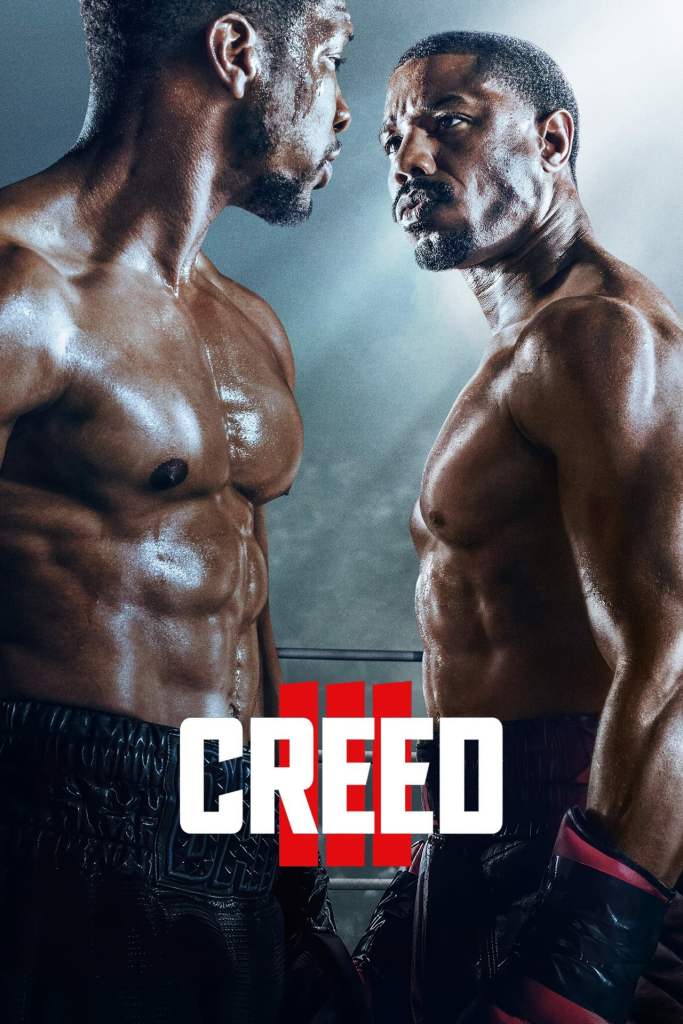
Creed III is the newest film in the Rambo/Creed franchise and, in many ways, it is the first time the franchise has stepped out from Sylvester Stallone’s shadow, most notably because he does not appear anywhere in the film. I’ve liked the last couple Creed pictures. Say what you will about them, but they’re always exciting, especially when the gloves go on in the final fight scene. This one though, sort of lost me. The film begins with Adonis Creed (Michael B Jordan) on top of the world, retiring after having locked up the undisputed champion belts of the world. He now wants to focus on his family, and train the next big fighter. A man from his past puts those plans on hold. When they were kids, Damian Anderson (Jonathan Majors) was an up-and-coming boxer but got in trouble with the law, partially protecting young Creed, and then spent his whole life in prison. Now freed, Anderson wants to resurrect his career, and if he gets a chance to take down Creed in the meantime, who he feels betrayed by, then all the better. It’s a good story, if a bit stale by this point, but just when the movie is supposed to hit those expected highs in the boxing ring, the film’s momentum is halted by an odd choice by the director to go for an artsy appeal. Do they not know their target demographic? It stopped the growing suspense for me and I never got back into it. A bit of a letdown after the last film in the series. ★★★
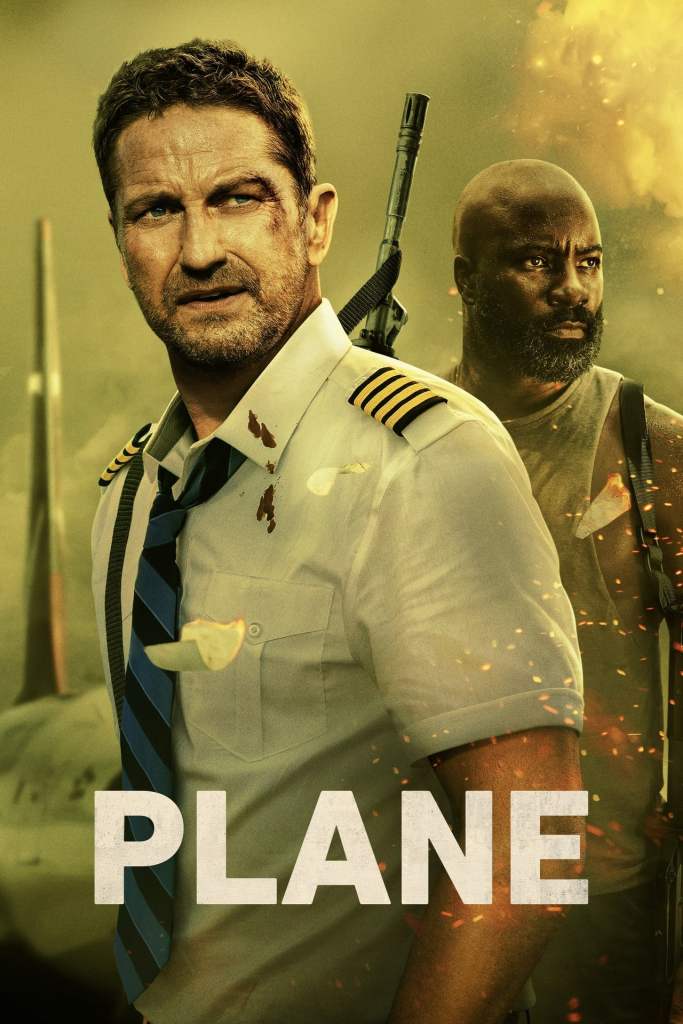
Plane, on the other hand, knows what it is and doesn’t try to do too much. Part of that comes from the lead, Gerard Butler. He has the whole action flick thing down pat. In this one, he is a pilot named Brodie, flying a passenger jet from Singapore to Tokyo. It being New Years, the passenger list is just 14, but one of them is a suspected murderer named Louis (Luke Cage’s Mike Colter), being escorted by an officer. Brodie and his copilot voice concerns about flying through a storm en route, but the powers that be want to save money so tell them to proceed. Sure enough, the plane runs into trouble when it is struck by lightning, frying all the systems on board. Brodie is able to guide the plane to a blind landing on an obscure island, which turns out to be in the Philippines. The copilot is able to deduce their location, and knows they are in trouble: this particular island has no law, and is ruled by dangerous rebels known for kidnapping and the ransom trade. Brodie will need to team up with Louis if they are going to get the passengers safely off the island, against a very dangerous man with his own private army to back him up. Turn your brain off and let the thrills wash over you, because this one has plenty of action, from fist fights to gun fights to even a rocket launcher coming out before the end. From a critics standpoint, I’m sure Creed III is the better movie, but Plane had my attention far better throughout its run. ★★★★
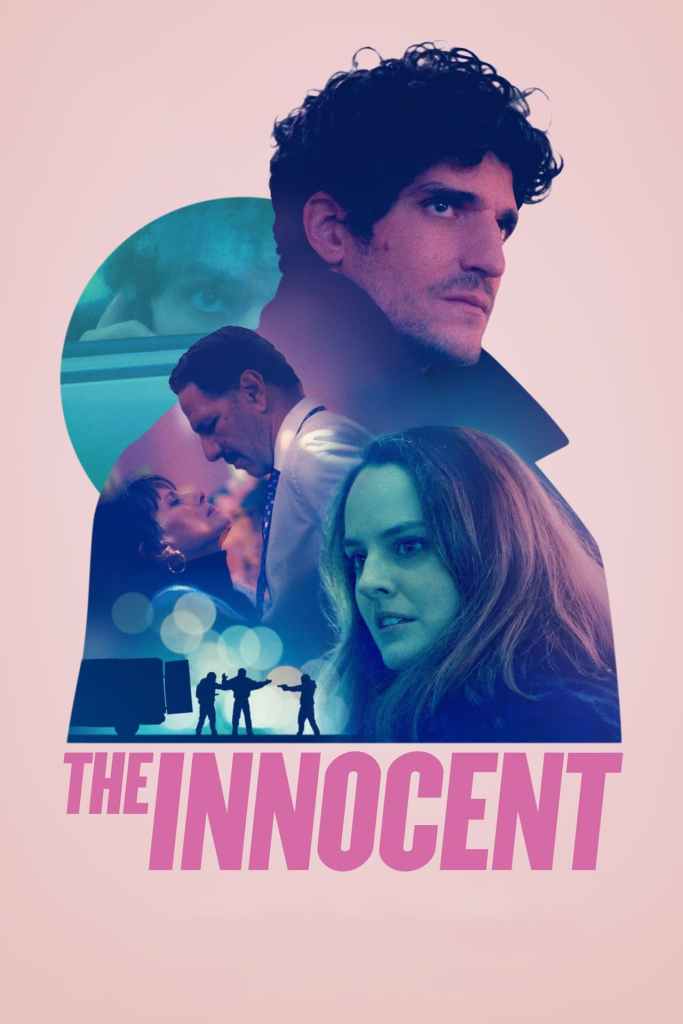
The Innocent is sort of an offbeat comedy with some thriller moments and even some emotional heft here and there. The film mostly follows Abel, the adult son to Sylvie. Much to Abel’s chagrin, the chaotic Sylvie always seems to be giving in to whims, so when she marries a prison inmate named Michel and then gives up her career to open a floral shop with him when he gets out of jail, Abel attempts to talk her out of it. Abel doesn’t trust Michel at all, tailing him to see if he is still involved in criminal activity. Abel even pulls in his longtime friend and coworker Clémence, who gets wrapped up in the “game” too. Turns out Abel’s intuition was correct, but Michel turns the tables on him and gets Abel and Clémence involved in the scam. Abel may find himself in over his head in more ways than one. Some clever moments, but the best moments for me were the final 20 minutes when Abel and Clémence are forced to face their troubled emotions regarding each other. Still, the movie was a bit too all over the place to really hit on all cylinders. ★★★½
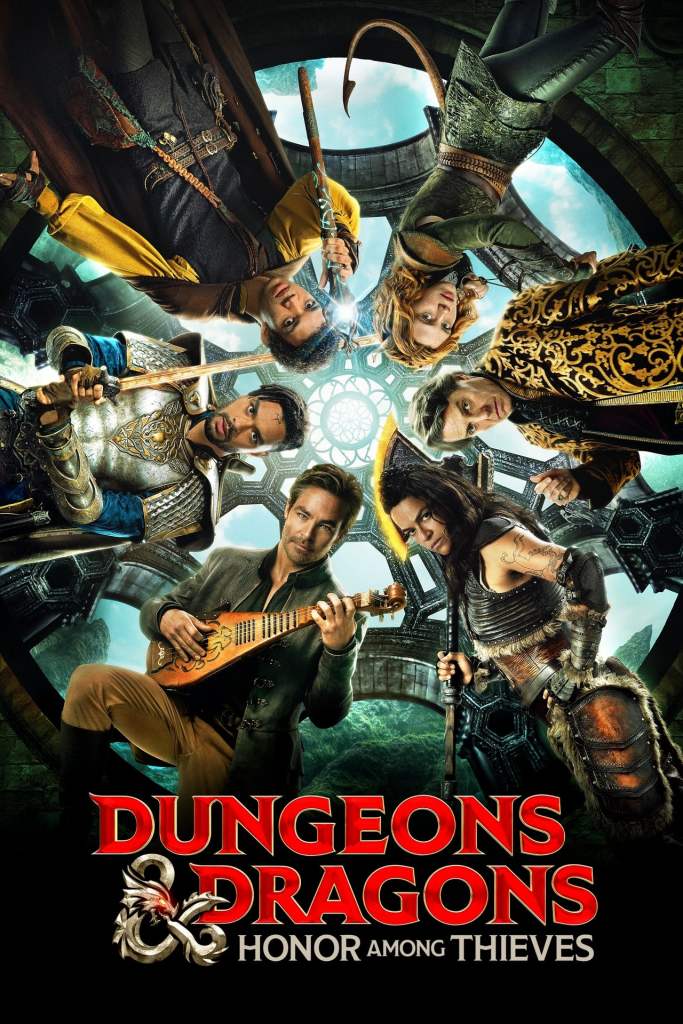
There have been a handful of D&D movies over the years, but they’ve always flamed out with critics and audiences alike. Dungeons and Dragons: Honor Among Thieves is the first to succeed, and it’s not just because it has an all-star cast including Chris Pine, Michelle Rodriguez, and Hugh Grant (with other star cameos too). Taking place in the Forgotten Realms setting made it even better for me personally; I was a huge sci-fi/fantasy reader in the 90s and 00s, and have read every single book in the series. At the beginning of this film, Elgin is a bard who is currently in jail with his friend Holga. A former do-gooder, Elgin lost his wife when evil wizards lashed out at his family years ago, so he turned to the life of a thief instead. He and Holga have been in jail for 2 years, and he’s itching to get out and reunite with his daughter, who’s been in the care of former friend Forge. When Elgin and Holga escape though, they find that Forge has teamed up with those same evil wizards, and turned Elgin’s own daughter against him. Intent on getting her back, Elgin and Holga seek new friends powerful enough to take down Forge and his evil army. I’ve never played D&D, but I imagine it plays out much like this film does. It is full of magic and swordsmanship, but also the kind of humor that comes naturally to long-time friends. I laughed a lot and was completely enthralled by the gorgeous landscapes and magical creatures. Seeing sites and creatures I’d read about years ago come to life was a real joy. I’d love to see if they continue this series in the future, and explore more of the Realms. ★★★★
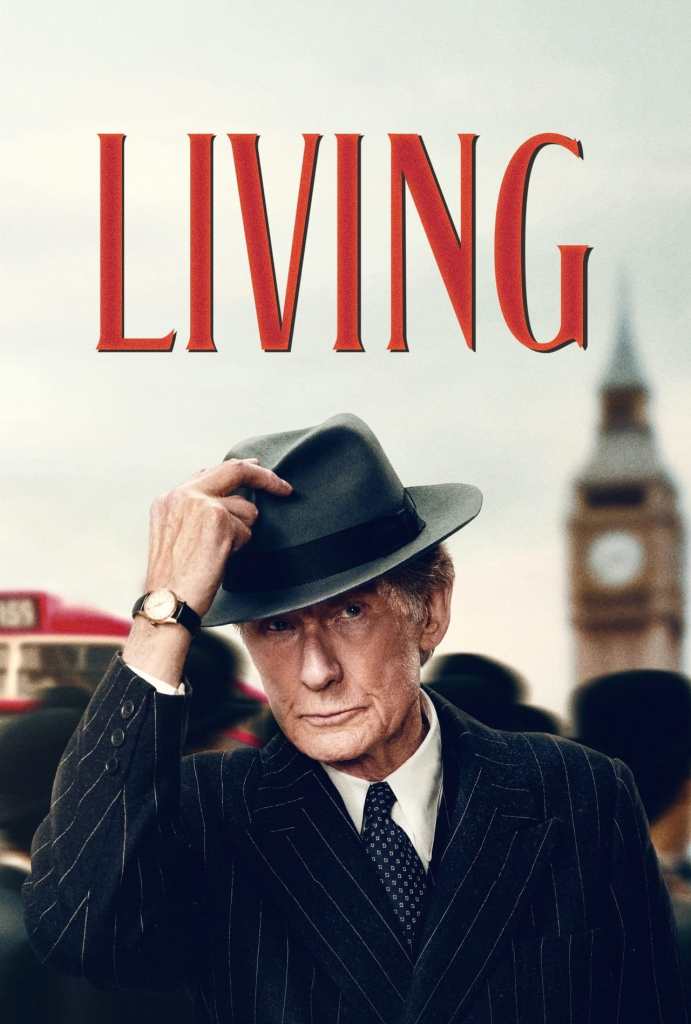
Living is a remake of the classic Akira Kurosawa film Ikiri, one of my favorite films of all time. Bill Nighy stars as Mr Williams, a bureaucrat in 1950s London. He is head of an office which seems to do little real work, mostly just moving around paperwork all day, every day. Williams’s private life is as boring as his work, leading to his nickname in the office of Mr Zombie. In the beginning of the film, Williams gets some news though that will change his outlook on life: advanced terminal cancer, which gives him just a few months to live. Williams decides to find whatever it is in life that he’s been missing all these years. He doesn’t find it in his son and daughter-in-law, who only care for the money he will leave them, and doesn’t even tell them about his prognosis. He doesn’t find it in partying with a man he meats at a bar. He doesn’t find it with a high-on-life young female worker, formerly from his own office, who doesn’t know how to relate her outlook on life to the older and dour Williams. Instead, he finds renewed hope in assisting petitioners to his office at work, who have been wanting to replace a trash pit by their homes with a park for their kids. Williams spends the time he has left making sure that happens. The film is beautifully told, and Nighy and cast are definitely on their game, but the film doesn’t quite catch Ikiru. I can only chalk that up to Kurosawa’s sure hand; he is after all one of the best there ever was. Still, a lovely film that I highly recommend. ★★★★½
TV series recently watched: Shining Girls (miniseries), Star Trek Lower Decks (season 3)
Book currently reading: Killing Floor by Lee Child
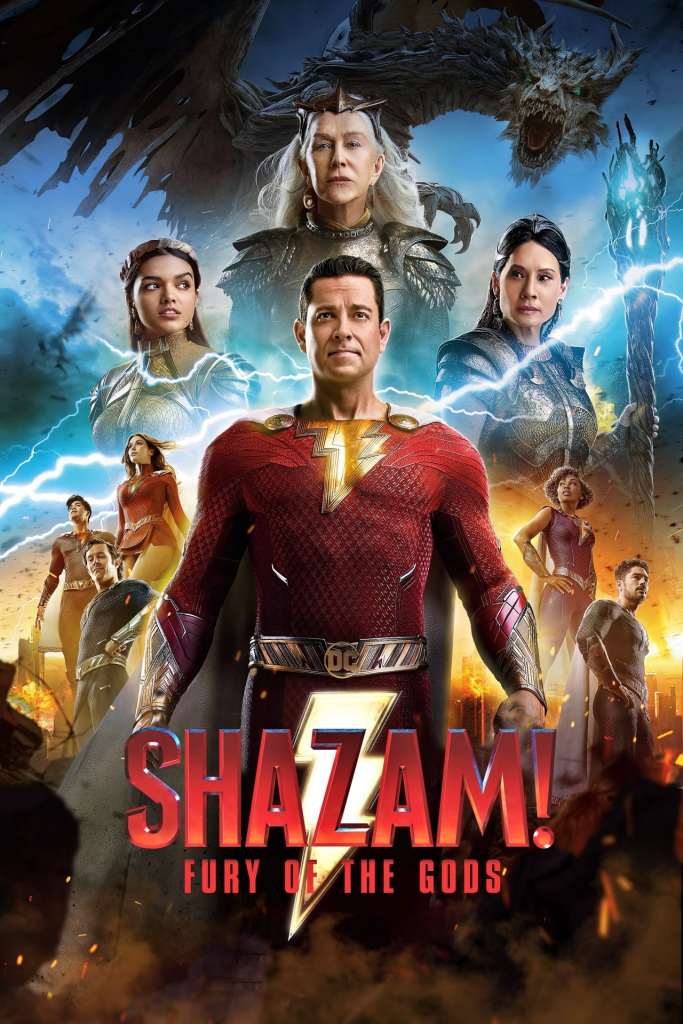
Shazam! Fury of the Gods is the newest in the DC Universe, though if it stays “canon” when the universe is reset here in a couple years is anybody’s guess. It is the sequel to 2019’s surprise hit, which was well received by many (if not me). It takes place 2 years after the events of the first film: the kids have grown a little, and their alter egos as superheroes are starting to build a reputation as saviors or troublemakers, depending on who you ask. Their latest foes are Hespera and Kalypso (a slightly miscast Helen Mirren and Lucy Liu), who were gods millennia ago, and are have recently been freed from their prison. They are seeking to regain all of their powers through the Wizard’s staff, the item which gave Shazam and his crew their own powers, but Kalypso has an ulterior motive too: the destruction of earth as retribution for her imprisonment. Normally invincible (or close to it), Shazam and his team can have their powers stripped away by the ladies and their newly acquired staff, so they face real danger, while trying to keep the world safe too. I felt about the same for this movie as I did the first: it was just OK, and while there are good moments, the whole didn’t feel very cohesive nor entirely engaging. I am, however, eagerly awaiting DC’s The Flash in about a month, so fingers crossed, DC delivers on that one. ★★★
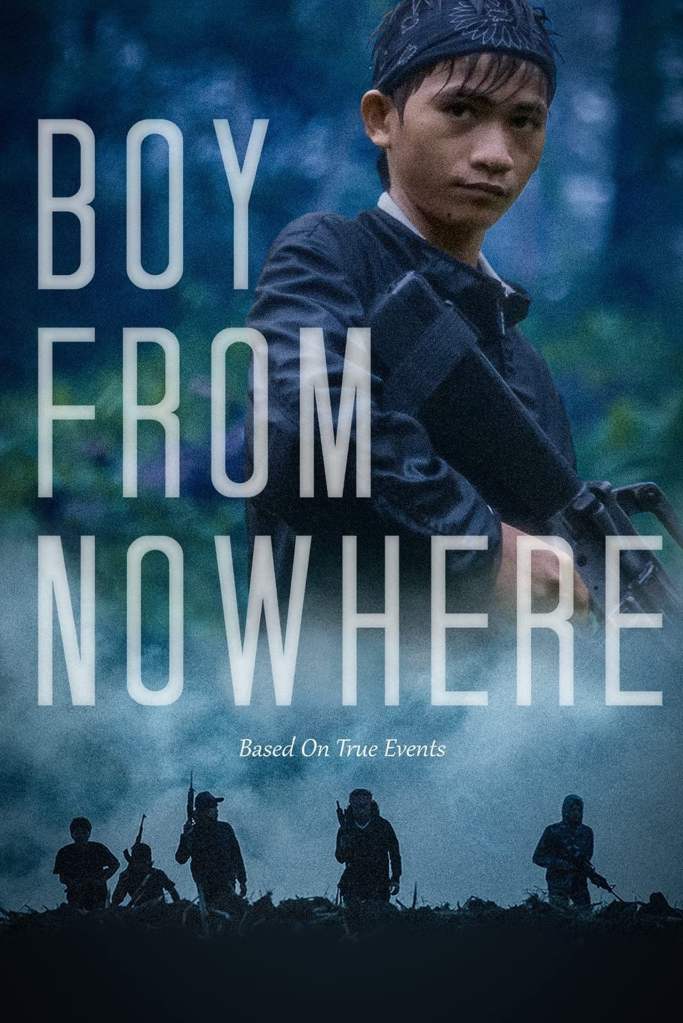
Boy From Nowhere is the directorial debut from young Canadian filmmaker SJ Finlay. Shot on location in the Philippines with local, non-professional actors, the film follows a young boy named Gary. A member of one of the indigenous tribes as a fisherman, Gary’s village is burned down one day by an unknown aggressor, and is left to fend on his own when he becomes separated from his father. With the idea of maybe tracking down his mother’s tribe of farmers (she died when he was young, and he has no recollection of her), Gary heads inland. In one city, Gary falls in with a group of young men who, while up to no good as a city gang, at least provide a protective and welcoming environment, something Gary has never had. A poignant moment comes when they encourage him to sing his favorite song at a karaoke bar, and Gary belts out “Climb Every Mountain” from Sound of Music. Knowing a bit about the basic plot of this movie before going in, I had an idea that this would be a turning point; I didn’t think there’d be many rainbows in Gary’s future. Sure enough, the gang’s leader is involved in a shooting, and to hide out, decides to take his group into the forest and join up with guerrilla fighters who are fighting the government over perceived injustices towards the indigenous peoples. Gary, who looks younger than them all, has a gun put in his hand, and he becomes an outlaw. The film plays out as a simple story, but there are some dense (in a good way) textures to pick apart here. What is good or evil, who is right or wrong, etc. You can tell Finlay is still finding his footing as a director, but there’s promise here, and I’d like to see what he could do in the future with a bigger budget. ★★★
Not sure what to make of Giving Birth to a Butterfly, from another first-time director (Theodore Schaefer), though he was executive producer on last years’s We’re All Going to the World’s Fair (not good…). He so wants this to be a David Lynch kind of surrealist picture, and even pulls out an actress from Eraserhead in the final act, but it never pulled me in and encompassed me like a Lynch film can. Despite some strange, offbeat characters, it starts simple enough: a family of four is dominated by the dad in the house, whose sole ambition is opening a restaurant; he controls family conversations about it and pays little attention to anything else. The son in the family brings home his new girlfriend, Marlene, and introduces her to the family. It is shocking to them that she is very obviously pregnant, but the son says that, while the child is not his, he’s going to raise it as his own, and oh by the way, can they live there in the house. The uncaring father replies, “Sure why not! More the merrier!” without consulting his wife Diane. Diane is the one figure lost in all this, but the film is mostly about her and Marlene. When Diane’s bank account is wiped out by an online firm she’s previously signed up with, she and Marlene head out on a road trip to confront the company. The trip allows the two to get to know each other, divulging hopes and dreams (Diane’s unrealized past, Marlene’s hopeful future). But the film takes a strange turn when they get to the address of the company, which turns out to be an old house with peculiar inhabitants. Thus the Lynch comparisons, but while his endings often lead to introspection and dissection, this one just left me thinking, “huh?” I liked the weird characters in this film, and while it is obviously super low budget, there are familiar faces here for those who watch a lot of film and TV. Better first half than second. ★★½
Free Skate is marketed as a drama about a young athlete (a figure skater in this case) who flees her country (Russia) and tries to start anew with a new nation (Finland), so I had visions of something like Olga, which I really enjoyed. Couldn’t be more different. This movie is just bad, nothing more to say about it. Outside of some emotional abuse (which I’m sure is par for the course in highly competitive athletics the world around), we really don’t know why she fled until near the end. I didn’t mind this so much, other than the fact that it didn’t really add the tension that the filmmakers hoped it would. No, my biggest problem was the completely predictable plot and the horrendous acting. It seemed like a bunch of people play-acting at a high school play, and the lead woman (who was also the writer) can’t act her way out of a paper bag. Stone cold faced no matter what scene she’s in, and dull beyond words. The movie takes a LONG time to get going, and when it does, you don’t know why you wasted your time. ★
I’m starting to think I’m just not into comedies anymore. For all intents and purposes, iMordecai seems to be a charming comedy, but I couldn’t get into it. It is based on real-life experiences of its writer/director Marvin Samel, and stars the always-entertaining Judd Hirsch as Mordecai Samel, an older Jewish man who displays all of the stereotypes you’ve seen and heard before (hey, they’re stereotypes for a reason right?). Mordecai’s old, busted up flip phone, held together by tape and a prayer, is finally replaced by a shiny new iPhone, and Mordecai gets lessons on how to use it from the store’s worker, Nina. Nina takes a liking to Mordecai and his stories, and is particularly moved when talks about losing family to Nazi death camps in World War II. Nina has learned that her grandfather, recently deceased, was a Nazi officer at one of those camps, and she’s carrying around a lot of guilt. There’s a side plot too involving Mordecai’s son Marvin (Sean Astin) who is trying to land a deal for his fledgling cigar company, but to his chagrin, pops keeps screwing up the deal. There’s plenty of laughs (like Mordecai talking to Siri on his phone, and his wife thinking he is cheating on her with another woman), but when the end came, I just shrugged my shoulders and said, “Ok.” I need to stick to dramas and foreign films, my bread and butter. ★★
TV series recently watched: The Muppets Mayhem (season 1), See (season 1)
Book currently reading: Killing Floor by Lee Child

















 Jons Movie Takes