Quick takes on A Real Pain and other films

I wasn’t going to watch The Substance, because the whole body horror genre creeps me out, but it has received some great reviews and lead actress Demi Moore just won a Golden Globe for it, so I gave it a whirl. I should have trusted my instincts, because definitely not my cup of tea. Elisabeth Sparkle (Moore) is a once-popular actress who is still clinging to her exercise TV program, but the writing is on the wall that the network is looking to replace her with someone younger. At just the right time, Elisabeth learns about the substance, a drug that promises to make her a younger, better version of herself. Desperate for anything to help, Elisabeth signs up and gets her care package. The instructions are lengthy and grotesque, saying that the two versions of herself cannot exist at the same time; each will be awake and aware for 1 week while the other version sleeps, but then they must swap, and that the “new” version of her must continue to feed herself spinal fluid drawn from her “older” self in order to survive. Even with all the directions, Elisabeth is not ready for what happens. After injecting herself with this stuff, her body splits open at the back, and a younger version erupts out. This “new” Elisabeth calls herself Sue (played by Margaret Qualley), and she lands the job as Elisabeth’s replacement. Unfortunately she also has the impetuousness of youth, and when Sue’s week is up, she steals another day’s worth of spinal fluid from Elisabeth’s comatose body to eke out another 24 hours to party it up. When the two finally swap, Elisabeth finds that her pinky finger has withered away and looks like an old lady’s. Turns out, anytime Sue steals time, she steals vitality from Elisabeth. Imagine what happens when Sue’s career takes off and she decides to stay out for months at a time, not wanting to be knocked out for a week or more. The soundtrack (and much of the camera work) is right out of a bad B movie, so at least they know their audience… It does deal with themes of aging (gracefully or not) in a culture where young and sexy sells, so I guess it has that going for it. Demi Moore is incredible as a woman who becomes unhinged as her body falls apart, all while her younger self becomes more popular. But man, what a gross film, and the ending is pure pulp. ★½ 

Radical, a film out of Mexico and based on a true story, is about a teacher trying to inspire kids at a poor school. In Mexico, schooling is free of charge and obligatory through sixth grade, and in this particular rough-and-tumble area, most 6th graders are already planning the next year, whether it be join the local gang, start working full time to help support the family, or face the reality of a life in poverty like their parents, all of which we see from various students in this school, where shootings are so close that you can hear them from the classroom and so common that no one bats an eye. Sergio is a new teacher at the school, and he is coming in with eyes wide open to the hardships these kids face, and he wants to do something about it. He knows the only way to get them to want to continue their eduction is to be excited about it, so on the first day, he tosses the textbooks and just sits with the kids, asking them what they are interested in, and slowly gleaning what they’d like to learn. It doesn’t work at first, as the kids are distrustful from a (short) lifetime of continually being let down, but Sergio is persistent, to the point that even the toughest ones eventually open up. When it comes down to it, kids want to learn, and Sergio is able to tap into that. There is heartache before the end of the film, as they can’t escape the area they live in, but there’s hope there too. ★★★★

A Real Pain is a getting some traction this awards’ season and is certainly beloved by the critics, but man, I could not get into this one, and mostly because of my dislike for Kieran Culkin’s character, Benji. The film follows cousins Benji and David (Jesse Eisenberg, who also wrote and directed) who are going to Poland together, in honor of their recently passed grandmother. Grandma was a Holocaust survivor, so to learn more about those events in her life, the cousins have joined a tour group through Poland that visits historical sites involving the Holocaust. The two men were once extremely close, despite having polar opposite personalities (David lives a structured life and plans everything; Benji flies by the seat of his pants and is outgoing to a fault), but something happened recently that has driven a wedge between them. David is hoping to reconnect on this trip, if he can find a way to deal with Benji’s asinine behavior. Many of the jokes deal with this, how Benji talks without thinking and engages any tom dick or harry they pass, but those jokes fell flat on me, because Benji just makes me (with a personality very similar to David) very uncomfortable. The kind of humor that other might laugh at just made me cringe. Obviously the moral of the story is Benji has some buried pain, which is what led to his and David’s estrangement, but I can’t forgive some his antics. Made for a squeamy viewing experience for my tastes. ★½

When I heard Victor Erice had emerged to make a new film, his first narrative picture in 40 years, I was in. Erice’s The Spirit of the Beehive is regarded as one of the finest films to ever come out of Spain, though I actually liked his El Sur even more. Close Your Eyes goes for nearly 3 hours at a leisurely pace, but has a mystery at its center that keeps your attention throughout. It seemingly begins in 1947, at an estate where a wealthy, dying Jewish man is hiring an investigator to find his daughter and bring her to him before he dies. After the scene, we learn that this was in fact the opening scene of a film by director Miguel Garay, but the film was never finished because the investigator, actor Julio Arenas, disappeared the day after filming that scene. Filmed in the 90s, that was 20 years ago, and we’re now in 2012. A 20-20 style news program is doing a piece on the disappearance of Arenas, a very popular actor at the time, and invites Garay in for an interview. Garay never finished that film and never made another one. In the present day, he’s a sad man, living in a mobile home, doing a thankless job reviewing books. His career as either a film director or a novelist never went anywhere and his life has definitely not turned out how he once imagined. Now he has these old memories being dragged up from the past, and he finally has a new purpose in life. Garay reaches out to Arenas’s surviving daughter, as well as an old girlfriend whom he and Arenas once shared, seeing if he can piece together any clues as to what may have happened to Arenas, who was not only a colleague but also a friend. In a lot of Hollywood movies, we are told all the answers before the end; this is not a Hollywood film, so do not expect everything to come wrapped up in a pretty bow for you by the end. However, it is a beautifully told story about finding yourself, and maybe more importantly, the stories we tell ourselves in order to survive this messed up thing we call life. ★★★★½

The Delinquents, out of Argentina, is essentially a tale of two films. The first half of this (again, 3 hour long) movie is fantastic. Morán works at a bank and seems pretty harmless to everyone around, including his coworkers. Seemingly on a whim, one day he walks into the vault, takes a bagful of cash (but doesn’t clear the place out), and walks out of the bank. Turns out it wasn’t on a whim, and Morán had it calculated down to the smallest detail. He took just enough money that would cover him not having to work for the rest of life (basically what the bank would pay him if he worked the next 12 years until retirement), plus some to cover the help he’ll need to pull off the heist. The help comes in the form of coworker Román, who didn’t know he was going to be part of this plan. The plan: Morán is going to have Román hold the money for 3 1/2 years, the time Morán figures he’ll spend in jail for his crime (with good behavior), after which he’ll get out, get his money from Román, and live the rest of his life. Román will get a couple hundred thousand for his efforts. All seems to go according to plan, and part one ends with Román hiding the money out in the countryside. In part two, the film goes off the rails. Román meets a woman relaxing just down the hill from where he hid the money, and they fall in love. There’s some long scenes involving them hanging out, and eventually we learn, in flashbacks, that Morán met her too, before going to jail 6 months ago, and they too had a relationship. Morán is planning on rekindling when he gets out, so Román may be left out in the cold. It sounds a lot more exciting than it is. All of the excitement and tension of the first half of the film completely disappears, and eventually I was only continuing to watch to see how it all ended. Never a good thing when you keep checking how much longer the movie is. ★★

  • TV series recently watched: What If (season 3)
  • Book currently reading: Aftermath: Life Debt by Chuck Wendig

Quick takes on I Am Curious and other classic Swedish films

Purely by coincidence, Miss Julie, in a way, foreshadows the next film up, as it deals with the battle of the sexes as well as upper vs lower classes. The film, released in 1951 and directed by Alf Sjöberg, takes place over one day, Midsummer’s Eve, as the people of a local community are enjoying the festivities. On the estate of Count Carl, his only child, Julie, is a stuck up you-know-what. She has recently broken up with her fiancé, and is flirting with “the help,” servant Jean. Jean is a good looking guy and could have his pick of any of the common women around, but he chooses to have a little toying of his own with Julie. As the film progresses, we learn of Jean’s growing up in poverty under the Count’s thumb, but just when you think Julie and her family are deserving of any jests Jean can throw her way, she comes clean about her own upbringing. Though privileged for sure, she has plenty of heartache, from a feminist mother who dressed her as a boy (against her wishes) and tormented her father, the Count. I can see how the film was popular in its day, with some humor and playful (and not-so-playful) banter between the leads, in a Pygmalion sort of way, but I thought the whole was pretty average. Probably works better as a play (on which this film was based) than as a movie. There is a cool, small role for future star Max von Sydow, in just his second film. Sjöberg was popular in Sweden and abroad in the 40s and 50s but was obviously eclipsed by Ingmar Bergman by the 60s, and today is probably most remembered for his film Torment, and only that because it was Bergman’s first film (as assistant director and screenwriter). ★★½

The I Am Curious films (2 intertwined pictures) were very controversial, having been banned, censored, and fought over in court after their release in the late 60s (for lots of nudity and some pretty intimate scenes). From the start of I Am Curious (Yellow), the film blurs the lines between a fictional movie and a documentary. Lena (played by Lena Nyman) is a young 20-something idealistic socialist who walks the streets of Stockholm interviewing people to get their views on social classes, the Franco regime in Spain, USA’s involvement in Vietnam, and a host of other topics. To be honest, for awhile I was getting bored, because Lena comes off as your typical doe-eyed, bleeding heart idealist, whose heart is in the right place but who doesn’t know how the real world works. But stick around, because there’s a method to the madness. Lena is in a relationship with Börje, but learns after awhile that he has another woman and even a child on the side. At the same time, we see snippets here and there of Vilgot (director Vilgot Sjöman) with a camera crew off to the side, and it becomes apparent that we have a movie-within-a-movie (-within-another-movie?) scenario going on here. It becomes this fascinating love triangle, as Lena and Börje’s fights get violent, and the viewer doesn’t know what is acted and what is real. There’s a fascinating scene where Lena, usually coming off as so self-assured, has a vulnerable moment with Börje where she admits being self-conscious of being overweight, saggy boobs, etc, and you get the feeling that she’s never told another soul, including her “real” boyfriend, Vilgot. As the layers develop, I was drawn into this film to the point that I was hanging on every scene. I want to go back and rewatch it and see what I could have missed in the beginning! But first, there’s the companion film below… Brilliant filmmaking on this one, even if there was too much sex (going at it like rabbits here, which didn’t didn’t really add to the film) for my tastes. ★★★★

I Am Curious (Blue) is, for my tastes, a film that didn’t need to be made. In fact, I would guess that it was only made because the director had so much extra footage left over after editing the first one, that he cobbled this one together. Blue basically adds to the storyline subtly, by changing your perspective on things. Gives you new ideas on Börje’s relationship with Lena, and some behind-the-scenes moments involving everyone in the first film. There’s a lot more of Lena going around interviewing people, continuing on the subject of class society, but also going after the church hardcore and also the prison welfare system. But on the whole, doesn’t add much to the overall story, and is a much weaker partner to Yellow. ★★

The Emigrants is a slow burn, but rewarding for those with patience and an eye for the little moments in life that become profound upon reflection. Released in 1971 and directed by Jan Troell, it brings together 2 of the biggest Swedish film stars of all time: Max von Sydow and Liv Ullmann (actually Norwegian, but famous for all those Swedish films with director Ingmar Bergman). The film follows the Nilsson family in a tiny farming village in Sweden in the mid-19th  century. Life on the farm is hard, where you never know if a season will be too wet, too cold, or too dry, always threatening to send the family into debt or into the grave. Taking place over a decade or so, we see eldest son Karl Oskar (von Sydow) marry Kristina (Ullmann) and start to build a family. Karl Oskar’s younger brother Robert gets into trouble a lot, partly from having to be an indentured worker on a neighbor’s farm, to both keep himself fed and to be one less mouth to feed at Karl Oskar’s table. Robert is smart though, and begins to dream of a better life in America, where he hears the land is fruitful and no one goes hungry. When one of Karl Oskar’s and Kristina’s children dies from eating uncooked porridge, the family makes the decision that it is time to start anew in America. They are joined on the long voyage across the ocean by a religious man, Danjel (Kristina’s uncle), who is persecuted in the village for teaching the Bible while not being an ordained minister, as well as Danjel’s followers. Not all survive the harrowing 10 week voyage across the Atlantic, and when they finally do set foot on New York, they still have a long ways to go to where they want to settle in the Minnesota Territory. This is not a movie if you want action and adventure, but if you are in the mood for a leisurely paced (over 3 hours long), family-in-peril human film, it doesn’t get much better. It does an outstanding job of showing what emigrants faced before TV or reliable news, as Robert and the Nilsson family are completely taken-in by rumors of what America is supposedly offering. And even learned men like Danjel are prone to superstition; he continually tells Robert that he doesn’t need to study English on the boat, as God will give him the power to understand and be understood when he gets there. Was nominated for 5 Oscars, including Best Foreign Language Film, Best Picture, Best Director, and Best Actress for Ullmann, who did win a Golden Globe for the role. And the sequel, filmed at the same time, was released the next year. ★★★★★

The New Land picks up right where the first ended (and in many ways, this feels like one long movie, if you’ve got 6+ hours to watch it!). Karl Oskar has picked his idyllic lakeside location to start a farm in Minnesota, and has brought Kristina and the kids there. Over the first couple years, things go (mostly) well, though it is hard work. Karl Oskar builds them a house, and then later, a bigger house and a barn. Though initially broke, he tills the land and starts growing things in the fertile soil, something that was so difficult to do in the rocky land of his homeland. The couple’s first child born in America comes the first winter they are there, and more children continue to follow. Much of this second picture focuses on Robert and his friend Arvid who, after a couple years helping on the new farm, decide to head to California to test their mettle in mining gold. Robert returns, alone, 3 years later, and when Karl Oskar chastises him for continuing to follow foolish notions that yield no results, Robert hands over a bagful of cash. A good portion of the film deals in flashbacks showing Robert’s and Arvid’s trials and tribulations out west, where the smart-yet-gullible Robert had a lot of growing up to do, and we learn what happened to Arvid. When the American Civil War breaks out, Karl Oskar tries to go off to serve the country that is giving his family a second chance on life, but is turned away due to a bag leg, much to Kristina’s relief. The film ends after the Dakota War (of 1862) where the Sioux rose up against the government for their mistreatment, and how that affected the Nilsson family. Another tremendous film, like the first, where you feel the joys and despairs of the family, living with them as they try to build something from nothing, through hard work in the land of opportunity. Certainly eye-opening about the struggles that many of our ancestors went through (including mine, who came to “the new world” in the mid-17th century). ★★★★★

  • TV series recently watched: One Hundred Years of Solitude (season 1), Creature Commandos (season 1), Cheers (seasons 3-4), The Wonder Years (seasons 1-2), Interior Chinatown (series), Star Trek Lower Decks (season 5)
  • Book currently reading: Aftermath: Life Debt by Chuck Wendig

Robbie Williams hopes to become a Better Man

I was intrigued by Better Man from the first trailer I saw. I knew nothing about British singer/bad boy Robbie Williams, on whom the film is based, but I liked the idea: Robbie narrates the film himself, about his life, but rather than act in it or pick a stand-in actor, the lead is portrayed by a monkey using CGI. In my opinion, a brilliant move, for a couple reasons. The most obvious is that I’m sure Robbie himself would say he felt like a trained monkey pushed in front of an audience, but also, if we (the viewer) see Robbie himself, or an actor portraying him, we tend to nitpick. Also, there’s a lot of conceptual/artsy scenes (the film is a musical after all) and by having a non-human character front and center, it adds to the magical feeling in those moments. It really works. Anyway, onto the movie…

It starts when Robert Williams is a little boy, idolizing his father, who in turn idolizes the great crooners of decades ago: Frank Sinatra, Dean Martin, etc. At a young age, his dad tells Robert that if he isn’t somebody, he’s nobody. When the dad has an opportunity to go on the road and perform, he jumps at it, abandoning Robert and his family. By age 15, Robert is willing to do anything to become a star, with that feeling that life is already passing him by and he has to do something to impress his father (and maybe get him to come back) and to have a life that means anything. He hears an advertisement on the radio for an audition for a new boy band, and while he does get in the band (Take That), he is relegated to backup singer/dancer and not given the chance to do any songwriting for the group. He stays with them for 5 years, and while he does become a star, the lack of songwriting credits means he is still far from rich, and partying is starting to take its toll. At the “ripe old age” of 21, Robbie (as he is called now) leaves the band to start a solo career.

As a solo artist, Robbie skyrockets to the top while sinking to the bottom, all at the very same time. As a singer, he is selling albums like crazy, his bad boy persona makes headlines, and he has a nice girlfriend (Nicole Appleton, member of the girl group All Saints), but his drug use is ratcheting up and he drinks alcohol like water. His performances on stage begin to suffer and his mental health is cracking under the pressure of pleasing larger and larger crowds, while also hallucinating and seeing past versions of himself in the audience, ridiculing him for being worthless. Robbie will have to hit rock bottom before he finally enters rehab to get control of his life.

This film was directed by Michael Gracey, the same guy who did The Greatest Showman, and it has that same feeling of a large spectacular show. Better Man is a musical too (something I didn’t know going in) with a very catchy soundtrack. Maybe not as “high brow” as another recent biopic, A Complete Unknown, but it is most definitely entertaining and has a high re-watchable factor. ★★★★

Quick takes on Tootsie and other 80s American films

Today I’ve got a set of classic American films from the 80s, all ones I’d never seen. I’m starting with Fast Times at Ridgemont High, and from its reputation, I was expecting some kind of fluff with lots of boobs, and while there is some of that, it has a surprisingly strong story with a lot of deeper introspection for those who care to look past the surface. The film follows a group of teens in high school, over the course of a year: falling in love (or at least in lust), goofing off, and talking about all of the things that seem very important to you when you are in high school. It feels truly authentic, and while there are a few token 80s moments that every film from this era had which never took place in real life (toilet paper streaming from the school windows, terribly unrealistic dancing at the school dance), much of it rings true. Kids talking about their first sexual experiences (and trying to seem more experienced than they are). Working hard to find that balance between being yourself and fitting in with others. And that one kid (in this case, Jeff Spicoli) who, despite being a stoner, is the one person in school who is comfortable in his own skin and is true to himself, and not willing to change just to appease someone else, even if that someone else is a teacher. It’s way ahead of its time, considering some of the other movies coming out in the early- to mid-80s. There’s lots of main characters who flit in and out, but the primary character is Stacy, who is trying to figure out love and sex, the differences between them, and the paths she takes until she learns what she wants. Urged into having sex for the first time by her best friend, it “takes her a few tries” with a couple partners until she realizes that it isn’t for her, and that she wants a real relationship. The film was the launching pad for most of its cast; for the most part they were unknowns when it was released: Jennifer Jason Leigh, Sean Penn, Judge Reinhold, Phoebe Cates, Forest Whitaker, Eric Stoltz, and a minor part for Nicolas Cage in his first film. Not to mention director Amy Heckerling and writer Cameron Crowe, whose undercover year at Clairemont High School as a 22-year-old inspired the movie. I liked this film way more than I was expecting. ★★★★½

As much as I was pleasantly surprised by the above film, unfortunately Moonstruck was not as good as I had hoped. I’m guessing it just hasn’t aged well, because it was certainly heralded when it came out in 1987. It stars Cher as Loretta Castorini, a 37-year-old widow living with her deeply Italian family in Brooklyn. She is proposed to by Johnny (Danny Aiello), an older man whom Loretta admits to her mother (Olympia Dukakis, who is tremendous as always) that she doesn’t love, but she “likes well enough,” and Johnny is a good guy. First though, Johnny must go to Sicily to be with his dying mother, and while he is gone, he asks Loretta to reach out to his estranged brother Ronny (Nicolas Cage again!). The two had a falling out 5 years ago and Johnny can’t find the strength to mend fences, but he wants Loretta to invite Ronny to the wedding. Loretta does, and she and Ronny find an instant connection, beginning a romantic affair. It may all come crashing down when the two go to the opera and are spotted by Loretta’s father, but he may not be so forthcoming with the news, as he’s there with his own girlfriend, something that his wife already suspected. The movie is cute, with some funny moments, but it is not the great romantic comedy that I was expecting. Olympia Dukakis is the highlight as the anchor in a house where everyone is running around with someone else (she won an Oscar, as did Cher). ★★½

There’s some great old actors in 1980’s Hopscotch, some no longer with us (Walter Matthau, Ned Beatty, Glenda Jackson) and one who still is (Sam Waterston, though he was really young!). Matthau plays Miles Kendig, a CIA agent who’s been around the block and knows more than his upstart, political bosses about how things run. He makes a deal with KGB officer Yaskov in Munich, to get his hands on some microfilm that Kendig (and the USA) doesn’t want released, but this lands him in hot water with his boss, Myerson. Myerson would have preferred Kendig arrest Yaskov, but Kendig tries to explain that, by keeping Yaskov in the field, they know who is running things and who to contact when the shit hits the fan (better the enemy you know, etc). Myerson is having none of it, and demotes Kendig to a desk job. The problem for Myerson, and the CIA as a whole, is Kendig has been around forever and knows every trick in the book. Kendig goes MIA, and starts writing a book detailing some of the CIA’s dirty little secrets over the last couple decades. He sends a chapter at a time, not just to Myerson and the CIA offices, but also to Russia and various intel offices around Europe. Not ready to back down, Myerson initiates a manhunt for Kendig, but Kendig’s too smart to get caught easily, and always manages to stay one step ahead. The movie is cute, funny, but ultimately not too remarkable. It’s a good “time and place” movie for its release; in 1980, there was still lots of distrust against the government, and poking fun at the Cold War is a good way to let off some steam. ★★★

Risky Business is one of those movies that I just do not get the hype. I’m pretty sure it was only popular in its day (1983) for its iconic scene of a young Tom Cruise dancing around the house to Old Time Rock and Roll. He plays high schooler Joel Goodsen, a smart kid from a wealthy family in Chicago, with aspirations of Princeton. Those dreams may come crashing down when his parents go away on vacation for a week, leaving Joel home alone, and his friend invites a prostitute over as a prank. After the first hooker (a large, black cross-dresser) doesn’t work out, the second (a pretty girl named Jackie, played by Rebecca De Mornay) does. Unfortunately for Joel though, she steals something valuable out of the house on her way out the door, and then gets Joel involved in her confrontation with a bullying pimp (Joe Pantoliano). Supposedly, hilarity ensues, but if other people were laughing, I certainly wasn’t. There were a couple moments where I thought the film was going to pick up, something exciting or funny would happen, but then it was fall apart again. Just a dumb movie, from a director who never did anything else. If Tom Cruise hadn’t been in it, I’m pretty sure it would have been forgotten over the years. ★

Tootsie, however, is just as entertaining today as it was in 1982. Michael (Dustin Hoffman) is a struggling actor living in NY with roommate Jeff (Bill Murray), a playwright (also struggling). Michael makes ends meet by teaching acting but it is barely paying the bills, and he can’t land a job anywhere. When one of his acting students tells him that a popular soap opera is casting a new female main part, Michael dresses in drag and goes to the audition as “Dorothy.” The womanizing director doesn’t like Dorothy, but the female producer does, and Dorothy is hired on the spot. However, Michael didn’t think things through all the way, because this job will lead to problems with his manager, his fellow actors (especially when he falls for Julie, played by Jessica Lange, who is dating the director but becomes fast friends with Dorothy), and Sandy, his student who didn’t get the job when she auditioned and who is in love with Michael. Not to mention Julie’s single dad, who also starts to fall in love with Dorothy. Everything will come to a head by the end. Lots of laughs, some from low hanging fruit (Americans love to laugh at men cross dressing for a joke) but some come from deeper moments too. There’s no arguing that some of its themes are dated (being powerful as a woman is a “masculine” trait, and the very ending rubs me the wrong way), but when I watch a movie, I always consider when it was made; I’m definitely not into revisionist history, otherwise too many of our films would end up in the trash can. I really enjoyed this one. ★★★★

  • TV series recently watched: Squid Game (season 2)
  • Book currently reading: Betrayal by Jean Rabe

Timothée Chalamet’s star continues to rise in A Complete Unknown

I’ll be honest, I only went to see A Complete Unknown, a film about Bob Dylan, because awards season is quickly approaching and I try to see the films that will be getting nominations. This film is getting buzz for Timothée Chalamet’s portrayal of Dylan, so even though I’m not a fan of Dylan’s music (I know the hits, like everyone, but that’s about it), I wanted to see if the movie was any good. I was pleasantly surprised.

The movie starts in 1960 as a 19-year-old Bobbie Dylan heads to NY to make it as a singer/songwriter. Before he does anything, even before he finds a place to stay, he goes to the hospital where Woody Guthrie is recovering from an illness. Guthrie is the young Dylan’s idol, and he wants to pay his respects, but the visit is fortuitous, as Guthrie is also being visited by Pete Seeger. Seeger encourages Dylan to play a song for Guthrie, and immediately recognizes the talent. He offers Dylan a spot on his couch until he can get settled, and so starts Dylan’s life in NY.

Dylan takes the local music scene by storm, and catches the eye of fellow musicians (like Joan Baez and Johnny Cash) and a manager (Albert Grossman). Over just a couple years, he becomes a household name in the folk music scene, headlining shows and the yearly folk music festival in Newport. A bit surly, he isn’t always a hit with everyone. After a brief romantic fling with Baez, and writing a few songs that she covers and that they perform together as duets, they have a falling out, to the point that Dylan walks off stage in the middle of a performance together one evening. Always against having his music labeled as “folk music” since he listens to a bunch of genres and finds inspiration everywhere, Dylan starts branching out to electric instruments for a new upcoming album, and immediately gets pushback from his record label and Seeger too, who helps organize the Newport festival every year. Never one to just do something to please somebody, Dylan goes on stage to perform the music that he wants to, no matter the consequences. The movie ends around 1965, so only shows that 5 year-ish window from Dylan starting in NY to his transition to more of an electric sound.

Chalamet is indeed fantastic in this film and deserves all the praise coming his way. He literally becomes Bob Dylan on screen, with the voice, movements, and way of walking/carrying himself down to a T. On top of that though, it’s a legitimately engaging and entertaining film. As I said, I know nothing about Bob Dylan, so I have no idea how much of this movie is factual, but from an entertainment standpoint, it doesn’t matter to me. I had a good time, and it’s one of those films with a high re-watchable factor. ★★★★½

Gladiator sequel elicits cheers and yawns

The one thing I’ve heard over and over again about Gladiator II is, “This sequel didn’t need to get made.” Which is true, but if we know anything about Hollywood, it is that if they think they can make a buck on it, they’ll do it. Thus, 24 years after the original Gladiator film starring Russell Crowe (yes, his character is still dead), we get a followup. The fights in the coliseum are as entertaining as ever, but the rest of the film? Not so much.

In the beginning, we meet Hanno (Paul Mescal), living in northern Africa with his wife. Now, unless you’ve been living under a rock, the big “secret” was revealed a long time ago, in that the main character of this sequel is Lucius, the boy in the first film who was Lucilla’s son and in line to be the next Emperor of Rome. So I knew from the beginning that Hanno was really Lucius, and thankfully that fact gets divulged before long, even if the movie tries to make it seem earth shattering when the news drops (maybe next time, don’t hype that in the previews). Anyway, Hanno’s wife is killed in an attack from Rome, and Hanno is captured as a slave. He vows revenge on the Roman general who led the attack, General Acacius (Pedro Pascal), but what Hanno doesn’t know is Acacius is his step-daddy, having long ago married Lucilla. Acacius is actually one of the good guys, who hates the corruption that encompasses Rome and who wants to see it returned to the will of the people.

Hanno’s owner, Macrinus (Denzel Washington), promises him that, if he fights well in the colosseum, he will be given the opportunity to kill Acacius, so Hanno jumps at the opportunity. Blood baths ensue, and those fights are the best part of this movie. We’ve got some crazy ape-like things, we’ve got 5-on-1 lopsided affairs, and even one fight where they covered the colosseum floor in water and brought in sharks. Those crazy Romans. Along the way, Hanno becomes popular with the crowds, and less popular with the co-Emperors, Geta and Caracalla, each of whom are batshit crazy. If Hanno lives long enough, he may be able to see Rome come to a better place.

This film is sort of a hot mess. Lots doesn’t make any sense at all, and while I expected director Ridley Scott to play loose with the facts, you might as well make up some names rather than using historical figures in the movie, because their timelines don’t line up with real life. Even putting that aside, the film can be downright boring at times, and that’s never a good thing for an action film. Some of the better actors give it their all though, which saves some moments, and again, that arena fighting is worth the price of admission. As the tagline from the first movie states, “Are you not entertained?” For me, I was some of the time. ★★½

Quick takes on Ghostlight and other films

Lee is a very good biopic about photographer Lee Miller, someone who may not be a household name but is someone that history is starting to take a closer look at, due to her family’s efforts after she died. The film opens on her in 1977 as she is being interviewed, and then flashes back to 1937 in France. Lee (played by the always incredible Kate Winslet) is a former model who is looking to go behind the camera, and is just starting to get a little recognition for her pictures. However, it’s looking like a good time to get out of France in 1937, so she and her new boyfriend, English military officer Roland Penrose (Alexander Skarsgård) move to London by 1940, where the film picks up next. Lee takes a job at British Vogue magazine, but her former career as a model is proving a hindrance; that and her gender is keeping her from getting sent to the war, which is where she really wants to be in order to take pictures that mean something. Finally, she teams up with American photographer David Scherman (Andy Samberg, in a rare serious role), who works for Life, and the two are able to get over to France. Once there, Lee is finally able to take some meaningful shots, first of women citizens near the forefront of battles, and later in Germany, of the horrors of the Holocaust. It culminates in one of Lee’s most famous photos, that of herself naked, taking a bath in Hitler’s bathtub. The film is heart-wrenching due to its time and place, with some hard-to-watch moments, but it is easy to root for the go-get-em Lee, who is unapologetically driven to do something important. Winslet is fantastic as always, she really shines in these indie films. The movie was directed by Ellen Kuras in her directorial debut, but she’s been in the business a long time as a cinematographer, in movies and documentaries; in fact, she was behind the camera on one of my favorite Winslet films, Eternal Sunshine of the Spotless Mind. ★★★½

Films like Ghostlight are why I watch as many movies as I do, because you just never know when one will surprise you. Dan and his wife Sharon are struggling with their teenage daughter Daisy, who is acting out enough that she is about to be expelled from school. The family as a whole is hurting, from the death of their son Brian in the last year, the cause of which is unknown until much later in the film. But whenever his name comes up, Dan either gets real quiet or lashes out loudly; he’s an old school guy who doesn’t talk about his emotions, just bottling everything up. This simmering hurt is noticed by a stranger one day, Rita, who invites Dan in to her acting troupe. They are putting together a production of Romeo and Juliet, and Rita knows that, whatever is eating Dan, that being in a group and getting out that emotion can only help him. When Daisy finds out (after she initially thinks that Dan is cheating on Mom), she encourages him and joins in herself, as she was heavy into the school drama club before her recent run of defiance. When the viewer finally learns what happened to Brian, and how that ties into what Dan is doing now… All I can say is it hits hard. Such a lovely film, and one that I could watch again and again (if I’ve got a box of tissues nearby). ★★★★★

Farewell Mr Haffmann is another historical film taking place during WW2. The eponymous Mr Haffmann is Joseph, a Jewish jeweler living in Paris with his wife and children in 1940. As rumors that the occupying German forces are going to start cracking down on the Jewish population, Joseph sends his family away with the promise to join them shortly. So that he doesn’t have his business taken away from him, he sells it to his apprentice, François Mercier, with the idea that François will sell the business back to Joseph after the war. François has only worked for Joseph for a short time, taking over after the previous apprentice was killed in the war effort, so Joseph doesn’t know if he can trust him, but he doesn’t really have a choice. Unfortunately the Germans come in harder and faster than expected, and Joseph isn’t able to get away. His only option is to hide in the basement, which works out for François when his own jewelry making isn’t up to snuff to please the German officers’ girlfriends/wives, and François can get Joseph to make better stuff. There’s another ploy that François wants to enact too: he has long been unable to get his wife pregnant, though she desperately wants a child, so François begs Joseph to sleep with her, and will reciprocate by mailing Joseph’s letters to his family. However, the wife can’t go through with it, only telling her husband François that she and Joseph are doing the deed, though obviously month by month goes by without her getting pregnant. A few years pass this way, until, in 1942, no one in the house can take their situation any longer, and something must be done. Who will act first ultimately decides the outcome. There’s a whole lot going on in this movie, and it features some wonderfully subtle acting by everyone involved. You spend a lot of time thinking François is a good guy until suddenly you realize he has his own agenda. ★★★½

A couple good movies, and then a dud. Seems like it always happens that way. African Giants is about a couple brothers, sons of African immigrants, who come together in LA to hang out for a weekend. They are each dealing with the weight of unrealized expectations from their dad, who praised the American Dream of hard work equating to financial success, only to see one son become an actor and the other drop out of law school. The brothers, who are definitely “Americanized” and don’t share their father’s vision, are still struggling to find their own paths. That’s the gist of the film through the first 30 minutes, which is where I gave up. The premise is great, but the telling of it is downright awful. Poor acting, poor direction, and dialogue that rings false (what two brothers, especially really close brothers, talk like this? None is the answer) all culminate in a nearly unwatchable film. Boring doesn’t say enough. ½

The Apprentice stars Sebastian Stan as Donald Trump and focuses on the 70s and 80s, when Trump was stepping out from his father’s shadow and blazing a name for himself. In particular, it focuses on his friendship with attorney Roy Cohn (Jeremy Strong), who (apparently) taught Trump everything he knows about strong-arming people into doing what you want. I won’t go into all the details, because you’ll probably either see it or not based on your political beliefs, but just know that, while it does show some ugly warts, it doesn’t always portray Trump in a terrible light. Yes, it shows shady deals and blackmail, and an often derisive attitude towards women, but does anyone actually think Trump is much different than that in real life? Stan’s portrayal of Trump is pretty spot-on, without being over-the-top (think SNL); he speaks like him, he puckers his lips like him when he talks, he has the gestures and looks down cold. Should net him some award nominations this season, even if the film isn’t good enough to win much. ★★½

  • TV series recently watched: Secret Level (season 1), The Devil’s Hour (season 2)
  • Book currently reading: Memory’s Wake by Django Wexler

Quick takes on Juror # 2 and other films

Conclave was already on my list to watch, but a buddy (who has similar tastes in film) raved about it, so I got a bit excited to see it hit Peacock recently. It is about the election of a new pope, after the passing of the previous. Cardinal-Dean Thomas Lawrence (Ralph Fiennes) has the job of herding all the cardinals together to elect a new leader of the Catholic Church, but in a way, it is like herding sheep. There are four main candidates to be the next pope, but each seems to have a problem. Aldo Bellini (Stanley Tucci) is a liberal in the vein of the previous pope, who wants to push boundaries and continue to modernize the church, but after the last pope, there are those who want to see the needle moved back towards the right. One is Goffredo Tedesco (Sergio Castellitto), an Italian who is as conservative as they get. A third option is Nigerian Joshua Adeyemi (Lucian Msamati), who is socially conservative (anti-LGBT), but the color of his skin automatically disqualifies him in the eyes of Tedesco and his ilk. The final candidate is Joseph Tremblay (John Lithgow), who is a moderate, so you’d think as a middle-grounder he would have a good chance of being “the compromise,” but Cardinal Lawrence learns that the previous pope had some serious reservations about something in Tremblay’s past, and Lawrence wants to get to the bottom of that before electing him to one of the most powerful positions in the world. It is indeed a fantastic film, with all the whisperings and machinations that can go on in the background, and shows that a church can fall victim to the same struggle for power that countries go through, anytime people of ambition are involved. You just hope that Lawrence, with his humility and genuine desire to bring the two sides together to find some balance, can find a path forward. The film is directed by Edward Berger, his followup to 2022’s All Quiet on the Western Front, a movie I loved 2 years ago. Keep an eye on this director! ★★★★½

Fly Me to the Moon is a fictional story about some behind-the-scenes stuff leading up to the Apollo 11 mission to put an American on the moon before the Soviets. NASA is doing everything they can to complete the mission, but they have a money problem. With Nixon making cuts left and right, and public opinion sour/distrustful on all things having to do with the government, because of the long Vietnam War, things aren’t looking great to fulfill JFK’s pledge to put an American on the moon before the end of the decade. Nixon sends a fixer, Moe Berkus (Woody Harrelson), to hire an advertising genius, Kelly Jones (Scarlett Johansson), to improve NASA’s image and get the money flowing (for those that lived it, remember all those Tang commercials?). The problem is, she’s too good at her job, rubbing mission launch director Cole Davis (Channing Tatum) the wrong way, with her constant commercials and product placement. Things get really tricky in the final half, when Moe approaches Kelly about filming a “second stage” of the moon in an empty hangar, to be used “in case” the footage from the astronauts doesn’t work. Conspiracy theorists unite! The film is light hearted and semi-funny/cute in all the right spots, but ultimately is pretty average and not very memorable. Worthy of a date night or family watch-through for a little light fun. ★★★

Juror # 2 is a legal drama from director Clint Eastwood, and starring Nicholas Hoult as Justin Kemp. Justin is selected to be on the jury of a homicide case. He tries to get out of it because his wife is due to give birth any day, in a high-risk pregnancy, but the judge denies his plea. When the trial starts, Justin learns the details of the case: James Sythe is charged with murdering his girlfriend Kendall Carter. The couple was seen fighting at a bar, and her body was later found off the side of a bridge, and the coroner ruled her blunt-force trauma as homicide. However, as soon as Justin starts hearing the details, he remembers that night, because he too was at that bar. A recovering alcoholic, he went there after his wife’s previous miscarriage, and while he was able to control his urge to drink, while driving home in a delirious state, he hit something in the road with his car. At the time, he got out and looked around, but found nothing and figured it was a deer, going on home. Now, Justin suspects that he hit Kendall, and that James just may be innocent. The film progresses from there, as evidence comes out and Justin makes his decision on how to act. I feel like there were no big surprises in this movie, and Hoult’s acting was not up to his usual luster, which dulled an otherwise very nice subtle thriller. ★★★½

The Children’s Train is one of those films that makes me reconsider my rating system, because it is far and away the best film I’ve seen in a long time, and I can’t rate it any higher than a 5. It starts in 1994 when renowned solo violinist Amerigo is about to give a performance when he hears news that his mother has died in Naples. We then get a flashback to 1946, just after the war, when 8-year-old Amerigo and his single mother Antonietta are barely surviving. The entire community is impoverished and starving, so Communists from northern Italy have agreed to take the children in for a short time, to clothe and feed them, while the parents in the south get back on their feet. None of the kids want to go, as there are rumors that they’ll be sent to Siberia, or that Russians will cut off their hands or shove them in ovens, but go north they do, and the trip will be a revelation for them all. Amerigo is kicked out of his first family when he steals food, and ends up with a single woman named Derna. Derna lost family in the war and is hesitant to let anyone get close, but over the course of the couple seasons that Amerigo is there, they eventually form a bond. News from home is rare, since Antonietta can’t read or write, but in his temporary home with Derna, Amerigo goes to school, learns math and reading, and begins learning how to play the violin from Derna’s brother Alcide. However, when it is time for the children to return home to Naples, Amerigo’s idyllic life will end as he gets smacked by reality once more. A touching film that is an emotional roller coaster and one that will stick with you. ★★★★★

Bird is the latest from director Andrea Arnold, a celebrated director though I’ve only seen her film Fish Tank, which I really enjoyed. This one brings together an incredible cast including Barry Keoghan (too many good movies to note, but my personal faves are The Killing of a Sacred Deer and The Banshees of Inisherin) and Franz Rogowski (Transit, Undine, Great Freedom, Passages), along with breakout newcomer Nykiya Adams. Adams plays Bailey, a 12-year-old girl living in a rough-and-tumble neighborhood with her 30ish year old father Bug (Keoghan) and half brother Hunter. At first, you get the impression that Bug is an awful dad, but you learn as the film goes along that he does care for his kids, and is doing the best he can considering he had Hunter at 14 and is still trying to figure things out on his own. Bug is newly engaged to a woman he met 3 months ago, something Bailey doesn’t appreciate, so she pushes back. After running away one night, she falls asleep in a field and when she awakes the next morning, a mysterious young man just appears in front of her. He calls himself Bird (Rogowski) and speaks with a lisp, and it seems like he’s a bit simple, but also becomes very protective of Bailey as they grow a friendship. They’ll lean on each other as Bird tries to find his parents, who used to live in the area, and Bailey confronts her birthmother and the monster she is currently living with, putting Bailey’s other siblings in danger. The whole “handheld shaky cam” thing once felt fresh and raw, but is looking a bit long in the tooth these days, but if you can set that aside, the film is very good, with a wonderful magical surrealism feel to it as it goes along. And did I mention those all-star actors? Just incredible work, as you’d expect. I think your average moviegoer will find this movie boring or listless for much of its runtime, with a couple exciting moments thrown in, but I ate it all up. If you like indie film, it’s fantastic stuff. ★★★★

Quick takes on Red One and other films

Terrestrial Verses is an incredible film out of Iran, made up of a series of short vignettes, unrelated except for that they all come together to tell the story of authorities (many tied to the government) who persecute rather than help their citizens. The camera never moves, it just sets up on an individual in each scene, while that person is being interviewed by someone off-camera. And it is amazing what a camera can show you, even in a set position. In the first tale, a man wants to name his newborn child David, but gets pushback at the hospital since David is not an Islamic name. In the second, a little girl wants to wear a red outfit to school, but the color is banned, and the parent gets into it with a store owner over what clothing is and is not allowed. A young lady turns the screws on her teacher when she is accused of being dropped off at school by a boy on a motorcycle. Another woman can’t believe it is a crime to drive in her car, or even walk around her own house, without having her hair covered, when she is in a private space (if others can see into her windows). The short stories go on from there, highlighting “what-ifs” and exposing gross hypocrisy with the ruling class. The final, short scene may seem out of place, but it too makes total sense when you consider how it could be interpreted. Tremendous, thought-provoking film, and I have no idea how the country’s powers-at-be let it get released. ★★★★★

Last Summer, a film out of France, starts out great. Anne’s husband Pierre tells her that his 17-year-old son Theo, from a previous marriage, is coming to live with them for awhile because he’s been in trouble, and his mother is tired of dealing with it. Pierre and Theo have a history of butting heads too, but Anne has always played mediator in the past. However, it has been a few years since Theo has been around. He arrives like a whirlwind, putting the household in chaos wherever he goes, and initially Anne tries to parent in a “good cop/buddy” kind of way. Theo’s reaction is out of left field: he starts flirting with her. At first, Anne rebuffs, but maybe because she likes feeling young again, she eventually reciprocates, and the two begin an affair. There’s even a little suspense in the final third of the film, when Anne tries to call off the relationship and Theo refuses to let her go, and the viewer doesn’t know what he is capable of. However, the film loses steam by the end, after Anne has built lie upon lie to try to save her own skin. Somewhere in the 3 to 3 1/2 range for the most part, but the ending did sour it a bit for me. ★★★

My blog followers know that I don’t do many documentaries, but Chasing Chasing Amy is about a movie from director Kevin Smith that I really like, despite the criticism thrown its way (some of it deserved). This movie was made by filmmaker Sav Rogers, a gay woman who begins the film by talking about how much Chasing Amy meant to her growing up. For those that don’t know, Chasing Amy is about a comic book writer (played by Ben Affleck in a break-out role for him; the movie was released 9 months before Good Will Hunting in 1997) who falls in love with a lesbian (Joey Lauren Adams), and what that means, in both of their lives as well as Affleck’s character’s best friend (Jason Lee). These days, the movie gets a lot of crap for being written by a straight white guy, and people take affront with the suggestion that a gay woman could go straight “if she just met the right guy.” Now, I don’t know anything about writing a movie, but people that think that really have no idea what the movie is really about, as this doc goes on to show. Anyway, Sav begins by saying how she was bullied and teased horrendously, and seeing a movie about a strong-willed, smart, funny, successful gay woman gave her (Sav) hope, helping her through those moments in her young life when suicide seemed the only way out of a painful experience. In the doc, we catch up on some of the actors and behind-the-sceners to see their perspectives on the film 20+ years later, as well as Sav’s decision to come out as a transgender man, and how that could affect HIS relationships. The movie doesn’t shy away from the criticisms of Chasing Amy, in fact it addresses them head on and admit’s the film’s shortcomings. Part of what makes this movie great is that it isn’t all happy-good feelings and vibes. After an hour of talking about all the good that came out of Chasing Amy, Sav sits down to interview Joey Lauren Adams, and her view of the movie, and what was going on behind the scenes to her personally. It is completely different than how everyone else described it, and changes Sav’s view too. While I couldn’t shake the feeling that this whole movie was just a vehicle for Sav’s coming out party (was already out as gay, but in being transgender), it is his film after all, so he can make it whatever he wants. I did really enjoy the in-depth look at a film I’ve long enjoyed, warts and all. ★★★½

Tis the season, so let’s end on a couple Christmas movies. Red One was, for me, a solidly entertaining holiday film, with elements for all ages. It’s one of those movies that critics hate (30% on Rotten) but it isn’t meant to be great cinema, just a whole lot of fun, as evidenced by its 90% fan score and A- on Cinemascore. In the film, Santa Claus (JK Simmons), or “Nick” as he is known to his friends, is kidnapped from his North Pole complex the day before Christmas Eve. His second-in-command, Callum Drift (Dwayne Johnson), head of the ELF organization, is determined to rescue the old man and make sure Christmas goes off without a hitch, and to do so, he enlists the help of Level 4 Naughy-lister Jack O’Malley (Chris Evans), who is the best tracker in the world and can find anyone. Along their adventure, they’ll face off against nefarious Snow Men, Krampus, and the evil Grýla, the terrible Christmas witch. It’s an action film with a Christmas theme, with plenty of holiday magic for the young and young-at-heart. There’s a few too many naughty words to be an all-time family film, though when I was a kid, I only heard those words from my parents (hi Mom!) and these days, you hear them everywhere anyway. Very fun film. ★★★★½

Carry-On is the latest thriller to draw comparisons to Die Hard, mostly because it takes place during Christmas (but is it a Christmas movie?). Taron Egerton plays Ethan Kopek, a TSA agent working at LAX on Christmas Eve. He’s just found out that his girlfriend, who also works at the airport, is pregnant. She’s been urging Ethan to pursue his dream of becoming a police officer, but he’s been reluctant to make that leap. On this particular day, he’ll wish he’s anywhere but at his post in the security line. Someone hands him an earpiece, just before his phone rings, and when he answers, he is told to put the earpiece in and follow all instructions, or his girlfriend will die. Turns out a really bad man (played against type by Jason Bateman) wants Ethan to let one particular bag go through the security screening without alerting anyone. Of course something bad is going to be in that bag, but if Ethan does anything, his girlfriend is dead, and the bad guy has others with him, watching security cams and monitoring police calls for anything that Ethan may try to avert disaster. Suspend all belief for 2 hours, and you’ll enjoy this movie. There’s lots of great action and plenty of tense moments, though none of it would ever happen in the real world. But that’s what’s great about these thrillers! ★★★

  • TV series recently watched: Dune Prophecy (season 1), Lioness (season 2), The Day of the Jackal (season 1)
  • Book currently reading: Memory’s Wake by Django Wexler

Quick takes on 5 classic Italian films

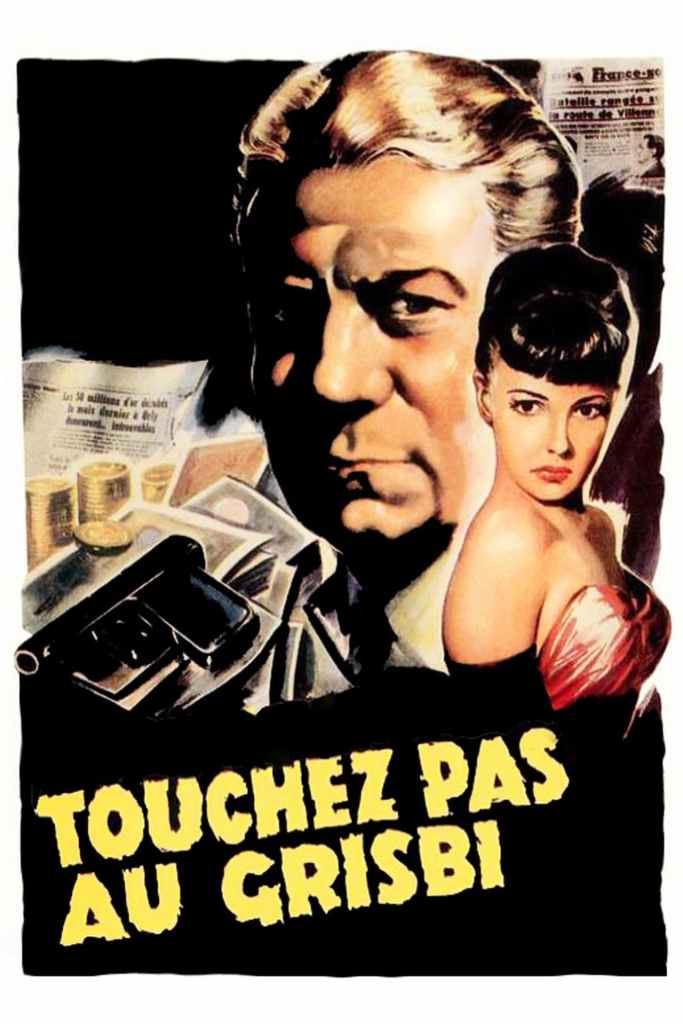
Up today is a set of films out of Italy (thought not all in the Italian language, as you’ll see). First is 1962’s Mafioso, which is a very entertaining gangster film disguised as a family drama. Antonio is a successful overseer at a car factory in Milan (northern Italy for us less-traveled). He works hard and hasn’t taken a vacation in years, so he asks his boss for over 2 weeks so he can go home to Sicily, to show his wife and kids where he grew up. When finding out what village Antonio is from, the boss asks if he knows Don Vincenzo, to which Antonio replies, “Who doesn’t know Don Vincenzo?!” The uptight Antonio, who keeps every record straight and plans leaving for Sicily down to the minute, is a completely different person when he gets around his family in Sicily. Warm and boisterous, he quickly is at home with the southern Italians, talking about his old friends (who’s in jail? who’s dead?) and laughing when his wife says she’s full from all the food, and Antonio quips that those were just the appetizers. But Nino, as he is called in the village, knows the pecking order, and makes a point to take his family to Don Vincenzo the same day they arrive, to make introductions and pay his respects. The Don welcomes Nino home, and has a plan of how to make use of Nino while he is available. Antonio may not like what he is called to do. Tremendous film, lots of laughs regarding the stereotypical Italian (large) family, but the film provides plenty of tension too in the finale. ★★★★

The Night Porter was filmed in Italy and directed by Italian Liliana Cavani, but it gave my subtitled-eyes a break, as it is in English. In Vienna in 1957, Lucia (a young Charlotte Rampling) checks into a posh hotel with her symphony conductor husband. She and the hotel night porter, Max, immediately recognize each other but don’t say a word, and go each other’s ways, though each is visibly shaken. In flashbacks, we learn that Lucia was held in a concentration camp during the war, and Max was a German guard there. As the film progresses, we see further flashbacks in which Max was, at first, a torturer, and later, Lucia’s lover, in a sadistic way. Whether from Munchausen’s or another reason, Lucia cannot get Max out of her head in the present, and when her husband moves on to the next orchestra to conduct, Lucia stays behind and begins an affair with Max. While this is going on, Max’s old German buddies have been running mock trials against each other, in which they gather evidence of their war crimes, present it in front of a fake “judge,” and then burn it all, as sort of a cleansing/letting it all go. They see Lucia as a threat, someone who could really point the finger at them in court, but Max will not see her come to harm. The movie is at times either fascinating or grotesque, but all in all it doesn’t make a whole lot of sense. Lucia is pretty well abused during her time in the camp, and why she would run back to Max, submitting herself to further humiliations, is beyond me. Weird movie. ★½

From one film dealing with Nazi Germany to another. Released in 1959, Kapò was one of the first films to dramatize events of the Holocaust, and it took a lot of backlash at the time because of it. Edith is a young teenager in Paris when she and her Jewish family are rounded up and sent to a concentration camp. Edith is separated from her parents and witnesses them being led to their deaths, but can do nothing to stop it. She becomes nearly catatonic, but a kind fellow prisoner saves her life. With the help of a Jewish doctor, they give Edith a new name, Nicole, and new prisoner garbs labeling her as a criminal and not a Jew. They get her on the next train to a new camp, where no one will recognize her. “Nicole” is now as safe as you can be in such a place, and slowly comes out of her stupor. However, rather than doing good for others as she was shown, she vows to herself to do whatever it takes to improve her situation. She begins stealing food from other prisoners, and starts sleeping with German guards for food and niceties. A couple years later, she has moved up to a kapò, a prisoner still, but one who is in charge. She lords her power over the others, including the women who helped her early on. It is only when she starts to fall in love with a Russian prisoner, Sascha, and he shows her that there is still hope in the world, does Nicole think she can redeem herself. Strong acting from Susan Strasberg in the lead, but the film is a bit unbelievable at times. I’ll forgive it, since it is such an early example of Holocaust films, and on the whole I found it an above-average flick. ★★★

To be honest, I watched Kapò because I wanted to see an earlier film from director Gillo Pontecorvo, before I watched his breakout, 1966’s The Battle of Algiers, a film that received acclaim and is still talked about in film circles. Filmed in a documentary style (and actually looks and feels like a documentary many times throughout the movie), it follows a group of men, particularly Ali La Pointe, as they fight for the independence of Algeria from France in the late 50s. At the start of the conflict, the freedom fighters initially target French police officers, killing them out in the open to create fear and try to get them to leave. However, the police retaliate by setting off a bomb in the Muslim quarters of the Casbah, killing innocent civilians. The FLN (National Liberation Front) then step up their tactics to targeting innocents as well, placing bombs at hangouts frequented by French citizens (cafés, airports, horse-racing venues, etc). Each side keeps moving the goalposts, to further and further atrocities. Eventually, the French bring in a trained paratrooper unit to deal with the insurgency, led by Lieutenant Colonel Mathieu, who starts a serious crackdown, hunting leaders and torturing them for information. He justifies his actions by saying he was brought in because people believed that France should still be in Algeria, and if you believe that, then let him do his job. I got the impression that he doesn’t believe it himself, but he’s a soldier there to do what he’s been ordered to do, and he’s very good at his job. It’s a gut-busting film to watch, as you don’t know who exactly you’re supposed to be rooting for. Obviously in this day and age we can agree that colonialism is generally a bad thing, but in this movie (and the facts on which it is based), both sides are doing terrible things. This is the kind of movie that sticks with you for a long time. ★★★★★

For the last film, I returned to director Michelangelo Antonioni, someone who I really enjoyed when I watched some of his stuff a few years ago (5 years already, time flies!). Identification of a Woman was a later-career film from the director, released in 1982, and it unfortunately does not reach the heights that his earlier films attained. It follows a film director named Niccolò who has plenty of professional success but who has been unable to match that level in his private life. Already divorced, he becomes infatuated by a young hot socialite named Mavi. She comes from money and runs in circles Niccolò has never considered, and he doesn’t quite like it. However, he is head over heels for Mavi, and it becomes an unhealthy situation for her. While their lovemaking is incredible, Niccolò becomes controlling, and after a big blow-out fight at a weekend getaway, Mavi disappears the next morning. Unable to locate her, Niccolò eventually tries to move on with a new girl, Ida, but he continues to obsess over Mavi. The film just meanders along with no big, thought-provoking moment, and it lacks the style of Antonioni’s earlier films, so that it ultimately just comes off as a subpar 80s film lacking any memorable moments. A couple stars for strong acting, but that’s it. ★★

  • TV series recently watched: Yellowstone (season 5.2), The Rings of Power (season 2), Static Shock (seasons 3-4)
  • Book currently reading: The Battle of Corrin by Herbert & Anderson