Small-time criminals hatch a plot to Rob the Mob

Rob the Mob is a based-on-a-true-story movie about a couple deciding to do just as the title says. In the early 90’s, Tommy and Rosie are a couple of two-bit criminals, recently out of jail for a smash and grab type of hold up. Tommy is captivated by the ongoing John Gotti trial, and while sitting in the courtroom listening to testimony, he hears the address of one of the infamous mafia social clubs. After digging around a bit, he finds that guns are not allowed in said clubs. Realizing the mob would never contact the police about being held up, he decides to start robbing these establishments.

If it sounds like a colossally stupid idea, it is. Tommy and Rosie come off as a pretty shallow pair. But the film does a good job of making it seem like Tommy has no other ideas for taking care of his girl, as the only up and up job they have pays next to nothing and prospects for recent criminals are sparse. It actually isn’t a bad mob movie. There are light-hearted moments followed by sharp intensity, as the pair try and ultimately fail to stay one step ahead of the mob. You root for them, but know that they could never come out unscathed.

The film also stars Andy Garcia as a crime boss, and Ray Romano as a newspaper reporter following the local mafia stories. A good film, especially if you are a fan of the genre.

Modern day vampires face struggle in Only Lovers Left Alive

This was a quiet film that came out about a year ago. It stars Tilda Swinton and Tom Hiddleston (Loki from the Thor movies) as a married vampire couple just barely getting by in modern society. Adam is a loner living in a Detroit, collecting old guitars and making underground music that is getting a cult following. The more upbeat Eve is living in Tangier under the watchful eye of fellow vampire Christopher Marlowe (yes, THAT Marlowe). Due to the “contamination” we humans put in our blood every day now, they can no longer just feed on the average person on the street, for fear of getting sick or even dying, so they must each make sure they are getting pure blood in various ways. When Eve sees Adam getting depressed, she goes to visit him in Detroit. The movie takes a turn when Eve’s free willed, throw-caution-to-the-wind sister Ava visits and creates a problem for the pair.

Light on action (especially for a vampire film), the film is driven by the witty dialogue and subtle but strong acting by the two leads. They share centuries of wisdom and thus have a unique look on the world, but use their knowledge in very different ways. This isn’t a film everyone will enjoy, but it is an endearing movie with heartache and quiet passion.

Italy holds love and death in Where Angels Fear to Tread

In several ways this novel was like the last I read. It features characters romanticizing over another land, but when they are there, they see it is quite unlike what they imagined. Instead of rural Main Street though, the setting is the village of Monteriano in Italy.

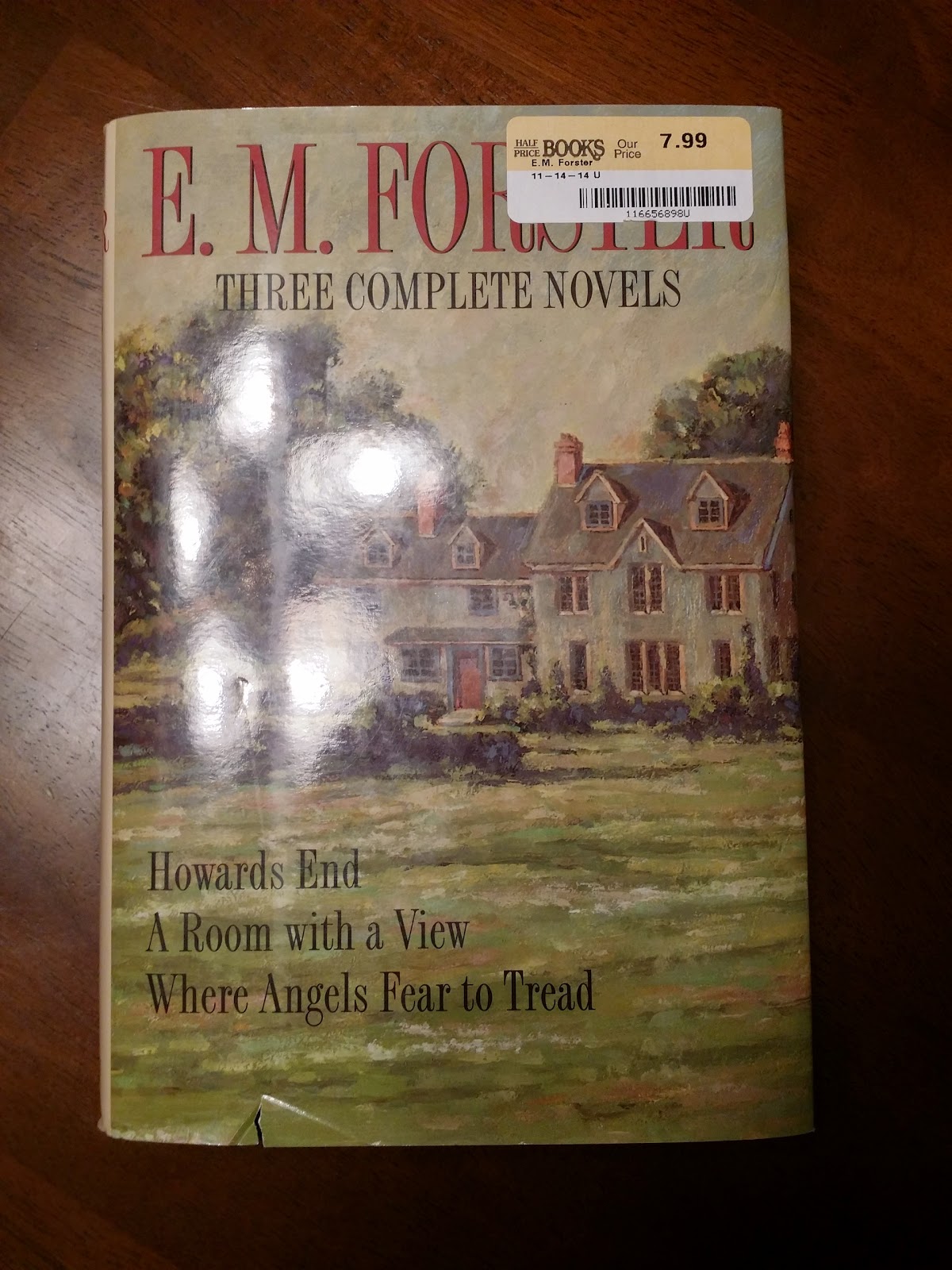
E.M. Forster’s Where Angels Fear to Tread was released in 1905. It is about a widowed mother, Lilia, who leaves her aristocratic society in England and runs off to Italy, where she instantly falls in love with and marries a local nobody named Gino. It causes quite the scandal in her old neighborhood. Lilia soon realizes all is not what it seems, when it becomes evident Gino only married her for her money, and spends his days cavorting around town. Lilia ends up alone, in fear of her husband, and finally dies during childbirth. When news reaches England, her former mother-in-law Mrs. Herriton sends her son Philip, daughter Harriet, and family friend Caroline off to “rescue” the baby to raise it among civilized society.

By this time Gino has had an about face. Where previously he would have sold the baby for money to live his newfound privileged lifestyle, he now loves his child and will not let him go. The climax comes when Harriet steals the baby during their evening ride to the train station to return to England, only to get in a carriage accident along the way in which the baby is killed. Harriet loses her mind to grief, Philip returns to Gino to give the bad news, and is only saved from being murdered by him when Caroline comes to the rescue. In the end, Philip realizes he has loved Caroline this whole time, but he is rebuffed when Caroline admits she has loved Gino from the start and has kept her feelings to herself all these years.

Like Main Street written about 15 years later, this novel features people hoping for one thing, and finding when they get it, it is not what they really wanted at all. And again there is a sort of longing for another life, something different than your own. The times have dated this book, with the idea that a 33 year old widow needs to be rescued, with the thought that her younger 20-something brother-in-law would be wiser simply because he is a man. The style is more thoughtful; not much “action” happens and the story can be told in a few minutes, but the characters spend a lot of time reflecting on thoughts and events. Certainly well written, but it feels like you are reading a book that is over a hundred years old.

Living the quiet life in rural Main Street

Main Street is a good old piece of Americana. Written in 1920 by Sinclair Lewis, it (with his followup Babbitt) was largely responsible for him winning the Nobel Prize in literature 1930. It is a satirical look at rural towns in America in the early 20th century. It focuses on Carol, a strong willed city-born girl with big ideas and big expectations, who marries the local doctor from Gopher Prairie, MN.

For the backdrop: in the late 19th and early 20th centuries, cities were growing at a near unsustainable pace, some doubling in size in just 10 years. In fact, the 1920 census was the first to show nearly the same number of people now living in a city as in the country, for the first time in our nation’s history. As such, there was sort of a romantic idea going around of “the simple life” away from the urban areas, the way “it used to be.” Lewis wrote Main Street to sort of shoot down those wistful ideas.

Carol is fresh out of college in 1911 or so. She falls for Will, a doctor some 10-15 years older, and marries him pretty quickly. He brings her back to Gopher Prairie, which she immediately hates. She sees the dirty small town as needing not just a facelift, but a total demolition and rebuild, and envisions a quaint Main Street where the houses are all pretty and in neat little rows, where the citizens attend plays and discuss the latest forward-thinking novelists and writers. Of course in reality, and locals just want to know who bought the latest automobile, and have you seen Sam’s new fence, and the ladies just want to gossip about who is being scandalous.

The first fully half of the book (and it is not a short book) does feel tedious at times, as Carol rams her head repeatedly against the norm, and nothing comes of it. She tries to get the ladies club to read more advanced literature and is shot down. She tries to produce a play which is an utter failure. She tries to advance her husband out of love and respect, but he stays true to his upbringing and while he wants to be the husband she desires, he can’t change who he is. Carol ends up feeling very alone and isolated. When she does find a true friend (in itself scandalous, a foreigner with a socialist-idead husband and baby), the wife and baby die suddenly of typhoid. She then latches on to person after person to liven up her dreary life, but each is taken from her in bizarre ways. Because the first half of the book was slow and dreary (like her life), when these events happen in the second half, they are all the more riveting (I actually gasped aloud while reading, when things occurred suddenly).

Finally Carol has had enough. She takes her one son and moves out from her husband to Washington DC. Here the book almost fast forwards. Before, we heard every detail of Carol’s monotonous life, and before we know it we are 2 years further down the road. Carol has become pregnant again (the book never says if she was unfaithful, or if this was due to Will’s visits to DC). Either way she is discussing her future with friends there, and decides to finally move back home. She accepts her mundane existence in Gopher Prairie, but finally has a way to change it. She latches on to her 2 children, promising herself that she will raise them to be aware of the world outside of their small town, so that when they are grown they will not be like all the others coming from Main Street.

This was the first book I’ve ever read from Sinclair Lewis, and I must say he is an extremely detailed writer. His depictions of Gopher Prairie are so precise, you can smell the oil, feel the dusty wind, hear the idle chatter. The way he wrote of Carol’s inner struggle, penning her thoughts for us to read and then following up with her actual words, keeps the reader aware constantly of the fight going on inside her. For me it was also fascinating to read a book written nearly 100 years ago. We joke about it now in society, but even then the “head of the house” was often the woman, who set forth what the family would do and the husband sort of trailed along. The local town leaders would get on their soapbox and talk about how these forward-thinking women, with their ideas about women’s suffrage, would be the downfall of our society, and then step down to see what their wife wanted them to do that evening. A very good read, though definitely not for the impatient.


American Sniper has a great war film in its sights

American Sniper features Bradley Cooper in perhaps his finest role. He plays Chris Kyle, a Navy Seal during the Iraqi war. Based on a true story, Kyle would go on to become a highly decorated war hero.

Kyle is a good ol’ boy from the south. Family means everything to him, and he sees his fellow Americans as family. This patriotism leads him to enlist, and immediately go out for the Navy Seals to become one of the best. Early on he meets his future wife, and no sooner is he married with a child on the way, he is shipped off to Iraq. There he starts to build a name for himself, to the point that when he returns for his second tour (he would go on to have four total!), he sees he has gained the nickname “Legend.”

The surface story of the film is a sort of one-on-one battle between Kyle and his counterpart on the other side, a trained Syrian sniper and former Olympian marksman named Mustafa. Kyle spends his days trying to protect the soldiers on the ground, while Mustafa is often across the city trying to take them out. But inside the movie, the focus is more on Kyle trying to internally reconcile the cold blooded person he is in Iraq with his family when he comes home. He creates a wall around himself that keeps everyone but his brothers-in-arms at a distance, even his wife and kids. Cooper portrays this struggle to an amazing degree. You feel for him, and hope that by the end he can achieve the same success at home as he has with the military.

If you look up Chris Kyle online you’ll see he was perhaps not always the nice guy shown in the film, but this is Hollywood after all, and as a stand alone film, it is easy to get caught up rooting for Kyle to find his way.

Selma pays homage to a significant time

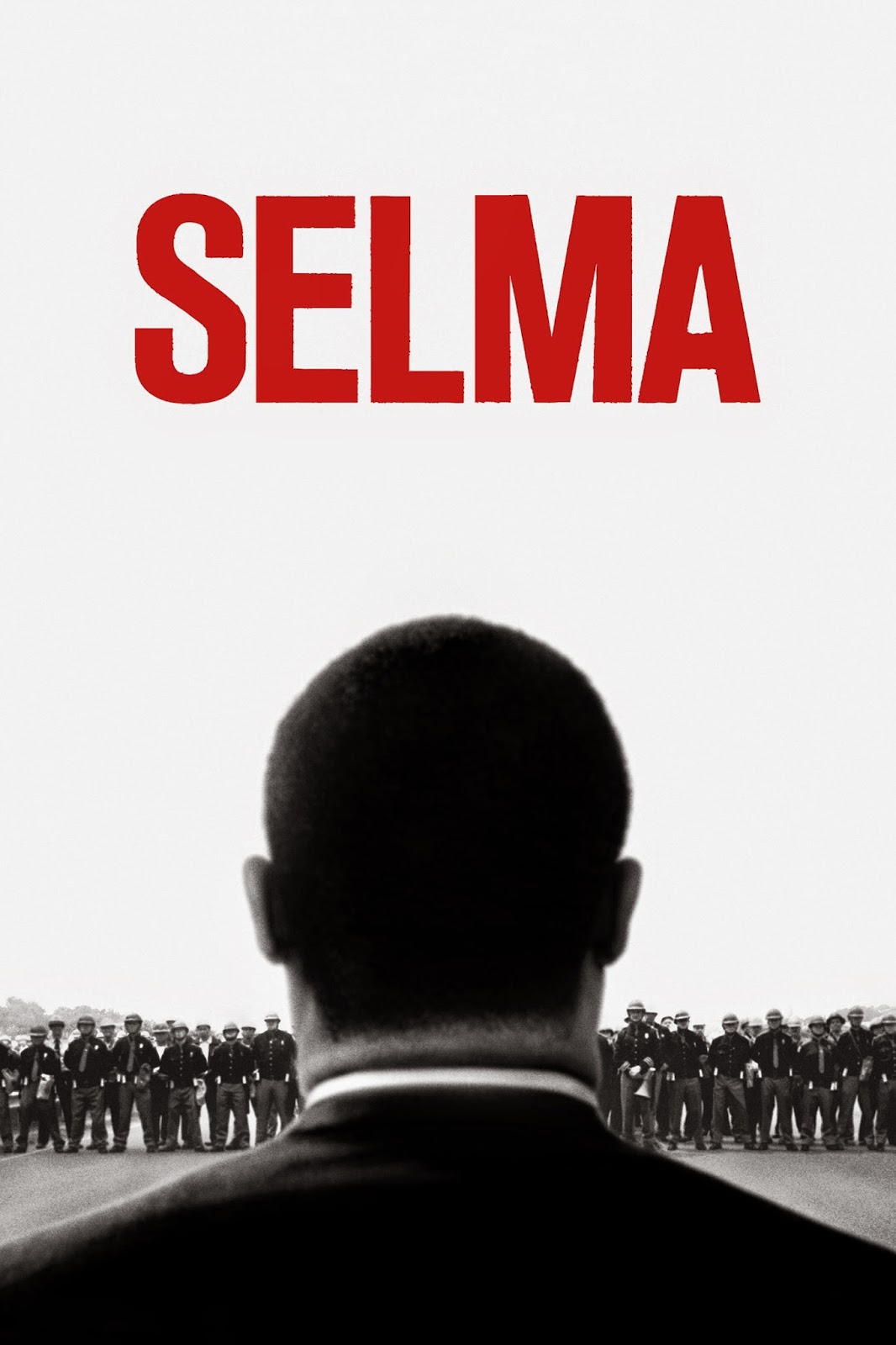
Selma tells of a certain point in the civil rights movement, specifically the struggle to get African Americans registered to vote, and the peaceful march between Selma and Montgomery, Alabama, to bring attention to their plight. It has received a lot of attention, especially lately with it failing to get a lot of Oscar love.

The movie is mostly well done. I can’t speak to how historically accurate it is, the events took place before my time and while I consider myself a somewhat history buff, I don’t know the fine details of the civil rights movement. It was a good movie though. The first half felt a little slow and almost rote, just telling the story with little else going on, but the second half more than made up for it. I’m not ashamed to admit the end brought me to tears.

I’m a movie buff, but I admit I’m no expert. However, it does bother me when some movies get a lot of attention simply because of their subject matter. A couple years ago, 12 Years a Slave won a lot of awards, and while I thought it a moving film, it wasn’t the best movie made that year. I was afraid Selma was going to be similar, but I felt it was a much better movie and deserves acclaim. I can’t say the acting was better than the choices the Academy did choose to nominate for the acting parts (and I did see nearly every single actor in those parts last year), but the director most certainly did deserve a nomination. The movie does hit home, despite taking place 50 years ago, we as a people still have a long way to go.

Warm, sweet story served in The Lunchbox

Been awhile since I sat down to a subbed foreign film, though I used to watch quite a few. Today I enjoyed The Lunchbox, an Indian film that came out quietly at the end of 2013. Starring longtime Indian actor Irrfan Khan and Nimrat Kaur of recent Homeland fame, it is the story of a misplaced lunch. Every morning Ila makes lunch for her husband, which is delivered by India’s famed lunch system. However, it starts making it to the wrong desk, and is delivered instead to a nearly retired Saajan. Ila was hoping her extra effort at cooking would grab her straying husband’s attention. While it doesn’t reach her husband, it does revitalize Saajan. He and Ila start passing notes through the lunchbox delivery system.

The film is sweet and touching, in a quiet way. Ila and Saajan begin to confide in each other, Ila about her inattentive and wandering husband, Saajan about his loneliness since the passing of his wife. The two continue to grow closer without ever having met, and the ending is poignant and sincere. A very endearing film.

Midnight’s Children: Book 3 & Conclusions

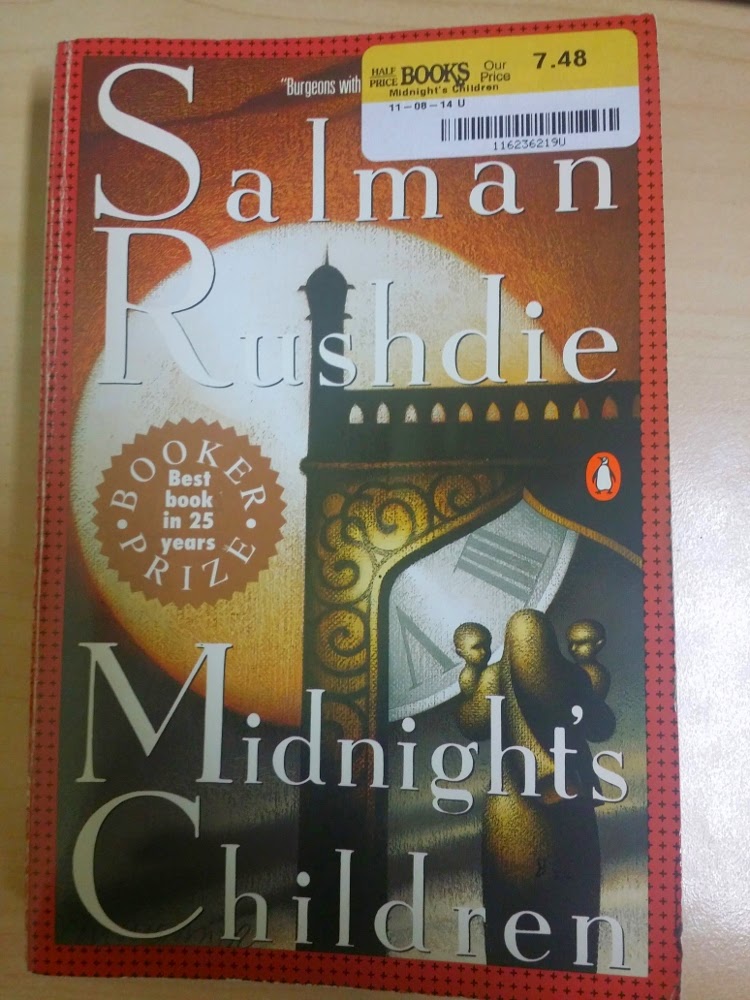
Book 3 took what seemed like an odd turn in the beginning. Saleem has amnesia and remembers nothing of his past. He is in Pakistan’s army and just sort of going through the motions. Throughout the course of the last chapters, he finds himself and his past, and makes his way back to Bombay where he grew up. He finally faces off against Shiva, the baby he was swapped with at birth, and finds a son of his own to pass his legacy off to.

At first it seems like a great departure from where this tale started, but if you look deeper, it all makes sense and is a good metaphor for many people’s lives. Midnight’s Children started with a lot of hope and dreams, but as Saleem ages, much of what he wanted and longed for fails to develop, and his life in the end matches nothing that he thought he wanted as a youth. As his life changes, so does the way his story is told and the feeling the book gives off. However, even in the end, when (nearly) everyone he has loved is dead and gone, a slice of hope exists. When all of Midnight’s Children have been dealt with by the Indian government, his own child shows a small piece of magic may still exist.

As my first step into reading 100 classics, I think Midnight’s Children has me off to a good start. It is an enjoyable read, in a very different style from what I am used to at least. I especially liked that, as told in first person perspective, the storyteller doesn’t have all the answers. People come in and out of his life and we don’t always know what became of them. Saleem’s tale has lost love, forlorn hope, but ultimately perseverance against insurmountable odds.

Midnight’s Children: Book 2

The largest of the 3 distinct sections of Midnight’s Children, book 2 begins at Saleem’s birth and concludes when he is 18. Much happens in those 18 years, but the largest events circle around Saleem’s abilities. When he is 10, he discovers he has special powers, as apparently do all children born in India in the hour of her independence. The powers vary from person to person, with those born closest to midnight being the most potent (in Saleem’s perspective anyway). Since he was born at the stroke of 12:00, his are the strongest, and his are those of telepathy. He can see into other’s minds and read their thoughts, even communicate. Unfortunately nothing good seems to come from this supreme power (which he keeps hidden), and everything Saleem touches because of it goes foul, ending in anger, fights, and even deaths. The ultimate defeat is when Saleem decides to out an affair between adult friends, leading to a murder.

Of course a lot of other things happen; as with any family much changes over the course of 18 years. His childhood friends all move away. His immediate family goes through sweeping changes with illness, both physical and mental. His switch at birth is brought to everyone’s attention, with lasting ramifications. In a demoralizing moment, he loses his telepathic powers, before he is given the chance to ever use them for good. Book 2 ends during a war between India and Pakistan, in which very few bombs are dropped, but those that are manage to kill nearly all of Saleem’s family, leaving only his sister with whom he has been estranged.

I must say I enjoyed the first part of the book more. The second third was still good, but seemed to bog down in more metaphors and prophesied revelations than you can count. It wouldn’t have been so noticeable if Rushdie didn’t feel the need to beat us over the head with them at every turn. (“See how this came about? Just as it was before!” or “See how the name is similar to their old friend, and how those similarities existed!”) He really leaves little for us as readers to come to our own conclusions, choosing instead to point out every cause and effect to make sure we miss nothing. Still well written for sure, and I do want to see how Saleem’s life finishes, now that he is alone.

Rich acting, boring plot visited in At Middleton

At Middleton is about an improbable coming together of a couple adults while taking their separate kids on a college visit. Andy Garcia’s George is there with his son, and Vera Farmiga’s Edith is visiting with her daughter. The two are quite charming around and towards each other, unfortunately their acting skills are sort of wasted in this predictable romantic comedy. Edith is in an unloving marriage, George is bored with his, and so the two gravitate towards each other over the course of the long day. In the end, nothing for anyone involved turns out the way they expected at the start. The movie is quaint at times, but wanders off course at others, and I’m not sure they really had a target audience in mind when making this one; it can’t decide if it wants to be a When Harry Met Sally or an adult Ferris Bueller. Fairly forgettable, almost as soon as it is over.