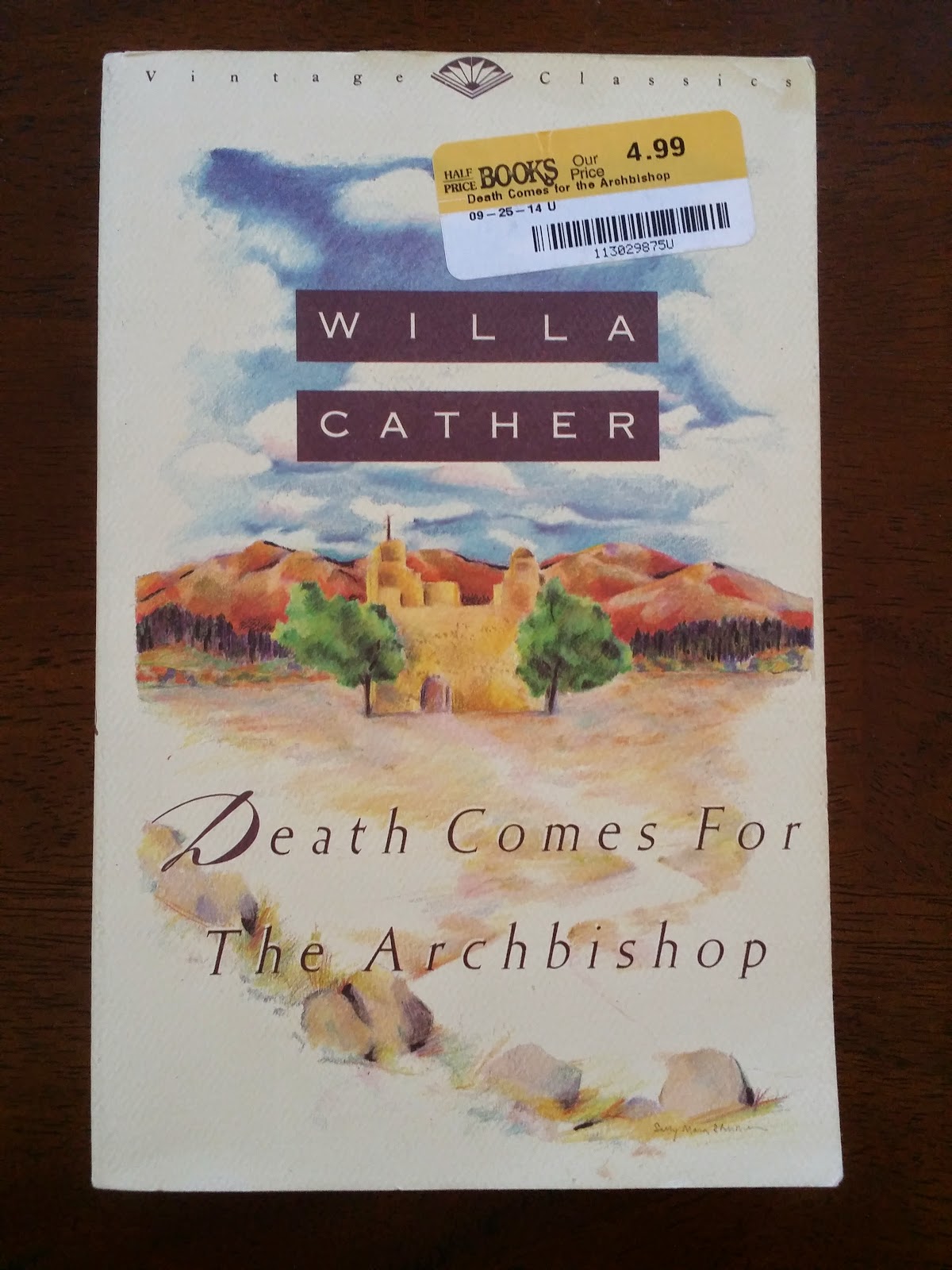
A quiet but important life in Death Comes for the Archbishop

Death Comes for the Archbishop was released in 1927, written by Willa Cather. It tells the story of Father Latour, a missionary who is made a bishop and sent to the newly USA-acquired New Mexico Territory to set up a diocese. He must balance the local Mexican and Indian (primarily Navajo and Hopi) groups, which seem open to God’s word (the Mexican population especially, having passed down Catholic traditions from a couple generations back, from the original Spanish explorers), while facing some opposition from protestant Americans who are increasingly moving to the new territory. He also must fight the entrenched clergy all ready there, who care more for personal gain than the spread of the church. Latour is aided by his longtime friend, Father Vaillant.

The book is spread out over many years, many of which are rushed by in the blink of an eye, while some events are closely examined. Latour makes it his goal to build a true cathedral in Santa Fe, while Vaillant is more for the people, spending most of his time riding out in the surrounding lands to spread God’s word. Vaillant being out so much leads Latour to become very lonely and somewhat more seclusive than he all ready is. Vaillant dies first, and because he has walked so far and made so many friends, his funeral is attended by hundreds, coming from all corners of the territory. Finally as an old man, Latour dies as well. He had a choice to spend his last days in his home in France, but chose to stay in his new country. His funeral is less attended than Vaillant’s, but he is laid out in the cathedral that he was finally able to build.

This book reads almost like a biography, rather than a novel, and is (probably loosely) based on the life of Jean-Baptiste Lamy. There isn’t an over-arching story tying it all together, other than just Latour trying to build a solid foundation for the church in the west. For history buffs, it is an entertaining read, it shows a pretty crisp picture of the daily struggle just to get by when there is nothing around you. It is also a fascinating look at the local groups that inhabited that area, and how they had to weigh this new God with their longtime traditions. It is a shorter book and a quick, very nice read.

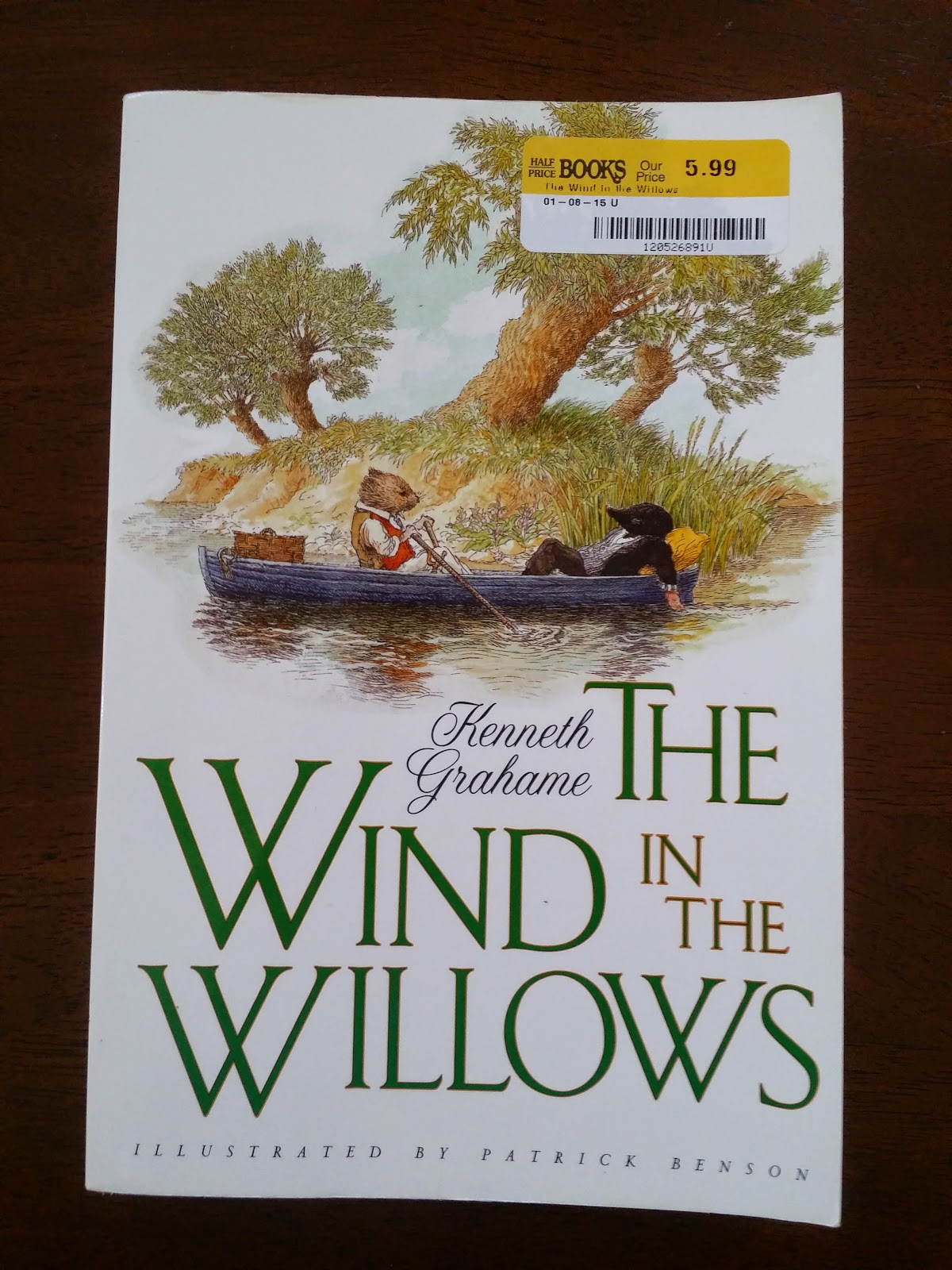
Toad, Mole, and their friends come to life in A Wind in the Willows

A few children’s books are on my list of 100 greatest 20th century novels, and this was the first I’ve read. A Wind in the Willows tells a couple years of some friendly animals living their lives. In the beginning, Mole feels some wanderlust and leaves his little corner of the world for an adventure, and ends up at The River, and meets Rat. Rat introduces him to Toad, Otter, and Badger, all with their unique personalities. There are adventures along the way, for instance the time Toad steals a car and gets thrown in jail. Each character shows different traits to the reader and others, and individually (and as a group) they exhibit all the human emotions that plague us.

This is a well written book, and reading it is a stark reminder of how childrens books have changed since it was published in 1908. Very young children will laugh at the antics of Toad, while slightly older kids will get more meaning from Badger and his practical approach to friends and life, but in both cases, the book isn’t dumbed down. It challenges kids to think a little more than they typically will in today’s force-fed picture books. My parents always read to my brother and me when we were little, and reading this was like stepping back in time.

Quick takes on 5 films

Some more independent films, with some recognizable faces. I’m a big Game of Thrones fan, and if you watch that show, you know the sizable cast. Seems like I see someone from that show in practically every film I watch lately.

Force Majeure is a foreign film, so you’ve got to be ready for some subtitles, but it is a good one. It is about a family on a skiing vacation in the alps. When a controlled avalanche gets a little too close for comfort, it has a lasting affect on the family. The wife’s instinct is to grab their kids and pull them close, while the husband bolts off to save himself. Of course the avalanche was controlled so it never reaches them, but the wife is shaken up and can’t forgive her husband for leaving, while he refuses to admit he was running, only that he “saw the situation differently.” The rest of the film is her badgering him to admit it, and he trying to pretend it didn’t happen. When he finally breaks down, it seems he isn’t the man she thought in more ways than one. I didn’t recognize the leads, but friend Mats is played by Kristofer Hivju, Giantsbane from Game of Thrones.

Lilting is one of the most beautiful films I’ve seen in a little while. In it, Junn is an aging Chinese mother, recently put in a care facility by her son Kai because she is showing early signs of dementia. Despite living in the USA for nearly 30 years, she has never learned the language and so feels very isolated. At the start of the film, Kai has just died suddenly, having never told Junn he was gay. Now Kai’s longtime boyfriend Richard is left trying to take care of Junn. He misses Kai very much but can’t spill Kai’s lifestyle so soon, so he has to internalize his grief as he tries to help Junn feel more comfortable in her home. Everyone’s guilt creates a large white elephant in the room that the characters dance around for most of the film. Beautifully acted and very endearing. Richard is played by Ben Whishaw, Q from the newest Bond films.

Copenhagen is a bit hard to watch at times. Main character William is a real asshole, sleeping with anyone (even hitting on his best friend’s fiancee), and has a real “don’t care about anyone” attitude. His father walked out when he was a boy, and now as an adult he is in Copenhagen hunting down his grandfather, to try to find some backstory of what made his father who he was. He is offered help by Effy, a local girl there who he finds, after he all ready flirted with her, is only 14 years old. The movie gives a real creeper vibe after that, and you keep waiting for this guy who has no morals to sleep with the 14 year old. By the end he surprises everyone and turns into a half way decent guy. Another low budget, but well written and well acted film. William is portrayed by Gethin Anthony, Renly Baratheon from Game of Thrones.

Something, Anything is a much more subtle film. Mark and Peggy are two 30-something professionals that have put their careers first, so they are meeting and getting married a little later. Very quickly he proposes, they get married, and are expecting a child. Almost as fast, she loses the baby in a miscarriage, moves in with her parents, and then gets her own apartment. This all happens in the first 20 minutes of the film. The rest of the movie is her spiritual awakening. Peggy is lost, and not sure what to do with her life now that it has been turned upside down. She quits her successful job and takes an hourly wage position at the library, sells or donates most of her worldly possessions, and starts hunting an old high school friend who became a monk. This is a heartfelt film, clearly showing the difficulty of moving on, and how everyone mends in their own way.

Fort Bliss is about the struggles facing our women soldiers. Maggie Swan is just returning home after 15 months in Afghanistan, to a now ex-husband and a 3 year old son that doesn’t remember her. She can’t find any normalcy, and is haunted by events during her tours, told in flashbacks. At first you aren’t sure if she will pick her family or her country as her priority, but eventually her decision is sort of made for her. The movie is good, though a little paint-by-numbers, and tries a little too hard to pull at the heart strings.

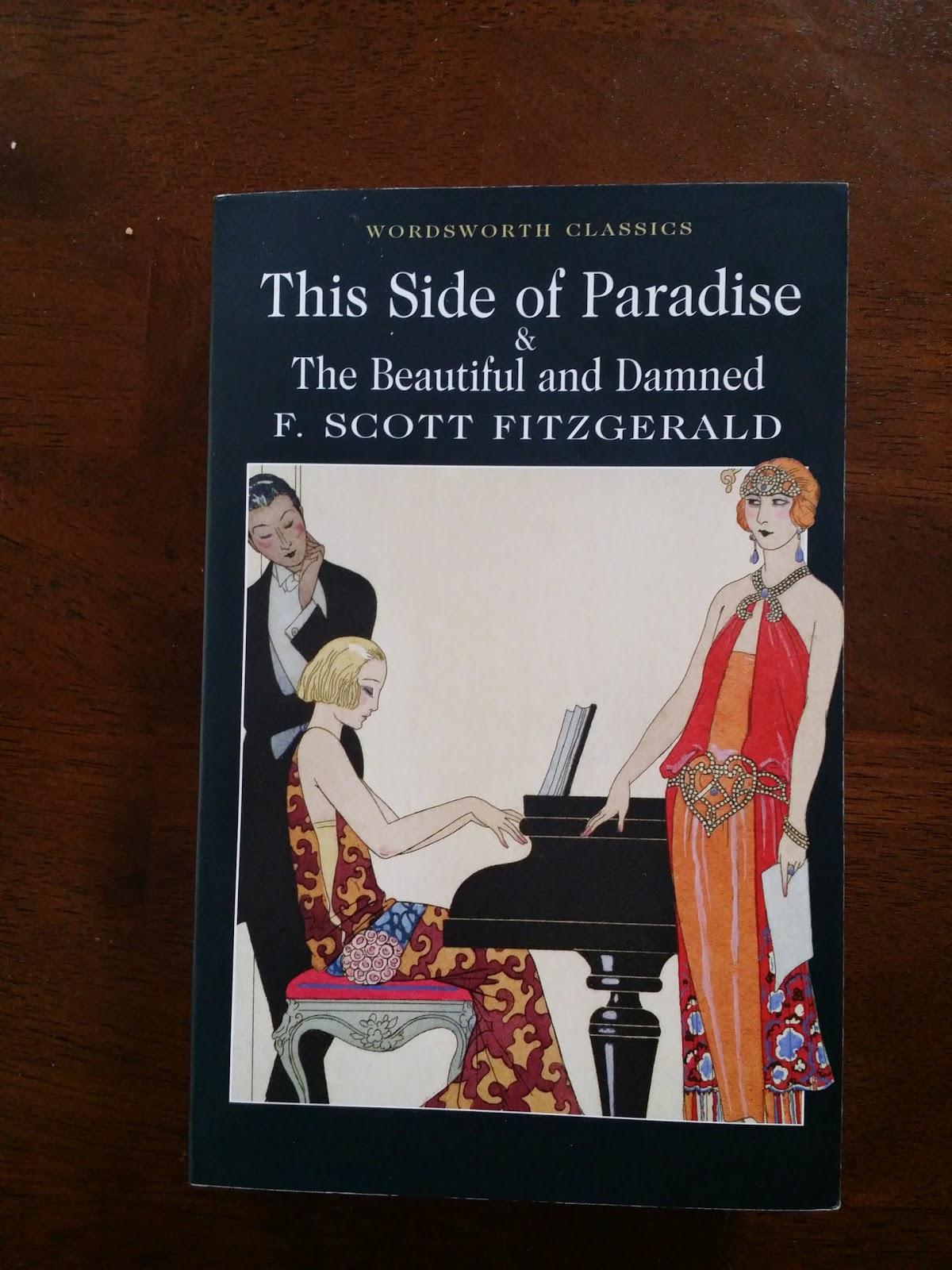
Fitzgerald’s early life in novel form in This Side of Paradise

This Side of Paradise was the first novel by F Scott Fitzgerald, published in 1920. The book shared some similarities with his own life at this time. On the surface it feels like a small, quiet little book where not much happens, but it does have deeper meaning and a close look at society at the time, if you care to reflect on it after reading.
The main character is Amory Blaine. Blaine’s father is wealthy but nonexistant, and dies early in Amory’s life. His mother is a bit mad, and treats Amory more as a friend than son, even having him call her by her name rather than “mother.” This leads Blaine to constantly seek approval from others throughout his life, especially women. The main crux of the story is Blaine goes to college at Princeton, falls in love a couple times, and ends up penniless after his mother’s death, due to her poor investments and donations to the church (she was once in love with another man before Amory’s father, who decided to become a clergyman instead).
Amory cares very much for his appearance to others. He cares more that others think he is intelligent, whether he is or isn’t. But at the same time, his bravado is just facade, he actually has a rather low self esteem. He loves poetry but considers himself a poor poet. He values intelligence but is a poor student, not because he isn’t smart, but because he spends too much time going to parties or trying to impress others. Early in his college career he is easily swayed by others’ ideas, but he does develop his own outlook on life by the end of the tale.
He falls in love a couple times in the book. First to Isabelle, though the two end up not liking each other much once they get to know each other. By the time he meets Rosalind, his finances are a mess and he is now the spurned suitor. They love each other very much, but she knows she will only be happy living in high society, which Amory cannot provide. He almost falls again for Clara, but realizes she is near insane, much like his mother was, and so is immediately turned off. At the end of the book, Amory is penniless and alone, to the point that he starts forwarding socialism, admitting he is more comfortable taking a handout than working “beneath his station” for pay.
The novel is very much semi-biographical. Fitzgerald’s love would not marry him because she thought he would not be successful enough to satisfy her lifestyle. In the book Amory nevers gets Rosalind, but when This Side of Paradise looked like it would be a hit, Zelda did marry Fitzgerald. Of course, she was later diagnosed as a schizophrenic and died in a sanitarium, so there’s that…

This book isn’t as well defined as Fitzgerald’s later works, but it does have a nice raw feel and is easy to read. It is fun to paint the similarities between the novel and his early life too. I’m not sure I would consider it one of the “100 best” but it an interesting look at the evolution of Fitzgerald as an author.

Movie Marathon! 5 quick reviews

Had a touch of the flu, so stayed home and watched some small independent films today. Generally I only try to review movies that are less than a year old, but while some of these are a little older, there’s a good chance you missed them, as they all made next to nothing (less than $100k) at the domestic box office. All are on Netflix.
What a piece of melodramatic horse poop. White Bird in a Blizzard seems to try to get by on Shailene Woodley’s acting chops alone, where she has flourished in Fault in Our Stars and The Spectacular Now. Unfortunately she can’t save this one, and even she seems bored. She plays a 17 year old in the late 80’s whose depressed and possibly bipolar mom walked out suddenly. The rest of the film shows Woodley’s character trying to deal with her emotions from this, and trying to get down to the big mystery of why her mom left. The “why” revealed in the ending is somewhat surprising, but out of character for the rest of the film. Overall feels like a bad teenage angst or coming-of-age that is just poorly written.
Frequencies is an interesting movie. A British independent film, it was obviously made on a small budget. The plot is a bit twisted but has a great premise. It takes place sometime in the near future when mankind has discovered that each person is attuned to frequencies that interact with the nature around them. People are tested at an early age to determine their individual frequency. Those on the higher scale will always have good luck in life, and those on the lower will always have bad, regardless of intelligence. The movie follows Marie (high frequency) and Zac (low) as they grow up in the same school. He likes her from the start, but because their frequencies are so far apart, they can only be around each other for 1 minute a year or bad things happen (fire alarm goes off, luggage falls from passing aircraft). Marie grows up always arriving to the train station on time, finding exact change for her bills, and not even having to look to cross the street as cars are always just before or just after her. Zac on the other hand always shows up to friend’s houses at inopportune times. Eventually he stumbles upon a way to have their frequencies match, bringing his luck up and hers down, so they can spend time together. The movie starts out as a romance drama but gets heavy into science fiction by the end. They definitely did a lot here with little resources, it is a good movie overall though a little weird at times, especially when the source of the frequencies is explained in the end.
Don’t waste your time with this one. I tried it thinking, “Hey, that’s the guy from Game of Thrones!” (Nicolaj Coster-Waldau) but should have thought instead, “Hey, that’s the girl from The English Patient….” (Juliette Binoche). She plays a front-line war photographer that narrowly misses death when she is near a suicide bomber that goes off. She returns home to try to reconnect with her family. I don’t know how her bore fests keep getting good reviews, including this one. I gave it about 40 minutes, before I had to pick between turning it off or banging my head into a wall.
Filth is a pretty demented film. It stars James McAvoy as Bruce, a dirty cop in Scotland. The film starts out showing his truly awful nature. He sleeps with prostitutes, does copious amounts of coke, and forces sexual favors from suspects. He wants more than anything a big promotion at work, going out of way to demean and embarrass his coworkers who also want it. His family is never shown except in straight-to-the-viewer dialogue by his wife; in breaking the 4th wall she tells the audience how much her husband needs this promotion. You think he is a pretty terrible person with absolutely no conscious, but as the movie progresses, Bruce’s demons are shown. He is hiding from a terrible past, and as hallucinations get worse and his world starts to crumble around him, we learn exactly what he has been running from. In the end, it is hard to forgive his behavior, but we can at least start to understand. Extremely well acted by McAvoy, but his behavior will leave you squeamish in spots.

Breathe In is about a music teacher, Keith, and his family, wife Megan and daughter Lauren. Keith was a musician who wanted to spend his life making music in the gigging professional musician, Bohemian style life in New York, but when the daughter was coming he dropped it, moved to the suburbs, and became a teacher. He still longs for that life and now that their daughter is getting ready to go away to college, he wants to move back, to his wife’s reluctance. Their world is turned upside down when they take in Sophie, a foreign exchange student. Sophie is dealing with the loss of her uncle, who taught her to play the piano quite well. Sophie’s and Keith’s shared love of music brings them together, and he starts an emotional affair. It doesn’t take long for everything to crash apart for Keith and everyone involved. The movie feels some definite building tension, but unfortunately it never reaches the heights I feel it could have. The supreme acting of leads Guy Pierce and Felicity Jones keep your attention throughout though. A good way to spend 90 minutes, but ultimately a forgettable movie.

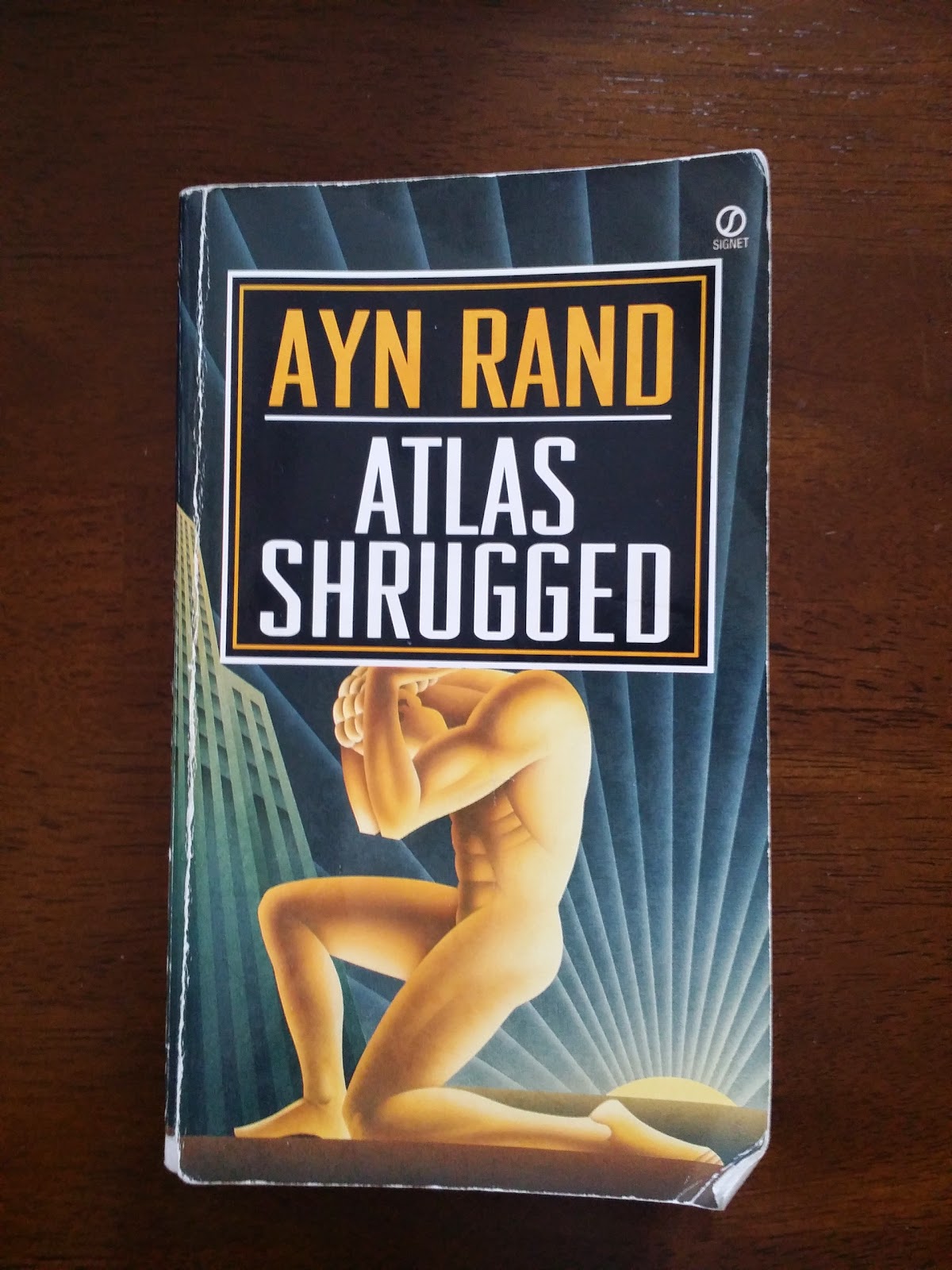
The world falls apart in Atlas Shrugged

Who is John Galt? That is the opening line of Ayn Rand’s Atlas Shrugged, and the key question for most of the novel. The answer is much more than it seems.
Rand was born in Russia in the early 20th Century, and was a teenager during the revolution that overthrew the Russian Empire and set up the soviet state under Lenin. These changes had a profound impact on her, as evidenced by Atlas Shrugged. The backdrop for this novel is the advancement of “People’s States” across the world. Countries have decried wealth and knowledge. Successful businessmen are targetted as being greedy and unsocial, and told that they must share their wealth with the poor and unable (or unwilling) to work. Free thinkers and philosophers have been replaced with a new school of thought, which denounces profit-making and advanced thinking, and says that people should not think on their own, but should only do what they are told. The USA is one of the last democratic nations where people can still own their own businesses and make decisions on their own, but it too is under attack from within by these new schools of thought. People across the country are either clambering for a high paying job, yelling “I deserve it as much as the next guy!” or giving up, saying simply in a “shit happens” sort of way, “Who is John Galt?” No one seems to know what this means.
The book follows Dagny Taggart. She is the heiress of Taggart Railroads, and an old school businesswoman who only works for profits. As a woman she cannot be head of the company, so she is the operating vice president, while her brother Jim is the head. Jim is definitely of the new school of thought, wanting to give jobs to those in need, whether they are qualified or not. He sees the writing on the wall and is setting up strong political friends in Washington. Dagny’s childhood friend and one-time lover is Francisco d’Anconia, a rich playboy who seems to be only interested in frivolously squandering the millions he inherited in his family’s multi-generational copper mining business. While the railroads (and all industrial businesses) are failing due to incompetent workers replacing the more qualified, Dagny is trying to keep her company afloat. It seems she will be saved in time by Hank Reardon, a steel company owner who has invented a new type of steel that is stronger, cheaper to make, and more durable. It isn’t long before the government steps in and ruins this though, by saying it isn’t fair for Reardon Steel to corner the market on this new invention, that he must share his patent with all the other steel companies, and so he doesn’t make more profit that anyone else, all the plants must produce an equal output and sell at the same prices. At the same time, Taggart is beset by other railroad companies yelling for equal ride-time on her rails and profit sharing. In this way, all the companies across the country are failing together.
Hank and Dagny become close and eventually lovers, as they keep struggling to keep their respective companies, and their own little corners of the country, from collapsing, despite everything the politicians throw at them. Across the country, the best of the best, including successful business owners, intelligent engineers and scientists, etc, are throwing up their hands to the changing system and simply disappearing, but Hank and Dagny keep fighting. Francisco reveals his ulterior motive, that he has created the playboy image to keep the countries around the world from taking a closer look at his business management, and he has purposefully been self-sabotaging his copper business into the ground. On the morning when the Chile government is to announce they are nationalizing his copper mines in that country and taking them over, they realize the mines have all ready been emptied or exploded and buried, with workers being paid basically to look busy for years. Francisco tells Dagny he is part of a group that is speeding along the collapse of the world, so that when every country has failed, the world can be rebuilt properly from the ground up.
Dagny refuses to join Francisco’s cause, and will go down with the ship it seems. While exploring an old abandoned factory with Hank, she finds a rusting old motor, built upon technology she has never seen. It seems it can run on electricity pulled from the atmosphere around it, so it doesn’t need fuel and is completely self sustaining. Unfortunately it is incomplete, so she finds one of the world’s last remaining engineers to try to rebuild it, while at the same time going on a mission to find its creator. Going from the previous company’s owners, to managers, to employees, she is able to piece together the story of the inventor of the motor. He was a young man that completed it just before the company went “social.” When the company started paying all people equally, and awarding bonuses not to those that worked harder or achieved more, but to those who were in greater need (new baby, broken leg, whatever it is), the young man walked out and was never heard from again. His name, of course, was John Galt.
Turns out John, Francisco, and Ragnar Danneskjold (a pirate who has been harassing government ships off the coast for a decade, stealing all the gold and sinking anything that could help each country), were all college friends. They saw the way the world was headed and developed a plan to help it along its way, so that one day again value would be put on real intelligence and the advancement of technology, not just the giving out of alms to “looters.” The three have been secretly approaching businessmen and scientists, and getting them to disappear to a hidden, self-reliant city in the Rocky Mountains. Hank and Dagny are also approached, but they cannot let go quite yet, so they continue to try to prevent the inevitable. When Hank’s plant is attacked and looted because he would not cooperate with the government, he finally gives in himself and disappears. John Galt sends out a radio broadcast for all to hear, with his manifesto for the coming collapse and telling people that they brought it on themselves, but the end will only be a new beginning. Shortly after, he is captured. The government tries to force him to help the situation, while he refuses, saying there is nothing he can do in the way they want help. Society is in full de-evolution by this point, with riots in some parts of the country, states declaring secession in others. The final trans-continental railroad collapses, cutting off coast-to-coast travel and setting off a panic in New York, where the population will starve without food from the midwest. After being tortured, Galt is rescued by Francisco, Ragnar, Hank, and Dagny, who finally is ready to join their group. As their escape plane is flying over New York, the lights in the city go out as the power plant fails. One of the final scenes is a train sitting idly on abandoned tracks in Arizona, as a horse-and-buggy crew offers to take the strandoned passengers to a neaby settlement. Technology and organized government has finally completely collapsed.

This has the feel of an epic, dystopian book. Coming in at over 1000 pages, it is a long read, but a good one. Rand considered it her ultimate achievement and showed most clearly her philosophical idea of objectivism. Though she continued to write non-fiction books about her ideas, I don’t believe she ever wrote another novel after Atlas Shrugged. It isn’t for casual readers and it does get a bit bogged down by long philosophical speaches by its protogonists, but it is clevely written and is much more than just a work of fiction.
Love and loss for Him and Her in Eleanor Rigby

I wanted to see this film as soon as I heard about it last year, but the “full” versions never made it to a theater near me. An ambitious project, The Disappearance of Eleanor Rigby is the same story told from two different perspectives.

Originally conceived as two films, The Disappearance of Eleanor Rigby: Him and : Her each tells the story of a hurt marriage from the husband’s and wife’s viewpoints, husband Conor, played by James McAvoy and wife Eleanor, played by Jessica Chastain. Depending on the order in which you watch the films, you are left with a very different lasting perspective.

I watched Him first, which starts with Eleanor confronting Conor and saying she needs a break. She suddenly leaves, and Conor is left wondering what happened or what he did wrong. He spends the film hunting her down and trying to reconcile. The reason for her departure is later explained. I then watched Her, which starts just after the breakup, with Eleanor attempting suicide (something you were never aware of during Him). Her demons are slowly brought to the surface throughout the film.

Since Him follows the guy, it is told in a “guy’s” sort of way. It is very linear with a straight forward plot. Her is more wandering and emotional, telling more backstory along the way as Eleanor reminisces about the past. Both together tell the complete story of a marriage on the rocks, and the viewer can feel (especially in Her) the anguish the couple is going through.

Theaters were reluctant to release 2 fully separate films at the same time, so an edited version that combined the two was released titled The Disappearance of Eleanor Rigby: Them. I did not see this one, but having seen Him and Her, I think that is definitely the way to see the full idea. I can’t see how they would edit 3+ hours down to just 2, plus Him and Her are worth watching just for the differing perspectives. Shared scenes are subtly different in each film, with the logic being Conor and Eleanor each remember events in different ways. A very heart wrenching film with brilliant acting.

Crime thriller in January and family laughs in Alexander

The Two Faces of January is a quiet, slowly tense thriller that hearkens back to crime films of the 50’s and 60’s, in that it has a very retro-like feel and even plot. Two leads, Viggo Mortensen and Kirsten Dunst, have made their share of blockbusters but have lately been seen more in small independent films, while the third, Oscar Isaac, has made a career of small films and is just getting ready to heady to mainstream with the upcoming Star Wars and X-Men films.

Chester (Mortensen) and Colette (Dunst) are touring Europe when they bump into Rydal (Isaac), an American moonlighting as a tour guide while he decides what he wants to do with his life. Unbeknownst at first, Chester is in hiding for having swindled a bunch of investors back in the states. When a PI catches up to him, Chester kills him and enlists Rydal’s help to flee. Rydal is instantly attracted to Colette, and as the film progresses, we see how far Chester is willing to go to protect his own and keep on the run.

The film has a fair number of plot twists that keep you on your toes, events that you just don’t see coming, but for me it had the feel of great actors concealing a very average movie. It tries to set Rydal up as an unwilling accomplice, but he goes too far to help Chester that it is hard to sympathize much. A short film at just 96 or so minutes, so worth a single viewing if you have an afternoon free.

I skipped on this film last year during my movie adventure (I skipped a lot of the kid-oriented films) so finally getting around to it. The book was one of my favorites as a little kid, and the movie does it justice. You’ve probably heard the premise from all the previews last year. Alexander lives his life with perpetual bad luck, until the day of his 12th birthday when inexplicably, his bad luck transfers to the others in his family. The film is their antics throughout the day as increasingly worse things continue to happen. Alexander can just sit back in wonder as his day goes well, while everyone else has the worst day of their lives. Even when they feel like they’ve turned the corner and it starts to look like it may get better, bad things just keep happening to the poor family.

It’s good family entertainment. I think kids will laugh the hardest, but there are still grins and chuckles for adults too.

Hector also finds himself in his Search for Happiness

I’m an admitted sap for these kinds of films, even when hardcore critics don’t like them. And despite its rough reviews, I enjoyed Hector and the Search for Happiness.

Hector (Simon Pegg), is a psychiatrist who has lost his sense of happiness in life. He has an adoring girlfriend Clara (Rosamund Pike, known for last year’s Gone Girl) and a successful career, but one day he realizes he has lost happiness, if he ever had it at all, and is just going through the motions of life. He decides to set out on a solo trek around the world to find the meaning of happiness. He keeps his notes in a journal, and each entry as he makes it is scribbled across the screen in a charming quirky manner. Some are funny, but most are thought provoking or poignant. He has many adventures across the globe, before coming to know true happiness is in himself, and is just waiting there for him to reach out and grab it.

I’m a sucker for these “finding yourself” kind of films. I thoroughly enjoyed this one. It is funny and Simon Pegg is his affable self, but he does manage to stretch his character and show a side we don’t often see in his other comedic roles. It’s just a good old feel good kind of movie.

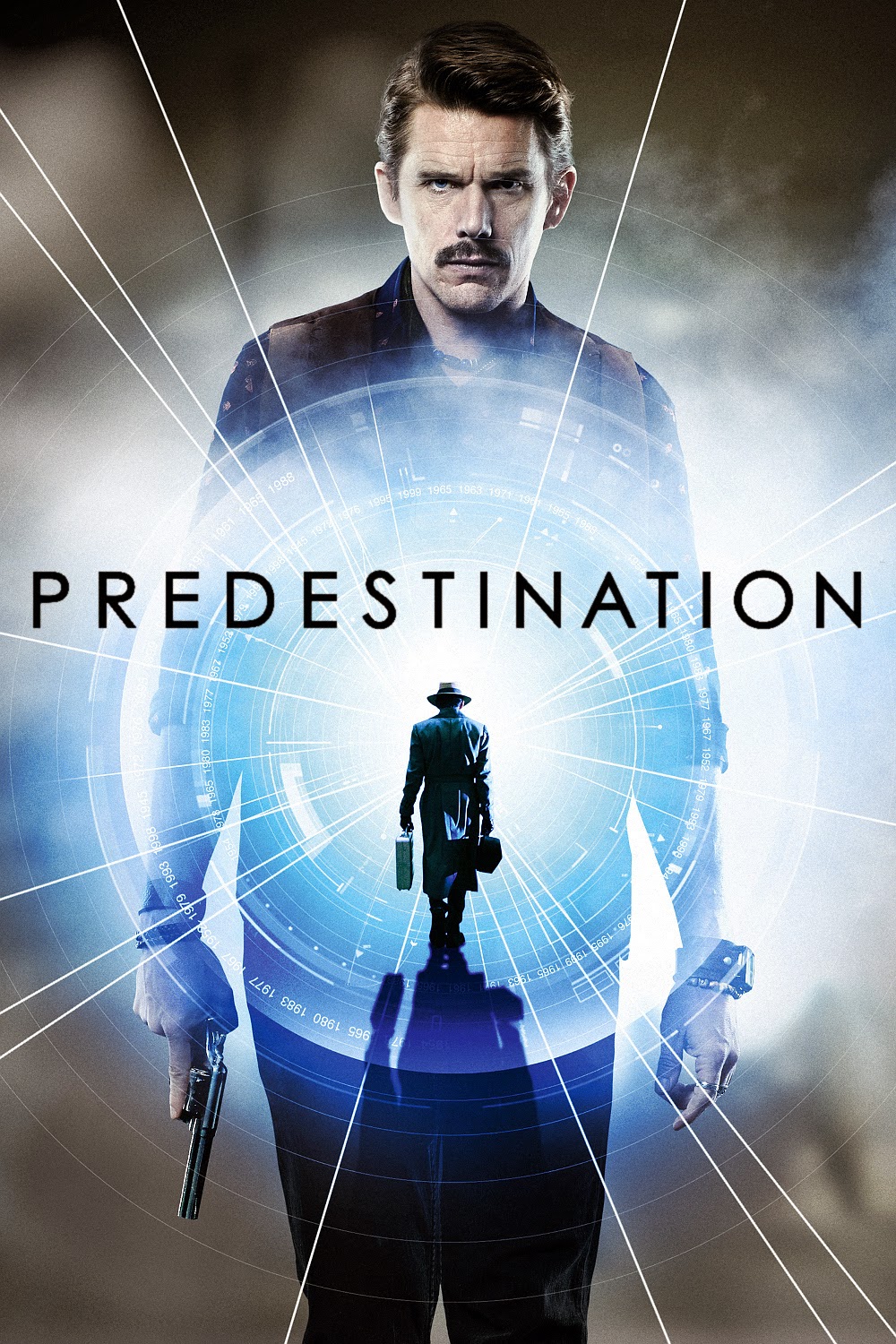
Thought-provoking sci-fi jumps through time in Predestination

This movie will leave you thinking, and has the potential to blow your mind in a Matrix-like way. In an alternate reality where time travel was invented in the early 80’s, Predestination stars Ethan Hawke as a time-jumping cop. The film is based on a short story by Robert A Heinlein, an author I read much of when I was first getting in to sci-fi, as many did.

The protagonist’s group jumps to places in the past and future to stop major crimes from taking place. The film is mostly about his hunting of a serial bomber nicknamed the Fizzle Bomber. Unfortunately the bomber is aware of the time cops in some way, because he keeps changing the day he sets off his big blast that kills thousands, thus not giving the cops a consistent specific day or time to stop him, only knowing it will happen sometime in March 1975. Ethan goes back to play as a bartender in 1970 on a lead. One night, in walks Jane, who tells him a fantastical tale.

I really can’t give much more than that without giving away crucial story elements, and I do like to keep my movie reviews spoiler-free. This film has elements of science-fiction obviously, but also is at its heart a mystery. You don’t know who is who or who is on who’s side, and just when you think you have started to figure it out, the movie flips it on you in the latter third. Unfortunately it lets loose a big surprise a little early in my opinion, you guess the final climax before it actually happens. That being said, it is one of most thought-provoking films I’ve seen in a bit, and puts forth the question if we have control of our lives, or if everything is preordained.