Quick takes on TEN films!

For western lovers, Hell or High Water is a pretty decent modern-day western. Chris Pine and Ben Foster play a couple of brothers in rural Texas. Pine is an upstanding man who is facing losing his ranch to the bank, and Foster is his law-breaking brother. The two start robbing local banks to save the ranch, getting Texas Ranger Jeff Bridges to swoop in and hunt them down. A lot of heart in this one, and fine acting all around, and particularly by Bridges. The movie received critical acclaim and while I thought it was certainly well acted, I couldn’t quite get behind the scenario. Still, certainly not a bad film by any stretch and it is enjoyable.

Captain Fantastic started great, petered out by the end, but is still a satisfying indie film for lovers of the genre. Viggo Mortensen plays Ben, a father of six raising his kids in the wilderness. He and his wife scoffed at conventionalism and are raising the kids to be brilliant intellectuals, athletes, and survivalists. His wife however has recently killed herself after a long battle with depression, forcing her estranged parents to reach out to Ben about his lifestyle choices and how they ultimately affect the kids. Funny, heartfelt, and supremely unconventional, I almost think it doesn’t go far enough and some good plot elements go unexplored. Still, a very well made film with a strong cast of both recognizable and new faces.

Film history is full of sequels that should never have been made, and Independence Day Resurgence is the latest. Lets not fool ourselves and think the original was some great piece of thoughtful storytelling, but at least it was entertaining. The new installment has more characters but ultimately a more heavy handed approach, and is awfully boring for an action film. In a nutshell, the aliens return (bigger and stronger than ever!) and Earth has to band together to take them down before we are all destroyed. The actors just seem to be going through the motions and in the last 30 minutes, you’ll just be waiting for the end. Unfortunately it sets up for yet another sequel. Hopefully this bomb prevents a new one from seeing a green light.

For me, coming from a suburban predominately white neighborhood, Kicks is another one of those eye-opening, life-assessing kind of movies. It follows a young black teenager trying to fit in in a society where your status is based on the clothes on your back and, most importantly, the shoes on your feet. He buys a pair of expensive Nike Jordans off the street, most definiately stolen, but when he is jumped and robbed of them, he goes on a quest to get them back. I can’t relate to the adventures he and his friends go on, which are much more dangerous than the shit I got into as a kid, and probably very realistic for what faces our inner city youth. A sharp film with a lot of complex layers involved.

Sad to admit I never read Dahl’s The BFG as a kid, but I did enjoy this new movie. For starters, it is a masterpiece visually, with vibrant colors and state-of-the-art computer enhancements that blend seamlessly. The story is great too, about an orphan girl who discovers giants are living not too far away. Most are mean and eat humans, but one, which she labels the Big Friendly Giant, protects her, and learns the courage to stand up to the others along the way. Great film for kids, but warm-hearted adults will like it too. Plenty to like!

Other People is a charming film, with a sad plot for sure, but leaves you feeling more good than depressed in the end. The underrated Jesse Plemons plays David, a comedy writer who returns home from NY to be with his dying mother (Molly Shannon in a tremendous role). He is gay and has long been estranged from his father because of it, and sort of brushes off his younger sisters to deal with his own grief. It is a heartfelt film, as the mother fades slowly as the movie goes on and others react to her and her family in a situation where no one ever knows what to say. There are several subplots that are explored well, and the movie features outstanding acting by Plemons and Shannon. There is also geniune laughs injected to keep the film from getting too dark.

What followed was a series of movies that all I could do was shrug at. All decent films, but nothing that stands out as great. Florence Foster Jenkins is a biography of an opera singer in the early 20th century. She was a terrible singer, yet thought she was great due to people lavishing over her for her money and her support of the arts. Meryl Streep plays Florence, with husband portrayed by Hugh Grant. You feel for Florence a bit when she realizes at the end that she isn’t as good as everyone has been telling her, but I never connected enough to care that much. I just pegged her for a spoiled rich girl that always got her way her entire life.

Goat is about two brothers close in age, both in college. Older brother Brett (Nick Jonas) is a popular student on campus, a member of the highest regarding fraternity. Younger brother Brad (Ben Schnetzer) is an incoming freshman trying to find his place. Brad is beat up badly just before school starts and fights the reputation for not having stood up to his attackers, and also tries to get out from his brother’s shadow when he goes out for the same fraternity. It shows a lot of the hazing Brad goes through to get accepted. Some intense scenes, and strong acting, but still overall sort of an “eh” film.

Southside With You is the final of the average movies. This one is the story of the Barack & Michelle Obama’s first date. Really the film is just like reading a biography, with all their personal history told in dialogue as the two converse throughout the day. There’s nothing you can’t read online. An interesting concept, but not a great movie. If you wanted to really know about their past, you can just read a good biography.

Allegiant is the third, and possibly the final, film in the Divergent series. The team from the first two films (Shailene Woodley, Theo James, etc) are back to continue the fight against the government, this time in the form of people outside the dystopian Chicago. The film seems like it takes a left turn from where the first films were going, and has the same (or worse) young adult feel. I like the whole dystopian future genre so I mostly enjoyed it, though the constant childish tense music grew tiring. The film did poorly at the box office, so the supposed finale of the series is in limbo. I might just have to read the books to see how it all ends.

Nothing vile about Star Wars Rogue One

My son said Star Wars Rogue One is now his favorite Star Wars film. I don’t know if I’d go that far, having grown up with the original trilogy, but it is an exceedingly great film on a whole lot of levels, and entertaining for all fans of the series.

In case you’ve been living in a cave, this new film tells the tale of the crew tasked with finding and stealing the plans to the original Death Star, before anyone in the galaxy has even heard of the weapon yet. It has a new cast of characters (with a couple cameos and references to other favorites), and leads up to the first Star Wars film (Episode IV). The cast is top-notch, and the characters are complex. There are no one-dimensional players here, except for maybe the obligatory droid to inject humor into the film. The good guys do bad things for the cause, and the reluctant hero of the film comes from an unlikely source. I’m not giving away any more than that, but definitely go see this one in the theaters as it is well worth it.

As the new Disney-owned Star Wars franchise explores these solo films that stand alone, apart from the main series which will continue next year, they’ve definitely started on the right track. I enjoyed last year’s Episode VII, but this new film outshines it, and leaves me wanting more. Part of me doesn’t want this to become the Marvel series with 2-3 films coming out every year, but if they keep up with this quality, they can be terrific events to look forward to.

Quick takes on 5 films

Central Intelligence isn’t as funny as it wants to be. It is amusing, but that is about the most of it. Unfortunately the plot is paper thin, so the film relies entirely on the comedy of Kevin Hart and Dwayne Johnson. As entertaining as the two are, and more so together, they can’t cover all the holes. Hart plays a high school superstar turns boring adult accountant, and the Rock, while an overweight target for bullies in high school, is now a jacked up CIA agent. The two team up to save the world and reform their images in the process. Plenty of laughs during the film, but nothing memorable afterwards.

Sausage Party is entirely offensive, should not be watched by anyone with traditional morals, but man is it a hoot. A cartoon where the food talk and act like people (vulgar people, but people), and they dream of getting “chosen” by the “gods” at the supermarket and taken to the “great beyond”. Their world is shattered when they find out what people do to the food once they leave the store. Forget inuendo, the food flat out say plenty of crass stuff (the main character is a sausage, and he can’t wait to get inside a bun, wink wink). But there are deeper meanings too, such as the foods have vastly different views of the world and others according to what kind of food they are. You can watch the movie for the laughs, or analyze it for the political and socio-economic ideas, but in either case it is worthwhile for the folks that can handle more than a little vulgarity.

Imperium is a solid modern drama/thriller. Daniel Radcliffe plays a FBI agent who works at a desk but dreams of going into the field. He gets his chance to chase down a group of home-grown terrorists, mostly white supremacist groups, to stop a plotted terror attack. He goes in deep, mixing with neo-nazi’s and the KKK to try to stop the big plot before it goes down. An engaging and eye-opening film. With today’s political leaders so worried about people from overseas, it is a real reminder there are plenty of people that want to do us harm right here at home.

Indignation is a quieter film, but no less riveting. Logan Lerman, as Marcus, is a young Jewish student with working class parents. His schoolmates are being killed in the Korean War, but he is protected from the draft as he will be attending college in the fall, the first of his family to do so. Raised strictly in the religion, Marcus is an intelligent, rational being, questioning everything and never taking any lesson without analyzing it. In college he is confronted with many ideas he hasn’t seen before, including a mentally unstable girl with very different morals. It isn’t long before Marcus’s ideas and mouth get him into trouble. Very fine acting in this one, well worthy of an afternoon for serious movie lovers.

Anthropoid is a classic war/spy film. Based on the true story of a team of Czechoslovakian exiled army members, it is their story of re-entering their country with the mission to assassinate Reinhard Heydrich, who ends up being the highest ranking Nazi officer to be assassinated during World War II (hope I’m not giving anything away there). I’m sure the movie embellishes a bit, but it is attention-arresting from the moment the men parachute into the country. Good acting featuring Cillian Murphy and Jamie Dornan, but it is a war movie first and foremost.

Quick takes on 5 films

Every time I sit down to watch the latest Woody Allen film, I think, “This is the one. This time I’ll see why his films have such a following.” After Cafe Society, I’m still going to be searching. Like almost all of his films, this one too has a very “paint by numbers” kind of feel. The characters are introduced, the plot develops in a straight-forward way that foreshadows the ending before it arrives, and the movie ends with someone staring off in the distance pondering some event. This latest stars Jesse Eisenberg, Kristen Stewart, and Steve Carell, all great actors, but unfortunately their parts here are all one dimensional and tired. Allen has pumped out a film almost every year for most of his career, unfortunately the highlights seem to be well in the rearview mirror.

I enjoyed Swiss Army man until the very end. It is a funny off-beat film about Hank (Paul Dano) who is stranded on a beach and ready to end his life. A dead body washes up on shore, who Hank names Manny (Daniel Radcliffe), and the two become morbid companions. Hank decides to try to get back to civilization, and drags Manny along for the ride. Along the way, Hank finds all sorts of purposes for Manny’s body, and Manny ends up getting Hank to look inside for what led him to this place in life. A funny and endearing film.

I picked up The Shallows from redbox on a whim, and wasn’t expecting much. I remember seeing the trailer at the movies awhile back and laughing at the absurdity of it. However, this is proof that you can find entertainment sometimes in the unlikeliest of places. Perhaps because I had stayed up all night dishearteningly watching the election results and anything would have kept my interest at this point, but I actually really enjoyed this movie. Doesn’t hurt that it stars Blake Lively either. She plays a woman stranded on a rocky outcropping near a Mexican beach, while the world’s craftiest shark prowls the waters. No great storytelling here, but it is an intense film and will keep your attention.

The Infiltrator is a pretty good film, based on a true story. It stars Bryan Cranston as a Bob, a US Customs special agent who goes undercover. He starts out just trying to take down a drug lord during the whole 80’s “war on drugs” campaign, but it gets more involved when he uncovers a huge money laundering scheme, and even a plot to take over ownership of a bank in the USA. When people start dying, he has to decide to stay the course or get out while he can. A good film that shows off Cranston’s indelible skills.

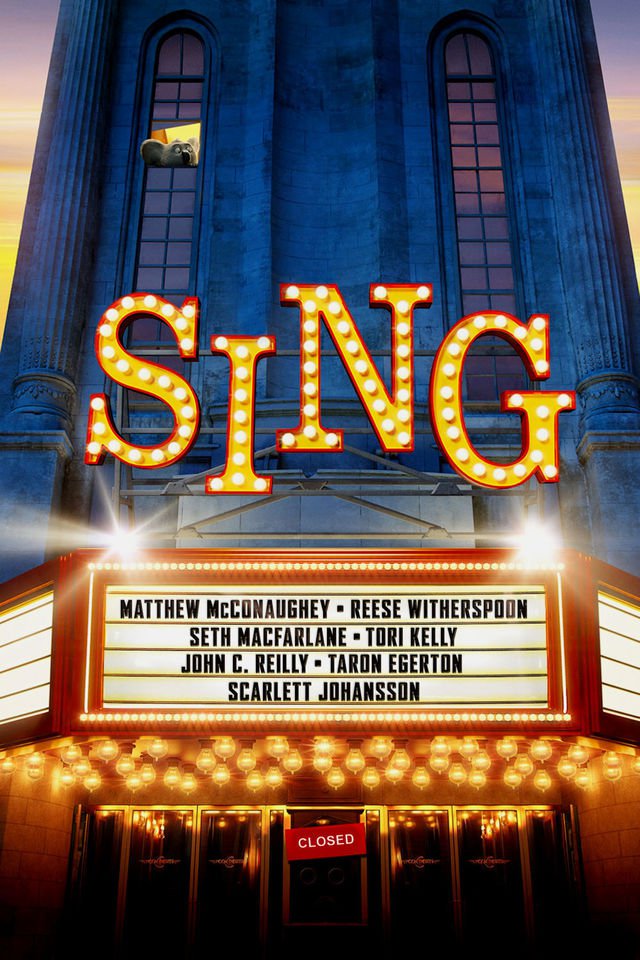
John Carney’s Once was a cute film, but the story got a little stale by Begin Again, and is now downright moldy in Sing Street. I’ll give it the benefit of the doubt and admit that I did not finish the movie, in fact barely got halfway through, but it just seemed like more of the same: a down-and-out main character finds hope in music and is able to piece his (or her) life back together by the end. Carney’s one trick pony needs to find a new pasture.

Doctor Strange continues the magic for Marvel franchise

Man am I a sucker for the Marvel franchise these days. I’m all in with their movies, television, and Netflix shows, even though I’ve never read a comic in my life. Doctor Strange continues Marvel’s string of successes when it comes to their MCU timeline.

This one tells the origin story of Dr Strange, as played by the heralded, though maybe not mainstream, actor Benedict Cumberbatch. He is a brilliant medical sugeon and researcher, looking to find cures to nerve damage cases specifically. His career is thrown off course though when he wrecks his car and destroys his hands, with the resulting nerve damage ending his medical practice. Reluctantly and with a lot of skepticism, he turns to eastern philosophies looking for a fix, where he begins learning about sorcery and becomes the newest Marvel superhero to try to save the world.

The film has some brilliant special effects, which is hard to pull off in today’s heavy and long-time computer enhanced environment. It is a visually stunning film, with a great story, fantastic acting, which all combines to a tremendously fun movie. The plot isn’t easily accessible outside of a sci-fi following, and I’m pretty sure my wife wouldn’t enjoy this one at all, but I definitely did.

Quick takes on 5 films

I found the first half of this movie much more believable, and entertaining, than the second half. In Money Monster, George Clooney’s character Lee is the host of a slightly zany financial tv show (think Jim Cramer’s Mad Money), with show producer being Patty as played by Julia Roberts. The show is held hostage on live tv when Kyle comes in with a gun and bomb vest, demanding answers for why Lee’s supposedly safe stock bet crashed, wiping out Kyle’s savings. Plausible, if a bit out there. The movie takes a twist in the last act though that definitely leaves reality behind. It is saved somewhat by the solid acting of Clooney & Roberts, and Jack O’Connell as Kyle. It is a new take on a tense hostage film, and worth at least a single viewing.

Popstar is hilarious. No two ways to say it. Andy Samberg and his friends in The Lonely Island put this movie together, produced by Judd Apatow. It is sort of a mockumentary about a rap group trio (sort of a cross between Beastie Boys and a boy band) who split up when one of them embarks on a solo career. There is a plot here showing their split in the past and how they come back together, but the film is really here just to make you laugh. There are plenty of laugh-out-loud moments from start to finish, especially for those fans of Samberg’s, with an endless supply of cameos from the movie and music scene. This one will not disappoint.

Nice Guys is a throwback buddy cop-style movie, with private investigators instead of cops. Set in the 70’s, Russell Crowe and Ryan Gosling are brought together to get to the bottom of a missing girl and dead porn actress. Crowe is the tough guy with the determined attitude, whereas Gosling bumbles his way through, often getting results by accident. The case gets a lot deeper than they expected before it is all over. The darker moments almost have a film noir kind of feel, and the whole is certainly entertaining. It’s a solid action film with strong laughs too.

Our Kind of Traitor is an spy/action/thriller movie, light on the action but heavy on the spy and thriller. Ewan McGregor’s character Perry is on vacation with his wife in Morocco when he is pulled in to an international tug-of-war. Dima, a member of the Russian mafia, is there in Morocco as well, and recruits Perry to hand over information on his behalf to the English secret service. Perry agrees only because Dima insists his (Dima’s) life and his family’s lives are in danger otherwise. This film is cleverly written and has strong performances from McGregor, Stellan Skarsgard as Dima, and Homeland’s Damian Lewis as Hector, the MI-6 operative. The film is based on one of John le Carré’s novels, who has seen many of his books become successful and/or acclaimed spy movies.

The Ghostbusters remake would be a lot better if it had a different title, meaning it is actually OK despite the lukewarm reviews and awful box office showing, but it was never going to live up to the greatness of the original film. As you know by now this is a reboot featuring a female cast now. Directed by Paul Feig, this movie is much like his other films, where the comedy is a little on the silly side. While the laughs mostly hit, it just can’t catch the original movie. The original Ghostbusters was funny for sure, but was also tense, thrilling, and had heart too. The newest film is a straight up comedy, lacking in all of those more serious aspects. At times it almost felt cartoonish. Still, a decent film, and I’m sure those that never saw the first would enjoy it more.

A failed dynasty in Absalom, Absalom!

Absalom, Absalom! by William Faulkner is a challenging read. Faulkner is a wordsmith, and the book is as eloquent as it is long. It is not unheard of for sentences to streth most of a single page, and paragraphs continue for several pages. And you have to stay focused on this one; your mind can’t wander or you’ll find that you’ve read several pages and have no recollection of what they said, forcing you to go back and re-read. But for the patient reader, it is a tremendous novel well worth the trip.
This book is told in a non-linear fashion. Quentin is getting bits and pieces from different sources, and is also putting those pieces together in retelling the tale to his friend Shreve. The novel is mostly about the rise and fall of the Thomas Sutpen family legacy. He comes to an area of the south before the Civil War, basically with nothing but the shirt on his back, and grows it to a sprawling plantation with servants, slaves, and family to carry on his name. The Civil War comes along and puts a dent in that, as does some ghosts from Thomas’s past, of which we are unclear of until much later in the novel.
Thomas’s son Henry brings home a friend from college, Charles Bon, who falls for Henry’s sister Judith, to the point where a marriage is planned. However, Thomas doesn’t seem thrilled, and we learn much later that Charles is also Thomas’s son, from a previous failed marriage (the reason Thomas was penniless in the beginning). Whether Charles knows this or not, we never find out, but when Thomas tells Henry, Henry forswears his birthright and leaves. Later, when Charles returns to marry Judith, Henry ends up killing him and running off in exile.
Finally some backstory is told, where we learn of Thomas’s past and his motivations for trying to build a wealthy family legacy. Suffice it to say, he was a man of demons and carried his sins with him. In the end of the novel, all his family is killed in bizarre ways, and his large estate is shrivelled away to nothing, leaving only Jim Bond (Charles’s grandson from his own previous marriage) living on what is left of the estate, with everyone else from the doomed family dead.

Faulkner weaves words as well as anyone I’ve read. The writing is extremely details, almost too much so. I found myself reading passages in a slow drawl in my head, almost in a Morgan Freeman Shawshank-like dialogue. There isn’t much action to the book, and since all of the story is told by people in the book, even the action is told sort of matter-of-factly. You might think this would be boring, but it isn’t, but you do have to stay focused so as to not miss something. A solid novel and well deserving of praise.

Friendships examined in EM Forsters’s A Passage to India

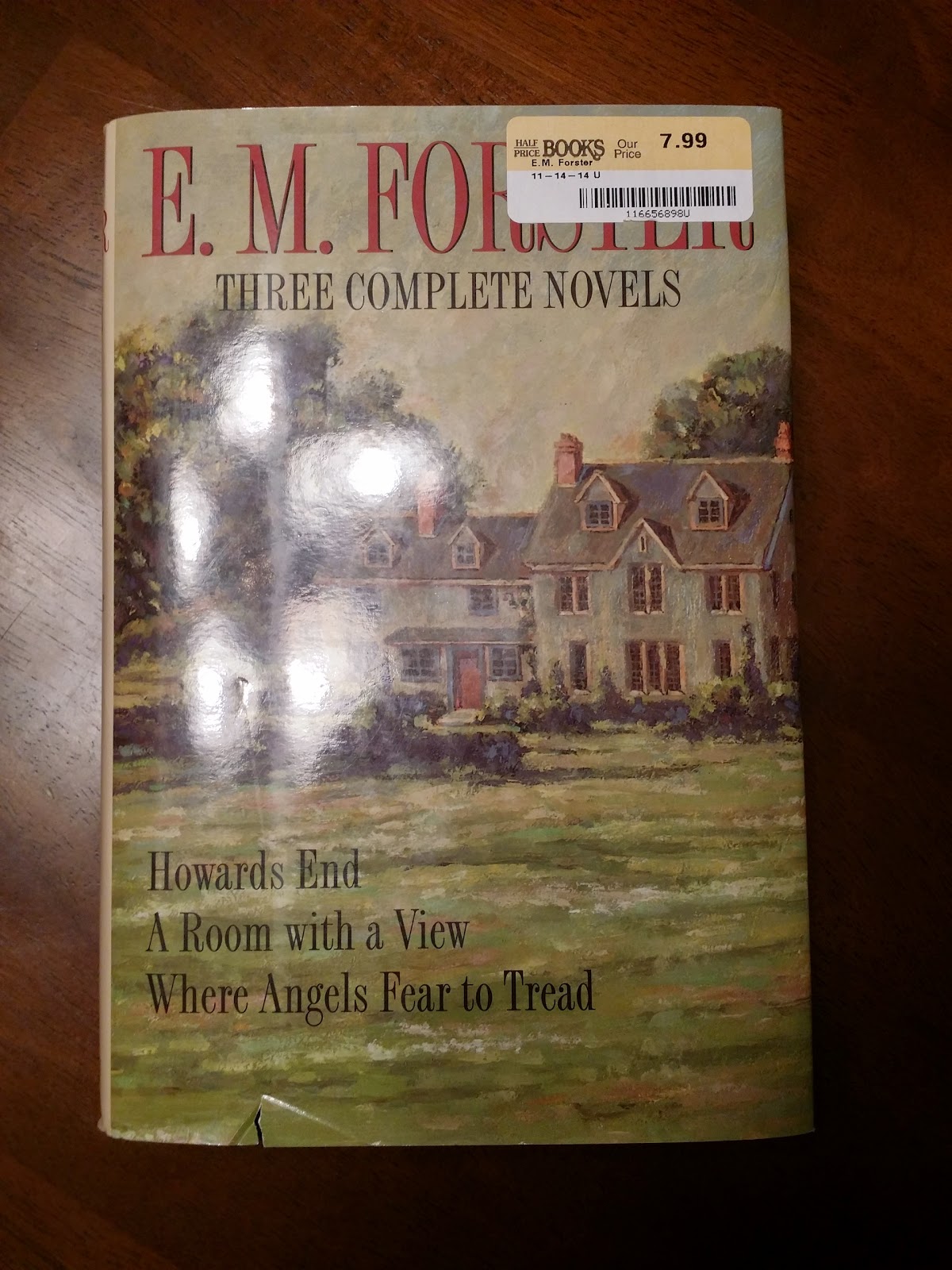
I enjoyed this E.M. Forster book more than the last. A Passage to India is engaging and thoughtful, even though it became a slightly different novel in the end than what I was expecting. Taking place during the British Raj in southern India, it is about the preconceived ideas England has of the Indian people, and likewise the notions India has for the English.

Aziz is a local doctor, popular among his people and good at his practice, but always kept at arms length by the “superior” English residents, even though he is a better doctor than their own. He runs into Mrs Moore, who is visiting her son Ronny, the local magistrate. Like most English, Ronny despises the Indians and thinks they are all crafty and trying to pull one over on everyone else. Mrs Moore doesn’t like India much either and can’t wait to get back to England, but she made the visit with Adela Quested, in hopes that Adela would marry Ronny. Aziz hits it off with Mrs Moore, and later Adela too, and promises to show them the real India that they can’t see when surrounded by the English. Aziz also soon befriends Mr Fielding, a professor at the local university who is the rare Englishmen who likes India and its people.

Aziz leads the ladies on a tour of the local caves, where Adela has a panic attack and claims to all that she was molested. Aziz, though innocent, is arrested and charged, and all of the underlying racial tensions in the area are brought to the forefront. Aziz hopes to use Mrs Moore as a character witness in his favor, but showing her true colors, she heads back to England, only to die in transit. At the trial, Adela admits she had startled in the cave and made the whole thing up, and Aziz is acquitted. He threatens to sue Adela for defamation, but Fielding convinces him not to. Both Adela and Fielding then take off back to England, and Aziz convinces himself that Fielding only held back Aziz so that he (Fielding) could still marry Adela for her money.

A few years go by. Aziz has washed his hands of the whole situation and moved to a new town. Fielding and his wife come to visit, and Aziz finds that Fielding did not marry Adela after all, but instead one of Ronny’s sisters. By the end, Aziz and Fielding laugh it off, and admit that they could be great friends, if only Britain did not govern India. They realize the racial strains on them will always cloud their thoughts of each other.

Published nearly 20 years after Where Angels Fear to Tread, you can see the changes in writing and style in A Passage to India. The former, while still well written, is choppy in spots, and Passage is much more descriptive and charming. Both took slightly different courses than I was expecting as the reader, which isn’t necessarily a bad thing, as both came off well in the end. The ultimate question of this novel, can two people of different backgrounds ever set aside stereotypical thoughts and become true friends, does get answered by the author, though I would hope we have come a’ways since 1924.

Wharton’s Ethan Frome comes to a tragic ending

Edith Wharton’s Ethan Frome is a very short, very quick read, but an enjoyable one. It starts in the first person, with a person coming to the small town of Starkfield on business. He notices a local named Ethan Frome, who limps around and keeps to himself, but whom no one in town wants to talk about. The majority of the story is then told in a flashback, going back 20 something years to when Ethan was a young man.

Ethan runs the local wood mill, but struggles to make ends meat. His wife Zeena is always sick, and spends a lot of money on the latest cures to heal her latest, curious ailments. Her cousin Mattie lives with them to help take care of the house. Zeena is a bit of a nag, as she thinks Ethan doesn’t do enough to help her and she belittles the work he does. Ethan, tired of her constant stinging, sees Mattie’s bubbly personality as a welcome change. The two lead a subtly flirtacious life, until Zeena gets wind of it and tells Mattie she must leave. Broken up, Ethan is driving Mattie to the train station when they finally openly admit their feelings for each other. They try to prolong their time together by sledding down a hill, and Mattie says if they cannot live apart, then they should not live, and Ethan agrees and aims his sled for a large tree.

The final epilogue goes back to present day, back to first person by the newcomer. He is visiting Ethan’s home (the limp was a result of the accident). He hears a nagging in the next room and we think it must be Zeena still, but we quickly learn that it is Mattie. She was paralyzed in the crash, and has been stuck with Ethan and Zeena all these years, growing bitter over that time. Due to his limp hurting his business, Ethan is even poorer now than he was, and Zeena has found the strength to take care of everyone.

A tragic novel (actually more of a long short story at about 100 pages). Iis easy to get swept up in Ethan’s plight in the past, and feel sorry for how his life has turned out, though obviously at his own fault. Wharton’s style is simple in its own way, yet very detailed and easy to read. A nice little book.

Well written short stories in O’Connor’s A Good Man Is Hard to Find

I enjoyed A Good Man Is Hard to Find by Flannery O’Connor, for several reasons. It is a book of short stories, and being published in 1955, is a little “newer” than what I’ve been reading lately, and a little more accessible. Having said that, all of the stories inside hold deep meanings that can be missed if you blow through the novel quickly.

The book contains 10 relatively short stories, the first being the title of the novel. They deal a lot with morality, religion, and human nature (O’Connor was a devout Catholic). A common thread seen in several stories is a good samaritan betrayed by an evil person with ill intentions, however even here, we sometimes get the idea the samaritan isn’t as good as advertised.

The only part that really bothered me is O’Connor’s writing is pretty heavily racist. It is easy to see why, as she was raised in the deep south in the early 20th century, but it is hard to read some passages. Lots of “n” words thrown around in conversations, but it does show a glimpse of that time in that place. If you can look past that, and I know not everyone can or would want to, it is a well written novel with plenty to keep you pondering after you finish it.