Quick takes on 5 CLASSIC films

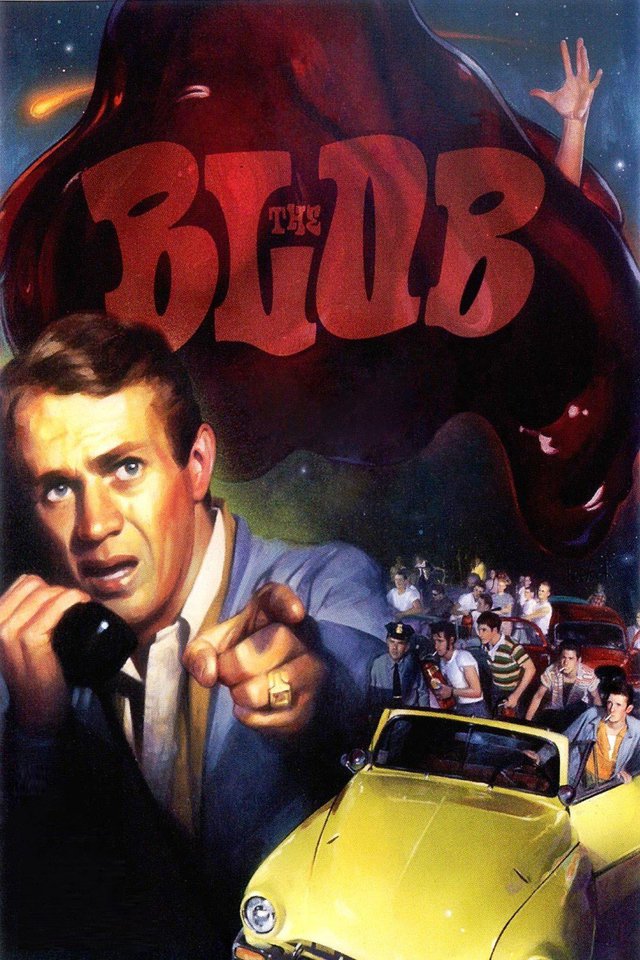
The original The Blob from 1958 is a pretty awful B movie, but it is significant for what it did for the genre, and has had a lasting effect. Featuring a very young Steve McQueen, it tells about an alien “mass” (it is never called “blob” during the movie) that comes to Earth and starts devouring people, growing with each kill. Its low budget is on full display throughout, but that’s not what makes most of this film pretty rough to watch. There are whole sections of dialogue that have no meaning and no advancement to the plot, and are really just filler to stretch a 30 minute story into 90 minutes. If you can forgive the shoddy writing and just sit back and enjoy the charisma of McQueen, it becomes a little more palatable.
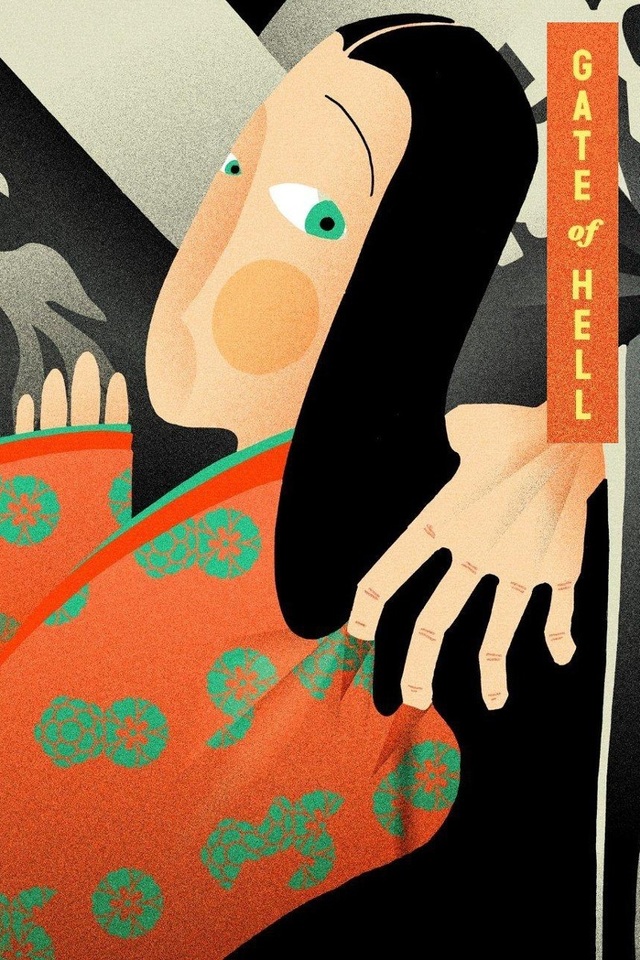
Gate of Hell is a beautifully filmed Japanese movie from the ’50s. Taking place in the 12th century, a samurai warrior acts courageously to quell an uprising, protecting a woman and standing up to the rebels, including his own brother. For his bravery and faithfulness, he is granted a wish. However, he wishes for the hand in marriage of the woman, and finds then that she is all ready married. From this point on we see a turning point in our main character, going from heroic actions to despicable deeds, as he schemes to win his prize over. Fantastic color and cinematography, and a moving story with quiet, yet intense acting all come together for the total package.
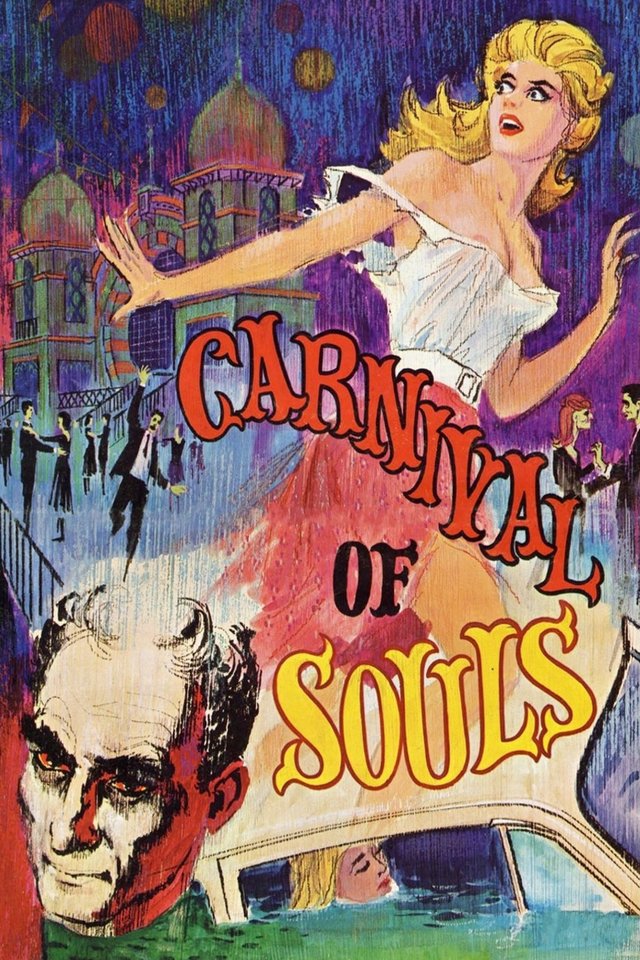
Carnival of Souls is a good old horror film from 1962. Shot on a low budget, it generates nearly of its thrills from building suspense. Mary is an organist who lands a job in a new city playing for a church, despite not being very religious. While driving cross country to her new home, she sees an old, abandoned pavilion off the highway, and can’t keep her eyes from it, obviously feeling a pull there. She subsequently starts seeing a shady figure creeping around her, at night at first, but then during the day as well, a figure no one else sees. Finally she goes to explore the pavilion and finds the spectacular answer to her predicament. I’m purposefully leaving out a big plot element, one that leads to the grand finale, but you’ll just have to watch this one to see it. Well worth it, this is a good one.
Next up is one of Roman Polanski’s greatest films, Repulsion. Many of you have probably seen this one, but it worth revisiting. This is the psychological thriller about a young woman, Carol, coming unhinged when left alone in her sister’s apartment for a week. Carol freezes whenever a man is around, becoming completely despondent. She has nightmares every night of men coming in to her room and raping her. As the week goes by, she first loses her job, and thus spends every moment in the apartment, increasingly edging towards complete insanity. Symbolically she sees cracks forming in the walls around her, until her whole world caves in upon her. The viewer really gets in to her head and feels what is going on, both her shock and her later detachment. A great film.

 

Ugetsu is another Japanese film from the ’50’s, with one of the same actresses of the above Gate of Hell (Machiko Kyo). This one starts out with the feel of a fable, and you can tell early on it will preach the lessons of avoiding greed, lust, and coveting. It definitely has a fantasy element too though. Genjuro is a farmer and pottery maker, and hatches a scheme to get rich quick selling pottery at the nearby town as war is breaking out around him. His wife pleads with him to stay and protect her, but he sees only money, which in his defense, he wants to buy things for his wife to make her happy. His helper, Tobei, wants money too, not for his family, but because he has aspirations to be a great samurai warrior. The lives of these two men and their wives diverge and join throughout the film, in sometimes spectacular fashion. A very well written film, wiki calls this one a “masterpiece of Japanese cinema,” and I’d have to agree.
Quick takes on 5 CLASSIC films

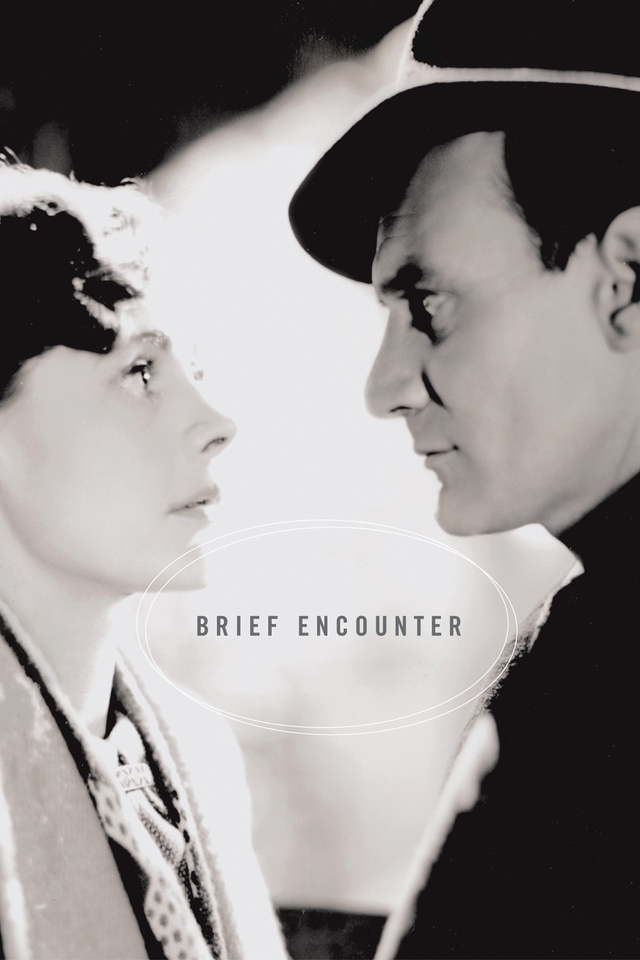
I’m ashamed to admit I had never seen David Lean’s Brief Encounter before. Considerd one of the greatest British films of all time, and directed by one of the greatest as well, this one should be on every film lover’s list. Released in 1945, this movie tells the tale of a chance meeting by Mrs Laura Jesson and a doctor, Alec Harvey, at a train station. Every Thursday Laura comes to town to shop for the family, and Alec comes to work at the hospital. They meet one day, and begin an emotional affair every Thursday over the next month. Remember that this takes place in the ’40’s, so Laura and Alec leaving their respective families is unheard of for a middle class family, and Laura is torn by this turn of events. The film is mostly narrated via Laura’s thoughts, and features stirring, sometimes heart-breaking dialogue and a sweeping backdrop soundtrack. A tremendous, multifaceted movie. Anyone that says they don’t like “old movies” should see this one, it will change your mind.

I followed this one up with another David Lean/Noel Coward collaboration, 1942’s In Which We Serve. This one, about the men serving on an English gunship in World War II, is equally well written, but not quite as engaging as Brief Encounter. For me it almost feels like wartime propaganda. It is definitely a rah-rah, patriotic film, telling the story of the men’s joined experience and their anxious families at home. Early in this film, the ship these men are on is destroyed by the Germans, and while the survivors cling to flotsam, the backstory is told in flashbacks. In this way we get to know each of the main characters. The movie glosses over shortcomings and paints nearly all of them in glowing lights. A good film, though for me, not all that memorable.

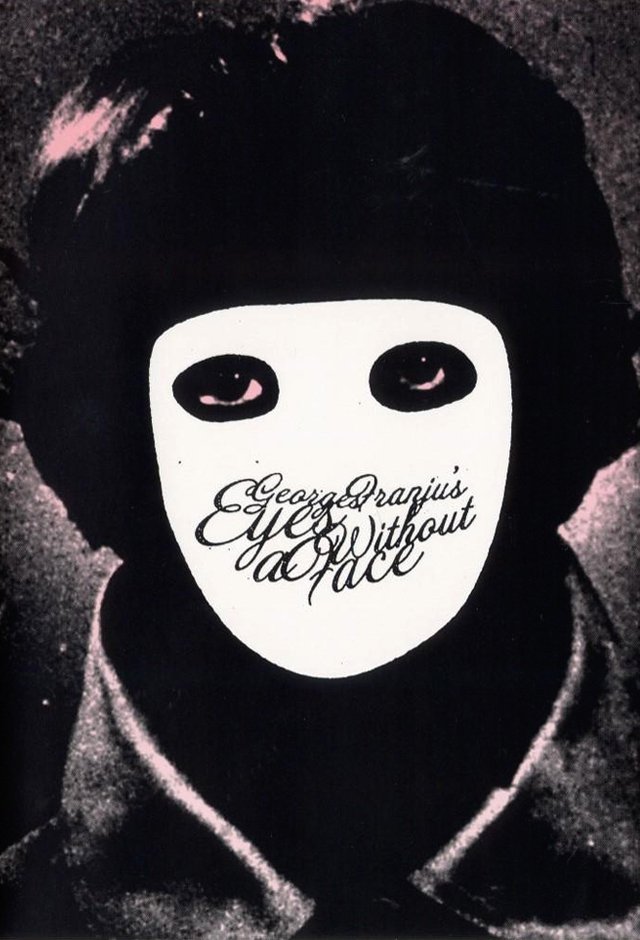
In the spirit of Halloween, I watched some old scary movies this weekend. Eyes Without a Face is a great, classic French horror film dating to 1960. At a time when Hollywood and Britain were pumping out movies of this genre, these filmmakers wanted to get in on the act, but didn’t want to do another Dracula. Eyes Without a Face is a deeply emotional movie about a young lady who has lost her face to an accident. Her father is a doctor, and he has been killing beautiful young women and doing face transplants on his daughter, in an effort to give her beauty back to her. This was a horror movie from a different era, and doesn’t have the same kind of scares we know today, but it is great classic cinema. The graphic (and very well done) scene where the dad slices off a victim’s face on camera is simply fantastic, and the ending (very French) is tremendous.

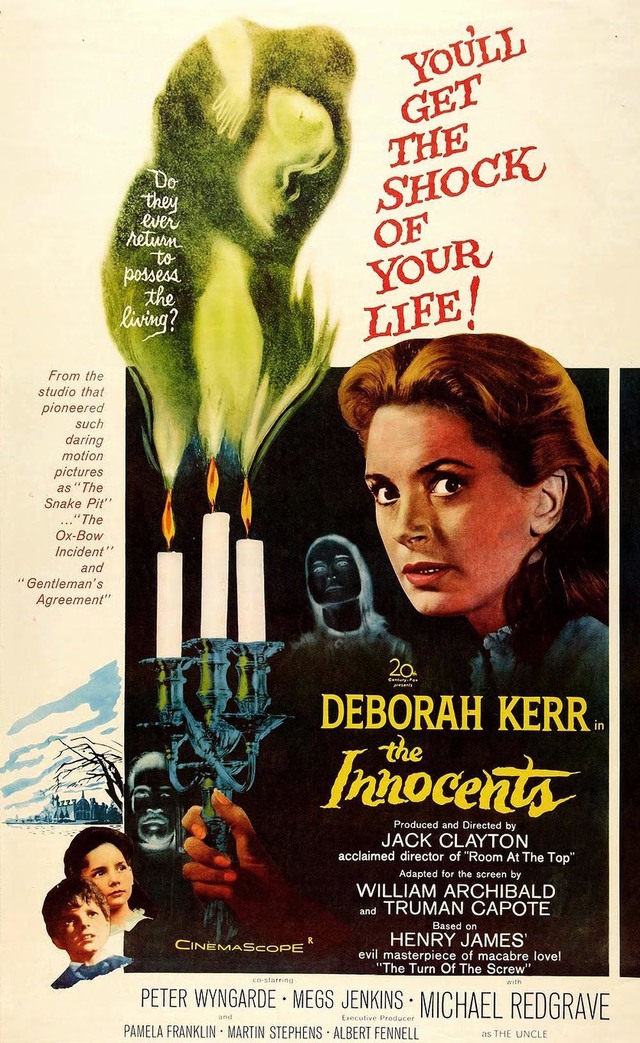
The Innocents is from the same era, being released in 1961. Starring the great Deborah Kerr, this one is about a governess, Miss Giddens, hired to look after a young boy and girl left alone when their previous governess dies suddenly (the parents too are dead). She arrives to the expansive estate and likes the girl immediately, but finds the boy slightly disturbing. Miss Giddens also starts to see spirits floating around in the empty wings of the large house. She is convinced the children see them too, though the housekeeper isn’t much help initially. We start to question Giddens’ sanity, but ultimately the story plays out to a grand conclusion. A good pyschological thriller.

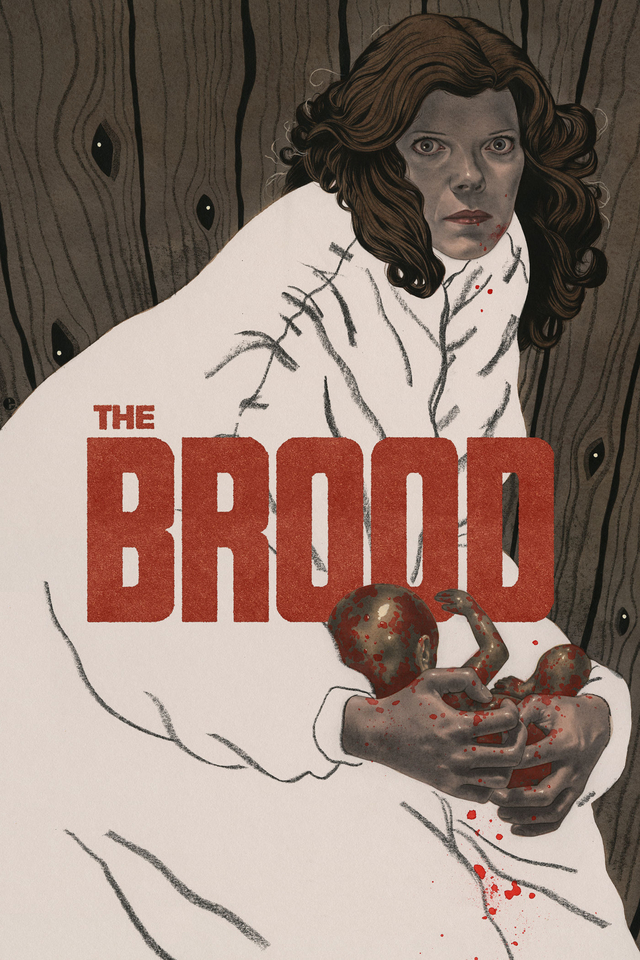
The Brood is a newer film (1979), but it did come out before I was born, so I’ll consider it a classic this time. Another good old thriller, this one is a little less psychological and a lot more straight-forward gore fest, the kind you’d expect from the ’70’s. Frank is fighting his estranged wife Nola for custody of their daughter, Candace. Nola, however, is currently getting mental help from Hal, a new-agey “psychoplasmics” therapist who has very strange ideas about how to get better. People around Frank start to be killed by a team of small, dwarf-like creatures, who pass for children upon cursory examination, and he starts to suspect Hal (and possibly Nola) is connected. The penultimate scene at the climax of this film is fantasticly gross and unexpected, there for pure shock value but definitely worth it. A great film to watch on Halloween, I’ll be watching this one again this time next year.

Quick takes on 5 films

The movie Raw is sort of fucked up. This is a French film, about a young girl going off to college. She seems to have everything going for her. She’s bright and attactive, comes from a loving, health-conscious family (all are vegetarians), and is headed to veterinary school. In a hazing ritual early on, she is forced to eat a raw kidney, and develops a taste for meat for the first time in her life. In a disturbing scene, she finds what she craves the most is human meat. She tries to supress her desires for a time, but always comes back to what she needs. I get that this is a parable for female empowerment, but man is it messed up. I’d probably like the film if it wasn’t so shockingly grotesque at times. Just not my cup of tea.

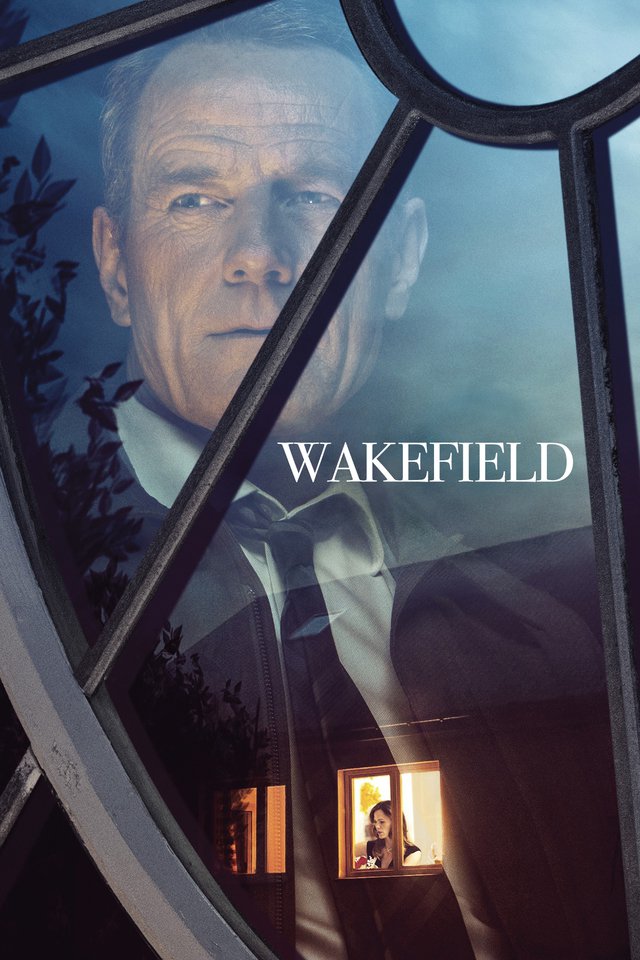
Wakefield is a polarizing film: you will either love it or hate it, and I don’t think there are going to be many people in the middle. I am in league with the former. I think Bryan Cranston is captivating from start to finish, as he has to be as the camera never strays far from him throughout the entirety of the film. He plays Howard Wakefield, who, upon returning home from work one night, has his train lose power. As he approaches his house late and in the dark, he sees his family inside and just loses all energy to face them and the monotonous life he holds there. He heads up to the attic of his detached garage, where he falls asleep. The next day, he is faced with the unwelcome scenario of having to explain where he’s been (the truth sounds outlandindish even to himself), so he continues to hide in the attic. A day becomes a week, which becomes months. The movie is played out as he spies on his family, and narrated by his thoughts of what the world thinks of his unexpected disappearance, with his imagination running wild at times to often bizarre scenarios. Cranston is fantastic and engaging throughout. Let’s face it, he is a likable guy and his humor is catching, but he is despicably leaving his family in a lurch. For my taste, a great film (including the love-it or hate-it ending).

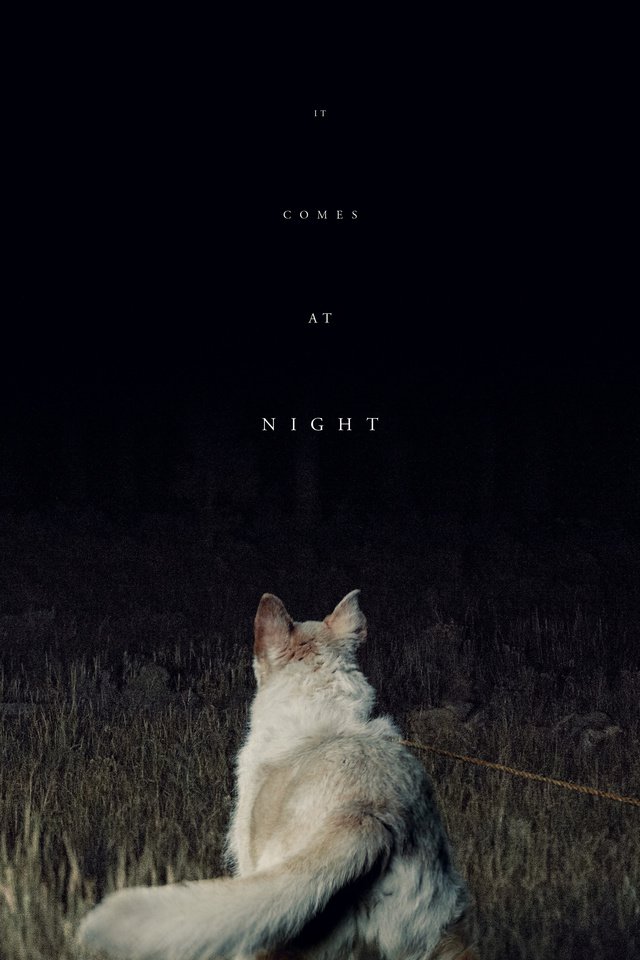
How can anyone not love It Comes At Night? As the synapsis says on Rotten Tomatoes, “what’s left unseen can be just as horrifying as anything on the screen.” This is a psychological thriller that plays with your mind, more gripping than any horror movie I’ve seen in awhile. It takes place in the near-future where mankind is being whiped out by a pathogen. A man (played by Joel Edgerton) has his wife and teenage son hidden in a remote cabin in the woods. They have food and water and are basically just surviving, avoiding all people who may be infected. One day a man comes on to the property asking for help for his own wife and young son. Edgerton’s family (and the viewer) never knows if this new family is telling the truth, if they are safe, or if they have ulterior motives, questions we never really get the answers to, even at the gripping climax. We also hear sounds outside the house at night, and are privy to the teenager’s graphic, vivid dreams of the disease. Not much real action is shown through most of this movie, and there aren’t any jump scares to get a reaction out of you, but this movie gets in to your head like few do.

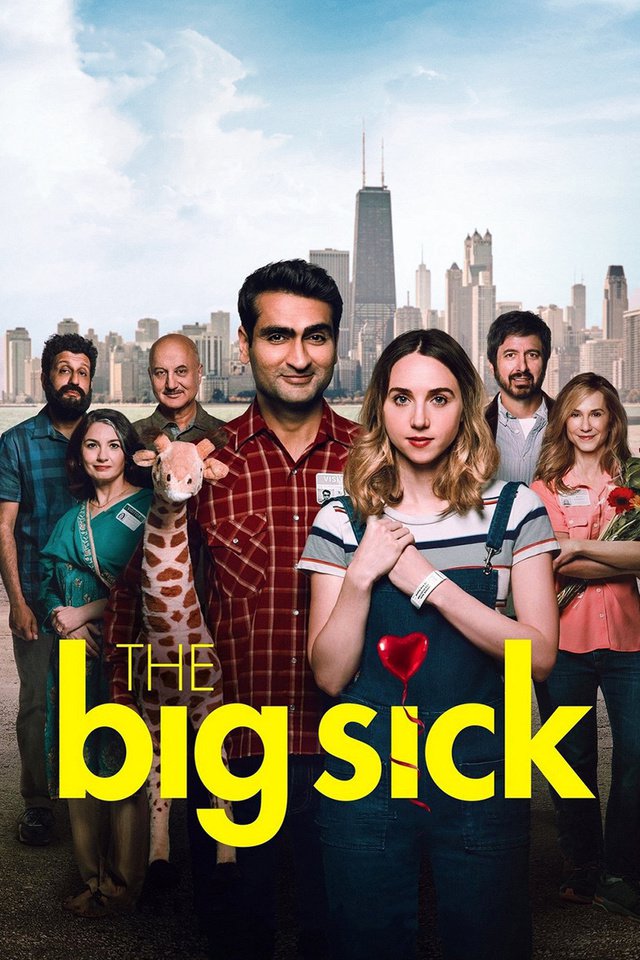
I thought The Big Sick was good, but not great (like it seems the rest of the world does). It is a good romantic comedy, with a bit of a unique twist. Kumail is a young man trying to make it as a stand up comic in Chicago, against the wishes of his very religious and traditional Pakistani parents. He meets Emily and really likes her, but knows he will be literally disowned by his parents if he marries a white girl. After months of dating, Emily learns that Kumail has never even told his parents about her, and storms off. Shortly after, she ends up with a bad infection, and gets put into a coma to survive. Her parents come to town to stay with her, and get to know and like Kumail, who has resurfaced to also watch over her. All pretty straight forward, except I thought Kumail wasn’t as endearing as he should be. He is definitely conflicted by the end, but I thought he was a bit of a sleeze before that (when he uses the same pick up line to get in bed with a new girl after his break up with Emily). The film seems to use his family as a crutch, and through most of the film, I had the impression that Emily liked Kumail a lot more than the reverse. Though I understand the conflict between love and family that Kumail has, I couldn’t relate enough to really get in his shoes.

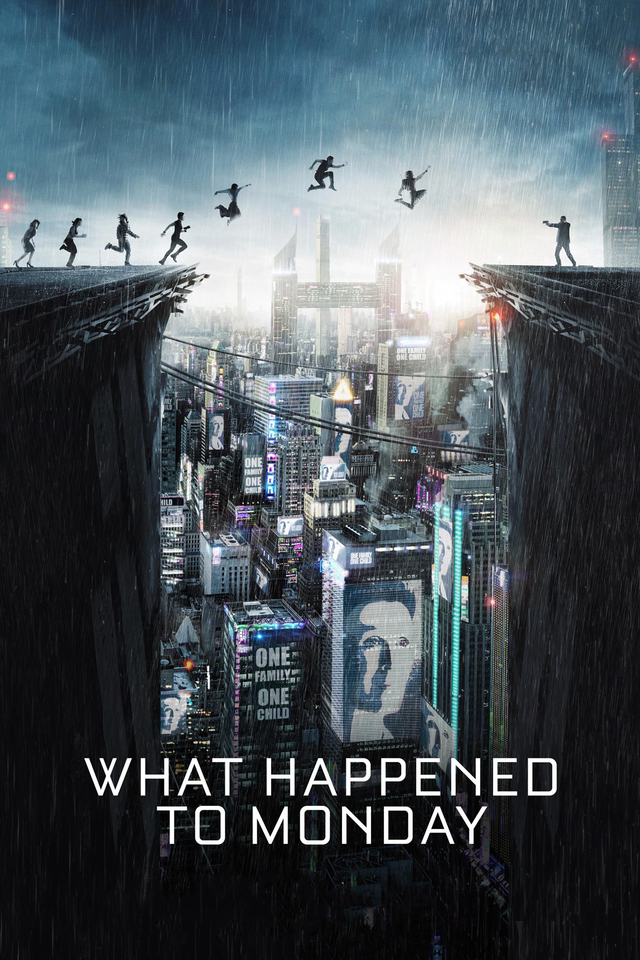
What Happened to Monday is a new Netflix film, starring Noomi Rapace. I love the premise: a future dystopian society where super foods have been created to deal with the booming population, but with the side effect of causing multiple births. A one-child policy is set in place, with other siblings being put into hibernation to sleep until the world can handle the population. One man, played by Willem Dafoe, refuses to put away his seven identical baby granddaughters. He names them for each day of the week and raises them to only go outside on their day, to live as one person, so as to never be caught. Obviously one day, 30 years later, Monday doesn’t return home at night. A very good action film, though with some rather outlandish plot elements, an almost B-movie style at times, and an end twist you see coming from a mile away. It’s a decent movie though.

Quick takes on 5 CLASSIC films

I’ve seen 2001: a Space Odyssey several times, but it has been many years and I decided to revisit it while I’m watching many classic films for the first time. Another Stanley Kubrick masterpiece, it again showcases his ability to capture vast and beautiful, often stark, scenes, and this time in the setting of space. Most probably know the story of this one: a mission is taken to Jupiter and along the way, the space computer HAL goes bonkers and attacks the human crew. The backdrop is of course the existence of monoliths, which humankind stumbles across at different points in their history, and each time they advance the evolutionary process. The acting in this movie is just ok, nothing spectacular, but you see this movie for the groundbreaking film-making it exhibited. The visual effects are stunning for 1968 (almost 10 years before Star Wars!). Not your typical sci-fi film as we know them today, but a brilliant movie nonetheless.
Purple Noon is a 1960 French film, the original film adaptation of the novel The Talented Mr Ripley. Tom Ripley travels to Italy to curtail friend and playboy Philippe Greanleaf. Philippe’s father wants him to return to the USA and stop his free-spending, free-living lifestyle. Philippe ignores the request and takes his fiancee Marge and Tom out on the sea in his sailboat. To this point, we thought Tom was a fairly decent guy, hanging on to Philippe to get a view of how the rich live, but his ulterior motives come out on the boat. Tom kills Philippe, and sets out on his plan to impersonate him for his money. A very fun film, and received acclaim when it came out, vaulting Alain Delon (Ripley) to stardom. His transformation from good-natured sidekick to nefarious murderer on screen is something to see.
A lot goes on in The Night of the Hunter, though the story on the surface is fairly simple. A psychotic fake preacher, Harry (played by Robert Mitchum), travels town to town killing people but staying ahead of the law. He hears of a man who recently robbed a bank and was hanged before the police could find the money, so he goes there to woo the widow and her two young children. Harry wins over the town and woman, but the boy, John, is wary of him, and refuses to tell that the money is hidden in his little sister’s doll. One frightful night, the kids run away and are taken in by a pious woman in the next town down the river. She protects them as Harry comes looking. Ultimately the movie is a classic good vs evil, and focuses strongly on the innocence of children (the movie was made in 1955). On the technical side, the movie is disjointed and doesn’t always flow well, but Mitchum as the diabolical bad guy is fantastic, and the film has many rewarding moments.
Walkabout, released in 1971, is just ok if you take it at face value, but it can get you reflecting long after it is over. It starts with a businessman in Australia who cracks, taking his teenage daughter and younger son out to the bush and trying to kill them, only to finally kill himself instead. The two kids are left stranded in the middle of nowhere with no survival skills, and would surely die had they not come across a teenage aborigine. Though they don’t speak the same language, this newcomer takes these 2 under his wing and provides food and water, while leading them slowing back towards city life. The movie is a stark look at differences, both city vs the wild, and especially social/cultural (most glaringly at the very end of the film). A moving film worthy of a lot of retrospection, this one will stick with you.


Hitchcock’s 1959 classic North by Northwest is one of the all time greats. A suspenseful thriller, it starts humorously with the main character, Roger Thornhill (Cary Grant) being mistaken for an international spy. He spends the first half of the film trying to prove he is not, yet circumstances and his own curiosity to find the people hunting him, keep piling on the circumstantial evidence that he is said spy. When he finally accepts what all the bad guys all ready believe, he tries to find out what their end goal is. Grant is fantastic as to be expected, as is female lead Eva Marie Saint, and the bad guys James Mason and especially the head henchman, a younger Martin Landau in his first film role. Must-see territory for cinema lovers.

Quick takes on 5 CLASSIC films

Since I’m not reading any classical books at the moment, I thought I’d go back and watch some of the classic movies. Some of these I’ve seen before, but most I have not. Just some short blurbs of some of the greats.
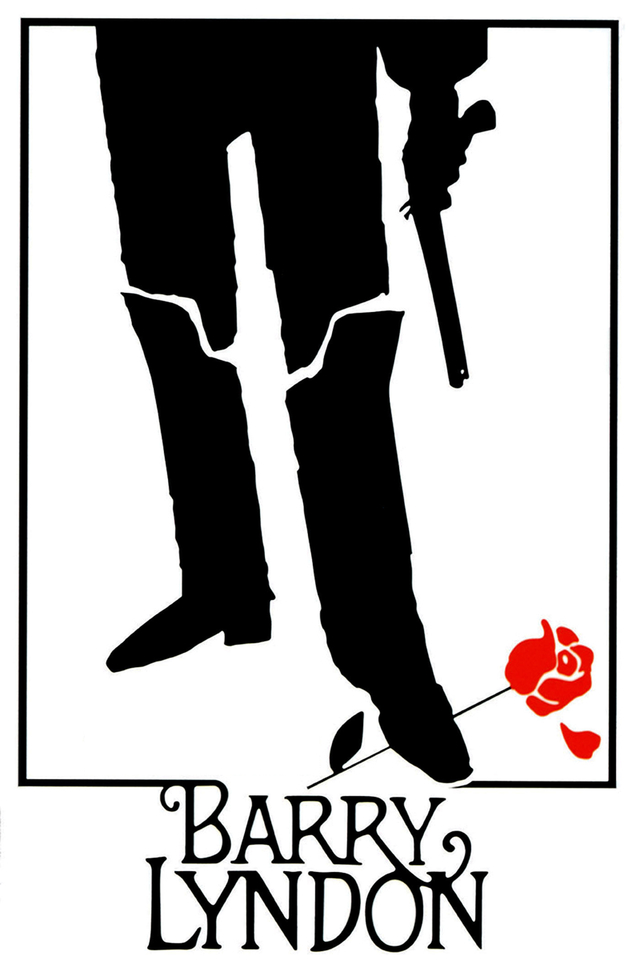
Barry Lyndon is regarded as one of Stanley Kubrick’s greatest works. A period film taking place in the 18th century, it is a fictional biopic of the life of Redmond Barry. Born to a poor family in Ireland, Barry lies and cheats his way to high society in England. What the movie lacks in action, it more than makes up for in brilliant acting and even more brilliant film-making. The cinematography is breathtaking, as you’d expect from a Kubrick film, and you should read up on some of the techniques he used in making this movie, it is truly groundbreaking stuff for its day. A long film by today’s standards, at over 3 hours, but well worth it for film lovers. The quiet, slow-building tale is engaging from the start. A true masterpiece.
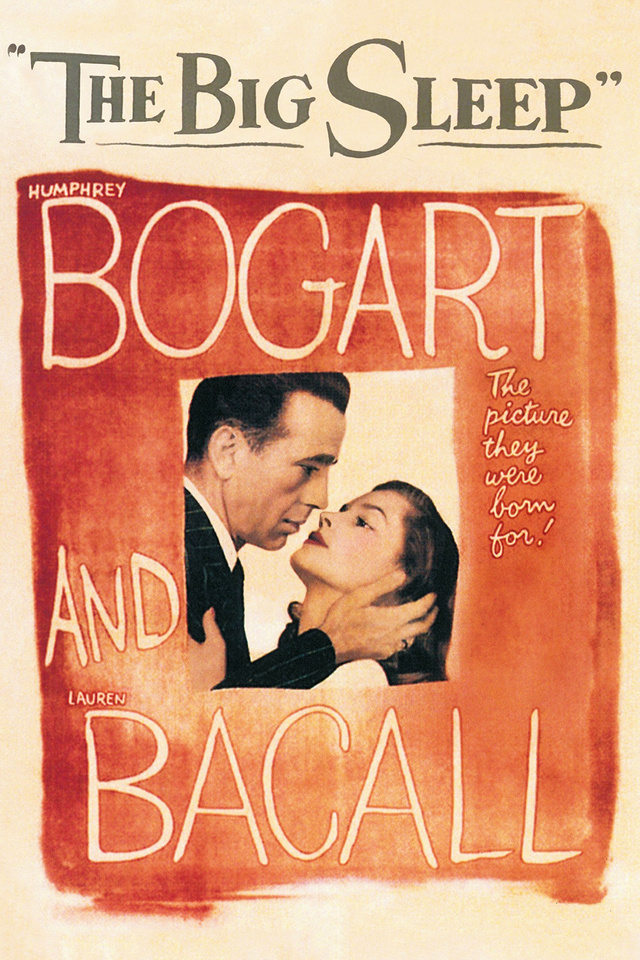
The Big Sleep is a classic Humphrey Bogart mystery, based on a book by Raymond Chandler. Philip Marlowe is a P.I. hired to find out what is plaguing the spoiled daughter of a rich man, a daughter who seems to be caught up in a blackmail scheme. The bodies start hitting the pavement soon, and Marlowe finds that the strings lead longer the more he pulls. The backdrop of the film is the relationship between Bogart and fellow lead Lauren Bacall, who had met on their previous film, were dating during filming of this one, and married before it hit theaters (months after Bogart left his former wife). The steamy tension between Bacall and Bogart is felt through the screen, but the real highlights of this film are the twists and turns of the plot.
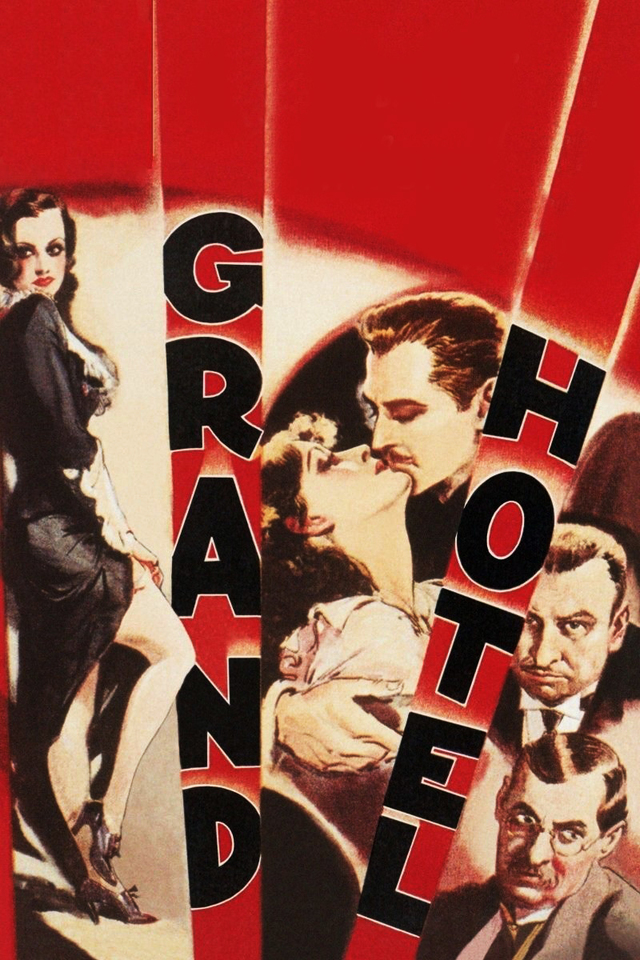
The Grand Hotel, always the same. People come, people go, nothing ever happens. Of course, a great deal happens. Grand Hotel is an early sound film, dating back to 1932, with some of the times greatest stars, including John Barrymore, Greta Garbo, and a spicy pre-code Joan Crawford. This film shows the lives of a various people staying at the expensive, premier hotel in Germany over the course of a couple days, and how their lives interconnect for a short time. Funny and well written, this movie is even better today as a glimpse at a time long before many of us were born. Must-see territory for classic film lovers.
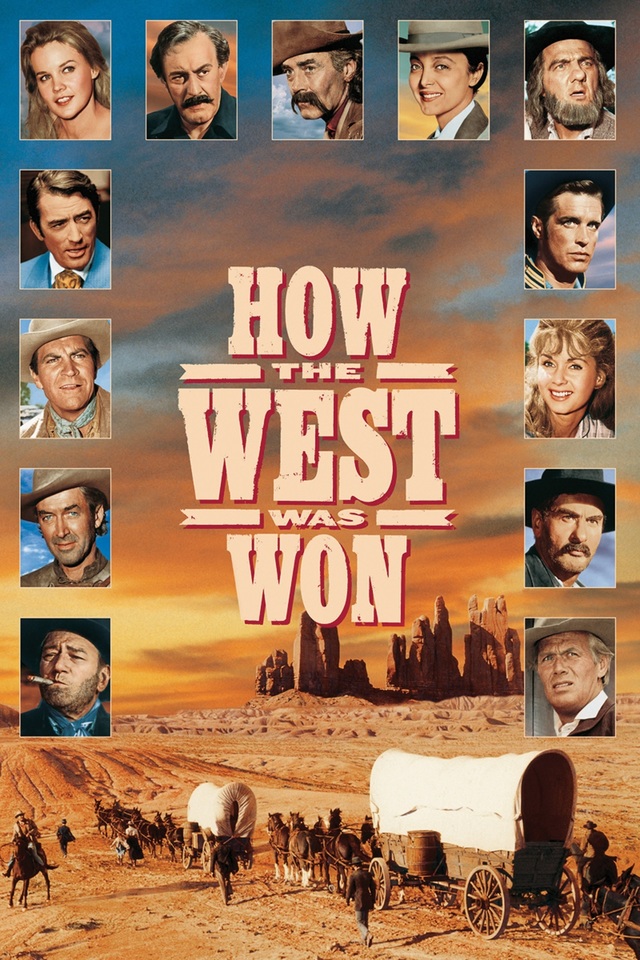
How the West Was Won is a beautifully filmed, decades-spanning epic, the likes of which you just don’t see made anymore, with a truly all-star cast (look it up!). It follows the Prescott family and their kids over the course of 40-50 years, starting with them going down the newly built Erie Canal, and their subsequent splintering and going in different directions across the great frontier. It has the feel of a genuine epic tale from the first few minutes, and over the course of nearly 3 hours, loosely shows some of the great events of western expansion, including homesteading, railroads, the gold rush, and cattle ranching. You don’t get to find out the fates of everyone at the conclusion, but for a film that takes place in a time where you might never see a loved one again once you set out on your own, even that aspect feels right.


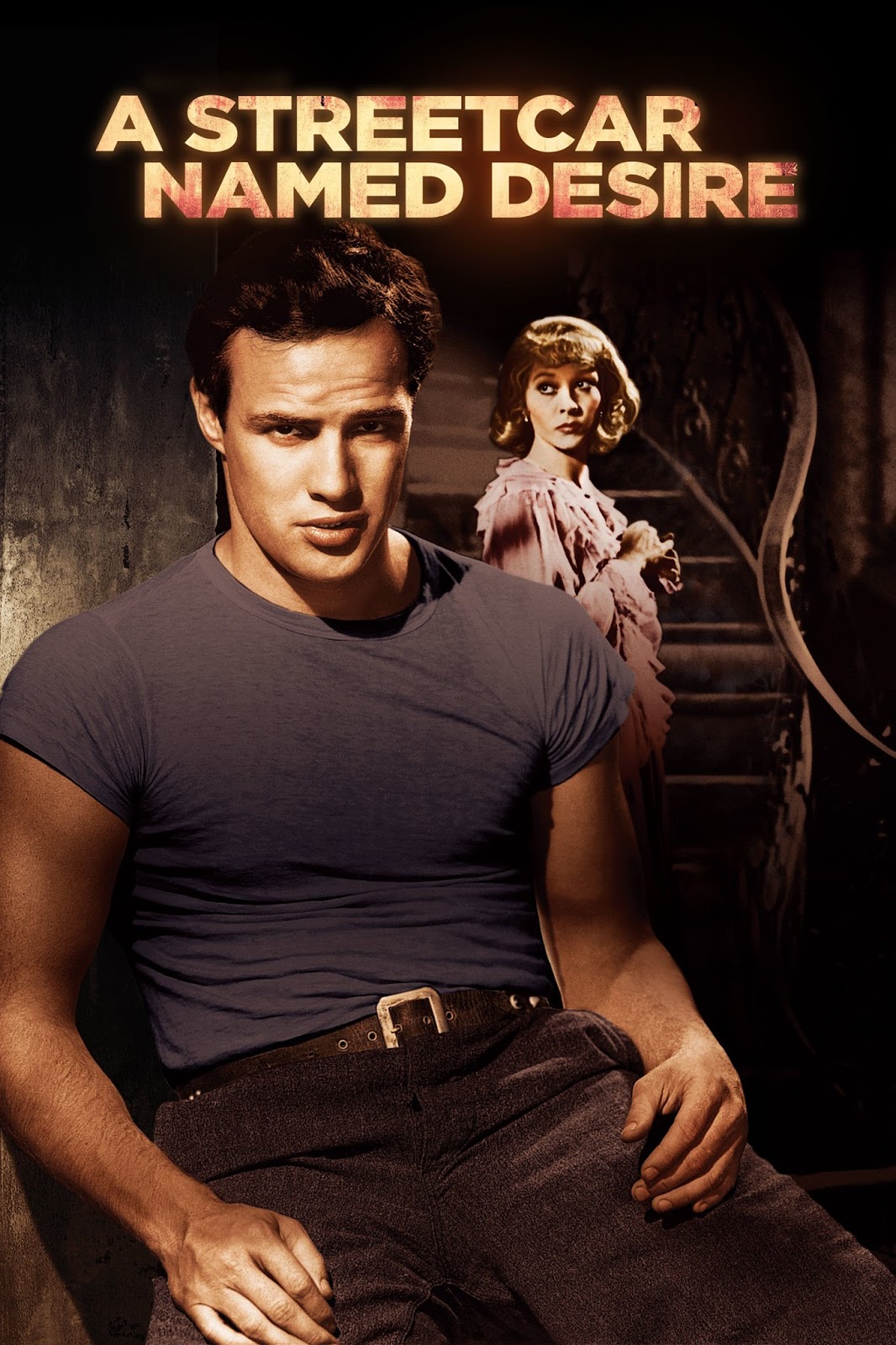
Marlon Brando got his big film break on A Streetcar Named Desire. Released in 1951, it is a fantastic film based on the incredible play by Tennessee Williams. Three-fourths of the leads came over from the original Broadway production (Brando, Kim Hunter, and Karl Malden), with Vivien Leigh taking over Jessica Tandy’s original part (Leigh had performed in the London production, and was obviously a bigger Hollywood name at the time than Tandy). Three-fourths also won Oscars for their parts, only leaving Brando out, though the then-unknown was nominated as well. The film tells the story of Blanche DuBois going to visit her younger sister Stella and Stella’s new husband Stanley in New Orleans. From the start we see that Blanche is a bit on the edge of sanity, and makes up lavish stories about herself, which her sister humors but Stanley derides. Leigh and Brando each shine in their respective roles, with Brando just starting his illustrious career and the aging Leigh finding it tougher to find roles on the big screen (she made just 3 more films after this over the next 15 years, though still had plenty of jobs on the stage). A wonderful piece of cinematic history.

Quick takes on 5 films

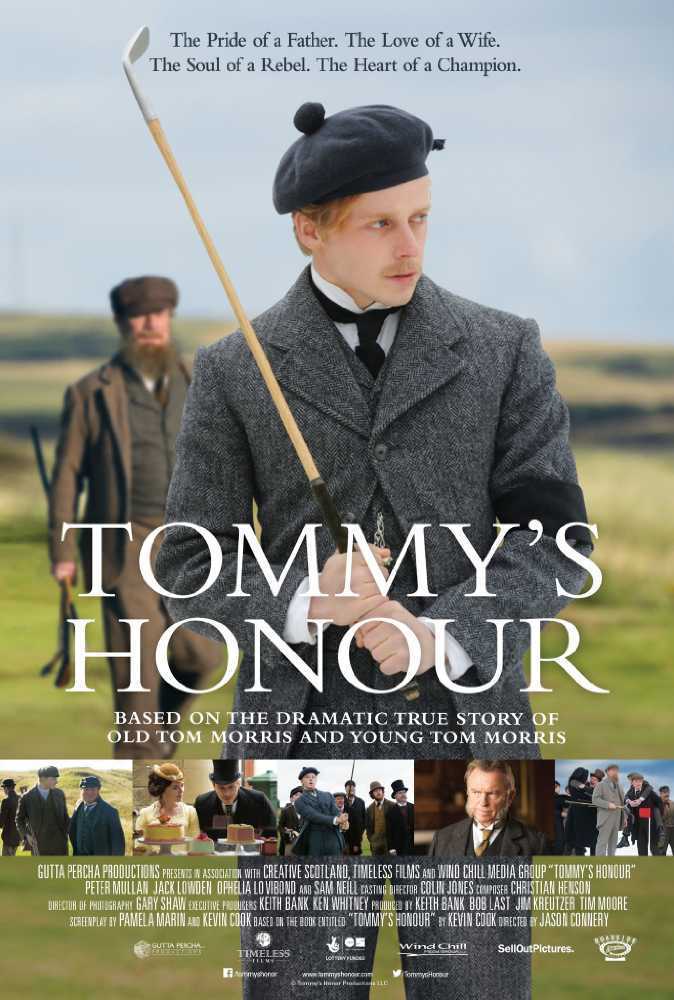
Tommy’s Honour is a biopic focusing on a couple of golf’s early pioneers, “Old” Tom Morris and his son Tommy. Old Tom is a golf club maker and is a traditionalist. He plays golf at the behest of rich gentlemen, who place bets on the outcome, and keep all the winnings to themselves. Young Tommy believes that as the player, he should be entitled to a bigger payday. He also has ideas about changing some of the rules of golf, which his father obviously does not agree to. In general, Tommy is of the younger generation, forgoing some traditionalist ideas about golf (and life). The film is rather ho-hum and a bit hard to get through, despite some good acting by all involved. Just ok overall.
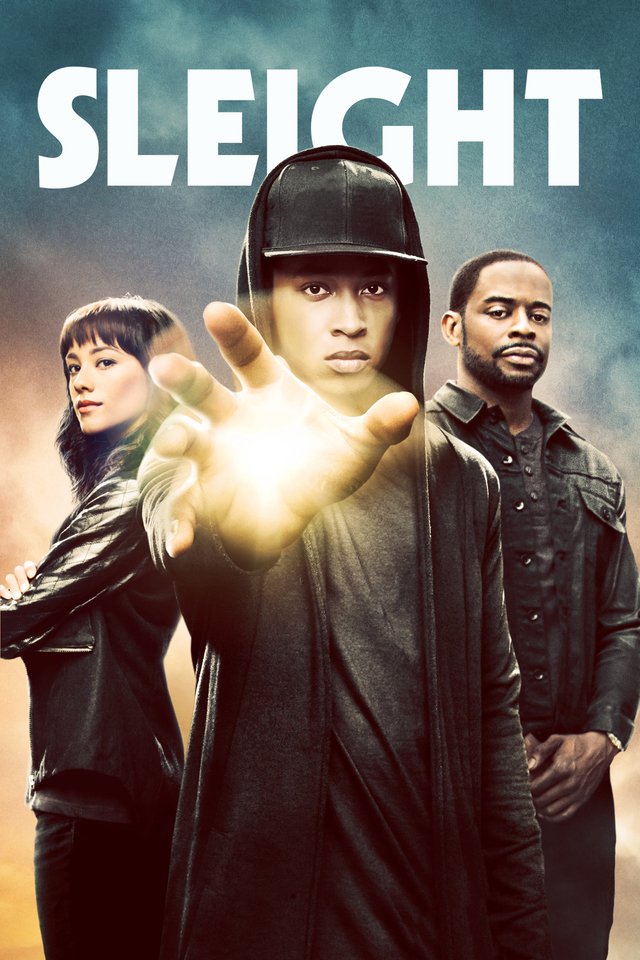
It’s hard to root for a drug dealer, and that’s what Sleight wants you to do. A “good kid” and wanna-be street magician, who resorts to selling drugs to support his little school-age sister after their parents die, he gets more and more wrapped up in terrible dealings with his supplier. Personally, I found it hard to pull for him, when I just want to scream, “You shouldn’t have been selling drugs in the first place.” Even when his predicament gets really bad, you can’t help but think he did it all to himself. Not to mention there’s a weird almost super-hero like power he has that makes no sense. This one’s a waste of time.
Warm Bodies isn’t a new movie, but I haven’t seen it before. This is an interesting film. On the surface, it is yet another teen romance, but this one has a twist. A zombie apocalypse has taken out most of the population. An unnamed zombie wanders the ruined city, unable to communicate the thoughts in his head. Julie is on a team of living fighters that scavenge for medicine beyond the safety of their protective wall. Her group is overrun by a mob of zombies, but the thinking zombie saves her. As the two spend time together, he becomes more “alive,” able to speak and feel more every day. This unorthodox relationship has far-reaching consequences. A very good, refreshing movie, it stands out among the multitude of others in the teen drama field.
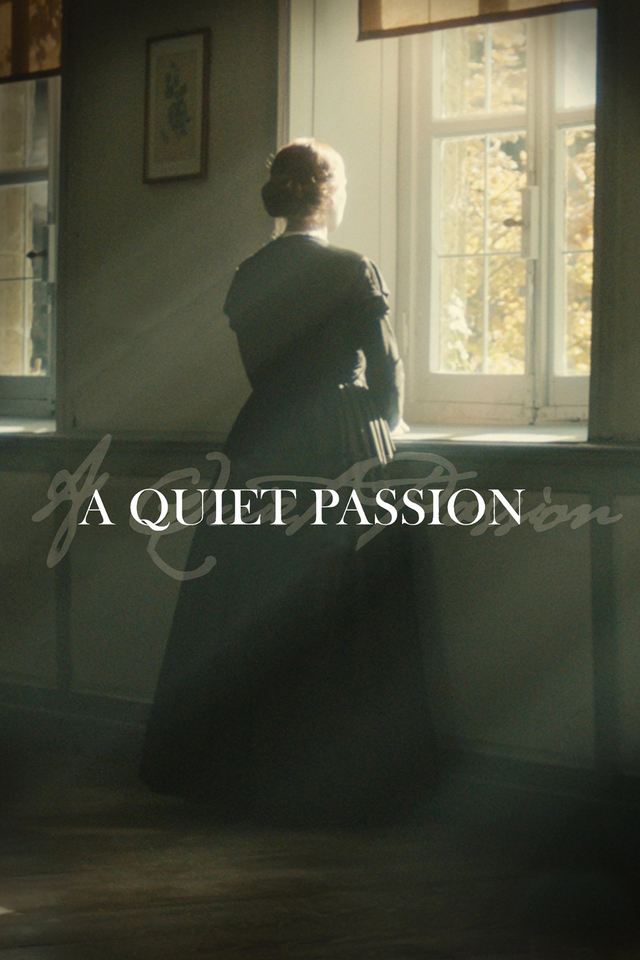
Maybe if I had liked poetry, I would have liked A Quiet Passion, the story of Emily Dickinson’s life. As I do not, I found the movie to be exceedingly dull. Even I, who usually like period dramas, had to get up and move around to prevent falling asleep through this one. The acting by the lead, Cynthia Nixon, is good enough I guess, but much of the story really doesn’t lead anywhere; it just meanders along, with Dickinson’s discussions with her family showing her feelings about life and family, feelings we later saw from the poems published after her death. This one’s a real snoozefest.


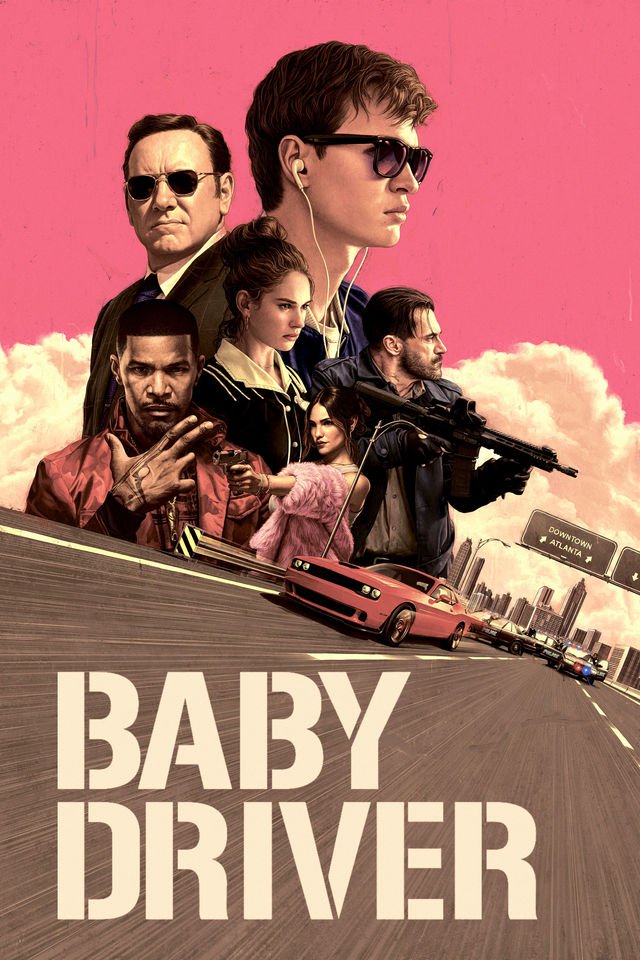
Baby Driver is a tremendously fun ride from beginning to end. Baby (Ansel Elgort) is a young getaway driver for a group of bank robbers, headed by Kevin Spacey’s character. Constantly found with a pair of headphones in his ears, the tunes he listens to provide the soundtrack to the film, with exciting songs to go along with the thrilling car chases around town. The crew is ruthless and barbaric, yet Baby seems to be a good kid, and he dreams of getting out of the lifestyle. The plot of the film is predictable to a point, yet the awesome soundtrack and the larger-than-life robbers (including Jamie Foxx and Jon Hamm) are tons of fun. The movie starts with heart-pounding action in the first 10 minutes and never lets up off the gas.

Quick takes on 5 films

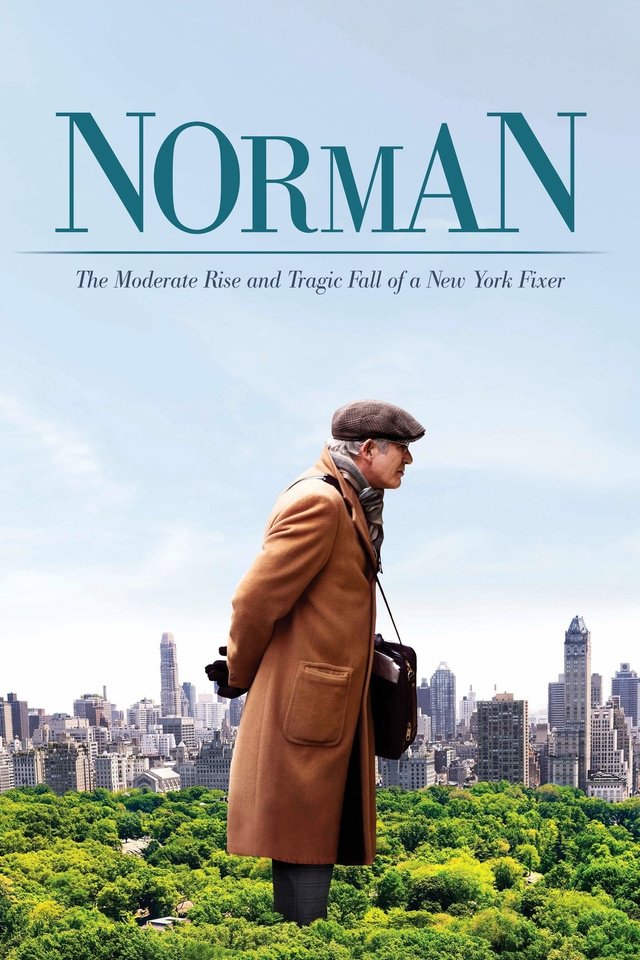
The more-than-a-mouthful movie titled Norman: the Moderate Rise and Tragic Fall of a New York Fixer is a great drama showcasing the oft-overlooked Richard Gere. Gere has been on a tear doing some quite good, but easily overlooked, independent films of late, ones that showcase his talents much better than the big blockbusters he used to do in the ’90s and ’00s. This one is about a Jewish “businessman” who is mostly all talk and little action. He likes to act like a big shot and pretend he has connections to the rich and powerful. However, his talk gets him in trouble when one of his acquaintances actually does become a big shot, and Gere’s character can no longer juggle his obligations. For most of the film, you don’t know whether to cheer or jeer at him, but that conflict resolves by the end, and mostly because Gere is absolutely fantastic in this role.
I finally got around to watching Wonder Woman, even though I’ve actually been looking forward to it for awhile. For all the hype it got, I was pretty excited, and it did not disappoint. It is basically an origin story telling of how Wonder Woman grew up and her first big adventure. Gal Gadot received a lot of accolades as the title character, and all well deserved. She is charming, funny, and energetic as the superhero lead. I actually liked all three of the previous DC series films (even though they received middling reviews), but this one is clearly the best so far, and I’m hopeful that future films can stay at the same bar.

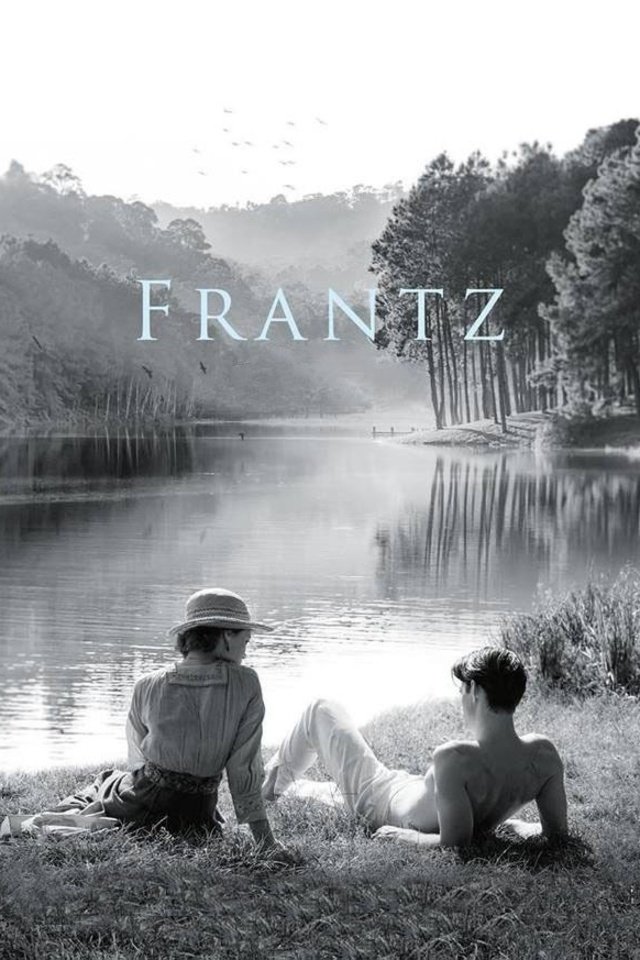
Frantz is a beautifully written movie, within the backdrop of the effects of war on all involved. Following World War I, a young French man, Adrien, visits the grave of a German soldier, Frantz, where he meets Frantz’s betrothed, Anna. Adrien is derided in the German countryside by people who lost many sons to the French army during the war, however, Anna befriends him and introduces him to Frantz’s parents, who also warm to him. Adrien tells them stories of meeting Frantz before the war and becoming friends. After sharing a secret with Anna, he returns to France. Frantz’s parents urge Anna to go to him, which she does, and in France it is now she who is eyed warily, with the French people also remembering the recent, painful war with Germany. Ultimately the film is about guilt and moving on from that hurt, on both national and personal fronts. A very well written and well acted film.
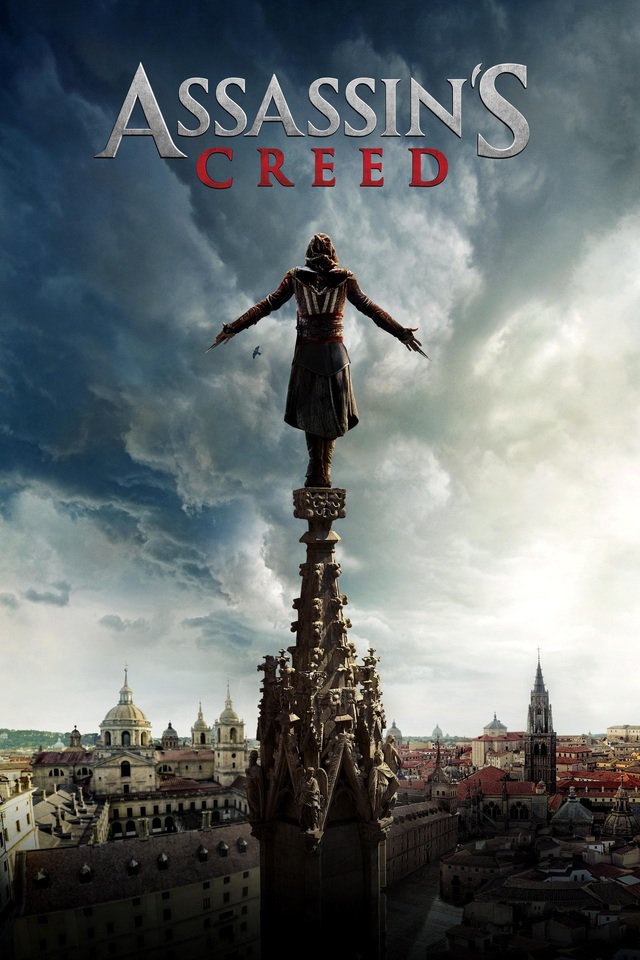
Assassin’s Creed is just a bad film. I’ve played a few of the games this film is based on, and enjoyed the early ones (they get a little too involved for this old man’s tastes later on), but the action in the games is thrilling. Sadly that is lost in the movie. They pull together a great cast involving Michael Fassbender, Marion Cotillard, and Jeremy Irons, among others, to tell the story of the last living descendant of one of the secret Assassin organization’s greatest members, searching his family’s history for one of Earth’s greatest secrets. The plot however is heavily convoluted, and ultimately it gets far too bogged down in the minutia to make much sense. A 10 year old playing the game may enjoy the wild twists throughout the plot, but you’ll be left shaking your head.


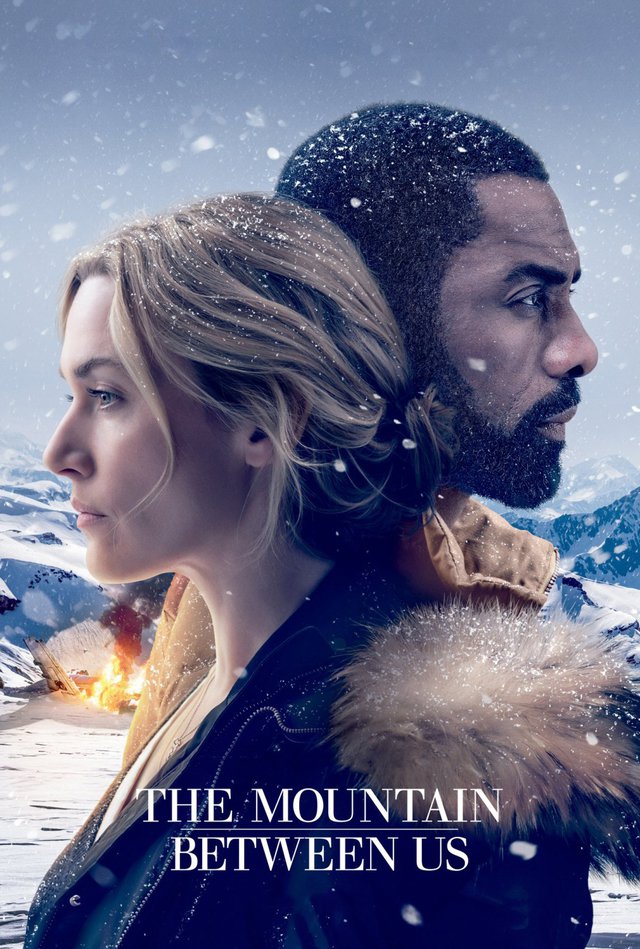
The Mountain Between Us is a fairly engaging movie based on a book (though loosely so according to my wife, who had previously read it). Starring Idris Elba and Kate Winslet as a pair of strangers stranded on a mountain in the Rockies after their puddle jumper crashes, the film is about their survival over the ensuing weeks, trying make it out alive. Winslet and Elba once again show off their acting chops, and though the overall story is a bit weak, the duo are engaging on the screen. A good movie for a date night.

Quick takes on 5 films

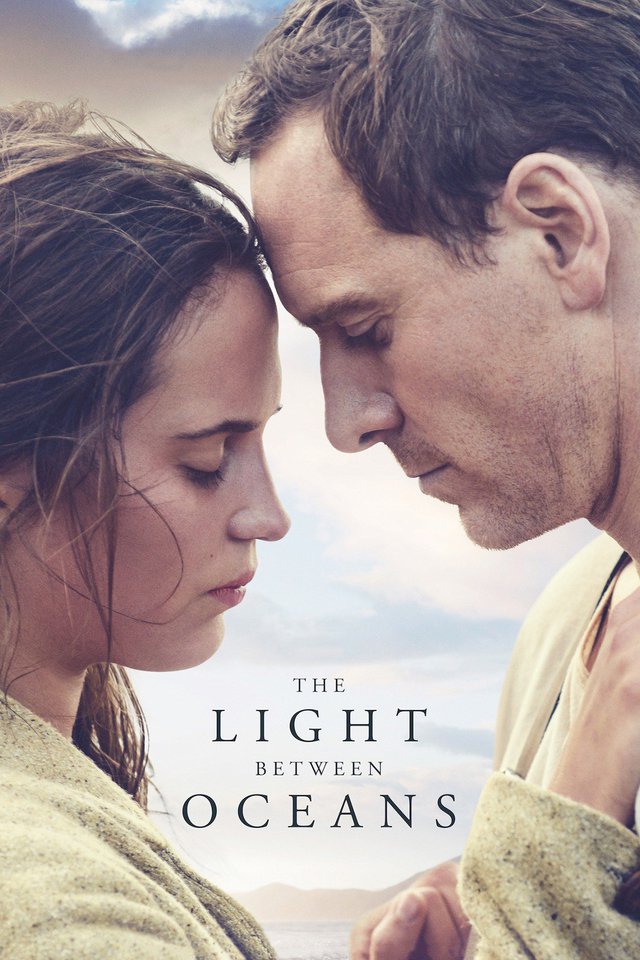
The Light Between Oceans is the rare case where I can’t recommend a movie, despite the brilliant acting. Usually I can at least say, “see it for this actor,” but in this case, even the two fantastic leads, Michael Fassbender and Alicia Vikander, can’t cover a plot full of disappointment. It actually starts really great. Tom is a lonely man after World War II who takes a quiet, desolate appointment at a lighthouse. He intends to live there alone, but ends up falling in love with Isabel, a girl living in the town across the bay. When a baby washes up on shore in a boat, after Isabel has recently suffered two miscarriages, she convinces Tom to tell everyone the baby is theirs. Tom is racked by the guilt though, especially when he comes across the mother. Here’s where the film takes a turn. Too many plot twists and a rush job hurtles the movie towards an unsatisfying conclusion. I’d go so far as to say nearly any other ending would have been better. Fassbender and Vikander are absolutely incredible, running the gamut of emotions in total brilliance, but they can’t save this one.
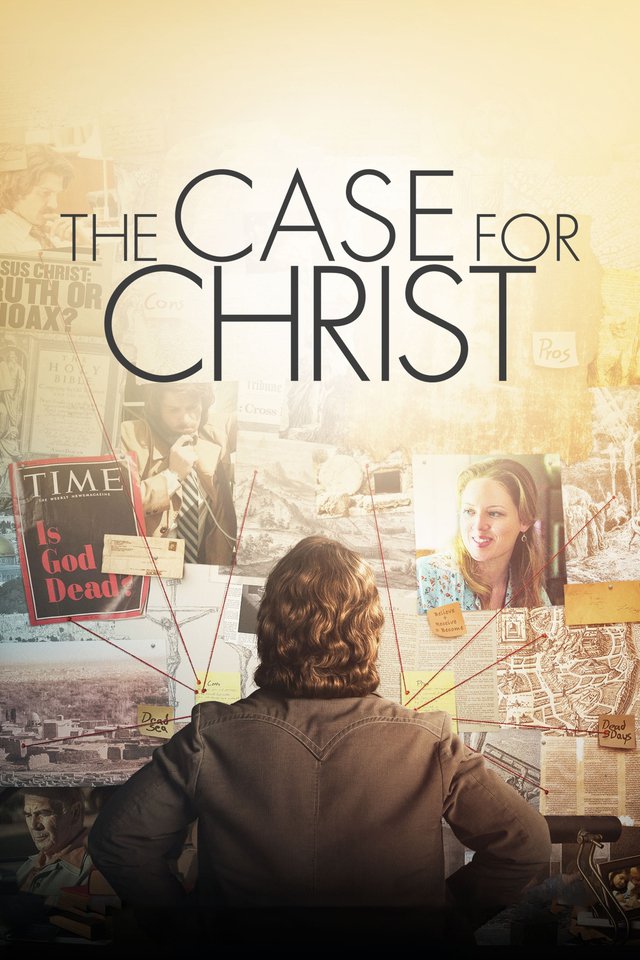
The Case for Christ is based on the real life of Lee Strobel (who wrote the book of the same name). A strong atheist, he set out to discount the story of Jesus’s death and resurrection, while working as a journalist at the Chicago Tribune in the 1980’s. He believed so strongly that religion is false, that he thought it wouldn’t be a problem to find mountains of evidence disproving the accounts in the New Testament of the Bible. He finds the opposite though, that there is more scientific evidence proving it than disproving, and he looks everywhere, from eyewitness accounts to medical research. In the end, he realizes the only thing preventing him from accepting all of the evidence as fact is his own desires wishing it to be so. Obviously a Christian-themed movie, but again, that doesn’t mean the facts presented aren’t real. I enjoyed it.
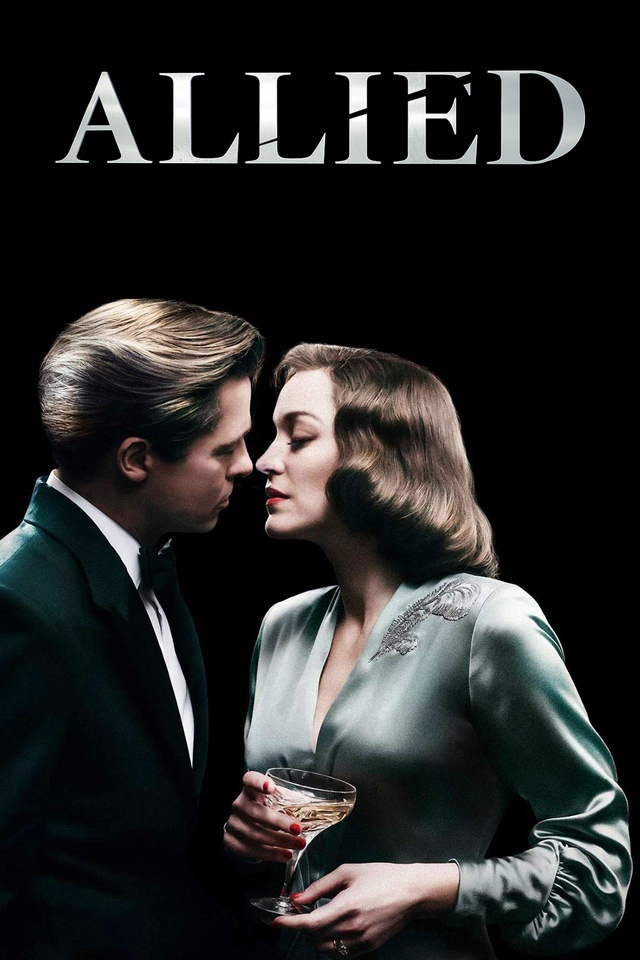
For a super spy movie, Allied is sort of boring. It has its moments, but is overall rather dull. Brad Pitt plays Max, a Canadian air force pilot undercover in Morocco to assassinate a German figure during World War II. Upon arriving in Morocco, he meets Marianne (Marion Cotillard), a French spy who has been there for a couple months laying the groundwork for their spy game, as she is to play his wife. When they accomplish their mission, they head back to London, where they fall in love, get married, and have a baby. After a year or so, Max is approached by his superiors with news that his wife may not be who she says she is, and he spends the rest of the film trying to prove her innocence. The best part of this film is the first half, when the duo’s mission in Morocco is under constant threat of discovery and their inevitable execution, but that tension fades in the second half.
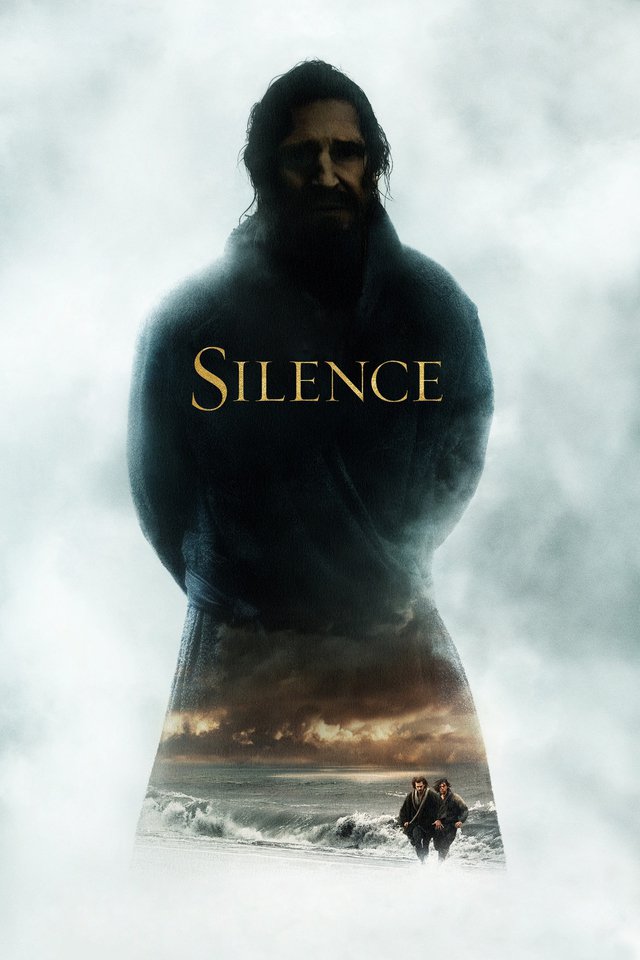
Silence is just dreary. The latest film directed by Martin Scorsese, it tells a fictional tale about the persecution of Christians in 17th century Japan. A very real and very terrible time in Japan’s history, it doesn’t translate well in this movie, despite great actors (Andrew Garfield, Adam Driver, and Liam Neeson are the well-known names). When news reaches priests Rodrigues and Garupe in Portugal that their former mentor has renounced his faith in Japan, they head there to see what is going on, knowing that their lives are forfeit if they are caught. They spend their time in Japan hiding from the authorities and giving comfort to the Japanese Christians who are also forced to hide their faith. They see horrors every day and eventually are each caught, leading to the question of how to balance their faith with the fear of a brutal death. The movie’s “highlights” are the torturing of the Japanese who will not turn from their faith, and the story itself is just dull and predictable, and as it approaches 3 hours long, it is just too long to sit through.


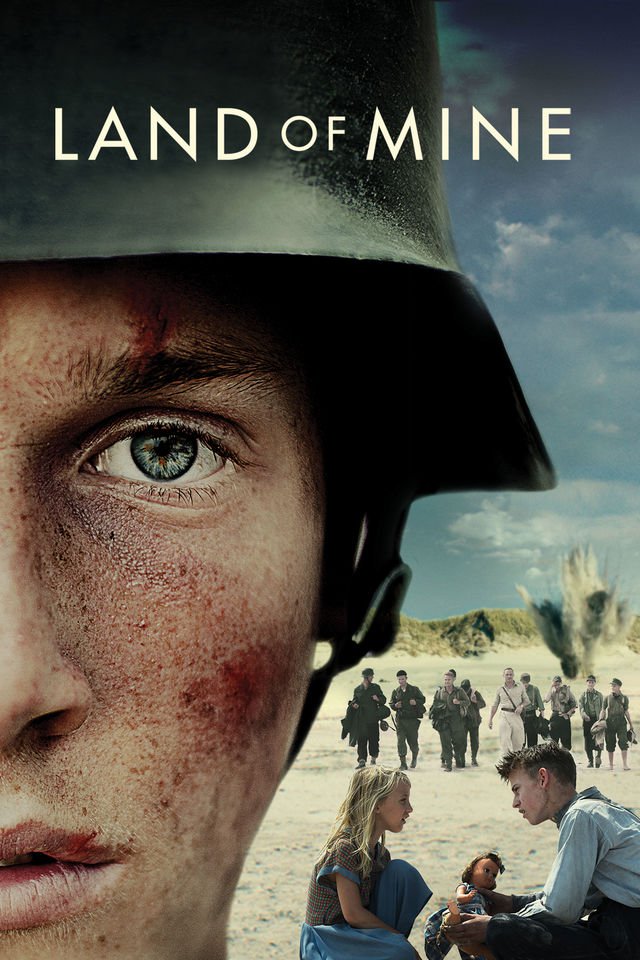
Finally had a good one in Land of Mine, a Danish film that shines a light on a forgotten moment in time after World War II. With the beaches across Denmark loaded with land mines placed by Germany in anticipation of a sea landing there, the Danish military enlists German POW’s, many of them just teenagers, the dangerous task of finding and diffusing the mines. This film follows a group of 14 such men, really just boys, under the supervision of a Danish sergeant. The Dane is at first very strict with them, almost brutal, but as their bravery is shown in doing their task, and as a few ultimately die along the way, he starts to open up to them, and they in turn to him as well. A beautifully written movie about the often forgotten moments that follow most wars, but also about true forgiveness, at a time when everyone involved must find a way to move on.

Don’t let It find you in the dark

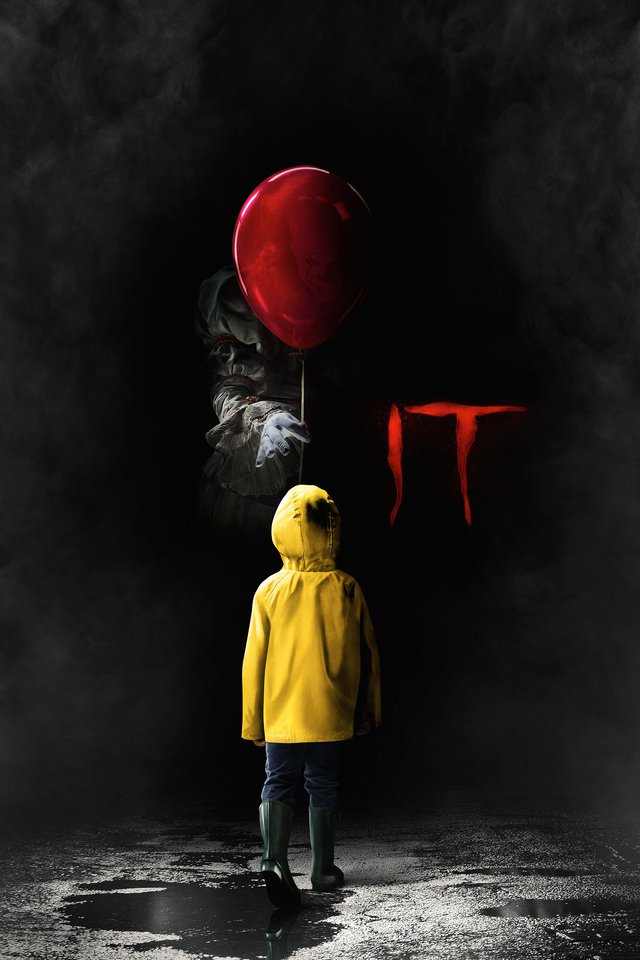
The reimagining of Stephen King’s It is a genuinely creepy, genuinely scary movie, not for the faint of heart. Rather than telling the story of the kids in flashback-form as the first movie did, this one just takes place in 1988 (ostensibly setting up a future sequel when they come back as adults).

Focusing on a group of 4 pre-teen boys, who pick up another couple friends along the way, the movie shows the town of Derry, a town which is facing a crisis. People, and especially children, are disappearing at an alarming rate. Eventually the insane clown Pennywise shows his face to each of the friends, and they decide to come together to rid the town of the menace. There are plenty of ways for the clown to give you the creeps (and quite a few jump scares, one in particular that got the whole theater to startle). But more than just a scary movie, this film has a great plot and is truly well acted by the young leads, fronted by Jaeden Lieberher of St Vincent and Midnight Special. Don’t take the kids to this one unless you want to be woken up during the night, but fans of the horror genre will find plenty to like.

Quick takes on 5 films

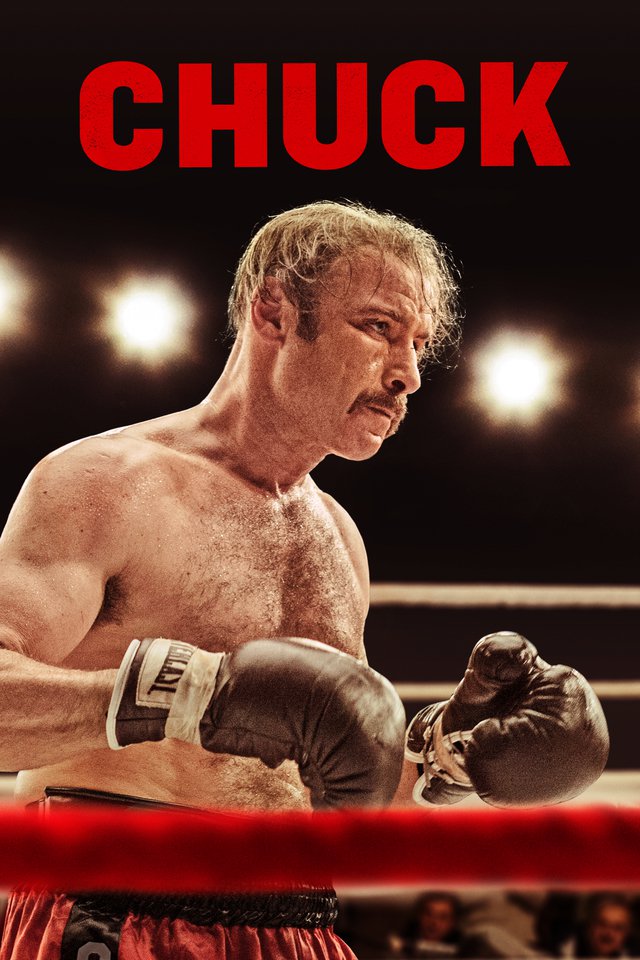
Chuck is a biographical film about the life of Chuck Wepner. I’d venture to guess that most people my age and younger have never heard of Wepner, but his boxing fight against the heavily favored Muhammad Ali was Sylvester Stallone’s inspiration for the original Rocky. Here, Chuck is brilliantly portrayed by Liev Schreiber, with a strong supporting cast including Ron Perlman and Elisabeth Moss. Wepner thought very highly of himself, going so far as to make up stories to enhance his reputation among the boys, but eventually his fast lifestyle catches up to him. And though Schreiber is great, the film falls into the same trap as a lot of bio pics, in that it feels a little too much paint-by-numbers. There’s a lot of “he went here and he talked to this person” kind of action. Reaching only about an hour and a half long, it is still worthy viewing for movie lovers for the performances.
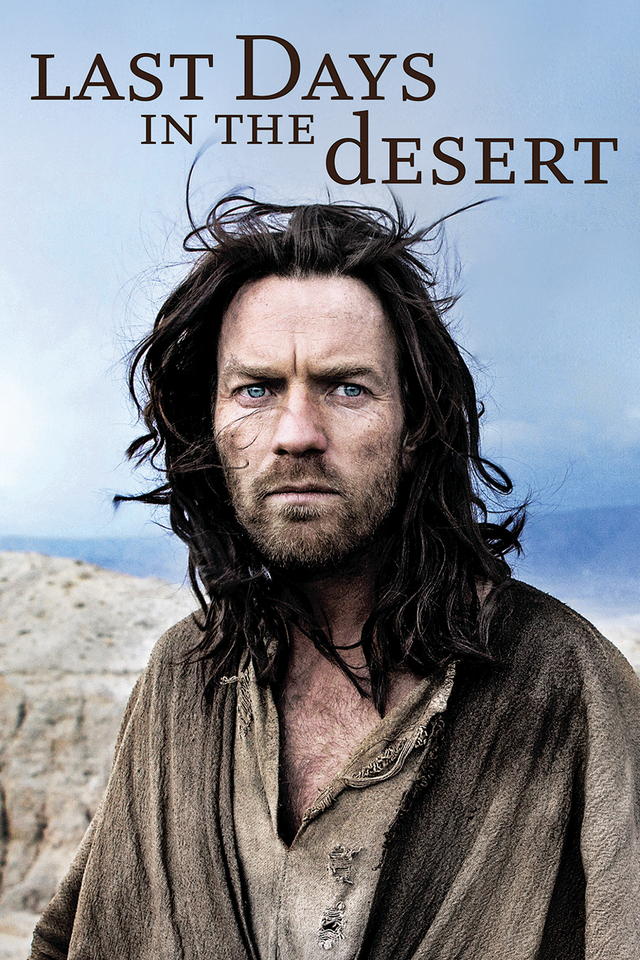
Last Days in the Desert is a dramatization of the waning days of the temptation of Christ, as he is headed towards Jerusalem. If you can get past the subtle hint of a Scottish accent by Ewan McGregor’s Jesus every now and then, I actually really liked this film. Too often I think we only see Jesus as this mythical being, and while he is that, it is easy to forget he lived a human life. This movie puts a human face on him, without being sacrilegious. Jesus is wandering the desert, facing temptations by Satan along the way (who has also taken McGregor’s face, in a subverted, subconscious kind of way), when he comes across a family of three living on the edge of the wasteland. The father is a builder, so Jesus can relate, but the son dreams of leaving and starting a new life in the city, and the mother is ill, most likely of the wasting disease, or cancer. In this family, Satan finds new ways to tempt Jesus. The film feels like a parable lifted from the Bible. It does a great job of showing the kinds of enticements Jesus faced, while remaining sin-free and ultimately, straying true to his calling.
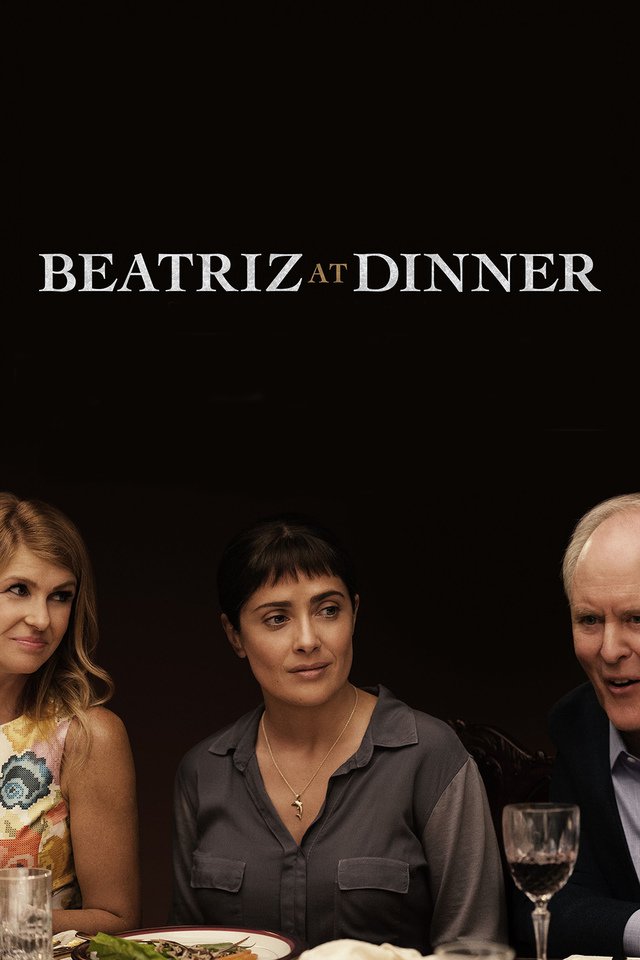
Beatrice at Dinner is a weird film, and for me, not in a good way. Movie critics love it, but I can’t find a single reviewer who’s sole reason isn’t the fact it is about a Mexican immigrant telling her story in the day we live. Salma Hayek plays a masseuse whose car breaks down at a rich client’s house, forcing her to stay with the family during dinner, a dinner they are hosting with other rich business partners. When Beatriz discovers one of them is a real estate developer, much like the mogul who uprooted her whole village as a child, she lashes out the only way she can, with words. A movie about cultural differences, but with some deeper meanings too, the film feels a little disjointed, and the ending tries to make it something else entirely.
Buster’s Mal Heart is another strange one, but this one I kind of dug. Buster roams the countryside, breaking into vacant vacation homes, staying one step ahead of the police. He makes random phone calls into the radio stations to rant about the end of the world coming with the Y2K crossover, what he calls “the inversion.” We also see him floating in a lifeboat in the middle of the sea, but which version is true, we don’t know. His previous life is told in flashbacks, the family he used to have and his job as a third shift front desk worker at a hotel, where he met the man who introduced him to the whole inversion idea. Rami Malek’s straight, stone face is perfect for Buster as he creeps along to lunacy, as we slowly learn what brought him to this place. The movie has a quiet, stirring tension, very mysterious and almost foreboding, and the twist is thought-provoking and emotional.


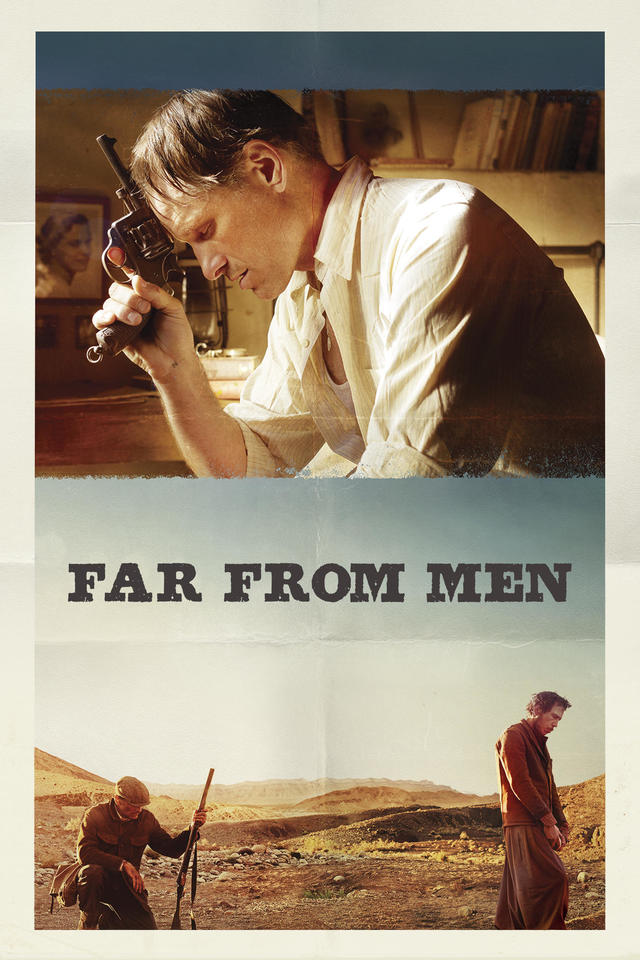
Far From Men is OK I guess. It is a French film starring Viggo Mortensen (who knew he spoke fluent French?) as Daru, a teacher in war-torn Algeria in the early 1950’s. He teaches the local Muslim children how to speak French but more importantly, how to read and write. However, independence fighters are tearing through the area as the Muslims are rising up against the French. One day a French officer drops off a Muslim prisoner,Mohamed, at the school, and tells Daru he must accompany the prisoner the rest of the way to the next city. Along the way, nearly everyone seems to want one or the other one dead. The best parts of the film are the quiet dialogue between the two journeyman, when Mohamed and Daru learn each others tales, and form their bond. Not tremendous, but not bad either.