Quick takes on The Brutalist and other films

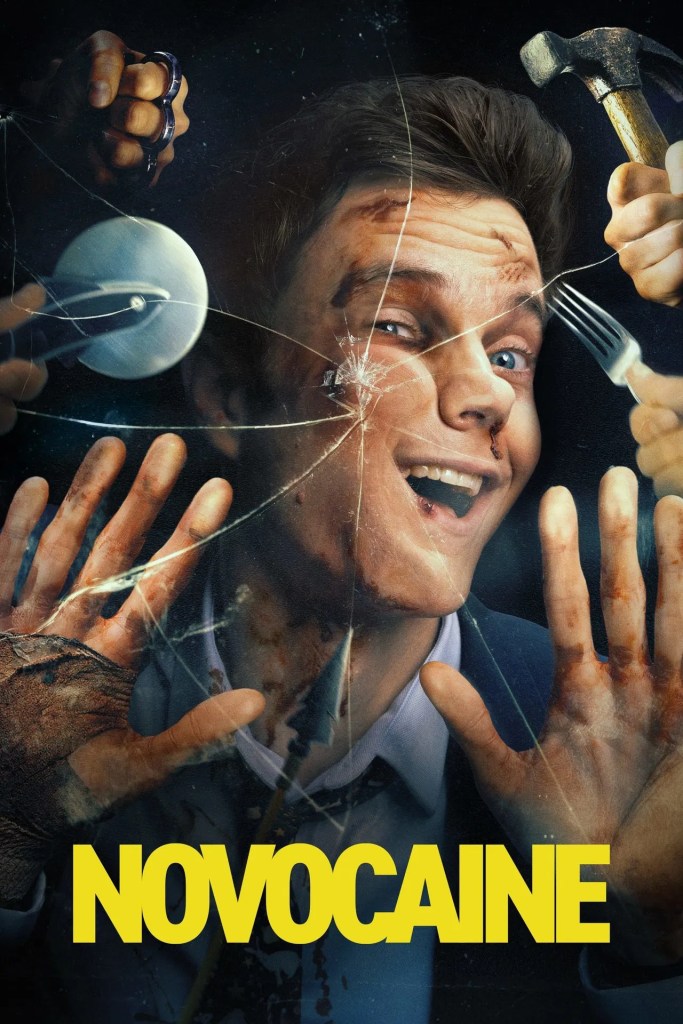
Novocaine is a fun film for a single watch through, with a unique premise that sets it apart from the usual action comedy genre. Nathan Caine is an assistant bank manager who leads a pretty dreary life, with no real friends (the only person he talks to is an online buddy while playing video games) and a real fear of hurting himself. But the fear isn’t because he fears pain, it’s because he is unaware of it. He literally cannot feel pain, to the point that he may cut himself badly, but be unaware of the injury until he bleeds out. He doesn’t even eat hard foods, for fear of accidentally biting his own tongue off. Into this dull life enters Sherry, a new, pretty coworker at the bank. The two hit it off one night, but Nathan’s life goes sideways the next day, when the bank is robbed and the crooks take Sherry as a hostage to help them escape cleanly. Nathan, a regular guy, can now put his “superpowers” to use as he chases down the bad guys to get back his “girlfriend,” with no fear of any pain he may endure along the way. The movie gets over-the-top gruesome as Nathan is willing to put his body through harm in order to take out a bad guy, but the blood flows in a humorous way throughout. Ultimately what makes the movie work is Jack Quaid as Nathan, as his aw-shucks style of acting wins over the audience. The movie is funny but probably not one I’d return to for a second viewing, but good for a fun (and different) date night. ★★★

When I’m Ready is a super low budget film but one that I enjoyed a whole lot more than expected (maybe partly because I’m a sucker for apocalyptic movies). It follows new couple Rose and Michael as they drive cross country to visit Rose’s grandmother. The world is dealing with the news that the end is near, with a humanity-crushing asteroid on a collision course with the planet in about a week. Rose, who was mostly raised by her grandmother but who hasn’t seen her in over a year, wants to say her goodbyes to the one other person who meant a lot to her growing up. Rose and Michael were schoolmates but not a couple until recently, she being a popular kid and he being anything but. Michael is the only person carrying a cell phone (while services are still working; stuff is starting to break down pretty quickly) and he is monitoring the news for anything new, but is also sheltering Rose to an extent. She is used to things just sort of going her way, and keeps asking if there’s a chance that whatever plan the government is working on will work; he keeps measuring her, but knows there is no hope. Along their trip, they see the best and worst humanity has to offer. Some people are obviously meeting the end of the world with nothing but anger and a desire to hurt others, while some, like Rose and Michael, are making the most of it. Two recognizable faces in the film include Lauren Cohan (Maggie from Walking Dead) and longtime actor Dermot Mulroney, who play different people the couple come across on their drive. Apart from those two, the acting leaves something to be desired, but the story is one of making peace with others and yourself, and resonated with me. ★★★★

I can’t help but wonder what everyone was smoking when they were praising The Room Next Door. I love everyone involved in this film, from director Pedro Almodóvar to co-leads Julianne Moore and Tilda Swinton, but what a self-indulgent turd this movie turned out to be. The women play Ingrid and Martha, best-of-friends once upon a time, but it has been awhile since they regularly spoke. Martha is now dying of cancer, and when Ingrid hears the news, she reaches out and the two reconnect. In some flashbacks, we learn a bit about the two women’s lives, including why Martha has been alienated from other family, leaving her alone in this terrible moment of her life. With no one else to turn to, she asks Ingrid to help her end her life, so that she no longer has to go through the pain and anguish of a slow death. Ingrid reluctantly accepts, and the two head to a remote cabin to do the deed. That’s as far as I got, because I simply couldn’t stomach another awkward scene. It was a weird experience watching this movie, because it features two lauded actresses who are usually quite good, and from a director I usually enjoy, but I could not connect with this one at all. The acting comes off as contrived and (almost) phony at times, like people pretending to like each and just being fake. Even their actions don’t feel natural. Really weird stuff. Maybe I can chalk it up to the fact that it is Almodóvar’s first English language film, because some of his Spanish films are absolutely moving and unforgettable. They can’t all be winners! ★

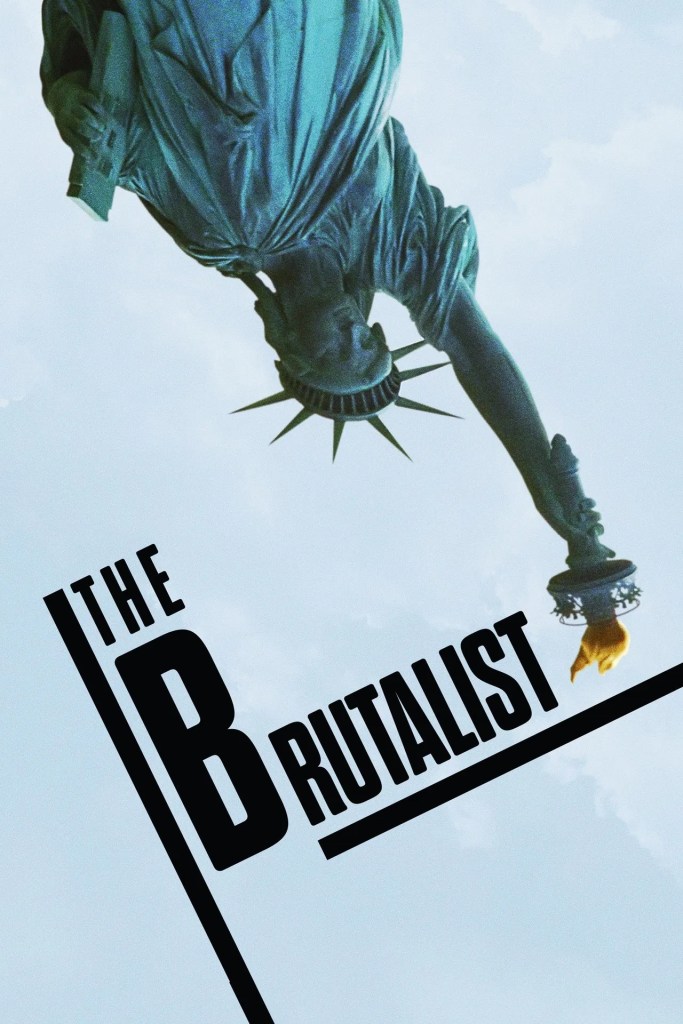
The Brutalist received lots of hype but ultimately not as many awards as its writer/director Brady Corbet wanted (or expected, as he comes off as a bit pretentious; he certainly loves to remind everyone how great his movie is). It follows a man named László (Adrien Brody) who comes to America as a Hungarian Jewish Holocaust survivor in 1947. He finds a place to live with his cousin, Attila, who has Americanized (dropping his accent, and marrying a Catholic), but Attila’s wife makes it clear that László is not welcome. The one piece of good news László does receive is that his wife is still alive in Hungary; he suspected she did not survive the Holocaust, but she has been writing to Attila. In Hungary, László was a successful and esteemed architect, but in America, he is nothing, and after a business deal Attila had with a wealthy patron, Harrison Lee Van Buren (Guy Pearce), goes bad, László is out on the streets. 3 years later, he has become addicted to heroin and is shoveling coal when Harrison finds him. Turns out Harrison’s new library, designed by László, has become the talk of the town, and Harrison wants to hire him to build a mammoth community center in remembrance of Harrison’s recently deceased mother. Despite misgivings, László accepts, hoping to earn enough money to bring his wife to America. Many more years will pass before that happens, and László’s trials and tribulations are not over. In fact, they are never over. Brody won the Oscar for best actor for the film, and he is indeed great, as is Pearce as the devilish Harrison, but I’m not convinced The Brutalist is a great movie. It is buoyed by excellent acting, but has some amateurish “gotcha” scenes, several too many in fact, which only seem present to drive a point home (again and again), that the immigrant’s life is hard, and László is there just to be used and abused by the privileged. I didn’t mind the 3+ hour runtime, but a long movie does not an epic make. It’s the kind of movie that is a critic’s darling, but not one that really moved me. ★★★

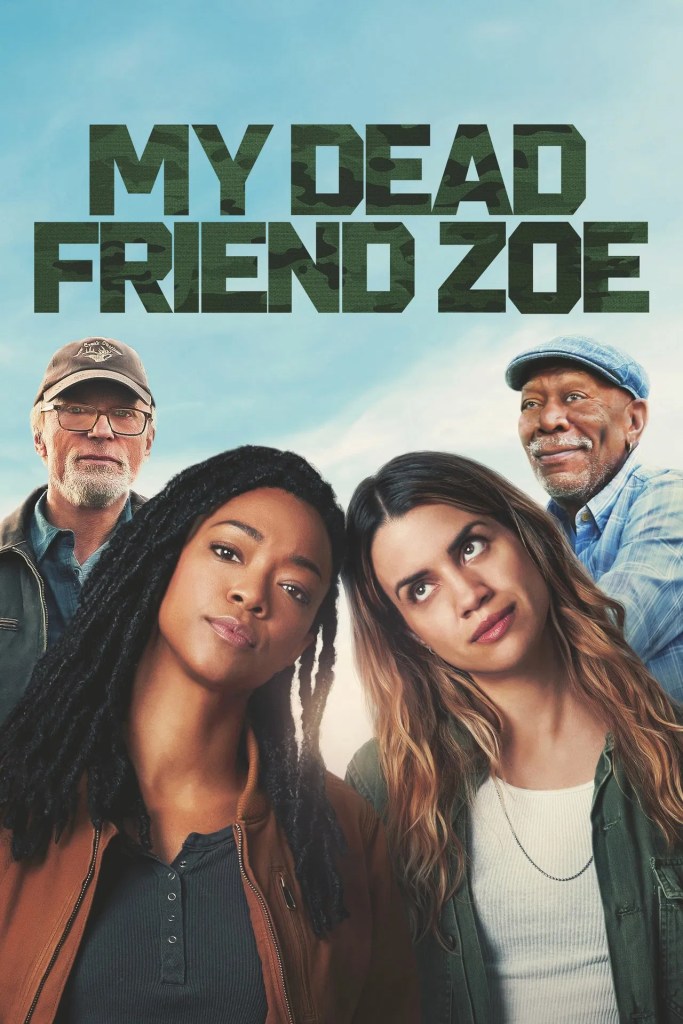
My Dead Friend Zoe, on the other hand, is emotionally resonant, even if the acting as a whole isn’t on par with the above picture. It stars Star Trek Discovery’s Sonequa Martin-Green as Merit, who, at the beginning of the film, is attending court mandated group therapy sessions after she nearly got a coworker killed in an accident. Merit is dealing with PTST from her time in the army serving in Afghanistan, but thus far has refused to talk about it. Her constant companion is Zoe (Natalie Morales), but as you can tell from the title of the film, Zoe is only in her imagination. Zoe is funny, always with a quip on hand to poke at Merit or her family, but comedy is not what Merit needs right now—she needs to find a way to make peace with Zoe’s death. As if Merit doesn’t have enough on her plate, her grandfather Dale (Ed Harris) has been diagnosed with Alzheimer’s, and Merit’s mom wants to put him in a home for his safety. She has asked Merit to go to their lake house where Dale has been living alone to break the news to him and prepare him to sell the house, but dropping that news will not be easy on Merit, and the headstrong Dale, who also served in the Army and who was Merit’s idol growing up, isn’t ready to be told he can’t do something. The first half of the film has plenty of laughs from Zoe, but as the truth behind her death is revealed in the end, the film turns very emotional, and hits you hard. Harris is perfect as the cantankerous old man. ★★★★½

  • TV series recently watched: The Wheel of Time (season 3), The Handmaid’s Tale (season 6), The Wonder Years (seasons 5-6), The Last of Us (season 2)
  • Book currently reading: Hunters of Dune by Herbert & Anderson

Quick takes on Havoc and other films

Black Bag is a spy thriller with an old-school feel, from acclaimed director Steven Soderbergh, and featuring an all-star couple of leads in Michael Fassbender and Cate Blanchett. They play married couple George and Kathryn, both intelligence officers in London. Though they are both spies, they cannot talk “trade secrets” with each other, as they are usually working on different “need to know” cases. One such case is George’s latest, when he is tasked with finding a double agent in their midst. He is given a list of 5 suspects, one of whom is his own wife. Shortly after giving George the assignment, his boss dies of a heart attack, so something is definitely up. What follows is some great old fashioned spy work, where George doesn’t know who he can trust, including the love of his life. I think I wanted to like this movie more, because while the tension-building is great, the big reveal at the end is heralded a bit too much, which lessened its impact. Still, it’s a good “thinking man’s” kind of movie, proving again that you don’t need action to have a very tense film. ★★★½

Good One is an absolutely fantastic indie film from a first time writer/director (India Donaldson) with a young lead in a huge breakout role (Lily Collias). She plays Sam, a 17-year-old going camping with her dad Chris, along with Chris’s longtime friend Matt and Matt’s son. Matt’s son bails at the last minute, making it just a trio. Sam and Chris have done camping/trekking together plenty of times and know the ropes, but from the beginning, Matt isn’t ready (packs too much, brings the wrong stuff, etc). Over the course of a few days, sometimes Sam acts as a window for us viewers, giving us a view into the lives of Chris and Matt, 2 lifelong friends, as they work through some private shit. But make no mistake, this is definitely a coming-of-age film about Sam, a trip in which she severs that line between being her dad’s daughter and being her own adult. Collias is tremendous as Sam, showing subtle changes in her face for every emotion she’ll encounter during the trip. A quiet film, but with a lot of lowkey suspense (like when a trio of young men shows up at their camp, or when Matt has a little too much to drink one night when he and Sam are alone) that keeps your attention throughout. Great stuff. ★★★★★

Like a lot of moviegoers, sometimes I ignore the reviews and pick a film based on a favorite director or actor. That’s the case for Havoc, because Tom Hardy is in, and hell, he’s one of the best. But what a turd of a movie. The reviews are so-so, and I have no idea what anyone would see in this. It’s a straight forward action film, about a dirty cop who is caught up working for a dirty mayoral candidate, while trying to rescue a fellow cop’s son who is mixed up in a Chinese drug gang over a gone-wrong drug deal, and a Triad drug lord out for revenge over her murdered son. Enough going on there for you? It’s a hot mess, and honestly I stopped watching about 40 minutes in, so I have no idea how it all went done. Honestly I don’t care to know. ½

The Golden Voice is a generic feel-good film about a young man, KJ (Dharon Jones), who has lost all hope and tries to commit suicide in a park in Philadelphia. As luck would have it, he tries to do so right near a homeless man who is currently sleeping nearby. Barry (Nick Nolte) has been on the streets for decades and has seen it all, and he talks KJ down. Over the next few weeks, the two become unlikely friends. Along the way, they give each other a reason to live: for KJ, to physically live, and for Barry, to let go of the pains from his past that have kept him in this situation for far too long. Nothing very memorable, but Nolte delivers a strong performance. He’s getting up there in years (I couldn’t believe he is 84 now!) and it’s easy to forget, but once-upon-a-time he was regular nominee and winner on the awards’ circuit. ★★½

I usually just stick to films, but here’s a 4-part miniseries out of the UK currently on Netflix, and I was blown away by it enough to write about it. Adolescence starts out innocent enough. Two detectives are talking in a car, but when they get a call on the radio, they peal out and join a parade of other cop cars, who all together storm a house. Drug dealers? Gang bangers? No, it’s a middle class family, and neither parent is the target. It’s the (very young looking) 13-year-old boy asleep in his bedroom. We don’t know the crime (finding that out is part of what makes the first episode so great, so I’m not telling!), but you gotta know the police would have a really good reason to go in guns blazing like they did. What follows is a scary look at the life of teenagers these days, more than the facts of the crime itself. I thought it was rough when bullies would knock books out of your hands or shove you against the wall when walking by when I was in school. Now it is all done online, and the psychological torture is mindboggling. How does any child survive to become a well-adjusted adult these days? Maybe they don’t, and society will get even worse. We’ll find out in the next 10-15 years. Anyway, brilliant show. Every parent and educator should watch this. ★★★★★

  • TV series recently watched: Cheers (seasons 7-8), SW Tales of the Underworld (series), Adolescence (series), The Eternaut (season 1), Andor (season 2)
  • Book currently reading: Hunters of Dune by Herbert & Anderson

Quick takes on Gandhi and other films

I’ve been drawn to this movie since I first heard the title: How to Make Millions Before Grandma Dies. As new-ish grandparents with my wife, who wouldn’t like a title like that? In the film, M is an aimless young adult living with his parents, with his dreams of being a professional video gamer fading. His paternal grandfather has been ill for a long time, and is cared for by his cousin Mui. When the grandfather dies, he leaves most of his estate to Mui, so M gets the idea to do the same for his maternal grandmother, Mengju, who has recently been diagnosed with cancer. It’s a darkly humorous idea, but of course, M gets more than he can handle with Mengju. She is weary of people, especially family, latching on to her as the end of her life nears, but she’s also spent a lifetime taking care of those around her. One son doesn’t make time for her ever, the other only comes around when he needs money, while her daughter (M’s mother) is sort of forgotten in the shuffle. At first just in it for the hope of riches, M gets to know this intriguing and often lonely woman who was once so important in his life as a child. You know how it is all going to end long before it does, but that doesn’t keep the tears at bay, it’s a real tear-jerker. Great film out of Thailand. ★★★★

Not sure what I was expecting with My Last Best Friend, starring Eric Roberts. When was the last time you saw anything decent with him in it (and not for lack of trying; the man was in 40+ films last year alone). He plays two roles in this movie, two roommates in a NY apartment, both (apparently) named Walter Stoyanov. Taking place during COVID (and filmed during and just after the lockdowns), the film follows as each Walter is going through some shit. One catches COVID and gets really sick, while the other catches the attentions of the FBI and goes under investigation for some previous crimes. This movie brings every cliche under the fold, with truly awful, low budget dialogue to go along with the low budget production (the sound in particular seems like it was mixed by someone with no idea what they were doing). And Eric Roberts isn’t even the worst actor in the movie, and that’s saying something. Why did I waste my time on this one, and more importantly, why did I watch all the way to the end to unravel the mystery of the two Walters? ★

Seagrass is a very lowkey (almost on life support) film about a family on the ropes. Steve and Judith are on the edge of divorce, and to try to save their marriage, they’ve gone to a family retreat in Nova Scotia where they can get couples therapy while their two young daughters can play with other kids to keep themselves busy. The film sets up as Judith as the one at fault in the deterioration of their marriage; she hasn’t been unfaithful, but despite a loving husband and two great kids, something’s not right. As she admits, she has everything she should want, yet she’s unhappy. Getting to the crux of why though, is what is explored as the movie goes along. It is a really slow burn; even I, who tends to like slow, introspective films, was tested, and the payoff isn’t the most satisfying. But there is some great tension, including a subplot involving the kids as the oldest gravitates towards a not-so-nice bully and the younger is left to her own devices. The movie had potential to be great, but ends up just good enough. ★★★

Escape is a low budget film out of South Korea, but an entertaining one for fans of action thrillers. Kyu-nam is a North Korean soldier working at a post near the DMZ, who dreams of defecting south. He has a plan, but on the day of his planned escape, a friend begs to be brought along. The friend ends up getting the two of them caught, but then tries to save Kyu-nam by taking the rap himself. Kyu-nam is hailed as a hero for “catching the deserter,” but he can’t let his friend rot in prison. He gets him out, and the two make their run for the border, with seemingly all of North Korea on their heels, including Kyu-nam’s childhood friend, a higher-up solder in the North Korean army. The movie is more-than-a-little silly at times, especially when it seems time and space mean nothing (as in, a person can be at the top of a big hill one minute and then at the bottom 2 seconds later, or worse, hopping from one town to another in the blink of an eye). Not to mention some strange out-of-left-field subplots, like the nomad gang of women who help Kyu-nam escape capture once. But hey, don’t think about it too hard, and just sit back and enjoy the gun fights, harrowing escapes, and good-vs-evil story, and you’ll have a good time. ★★★

Gandhi is obviously not a newer film, but it’s new to me. Been on my radar for a long time, so when a new restoration was made available, I checked it out. Starring Ben Kingsley as the eponymous Mahatma Gandhi, the film follows the highlights of his life, from a young, smart lawyer arriving in South Africa in 1893 until his assassination in India in 1948. I have no idea how much of the movie is fact and how much is dramatized, but it’s an excellent movie. Upon arriving in South Africa, Gandhi is immediately faced with racism, since only the ruling white party has any rights. There, Gandhi cuts his teeth on how to fight injustices with peace. When he returns to India over a decade later, his eyes have been opened to the plight of his home, and joins the fight for an India free of control from Britain. His countrymen are itching for a fight, and are sure of their vast numbers to win, but Gandhi preaches nonviolence. There’s a lot of very emotional moments in the film, like when a peacefully protesting mob is gunned down by the British, women and children and all, and the movie is full of anecdotes that we as a people should still hear from time to time. Kingsley is on top of his game; he won a Best Actor Oscar, one of 8 Oscars the movie won in 1983 (including Best Picture and Best Director for Richard Attenborough). Great epic about a great man. ★★★★★

  • TV series recently watched: Justice League (seasons 1-2), Dark Winds (season 3), Love on the Spectrum (season 3), Reacher (season 3), Toxic Town (series)
  • Book currently reading: Hunters of Dune by Herbert & Anderson

Thunderbolts* team up to return Marvel to excellence

Even for a self-professed fanboy like myself, Marvel has been on the schneid for awhile. They’ve had hits (Deadpool & Wolverine, Guardians 3) interspersed with misses (The Marvels, Ant-Man 3), and you have to go back to 2022 since they were reliably making money hand-over-fist on a regular basis. Thunderbolts* (yes, the asterisk is on purpose, gotta see the movie) attempts to right the ship. It’s a great start, and hopefully a springboard to continued success.

The film begins on Yelena Belova (Florence Pugh), who has not recovered from the death of her sister Natasha Romanoff (the Black Widow) from 2019’s Avengers: Endgame. Yelena has been running covert missions for CIA director Valentina Allegra de Fontaine (Julia Louis-Dreyfus) and while still great at her job, she’s just going through the motions. Her latest mission is to follow a target to a secret base and kill her, but it’s a set up from de Fontaine. Under threat of impeachment in Congress, de Fontaine is tying up loose ends and trying to get her secret agents to kill each other. They consist of Yelena, John Walker (the short-lived Captain America from The Falcon and the Winter Soldier, portrayed by Wyatt Russell), Taskmaster (Olga Kurylenko, from Black Widow), and Ghost (Hannah John-Kamen, from Ant-Man and the Wasp). Once they realize they’ve been set up, they stop trying to kill each other, and work together to get to de Fontaine. They are joined along the way by Yelena’s father, former Soviet super soldier Red Guardian (David Harbour) and Bucky Barnes (Sebastian Stan), the Winder Soldier himself, who has since become a congressman and who has suspected de Fontaine of dirty deeds all along. They have one more in their team, “Bob,” who seems to be the subject of some of de Fontaine’s human experiments, and who will play a big part in the film before the end.

The movie has plenty of action to satisfy superhero genre fans, lots of humor in all the right spots (something that has come off poorly in some of Marvel’s recent entries), and a surprising amount of heart, which is what Marvel really needs in order to capture an audience and keep them coming back. It’s what set Marvel’s films up so high for so long, compared to its DC counterparts. A great cast helps obviously, but the film is well written and well executed, completely missing a lot of the shortcomings that have have plagued Marvel of late. Here’s hoping that there isn’t a miss coming up next! (Which happens to be July’s The Fantastic Four: First Steps.) ★★★★★

Quick takes on The Fire Inside and other films

Small Things Like These is movie star Cillian Murphy’s followup to his breakout role in Oppenheimer. Returning to his roots in an indie film out of Ireland, he plays Bill, a hard-working coal merchant in 1985. He and his wife are raising 5 daughters and Bill seems to be a good guy all around, though he is haunted by thoughts of a poor upbringing, though, even there, his single mother tried to do right by him. Bill is a man of few words so it is hard to get a sense of what is going on behind those piercing eyes of his, especially when he becomes more aware of the mistreatment of some young women in the care of a local convent and school. It has long been an open secret that the nuns take in “fallen women,” which are usually pregnant single women, or sometimes just the victims of rape who are abandoned by their families, and the nuns cruelly put them to work. One day, on a delivery, Bill finds one such woman locked in a coal shed, and obviously doesn’t believe the story the mother superior (a devilish Emily Watson) concocts. Because of his upbringing, he keenly feels the desperate hope of the lonely woman in need. A film with a slow pace to match the quiet, introspective actions of its lead character, it presents a powerful story about the infamous Magdalene laundries of Ireland, but while the root of the story is strong, the telling of it is lacking. Murphy is great in the lead, but there’s just not enough there to provide the emotional heft it deserves. ★★

The Graduates is a timely film (unfortunately) following three people intimately involved with a recent school shooting, and how the fallout of those events have far-reaching impacts. The shooting at the school was a year ago, and Genevieve (Mina Sundwall, from the Netflix remake Lost in Space) is returning for her senior year. Her longtime boyfriend Tyler was one of the victims, and she still deeply feels his absence, while trying to find some kind of joy in what is supposed to be an exciting time in her life. Once a promising college-bound student, Genevieve is struggling just to finish. That is better than Ben (Alex Hibbert), Tyler’s best friend, who transferred to a new school after the shooting but has since dropped out. The third main character is John, Tyler’s father, who became the school’s basketball coach only to spend more time with this son, but has kept the position for one more year to lead the remaining boys and, like everyone in the film, try to find some kind of normalcy. Everyone is awkward around each, not knowing what to say, and when they do find words, not knowing how those words will be construed. All seem to be living on the edge of a knife, where any one comment or memory can be a setback. The film does a great job of conveying the feeling of unimportance; these kids are supposed to be excited about graduating and moving on, but they are stuck and can’t get excited about anything. There’s a really poignant scene about halfway through where the camera lingers over an empty hallway with sounds just outside of earshot; I couldn’t tell if it was kids talking and playing outside, or if was echoes of screams and terror from that eventful day. ★★★½

Suze is a very enjoyable comedy staring Michaela Watkins as Susan, an at-times overbearing single mother to high school senior Brooke, who is preparing to go to college. Brooke at the last minute drops the news that she has decided to go away to college rather than stay close to home, leaving Susan despondent. To make matters worse for Susan, Brooke breaks up with her boyfriend Gage shortly after leaving for school, and Gage, a young man who lives by his emotions, tries to kill himself from despair. Gage’s mother is in jail and his father obviously couldn’t give two shits for his son, so though Gage has always grated on “Suze’s” (as Gage calls her) nerves, she takes him into her home to watch over while he heals up, to keep an eye on him and make sure he doesn’t attempt it again. The two become unlikely friends, as they lean on each other to heal and grow from the absence of Brooke. As they do, Gage is able to get Suze to come out of her shell and realize she can have a life outside of her daughter, and Suze is able to show Gage that there are people out there who care about him, while they also learn some harsh lessons about the person Brooke has become. It’s a very funny movie with a strong message about being yourself, the world be damned. ★★★½

My final two films are both biographical, the first being Unstoppable, based on the life of Anthony Robles. Born with a whole leg, Anthony is driven from a young age to excel in wrestling. His high school coach is maybe his biggest fan, but his disability is obviously keeping many colleges from taking him seriously. Anthony’s dream has always been to wrestle for Iowa, who always churns out national champions in the program, but they do not offer him a scholarship, something he needs in order to go to school. Drexel offers him a full ride, but the school’s program is just too small for Anthony to be able to earn the recognition he craves, so he ends up going to Arizona State. The coach there doesn’t have high hopes for Anthony, but Anthony works harder than anyone and earns a spot on the team, going on to the greatness that you know just know is coming. Along the way, he has to face hardship on the mat as well as home, where his stepdad abuses his mom. Unstoppable is fine, and that’s part of the problem. It’s just fine. The cast is a list of those who always seem to show up in these kinds of uplifting films (Michael Pena, Don Cheadle) and there’s a surprisingly great performance from Jennifer Lopez as the mom (maybe I shouldn’t be too surprised, she’s turned in some good stuff in the past). Unfortunately Jharrel Jerome in the lead is not that great, and didn’t come off as natural. Very average film overall. ★★½

The Fire Inside is much better, this time about Claressa “T-Rex” Shields, who was a boxer who rose to fight in the Olympics for the USA. From the city of Flint, Michigan, which had gained a “certain reputation” nationally by 2010 or so, when the film picks up, Claressa is fighting the odds just to not end up pregnant or in juvie. Her dad is already in jail, and her mom cares more about whatever latest man she has and throwing parties than being any kind of parent to Claressa or her half dozen siblings. From a very small age though, Claressa has been drawn to boxing. There’s a local coach named Jason Crutchfield who teaches boys to box as a way to keep them off the streets, but he initially tells Claressa that girls aren’t allowed. When she keeps showing up at the gym, he finally relents and takes her under his wing. Through his tutelage and her own (very) hard work, Claressa gains national recognition as a young fighter who isn’t afraid to take on stronger and more seasoned fighters. A loss in the Olympic qualifiers leading up the 2012 Olympics almost derails her goals, but Claressa perseveres to win the gold medal, the first USA woman to do so. The expected endorsement deals, which Claressa was counting on to help her family’s situation, never materialize, leading Claressa to become even more motivated to go for the 2016 Olympics too. The film is well written (Barry Jenkins) and well acted (Ryan Destiny as Claressa in particular) and the story is thrilling in all the right spots. It’s from a first-time director, Rachel Morrison, but she cut her teeth as a cinematographer on some very well-received films, including Fruitvale Station, Dope, Mudbound, and Black Panther. ★★★½

  • TV series recently watched: Daredevil Born Again (season 1), ST The Next Generation (season 6), Dope Thief (series)
  • Book currently reading: Winter’s Heart by Robert Jordan

Quick takes on 5 queer films of the 90s

My Own Private Idaho was the third film from celebrated director Gus Van Sant. Released in 1991, it features a fantastic cast including costars River Phoenix (sadly, nearer the end of his career and life than the beginning) and Keanu Reeves (who was looking for more serious roles after his breakout in Bill and Ted). They play best friends Mike and Scott, respectively. Mike is a male prostitute and gay man, working the streets hard but living with a serious mommy complex, dreaming about losing her years ago. Scott is also prostituting, but seems to be biding his time, as he is set to inherit a fortune from his father, the mayor of Portland. The film follows their adventures on the street with friends and various johns, with moments of tenderness interspersed, such as when Mike admits to Scott one night that he loves him, only to be rebuffed when Scott says he only sleeps with men for money, and is romantically interested only in women. This comes to a head when the two friends travel to Italy on a lead to find Mike’s mother, and Scott falls in love there with a woman, leaving Mike feeling lost. The film is lightly based on the Shakespeare plays Henry IV parts I and II, and Henry V, which I wasn’t feeling for awhile until the introduction of Bob, sort of the “king” of streets hustlers and Mike’s and Scott’s mentor, who delivers occasional random soliloquies in Shakespearean tongue with the best of them. Reeves is fine, though I’ve always thought he was better in action films (Matrix, John Wick) than his drama roles, but Phoenix shines. Brother Joaquin is great, but you have to wonder what River could have given us if he’d survived. This movie will move you to laughs and tears, and feels real and raw throughout. ★★★★★

Three years before the Wachowski sisters burst onto the scene with The Matrix, their directorial debut came in 1996 with Bound. It stars Jennifer Tilly as Violet, and Joe Pantoliano as her gangster boyfriend Caesar. They live in an apartment, and down the hall, ex-con Corky (Gina Gershon) is renovating a neighbor’s apartment while he is away. Violet is immediately attracted to Corky, despite later admitting never having shown any lesbian tendencies. Caesar is the jealous type and always on the edge of violent anger, so Violet and Corky need to be clandestine. Eventually, they see a way out of their sticky situation. Caesar and his buddies torture a man (in their bathroom, which Corky can hear down the hall through the thin walls in the building) because he was embezzling, and Violet knows Caesar will have that $2 million in his possession for a short time until the higher ups come over to claim it. Corky and Violet hatch a plan to make off with the money and leave Caesar high and dry. As with all “best laid plans,” things do not go smoothly, leading to shoot outs, stand-offs, and bucketfuls of blood. This movie is much different than Idaho; in that one, you know you are watching a great “film.” Bound may not be that, but it is pure entertainment and one hell of a good time. ★★★★★

Finishing today with director Gregg Araki’s Teenage Apocalypse Trilogy, three films looking at the seedier, darker, and more blatantly sexual side of teens, lives that were not shown on film and TV at the time. First up is 1993’s Totally F***d Up. It starts with a solid 30 minutes of “interviews” with the characters, and all they talk about is sex. It might get the teen and 20-somethings excited, but for a more mature audience, I lost interest pretty quickly. Which is unfortunate, because there is a good plot (eventually) that later develops about an affair one of the men has with another, and what it does to his relationship. If they had led with that, and interspersed the interviews here and there throughout, it could have led to more interest, but by the time the plot was really going, I was already mostly checked out. If you want to give it a go, do yourself a favor: watch the characters introduce themselves, then skip past 25-ish minutes, and go from there. The film does do a good job of reminding you how bad it was for gay men and women in the early 90s. These days its almost cool to be gay, but once upon a time it was rough out there for anyone that didn’t fit in with the norm. ★★

The Doom Generation goes a mile a minute and I enjoyed (almost all of) it. The film that was the breakout for Rose McGowan (she won an Independent Spirit Award), she plays Amy Blue, the vulgar in-your-face teen girlfriend of Jordan White. One night, they pick up a drifter named Xavier Red, who exudes sex appeal with the whole “bad boy” look, and the viewer immediately knows he’s trouble. He doesn’t take long to show it; when they stop at a gas station, Xavier gets into an argument with the worker and ends up killing him. As the night goes on, that guy won’t be Xavier’s only victim. On the run, Amy first has sex with Jordan, and later with Xavier, though Jordan doesn’t seem to mind at all; in fact, he encourages them. To go along with the serious themes, the movie offers plenty of humor, so much so that I would laugh out loud many times. Every time the trio stops to buy something, the total is $6.66. They run into several guys who all think that Amy Blue is an ex-girlfriend, and each is obsessed with her, chasing after her and wanting to kill the men she is with. Before the end, they are attacked by a group of neo-Nazi’s who are out for blood, leading to a gruesome ending. I mean, seriously messed up, enough to turn your stomach. I liked the film a lot until that ending, which soured the whole experience for me, but until that point it was a wild ride. ★★★★

If The Doom Generation goes a mile a minute, Nowhere is an all-out assault on your senses. Araki called it “Beverly Hills 90210 on acid” and that’s pretty much it. It follows a group of teens over the course of one day, and all anyway wants to do is bang, or talk about banging. But it’s not all sex, there’s also a TV evangelist convincing two people to commit suicide, a Baywatch star date raping a girl, and a lizard alien thing vaporizing a trio of valley girls. The scenes come fast and furious from the get-go and it never lets up, to the point that I felt exhausted by the end. It can be entertaining at times, but it all feels like too much, though I bet today’s TikTok generation would enjoy it even more than the late 90s crowd. One cool thing about it is the cast: this movie is stacked top to bottom. Relative unknown James Duval is the lead, but the supporting crew includes Christina Applegate, Ryan Phillippe, Heather Graham, Scott Caan, Mena Suvari, Beverly D’Angelo, Denise Richards, Shannen Doherty, Rose McGowan, John Ritter (yes, that John Ritter!), and Christopher Knight (Peter Brady!). So much wasted talent in a film that is just eye candy for 80 minutes. ★★½

  • TV series recently watched: Harley Quinn (season 5), The Pitt (season 1), Deep Space Nine (season 1), Daredevil (season 2), 1923 (season 2)
  • Book currently reading: Winter’s Heart by Robert Jordan

Quick takes on Sing Sing and other films

Exhibiting Forgiveness is the directorial debut of Titus Kaphar, an artist, and he draws from what he knows. It stars the criminally underrated André Holland as Tarrell, a successful painter who is asked by his mother to finally reconcile with his father La’Ron. As we see in flashbacks, Tarrell has a lot of reasons why he should hate his dad. La’Ron has been a lifelong crack addict, and we see, through Tarrell’s eyes, how awful he was to his wife and Tarrell. Like most addicts, all he cared about was getting his next hit, and everyone else be damned. He drove Tarrell hard, and to make matters worse, to this day he seems proud of it, that his administrations made Tarrell the man he is today. We do eventually learn that as bad as La’Ron was, his own father may have been even worse, so obviously the cycle has yet to be broken, but Tarrell is out to do that, if he can get past the trauma. The film explores how different it is to forgive vs forget, and is as raw and emotional film as you’ll find. Holland is incredible as Tarrell, a man battling demons to rise above. ★★★★½

Sing Sing is director Greg Kwedar’s followup to 2021’s Jockey, another personal drama with a lot of heart that I enjoyed. This one stars Colman Domingo (who broke out as Victor Strand in the Walking Dead universe, but who also has a couple Tony and Oscar nominations under his belt, one for this film) as John “Divine G,” an inmate at the eponymous prison who has found purpose in a sanctioned theater troupe that rehearses and performs plays for their fellows (a very real program at Sing Sing in New York). John takes it very seriously, so he looks askance at newcomer Clarence “Divine Eye,” a life-long criminal who John thinks is just getting into the group for parole points. However, we learn that Divine Eye is really looking for a reason to open up; he’s built so many walls around himself that he is unable to make himself vulnerable to anyone. The safe space of an acting group finally provides that opportunity, if he is willing to do the work on himself. While all that is going on, we learn that John may actually be innocent of the crimes of which he was committed, and he is resting all of his hopes on an upcoming parole hearing. This film features just a couple pro actors, including Domingo and Paul Raci, with the majority of the cast made up of former inmates who went through the Rehabilitation Through the Arts program at Sing Sing. Domingo shows off supreme acting chops in this movie and is riveting in every scene, especially on those close-up shots where the cameraman knows to zoom in and let Domingo do his thing. Very moving film. ★★★★★

I was excited to see Companion from the first trailer, so I’m glad I finally got the chance. The trailers made it look like a horror film with lots of blood, but it is more of a thriller with a lot of comedy thrown in. It begins on Iris (Sophie Thatcher, from Heretic and the show Yellowjackets) and Josh (Jack Quaid, from The Boys and his recent breakout film Novocaine), a couple on their way to a weekend getaway with friends. Iris laments that Josh’s friends don’t like her, an idea he poo-poos, but we see that her fears are indeed founded when she gets the cold shoulder at the lakeside house. Still, she only has eyes for Josh, so everything seems OK. Until, that is, another man tries to make a move on her, and Iris retaliates by killing him. Covered in blood, she returns to Josh and the others, who freak out, before Josh tells her to “go to sleep,” at which point her eyes go blank and she freezes. Turns out, Iris is a robot, the kind that Josh bought as an expensive sex toy, and she herself didn’t know it. There’s more to the story though, which unravels as the rest of the film goes along. The funny moments are what make this film, because the rest is fairly straight forward and a bit predictable. But overall it’s fun, and a decent film for a one-time watch through. ★★★

One of Them Days is a cute comedy about two women having a day they’ll never forget, though they wish they could. Dreux (pronounced “Drew”) and roommate Alyssa can barely afford the rundown apartment they live in, and when Alyssa gives their rent money to her deadbeat boyfriend, they are facing eviction. Dreux is smart but school debt and no job prospects have her waiting tables, and Alyssa is a talented artist but she seems to be fine coasting through life. Now, they’ve got until the end of the day to come up with rent money or they are out on the street. So begins a whirlwind day, where they try everything from the mundane (payday loan, where they are laughed out the door for having the lowest credit score the worker has ever seen) to the bizarre (donating blood for cash, on a day when the nurse is on her first day after leaving her last profession, a stripper). The film finds most of its laughs poking at the stereotypes of two young black women struggling to make ends meet in a world with limited prospects, and while the movie is pretty paint-by-numbers, there are plenty of funny moments. Even I, usually not a comedy person, liked it quite a bit, and others who are more into the genre may laugh harder. ★★★

A confession: I’d never seen 28 Weeks Later. I watched the first film in the series, 28 Days Later, back when it came out over 20 years ago, but didn’t much like it, so I wasn’t too worried about the sequel when it came out in 2007. I’ve since become more of a cinephile, and gotten into the original director and writer (Danny Boyle and, especially, Alex Garland, respectively), so I rewatched Days recently. Still didn’t like it (haha!). And while this sequel has a different team behind the camera (director Juan Carlos Fresnadillo), there’s yet another film coming out soon (28 Years Later) in which Boyle and Garland return, so I wanted to “catch up.” I actually did like Weeks better than Days, but it’s still not great. The virus that came out in the first film has run its course, and all the “zombies” or whatever they are have died from starvation. The USA has come to England to help clean up the mess, burn bodies, etc, and the country is quarantined. That is, until a survivor is found living outside the safe zone, the first new survivor found in months. Turns out she is a carrier for the virus, so while not crazy and eating people’s faces off, she can spread the disease, which of course she does. People go crazy again, and ultimately the film suffers from the same problems that made me not like the first movie, namely, shaky camera syndrome, with a frenetic look and feel that makes it too hard to see what is actually going on. I get the “why” of it, but give me a steady hand and clear picture any day. Not to mention, if all the zombies were dead, why are they all over the place again by the end of the film? I’m hoping for better results when Years comes out in June. ★½

  • Book currently reading: Winter’s Heart by Robert Jordan

Quick takes on Anora and other films

All We Imagine as Light is a highly touted film out of India, and has the rare distinction of currently being rated 100% on Rotten Tomatoes (and not a small sample size, with 146 reviews). With a much lower audience score though, is it really that good? Yes, if you like slow, artful dramas. The movie takes place in Mumbai and follows roommates Prabha and Anu, both nurses at a local hospital. Anu is a wild woman, who bristles at the idea of her parents choosing a husband for her, and is secretly dating a Muslim man, causing whispers at work. Prabhu is much more staid; she is already married (arranged, by her parents) but hasn’t seen her husband since shortly after their wedding years ago, before he took off to work and live in Germany; it has been over a year since he’s even called or written. The film is about how these two very different women react to each other and life around them, and ultimately how the lessons Prabhu has learned can help Anu on her path. Definitely not for everyone, as its pacing will test your patience, but a worthy art film for those who like that sort of thing. ★★★★

The French are on a roll lately with their film adaptations of Alexandre Dumas novels, first with the double feature of The Three Musketeers (which I liked a lot, both of them), and now with The Count of Monte Cristo (all of which produced by the same man, incidentally). I’ve never read the book nor did I know the story, so I went in blind, and was completely blown away. Edmond Dantès is a sailor and a good, moral man, but is betrayed by an act of kindness and sentenced to death. For 14 years while in jail, he harbors anger towards those who put him there, and plots his revenge, but that time in prison is not for naught. A fellow prisoner tells Edmond of a secret treasure, buried by the Knights Templar, and when Edmond finally escapes, he uses the wealth to set himself up with a new identity, the eponymous Count. With near endless riches and a couple accomplices who have also been wronged by his accusers, Edmond enacts his revenge. The movie is an outstanding film full of mystery and action, a true saga that spans decades, set in the historical time period just after Napolean’s rule in early- to mid-19th century France. If you don’t mind subtitles, I highly recommend it. ★★★★★

Darn critics fooled me again. I Saw the TV Glow is pretty well reviewed, but I should have known better when I saw the director was Jane Schoenbrun, who burned me on her last film, We’re All Going to the World’s Fair. At least I got through that one, I can’t say the same for this one. Owen is a 7th grader without friends and strict parents, when he befriends 9th grader Maddy. Maddy is obsessed with a teen show called The Pink Opaque (think bizarro Buffy the Vampire Slayer), and she hooks Owen onto it too. After a couple years of Owen sneaking out at night to see episodes of the show at Maddy’s house, she states that she wants to run away and expects Owen to go with her. Owen freaks out and goes to his parents. Maddy ran on her own and was never seen again, and that same day of her vanishing, her favorite show is cancelled. We pick up the story 4 years later, when Maddy suddenly appears to Owen one night. She tries to convince Owen that the two of them are actually characters from the show, and their memories have been wiped or something like that. I say “something like that,” because I started to get lost (honestly, started surfing the web long before this point in the movie) and I didn’t care to follow anymore. I quit with about 20-ish minutes left and couldn’t care less how it ended. It’s the case of a movie trying to be smarter than it is and fooling nobody (except for those gullible critics). ½

Sometimes you just have to see a movie for yourself to see if it is really is as bad (or good) as everyone says it is. Borderlands, an action/sci-fi movie based on a video game franchise, got torched upon its release, so I stayed away from it. I never played the game and came in with no preconceived notions, and ended up enjoying it quite a bit. It stars Cate Blanchett against-type as Lilith, a gun-toting hardass bounty hunter with a soft spot (buried somewhere deep) who is given the job to hunt down Tina. Tina is the missing daughter of a very wealthy businessman, and she was last spotted on the fateful world of Pandora. Lilith is from Pandora, and as she narrates to the viewer, the place is a shithole to which she never wanted to return. Legend has it that Pandora houses a hidden vault with untold advanced technology from a long-dead race, and people have been trying to find that vault for ages, to no success, and their efforts (and battles against each other) have left the planet a trash heap. So off Lilith goes, guns a’blazing, but when she finds Tina, it looks like Tina does not want to be found. Lots of crazy mayhem, with a funny story. I thought the movie looked great, playing off its video game origins, and had plenty of action to satisfy. Not sure why all the hate, but I dug it. ★★★½

I also finally got a chance to see Anora, the film that lit it up at the Oscars (5 total, including 4 for writer/director Sean Baker, who tied Walt Disney (the man) as the only individuals to win 4 at one ceremony, though ol’ Walt’s were for several films in 1953, and not one single picture). The eponymous Anora, or Annie as she prefers to be called, is a stripper in New York when she meets Ivan “Vanya,” the son of an extremely wealth Russian oligarch. She is only sent to his table because he requested someone who speaks Russian, which Annie does from her grandmother’s heritage, but the lucky encounter goes well from the beginning. Vanya is smitten, and requests to meet her again outside of her work. In a Cinderella tale, he sweeps Annie off her feet with cash and presents, though we viewers are quick to see cracks in his veneer. Annie is obviously all about Vanya, but if the two aren’t having sex, he’s playing video games or getting drunk, and in a typical spoiled rich kid way, Vanya impulsively follows whatever idea pops in his head. So when the idea of marriage pops in, of course the couple flies off to Vegas to make it happen. But word quickly gets back to rich mommy and daddy back in Russia, and then all hell breaks loose. Vanya shows his true colors, which is to say he’s a coward in the face of his parents. This is a definite adults only film, with tons of naked people and sex, but the story is as true as they come, and it is entertaining from beginning to end. It’s not all window dressing either, there’s a great deeper look at Annie and her willingness (or lack thereof) to let people past her strongly built facade. It was a career-opening role for Mikey Madison in the lead, who won the Oscar for best actress, which is very well deserved; she lays it all out (*cough*) and is incredible. ★★★★½

  • TV series recently watched: The Wonder Years (seasons 3-4), Severance (season 2)
  • Book currently reading: Wicked by Gregory Maguire

Quick takes on The Big Chill and other 80s American films

Under the Volcano is a late career release from iconic director John Huston, and stars Albert Finney and Jacqueline Bisset. Taking place in Mexico in 1938, as the world is on the cusp of war, it follows a former British consul on the last day of his life. As the country around him is celebrating Dia de los Muertos, Geoffrey is a longtime alcoholic who, he admits, used to drink until he shook, but now has to drink to stop the shakes. He’s been depressed for over a year, since his wife Yvonne left him to go to New York to pursue acting. On this day though, she has returned to him, practically begging to be taken back. Geoffrey obviously still loves her, but doesn’t know how to respond; he thinks she (and openly accuses her of) has feelings for his half-brother Hugh, who has moved in with Geoffrey in her absence over the last year. The thing with Geoffrey though is you never know if it is him or the drink talking, because he is always drinking. There’s some great acting here (Finney received plenty of awards nominations) but the movie was just so-so for my tastes. There’s a good feeling of impending doom as you can see Geoffrey is dancing with the devil and is well past being able to give up the bottle. ★★★

Costa-Gavras is known for his politically-minded films, and I really loved his film Z. Today I’ve got his movie Missing, from 1982, which is based on a true story. If this one doesn’t get you angry at our government’s constant involvement with other countries’ affairs in the 1970s (and still to this day!), then nothing will. It begins in Chile in 1973, where the country has just had its president overthrown in a military coup. American Charlie and his wife Beth have lived there for a bit but are now trying to get out of the country amidst all of its uncertainty, but unfortunately the airports are closed and the American embassy is sort of giving them the run-around. Things are bleak, with the constant sound of gunfire and the military shooting civilians in the street. Shortly after, the film picks up a few months later, where Charlie’s father Ed is newly arrived to Chile. Charlie and Beth never made it out, and Charlie has been missing for months now. Ed meets his daughter-in-law Beth (no love lost there) and starts asking hard questions to the American consul, but no one has any answers. The consul keeps trying to say Charlie is probably in the north in hiding, but Beth feels something more sinister is going on. As the film goes along, we see in flashbacks that Charlie became aware of US higher-up soldiers (in civilian clothes) were hanging around Chile before the coup went down, including some people with obvious CIA ties. As Beth learns of this, she suspects that Charlie learned that the coup was at least promoted by the USA, if not openly started by them, in order to oust Chile’s (democratically elected) socialist president. The story of Charlie Horman’s murder by the new regime is common knowledge today, but the film really pulls you into the mystery, wanting to know how his final days went down. The aftermath doesn’t give you much hope that things ever change amongst the politically powerful elite. Absolutely fantastic movie, starring Jack Lemmon as Ed and Sissy Spacek as Beth, both of whom were nominated for Oscars (the movie was also nominated for Best Picture and won for Best Adapted Screenplay). I grew up only thinking about Lemon in his comedic roles and Spacek as Carrie; seeing them now in several other roles over the last decade has been a lot of fun. ★★★★★

Something Wild comes from the late great director Jonathan Demme, most well known for The Silence of the Lambs and Philadelphia. It stars Jeff Daniels as Charlie, an uptight businessman taken for a wild weekend by a chance meeting with the free spirited Lulu (Melanie Griffith). Before he knows it, he’s in a motel room with her, but that’s just the start. He dines-and-dashes, gets introduced to her mom as her new husband, and then goes with her to her 10 year high school reunion. There, they run into Ray (a young Ray Liotta), a bad boy who obviously has a past with Lulu (whose real name we learn is Audrey). Until this point, I thought the film was a lighthearted adult version of Ferris Bueller, but it gets serious from here. Ray is actually Audrey’s husband, with the divorce never finalized, and is just out of prison. He is bad news, and wants Audrey back. She doesn’t want to see Charlie hurt, so she goes with Ray, but Charlie being the good guy that he is, is willing to risk life and limb to save Audrey. There’s good laughs in the beginning, strong thrills in the end, and plenty of excitement throughout. A fun film, and a totally 80s vibe from start to finish. ★★★½

The Big Chill is one of those “smart” movies that would probably never get made today (at least, not by a big studio). It is about a group of adult friends, who once were the best of friends in college, and have stayed in touch (for the most part) in the years since. They come together for a weekend after one of their own commits suicide. Over the course of the weekend, they lament how they used to be so idealistic in college in the late 60s, they were going to “change the world,” but by 1983 (when the movie takes place) they had grown up to be what they used to rail against in school, i.e. each are successful in their individual fields, and it seemed to happen by accident (“well, we needed insurance,” or “an office job wasn’t *that* bad,” etc). All except Alex, the friend who died, who was maybe the smartest of all of them, but who bounced from job to job and who was living with one of the friends when he ended his life. There isn’t a big plot or story, rather it’s a series of moments, glimpses into each of these complex individuals, over those 3 days. This film is made for a smarter audience than films produced today. There are a lot of quick, almost throw-away lines that, if you miss them, you’ll miss much of the drama that is quietly building. Definitely makes you pay attention! Still, I couldn’t help but feel like an outsider, a tag-a-long who isn’t party to the inside jokes and comfortability of a group of friends who’ve known each other for decades. The movie is just over 90 minutes; I feel like there’s an unedited 3 hour version out there that would explain a lot and let me into the group. Still, very well acted by a who’s who list including Glenn Close, William Hurt, Kevin Kline, Tom Berenger, Jeff Goldblum, Mary Kay Place, and JoBeth Williams. ★★★

Working Girls is a work of fiction but almost comes off as a documentary, and as such, it is a fascinating look at “the oldest profession.” Molly is a very intelligent woman, with two degrees from Yale, but to support herself and her girlfriend, she is working at a brothel in New York. The film takes place over one long day, from when Molly wakes up one morning until she returns home late that night, after working “a double.” Throughout the course of the day, we see the highs and lows of being a prostitute in the mid-80s. Molly and her fellow workers are safer than most, as they work out of an apartment with a dedicated doorman screening customers, who only come in by appointment anyway. Still, safety is in the eye of the beholder, as the many of the men that come, almost all of whom are regulars, have some pretty freaky fetishes. Molly and the girls take it all in stride, speaking frankly with each other as anyone would with their coworkers during a shift, and trying to comfort the new girl when she gets scared. Through it all, they bitch and moan about Lucy, the brothel’s owner, who was once a working girl herself but these days just runs the place and pines away for a married man who used to be one of her regulars. They don’t think the money they pay Lucy is worth what she offers in exchange, but obviously Lucy thinks differently. So often these women are marginalized (even in film, for the most part) so it was eye-opening to get a peak behind the curtain and see their hopes, dreams, and what makes them tick, each as varied as any human being out there in the world just trying to get by. ★★★½

  • TV series recently watched: Paradise (season 1)
  • Book currently reading: Wicked by Gregory Maguire

Quick takes on Heretic and other films

I initially wasn’t going to watch Heretic as I’m not often into scary movies, and that’s what I thought this was. Glad I gave it a chance, as it isn’t really a scary movie (though definitely has horror aspects), and is more of a psychological thriller, and a smart one at that. Two young Mormon women, Sister Barnes and Sister Paxton, are doing their visitation thing (we all love those door knockers) when they knock on Mr Reed’s door. He had previously expressed interest in the church, and they are following up. Initially, Reed seems like a good-natured, religiously curious older man, asking questions and being a good host. Over time though, as he keeps putting off the women’s questions about his hidden spouse (and they are supposed to have a same-sex chaperone in the room when with a man), and gives them the run-around when they probe deeper, we start to get the creeps. When Reed goes to the back of the house, Barnes and Paxton try to make a run for it, only to find the front door locked against their exit, and their phones unable to pick up a signal in the metal structured house. They slowly follow Reed to the back of the house, where they find he has set up his own personal little church. Reed admits to knowing much more about religion than he has let on, and starts poking holes not only in their religion, but in all of them. He then gives them a choice: door # 1 is Belief, and door # 2 is Disbelief. Neither is a good option, because as we know by now, Reed is holding all the cards. What follows is a mind trippy exercise in faith. Very good movie, with Hugh Grant cast against type as the diabolical Reed. ★★★★

I’m really torn on Astrakan, a French film that is more a series of depressing moments than a coming-of-age tale, which is how it was marketed. Samuel is a 13-ish year old teen living with foster parents after his dad died; his mother’s whereabouts remain a mystery. The fosters aren’t great, with an at-times cruel, and other times almost worst, uncaring, man of the house (Clément), and his wife (Marie), who alternates between being motherly to Samuel or just admitting that they only have him for the money the government pays them to do so. Something is going on with Samuel, and his foster parents don’t seem to care to find out what. He keeps pooping his pants at night, and is withdrawn, perhaps from mistreatment by his birth parents, though the film never says. One day, Samuel sees his foster brother get lured into a van by Marie’s brother Luc, and it is implied Luc is up to no good with the boy. Samuel, who often lies to avoid trouble, can’t tell anyone, because he won’t be believed, especially since it seems Marie adores her brother and is oblivious to his sins (or is she?). Samuel also finds a girlfriend from school, but she mysteriously dumps him one day and starts kissing another guy, causing Samuel to lash out at her in a violent way. The film mostly meanders along without much of a plot, and it is hard to really get an idea what is going on in Samuel’s head throughout, leading to a loss of emotional connection at the times when you’d want it most. However, the ending I really enjoyed, which makes a lot of what you saw earlier in the movie even more ambiguous, but in a good way, leaving much to viewer interpretation. Honestly without that ending, I would have hated the movie, but the last 10-15 minutes saved it for me. ★★★

Beautiful Beings is a rare Icelandic film (don’t see many of those) and a true coming-of-age this time. When it starts, you think it is about Balli, a boy who is cruelly bullied at school and, one day, beaten severely on the way home. Balli lives in a dilapidated row house in filthy conditions, with a mother who only has eyes for her husband (Balli’s stepfather) who is always in jail, as he currently is when the movie starts. Mom is out a lot, leaving Balli home alone for days or weeks at a time. One afternoon Balli catches the eye of a trio of friends, Addi, Konni, and Siggi, and from there, the film is narrated at times by Konni, who becomes the main character. Addi and Siggi initially just want to bully Balli like everyone else, but Konni, who is more mature than his friends and possesses a strong moral compass, takes Balli under his wing and practically forces his buddies to treat him better. Over the course of a few weeks, they go from a trio to a quartet, helping Balli clean up his apartment and getting Balli his first “girl” experience. However, being friends with Konni and his group isn’t always great for Balli, as it also introduces him to the trouble they get into. All of the boys have bad home lives, and Addi in particular is beaten by his dad, which leads to a quick temper and violent fights to anyone who crosses them. Konni, who takes martial arts classes and is quite good, is worried that one day Addi will get them into a fight and he or Konni will really hurt someone, a premonition that you can feel coming a mile away, especially once Balli’s stepfather gets out of jail. There’s a lot of imagery in this film that I though was really cool, and the film presents a strong, gritty feel about youths living on the fringe. ★★★½

All Shall Be Well is a subdued film out of Hong Kong. Pat and Angie are lifelong partners but have never married, due to laws against same-sex marriage in their country. Still, they’ve shared everything for decades and are accepted by their families. However, Pat dies suddenly in her sleep one night, leaving Angie alone. In addition to having to deal with her grief, Angie must deal with Pat’s family, namely, Pat’s brother Shing. Everyone was buddy-buddy until Pat’s passing, then suddenly schisms start to surface. Pat wanted to have her ashes scattered at sea, but Shing wants to put them in an urn in a memorial so that he can have a place to visit her. While fighting him on that, Angie also learns that Shing, as Pat’s next-of-kin, stands to inherit her apartment, which never had Angie’s name on it. He tries to needle Angie into giving it up without a fight, saying how he wants to give the apartment to his son Victor (who is looking to start a family of his own), and knowing that Victor was always one of Angie’s favorites, as she watched him grow up and the two were always close. It’s an artsy foreign film, so lots of quiet introspection, and makes you want to make sure you have your will set up, as death can bring out the worst in people! ★★★

Between Borders is a lowkey religious film, based on a true story about a family of immigrants fighting the courts to stay in the USA in the 90s. They hail from Azerbaijan but are of Armenian descent, which made them targets of discrimination when the Soviet republic starting falling apart in the late 80s. First, the family moved to Moscow, but the patriarch (a literal rocket scientist) was unable to find meaningful work there, and they still faced prejudice and intolerance. What they did find, though, is religion, and converted to Christianity. The husband and wife became involved in the church, and when an opportunity arose to go to America on a fundraising trip, the church urged them to go too, to tell their story. They went to the USA on a VISA, but when that expired, they stayed, and tried to apply for asylum. The film, in the present, takes place when they are in court trying to plead their case. The film has some recognizable faces, including Elizabeth Tabish (Mary Magdalene from The Chosen, shoutout to my mom!) and Elizabeth Mitchell (Juliet from Lost), but the dialogue is so awfully bad that it makes the whole thing feel like a bad made-for-TV film. Unfortunately the film falls into the same trap that many religious films do, which is oversimplifying a story to the point of making it cliche. I’m sure the real family upon which the movie is based was colorful and dynamic, but here, they are reduced to trying to get a point across. ★½

  • TV series recently watched: Jessica Jones (season 1), Cheers (seasons 5-6)
  • Book currently reading: Across the River and Into the Trees by Ernest Hemingway