
Richard Wright’s Native Son is a book, published in 1940, dealing with the lack of power of African-Americans in our country, even over their own lives. Bigger Thomas is a young man who has no control over his life or his circumstances. He and his 2 siblings (younger brother and sister) and their mom all live in a single room apartment on the south side of Chicago, the area where most of the black people are allowed to live. With blocks full of crumbling, dilapidated apartment buildings, not in much better condition than the empty condemned ones they sit next to, the residents live off the scraps that the wealthy white class give them. Bigger is given an opportunity for change when he is hired as a chauffeur for the Dalton family, a family who has given millions in support of programs to help black people in the city. However, Bigger doesn’t like this situation any better than his previous one.
Whereas Mr Dalton thinks he is helping Bigger, and his daughter Mary and her boyfriend Jan (a communist who advocates for labor changes and the advancement of all races) seem to treat Bigger more equally than he is used to from other whites, he still despises them all, for a reason that he himself cannot put a finger on. On his second day of work, he brings a drunk Mary home, carries her up to her bedroom, and when her blind mother pokes her head in the room, Bigger suffocates Mary to keep her silent, for fear of being caught in the room with her. When the mother leaves, he carries Mary down to the furnace, cuts her head off to get her to fit, and shoves her in. Bigger hatches a plan to blame her disappearance on Jan, knowing the city’s distrust of communists, and later even pulls his girlfriend Bessie into a scheme to send a kidnapping note for ransom. However, when the bones turn up in the furnace, Bigger runs. When a fearful Bessie pushes back, Bigger kills her too, bludgeoning her with a brick after raping her. He is shortly thereafter captured, and goes to face trial with the mountain of evidence against him for both murders.
A hand reaches out to help in the form of Max, a Jewish lawyer and communist. Max argues that Bigger only did what society made him do, that a man with no hope of ever achieving anything in life is left with the need to control some aspect of his life, and for Bigger, this was hate towards white people. Max even argues that families like the Daltons, while seeming to help black people, really still enjoy the distinct lines that keep the colors separated. Max pleads for leniency, for life in prison rather than the death penalty, but the judge ultimately sides with the angry mob and sentences Bigger to death. The last scene has Max and Bigger talking, and Bigger, for the first time in the book, is able to put into words what he has been feeling throughout. Max was on the right path, but didn’t go far enough. Whereas Max was hoping to show the world that there is hope and possible redemption for people like Bigger for whom white society has wronged, Bigger is finally able to explain that he is beyond hope, beyond saving, and he is damaged beyond help.
At various points in this book, I loved it and despised it. I never could get behind seeing Bigger as a tragic hero. In my book, anyone who kills, except in defense, is deserving of justice, and I’m all for the death penalty for brutal crimes like Bigger’s. I think what Write was trying to get across is that Bigger’s murders were in defense, a defense against a white society that he was too small to fight against, so he fought it the only way he could. But I don’t buy it. Granted, I’m coming at this from the background of a privileged white person who grew up 50 years after this book’s writing, and I hope things have changed a lot. I do not argue that it is eye opening to get into a person’s eyes and see the world in a way much darker and more hopeless than I ever could. I’m sure there are plenty in the inner city who still feel this way, and I’m equally sure this is what drives much of the crime the same way it did Bigger. But murder is murder, and for that alone, I could never get behind Bigger or Max’s arguments. A fine read, but a flawed one for me personally.
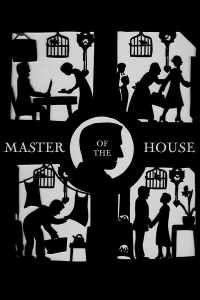 Master of the House, from 1925, was very ahead of its time, for a couple reasons. First, whereas the vast majority of silent films were, by nature, melodramatic pieces where actors had to convey what is going on by “hamming it up” to an extent, this film is much more subtle. A drama with a good amount of comedy in it too, it is about a man who mistreats his wife to the point that her mother whisks her away for a time to separate them. The man’s childhood nanny moves in to keep the house in the wife’s absence, and while there, she makes sure to let the man know what he has been doing all these years, and puts him in his place. Secondly, the film obviously focuses on women’s issues at home, years (decades?) before Hollywood started making movies about similar subjects. A funny yet very endearing film.
 Vampyr was Dreyer’s first sound film, in 1932. It follows a man, Allan Gray, as he arrives at a countryside inn at night. Upon checking in, he finds the place has some dark things going on. He is visited during the night by an old man who leaves a package with a note, “not to open until his death,” and then starts seeing shadows on the wall moving around. He follows the shadows to an old castle, where he sees an old woman, a person who we learn later is a vampire. He then ends up at a large manor, owned by his previous visitor, a household being brought down by the vampire. The film goes along, explaining the powers vampire hold over the living, and Allan Gray’s fight against them. A haunting movie, and probably pretty chilling when it came out, but on the surface, there isn’t a lot of substance there. More than anything, I think it is an allegory on life, death, and life after death, helped along by dream-like sequences. One such great one is Gray dreaming about his own death and burial, where he views the walk to the graveyard from inside his own casket, unable to move.
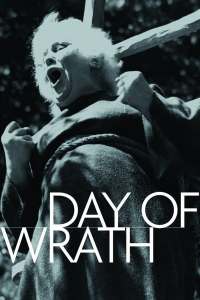 Day of Wrath was released in 1943 under Nazi occupation, in fact, Dreyer fled Denmark for Sweden upon its completion for fear that the political undertones of the film would land him in trouble. The film follows a small Danish village in the 17th century, at a time when women are being accused of witchcraft and burned at the stake. One such older woman, Marte, is so accused and she flees for help to Anne. Anne is the much younger wife to the town’s pastor, Absalon. Previously, and unbeknownst to Anne, her mother had been accused of witchcraft but Absalon spoke up for her, preventing her death and in so doing, getting her to agree to let him marry her daughter Anne. Marte knows this secret and tries to blackmail Absalon, but he does not give in. Before she burns, Marte curses Absalom and Anne. After that blows over, Anne starts to fall in love with Absalon’s son Martin, and, beginning to believe she has magic within her, she casts a spell to make him return her love. I was enthralled with this film from the opening scenes, really loved the high contrast filming showing the stark contrast in black and white, and watching Anne turn from sweet natured girl to evil villain was a blast.
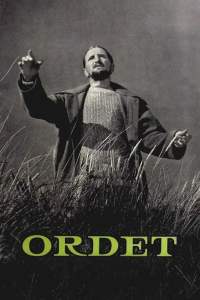 Ordet came 12 years later in 1955. This film follows a working class farm family in 1920’s Denmark, patriarch Morten and his 3 adult sons, Mikkel, Johannes, and Anders. Morten is a traditional God-fearing man but his kids all have little idiosyncrasies. Mikkel is agnostic (much to the chagrin of his wife Inger and Morten), Johannes seems to have lost his mind and believes his is Jesus Christ, and Anders has fallen in love with the daughter of the town tailor, who is also Christian, but of a different sect that does not approve of Morten’s beliefs (mostly stemming from an argument between their families years ago). The overarching theme of the film is faith, leading to an astounding climax which, while you see it coming, is no less profound when it happens. For much of the movie, this is a tough film to watch. There are a couple moments that grab your attention and hold it, but to say this film moves slow is like saying race cars go fast. This movie doesn’t move at a snail’s pace, it moves at a snail’s pace put in slow motion. The actors move ponderously across the stage, and their dialogue is full of long, drawn-out pauses. It will test the mightiest of patiences, but ultimately the film is rewarding for those that can make it to the end.
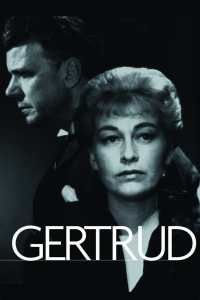 Gertrude was Dreyer’s last film, in 1964. If you think Ordet is slow, this one is downright sedated. The whole plot can be summed up thus: a married woman leaves her husband for a younger lover, who spurns her once he has her to himself, and she is then courted by a previous lover who wants to back with her. That really is the entirety of the 2 hour film, nothing else happens. I know a plot alone does not make up a film, and Gertrud does feature wonderful cinematography with long takes, but man is this a tough film to get through. The actors speak of love and emotion, but in a stone-faced, unemotional manner. They never look at each other’s eyes, but stare off into space as if they are reading lines, even as they address each other. Everything crawls by at an incredibly deliberate pace. Watching the film, I felt like I was at a museum looking at art, and taking my sweet ass time moving from piece to piece. Maybe I’m just not smart enough to enjoy a film like this.
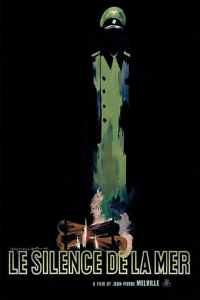 Le silence de la mer (“The Silence of the Sea”) was Melville’s first film, released in 1949. It is an anti-war film based on the underground book of the same name, which was popular among the French Resistance. It takes place in 1941, when a German officer is quartered in the home of an older French man and his adult niece. The officer is not a warmonger at all, and was a music composer before the war. Every evening the officer comes into the sitting room of his hosts, and talks of music, art, humanity, and his dream of France and Germany coming together and blending their wonderful history of culture into a great society. His talks are met with silence, the old man and woman never speak a word, and don’t even look at him. They cannot openly show their hatred for him and the Germans, so their only viable protest is total silence. The German’s expectations of a brighter future are shattered when he goes to meet with his fellow officers one day and their talk isn’t of unification, but of the total dominion over France and the crushing of her spirit. He returns to the family to bid them goodbye; since he cannot live without hope for a better future, he is transferring himself to the front lines. The film is choppy at times, and you can tell it was made by an inexperienced filmmaker, but all directors should hope for such a profound and wonderful first picture. There are wonderful moments of quiet tension, love, hope, and ultimately deflation, often with only sparse narration to guide the viewer. Beautiful film.
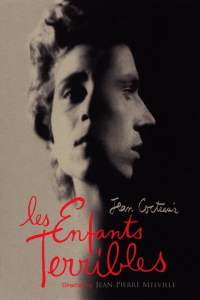 After renowned artist/playwright/poet/designer/everything Jean Cocteau saw Melville’s first film, he contacted him about doing a film version of his book Les enfants terribles. The film came out in 1950, and honestly, this was a tough one for me. The title means literally “the terrible children,” and these spoiled young adults are impossible to root for. Paul is a sickly young man who is cared for by his older sister Elisabeth. Elisabeth has an unhealthy amount of love for her brother, if you know what I mean. In juvenile fashion, she masks her adoration with scorn, and Elisabeth and Paul in return ridicule each other relentlessly. When Paul does fall in love with a girl, Elisabeth thwarts the relationship. I did like the climactic ending, but for most of the film, Elisabeth is such a terrible person that I couldn’t enjoy the movie at all. She goes through life only caring for herself. She marries for money, and doesn’t mourn her rich husband when he dies in a car accident, though she does spend a lot of time making sure her black veil is becoming on her in the mirror. Her and Paul hardly even mourn the death of their mother. Also unbalancing the film is the constant narration (provided by Cocteau himself) telling us what we are seeing on screen. A dud for me.
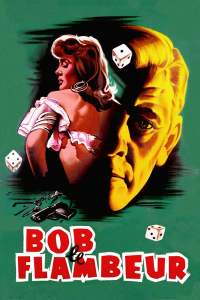 Melville saved some grace with Bob le flambeur (“Bob the gambler”). It’s a great French film noir piece and is often called a precursor to the French New Wave which was about to take the world by storm (this film was released in 1956, just a couple years before Truffault’s The 400 Blows and Godard’s Breathless). Bob is an aging, down-on-his-luck gambler who laments the current state of the mob, saying they are no better than swine. He hangs with other former hoods and even has a local cop he can call a friend, because he saved the cop’s life many years ago (or did he save his friend from doing life for killing a cop? Even the cop doesn’t know for sure). Bob is about to lose his last dollar when he hatches a plan to rob a casino on the day of the Grand Prix, when the safe is apt to have more than 800 million francs in it. Part gangster film, part Oceans 11 (a few years before there ever was an Oceans 11!), this is a fantastic film with grit, suspense, and yes, some humor too. Everything you want in a classic heist film.
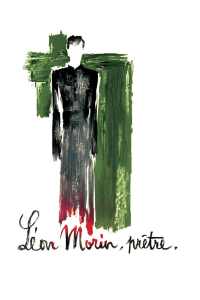 Léon Morin, Priest is one of those films where I choose to view it in a way the director did not intend, and because of that, I enjoyed it a lot more. Played by French New Wave icon Jean-Paul Belmondo, Morin is a young, good looking priest in a town in France during the occupation of World War II. Most of the men in the town are either off to war, in camps, or underground fighting for the resistance, leaving a lot of sexually deprived women at home. Barny (Emmanuelle Riva) is one such woman. She doesn’t believe in God but stumbles into church one day to goad a priest during confession. Morin doesn’t bite, but does invite her to his room in the evening. She goes to seduce him, but over the course of the film, she comes to know God and becomes very devout by the end. The viewer thinks at any time the priest will give in and the couple will have sex, but it never happens, though he does seem to enjoy lording his good looks over Barny and the other attractive young women he invites to his residence. Melville, himself a Jewish atheist, has said in interviews that he intended to show that Barny only converted to get laid, but I saw a film that showed a priest who never strayed from his faith, who brought a woman and her children to God, and while he did not have all the answers for the questions this new believer had for him, he did always direct to God and never wavered. A deeply religious film in my experience, even if Melville didn’t intend it so.
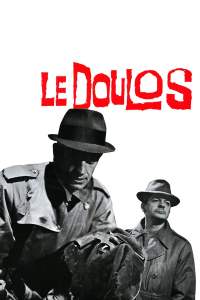 Le Doulos (literally “the hat,” but police slang for “informant”) again stars Jean-Paul Belmondo as Silien, a man whose two best friends are Maurice, a hood, and Salignari, a cop. Maurice is recently out of jail and is visiting an old crook friend of his, Gilbert, who is going over some jewels recently stolen. Though the 2 are friends, Gilbert had killed Maurice’s girl while he was in jail, so she wouldn’t talk to the cops, and in retaliation, Maurice kills him. So sets of a chain of events in glorious mobster fashion. There are double crosses, gun fights, robberies, and in the end, loyalty to your fellow crooks (as long as they haven’t wronged you). Really entertaining neo-noir, a genre that Melville would probably become most famous for in future films.
 Green Book was the heralded masterpiece of last year, winning the Oscar for best picture. It’s a very good movie, but I’m not sure it was the best of the year (I think the award should have gone to Roma). Starring Mahershala Ali and Vigo Mortensen, the film is based-on-the-true story of an Italian, “Tony Lip,” who is hired to drive a musician, “Doc” Shirley, on a tour through the deep south in 1962. Along the way they face racism of course, but also learn a lot from each other. Tony is a hardcore Italian immigrant (he knows and is recruited by the mob in New York), so in some people’s eyes in the south, he isn’t much better than the black man he is driving around. Doc is a cultured, learned man who shares little in common with the people of his color, especially where they are driving. The film features fantastic acting by both leads. Ali was worthy of his win for best supporting actor, but honestly Mortensen is absolutely tremendous (can you even remember a film he was in that you didn’t like?). I enjoyed the movie, but for me, it is one of those that I’ll watch once and probably won’t remember a few years from now. But with material like this, it is was destined to be the darling of the awards circuit.
 I followed up with a movie that received as many negative reviews as Green Book did positive, and once again, I have to disagree with the professionals on this one. Glass is fantastic as a fitting conclusion to the “superhero” trilogy of M Night Shyamalan. What began with Unbreakable nearly 20 years ago and continued later with Split in 2016 comes to an epic end. Elijah Prince (aka Mr Glass, played by Samuel L Jackson), Kevin Wendell Crumb (The Horde, James McAvoy), and David Dunn (The Overseer, Bruce Willis) are rounded up and put in a mental asylum to be evaluated by Dr Ellie Staple (Sarah Paulson). She is trying to convince them that they are not super humans, but their supposed strengths can all be explained by science. Mr Glass has other ideas though, and sees a chance for a final showdown between superhero The Overseer and supervillian The Horde, broadcast in front of millions on television. The film is not without flaws, some major plot points are telegraphed a bit too much, but the big climactic fight at the end, and the ultimate reveal (Shyamalan style) are just too good to miss. McAvoy is once again brilliant as the man with 24 distinct personalities living inside him. If you like comic book films and want something that feels more real than DC or Marvel, this is a really fun movie.
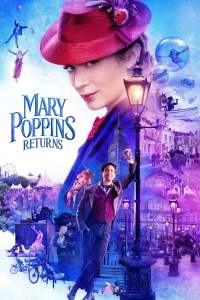 It’s not that I think Mary Poppins Returns is a bad movie, it’s just that Julie Andrews left such an iconic impression of the character on my mind forever that the new sequel starring Emily Blunt feels like a bunch of actors playing at make-believe as much as their characters in the movie. In the film, the Banks children, Michael and Jane, are all grown up and living in their same old house, a house that they are about to lose to the bank. Amid this conundrum, Mary Poppins does indeed return, to help Michael’s young children find a way to save the house, but first of course going on adventures to teach them life lessons. She is welcomed to London by Jack (Lin-Manuel Miranda), a former apprentice to Bert from the original film, who goes on their escapades with them. Unfortunately, so much of the film feels like pandering to both the audience, with too many blatant references to the original to try to tug at the heart-strings (which only serve to further remind you that Blunt, however talented, is no Andrews) and pandering to the actors themselves too. When in cartoon world, Miranda is given an opportunity to show off the rapping skills he displayed when he wrote and starred in Hamilton. When done, the cartoon penguin joyfully exclaims, “He did it!” Yes, yes he most certainly did. And so did the film’s creators, for better or worse.
 BlacKkKlansman was a heralded film for director Spike Lee, his first big hit in what seems like a very long time. Based on a true story, it is about the first African-American police officer in the Colorado Springs police department in the 1970’s. Ron Stallworth (John David Washington) wants to do more than work in the records department, and hatches a plan to infiltrate the local chapter of the Klu Klux Klan. He makes calls to the Klan as himself (and even mistakenly gives his real name!) but has fellow detective and veteran undercover agent Flip Zimmerman (excellent actor Adam Driver) fill in for him during the face-to-face meetings. Also going on locally, the black student union at Colorado College is making noise and bringing in renowned speakers to promote rights for black men and women across the country. The film has a timely voice, and it is amazing how much and how little has changed in the last 40 years. Ranging from satire to heavy, the film never loses its goal of showing the maniacal views of the bigots and white supremacists in our country, and while it should be taken very seriously, Lee also manages to infuse humor to make it a very enjoyable film with a message, much as he did with Do the Right Thing so many years ago. Lee was very upset that Green Book took home the Best Picture award over his own film, and while I still think Roma was the best, I have to admit I enjoyed BlacKkKlansman a whole lot more than Green Book.
 Capernaum is a heartbreaking Lebanese film about the plight of a poor child in Beirut and the kinds of things these people face every day in their lives. The film opens with Zain in a courtroom. Just 12 years old, he is serving 5 years for stabbing a man, but he is in court today because he is suing his parents “for having given birth to him.” The film then rewinds to see how he got here. Zain lives in a hovel with his parents and a multitude of siblings. His closest friend is his 11 year old sister Sahar. However, when his parents “sell” Sahar to the neighborhood store owner to be his wife, Zain loses it and runs away. He finds himself with a kind Ethiopian refugee and her baby son. She takes care of Zain as best she can, but she has no money either, and before long, she is arrested for deportation since she has no papers, leaving Zain to care for the baby. There’s one nice moment near the end of the film, but don’t expect a lot of happy endings here, but I can’t imagine life has many happy endings for young people like Zain. Capernaum was nominated for best foreign film at both the Oscars and the Césars, and won the Jury Price at Cannes.
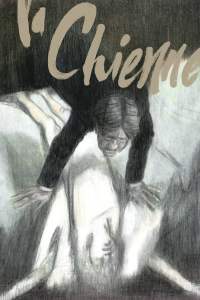 Jean Renoir is perhaps the most renowned French director of the early sound era, and today I’ll look at five of his films from the 1930’s. La Chienne (“The Bitch”) was his second sound film (the first, On purge bébé, was more of a proof of concept to show studios he could make a sound film on time and on budget. It’s a farce and is not very good…). An opening narrator says this movie is like a lot of movies, it has a “him,” a “her,” and “the other guy.” The “him” is Legrand, a smart man to whom life has given a boring job and a shrewish wife. The “her” is Lulu, a prostitute in love with her pimp, “the other guy,” Dede. Legrand falls in love with Lulu but fails to see the obvious, that she is playing him for money which she forfeits over to Dede. This goes on for awhile, until Legrand finds a way to leave his wife (her long-thought dead first husband appears, effectively nulling Legrand’s marriage to her). He expects to now have a life with Lulu, but she laughs in his face and admits to her duplicity. In a fit of rage, he kills her, but the murder is pinned on Dede, who gets the death penalty himself. The final scene flashes forward many years, to a homeless Legrand (and the first husband!) who obviously has lost everything. Before its release, the film got the kind of publicity you can’t buy. The actors who played Lulu and Dede really were involved, and Legrand really liked her, so much of the on-camera emotions was not made up. Unfortunately Dede used money from the film to buy a car, and wrecked it with Lulu inside, killing her, before the film came out.
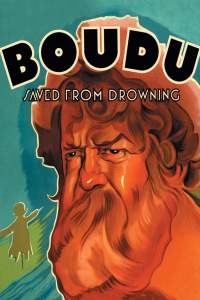 Boudu Saved From Drowning is a delightful film from 1932. It isn’t quite as polished ascetically as La Chienne, it has a much deeper element and is more thought-provoking. Boudu is a vagrant by choice, carefree and aimless. An early scene shows a family give him $5 as charity and he is bewildered, and in turn he gives it to a wealthy man because he doesn’t see a need for it. However, when Boudu loses his dog, he tries to kill himself by jumping in the river. He is rescued by a bourgeois man, Edouard Lestingois, who takes him into his family to teach him culture. Comedy ensues as Boudu tears up the house, with little regard for personal property or manners. Edouard continues to try to fit the square peg in the round hole, until Boudu finally goes to far and is kicked out of the house. Boudu takes it in stride though; he swaps his newly acquired fine suit with some rags from a scarecrow, and walks on down the road back to his preferred lifestyle. Obviously the question becomes, which drowning was Boudu most in danger from: the river, or a life society told him he needed to live? Very nice little film.
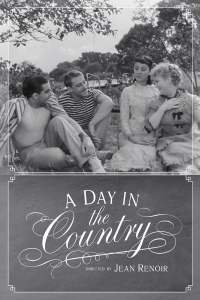 A couple years later, Renoir started a film named A Day in the Country. However, he left it unfinished when he was called away on another project, and it wasn’t until 1946 that his crew put some title cards in it to explain some missing sections, and released it. The film follows a single day when a working class family from Paris goes out to the countryside for a day of picnics and relaxation. The man of the house wants to show off his knowledge of fishing, but the women, his wife and daughter in particular, just want to relax. A local couple men take the women out boating and flirt with them, and years later, the daughter returns to the secluded grove and reminisces about “the best day of her life.” It was always meant to be a short feature, but I can’t help but feel at least some middle section of the film was left unfinished, and I felt sadness for missing out on how lovely this film could have been. The movie exudes yearning and love from every pore, showing the beautiful scenic river and young lovers languishing along its banks. Maybe I just wanted more than the 40 minutes it gave me.
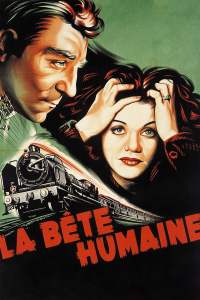 La Bête Humaine is as emotionally charged a film as you will find. It centers on a group of people living in the railroad industry. Lantier is a train engineer making daily runs between Paris and Le Havre. He’s a good enough guy, but worries that he is paying for the sins of his hard-drinking and hard-living father and grandfather, saying that that much sin in your past lives in your blood. The station manager in Le Havre is Roubaud, a man who is extremely jealous of his wife Séverine, whose beauty catches eyes wherever she goes. When Rouband finds out she’s previously been a mistress to a wealthy local man, Grandmorin, Roubaud kills him. Shortly thereafter, Lantier falls for Séverine, and in fear of her and his life, she tries to get him to kill her husband Roubaud. Lantier can’t go through with it, but when he is confronted by Séverine, the evil inside him comes out and he does kill her. Unable to live with his deeds, he jumps from the moving train the next day. The film is full of the life and the hustle-and-bustle of a busy train station, and moves at a frenetic pace. A very intense film with fine acting by Jean Gabin as Lantier (who had recently become famous for his role in Renoir’s first big hit,
 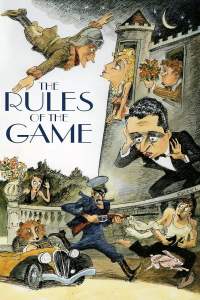 Renoir followed up in 1939 with The Rules of the Game, arguably his most famous picture today, though it was a colossal flop at the time. It features an ensemble cast trying to find love in 1930’s France. There are love triangles and quadrangles, full of couples where one person is deeply in love (or at least jealously possessive of) one person, while their lover is in love with someone else. Most of the action takes place during a week of hunting at a bourgeois estate, where couples are secreting off to kiss, and constantly ducking from husbands/wives/significant others. The films plays out as a comedy (such as the moment when one spurned husband is chasing his wife’s lover with a gun around the home, and the rich guests think it is part of the entertainment), but ultimately feels like a tragedy where no one ends up happy in the end. This dichotomy may be a reason why the film so spectacularly flamed out upon its release in France, or possibly also because it so blatantly pokes fun at a bourgeois society that made up the chunk of paying customers at the theater at the time. Looking back though, I think it clearly shows a time of uncertainty, a feeling of something lost, and a fear of what the future may bring, which fits perfectly in 1939 France. Most deserving of its hailing as one of the best films ever made. This was Renoir’s last film before leaving France for Hollywood, just before the country was invaded by Germany.
 Creed II doesn’t have any surprises. Anyone who has watched a couple Rocky movies knows exactly what is coming, but damn if it still isn’t incredibly thrilling. Adonis Creed (the fantastic Michael B Jordan) is the world heavyweight champion when he is challenged by Viktor Drago, son of Ivan Drago, the boxer who killed his father back in Rocky 4. Rocky thinks agreeing to the fight is a mistake and isn’t in Adonis’ corner when it goes down, and Adonis loses, badly. Adonis returns to Rocky with his tale between his legs, and Rocky takes him back in order to train for the rematch. Even with the lack of surprises, the film is well written and more exciting that you can imagine; it’s the type of movie where you’ll find yourself cheering aloud and yelling at the screen. Now the question becomes if they make a third film. The original Rocky and its sequel were great, but the series definitely took a bad turn on the third and only recovered because of Stalone’s tenacity in keeping it going through the torturous bad films.
 I didn’t see Kin in the theaters because of the bad reviews. I didn’t stream it online later for the same reason. I only watched it recently when it hit the cable circuit. And it is proof again that you can enjoy a movie even when everyone tells you that you shouldn’t. Kin is about a young teenager who finds a high-tech weapon, sort of like a pocket rocket launcher/laser cannon. Shortly after his hidden find, his adopted father’s hooligan son comes home and gets the old man killed from some people to whom he owes money. When those people come looking for the son, the two adoptive brothers go on the run together. Little do they know, they are also being chased by the people looking for the weapon. Really the only thing the film suffers from is poor writing, and the story is indeed very rough. But the acting is decent (if sometimes a bit over the top), the sci-fi scenes are extremely well done, and the action sequences are thrilling. Maybe I only liked it because I went it with very low expectations, but I did enjoy it.
 Vice lives up to its well earned reputation as a film featuring fantastic performances by all involved. While Christian Bale is in the lead as Dick Cheney, he is backed by Amy Adams, Steve Carrell, and Sam Rockwell as a bumbling George W Bush, and all are great. However, the movie so clearly has an agenda that it becomes tough to take seriously, even as a piece of entertainment. The movie follows Cheney’s life, starting at his early days in politics, but the film almost plays out like a Michael Moore documentary. And as such, I don’t think it does any good for the people that made it, many of whom attack Trump for bending truths and telling lies. Even as someone who didn’t vote for Bush or Trump, I have a problem with any party who tells flat out lies to attack the other party. Much of what the film shows as shady, behind-door deals Cheney and his cronies did over the years cannot be verified, but is presented here as fact. I have no doubt that Cheney is as crooked as depicted here, but I can’t enjoy this film as it was made.
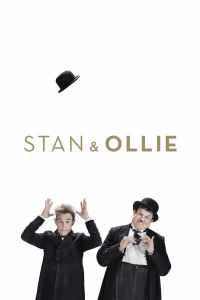 In the really good historical films, the actor disappears and you forget that this isn’t the real person in front of you, but an actor portraying them. In Stan & Ollie, Steve Coogan and John C Reilly become Stan Laurel and Oliver Hardy right before your eyes. In fact, they look and feel more like Laurel & Hardy than Coogan & Reilly. The film starts with a scene in 1937 where Laurel is leaving the film studio where the duo has worked, in search of more power over the films they make, but Hardy is still under contract, and makes a final film with someone else. The movie then jumps ahead to 1953. Laurel and Hardy are attempting a comeback, first doing a tour of small theaters in front of empty seats, but with the hope of securing backing for a new movie. Over the course of the film, they find renewed popularity, while at the same time we are treated to an exploration of a pair of comedic geniuses who have lived with a lot of buried animosity from all their years together. A beautiful film about a pair of comedy’s all-time greats, but just as important, one of its all time greatest friendships.
 Jonathan is a drama with a sci-fi twist. Brothers Jon and Jonathan are two very different people. Jonathan is a type A personality, very structured, whereas Jon is more laid back and go-with-the-flow. What makes this film unique is Jon and Jonathan share a body. Jonathan controls the body from 7am until 7pm, when Jon takes over. Each has a job, and they’ve grown to adulthood by following very simple rules (such as no girlfriends) and leaving each other video messages to let each other know who they ran into and what is going on with each other’s life. However, it becomes messy when Jon falls in love and Jonathan only finds out when he hires a private investigator to track him. When Jonathan tells Jon he must break up with her, Jon does so, but then stops leaving messages for Jonathan. Jonathan goes weeks not knowing what his brother is doing with their shared body at night, and in the meantime, Jonathan starts falling for Jon’s ex-girlfriend too. When Jon finds out, he starts sinking into depression. A very interesting film for a lot of reasons, and sometimes very tense. Since we only see the film through Jonathan’s eyes, we don’t know what Jon is doing, and that creates quite a bit of suspension. I really enjoyed this one, great film, and great acting by Ansel Elgort in the lead as a split person.
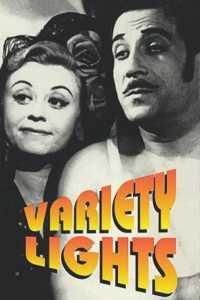 Federico Fellini began his career in the 40’s as a screenwriter and received attention for a couple screenplays written for Roberto Rossellini. It was in the 50’s though that he started writing and directing his own films, so today I’ll look at 5 films from his first decade in the business. In 1950, Fellini launched what would be a prolific and acclaimed career with his directorial debut, Variety Lights (co-directed with Alberto Lattuada). Not as polished as movies that would come later, it is still a nice little tale. The manager of a traveling variety show, Checco, becomes smitten by a local girl, Lily, who dreams of being a star. He puts her in his show despite protests by other actors there, and builds a new show around her as her popularity (due to her good looks) grows in each city. The viewer quickly catches on that Lily will do anything to advance her own career, so it is no surprise when she dumps Checco at a very inopportune time, though he obviously doesn’t see it coming. Not a deep film, nor necessarily a great one, but there are nice moments, and the film is more grounded in realism that some of his more fantastical movies that would come later, though is obviously still focuses on desire, something Fellini would often make a focal point of his movies.
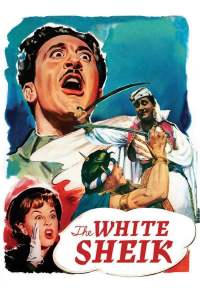 I haven’t seen some of Fellini’s later, more famous films yet, but out of these first few, The White Sheik is my favorite, though from what I understand, it is one of his lesser known pieces. A tremendously funny movie (I was laughing out loud by the end) but also emotionally endearing, it is a true masterpiece. It follows two newlyweds, Ivan and Wanda, who come to Rome to visit his upper class family. Wanda though is there secretly to meet one of her idols, a character in a photo strip series named Fernando, “the white sheik.” She secrets away to meet him, but this quick trip turns into an all day affair, and Ivan has to stall on his family, not knowing where Wanda ran off to, and starting to fear the worst, that she has suddenly left him. Of course in the end, Fernando is nothing like his character, and a let-down Wanda returns to Ivan with her tail between her legs. I laughed and nearly cried, just a great film.
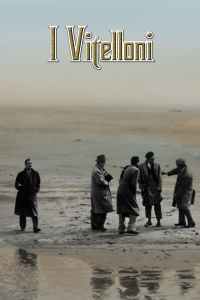 I Vitelloni from 1953 is a funny drama following a quintet of adult friends. They lead aimless lives but dream about getting out of their small town, though no one does anything to achieve their goals, much less get a job to support themselves. One friend impregnates another friend’s sister, marries her and gets a job to support her, but his wandering eye continues to stray. A third friend dreams of writing plays for the big stars of the stage and screen, but when he meets one of his heroes, the actor doesn’t meet his expectations. Just when you think that nothing will ever change for our characters, one (the silent one throughout) boards a train at the end and heads out of town, with nary a word to anyone. Funny and endearing, it has all the aspects of a great Fellini film, including plenty of heart. Even if you don’t typically like foreign films, or if you think they are often too “artsy,” this is one most people can enjoy.
 The first Oscar for the Foreign Language film category was awarded in 1956, and the answer to the trivia question of what film won the award for the first time is Fellini’s La Strada (“The Road”). It is a beautiful film about a traveling one-man show who takes on a girl as an assistant. Zampano travels town to town performing feats of strength. He’s a bit of a lady’s man, but when his last girl leaves him, he offers a local family 10,000 lire for their oldest daughter, to which the poor, tearful family accepts. Zampano isn’t kind to Gelsomina, calling her ugly and beating her when she doesn’t obey him correctly, and she longs to leave, but she has no where to go. Eventually the duo stumble upon a traveling circus that Zampano used to work for, and an acrobat named simply The Fool to whom he has a long-running beef. This confrontation leads to a dire situation for our leads. From early in the film, Gelsomina captures the audience with her big doe eyes, her naivete, and her adorable, shy nature, and while we should hate Zampano, I found myself hoping that he would change his ways. Whether he does or not before it is too late is up the viewer’s interpretation of what you consider “too late.” A ton of heart, a load of comedy, this is a film that anyone can enjoy, even if you don’t usually watch foreign films. Incidentally, because it was common practice at the time in Italy to film with no sound and add the dialogue later, the film was shown for a long time in America using only the English soundtrack, which seemed to help its popularly here since its two leading males were recognizable American actors (Anthony Quinn as Zampano, Richard Basehart as The Fool).
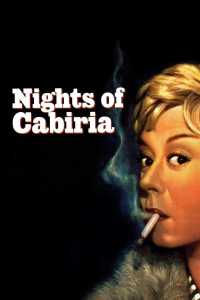 Fellini followed up his Oscar win in 1956 with another the next year, this one for Nights of Cabiria. I think I liked La Strada better, but this one is definitely a more nuanced film, and shows off the same actress using more of her skills, Giulietta Masina (Fellini’s real life wife, and she won Best Actress at Cannes this year for her role here). Cabiria is a prostitute searching for real love in all the wrong places. The opening scene sees her robbed and thrown in a river by her supposed boyfriend. She spends the rest of film identifying different Johns as possible mates, but nothing ever seems to go her way. Finally a real love falls into her lap and she has to admit, albeit grudgingly, that she may actually be happy. She sells everything she owns and they plan to marry, but on a walk by a lake, she realizes the scary familiarity of the scene, and that he is going to try to kill her for all her money. The man chickens out of killing her, but does take everything, leaving her completely broke with nothing to fall back on. Cabiria walks slowly down a street alone, crying, but when a young group of paraders stroll down, singing and dancing, she looks into the camera and cracks a smile. The viewer has to believe, with her, that things will be ok. Honestly for parts of the film I was a bit bored, but the tragic (and maybe uplifting?) ending saved it for me. Have to say, my initial foray into Fellini’s filmography has been a great joy, he may go down as one of my favorites. What can I say, I enjoy a good emotional film.