Quick takes on 5 films

Bull is the kind of low budget, indie art film that critics eat up. It stars newcomer Amber Havard as Kris, a 14-year-old girl in a poor neighborhood, facing the kinds of problems that many such kids do. Her mom’s in jail, so she and her sister are living with their grandma. Kris looks to be following in her mom’s footsteps; she’s getting in trouble, hanging with the rough crowd, etc. Her latest indiscretion is breaking into her neighbor’s house and throwing a big party when he’s away for the weekend. She gets lucky though, because when he returns, he decides to put her to work around the house rather than press charges. The neighbor is Abe (Rob Morgan, who’s been in plenty of things but which I recognize most recently as Turk from the Netflix Marvel shows). Abe is a former bull rider who is still working in the business, and through his work ethic and unflinching way of not letting this hard life beat him down, Kris starts to see a better way to live. I found Havard’s acting a bit wooden, which can be expected for young first-timers, but Morgan is perfect in this film. It is a quiet, contemplative film, sometimes a little too direct where a softer touch may have left a more lasting impression, but a solid picture for indie lovers. ★★★½

Fans of Guy Ritchie’s earlier crime films will find plenty to like in his latest, The Gentlemen. Featuring an all-star cast including Matthew McConaughey, Charlie Hunnam, Hugh Grant, Colin Farrell, and Henry Golding, it is about a long-time crook, Michael Pearson (McConaughey) who wants to sell his lucrative weed-growing business in the UK and retire. Of course, selling a 400 million dollar business isn’t easy even when it is legal, and thus the film plays out. Full of crass language, double-crosses, bloody and violent clashes, and just the right amount of laugh-out-loud moments, it is a crime action film that has plenty to like. The characters are over the top, and there are perhaps a few too-many “gotcha” moments in the final third, but damn if it isn’t a whole lot of fun. ★★★★
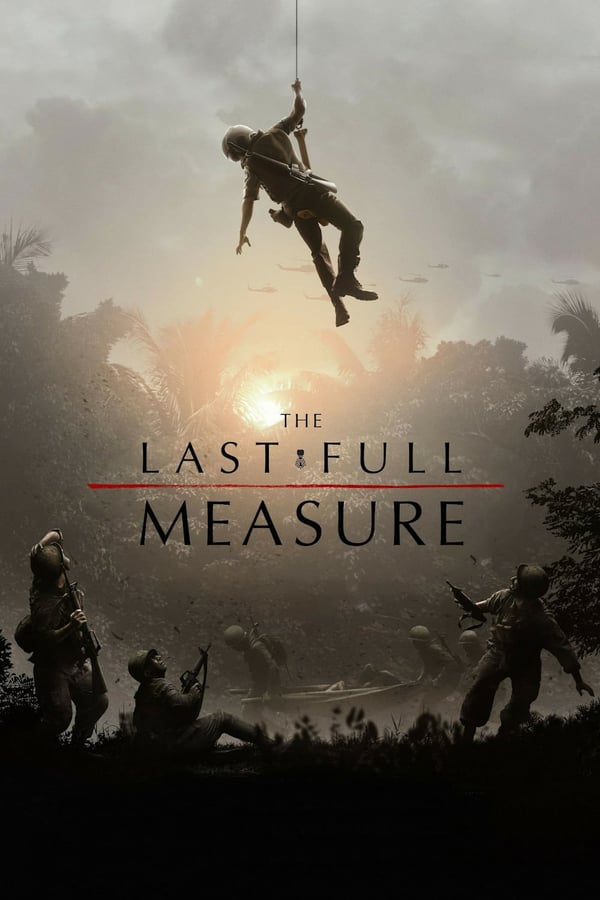
The Last Full Measure is based on a true story, and tells the tale of William Pitsenbarger. He was a Vietnam War hero who left a med evac chopper during a fierce battle to help wounded soldiers on the ground get out safely. Ultimately, he saved over 60 men before he himself died. 30+ years later, William’s family and fellow soldiers are trying to get him posthumously awarded the medal of honor. Told in flashback to that battle in 1966 as well as the current day with a politician digging into the details surrounding that fight, the film is heavy on facts but light on drama. Despite a fantastic cast (Samuel L Jackson, William Hurt, Ed Harris, Christopher Plummer, Peter Fonda, and Sebastian Stan, “the Winter Soldier” from Marvel), this film is rough to watch. It has all the great elements of a bad movie: choppy editing, dialogue that jumps around too much, and a disjointed story. Hokey writing doesn’t help. And those great actors are giving some of the worst performances I remember seeing, which I can only chalk up to bad directing. The real story of Pitsenbarger deserves better than this. ★
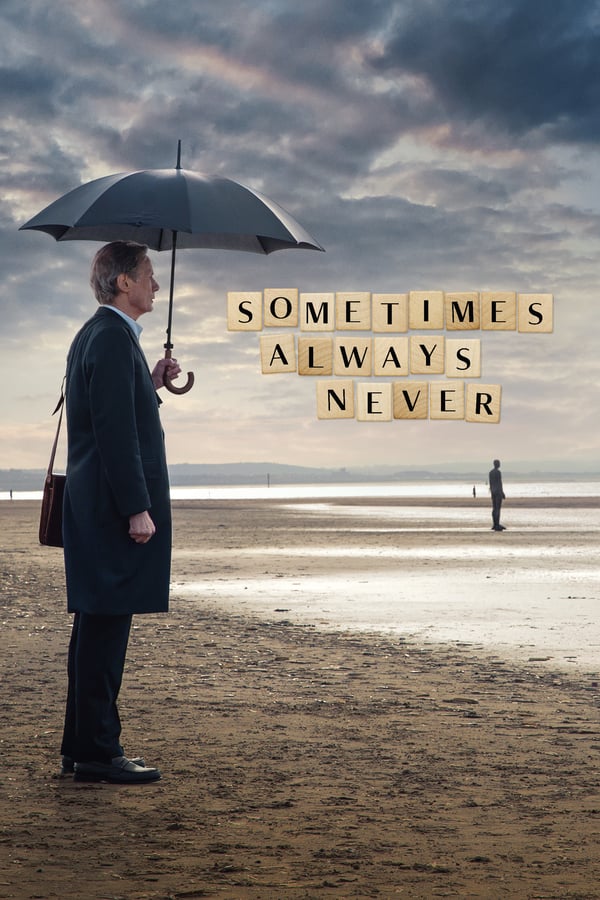
Sometimes Always Never is an off-beat comedy with some heart thrown in, from director Carl Hunter. The film is about Alan on a search for long-lost son Michael, who left the family years before after a quarrel during a game of Scrabble. Second son Peter joins Alan in the beginning of the film as they go to identify a body which has lately washed up on shore, hoping it isn’t Michael (it isn’t). A scrabble enthusiast, Alan knows the dictionary inside and out, and he puts his vocabulary to use throughout the film in entertaining, verbose fashion, to the delight of his grandson (Peter’s son) but to the ire of Peter, who always felt he played second fiddle to Michael, the prodigal son. While Alan’s search for Michael initially seems to be the main plot element, we realize before too long that the film is mostly about healing, with Peter trying to come to grips with how Alan raised the boys after the death of their mother, and Alan needing to open up walls that have been closed for too long. The bright vivid colors and eccentric humor will hearken to a Wes Anderson film, but while the writing isn’t as good, Bill Nighy’s spot-on performance as Alan is well worth a viewing. E-N-T-E-R-T-A-I-N-I-N-G, 13 points. ★★★½

Saint Frances is one of the best new films I’ve seen in awhile. It is about Bridget, whose life hasn’t turned out exactly the way she’d planned. The tone of the film is set when she’s at a party talking to a guy. He’s talking about the path his life is taking and she admits she’s only a server at a restaurant. He says, “Well, you’re still in your 20’s, you’ll figure it out,” and she replies, “I’m 34.” Embarrassed, he can only say, “Well, you look really good.” Bridget gets an opportunity to nanny for the summer, for a gay couple getting ready to have their second child. Bridget will be looking after their first child, Franny, a very smart, well-brought-up child who is also, like a lot of kids, very willful. At the same time, Bridget has a one night stand with a young 26 year old guy, starts a semi-regular relationship with him, and ends up pregnant. Deciding to abort because that’s the last thing she needs right now, the films deals with this and its fallout, as well as a whole bunch of other things that this crazy mixed up world throws at us. One of Franny’s moms, the birther, is dealing with postpartum depression, and of course there’s the whole being gay with a family and how others react to that. It would be easy for this film to either feel really heavy, or for the comedy to come off as glib, but neither comes true. It is funny without poking fun, it is endearing without being sappy. Outstanding writing by newcomer Kelly O’Sullivan, who also portrayed Bridget, this is a film for today. You’ll laugh and be moved, and maybe even come to learn a few things. ★★★★★

Quick takes on 5 Carol Reed films

Night Train to Munich is, after a couple early surprises, a very straight forward war/spy thriller, with a whole lot of comedy thrown in. In 1939 as Germany is invading Czechoslovakia, a Czech scientist makes his escape to Britain, but his adult daughter, Anna, isn’t so lucky. The Germans want to use her to get to her dad, but she of course doesn’t cooperate. Thankfully she finds a friend in a fellow prisoner named Karl, who helps her escape from the concentration camp. If it sounds too good to be true, it is, as Karl is a German spy trying to get Anna’s dad out of hiding. As soon as Karl has his target in hand, he secrets them all to Berlin. Their savior is Dickie Randall, a British spy who decides to take a page out of Karl’s book and impersonate a German officer. He boards the train to Munich with hopes to rescue Anna and her father before the other Germans find out he’s not who he says he is. Lots of laughs to keep the tension from getting too heavy, poking especially at Nazi Germany. It was written in 1939 and released in 1940, before Britain had suffered much in the war and Hitler’s atrocities were widely known, otherwise the jokes may not have been so well received. Overall I enjoyed the movie while I was watching it, but I believe ultimately it’s not going to be a very memorable picture for me. After those very early surprises about Karl, the film is very paint-by-numbers with no real surprises. I’d probably watch it again, because it is entertaining, but it isn’t genre defining or anything. ★★★

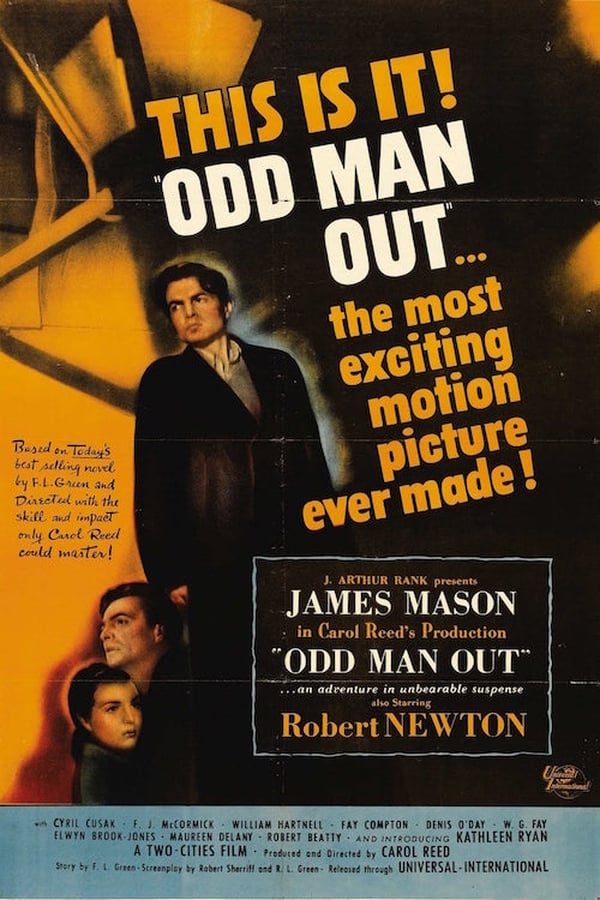
Odd Man Out takes place in the late 1940s and focuses on the IRA in Belfast, though, for whatever reason, the words “Belfast” and “IRA” are never used (though director Reed does condemn “illegal” groups in the opening intertitles). Johnny McQueen has just escaped from prison and is already planning another heist with his fellow conspirators. They’re going to rob a profitable business and use the money to fund the organization. However, during the getaway, Johnny struggles with a man and kills him, and is himself shot in the arm. He isn’t able to make it safely to the getaway car and is left to roam the streets. The majority of the film takes place on this long night, as Johnny attempts to make it the couple miles to his safe house, as the police tighten their circle around him. The Irish residents in the area run the gamut of clandestinely rooting for Johnny to make it, to apathy to his cause as long as they aren’t involved, to openly trying to help the police locate him. Reed tries to make us root for Johnny too; perhaps to ease past Hollywood code at the time, they really play up Johnny’s guilt at having killed a man, and his own doubts about the violence of the IRA. There are plenty of tense moments and a surprisingly shocking ending, but honestly there were some long stretches in the middle where Johnny disappeared from the camera for awhile and other various characters decided what they were going to do with him. I think a lot of trim could have been cut to make it closer to 90 minutes instead of 120, and it would be a tighter film, but who am I to argue with a celebrated director. ★★★½

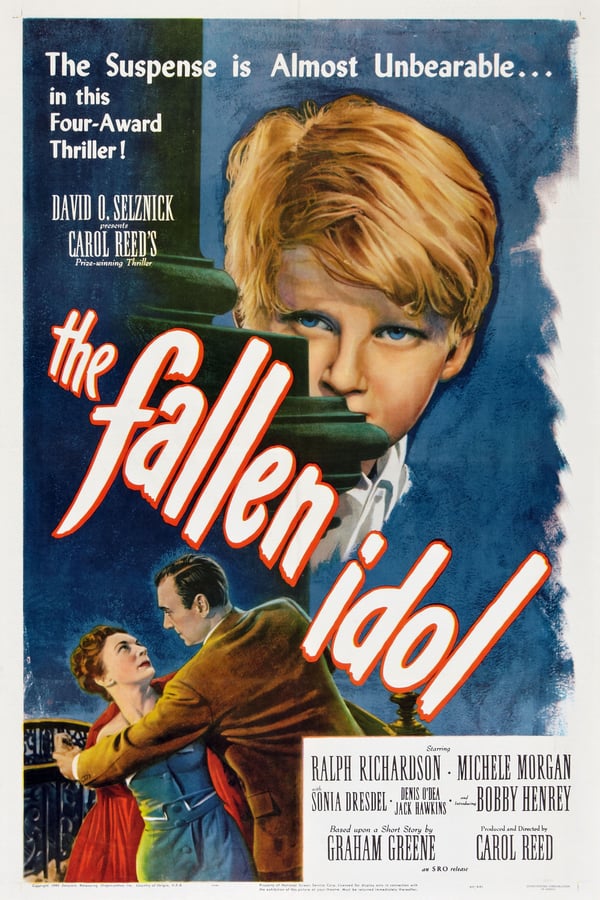
The Fallen Idol is told almost entirely through the eyes of Philippe, the young son of a French ambassador, who idolizes the English butler in the embassy, Baines. Baines’ wife is a bit of a shrew, and Baines has a younger girlfriend on the side, who Baines introduces to Phil as his niece when caught with her at a store. Mrs Baines weasels the info out of Phil, and sets a trap to catch her husband in the act by pretending to leave the embassy for the day. When she returns and catches Baines with his young girlfriend, they have an argument. Baines turns to leave, and his wife climbs a window to try to get a peek at her competition, and falls to her death. Phil didn’t see it happen, and suspects that Baines killed his wife. He makes a couple offhand comments that the police overhear, making Baines an immediate suspect, and he doesn’t help his cause when he lies to the police to hide the fact that his girlfriend was there as well. Very fun and gripping film, but may I again talk about how much I hate child actors? For every good performance you get, you have to watch 10 that are God awful. I wanted to reach through the screen and slap Phil myself. He’s a big distraction, especially in the final 5 minutes, where you can see him grating on the real actors on screen, no matter how much they and their characters try to ignore him. ★★★½

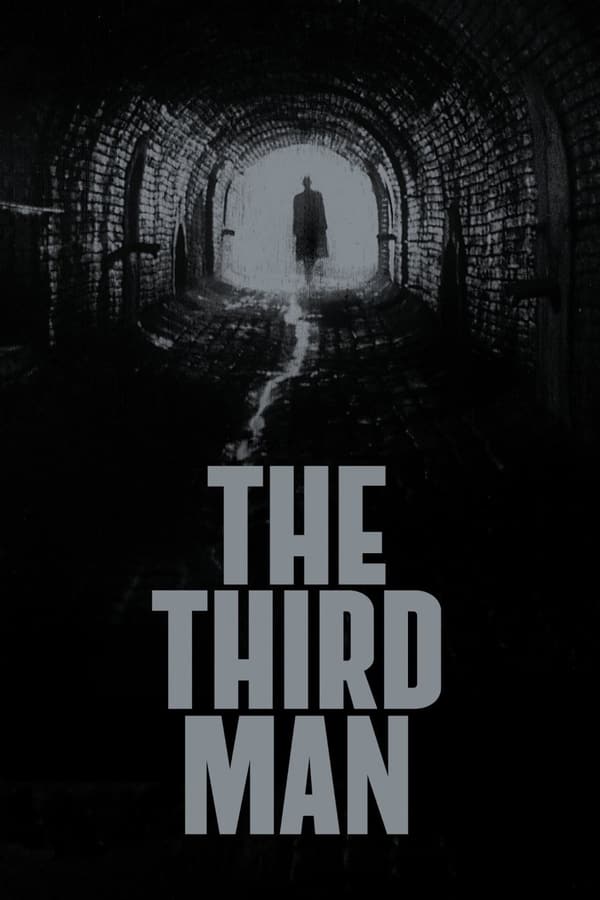
This next movie is the reason I wanted to watch some Carol Reed films. The Third Man is a highly acclaimed film, widely regarded as one of the best British films ever made. I love it when they are worthy of their praise. This film is fantastic, full of beautiful, rich noir imagery and a soundtrack, a very un-noir-like zither accompaniment, which may seem off-putting at first but which comes together brilliantly in the end. Martins is an American new to Vienna. He’s come because his long-time friend Harry has promised a job, but when he arrives, he discovers Harry has just died under very suspicious circumstances. In this post-World War II environment, Vienna is jointly ruled by Russians, Americans, British, and French, so there’s a lot of bureaucracy to sift through, but Martins is able to piece together that Harry was hit by a car, and some people say 2 people moved his body from the street, while others hint that there was a third person who helped. Heightening Martins’ suspicions, some say he died instantly, while other reports say he lived long enough to give some instructions. Involved somehow is Harry’s local girlfriend, and the British police suspect that Harry was into some nefarious plots that got him killed. The big reveal with about 30 minutes to go is fantastic, and well worth staying away from spoilers. The detailed environment of a city just removed from devastating war, with crumbled buildings not yet rebuilt, and various governments fighting over the scraps, adds to the ambiance of the experience. Go in blind, sit back in a dark room, and enjoy movie making at its finest. ★★★★★

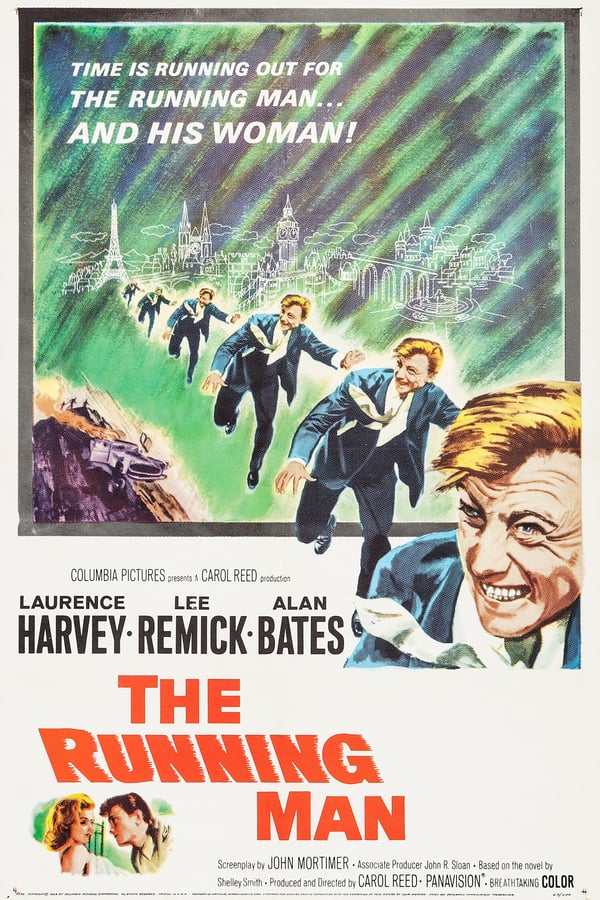
The Running Man (no, not Arnold’s Running Man) came much later, in 1963. In it, Rex has faked his own death to get a big insurance settlement, and he and his wife Stella plan on running off with the money. Stella has had her doubts from the beginning, but she’s gone along with it, and puts on just a good enough show when the insurance agent, Stephen, stops by for a check-in. Rex goes off to Spain, and shortly after, Stella joins him. They think they are in the clear, and just as Rex starts to think he’ll pull the same trick again with a new name, Stephen shows up in Spain. Supposedly on vacation, Stephen immediately earns the suspicions of Rex and Stella, who thing the jig is up. They continue the local ruse they’ve set up, that Rex is a rich sheep farmer from Australia, but they don’t think they’re fooling anybody. Gets a little hokey in the end, where it pulls out all the clichés of 60s film, but it didn’t ruin the experience for me. It doesn’t have the depth of The Third Man, but it is still an entertaining movie, and filmed very well in widescreen with popping colors and gorgeous scenery. ★★★

Quick takes on 5 Satyajit Ray films

Almost as soon as I started getting into art house and foreign independent films a couple years ago, I started hearing the name Satyajit Ray. An Indian film director, his work is highly regarded as some of the best films ever made, and not just from India. I’m just now sitting down to 5 of his earliest films, and I have to say, I don’t know why I waited this long.

Pather Panchali (Song of the Little Road) was Ray’s first picture in 1955. Made on a minuscule budget with non-professional actors (and even many first-timers in the film crew!), it follows a Bengali family. They are the poorest of the families in their small, rural community. Father Harihar doesn’t have a trade; he always wanted to be a priest, but he struggles to earn a living as one in such a small community, so he takes odd jobs to help the family scrape by. With him away often looking for work, the matriarch, Sarbajaya, runs the house, looking after their kids, Durga and Apu, and butting heads with the town’s old woman, “auntie,” who is homeless but allowed to stay with them. There’s a loose story about Durga and Apu growing up in this small community with its traditions, while the greater world around them chugs along to the future (Apu doesn’t know what power lines are when he strays further from home, and is amazed by the train when it goes through), but the film is best viewed as a glimpse in the life of struggling family. I’m not always a fan of realism in films (most non-professional actors make me cringe), but here, it works to perfection. The actors are more than good, they are great, and Ray’s directorial hand has patience and an eye for stretching moments to beautiful perfection. The local Indian music blends wonderfully too and brings the viewer into the film. I can’t believe this film was made in 1955, except for being in black and white, it feels like a brand new art film that would be a hit if it came out today. ★★★★★

Aparajito (The Unvanquished) was not a planned sequel, but after the success of his first film, Ray felt pressure to continue the story of the family. **Since this is a sequel, SPOILERS ahead for the ending of the previous picture.** With the death of Durga, the family decides to move to a big city, Varanasi, where the father can finally find enough work as a priest. He does start earning better wages, but the family is still poor, and they can’t seem to get ahead. After a couple years, Harihar becomes ill and dies, forcing Sarbajaya to decide to take Apu back to a rural community. Her dream is for Apu to become a priest like his father, but Apu is still intrigued by science, education, and the greater world out there. He convinces his mom to let him enroll in a local school, and several years later, he is ready to go to college, having earned good enough grades for a scholarship. Against his mother’s best laid plans, Abu does indeed head off to Calcutta, where his studies continue. When he does return home to visit Sarbajaya, he is bored and can’t wait to get back to the bustling city. I can go into the fantastic symbolism of rural life and traditional Indian values/religion, vs the exciting futurism that Calcutta offers, but to get into that too much would spoil the ending. I generally like Pather Panchali more, as this second picture was more straight forward and less esoteric, but I still loved the course Apu has set out for himself, and can’t wait to see where the final film takes him. ★★★½

A couple years passed since the previous picture, and in between Ray made a film titled The Music Room (reviewed below) which cemented him as an international star. In 1959 he returned to Apu to complete the trilogy with Apur Sansar (The World of Apu). Apu has graduated from college, but can’t pursue an advanced degree due to lack of funds. Still poor, he rents a room in a rundown building and makes a few dollars tutoring, while working on an autobiographical novel, which by all accounts shows a lot of promise. A former college friend invites him to a wedding as his +1, and the day will change Apu’s life. It turns out the groom in this arranged marriage has a mental disorder, and the superstitious family of the bride is sure that if she isn’t married today, at the appointed auspicious hour, she will never be married. Apu is roped into being the savior and marrying the young bride for her and her family’s honor. Aparna is from a wealthy family, and when she gets back to Apu’s little rented room and sees the poor conditions, she has her private cry, but then embraces her new life, and Apu as her husband. Things are finally looking up for Apu, as he and Aparna fall in love with each other over time, but another tragedy strikes to upset the balance. Apu must face himself in the mirror and decide what kind of man he will be, and by the end, we’ve come full circle on the life he started in the first picture. It’s a fitting and beautiful ending to this trilogy, and a delectable beginning to Ray’s directorial career. ★★★★½

Jalsaghar (The Music Room) follows an old zamindar (wealthy landlord aristocrat) named Biswanbhar Roy as he watches his way of life crumble around him, both figuratively and literally. His land holdings have dwindled over his lifetime, with both poor decisions and the government breaking things up, leaving him in debt, with little more to trade on than his reputation. Roy is particularly perturbed by his neighbor, Mahim Ganguly, who is “new money.” Mahim is throwing lavish parties, the likes of which Roy used to, and Roy continues to try to match him in both extravagance and appeal, selling off furniture and family jewels to hire out the best musicians and entertainers. The focal point in Roy’s house is the music room, an ornate hall where his parties would take place. It’s a rich and multi-layered film which you can glean a lot from in multiple viewings. It lends itself to us wanting to like Roy, despite his ugly competitiveness with Mahim which costs him everything by the end. Mahim on the other hand is genuinely nice to Roy, but he is also depicted as uncouth, not always being respectful to the performers at the parties. Both men throw the parties to show off to their neighbors, but obviously for different reasons. Ray used this picture to bring dancing and musical numbers into his films, something the Apu trilogy was lacking, and which brought him criticism in his own country. Musical numbers were at the time a regular part of India’s films, though even here, he wasn’t able to satisfy the critics. The music was usually an interlude to break up the film, and Ray instead incorporated the music into the picture, making it part of the story. Whatever his contemporary native land critics thought, The Music Room would go on to become an international hit, and it is a perfect film. ★★★★★
Mahanagar (The Big City) brought Ray out of the 1920’s and was his first film set in modern times (released in 1963, but taking place in the mid-50s). The Mazumdar family is struggling to make ends meet. Subrata is a banker at a time when banks are failing around Calcutta, and he and his wife Arati and son are living in a tiny apartment with his aging parents and his sister. He begins considering getting a second job when Arati decides to get a job herself. The thought of a woman working sends the house into a tizzy. Subrata reluctantly agrees, but his father is vehemently against it, and even stops talking to his son and daughter-in-law. Arati becomes a door-to-door salesman, and is very good at it. In addition to her salary, she makes a great commission which is able to buy gifts for everyone in the family (though the old man refuses his). Racked with the guilt of seeing his wife work, Subrata decides to get that second job, but instead, his bank becomes a casualty of the times and Arati becomes the sole breadwinner for the entire household. The film deals with gender equality, but also race issues/relations, with a coworker of Arati being an Anglo-Indian named Edith, a race of people left over in India from from when they were under British control, and who were often not accepted by neither the English nor the Indian. The ending of the film is a bit sentimental, but on the whole it is a great film, with outstanding performances by the entire cast, and eye-opening themes which Ray brought together to great effect. ★★★★½

Finally, a quick, short film titled Kapurush (The Coward), from 1965. It’s a cool companion piece to The Big City, as it too has a modern setting, and is (quietly) about a strong woman as well. Amitabha (Soumitra Chatterjee, the adult Apu from The World of Apu) is traveling when his car breaks down outside a little town. An older gentleman, Bimal (Haradhan Bandopadhyay, Arati’s boss in The Big City) offers to put him up in his house for the night. A grateful Amitabha accepts, but when they arrive to the house, he is dismayed to find Bimal’s much younger wife is his own ex-girlfriend. Karuna (Madhabi Mukherjee, the charming Arati from The Big City) had a falling out with Amitabha a few years previous, and the story of their relationship unfolds for the viewer in heartrending fashion. Reunited now, Amitabha begs Karuna to come away with him, not understanding how she can be in love with the older Bimal. But Karuna is coy, deflecting her true feelings, and not giving Amitabha the satisfaction of knowing what is going on in her head. The film is only about an hour, but it is a wonderful little piece with truly amazing performances from actors who would go on to be considered some of India’s greatest of all time. I think it is safe to say, after watching these movies, Satyajit Ray has become one of my favorites, and I look forward to seeing more of his stuff in the future. ★★★★

Quick takes on 5 films

Palm Springs is another take on the Groundhog Day concept of living the same day over and over again. This time, Nyles (Andy Samberg) is the co-main character, and the day is a wedding, where Nyles’ girlfriend is a bridesmaid. The film starts where Nyles has already lived this day countless times, but it isn’t long into the film before he pulls someone else into his loop. Sarah (Cristin Milioti) is the sister of the bride, and whereas Nyles has long-ago accepted his existence, Sarah is bent on finding a way out. This romantic comedy is completely predictable, yet still wonderfully charming. It’s the first leading role that I’ve seen from Milioti, and she is fantastic in a very nuanced role. Samberg is his usual goofy self, but he does show a little more depth, the likes of which I haven’t seen from him since Celeste and Jesse Forever. I laughed a bunch but was also moved, and what more could you ask from a rom-com? ★★★½

Greyhound is the latest big-screen casualty of the pandemic, having been gobbled up by Apple’s streaming service when theater going became impossible. Based on a 1955 book with a screenplay written by Tom Hanks, who stars in the leading role, it is about the voyages across the dangerous North Atlantic in the early days of World War II. The ships are carrying troops and supplies, and they are dogged much of the way by German u-boats. There is a 40 hour stretch between the USA and England where the ships do not have the safety of air support, and the fleet of 30-something boats rely entirely on 5 battleships, under the command of Commander Ernest Krause. Krause is a religious man who is plagued by self doubt, always trying to make the right decision to keep those on his ship and on the others safe. They are able to sink a u-boat early on in the 40 hours, and you think they might just pull this trip off safely, when sonar lights up with 6 more u-boats in the area. As Krause and his men dig in for a long night and day, their luck eventually runs out. It’s a tense film with some nail-biting action scenes, and any red blooded American will shout for joy when the enemy ships are hit, but, surprisingly for a Hanks picture, the character development is awfully shallow. Instead, it leans heavily on the compact sequences, which are thankfully good enough to still create a very rousing picture. ★★★★

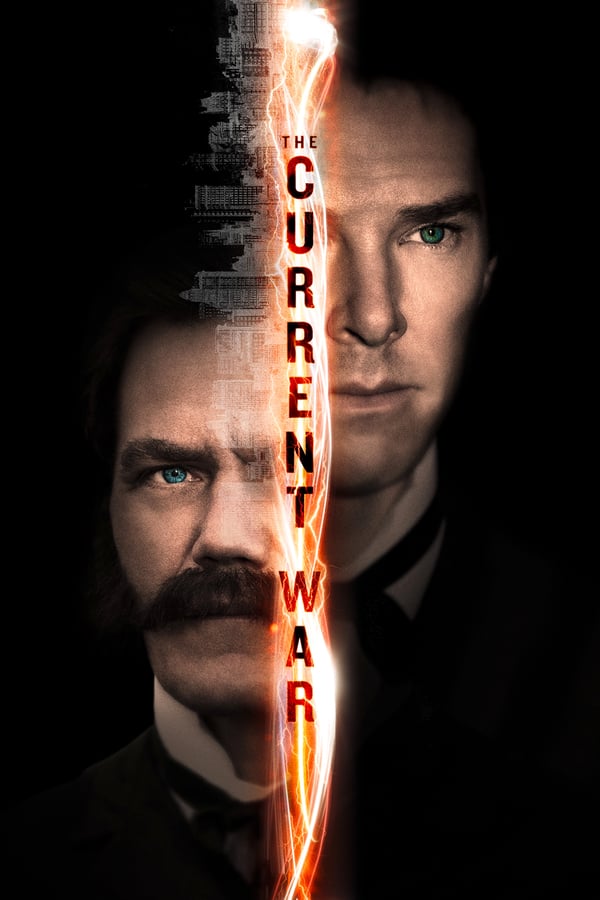
The Current War is a movie with a whole lot of wasted talent. Detailing the feud involving Thomas Edison, George Westinghouse, and Nikola Tesla in regards to what kind of juice should power our young electronic nation (AC or DC), it features a tremendous cast including Benedict Cumberbatch, Michael Shannon, Nicholas Hoult, Tom Holland, and Katherine Waterston. Lot of abilities there going to nothing in this picture. Using patents on longer-lasting lightbulbs (which used to burn up in minutes but which he can now stretch to hours), Edison is pushing for DC current to power up our towns, as he holds a lot of patents for that as well. Westinghouse, at that time known for train engine brakes, sees the competing AC current as a cheaper, better alternative. When faced with facts, the proud Edison can’t admit defeat, and goes on a press smear campaign detailing the “dangers” of AC electricity. It’s a fascinating piece of history, but the film is a jumbled mess of often too-short, shifting scenes. Its like they were trying to jam a 3 hour picture into 90 minutes, and the relentless, constant background music in nearly every scene, even during business meetings to make them feel “urgent,” created a bombardment against my senses. ★½

If my senses are going to be attacked, I’d rather see it coming in a good action flick. The Old Guard came to the rescue. It’s a fresh, exciting picture with Charlize Theron continuing to show she can be a badass in action movies too. In this one, she and her 3 long-living friends are immortals, roaming the planet for hundreds of years trying to right its wrongs. When killed, they always come back (until they don’t, but more of that in the film), with bullets leaking from their body, broken bones mending, and burns disappearing. The villainous head of a pharmaceutical company (because aren’t they all?) is on to their immortality and wants to capture them and dissect them, in order to discover what DNA their bodies hold for cancer saving drugs in the future. At the same time, a new immortal has emerged and Charlize’s character is trying to help her adapt to her new life, and everything that comes with it, while also trying to balance her own depression at having lost all those she’s cared for over the years. It’s an action sci-fi movie with a little morality and thought-provoking material thrown in, which is always the best kind. ★★★★

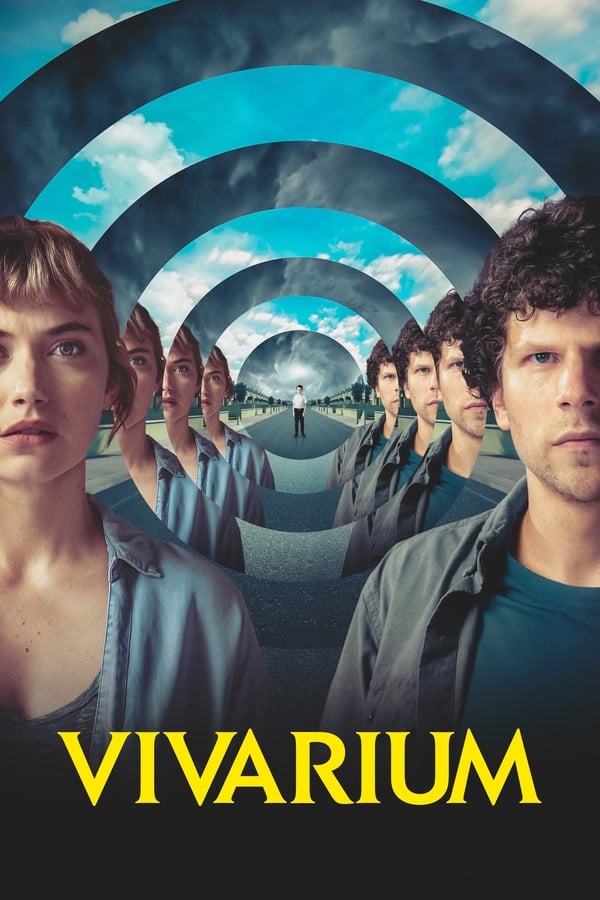
If you’re in for a very strange film, Vivarium has got you covered. Tom and Gemma (Jesse Eisenberg and Imogen Poots) are a young couple looking to get a place of their own when they wander into a real estate office one afternoon. The strange worker there offers to taking them to a new community named Yonder to show them a house, and the couple accepts. They are taken to the worst suburb you’ve ever seen, where the houses are more than cookie cutter, they are completely identical. After looking through the house, Tom and Gemma realize their agent has left them there, and when they try to leave themselves, they find that they can’t. No matter which direction they drive, they always end up pulling up in front of building # 9. When they finally run out of gas, they spend the night there, and the next day, they receive a package with a baby in it. The accompanying note simply reads to raise the child, and they will be let go. “Soap opera rapid aging syndrome” has nothing on this kid, because when we fast forward 98 days, the baby looks like a 10 year old, and he acts just as peculiar as the person who showed them the house initially. Meanwhile, Tom has become obsessed with digging a hole in the front yard, at first because he thought the soil looked strange, and later because he hears noises coming from underground. What is weird and peculiar takes a turn towards the horror genre in the last 30 minutes, and gets downright bizarre in the final 15. This is not a film for everyone, it is a definite slow burn where you have to just sit back and enjoy the ride, but film lovers will dig it. ★★★★
Quick takes on 5 films

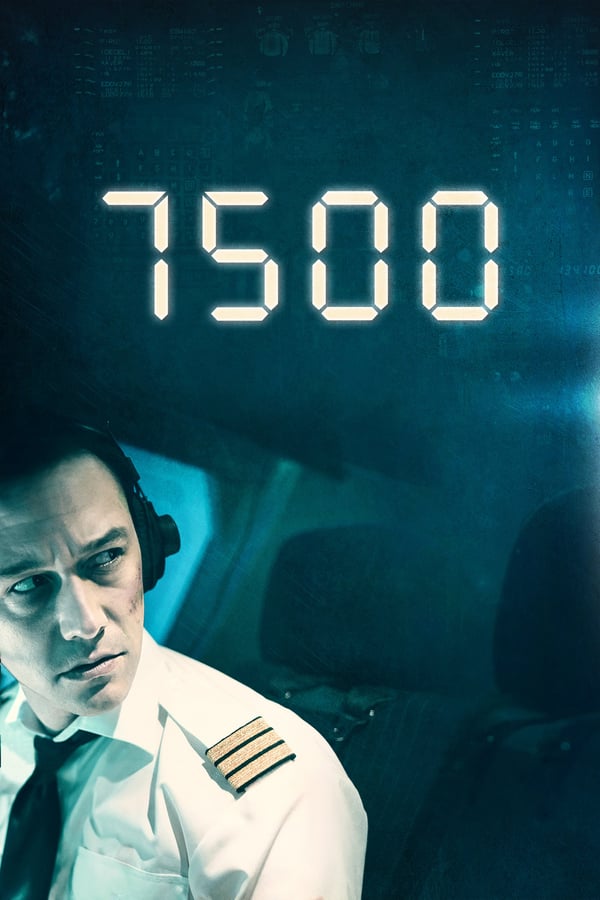
7500 is the airline code for a hijacking in progress, and the newest film starring Joseph Gordon Levitt is about just such an event. Gordon Levitt plays the pilot, Tobias, on a short flight from Berlin to Paris. They’ve just taken off when a quartet of extremist Islamics attempt to take over the plane. One man is able to get into the cockpit and the captain is gravely injured, and Tobias deeply cut too, before they are able to subdue the attacker. The hijacker’s friends are locked out, but they begin threatening to kill passengers unless Tobias lets them in, something he obviously cannot do. Except for the opening scenes on the way to the plane, the entirety of the film takes place inside that claustrophobic space. It reminded me a bit of the film Locke, which starred another great actor, Tom Hardy, and took place exclusively in a car as he placed phone calls. That one was a one-man show, whereas there are other characters on screen here, but the same kind of small space brought back memories. That’s where the comparisons stop though. Locke is intense and mesmerizing throughout; 7500 has some tight moments, but also several lulls that were almost boring, which is hard to pull off when a plane full of people is getting hijacked. And outside of the lead, the acting is unremarkable at best, shoddy at worst. 4 stars for Gordon Levitt, 1 star for the picture, evens out to ★★½

I’m No Longer Here is fantastic. A Mexican film, it follows 17-year-old Ulises as he struggles to be himself in a world that doesn’t seem to want to allow this. Told in the present when he has been smuggled in the USA and is homeless on the streets of New York, as well as in flashbacks when he was living in Monterrey, Mexico, Ulises is a believer in the culture called Kolumbia; he dresses in baggy clothes, sports an outlandish haircut, listens to a slowed down version of cumbia music, and dances. In Mexico, he runs a non-violent gang of like-minded youths who go by the name The Terkos. However, they are increasingly being surrounded by more violent gangs who care more about guns than music. He ends up being smuggled to New York (we don’t know the reason until much later in the film) and there, has a hard time adjusting to the culture smash. His only “friend” is a girl of Japanese decent who doesn’t speak any Spanish (Ulises doesn’t speak anything but), however she’s really only interested in him as an oddity. Used to the corrupt police of Mexico, Ulises is wary of police when they approach him in NY, and without speaking any English, he can’t communicate his thoughts with anyone. Ulises is completely alone, and that permeates through the screen with a feeling of hopelessness, made more so by how much we grow to like him throughout the picture. The film is done very well, with enough mystery to keep you wondering how everything played out to get Ulises there, and a beautiful poetic atmosphere (the streets of Monterrey and NY are equally immersive) which kept me enthralled. The star of the show, unknown actor Juan Daniel Garcia Trevińo, is a talent to watch. ★★★★

Two in a row, with another tremendous film in Never Rarely Sometimes Always. This was always going to be a divisive picture, about a 17 year old girl who gets pregnant and makes the decision to get an abortion on her own, keeping the whole ordeal a secret from her parents. The film starts with Autumn performing at her high school talent show, during which, with her parents in attendance, someone in the audience calls out, “Slut.” Her parents choose to not approach her about it later, in fact, her step father takes the low road when he calls the dog a slut as a joke. Fearing she may be pregnant, Autumn goes to the local crisis center in the rural Pennsylvania area she lives in, where her fears are confirmed. This center focuses on adoption, trying to scare Autumn with a video of what abortion looks like, and since she can’t get one in Pennsylvania without parental consent anyway, Autumn and her cousin Skylar take a clandestine trip to New York. What is supposed to be an afternoon away from home turns into a 3 day ordeal, frightening in every way for our heroine and her staunch supporter, who seems to be all she has in the world. Whatever your stance on abortion, it is impossible to argue that Autumn, and real-life versions of her, have to be extremely brave to go through what they do. There is one powerful scene in the film, where a caring counselor is asking Autumn privately about her sexual history, and we see the violence she has already experienced in her 17 years, and the terrible experiences she’s been through, when she’s still in reality not much more than a kid. It’s a powerful film, from director Eliza Hittman, whose last film, Beach Rats, also stuck with me long after it ended. ★★★★½

Jumanji: the Next Level is the sequel to the successful reboot a couple years ago. Tired of the dreary life he’s living, Spencer willingly goes back into Jumanji to become the heroic Bravestone again, and is followed by his friends to save him from certain death. The group goes in confidently, since they’ve played and beat the game before, but, surprise!, they have a new scenario to play out, with a new nefarious bad guy to beat (Rory McCann, “the hound” from GoT). The film brings back all the principle cast from the first film with a few extras: Danny DeVito and Danny Glover, who play some older family/friends sucked into the game with the youngsters, and Awkwafina, who plays an in-game character. If you enjoyed the first, you’ll like this one, because it’s more of the same. Unfortunately that means some of the jokes are also recycled, but there’s enough new stuff to make it entertaining. Apparently another sequel is in the works though, and I’m afraid they’ll need to come up with some more shtick if they want to keep this train going. ★★½

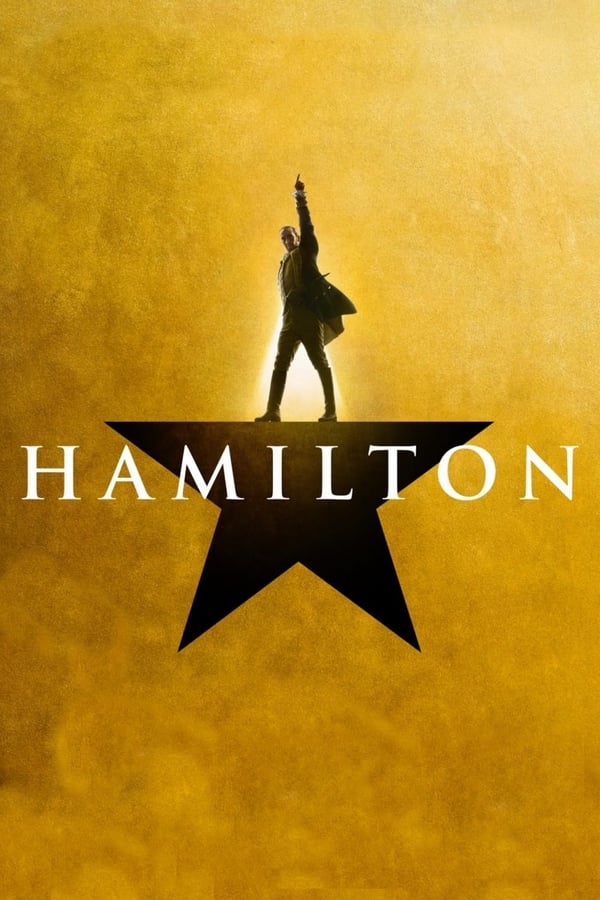
What can be said about Hamilton that hasn’t already been said? After its Broadway premier in 2015, it was nominated for a record 16 Tony Awards, of which it won 11. Based on the life of Alexander Hamilton, arguably the “least known” founding father, it tells his story and those around him during the Revolutionary War and the ensuing early years of our country, until his death in a duel with some-time friend and long-time rival Aaron Burr. The musical does an amazing job of taking an important historical figure and telling his story in a way that is modern, and which reaches out to young people today. I’m a sucker for musicals, so of course I was going to like it. I’m sorry I haven’t yet seen it on stage, but having purchased the soundtrack a couple years ago, I was at least familiar with the tunes and was able to sing (or attempt to rap) along. If you have Disney+, go watch it and see for yourself what all the craze has been about. ★★★★★

Quick takes on 5 films

Da 5 Bloods is about a quartet of men who return to Vietnam after having fought there together during the war. They and their leader, who died in the war, had previously buried a bunch of CIA gold found in the course of a mission, but after a napalm strike buried their landmarks, it has lain hidden all these years. A recent landslide has revealed one such marker, so they are back for their money, and also to find the remains of their buddy. The film follows this hunt, as well as flashbacks about their younger days (though mysteriously, no make-up to make them appear younger…), and also explores each of their’s relationships with others in their lives. There are also historical facts and dates interspersed throughout, in a documentary-like way, to educated us on important people and moments in black American culture. The only thing that comes to mind is, holy crap is this film pretentious. It is director Spike Lee saying, “Look how deep my movies are! Look how political it is!” in every take. Extreme over-acting, nonsensical dialogue that doesn’t fit the feel of the scene, and “rousing” music that is supposed to make certain moments feel profound but instead makes it feel cheap and like a bad “B” movie. The enemies have Stormtrooper syndrome in that they can’t hit the broad side of a barn. And What Is With Every Word Of The Subtitles Being Capitalized? Add in some really poor sound editing where actors off camera have their lines delivered in a loud voice-over way that makes it sound like an out-of-scene narrator, and the whole thing feels shoddy. I don’t get this film, and I don’t get the praise it is getting. I like several Spike Lee films (I liked his last quite a bit), but let’s not praise everything he makes because of his reputation alone. ★½

Shirley is a biopic about author Shirley Jackson, portrayed here by Elizabeth Moss. Shirley and her husband Stanley, a well respected local college professor, have taken in a young couple, Rose and Fred, while Fred is working for Stanley at the school. Shirley and Stanley have a very unhealthy relationship. He is domineering and mentally abusive, belittling Shirley to her face and calling her crazy to others, and openly running around on her (and flirting with Rose when Fred isn’t around). She treats him like shit (which is how Shirley treats everyone), yet in a codependent way, she craves his praise. Partly because of this treatment and partly from her own mental instability, Shirley suffers from depression, paranoid anxiety, and nearly debilitating agoraphobia. Shirley doesn’t get along with anyone, and resents Rose in the beginning too, as she puts off her own schooling to help around the house, since Shirley is unable or unwilling to do so herself. However, as Shirley starts dreaming up her latest horror novel, based on a local girl who went missing after a miscarried pregnancy, she enlists Rose to help her research. In Shirley’s head, she begins envisioning Rose as the missing girl (Rose is also pregnant) and over several months, Rose begins to act more and more like Shirley, taking on her mannerisms. This is one of those films where style takes precedent of substance. Not much happens, but it is fantastic nonetheless. The four lead actors (Moss, joined by Odessa Young, Michael Stuhlbarg, and Logan Lerman) are all great, with Moss and Young particularly arresting. ★★★½

I can maybe chalk this one up to low expectations, but I enjoyed The Call of the Wild a lot more than I would have guessed. A new version based on the classic Jack London book, and starring (and narrated by) Harrison Ford as the old man, the movie follows Buck, a large city dog who is dog-napped off to the Yukon to become a sled dog. There are obvious changes from the book, but overall, it is fairly faithful to the major themes. Buck has good masters, bad masters, but ultimately answers “the call” to go into the wild with wolves and become a leader among them. The film bombed at the theaters, with many calling out the distracting CGI. It actually didn’t bother me that much once I got into the flow of the picture, and enjoyed Ford’s narration and the feel-good story was nice. It’s not great cinema maybe, but I think it’s a good family picture that can be enjoyed by all ages. This is evidenced by a much higher audience score on Rotten Tomatoes than what the critics gave it. ★★★

Corpus Christi is a Polish film about Daniel, a young man serving time for murder in prison. While in jail, he’s found God and would like to be a priest when he gets out, but his criminal background is shoehorning him into a life of manual labor at a sawmill near a tiny town when his parole starts. Unwilling to go straight to the sawmill, he wanders into the local church, where a girl, Marta, correctly guesses he’s straight from juvie and headed to the sawmill. Daniel resents the assumption and says he’s in fact a priest. This little lie quickly grows out of control, when he is introduced to the parish’s vicar. That night, the vicar passes out drunk. The vicar admits he needs to go to rehab to get himself straightened out, and leaves the church in Daniel’s hands for the time being. With no training and a hard life in his past, Daniel has a way of talking to the people without pretense, and quickly becomes very popular. The town’s people are struggling with faith, hurting from a recent tragedy, a car accident that left 7 people dead; six were young adults in one car, and the other was a lone driver. Unable or unwilling to move on from this pain, the town has developed a mob mentality towards the lone driver’s widow, and Daniel takes it upon himself to bring the people together. The film is awfully blasphemous, so part of me had a hard time with the content, but the message of healing is a good one, and the acting by Bartosz Bielenia in the lead is very good. ★★★½

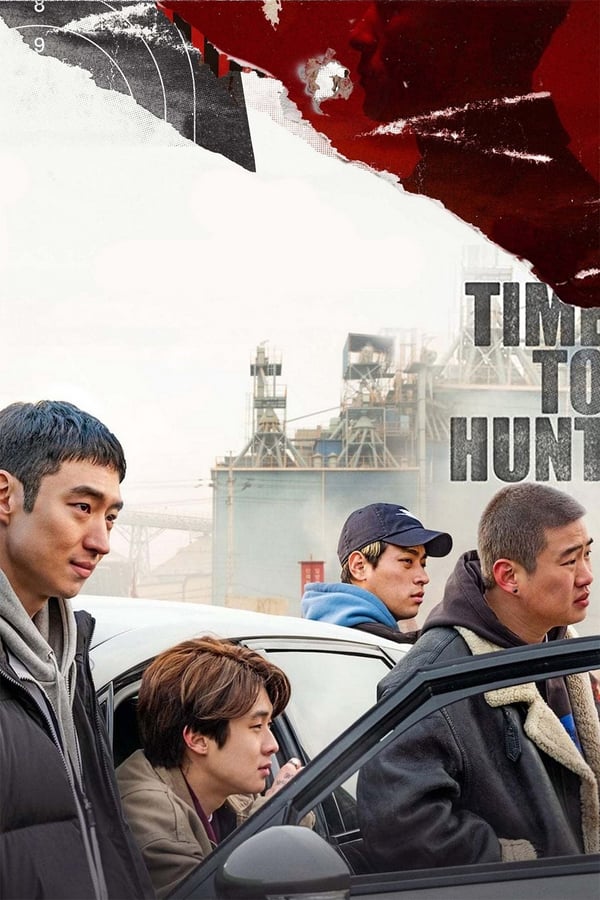
I was a bit disappointed by the Korean film Time to Hunt. It is marketed as a dystopian action thriller. Technically that’s correct, but the only dystopian element is that the market has completely collapsed, leaving the seedy underworld to be in charge. The film follows a group of three friends, one of whom is just out of jail for their last heist, as they plan a new one. Last time they robbed a jewelry store, but since the economic collapse, they decide instead to rob an illegal gambling house, which trades in the more valuable US dollar. They pull in a fourth friend who happens to work at the establishment, and the robbery goes off according to plan. Part of their getaway plan involved stealing the hard drives of the camera recordings, to help hide their identities, but unbeknownst to them, that data also has accounts numbers and identities to some of the gambling house’s high rollers, and that obviously cannot be allowed out there in the world. A hunt begins for our young quartet of robbers ensues, and this is the crux of the film. I was already a bit let down because I expected something else when I read “dystopian,” and the film didn’t help me out by getting a bit ridiculous in the final hour. Han, who is hunting the lead boys, is an almost comic book character, capturing them at times only to let them go for the joy of the hunt. And he has the superpowers of shutting off lights and making whole hospitals become deserted! It’s all a bit too much for me. ★½

Quick takes on 5 Kieślowski films

Recently having watched many films of Roman Polanski’s, I wanted to see what other Polish directors were out there. Krzysztof Kieślowski is one of the most famous, for his Three Colors trilogy and his Dekalog: the Ten Commandments, a 10 part drama series. I still need to watch Dekalog, but I did dig into 5 of his films, both Polish and French, from the 80s and early 90s.

Blind Chance is an interesting film, about if we really have a choice in our lives or if everything heads in the same general direction no matter what we do. Witek is a med student who, after the death of his father, decides to leave school and head off to Warsaw in search of something new. Barely catching the train in time, he meets an old Communist named Werner. Through him, Witek becomes involved in the Communist Party, much to the chagrin of his girlfriend Czuszka, a girl he dated as a youth and met again later. She’s been involved in an anti-Communist group. Events for Witek spiral out of control when she leaves him and he falls out of favor with his superiors. Here, the movie resets back the train station. This time, Witek misses the train, and in his frustration, lashes out at the train depot security, getting him arrested. In a work detention camp, he meets a member of the resistance, and this time, Witek ends up going against the Communists. He even gets baptized and gets into religion. Again, he eventually ends up on the outs of those around him in a misunderstanding. Again, a reset, and though Witek misses the train again, this time he takes it in stride and stays with his current girlfriend. They have a family, and Witek becomes a successful doctor, and stays out of politics completely. Ultimately, things still don’t end well for him though. It’s a very intriguing picture, with fine acting by Bogusław Linda in the lead. It would be easy for a movie like this to feel hopeless, but I got a sense of a bigger picture at work, and enjoyed it. The film was made in 1981 but banned for years in Poland, finally released (heavily censored) in 1987. ★★★½

In 1990, Kieślowski started working with financers in France, so his movies became more international. The first was 1991’s The Double Life of Veronique. I straight up didn’t get this one. I’m convinced it was an excuse to follow around the stunning beauty Irène Jacob for 2 hours. She plays two characters, the first is a Polish singer named Weronika. Talented and on the cusp of stardom, she talks to her father feeling like she’s not alone in the world, and shortly after, she’s walking through the town square when she spots a French tourist who looks just like her. It is in fact the same actress playing both. That night during a concert, Weronika suddenly collapses and dies. We then meet the French tourist, Veronique. She too speaks of always feeling like she’s missing something, and recently, has had a profound sense of loss and emptiness. The film follows her in her relationships and obtuse discussions about mysterious connections between people. Jacob is captivating, so its impossible not to keep watching, but I’m not exaggerating when I say nothing of import happens. For me the movie comes off as an attempt at deep introspection from a half-baked idea about a split soul or some other nonsense. ★

Kieślowski fired off three films in 2 years between 1993-94, in a planned trilogy called “Three Colors.” Each signifying a color of the French flag, these French productions are lauded as some of his best work. Blue stars Juliette Binoche (3 years before The English Patient, shout out to my fellow Seinfeld fans) as Julie. Julie has just lost her husband and young daughter in a terrible car wreck, of which she was the only survivor. The country mourns the loss of her husband, an all-ready famous composer who was working on what was anticipated to be his masterpiece, while Julie begins to detach herself from her feelings and memories in order to protect herself. She walls herself off from everyone and everything she knew before the crash; she sells the house and all of its belongings, gives enough money to the maid and gardener so they are set up, destroys her husband’s work on his final piece (it is whispered in circles that Julie was the main composer, or at least, a big helper), and moves into a tiny apartment where no one knows her. The film comes to show Julie as she works through the stages of grief in her own way, first by secluding herself, and then, slowly, by allowing herself to feel again. It’s a truly stunning and emotionally charged picture, with gorgeous scenes and thought provoking moments that will stick with you. There are a lot of great films dealing with healing from tragic events, but I’m not sure any have been done better. ★★★★

White came next, and it is a much more straight-forward, less esoteric picture. Maybe because of this, it was the least well-received (critically) of the trio, but I enjoyed it. It’s a dark comedy about a man, Karol, who is about the biggest loser on the planet. A Polish man, the film starts with him in French court getting divorced from his French wife Dominique. Her grounds are that  after 6 months, Karol has been unable to consummate their marriage, an embarrassing fact Karol has to admit to in open court, and which no one can believe after one look at the beautiful Dominique. She gets all their belongings and money, leaving Karol penniless in a foreign country. He happens upon a countryman gambler who agrees to smuggle Karol back to Poland in a suitcase, but the luggage is stolen in transit and Karol is beat up when the robbers discover him. Ultimately, Karol does make it home, and hatches on to a plan to make it all back. Karol’s pitfalls are pretty funny stuff, and actor Zbigniew Zamachowski has the lovable loser look down pat. The ending does offer some reflection, but as a whole it doesn’t get as deep as Blue. But it is a fun (and funny) 90 minutes. ★★★½

The final film is Red, a story of fate and and fraternity between people. Valentine is a young model studying in Geneva, longing for her mentally abusive boyfriend, who never seems to make time for her (in fact, I don’t think we ever see him on camera). Driving home one night, Valentine hits a dog in the street, and uses its collar to take the dog to its owner, who turns out to be Joseph, an old crotchety retired judge. Joseph doesn’t seem interested in the dog or Valentine, so she takes it upon herself to take the dog to the vet to get fixed up. When she brings the recovering dog back to Joseph later, he begins to open up to her, only slowly and over time, and the two form an unlikely friendship. Going on in the background of all this is the relationship of another couple, unrelated to our two leads, but intertwined anyway, and not only because of proximity (the male is Valentine’s neighbor, the female is Joseph’s). Kieślowski plays with the idea of fate a lot here, and not just because these 2 separate “couples” live close to each other. Saying more than that would give too much away, but it is a wonderful picture. Perhaps it isn’t the emotional juggernaut that Blue is, but it is no less moving, and the denouement is a strong and appropriate ending to the trilogy. ★★★★½

Quick takes on 5 films

Clara is an independent science-fiction movie about a scientist/researcher who is obsessed with finding life on other planets. Dr Isaac Bruno has been teaching at the university level to gain access to their research tools, including access to powerful telescopes around the world. The TESS telescope has just launched and the James Webb telescope (successor to the Hubble) is getting ready to, so Isaac is on a time crunch to find a planet viable of having life, to be the first candidate ready when the newest telescope is ready to search. However, Isaac has been in a depressed state for two years, since his wife left him (and other pains, which we learn in the course of the film), and it has been affecting his teaching, leading to him being put on leave and thus losing his assistants and research access. He puts out an ad to find a person to help him work from home, and Clara answers. Clara doesn’t know anything about science, but she’s homeless and needs a place to stay, and she’s smart and quick to learn. Bumps in their research and relationship ensues. I don’t know about director/writer Akash Sherman, but this movie has the feel of a first feature. Decent enough plot (though very predictable), but rough dialogue in spots, which is odd because it has so much scientific jargon. Maybe it’s just the subject matter, but the movie has the look and feel of being written by a person who knows the science but doesn’t know how average people talk and act around each other. And Isaac is too much of a loose cannon, giving up too easily when he meets resistance, for someone who is supposed to be dedicated to a life-long goal. It reminded me a bit of a movie I saw several years ago, I Origins, which is another film that was grounded in science in the beginning, and strayed to science fiction in the end. ★½

Maybe it’s because I don’t watch scary/horror films very often, or maybe I was just in the mood tonight, but I watched The Dead Center, and absolutely loved it. It starts with a John Doe being brought into a morgue after a suicide. As soon as the attendant leaves though, our John sits up and lets himself out. He ends up in a hospital bed down the hall, and the next morning, a nurse finds him catatonic. Not knowing where he came from, she calls the psych ward, where they take him. As a caring doctor there tries to get him to open up, the medical examiner at the morgue starts hunting for his missing body. It isn’t long before our mysterious Lazarus starts behaving very strangely, and people on his ward start ending up dead, of very sudden and peculiar circumstances. This is a slow and steady thriller, with only one “jump scare” that I recall. It is almost all in your head, and the word creepy doesn’t do it justice. Maybe fans of the genre wouldn’t dig it as much, but I was all in. Minor point deduction because some of the actors in this super low budget film aren’t all that great, but some others are actually quite good. ★★★★½

The Ground Beneath My Feet is an Austrian film about a woman, Lola, trying to balance home and work in today’s fast-paced, highly competitive world of business. Her sister Connie has had a life full of psychiatric problems, and her latest suicide attempt comes at an important time at Lola’s work. As such, Lola doesn’t let on at work what she is dealing with at home, trying to keep it hidden. Connie calls her incessantly, telling Lola she’s being mistreated at the hospital, while Lola is working long hours with no sleep. She’s also having a clandestine relationship with her boss, and being promised a big promotion if she does well on this latest project. The film has the feel of a thriller, and I kept thinking something big was going to happen, but it never does. It ends up being a pretty straight forward drama. It is well acted, but honestly there isn’t much to it. If it had gone for a different feel, less menacing, I may have ultimately liked it more. ★★

Ordinary Love is a very sweet movie starring Lesley Manville and Liam Neeson as a couple who’ve been married for decades, and remain best friends. They are alone, having buried their only son years before, but content, and very obviously still very much in love. Their latest tribulation comes when Joan feels a lump to the side of her breast. Trying to be supportive, Tom says it’s probably nothing, but to get it checked just in case. The tests come back positive though, and the film plays out as the next year of chemotherapy treatments, surgeries, pain, and anguish. They get to know other people in the cancer ward fighting their own battles, and through it all, Tom and Joan go through the gamut of emotions. Neeson and Manville do an amazing job of portraying a couple who know, from a lifetime of being together, what to say and how to say it, and are completely at ease around each other, anticipating each other’s movements and speech. It might be an “ordinary love” but it is one which we should all hope to have in our lives. ★★★★

VHYes is a film unlike any other that I can recall. The premise is simple (as is the movie): in 1987, a 12 year old is given a video camera (the old school big ones!) and spends a week filming everything with his new toy. Unbeknownst to his parents, the first tape he picked up was their old wedding video, so intermittent throughout is clips of the wedding as it is getting recorded over. There’s a loose plot of Ralph and his best friend Josh exploring a town legend, and there are also glimpses of the troubled marriage of his parents (as much as the young Ralph can understand), but the majority of the “movie” is snippets of TV shows that Ralph records at night: porn with the “good” parts edited out, a Bob Ross-style painting show by a woman with strange fetishes, an antiques roadshow, some home shopping network, and the like. The clips are, for the most part, extremely funny, and I laughed a whole lot. Anyone my age or older who lived through the 80’s will get a lot of nostalgic laughs out of it. For the most part, the cast is made up of people I didn’t recognize, though there are some familiar faces (not any big “leading men” or “woman” kind of people, but actors you’ve seen before), but at one point Tim Robbins showed up on screen, and a little later, Susan Sarandon, so I thought, “Wait a minute…” And sure enough, the film was made by their son, Jack Henry Robbins. It’s a strange picture, not for everyone, but it’s short (72 minutes) and, I thought, entertaining. There’s also some good creepy moments and even some dark thrills. ★★★

Quick takes on 5 films

Just Mercy is a timely movie, and an incredible one, with the great actor Michael B Jordan, who I see as a young Denzel, with all of his charisma and charm. Based on a true story, Jordan plays freshly graduated lawyer (from Harvard) Bryan Stevenson. Instead of seeking a high profile, high paying job, Stevenson, who came from a humble background, makes the decision to help people who haven’t been given a fair shake in the criminal system. Specifically, he heads to death row, and convicts who couldn’t afford good representation, in attempting to get them new trials, appeals, or pardons. The film mostly focuses on the case of Johnny D McMillian, who was convicted in the 1986 murder of a white young woman. The conviction was a joke, based entirely on the testimony of one man, under very shady circumstances. Stevenson sets out to prove McMillian’s innocence before it is too late. The film also shows others on the death row, and attempts to portray the brutality of the system. Even the older man who is definitely guilty of his crime, and admits as much, is painted as a sympathetic case: a man who is extremely remorseful for his sin all those years ago, and wishes he could take it back, not just because he is afraid of his impending death, but because of true remorse. I don’t think the movie will change anyone’s mind; if you are for or against the death penalty, you will most likely still be after, but it is a thought-provoking picture with supremely good acting by Jordan and Jamie Foxx (as McMillian). ★★★★★

Ever have those movies that start great, and fizzle out far too quickly? The latest example is Human Capital. The opening scene is a bicyclist going down a dark road at night, and he gets hit by a car. The film then flashes back to a different, seemingly uninvolved character named Drew (Liev Schreiber) and his events leading up to and after that night. Drew is an average guy whose daughter is dating a boy from a very wealthy family, including Quint (Peter Sarsgaard) and Carrie (Marisa Tomei). Quint is a hedge fund manager, and Drew sees an opportunity to make a lot of money quick. He gets a risky $300k loan from the bank, lying on the appropriate SEC forms about his income and wealth to pass their checks, and gives the money to Quint to make a quick fortune. He doesn’t know that Quint’s firm is on shaky ground. Sounds great doesn’t it? And it is, until Drew’s story comes to an end and we switch to another character. Other stories are told, including Quint’s, Carrie’s, and each of the teenagers involved, but none are as intriguing as the opener’s. Of course all blend together and it is supposed to end on a big reveal on how they weave in and out, but by then, I had stopped caring very much. The film devolves into a series of clichés and tropes; a lot of wasted potential. ★★½

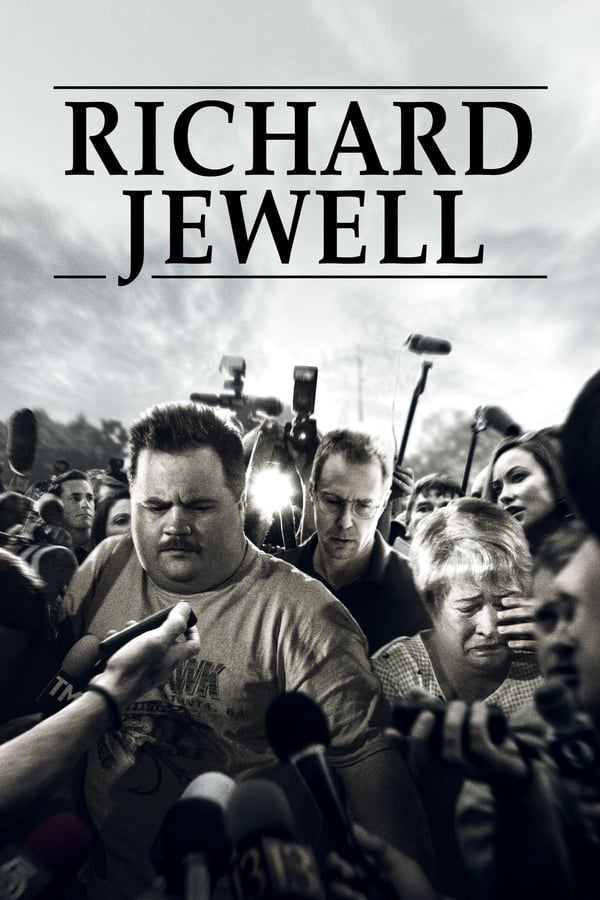
Richard Jewell is the latest from director Clint Eastwood, and it is exactly what you expect it to be; whether that is good or bad is up to the viewer to decide. It tells the true story of Jewell, first the hero that found the bomb at the Atlanta city bombing during the Olympic Games in 1996, and later the prime suspect as the FBI centered on him despite absolutely zero evidence. We see all sides, including the media who rushed to sensationalize the story to sell papers, the lead FBI agent who refused to admit he could be wrong, Jewell’s friend and lawyer, and he and his mother, who became victims of the entire system. The acting is fine enough (Paul Walter Hauser as Jewell, Kathy Bates as his mom, and Sam Rockwell as the lawyer Watson), but the story is too dry and generic. Maybe a younger generation who wasn’t aware of Jewell would get more out of it, but being an Olympics junky (I was actually in Atlanta at the start of the games, though gone by the time the bombing occurred), I knew most of the story already. For me, the film was just “ok.” ★★½

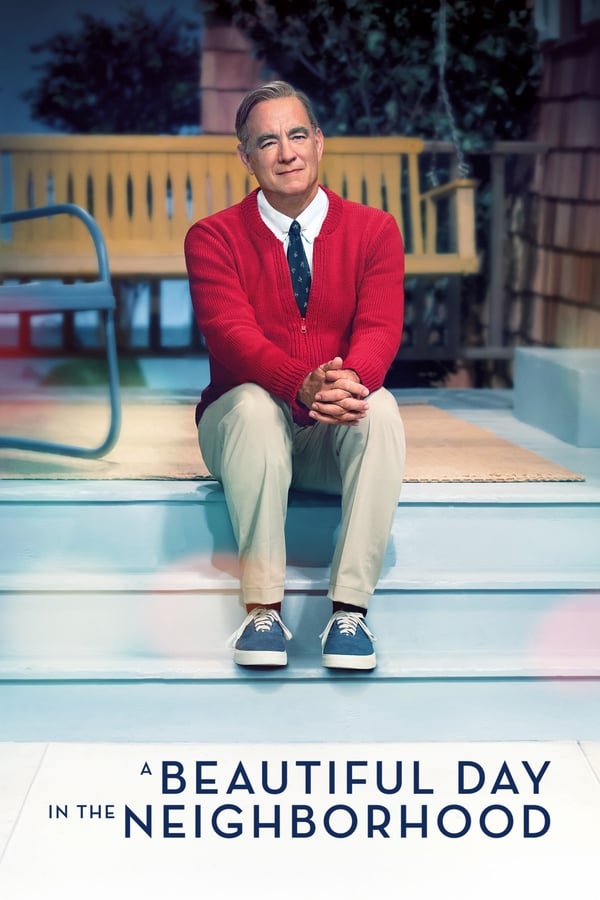
A Beautiful Day in the Neighborhood is a story about Mr Rogers, but as he lived in life, so is the film, meaning, Mr Rogers isn’t the focus. The main character is a journalist named Lloyd, who is given an assignment to do a fluff piece on Fred Rogers in the late 90’s. Lloyd has made a name for himself by looking for dirt on his interviewees, but he is unable to find an angle on Mr Rogers. Rogers really is as nice as the character he shows on TV, in fact, he is taken aback when Lloyd asks how he is “in real life,” like he’s different on TV. The theme of the film is growing as a person. Lloyd hates his father, hasn’t spoken to him in years, and rightfully so after the father did what would be for most people an unforgivable sin. But Rogers gets Lloyd to see past that, and look for the peace at the end, and Rogers doesn’t do it with words or lectures, but through example. It’s a wonderful movie about forgiveness, and trying to be the best person you can be, with tremendous acting by Matthew Rhys (from The Americans) as Lloyd, Chris Cooper as his father Jerry, and Tom Hanks as Fred Rogers. Hanks had his mannerisms and way of talking down cold. And as good of a person Rogers was in life, the film does point out that he wasn’t perfect, and that he tried every day to be better. I think the only people that wouldn’t enjoy this film are true cynics who, like Lloyd in the beginning, are only looking to tear people down. ★★★

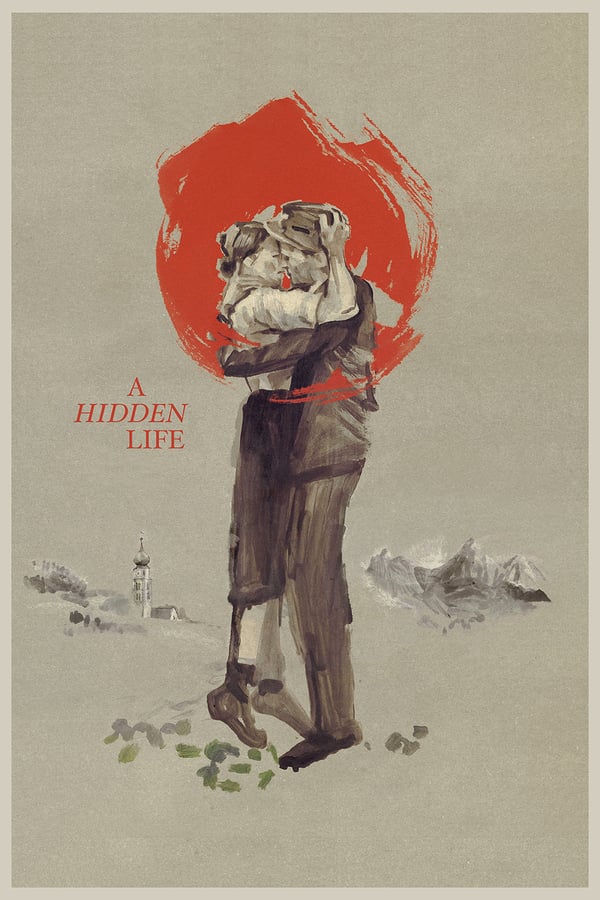
I just watched The Tree of Life a couple years ago, and it was a profound experience for me at the time. I went into Terrence Malick’s newest film, A Hidden Life, with high expectations. Unfortunately this one was a let down. Let’s get the obvious out of the way: it is a beautifully shot film, with Malick’s trademark scenic shots, meant to invoke thoughts of the grandeur of life and nature, are again absolutely gorgeous here. The film takes place in the hills and mountains of Austria in the 1930’s, and the scenery is breathtaking. But that’s the highlight of this film for me, and you can’t just watch that for three hours (yes, three!). The movie is based on a true story about a conscientious objector who refused to fight for Hitler in World War II. Franz is a farmer with wife and kids in the small community when war begins to break out. He goes through training, but when France surrenders and everyone thinks the war will be over soon, he is sent home. When the war lingers on, Franz and his fellows are called back, but he resists. This brings turmoil to the family, making them the target of neighbors who fear Germany’s wrath on their community, and even his kids are bullied. Franz finally relents for fear of safety of his family, but at the roundup, Franz refuses to swear fealty to Hitler. This lands him in jail for the next couple years, and the film becomes a series of letters written back and forth between Franz and his wife. If you’ve seen the last 10 years of Malick’s films, you know about his famous pacing (or infamous, if it isn’t to your taste). I often don’t mind a quiet, slow film, but this one will test anyone. I watched through it all waiting for a moment of profound clarity, but it never arrived. A couple stars for the cinematography, but that’s it. ★★

Quick takes on 5 films based on books

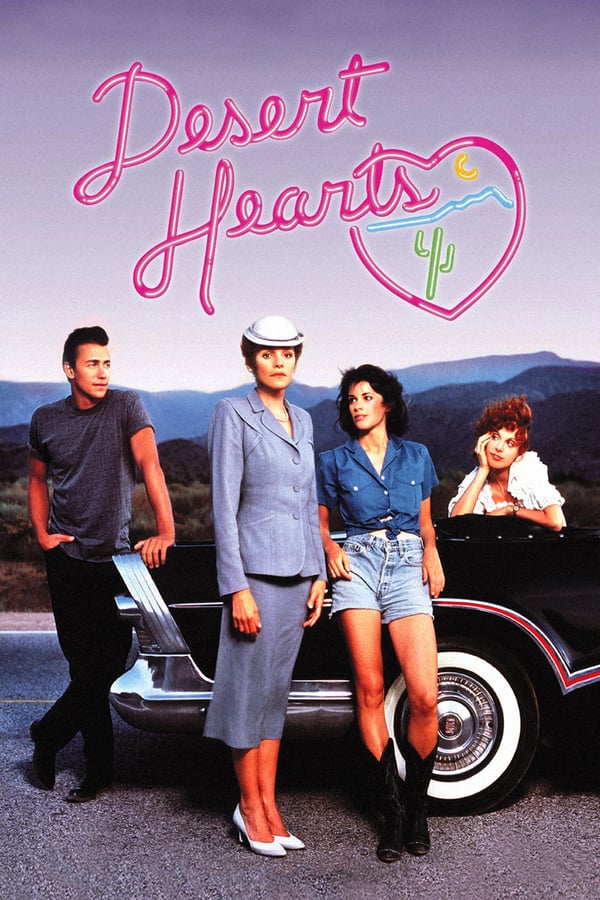
Desert Hearts, released in 1985 but set in Reno in 1959, is based on the book Desert of the Heart by Jane Rule. Vivian is a 35-year-old in search of a quick divorce from her husband, so she’s come to Reno to establish residency, by staying for 6 weeks, after which divorces are easy to get in the 50’s. She’s staying at a ranch with other women awaiting the same thing, a ranch run by Frances. While there, Vivian meets 20-something Cay, who’s been raised by Frances (Cay’s father’s previous mistress). Whereas Cay is a free spirit, Vivian is an English professor at Columbia University and has run in high society circles because of her profession (and admits even her marriage was a “professional” marriage). They are immediately attracted to each other, but this is a dangerous feeling for Vivian. In the 1950’s, lesbianism was more than frowned upon, it could get you ostracized, something Cay is fine with, but Vivian is afraid to accept. The acting is so-so, but the story is good, about a woman overcoming fears to live the life she wants. The film was ahead of its time too. Even in the 80’s when it was being made, director Donna Deitch had a hard time securing funding to make such a risqué film, much less actresses willing to play lesbians on camera. ★★★

Watership Down is an animated film based on the famous children’s book by Richard Adams. It tells of a group of rabbits who leave their home (warren) together, after one of their own, a young rabbit named Fiver, sees a vision of their home being torn up. Fiver’s older brother Hazel leads them away, past the human signs talking about a future development for new homes, in search of a safe, new warren. The group faces trials along the way, including deaths, farmers, and hunters. When they finally find a picturesque hill away from other predators, you think their adventure is over, but they find that a cruel rabbit leader nearby keeps his clan on a tight leash in a totalitarian system. Hazel and his group want to free the rabbits from under this terrible rule, but it is a dangerous mission. For me, it was refreshing to see a truly hand-drawn animated picture, made me think about my childhood pictures. It is well done, though I think it is probably a little slow for today’s YouTube-era child. The violence is also very violent, with bloody battles, and the film doesn’t shy away from the dangerous and vicious world in which our rabbits live. The final confrontation at the the very end of the picture is as tense as you’ll see in a “kid’s movie.” ★★★½

Fail Safe comes from 1964, based on a recent book of the same name, and brings together again director Sidney Lument and actor Henry Fonda, who together had previously made one of my favorite movies. This one is nearly as thrilling as that courtroom drama, but brings the suspense to the cold war of the 60’s. The USA continually runs planes in the sky, loaded with nukes, ready at all times for the word to head straight for Moscow. An increasingly complex computer program cycles them in and out, but when a system fails one day, a group of 6 fighters get a message to proceed with the attack, rather than turn back. What follows is an hour of tense exchanges between our government and Russia. Our president is able to convince his counterpart that it was indeed an accident, and the two countries share classified information in an attempt to shoot down the bombers before they reach their target. Frightening because it is plausible, this is a suspenseful film that will keep your attention. Excellent performance by Fonda as the calm and collected president, with a cast of familiar faces including Walter Matthau and Dom DeLuise. ★★★★

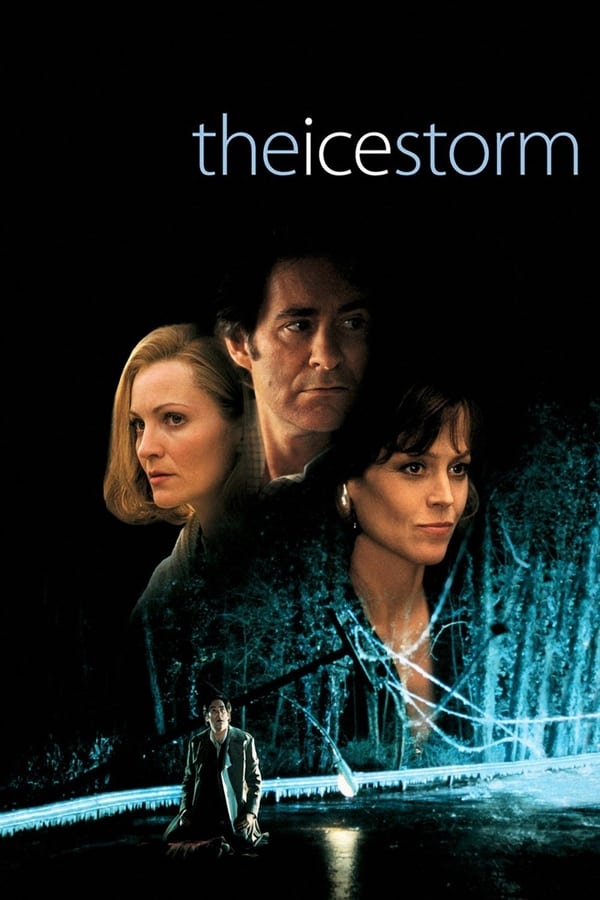
Celebrated director Ang Lee’s The Ice Storm stuck with me. Released in 1997 and taking place in 1973, when the USA was at a crossroads, what with Vietnam and the Watergate scandal, it follows two neighboring families with a whole lot going on, over a long Thanksgiving weekend. Ben and Elena are on the rocks, and their kids Paul and Wendy are left to their devices. Next door, Jim and Janey, and kids Mikey and Sandy, are in much the same position. In a barely-kept secret, Ben and Janey are having an affair. Paul is the oldest of the kids and is at a boarding school, weaving his way through burgeoning sexuality, while his 14-year-old sister is doing the same while still at home. As the film plays out, we see that the parents are just as sexually confused as their kids, and maybe more so, since as adults, you’d think they’d have it all figured out. At least the kids’ endeavors have a certain innocence that comes from unknowing, but as the film points out, adults don’t always have the answers to important questions in life. The film has humor, love, loss, and longing, and even a sense of foreboding as the eponymous storm approaches. I was absolutely enchanted with this film from the opening minutes, loved every scene. It paints a beautiful picture of flawed people, but people made more beautiful because of their imperfections. A great cast too: the adults were established actors in 1997 (Kevin Kline, Joan Allen, Jamey Sheridan, and Sigourney Weaver), but the teenagers were mostly as-yet unknowns (Tobey Maguire, Elijah Wood, Katie Holmes) with one exception (Christina Ricci). ★★★★★

If you’ve been reading my blog for awhile, you know my stance on Roman Polanski as a person, so I won’t delve into that again. But I enjoy his movies for the most part. I finally watched one of his most celebrated, 1968’s Rosemary’s Baby. This is a great psychological thriller, about a young woman and her husband moving into an old apartment in New York City. Guy and “Ro” (John Cassavetes and Mia Farrow) have a good marriage and are looking into starting a family. Rosemary meets a fellow young woman in the building named Terry, who has glowing things to say about Minnie and Roman, who took her in, but shortly thereafter, Terry kills herself when she jumps from the building. Rosemary then meets Minnie and Roman, an older couple. She doesn’t take to them, thinking they are kooky and nosy, but after a little reluctance, Guy takes to them pretty well. Rose starts having nightmares about Minnie and Roman and their older friends, but when she airs her feelings about the couple, Guy puts her off by agreeing to have a baby. Rosemary gets pregnant pretty quickly, but something is wrong from the getgo. She starts having pains, but the doctor (who was recommended by Minnie) doesn’t seem worried. A film which already had a sinister feel gets darker as it goes along. It is a deliciously grand thriller; I kept going back and forth on whether this was real, or all in Rosemary’s head. Say what you will about Polanski, but he’s made some great films. ★★★★