Quick takes on 5 Greek films

I wanted to go back and watch a trio of earlier films from director Yorgos Lanthimos. Unlike everyone else in the world, I thought his last picture, The Favourite, was just OK, but I really liked The Lobster, and absolutely loved The Killing of a Sacred Deer. The following 3 films were made in Greece before he moved on to making English language movies. Unfortunately his first film, titled The Best Friend (2001), is not easily available, and apparently he himself has disowned it (it’s a buddy cop comedy, very much different from his later works), and I haven’t been able to find a copy with subtitles.
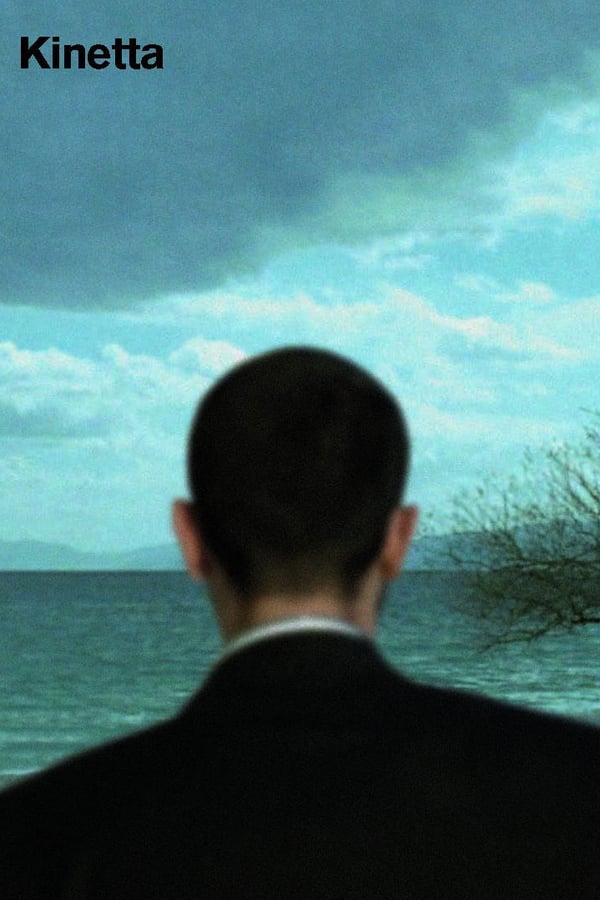
Kinetta (2005) is not an easy film to watch. It is dry, feels long, and doesn’t have much of a plot (if any). For many, it is going to be damn near unwatchable. But I really dug the ending, and with it, I was able to reflect quite a bit on what made the film so good. It is about 3 people with nothing in common, but who come together to reenact crime scenes. There’s a power-hungry narcissist cop, a hotel cleaning lady who seems to have a penchant for getting hurt, and a photographer who has a knack for catching morbid curiosities. The director’s camera silently follows our three leads with very sparse dialogue, and I mean that: there’s maybe a couple minutes worth of spoken word throughout the course of the 97 minute picture. There’s enough delightfully weird moments that I really wanted it all to go somewhere, but after an hour I thought there would be no satisfaction at the end. I was thankfully wrong, but I don’t think it would be enough to satisfy most viewers. It’s a niche film even for diehards. ★★★½

Lanthimos found worldwide acclaim with 2009’s Dogtooth. Again, a very hard film to watch, but for a much different reason. The movie is about a father and mother who have raised their three children to adulthood in complete seclusion, cut off from the outside world. The children, and man and 2 women in their late teens/early 20s, only know what their parents have told them; the tv only shows their homemade movies, and they don’t even know what a telephone is. The games they play with each other are either the innocent games of children, or the sometimes vicious fights that adults are capable of, and they don’t always know right from wrong until a punishment comes. The father is the true “man of the house” holding power over everyone, and he is the only one to leave their compound to go to work every day, scaring the kids with talk of wild animals outside the gate that will kill them if not for his protection. The only person that comes in is a security guard name Christina, who the father has been paying to sleep with their son to let off his sexual tension. The eldest daughter is already beginning to wonder what is outside their walls, and those thoughts are made more concrete when Christina smuggles in a few VHS tapes of Hollywood movies. If that doesn’t sound dark enough for you, sit back and enjoy the ride, because this movie is black as night. There are some truly disturbing and graphic scenes (don’t watch this one with your parents in the room unless you want to squirm!), but setting that aside, it is a remarkable and eye-opening picture about the ramifications of seclusion and dictatorship. Lanthimos does an amazing job of showing simple aspects of life that you may not think of, but which affect our characters in very real ways when they have no way of being aware of them. ★★★★½

Alps, from 2011, and his last Greek film before The Lobster, is a true dud for me. It is about a four person group who call themselves The Alps, and the service they offer is to impersonate recently deceased people to widowers and surviving loved ones for a fee. They do this to “ease the mourning period.” The group consists of an ambulance driver, a nurse at the local hospital, an olympic-class gymnast, and her coach. When the film begins, a young tennis player has just been in a nasty car wreck, and they are waiting for her to die. The nurse is treating her at the hospital, and when she does die, the nurse instead tells the group that she has survived. While the group goes on to role-play for other clients, the nurse clandestinely offers her own services to the tennis player’s parents, and begins to impersonate her to them. Very strange film, and whereas Kinetta had an explosive ending which saved the rest of the film in my eyes, this one just doesn’t do anything for me. Very wooden actors and dialogue, which made sense in Dogtooth because of the setting, and makes sense in The Lobster as a dystopian future, but falls flat in Alps. ★½

For the final two films, I turned to a director with ties to Lanthimos. Athina Rachel Tsangari was a producer on the above three films, and Lanthimos was in return a producer (and actor) for her film Attenberg in 2010. I’ll say one thing about the movies above: even though I didn’t like Alps, all 3 had an interesting premise. Attenberg unfortunately is just downright boring. It follows a woman named Marina, obviously on the autistic spectrum, as she is dealing with the impending death of her ailing father. She has relationships with only 2 people in her life: her father and a single friend, Bella. She doesn’t particularly care for other human beings, and the thought of a sexual relationship with a man or woman disgusts her. The film is sort of a coming-of-age piece, with some humor provided by Marina’s quirky way of talking and interacting with others, and her father playing along as he knows exactly how to deal with her, but the film never really goes anywhere. Despite being a “growing up” kind of movie, I don’t know if Marina really made a whole lot of headway by the end. My recommendation is an easy pass. ★

Tsangari’s latest picture is 2015’s Chevalier. It is about a group of six friends who’ve chartered a yacht for fishing trip, and the film picks up when they are finishing up the trip and getting ready for the return trip home to Athens, which will take a couple days. They are playing a funny game poking fun at each other when one of them takes offense, and says they should play a new kind of game to see who is “the best person among them.” Each armed with a notebook for tallying scores, they spend the final few days judging each other on anything and everything, from how they sleep, to how they eat, their vocabulary, their relationships with each other and spouses, to (of course) the size of their penises. Of course the contest leads each of them to being very guarded and particular with how they speak or act, and everyone is immensely aware when someone misspeaks or is at fault in some way; for instance, when one of them burps at dinner, it is hilarious to see everyone else pull out their little notebooks to make a quick note, while the “burper” apologizes and tries to say he’s never done that before, must be the fault of the food. It’s a very funny movie, which only gets funnier as the progression of misdeeds and missteps adds up, especially when people start going out of their way to impress others or make an impression. ★★★½


Quick takes on 5 films

I like a whole lot of films that come out of China these days, and my latest viewing kept that streak alive. Angels Wear White, from director Vivian Qu, is an extremely uncomfortable film to watch, but it is equally as powerful as it is disturbing. The film begins with 2 very young (12 year old) girls being led to a hotel by a scummy man. The only witness to the abuse is Mia, a teenager not much older than the girls, who was working the late shift that night. As the next couple weeks unfold, the girls and their families try to get help from the police, but it turns out the man is a powerful politician, and his connections continue to keep him safe. A pro-bono lawyer tries to help, but Mia isn’t cooperating either; she’s there working illegally, and fears for her own job. To make matters worse, one of the girls, Wen, comes from an abusive family background, and is afraid to speak up for herself, after years of not having a voice in her family. It’s a fantastic picture: strongly empowering for women while also painting a stark picture of the power wielded by society’s elite. None of the violence is shown on camera (or even heard, it takes place behind closed doors), but that doesn’t make it any less painful of a movie; I wanted to scream at the TV for justice for those poor girls. ★★★★½

As much as I loved Angels Wear White, I loathed Get Duked. Couldn’t be more different of a film. This English movie follows a trio of adolescent delinquents and a goody-two-shoes who are out for a 2 day wilderness survival experience in the Scottish Highlands. Meant to be a learning experience for the bad boys, and college application fodder for the nerd, the four boys get more than they bargained for when a mysterious man with a rifle starts hunting them. Filmed in a dizzying fast-paced, short-scene way that is perfect for today’s youtube teen, there’s no thoughtful introspection here: it’s just a dumb “comedy thriller” that doesn’t go anywhere. Or at least, I assume it goes nowhere. I gave up 36 minutes into it* when the killer showed up again after a break, and the boys, yet again, starting running for the hills. Dumb, dumb, dumb. (*I did try to finish the next day with fresh eyes, but only got another 15 minutes in before stopping for good.) ½

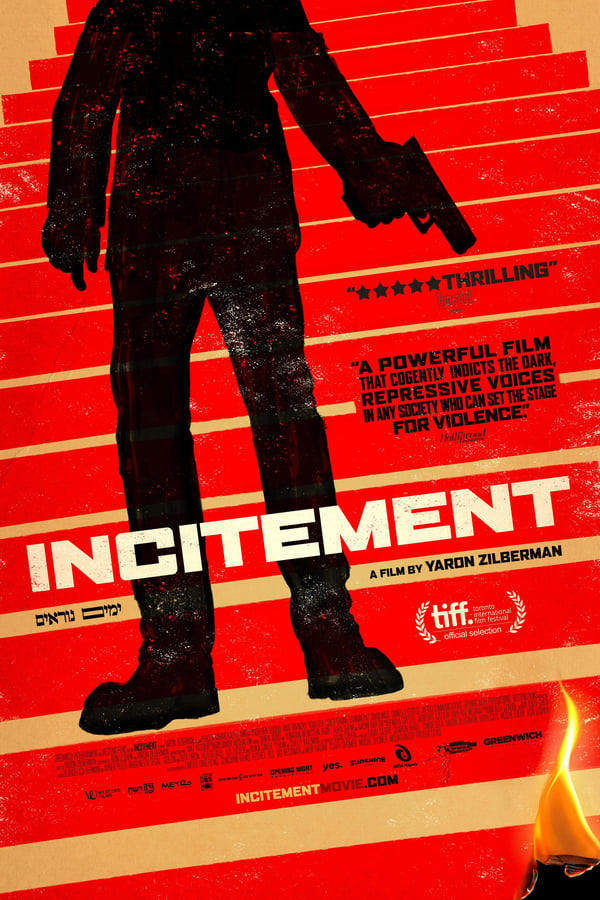
Holy (literally!) cow, what a great film that I was not expecting! Incitement is an Israeli picture (in Hebrew) about the true story of the lead-up to the assassination of Israel’s Prime Minister Yithak Rabin in 1995. The film follows the murderer, Yigal Amir, a college student obsessed with Rabin’s participation in the Oslo Accords (championed by Bill Clinton) in dealing with Palestine’s Yasser Arafat. Yigal sees Rabin as giving away lands (the Gaza Strip, etc) that are rightfully Israel’s, making Rabin a traitor to his people. The film does an amazing job of depicting the tension in the country between the secular Jewish people and its religious followers, who are on very opposite sides of the political spectrum. I was in middle school/early high school when these events went down, and not up on my world politics at the time, so the events depicted were all new to me, and absolutely enthralling to watch. The film uses a lot of stock video footage from these events, such as speeches by Rabin, Clinton, and Benjamin Netanyahu), making it feel very real and lending to the overall suspense of the moment. It is a fantastic picture for film-lovers and history buffs alike. ★★★★½

I didn’t get Benjamin, it seems like a movie that doesn’t know what it wants to be. Based on writer/director Simon Amstell’s own experiences, it is about a young director, Ben, as he’s getting ready to put out his second film. His first was a surprise indie hit, and he’s feeling the pressure to followup with another success. At the same time, Ben is struggling to find a meaningful relationship, as he is really socially awkward, to the point of uncomfortable to watch. And here’s the crux of the problem: the awkwardness is so bad that you don’t know if you should squirm or laugh or both, and it is borderline unbelievable for a real-life experience. The comedy is forced too and doesn’t come off as natural, as normal people talk to each other, because the other characters in the film are just as ridiculous in their own ways; it seems like everyone is a caricature. When Ben does meet someone he likes, a French singer named Noah (can you get more cliche?), Noah leaves inexplicably just to further the story, with no reason for his coming in suddenly, and leaving just as quickly. Now, if you can get past the silly characters and the oftentimes inane dialogue, there is a decent plot about a man searching for some kind of human connection in this zany world, but I wish the whole of it would have been done better. ★½

The King of Staten Island is the newest comedy from director Judd Apatow. I don’t watch a lot of comedies, and tend to rate them poorly, because I’m usually let down by them (I’m more of a drama film guru). But I laughed hard and often in this film. It stars Pete Davidson as Scott, a 24-year-old man without a sense of direction in his life. He dropped out of high school, still lives at home with his mom Margie (Marisa Tomei), and just sits around smoking weed with his friends all day. He dreams of opening a tattoo parlor restaurant, which his friends and family deride as a terrible idea. Scott’s younger sister is graduating high school and going to college, making Scott feel like even more of a failure. His life goes from bad to worse when his mom meets a new man and starts dating for the first time since her first husband, the kid’s father, died as a firefighter 17 years prior. The new guy comes in wanting Scott to start growing up. The film was co-written by Apatow and Davidson, who has said the film could be a biography of his own life if he had not gotten into comedy. Pete too has suffered from depression, and lost his firefighter father at the same age as Scott in the film, 7, in the September 11 attacks. The dialogue is very funny, and Davidson is (surprisingly?) very good in the lead. I liked his previous film, Big Time Adolescence, and he shows more range in this one. ★★★½
Quick takes on 5 Wes Anderson films

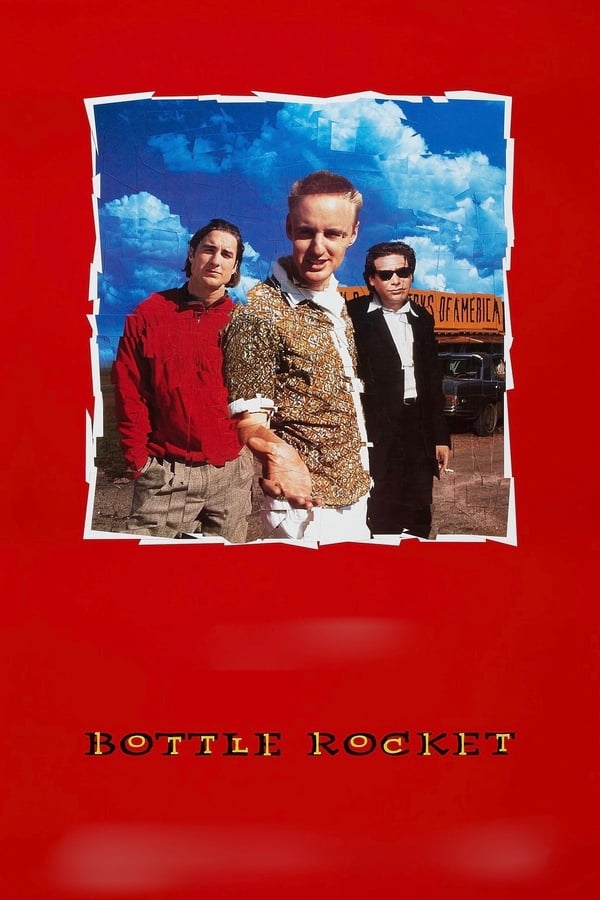
Regular readers of my blog know that I reference Wes Anderson here and there for his quirky style, so it may surprise people to know I’d only previously seen 4 of his films. Time to rectify that and see the rest of them, starting with his first picture, 1996’s Bottle Rocket. Maybe because it is the first, but this is the least “Wes Anderson” Wes Anderson film I’ve seen. The style is there, in a bare-bones manner, but it is missing the quick cuts, the borderline goofy dialogue (though it is still funny), and as seen so often in his films, a narrator for the audience. Even so, I really enjoyed this film a lot. Also the first film for actors Luke and Owen Wilson (Owen co-wrote), it is about a pair of long-time friends who have grand plans of becoming career criminals. Starting small, by robbing one of their mothers (an easy crime, since they can plan ahead on what to steal), they move up to robbing the local book store and other, not-so-successful, heists. Along the way, Luke’s character falls in love with a non-English speaking immigrant housekeeper from Paraguay at their hideout, a cheap motel. It’s a charming picture, with early signs of Anderson’s trademark humor, though in a more subdued format. There are a lot of people who don’t like Anderson’s zany style, and for those, this might be a good compromise, or at the least, a good introduction into his pictures before digging deeper. ★★★½

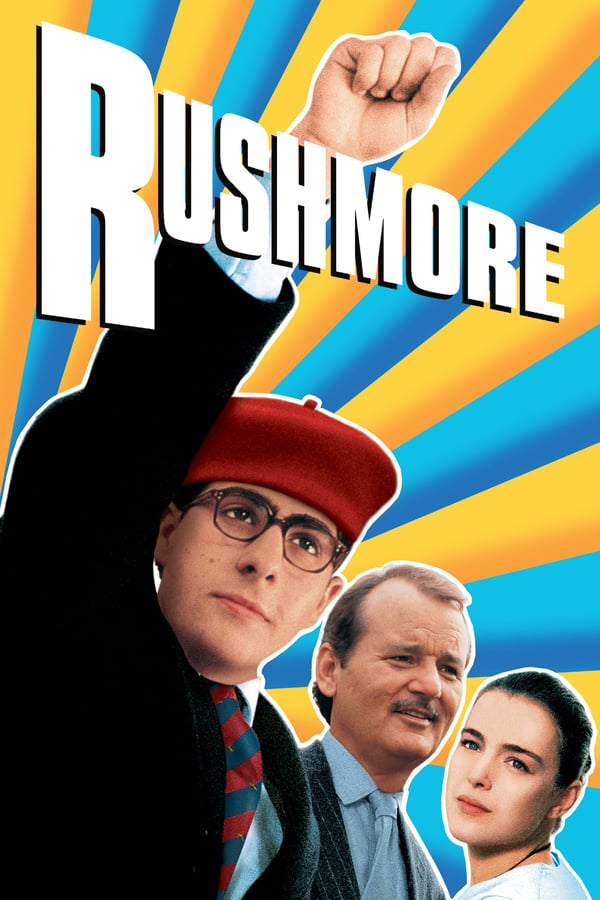
Next up is Rushmore, released 2 years later. As the film opens to a curtain, we immediately see Anderson further developing his stylistic approach, which would lead to culmination in The Royal Tenenbaums a couple years later (which I will not review, as I’ve seen it before). The movie follows 15-year-old Max Fischer, as he attends a prestigious private school. As the son of a barber, he sticks out amongst the other well-to-do students, and his only friends are a young fellow student in their “little brother/big brother” program, and an older businessman and former student at the school, Blume. Max is involved in a multitude of extracurricular activities, but is a poor student academically, and is about to be expelled. To make matters worse, he has fallen in love with a teacher, Ms Cross, and won’t take her “no” for an answer. When he tries to impress her with a large aquarium built on school grounds without permission, he is finally kicked out of school. Things get worse when Blume and Ms Cross start seeing each other. Along with its catchy soundtrack of hits, this movie feels so incredibly 90’s, and I say that as a sincere compliment. Watching it, I was transported back to the films of my teenage years, and I loved every moment. Witty, funny, and endearing, this one is an instant classic. Jason Schwartzman as Max and Bill Murray as Blume are equally fantastic. ★★★★½
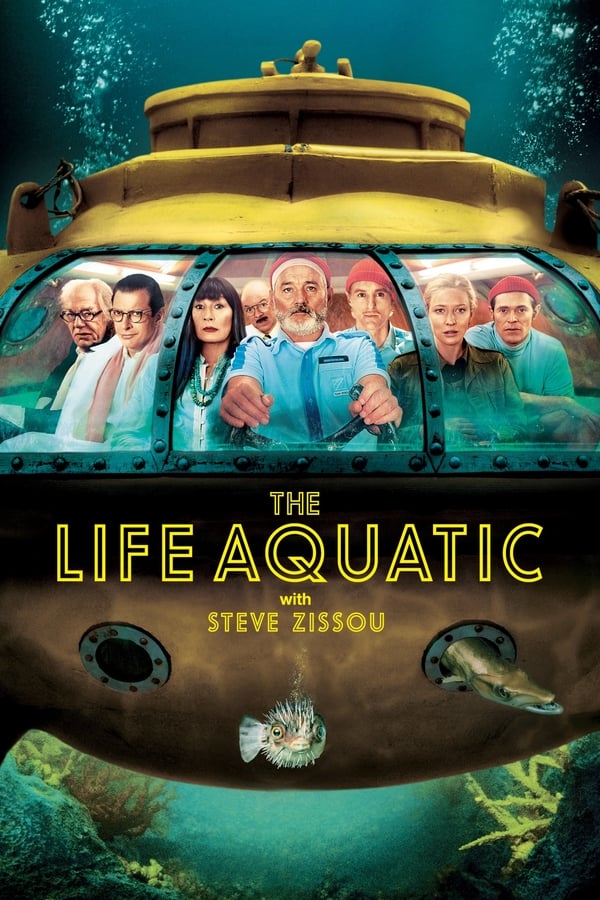
The Life Aquatic with Steve Zissou followed Tenenbaums in 2004, and it is the first dud of Anderson’s career as far as I can tell. It’s not a bad film, and while it has some funny moments, and has an interesting story, I grew bored long before the end. Zissou (Bill Murray) is a nature and animal documentarian, who’s had a string of poorly received films. His latest, an encounter with the mythical jaguar shark, saw the said monster kill one of long-time friends, and worse still in Zissou’s eyes, he wasn’t able to get it on camera,. The release of the film without footage of the beast brought derision. Zissou wants to set out to get his revenge on the monster and prove the story as true, and he is aided by a team of friends and a couple newcomers: a journalist doing a story on him (Jane, played by Cate Blanchett), and his previously unknown adult son (Ned, portrayed by Owen Wilson). The story has a whole lot of sidetracks, including an attack by pirates, and a storyline involving Zissou’s longtime rival Hennessey (Jeff Goldblum), and these twists do not build to the story; instead, they detract from it. While there are lots of funny moments, the film is all over the place, and a bit of a mess at times. Murray, who was so good in Rushmore, plays a reprehensible character who is nearly impossible to like. The film plays up his faults so much, that at the end, I didn’t know if he’d learned a single lesson or not. ★★

In The Darjeeling Limited, Anderson found the perfect setting for the bright colors he’s fond of using in his films: the colorful clothing and landscape of India. It follows three brothers, played by Adrien Brody, Owen Wilson, and Jason Schwartzman, who are on a mysterious train journey to an as-yet unknown destination. Their father has recently passed away, and each is dealing with it in his own way. Each also has baggage in their lives, info that comes out slowly over the course of the film. However, there isn’t much of a plot here, at least, not one readily apparent through much of the picture. I don’t mind style over substance as long as I feel like there’s a purpose. Also, it’s one thing if the movie has diverse and/or likable characters; this film has none of that. The three leads are three goofy people only slightly different from each other. And what makes it worse than Life Aquatic, is I didn’t laugh once. The very ending is the only bright spot, it is quite good both literally and figuratively, but it wasn’t enough to save the whole experience for me. ★

Fantastic Mr Fox is an adorable stop-motion film based on the children’s book by Roald Dahl. This film is a hoot, about a fox who is supposed to have given up his chicken stealing days when he started a family, but can’t help himself when the family moves next door to three large farms. He enlists help from a local possum friend, and while their initial heists are successful, they bring down the wrath of the farmers onto the fox’s family, endangering their lives. It also has a bit of a coming-of-age for the fox’s son, who is a misfit in school and struggles with self esteem. There are scary moments for children, but some of the best kids’ films don’t always play it safe, and this really is a movie that everyone can enjoy. Some of the same types of jokes that I didn’t like in Darjeeling come off as hilarious with the stop-motion style; Anderson’s type of humor really lends itself well to animation. Fun characters, dastardly villains, and an engaging story all come together for a wonderfully fun picture. ★★★★

Quick takes on 6 Carné films

I was originally going to watch just a set of French language films, but I enjoyed this first film from director Marcel Carné so much, that I decided to check out some of his other pictures. Carne lived from 1906 until the ripe old age of 90, dying in 1996. He started during the silent era as an assistant, and learned from some of the greats in his early career, including René Clair and Alexander Korda. Coincidentally, 5 of these 6 pictures came from the same screenwriter as well (Jacques Prévert).

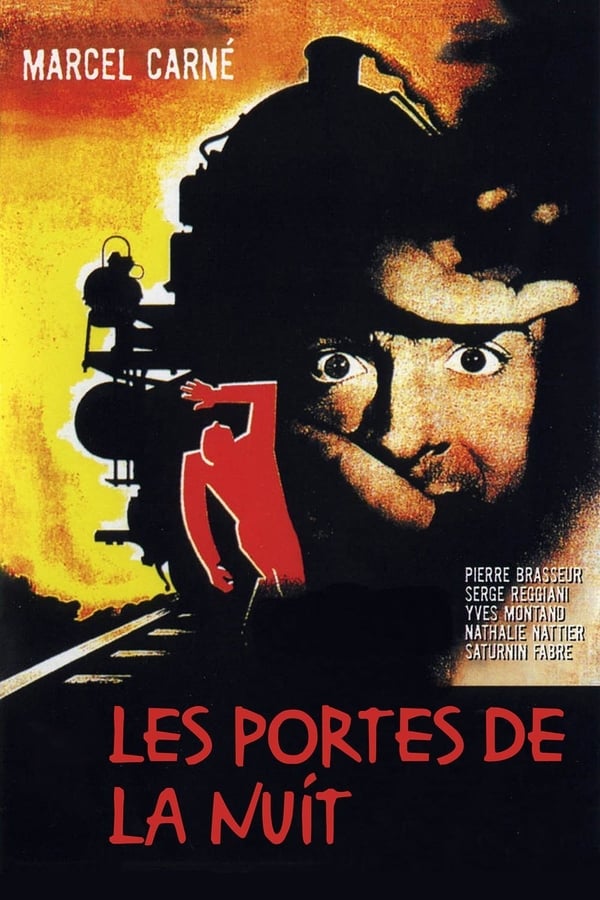
Les Portes de la nuit (Gates of the Night) was released in 1946 and takes place in early 1945, in a Paris that has just been liberated and getting used to being a free nation again, while the war in Germany is still raging. It depicts one long night on the streets of Paris, where worlds collide among many characters, and Destiny himself, in the guise of a vagabond, roams the avenues. There’s a good 8-10 players involved, whose lives intertwine in a multitude of ways, though they might not know it from the start. Included are some old war buddies, one of whom falls in love-at-first-sight with a girl, who is returning to France to see her estranged father and brother, the father who owns the building they all live in, and the brother who ratted on one of the aforementioned soldiers to the gestapo during the war, etc. Lines like these criss-cross throughout, but don’t stress; it never feels convoluted, and is easy to follow. Against the backdrop of a shelled out Paris, and with smokey haze rising from the evening and then pre-dawn streets, the film could easily stray to the very dark, but humorous dialogue and engaging characters keep it from feeling like a dirge, despite an obvious feeling of loss of hope in a dark world destroyed by war. It is a delightful film, and I’m excited to see more of Carné’s works! Incidentally, this film’s most lasting legacy is it introduced the song Autumn Leaves, which would go onto become a much-recorded jazz standard (and show up in the film La La Land decades later). ★★★★

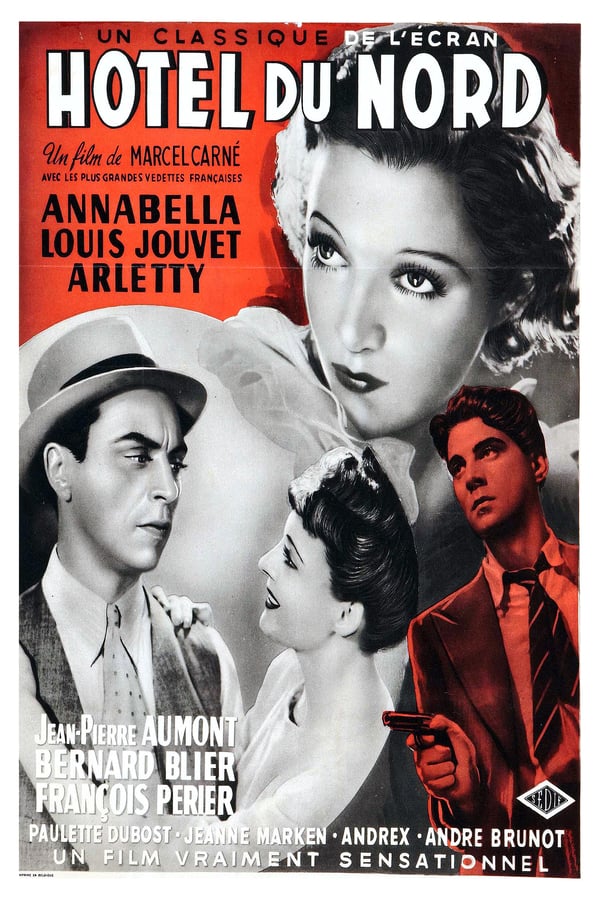
I next went back in time to before the war, with 1938’s Hôtel du Nord. Once again, a lot of characters, this time floating around the eponymous hotel. Renée and Jean are a pair of star-crossed lovers who check in for one night, with the intent to Romeo and Juliet themselves to be together forever. Pierre shoots Renée in the chest, but chickens out when it comes to offing himself. A hooligan living down the hall, Edmond, breaks into the room upon hearing the gunshot, but lets Pierre sneak out the window before the police arrive. Renée survives, and awakens in the hospital a few days later. Upon being released, she returns to the hotel to collect her belongings, and finds out Pierre turned himself in to the police while she was out. With nowhere to go, Renée takes a job at the hotel to await Pierre’s release from jail, but her presence sends cracks through the establishment, with a smitten Edmond chasing after her and dumping his prostitute girlfriend (who also lives at the hotel), as well as other suitors who frequent the area. The story isn’t as tight as Les Portes, but the wordplay is still very good (especially from the prostitute Raymonde) and if, like me, you like a good tale, this is still a very enjoyable picture. ★★★

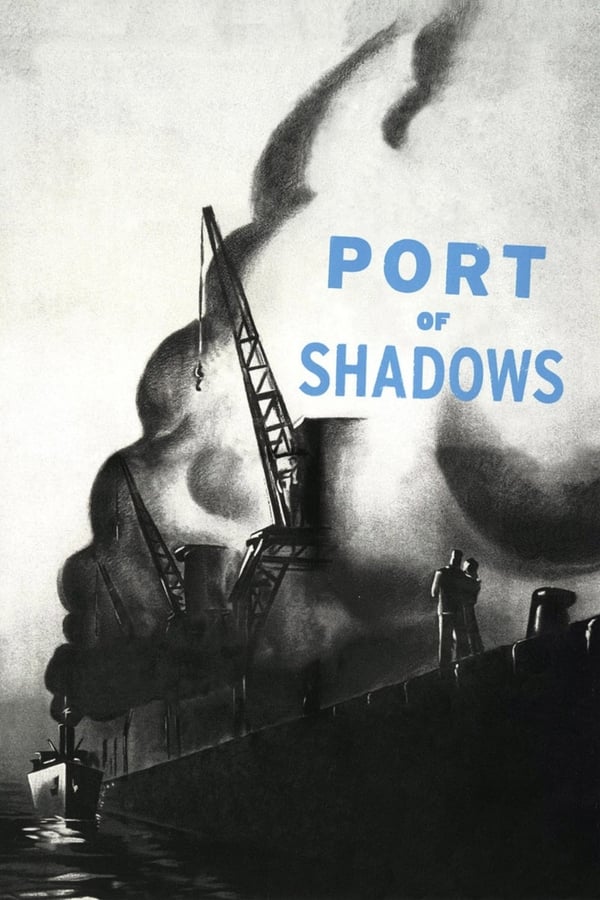
Also released in 1938 was Le Quai des brumes (Port of Shadows). Though it predates what we consider the classic film noir era, it very much has that kind of feel. Jean (Jean Gabin) is a deserter from the French military and is looking to get out of the country before he is discovered. Unfortunately he has a night that is anything but quiet. In the port city of Le Havre, he finds himself embroiled in a mystery involving a group of thugs looking for a newly-missing man named Maurice, Maurice’s girl Nelly (Michèle Morgan), and Nelly’s godfather Zabel (Michel Simon), who has more than paternal feelings for Nelly. There’s some sinister acts in play, and while Jean just wants to get out of dodge, he is swept off his feet by the beautiful Nelly and her plight. I can’t say more than that for fear of giving away some of the fun. The twists and turns are completely compelling, and while the ending doesn’t quite live up the greatness of the rest of the film, it’s still a satisfying and gripping murder mystery for fans of the noir genre. Near perfection, with a bit of deduction for the uneven finale. ★★★★

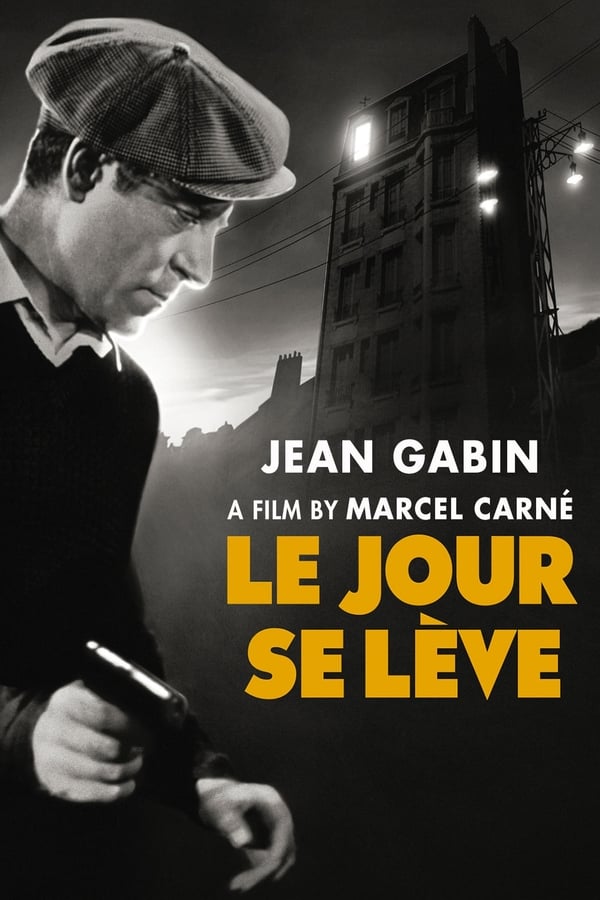
Le jour se lève (literally The Day Rises, but usually translated as Daybreak) also stars Jean Gabin, this time as François. The film starts with him having killed a man at his own apartment building, and then barricading himself in the room against police. We then get a series of flashbacks over the previous few months, leading up to today’s events. He had begun to date a young woman named Françoise, who shared several similarities besides the name. François finds though, that she’s been seeing an older man on the side. François starts dating the older man’s wife (no love between the two, both are doing it for revenge it seems), and this love triangle plays out in the rest of the film. Between the flashbacks, François engages in shootouts with the cops, while his neighbors are interviewed about his nice and accommodating François was before today. The film is ok I guess, though the plot isn’t as intriguing as the first trio of films I saw, and Gabin seems to ham it up at times in this picture. Characters are pretty shallow too, so there isn’t as much to grab on to as a viewer. ★★

Les visiteurs du soir (The Visitors of the Night, or more often called The Devil’s Envoys) is an absolutely charming film about the power of love. Released in 1942 when Paris was under Nazi occupation, and fearing his usual kinds of movies wouldn’t make it past their censors, Carné went back in time and did a fantasy historical picture. In 1485, a musical duo, Gilles and Dominique, have made pacts with the devil to sow jealousy and discord. For their newest assignment, they are riding up to a castle to seduce the the bride- and groom-to be’s. Dominique performs her role well, getting both the groom and bride’s father to fall in love with her, but Gilles unexpectedly falls in love with the bride himself. The devil can’t stand to let this one go, and shows up to the party to make sure things go his way. It is a wonderfully rich and enthralling story, with superb acting all around. Though it’s an old film in the 4:3 format, it is shot beautifully and grandly, evoking the wide open spaces of the castle galleries and surrounding countryside. Who doesn’t love a good love story? ★★★★½
Released in 1945, Children of Paradise is considered Marcel Carné’s masterpiece. It is a 3 hour epic historical film, about an astoundingly beautiful woman named Garance, and the four men who love her. These include Baptiste, a very talented mime actor; Frédérick, a crowd-pleasing actor; Lacenaire, a criminal; and introduced halfway through the film, Édouard, a rich Count. Garance cannot pick between her suitors, not because she is unable to decide, but because she refuses (or is unable) to give love to any one person, and refuses to be “owned” in such a way. Baptiste is a dreamer, pining away for Garance despite having another woman, Nathalie, who loves him wholeheartedly. Frédérick does bed Garance, but he is frivolous in both love and money, and treats it all as a game. Lacenaire wants to own Garance like a stolen jewel, and the jealous Édouard doesn’t care if his love is returned, as long as Garance doesn’t love anyone else. Garance is forced to choose a man when she becomes a suspect in a crime, and relies on Édouard’s power and influence to keep her safe. The second half of the film fasts forward several years, after which Garance has been traveling the world with Édouard but finally returns to Paris. Baptiste has married and started a family with Nathalie, and has become a sensational mime actor with rave reviews. Frédérick is still the ladies man, and while the critics don’t like his performances, he plays to the crowd and sells out his shows (though he admits to himself that Baptiste is the better actor). When Baptiste learns that Garance is back, it threatens his entire life, and Lacenaire shows up to muddle matters as well. This is a supremely great film, with moving performances by all of the leads. Every one of the five main characters, as well as Nathalie and the others, is perfect. It is a powerful and emotional film; if it had been in English, I think it would be right up there with some of the great classics that are household names in this country. As it is, it is considered one of the best films ever to come from France, and if you look at that long history of cinema, that is saying something. ★★★★★

Quick takes on 5 Kiarostami films

I’ve heard a lot about Iranian film director Abbas Kiarostami, but have never seen anything from him before. Time to rectify that, starting with Where Is the Friend’s Home?, released in 1987. It’s a very quiet picture, one of those films where the journey is more important than the destination. The plot is simple: Nematzadeh keeps getting in trouble at school for leaving his workbook at home, and finally the teacher threatens expulsion if it happens again. That night, his deskmate, Ahmed, realizes he’s taken Nematzedeh’s workbook home with his stuff. Wanting to save his friend from trouble, he goes to find him, but unfortunately, he only knows that he lives in the next village over. Taking place in the rural Iran countryside, where life is simple and the year could be anything from 1887 to 1987, Ahmed must deal with adults who don’t listen to his voice, to other kids who may or may not be the most willing to help, to his own parents who try to keep him busy with what they think is best. This is one of those films which is best viewed with a quiet mind, and just let it wash over you. Though Kiarostami has been around a lot longer, it reminded me a lot of Nuri Bilge Ceylan’s films. There’s nothing that grabs you and shakes you to pay attention to, but nevertheless it sticks with you long after it’s over. ★★★★½

Three years after Where is the Friend’s Home?, northern Iran was hit by an awful earthquake. In And Life Goes On (also called Life, and Nothing More), a man is traveling, with his young son, through this area. At first, we aren’t aware of his destination, but we learn after awhile that the man is a fictionalized version of director Abbas Kiarostami, and he’s trying to get to Koker to see if the young actors from the first film have survived the devastating earthquake. Having the son present adds some of the same “through the eyes of a child” aspect as the first film, but as the title suggests, it is overall more about the perseverance of the people of this region, dealing with the loss of loved ones, and in some cases, their homes and all of their worldly goods. The movie plays out as a quasi-fictional documentary, with “the director” stopping to chat with survivors on his way to Koker, asking about the boys he’s searching for, but also just getting an idea as to what the people have been through. The people he’s talking to are actors of course, but they are also legitimately from this area (as were the characters in the first film), and have recently survived the earthquake themselves, so the film hits hard in multiple ways. Another beautifully soft and touching film, showing people coming together to face tribulations as one. ★★★★

Ok, stay with me on this one, because for Through the Olive Trees, the final film in this “trilogy” of sorts, Kiarostami pulls back multiple layers for the viewer. A new actor introduces himself to us in the opening monologue, and states he will be playing the part of the director this time. He is outside Koker to film a movie, and we learn later that the film he is making is in fact And Life Goes On. Besides the (new) director, one of the main characters this time is a man, Hossein, who was interviewed by the (first) director in the previous picture. In the film, Hossein plays a man newly married to a woman named Tahereh, though outside of the film, Hossein’s advances have been rebuffed by Tahereh and her grandmother, who doesn’t condone the relationship because Hossein is just a laborer and not educated. Between film takes, Hossein tries to coax Tahereh to give him a chance, but of course, as a viewer, we know all of this is a “picture within a picture” anyway, since the (new) director told us as much in the opening sentences. It might sound confusing, but it is no less heartful of a picture, and the final scene is one of the most (joyous? heartbreaking? depends on how you decide to take it) wonderful moments I have viewed recently. Absolutely pure cinematic perfection. ★★★★★

In 1989, Abbas Kiarostami read in the paper about a man who was arrested for impersonating another Iranian film director, Mohsen Makhmalbaf. The accused, Hossain Sabzian, had tricked a family into giving him some money and said he was going to cast them in his next picture, but to the reporter he claimed to not do it for the money, but only because he loved film, idolized Makhmalbaf, and liked the attention. Kiarostami reached out to everyone involved in the case, and made a movie about it, but in a very non-traditional way. Everyone in Close-Up plays themselves, from the perpetrator, to the family he tricked, to the police, to the reporter, and even the judge in the case. They all reenacted scenes before and after the arrest, but in a wild twist, the judge gave Kiarostami access to the court trial, allowing him to ask questions to the defendant and accusers during the trial. All is shown in the movie. It’s a fascinating way to make a film, and it received critical acclaim around the world, but I found the film much more dry than the previous trio. I can appreciate the art, but the final product was left wanting in my opinion. It definitely blurs the lines between fact and fiction, so it was interesting to watch for that reason. ★★½
The director made another (in my view) masterpiece with 1997’s Taste of Cherry. Like the Koker trilogy, it is a very simple film about the interactions between people (I’ve realized this is an important tenet to Kiarostami’s films). A mostly-unnamed middle aged man has decided to commit suicide. He’s already dug the grave in the hills outside Tehran, and spends the day driving around looking for someone who will bury him after he does the deed, because in his faith, he must be buried in the ground. However, Islam forbids suicide too, so he’s having a hard time finding someone to agree to the job, even when offered a large sum of money. Throughout the film he picks up three walkers to try to get them to help in his quest: a young, shy soldier; a religious student currently attending seminary; and an older man who, coincidentally, also contemplated suicide once upon a time. The film is slow, but for those with patience who will let the film experience happen naturally, it is a profound and poignant look at the psyche of man. Though we never learn why our main character has chosen this path, we learn from him and those he talks to about the differing views of the world around us. ★★★★½

Quick takes on 5 Czech films

Up today is a set of films from the Czech New Wave of the 60’s, starting with Vera Chytilová’s Daisies. This film is a hoot, following two beautiful young woman who together realize the world has gone to shit, so they should be bad right along with it. They make an adventure out of daily life, ignoring social norms to be free and silly to mutual delight. They take old men out on dates to fancy restaurants just to gorge on expensive food, and then leave the man before giving him any of his hinted “desserts.” They make spectacles of themselves wherever they go, but just don’t care. If they weren’t so charming or pretty, they would come off as annoying, but I couldn’t help but laugh out loud at their antics. Strong feminism aspects (I had to chuckle when the girls started cutting up phallic shaped objects with long, sharp scissors), but ultimately, the film becomes a harsh commentary on the communist government (you can only be happy if you work hard and do what you’re told), which is why the movie was banned and the director was unable to make another movie until the mid-70’s. It is a delightful, zany picture. ★★★★½

Miloš Forman’s Loves of a Blonde is a popular film from this movement, and earned Forman his first of Oscar nomination in 1965 (for Foreign Language film obviously; he would later win a couple for One Flew Over the Cuckoo’s Nest and Amadeus). Andula is the eponymous blonde, a pretty young woman working at a shoe factory in rural Czechoslovakia. The factory is full of women, who outnumber the men in the town by 16-1. As such, the powers that be organize to bring in some military men for training nearby. Everyone turns out to welcome the men, but when the train pulls up, it turns out it isn’t strapping young men, but instead it is more of the middle aged variety. At the party to welcome them all that night, Andula and her two (also very pretty) friends are sitting at a table nursing their drinks when a table of three older servicemen start eyeing them. Despite trying to show they aren’t interested, the men keep pursuing them as the night goes on. Andula doesn’t go home with any of them, instead, sleeping with the piano player at the party. When she follows him to Prague a week later, hoping to continue their tryst, she is greeted instead by the man’s parents; he had obviously neglected to mentioned he still lived at home. It’s a funny film, as Andula navigates these and her other admirers. Like Daisies (though maybe a bit less straightforward), it pokes criticism at the soviet ruling party and the conditions of people living under it. There are some slow moments (the conversation between the parents, while funny because it is awkward with Andula sitting right there, drags), but still very entertaining. ★★★½

Another film banned by the communist ruling party was Jan Němec’s A Report on the Party and the Guests. This short picture (just 70 minutes) is an allegory on the totalitarian government, and the general ease with which average people will go along with being told what to do. A group of friends are enjoying a picnic near an idyllic stream when they are interrupted by a group of roguish henchman types, though the bad guys are smiling and outwardly agreeable. These newcomers are led by a man named Rudolph, who starts giving orders that the people be separated and to go along with it because, “It’s in their best interest.” When one man refuses to play along, he is roughed up, but Rudolph’s “boss” comes along and plays good cop, putting things right and inviting the original friends to his party by the river. The party might as well be “the Party,” and is clearly intended to be the communist government. Němec wasn’t even being coy, he’s pretty straight forward in his criticism of the system. As powerful of a political statement it is, I found it is a slog to watch. If it had been any longer, I probably wouldn’t have finished it. It’s just dry and slow, and I’m not sure the translation I watched was done well, because it seemed to repeat itself a lot. I can appreciate the director’s statement, but not my cup of tea. ★

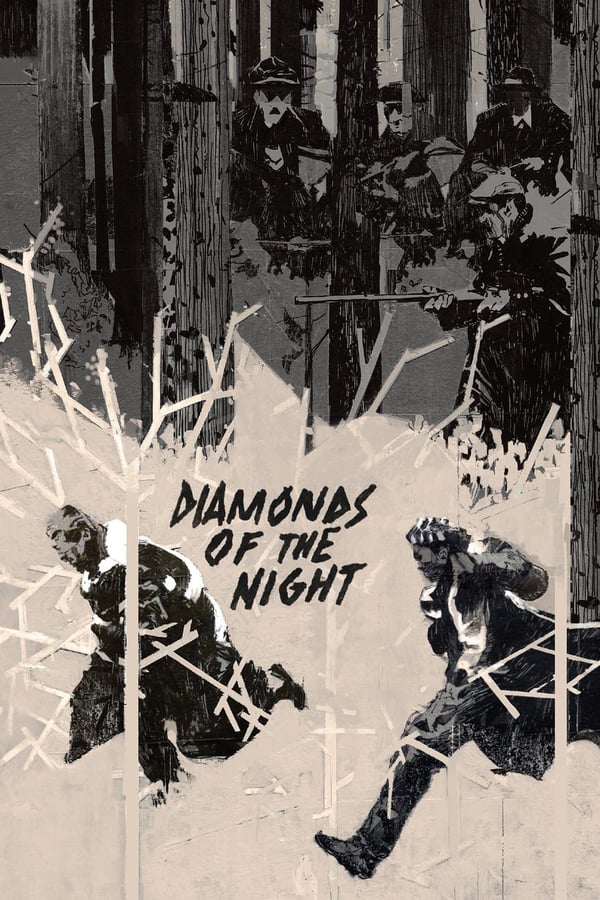
I wanted to give Jan Němec another shot, so sat down to his first film, 1964’s Diamonds of the Night, which, unlike the previous picture, actually has a real story. Taking place during World War II, this movie follows two young men, not much more than boys with only wispy facial hair, as they escape from a train taking them to a concentration camp. The film starts with thundering tension, as the duo are running up a hill, with the sounds of the train behind them, and shouts of “Halt!” and gunfire chasing them. They are able to get away, but that is just the beginning. As we follow them through the forest, we see visions along with them, of their past, their fears, and daydreams, as they struggle to even get along. For example, we see that while on the train, one of them had some food and the other had shoes, so they traded. Unfortunately for the new shoe owner, they are about 3 sizes too small, so it isn’t long into their trek that both are hobbling along. When they come across a poor farm, the one boy that goes in to steal food has visions of killing the farmer’s wife, though ultimately she willingly gives them bread (and then, after they are unable to eat due to thirst, she supplies milk too). Freedom also is just a dream though, as eventually they are overtaken by a hunting party. Their fate is ambiguous; like the dream state/nightmare they’ve been living in, they are either gunned down or allowed to walk free. It’s a brilliant picture and so different than Report. Much of the film is sparse with little dialogue, and the camerawork puts us in our victims’ shoes (or lack thereof), feeling all of the fear they are experiencing. Němec’s criticism of totalitarianism in his pictures ultimately got him blacklisted, and he went into exile. He didn’t return to Czechoslovakia until communism fell there in 1989. ★★★★

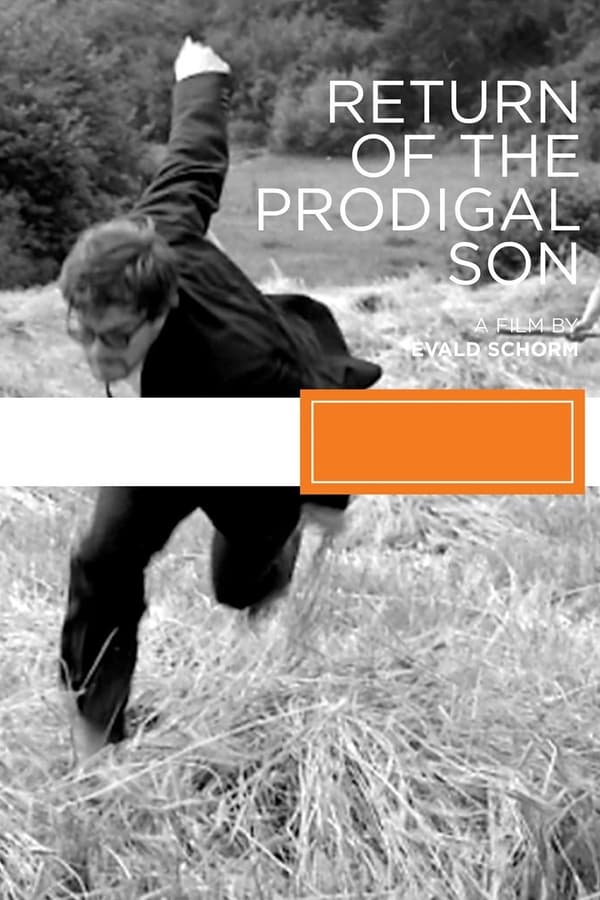
Return of the Prodigal Son from director Evald Schorm is, on the surface, less political than some of the previous films, but it is no less a powerful statement on human individualism under the current government. Jan is a man who’s just survived a suicide attempt, and finds himself in a mental ward to try to get him better. Oddly though, he doesn’t seem all that crazy, in fact, in an early scene where he wanders away from the hospital and the nurses chase him down, everyone ignores the “normal” people doing crazy things around him. Jan realizes the only way he’s ever getting out of the hospital is if he agrees to compromise on his morals and beliefs. If he does this, he’ll be considered “sane” and can leave. But the world waiting for him isn’t all that appealing: strict societal rules about what is accepted, a wife that cheats on him, etc. It’s a very nice picture, and I wish the director had made more films. Like some of his contemporaries, he was blacklisted by the government and was forced to do stage productions instead of films. He died before the communist government dissipated. ★★★½

Quick takes on 6 films

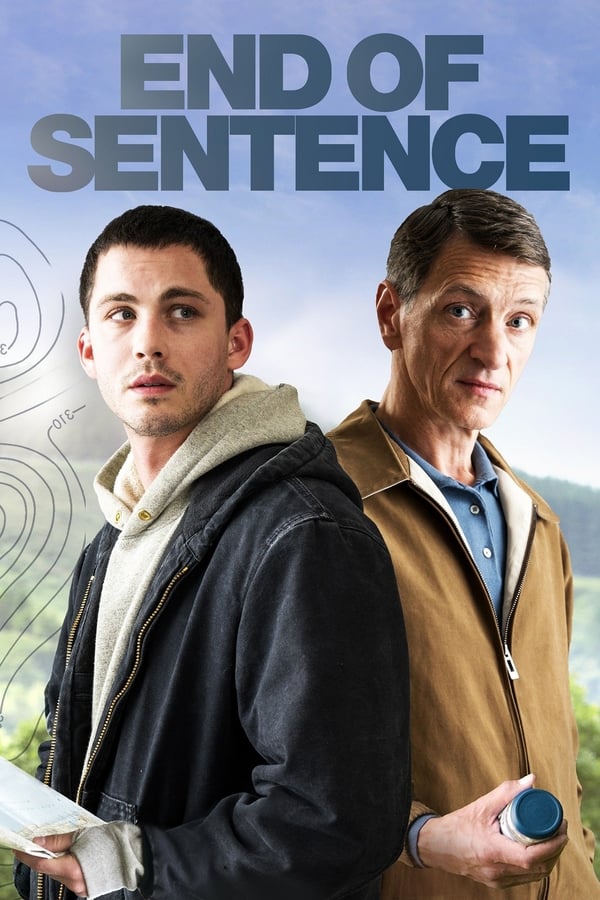
End of Sentence is a very nice film about a father and son coming together after a crisis. The two have never gotten along, and their relationship is pretty much dead, to the point that Sean (Logan Lerman) calls his dad Frank (John Hawkes) by name rather than “Dad.” However, when Frank’s wife/Sean’s mother dies of cancer, it is her dying wish that the two go together to her native country of Ireland to spread her ashes over a specific lake. Sean hates his dad so much that at first, he is unwilling to go, but when his other plans fall through and he needs money for a job prospect, Frank promises to pay for it if Sean will do the trip. During the ensuing 5 days, we learn about the distrust and hurt feelings that have gotten them to this point. Sean has been in and out of trouble for years (he is just getting out of jail when the movie begins), and he also has a lot of resentment towards Frank for not defending him against his alcoholic, abusive grandfather (Frank’s dad) when he was younger. Frank is dealing with his own demons too, and learns early in the trip that his wife may have had a secret lover in Ireland who she may have been visiting over the years when there to see “family.” It’s a road trip film, and also obviously about the strong bonds of family, and healing. Lerman and Hawkes are fantastic as the co-leads. This is a true international production too: an English language film with a first-time Icelandic director (Elfar Adalsteins), with many of his countryman serving in production, and filming on location in Ireland. ★★★★

Lucky Grandma is a very cute, very funny movie about the kind of ornery grandma many of us had as little kids. Grandma Wong has recently lost her long-time husband, and is obviously depressed. Her kids and grandkids worry about her, but she seems to want to stay independent. One night, after being told by a fortune teller that good luck is coming, she goes to a casino with all the money she has left, about $1500, and starts betting big. For awhile, she can’t lose, and amasses a fortune before losing it all on one final all-in bet. On the bus ride back home, her seat mate dies of a heart attack, and his bag full of cash literally falls in Grandma Wong’s lap. Unfortunately, the old man was an accountant for a local gang in New York’s Chinatown, and they come for their money. For protection, Grandma Wong hires a bodyguard from a rival gang, putting herself squarely in the middle. Tsai Chin has had a decades-spanning career with varied roles from The Joy Luck Club and even two James Bond films, but she gets to show off her talents her in a central role, and she is wonderful. ★★★½

The first half of The Last Tree comes off as sort of an updated Good Will Hunting, but it ends up being its own great film by the end. Femi is a young child of African descent, being raised by white foster mother in an upper middle class suburb in England, when they get the call that his birth mother has been granted the rights to raise him again. She brings him to her urban apartment, where Femi’s life is much different. For starters, his mother is very strict, and physically abusive when he gets in trouble at school. Femi is a bright kid with a good heart, but starts to hang out with the rougher crowd, initially for self preservation so as to not be bullied himself, but when the film jumps ahead several years and he’s now nearing graduation, he’s become the bully. Femi comes to realize that his actions have meaning to others, and learns about those around him too, like his mother being so strict was just because she wanted him to do better in life than she did. The confused Femi seeks answers from his foster mom, and his birth father, but ultimately it is up to Femi to decide what kind of man he wants to be. It’s a fantastic film, with a powerful performance from newcomer Sam Adewunmi in the lead role. ★★★★

I just saw most of Terrence Malick’s films a couple years ago, and was most moved by The Tree of Life, which I consider one of the most profound films I’ve seen (I did not like his latest, A Hidden Life, nearly as much). So I thought I’d go back and watch the rest of his films I’d missed, which, like The Tree of Life, are considered “experimental” dramas, starting with 2012’s To the Wonder. It is a linear film but with a sometimes infuriating lack of narrative, revolving around the relationship of Neal (Ben Affleck) and Marina (Olga Kurylenko). The two meet and fall in love while Neil is in Paris, a whirlwind relationship that gets Marina to uproot and move herself and her 10 year old daughter to Oklahoma when Neil returns home. Once there, things aren’t as rosy, and the new couple begin to fight. At first you think it is run-of-the-mill relationship problems, but I began to realize after awhile that Marina is either bipolar or borderline personality, with manic highs and depressive, self-destructive lows. Neil’s eye starts to stray, and by the time Marina’s visa expires, they know they don’t have a future together, and she leaves to go back to Paris. Once there though, she feels like she’s missing something. When her daughter goes to live with her ex (the girl’s father), Marina returns to the US and begs Neil back. During this high, they get married, but again, things go south. It’s a frustrating film to watch. The cinematography is beautiful, as you’d expect from a Malick film, but I couldn’t get behind any of the characters, and honestly didn’t care enough about any of them by the end to really worry about what happened to them. ★★

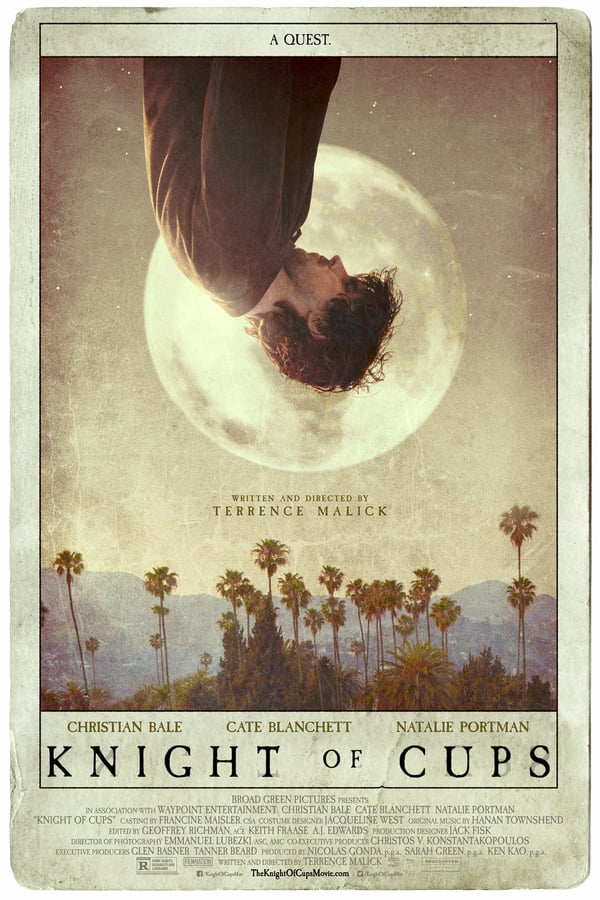
Malick’s next picture was Knight of Cups, in 2015. If the narrative is light and obtuse in To the Wonder, it completely disappears in Knight of Cups. For 2 hours, we just follow Rick (Christian Bale) around, and see various relationships with people in his life, from girlfriends to family. That’s it in a nutshell. There’s no overarching plot, no destination to which we are headed, as far as I can tell. Just glimpses of life. Though the camera strays, it never leaves Rick completely, and the focus on the life around him provides the only real clarity in this picture. And this provided a little more grounding than the previous film, so I did overall enjoy it a hair more, even if it seems though the movie is more like art than fiction. There’s a plethora of A-list talent in minor roles (Natalie Portman, Cate Blanchett, Antonio Banderas, and more), and even recognizable actors with non-speaking parts in amongst the crowds of the constant parties, so that was cool I guess. Actors just clamoring to be in a Malick picture. ★★½

Song to Song was filmed just after the previous film, but not released until 2017 (apparently Malick had 8 hours of film to edit down to its runtime of 2). This one follows a trio of characters, Faye (Rooney Mara), BV (Ryan Gosling), and Cook (Michael Fassbender). Faye is a musician looking for her big break, BV is a songwriter just starting to see some success, and Cook is a powerful record producer with a lot of clout. Faye’s been sleeping with Cook, “paying her dues” as she says, when she meets BV and starts a relationship with him, growing to really like him. However, she continues seeing the dominating Cook on the side. The three start to hang out together, with BV knowing nothing about what’s going on between the other two. Cook ends up marrying a waitress, Rhonda (Natalie Portman), but stills woos Faye on the side. Things become murkier when BV and Cook have a falling out over copyrights to songs BV has written, and Cook then offers Faye a record contract. When Faye comes clean to BV, they break up and pursue other people. It’s a never-ending sea of people floating into and out of all of their lives, and it became dizzying try to keep it all straight, especially with Malick’s short scenes, where nothing is said plainly and all too much is just hinted at. After these three films, I was just left wanting a straight forward picture with a story I could follow. Easy to see why, even with the acting talent in these three pictures, they are not spoken of in such high terms as Malick’s earlier stuff. ★½

Quick takes on 4 Bergman films

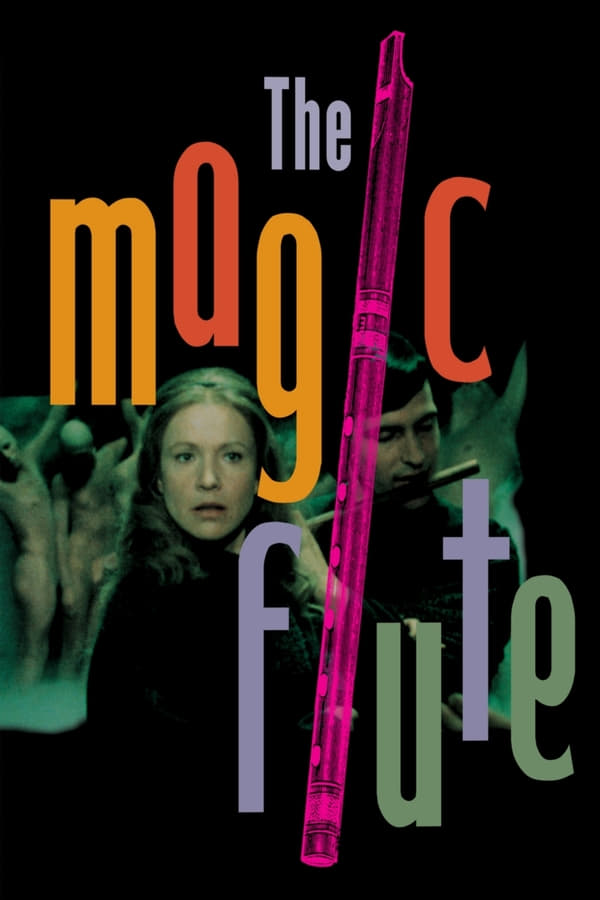
The Magic Flute is a film very different from anything else Ingmar Bergman did. It is a filmed version of Mozart’s famous opera of the same name, from a Swedish language version of the original German libretto. Bergman had been enthralled with The Magic Flute since he first saw it performed as a child, and he finally got the chance to produce it in 1975. The film is put together as an audience watching the staged opera, with spectators in the seats and cardboard stage sets instead of 3D props. The story follows Prince Tamino, who is set on a quest by the Queen of the Night to rescue the lovely Pamina from the vile clutches of Sarastro. Tamino learns though that Sarastro is the good guy, and Tamino undergoes 3 trials in order to prove himself worthy of marrying Pamina. The comic relief in the opera is supplied by Tamino’s traveling companion Papageno, who also wants to win himself a lovely bride, but who can’t seem to pass his trials. Besides having great material (The Magic Flute is one of the most famous operas of all time, even if you know nothing about opera, you’ve probably heard the Queen of the Night’s aria a time or two and didn’t realize it), Bergman’s version is enthralling to watch. Since Bergman needed real opera singers, none of his usual acting troupe are present, but these actors are obviously trained performers, and it is an enchanting performance. Though it has dark elements, it is probably one of the most light-hearted films Bergman has made, in stark contrast to the often introspective, and sometimes downright brooding films he is so famously known for. I highly recommend it, it’s a great opportunity to sit back and enjoy one of the greatest directors of all time putting together a performance from one of the greatest composers of all time. ★★★★★

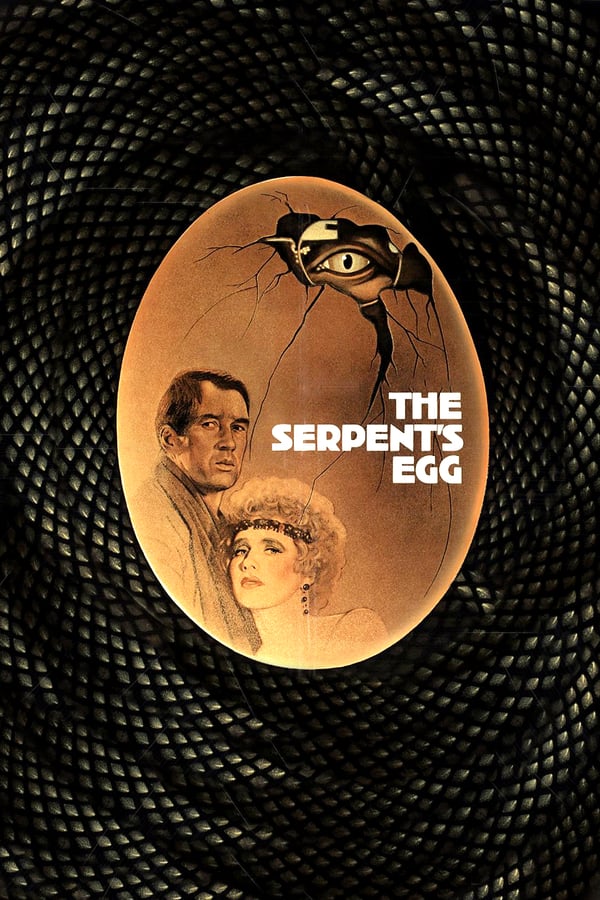
To put it bluntly, The Serpent’s Egg sucks. The weird coincidence is the last really bad film from Bergman was also English language, The Touch. That one teamed a Bergman regular (Bibi Andersson) with an American actor (Elliott Gould), and The Serpent’s Egg does the same, with Liv Ullmann partnered with David Carradine. Taking place in Berlin in the early 1920’s amongst the rise of the Nazi party during the economic hardships Germany faced after World War I, Carradine plays Jewish American Abel Rosenberg, who came to Germany with his brother Max as part of a circus troupe, but is now left stranded after the suicide of said brother. Abel initially finds solace in Max’s ex-wife Manuela (Ullmann), a by-night cabaret dancer and by-day prostitute, but events spiral out of control quickly for him. The film is a jumbled mess of off-kilter subplots and out-of-left-field twists, with really no Bergman-esque introspection. The film boils down to “Nazi’s are bad.” There are flashes of Bergman’s ouervre, such as when Manuela talks to the priest about her guilt in not being there for Max, perhaps attributing to his suicide, and her ensuing struggle with faith, but these moments are fleeting. The movie just isn’t very good. ★

Autumn Sonata gets Bergman back to what he’s good at: a look at the female psyche and loneliness in the world. Eva (Liv Ullmann) is wife to a local pastor, and has an estranged relationship with her mother Charlotte (the great Ingrid Bergman, in her final film role). Eva is breathlessly awaiting Charlotte’s visit, the first time they’ve seen each other in 7 years. Upon her arrival, Charlotte is distressed to learn that her other daughter, Helena, has been living with Eva too. Helena has been suffering from a paralyzing illness, leaving her unable to move on her own and barely talk, and it is obvious that Charlotte is uncomfortable around her. Charlotte is an accomplished pianist, spending much of her life away from the family while touring, and the film plays out as Eva airs her grievances of a life felt abandoned and unloved. It is an emotional film, about a girl who only wanted to loved, and a mother who, due to her own upbringing, admits she was incapable of it. Liv is good, but Ingrid steals the camera, as she did for all of her career. She received her seventh and final Oscar nomination for this picture. ★★★½

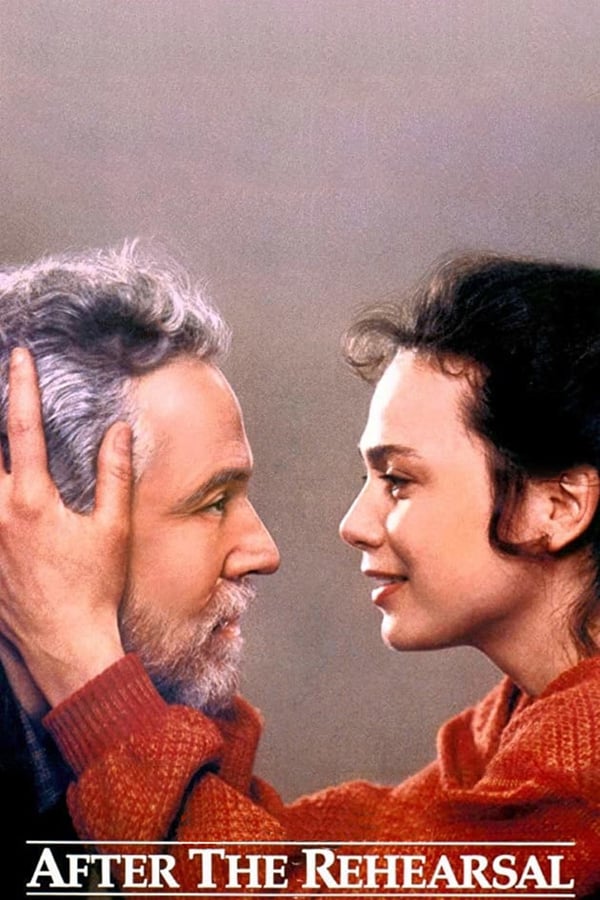
After the Rehearsal is one of those pictures that is fascinating as a look behind the curtain, so to speak, but I’m not sure it makes for a good movie. It has just three characters: Henrik, Rakel, and Anna, and takes place entirely on a stage after the rehearsal of an upcoming play. Henrik, the aging director, is sitting at a desk musing when Anna, his young beautiful star, walks onstage. They talk of the play a bit before conversation turns to Anna’s hatred for her mother Rakel, who always put her career ahead of her daughter. This makes Henrik think back to a time when Rakel approached Henrik after a rehearsal of their own, and invited him to her room for sex, though Rakel rambles a bit about her failing health and looks due to her alcoholism. Back in the present, Anna poses the question of what would happen if she were to enter into a relationship with Henrik like her mother did, and Henrik and Anna spend some time considering the ramifications, none of which turn out good for anyone involved, because Henrik too always puts his art first. I’m the sure the film was therapeutic for Bergman, who notoriously had relationships with several of his leading ladies over the years, and admits he wasn’t a good father to his children (he couldn’t remember their ages, and reckoned his life by his films and not by years). Excellent performances by all three leads, and especially Ingrid Thulin as Rakel. Fans of the stage, I think, would particularly like this picture, as a look behind the scenes of interpersonal jealousies and fears that can develop. ★★★

Quick takes on 5 films

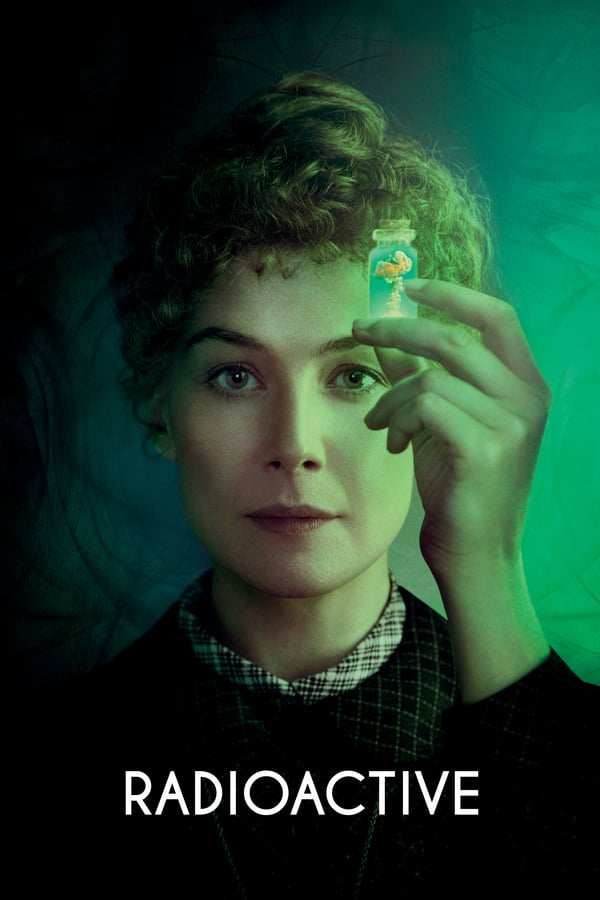
I should have listened to the critics (and my instincts) and avoided the film Radioactive. But I thought, Rosamund Pike is a good actress and I tend to like biopics, so why not? The story of Marie Skłosowska Curie, it follows her marriage to fellow scientist Pierre Curie, their initial pioneering research into radioactivity (and discovery of 2 new elements, radium and polonium), and subsequent heath problems from being around such elements for so long. Despite being a fascinating person, the first woman to win a Nobel prize (receiving 2 in her life), the movie is a jumbled mess. It jumps around way too much in both story and themes, telling Curie’s life, but also inexplicably showing disasters in the future which resulted from her research, like nuclear bombs and the Chernobyl disaster. And even events in her life are hit willy nilly, bouncing around worse than an errant ping pong ball. Pike does her best with the material, but no one could save this disaster. The only thing the film did for me was get me to look up Curie’s life, and learn more than the film told me, including some fascinating tidbits. Did you know all of her research and papers, even her cookbooks, are still so radioactive today that they are stored in lead containers, and can’t be handled without protective gear? ★½

Sweet Bean is a lovely film from Japanese director Naomi Kawase. It is about a man, Sentaro, who runs a small dorayaki (traditional Japanese sweet) shop, frequently visited by local students but not many others. He is visited one day by an older woman in her 70’s, Tokue, who begs for a job as his assistant, even though he really doesn’t need one. He tries to say no, but she woos him with her delicious bean paste, the central ingredient to dorayaki. Tokue has disfigured hands, so she teaches Sentaro her secret recipe, and the new dish is a hit, drawing huge crowds. However, Sentaro learns that Tokue’s deformity was caused by leprosy, and when this is recognized by others, business takes a nose dive. Sentaro must balance his friendship with Tokue and his obligation to the people who own his shop. Some films like this can get sappy, or very introspective, but this one isn’t neither, so even though you have to be good with subtitles, it is a very accessible picture. Really nice film. ★★★½

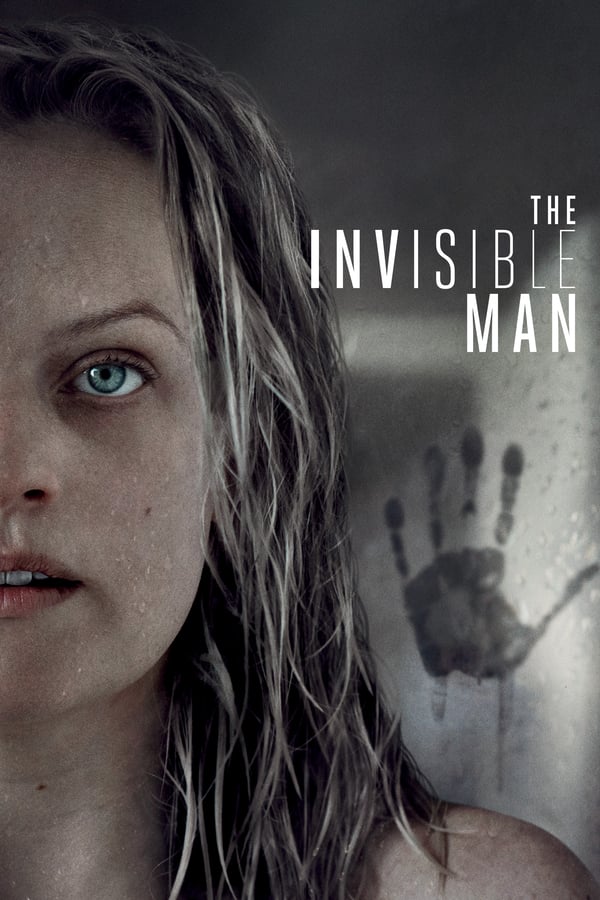
The Invisible Man is a tale of two halves. The first half is great, the second, not so much. It certainly starts out right. Cecelia is running away from an abusive, controlling boyfriend, Adrian, in the dead of night. Total silence creates a completely suspenseful, edge-of-your-seat escape, and even when it shifts 2 weeks into the future, you still feel her fear when she walks to the mailbox. Cecelia finds relief when she gets news that Adrian has been found dead of an apparent suicide, and as a bonus, he left her a bunch of money. However, she begins to experience strange things, such as feelings that she’s not alone in a room, or a wisp of wind against her neck. It’s a good scary flick through this. Then when the “invisible man” is unveiled, the movie becomes something else. It loses the scares and becomes like a sci-fi thriller. There’s some good moments still, but there’s some weird stuff in there that feels out of place from the earlier set-up. I enjoyed the ending ok, but I can’t say the movie is as good as the critics made it out to be. Nothing really groundbreaking here, though props to Elizabeth Moss for showing off her acting chops on the big screen in a leading role after so many supporting parts, and years of successful stints on TV. ★★½

1BR is a decent, low budget horror flick from first-time writer/director David Marmor, and featuring newcomer Nicole Brydon Bloom in the lead as Sarah. Sarah is new to LA, running away from something at home. She’s working as a temp and has just landed her first apartment out there, with a tight, friendly community in the building. She has trouble sleeping at night though, with strange noises coming from the plumbing, and other weird bursts throughout the nights after dark. She also starts getting threatening letters slipped under her door, due to Sarah having snuck in her cat despite the building’s no pet policy. A few of her neighbors, who seemed nice and welcoming at first, start to come off as a bit weird, and there’s obviously more to this community than what Sarah was first aware. When the reasons become clear, the viewer is rewarded, not to a paranormal spooky story, but to a (could be?) plausible thriller. Bloom’s not bad in the lead, and is more than just a pretty face, which is obviously the trap many of these kinds of movies lure you in with. ★★★

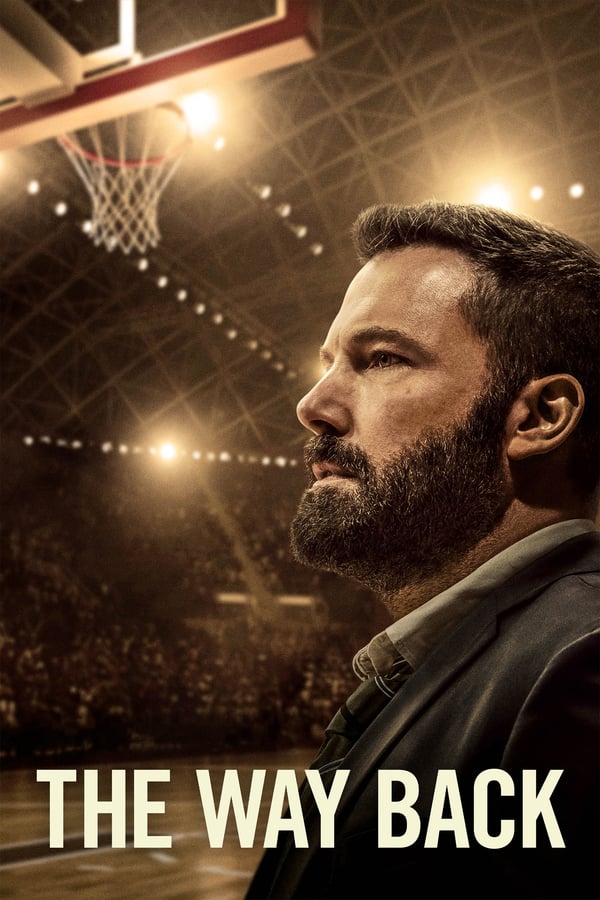
The Way Back is a sports drama film about a man finding his way back to life. Jack Cunningham (Ben Affleck) is a local legend in his area but has never followed up on the promise of his high school basketball star days. His marriage is on the rocks and he’s a high functioning alcoholic, working construction but clandestinely drinking throughout the day and hitting it hard at night. When the basketball coach of his alma mater, Bishop Hayes, becomes ill, the Father of the school approaches Jack about coaching. The school hasn’t made the playoffs in 25 years, since Jack led them to state championships. As Jack starts to rebuild the program, he has to rebuild himself, and we learn what brought him to this place in his life as the film goes along. The movie is unsurprisingly chuck full of cliches, but that doesn’t mean it’s a bad movie. Affleck shows again that he can really act when he gets the right part (or, more likely, invests himself in the role). The film doesn’t break any new ground in the genre, but it is a good sports film with a lot of heart. I’m a sports nerd and tend to overrate sports movies, so take that as you will, but still, I really enjoyed it. ★★★★

Quick takes on 6 Tati films

I set out to watch some Jacques Tati (born Jacques Tatischeff, with some Russian origin) films, and about 30 minutes into the first picture, thought it might be an abandoned project. I didn’t know much about Tati when I started, other than he was a highly regarded French comedic actor and director. He started in some shorts, but it wasn’t long before he wrote and directed his own films (which is what I’m writing about today). He came up in the business as a mime, which explains why sight gags are such a heavy part of his comedy, and knowing this, I think I was expecting more slapstick. There was some in the first picture, but not exactly what I was expecting. He ended up directing just 6 full length pictures, so I watched them all.

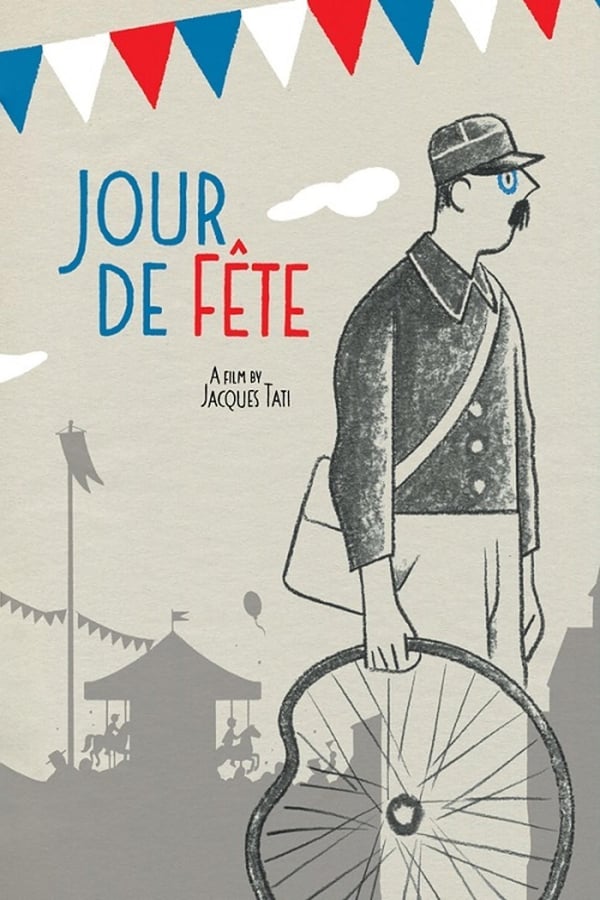
Getting back to my first viewing experience. Jour de fête (The Big Day) was his first major picture, released in 1949. It takes place in a little village in France, with a traveling carnival coming to town for the day. The troupe sets up the rides and games, and through it all, the main character is the town’s bumbling mailman, Francois (portrayed by Tati). Tati goofs around with the townspeople and carnival travelers, with the highlight of the film being a video Francois watches at the carnival showing the great prowess and gadgets used by American post office deliverymen, and consequently, Francois’ desire to improve his delivery mechanisms to equal that of the Americans. Maybe I was expecting something different, or just wasn’t in the mood, but after half an hour, I stepped away and thought about giving up on Tati. The gags seemed really dated (I didn’t laugh once), and I figured it just wasn’t for me. I’m glad I came back to finish the film the next day though; I ended up liking it a lot more with fresh eyes. Tati delivers a bit of charm in his misfortune, a la Charlie Chaplin, and the movie has other intriguing elements that set it apart from other run-of-the-mill fair, like the old lady villager who talks to herself throughout the film as she wanders (noses around) from person to person, but what she’s really doing is narrating to us viewers. I wouldn’t call this film a favorite or anything, but it offered enough to give Tati another go, and thus…. ★★

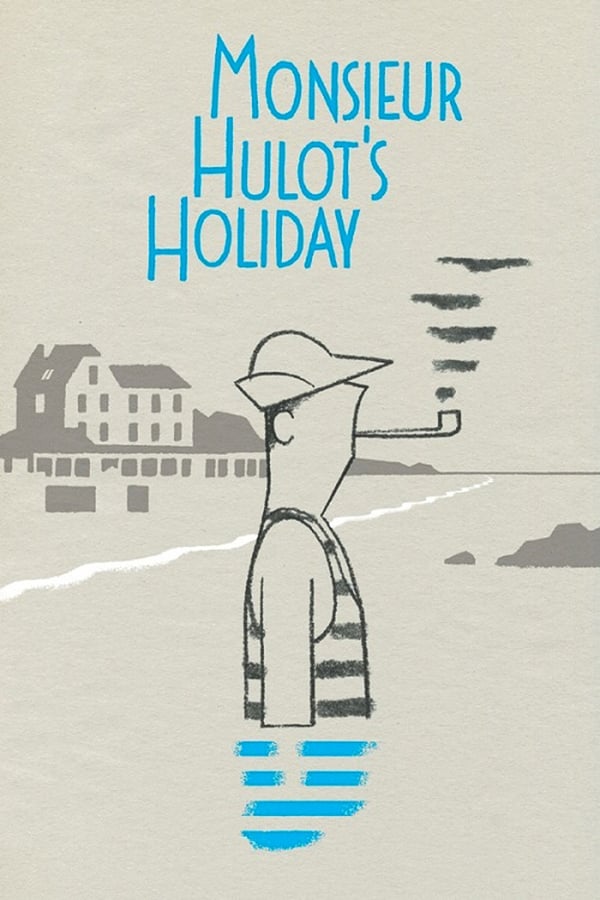
Les Vacances de Monsieur Hulot (Monsieur Hulot’s Holiday) was more of what I was expecting. A truly funny and enjoyable film, it doesn’t have much of a plot, but that isn’t its purpose. It introduces us to Tati’s famous character M. Hulot, a bumbling member of the bourgeois, who goes to a lakeside village for a weekend vacation. Hulot always finds himself in the vicinity of trouble, though not always at fault. When he leaves the door open, wild gales of wind blow stuff around the room. When he is changing a flat tire, the tire falls into some wet leaves and is mistaken as a wreath, gaining Hulot entrance into a funeral where he is welcomed as family. He can’t get on a horse without it fighting him like a stubborn mule. And his broken-down jalopy of a car provides ample entertainment throughout. There is very little dialogue in the film, in fact, we hear Hulot’s voice only a couple times, to introduce himself to others. Tons of sight gags poking fun at the various classes at the beach, and unlike Jour de fête, it feels fresh still to this day. This is the film that put Tati on the map in 1953, and was even entered for consideration at Cannes that year, a rare comedic entry (and it won him a Critic’s prize). Now I see why Tati was considered such an inspiration to comedic actors and directors who followed. ★★★★

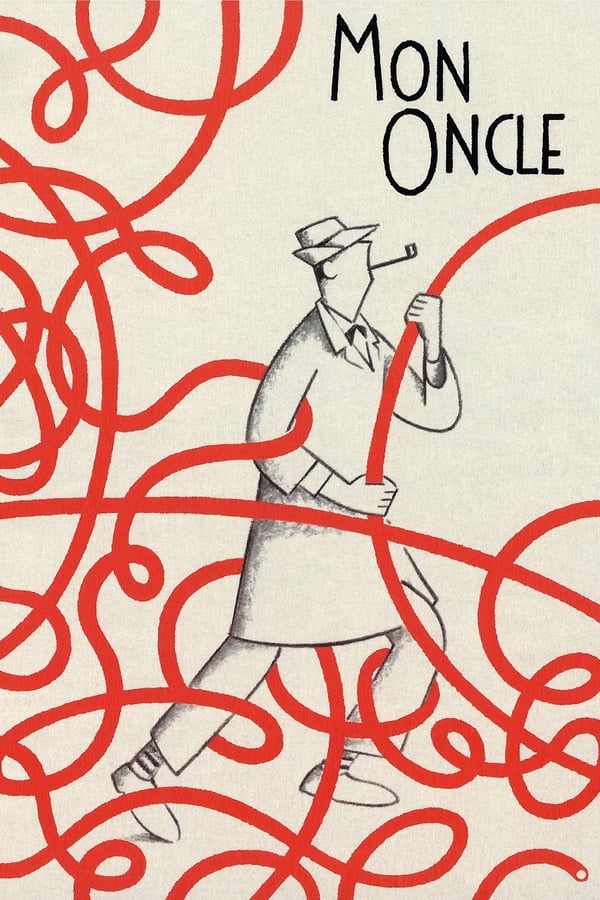
If his previous film made Tati popular in France, his next, Mon Oncle (My Uncle), in 1958, made him popular around the world. Hulot is back for more escapades, this time in an urban setting. Floating around his sister’s family, including her husband and child, Hulot is a man with whom modern gadgets don’t seem to get along, which is very funny since his sister lives in an ultra-modern home with all the bells and whistles, and his brother-in-law is trying to get him a job at his plastics factory. The film does a whole lot of poking fun at our continuing reliance on electronics and advancing technology, even when it makes life harder rather than easier. The picture again is light on plot but heavy on substance. Outstanding slapstick and visual comedy, and brilliantly done. There are some gags that are shown again and again throughout the picture, and rather than grow tired, you can’t help but laugh harder and harder when they unexpectedly show up. Much like the previous film, dialogue is overall very sparse (Hulot himself has almost nothing to say), but this style of comedy doesn’t need it. Mon Oncle was Tati’s first color picture*, and won the Oscar for best foreign language film. ★★★★½

*Tati wanted his first picture, Jour de fête, to be in color, and even used two cameras simultaneously filming side-by-side (one in color, the other in black and white, as a “backup”). The color was going to be developed by a new French rival to Technicolor called Thomson-Color, but it proved too costly and difficult to print, and the movie was only shown sans color for decades. After his death, Tati’s family later colorized the film to realize his dream.

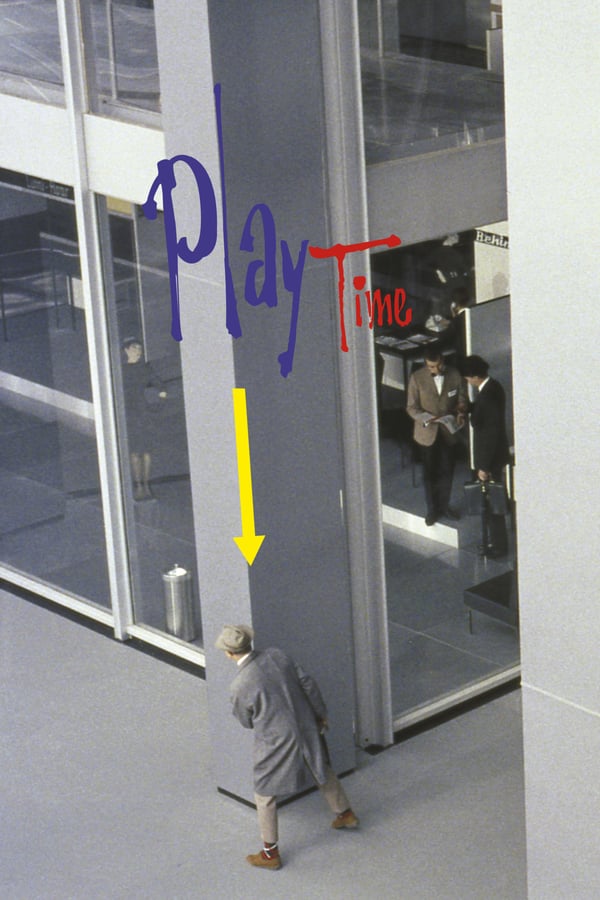
Mon Oncle may have been Tati’s most famous piece at the time, but in the decades since, PlayTime has become what many consider to be his magnum opus. It is without a doubt an impressive picture. Hulot has finally come to the big city, Paris. He’s there for an interview of unknown origin, but in case you haven’t figured it out by now, that detail means nothing to the movie. There are a few overarching plots, including American tourists around town, and the grand opening of a new nightclub, which gets out of hand. One such tourist and Hulot may be considered the two main characters, but honestly, the film only marginally follows them more than anyone else. In fact, Hulot himself disappears for huge stretches of film. Tati’s trademark light dialogue is in full force, and there isn’t much music either, but there is a part halfway through when some wistful tunes play as Hulot has just escaped his latest run-in with technology, and it definitely creates a longing for simpler days. As I mentioned, this is an impressive film, with a monumental cast of characters filling out the city, and the sets created for the movie are ginormous. It was the most expensive French film ever made at the time in 1967, took 3 years to complete, and nearly bankrupted Tati when it didn’t make back its budget (partly his on fault; he shot it in 70mm and refused to make a 35mm cut for those theaters who didn’t have the capabilities to show the larger format). Without Hulot to focus on, I honestly didn’t enjoy this one as much. Still lots of funny moments, but without a hero, the film lost focus for me. ★★★

Nearly 20 years after Tati introduced us to Hulot, his final appearance came in 1971’s Trafic (tired of the character even during PlayTime, Tati had planned to kill him off in a future film, but died before he could make it). Trafic is a fantastic road comedy, released long before National Lampoon’s Vacation. Hulot is working for a car company as a designer, and they want to take their latest model (which is tricked out with all the latest technology and gadgets) to a car show. The trip from Belgium to Amsterdam should only take a couple hours, but in Tati’s universe where everything bad that can happen will, it takes 3 days. Car accidents, blown tires, running out of gas, and of course traffic are just a few of things our hero has to deal with. The film has a smaller feel that PlayTime, more of a return to roots of the earlier Hulot pictures, and as such, I found a return to the charm of those as well. Trafic shows off beautiful, vibrant colors, gorgeous shots, and Tati’s ability to let gags develop, sometimes a little slow, but always well done. And the ending felt fitting as well for M. Hulot. ★★★★

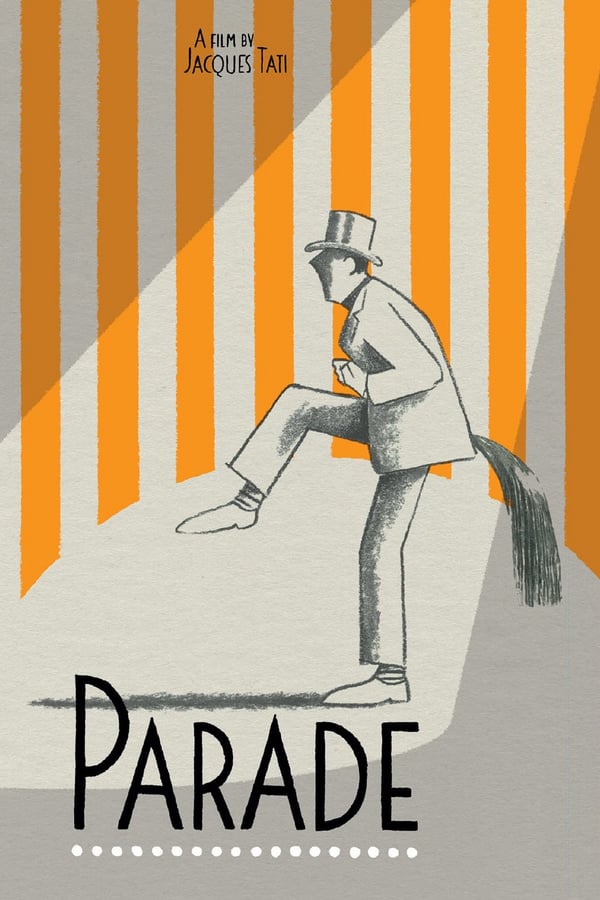
With PlayTime having wiped much of his fortune, and Trafic not performing well enough in theaters to make it back, Tati made one more picture before his death. Parade was a made-for-tv film for Swedish television (with longtime Ingmar Bergman photography expert Gunnar Fischer serving as cinematographer), released in 1974. It’s not really a film in any true definition, in that there isn’t a story or characters to follow. Tati plays the master of ceremonies during the performance of a circus, and the movie is mostly just the the various acts over the course on 90 minutes of the show. There are some of Tati’s traditional sight gags, mostly during the intermission when we see the audience interactions, but honestly this film is a real bore. It’s just not very funny and barely entertaining, which is a real downer after some of the great films that came before it. Still, doesn’t take away from the middle four movies, which are a lot of fun. ★